| Vintage Pulp | Feb 17 2024 |

The name's Cooper. Brian Cooper. What—you were expecting some other secret agent?
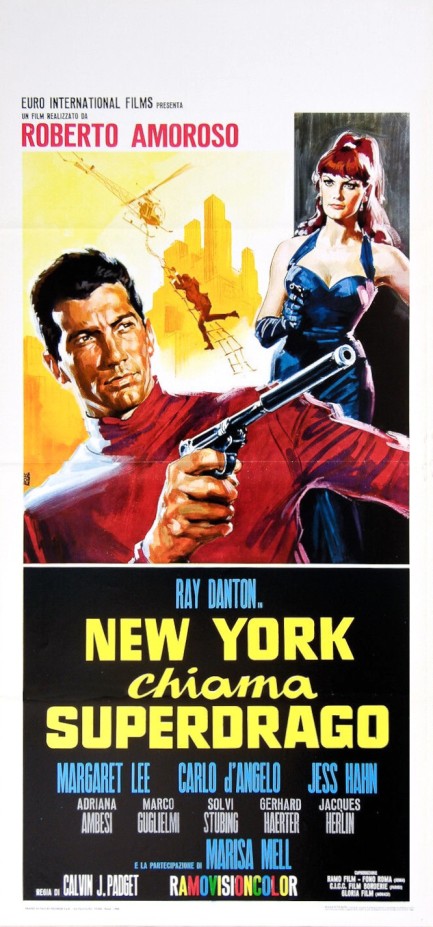
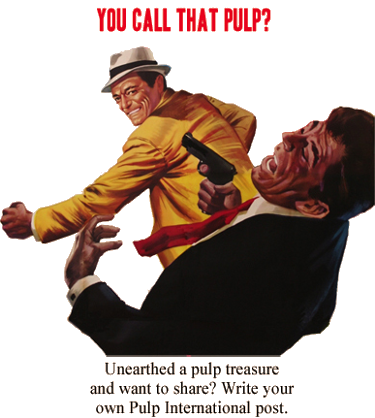
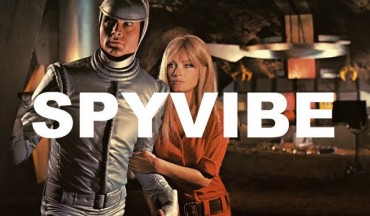
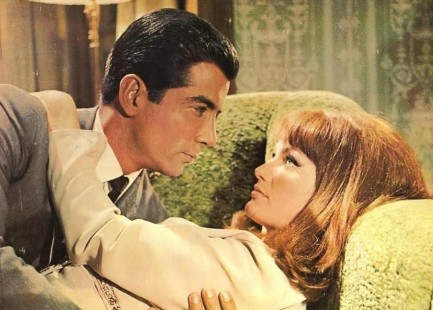
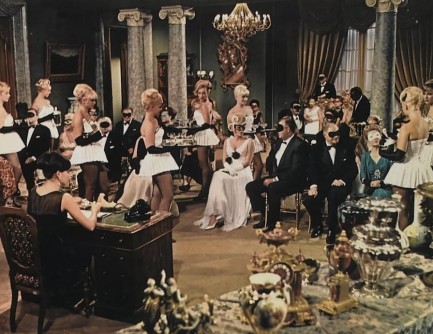
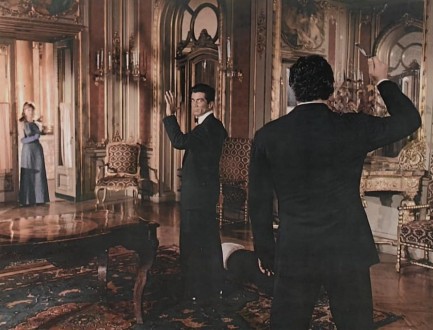
The Italian spy thriller New York chiama Superdrago, which we had a chance to watch during our little break last week, was known in English as Secret Agent Super Dragon, and is another in a spate of hipster spy movies that came in the wake of James Bond's massive cinematic success. It premeired in Italy today in 1966. Three of its promo posters were painted by the great Sandro Symeoni, and while the above example is also attributed to him on some websites, that's incorrect. It's really by Enrico de Seta. Or said to be by one long-running online poster vendor. We're not actually sure about that because the signature doesn't look like his, but who are we to argue with the experts?
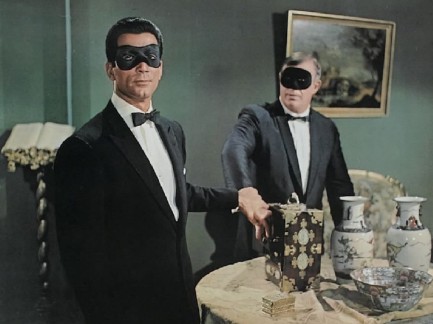
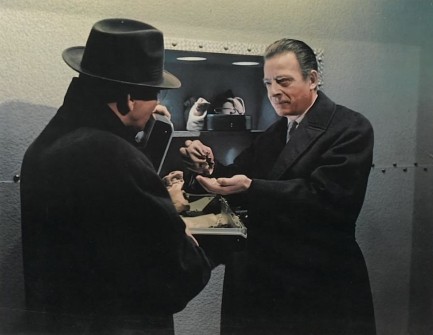
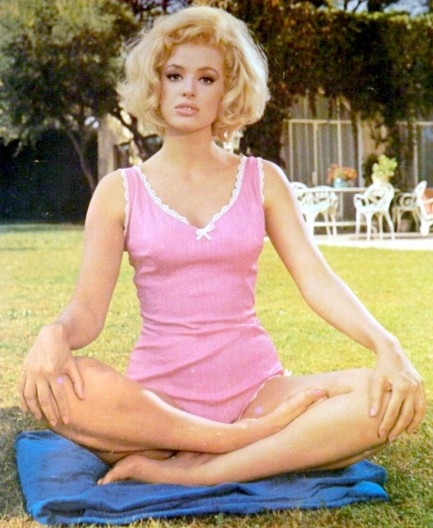
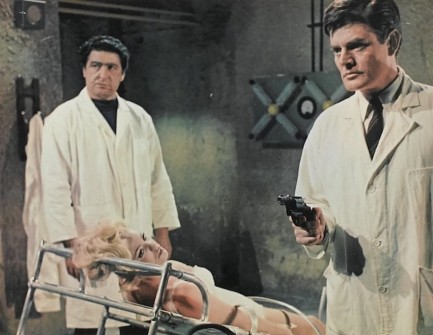
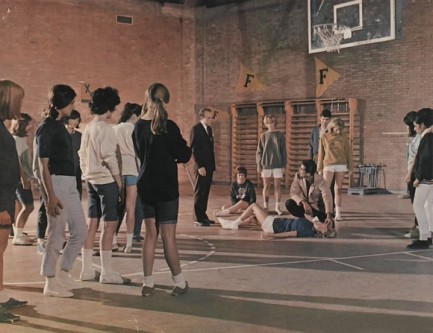
In the film, Ray Danton plays a retired agent codenamed Super Dragon—civilian name Brian Cooper—who's roused from his yogic meditations and drawn back into the spy game when a friend dies in a suspicious auto accident that may be related to previous strange deaths. The clues lead from a U.S. college town to Amsterdam (because what kind of spy movie would it be without some globetrotting?), and into the lissome arms of fellow spies Margaret Lee and Marisa Mell (because what kind of spy movie would it be without hotties à la carte?). Between romances Danton learns that the plot revolves around the untraceable drug synchron-2. Purpose: unknown (but don't be shocked if it's to do with world domination).
Few of these Bond knock-offs are sufficiently budgeted or technically proficient enough to result in good final products. Whether you like them has to do with nebulous factors. In this case, we thought Danton's unctious self-entitlement and blasé approach to world saving were funny. We loved when one of his many assailants swallowed cyanide, Danton said, “I'd better get rid of him,” then dumped the corpse out the nearest window. Cue sound effect of splashing water. New York chiama Superdrago is a bit camp without being a satire, and just poorly written enough to provide a few laughs without being a total screenwriting train wreck. But don't pretend we said it's actually good.
ItalyAustriaNew York chiama SuperdragoSecret Agent Super DragonRay DantonMargaret LeeMarisa MellJesse HahnJess HahnCarlo D'AngeloSolvi StubingEnrico de Setacinemaposter artmovie review


| Intl. Notebook | Jul 1 2023 |

How many can you consume in one sitting?











Above are lovely photo-illustrated covers of Wiener Magazin published in Austria during the 1950s. Some of the celebrities pictured are unknown to us. We've placed those last. The others are, in order, Joan Collins, Jayne Mansfield, Mitzi Gaynor, Ava Gardner, Anita Ekberg, Lilanne Brousse, Mamie Van Doren, and May Britt. These are to whet your appetite. We have a couple of full issues we'll show you later.
AustriaWiener MagazinJoan CollinsJayne MansfieldMitzi GaynorAva GardnerAnita EkbergLilanne BrousseMamie Van DorenMay Brittmagazine art

| Vintage Pulp | Dec 16 2022 |

Some love lasts forever. Other times it doesn't survive the wedding night.
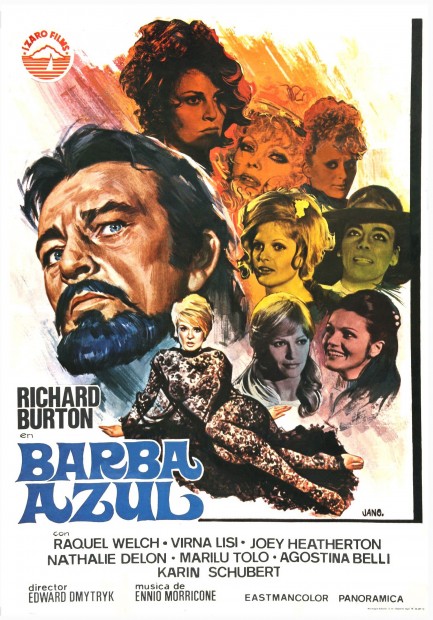
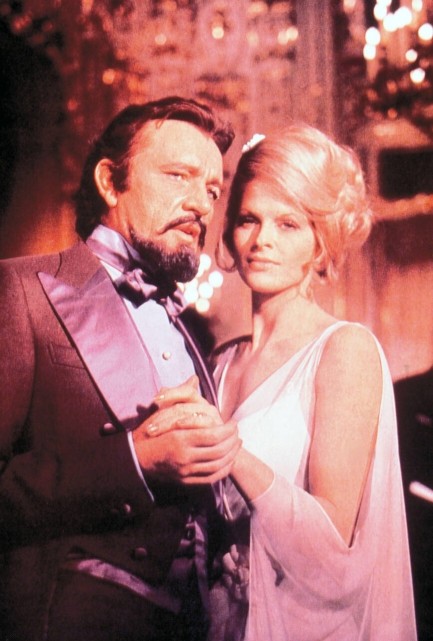
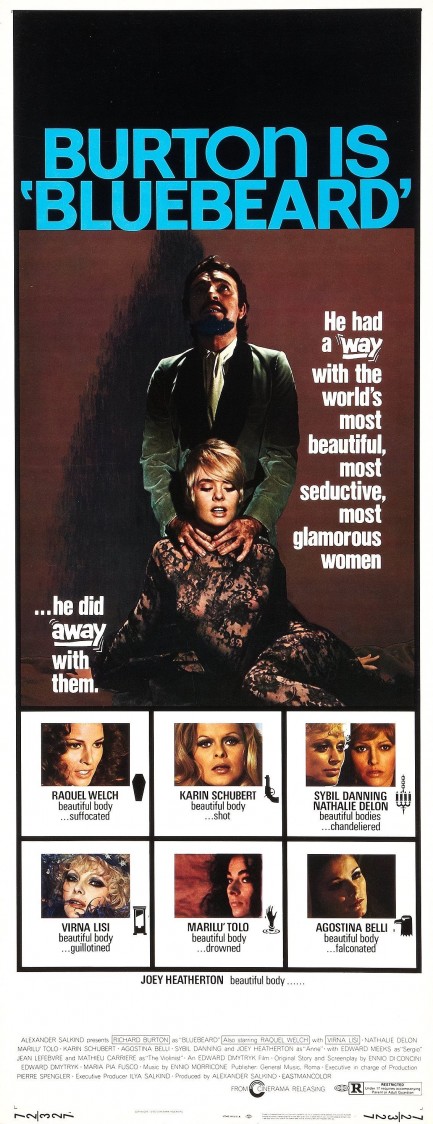 Another of the movies we watched recently was Bluebeard, a castle and dungeon-style, quasi gothic horror flick about a folk tale character who murders a series of wives. Its Spanish poster was the best of those we saw, and we chose today to share it because the film premiered in Spain today in 1974, after opening in the U.S. two years earlier.
This piece was painted and collaged from photos by Fernandez Zarza-Pérez, also known as Jano, now a regular visitor to Pulp Intl. Just for the sake of it, we've also included the U.S. poster at right (or above if you're on a mobile device). You can see that it's built fully around a photo-illustration, and while it's interesting, we thought Jano's work had a little more merit.
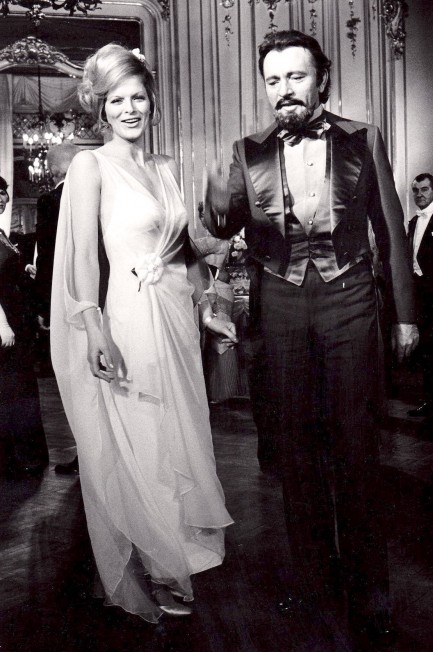
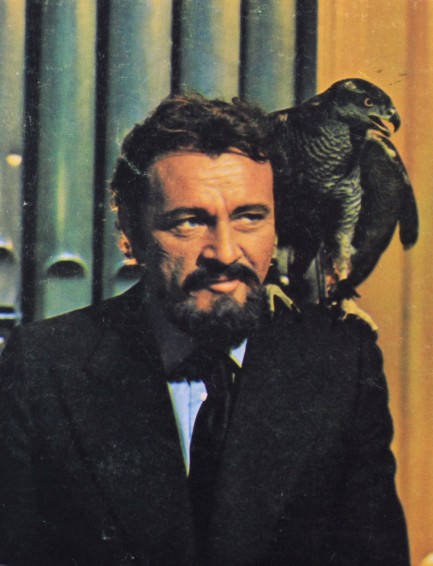
Bluebeard stars Richard Burton, who's supposed to be a great actor, but we have to admit we'd seen exactly zero of his acclaimed movies up to this point. He was a Shakespearean stage guy who transitioned to Hollywood in similar type roles, and being decidedly non-pulp in style, we've highlighted none here. He later made a couple of war movies, though, as well as the overbudget epic Cleopatra, and we might get around to those. Going on the example presented by Bluebeard, however, you'd have to conclude that he's a hack. Those who know more than us say that by the 1970s heavy drinking had impaired both his judgment and skill.
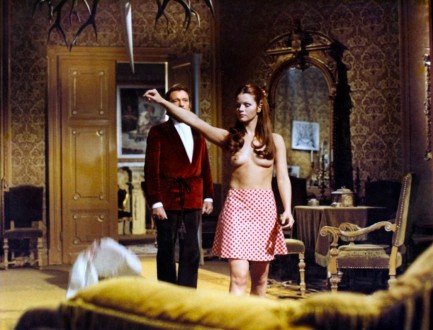
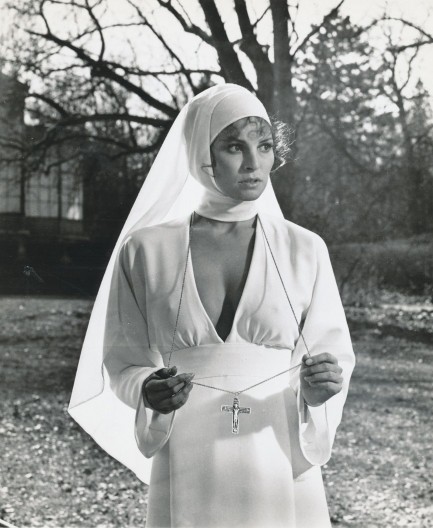
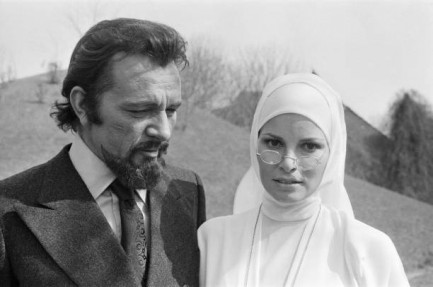
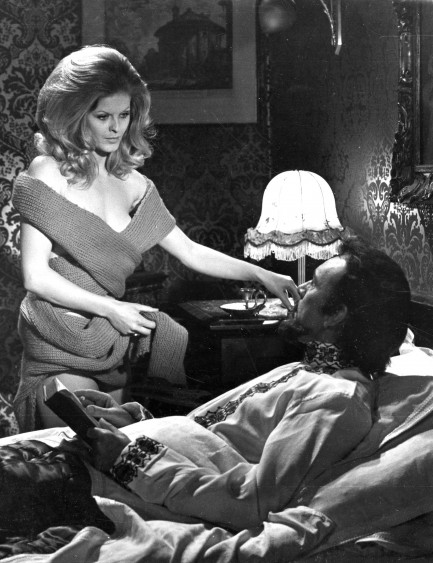
You'd think that a famous folk tale would provide a trove of potential cinematic possibilities to sift through, but Bluebeard is uninspiringly written, and the direction—from film noir vet Edward Dmytryk—presents little evidence of engagement with or inspiration by the material. The women Bluebeard murders are played by Karin Schubert, Nathalie Delon, Virna Lisi, sexy nun Raquel Welch, Marilú Tolo, Agostina Belli, and Joey Heatherton—not neccsarily in that order—plus Sybil Danning makes an appearance. Heatherton has the key role as Anne, the wife who elicits a confession from a psychologically tortured Bluebeard as to why he kills.
And the reason? Dude can't get it up. Therefore, in the era before little blue pills, as a prominent member of Austria's post-World War I patriarchal society, Bluebeard murders to keep his limpness secret. You'd think dying wives would destroy his matrimonial suitability, but at a certain point we suppose money papers over all flaws. Rich or not, though, never marry a guy who sits around with a raptor on his shoulder. And speaking of hunting, we should warn the kind-hearted that there's an extended hunting sequence in Bluebeard, and the animals are killed for real, in detailed action. We're talking several rabbits, a number of birds in flight, a couple of foxes, a boar, and a deer.
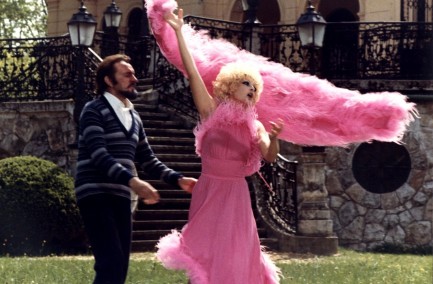
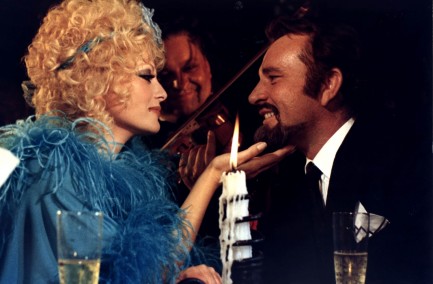
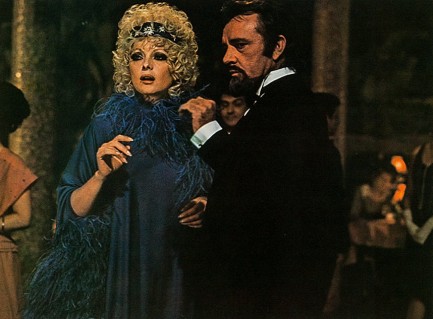
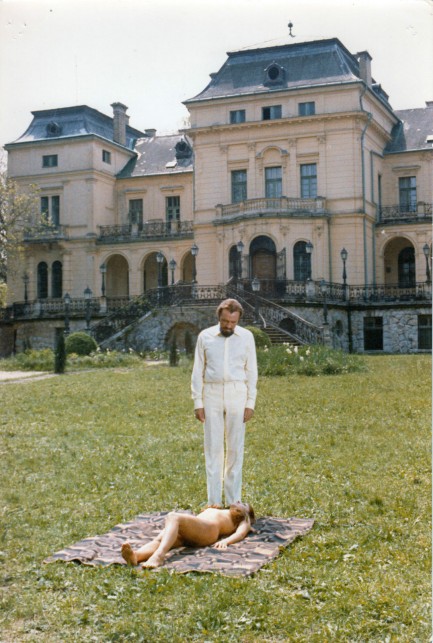
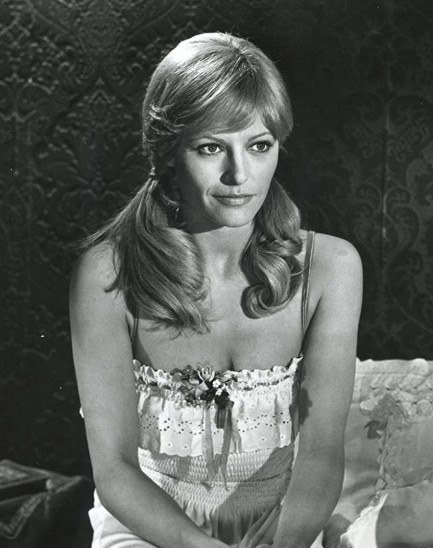
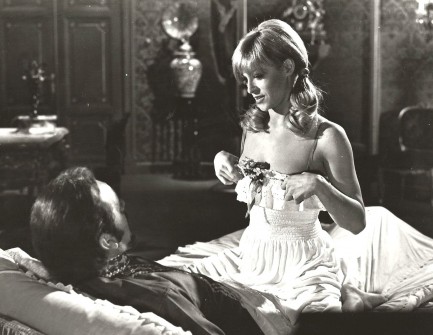
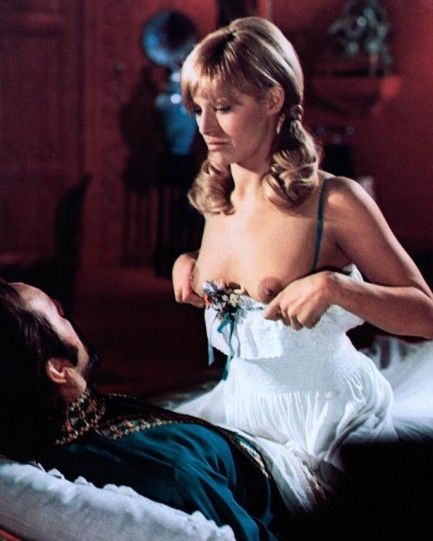
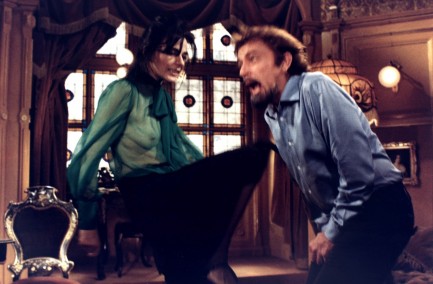
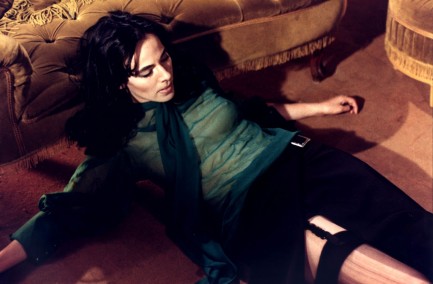
a certain point we suppose money papers over all flaws. Rich or not, though, never marry a guy who sits around with a raptor on his shoulder. And speaking of hunting, we should warn the kind-hearted that there's an extended hunting sequence in Bluebeard, and the animals are killed for real, in detailed action. We're talking several rabbits, a number of birds in flight, a couple of foxes, a boar, and a deer.Based on what we've written so far, you might think we're not recommending Bluebeard, but not so fast, friends. The female cast—to state the obvious—comprises some of the loveliest actresses of the era, and in diverse ways. Welch is sculpturally flawless, Lisi is ethereally beautiful, Toló is broodingly dark, and Heatherton, whose resting face is ingenuous and slightly open-mouthed as if she's always concentrating on a problem, can only be described as luscious. She also has one of cinema's all-time greatest hairdos. Is it pervy to say you should watch a movie solely for the beauty of its actresses? Probably—but it's the truth. The filmmakers must have agreed, because they published lots of nude production stills, when in fact the film has less skin. See below.











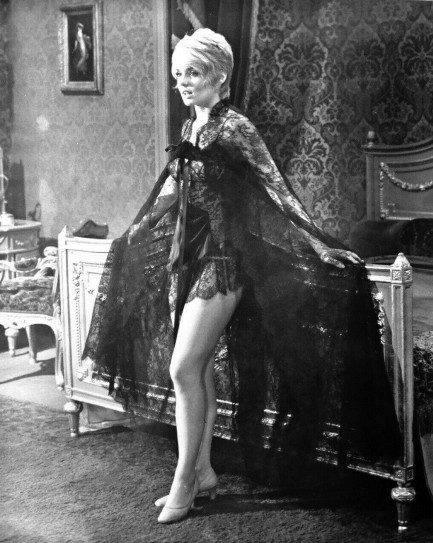
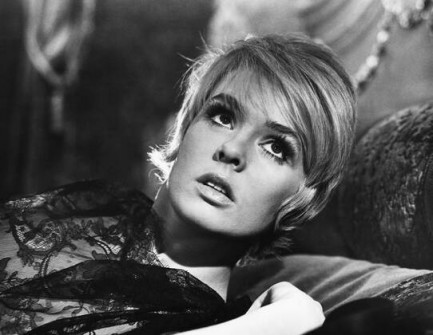
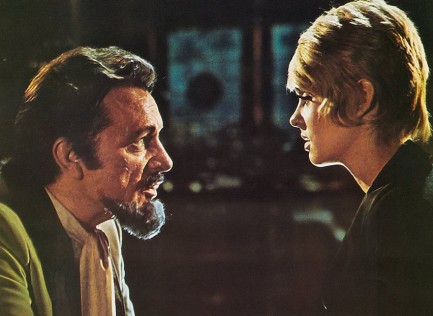

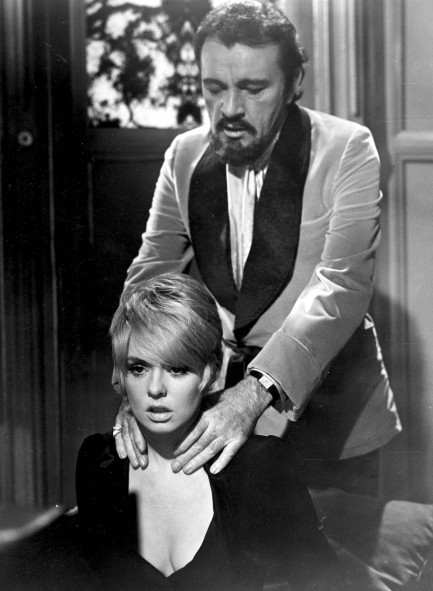
SpainAustriaBluebeardRichard BurtonKarin SchubertNathalie DelonRaquel WelchMarilú ToloJoey HeathertonVirna LisiAgostina BelliSybil DanningEdward DmytrykFernandez Zarza-PérezJanoposter artcinemahorrormovie review

| Femmes Fatales | Nov 28 2022 |

If only you could see the world the way I see it.

Above: an amazing shot of Austrian actress Marisa Mell made while she was filming the Italian drama Una sull’atra, aka Perversion Story in 1969.

| Femmes Fatales | Sep 21 2022 |

If you think this looks ridiculous you should see my winter wardrobe.

Austrian actress Sybil Danning has a lot of promo images with guns, both realistic and fake, due to her appearance in several over-the-top action movies, including 1984's Euer Weg führt durch die Hölle, aka Jungle Warriors, 1983's Chained Heat, and 1980's Battle Beyond the Stars, for which she shot the above photo. All of those films have attained cult status of varying levels, but the latter is amazing because of the people associated with its production. Its stars included respected actors Robert Vaughan and George Peppard, its screenplay was written by John Sayles, its efx were helmed by James Cameron, and its driving force was schlockmeister supreme Roger Corman. We may take a look at it a bit later, but in either case Danning will return.
AustriaBattle Beyond the StarsChained HeatEuer Weg führt durch die HölleJungle WarriorsSybil DanningRoger CormanRobert VaughanGeorge PeppardJohn SaylesJames Cameronsci-fi

| Vintage Pulp | May 12 2022 |

Pack light and leave your inhibitions behind.
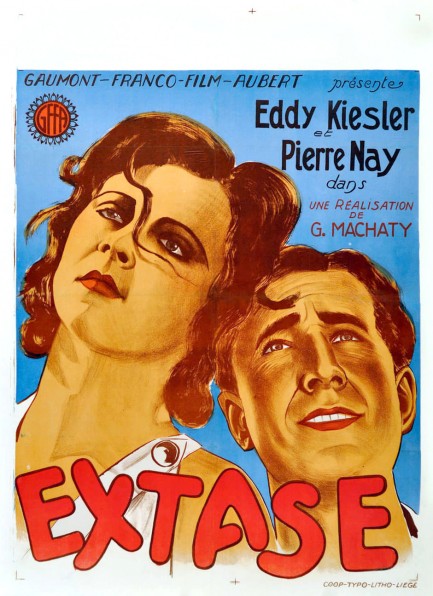
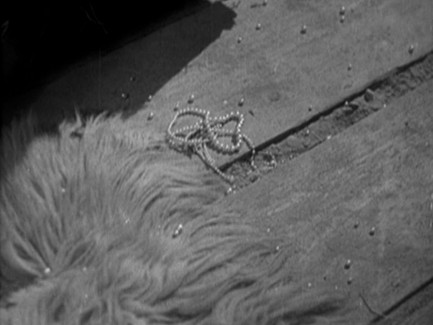
This poster was made in Liege, Belgium for the romantic drama Extase, starring Austro-Hungarian beauty Hedy Lamarr. Based on a novel by the Vienna born author and actor Robert Horký, the film opened in Belgium today in 1933, after having premiered in then-Czechoslovakia as Ekstase in January of that year. It isn't a pulp style film, but it's significant, which is why we had a look. It's about a young upper class woman in an unfulfilling marriage who solves that problem by acquiring a sidepiece in the form of a worker played by Aribert Mog. This results in some steamy moments and—some viewers say—the first orgasm ever depicted onscreen. “Some viewers” are right. There's no doubt. In the midst of a nocturnal tryst Mog's head and torso slide off-frame, as Lamarr breathes more and more heavily before finally grimacing in lovely fashion and snapping her string of pearls.
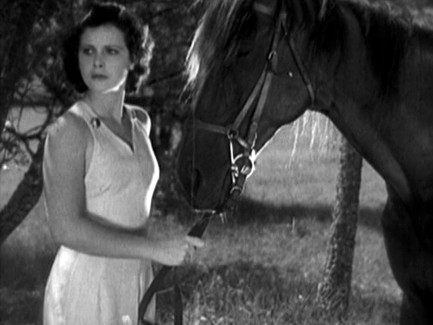
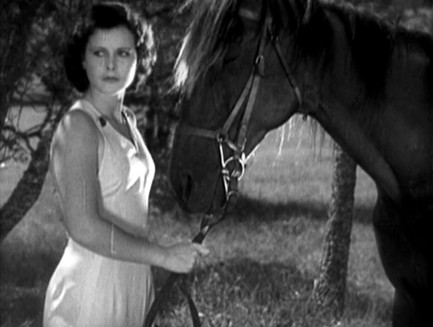
Yeah, this is hot stuff for 1933. And we thought everyone was having a great depression. Shows what we know. If the title Extase doesn't tell you what's going on, consider the fact that Hedy's character is named Eva, and Mog's is named Adam. It's that kind of movie. In a way, an orgasm was inevitable. Lamarr also captures moviegoers' attention with a nude swim and sprint through the fields that occurs about twenty-eight minutes in. Why's she running around starkers? Her mare Loni decides to get herself some equine action and abandons Hedy—taking her clothes along for the ride. Always make sure to tie your mount to something, especially when it's horny. Lamarr really is naked in the scene, too, which few modern performers would do in this age of new puritanism. It's thanks to this run through the wild that she meets Mog, the eventual master of her clitoris, if not her heart.
Extase isn't a silent film, but it's close. There's a lot of orchestral music and only a dozen or so sections of dialogue. Even so, it's very watchable. The visuals tend to be laden with meaning in films such as these, but some scenes require no interpretation at all, like the bit where a couple of horses mate (not Loni and her love, sadly). They don't show it of course, but the crash zoom of a mare's backside from the point-of-view of the stud horse gets the idea across with remarkable subtlety—not. It was hilarious, actually. But hey—even horses feel extase, because it's just a natural thing, see. On its own merits we'd call Extase more of a curio than a cinematic triumph, but it certainly achieves what it sets out to do, and that's success of a form, even if it would be forgotten without the orgasm. But that's often true, isn't it?
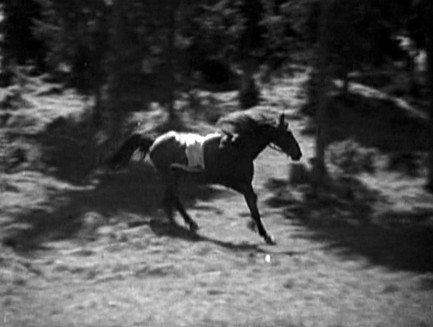
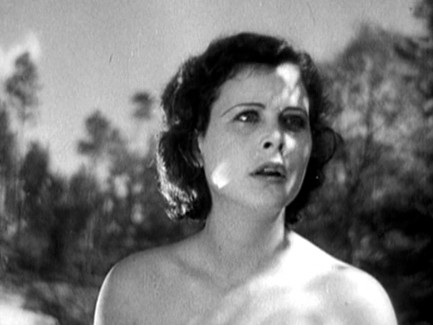 Loni! Come back, you stupid horse! That jumpsuit doesn't even fit you!
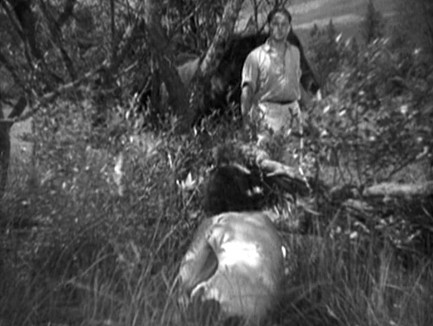 Why hello, lovely naked creature.
 You rude beast! Try taking a picture. It'll last longer.
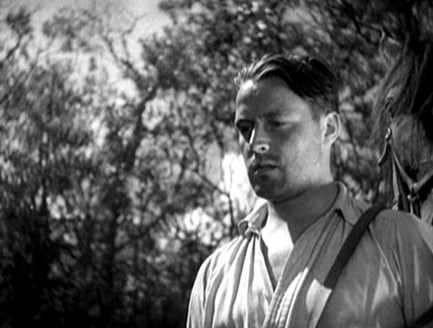 Already done. With my mind. Deposited you right in the spank bank.
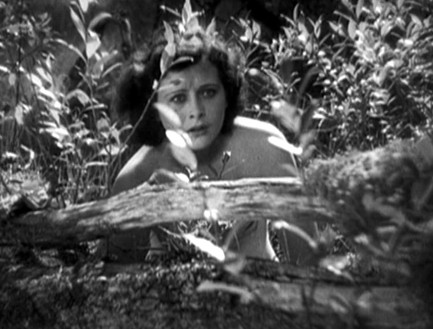 Bank— What? Spank what? Oh, never mind. Give me my clothes.
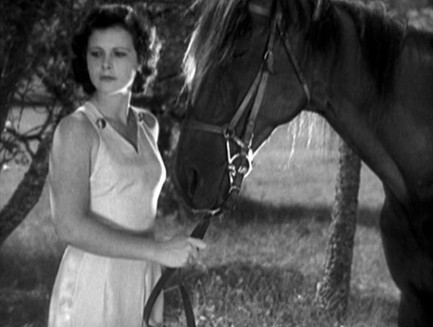 Objectify me, will you? Two can play that game. Duh... nice package! Duh... I'm an idiot!
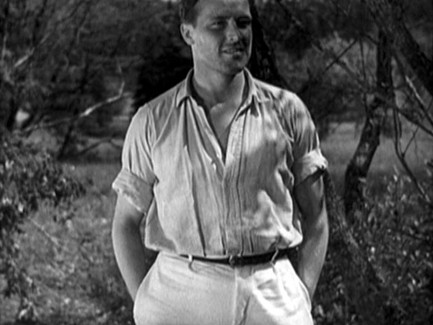 Thanks. And you're not an idiot—many women agree with you about my package.
 No, I'm objectifying you, like you did to me.
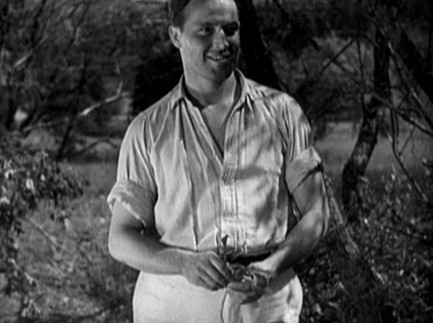 Like a sex object. I understand. That's cool. I love sex.
 No, I mean I'm debasing you via the reduction of any unique and admirable qualities you might have down to the purely phy— Oh, forget it! You're too dumb to understand.
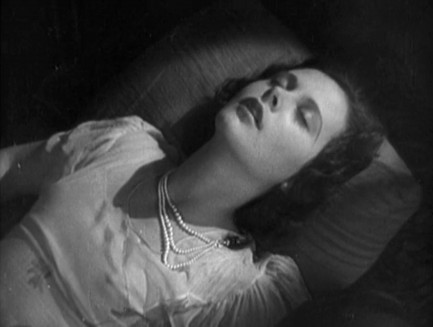 Oh... oh... oh! It's true he lacks... formal education...
 But he sure knows how... to make a girl... SNAP HER PEARLS!
 *sigh*
BelgiumCzechoslovakiaAustriaAustria-HungaryEkstaseExtaseHedy LamarrHedy KieslerAribert MogZvonimir RogozRobert Horkýposter artcinemamovie review

| Modern Pulp | Apr 10 2022 |

She's arrived on this earthly plane to love you to death.

We said you'd see sexploitation star Laura Gemser again sooner than you thought, and here she is—or at least here's an interesting depiction of her—on a poster made in Turkey to promote her film Ateşle Oyun. That translates as “game with fire,” but the movie was known in English as Divine Emanuelle and Love Camp. There's no Turkish release date, but we're talking about it today because it premiered today in 1981 in West Germany, where it was released as Die Todesgöttin des Liebescamps, or “the death goddess of love camp.” Death goddess, eh? That doesn't sound fun, but we'll get to that in a minute.
 As you can see in panel two, the West German promo is nothing to write home about, which is why we decided to focus on the Turkish art. It's signed by an illustrator named Ömer Muz. We looked him up and got many hits, but with no way of knowing whether any of them were the Muz we were seeking. A few of them were artists, and one was even an art director in movies back in the early 1980s, but final identification eluded us.
Die Todesgöttin des Liebescamps was written, directed by, and co-starred Christian Anders, an Austrian musician/singer/composer and man-in-over-his-head in terms of technical ability. His character oversees a free-love cult on Cyprus called Children of Light. He's the servant of the Divine One, played by Gemser, who bathes in milk, parades around topless while flanked by an oiled up bodybuilder, and preaches an apocalyptic schadenfreude doctrine that sounds a lot like the Rapture. In her cult, you can give love freely, but cannot be in love. “Love for only one person is egosim,” she puts it. “When two people love each other they shut the world out. That's a sin.” Basically, that means the cult is an ongoing orgy. Rulebreakers get slapped around or whipped. Gemser even whips herself occasionally. She's a true believer.
The plot kicks into gear, sort of, when one of the cult babes decides she wants to leave and is instead thrown off a cliff by the oiled up bodybuilder guy. There had to be a dark side to all this sex, and that dark side is you can check in anytime you like but you can never leave. We next learn that the police have become suspicious about missing cult members and have inserted an undercover operative who's poking around even as Gemser tries to indoctrinate an heiress and soak her down for her fortune. Will the undercover cop learn the truth of the cult? Will Gemser expose him? Will she expose herself? On the latter score, fans will be satisfied, rest assured. But for objective film buffs, we have to tell you that, like most Gemser efforts, this flick is terrible.
But it's also significant because there's bizarre trivia associated with it. Most notably, David Koresh has a small role. You perhaps remember him? As the leader of the Branch Davidian cult he sought to create a new lineage of world leaders, had sexual partners as young as ten years old, and finally died in 1993 with seventy-five disciples during a fire that broke out at the cult's compound during an FBI raid. On top of all that, writer director Anders propagated various conspiracy theories in books and interviews. The lesson is don't take a movie script too seriously. Especially a sexploitation script. Die Todesgöttin des Liebescamps premiered today in 1981.
 Witness me, little ones! Are my abdominals not out of this world?
 Bring forth the divine ointments and sexual lubes!
 I and my slippery, steroid enraged servant shall now engage in the holy rite of hot raw sex. You may want to rewind this part a few times.
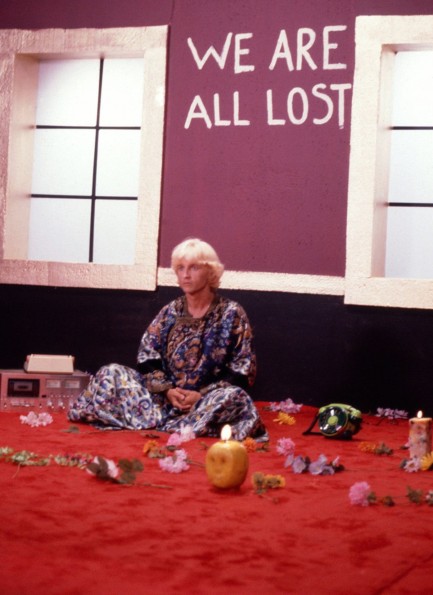 I came here to find myself, and she gives me this room. Feels like she's mocking me.
 There's something to find right under these holy raiments, little lost blonde one.
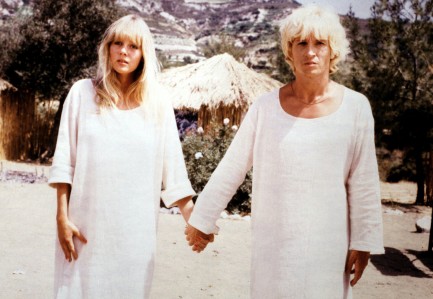 Divine One, I prefer this female version of myself. Diversity is good and all, but we're a matched set. Hope you're okay with that.
 Throw them both into the pit of eternal-despair-without-hope-of-redemption-or-surcease! Hmm... probably need to shorten that name. And who forgot to order the lube for today's orgy? Throw him in the whatever pit too!
 I'm a cruel goddess, it's true. But behold the everloving fuck out of this!
TurkeyCyprusWest GermanyAustriaDie Todesgöttin des LiebescampsDivine EmanuelleLove CampLaura GemserGabriele TintiChristian AndersSascha BorysenkoÖmer MuzDavid Koreshposter artcinemasexploitationnuditymovie review

| Vintage Pulp | Jul 1 2021 |

Sex scare movie cautions women to keep their vaginas in their pants.
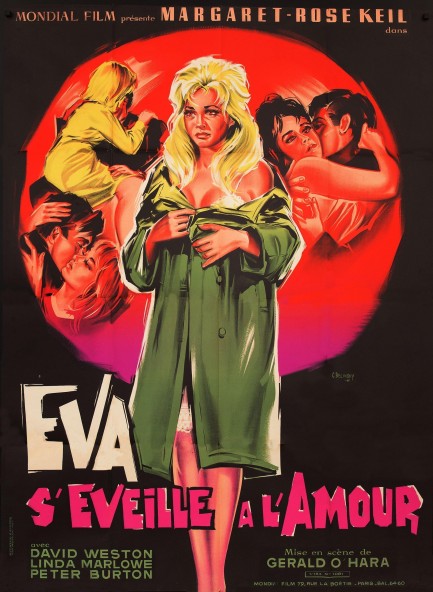

Ukrainian illustrator Constantin Belinsky did special work on this French promo poster for Eva s'éveille à l'amour, which was originally made in England and is better known as That Kind of Girl. The French title translates as “Eva awakens to love,” which sounds nice, but this is actually a sex scare flick starring Margaret Rose Keil as a young Austrian woman in London who dates around a bit and as a result finds herself dealing with serious consequences. She only finds out there's a problem when she's attacked and the police force her to take a medical exam. Did you know that in Britain the euphemism for rape back then was to be “interfered with”? Neither did we. Those Brits are so circumspect. “But I told you he didn't interfere with me,” Keil insists to the cops. Nevertheless, off to the clinic she's sent, where the bad news comes down like a thunderclap—syphilis. This isn't just a b-movie—it's a vd-movie.
Poor Keil caught the clap from her first British lover, and gave it to two more. One of those two probably gave it to his fiancée. And worse, Keil works as an au pair, may have given it to the child she cares for, and has to tell the entire family they need to go to the clinic. Talk about mortifying. But that's the point of scare movies—for you to walk away afraid to have premarital sex/smoke marijuana/peruse a socialist pamphlet. The movie even lifts straight from the puritan playbook about “respecting your body”—i.e. people have premarital sex because they have no self worth. Some people actually believe this even today. It all sounds like a drag, we know, but as moral warning movies go this isn't bad thanks to the slice of London life it presents. Do you need to put it in your queue? We wouldn't say so, but if you do it won't be a waste of time. After premiering in England and other countries in 1963, That Kind of Girl opened in France today in 1964.
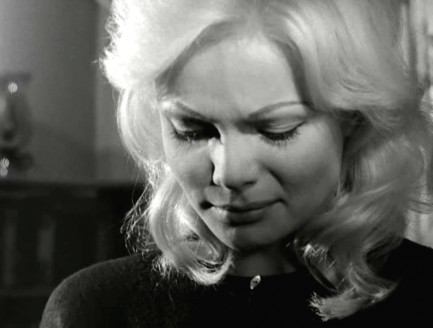 I have a natural facility for the carnal arts. What's a girl supposed to do?
 It seems unfair that I should have gotten a disease from something so fun.
 Why did the doctor have to call it "fire in the ho"? Was that really necessary?
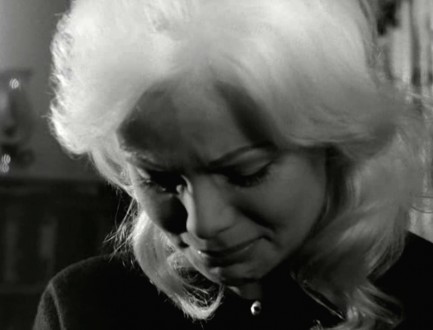 And then he said once the penicillin works he'll call me for a date. Doesn't that violate his hypocritic oath? It's all so confusing.
UkraineFranceBritainAustriaLondonThat Kind of GirlMargaret Rose KeilLinda MarloweConstantin Belinskyposter artcinemamovie review

| Vintage Pulp | May 28 2021 |

Mitchum packs everything he needs for traveling except his sleuthing hat.
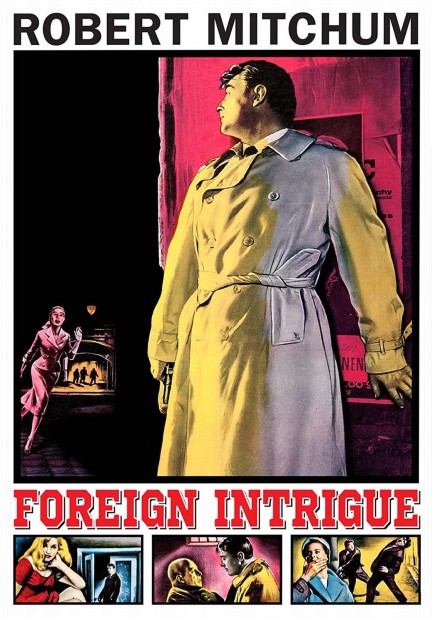
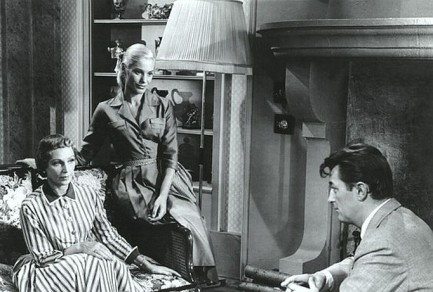
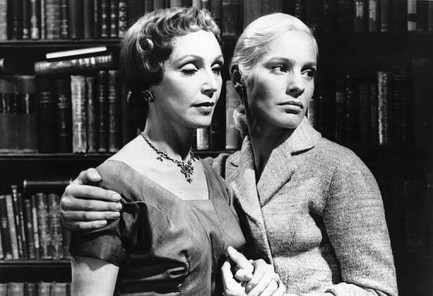
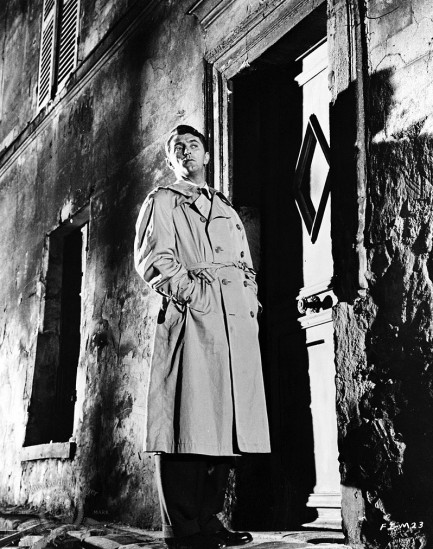
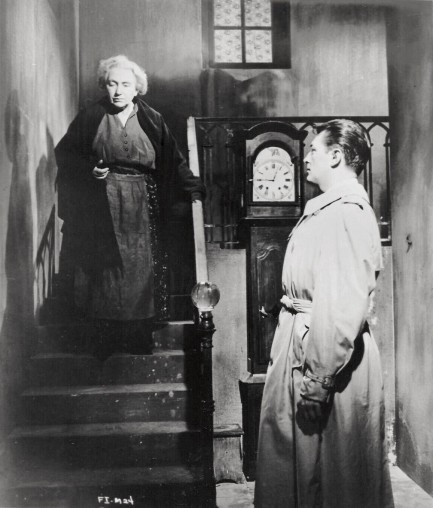
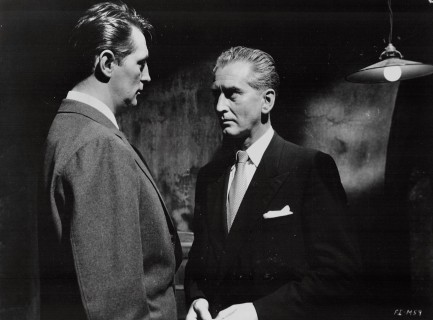
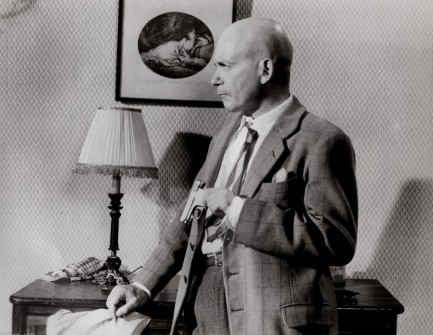
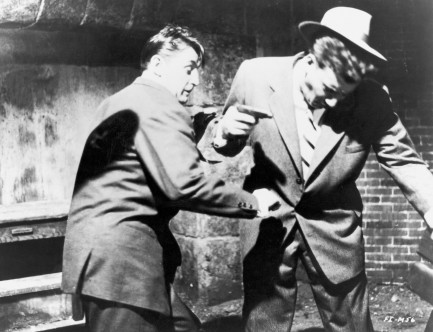
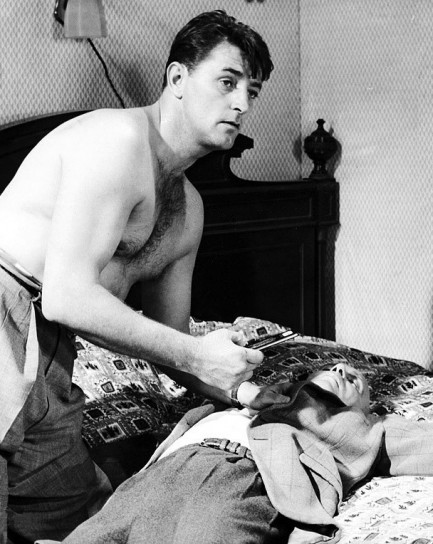
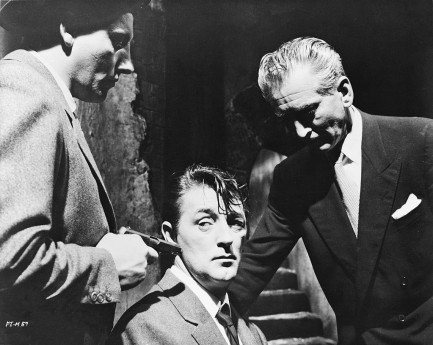
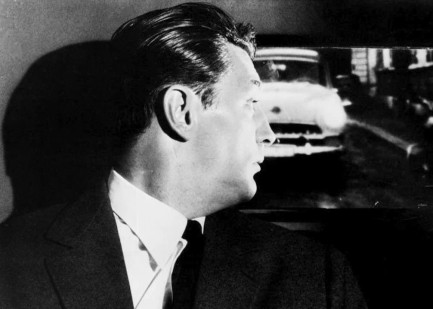
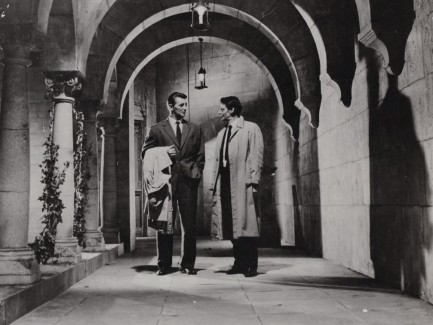
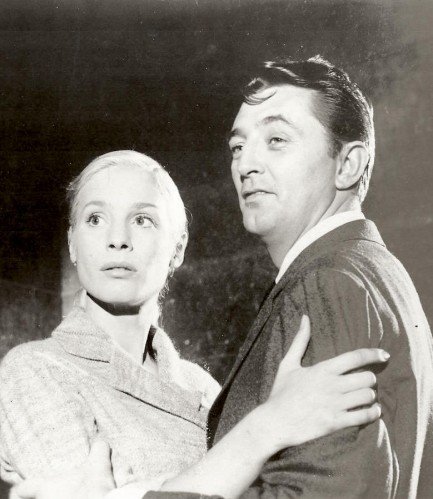
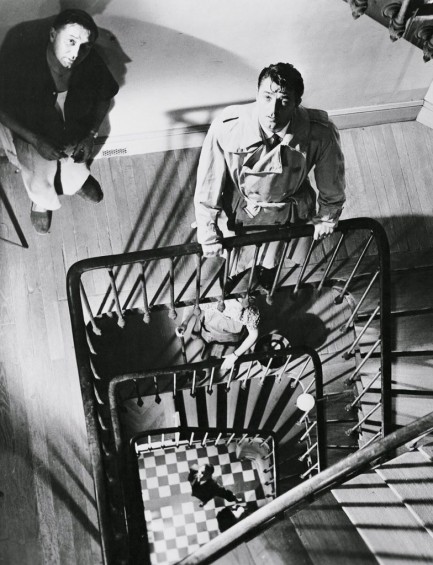
This beautiful poster for the Robert Mitchum thriller Foreign Intrigue is yet another framable delight from the golden age of Hollywood. Wikipedia calls this movie a film noir, but genre designations are often wrong there and on IMDB. This is actually a spy movie, often light in tone, sort of like the later films Charade and Arabesque. Mitchum is an American in Paris working as a press agent for a reclusive one percenter.
When his employer dies of a heart attack, Mitchum comes to believe there was more to the death than a blown ventricle. He follows a trail of clues from the French Riviera to Vienna and Stockholm, which is where the foreign part of Foreign Intrigue comes in. The intrigue part? Well, that never fully develops. In fact, the movie falls back on the cliché of having the villains explain their plot to the protagonist. It has to do with money, blackmail, traitors, and Hitler. Trust us, it's not as interesting as it sounds.
Compounding the narrative problems is a dopey soundtrack and a Mitchum who's short on charm here. The flirtations between him and Swedish love interest Ingrid Thulin are solid wood. She went on to win Best Actress at the 1958 Cannes Film Festival, which goes to show that half of acting is screenwriting.
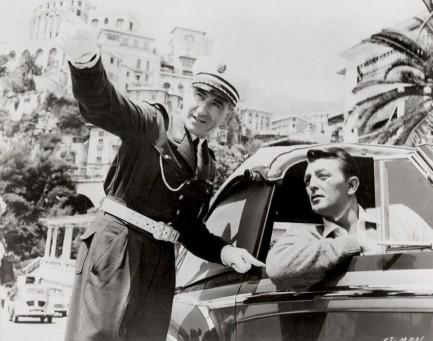
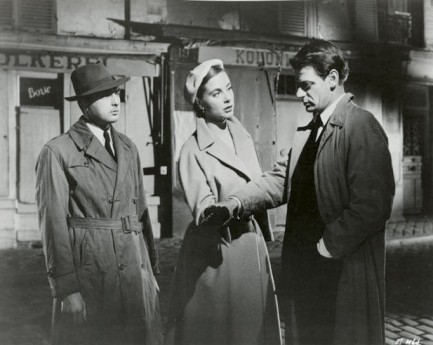
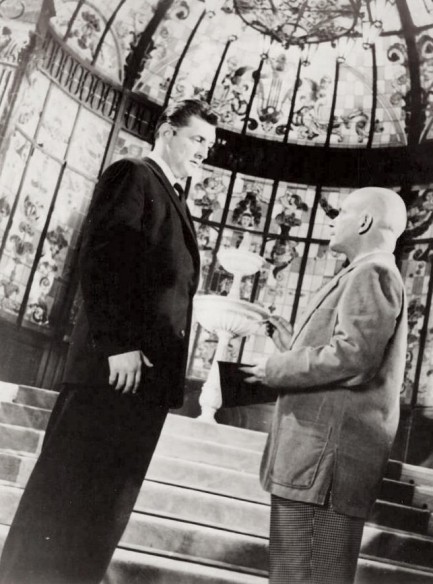
Are there any saving graces to Foreign Intrigue? Of course. It's well shot, atmospheric, cast with international actors and their wonderful accents, and is a nice travelogue, encompassing Mediterranean villas, Vienna backstreets, and Swedish lakes, all in lush Eastmancolor. And Mitchum is watchable even in a film that mostly wastes his considerable star power. Intrigued? Then go for it. Foreign Intrigue premiered today in 1956.
FranceSwedenAustriaStockholmViennaCannes Film FestivalParisRobert MitchumIngrid ThulinGeneviève Pageposter artcinemamovie review

| Mondo Bizarro | Sex Files | Apr 28 2021 |

Hello, police? I'd like to report an explosive orgasm.

Earlier this week in Germany, outside the town of Passau on the Austrian-Czech border, a jogger was running through the forest and came across a bag that seemed to have items inside. Perhaps hoping to find something useful or valuable, the jogger investigated this discarded sack and saw that it contained what looked like a World War II-era hand grenade. Though the war has been over for seventy-plus years, live grenades are still found in the forests of Europe, and everyone there knows that, so it's no surprise the jogger called the police.
Eventually a German bomb squad slogged out into the woods to investigate, and noticed that the bag also contained a tube of sex lubricant called Aquaglide and some condoms. The anti-climax must have been tremendous.
“Horst, your camera feed is bad. What the hell am I seeing there? Is that a tube of accelerant? Something explosive? Over.”
“No sir, it's lube. Over.”
“It's what?”
“Sex lube, sir. Sex lube for the cockenspiel. Over.”
At that point the bomb squad deduced that the grenade was actually a rubber sex toy. But looking at it, we're unsure how it's meant to be used. We poked around online, in the process 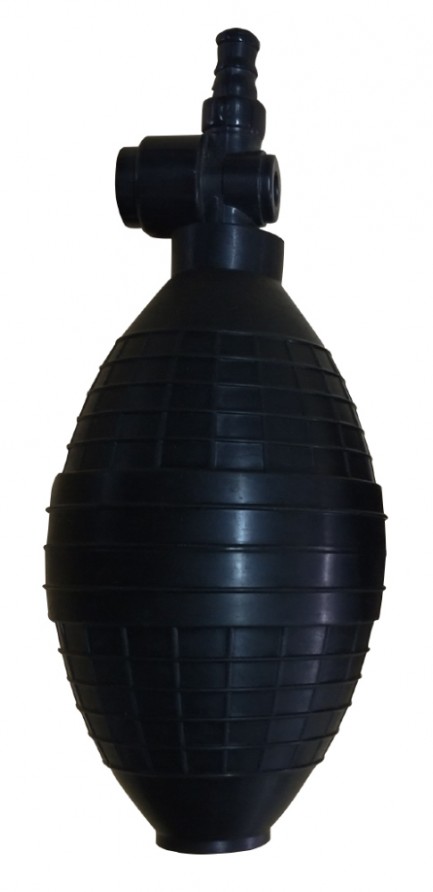 turning our browser history into a sexual free-for-all, and finally found the item you see in the second photo. But we'd be lying if we said that cleared things up for us. It's a hand pump of some sort, or possibly some unisex inflatable insertable, but considering the Passau photo also shows what looks like a power brick and a usb cable, we remain mystified. We're calling the German discovery the grenade of ecstasy.
turning our browser history into a sexual free-for-all, and finally found the item you see in the second photo. But we'd be lying if we said that cleared things up for us. It's a hand pump of some sort, or possibly some unisex inflatable insertable, but considering the Passau photo also shows what looks like a power brick and a usb cable, we remain mystified. We're calling the German discovery the grenade of ecstasy.Even though we don't know exactly how the grenade of ecstasy was meant to be used, we know what it's being used for now. The Passau bomb squad is taking turns pranking each other with it. Bomb squads have a lot of down time. The grenade has already turned up at the bottom of someone's bowl of kartoffelsuppe. And for sure it's been delivered by a bomb disposal robot to someone on the toilet. But the absolute best was throwing it into the dayroom while screaming, “Grenate! Alles runter! Alles runter!” followed by someone charging in, throwing himself on top of it, and ripping a massive pilsener fart. You gotta love those bomb guys.
Interestingly, because bomb squads are used to facing death, the Passau guys never cleaned the grenade of ecstasy. It's still got forest mulch and dried human fluids all over it. That's what makes the kartoffelsuppe gag funny. But bomb squads tire quickly of even the most thrilling diversions, and eventually they'll discard their new toy just like the person who dumped it in the woods. At which point they'll turn their attention to the Aquaglide. We recommend smearing it on someone's bomb disposal tools. That'll make the next bomb emergency dangerous and slippery. Pure fun for all involved.