| Hollywoodland | Jul 17 2021 |



| Hollywoodland | Apr 3 2021 |


| Hollywoodland | Apr 16 2020 |

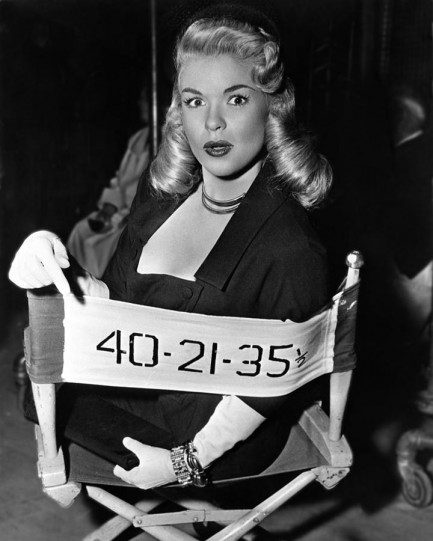
Below, a collection of film stars, in Hollywood and other places, looking large and in charge while seated in director's chairs. In panel three the actress in the “Bonanza's guest” chair is Karen Sharpe. We don't expect you'll need help with the others, but if so our keywords list them in order.
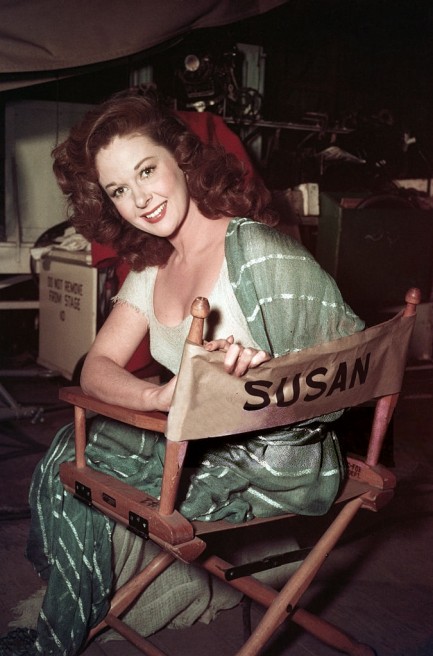
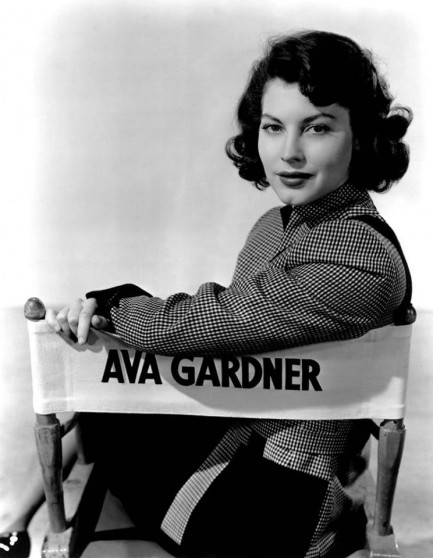
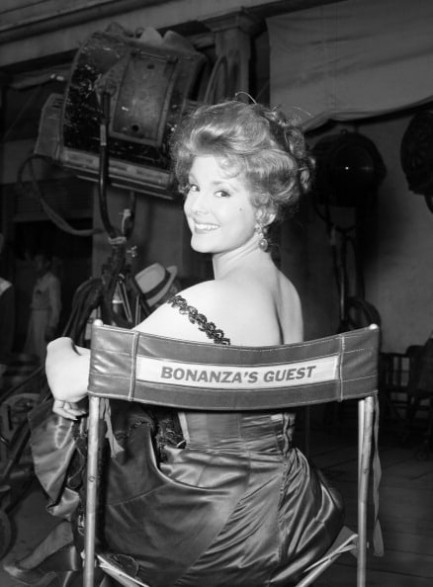
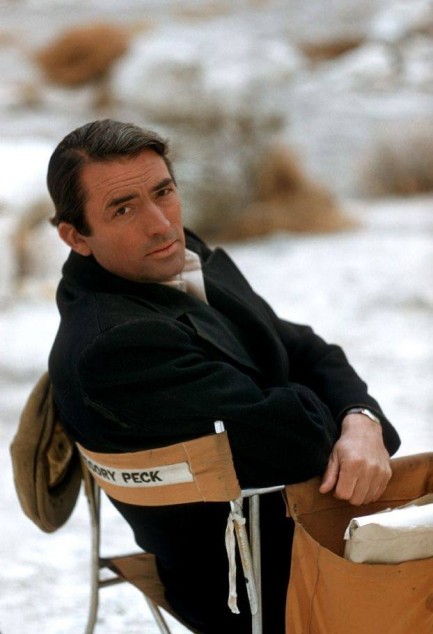
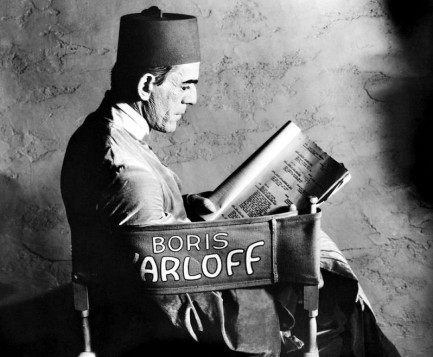
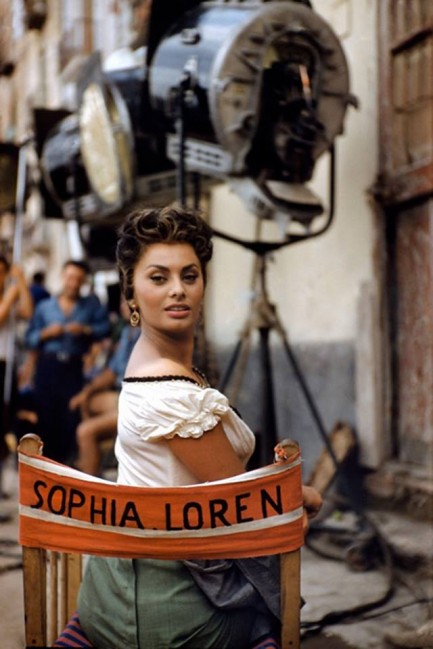
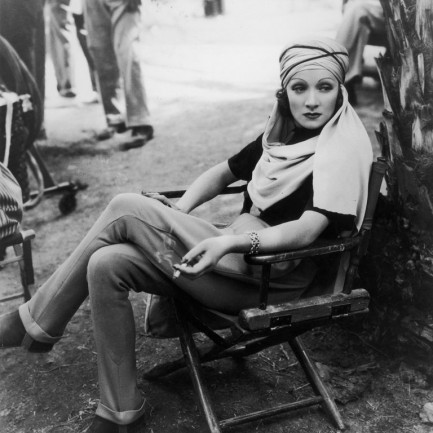
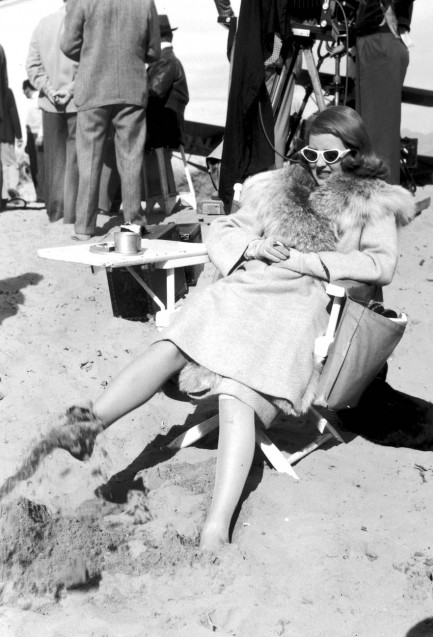
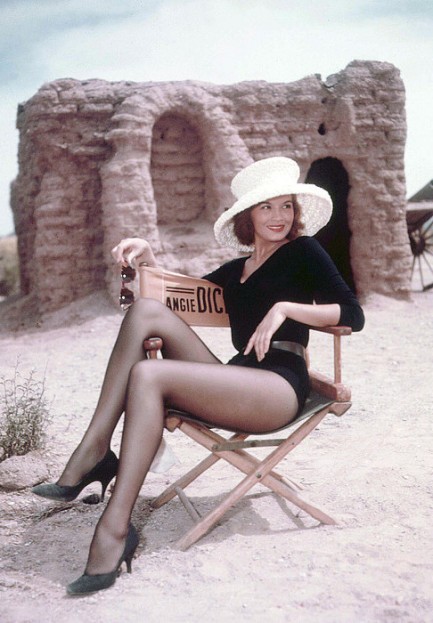
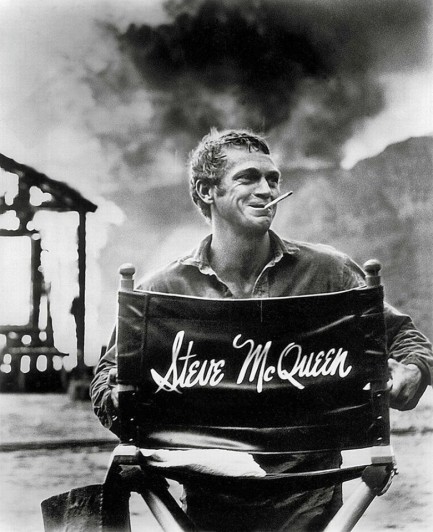
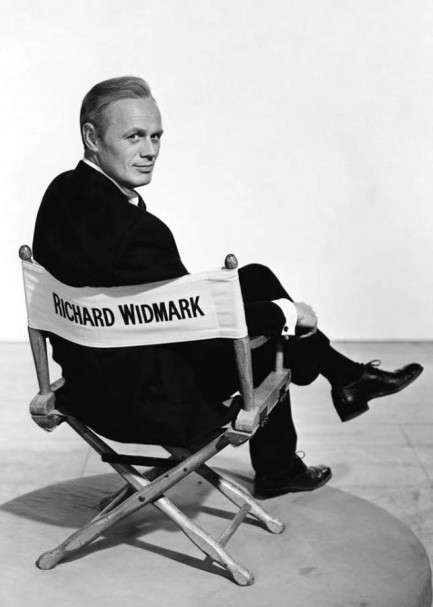
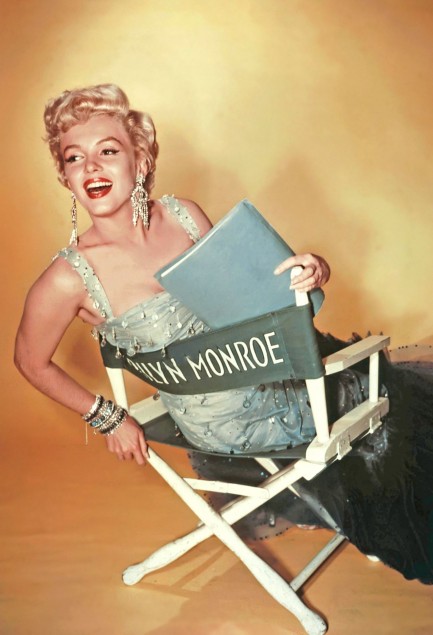
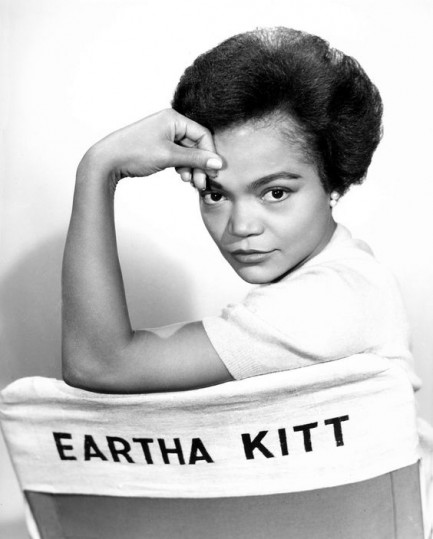
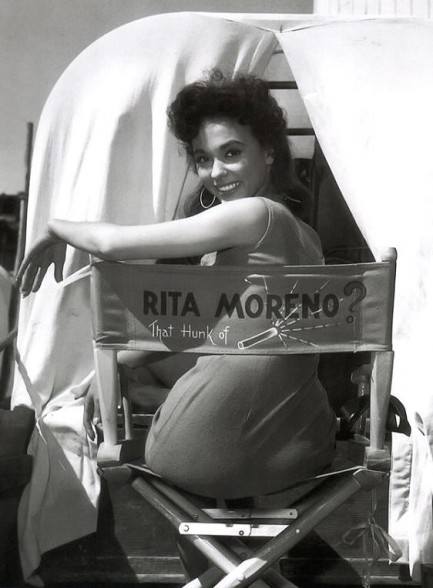
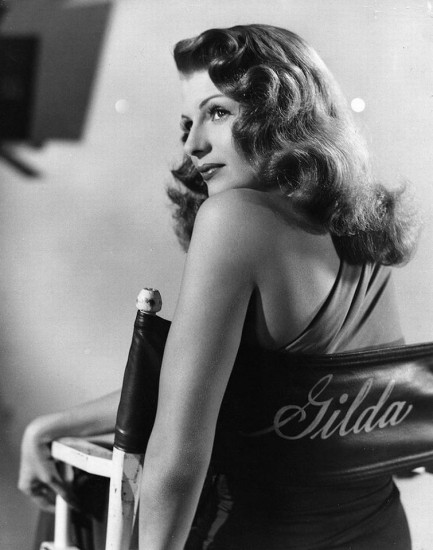
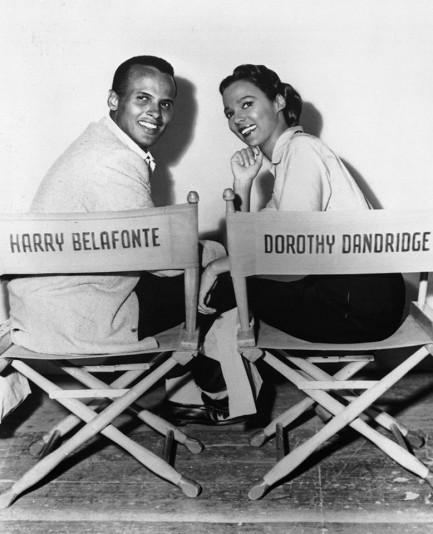
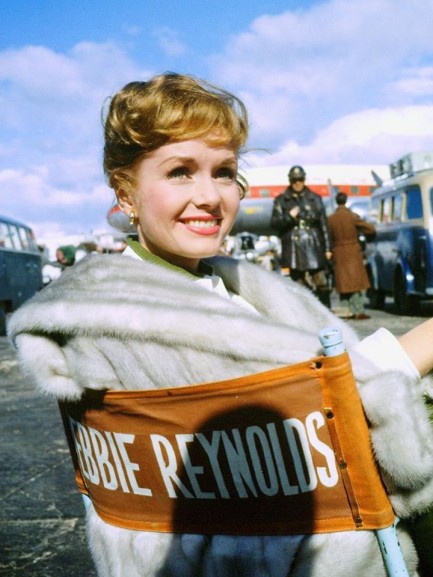
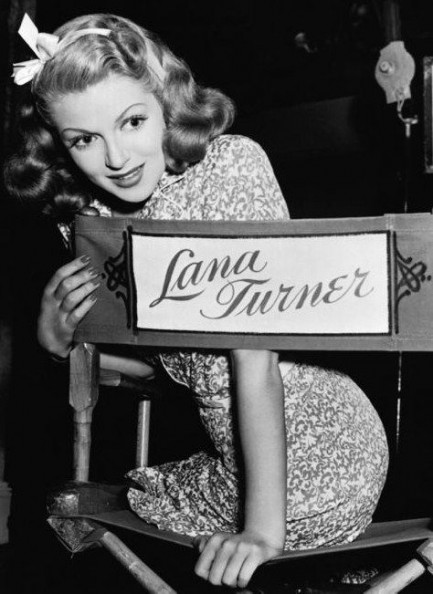
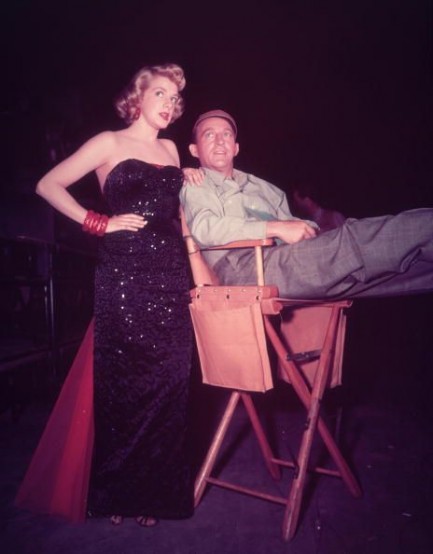
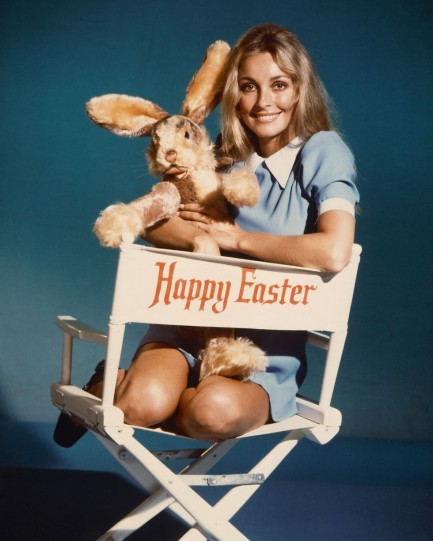

| Intl. Notebook | Sep 25 2019 |

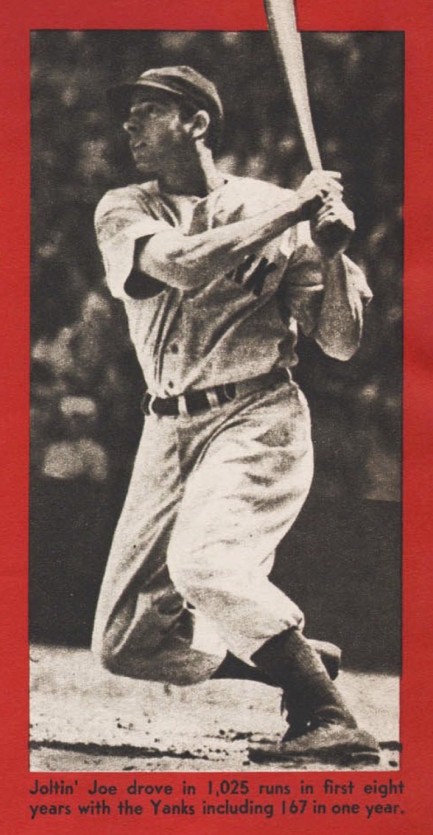
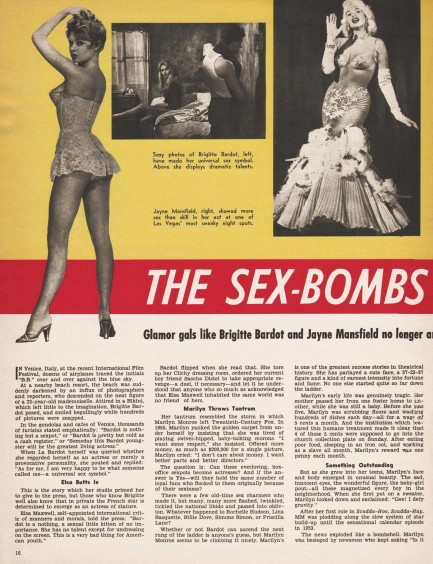
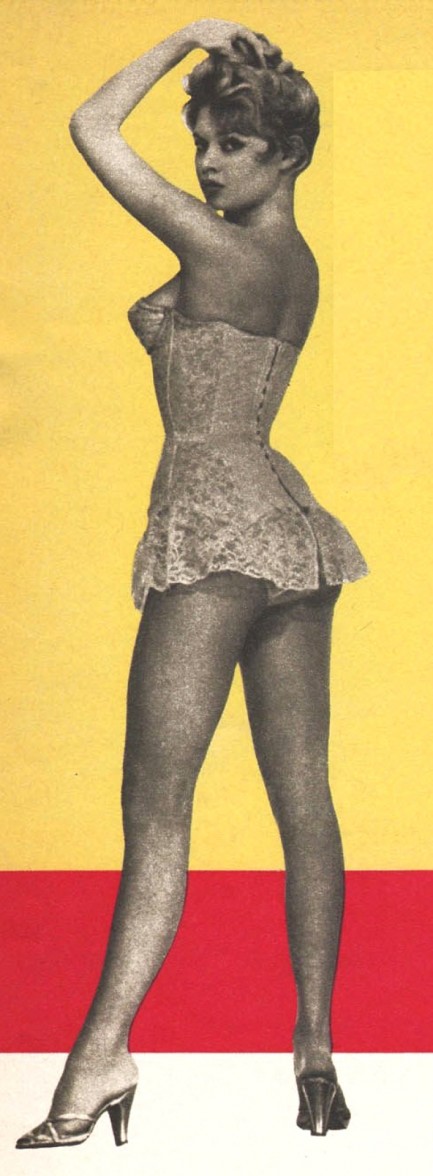
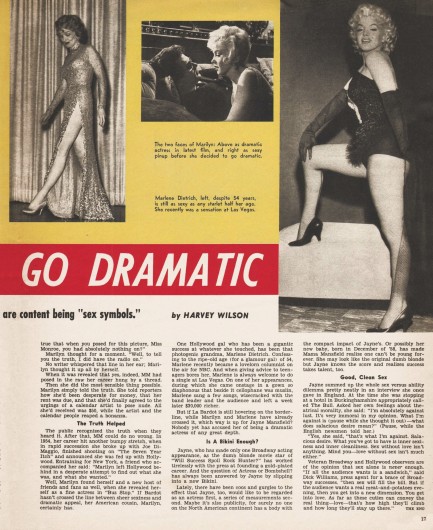


| Vintage Pulp | Jun 8 2014 |


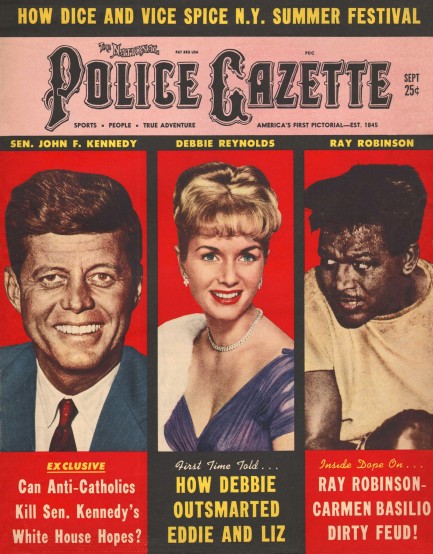
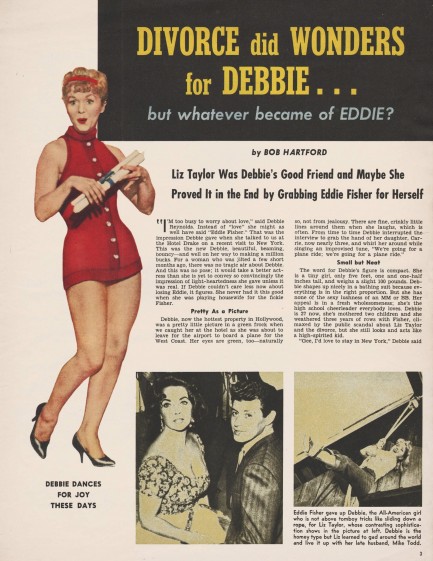
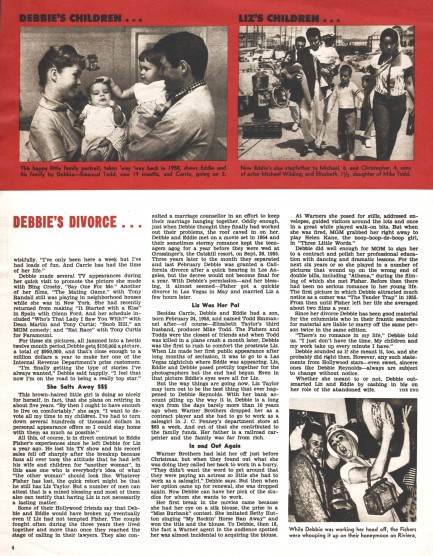
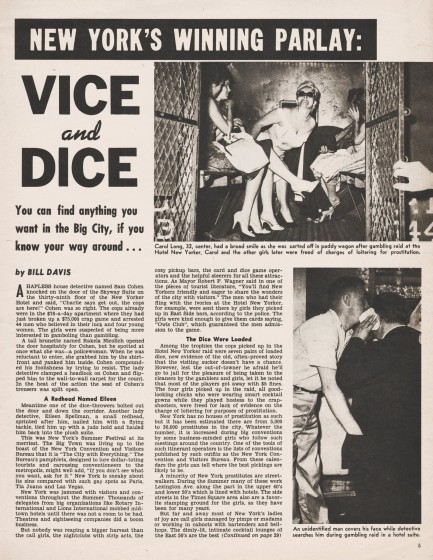
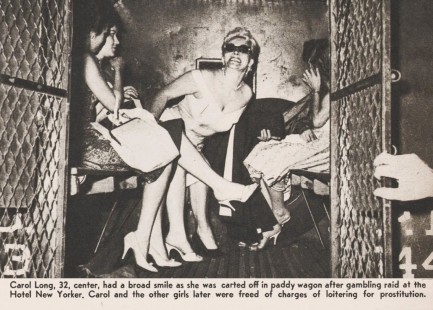
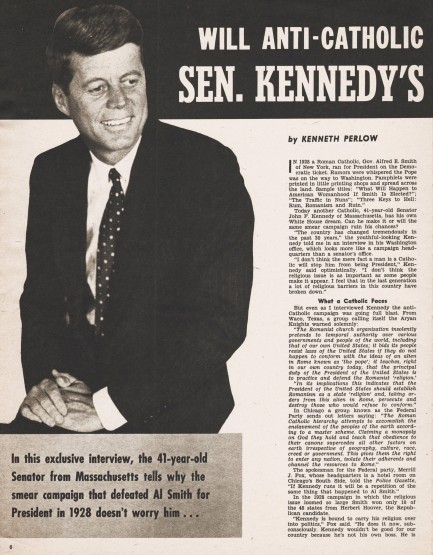
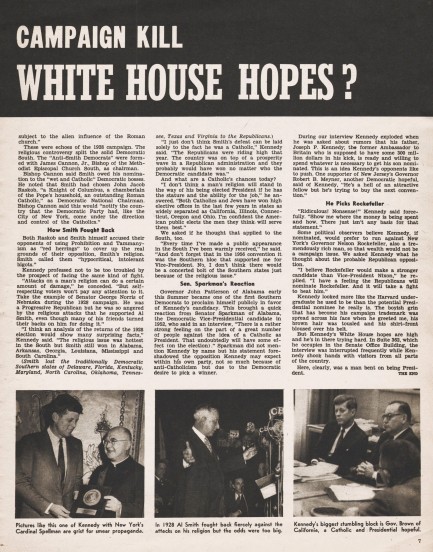
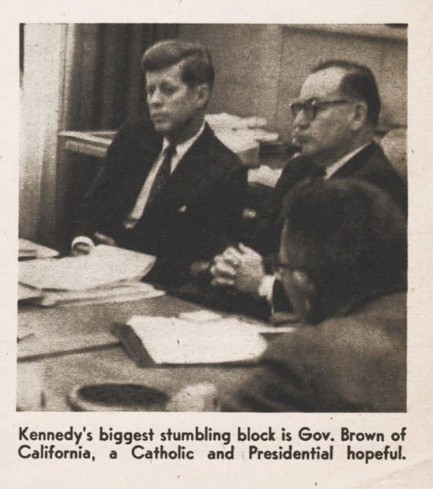
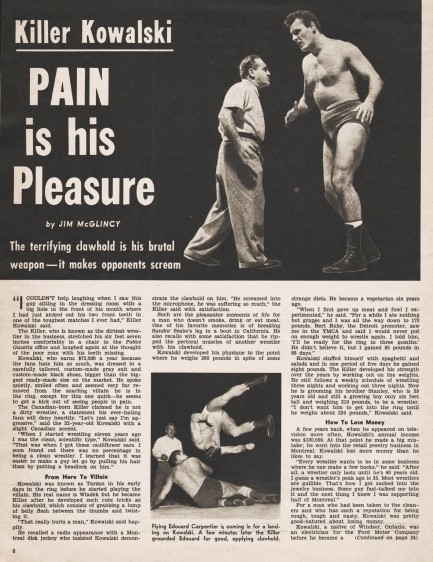
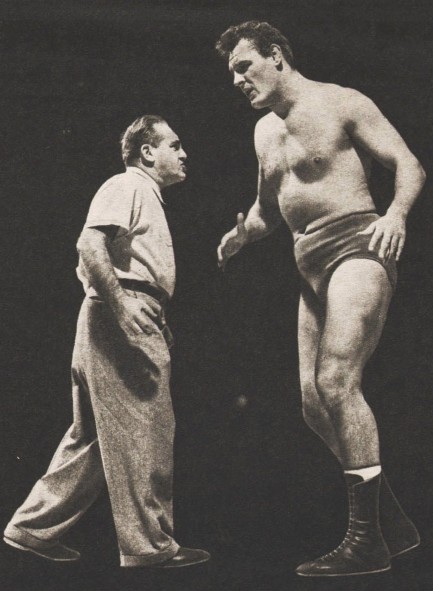
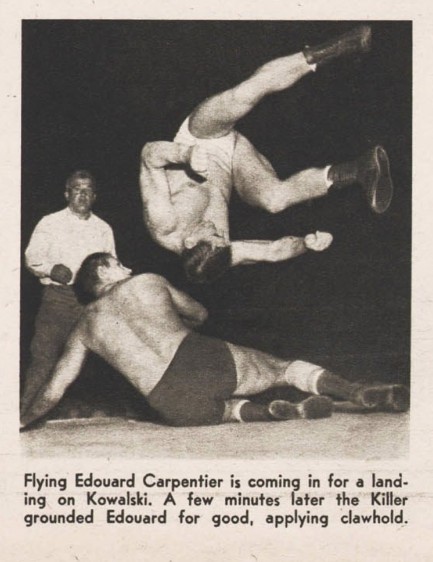
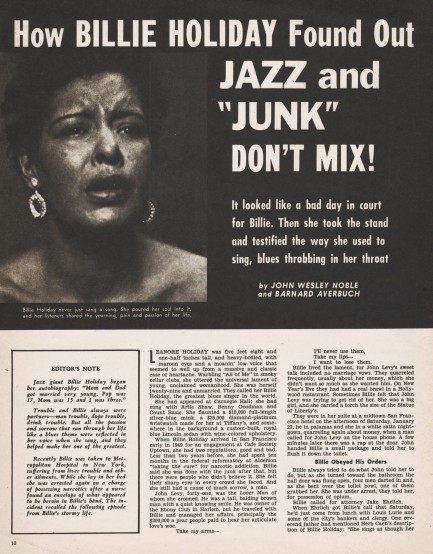
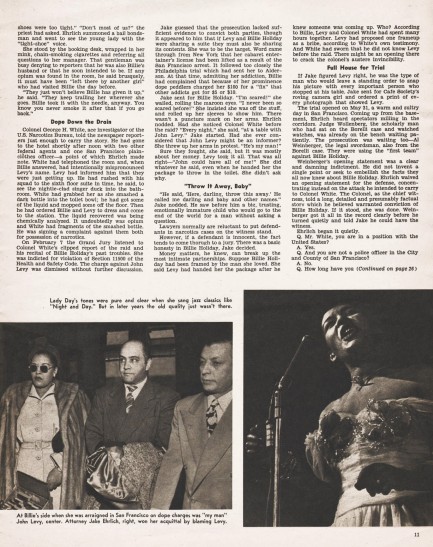
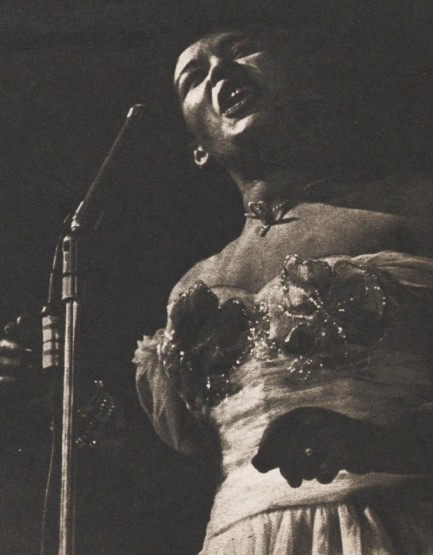
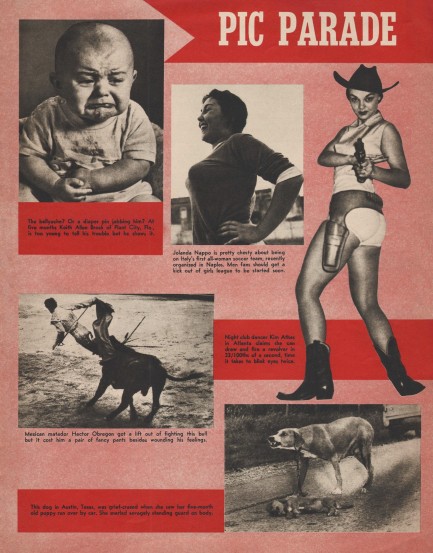
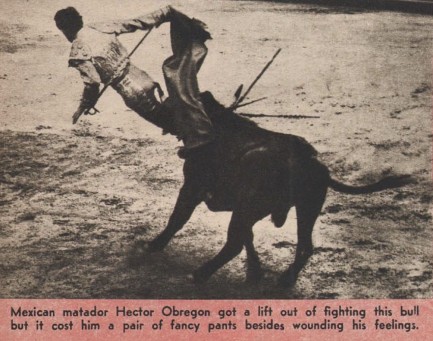
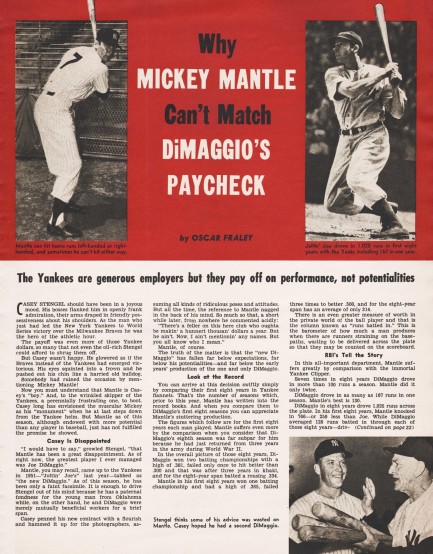
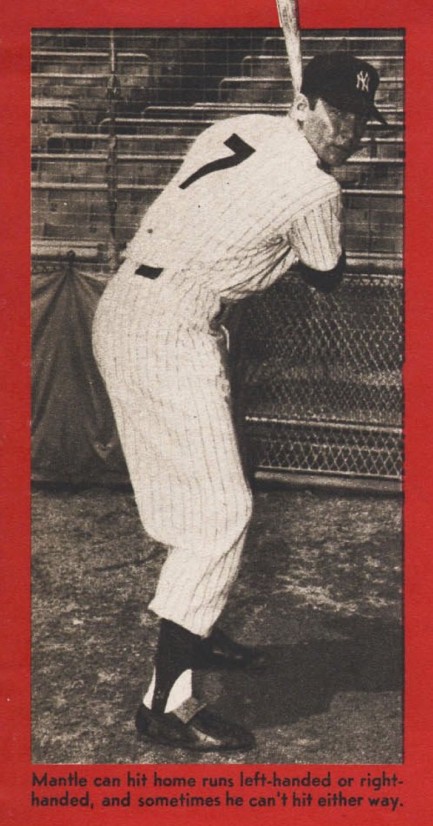
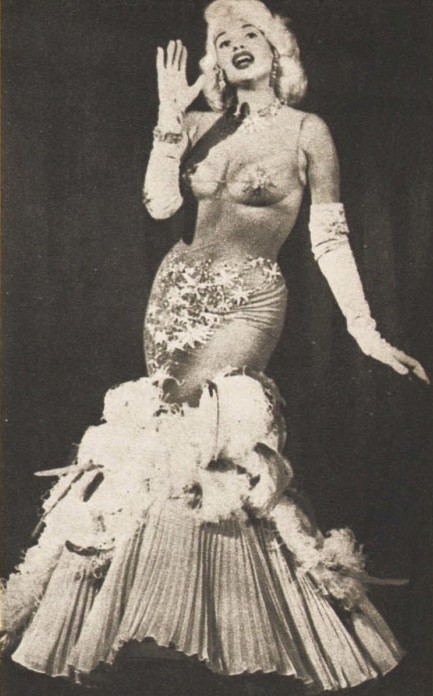
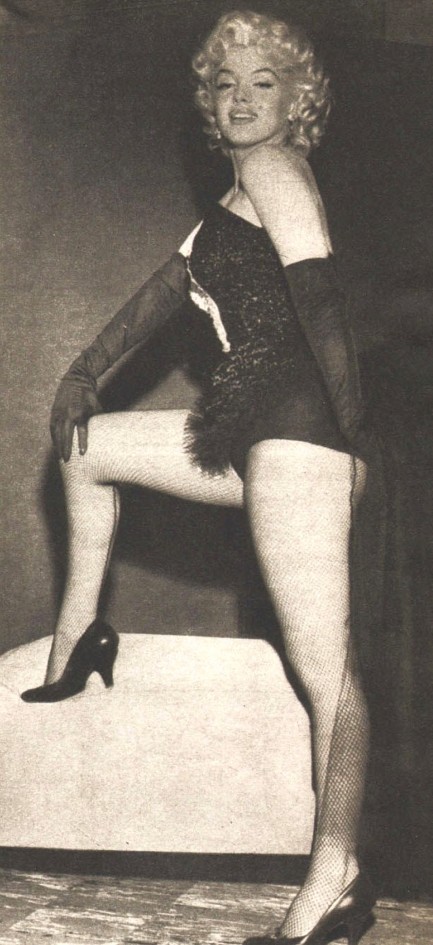
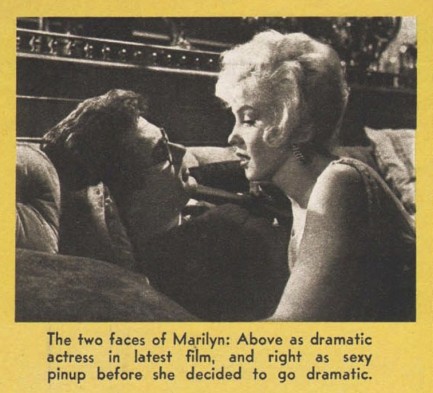
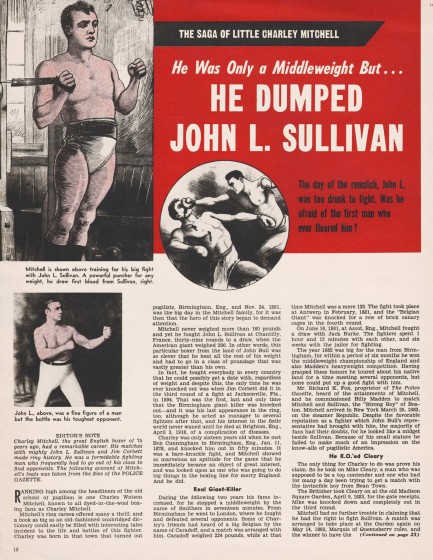
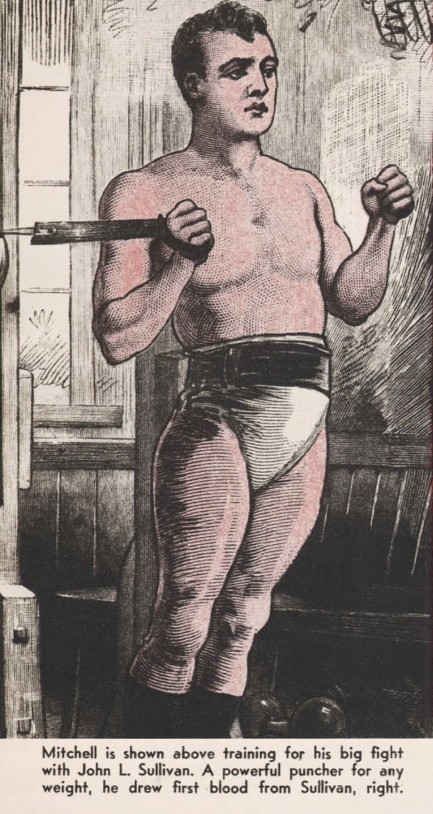
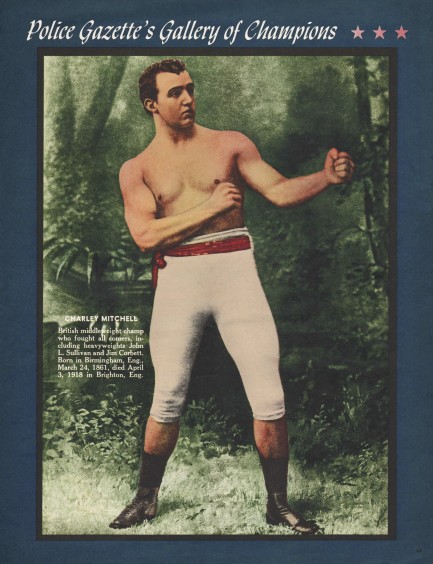
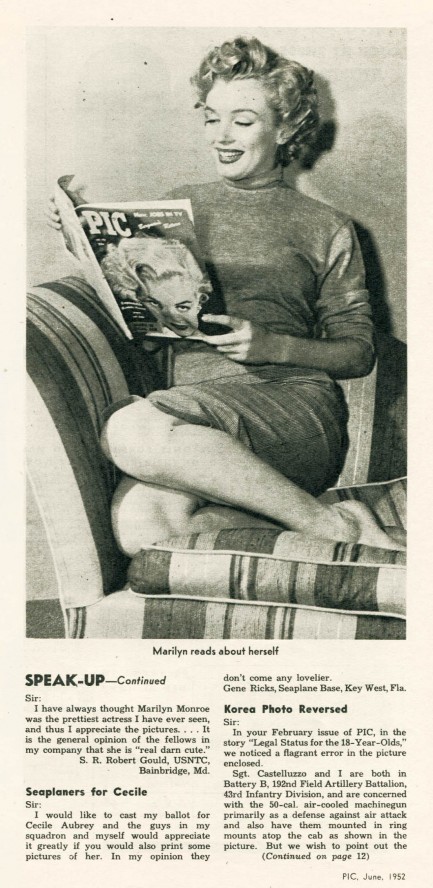
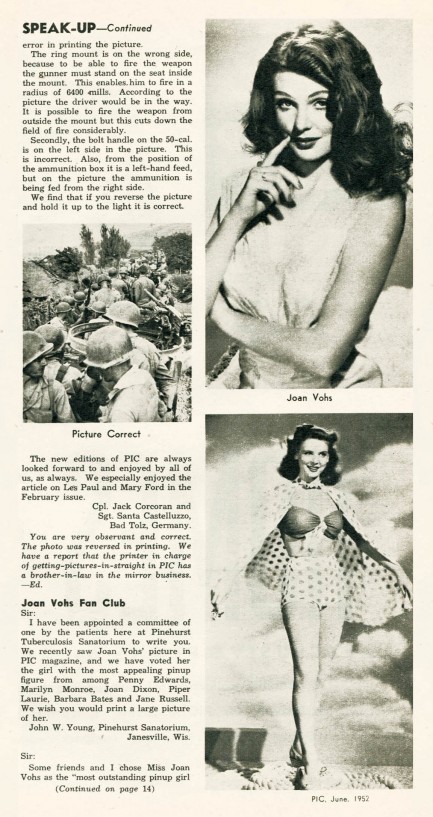
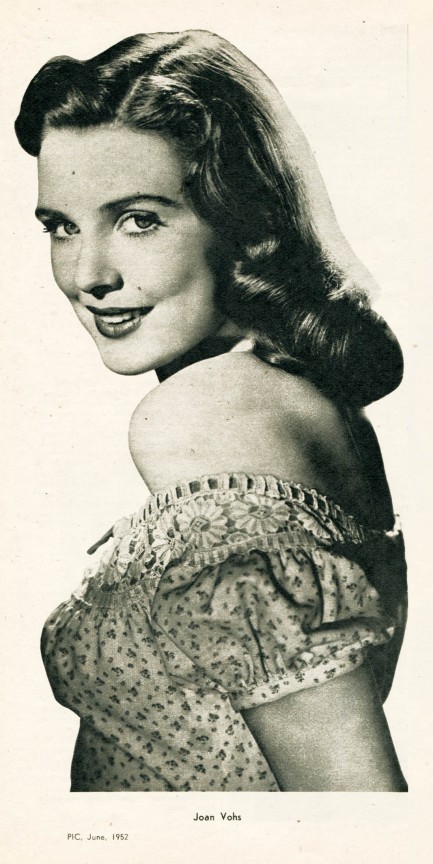
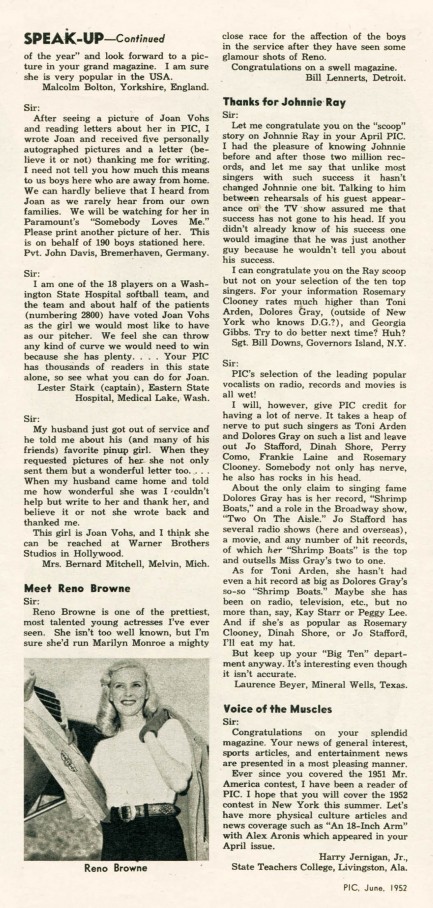
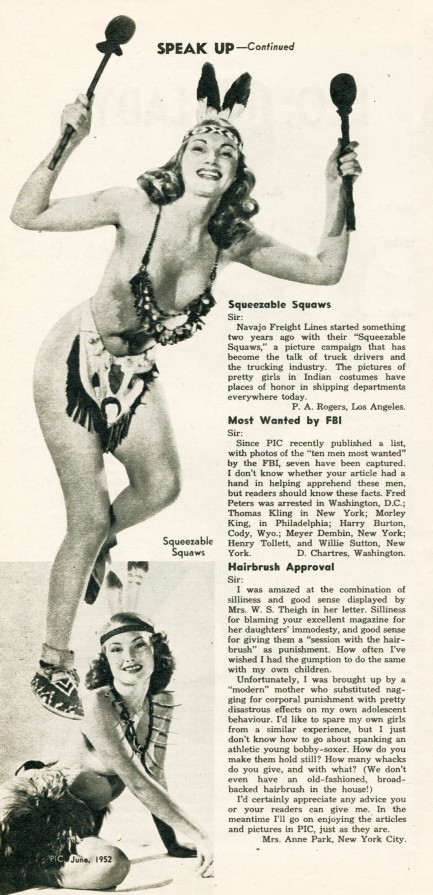
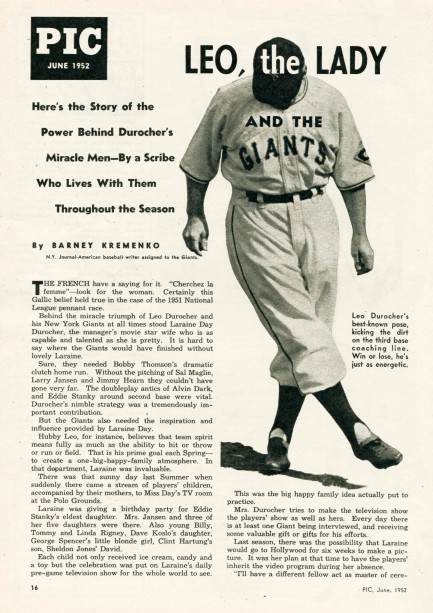
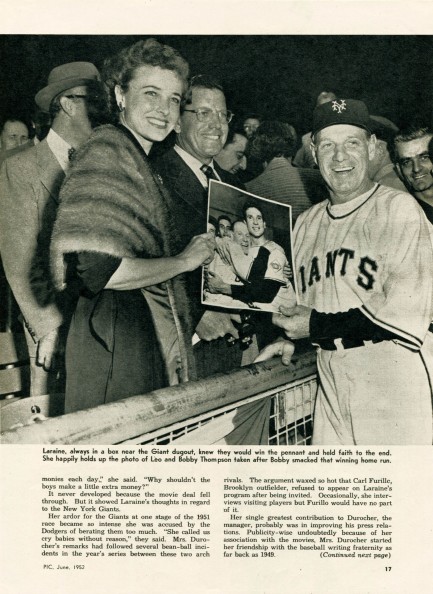
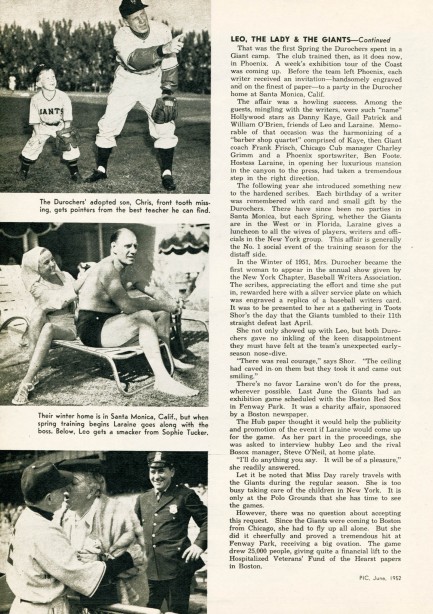
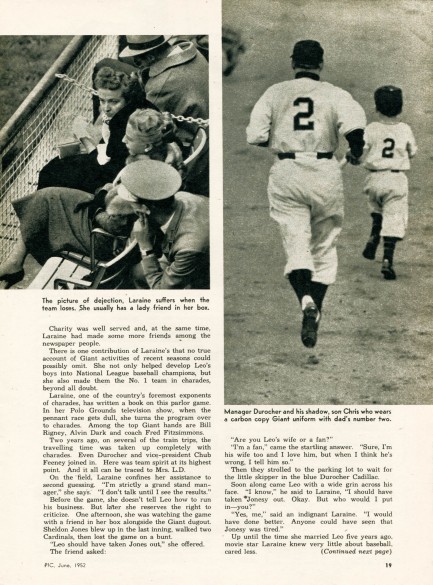
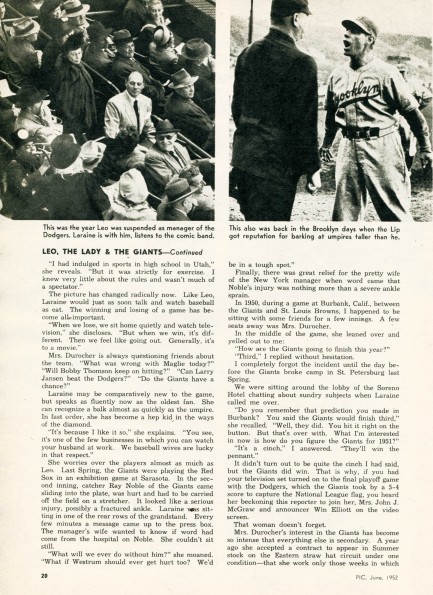
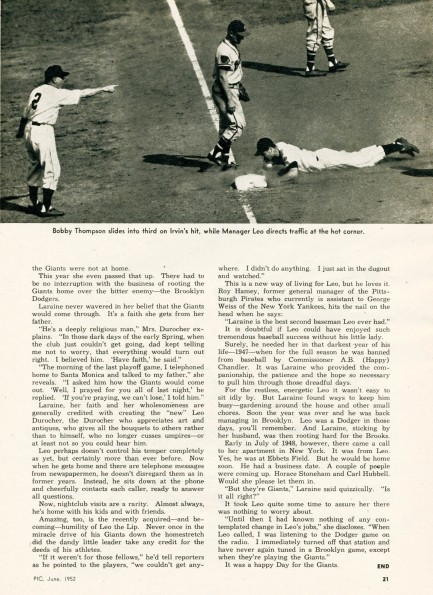
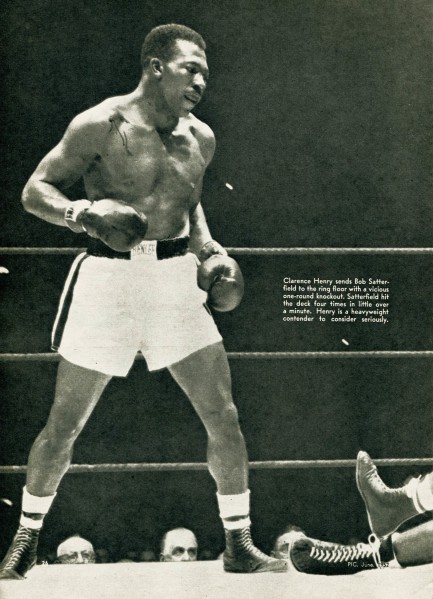
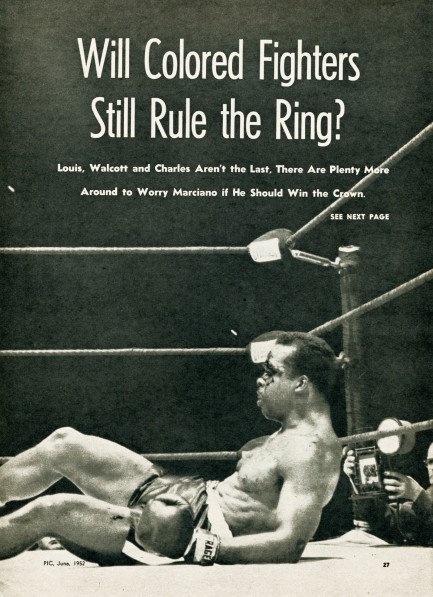
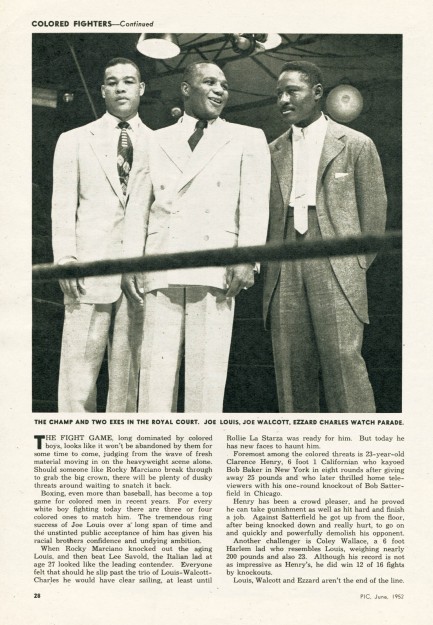
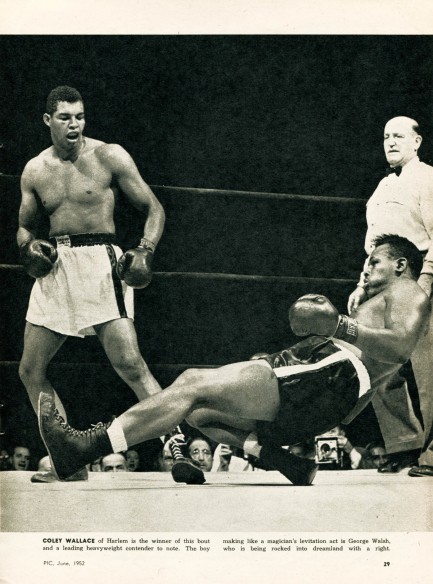
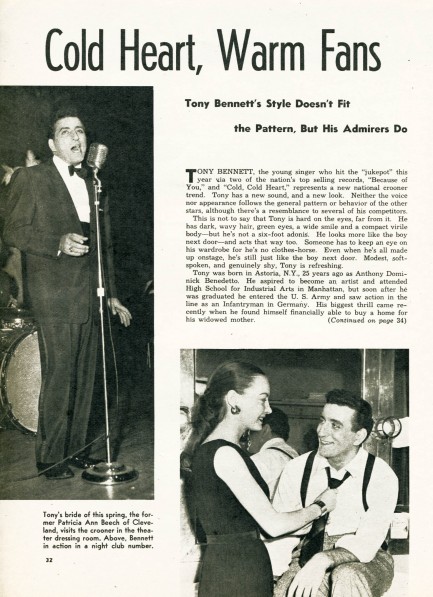
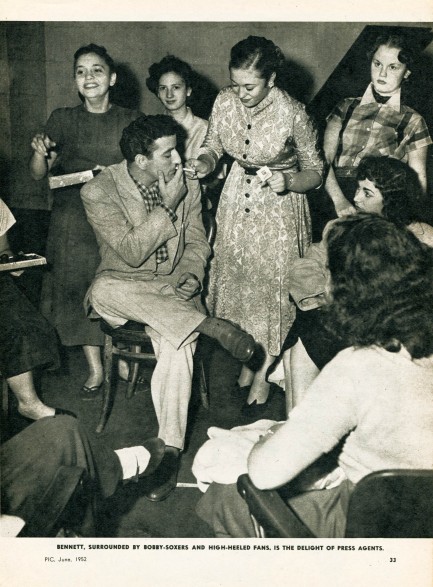
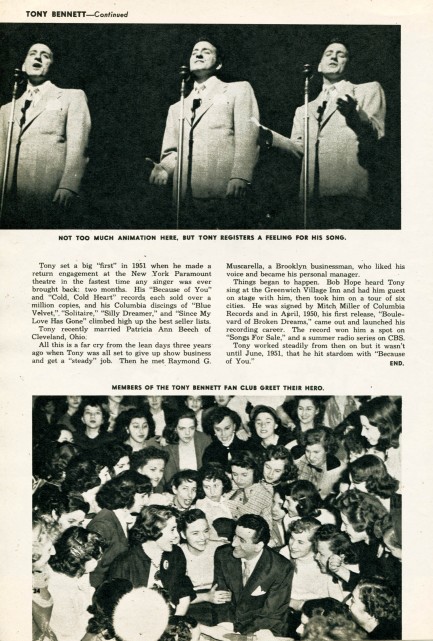
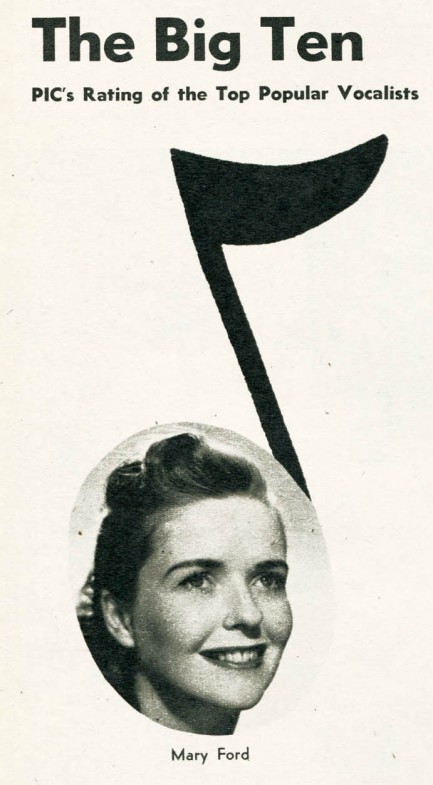
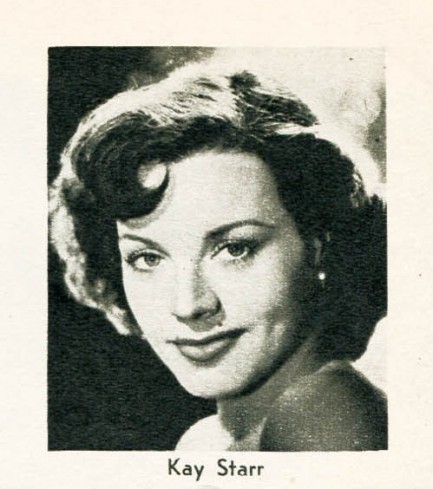
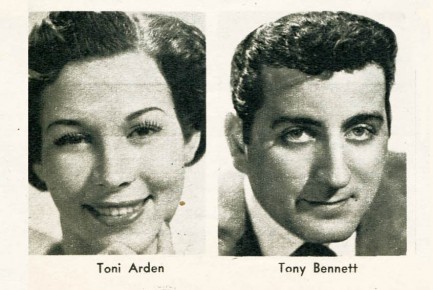
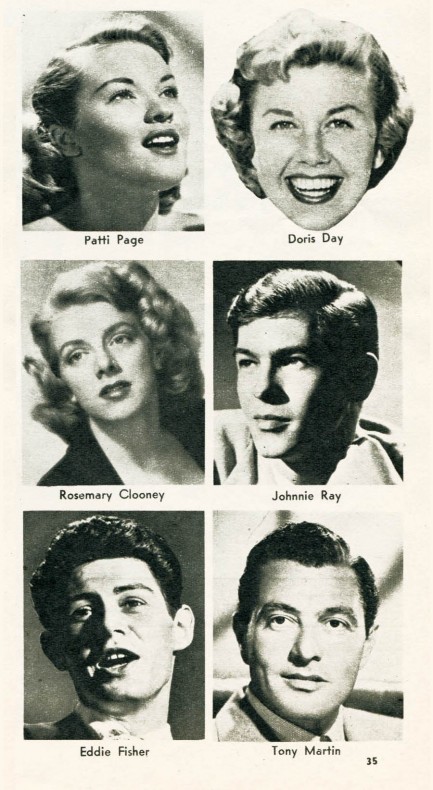
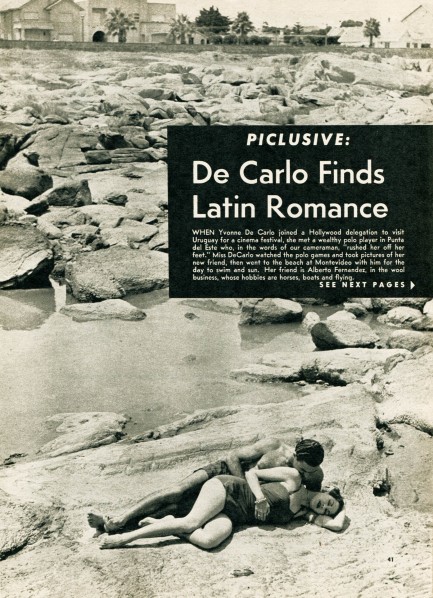
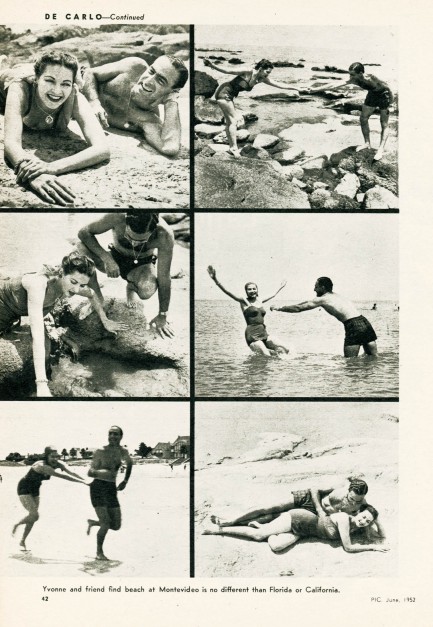
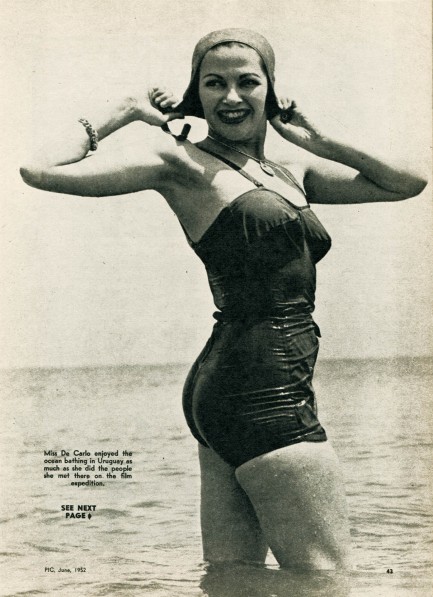
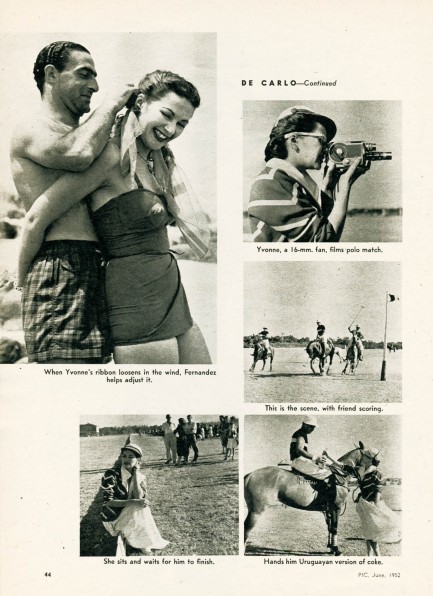
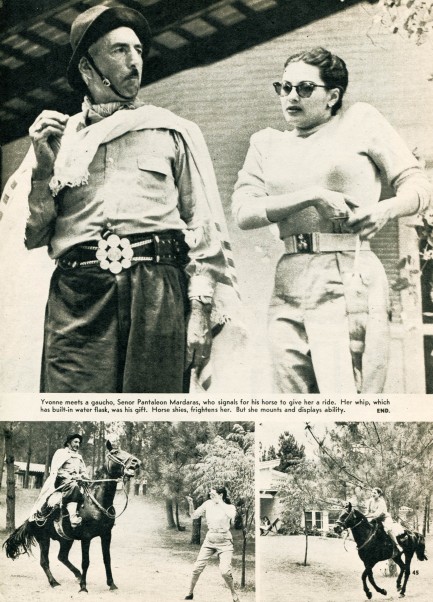
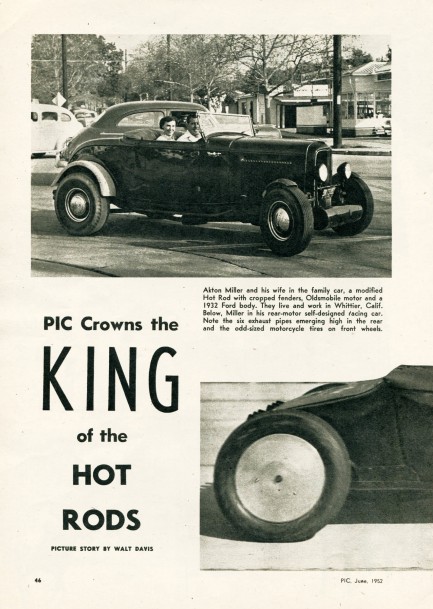
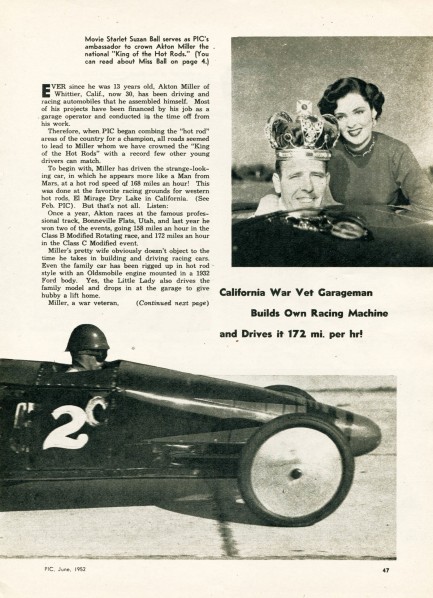
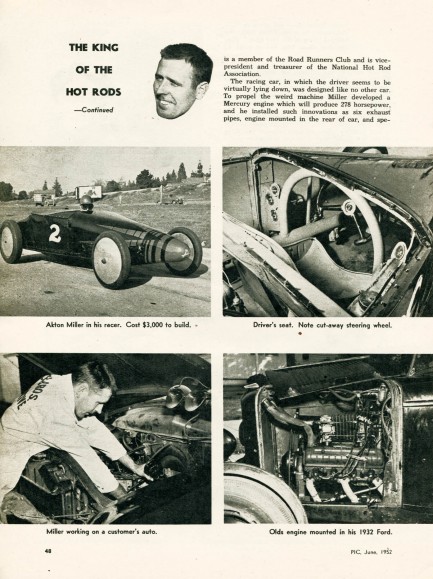
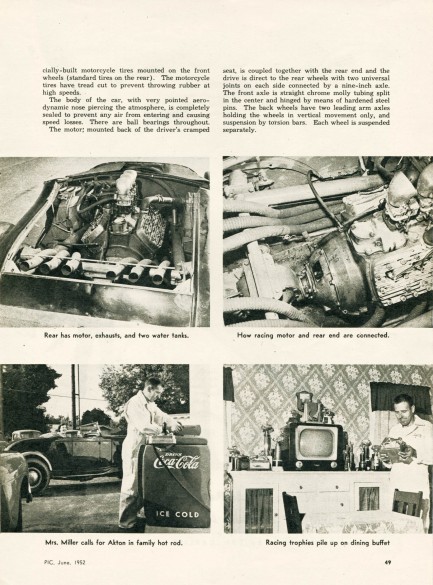
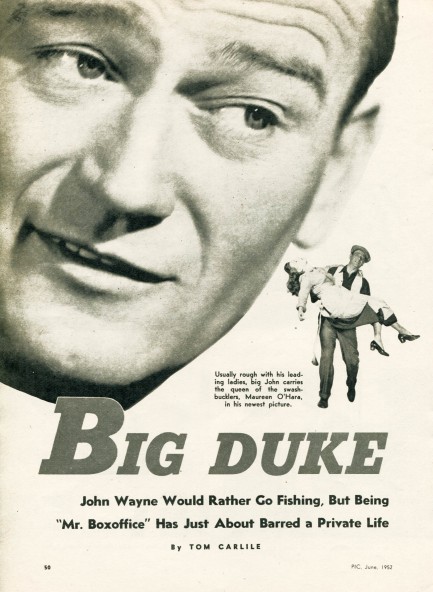
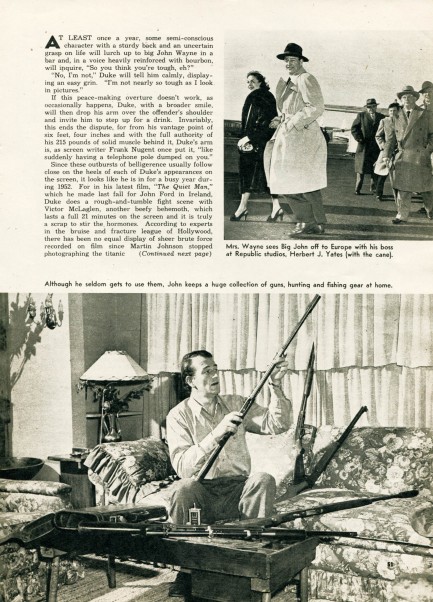
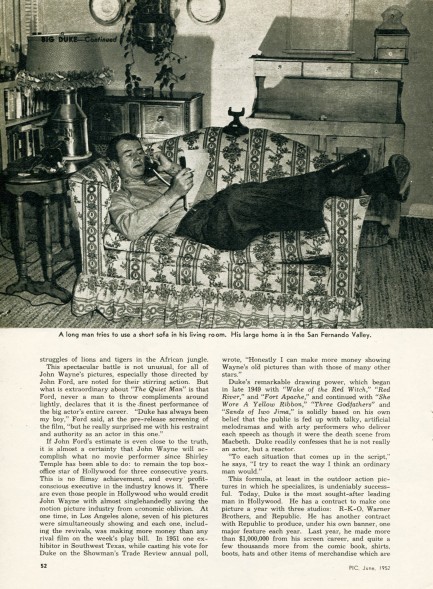
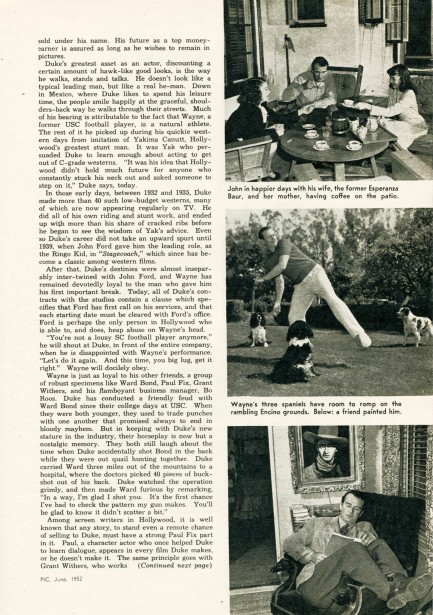
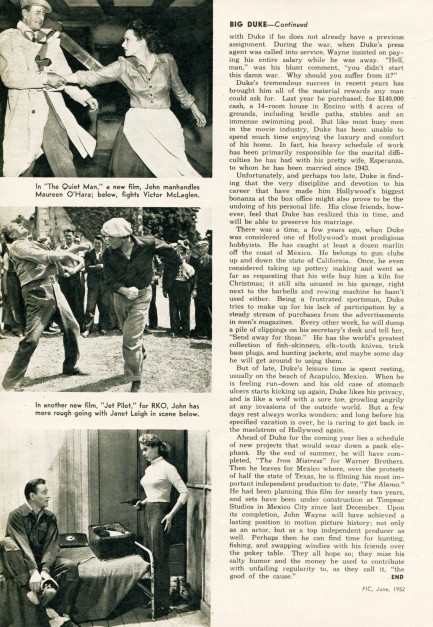
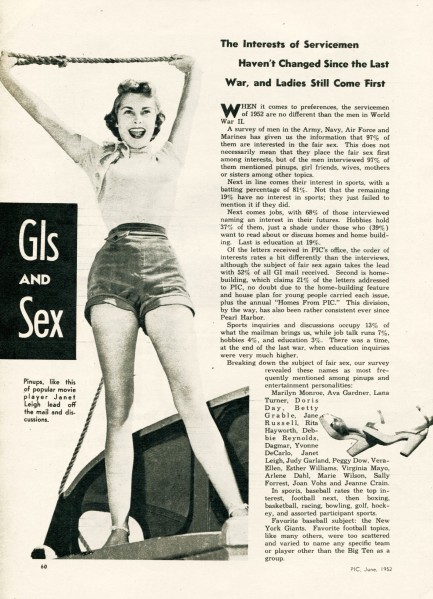
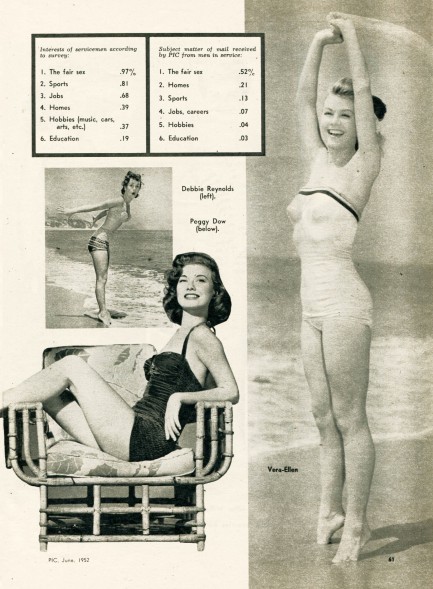
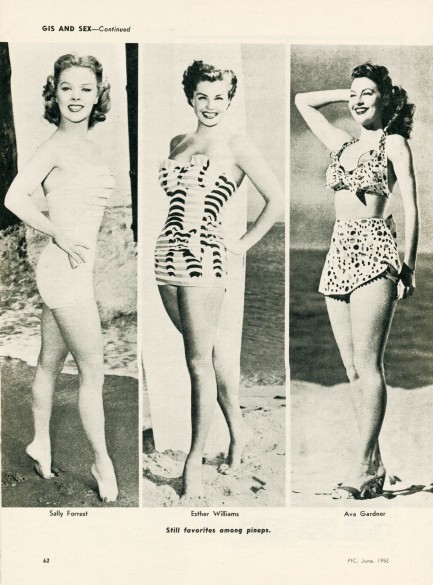
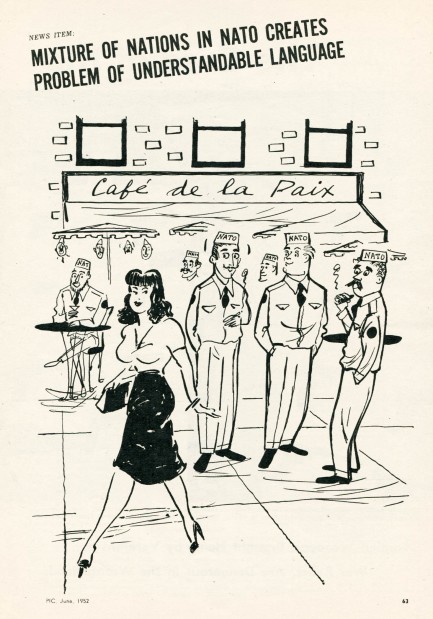
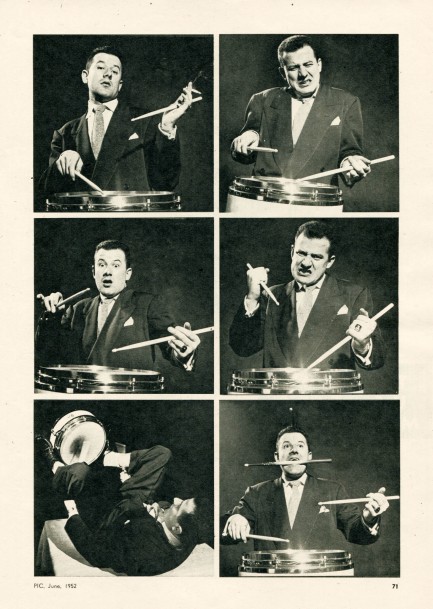
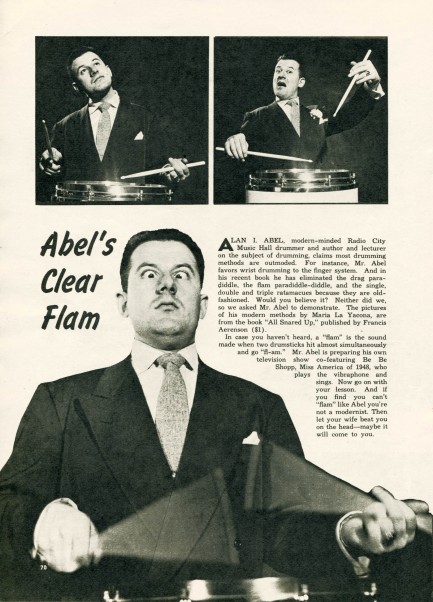
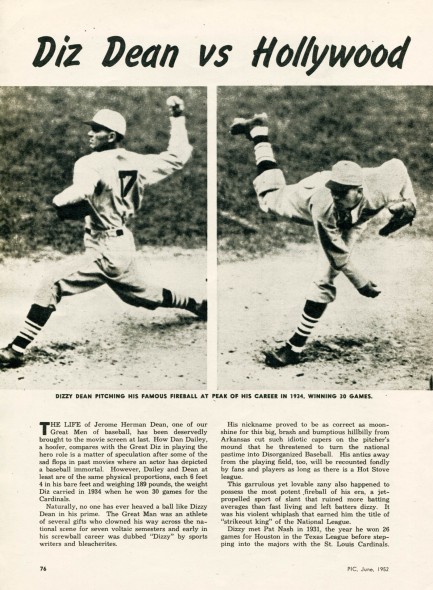
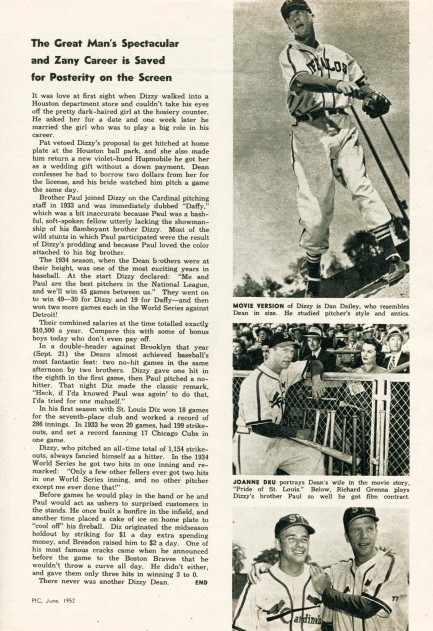
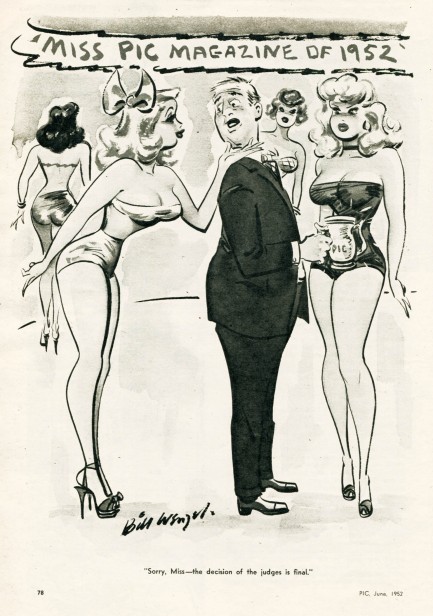
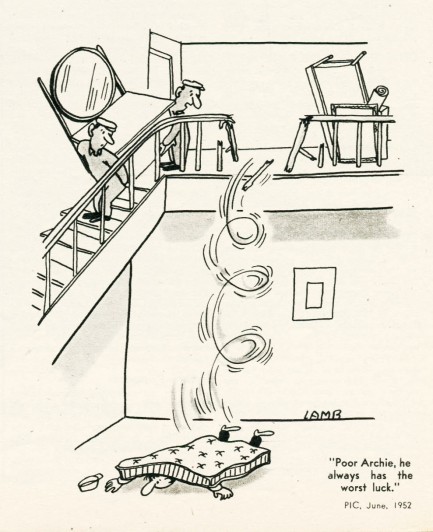
We’ve featured Pic magazine only once before, but not because it was an unimportant publication. Quite the opposite—we’ve seen issues as early as 1936 and as late as 1958, making it both a Depression and World War II survivor, presumably no easy feat and certainly a run indicative of sustained popularity. Early issues seemed focused on sports, but it soon broadened to include celebrities. It was launched by Wagner Publications of New York City, and this issue appeared in June 1952 with a cover featuring actress Suzan Ball placing a crown on the head of Akton Miller, a man Pic had chosen as its Hot Rod King. Inside you get a raft of Hollywood stars, including photos of Yvonne De Carlo in Uruguay, Marilyn Monroe, Janet Leigh, and Joan Vohs, shots of New York Giants manager Leo Durocher and his beautiful actress wife Laraine Day, and some nice boxing pictures. There’s also an interesting feature on the day’s top vocalists (with African-Americans notably excluded), and a profile of crooner Tony Bennett.
It was then that her train to stardom jumped the tracks. She injured her leg performing a dance number in East of Sumatra, and later in the year had a car accident and hurt the leg again. Treatment for those two injuries led to the discovery of a cancerous tumor. Soon afterward she fell and broke the limb, and when doctors decided they couldn’t remove the tumor they instead took the entire the leg. That was in January 1954. Ball soldiered on in her show business career with an artificial leg, starring in Chief Crazy Horse, though she lost fifteen pounds during the production, and later playing nightclub dates and appearing on television shows. In July 1955 she collapsed while rehearsing for the show Climax, whereupon doctors discovered the cancer had metastasized and spread to her lungs. A month later she died at age twenty-one. We have about fifty scans below.



| Hollywoodland | Nov 8 2012 |


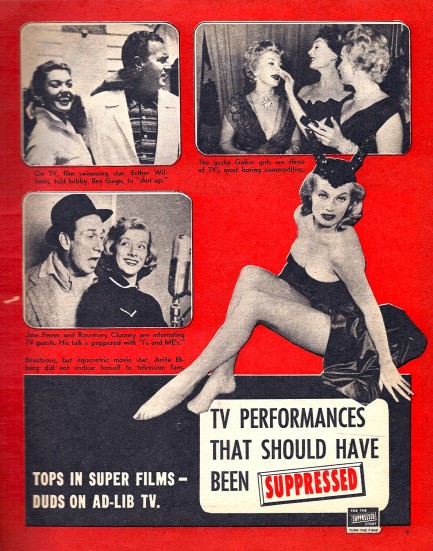
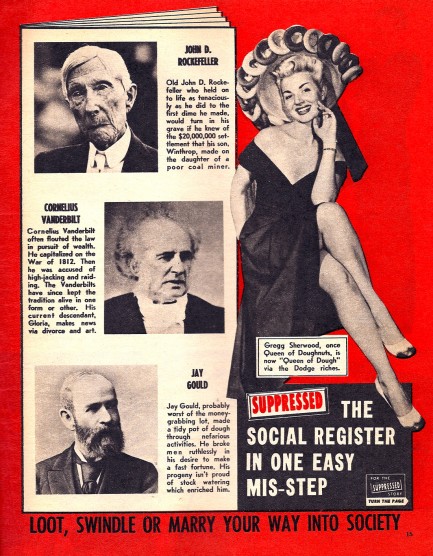
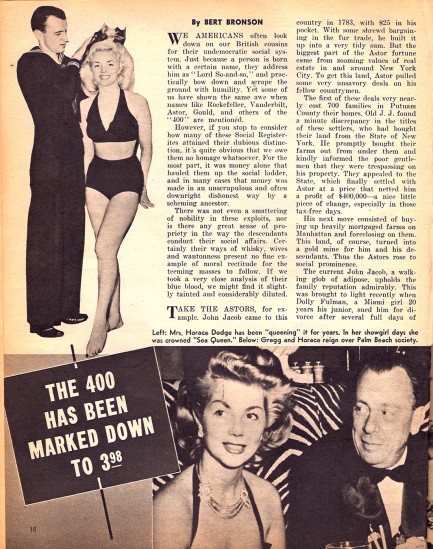
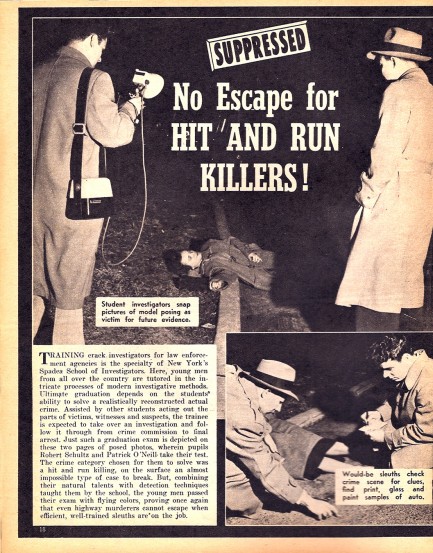
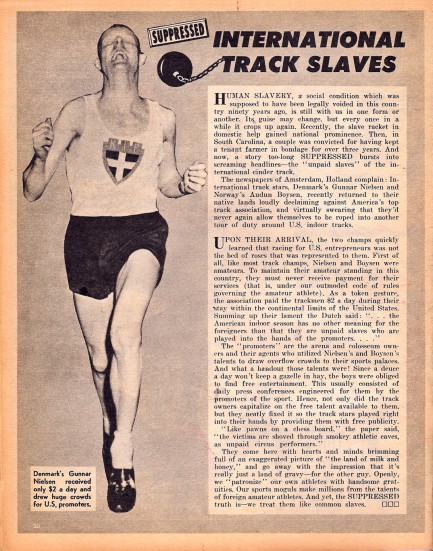
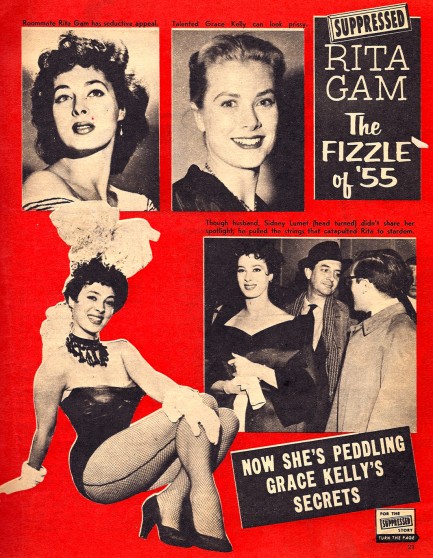
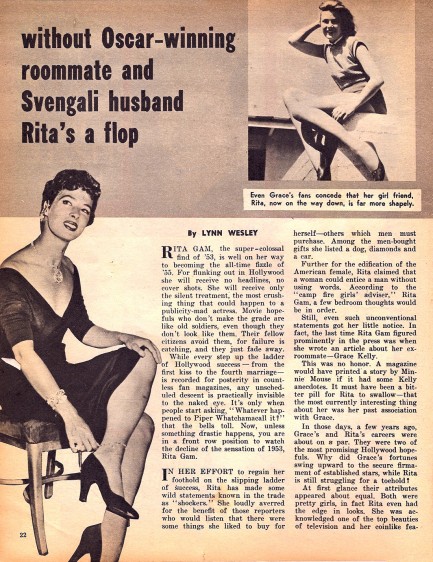
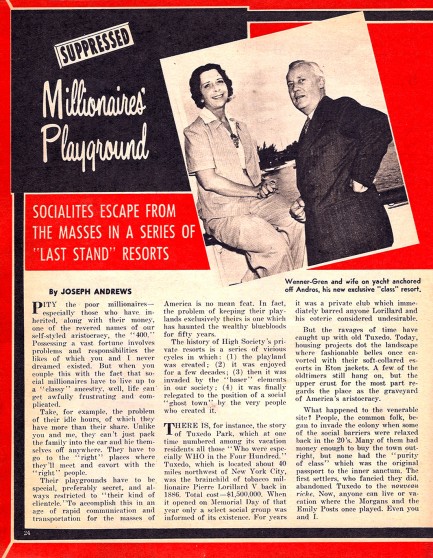
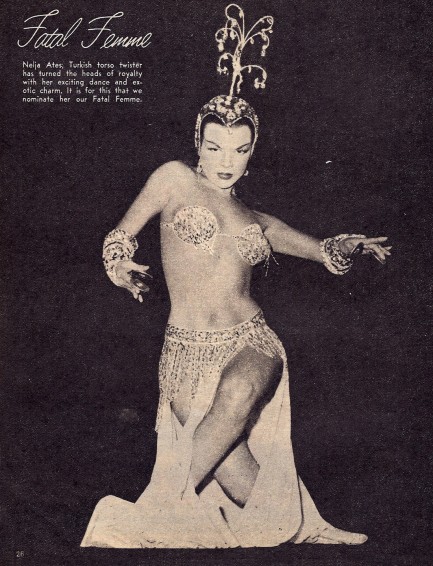
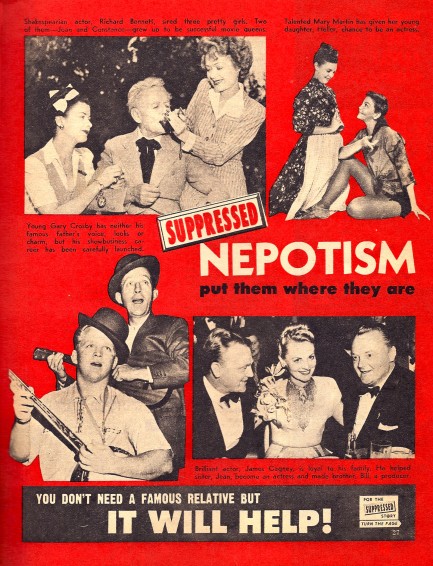
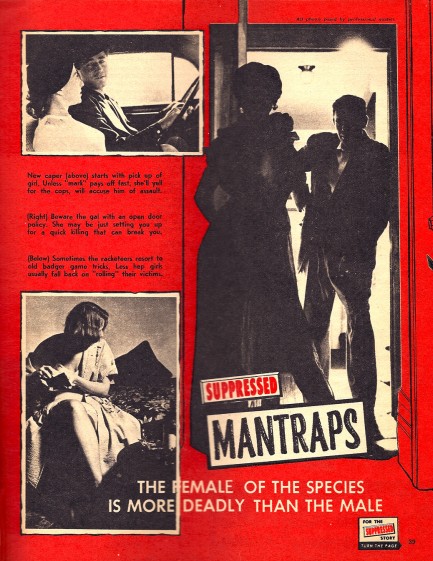
Above is the cover of the NYC based tabloid Suppressed from this month in 1955. This issue shows Suppressed in full bloom—bold, brash, fearless. Within the next two years a series of Hollywood lawsuits against scandal magazines would begin to make editors wary of being dragged into court for committing libel and slander, but 1955 was still the heyday for celeb bashing, and Supressed engaged in what might be best described as open warfare against film stars. Here’s a small sampling of some of the gut punches in this magazine:
 biggest newsstand seller in the U.S. These publications were powerful. Like modern American cable news, they assumed leading roles in making the public swallow false political memes—a commie under every bed, a black man in every bed, and the loose women who made it all possible.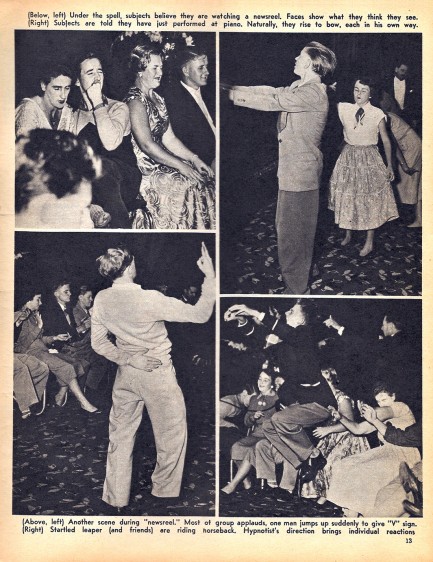

| Vintage Pulp | Aug 7 2012 |

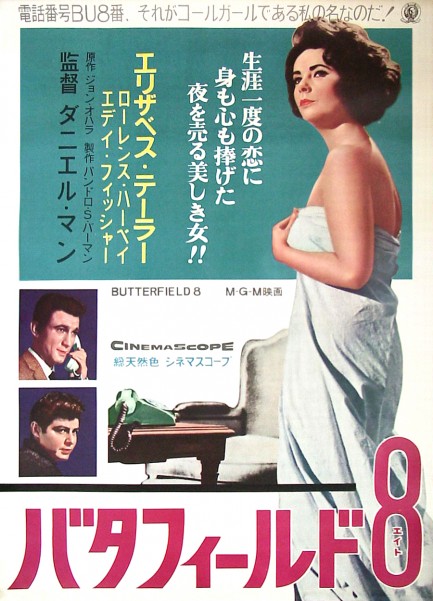
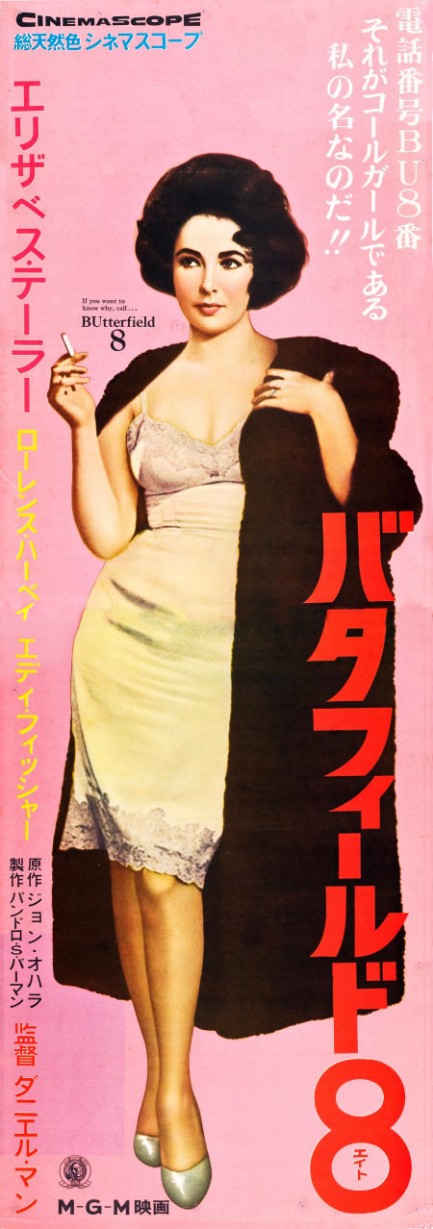
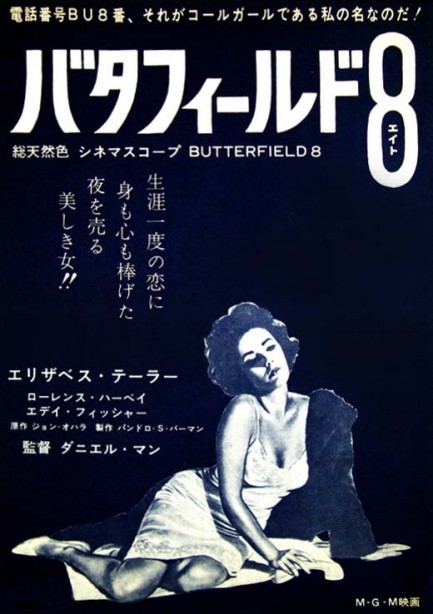
The 1960 melodrama BUtterfield 8—the capital BU being a phone exchange in New York City—was probably one of the most contentious productions in which Elizabeth Taylor was ever involved. Because she had just gotten her name splashed all over every tabloid on the planet for stealing the husband of America’s sweetheart Debbie Reynolds, and because her contract with MGM was ending and she wasn’t coming back to the studio, the suits decided to capitalize on her freshly ruined reputation by casting her as the promiscuous Gloria Wandrous. If the last name feels like a mash-up of “wondrous” and “wandering,” that’s an apt description for the character, who’s a home-wrecking maneater. But the studio suits weren’t done. Just to make sure the scandal rags were all over the story, they cast the man Taylor had stolen in real life—Eddie Fisher—in the film as well. Their goal seemed to be to generate attention and they succeeded. BUtterfield 8 was a success and Taylor snagged an Academy Award for her efforts, but she hated the film. The story goes that she threw her shoes at the screen the first time she saw it. The Japanese posters you see above are exceedingly rare. The first has never appeared online before, we're pretty sure; the second version, in pink with the unusual capital BU in the title, we found at an auction site. We can’t help but think even Elizabeth Taylor would have liked them.
Update: Oops, we forgot we had a third vesion of the poster. An unusual all black edition. We've uploaded it below, butter late than never. Heh. Um...

| Hollywoodland | Jan 2 2012 |

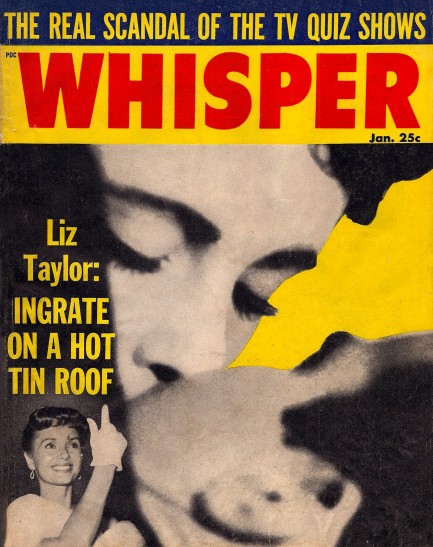
Hy Steirman’s Whisper magazine is generally considered to be less racy than when it was owned by Robert Harrison, but this issue from January 1959 shows a little of the old spark. It slams Elizabeth Taylor for stealing Eddie Fisher from Debbie Reynolds, with staff scribe Orson C. Green spewing forth this venom: But then Liz made clear to the whole world that beneath that lovely exterior there beats a heart of purest gall. She repaid the infinite kindness of her two friends by breaking up their marriage. Green goes on to describe Taylor trying to soak down New York’s Plaza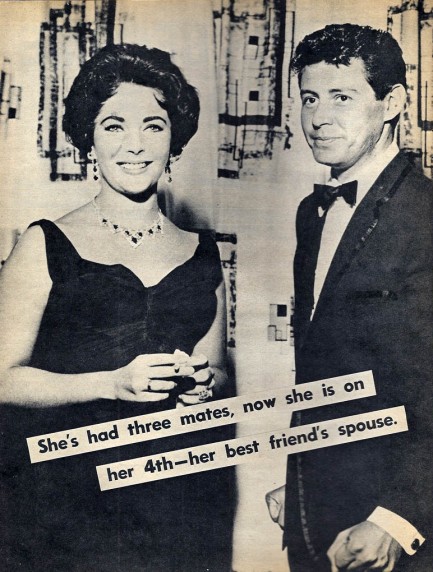
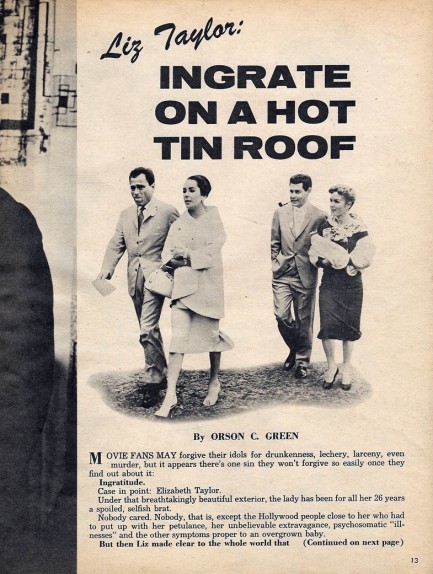
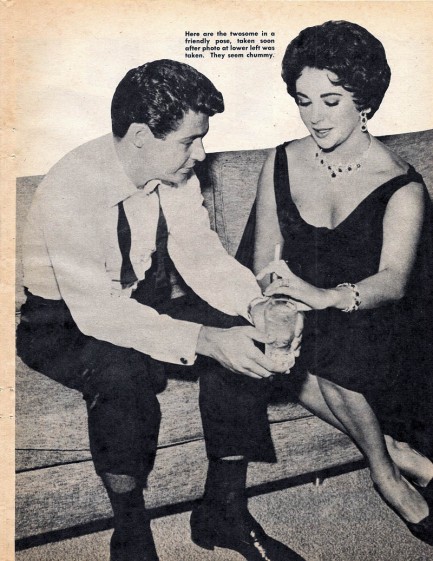
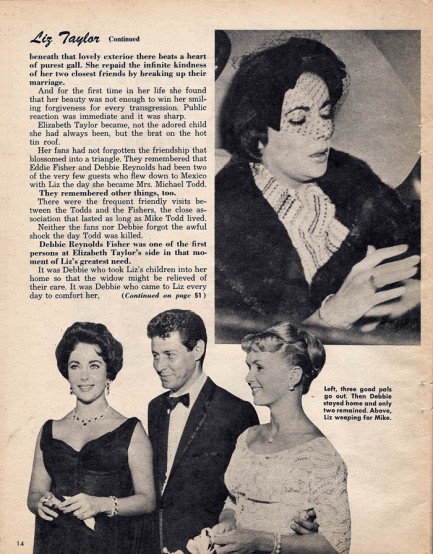 Hotel for two weeks of room charges, and then, when asked to pay, phoning up Montgomery Clift and getting him to help her trash the room. The article concludes: In short, Miss Taylor and friend Clift repaid [the Plaza] for its hospitality by deliberately making a mess for some forlorn chambermaid to clean up. Ingrate!
Whisper also takes on ex-King Farouk I of Egypt—who was a favorite tabloid target of the time—describing him as “Fatso Farouk”, “the roly-poly playboy of the Nile”, “the balding balloon boy” and worse. Readers are told that he was at Maxim’s in Paris one night and saw Coccinelle do a song accompanied by a striptease that left her in only a beaded g-string. Farouk, who was famously amorous, was so smitten that he sent his card and a bouquet of flowers backstage. Coccinelle came to say thanks, and when asked by Farouk agreed to go to dinner. Moments after she left the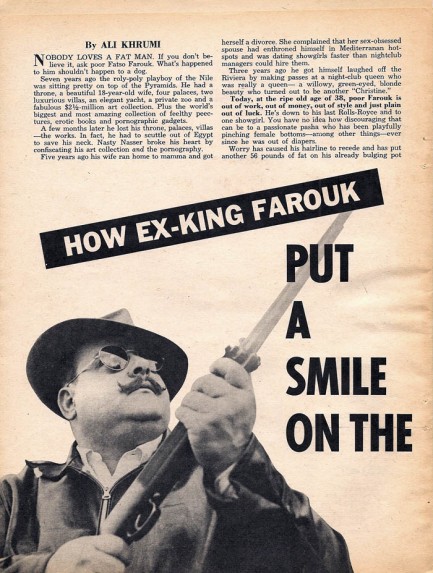
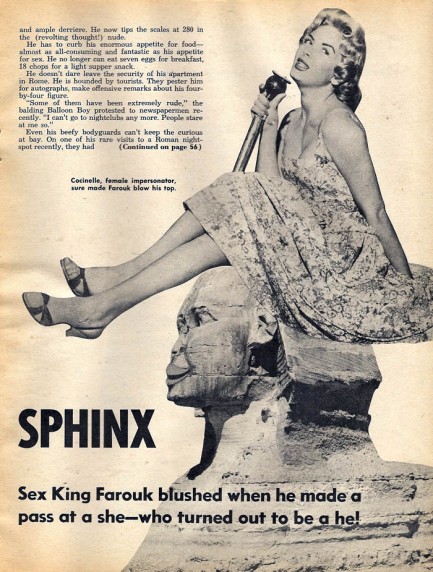 table one of the ex-king’s aide’s hastily scurried over and explained that Coccinelle had once been a man. Allegedly, Farouk flipped. Whisper describes overturned tables, broken bottles, the works. Readers are told: The whole Riviera rocked with laughter. The bulging butt of the joke fled to Rome.
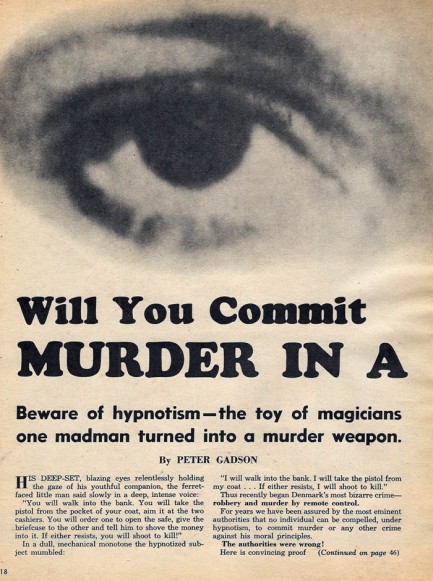
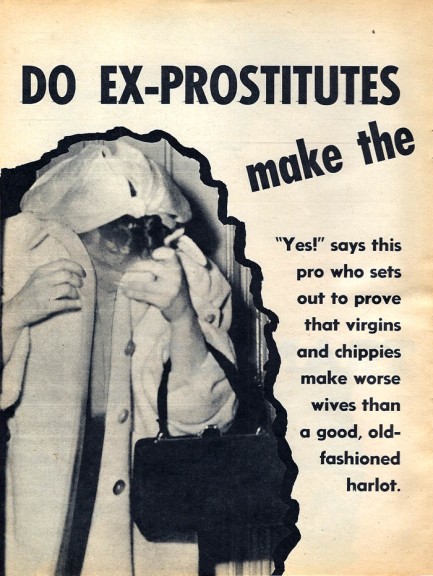
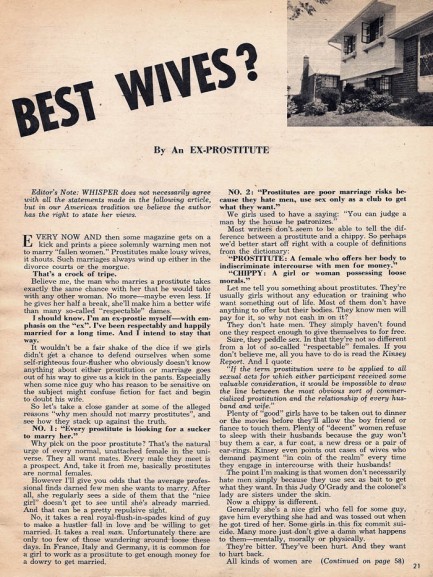
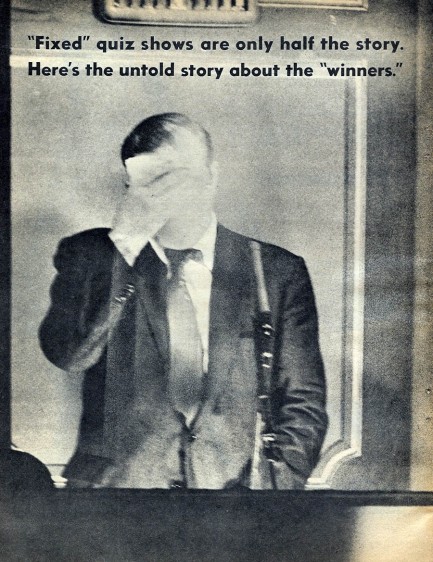
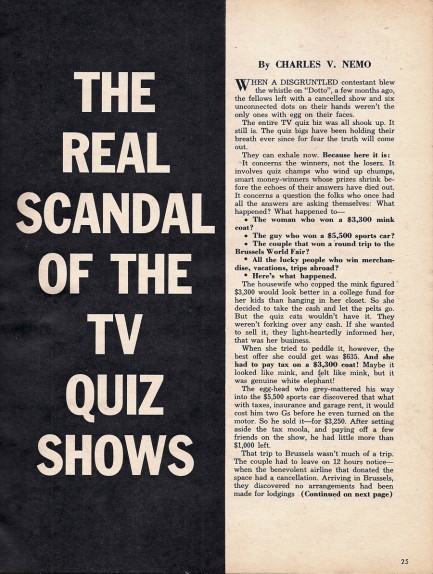
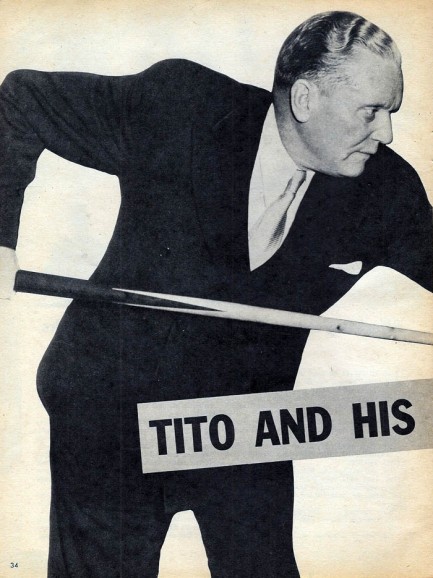
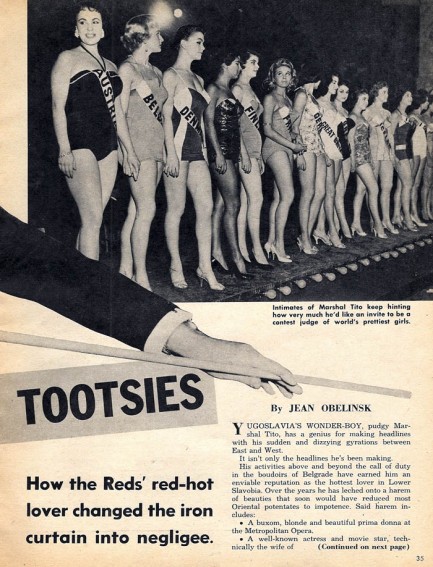
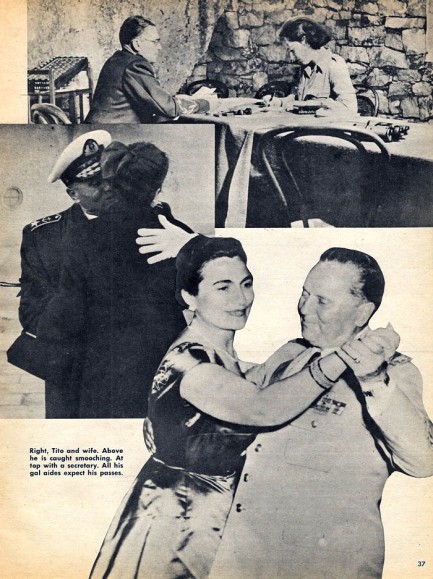
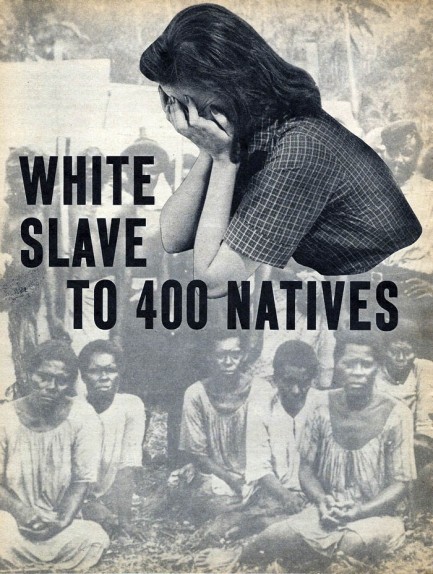
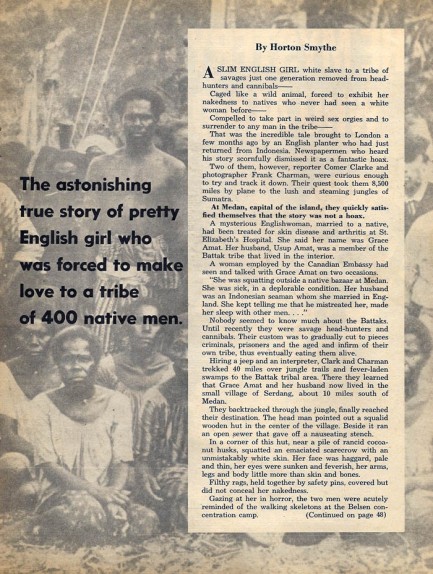
Whisper goes on to discuss sperm banks, state prisons, Vladimir Lenin, Josip Tito, and “white” slavery, but probably our favorite story is the one headlined: Do Ex-Prostitutes Make the Best Wives? A pertinent question. And whom did they get to write the answer? The byline says: by an Ex-Prostitute. We just love that. As far as whether Whisper gets any of its facts straight, we can’t really offer a guess, but this issue proves that even ten months after the sale from Harrison to Steirman, it hadn’t quite lost its spark. Things apparently went downhill pretty fast in the next few years, but we’ll judge that for ourselves as we examine more issues. Visit our entire Whisper collection by clicking its keyword at bottom.

| Vintage Pulp | May 23 2011 |

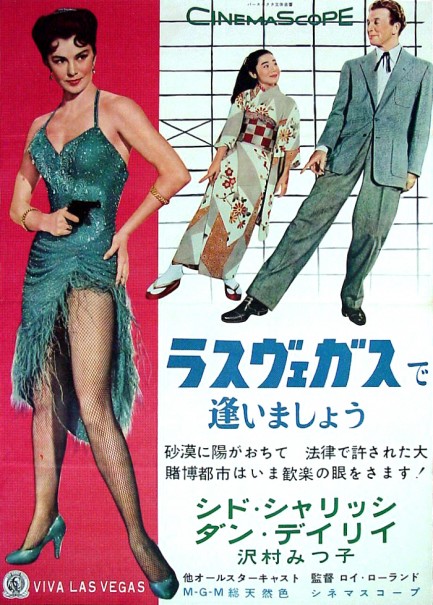
Here’s a curious item we ran across at our favorite vintage memorabilia shop. It’s a Japanese promo poster for Viva Las Vegas, which… hey, wait a sec. Where’s Elvis? Where’s Ann-Margret? And who are these imposters? Well, turns out Elvis’s immortal Viva Las Vegas was not the first. The first film of that title starred Cyd Charisse, Dan Dailey and Agnes Moorehead, and was released in 1956. During its U.S. run it was known as Meet Me in Las Vegas, but for its international release the title was changed. Plotwise, you’ve got a flick here with a central gimmick that’s just begging to be recycled in a modern romcom. Get this—Dailey discovers that whenever he’s at the gambling tables he cannot lose as long as he’s holding hands with Charisse. If it sounds intolerably cute, well, what do you expect? It’s a mid-century musical. Actually though, the movie isn’t top notch, due mainly to some less-than-stellar acting in parts, but you do get to see Las Vegas as it was before it became the consumerist dystopia it is today, and you get cameos from Vic Damone, Sammy Davis, Jr., Debbie Reynolds, Frankie Laine, Lena Horne and others. Well worth a look. 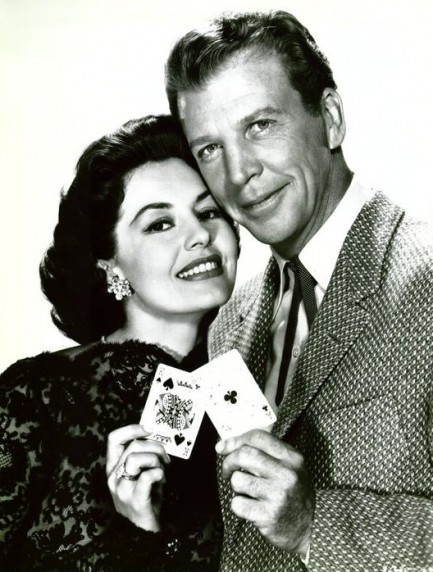

| Vintage Pulp | Apr 20 2011 |

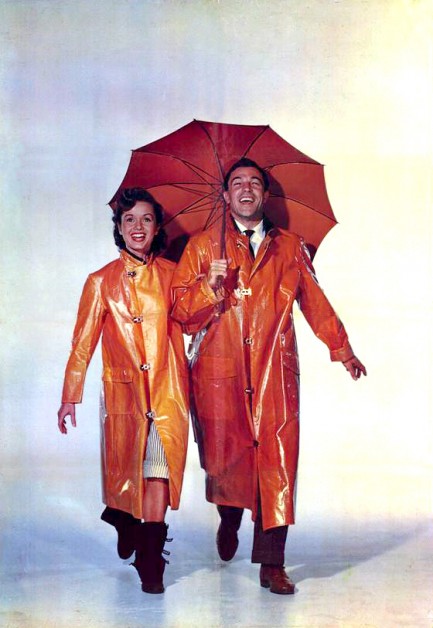
Is it pulp? Maybe not, but we reserve the right to step outside the parameters of our own website on those occasions we see something that warrants it. This poster for Singin’ in the Rain, with Gene Kelly and Debbie Reynolds, was produced for the film’s U.S. premiere. The movie was not particularly popular when released, but today it’s considered one of the best musicals ever made. It hit screens for the first time this month in 1952.