 The lawless of the jungle. 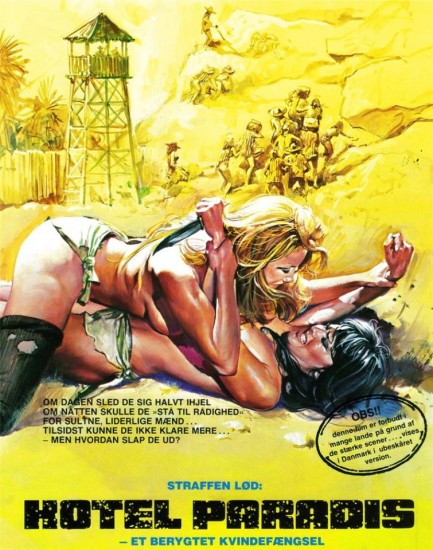
The curious and certainly never-to-reappear style of movies referred today as women-in-prison, or WIP, is a subgenre of sexploitation cinema that came about for one reason: it used settings in which women were helpless. Well, in theory. The dramatic thrust of the plots always derived from attempts to retain dignity and to escape captivity. The protagonist was usually an odd woman out—an unjustly imprisoned victim or an undercover operative—surrounded by a mix of prisoners who were hopeless, cruel, sexually predatory, and complicit, plus the abusive guards, one of whom nearly always was a sadistic woman.
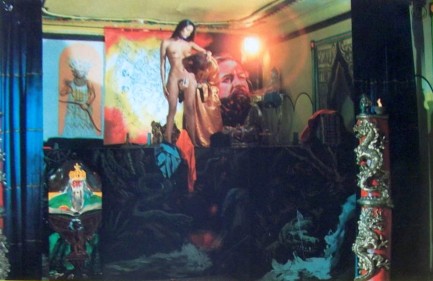
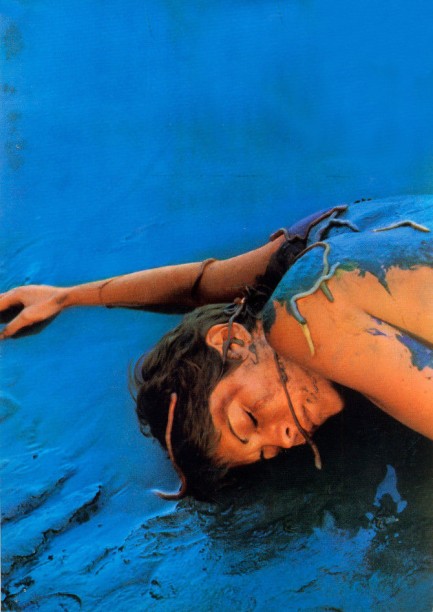
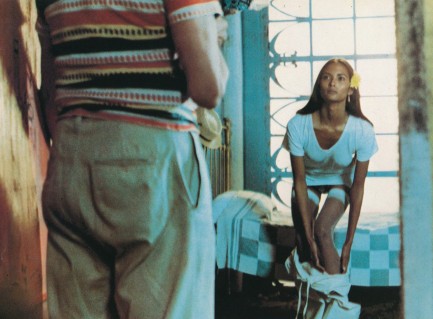
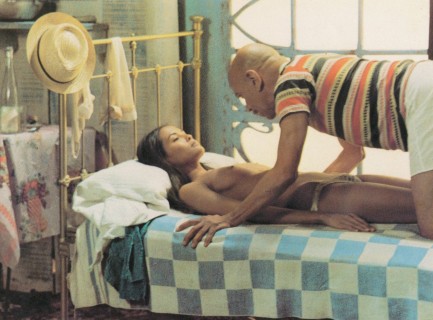
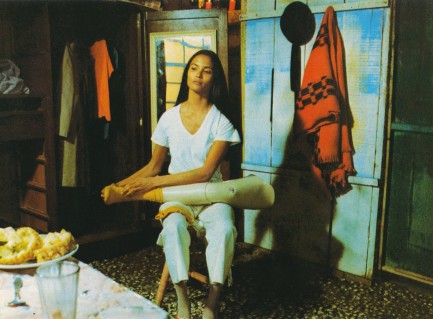
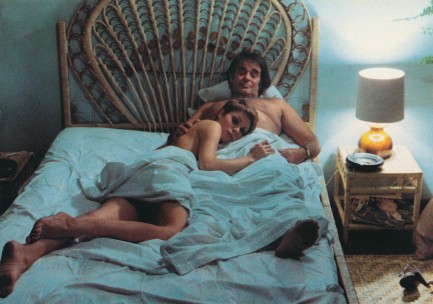
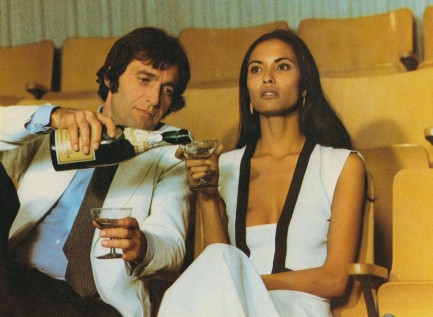
Hotel Paradis stars Anthony Steffen, Ajita Wilson, and the slinky Cristina Lay, sometimes referred to as Cristina Lai. There are numerous posters for it, but we like the above Danish effort featuring a fight to the death. Its text notes: This film is banned in many countries because of its strong scenes.... it's shown in Denmark in uncut version. Indeed. Interracial lesbian sex might be to blame for the banning. There are other possible reasons too. We won't waste our time trying to figure it out. As an aside, the movie was filmed concurrently with the WIP flick Femmine infernali using the same cast, director, and sets. So consider this a write-up of that movie too, since the pair are basically identical.
Plotwise, a group of women are being transported to a jungle hellhole prison where forced labor is used to dig for emeralds. When their guards are ambushed and killed by patriot soldiers seeking to steal the emeralds to fund a nebulous revolt, the women agree to continue posing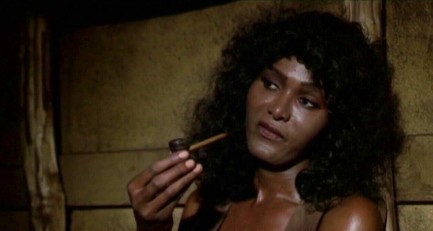 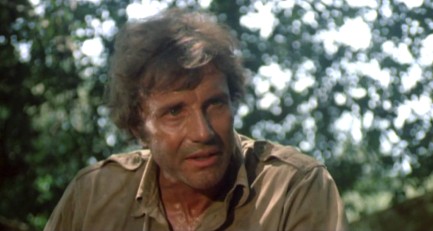 as prisoners in order to aid the infiltration of the camp. Behind bars is one inmate—Wilson—who has the shining or something, and keeps telling the others that violence, death, and freedom are coming. Also coming are WIP staples such as the evil wardenness, languorous shower scenes, whippings, baroque tortures, and sexual assault. It all ends pro forma with a climactic shootout. as prisoners in order to aid the infiltration of the camp. Behind bars is one inmate—Wilson—who has the shining or something, and keeps telling the others that violence, death, and freedom are coming. Also coming are WIP staples such as the evil wardenness, languorous shower scenes, whippings, baroque tortures, and sexual assault. It all ends pro forma with a climactic shootout.
Obviously, you have to go into these types of movies with a sense of humor if you can. When Lay first meets Wilson in the camp, she says, “My name's Maria. I'm frightened.” Why, oh why, didn't Wilson respond, “I'm Ajita. I'm a virgo”? Too bad we didn't write the script. Lay then helps herself to Wilson's pipe—which Wilson just a bit earlier had used to masturbate. If she can obtain a pipe you'd think she could get a dildo, but whatever, in prison you have to find your pleasures where you can. And in women-in-prison movies the same holds true—we thought the scene was hilarious. It was merely one of many.
It should be noted that while Wilson is the female lead, and we've shared a couple of racy images of her and highlighted her importance as a trans trailblazer, Lay is the audience draw here. She's unusually beautiful, and director Edoardo Mulargia and the movie's producers know it quite well. She gets the most loving camera work, the wettest shower scene, a nice interlude with Wilson, and goes through the entire final shootout obviously naked beneath her tattered prison tunic and with the top of it hanging wide open. It's not quite Frauen für Zellenblock 9, in which Karine Gambier and company perform their long escape sequence completely starkers, but it's notable just the same.
Hotel Paradis is obviously sexist and exploitative. As we've said before, in the same way blaxploitation movies usually show a racist power structure before the hero shatters it, sexploitation movies sometimes do the same with sexism. Sometimes. Not here. There are additional flaws. Compared to better WIP efforts it lacks the winking sense of humor, the empowerment undercurrent, and the sense of actors having fun while making something they know is ridiculous. There's a hardcore cut of this film with explicit scenes spliced in. It merely amplifies the aforementioned issues, so we suggest you avoid that version. But really, if you avoid Hotel Paradis entirely you'll probably be a better person for it. It premiered in Italy as Orinoco: Prigioniere del sesso in the autumn of 1980, and in Denmark today in 1983.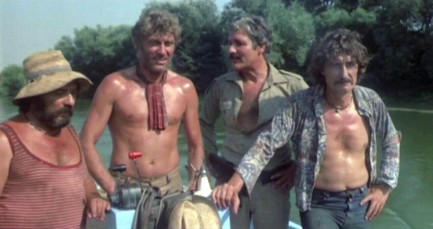 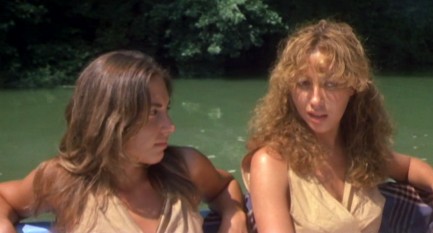 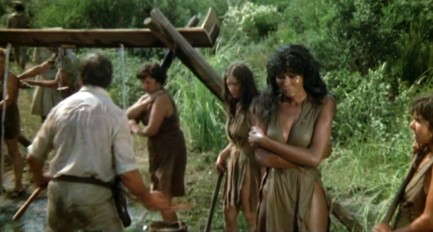 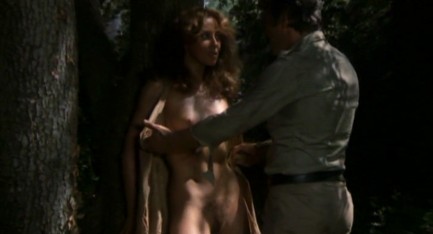 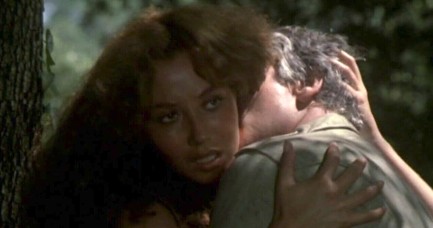 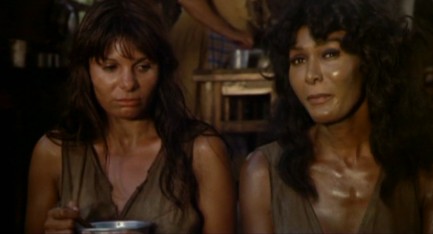 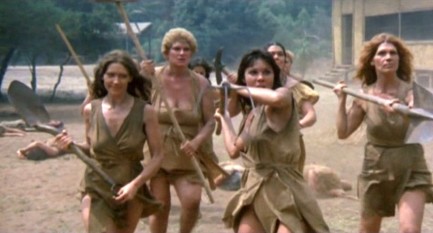 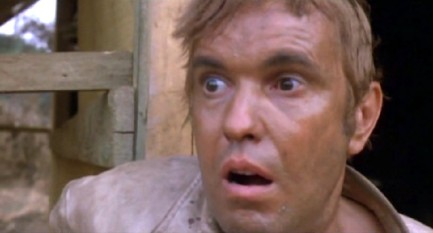 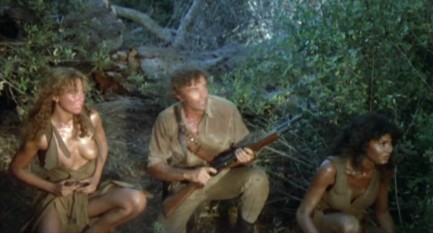 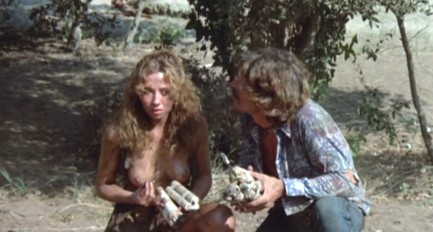
 Symons reflects on exactly how bad a man's life can be. 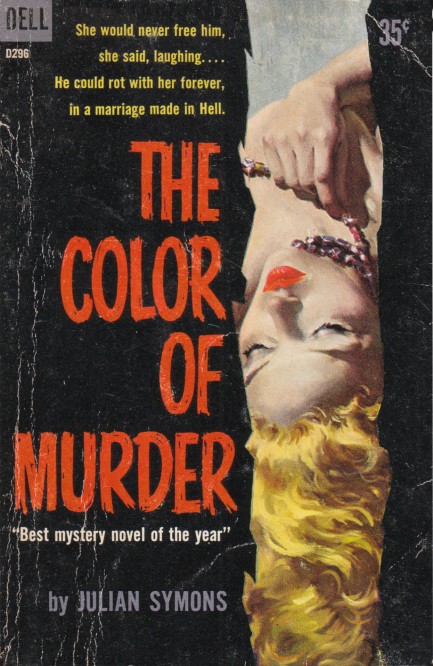
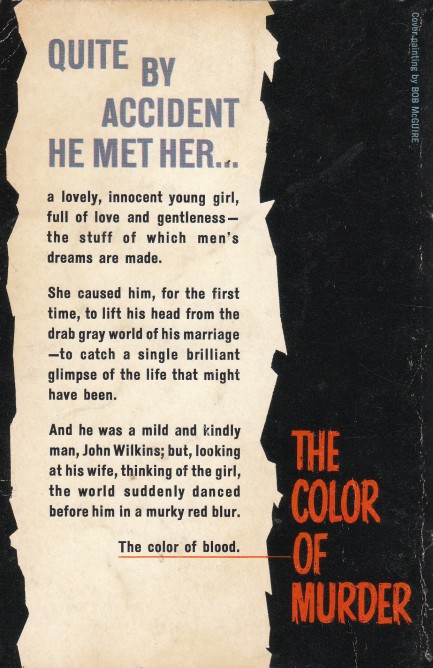
Looking for a bit more depth in your murder mysteries? 1957's The Color of Murder by British author Julian Symons takes a literary approach to the genre, examining the torturous existence of sad sack office drone John Wilkins, who hates his wife, covets the neighborhood librarian, and suffers from blackouts at times of stress (uh oh). Symons divides the novel roughly in half. In the first, Wilkins explains in first person to a psychologist how he came to be mired in a terrible life and loveless marriage, his account stopping before the murder (which if he actually committed, he'd presumably have blacked out anyway). The second half follows in third person the course of Wilkins' trial, with assorted twists, and there's an epilogue providing final focus. Whether or not Wilkins is a killer, he's a pitiable human. If you think you have an unsatisfactory life, read The Color of Murder to learn how well-off you really are. The cover art on this Dell edition is by Robert Maguire.
 Jim Brown commits multiple instances of polizia brutality. 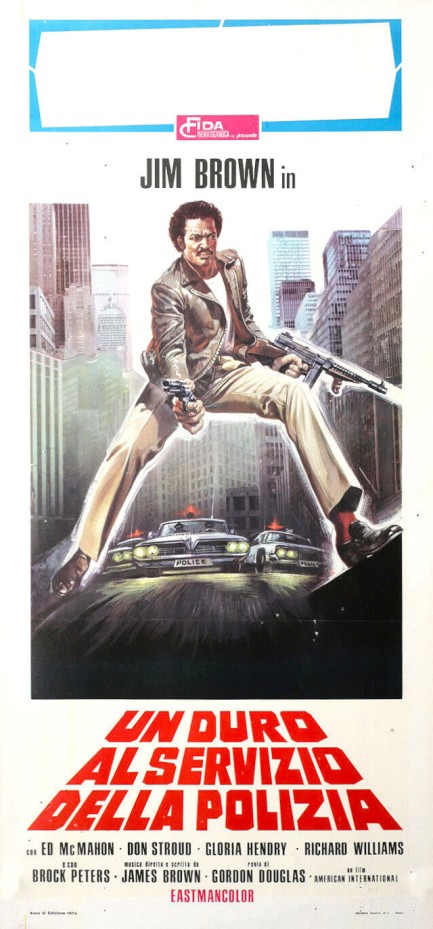
We never like to go very long without highlighting the blaxploitation cycle in cinema, so above you see a nice poster for the 1973 Jim Brown actioner Slaughter's Big Rip-Off, which was retitled Un duro al servizio della polizia for its Italian release. That translates as, “a tough guy in the police service,” which is fitting for Brown, one of the toughest guys around. It should be noted though, that he doesn't play a cop in the film, but a vigilante who partners with the cops. There's no Italian premiere date, but Rip-Off screened in most of Europe in 1974, so it's safe to say the same is true for Italy. We've seen it, but we'll return to the subject later after we have another look. In the meantime you can enjoy two Italian posters for 1972's Slaughter here.
 Some people never even make it to the first day of Christmas. 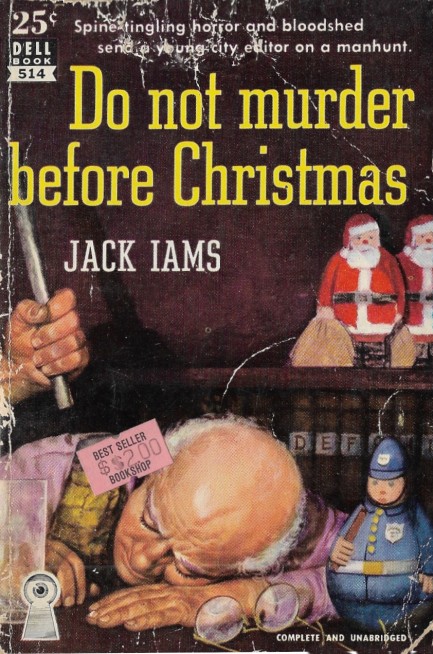
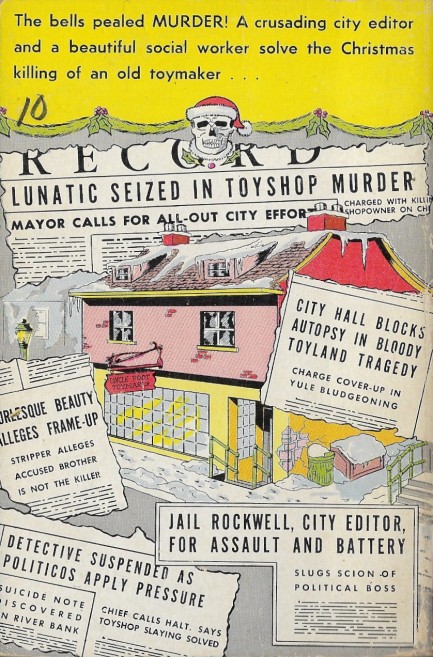
We thought about sharing this cover earlier, but decided to be literal with the title and reveal nothing until after Christmas. Do Not Murder Before Christmas was written by Jack Iams and published in 1949 in hardback by William Morrow & Co., then by Dell as a paperback a bit later the same year. It's a murder mystery in the Agatha Christie vein about an elderly smalltown toymaker whose secret knowledge of his community gets him killed when someone decides to suppress evidence of a crime.
While these sorts of whodunnits aren't hard-boiled or particularly action packed, they're often superior within the crime genre because of their humanized relationships and relatable women. This one is no exception, as a crucial aspect of the puzzle revolves around Jane Hewes, local beauty who's desired by both the scion of a wealthy family that has exploited the town for generations, and by the everyman newspaper editor who has spent years writing unflattering articles about that family. Their rivalry adds plenty to the story. They even have a fistfight.
This is the second Iams mystery we've read, along with Girl Meets Body, and it's clear that he can write as well as construct. The central plot contrivance—that every child who ever came to the toymaker's shop signed a visitor's book, and this somehow has the power to expose a killer—is something so leftfield we had to marvel. The tale's winning protagonist and involving love story make the final result a total winner. If you find an Iams novel anywhere, snag it.
 Dirty mind, clean body. 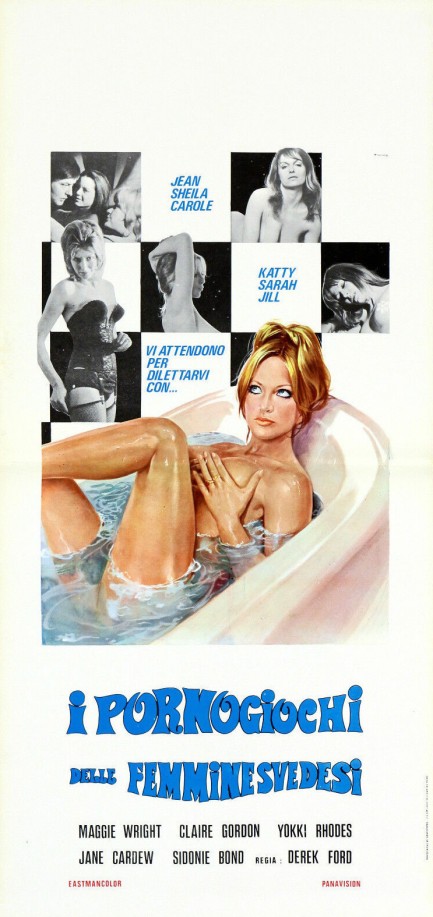 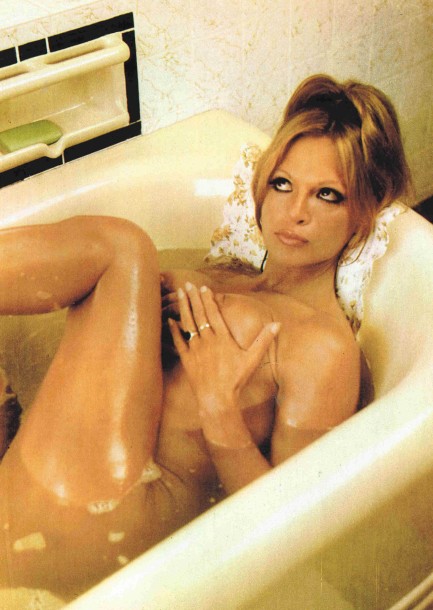
Above: a poster for the 1972 sexploitation flick I pornogiochi delle femmine svedesi, painted by Italian illustrator Renato Casaro, along with a photo of star Claire Gordon going a rub-a-dub-dub with both hands in a tub, used by Casaro to inspire his creative process. The movie was originally made in England as Suburban Wives. While Gordon is lovely, and the poster is too, the movie is pretty dumb. Many years back we discussed it in a bit more detail and shared another Casaro promo, so if you're inclined to check that out, you can do so here.
 Gemser adds a few degrees to the equatorial heat. 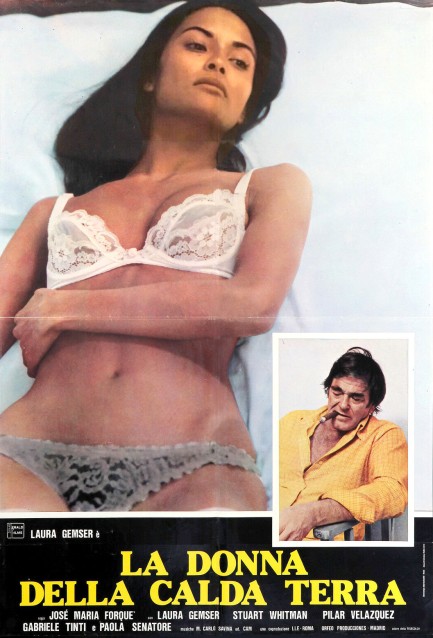 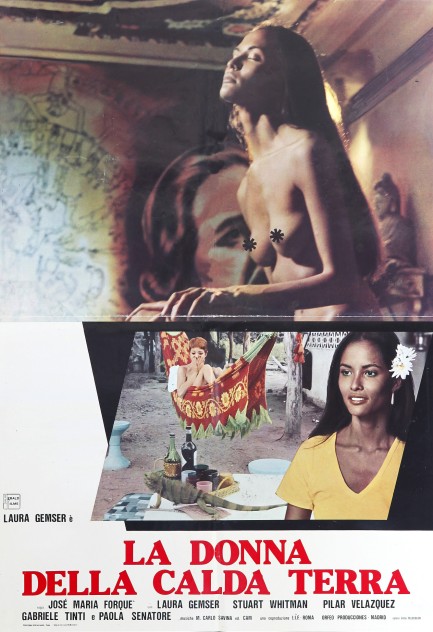
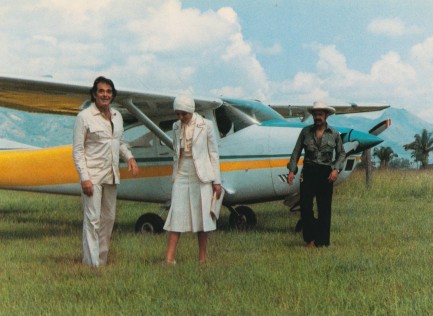
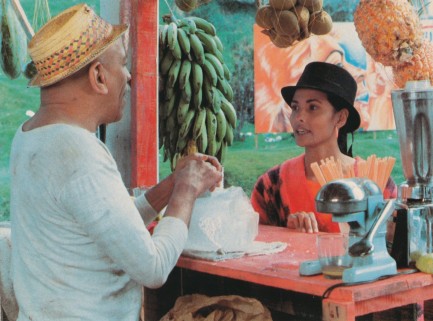
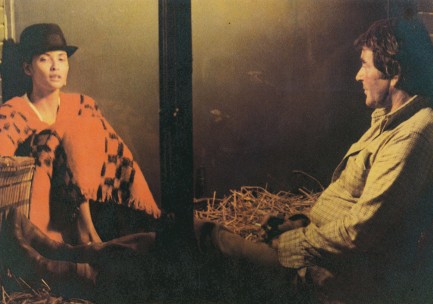
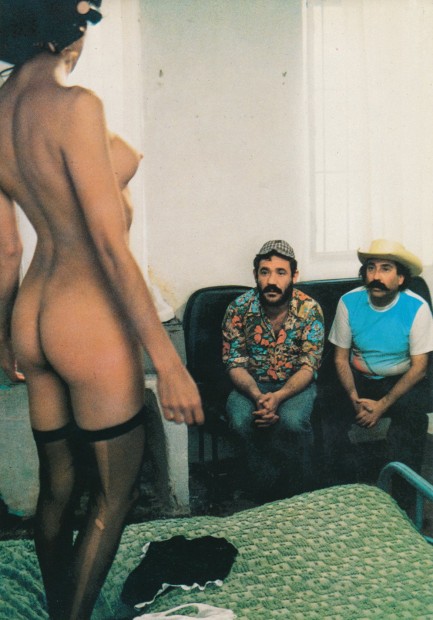
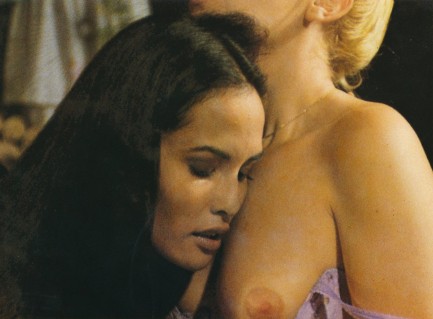
Yup, Laura Gemser again. It's just one of those things. La donna della calda terra premiered in Italy two days after Emanuelle e gli ultimi cannibali, so you get to enjoy her twice this week. Above are two posters for the former film, which was originally made in Spanish and released as La mujer de la tierra caliente, then retitled in English as Emanuelle - A Woman from a Hot Country, and, more succinctly, Fury. By this point Gemser's Emanuelle series had pitted her against everything from slavers to cannibals, but here she headlines something close to a straight drama, as she meets Stuart Whitman while both are hitchhiking the hot backroads of Venezuela. As they sit together in a horse trailer being towed across the country, they tell each other their tragic histories.
We've made fun of the bizarre plots of Gemser's movies, but this attempt at unsensationalistic drama is conceptually flat and the screenplay is terrible. Our favorite line: “Don't pay too much attention to women. We have days in which we see everything distorted.” We'd retort that men have entire lifetimes in which they see everything distorted, which is why the world is fucked. *checking credits* Yeah, the screenplay was written by men. Well, they dropped the ball here, not just because of bad writing, but because—and we never thought we'd say this—Gemser's movies need rampant weirdness to be watchable. So give up being normal and enbrace the bizarre. Bring on the slavers and cannibals. They were sorely missed. After premiering in Spain in July 1978, La donna della calda terra opened in Italy today the same year.
 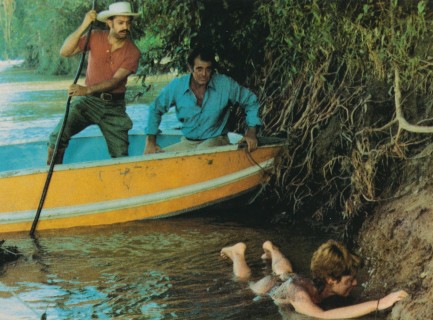  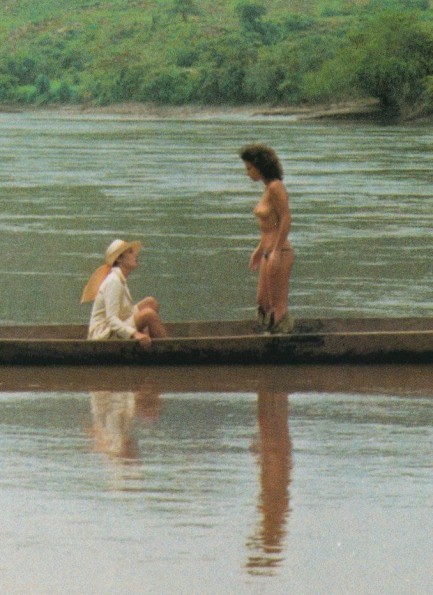 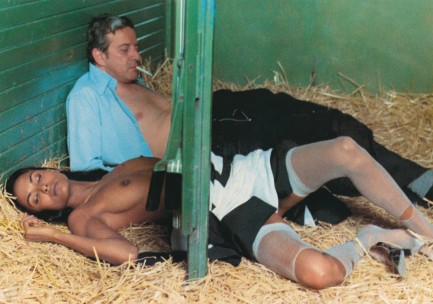 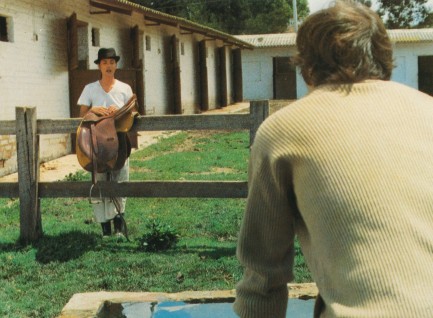               
 The cost is only everything she has. 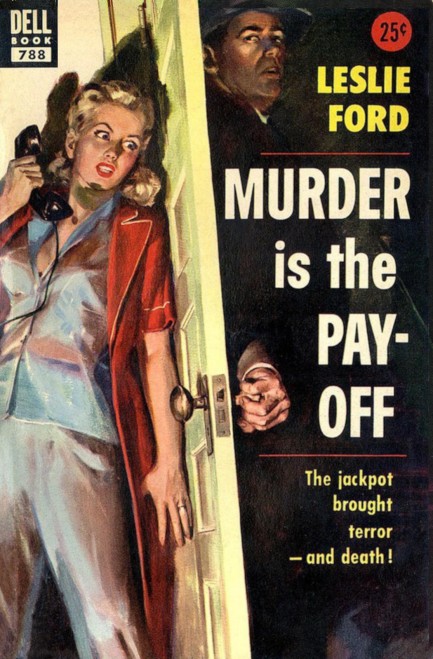
As you know, we're fascinated by pseudonyms. Murder Is the Pay-Off came from the typewriter of Leslie Ford, whose real name was Zenith Jones Brown. We can't imagine why she decided not to publish this under her own name. After reading it, we think the book must represent something close to the zenith of her authorial output. It's an interesting and well written mystery originally published in 1951, with this Dell edition coming in 1954 fronted by Carl Bobertz cover art. The novel is set in the fictional New York City satellite burg of Smithville, where the murder of a slot machine magnate turns the close knit community upside down. A lot happens in the book (in that upper crust, smalltown sort of way), but at its center is ambitious and egotistical Connie Maynard, whose behavior makes the police suspect her of being the killer, though she isn't. She has her reasons for keeping quiet. She's ostensibly the secondary villain in the narrative, but we liked her. It was easy to do because every major character is flawed. While Connie is trying to steal someone's husband and refuses to reveal her innocence, her rival Janey Blake is a chronic gambler who's lost her and her husband's life savings, and Gus Black, the hero of sorts, is work-driven, neglectful of Janey, and sometimes oblivious.
The identity of the killer is strongly hinted at about halfway through the book, at which point the multi-pov narrative expands to include that person's interior monologues. It's precise and highly intelligent work from Ford. In addition, there are interesting proto-feminist themes, specifically Janey dealing with presumptions of stupidity from the men around her when she's really one of the smartest people in the book, and Connie encountering sexism in her professional life. At one point Gus—the hero, remember—even tells Connie, “I wouldn't work for a dame anyway.” Literary protagonists aren't usually chauvinists to such an overt degree, even in 1951. Well, we'll work to find more Ford. We want to read her again.
 Maybe it's too soon to bring it up, but if you ever remarry maybe choose someone who isn't a Red Sox fan. 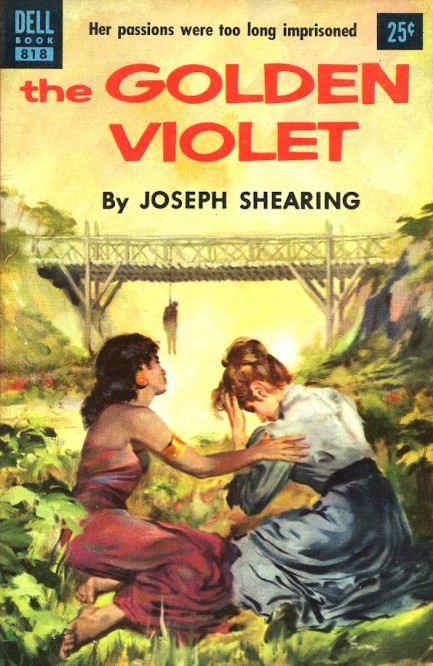
Awhile back we put together a small collection of vintage paperback covers featuring hanging figures. The above cover for Joseph Shearing's The Golden Violet is an addition to that group. Shearing was actually Margaret Gabrielle Vere Long, who earned acclaim writing numerous historical and gothic horror novels, with The Golden Violet part of the latter group. The cover on this Dell edition was painted by Barye Phillips. Side note: the Red Sox are going to miss the playoffs again, and they might even finish last. We're devastated—not. That's for you, Dan. With love, of course.
 I used to show up with a cloak and scythe, but I learned it's simpler to wear a suit and work at the corporate level. 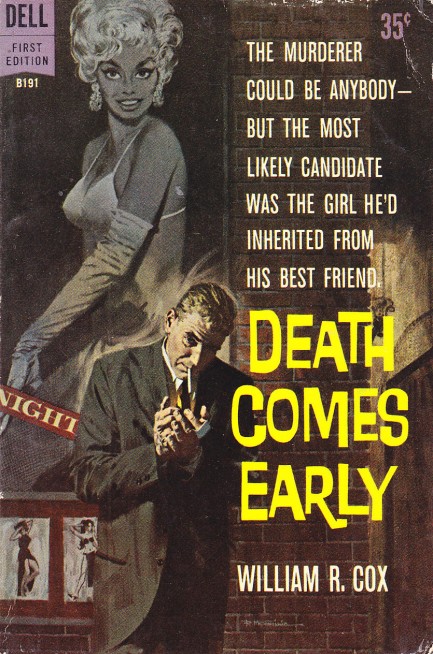
We should start calling Robert McGinnis Robert McAgainis, because he keeps showing up. According to archivist Art Scott, McGinnis painted covers for 1,068 titles in more than 1,400 editions. He is, quite simply, the king of paperback illustrators. He painted the above effort featuring a tough guy loomed over by a femme fatale on a poster for William R. Cox's 1961 thriller Death Comes Early, the tale of a tough nightclub owner who tries to solve the murder of his best friend. The book has a marvelous tone to it, with a more colorful, grittier feel than most crime novels. The women have mileage, the men are impure, and there are few clear motivations in the book's realm of organized crime and dodgy police. While all the characters are interesting, protagonist Jack Ware and his love/hate interest Lila Sharp stand out. Cox's plot unfolds sensibly, as the murder first seems to be about a gambling debt, then something more sinister. We're already on the prowl for more from him.
 I take it from the way you're sprawled across the front seat that dinner and a movie is no longer the plan. 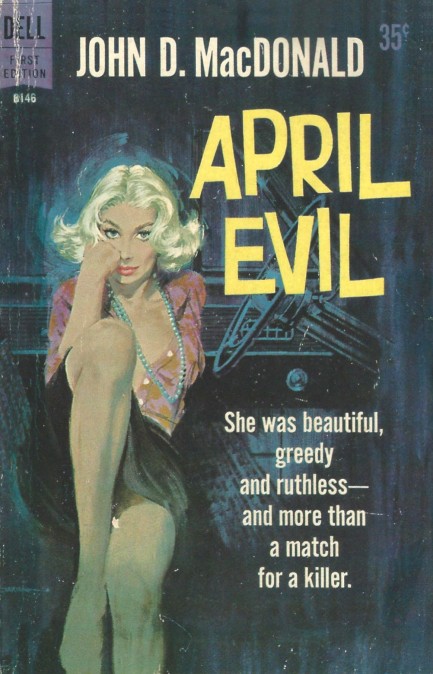
April Evil is a book that showcases John D. MacDonald on literary cruise control, as he confidently weaves together the tale of an elderly, widowed ex-doctor whose has a safe in his study filled with cash, the greedy relatives that hope he leaves his loot and property to them, and how, because rumors of the money have spread, three criminals decide to rob his house. Matters are even more complicated because the doctor has taken in a young married couple, and while the wife is not scheming to get his fortune, the husband is, and he has a big mouth. That mouth entices a psychopathic killer into hijacking the robbery scheme, with the ultimate plan of killing both his partners and—probably—everyone living in the house. For people acquainted with MacDonald but who haven't read April Evil, the approach will be familiar, particularly the character crosscurrents and fateful timing. It's well written, enjoyable, and free of pseudo-sociological content, which we consider to be a problem with McDonald's Travis Magee novels. We recommend it, even more so if you can score Dell's 1956 edition with Robert McGinnis cover art.

|
 |

The headlines that mattered yesteryear.
1939—Holiday Records Strange Fruit
American blues and jazz singer Billie Holiday records "Strange Fruit", which is considered to be the first civil rights song. It began as a poem written by Abel Meeropol, which he later set to music and performed live with his wife Laura Duncan. The song became a Holiday standard immediately after she recorded it, and it remains one of the most highly regarded pieces of music in American history. 1927—Mae West Sentenced to Jail
American actress and playwright Mae West is sentenced to ten days in jail for obscenity for the content of her play Sex. The trial occurred even though the play had run for a year and had been seen by 325,000 people. However West's considerable popularity, already based on her risque image, only increased due to the controversy. 1971—Manson Sentenced to Death
In the U.S, cult leader Charles Manson is sentenced to death for inciting the murders of Sharon Tate and several other people. Three accomplices, who had actually done the killing, were also sentenced to death, but the state of California abolished capital punishment in 1972 and neither they nor Manson were ever actually executed. 1923—Yankee Stadium Opens
In New York City, Yankee Stadium, home of Major League Baseball's New York Yankees, opens with the Yankees beating their eternal rivals the Boston Red Sox 4 to 1. The stadium, which is nicknamed The House that Ruth Built, sees the Yankees become the most successful franchise in baseball history. It is eventually replaced by a new Yankee Stadium and closes in September 2008.
|

|
|
It's easy. We have an uploader that makes it a snap. Use it to submit your art, text, header, and subhead. Your post can be funny, serious, or anything in between, as long as it's vintage pulp. You'll get a byline and experience the fleeting pride of free authorship. We'll edit your post for typos, but the rest is up to you. Click here to give us your best shot.
|
|