 She's a woman completely without restraint. 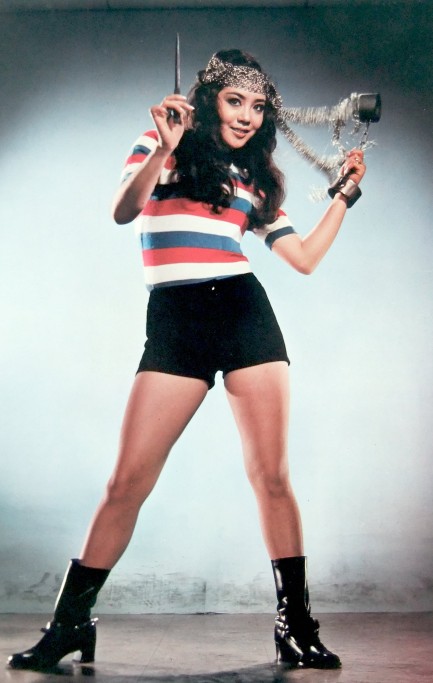
We bet you didn't notice that Japanese actress Reiko Oshida is swinging handcuffs in a circle. We understand. You'd tend to notice other elements of the photo first, like the knife, the boots, the shorts, or the stripes. This promo image was made for her 1971 pinky violence actioner Delinquent Girl Boss: Worthless To Confess, which was originally titled Zubekô banchô: zange no neuchi mo nai. A similar pose was used on the movie's poster, which you can see here. And if you're very interested, you can see alternate posters here and here, and Oshida with her crew of sword maniacs here. She shall return.
 Three times the danger, three times the fun. 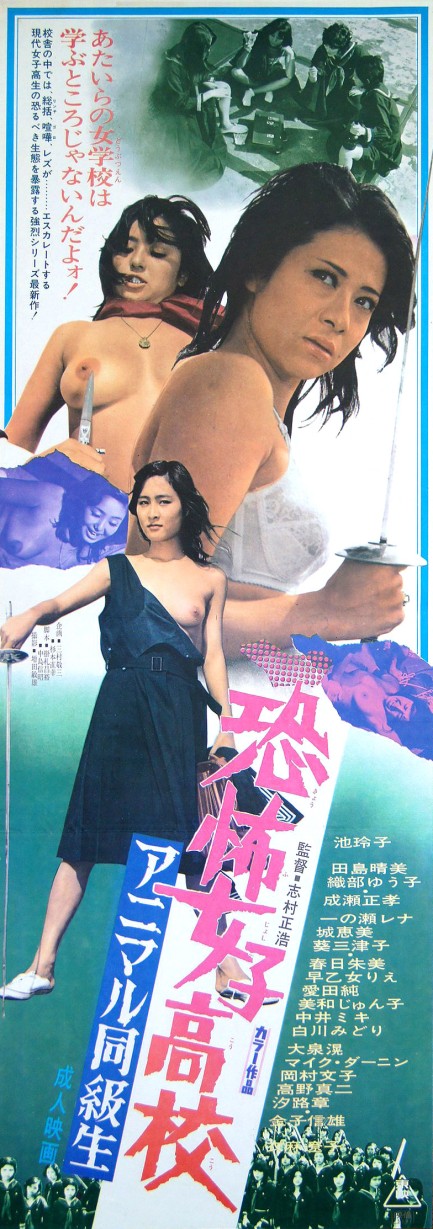
We talked about Reiko Ike's 1974 pinky violence flick Kyôfu joshi kôkô: Animal dôkyôsei—known in English as Terrifying Girls High School: Animal Courage—a long while ago, but we wanted to highlight this rare promo in tateken format. You can see the original poster and learn a bit about the film here.
 Add a little spark to your life. 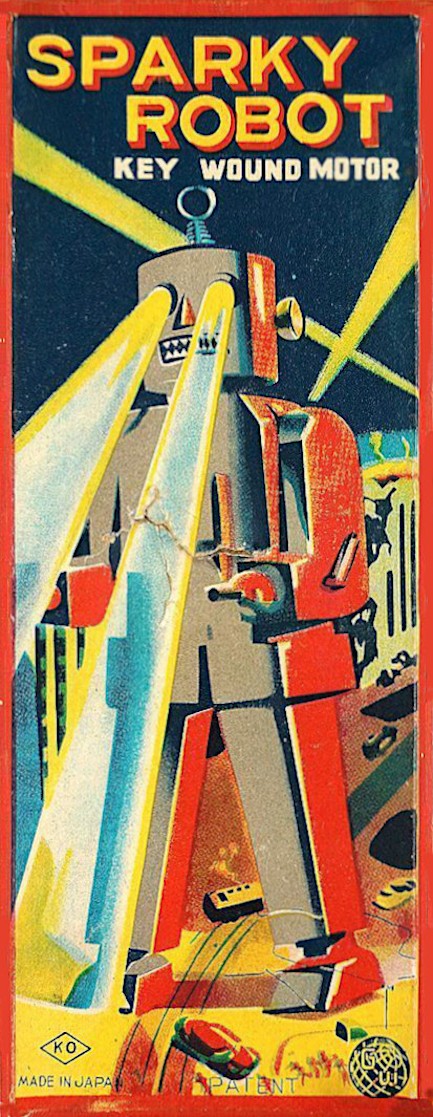
Looking for an extravagant gift? Consider the above—a 1950s era Sparky Robot, made by Kobe, Japan based Yoshiya Co, which was one of the major Japanese toy makers from the postwar period into the 1970s. We love vintage sci-fi toys in general, as we've shown you here and here, but this one is even cooler because it walks and sparks. It's about eight inches tall, turns on and off by winding a key, and walks or stands still when you raise and lower its antenna. The electrotechnic action happens inside the robot's head, and is visible through its eye and mouth openings. What we like most of all here is the box cover art. In classic Japanese style, it depicts the robot as a behemoth visiting destruction upon some unlucky city. It'll visit destruction upon your wallet too, with a $500 price tag, but still, you know you want it. We sure do.    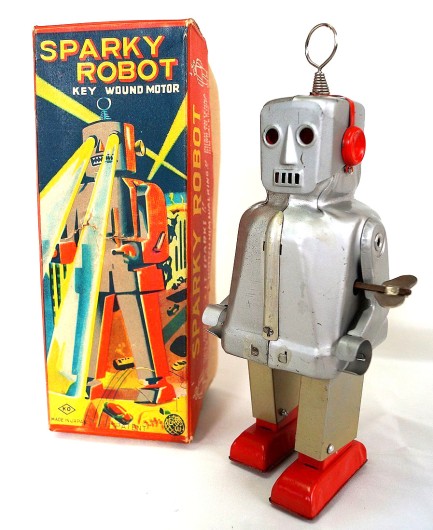
 1001 nights is not nearly enough time with Ayako Meki, Erina Miyai, and Izumi Shima. 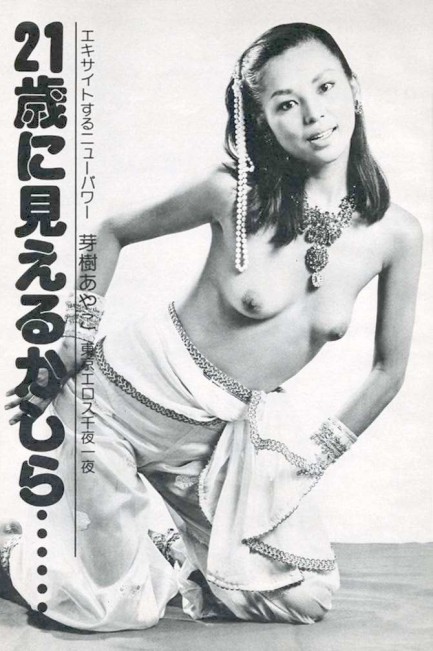
A few years ago we shared an ultra rare tateken promo for the 1001 Nights inspired roman porno flick Tokyo eros senya ichiya. That poster was a follow-up to a standard poster we'd shared back in 2017. In both cases the movie was unavailable for us to watch. Well, above you see a magazine page featuring the movie's co-star Ayako Meki. This isn't directly a promo for the film, but she's dressed in character. The text says “because you look 21,” which is weird, and goes on to describe her as “an exciting new power.” We're showing this to you because the movie premiered today in 1979, and this time we did have a copy to watch.
Known in English as Eros Nights in Tokyo, the story here involves lonely young Kiyoyasu Adachi and three women in his life—Izumi Shima, Ayako Meki, and Erina Miyai. We can't fault the guy's taste, but we do take exception to his methods. He succumbs to creepy urges such as spying on Shima (who's his stepmother), attempting to force a kiss upon Meki (which devolves into a full-scale perv attack), and looking up the skirt of Miyai (who's mentally disabled). Later he grows a bit more subtle in his attempts to indulge his urges, such as when he convinces Shima to accept a personalized wash, full body massage, and more. After that nipply nuru session, his stepmom is fully on board with further advances.
By now it's clear to the viewer that fantasy has overtaken reality for Adachi. We've seen this line crossed in numerous films, and it's usually a subtle trip across the border. When did it happen here? It's hard to be sure, but probably sometime after Adachi was chased by a policeman that somehow multiplied into an entire Keystone Kops style squad, and sometime before he was showered with a fortune in gold coins from a fountain.
All this stuff is mostly played for laughs, and indeed there are some legitimately funny moments, though not nearly as many as the filmmakers intended. We're talking about a Nikkatsu Studios roman porno production, which means that even as comedy it has the usual trappings of that genre, and those trappings just aren't humorous. For example, there's an attempted gang rape, which Adachi foils in full gangster mode, as the entire situation morphs into a set piece right out of American grindhouse cinema. Funny? No. Creative. For sure.
As we've mentioned before, by 1979 Nikkatsu was trying new ideas for its roman porno line, and Tokyo eros senya ichiya certainly qualifies. It's hard to judge such an outrageous flick objectively, so we won't try except to say that it's well made, as these films always are. We will mention, though, that we were disappointed none of the stars wore a harem costume. It turns out that 1001 Nights was a more oblique inspiration than we assumed. Have a look at the other posters here and here and you'll see what we expected. Do we recommend the film? Yes, of course. It has Izumi Shima. Full stop. 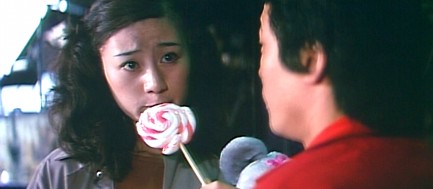 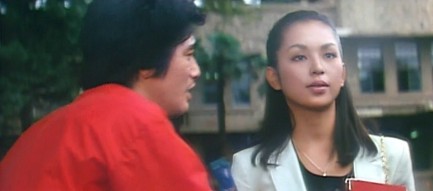 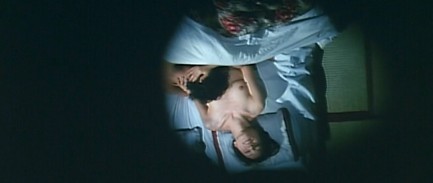 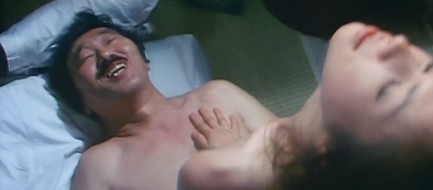 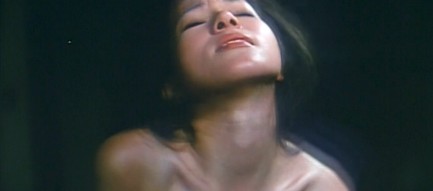 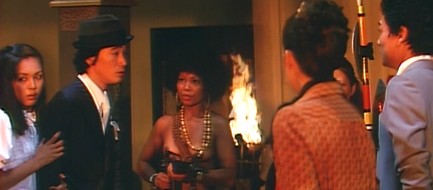    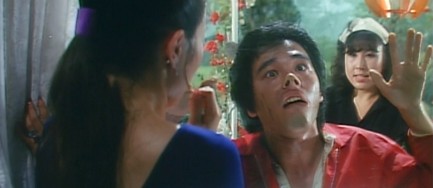  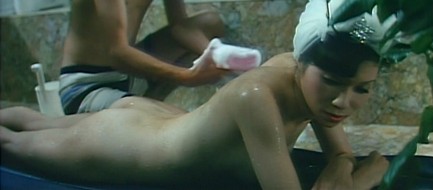 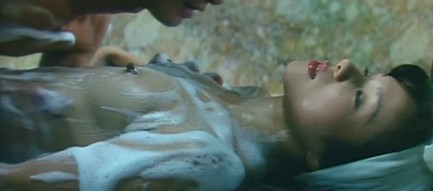 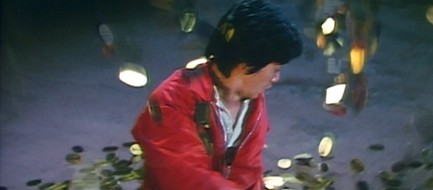
 Young cats and old tricks. 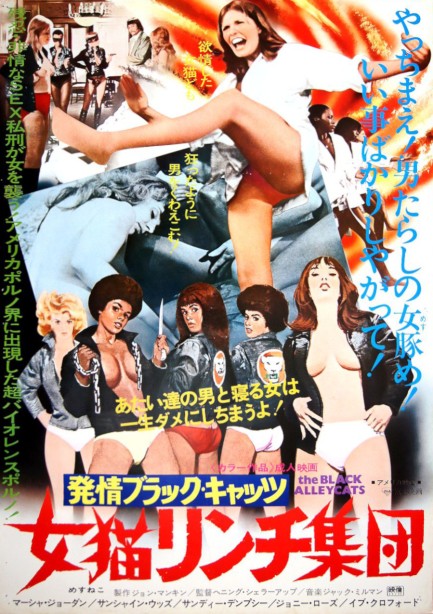
Sure, we just had a cat related movie on the website earlier this week with Cat Girls Gamblers, but cat tropes were popular with schlock film producers, so here we are again with a Japanese poster for the U.S. sexploitation flick The Black Alley Cats, about a group of abused women who fight back using fists, firearms, and generally fierce attitudes. It starred Sunshine Woods, Sandy Dempsey, Charlene Miles, and Johnnie Rhodes, and it was so bad it was the only film three of the four ever acted in. Dempsey had a cinema career already, lucky for her, so she survived what was an all-time stinker. But—and you knew there was a but—as bad as the the movie is, it's also, totally by accident, very funny. After opening in the U.S. in 1973 it premiered in Japan today in 1974.
Edit: Uschi Digard, who has a bit role in the movie, stars on the poster in the karate gi. That's another catch for regular Pulp reader Herman. What eyes that man has!
 She shot an arrow into the air, it fell to Earth— Well, nobody knows where because they weren't watching the arrow. 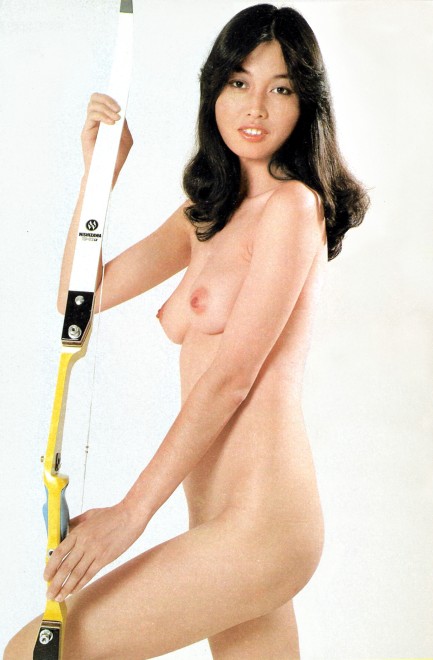
Japanese actress Maria Mari poses with a fancy Nishizawa recurved archery bow, which like the arrow she shot nobody is bothering to pay an iota of attention to. It's understandable. Mari looks quite beautiful and slender here in this photo from 1980. The image is part of a series of seven published in Weekly Playboy featuring different actresses posed with sports and recreation gear. You'll be seeing the other shots as the months roll onward. In the meantime you can see a bit more Mari here and here.
 For her taking risks is just feline nature. 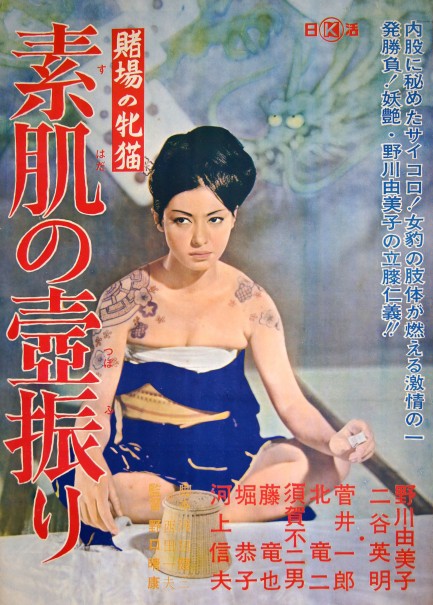
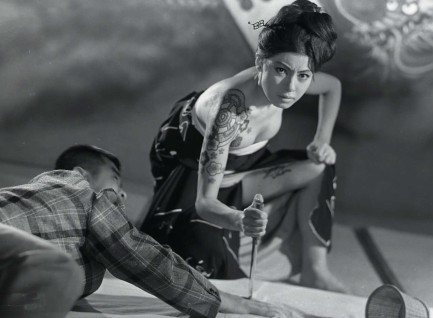
This poster was made for Toba no mesu neko: Suhada no tsubo furi, known in English as Cat Girls Gamblers: Naked Flesh Paid into the Pot, the second of three Cat Girls films. We shared a poster for the first back in 2014 before we could access the movies, but now we have them, so we screened part two last night. The lead in this and the other installments is Yumiko Nogawa, who plays a wandering gambler whose murdered father was a famous maker of rigged dice. After Nogawa's lover is killed in a dice game she swears never to play again, takes a job working at a Turkish bath, and seems to be dedicated to living a quiet existence.
But her idyll is turned upside down when she shelters a recently paroled criminal who wants to gain control of a yakuza territory he'd been promised before going to prison. The crime boss currently running the territory has no intention of giving it up, and Nogawa seems likely to be dragged into the middle of the conflict. As it turns out, she's working in the Turkish bath only as a means to find her father's killer. Since her interests and those of her new friend are aligned, they hatch a plot that just might give them both what they want.
This is a solid effort from Nikkatsu Studios, before the front office bigwigs had their roman porno revelation and leaned hard into sexploitation for the entire 1970s and beyond. Shot in black and white, the feel is arthouse, with a police subplot giving it shadings of an American detective drama. Nogawa, a movie veteran who began her career with 1964's famed Nikutai no mon, is self-assured as the headliner, and the entire supporting cast is good. A climactic fight perhaps won't seem convincingly choreographed to modern viewers, but we recommend taking a chance on this gambling drama anyway. Toba no mesu neko: Suhada no tsubo furi premiered in Japan today in 1965.
 What's a girl have to do to get service in this joint? 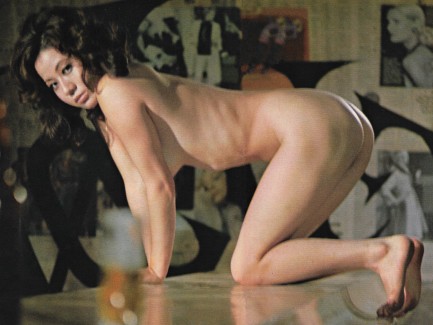
In this photo from a 1972 issue of Heibon Punch we see cinema star Reiko Ike, who decided to hit the Kyoto nightlife scene, but after terribly slow service was forced to take matters into her own hands and hop across the bar in an effort to get a mai-tai. In the bartender's defense, he didn't ignore Reiko intentionally. He fainted when she came in the door. This is (or was) a real world Kyoto bar that appeared in the pinky violence flick Sukeban gerira, aka Girl Boss Guerrilla, which Reiko had a major role in. The photo isn't an official promo from the film. At least, the magazine text doesn't mention it. But we recognized the place. In any case, Reiko got her mai-tai. Until the bartender regains consciousness drinks are on the house, and she's the toast of the town.
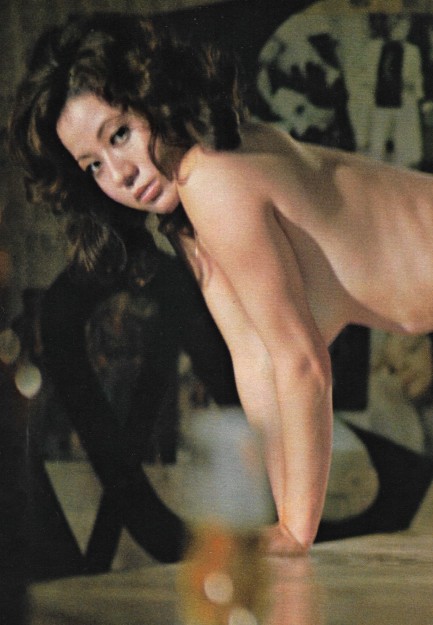 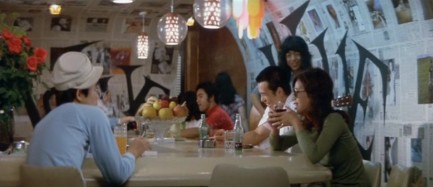
 She's going to drop a Yakuza in the corner plot. 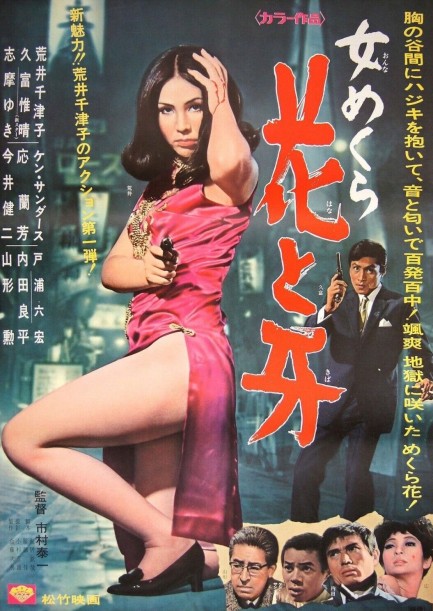
This hansai style promo is an addendum to the tateken promo we previously shared for Onna mekura hana to kiba, known in English as Blind Woman: Flower and Fangs. Basically, you get the same idea as the previous poster, with Arai wearing the same cool cheongsam but posed in a striking—if impractical—shooting posture. She hits practically everything she shoots at anyway, though. The magic of movies. Onna mekura hana to kiba premiered in Japan today in 1968.
 Abracadabra! Bim-skala-bim! Wherever my clothes were sent, return them from where they went! 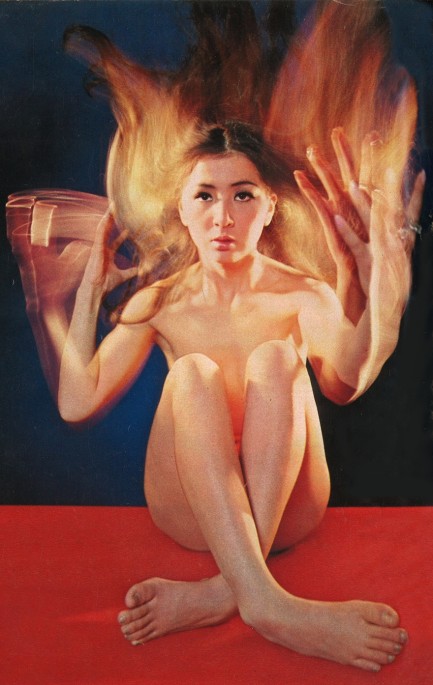
This photo from an issue of Weekly Playboy features Japanese model Yuko Sugiyama looking a bit witchy, which fits for this time of year, if you happen to celebrate Halloween. Normally we only feature shots of actresses, which she never was as far as we know, but we like the image so much we thought we'd use it anyway. It's from 1968.
|
 |

The headlines that mattered yesteryear.
1939—Batman Debuts
In Detective Comics #27, DC Comics publishes its second major superhero, Batman, who becomes one of the most popular comic book characters of all time, and then a popular camp television series starring Adam West, and lastly a multi-million dollar movie franchise starring Michael Keaton, then George Clooney, and finally Christian Bale. 1953—Crick and Watson Publish DNA Results
British scientists James D Watson and Francis Crick publish an article detailing their discovery of the existence and structure of deoxyribonucleic acid, or DNA, in Nature magazine. Their findings answer one of the oldest and most fundamental questions of biology, that of how living things reproduce themselves. 1967—First Space Program Casualty Occurs
Soviet cosmonaut Vladimir Komarov dies in Soyuz 1 when, during re-entry into Earth's atmosphere after more than ten successful orbits, the capsule's main parachute fails to deploy properly, and the backup chute becomes entangled in the first. The capsule's descent is slowed, but it still hits the ground at about 90 mph, at which point it bursts into flames. Komarov is the first human to die during a space mission. 1986—Otto Preminger Dies
Austro–Hungarian film director Otto Preminger, who directed such eternal classics as Laura, Anatomy of a Murder, Carmen Jones, The Man with the Golden Arm, and Stalag 17, and for his efforts earned a star on Hollywood's Walk of Fame, dies in New York City, aged 80, from cancer and Alzheimer's disease. 1998—James Earl Ray Dies
The convicted assassin of American civil rights leader Martin Luther King, Jr., petty criminal James Earl Ray, dies in prison of hepatitis aged 70, protesting his innocence as he had for decades. Members of the King family who supported Ray's fight to clear his name believed the U.S. Government had been involved in Dr. King's killing, but with Ray's death such questions became moot.
|

|
|
It's easy. We have an uploader that makes it a snap. Use it to submit your art, text, header, and subhead. Your post can be funny, serious, or anything in between, as long as it's vintage pulp. You'll get a byline and experience the fleeting pride of free authorship. We'll edit your post for typos, but the rest is up to you. Click here to give us your best shot.
|
|