| Intl. Notebook | Dec 6 2014 |


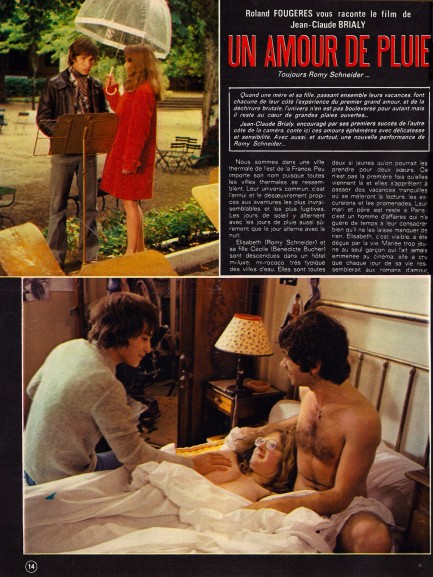
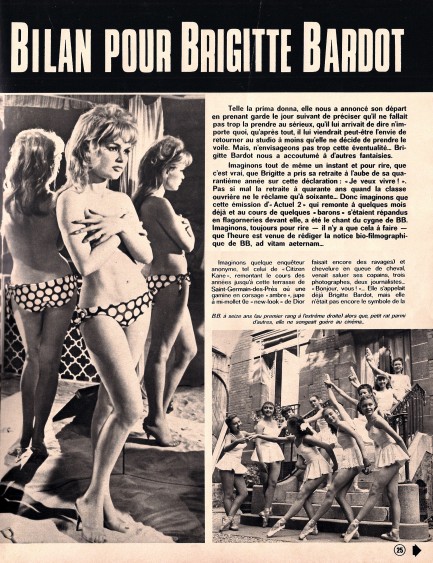
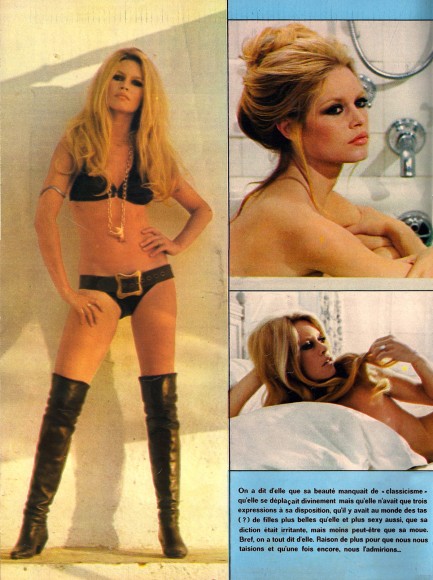
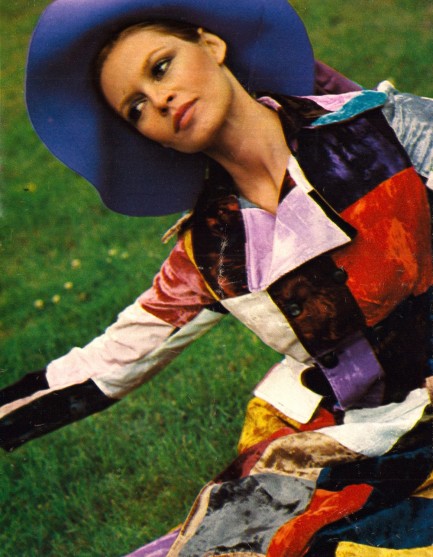
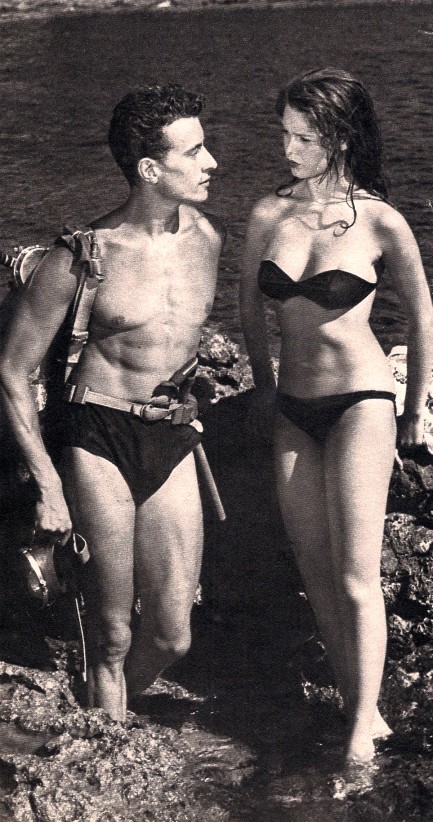
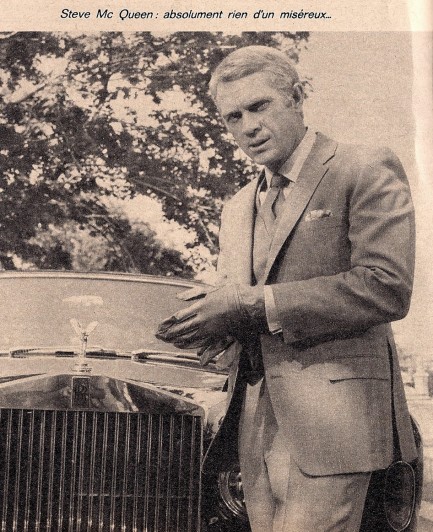
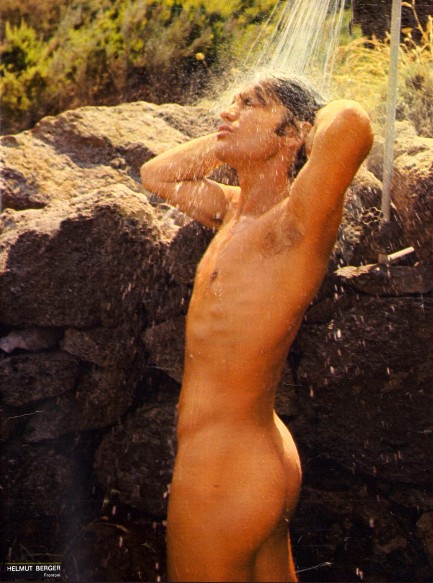
When we went to Paris a couple of months ago we mentioned that we found a stack of Ciné-Revue magazines in Le Marché aux Puces de Saint-Ouen. Their dimensions make for extra work because we have to scan every page in two pieces and put them together in Photoshop, and even more daunting, any two-page spreads have to be scanned in four pieces and assembled (this is actually true for all the tabloids we post). That’s why we get a bit lazy about it sometimes. Yeah, yeah, we know—get a bigger scanner. Easier said than done, unless someone wants to mail us one. Anyway, we managed to get some pages together from the above issue of Ciné-Revue published today in 1973.











| Intl. Notebook | Dec 30 2010 |

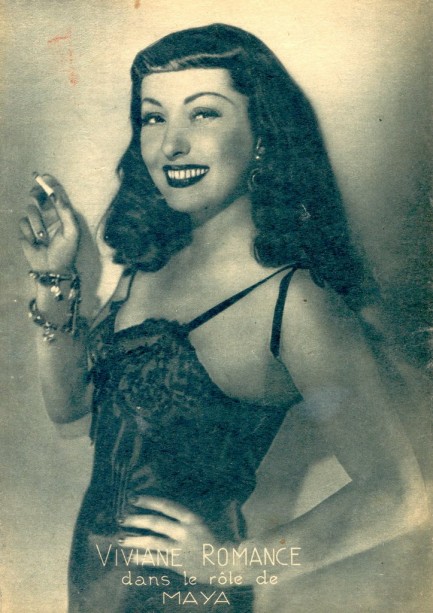
A couple of days ago we did a post of Mexican film magazines and basically, we knew none of the cover stars. But we were curious, especially about the interestingly named Viviane Romance, and decided to dig a bit more deeply. Born Pauline Arlette Ortmans in France in 1912, her career began in 1925 at age thirteen, when she danced at the Sarah Bernhardt Theatre in Paris. The next year she scored a spot as a Moulin Rouge dancer, and at sixteen moved on to dance at the famed Bal Tabarin nightclub. At eighteen she entered and won the Miss Paris pageant but was stripped of her title when she was found to be pregnant.
This loss of her crown, while doubtless dismaying for Romance, also generated public recognition that she parlayed into a film role in 1935’s Princess Tam Tam, in which starred American dancer Josephine Baker. In 1936’s La belle équipe, she played the role of a young woman who destroyed the friendship of co-stars Jean Gabin and Charles Vanel. The film was a hit, and a series of bad girl roles followed in Naples au baiser de feu, La Maison du Matais, Prisons de femmes and Le puritain. She had become one of cinema’s first femmes fatales.
When the German army swept into France in May 1940, Romance found herself caught in a dilemma. The Nazis were eager to create a veneer of normalcy. That meant they were willing to allow the French film industry to function, though under the auspices of their Propagandastaffe, which would censor any content deemed disrespectful or harmful toward Germany. Faced with the choice of working for the Nazis or retiring—which might not have been allowed without serious consequences—Romance chose to continue performing, and starred in Vénus aveugle, Feu sacre, Une femme dans la nuit, and Cartacalha, reine des gitans. In the last, she sang the hit song “Chanson gitane (Sur la route qui va).”
It’s worth pointing out that Romance wasn’t alone in her decision to perform for the Nazis. Many of France’s top stars, including Danielle Darrieux, Junie Astor, René Dary, Suzy Delair, Albert Préjean and others did the same. In select instances, some type of pressure was brought to bear. For instance, in Darrieux’s case, the Nazis had imprisoned her husband Porfirio Rubirosa, and her acting was the price for his freedom. At the same time, it should also be noted that many French actors made the choice to ignore the plight of their Jewish compatriots. The Germans banned Jews from any participation in cinema, and the workers who remained were required to carry cards affirming their non-Jewishness. Thus while the genocidal extent of Nazi plans may not have been crystal clear to some actors, the intent to—at a minimum—erase Jews from public life was certainly no secret.
But Romance and others performed anyway. And of course, giving the Nazis an inch meant they would take a mile. Ever vigilant for propaganda opportunities, party officials pressured Romance, Darrieux and the other actors into traveling to Germany for a highly publicized visit to several Berlin film studios. Newspapers and newsreels touted the appearances in a blatant attempt to burnish the Nazis artistic bona fides. For the segment of French citizenry opposed to the occupation, the actors had crossed the line. It was one thing to continue working—everyone needed to do
 that. But to allow themselves to be used to legitimize the Nazi agenda was an entirely different story. When the Germans were finally expelled from France in 1944, Romance was thrown in jail. We don’t have much information about this event. We can only say she was eventually forgiven—officially at least—for what many perceived as her feeble level of the resistance to the Nazis.
After the war, Romance immersed herself in work, making eight movies in the next three-plus years. In 1949 she played the role of Bella in the film Maya, for which you see the promo art at top. Her performance was lavishly reviewed—she was the toast of Paris again. Romance worked steadily through the next decade until her star began to dim in the early 1960s. She grappled with financial difficulty in the mid-1960s, and at one point had to sell off her possessions to survive. She made her last film, Nada, in 1974, and died in 1991 in Nice, on France’s Côte d’Azur, at age seventy-nine.
It would be journalistically tidy to write that Viviane Romance lived a life that somehow embodied her stage surname, but it would also be glib and untrue. The scandal of unwed motherhood, the climb up the ladder while still just a teenager, the shadow of Nazism over the prime of her career, her stint behind bars—none of it can be romanticized. Nor can her three failed marriages. If anything, Romance was like the narrator of the song she once memorably performed, “Chanson gitane.” That woman was strong enough to pass “with a noise of horses” but fragile as “a shiver of tinsel.” Ultimately Romance's story mirrors that of many women who survived dangerous times. They had to be tough, smart, and pragmatic—then when order returned they had to be judged on their failings and hope for forgiveness.

| Vintage Pulp | Dec 1 2008 |

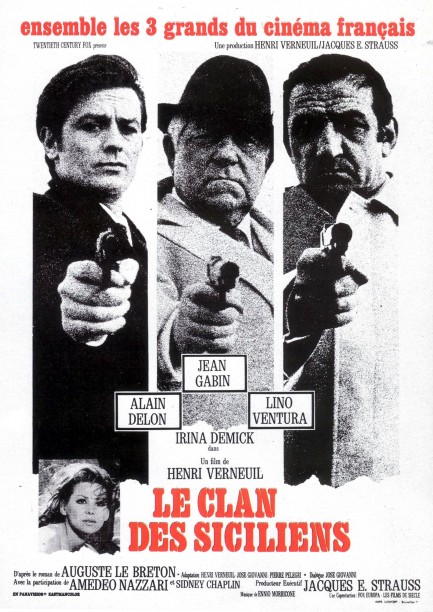
The French crime flick Le clan des Siciliens was pulp, noir, and French new wave all at once. It was a sensation. It starred the great Alain Delon, along with Lino Ventura and Jean Gabin, had a brilliant Ennio Morricone score, and was helmed by veteran director Henri Vernueil. And of paramount importance to us here at Pulp Intl., it also had the amazing promotional art you see above, with the three stars getting right in your face and seeming to ask, “You know who the fuck you’re talking to?” That question was answered thirty-nine years ago today, in 1969.