| Hollywoodland | Jun 4 2020 |



| Hollywoodland | The Naked City | Apr 11 2018 |


| Hollywoodland | Nov 27 2016 |

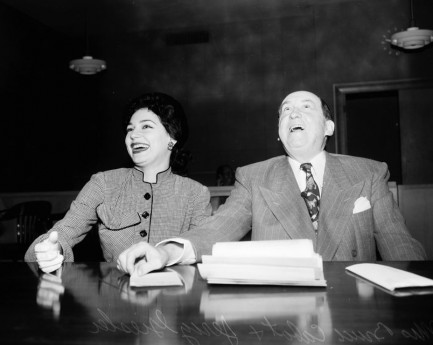
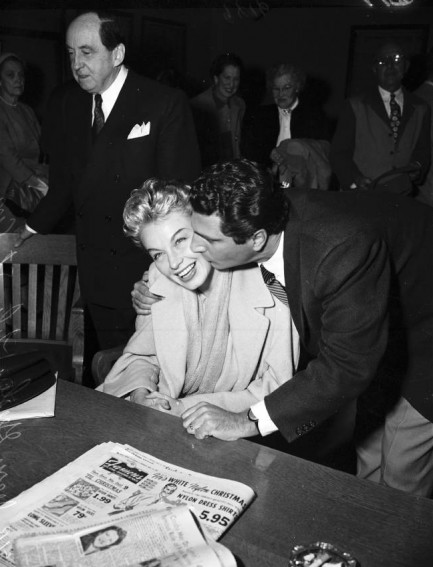
Why is this woman laughing? Because she's just been granted a divorce. She's actress Francesca de Scaffa and she was married to actor Bruce Cabot until today in 1951, when the photo memorialized her cheerful unfettering. Why is the man laughing? He's Hollywood super lawyer Jerry Giesler, and he's probably thinking about the fees he collected.
Strangely, Wikipedia lists de Scaffa and Cabot as divorcing in 1957, but we found wire photos stating unambiguously that they split in 1951. However, we also found references to the 1957 divorce. We can only guess the two remarried at some point, a supposition that makes sense considering we also found a photo of the two dining in December 1951 captioned in part, “Last night, guess who took [de Scaffa] night-clubbing? Right! Bruce Cabot.” The point of the caption being that divorced couples are not often seen out having a night on the town together.
It lends credence to the idea that they married twice, but don't quote us on it. We will find out, though, because we'll probably revisit de Scaffa a bit later—she's true pulp material. Among her many exploits were acting as an informant for Confidential magazine, a liaison with the Shah of Iran, marrying a Spanish bullfighter, running afoul of Mexican officials who tried to deport her, two suicide attempts, and more. As far as her marriage(s) with Cabot go(es), we'll put it(them) in the mystery file for now.

| Hollywoodland | Dec 11 2015 |

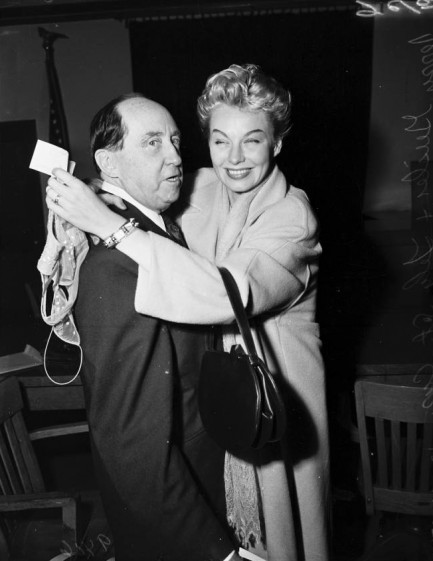
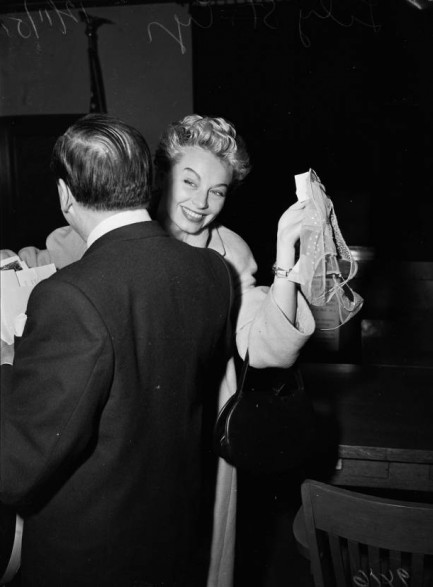
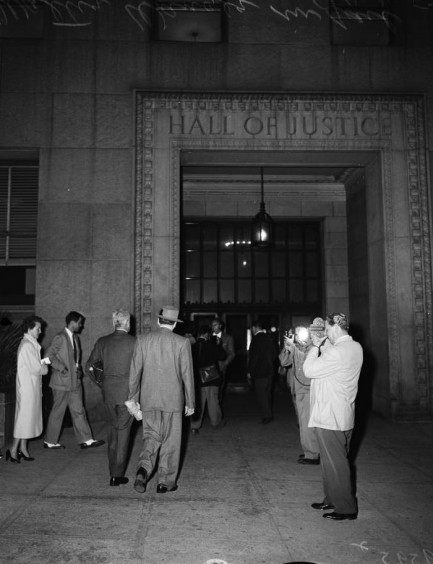
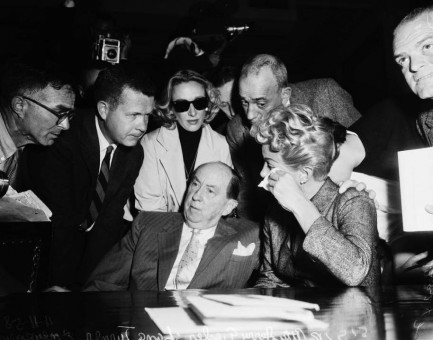
We decided to come full circle with Lili St. Cyr. We talked about her famed court case here, showed her on the witness stand here, and mentioned that she beat the rap. You see her above celebrating the not-guilty verdict at the courthouse along with husband Orlando Orsini and mouthpiece Jerry Giesler. Lili walked today in 1951.

| Hollywoodland | Jun 5 2012 |

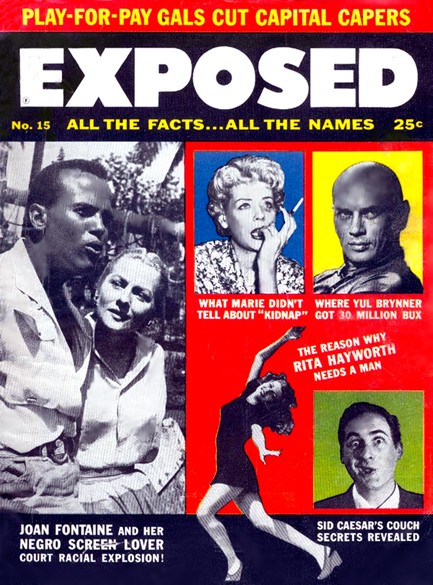
Today we’re back to the mid-century tabloid Exposed, with a cover from this month 1957 featuring Harry Belafonte, Joan Fontaine, Yul Brenner, Sid Caesar and Rita Hayworth. In the middle of the cover, you see a shot of a bruised and worried Marie McDonald. The photo was taken just after she was found on January 4 wandering in the desert near Indio, California. The tale soon spread across Hollywood like wildfire—that she had been abducted at gunpoint from her home the night of January 3 by two swarthy men who demanded her rings, her money, and her body. The last demand had a certain resonance. McDonald had gotten famous using the nickname “The Body.” The possibility that two swarthy men—one black and one Mexican—had defiled it was, in 1957, simply incendiary.
McDonald’s story began to fall apart immediately. She claimed rape, but doctors found no evidence. The note left by kidnappers at her house was made up of words clipped from newspapers found in the fireplace. To the cops, it seemed unlikely that kidnappers would, under the circumstances,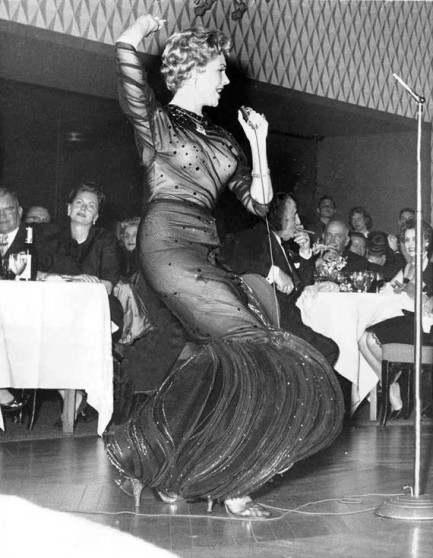
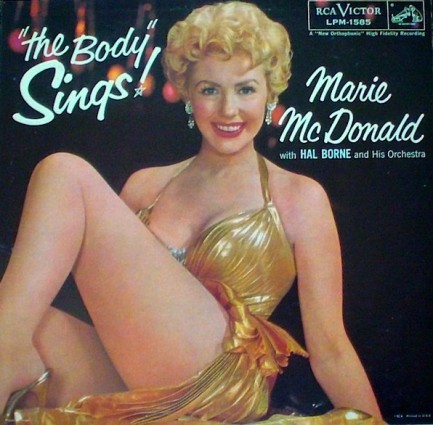 take the time to make a note from paper and glue. They also learned that McDonald had made three phone calls during the time she was missing—none to police.
But McDonald was in a battered state, with scrapes, bruises, and two broken crowns. And she stuck to her story—nighttime, bedtime, a noise in her yard, a lean out the window, and a man lurking right there with a sawed-off. The noise had been made by a second man to draw her to the window. McDonald said the men took half an hour to make a note and discuss their plans, then bundled her into a car. About the phone calls, she said she barely managed to sneak to the phone and was disoriented and had no idea who to call. When the kidnappers heard the mounting news coverage about the crime, they decided she was “too hot” to keep and dumped her in the desert, sending her tumbling down a 25-foot embankment. And then there was the matter of the unidentified males who had called people close to McDonald with threats.
By January 5, McDonald’s ex-husband Harry Karl was offering up some juicy quotes to the press. Among them: “Marie is a very sick woman. I believe she left of her own accord.” He had received one of the calls from the kidnappers, but wasn’t buying it for a  minute. He said, “She has done some very strange things in the past.” Police soon learned that the kidnap tale resembled the plot of Sylvia Tate's comedic novel The Fuzzy Pink Nightgown, which happened to be among the books McDonald had in her home. There was little doubt now in the minds of authorities that the whole situation was an elaborate hoax, but McDonald was a celebrity and so the police dutifully arrested suspects, continued investigating, and by January 17 sent the whole messy affair to a grand jury.
The day McDonald arrived to give her testimony she said, “I’m not looking forward to this. I don’t see how I can convince 19 men if I can’t convince the police.” She was right. The grand jury decided there wasn’t enough evidence of a crime and the matter was dropped. In retrospect, McDonald was probably lucky not to have been prosecuted herself. Perhaps the fact that she had retained Hollywood super lawyer Jerry Giesler helped her there. In any case, the Marie McDonald kidnapping went into the history books as yet another Hollywood conundrum.
McDonald’s career as a popular performer had been more or less finished for ten years, but she had remained on the fringes of the news thanks to her marriages—seven of them—and her many famous friends.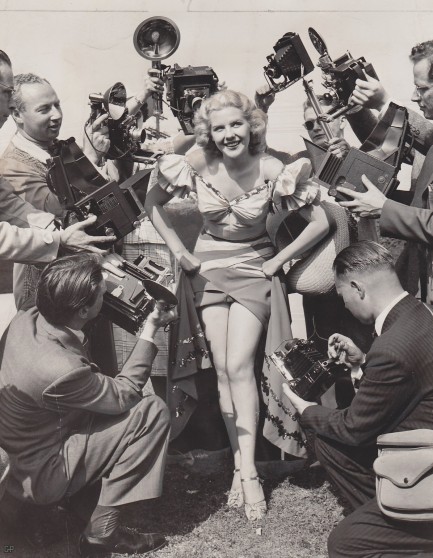 The events of 1957 had put her front and center again, but it was the last time, until she died of an accidental Seconal overdose—or was it suicide?—in 1965. Two months later, her husband Donald F. Taylor, overdosed in the same room, using the same bottle of pills.

| Vintage Pulp | Mar 3 2011 |

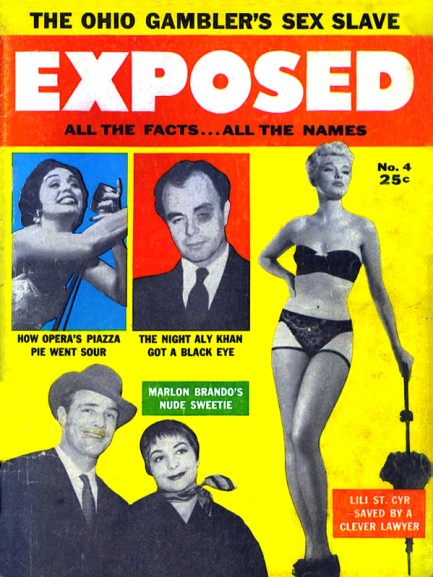
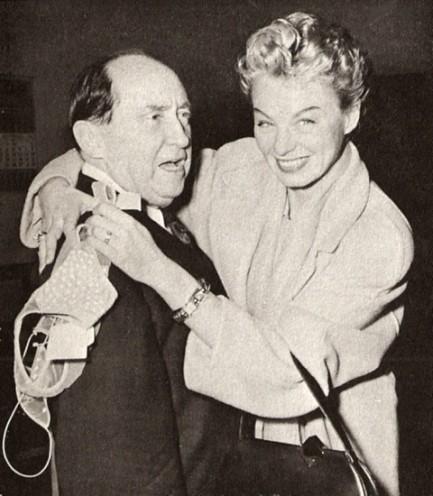
Tabloid month continues with the New York City-based Exposed, one of the middle tier entrants onto the scandal sheet scene. The magazine came on the scene a bit later than the heavyweights, at a time when the tabloid market was already packed with better-produced, better-funded rivals. Little wonder then, that Exposed folded quickly—we’ve seen issues numbering up to 18 but no further. Inside this March 1956 issue, numbered 4, we have the usual victims—Brando, Lili St. Cyr, and Ali Khan. The clever lawyer mentioned here in connection with St. Cyr is Jerry Giesler. You see St. Cyr and Giesler hugging below, just after St. Cyr’s acquittal in Los Angeles from charges of indecent exposure at the nightclub Ciro’s. We talked about the trial a couple of years ago, but since then, the website Paradise Released has posted a more detailed version of that unusual day in court. We recommend giving it a read. And if you just can’t get enough, there’s another recent account at Pincurlmag, here, with some additional details. We’ll have more from Exposed, including some interior pages, a little later.

| Hollywoodland | Jan 29 2010 |

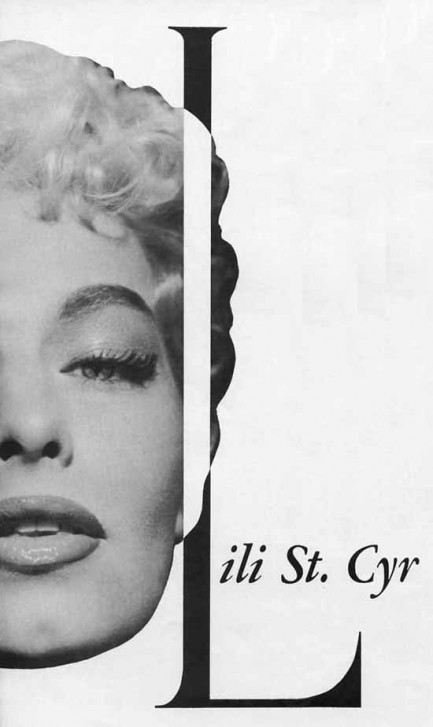
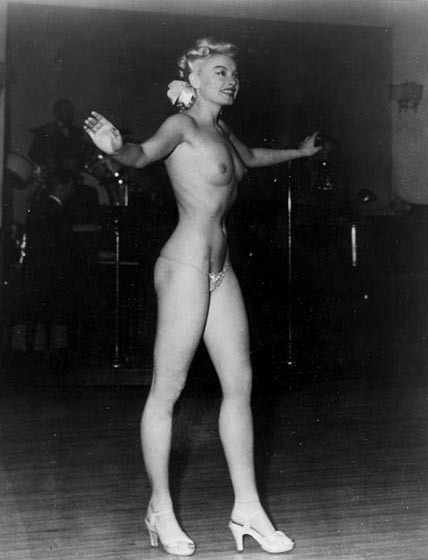 developed some of her trademark techniques, including working with a cockatiel, and having her g-string snatched off by a fishing line that was invisible to the audience. Burlesque crowds were usually raucous, but St. Cyr, with her sheer grace and insistence upon infusing balletic movements into her routines, more often awed audiences into silence.
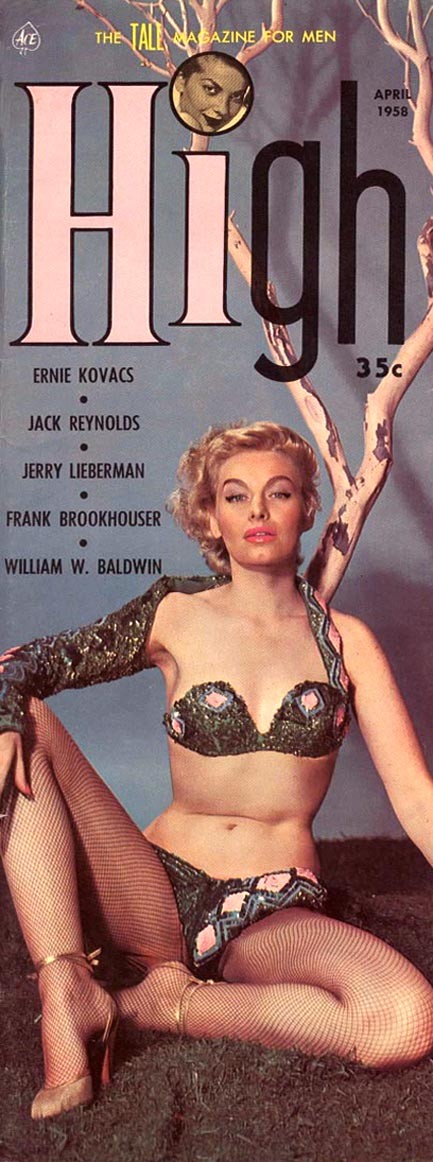 celebrities. With the fame also came the moral watchdogs, those desperate to stop consenting adults from doing what they wished with their own time, and the arrests followed. She was making enough money to afford top legal representation, and she chose the best—Jerry Giesler, who we discussed last June.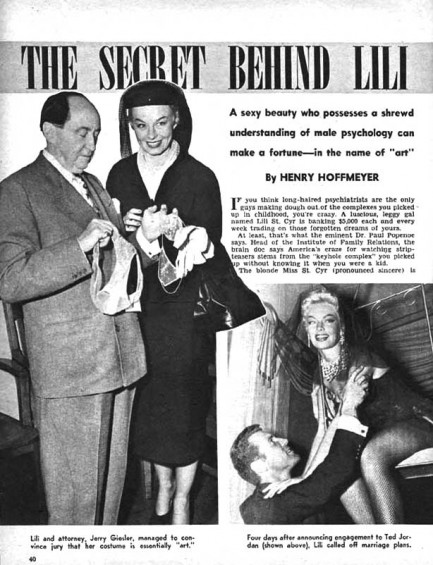
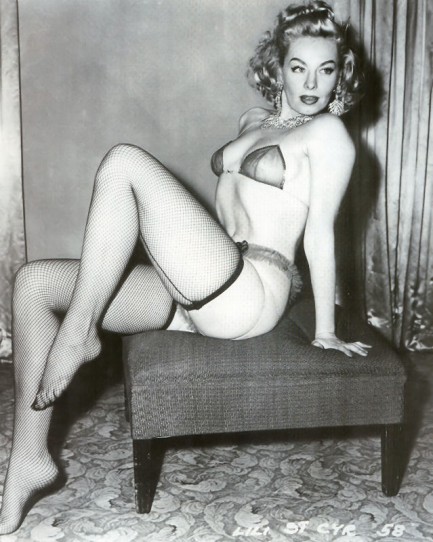 achieved a longstanding goal of establishing herself in another industry by opening a mail order lingerie business similar to Frederick’s of Hollywood. It was called The Undie World of Lili St. Cyr, and her garments were geared toward a male clientele—the idea being that prodding men to give lingerie as gifts was more profitable than trying to appeal to women. St. Cyr was right, and her business became wildly successful, hawking its wares in colorful catalogues that remain collectibles even today. After St. Cyr sold controlling interest in the business, she drifted into a quiet twilight, but, like former nudie queen Bettie Page, experienced a revival during the 1990s. But unlike Page, St. Cyr didn’t appear at conventions and signings—she stayed in her little apartment with her cats.
Most of the sites we visited looking for information on St. Cyr discuss those years of seclusion as if they were an anomaly. But in that 1957 Mike Wallace interview, she confessed that she hated having people look at her. Wallace seemed baffled by this, and for some reason didn’t seem to make the connection that $100,000 a year will go a long way toward helping someone battle stage fright. The idea that she might actually be
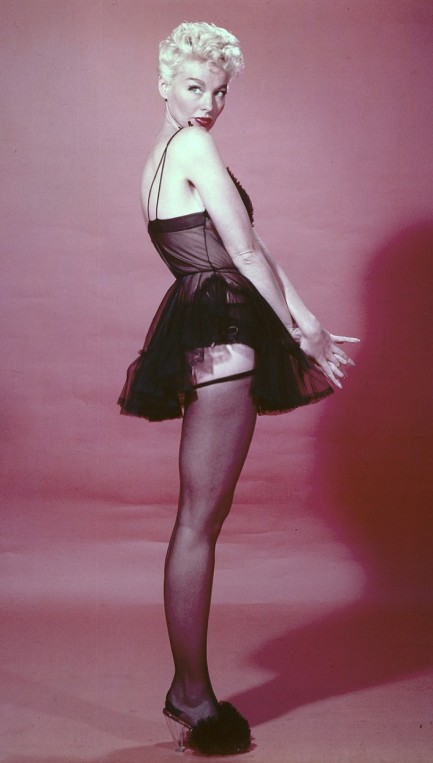 shy instead took him into a line of questioning during which he flat-out said: “You don’t like yourself very much, do you?” And St. Cyr replied, “No, I don’t.” Asked why, she says, “Perhaps because of what I do.” So it seems clear that St. Cyr was always destined to spend her last years avoiding the limelight. And while it’s safe to say the world certainly missed her, it’s equally safe to say that she probably never missed the world.
| Hollywoodland | Jun 19 2009 |

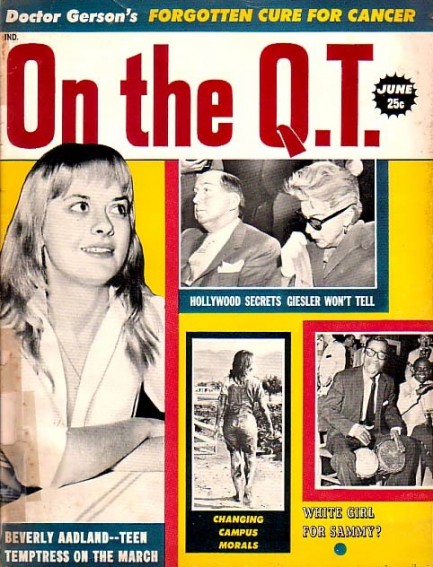
We have another issue of On the Q.T. today. The cover subject, Beverly Aadland, was a teenaged actress who earned notoriety for being Errol Flynn’s last lover. Flynn always preferred young girls—oftentimes too young, depending on whom you believe. When he wrote his disappointingly bland (at least to us) autobiography My Wicked, Wicked Ways, the dedication read: To a small companion. We would have guessed Flynn meant his cock, since it got him into so much trouble during his life, but more informed sources than us say the companion he meant was Beverly Aadland. We stand corrected, and she stands explained for those who didn’t know who she was.
Moving on, On the Q.T. also mentions a person named Giesler. This would be Jerry Giesler, who is little known now, but was once Tinseltown’s lawyer-to-the-stars. To say he possessed secrets is an understatement considering he represented the likes of Charlie Chaplin, 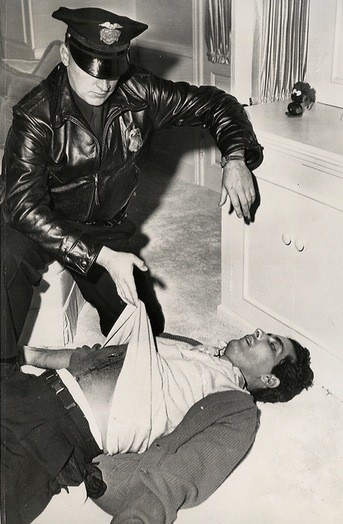 Edward G. Robinson, Marilyn Monroe, Shelley Winters, Lili St. Cyr, Busby Berkeley (from triple manslaughter charges), Zsa Zsa Gabor, Errol Flynn (again, with Flynn), and too many more to name. But of all his exploits, the most famous was his sensational defense of fourteen year-old Cheryl Crane from murder charges.
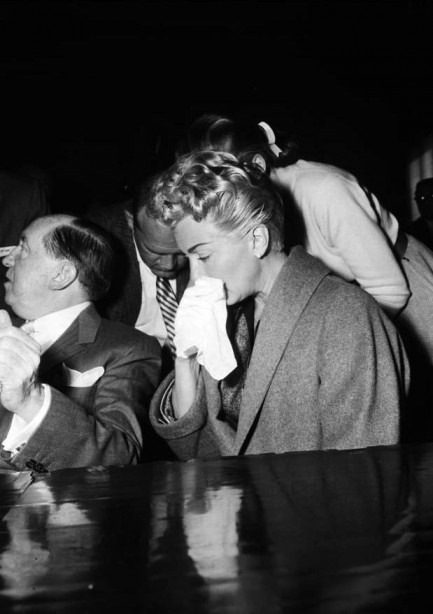
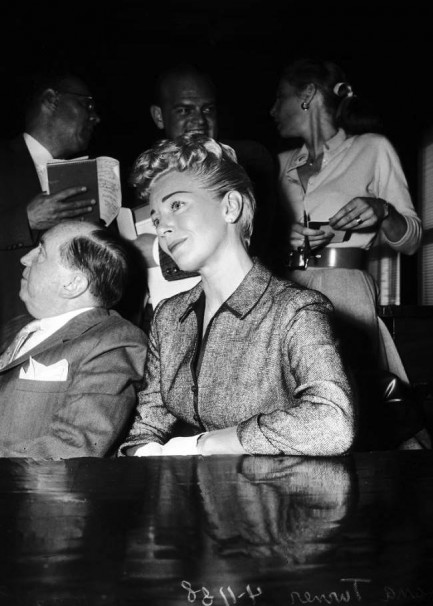
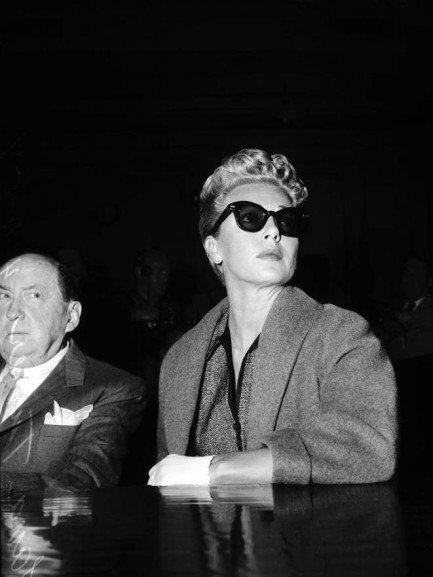
It’s one of the most lurid stories in Hollywood history. Crane was the daughter of megastar Lana Turner, and had endured many difficulties early in life, including alleged molestation and rape by Turner’s fourth husband, actor Lex Barker. Turner had an abusive situation of her own with mob enforcer Johnny Stompanato, a violent man who slapped her around but clung onto her for dear life no matter how hard she tried to dump him. On April 4, 1958, Cheryl Crane stabbed Stompanato to death. She claimed the mobster was beating her mother and she had no choice but to attack him. Not to be morbid, but oh to have been a fly on the wall as this fourteen year-old girl went Benihana on a feared mobster. What an astounding scene that must have been, especially to Stompanato, who you see in peaceful repose above. Anyway, Cheryl Crane said the stabbing was done in her mother's defense, and Jerry Giesler convinced a jury she was right.
Already famous enough to command what were at the time enormous retainers, Giesler's reputation was forever sealed after the Crane trial. He was simply the best, the go-to attorney for a celeb in a town that was always boiling with trouble. As a result of Giesler's exploits, Hollywood coined a catchphrase, a collection of magic words believed to possess the power to solve even the toughest problems. The phrase? "Get me Giesler."