 There's something very fishy going on. 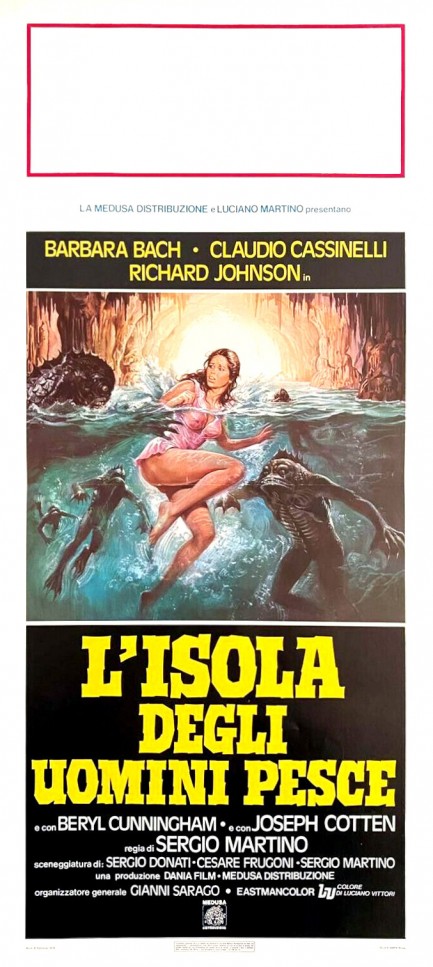
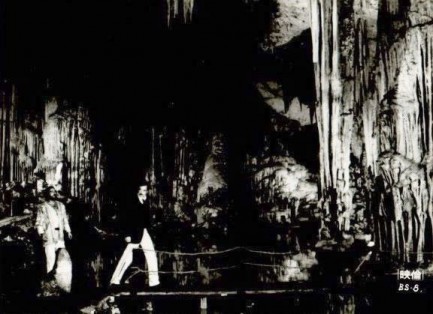
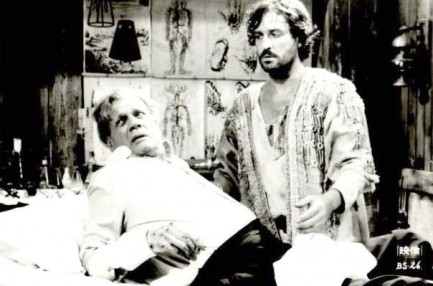
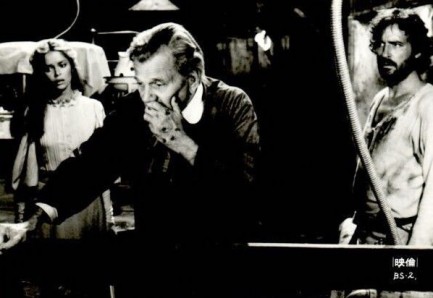
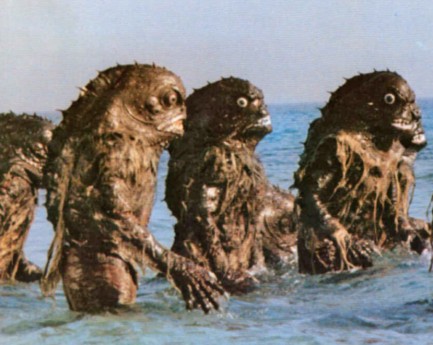
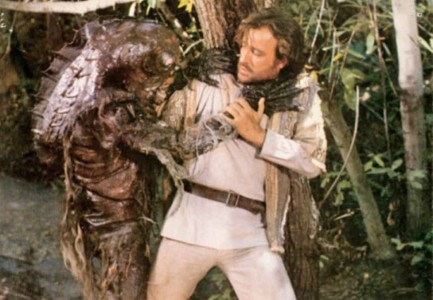
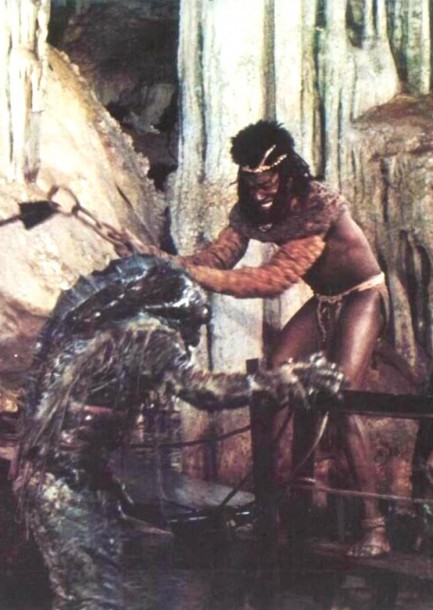
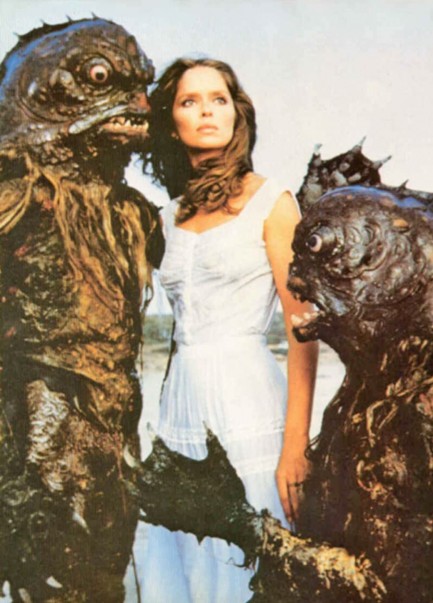
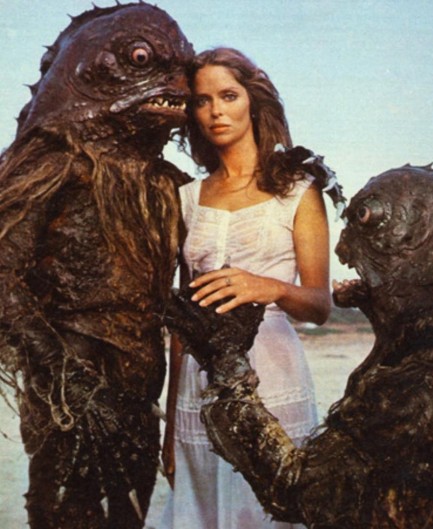
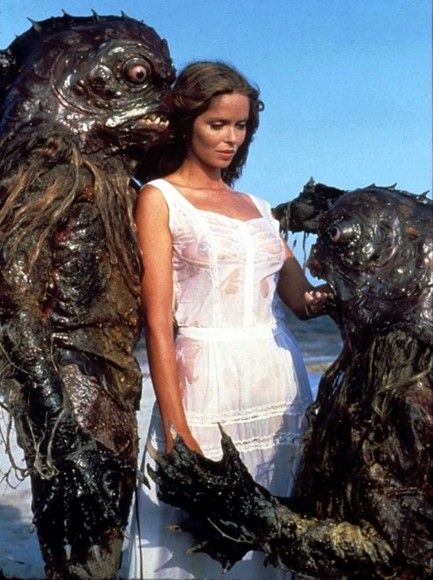
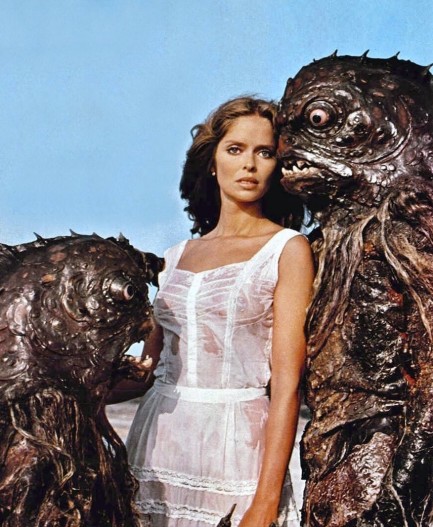
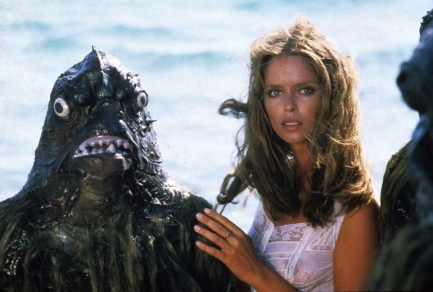
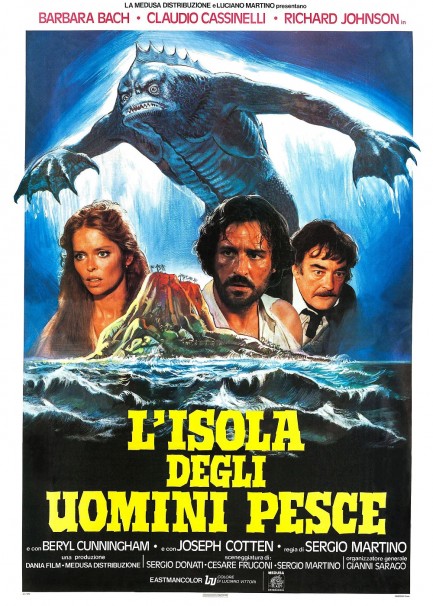
This promo poster just screams winner, don't you think? If it isn't a good movie, it's got to be deliciously terrible. It was made for L'isola degli uomini pesce, known in English as The Island of the Fishmen, a movie that starred Richard Johnson, Barbara Bach, and Claudio Cassinelli. No surprise what it's about, thanks to the title, but nothing is spoiled—the fishmen show up within the first few minutes of the film when a group of convicts in a lifeboat are attacked and the five survivors end up stranded on a swampy island. Since the fishmen hunt there, the attrition rate on this parcel of land is a bitch. Two cons are killed almost immediately upon arrival, and a third barely survives a pit trap. They soon learn humans live there too—paranoid misanthrope Richard Johnson, his companion Barbara Bach, their servant Beryl Cunninghman, and others, all residing in and around a baroque slave plantation house.
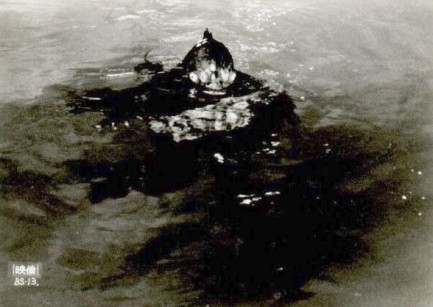
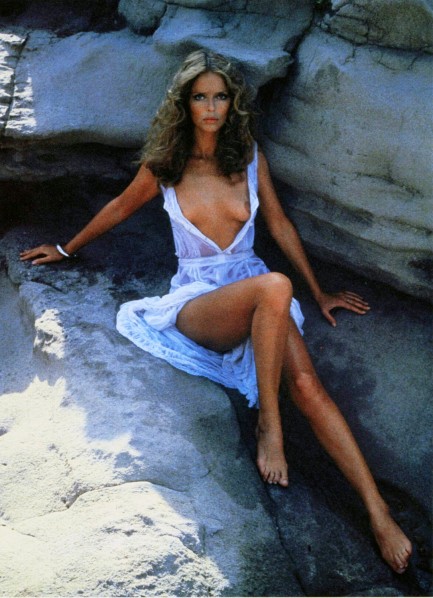
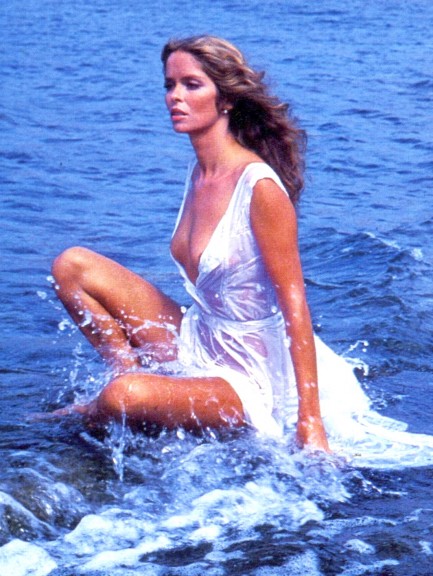
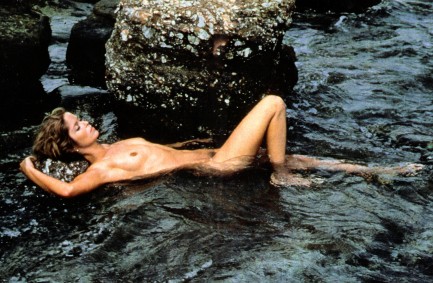
Johnson, who is a quack scientist, is trying to train the fishmen for what shall here remain undisclosed purposes. It involves going deep underwater where humans can't survive—but strangely, not so deep that Johnson can't simply drop down in his unpressurized wooden submersible and watch them at work. It's all a crock, even for bad sci-fi. But there are three points of note with the film: first, you can actually see that some budget went into creating the fishmen; second, Johnson speaking in a constipated Dick Dastardly voice is flat hilarious; and third, Barbara Bach is Barbara Bach. Or maybe we should have listed her first. The producers at Dania Film, perhaps realizing Fishmen was a total woofer, rode Bach hard, putting out a bunch of skinful promotional photos and getting her a Fishmen-themed nude shoot in Ciné-Revue. There's always a silver lining in 1970s exploitation cinema—and on Pulp Intl. L'isola degli uomini pesce premiered in Italy today in 1979.
 The truth of a man is always revealed by the shape of the shadow he casts. 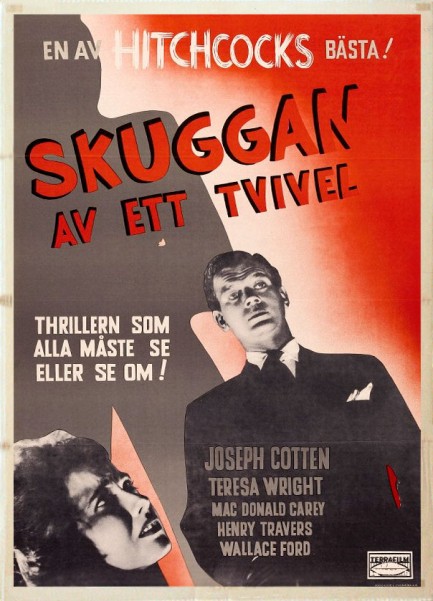
Above, a Swedish poster for Alfred Hitchcock’s psychological thriller Skuggan av ett tvivel, staring Joseph Cotten and Teresa Wright, and originally released in the U.S. as Shadow of a Doubt. The Swedish premiere of the movie was today in 1943, which might be a surprising fact for some, considering the ongoing calamity that was World War II, but Sweden was neutral during the conflict—or perhaps a better way to phrase it is to say it was occasionally helpful to both the Axis and Allies. Anyway, this is an excellent poster that tells the entire story of the film—an outwardly normal man is really a monster, and in the art casts a misshapen shadow that only one young, intuitive woman can see. The line across the top says, “One of Hitchcock’s best!” Of course, he would rise to even greater heights during the 1950s and 1960s, but some still regard this as top five Hitchcock. Us? Not so much, but see it and judge for yourself. 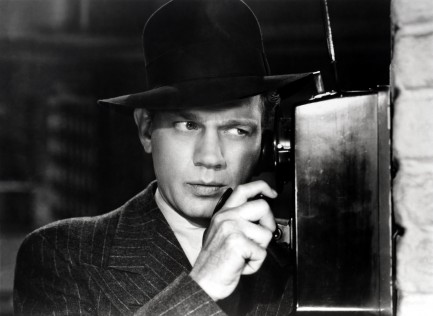 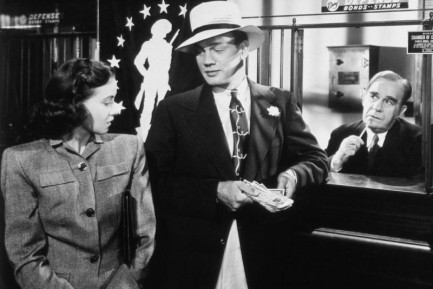 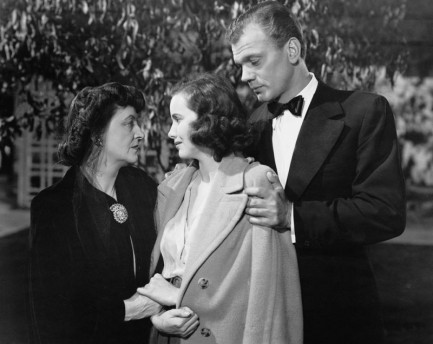 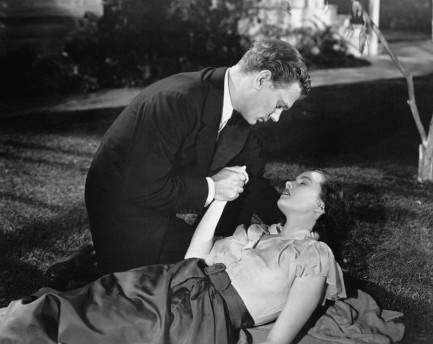 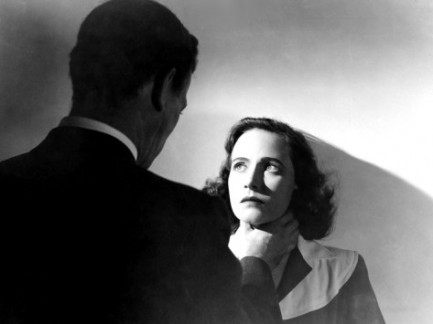
 Vintage website uncovers rare lobby cards for timeless Orson Welles classic. 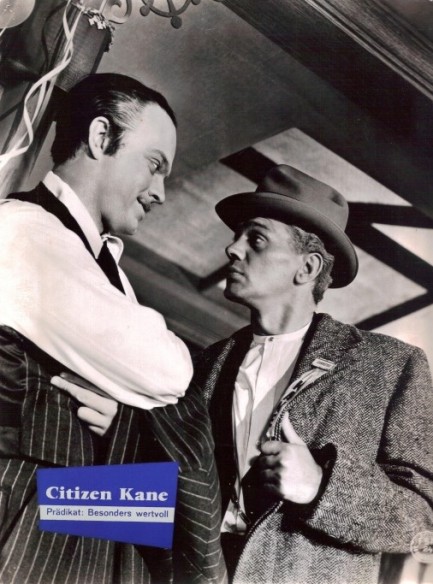
Above is a rare Citizen Kane lobby card, produced for the film’s West German run, which, as you might imagine, didn’t occur until well after World War II for the 1941-produced film. This shot has Orson Welles and Joseph Cotten. It was sent over by our friends at National Road Books, and as always, we appreciate their generosity, especially with items this rare (the text in the inset box reads: “Descriptor: especially valuable”). See more here, including a rare shot of Dorothy Comingore.
 The Third Man is a stiff drink, with a twist of Lime. 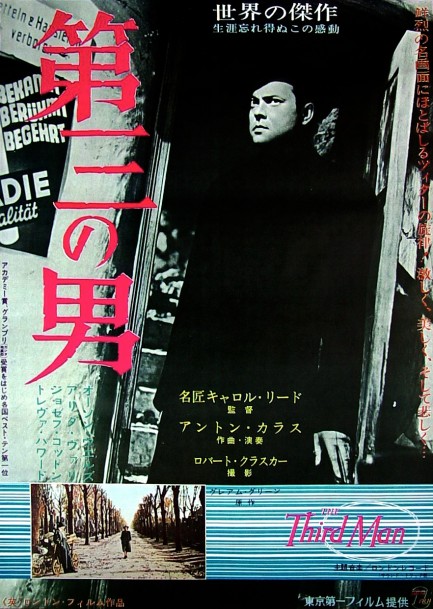 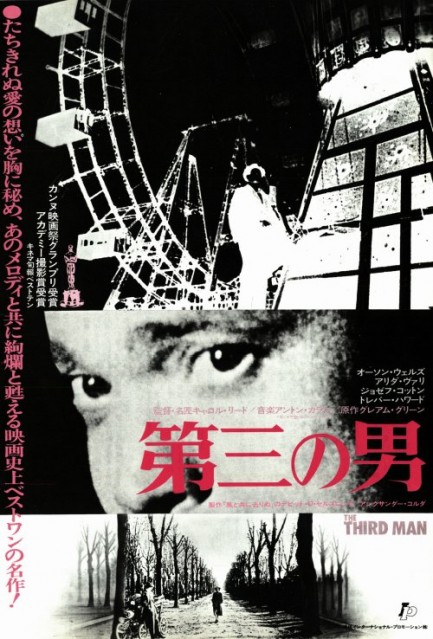
The 1949 film noir The Third Man is a best-case-scenario of what can happen when great talents collaborate. Carol Reed directs, Orson Welles, Alida Valli and Joseph Cotten act from a screenplay penned by master storyteller Graham Greene, and the cinematographer is Robert Krasker. Krasker won an Academy Award for his work here, and when you see the velvety blacks and knifing shadows of his nighttime set-ups, as well as the famed scenes shot in the cavernous Vienna sewers and bombed out quadrants of the city center, you’ll understand why. The story involves a pulp writer named Holly Martins who arrives in a partitioned post-war Vienna only to find that his friend Harry Lime is dead, run down by a truck. When Martins learns that the police are disinterested in the circumstances of Lime’s demise, he decides to do what one of his pulp characters would do—take matters into his own hands. But nothing adds up. He learns that Lime died instantly, or survived long enough to utter a few last words. He finds that Lime was a racketeer, or possibly not. And he discovers that two men were present when Lime died—or possibly three. That third man seems to be the key to the mystery, but he proves to be damnably elusive. We can’t recommend this film highly enough. Above you see a pair of rare Japanese posters from The Third Man’s premiere in Tokyo today in 1952.
|
 |

The headlines that mattered yesteryear.
1939—Holiday Records Strange Fruit
American blues and jazz singer Billie Holiday records "Strange Fruit", which is considered to be the first civil rights song. It began as a poem written by Abel Meeropol, which he later set to music and performed live with his wife Laura Duncan. The song became a Holiday standard immediately after she recorded it, and it remains one of the most highly regarded pieces of music in American history. 1927—Mae West Sentenced to Jail
American actress and playwright Mae West is sentenced to ten days in jail for obscenity for the content of her play Sex. The trial occurred even though the play had run for a year and had been seen by 325,000 people. However West's considerable popularity, already based on her risque image, only increased due to the controversy. 1971—Manson Sentenced to Death
In the U.S, cult leader Charles Manson is sentenced to death for inciting the murders of Sharon Tate and several other people. Three accomplices, who had actually done the killing, were also sentenced to death, but the state of California abolished capital punishment in 1972 and neither they nor Manson were ever actually executed. 1923—Yankee Stadium Opens
In New York City, Yankee Stadium, home of Major League Baseball's New York Yankees, opens with the Yankees beating their eternal rivals the Boston Red Sox 4 to 1. The stadium, which is nicknamed The House that Ruth Built, sees the Yankees become the most successful franchise in baseball history. It is eventually replaced by a new Yankee Stadium and closes in September 2008.
|

|
|
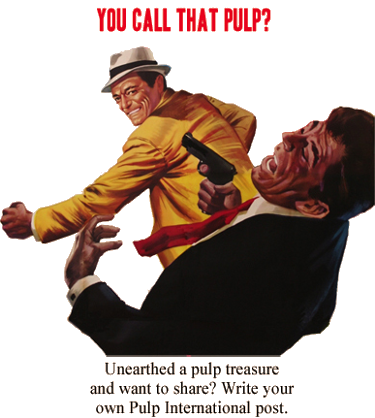
It's easy. We have an uploader that makes it a snap. Use it to submit your art, text, header, and subhead. Your post can be funny, serious, or anything in between, as long as it's vintage pulp. You'll get a byline and experience the fleeting pride of free authorship. We'll edit your post for typos, but the rest is up to you. Click here to give us your best shot.
|
|