| Vintage Pulp | Feb 14 2020 |





















| Musiquarium | Sep 4 2019 |

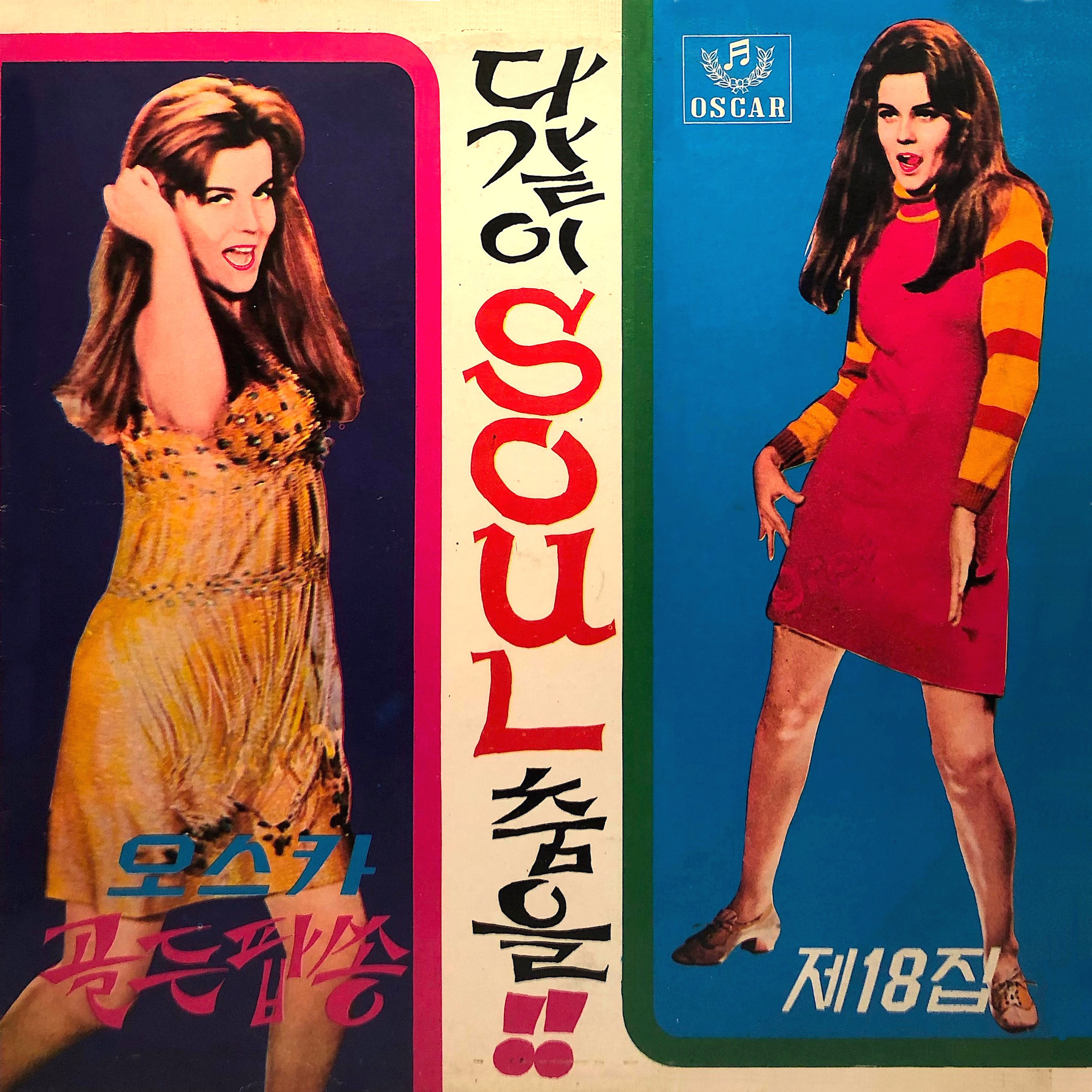
The cover was posted last month at the album art blog lpcoverlover.com, a worthwhile stop for vintage vinyl art. Their scan was a little crooked, so we squared it up, separated the two Ann-Margret images, and uploaded them below. We kept the full cover scan at large size, so if you want it you'll find that it's 2500 pixels wide, pretty much twice the size of an actual LP sleeve, suitable for framing. Help yourself, and thank lpcoverlover.



| Vintage Pulp | Sep 24 2018 |

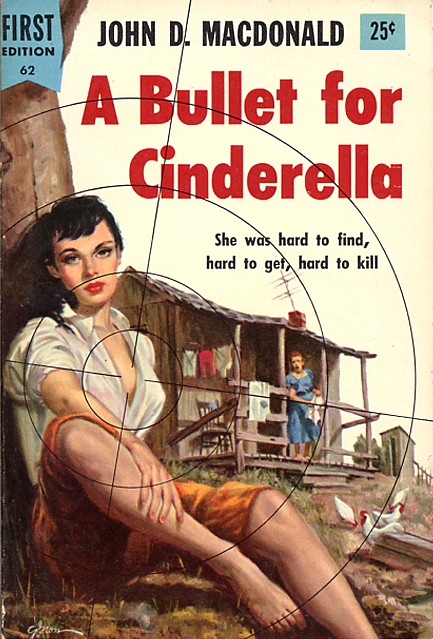
Above is a nice George Gross cover for John D. MacDonald's 1953 novel A Bullet for Cinderella. We acquired this book mainly because of the art, but also to see if the weird generalizations about various types of people we complained about in MacDonald's Travis McGee novels was the character or the author. Turns out it was the author. But he keeps it in a lower gear than in his McGee novels, which helps. In the story a Korean War prison camp survivor heads to a dead buddy's home town to try to locate $60,000 in stolen money. On his deathbed in the prison camp the friend had confessed to hiding the money, but in his delirium did not say exactly where. He asked that the money be returned to its rightful owner but the hero of the story plans to keep it. To his dismay another death camp survivor who somehow learned the same information is already in the town, also trying to locate the cash. You get a battle of wills, a moral struggle over whether to keep the money if found, and a love interest who was once the dead man's girl. You could find a better book to read, but you could also find a lot worse.

| Vintage Pulp | Dec 6 2017 |

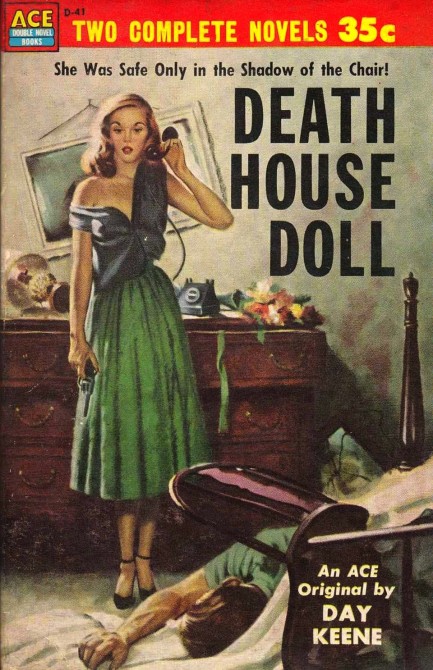
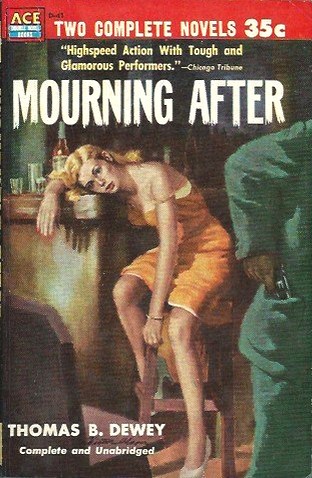 Above, a nice cover for Day Keene's 1954 thriller Death House Doll, with excellent art credited to Bernard Barton, who's aka Harry Barton (Bernard was his middle name). In the story, a Korean War vet has promised his fatally wounded brother he'd look after his wife and baby daughter, but when he gets back to the world (Chicago) he's stunned to find that she's sitting on death row for murder, and unwilling to spill the truth even if it saves her. The attraction with this one is watching a decorated war hero run riot on hoods and thieves, while up against the always effective ticking clock gimmick—an execution date, which in this case is five days hence. The book was an Ace Double with Thomas B. Dewey's Mourning After on the flipside, and the art on that one, just above, is by Victor Olson. We put together a nice collection of Harry Barton's work back in May that we recommend you visit at this link.

| Modern Pulp | Jan 21 2014 |

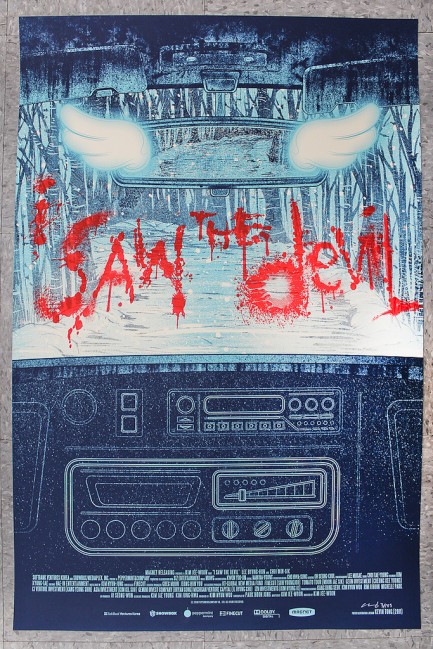
Thanks to the wonder of downloading—er, we mean the legal purchase of a DVD at a sanctioned commercial outlet—this weekend we were able to re-screen one of our favorite recent movies, the 2010 South Korean gutwrencher Angmareul boatda, aka I Saw the Devil. Last time we watched it we didn’t write about it, but we think it’s a good time to recommend the movie because today was its official American premiere date. Amazingly, that unveiling was at the 2011 Sundance Film Festival. Well, nobody felt like dancing by the time the movie ended, you can be sure. Often lumped in with horror or torture porn movies, in truth I Saw the Devil is an unflinching but high-gloss revenge thriller, beautifully shot, and carefully paced. The revenge in question is directed toward a serial killer and director Kim Ji-woon’s documentation of that person’s gory exploits is where much of the movie’s early mayhem occurs.
Unlike many American films, I Saw the Devil doesn’t soften the impact of violence by turning it into a technical showcase for an fx house—the movie tries its best to make those scenes frightening yet somehow banal. No heads explode, nobody is thrown in a tire shredder, and nobody is impaled by a pair of skis. The most proximate cause of nearly every human death in history—technically speaking—has been lack of oxygen to the brain. Oxygen very often stops going to the brain because the blood needed to carry it there has gone somewhere else—the floor, for example. I Saw the Devil explores that concept with vivid clarity. Above is one of the American posters, and below is the original South Korean promo.


| Intl. Notebook | Aug 3 2013 |


| Intl. Notebook | May 1 2013 |

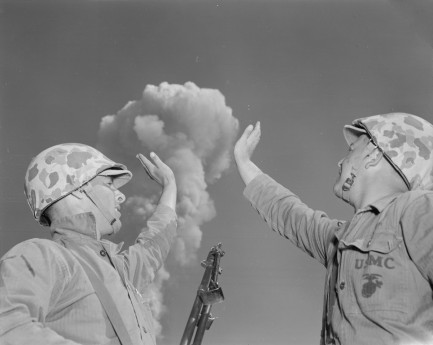
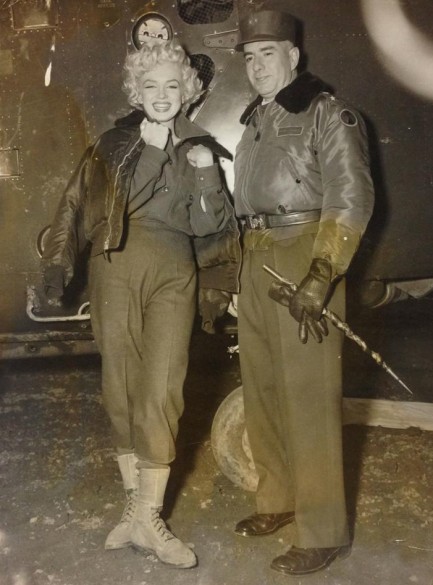
Back during the days of aboveground nuclear testing, particularly during the Korean War, the U.S. government wanted to be sure troops could operate under threat of nuclear attack. A field exercise known as Desert Rock IV was conducted at the Nevada Test Site during some of the detonations comprising the nuclear test series codenamed Operation Tumbler-Snapper. Thousands of soldiers conducted maneuvers as the blasts occurred, and were exposed to radiation, though the levels were said to be low. This particular photo is from the 20-kiloton airburst codenamed Dog, and shows two soldiers pretending to touch the bomb’s debris cloud. An aerial photo of the blast appears below. That was today in 1952.


| Vintage Pulp | Apr 2 2013 |


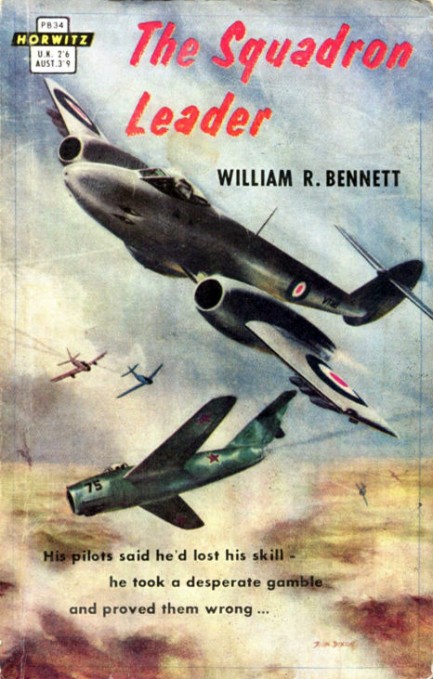
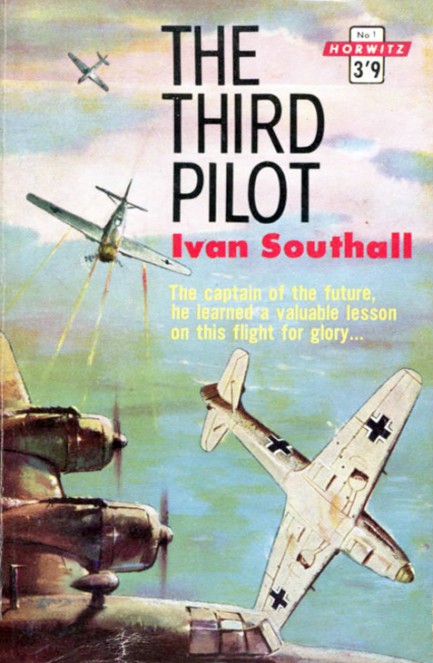
Over the last few months we’ve culled together a collection of Australian World War II and Korean War paperback covers from the 1960s and today seemed like a good day to share these with you. All of the books are from Horwitz Publishing, the family owned house established in 1921 in Sydney by Israel and Ruth Horwitz. Upon its inception Horwitz published trade journals and sporting magazines, but eventually moved into popular fiction, pulps, and comic books. It was under son Stanley Horwitz, who took over the head spot at the company in 1956, that these books were published.






| Hollywoodland | Vintage Pulp | Mar 28 2013 |

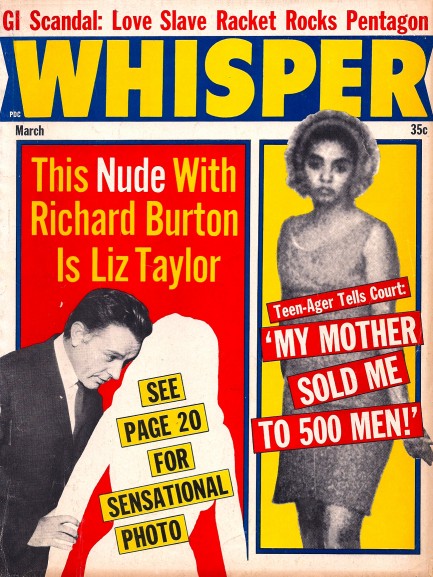
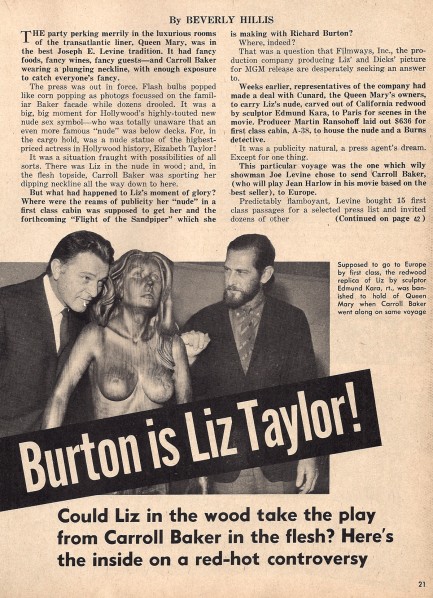
Elizabeth Taylor nude! Those sneaks at Whisper raised the hopes of millions of readers who bought this March 1965 issue, but inside revealed that the whited-out silhouette on the cover with Richard Burton is in reality a wooden statue of Taylor made to promote her role in The Sandpiper. It was to be unveiled at a party aboard the Queen Mary, but producer Joseph E. Levine connived a way for the sculpture to be stowed below decks so his star Carroll Baker wouldn’t be upstaged. In the end, nobody at the party saw the Taylor statue and Carroll Baker—once again wearing that amazing dress, by the way—ruled the day.




| Vintage Pulp | Dec 11 2012 |

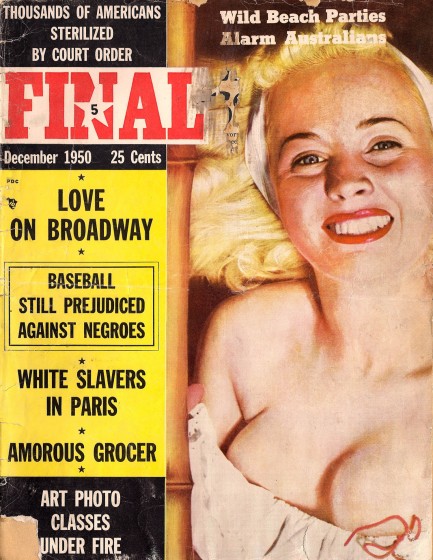
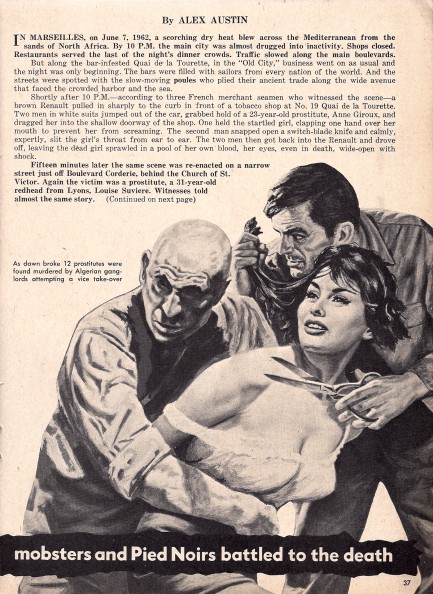
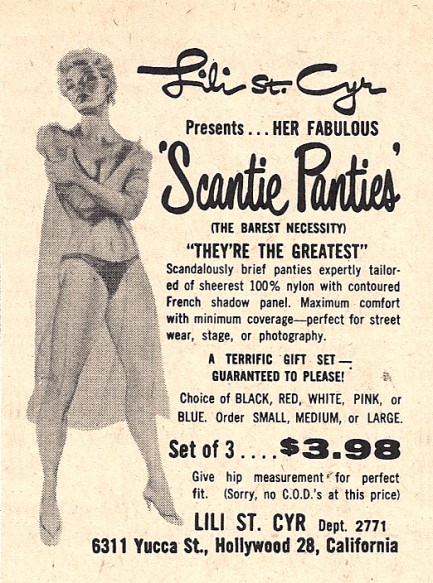
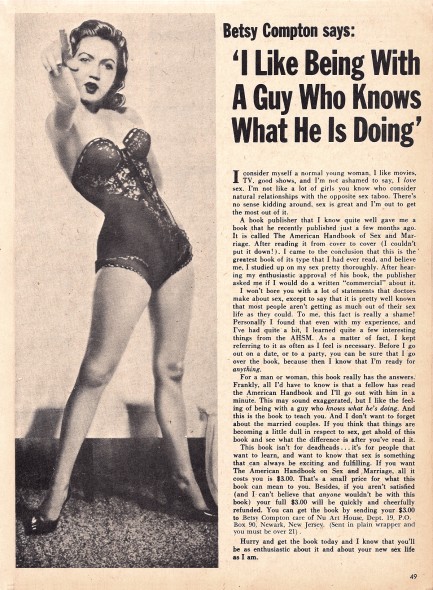
Above is the cover of an issue of Final, a publication we had never heard of before, but which is certainly big budget and hit the streets this month in 1950 courtesy of Gambit Publishing out of New York City. The cover star is model Joy Niven, who we also had never heard of, but who was photographed by famed Marilyn Monroe lensman Earl Leaf. This Final has taken a bit of wear over the last six decades, but kudos to the Denver Book Fair for acquiring it, sealing it so its deterioration stopped, and selling it to us cheap. Now we’ve carried it across an ocean, opened it, and exposed it to the elements, but all in an effort to scan it for posterity. For as we discussed before, if it isn’t digital and accessible to the masses, does it really exist at all?
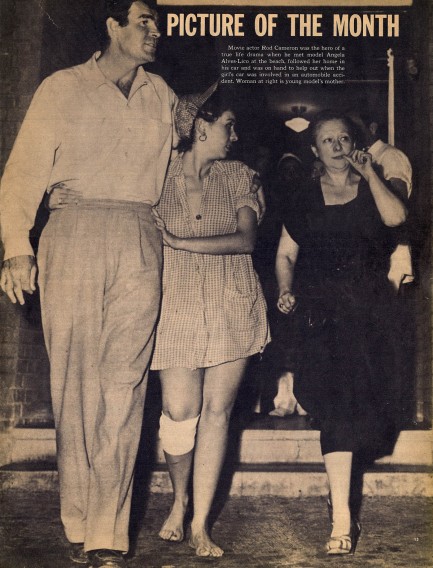
 was following in his car, when she had an auto accident. Our first thought, because they’d just met and “following her home” sounds a bit stalkerish to us, is that maybe she crashed because she was trying to get away from him. But perhaps not—Cameron and Alves-Lico soon married each other.
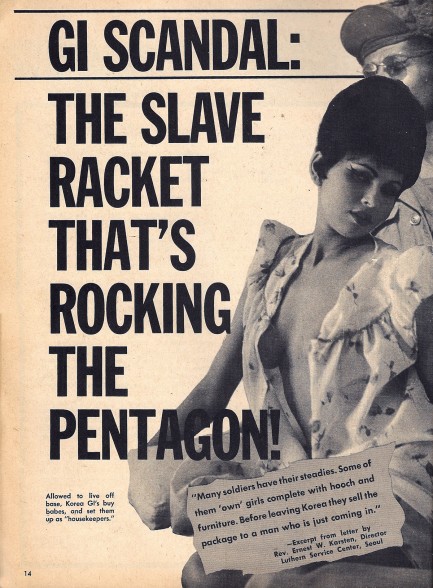
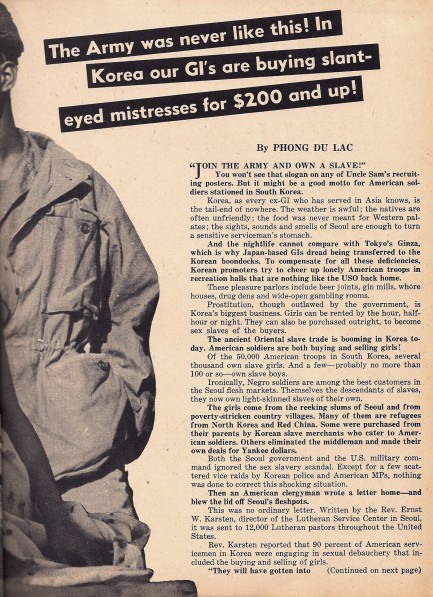
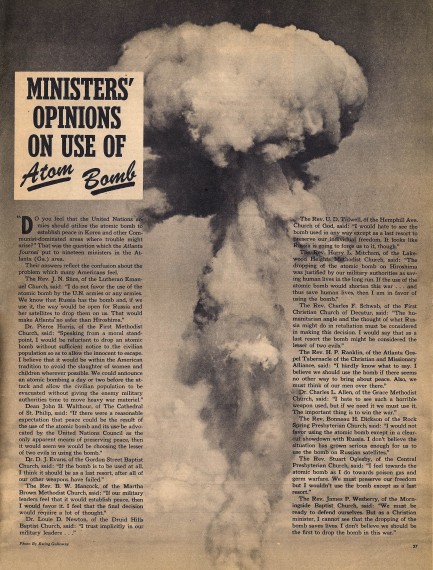 opinion of the compassionate Rev. B. W. Hancock: “If our military feels that it would establish peace, then I would favor it.” Truly, Hancock must have spent a lot of time with his cock in his han to come up with that one. It makes us think of the famous Tacitus quote: “Ubi solitudinem faciunt, pacem appellant.” Or, “And where they make a desert, they call it peace.” Yes! Three years of high school Latin and we finally worked that shit into a post. Nice! Anyway, for various reasons, the U.S. never nuked Korea, so we hope the ministers weren’t too disappointed.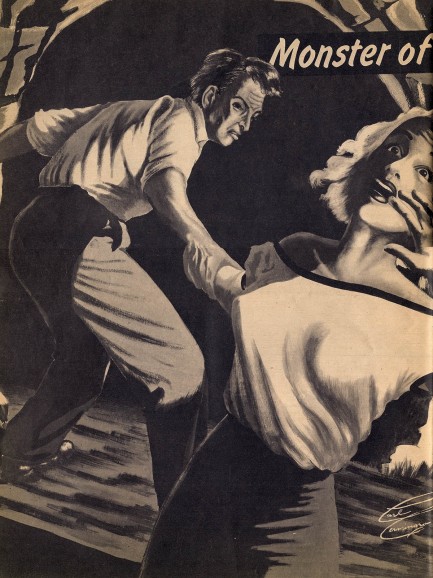
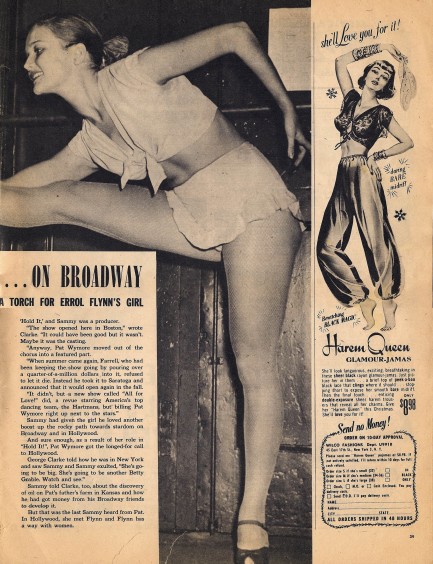
Update: Pamela writes in and says, "The best part about that Rod Cameron/Angela Alves-Lico story is that after ten years of marriage, Cameron divorced her. And married her mother. Yep...the woman on the right in that photo.