| Vintage Pulp | Aug 31 2017 |

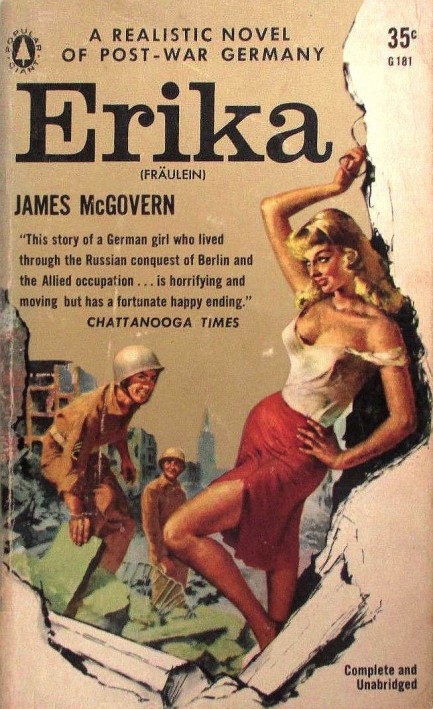
We don't know if there were enough prostitution-in-the-ruins novels written during the postwar period to qualify as a sub-genre, but it seems to us we've seen quite a few of them. We highlighted Scott Graham Williamson's Torment around this time last year, and now we have another—Erika, aka Fräulein, by James McGovern. The book revolves around a woman who is tricked into becoming a prostitute in divided Berlin before finally finding Mr. Right and escaping. She's named Erika Angermann, a symbolic name if ever there was one, hinting at what the men in her life put her through. Erika aka Fräulein was a hit when published in 1956, and became a 1958 movie with Dana Wynter and Mel Ferrer. The book is bit obscure today, but was well regarded in its time. We'll look into how many novels like this are out there and if there are enough maybe we'll put together a group post.


| Vintage Pulp | Jan 18 2016 |

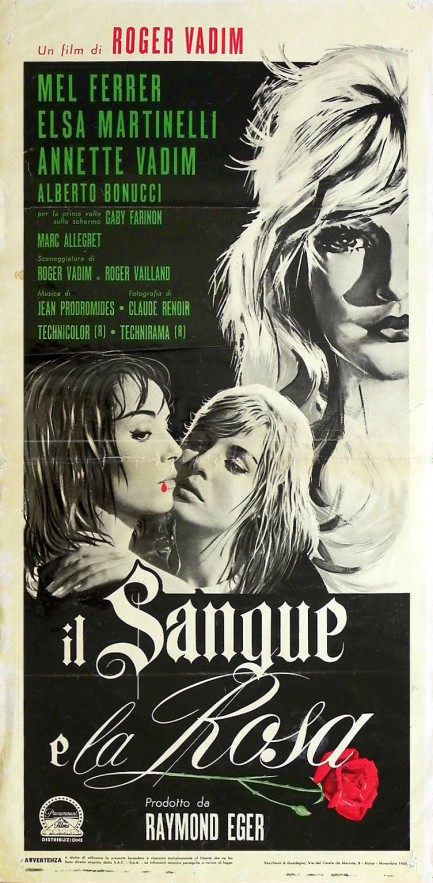
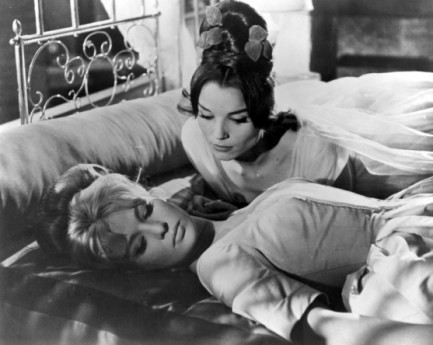
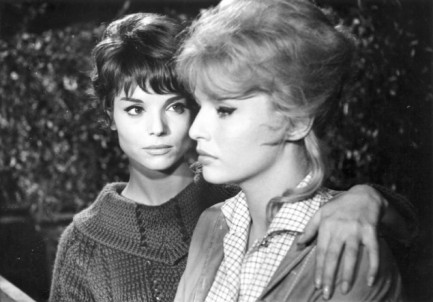
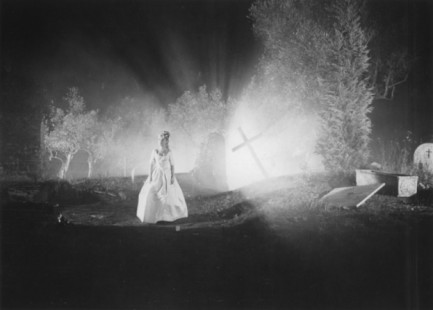
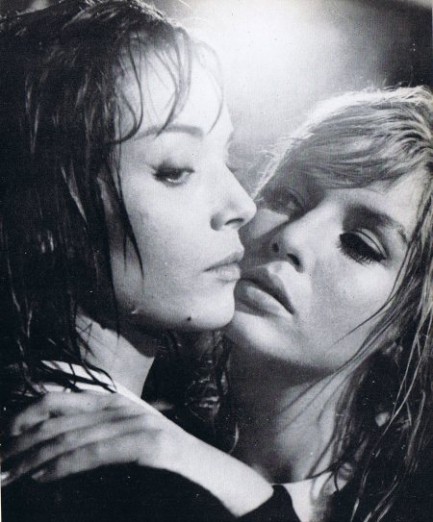 When we shared a poster for Roger Vadim’s Il sangue e la rosa way back in 2009 we didn’t talk about the movie. But since we found this beautiful alternate promo to show you, we thought we’d watch the film again to refresh our memories. It’s an ethereal gothic drama about a woman caught in a love triangle who is subsequently possessed by a vampire after an accidental explosion opens the monster’s centuries buried tomb. It feels like a supernatural version of Emily Brontë, but the source material was actually from Sheridan le Fanu, whose vampire story Carmilla predates Bram Stoker’s Dracula by more than twenty years. Long on lustful gazes, lingering fog, and lilting harp music, short on chills and thrills, Il sangue e la rosa is more of a Vadim art piece than a conventional film, but it has some charms, personified by Elsa Martinelli and Annette Vadim, aka Annette Stroyberg. Il sangue e la rosa premiered in Italy today in 1961. See the other poster here.

| Vintage Pulp | Jan 1 2013 |

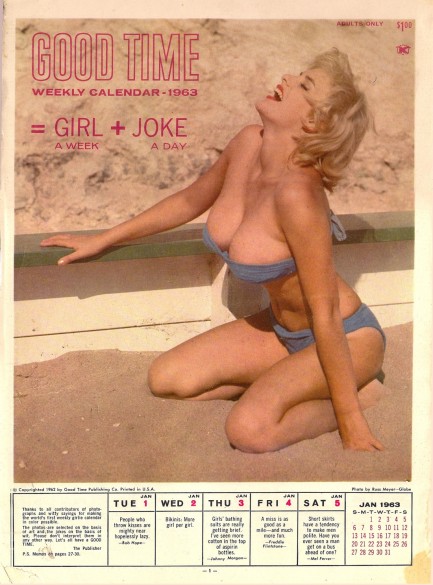
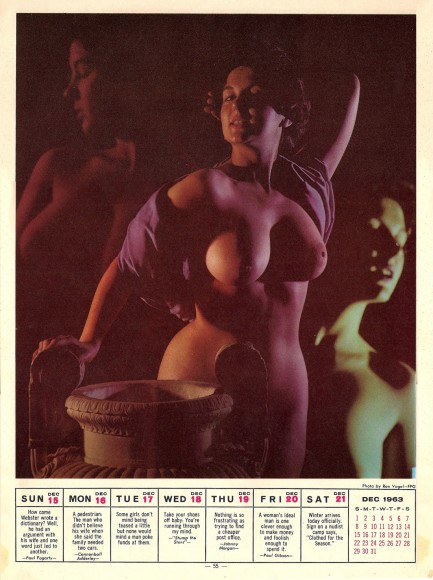
Survived another year. And so have you. So let’s open 2013 by catching up with the Goodtime Weekly Calendar. We missed two weeks while we were in Morocco, and those pages are below. Above you see the January 1 page of this great publication, which also happens to be the cover, and it features model/actress/centerfold June Wilkinson shot by film director Russ Meyer. The photo is a variation of another Wilkinson image that appears inside the calendar later in the year. The images below are credited to Ron Vogel and L.W., whoever he is. Obviously, there's a three week backlog of jokes, but by now we’ve established that most of them are not in any way amusing, so rather than transcribe the entire collection, we’ve selected what we hope are the most interesting. Enjoy.


| Hollywoodland | Aug 26 2012 |


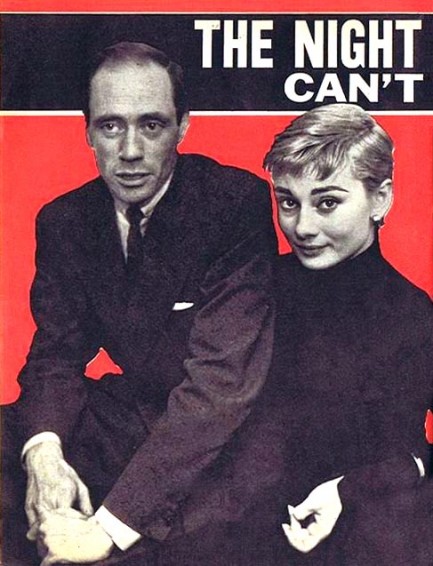
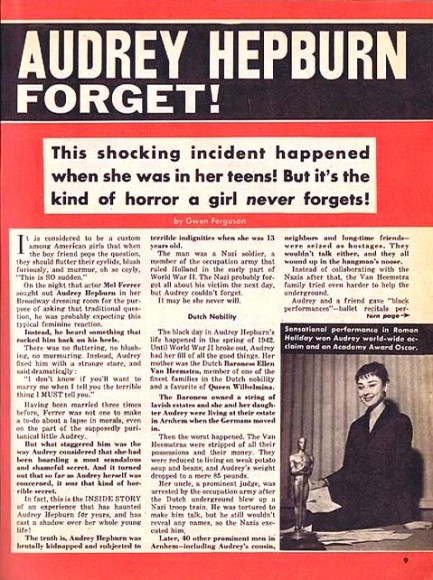
Inside Story of August 1957 offers up stories on Elsa Martinelli, Ann Sothern, Clark Gable and others, but the subhead reading “The Night Audrey Hepburn Can’t Forget” is irresistible. So what happened on the night in question? Nothing fun, unfortunately. Fully expecting to read about some wild party or drunken escapade, journo Gwen Ferguson instead tells us that in 1942, when Hepburn was a Dutch teen named Audrey Kathleen Ruston, she was “brutally kidnapped and subjected to terrible indignities” by a Nazi soldier. As is typical for mid-century tabloids, this claim comes not from direct interviews, but rather from a fly-on-the-wall third person account. In this case, the magazine claims she confessed what happened to prospective husband Mel Ferrer, pictured next to her below, because she wanted him to have a chance to rescind his marriage proposal. The implication is clear—“indignities” is a euphemism for rape. Or else why would Ferguson suggest Ferrer might turn tail and run?

| Vintage Pulp | Jan 18 2009 |

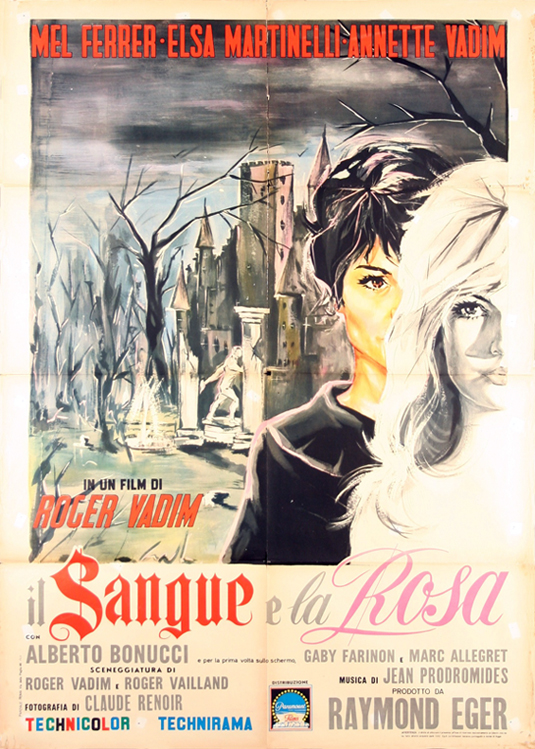
If this looks like a poster for some sort of gothic lesbian vampire romance, well, you should start up your own psychic friends network, because you’re right. Alternatively, maybe you aren’t psychic, and this is just extremely successful promo art. Directed by Roger Vadim, Il sangue e la rosa is loosely based upon Irish author Sheridan LeFanu’s classic tale Carmilla, which appeared in his 1872 anthology In a Glass Darkly. Vadim’s adaptation was originally released in France under the title Et mourir de plaisir, but later renamed and paired with the fantastic art you see above. It premiered in Italy in… well, if you’re psychic you already know.