It's not robbery if someone wants you to take it. 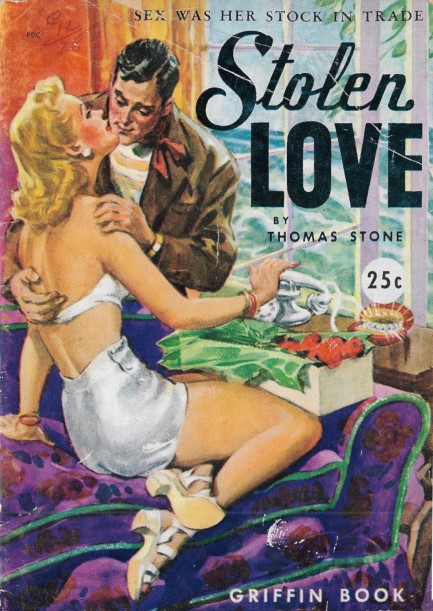
Above is another digest novel from Florence Stonebraker, this time writing as Tom Stone to produce Stolen Love. It was originally published in 1937 as Too Much Love, with this Griffin Books re-issue arriving in 1946 fronted by a cover painted by Glenn Cravath. The book deals with popular New York City radio personality Kay Brinkley—better known as the Voice of Romance—who hosts a lonely hearts call-in show, but is actually cynical about love and thinks her job is a high paying joke.
Her boyfriend asks her to head out to San Francisco to close a business deal for him, and she develops a case of wandering eye before the train even reaches the Rocky Mountains. Once out west she's smitten with the man who's supposed to provide her with important papers, while a couple of other guys, in turn, are seriously smitten by her. Complications arise when her NYC boyfriend unexpectedly flies to San Fran, putting him in direct romantic competition with his business acquaintance.
Kay gets laid with a total of three men as required by most of these digests, and attacked by one, definitely not a requirement, before finally returning to her original boyfriend, a forbearing sort who doesn't begrudge Kay her carnal explorations. The story is a tangled web, written in the usual Stonebraker style, already well in evidence though this was one of her first books. It's no wonder she became such a popular author. She's no Jane Austen, but in the realm of sleazy romance she's about as good as it gets.
 Even in the height of summer New York City can be a cold, cold place. 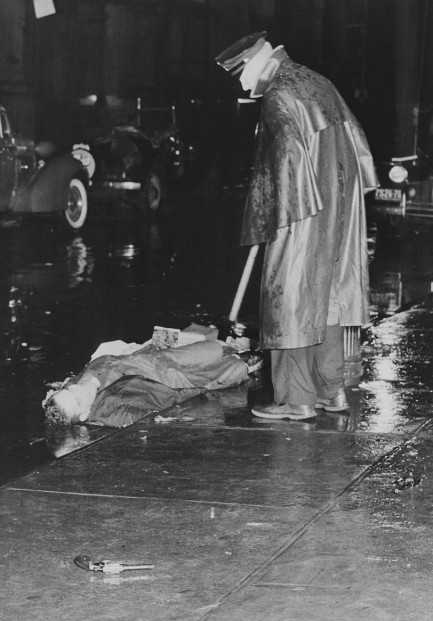
In this photo made today in 1930, a policeman stands over the body of Louis Riggiona, who had been shot twice in the heart by two gunmen as he and his brother Joe exited a restaurant in New York City's Bowery district. Joe fled and avoided injury, while the gunmen dropped their weapons (one pistol is visible in the foreground) and escaped. Louis Riggiona had become the latest casualty in what was known as the Castellammarese War, a Mafia power struggle whose opposing figureheads were Salvatore Maranzano and Joe Masseria. Maranzano was from Castellammare del Golfo, Sicily, thus the name of the conflict. He won the war, but got to be capo di tutti i capi for only five months before he too was murdered.
 A song thought forgotten can always be remembered. 
This photo shows Broadway actress Altonell Hines, who performed on the New York City stage during the 1930s in the shows Porgy and Bess and Four Saints in Three Acts. Unfortunately, like many early Broadway performers, after her career she faded into obscurity. However, she was somewhat rediscovered, partly thanks to a photographic portrait shot in 1934 by the famed Carl Van Vechten as part of an unfinished project titled, "Noble Black Women: The Harlem Renaissance and After.” The photo wasn't printed until 1983 when it went on exhibition at the Smithsonian Institute. Hines never saw it—she'd died in 1979.
Nevertheless, she's an interesting example of how obscurity never has to be permanent for stars of yesteryear. Archivists and biographers have always resurrected long dead public figures, but the creation of the internet has accelerated that process, and now hundreds of formerly forgotten personalities from history are restored into the cultural consciousness each year. It's the coolest thing about the internet, if you ask us. The above shot, which is not from the Noble Black Women collection, was made in 1935. You can see a few more images of Hines on the website of the New York Public Library, at this link.
 Gangster life has great benefits but the retirement plan leaves a lot to be desired. 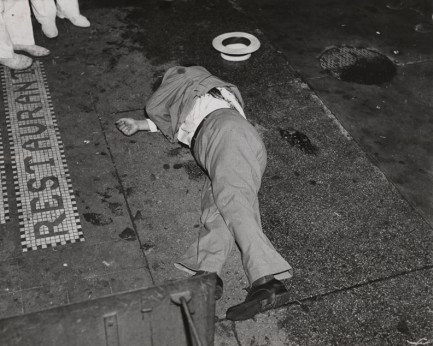 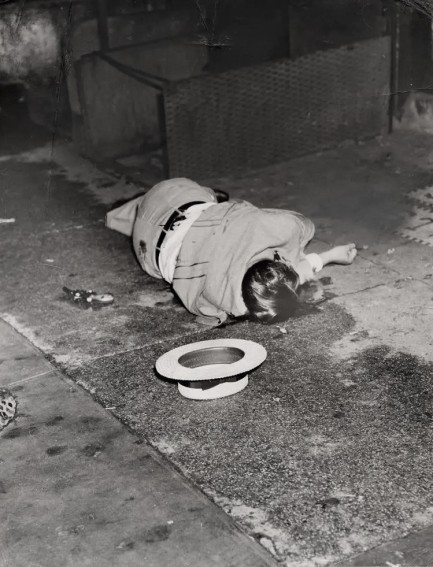
It seems like the same lesson is imparted by nearly every vintage Mafia photo we run across—ambition is a double-edged sword. Dominick Didato, aka Terry Burns, who you see above in a photo made by Arthur Fellig, aka Weegee, lies dead on a New York City street where he was gunned down today in 1936. He was killed for interfering with rackets run by Lucky Luciano. It was a low percentage play. Luciano was literally the most powerful mobster in the U.S. at the time, and as the saying goes, you come at the king, you best not miss.
 She could tell them the secret but it would be a bad Korea move. 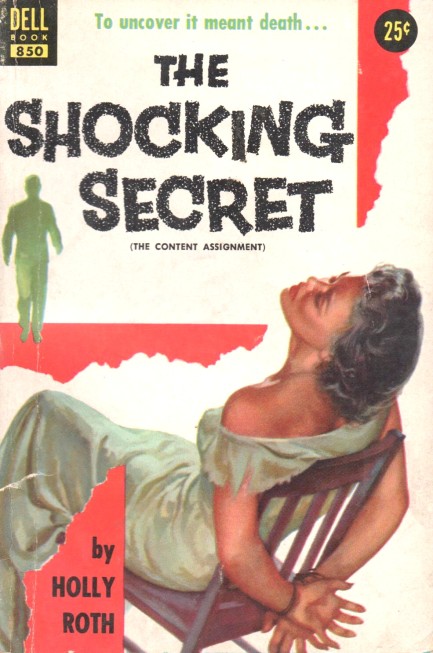
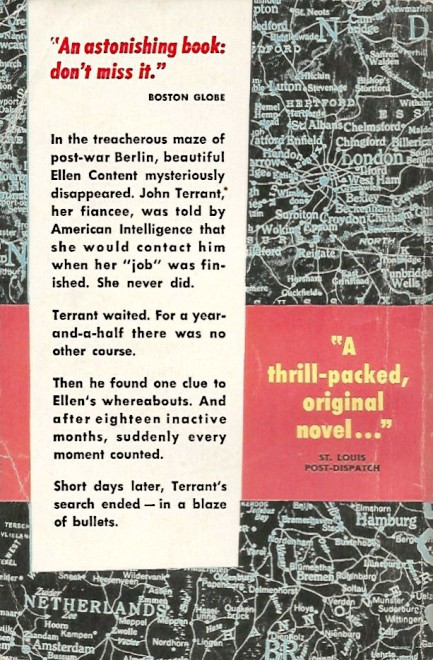
Holly Roth, who also wrote as P.J. Merrill and K.G. Ballard, originally published The Shocking Secret as The Content Assignment in 1954. This Dell edition came in 1955 with William Rose cover art. The story, set beginning in 1948, deals with John Terrant, a British reporter in Berlin whose American love Ellen Content is a CIA agent who disappears during a mission. Nearly two years later her name turns up in a newspaper story that says she's a dancer in New York City. So Terrant crosses the pond to track her down but ends up in the middle of the Cold War, with bad commies and the whole nine.
Roth infuses her tale with an Englishman in New York fish-out-of-water quality, which is occasionally amusing and adds interest, but in the end the entire enterprise comes across lightweight—which is to say it lacks menace and the proper amount of intellectual heft needed for a book about the political/ideological clash of the era. And another issue, though an admittedly nit-picky one, is that the surprise of the title, which we mostly gave away in our subhead, isn't all that shocking. Dell never should have renamed the book.
Moving on to Roth herself, she's one of those writers whose life had an eerie parallel with her fiction. Her 1962 novel Too Many Doctors is about a woman who falls off a ship and loses her memory. In 1964 Roth disappeared from her husband's yacht one stormy night off the coast of Morocco and was never seen again. Officially, her death was an accident. If we get ambitious maybe we'll read Too Many Doctors. While we can't recommend The Shocking Secret, we wouldn't be surprised if several of her other books are better. Her reputation would seem to suggest it.
 The climate there was always changed from what the rest of America knew. 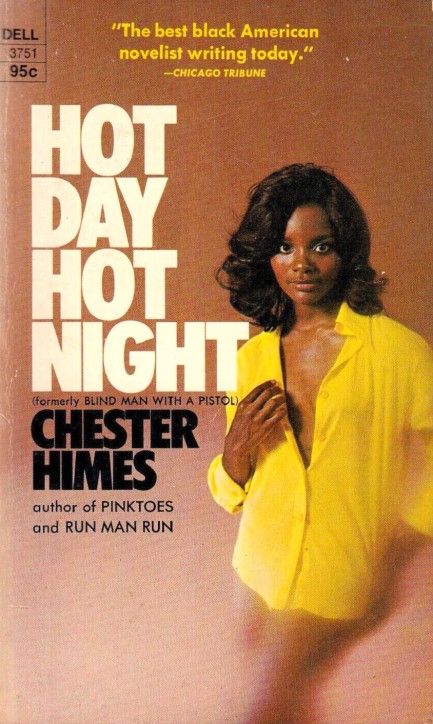
Legendary author Chester Himes originally published Hot Day Hot Night in 1969 as Blind Man with a Pistol, with this Dell photocover edition featuring a beautiful model coming in 1970. Those two years are about as far forward as we're willing to go when it comes to fiction for our website (we often read newer books, but don't write about them). Elmore Leonard and Stanley Ellin likewise have pushed the upper boundary of our vintage perimeter, so Himes, of course, has received an exception too.
Hot Day Hot Night features a typically digressive Himes narrative that derives from the murder of a charlatan and a missing suitcase of cash. The dead scam artist, who called himself Doctor Mubuta, had convinced a ninety-something preacher named Mister Sam that an arcane formula could restore youth and virility. It sounds a bit crazy that anyone would believe that, but Himes puts it succinctly: It wasn't any harder to believe in rejuvenation than to believe equality was coming. It's also easier to believe when you have no idea what the ingredients in the concoction are, as revealed in this amusing exchange:
“What's that milky stuff floating around in it?”
“That's albumin, same stuff as is the base for semen.”
“What's semen?”
Mubuta doesn't answer that—smartly, we think. Other elements of the miracle mixture include baboon balls, bits of rabbit, eagle, and shellfish, some rooster feathers, and a “concupiscent eye.” Of course, this is total baloney, though we never find out what's really in the stew. Ingredients readily available around Harlem exclude eagles. Anyway, when the deal goes awry and Mubuta ends up stabbed to death, Himes' franchise detective duo Grave Digger Jones and Coffin Ed Johnson are drawn into the investigation in what is their final official appearance here in the eighth novel in Himes' Harlem Detective cycle (they also featured in 1993's posthumously published Plan B).
We've described Himes as a sort of literary walk on the wild side, and he's as uncompromising as ever all these entries into his Harlem series. It will be interesting to see how his work is regarded as the years pass. Himes is a mirror image of writers like Chandler and Spillane, working along identical literary lines, casting nearly every character in his books as criminals or victims. But the expectations on Himes were different, because—indisputably—rules change according to who's playing the game, and what color they are. We recommend this book, and everything by Himes.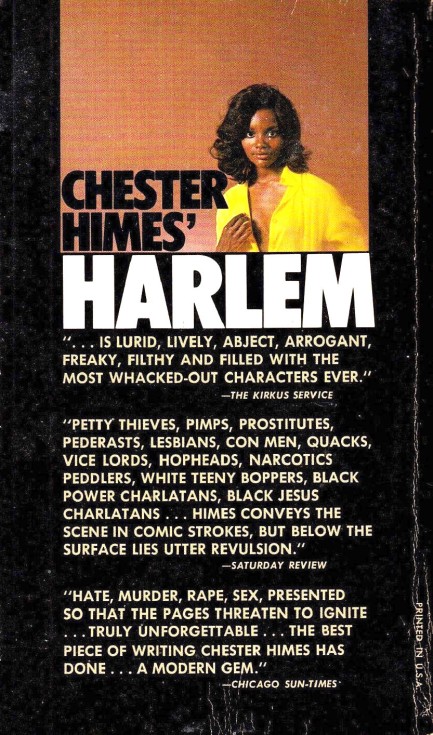
 This version is not for kids. 
This unusual photo shows Italian star Gina Lollobrigida paired with an aquatic foreground painting, and was made for a 1963 cover of the New York City based arts magazine Show. We took the liberty of removing the magazine's logo so you could enjoy 100% pure Lollo, and we think you'll agree it was worth the effort. This is a very cool idea for a promo image. We especially like the baffled expressions on all the fish. We're baffled too when it comes to mermaids. How in hell do they..? Well, never mind.
 Shaft hit America and changed the game. 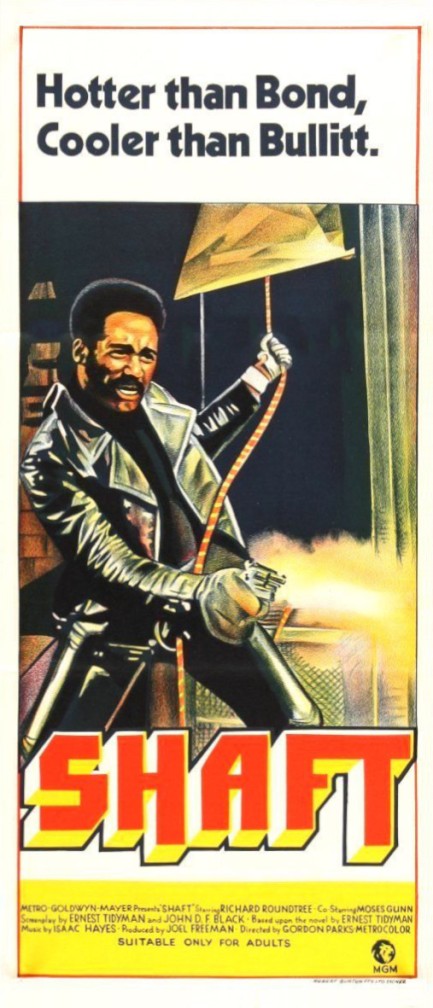
We've discussed quite a few blaxploitation movies, but have neglected the 1971 thriller Shaft. What can you say about the granddaddy of them all, the movie that helped change Hollywood thinking about what viewpoints would sell? Many of the black oriented movies that came afterward were cash grabs, and for that reason most of them weren't good. No such problems exist with Shaft. It's fast, furious, and fun. Our viewing was a reminder that in addition to being a detective movie and a movie that centers black experiences, it's also a neo film noir in both execution and mood. Directed by acclaimed photographer and photo-journalist Gordon Parks, Shaft is gorgeous work, made mostly in actual locations around New York City, and sprinkled with symbology and visual metaphor right from the opening credits.
The character of Shaft is important in film history. Because the theme song is so widely heard most people know Shaft is a bad mother shut-your-mouth, but as the song also says, he's complicated. He lives in Greenwich Village in a bachelor pad decorated with modern art and filled with books. He's kind to children and helps people in need. He has feelings for his girlfriend but will not be tied down and is obliging toward other women who desire him. And he's a friend to any people who treat him with respect. This extends to his local bartender, who's gay and dispenses a familiar pat to Shaft's ass that we can assume isn't the first or last. A bad mother shut-your-mouth? For sure, but he's so much more. And likewise, Shaft is more than a detective movie. It's a cinematic achievement that entertains visually, intellectually, and viscerally. It's a must watch. It was first seen by the public at a special premiere in Detroit, Michigan today in 1971. 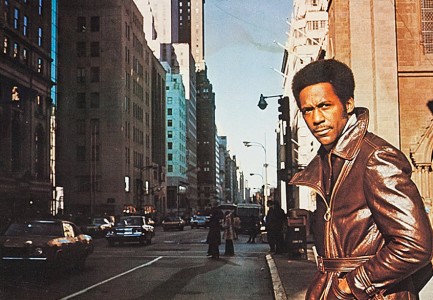 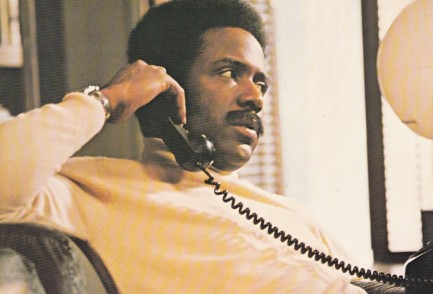 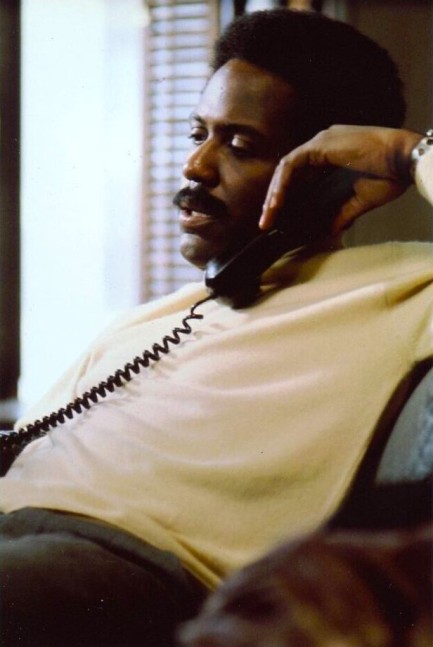 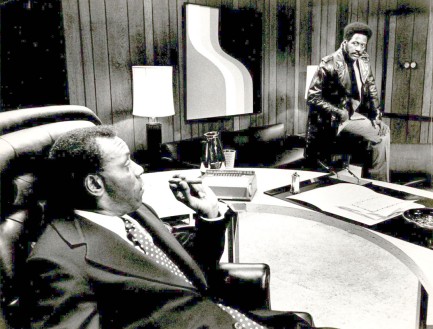 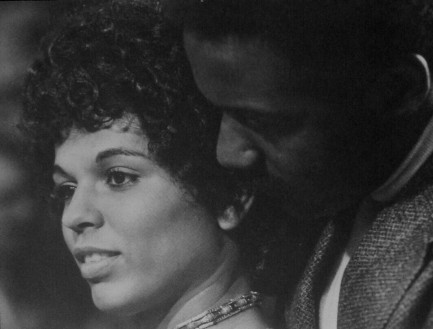 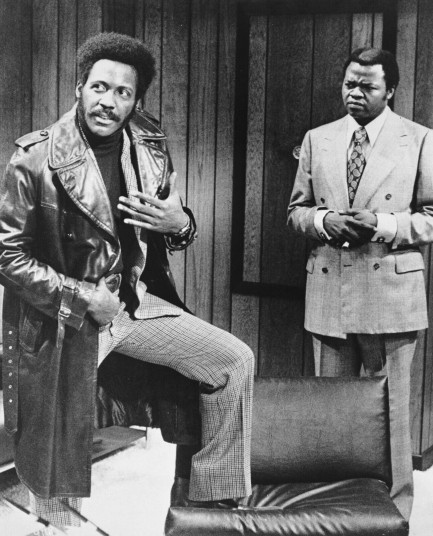 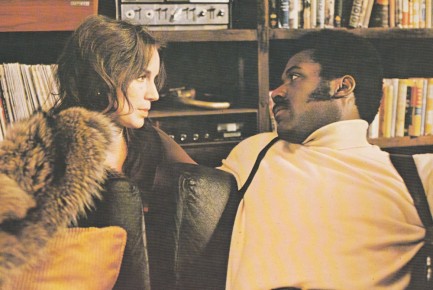 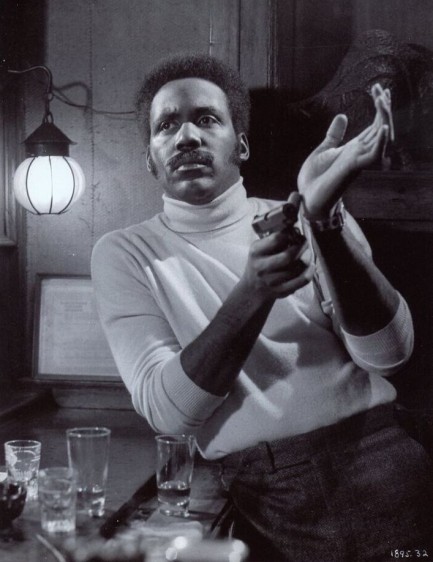 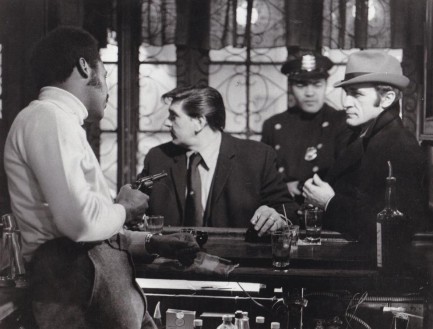 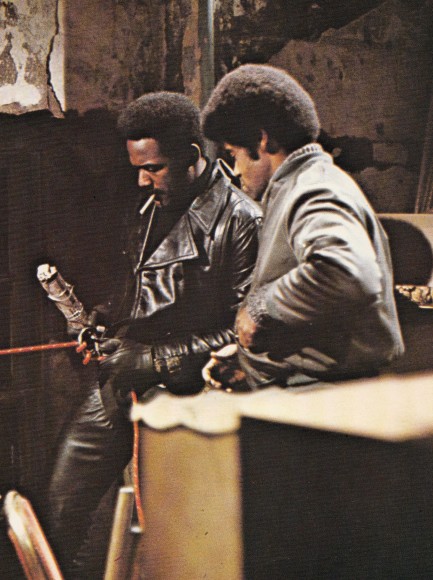 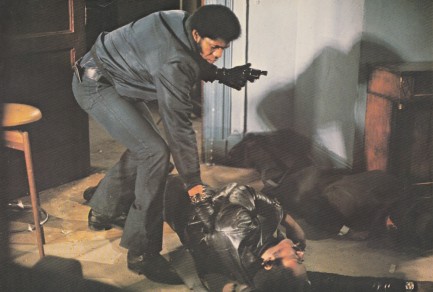 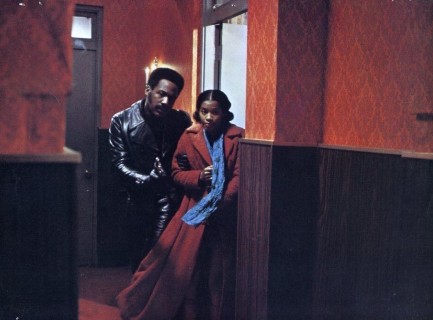 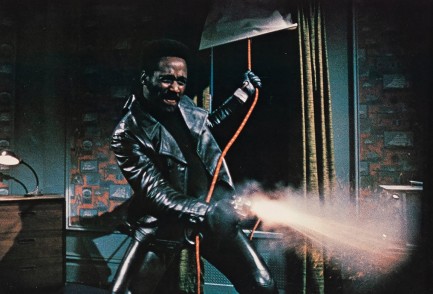 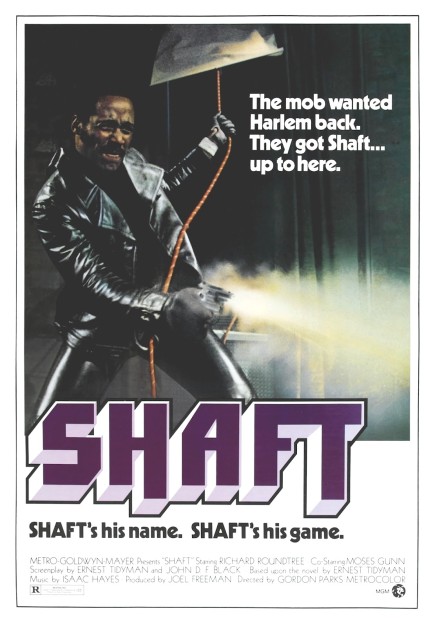
 Oh, it's a body. In my head I'd already blamed the weird smell around here on your dirty tennis shoes. 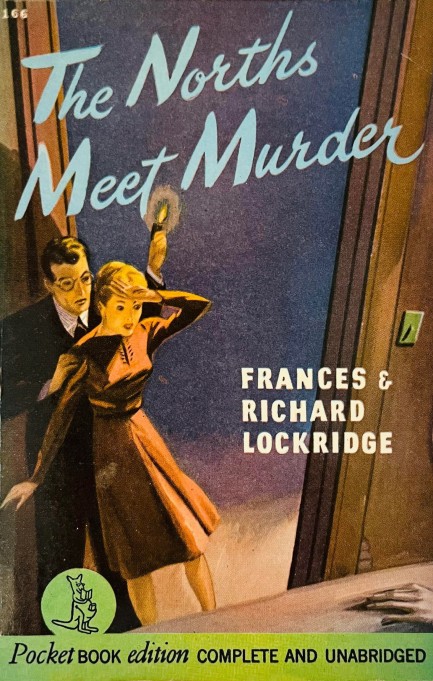
Originally published in 1940, the above Pocket Books edition of The Norths Meet Murder arrived in 1942. It was also published as Mr. & Mrs. North Meet Murder by Avon in 1958. The characters, Gerald and Pamela North, a Manhattan married couple who find themselves solving mysteries, had appeared in the New York Sun newspaper throughout the late 1930s, but The Norths Meet Murder is their first foray in novel form. We haven't read any of the others, but we own one, and we'll get to it. We've read a few mysteries featuring married sleuths. What's different here is that the authors Frances and Richard Lockridge write Pamela as an intuitive thinker whose leaps of logic—or illogic—leave her husband and the police scratching their heads. It could read as though she were a space case, but the Lockridges compensate for that by making her right most of the time. It's a winning formula in this tale that commences with Pamela deciding to throw a party in the empty apartment on the top floor of her building and discovering a corpse in the bathtub.
We were surprised that a detective named Weigand was the central character here, with the Norths serving in a supporting capacity. But that's just the Lockridges setting up the cop as a contact and pal for future novels, we suspect. By the end he was routinely enjoying cocktails with the Norths, though he initially suspected them of the murder. Pamela eventually figures out the solution about the same time as Wiegland, and it's clear she's gotten a taste for sleuthing. All very fun. In our view, for mystery fans The Norths Meet Murder is probably mandatory.
 She was bound to have trouble. 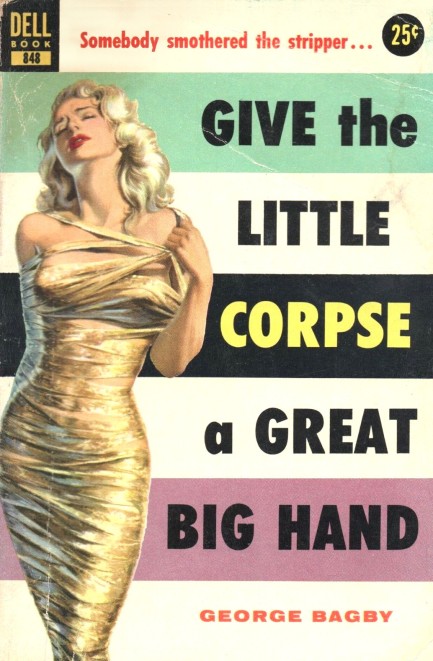
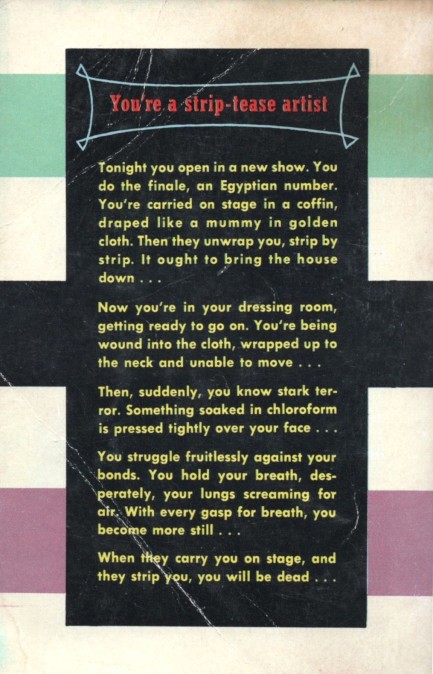
1953's Give the Little Corpse a Great Big Hand by George Bagby, aka Aaron Marc Stein, is a murder tale in classic whodunnit style about a burlesque performer named Goldie Gibbs who's debuting a routine at the famed but fictive Limehouse Club in which she's wrapped like a mummy and carried onstage in a golden coffin from which she rises and strips. Unfortunately, Goldie never rises because she's been murdered. On the case is New York City homicide inspector No-First-Name Schmidt.
Schmidt had been a franchise character for Babgy since 1936 and would eventually star in fifty-plus novels, the last in 1983. Here he cycles through various suspects with incisive questioning, and soon finds links between the murder, the local organized crime kingpin, and a spate of jewel robberies that happened the same night, while also learning that a colleague's daughter who sings at the Limehouse Club has some connection to the crime—unwittingly, beyond a doubt, because she's a “sweet kid.”
This and the other Schmidt books are narrated not by the inspector, but by a journalist named George Bagby—yes, same as the author—who publishes the tales in a magazine. From first person point-of-view Bagby gives readers the procedural details of the case, while also admiring his friend's great intelligence. Give the Little Corpse a Great Big Hand is mostly interrogations and speculations. While we've grown to prefer authors who build books a bit more around action, Bagby/Stein's all-brains approach works fine, and for whodunnit fans we'd call this a necessary read.
Moving on to the cover, it was painted by Victor Kalin and it's a nice effort, capturing the doomed Gibbs' shimmery gold mummy wrapping as described in the text, but taking a non-literal approach otherwise. We guess painting a dead woman in a coffin wasn't considered enticing, so Kalin came up with this moment that doesn't occur in the story but mirrors her distress. He made the right decision, and the result is eye-catching, as usual with his work. Check here, here, and here for examples.
 |  |
|
 |

The headlines that mattered yesteryear.
1986—Otto Preminger Dies
Austro–Hungarian film director Otto Preminger, who directed such eternal classics as Laura, Anatomy of a Murder, Carmen Jones, The Man with the Golden Arm, and Stalag 17, and for his efforts earned a star on Hollywood's Walk of Fame, dies in New York City, aged 80, from cancer and Alzheimer's disease. 1998—James Earl Ray Dies
The convicted assassin of American civil rights leader Martin Luther King, Jr., petty criminal James Earl Ray, dies in prison of hepatitis aged 70, protesting his innocence as he had for decades. Members of the King family who supported Ray's fight to clear his name believed the U.S. Government had been involved in Dr. King's killing, but with Ray's death such questions became moot. 1912—Pravda Is Founded
The newspaper Pravda, or Truth, known as the voice of the Communist Party of the Soviet Union, begins publication in Saint Petersburg. It is one of the country's leading newspapers until 1991, when it is closed down by decree of then-President Boris Yeltsin. A number of other Pravdas appear afterward, including an internet site and a tabloid. 1983—Hitler's Diaries Found
The German magazine Der Stern claims that Adolf Hitler's diaries had been found in wreckage in East Germany. The magazine had paid 10 million German marks for the sixty small books, plus a volume about Rudolf Hess's flight to the United Kingdom, covering the period from 1932 to 1945. But the diaries are subsequently revealed to be fakes written by Konrad Kujau, a notorious Stuttgart forger. Both he and Stern journalist Gerd Heidemann go to trial in 1985 and are each sentenced to 42 months in prison. 1918—The Red Baron Is Shot Down
German WWI fighter ace Manfred von Richthofen, better known as The Red Baron, sustains a fatal wound while flying over Vaux sur Somme in France. Von Richthofen, shot through the heart, manages a hasty emergency landing before dying in the cockpit of his plane. His last word, according to one witness, is "Kaputt." The Red Baron was the most successful flying ace during the war, having shot down at least 80 enemy airplanes. 1964—Satellite Spreads Radioactivity
An American-made Transit satellite, which had been designed to track submarines, fails to reach orbit after launch and disperses its highly radioactive two pound plutonium power source over a wide area as it breaks up re-entering the atmosphere.
|

|
|
It's easy. We have an uploader that makes it a snap. Use it to submit your art, text, header, and subhead. Your post can be funny, serious, or anything in between, as long as it's vintage pulp. You'll get a byline and experience the fleeting pride of free authorship. We'll edit your post for typos, but the rest is up to you. Click here to give us your best shot.

|
|