No appeal, no parole, no mercy, no hope. 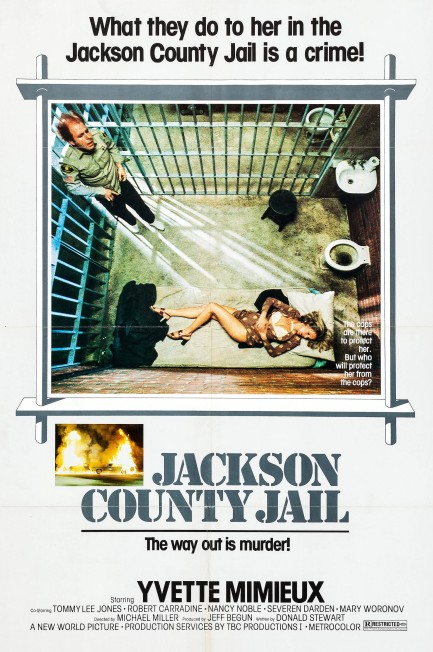
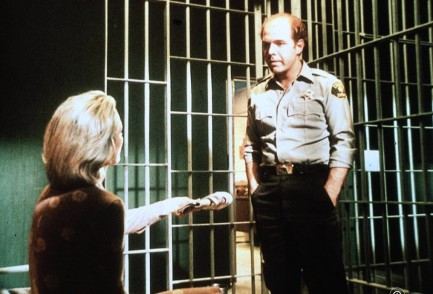
Today we continue our journey through ’70s exploitation cinema with Jackson County Jail, churned out of the grindhouse factory known as New World Pictures. Plotwise, Yvette Mimieux plays a Los Angeles advertising exec who leaves her cheating husband and finds herself at loose ends, but manages to score a job from a friend in New York City. She decides to get there by driving cross country, but passes through fictional Jackson County, located somewhere in or around Texas (a geographical fact we learn from a news broadcast that provides a Dallas Cowboys update). She's railroaded into jail and raped by the cop working the graveyard shift. Afterward, Mimieux manages to brain him with a stool and escapes with the help of hardened criminal Tommy Lee Jones, who early in his acting career (and with that monobrow of his) was already capable of making lines like this sing: “There's nothing wrong with being a crook. Everybody's crooked. I never met a straight person in my whole life. Whole goddamn country is a rip-off. And everybody in it.”
Jackson County Jail is sometimes labeled a women-in-prison flick, but it's a bit different for a generally low rent sub-genre because Mimieux was an established star, thirty-four years old with more than twenty movies behind her. The credibility she lends the film changes little about its basic purpose—titillation mixed with violence and an indictment of hick culture. Simultaneously, though, the filmmakers definitely don't go to the extremes of other women-in-prison dramas, in which we've seen women hung up by their hair. There are some viewers, we suspect, who wouldn't consider this movie a women-in-prison flick at all. We're fine leaving it out of the conversation too. The jailbound portion lasts barely twenty minutes of what is perhaps more of an outlaw movie, complete with Jones letting fly with this response to being told the police will kill him: “That don't matter. I was born dead.” Whether women-in-prison, outlaw, or counterculture, that's a damned good line. And Jackson County Jail is a pretty good movie. It premiered today in 1976
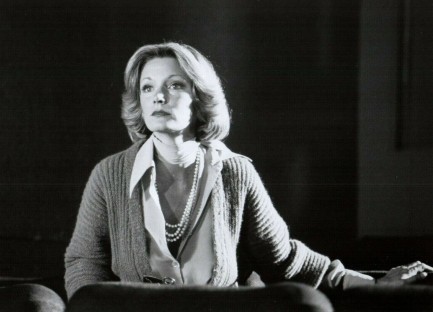 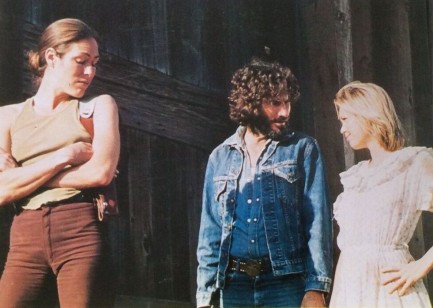 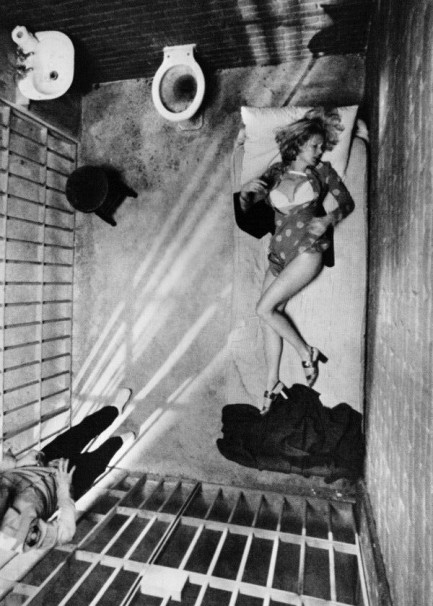 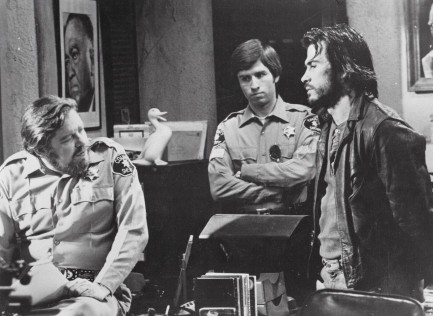 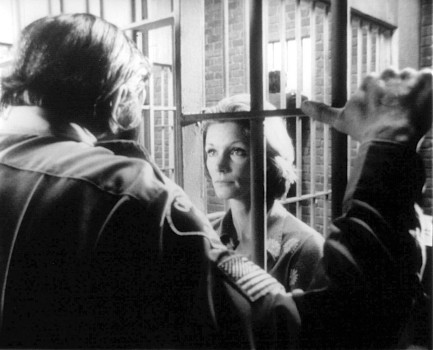 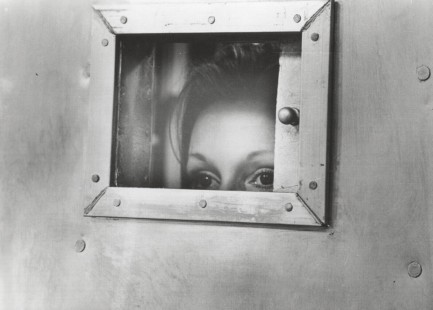  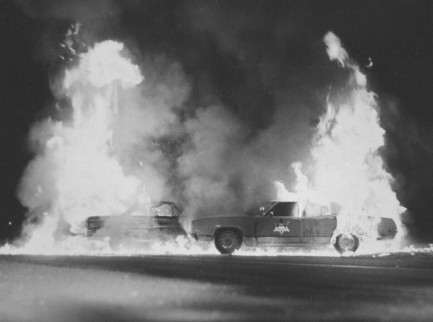 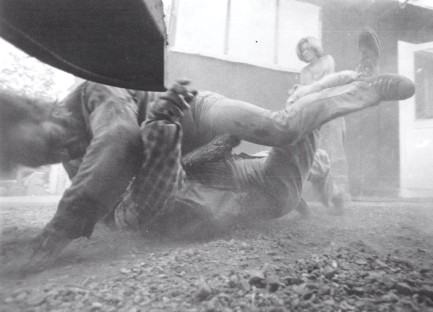 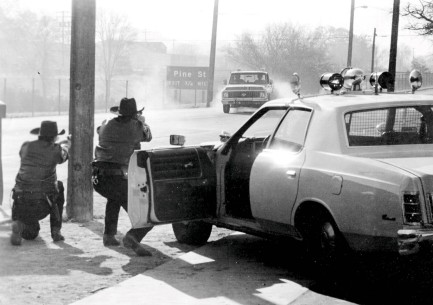 
 And fired last. Which is ideally how you want these things to go. 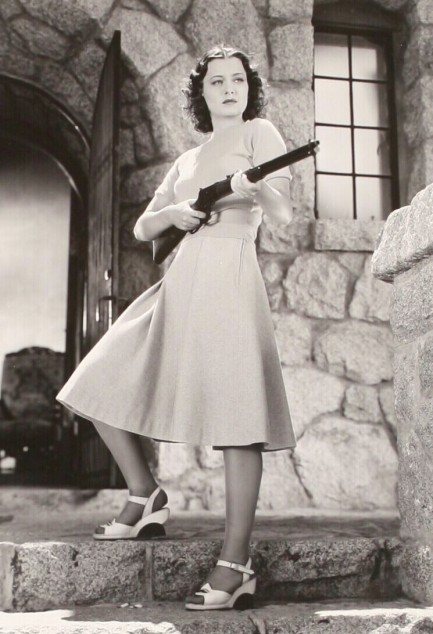
The above photo of U.S. actress Ellen Drew was made when she was filming her 1940 western Texas Rangers Ride Again, which is a surprise, because she's isn't dressed Old West style, with her leg-exposing skirt and open toed shoes. We guess even cowgirls get the blues—when it comes to wearing those hoop skirts and corsets. This is Drew's third femme fatale appearance. You can see the other two here and here.
 Susan George demonstrates the Fright or fight reflex. 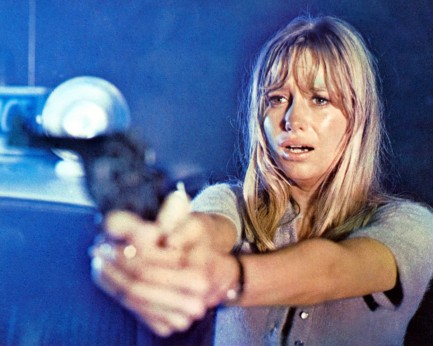
This fraught photo features British actress Susan George, who's not discussed today as much as she should be. She was a bold performer who appeared in movies too envelope pushing for at least 90% of actresses of this day and age. Several of her films are routinely described as controversial. The efforts we're thinking of are Straw Dogs, Dirty Mary Crazy Larry, Mandingo, and A Small Town in Texas. Not all of those were top notch, but they were all uncompromising. The above photo comes from her also intense 1971 fight-or-flight thriller Fright. We'll get back to George soon.
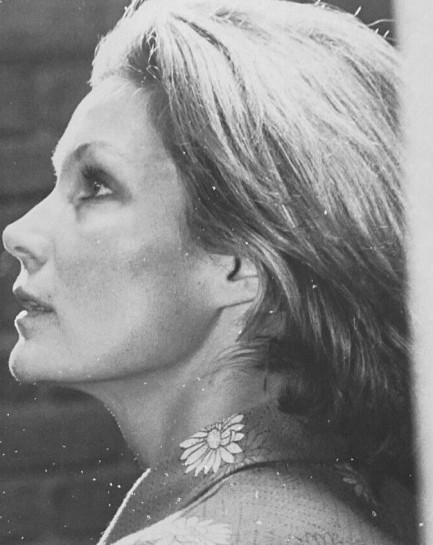
 Looking pretty sharp, Gayle. 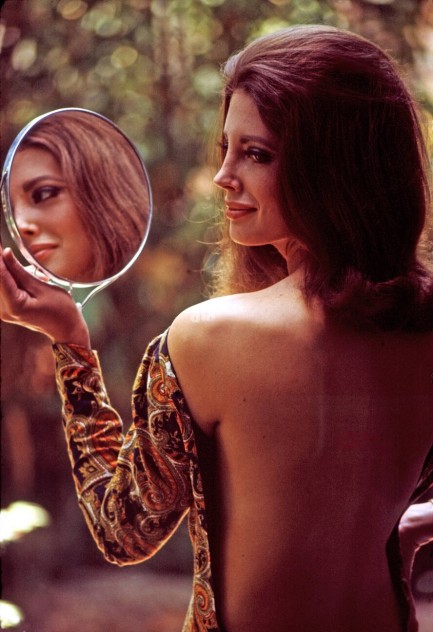
Have you ever seen a profile like this? It belongs to Texas born actress Gayle Hunnicutt, who we last saw in 1969's Marlowe with James Garner. She also appeared in The Wild Angels, The Spiral Staircase, The Legend of Hell House, and several other pulp-pertinent flicks before migrating over to television. She retired from acting in 1999, but her sharp profile will always be remembered.
 Thompson's Town is the craziest patch of real estate west of the Potomac River. 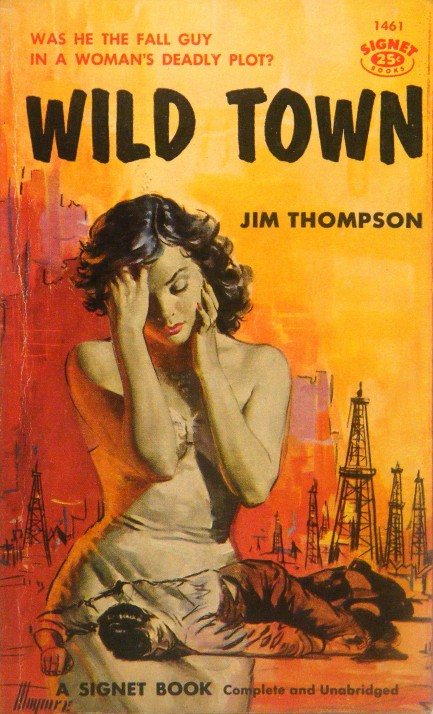
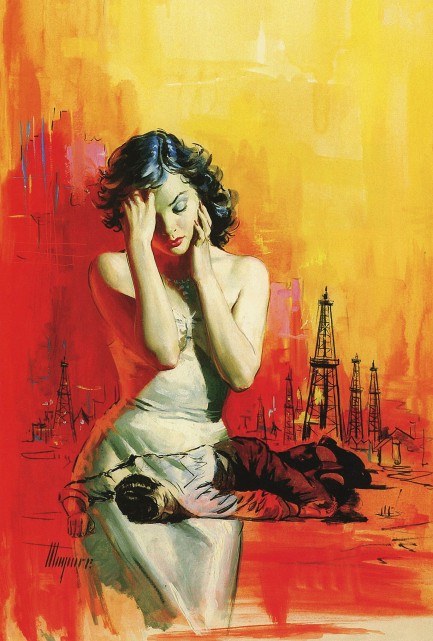
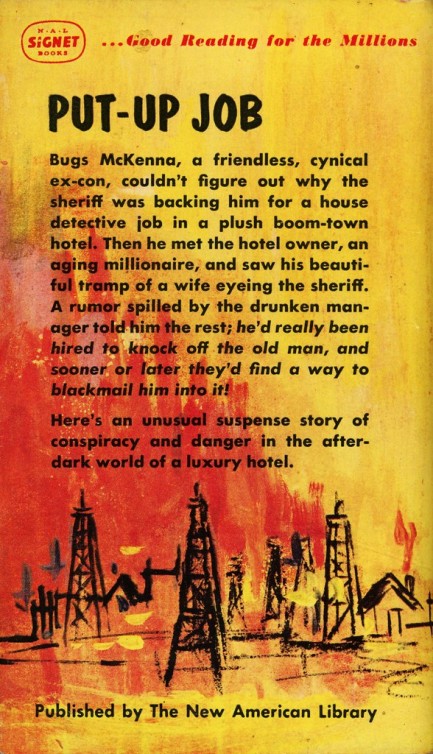 Robert Maguire handled the cover work on this edition of Jim Thompson's Wild Town, which hit book racks in 1957. The pricing on this varies greatly. All we can say is please don't pay $450.00 for it, like one vendor was recently asking. We got ours—the same edition—for $15. Robert Maguire handled the cover work on this edition of Jim Thompson's Wild Town, which hit book racks in 1957. The pricing on this varies greatly. All we can say is please don't pay $450.00 for it, like one vendor was recently asking. We got ours—the same edition—for $15.
Set in the fictional boomtown of Ragtown, Texas, the tale's hard luck ex-con anti-hero Bugs McKenna lands a job as a hotel detective, but he's been funnelled into the position by the corrupt local deputy, apparently to serve nefarious—though unknown—ends. Is he to spy on the hotel owner? Participate in some shady plot involving a guest? Murder somebody? It could be anything, because the deputy who orchestrated the hiring is none other than Lou Ford, the main character of Thompson's 1952 tour de force The Killer Inside Me. If you haven't read it, long story short, he's a psychopath.
Trouble doubles when Bugs accidentally karate chops the hotel accountant out a window. The death was unwitnessed and is ruled a suicide—for the moment. Ford suspects foul play, but Bugs feels in the clear. Then someone starts to blackmail him, someone who says they were in the closet and saw the killing. Who is the blackmailer? Can Bugs outwit them somehow? He isn't that bright—a type Thompson specialized at writing—so his efforts to manage his difficulties are haphazard at best.
But maybe Bugs is brighter than he seems. He'll need to be, pitted as he is against Thompson's iconic Lou Ford, but in the end a woman may turn out to be his direst foe. That's not a spoiler—the cover text suggests that a femme fatale is pulling the strings, but even Bugs doesn't know who because he spends the book troubled by three. All of this makes for plenty of reading fun. Wild Town is no Pop. 1280—our favorite Thompson so far—but it's diverting enough. Another recommended effort from a deft architect of chaos and criminality.
 You knew those Reese's Cups were mine but you ate them anyway! Was it worth it? Well? Was it worth it? 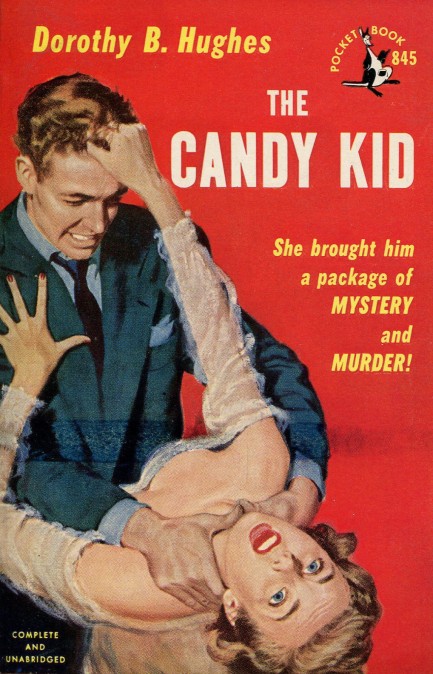
This is a rarity on mid-century paperbacks—the strangler on Edward Vebell's cover for the 1951 thriller The Candy Kid is the protagonist. We almost never see one like this where the aggressive male isn't the villain, but it happens. In this case, he thinks the femme fatale has murdered his cousin. But he gets ahold of himself after a few seconds and gives her a chance to convince him that he's wrong. Telling you that isn't a spoiler, because the rear cover text reveals the murder anyway, and the hero's reaction isn't a turning point within the plot. He's pissed. But he gets over it.
The Candy Kid was written by the respected Dorothy B. Hughes, and she sticks close to the American southwest she explored in books such as 1946's Ride the Pink Horse. Here her main character, José “the Strangler” Aragon, is randomly selected on the streets of El Paso by upper class beauty Dulcinda “Sore Neck” Farrar to do a shady favor—take an envelope to across the border to Ciudad Juarez and exchange it for a package to be returned to her. She's chosen him because he looks like an itinerant laborer, like someone who needs, “un poco dinero.”
Actually, though, Aragon is a well-to-do rancher. He'd just gotten back from cowpunching when Dulcinda saw him, and he was sweaty and covered in grime. The whole thing was a joke to him. Based on her assumption, he'd pretended to be an immigrant day laborer, planning to reveal himself as a man of means to the pretty gringa later. But he takes more and more interest in this package business, and ends up performing the errand. Then the package is stolen from him.
What follows is a mystery involving a Greek crime kingpin, murder and revenge, twists and surprises, and unsolved crimes across the border. The odd title of the book comes from Dulcinda's name. Everyone calls her Dulcy, which in Spanish sounds like “dulce,” which means “sweet,” which causes one of the Mexican characters trying to remember her name to say, “that candy kid.” It's an involved journey. But then so is the tale.
We'll just come out and say it isn't Hughes' best, but she's always a fascinating author, particularly here, where she deftly captures the border atmosphere and attempts to portray a Mexican-American character who speaks Spanish and is comfortable on either side of the Rio Grande, yet is culturally distinct from his cousins down south. Some of those interactions have subtle class tensions that make them among the most interesting in the book. Other areas of the story are less successful. The biggest flaw is character motivation—Aragon has no compelling reason to get involved in Dulcy's troubles until his cousin dies, at the halfway mark. Following through on a prank just isn't enough. But you can't fault the level of technical skill on display, although Hughes writes in an unusual style filled with comma splices: It would have been funny, he was always the one who delayed the crowd, he knew everyone from Chihuahua to Mesa Verde. It works fine, which proves that if done just right an author can break any rule they want. Well, almost any rule. A crucial one for genre fiction is: make sure your protagonist really wants something. Even Hughes wasn't able to break that one and get away with it.
 Nobel Prize winning author John Steinbeck wrote an unpublished werewolf novel.
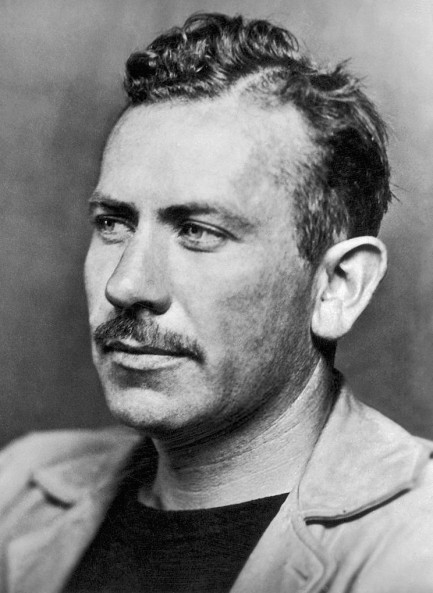 In what qualifies around here as blockbuster news, it turns out literary master John Steinbeck wrote a werewolf novel. Rejected by publishers in 1930, it's currently under lock and key at the Harry Ransom Center at the University of Texas in Austin. The Steinbeck estate has so far declined to authorize its release. Titled Murder at Full Moon, it's reportedly a 233-page typescript, and as a bonus contains a couple of illustrations drawn by Steinbeck. In what qualifies around here as blockbuster news, it turns out literary master John Steinbeck wrote a werewolf novel. Rejected by publishers in 1930, it's currently under lock and key at the Harry Ransom Center at the University of Texas in Austin. The Steinbeck estate has so far declined to authorize its release. Titled Murder at Full Moon, it's reportedly a 233-page typescript, and as a bonus contains a couple of illustrations drawn by Steinbeck. We'd love to read it. We'd enjoy comparing it to Guy Endore's werewolf novel The Werewolf of Paris, which was published in 1933. But if we had to guess, we'd say the public will have wait a long while for Steinbeck's moon tale to rise. What is there to gain when his reputation is pure platinum and his books—particularly The Grapes of Wrath and Of Mice and Men, which are required reading for students the length and breadth of the U.S.—still sell? But you never know. The smell of money affects people like the smell of blood affects werewolves. Even when they're already full they want another bite.
 Don't let my title fool you. I'm not here to play and I'm definitely not about to mate with you. 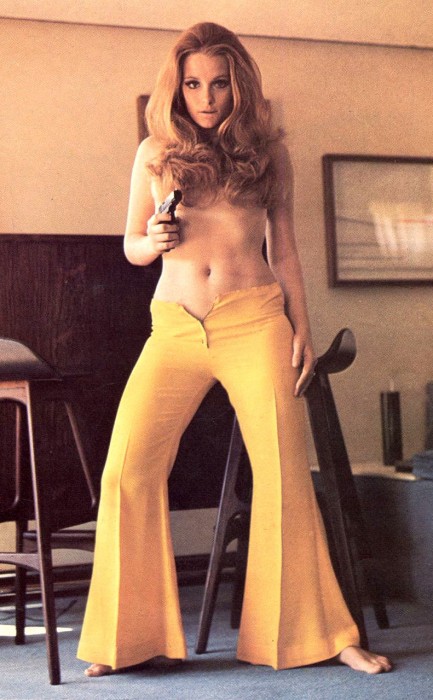
This rare shot shows Playboy Playmate of the Year and actress Claudia Jennings in danger mode, a facet of herself she showed quite often in her various gun toting roles in b-movies, including Deathsport, The Great Texas Dynamite Chase, and 'Gator Bait. This is from 1969.
 Why did the girl cross the river? For a chance at a better future. 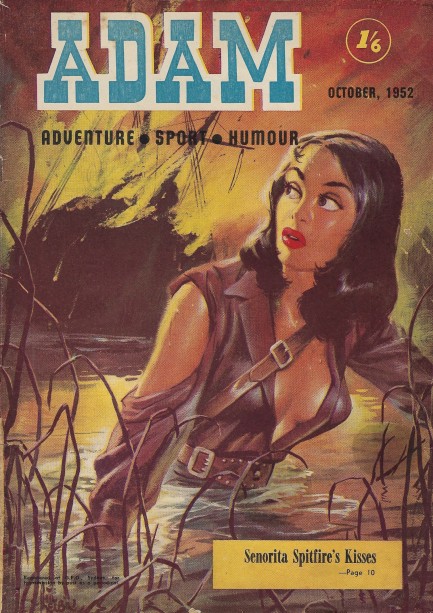
This issue of Adam published this month in 1952 is the second oldest issue of the magazine we've scanned and uploaded, and we gotta tell you, this thing was fragile as butterfly wings. But we got it done, and the magazine survived. The beautiful cover painting is signed by Phil Belbin, and it illustrates longtime pulp western writer Bob Obets' tale “Señorita Spitfire's Kisses”—let's just pause and enjoy that title, shall we? There's all sorts of promise in a title like that. It's simultaneously evocative and ridiculous, which often bodes well. The story is an adventure set on the Texas/Mexico border just after the U.S. Civil War. Basically, it's about a Mexican woman named Carlotta O'Farel y Cavazos who enlists the aid of a mercenary named Ricardo Ruby to cross the Rio Grande into Texas in search of a cache of money buried there. She plans to use it to buy guns for Mexican soldiers, while the captain is thinking maybe to have it for himself.
Here's a fun exchange (Ricardo refuses to call Carlotta by name at first, preferring to make up nicknames):
Ricardo: “Look, Flame of the River, just tell me where that eighty thousand is—and how come you know about it.”
Carlotta: “I was tellin' you, brains-of-a-donkey, the money is in this place call Corpus Christi, where my brother wait for the sheep to take this money to Cuba.”
Her insult really amused us for some reason. “Sheep,” by the way, is “ship” pronounced with an accent. Genre authors sometimes use phonetic spellings to portray accents, but it can cross the line into making the speaker sound stupid. It's something to avoid. After all, the presence of an accent means the speaker knows at least two languages, not just one, like most Americans. The most elegant authors, like Cormac McCarthy, write accents without alternate spellings. Obets opts for the clumsy method, having Carlotta say things like “sometheeng,” and “fineesh,” but he's a good writer anyway. In fact the story is good enough that we checked his bibliography. He's written at least two novels—1958's Blood Moon Range and 1965's Rails to the Rio. We may pick one up. In the meantime, we have a few scans, which include photos of Marie Windsor and Mari Blanchard. More Adam to come. 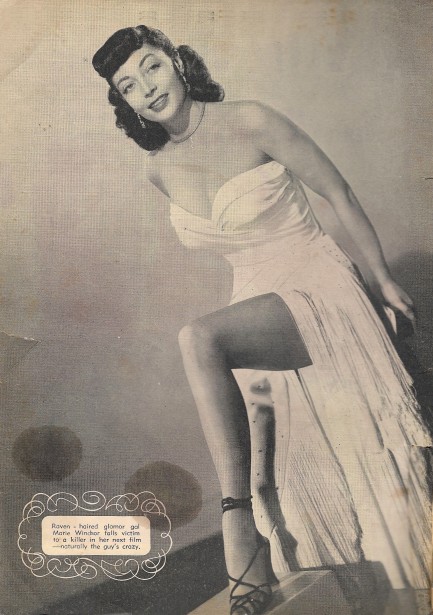 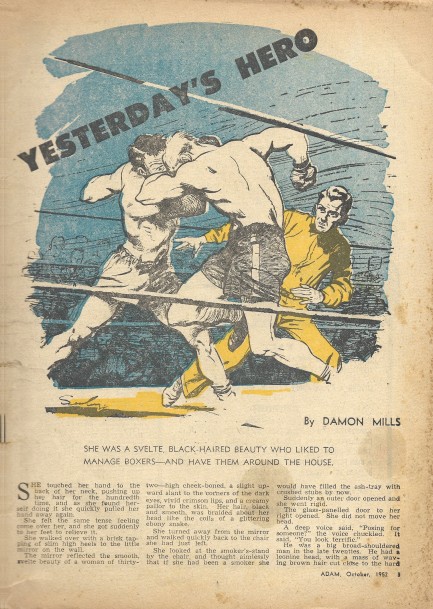 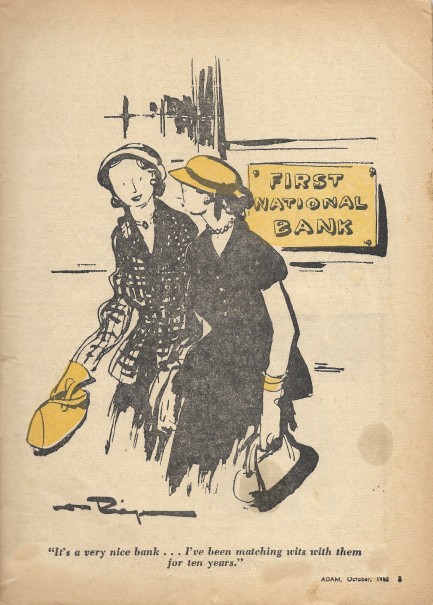 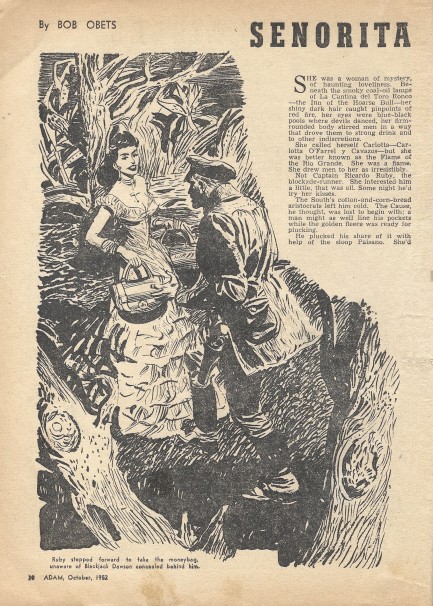 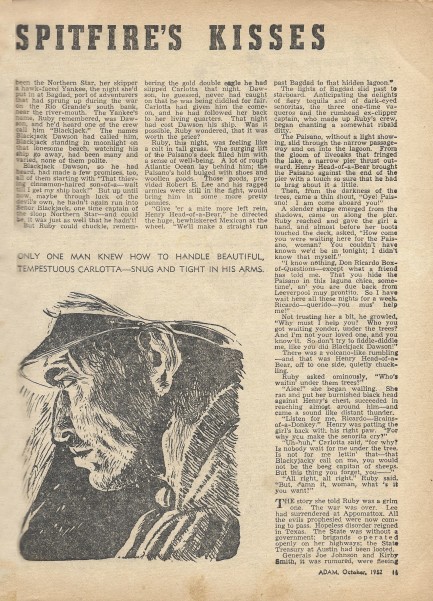 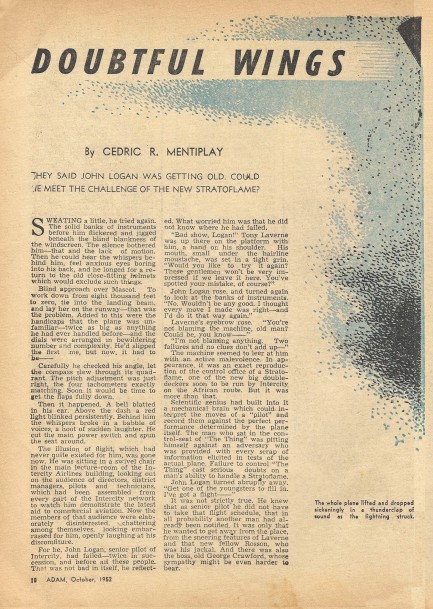 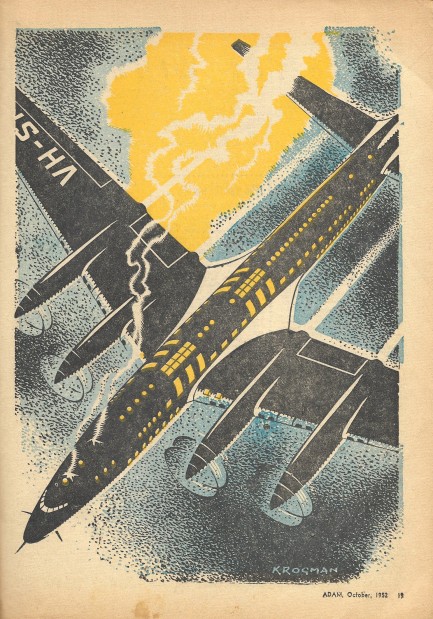 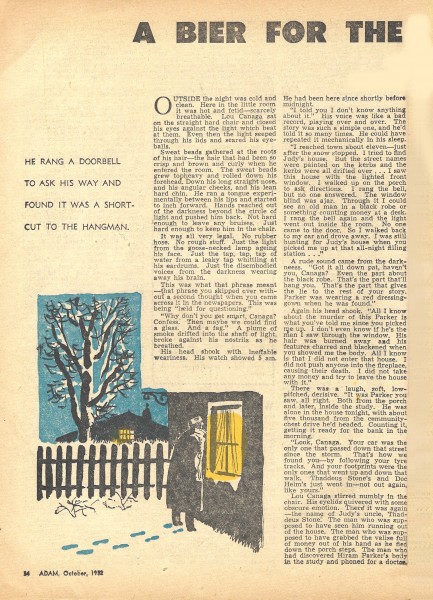 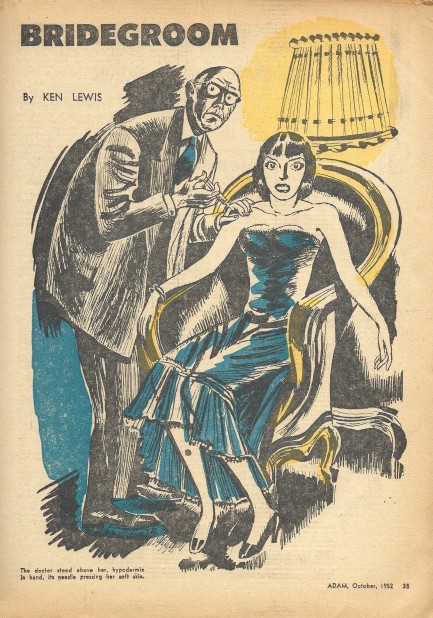 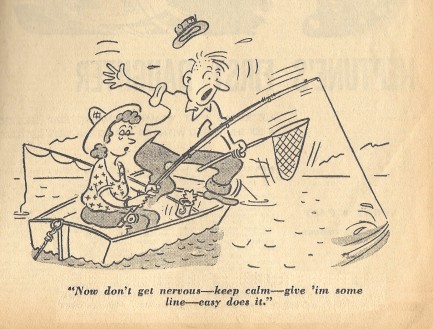 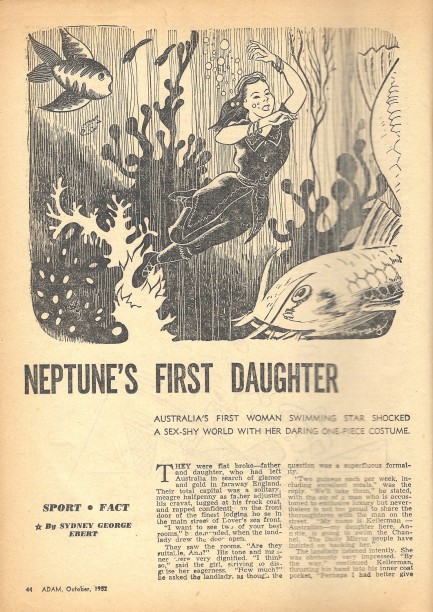 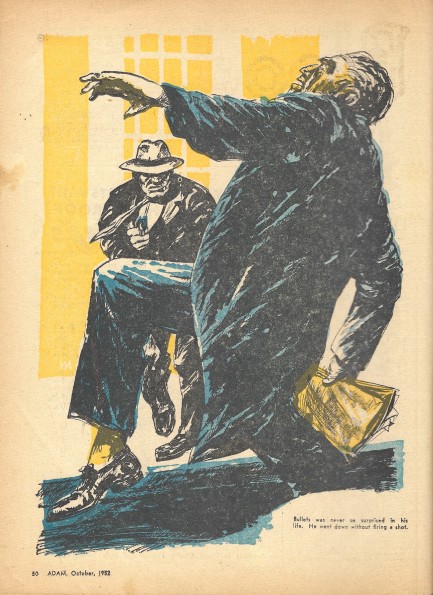 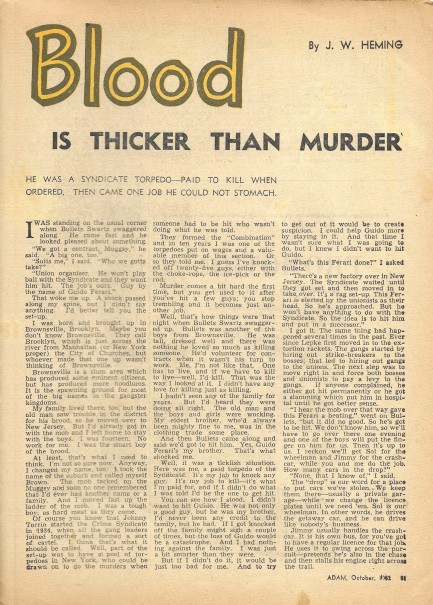 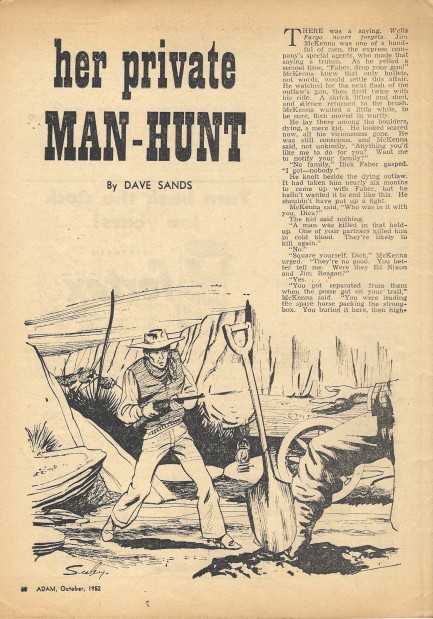 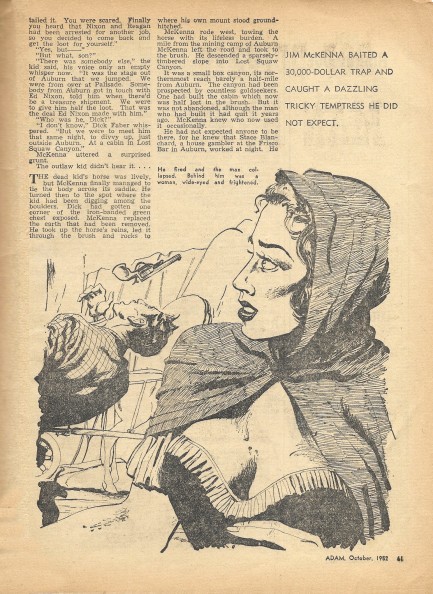 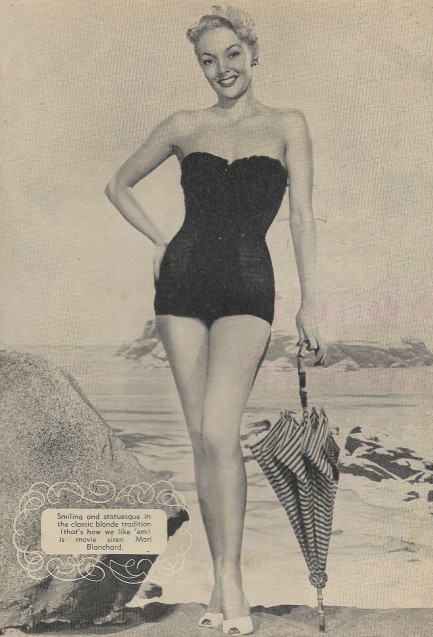 
 Eli Roth and AMC make History with a seven part look at horror cinema. 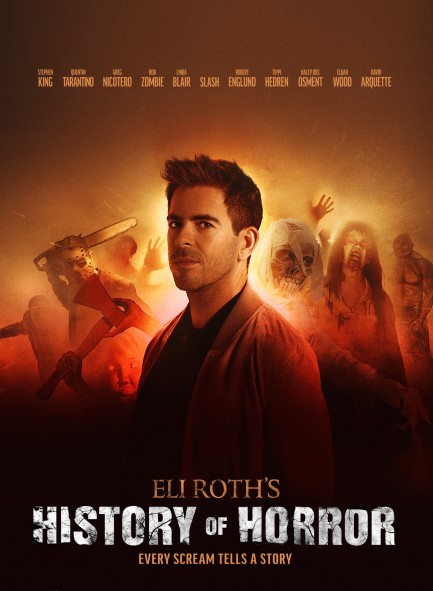
Those of you in the U.S. who appreciate horror cinema may want to carve out a little time Sunday night for the final episode of the retrospective Eli Roth's History of Horror. It's been airing weekly on the cable network American Movie Classics, aka AMC, since mid-October. Though the British network BBC broadcast a very good three part horror retrospective in 2010 (and it even had a similar title—A History of Horror), genre landscapes shift quickly. The Brit series was made before important films like Get Out, It, Let Me In, its remake Let the Right One In, et al hit cinemas. Eli Roth's History of Horror is a newer and deeper look at fright films. Each 60-minute episode focuses on a specific type of terror, such as vampires, monsters, demons, and slashers.
Overall the series is great. Roth discusses not just the movies, but horror's cultural impact, and weights those observations toward the last ten years. Because of the change that has occurred this decade those sections resonate nicely. Horror's ability to make social issues digestible as allegories is a key part of the form's worth. For instance, Get Out's idea of the sunken place, a metaphor for living (and dying) while black in America, would be rejected by many white filmgoers if it were in a standard narrative. But for us the social impact of horror movies is merely a bonus. We love them viscerally first, intellectually second. We love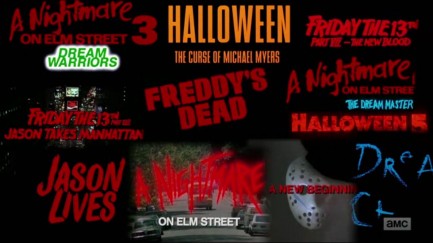 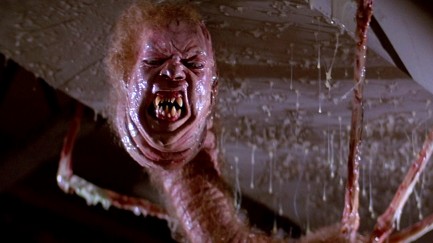 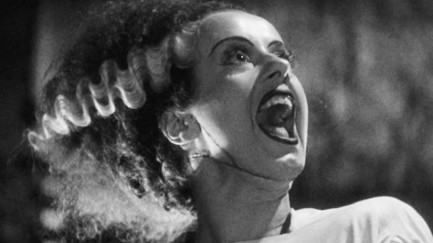 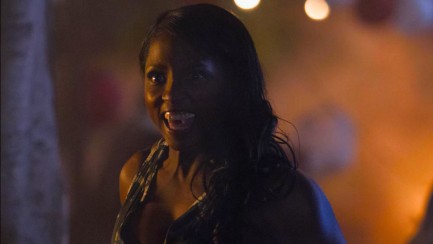 the tension that results from not knowing—usually, at least—which characters will survive. We love how the films' kinetic and often low budget natures lead to amazing little accidents, such as the bit in The Texas Chainsaw Massacre when Leatherface grabs Teri McMinn on the porch of his house and both the girl's sandals fly off. That sort of detail isn't in a script. It happens during the shoot, and the director thanks the filmic gods for the extra iota of serendipitous realism. the tension that results from not knowing—usually, at least—which characters will survive. We love how the films' kinetic and often low budget natures lead to amazing little accidents, such as the bit in The Texas Chainsaw Massacre when Leatherface grabs Teri McMinn on the porch of his house and both the girl's sandals fly off. That sort of detail isn't in a script. It happens during the shoot, and the director thanks the filmic gods for the extra iota of serendipitous realism.
While very good, the series isn't perfect. In the episode on zombies, Roth discusses slow moving zombies for a while, then erroneously credits the arrival of speedy zombies to Danny Boyle 2002 hit 28 Days Later. But it was 1985's Return of the Living Dead that featured the first sprinting zombies in an American movie, and this was preceded by the 1980 Italian zombie epic Incubo sulla città contaminata, aka Nightmare City. We also were surprised Near Dark was ignored in the vampire episode. Time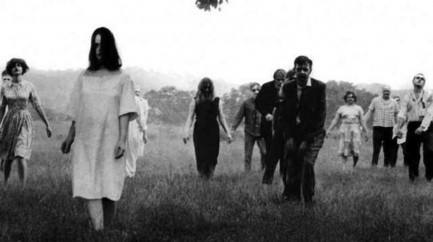 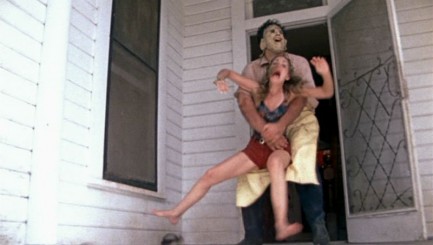 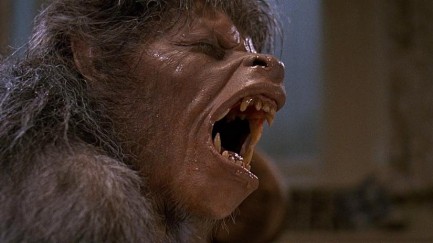 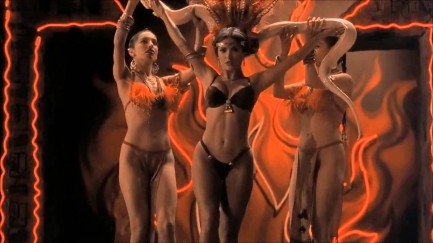 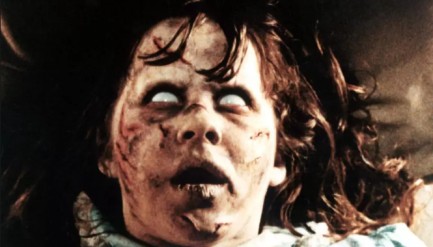 has shown it to be better and more influential than The Lost Boys, which was discussed at length. If you doubt that, note that Near Dark's critic score on Rotten Tomatoes is 88%, while Lost Boys' is 27%. Critics are often wrong, especially when it comes to horror, but that level of variance is no fluke. And just to settle the argument, the audience rater on that website also prefers Near Dark. We suspect either box office receipts or Roth's personal preference played a role there, when quality should have been the deciding factor. has shown it to be better and more influential than The Lost Boys, which was discussed at length. If you doubt that, note that Near Dark's critic score on Rotten Tomatoes is 88%, while Lost Boys' is 27%. Critics are often wrong, especially when it comes to horror, but that level of variance is no fluke. And just to settle the argument, the audience rater on that website also prefers Near Dark. We suspect either box office receipts or Roth's personal preference played a role there, when quality should have been the deciding factor.
But we were gratified to see that many of our cherished beliefs were echoed by Roth and his co-hosts Rob Zombie and The Walking Dead producer Greg Nicotero. Yes, the towering werewolf from The Howling is the scariest ever put on screen. Beyond a doubt, John Carpenter's The Thing, which was close to universally panned upon release, is a top tier thriller. We're anticipating the segment on ghosts, the focus of Sunday night's series finale. We imagine these were saved for last because viewers are most interested in the subject, a curiosity that derives from the fact that many people actually believe ghosts exist. We expect the episode to discuss such old and new classics as The Haunting, The Shining, The Ring, and The Woman in Black. We'll see. But no spoilers, please. If you're in the States you can watch it before we do, whereas we'll have to (totally legally, we swear) download it the next day. But whenever you watch it, the show has been a nice treat for horror aficionados. 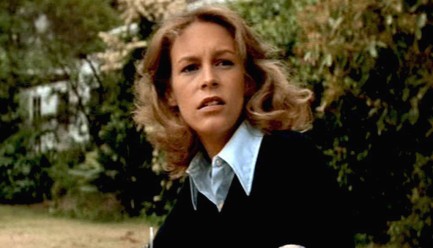 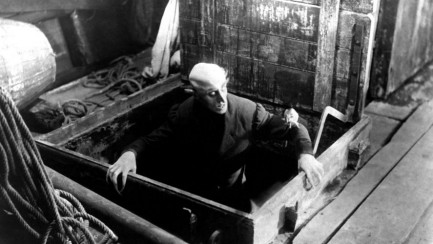 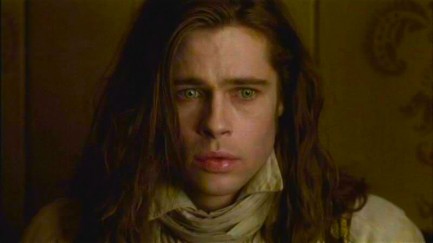  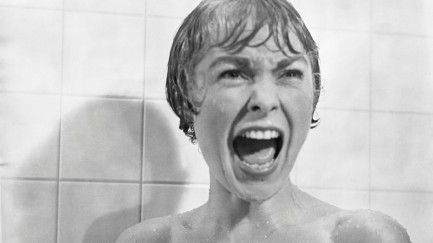

|
 |

The headlines that mattered yesteryear.
1923—Yankee Stadium Opens
In New York City, Yankee Stadium, home of Major League Baseball's New York Yankees, opens with the Yankees beating their eternal rivals the Boston Red Sox 4 to 1. The stadium, which is nicknamed The House that Ruth Built, sees the Yankees become the most successful franchise in baseball history. It is eventually replaced by a new Yankee Stadium and closes in September 2008. 1961—Bay of Pigs Invasion Is Launched
A group of CIA financed and trained Cuban refugees lands at the Bay of Pigs in southern Cuba with the aim of ousting Fidel Castro. However, the invasion fails badly and the result is embarrassment for U.S. president John F. Kennedy and a major boost in popularity for Fidel Castro, and also has the effect of pushing him toward the Soviet Union for protection. 1943—First LSD Trip Takes Place
Swiss scientist Albert Hofmann, while working at Sandoz Laboratories in Basel, accidentally absorbs lysergic acid diethylamide, better known as LSD, and thus discovers its psychedelic properties. He had first synthesized the substance five years earlier but hadn't been aware of its effects. He goes on to write scores of articles and books about his creation.
|

|
|
It's easy. We have an uploader that makes it a snap. Use it to submit your art, text, header, and subhead. Your post can be funny, serious, or anything in between, as long as it's vintage pulp. You'll get a byline and experience the fleeting pride of free authorship. We'll edit your post for typos, but the rest is up to you. Click here to give us your best shot.
|
|