| Intl. Notebook | May 23 2012 |

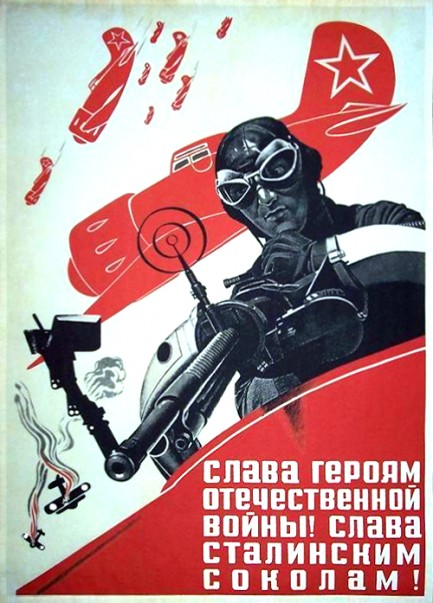
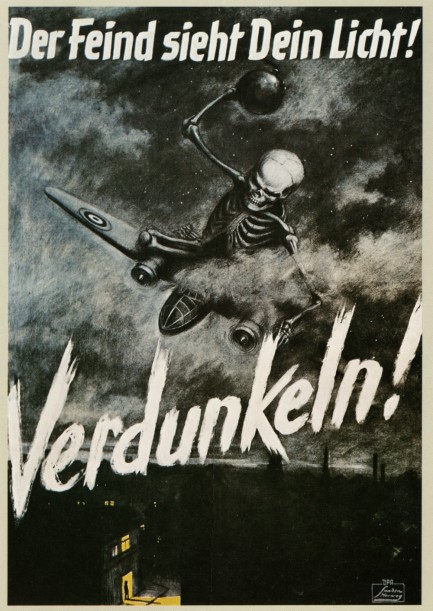
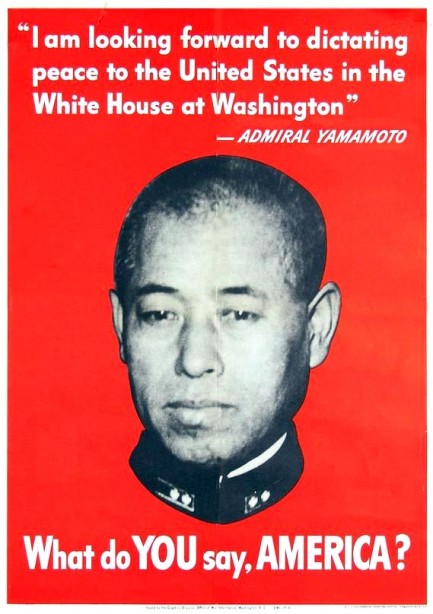
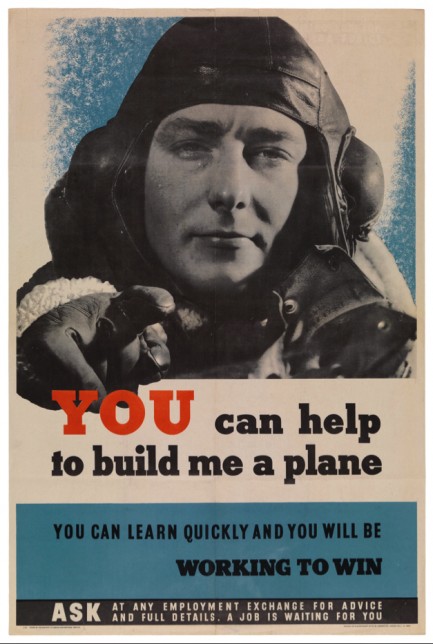
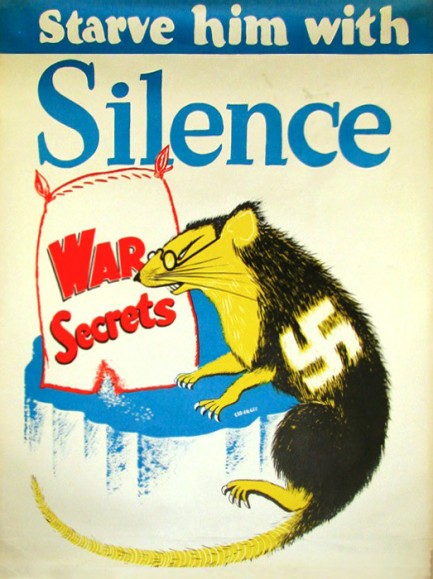
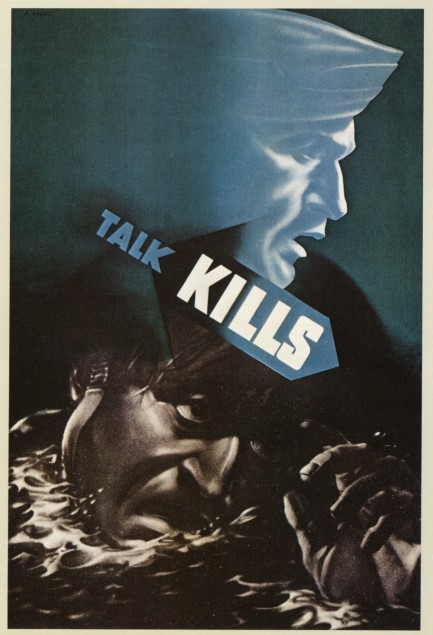
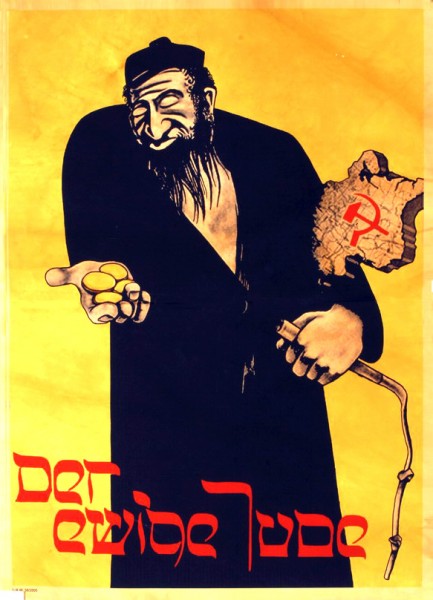
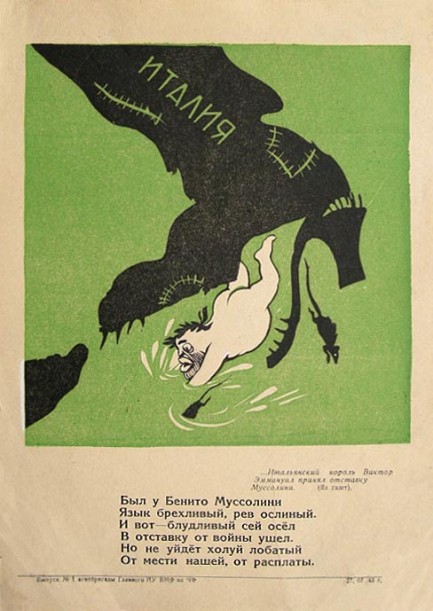
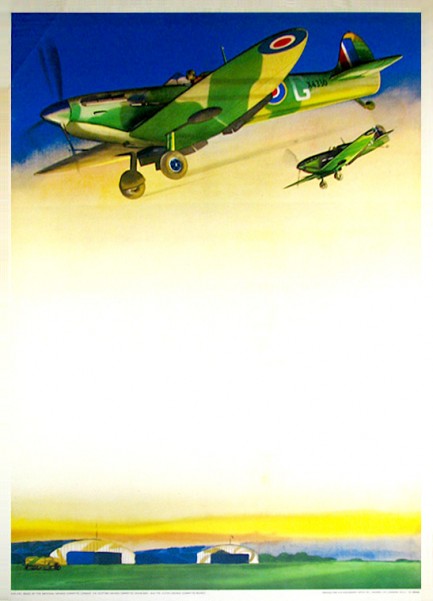
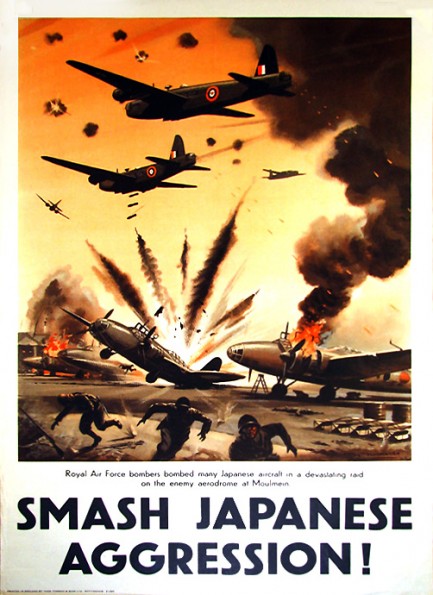
Above and below we have a collection of World War II propaganda posters from the U.S., Russia, Britain, Japan, and other participating nations. Some of these are artistically adept, and yet intensely ugly. You’d almost wonder if artists—who have so much power over the imagination—shouldn’t adhere to a version of the Hippocratic oath that forbids doing harm in the practice of the craft. Unfortunately, World War II itself teaches us that such oaths don't work for doctors either—re: cruel medical experiments in Germany, the U.S., and other countries resulting in numerous deaths for the purpose of morbid curiosity.
All of these posters are circa 1939 to 1945, except the nasty anti-Jewish, anti-Russian poster, which dates from 1937, but which we’ve included to illustrate how racism was used to pave the way for a war nobody realized—foolishly—would be a generation killer. It's an effective piece in the sense that it portrays other humans as inhuman based on a perception of otherness. It was painted by Horst Schlüter, a prominent graphic artist of the time. And for an idea how unkillable such ideas are, consider the fact that we saw that poster commented upon favorably on a neo-nazi forum.
World War II is just a school term for most people on the planet today, and is often thought of as a romantic time. Perhaps—but it’s worth noting that, more or less, 27,500 humans were slaughtered every day for about six years, eventually totaling more than 60 million lives snuffed out. Many of those people would have been orators, musicians, teachers, artists, writers, and even pulp writers, that we would remember today. Check our previous collection of war posters here.



| Vintage Pulp | Jul 4 2011 |


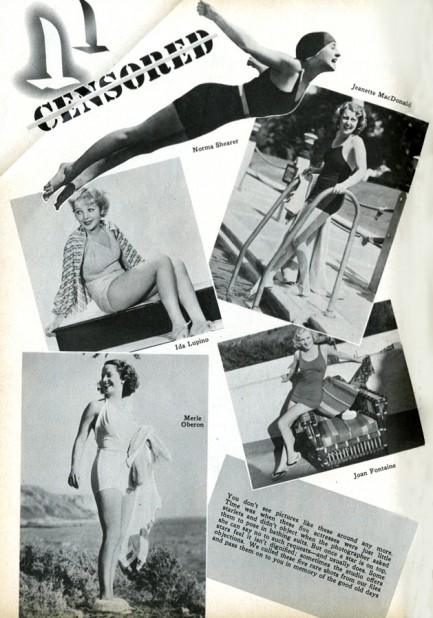
Over in the U.S. this is the day that makes cows tremble in fear—July 4, or Independence Day. Since moving away from the States we’ve had to get used to a whole new set of holidays, and while those events are truly amazing, none of them involve the searing of millions of hamburgers on outdoor grills. In our own way we’re trying to change that by teaching our friends what exactly goes into a great hamburger, but working one friend at a time it may be some years before we really make an impact on the local cuisine. However, we can participate in July 4 in a more immediate way by sharing a couple of images from a July 1943 Motion Picture-Hollywood Magazine of that most beloved of golden age American stars, Rita Hayworth. Other stars inside include Norma Shearer, Jeanette MacDonald and Merle Oberon, and you also get the most famous photo of Betty Grable ever shot. Okay, our work is done. Though we can’t find a decent burger in this corner of the world (yet), we do have a wide beautiful plaza just one block away and on that plaza is a quiet bar with outdoor tables and friendly staff members that keep us well-stocked with ice cold bottles of white wine. That’s going to be the rest of our day. Enjoy the rest of yours.



| The Naked City | Jun 23 2011 |

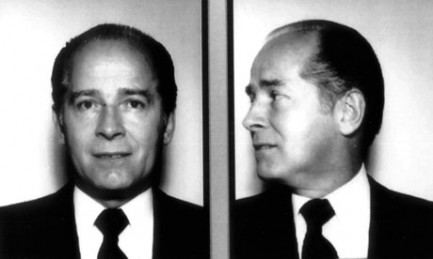
No, Whitey Bulger isn’t a thing, but a person. James “Whitey” Bulger, a notorious gangster who had been on the FBI’s 10 Most Wanted List for sixteen years and was the template for Jack Nicholson’s character in Martin Scorsese’s The Departed, was captured last night in Southern California. Bulger had once been leader of an Irish organized crime syndicate called the Winter Hill Gang, and worked for twenty years as an FBI informant in Boston. But he was dropped from the Feds’ roster in the early 1990s and dropped out of sight himself in 1995 when his FBI handler John Connolly, Jr. tipped him off that an indictment was coming down. Bulger was arrested yesterday at a Santa Monica apartment complex and now will face a full slate of serious charges—including murder, conspiracy, money laundering, narcotics distribution, and extortion.
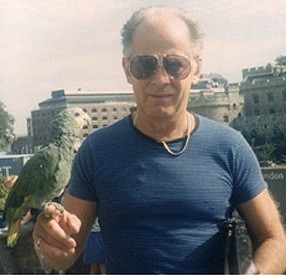 eye to Bulger and Flemmi’s ongoing crimes. Flemmi himself testified in court in 1998 that the FBI gave him a free pass on numerous murders and attempted murders. He described it as having a “license to kill.”
| Femmes Fatales | Jun 1 2011 |


Promo shot of American actress June Travis, who appeared in more than thirty mostly silent films from 1935 to 1938, seen here in her badminton gear, 1937. Not sure how practical the beanie is, but it sure looks good.

| Vintage Pulp | May 24 2011 |

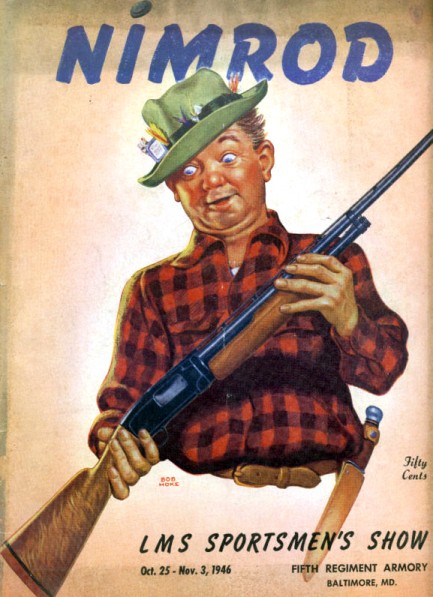
We could do an entire comedy routine on this one, vis-à-vis “Nimrod” and whether anyone involved here understood the non-literal aspects of the term, but instead we’ll just deliver the facts. This is the cover of a program for the L.M.S. Sportsmen’s Show, held in Baltimore, Maryland in the autumn of 1946, with Bob Hoke art in a Norman Rockwell vein. Inside you get a bunch of fishing and hunting articles, along with a few photos, lots of coupons for things like bullets and bait, and zero content on what to do in the event of accidentally shooting a friend in the face, i.e. pulling a Cheney. On the bright side, with his hunting buddy in intensive care, maybe he’ll get to keep the gun.

| Intl. Notebook | May 21 2011 |


Photo of a U.S. nuclear test conducted at Bikini Atoll in the South Pacific, the bomb having been dropped from a plane flying about 12,000 feet up, today 1956.

| Intl. Notebook | May 11 2011 |

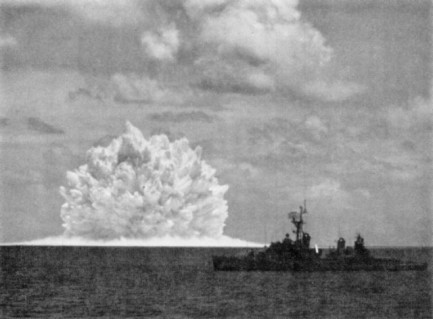
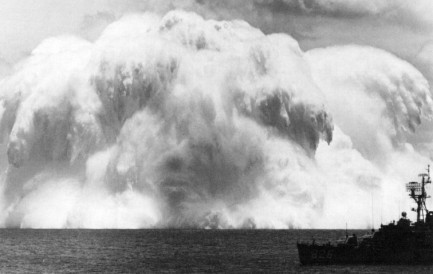
Two photos of the American nuclear test codenamed Swordfish, which was a rocket launched atomic depth charge, detonated in the Pacific Ocean about 400 miles west of San Diego, today in 1962.

| Femmes Fatales | Apr 14 2011 |


Above, a promo shot of French actress Lily Damita, née Liliane Marie-Madeleine Carré, who appeared in more than thirty German, French and American films between 1922 and 1935. This nice shot with a disappointingly large lace fan is by German photographer Alex Binder, who signed the print at lower right.

| Mondo Bizarro | Mar 28 2011 |

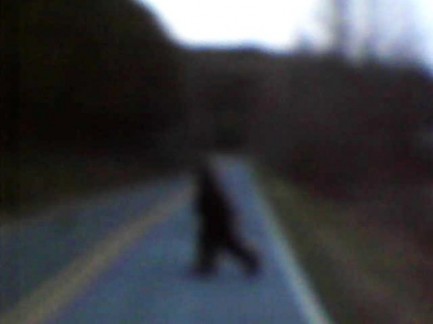
One of the most enduring mysteries of North America concerns the existence of the apelike creature Bigfoot. As of yet, none of the 985 reported sightings of the primate has produced conclusive evidence of its existence. And a video shot last week in North Carolina by a man named Thomas Byers isn’t going to be reversing that trend anytime soon. Byers claims he and a friend were driving along Highway 226 the evening of 22 March, when: “we both observed a large, upright, brown, furry animal between six and seven feet tall come up out of the field beside the road and then it ran across the road in front of the pick up truck we were in.” Byers claims he grabbed a videocamera and recorded the creature as it fled into the woods. Unfortunately, what he actually recorded was not the creature, but a blur that should have him checking to see whether the auto-focus on his camera is broken. You can see the recording here, if you’re inclined. You’ll notice that the creature doesn’t run—rather, it lopes in a way that doesn’t seem a very effective mode of locomotion for a famously elusive wild animal, but might be appropriate for either a toddler with a load in his pants or a hick wearing a novelty ape suit. We suspect the latter, which means we’re calling this sighting a prank. But we’ll keep hoping. And we know you will too.

| Intl. Notebook | Mar 8 2011 |


Photo showing the detonation of Seminole B, a 13.7 kiloton nuclear device detonated June 6, 1956 by the U.S. as part of Operation Redwing, a series of nuclear blasts on Eniwetok and Bikini Atolls, Marshall Islands, South Pacific.

 |
 |