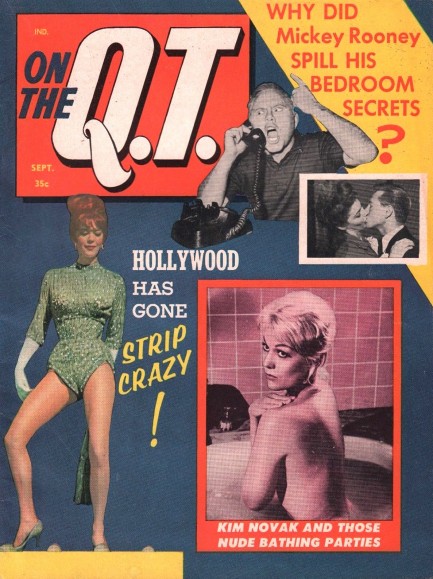
 On the Q.T. sees strippers everywhere. 
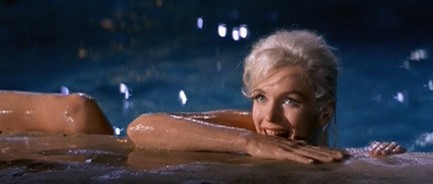
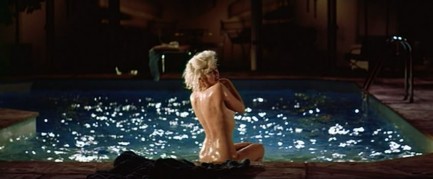
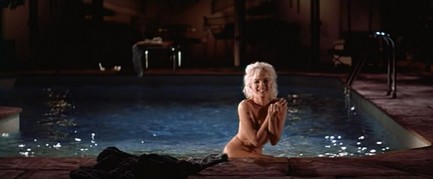
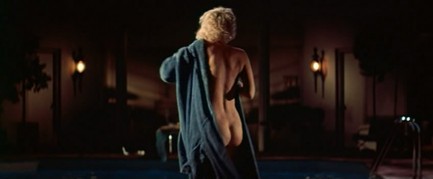
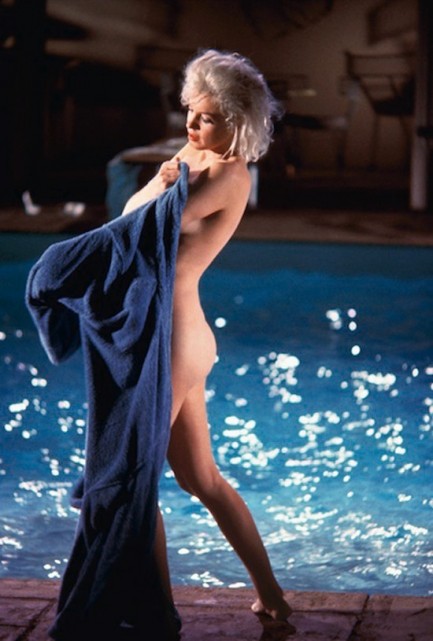
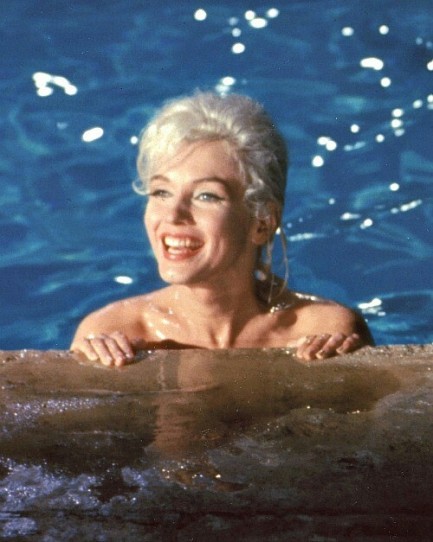
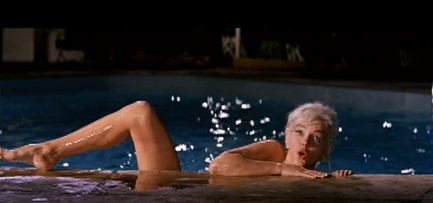
On the Q.T. asks on this September 1963 cover whether Hollywood has gone strip crazy, and they have a bit of a point, for once. In the previous year, more or less, movies that featured stripping as a major plot device included Natalie Wood’s Gypsy Rose Lee biopic Gypsy, as well as A Cold Wind in August, Portrait of a Young Man, Girl in Trouble, Night of Evil, Satan in High Heels and The Stripper, with Joanne Woodward. There were possibly even more films, but you get the drift—Hollywood had indeed discovered strippers and had begun featuring them to titillating effect. But while some of the films were more serious and racy than others, none actually showed any naughty bits, despite the breathlessness of On the Q.T.’s reporting. Other countries, notably France, had already unveiled the human form in cinema, but the first true nude scene in a mainstream American motion picture (excepting the pre-Code films of early Hollywood) came in Sidney Lumet’s 1964 drama The Pawnbroker when both Linda Geiser and African-American actress Thelma Oliver bared their torsos. Interestingly, the nudity barrier probably would have been breached in 1962 by Marilyn Monroe, who filmed a semi-nude pool frolick in Something’s Got To Give. But the production was scrapped, so we’ll never know whether the scenes would have been released as originally shot. Thus two obscure actresses take the prize, and from that point forward Hollywood’s floodgates were open.     
On the Q.T., Gypsy, A Cold Wind in August, Portrait of a Young Man, Girl in Trouble, Night of Evil, Satan in High Heels, The Stripper, The Pawnbroker, Something’s Got To Give, Sidney Lumet, Natalie Wood, Marilyn Monroe, Thelma Oliver, Linda Geiser, Natalie Wood, Kim Novak, Mickey Rooney, Gypsy Rose Lee, sex symbol, cinema, tabloid
|
 |
The headlines that mattered yesteryear.
1942—Ted Williams Enlists
Baseball player Ted Williams of the Boston Red Sox enlists in the United States Marine Corps, where he undergoes flight training and eventually serves as a flight instructor in Pensacola, Florida. The years he lost to World War II (and later another year to the Korean War) considerably diminished his career baseball statistics, but even so, he is indisputably one of greatest players in the history of the sport. 1924—Leopold and Loeb Murder Bobby Franks
Two wealthy University of Chicago students named Richard Loeb and Nathan Leopold, Jr. murder 14-year-old Bobby Franks, motivated by no other reason than to prove their intellectual superiority by committing a perfect crime. But the duo are caught and sentenced to life in prison. Their crime becomes known as a "thrill killing", and their story later inspires various works of art, including the 1929 play Rope by Patrick Hamilton, and Alfred Hitchcock's 1948 film of the same name. 1916—Rockwell's First Post Cover Appears


The Saturday Evening Post publishes Norman Rockwell's painting "Boy with Baby Carriage", marking the first time his work appears on the cover of that magazine. Rockwell would go to paint many covers for the Post, becoming indelibly linked with the publication. During his long career Rockwell would eventually paint more than four thousand pieces, the vast majority of which are not on public display due to private ownership and destruction by fire.
|

 |
|
It's easy. We have an uploader that makes it a snap. Use it to submit your art, text, header, and subhead. Your post can be funny, serious, or anything in between, as long as it's vintage pulp. You'll get a byline and experience the fleeting pride of free authorship. We'll edit your post for typos, but the rest is up to you. Click here to give us your best shot.
|
|