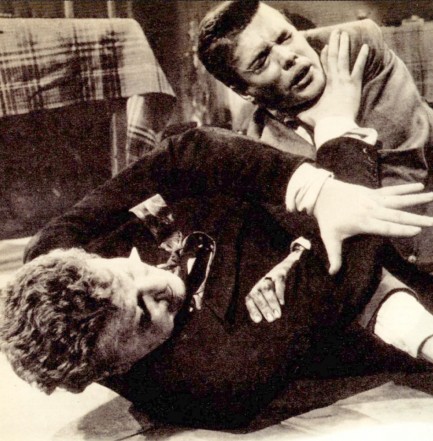
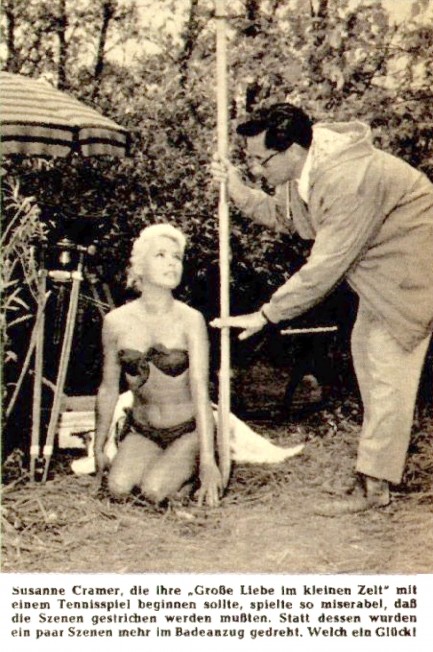
Strange ideas from the minds and lenses of mid-century promo photographers. 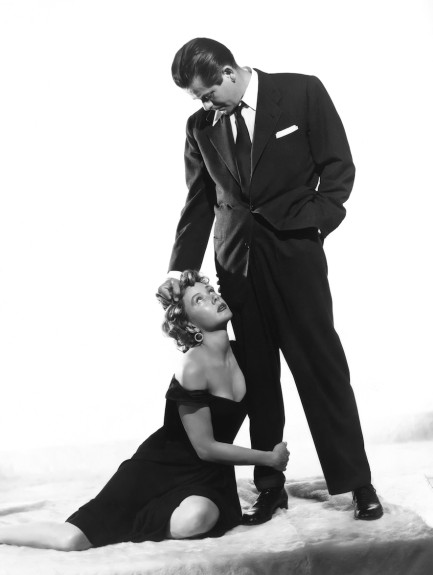 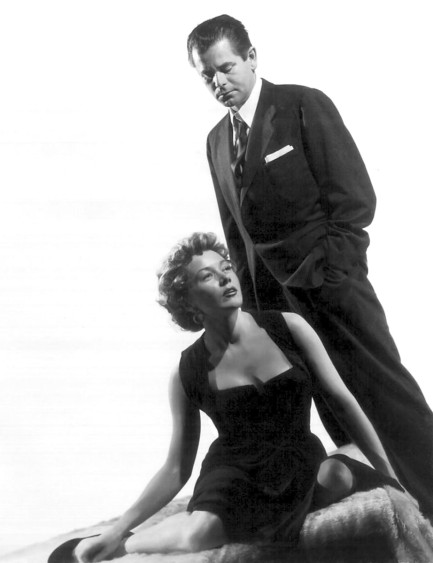 A while back we shared a promo photo of Glenn Ford and Gloria Grahame from 1953's The Big Heat that was meant to imply oral sex (it absolutely was, and you can see for yourself here). We commented on its weirdness, and noted that an actress would probably not be asked or made to pose that way today. The shot got us thinking about whether there were other kneeling promo shots from the mid-century era, and above you see two others from The Big Heat. Below we have more such shots, and while none are as jarring as that previous promo, they're all interesting. We assumed there would be few if any featuring kneeling males, but we found a couple. Even so, there are probably scores more kneeling actresses that we missed. While many of shots took the form they did to highlight the criminal/victim themes in their parent films, you still have to wonder what else—consciously or not—was in the various photograhers' minds. Anyway, just some food for thought this lovely Thursday. Ready, set discuss! 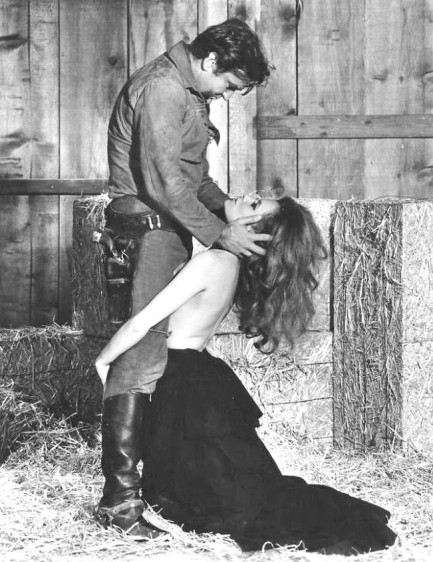 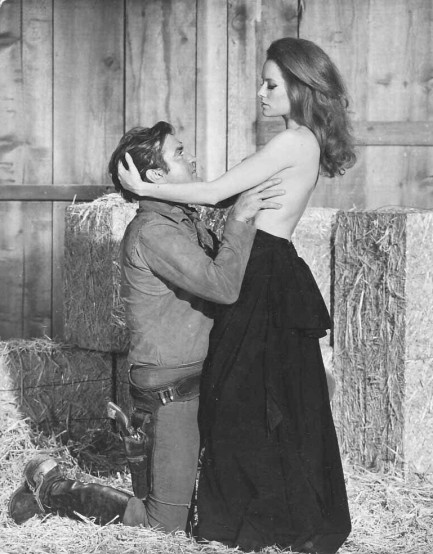 Rod Taylor and Luciana Pauluzzi swap subordinate positions for 1967's Chuka. Rod Taylor and Luciana Pauluzzi swap subordinate positions for 1967's Chuka.
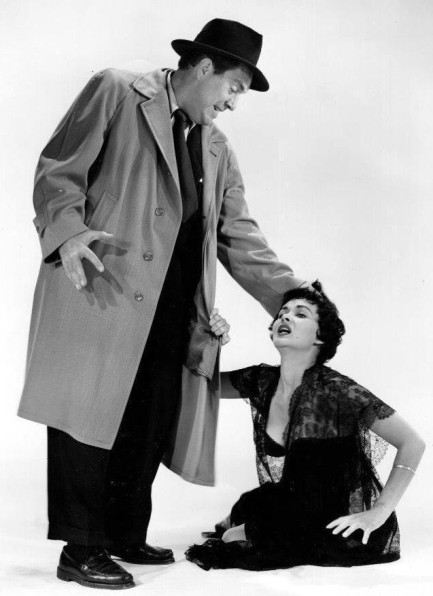 Edmund O'Brien goes for the time honored hair grab on Marla English for 1954's Shield for Murder. Edmund O'Brien goes for the time honored hair grab on Marla English for 1954's Shield for Murder.
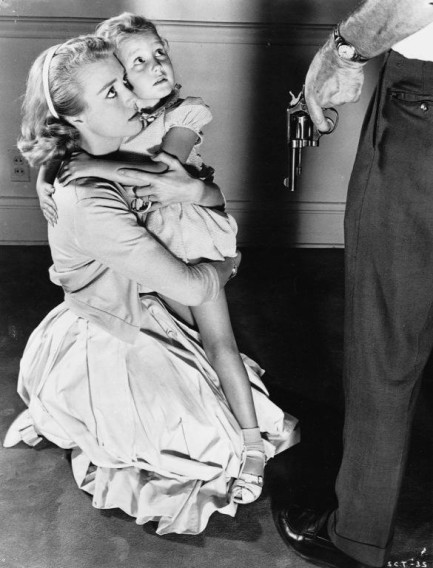 Inger Stevens and Terry Ann Ross for Cry Terror, an adaptation of a novel we talked about a few years ago. Inger Stevens and Terry Ann Ross for Cry Terror, an adaptation of a novel we talked about a few years ago.
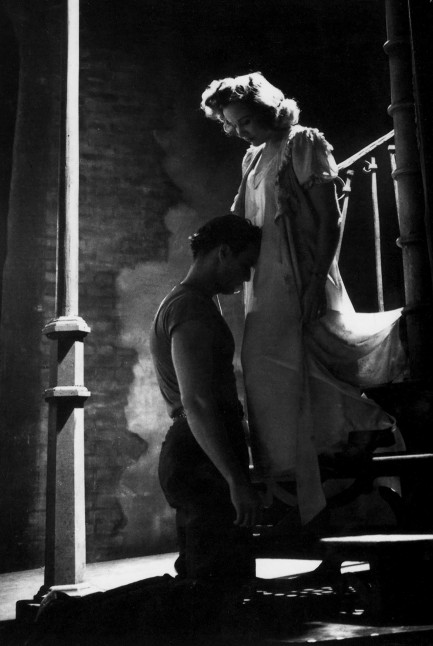 Kim Hunter soothes an overheated Marlon Brando in a promo for 1951's A Streetcar Named Desire. Kim Hunter soothes an overheated Marlon Brando in a promo for 1951's A Streetcar Named Desire.
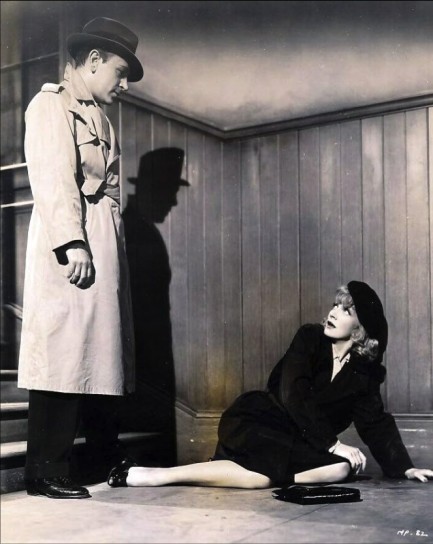 George Raft menaces Marlene Dietrich in the 1941 comedy Manpower. George Raft menaces Marlene Dietrich in the 1941 comedy Manpower.
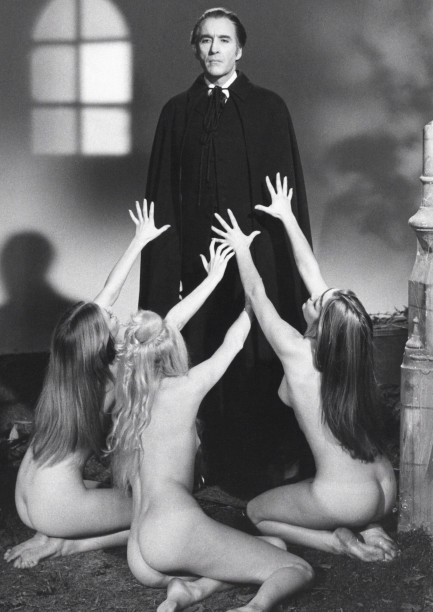 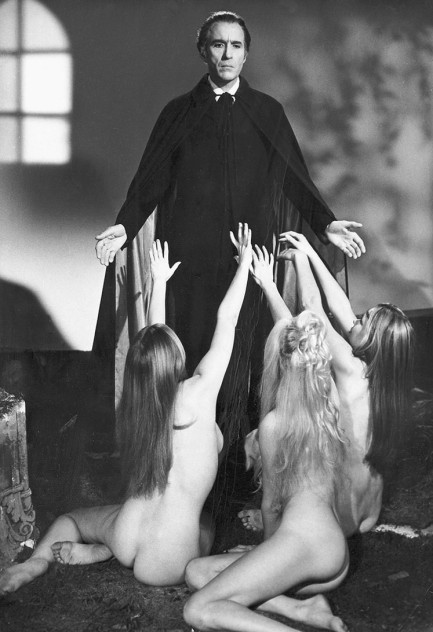 As promos go, these actually make sense. They show three unidentified models mesmerized by vampire Christopher Lee for 1970's Taste the Blood of Dracula. As promos go, these actually make sense. They show three unidentified models mesmerized by vampire Christopher Lee for 1970's Taste the Blood of Dracula.
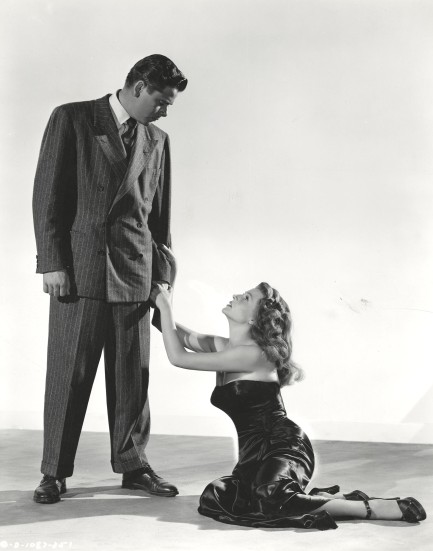 Glenn Ford is at it again, this time looming over Rita Hayworth for the 1946 classic Gilda. Glenn Ford is at it again, this time looming over Rita Hayworth for the 1946 classic Gilda. 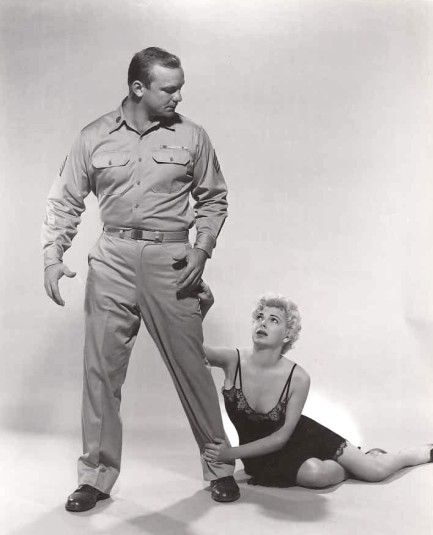 Aldo Ray and Barbara Nichols for 1958's The Naked and the Dead. Aldo Ray and Barbara Nichols for 1958's The Naked and the Dead.
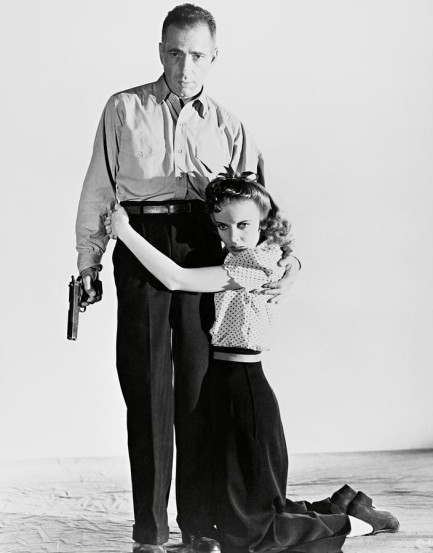 This one shows less domination and more protectiveness, as Humphrey Bogart prepares to defend Ida Lupino for High Sierra, 1941. This one shows less domination and more protectiveness, as Humphrey Bogart prepares to defend Ida Lupino for High Sierra, 1941.
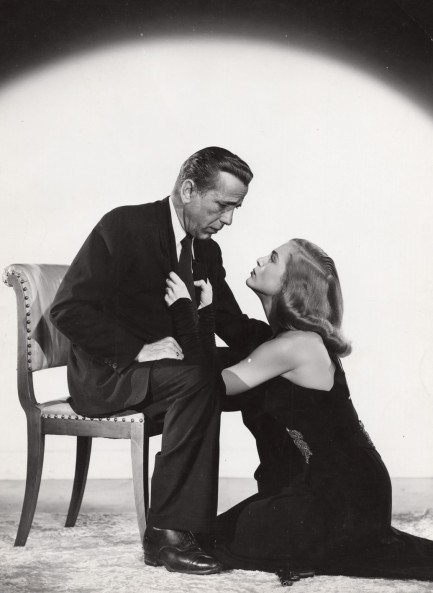 Humphrey once more. Here he's with Lizabeth Scott for Dead Reckoning, 1947. Humphrey once more. Here he's with Lizabeth Scott for Dead Reckoning, 1947.
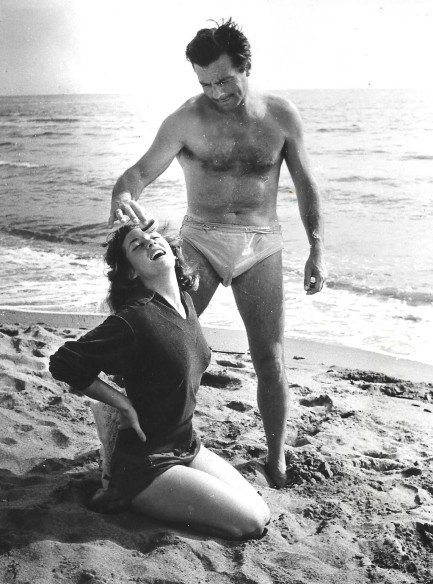 This shot shows Brazilian actress Fiorella Mari with an actor we can't identify in a movie we also can't identify. This shot shows Brazilian actress Fiorella Mari with an actor we can't identify in a movie we also can't identify.
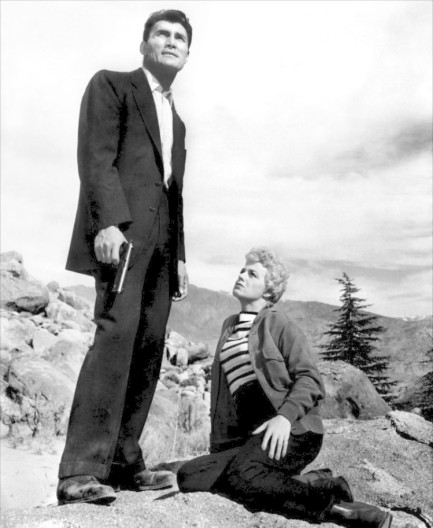 Shelly Winters and Jack Palance climb the highest mountain together for I Died a Thousand Times, 1955. Shelly Winters and Jack Palance climb the highest mountain together for I Died a Thousand Times, 1955.
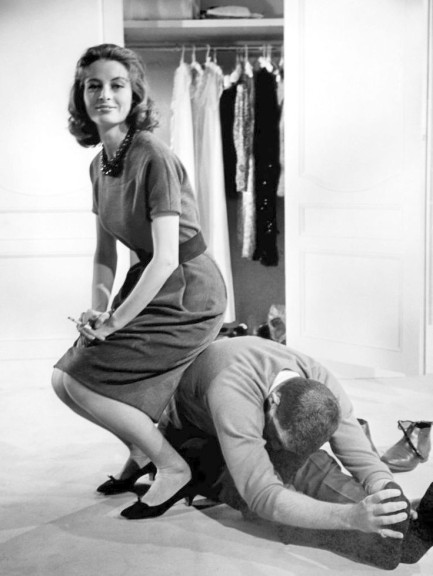 As we said, we didn't find as many examples of kneeling men, but we found this gem—Cappucine makes a seat of director Blake Edwards on the set of The Pink Panther in 1963. Does this count, though? While Edwards is subordinate, he isn't kneeling and it really isn’t a legit promo. As we said, we didn't find as many examples of kneeling men, but we found this gem—Cappucine makes a seat of director Blake Edwards on the set of The Pink Panther in 1963. Does this count, though? While Edwards is subordinate, he isn't kneeling and it really isn’t a legit promo.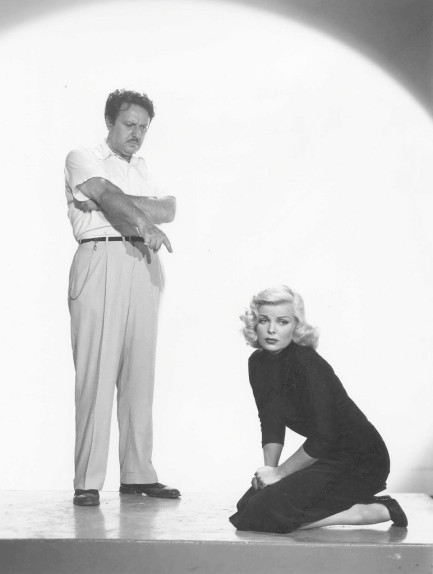 And lastly, in a curious example, Hugo Haas seems to tell Cleo Moore to stay in a shot made for 1953's One Girl's Confession. And lastly, in a curious example, Hugo Haas seems to tell Cleo Moore to stay in a shot made for 1953's One Girl's Confession.
 Twentieth Century Fox offers up a mix of Monroe's most famous tunes. 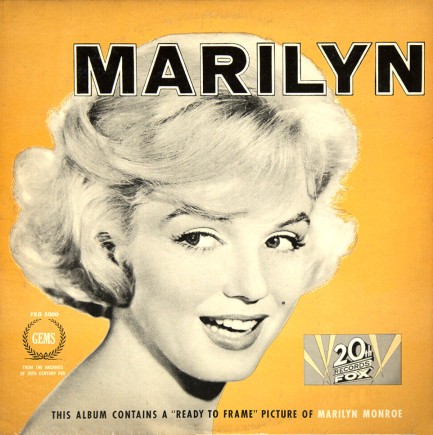 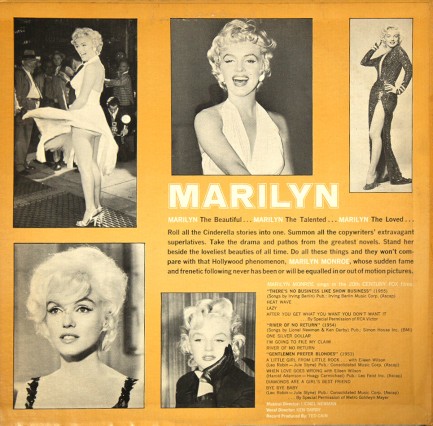
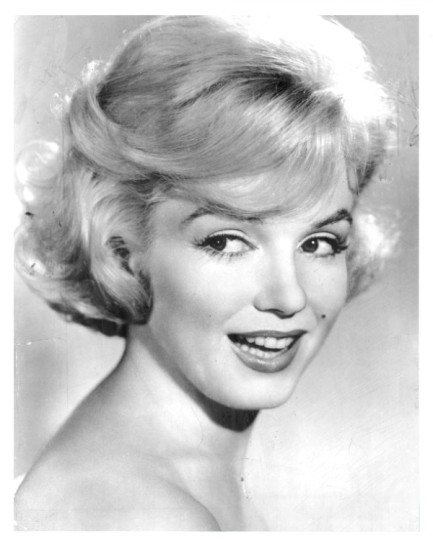
Above: the front and rear sleeves of a 1962 Twentieth Century Fox album featuring the brightest star in Hollywood, Marilyn Monroe, performing musical numbers from three films—River of No Return, Gentlemen Prefer Blondes, and There's No Business Like Show Business. Inside you get a “ready to frame” Monroe photo, which is the cover shot unaltered. It's a nice image indeed. The full list of songs is as follows: “Heat Wave,” “Lazy,” “After You Get What You Want You Don't Want It,” “River of No Return,” “One Silver Dollar,” “I'm Going To File My Claim,” “A Little Girl from Little Rock,” (with Eileen Wilson), “When Love Goes Wrong,” (also with Eileen Wilson), “Diamonds Are a Girl's Best Friend,” and “Bye Bye Baby.”
You can hear most of the tunes by looking around YouTube, if you're curious.
 Mexico hasn't been the same since. 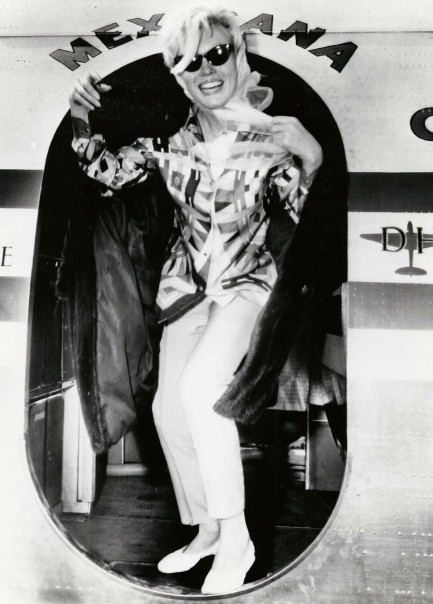
Did we ever mention that Mexico is our favorite country? Not that we really rank them, but we've been numerous times, always had fun, and more than once considered moving there. It could still happen. Marilyn Monroe looks like she had a fun time there in this publicity photo made today in 1962, when she landed in Los Angeles after ten days of vacation in Mexico City. You may have noticed the fur coat. It probably wasn't just for show. Mexico City can be quite warm in Fenruary, but nightly lows can get into the 40s Fahrenheit. Or maybe the plane was freezing. In any case, we like this shot showing a world champion of striking excellent poses looking a bit candid. We took notice of this shot because we too shall be flying away on vacation. We'll get into that tomorrow, and as always, Monroe will return.
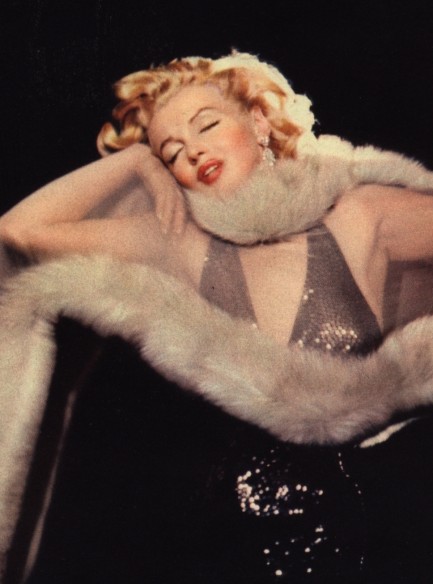
 Marilyn Monroe's dark places. 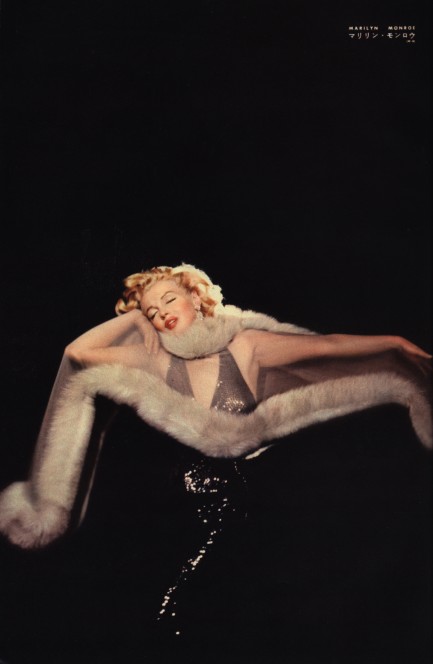
Since Marilyn Monroe is on people's minds thanks to the recent biopic Blonde, in which she's portrayed by Ana de Armas, it seems like a good time to feature Miss M as a femme fatale. This is probably the fifth or sixth time we've done so, and always it's pure pleasure merely to behold her. In case you missed it, Blonde focuses largely on Monroe's tragedies, and paints her life as lurching from horror to horror. We've written about Marilyn's traumas a few times, so we'll quote ourselves on the subject:
Monroe's life was marred by abandonment, depression, and rape [but] since she isn't around to speak for herself, we view her on the terms she chose. She started as a model and worked hard to become an actress, and we think those achievements are more important than what she had no control over.
Therefore, we don't spend much time trying to present the dark side of stardom every time we mention Monroe (today being an exception). Aside from when we focus on the purely pulp aspects of a performer's life, we celebrate them as content producers above all else. And Monroe the content producer was a virtual colossus who stood astride Hollywood. In the above photo, which we found inside a Japanese magazine published in 1968, she looks amazing as always.
 Geez. They're all about me again. 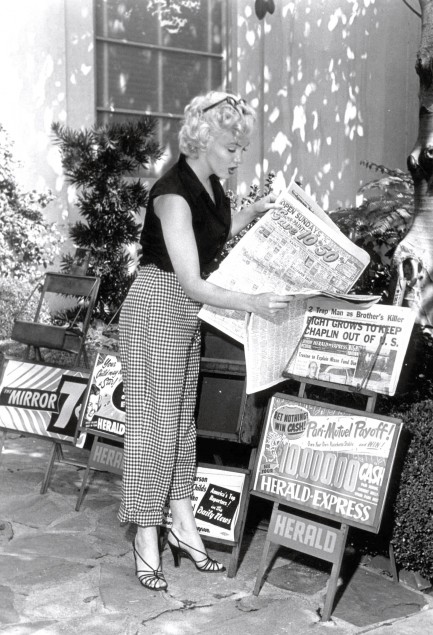
Philippe Halsman shot this sly commentary on fame featuring one of the most famous women in America, Marilyn Monroe, as his subject. She checks out a newspaper, and next to her you can see machines for the afternoon tabloids Mirror, Daily News, and Herald-Express, the latter of which is a publication we've mined often for historical crime photos. In that issue the front page says, “Fight Grows to Keep Chaplin Out of U.S.,” a headline that dates the photo to sometime in late 1952. Why was there a fight? People had been led to believe Chaplin was a communist theat to America for saying things like he wanted every person to have a roof over their heads. He wouldn't return to the U.S. for twenty years. So, the tabloids weren't all about Marilyn every issue. Just mostly. Even gossips need a little variety.
 Back by popular demand.
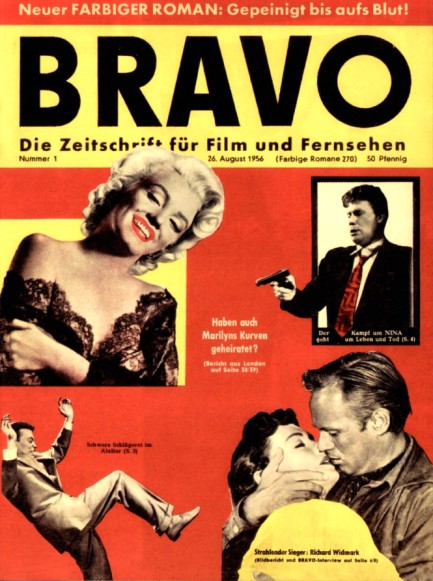
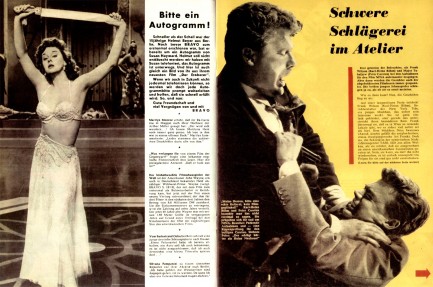
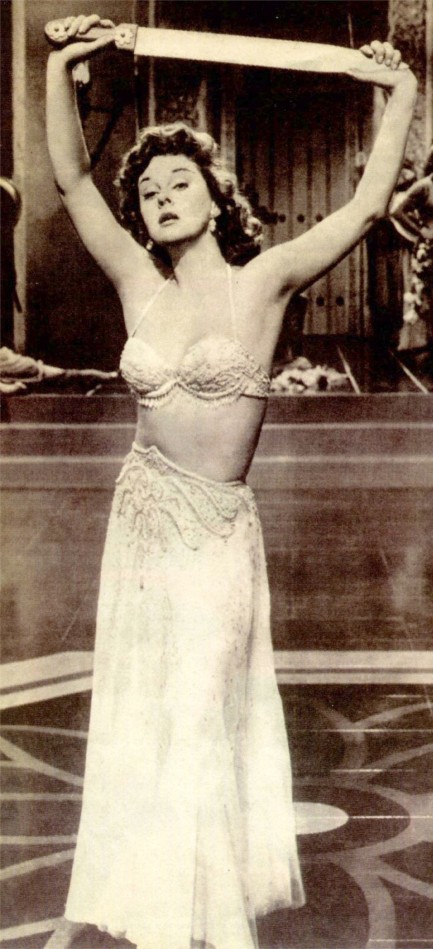
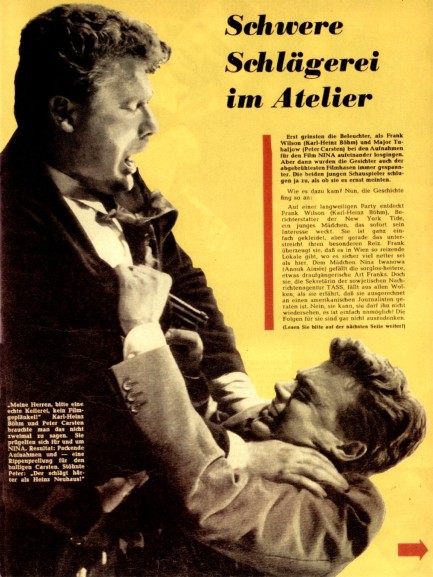
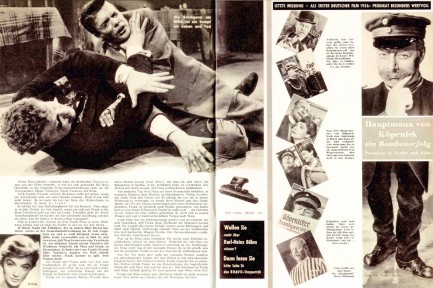
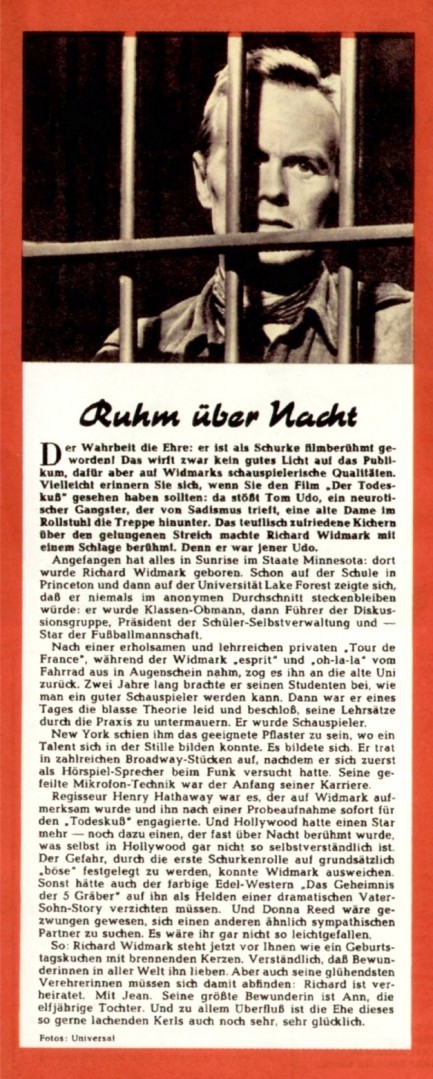
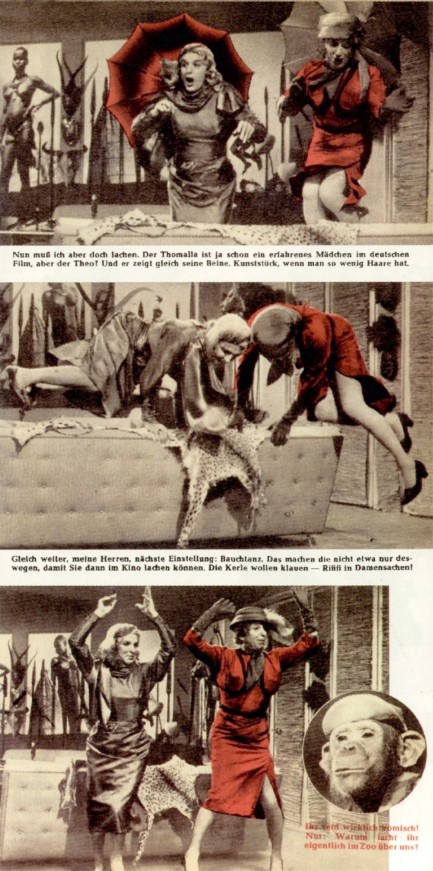
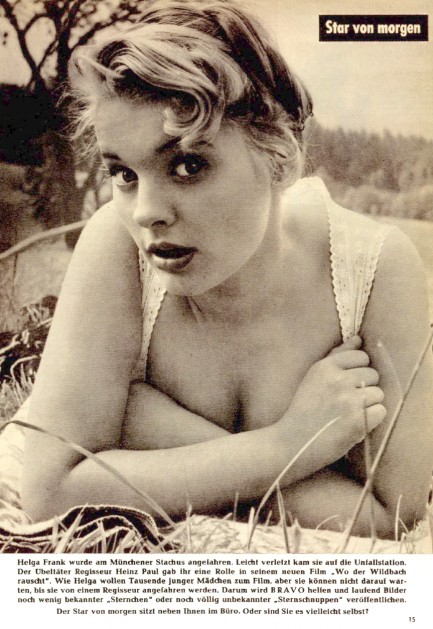
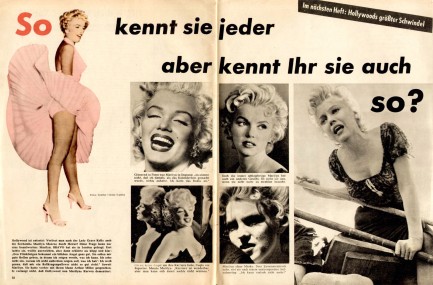
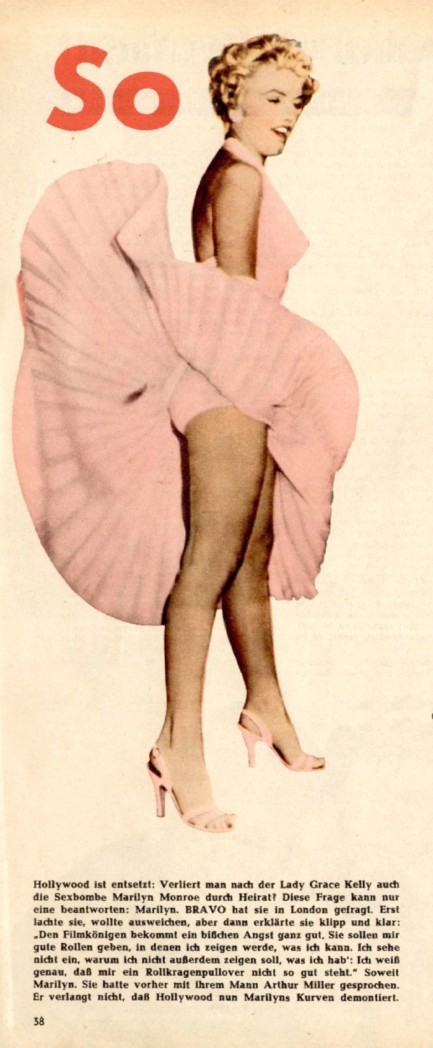
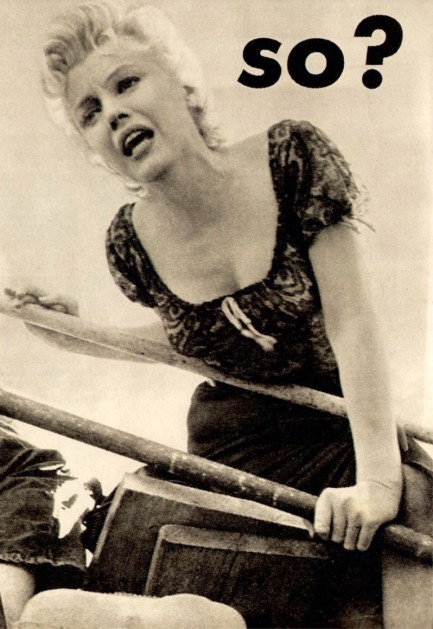
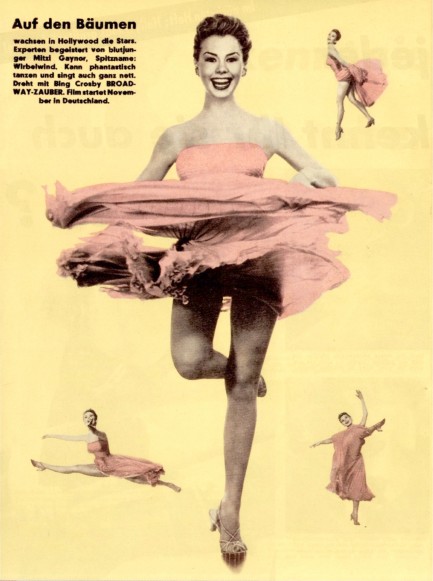
Earlier this year we shared an issue of one of the prettiest mid-century celebrity magazines—West Germany's Bravo. We have pages from another issue, published today in 1956. We'll return to this publication a bit later.
 Inside Story goes where other tabloids tread—then claims not to have gone there. 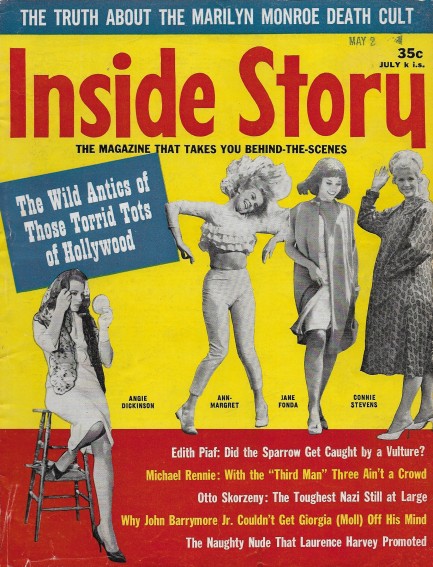
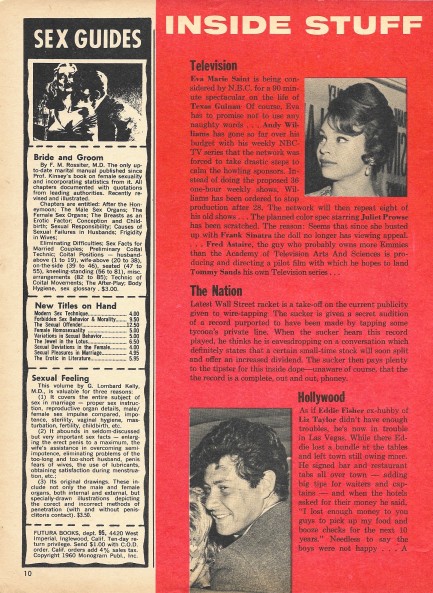
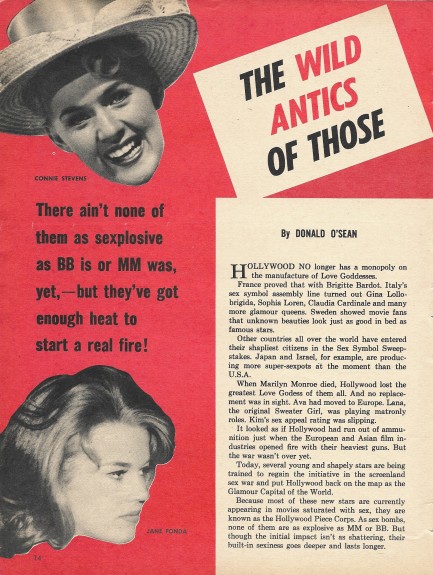
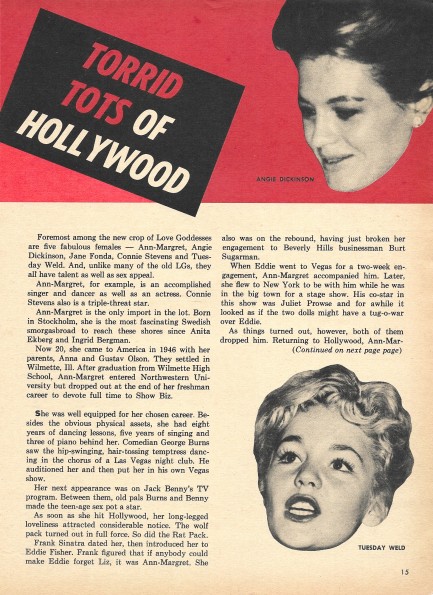
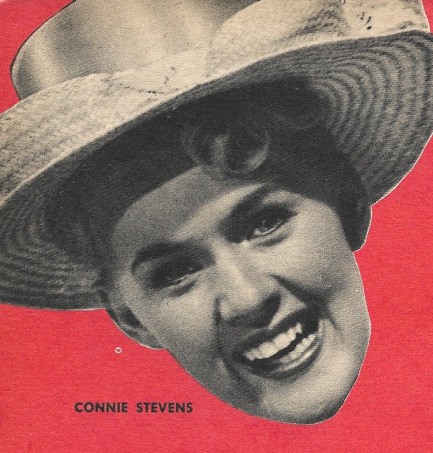
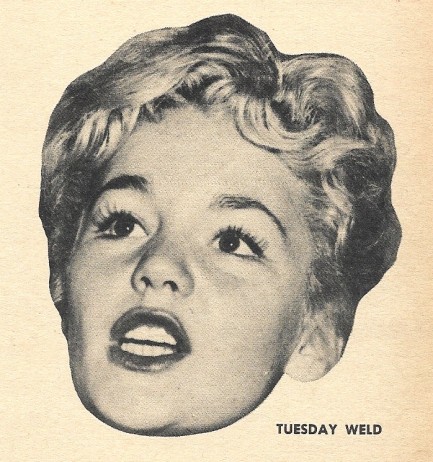
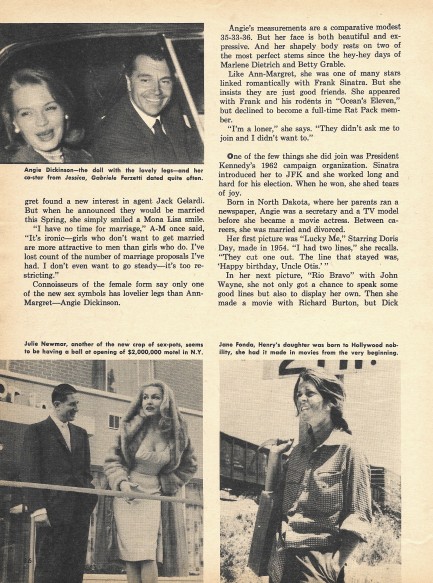
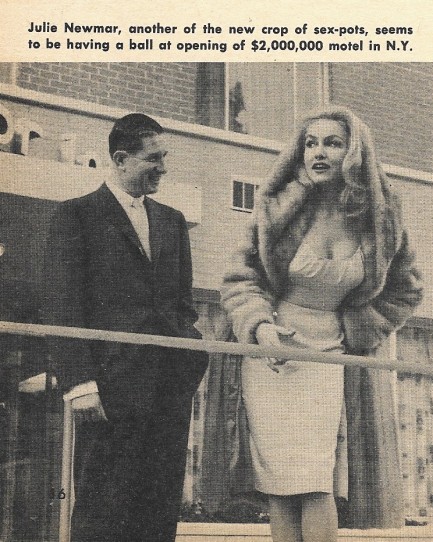
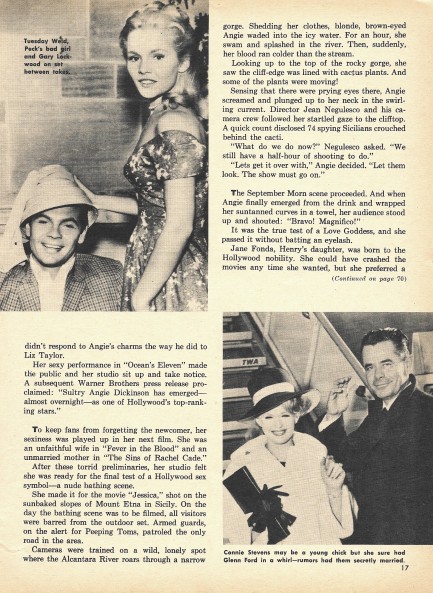
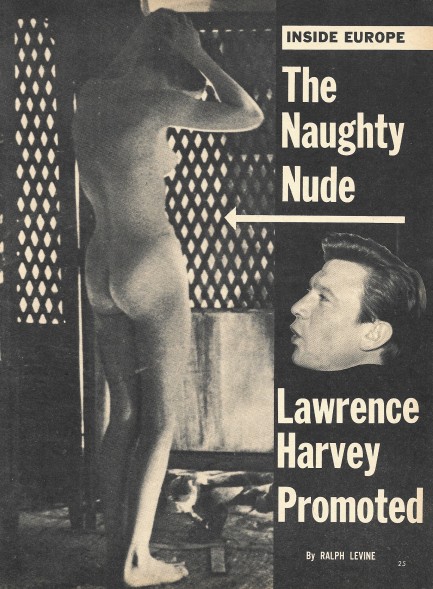
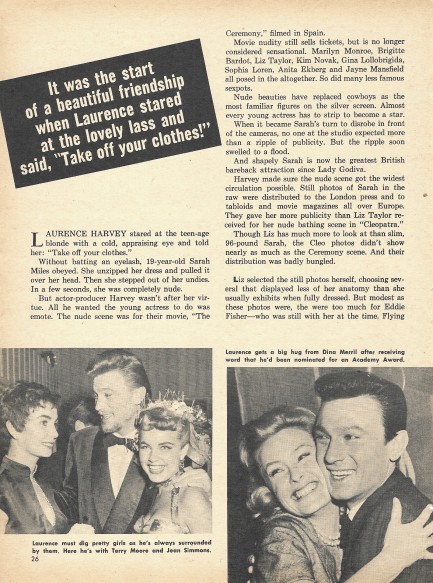
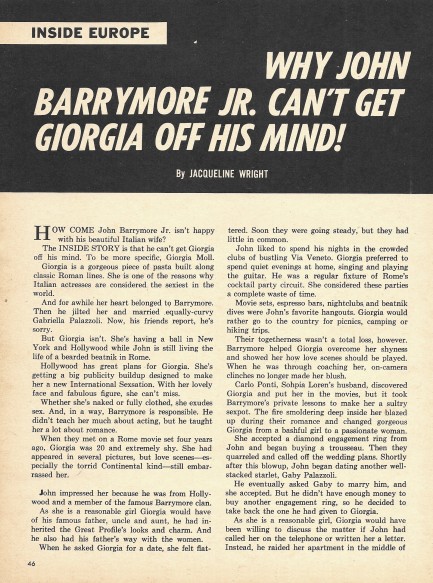
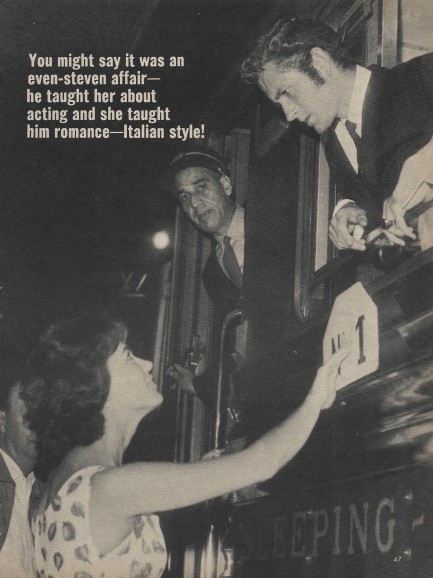
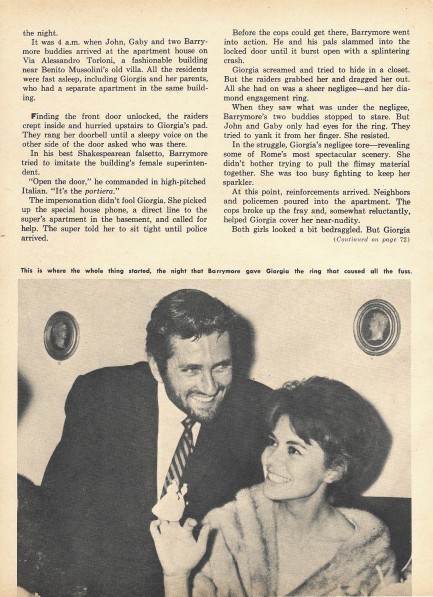
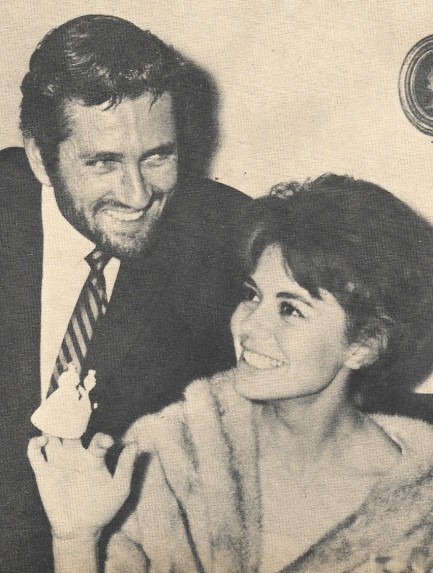
It's been a few years since we posted an issue of Inside Story, but we don't run out of tabloids, we just run out of time to scan them. Today, though, there's time aplenty, so above you see an issue that appeared this month in 1963 with a cover touting a feature on the new generation of young actresses in Hollywood taking over from Brigitte Bardot, Kim Novak, and Marilyn Monroe. At the time, Bardot was twenty-nine and Novak was thirty-five. Those aren't exactly geriatric years for actresses, even back then, but Inside Story said there was a young new guard: Angie Dickinson, Ann-Margret, Jane Fonda, Connie Stevens, Tuesday Weld, and Julie Newmar. Dickinson was actually older than both Bardot and Novak, but we get the general point.
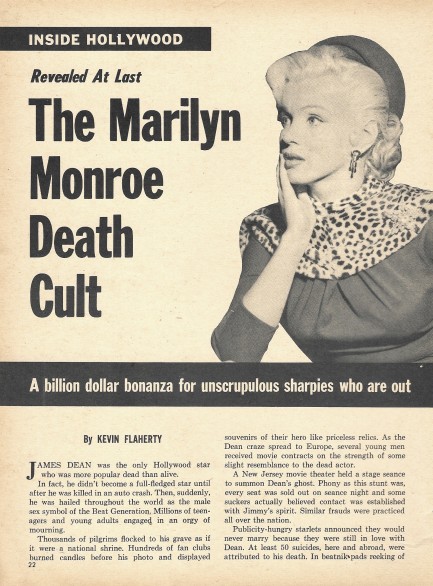
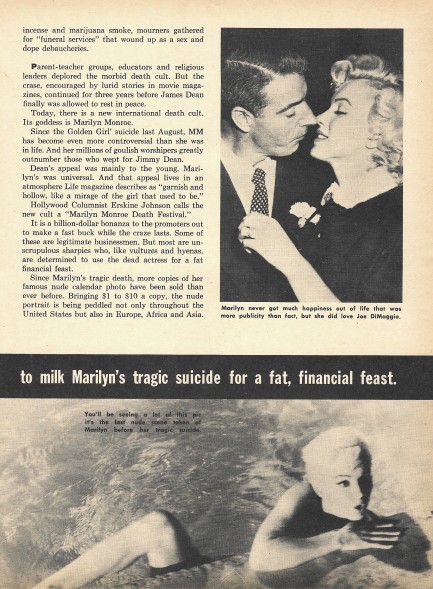
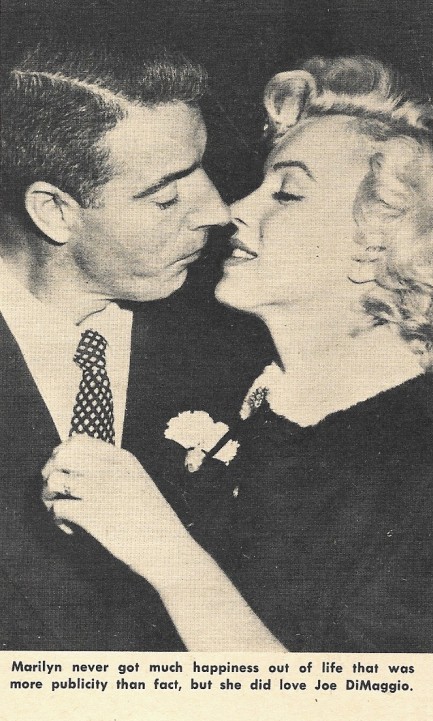
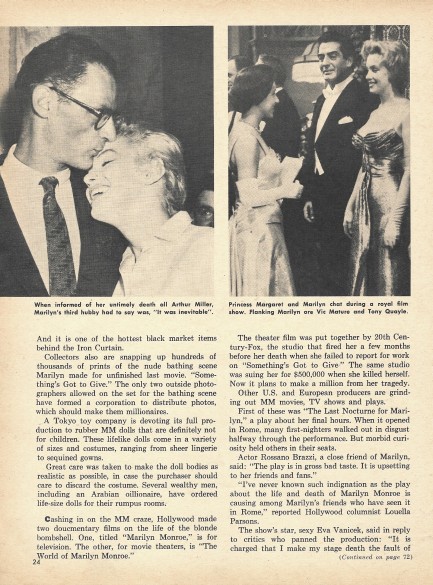
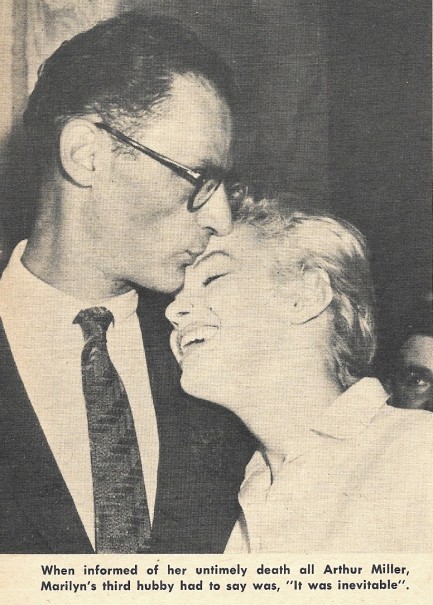
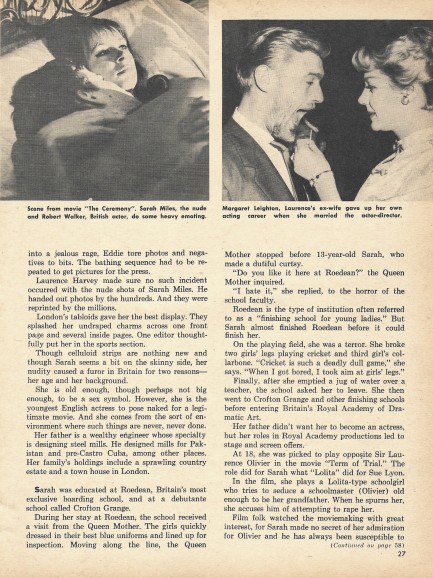
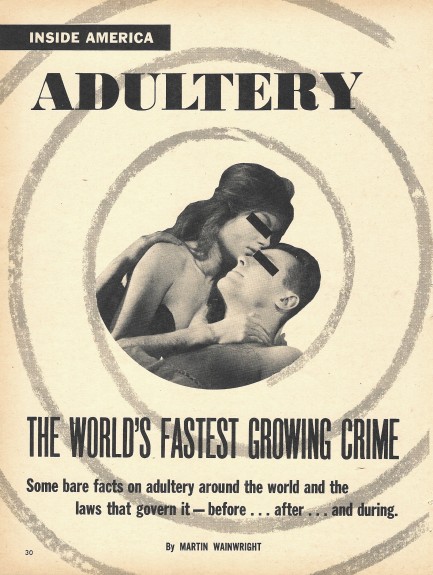
Later in the issue there's a story dedicated to Monroe that describes her fans as a death cult. The interesting aspect of this is that the author Kevin Flaherty accuses people of obsessing over Monroe—while himself obsessing over Monroe. The gist of his article is that a cottage industry of films, books, and magazine articles were cashing in on her suicide, which had occurred the previous August. This was, of course, shaky ground for any tabloid to tread upon, as they all made their profits via unauthorized articles about various celebrities, which one could define as exploitative by nature. But never let the facts get in the way of a good story angle.
Flaherty tells readers that Monroe's life was marred by abandonment, depression, and rape, and suggests that if she had been given a little peace by constantly clamoring fans and intrusive reporters she might not have taken that fatal dose of pills. We think it's just as valid to conclude that without stardom she wouldn't have lasted as long as she did. Since she isn't around anymore to speak for herself (she'd be ninety-six this year), we view her on the terms she chose. She started as a model and worked hard to become an actress, and we think those achievements are far more important than what she had no control over. But there will always be debate over Monroe's legacy, and Inside Story shows that the discussion was already in full swing. Twenty-plus scans below.
 *yawn* What a refreshing nap. Oh, hello. How long have you been standing there and why do you have a banana in your pocket? 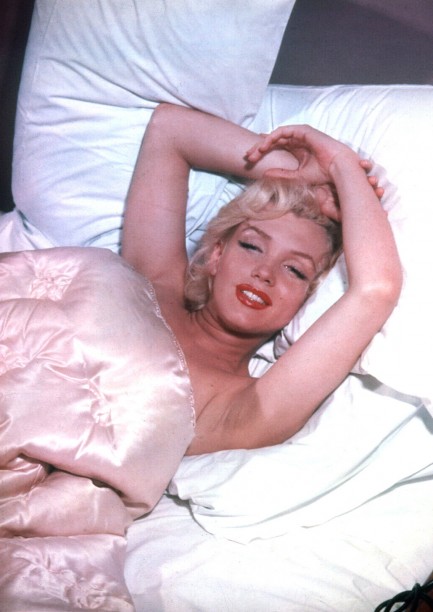
Above: a nice photo of Marilyn Monroe in bed, shot in 1953. That was arguably her pivotal year. It was when her massive hits Gentlemen Prefer Blondes and How To Marry a Millionaire came out, and she made two appearances on The Jack Benny Show. No wonder she was tired.
 Reality says she's way out of his league. Entertainment tradition says she isn't. 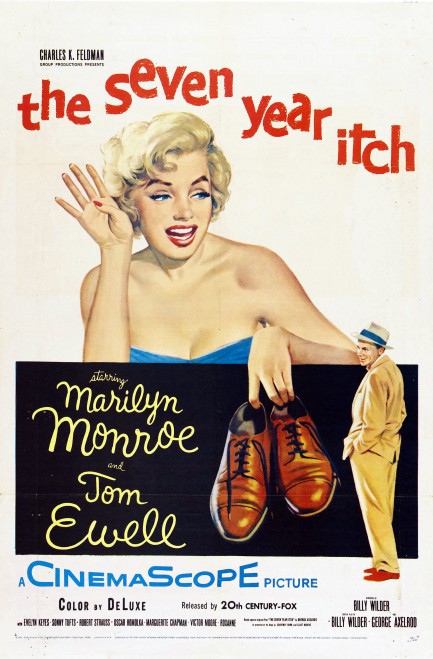
Above you see a poster for the Marilyn Monroe comedy The Seven Year Itch, which we're taking a close look at today because it's a pulp movie. No, really. It isn't a pulp movie in a standard way, but how can we ignore a film, even though it's a comedy, that happens to be about the pulp industry? Perhaps some of you have forgotten this detail, but co-star Tom Ewell plays an editor at a 25¢ publishing house, where among other important duties he repackages literary classics with sexy, good-girl-art covers. If you look just below, Ewell's secretary Marguerite Chapman displays the company's latest reimagining—a racy makeover of Louisa May Alcott's Little Women. They've featured scantily clad women in the art, and added the tagline: “The secrets of a girls dormitory.” So even though thousands of online scribes have written about The Seven Year Itch, its setting in the pulp publishing realm demands that we discuss it too. 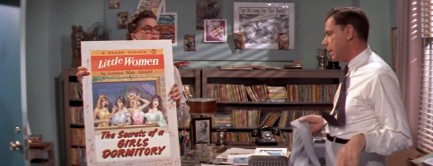 But of course, pulp is merely the backdrop; the movie is really all Monroe. We know it comes across as anachronistic to some viewers, but this film is completely modern in at least one important way. The trope of a schlubby everyman scoring with—or at least turning the head of—a woman much more beautiful than him is still a linchpin of American entertainment. Let us count the examples: There's Something About Mary, Big Bang Theory, King of Queens, She's Out of My League, Night Shift, Forrest Gump, Bewitched, Superbad, Knocked Up—in fact, anything with Seth Rogen in it—and not to be forgotten, both Beauty and the Beast and Lady and the Tramp. In all of those, the female love interest, whether human or cocker spaniel, is objectively too beautiful for the lead male. It's a trope that has always worked, and probably always will because it's primarily males who are marketed to in cinema and television.
In The Seven Year Itch the hot girl/ugly guy theme is doubly funny because Ewell's wife is played by Evelyn Keyes, and she's supposed to be, we guess, not out of Ewell's league. Uh huh. Hollywood, right? Keyes is plenty hot, though of course she's no Monroe. Cue eyeroll from our girlfriends. They aren't clear on why so many men find Marilyn attractive. To them she's a little fat, which is no surprise from the perspective of our pint-sized better halves, but the weight of actresses varied greatly during the mid-century era, from the zaftig Jayne Mansfield to the reedy Audrey Hepburn. Marilyn was somewhere in the middle of the voluptuous range—i.e. not fat. However, her weight did fluctuate. In Something's Gotta Give she was thin enough to be about perfect for current sensibilities. She made any level of poundage look good though, because, first and foremost, she was impossibly cute. This look right here: 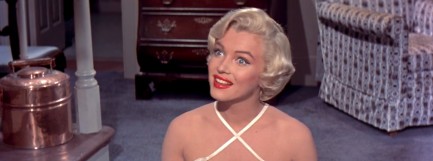 Those blue eyes of hers that are pointed in slightly different directions. That's hot. That look also captures Monroe's go-to instrument as an actress—an expression that conveys an expectant, scrubbed, and somewhat (but never totally) naive sex appeal. Having watched her dramas as well as her comedies, there's no doubt her gift was for the latter. Her comedies are unimaginable without her, and she was in her own class. Bardot played the same kittenish character at times, and Demongeot, and other actresses, but Marilyn was simply the best. The Seven Year Itch showcases an eternal star shining her brightest, as she plays a twenty-something aspiring actress who moves in upstairs from the klutzy Ewell, whose wife is away for the summer. Monroe proceeds to unknowingly fuel all sorts of male fantasies that—surprise—start to come true, as the lack of air conditioning in the upstairs flat has her increasingly avoiding it in favor of Ewell's. Those blue eyes of hers that are pointed in slightly different directions. That's hot. That look also captures Monroe's go-to instrument as an actress—an expression that conveys an expectant, scrubbed, and somewhat (but never totally) naive sex appeal. Having watched her dramas as well as her comedies, there's no doubt her gift was for the latter. Her comedies are unimaginable without her, and she was in her own class. Bardot played the same kittenish character at times, and Demongeot, and other actresses, but Marilyn was simply the best. The Seven Year Itch showcases an eternal star shining her brightest, as she plays a twenty-something aspiring actress who moves in upstairs from the klutzy Ewell, whose wife is away for the summer. Monroe proceeds to unknowingly fuel all sorts of male fantasies that—surprise—start to come true, as the lack of air conditioning in the upstairs flat has her increasingly avoiding it in favor of Ewell's.
The way the script is built, with each encounter between Monroe and Ewell another line on the way to potential infidelity is crossed, until the crossed line becomes literal when Monroe discovers that the apartments—which had once been a single two-level residence—are reconnectible by pulling some nails out of the floor where a staircase had been closed off. The possibility of actually living with Marilyn is a delicious dilemma, ingeniously lifted right out of the male id by director/writer Billy Wilder and co-writer George Axelrod. The movie obviously isn't totally wonderful. Some see it as sexist, and certainly its opening sequence of actors painted up like a native American tribe is pure minstrelry, but just like people, movies can harbor out-of-date ideas without being malicious. As long as that line isn't crossed, we can appreciate both The Seven Year Itch, and how far we've progressed since it was made. It premiered today in 1955, and you can see a couple more excellent posters here and here.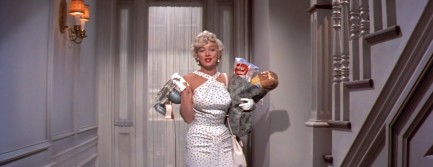 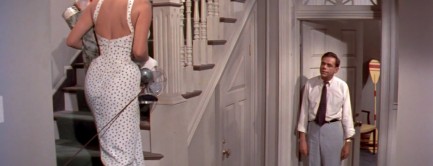 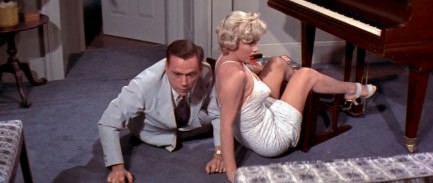 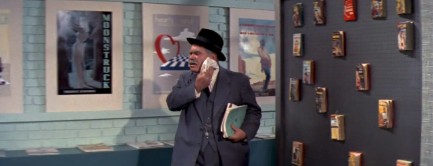 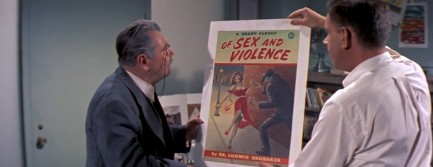 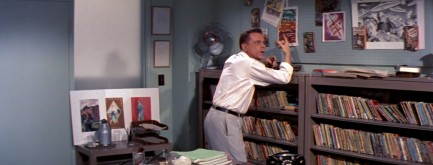 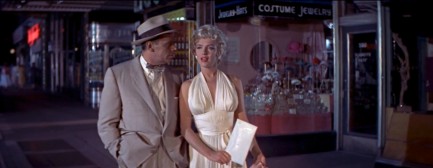 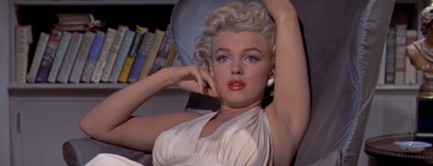 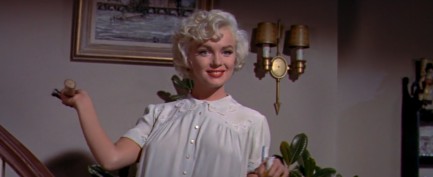 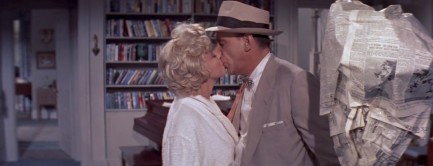 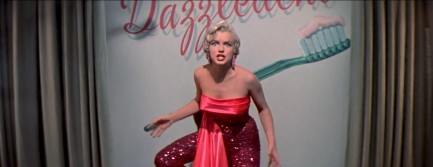 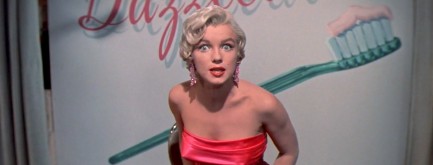
 No knock on Marilyn but even she's not worth this much to us. 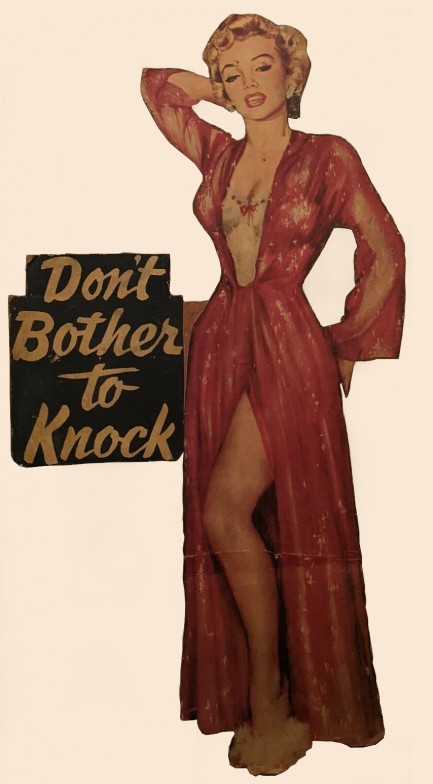
In our continuing efforts to document all things Marilyn, we have today a unique piece of Monroe memorabilia, a life-sized cutout bearing her lovely form. This was made in 1953 as a promo for her drama Don't Bother To Knock, and it's fitting, because she was like cardboard in that flick. We already talked about it, and we think she was one of the greatest stars ever, and a brilliant actress too, but not in that particular psychological snakepit of a film. We're not being iconoclastic. We hate when people do that. We simply accept that every star has dim moments. Bogart made The Two Mrs. Carrolls. Michael Caine made The Hand. It happens.
But memorabilia often stands apart from performances. This cutout of Marilyn would have value no matter which film it was associated with—or even it were not associated with any film at all. You can buy it on Ebay but it'll cost you a small fortune—$1,750, plus shipping. For us, because of where we live, the latter would mean $520 additional mailing costs, plus $513 import fees, all to have the oceanfront humidity here wilt fragile Marilyn like she drank too many martinis. So as much as we'd love to have her, it's a hard no. Also, we never pay more for anything than it costs to fly to Thailand. You gotta have a code. 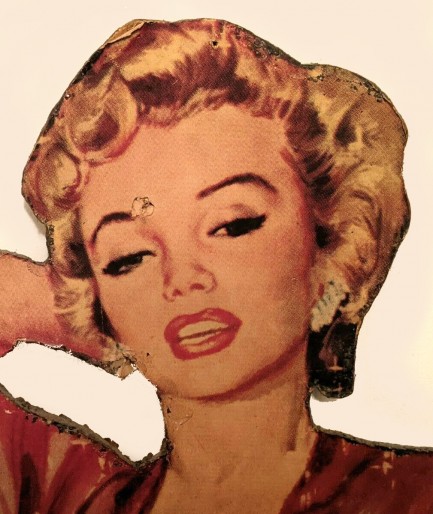 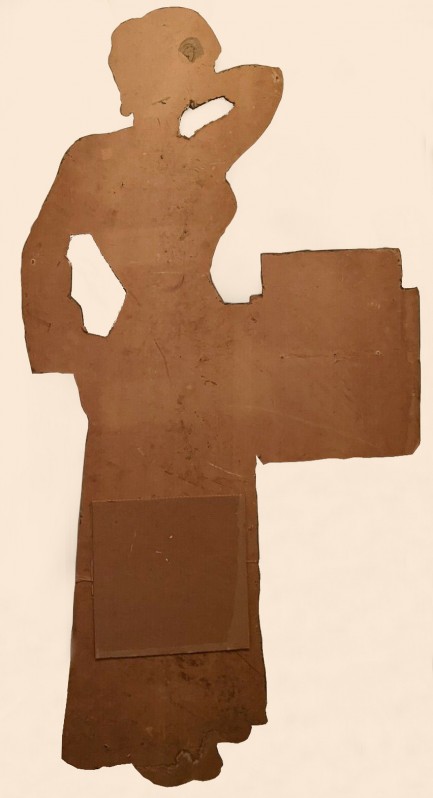

|
 |

The headlines that mattered yesteryear.
1945—Mussolini Is Arrested
Italian dictator Benito Mussolini, his mistress Clara Petacci, and fifteen supporters are arrested by Italian partisans in Dongo, Italy while attempting to escape the region in the wake of the collapse of Mussolini's fascist government. The next day, Mussolini and his mistress are both executed, along with most of the members of their group. Their bodies are then trucked to Milan where they are hung upside down on meathooks from the roof of a gas station, then spat upon and stoned until they are unrecognizable. 1933—The Gestapo Is Formed
The Geheime Staatspolizei, aka Gestapo, the official secret police force of Nazi Germany, is established. It begins under the administration of SS leader Heinrich Himmler in his position as Chief of German Police, but by 1939 is administered by the Reichssicherheitshauptamt, or Reich Main Security Office, and is a feared entity in every corner of Germany and beyond. 1937—Guernica Is Bombed
In Spain during the Spanish Civil War, the Basque town of Guernica is bombed by the German Luftwaffe, resulting in widespread destruction and casualties. The Basque government reports 1,654 people killed, while later research suggests far fewer deaths, but regardless, Guernica is viewed as an example of terror bombing and other countries learn that Nazi Germany is committed to that tactic. The bombing also becomes inspiration for Pablo Picasso, resulting in a protest painting that is not only his most famous work, but one the most important pieces of art ever produced. 1939—Batman Debuts
In Detective Comics #27, DC Comics publishes its second major superhero, Batman, who becomes one of the most popular comic book characters of all time, and then a popular camp television series starring Adam West, and lastly a multi-million dollar movie franchise starring Michael Keaton, then George Clooney, and finally Christian Bale. 1953—Crick and Watson Publish DNA Results
British scientists James D Watson and Francis Crick publish an article detailing their discovery of the existence and structure of deoxyribonucleic acid, or DNA, in Nature magazine. Their findings answer one of the oldest and most fundamental questions of biology, that of how living things reproduce themselves.
|

|
|
It's easy. We have an uploader that makes it a snap. Use it to submit your art, text, header, and subhead. Your post can be funny, serious, or anything in between, as long as it's vintage pulp. You'll get a byline and experience the fleeting pride of free authorship. We'll edit your post for typos, but the rest is up to you. Click here to give us your best shot.

|
|

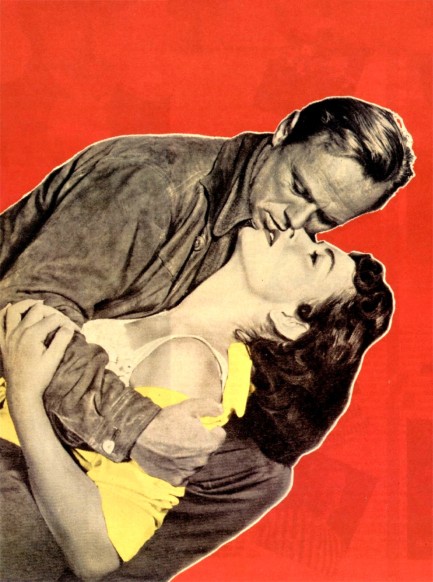
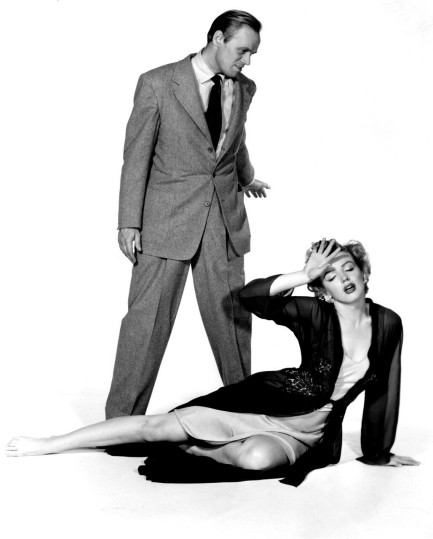 Marilyn Monroe swoons as Richard Widmark snarls for Don't Bother To Knock, 1952.