 Life and death in the cinema. 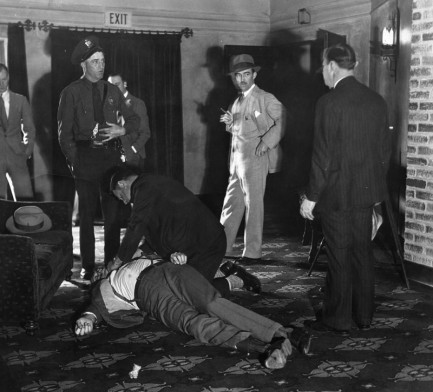
Police Lt. Hugh Crowley lies dead in the Fox Westwood Village Theater in Los Angeles after being shot today in 1932. Crowley had gone to the theater after closing time to retrieve box office receipts, but instead surprised two thieves. Crowley reached for his sidearm and fired, and one of the crooks gunned him down. Both men were captured and tried, and Joseph Francis Regan, who had fired the fatal shot and actually been hit in the abdomen by a bullet fired by Crowley, was sentenced to death. Jack Green, who had no prior criminal record, had not fired a shot, and had cooperated in the police investigation, nevertheless also was sentenced to death, probably because he had planned the crime. Regan was hanged at San Quentin State Prison in August 1933. Green came close to the gallows, but received numerous reprieves after public pleas for leniency from his parents, and rulings from higher courts. Eventually his sentence was commuted to life in prison.
Although Green was probably never aware of it, legal authorities often cited his case during the long battle over the constitutionality of the death penalty in California. The idea put forth by the pro-death penalty side around 1960 was that even though Green’s commuted sentence specified “without possibility of parole,” there was no actual reason in California jurisprudence or the state constitution that he could not be released. All that was required was for an appropriate state authority to decide to do it. They felt therefore that anti-death penalty campaigners’ assurances that criminals could be imprisoned for life if such punishment was deemed necessary meant nothing. No matter the language of the original life sentence, any criminal could later be released. Green doubtless would have found all this fascinating, but none of it ever came to affect him. As far as we can tell, he did in fact spend the rest of his life in San Quentin.
 Mess with her and you'll end up six feet under. 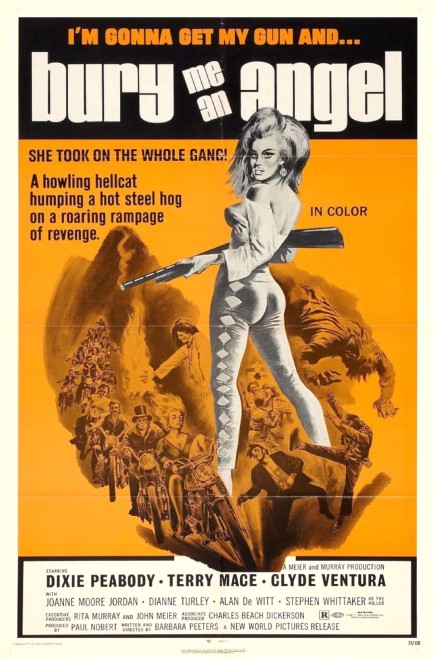
We can't say the promo poster you see above is expertly executed, but it has a quality we appreciate. It was made for the low budget action flick Bury Me an Angel, which premiered this month in 1971, and stars Dixie Peabody. She plays a tough biker chick named Dag Bandy whose brother is messily murdered via shotgun, sending her humping a hot steel hog on a roaring mission of revenge. Nice copy there from the promotional scribes behind the poster. It's a wonder people walking past the cinemas where the movie played weren't sucked bodily into the front row, such being the irresistible power of those words. Note to our non-U.S. readers (and thank you for your visits): a “hog” is a motorcycle. Normally, it's even a Harley-Davidson motorcycle. And to hump it, well, is— Oh, never mind.
The star here, Dixie Peabody, is obscure. She appeared in only two other films, Night Call Nurses and Angels Die Hard, both of which, like Bury Me an Angel, issued from Roger Corman's grindhouse mill New World Pictures. She was seventy-two statuesque inches tall—seventy-six counting her hair—so she definitely looks the part of an action hero, but even action heroes gotta act, and as Hamlet said so concisely: There's the rub. Peabody can emote, but she can't act. There's a difference. Of course, numerous b-movie performers of the 1970s couldn't act, so if we adopt the principle of willing suspension of expectation™, what do we have here? We have a lead performer with flashes of talent and more than a bit of presence, but who's stuck in a cheap-ass movie that doesn't feature much in the way of script or structure. It worked for Easy Rider, but not here.
You won't necessarily go away disappointed, though, because you get the expected cheapo movie fare: a drug montage, a bar fight, a skinny-dip, the three b's (boobs, bush, and booty), counterculture lingo, and cheesy mysticism. Somewhere in there you also get future Grizzly Adams portrayer Dan Haggerty as a guy in a diner who entices Peabody into bed, which somehow doesn't collapse under their combined weight. If you ever wanted to see a naked Grizzly, this is your chance. Eventually the film gets back on track toward Peabody's roaring rampage of revenge, which has been all roar and no rampage to this point, but finishes with a climax that asks the age-old question, also possibly from Shakespeare, since he seemed to ask every question ever: If you murder a murderer, is it justice or murder?
We can't actually recommend Bury Me an Angel, but as with its promo poster, though it isn't expertly executed, it has a quality we appreciate. It seems to us that, combined with the inhalation or ingestion of a psychoactive substance, you might find some real enjoyment here. Maybe in the end that's the surest sign of a worthwhile b-movie: it's much better high. As a side note, it was written and directed by Barbara Peeters, one of the few women who called the shots behind the camera during the grindhouse era. She would helm five motion pictures, all of them bad, reaching her apogee with 1980's Humanoids from the Deep, which took sexualized schlock to virtuosic levels. We'll be checking out one or two of her other efforts later.
 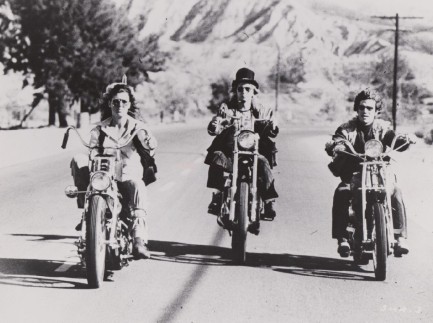 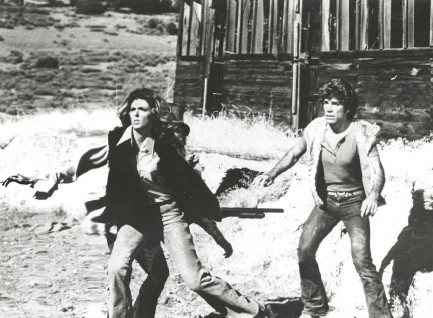 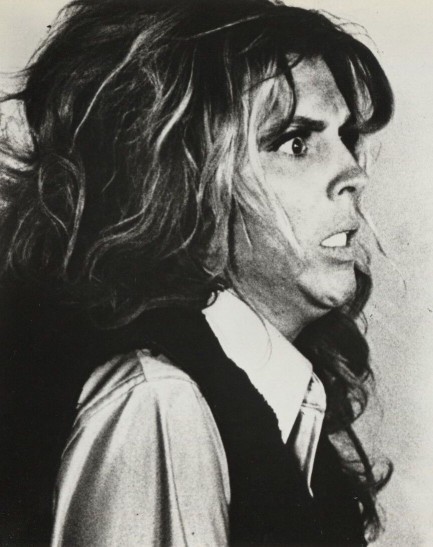 
 The never ending quest for the ultimate shot. 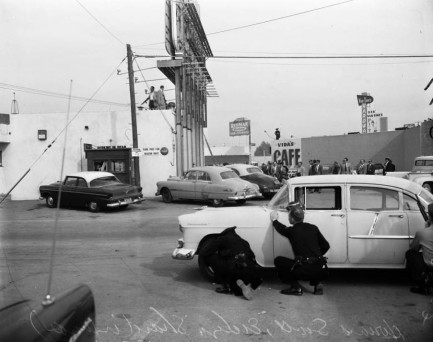 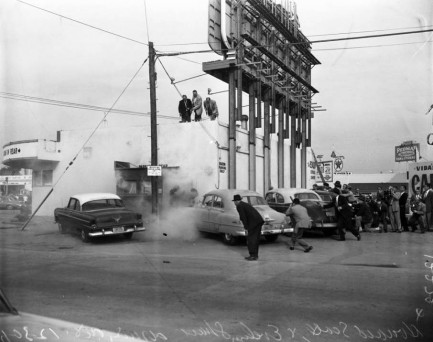 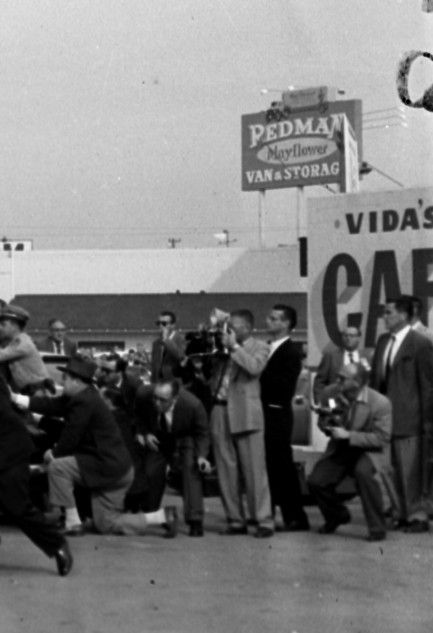
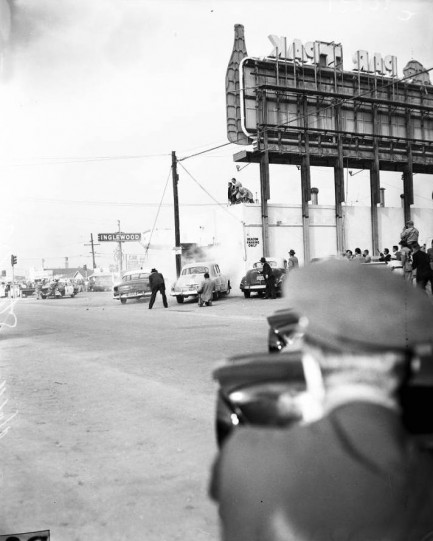
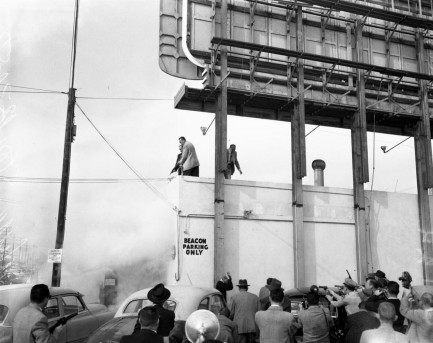
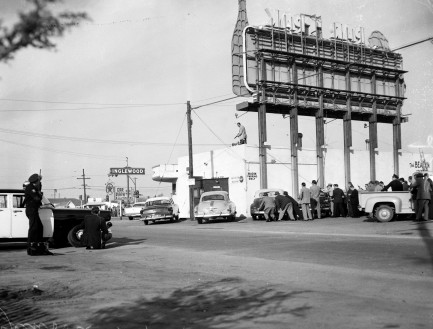
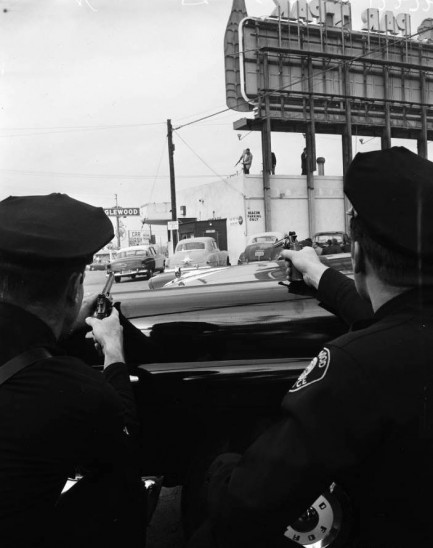
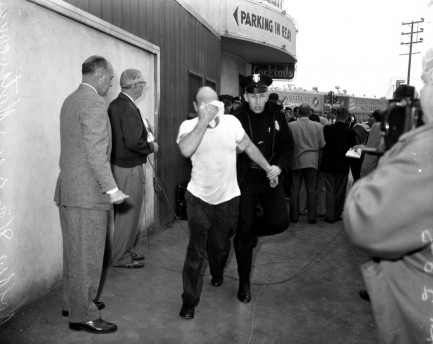
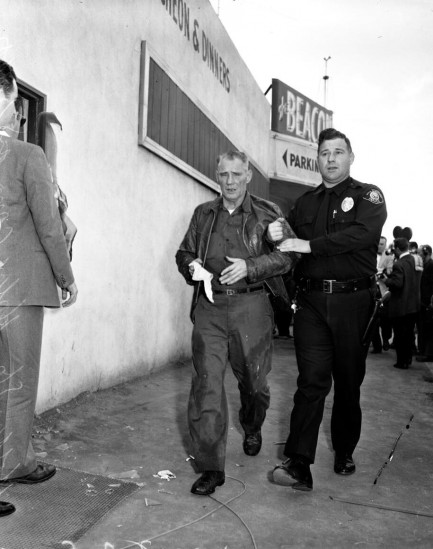
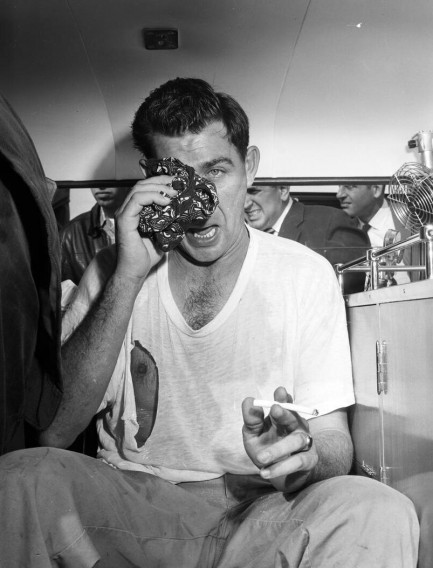
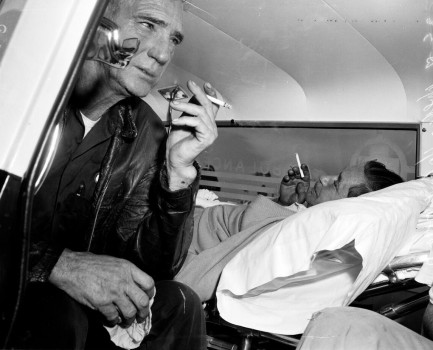
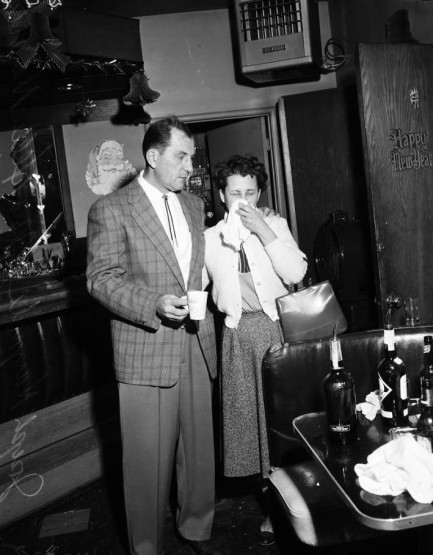
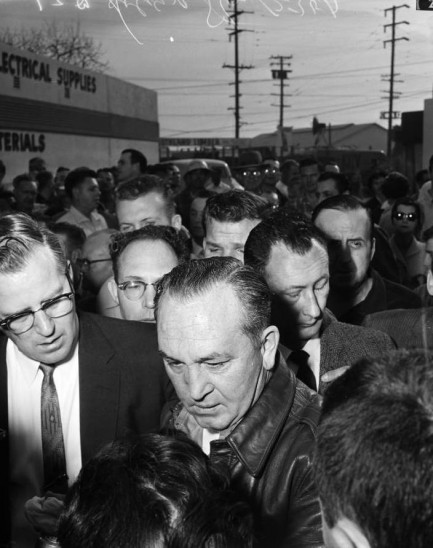
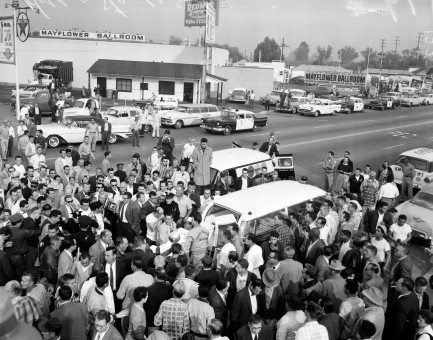
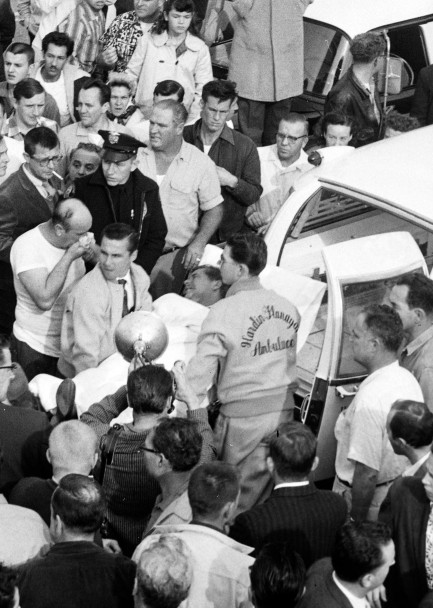
Back during the heyday of on-scene crime reporting, mayhem-chasing news photographers were a standard sight at situations in progress, and they got very close to the action. The photos above were taken today in 1957 after police responded to a robbery, trapping the bandits inside a Los Angeles bar, where they were holed up with hostages. In the zoom, just above, note the photographers angling for a good shot. This in a situation in which bullets were likely to fly. They were a different breed of lensmen back then.
The police teargassed the bar, stormed the premises, rescued the patrons, and conducted the malefactors to jail. You see the aftermath below, courtesy of the numerous photographers on hand. The images came from the collection of the Los Angeles Examiner, which is held by the University of Southern California. We've mined their crime photo stash many times. You can see all those images by clicking the Examiner's keywords at bottom, but if you're very interested we recommend visiting USC's website. Just be careful—you could spend all day there.
            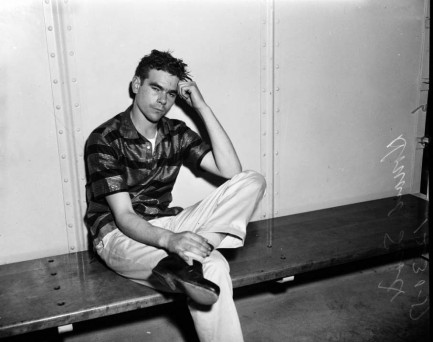
 Some guys just can't catch a break. 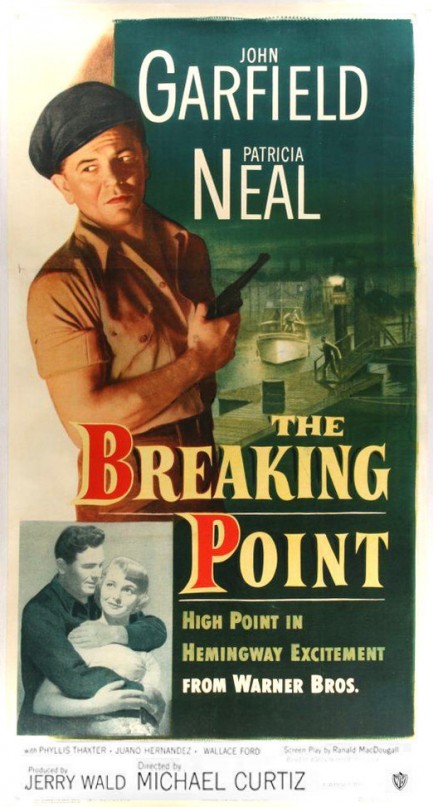
The Breaking Point is the second of three Hollywood adaptations of Ernest Hemingway's novel To Have and Have Not, and it's a very good one. You're already starting from an advantageous point when you have John Garfield in the starring role. He could act, and this part requires quite a bit from him. This was his next-to-last movie—he would be dead two years later, victim of a congenital heart problem, exacerbated by high stress, reportedly from his blacklisting that was the result efforts by commie hunters.
Casablanca director Michael Curtiz is on board here too, and he does a masterful job bringing the story to life. Curtiz, or Warner Brothers, or both, decided to transplant the novel's action from Cuba to Newport Beach, but the theme of a man caught in untenable economic circumstances remains. Those who wanted a reasonably faithful adaptation of Hemingway's story got it in this film. The first version, also called To Have and Have Not, was amazing but had little in common with the source material. The third adaptation, The Gun Runners, was also good but downplayed certain political themes. (There's also an Iranian version we haven't seen and which we'll leave aside for now.)
So, which of the three U.S. versions is best? Is it really a competition? They're all compulsively watchable, but this effort with Garfield is the grittiest by far, and the most affecting. It's strange—To Have and Have Not is supposed to be Hemingway's worst book, but with three good movies made from it, maybe it isn't that bad after all. Perhaps because it's a work from one of the most influential authors ever to write in English, the bar was just set too high. Maybe it really is Hemingway at his worst, but personally we think it's very good. The Breaking Point premiered in the U.S. today in 1950. 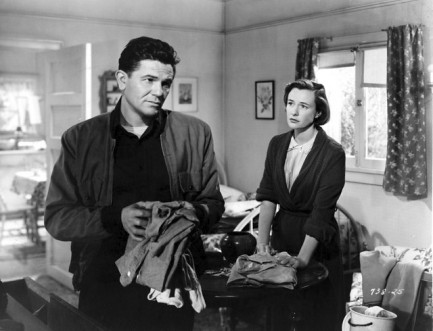 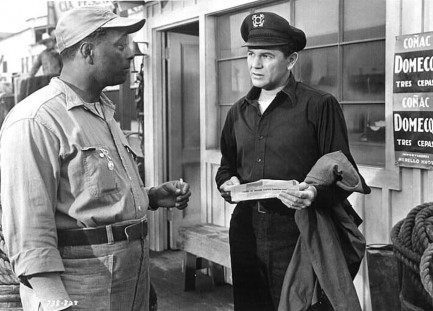 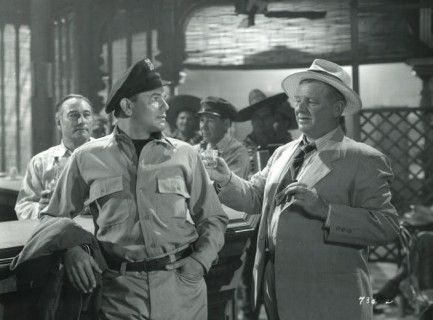 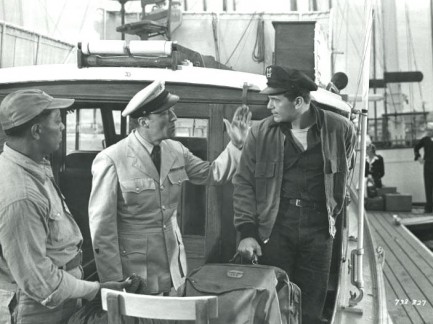 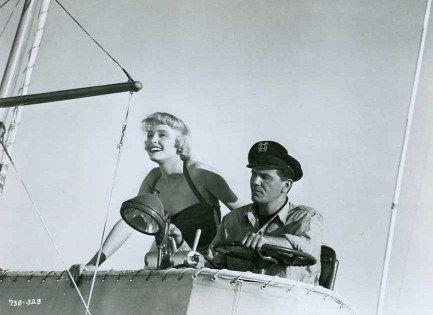 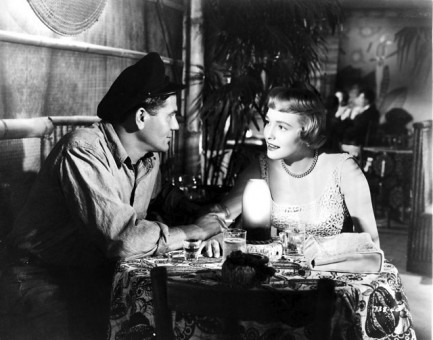 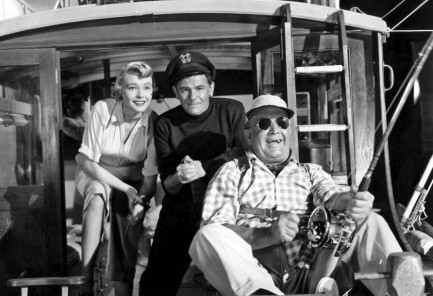 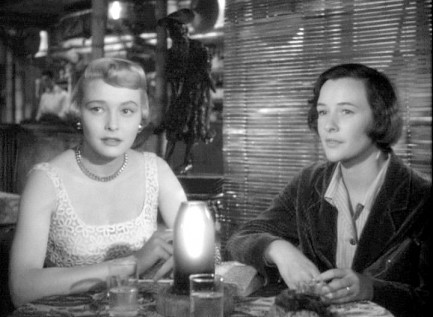 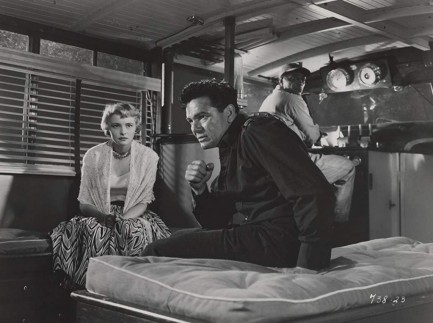 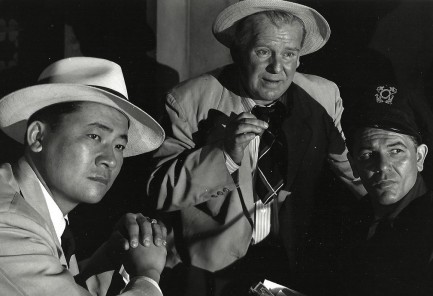 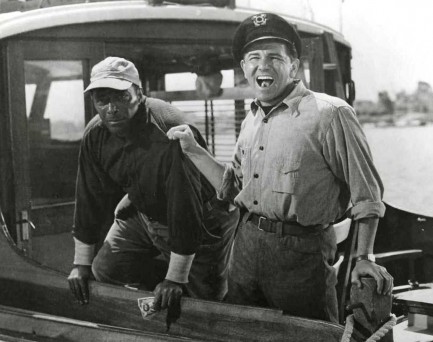 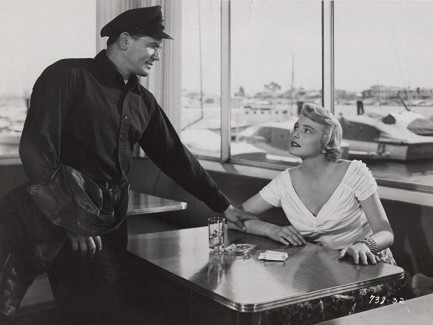 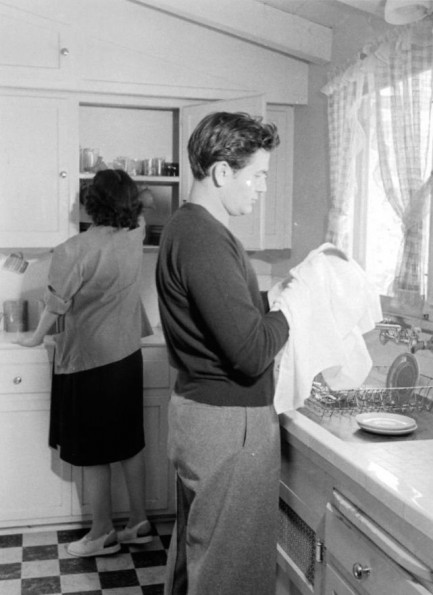 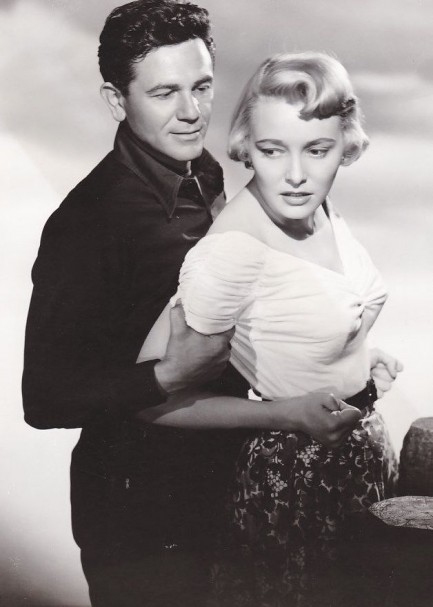
 You're the lawyer, not me, but listen—I have an idea for a defense strategy. First, let me introduce my mother-in-law. 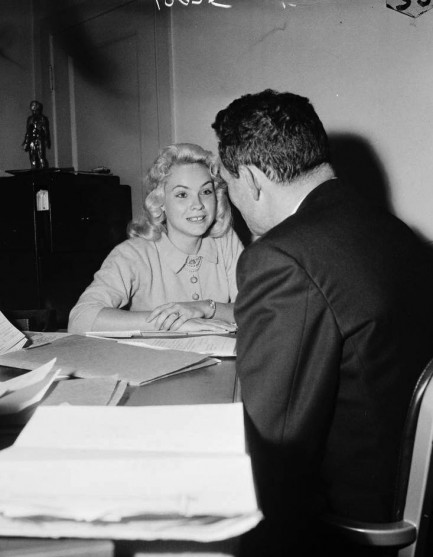
The above photo from the University of Southern California archive of Los Angeles Examiner crime photos shows an L.A. homemaker named Karen Jacobsen in the midst of a pre-trial conference with public defendant Victor S. Baker today in 1961. Jacobsen needed a lawyer for the most important of reasons—to beat a murder charge. She had stabbed her husband Lawrence to death while they were in his car. She said it happened after a terrorizing ride, and claimed it was in self defense of both herself and her two daughters. She was arrested but freed on bail, and this conference occurred during her pre-trial release period. When she was tried later in the year a jury acquitted her, but we knew that before even reading about the trial, and you wanna know how? That's her mother-in-law Edith sitting next to her in the photo below, offering emotional support. Her attorney: “Your honor, I'd like to enter into evidence defense exhibit A, the deceased's mom, who's obviously fine with his death, so, like... defense rests.” If your own mom isn't in your corner when your killer is on trial, forget it. Probably Lawrence never visited her, so she'd been thinking of him for years as dead already. 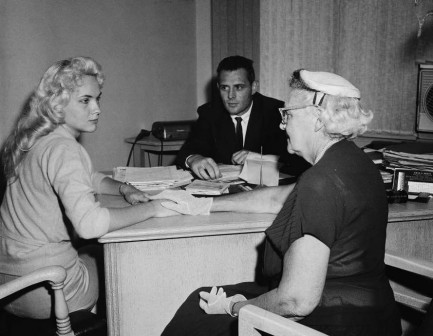
 We get to the beach so rarely, shame to waste the trip. Who's up for a swim before we haul this stiff to the morgue? 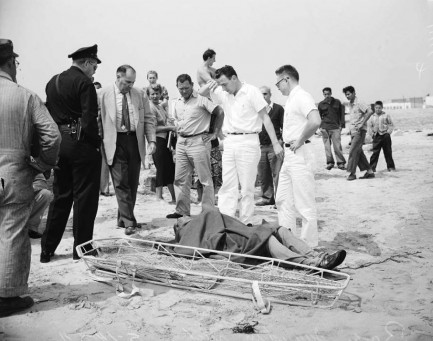 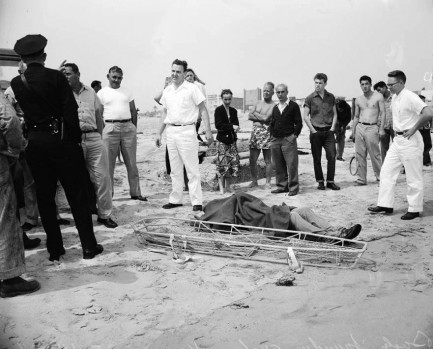 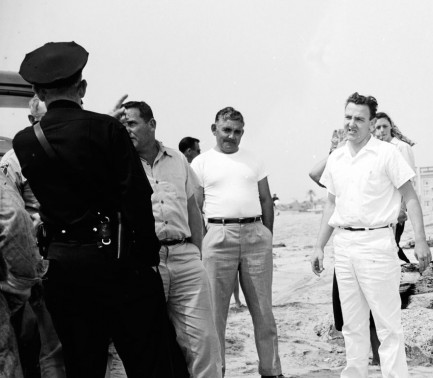
Today in 1954 a man named Nathaniel Smith who was walking on Venice Beach in Los Angeles spotted something floating in the surf behind the breakwater of the old Venice Pier. He waded into the ocean and discovered the something was a person. Smith pulled him to shore, but the man was already dead, a victim not of drowning but of a gunshot wound to the head. Was he a murder victim or a suicide? There's no info available on that, nor on his identity. Whoever he was, we bet he never could have imagined thousands of people would be looking at photos of him nearly a lifetime later. We're doing that thanks to the University of Southern California, which holds these and tens of thousands of other images in its archive of Los Angeles Examiner press photos. You can see many more shots from the collection by clicking its keywords below.
 So, this will shock you—I can tell you it shocked me—but I realized I've wanted to shoot you since our very first date. 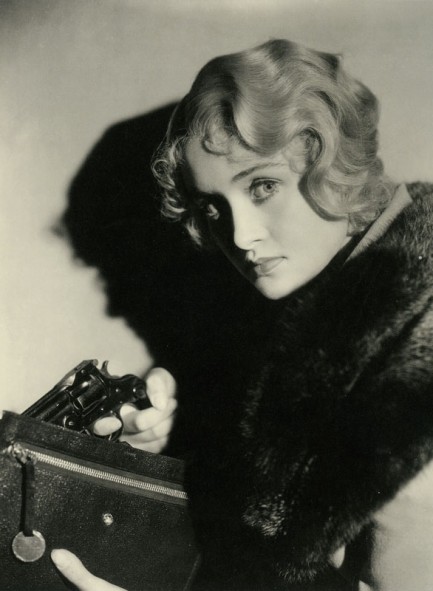
Marian Marsh was born in what is now Trinidad and Tobago, but which was at the time of her birth part of the British West Indies. She started life as Violet Krauth, but for Hollywood changed her name. She appeared in such films as The Road to Singapore, Crime and Punishment, In Spite of Danger, Murder by Invitation, and the horror classic The Black Room. All worthy achievements, and she also founded a nonprofit called Desert Beautiful, which had a mission to preserve the environment of Palm Desert, California, where she lived after retirement. The organization lasted for about fifty years, which is quite good for a nonprofit. The above photo, made back when she was interested only in murder, is from the 1931 drama Five Star Final.
 Man tries to catch train, train catches him instead. 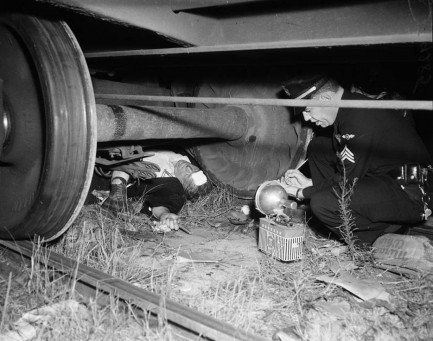 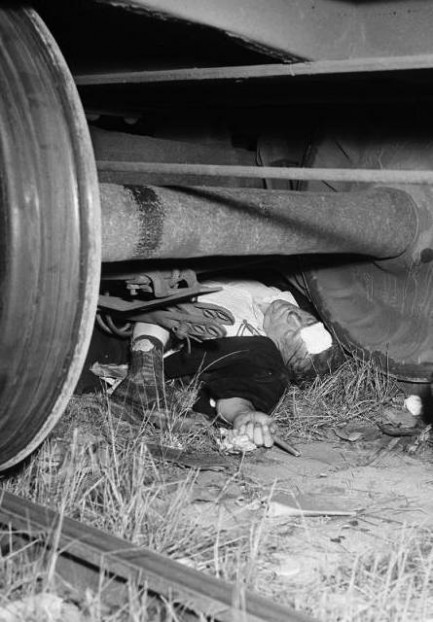
These photos show an unfortunate man named John Heldt, Jr. trapped under a Pacific Electric freight car in Gardena, California. Getty Images has this listed as happening August 7, 1951, but the USC digital film archive where the image is stored has the date as today. We trust USC over Getty, but whenever it happened, it was a bad day for Heldt, maybe not the worst of his life, but certainly in the top five, we can be sure. His rescuers had to bring in special equipment to lift the train off him, so he was probably pinned for hours, his indignity compounded by the fact that a Los Angeles Examiner photographer made these snaps of him. “Can you hold that pose? Heh heh, that's a joke, see, because you can't move at all, you poor, stupid sap!” There's no info on whether Heldt recovered, nor whether he lost any body parts. Still, as bad as this looks, it's better than flying Ryanair. 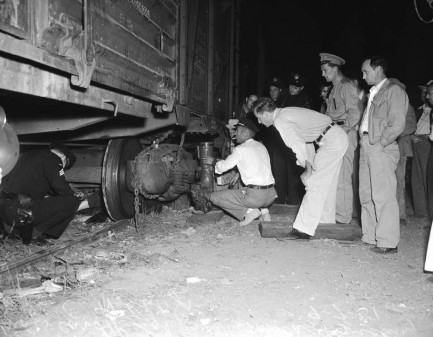 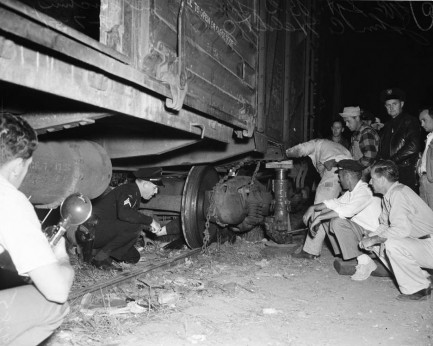 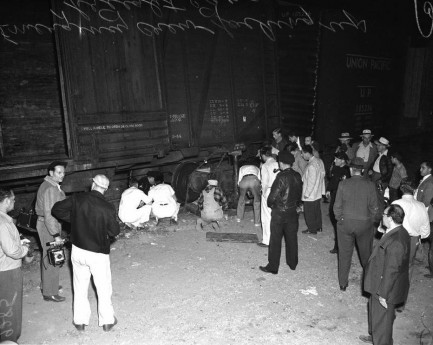 
 The beach is always fun and games until someone gets burned. 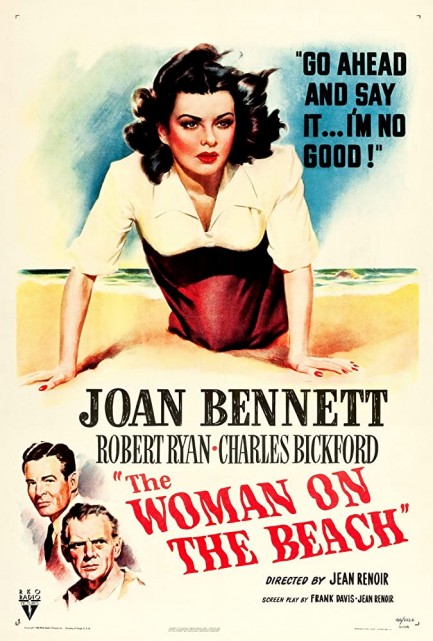
What a coincidence. We were just talking about Joan Bennett a couple of days ago. You remember the story. Her husband tried to shoot her lover in the balls. Or unit. Or really anywhere in the vicinity of his reproductive organs. And he succeeded in hitting the vicinity, but missed all the crucial plumbing. It was a Hollywood love triangle that ended in blood and violence. Woman on the Beach stars Bennett, Robert Ryan, and Charles Bickford, and is also a love triangle that causes violence. The plot concerns a Coast Guard officer who becomes infatuated with a married woman. The woman's husband is an artist who lost his sight in an accident, but the Coast Guard officer becomes convinced the artist isn't really blind, but rather is using it as an excuse to hang onto his wife. Under the careful direction of French auteur Jean Renoir, Woman on the Beach makes for a decent ninety minutes of entertainment. We don't consider it a film noir, by the way, as some crowdsourced sites and blogs suggest. It just doesn't meet the requirements, in our view. AFI.com agrees, and calls it drama. It premiered in New York City today in 1947. 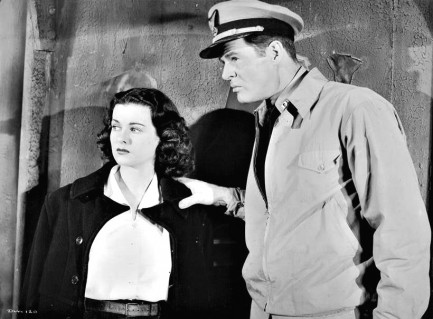 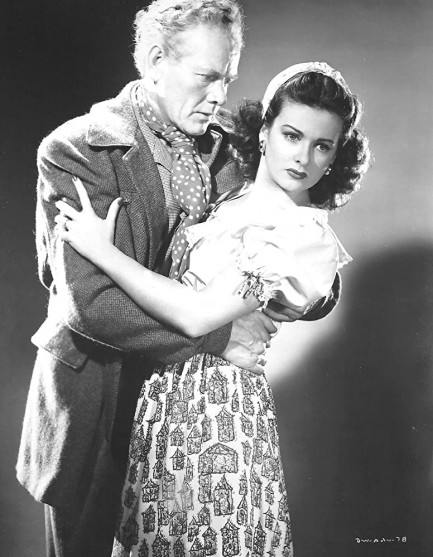 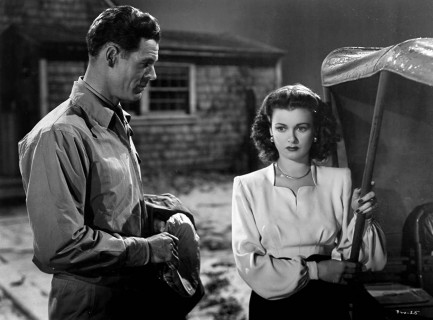 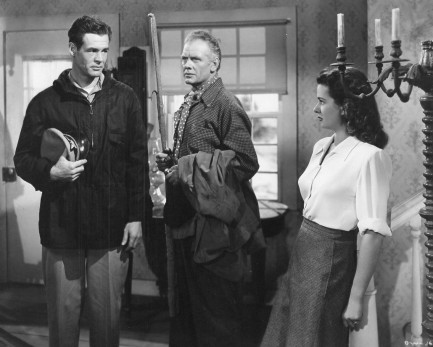 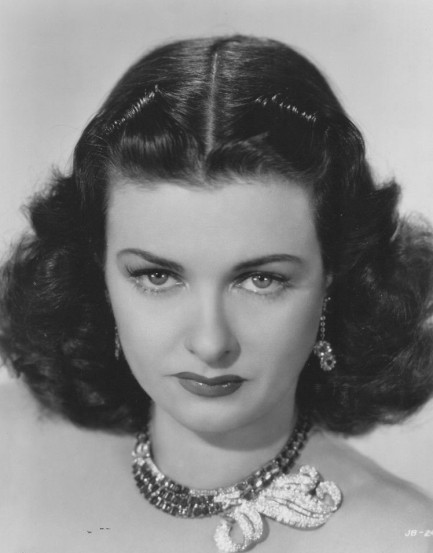 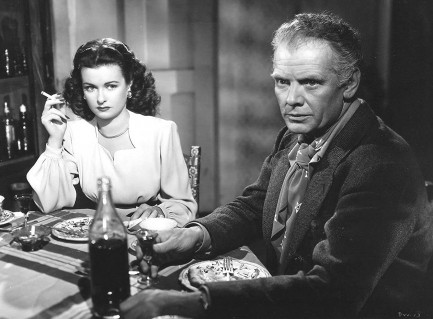 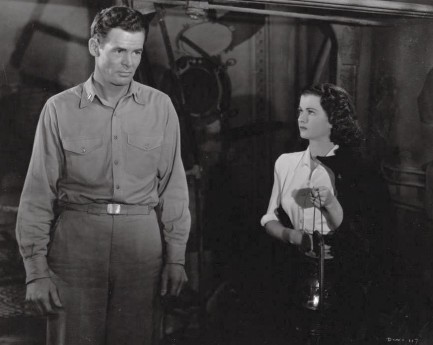 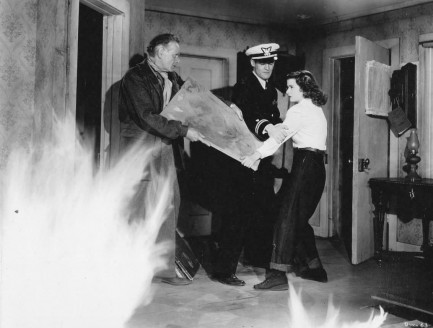 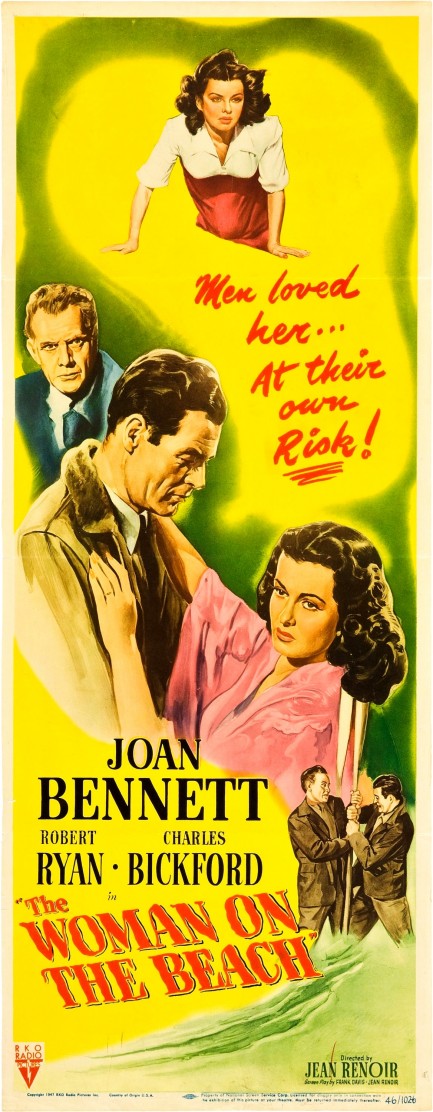
 'Tis the season for generous giving—of prison time. 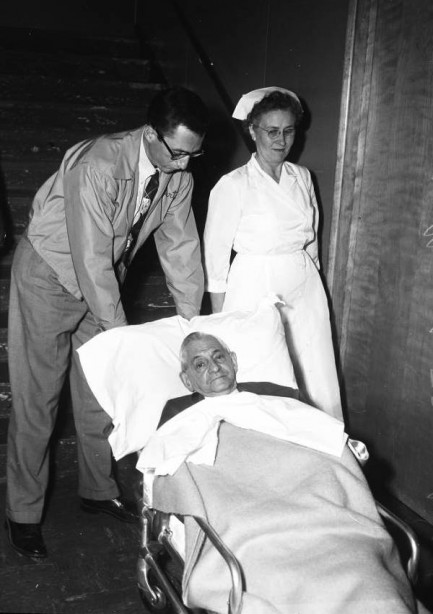
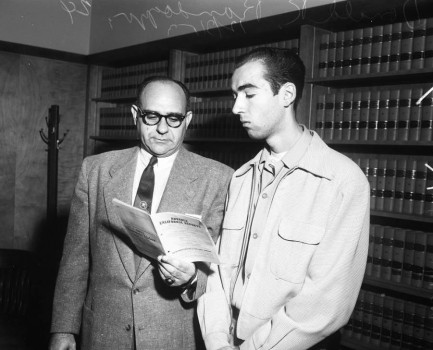
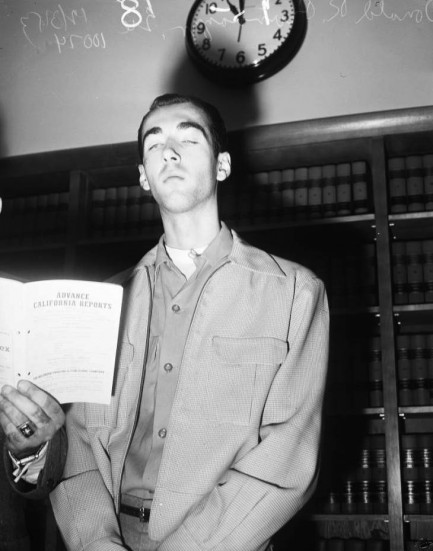
This unusual photo made today in 1953 shows a man named Edward Hallmark, aged seventy-three, being wheeled into a Pasadena courtroom to testify against twenty-four year old Donald Randazzo. Apparently, the previous September Randazzo kidnapped and beat Hallmark in an effort to rob him of his life savings. The shot is part of the large Los Angeles Examiner archive held by the University of Southern California, and which we've mined for interesting historical shots often.
In the photos below you see the defendant Randazzo conferring with his lawyer Edward S. Cooper. Randazzo is being shown a page from an edition of Advance California Reports. Advance reports or advance sheets are legal aids—specifically, pamphlets containing recently decided opinions of federal courts or state courts of a particular region. So basically Cooper is informing Randazzo of something relevant to their court appearance.
And we know exactly what that relevant something is—a standard in California case law stating that when the chief prosecution witness is trundled into court on a stretcher the defendant is seriously screwed. We have a feeling a wheelchair would have worked fine for Hallmark, but when you're facing your kidnapper you play your best card. The bedridden victim card beats everything king and below. Cooper is doubtless saying to his client, “As you can see here in Advance California Reports, Donald, legally you're fucked.”

|
 |

The headlines that mattered yesteryear.
1945—Mussolini Is Arrested
Italian dictator Benito Mussolini, his mistress Clara Petacci, and fifteen supporters are arrested by Italian partisans in Dongo, Italy while attempting to escape the region in the wake of the collapse of Mussolini's fascist government. The next day, Mussolini and his mistress are both executed, along with most of the members of their group. Their bodies are then trucked to Milan where they are hung upside down on meathooks from the roof of a gas station, then spat upon and stoned until they are unrecognizable. 1933—The Gestapo Is Formed
The Geheime Staatspolizei, aka Gestapo, the official secret police force of Nazi Germany, is established. It begins under the administration of SS leader Heinrich Himmler in his position as Chief of German Police, but by 1939 is administered by the Reichssicherheitshauptamt, or Reich Main Security Office, and is a feared entity in every corner of Germany and beyond. 1937—Guernica Is Bombed
In Spain during the Spanish Civil War, the Basque town of Guernica is bombed by the German Luftwaffe, resulting in widespread destruction and casualties. The Basque government reports 1,654 people killed, while later research suggests far fewer deaths, but regardless, Guernica is viewed as an example of terror bombing and other countries learn that Nazi Germany is committed to that tactic. The bombing also becomes inspiration for Pablo Picasso, resulting in a protest painting that is not only his most famous work, but one the most important pieces of art ever produced. 1939—Batman Debuts
In Detective Comics #27, DC Comics publishes its second major superhero, Batman, who becomes one of the most popular comic book characters of all time, and then a popular camp television series starring Adam West, and lastly a multi-million dollar movie franchise starring Michael Keaton, then George Clooney, and finally Christian Bale. 1953—Crick and Watson Publish DNA Results
British scientists James D Watson and Francis Crick publish an article detailing their discovery of the existence and structure of deoxyribonucleic acid, or DNA, in Nature magazine. Their findings answer one of the oldest and most fundamental questions of biology, that of how living things reproduce themselves.
|

|
|
It's easy. We have an uploader that makes it a snap. Use it to submit your art, text, header, and subhead. Your post can be funny, serious, or anything in between, as long as it's vintage pulp. You'll get a byline and experience the fleeting pride of free authorship. We'll edit your post for typos, but the rest is up to you. Click here to give us your best shot.
|
|