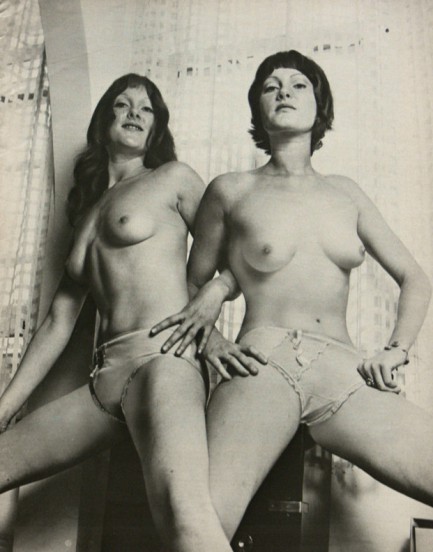
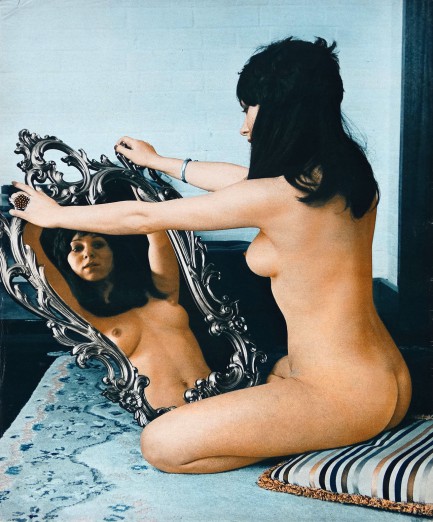
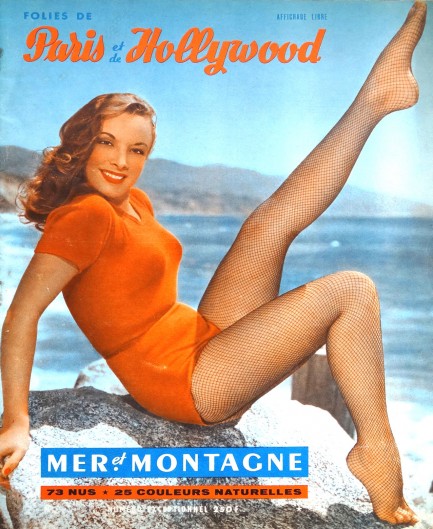
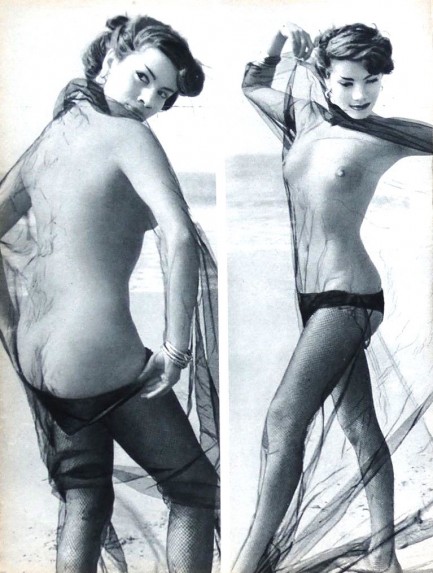
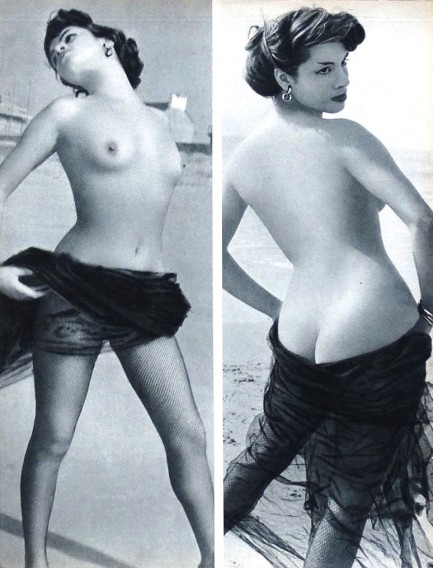
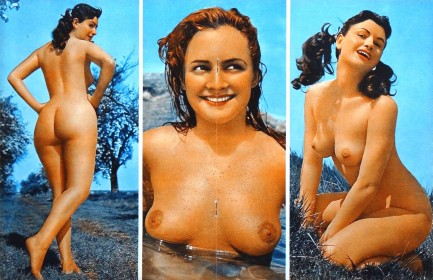
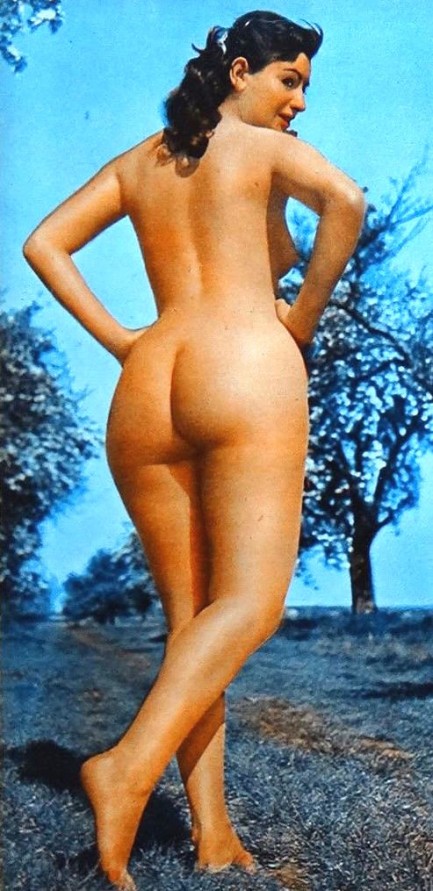
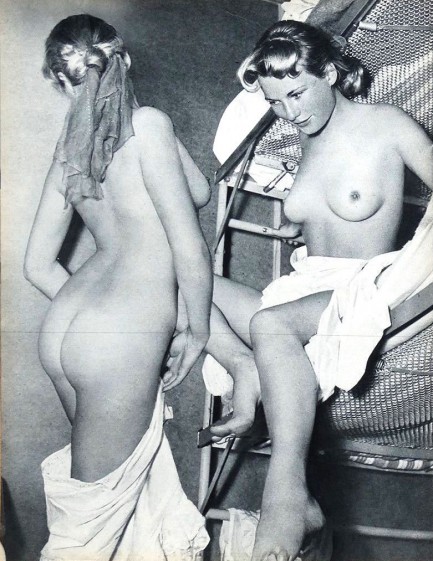
 When Uschi dusts the house, she dusts everything. 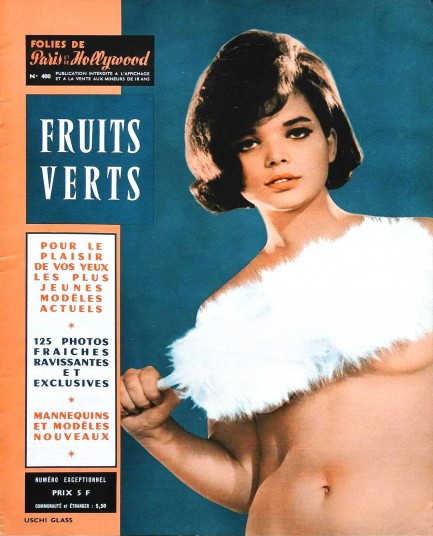
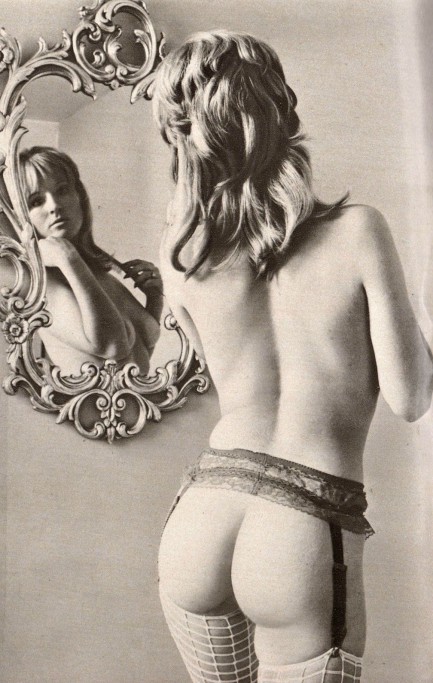
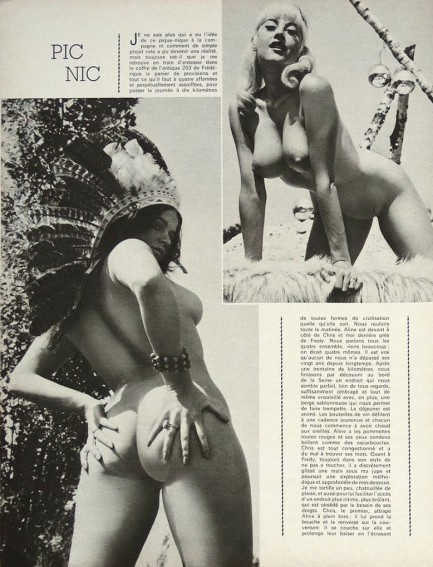
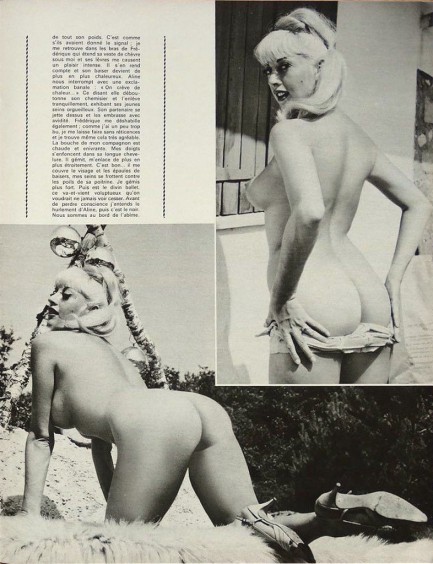
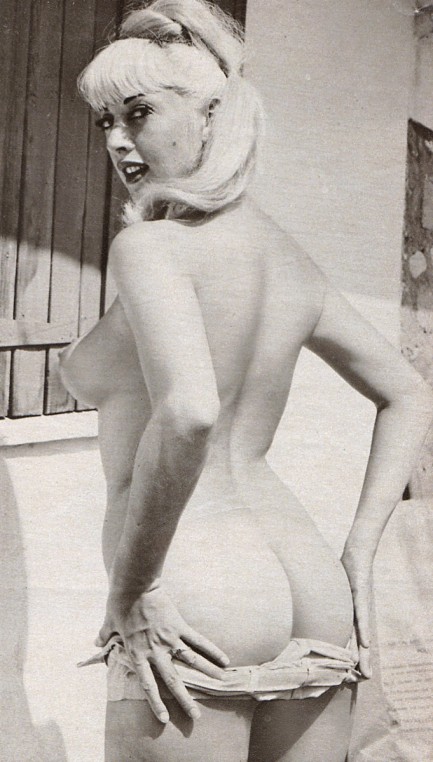
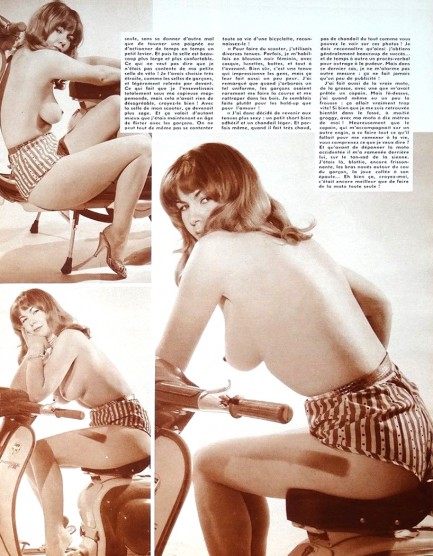
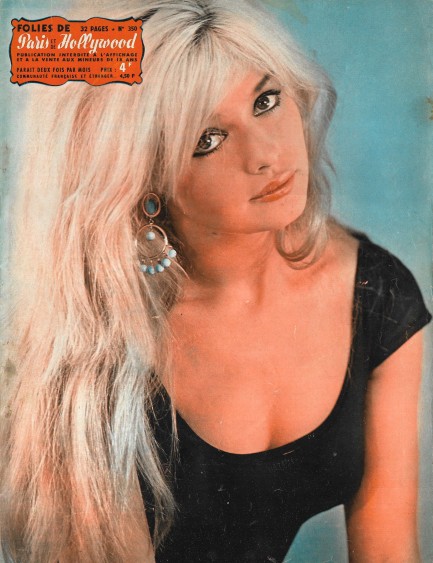
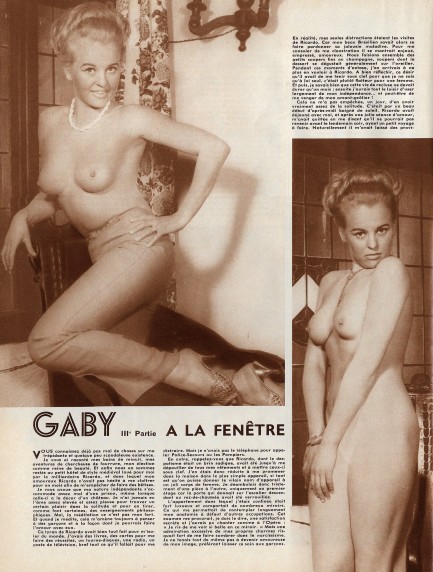
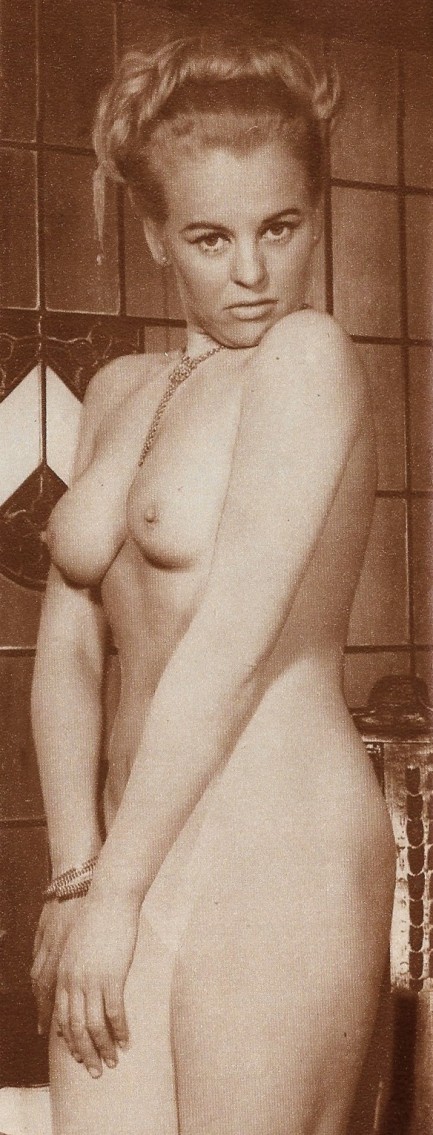
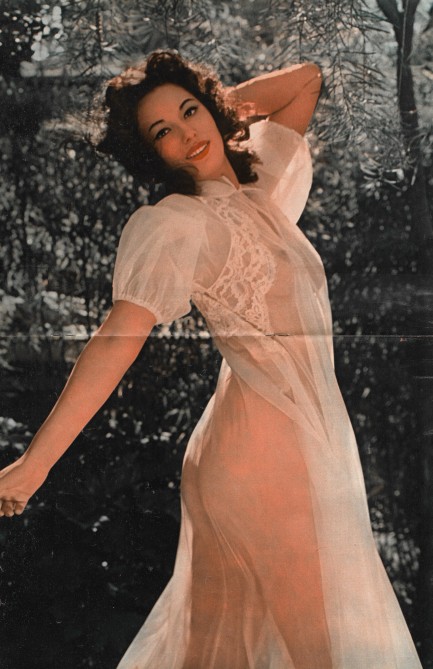
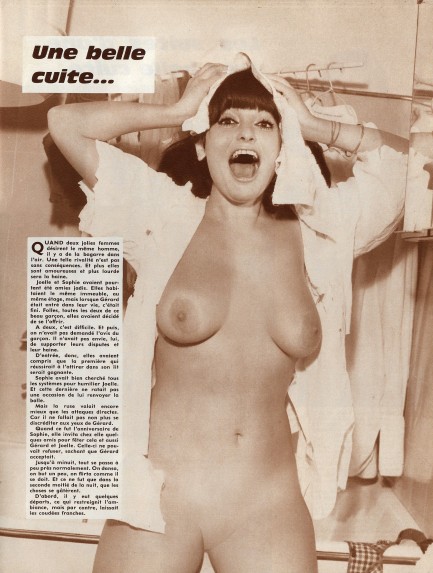
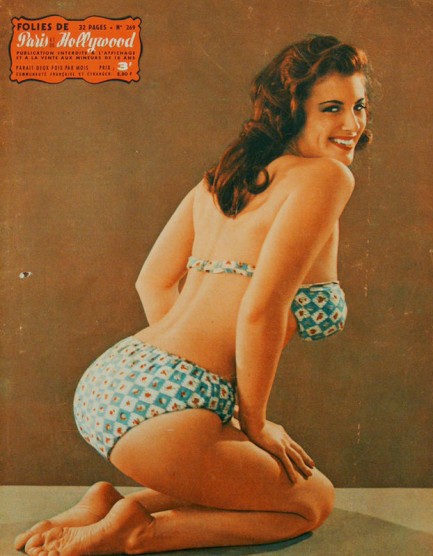
It's been a while, so today we have another issue of the iconic French nudie magazine Folies de Paris et de Hollywood. This issue is number 400, published in 1968, and the cover features German actress Uschi Glass, better known as Uschi Glas, with a feather duster. Almost identical but more revealing versions of the shot appeared on a couple of other magazines around the same time. Glas has been in too many movies to name, including in 2020, and we've seen none of them. But we have our eye on 1970's Die Weibchen, about a woman who joins a women's health clinic only to discover that it's run by feminist cannibals. We'll report back on that.
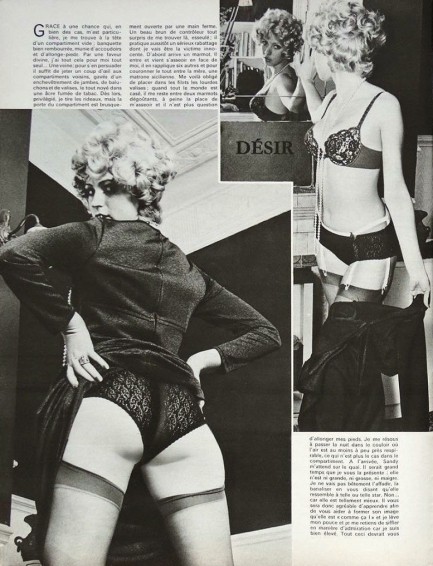
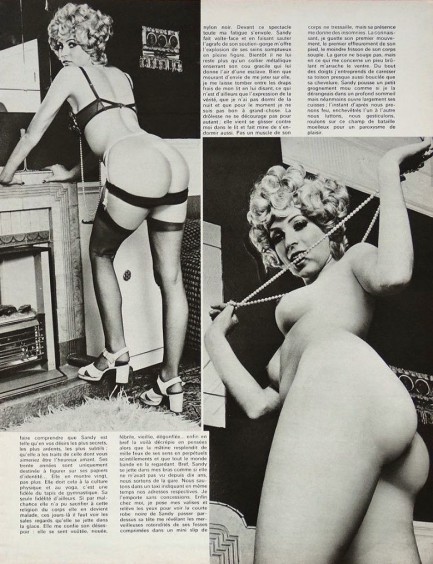
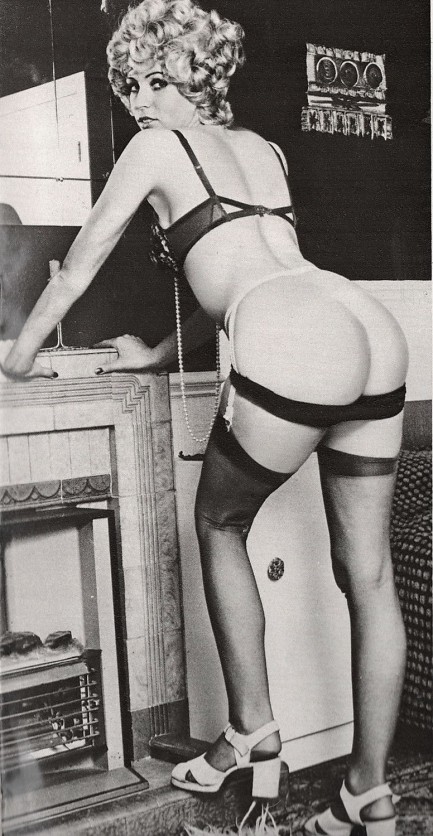
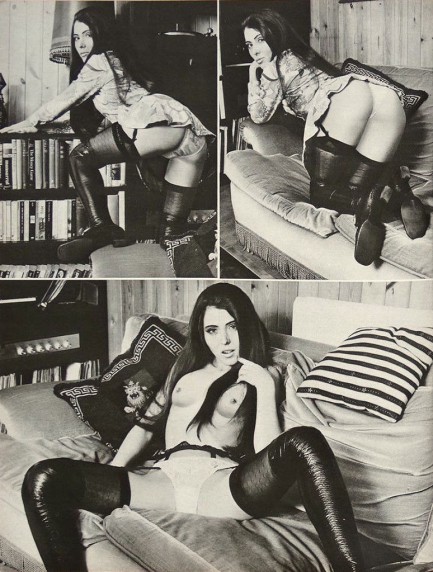
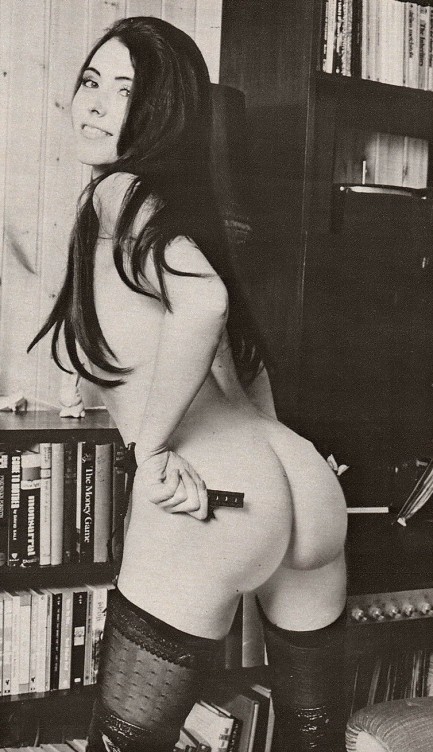
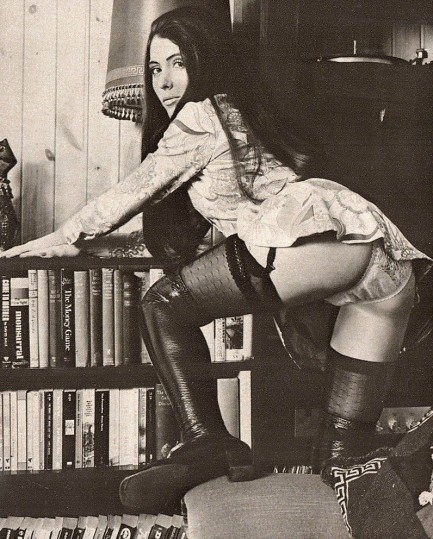
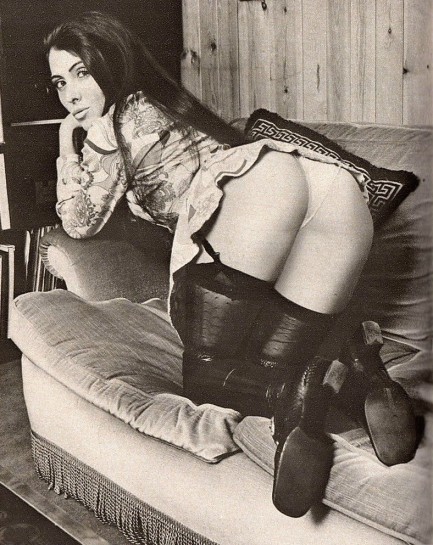
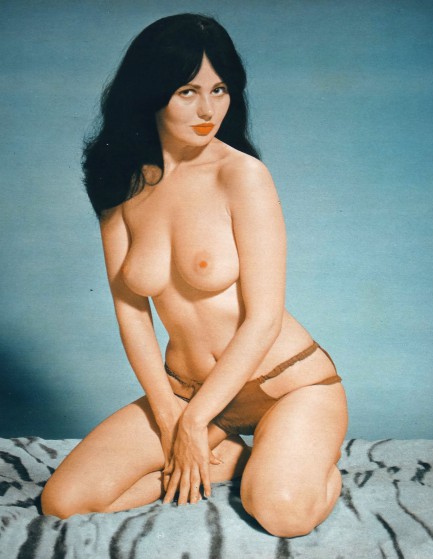
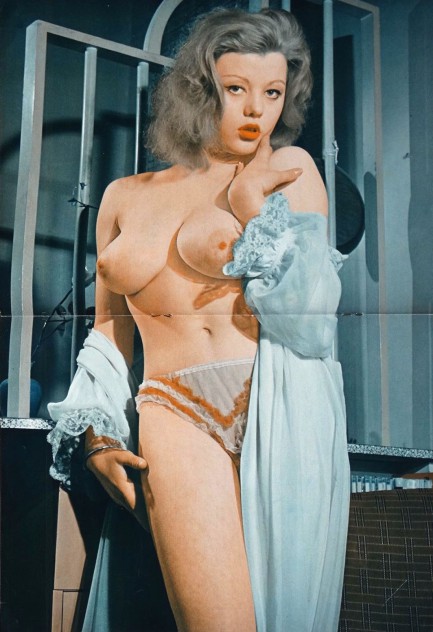
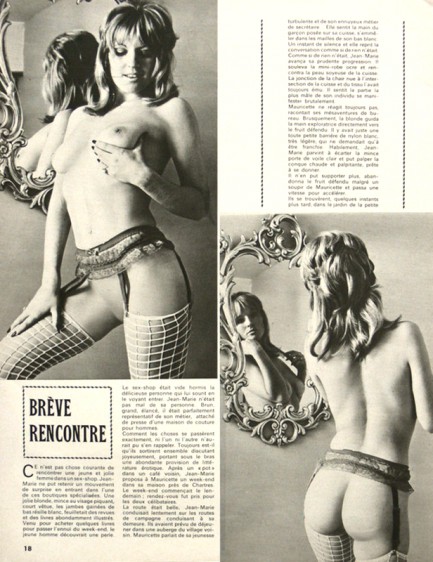
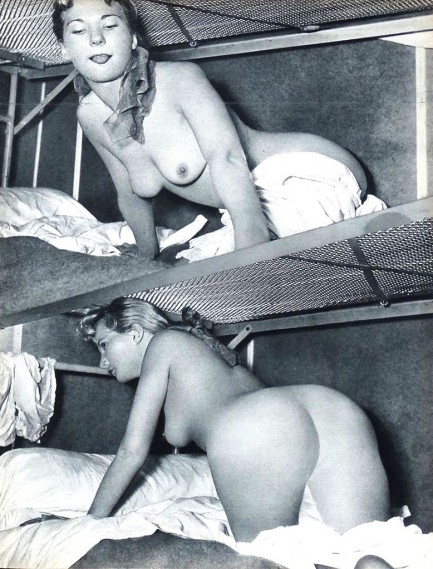
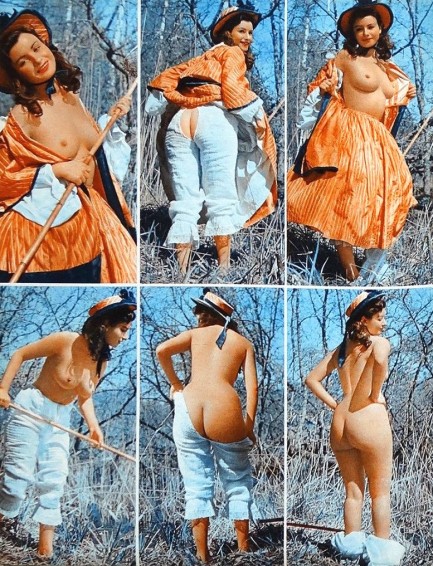
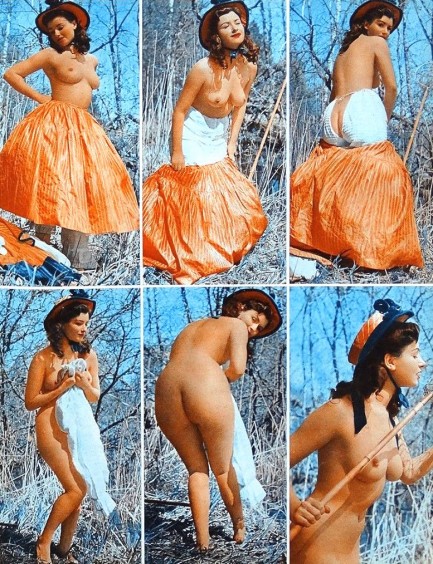
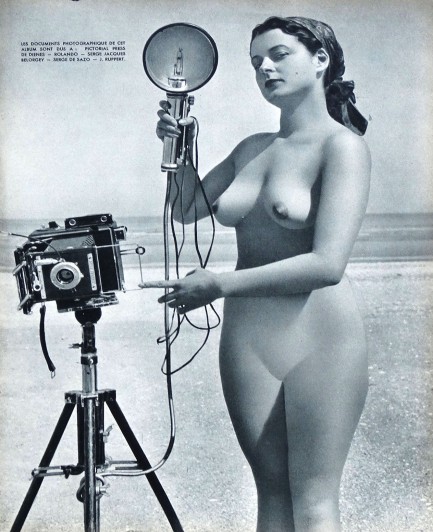
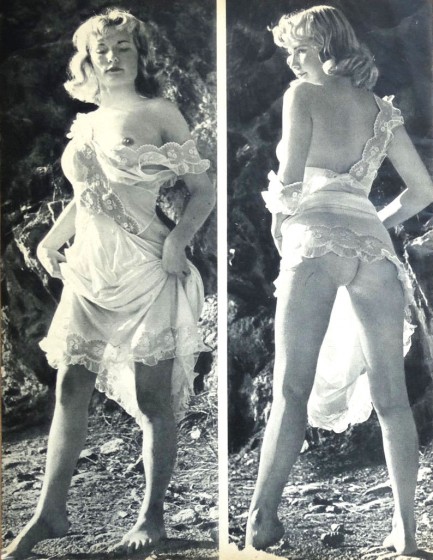
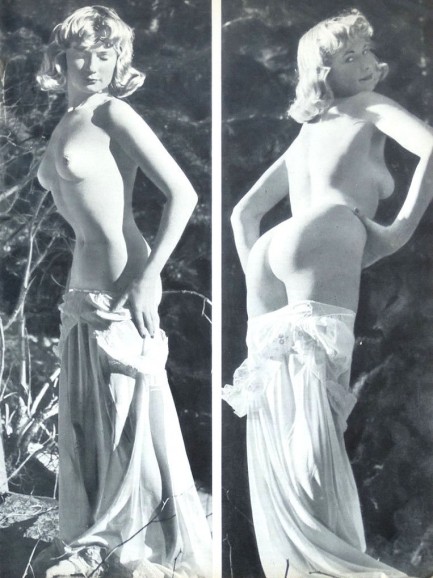
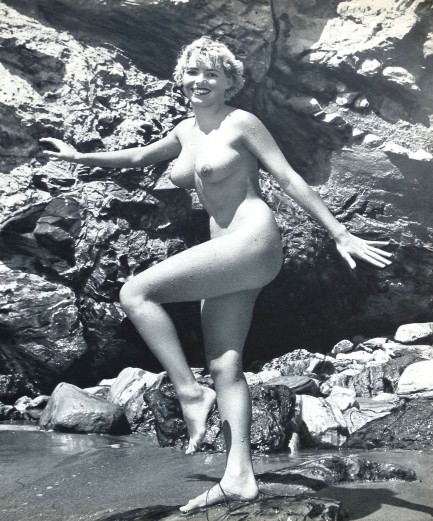
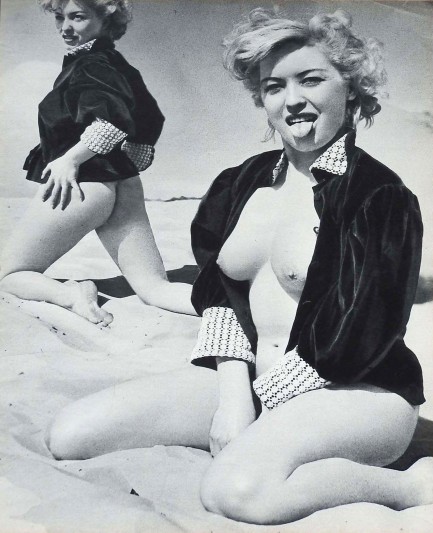
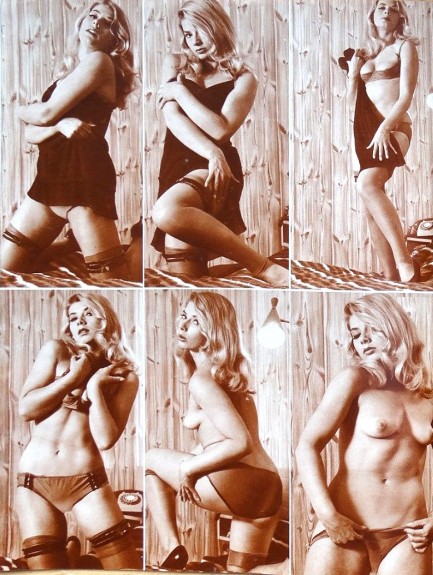
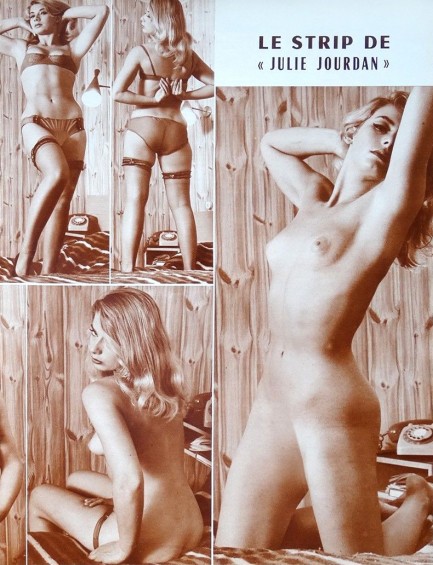
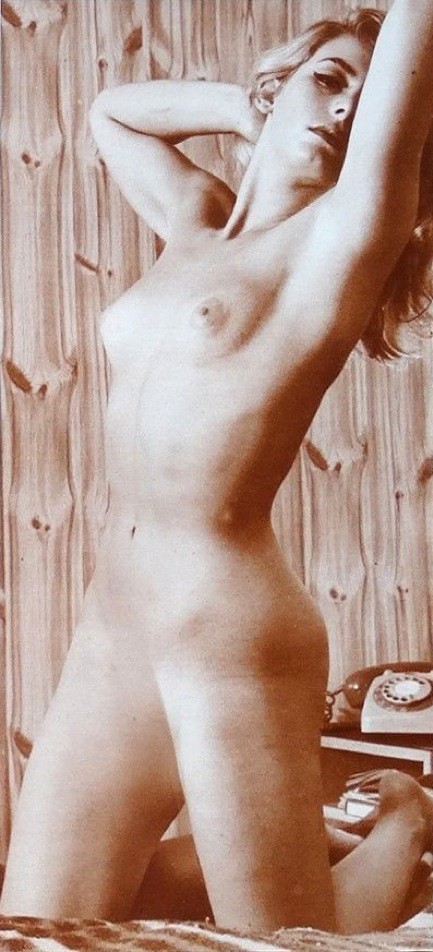
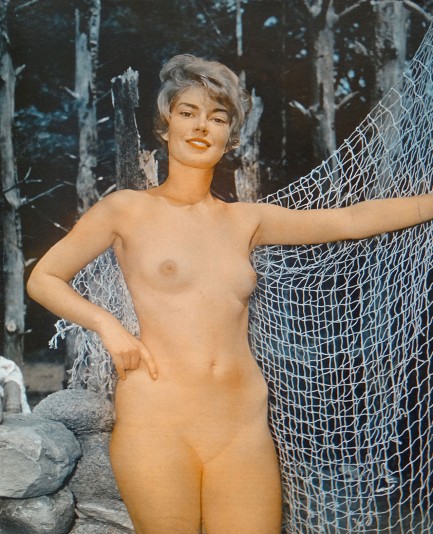
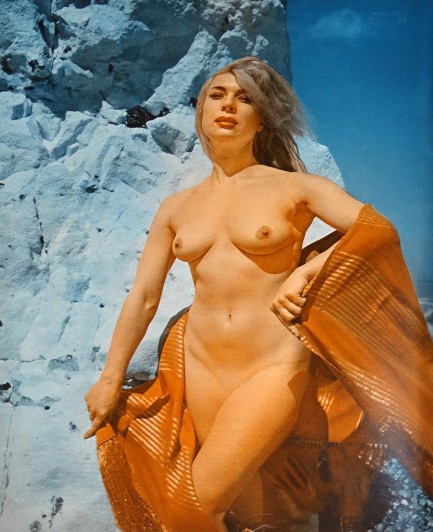
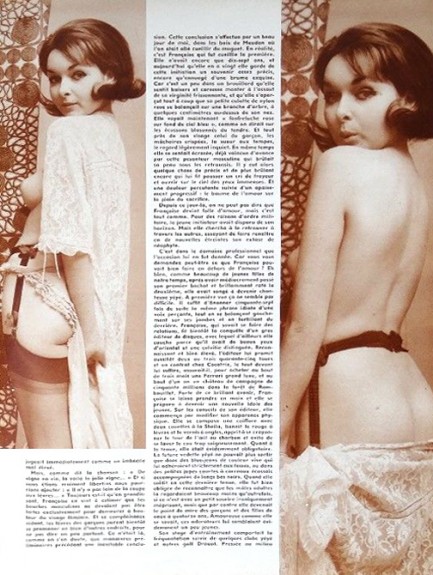
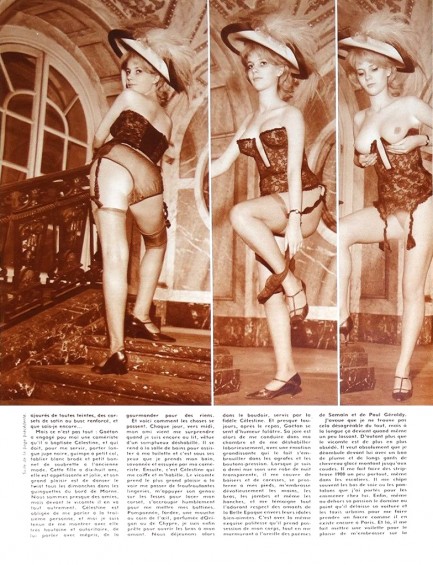
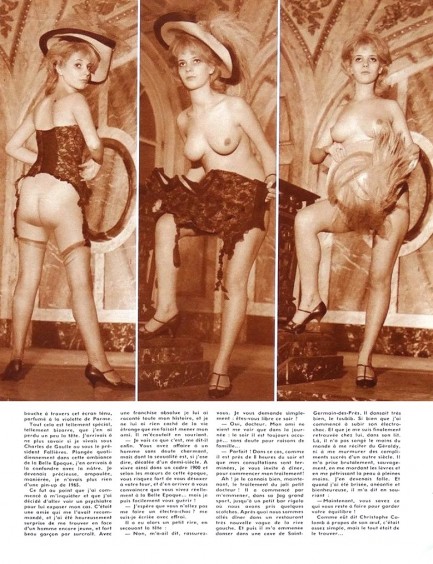
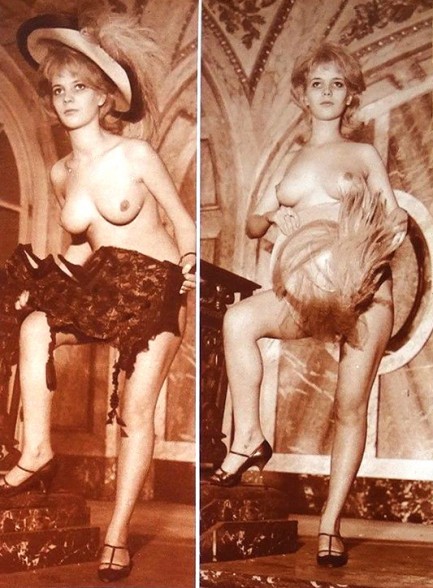
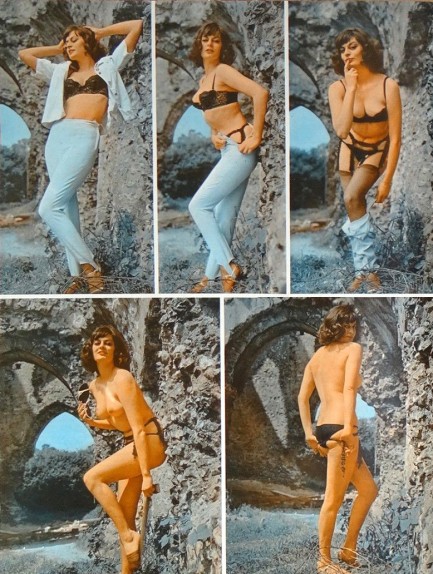
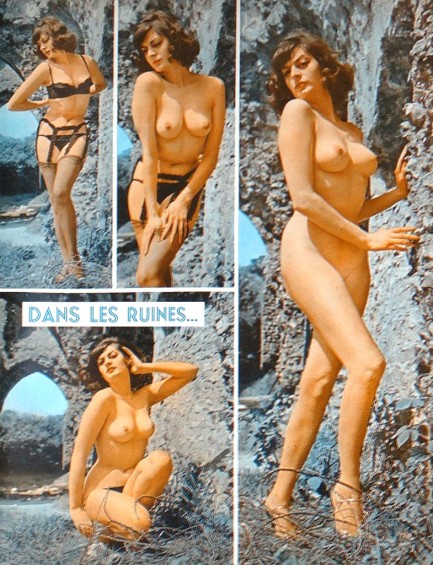
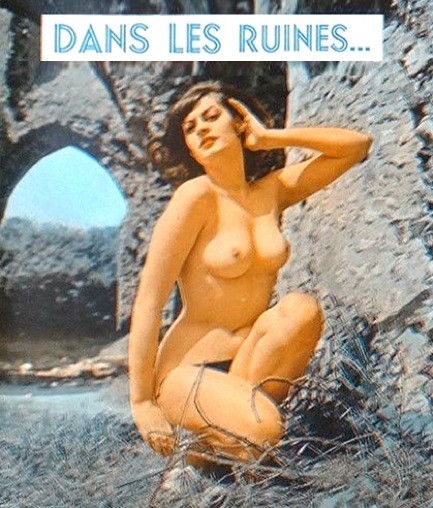
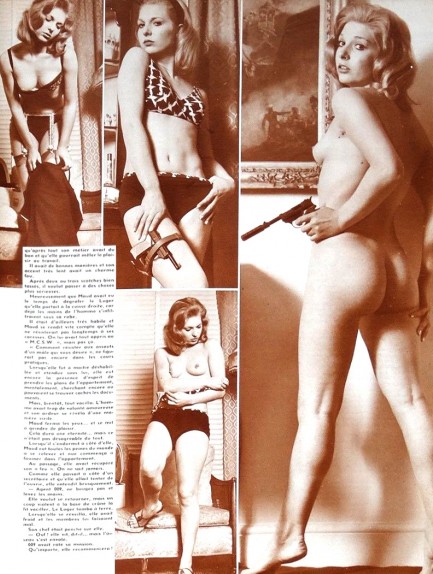
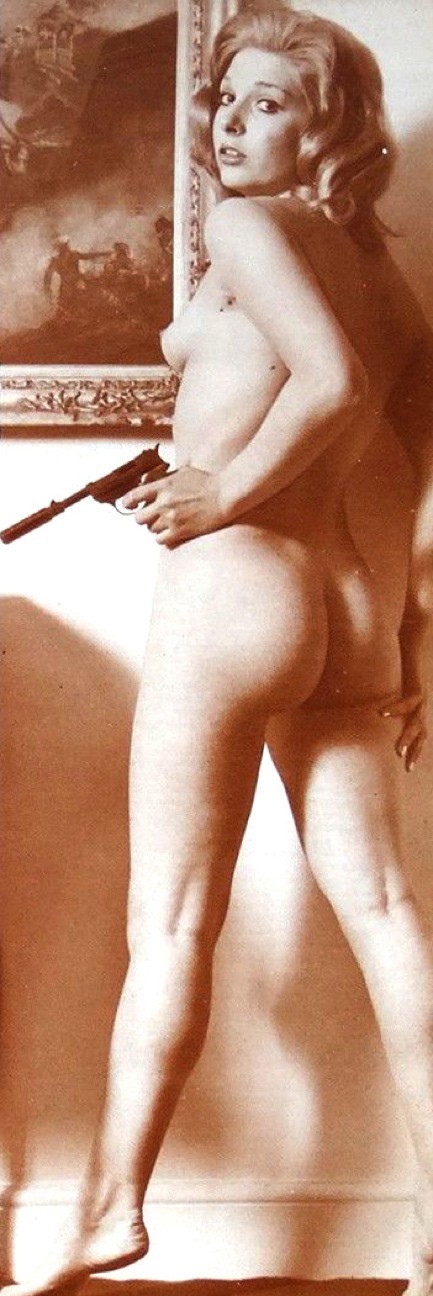
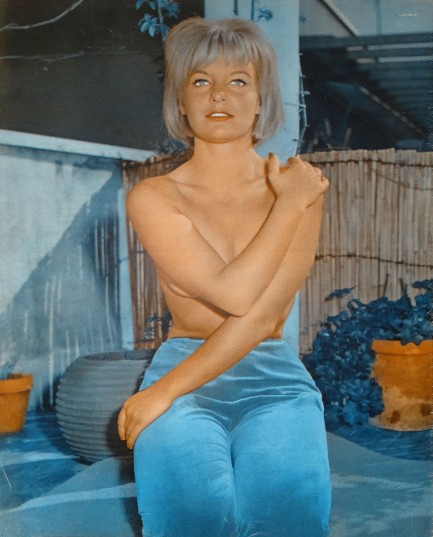
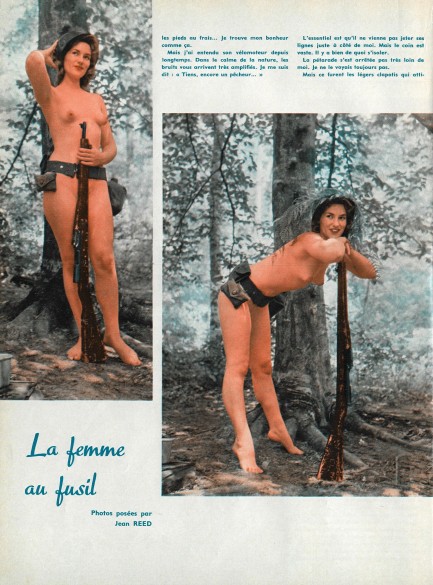
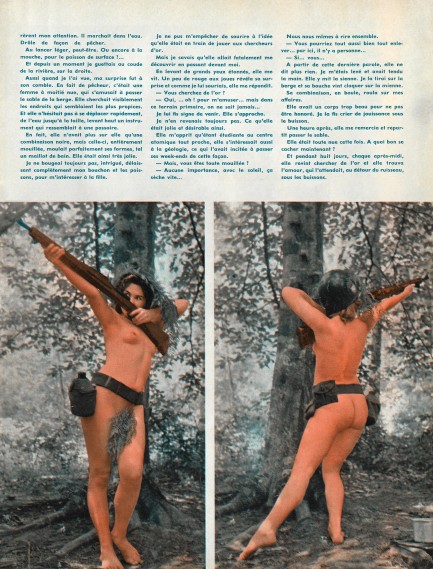
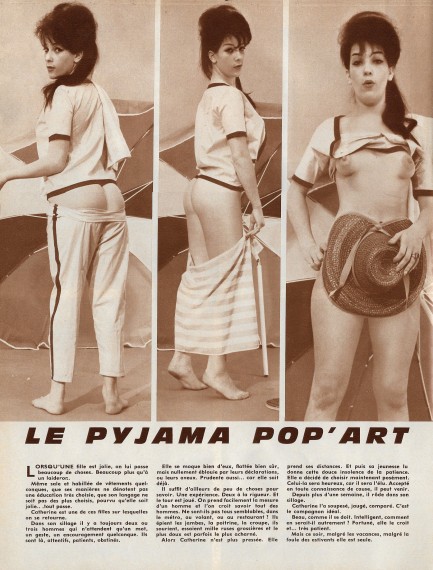
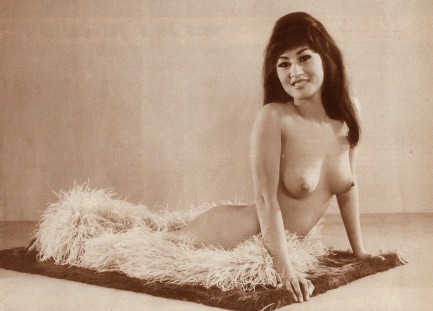
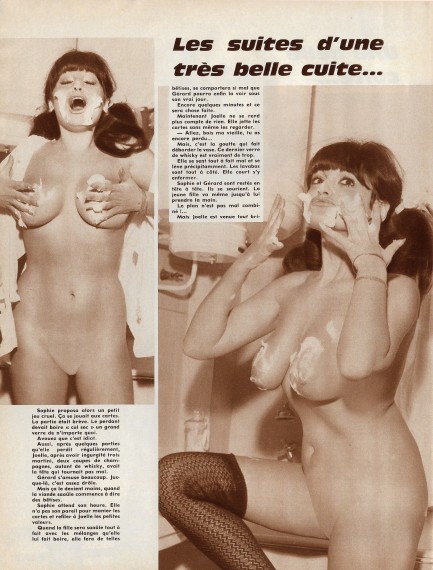
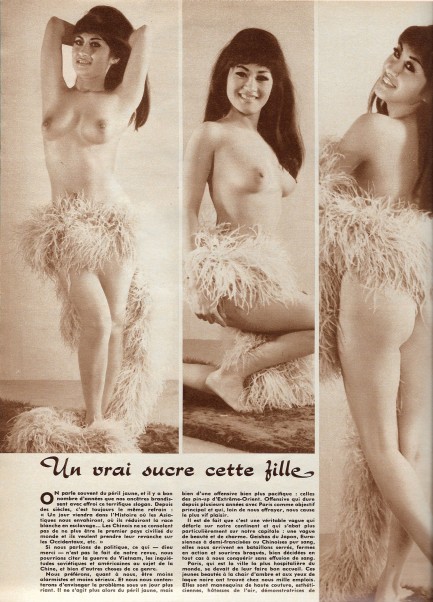
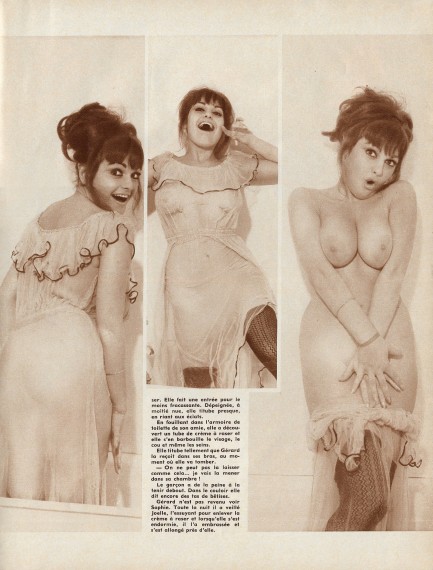
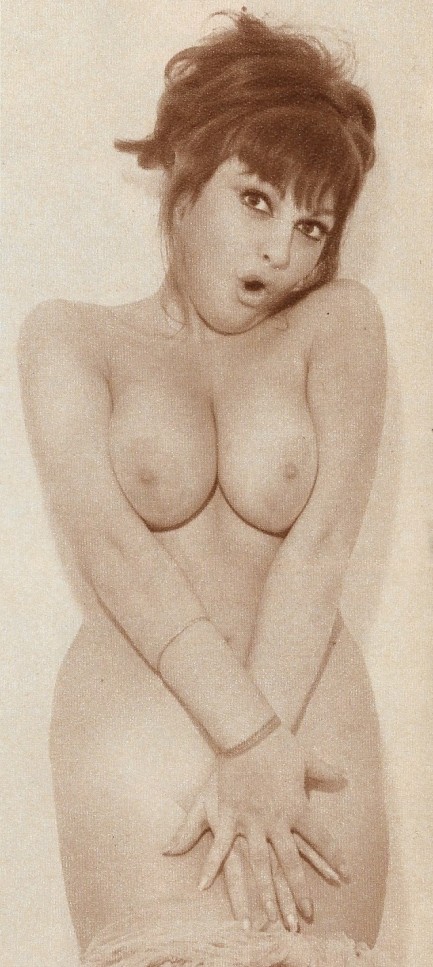
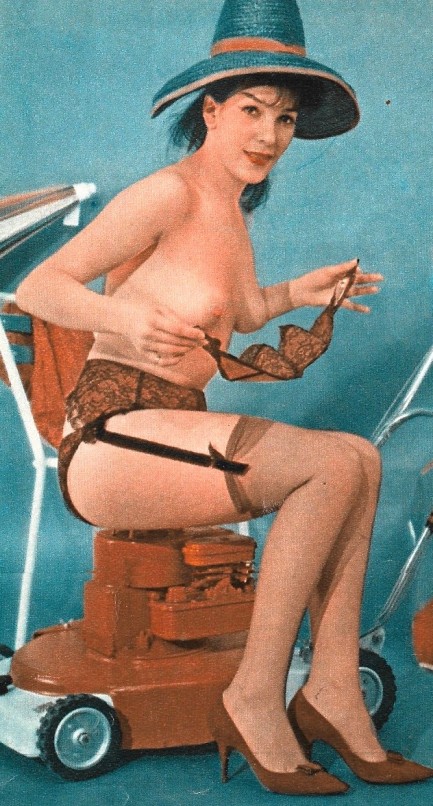
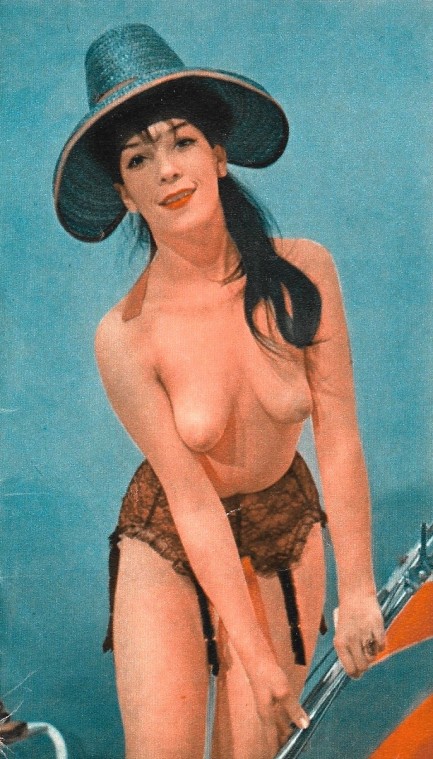
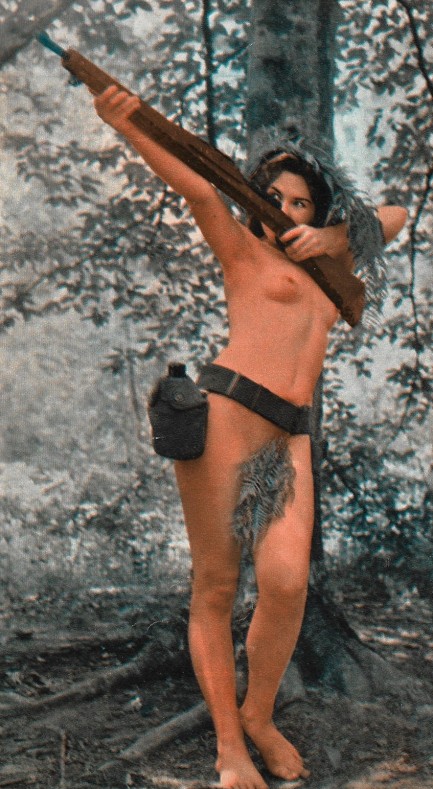
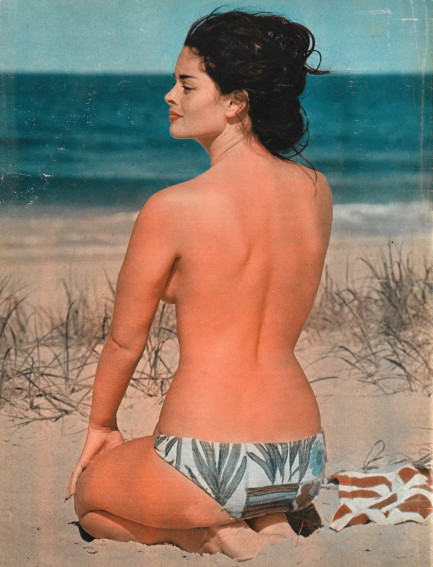
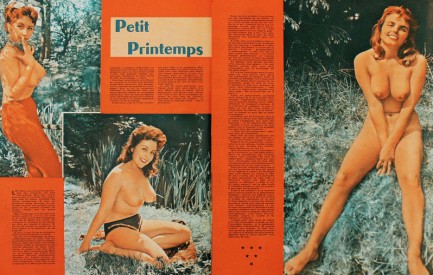
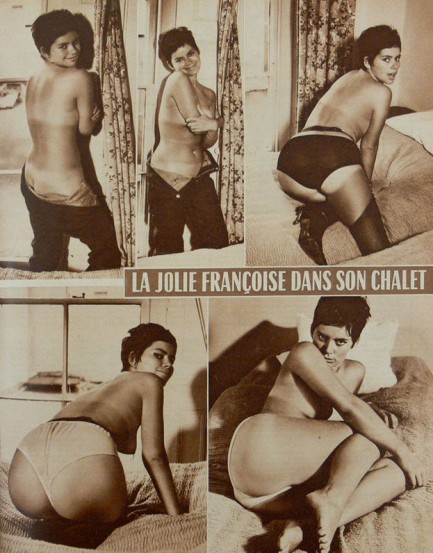
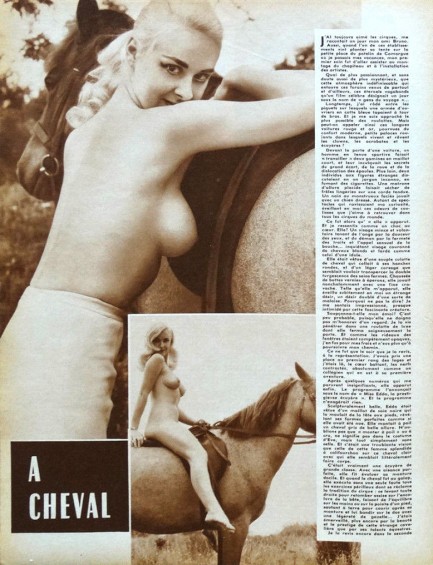
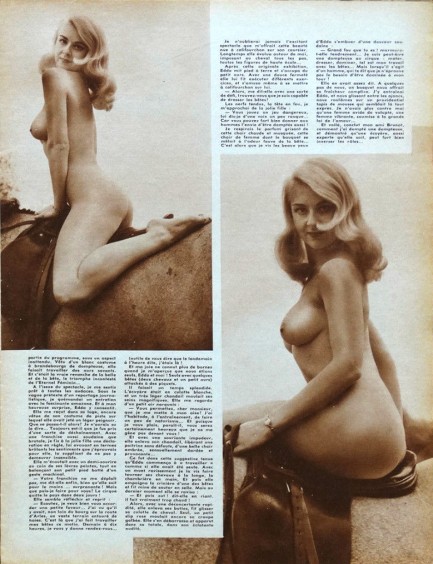
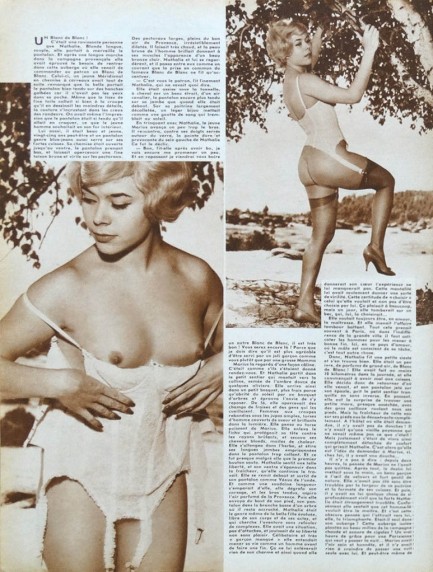
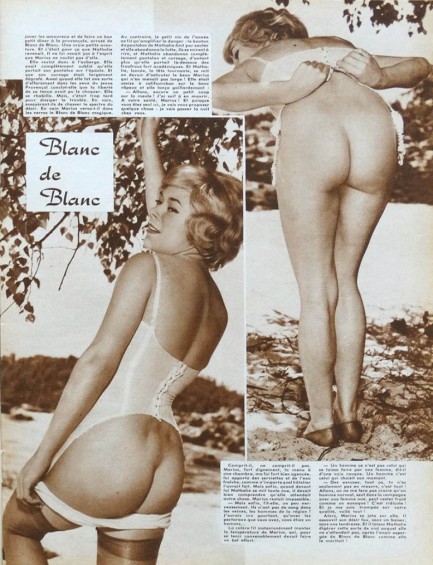
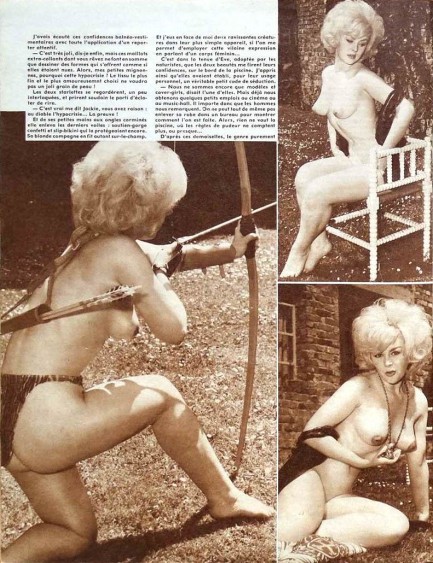
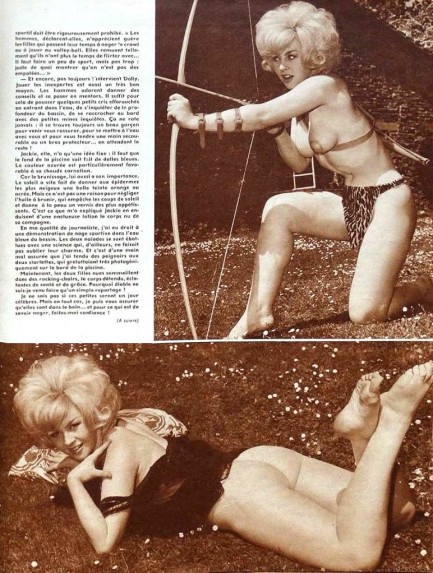
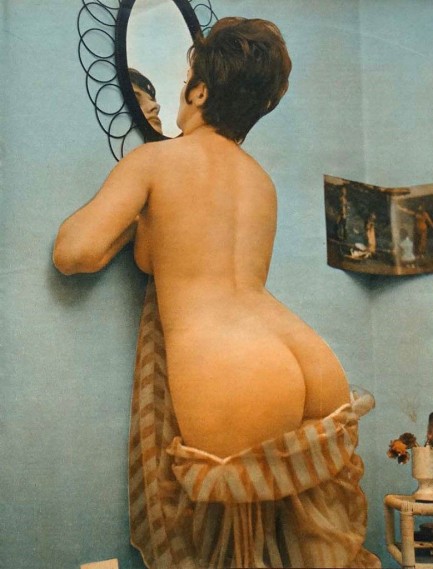
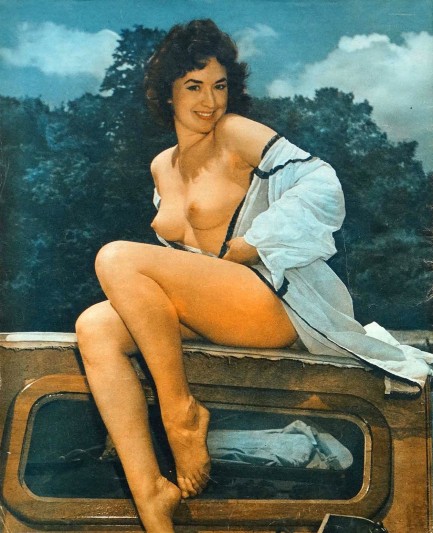
Inside Folies de Paris et de Hollywood there are more than twenty models, many of them Parisian cabaret dancers. The striking Belinda and the striking Marlène Funch are actually both the striking Iso Yban. Why did she pose as different women? No idea, but we recognized her immediately. In fact, we have an amazing and provocative image of her we'll show you a little later, if we dare. We love her name, by the way. It sounds like a flexibility exercise. But our favorite model name from the issue is Manila Wall, which is what MB hit when he realized it was time to get out of the Philippines. We all sometimes hit a Manila Wall in our lives. We'll have more from Folies de Paris et de Hollywood down the line. 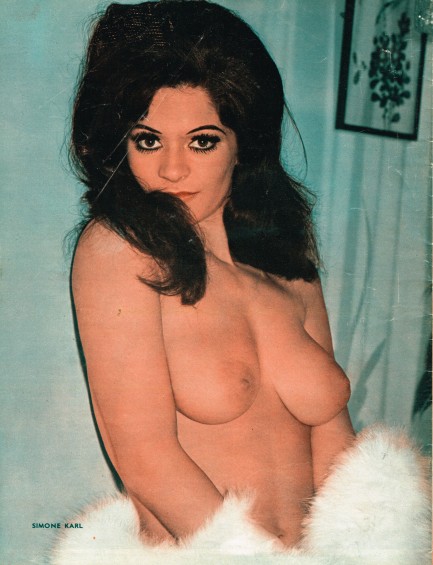  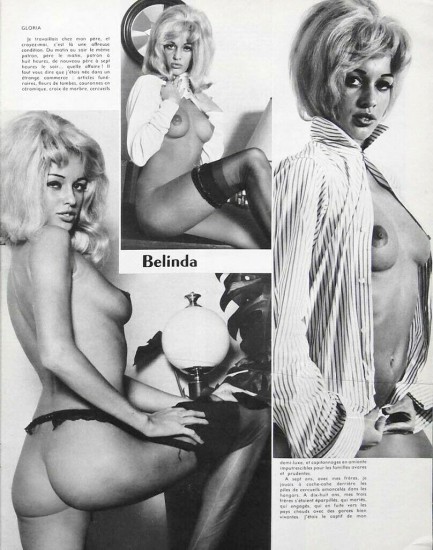 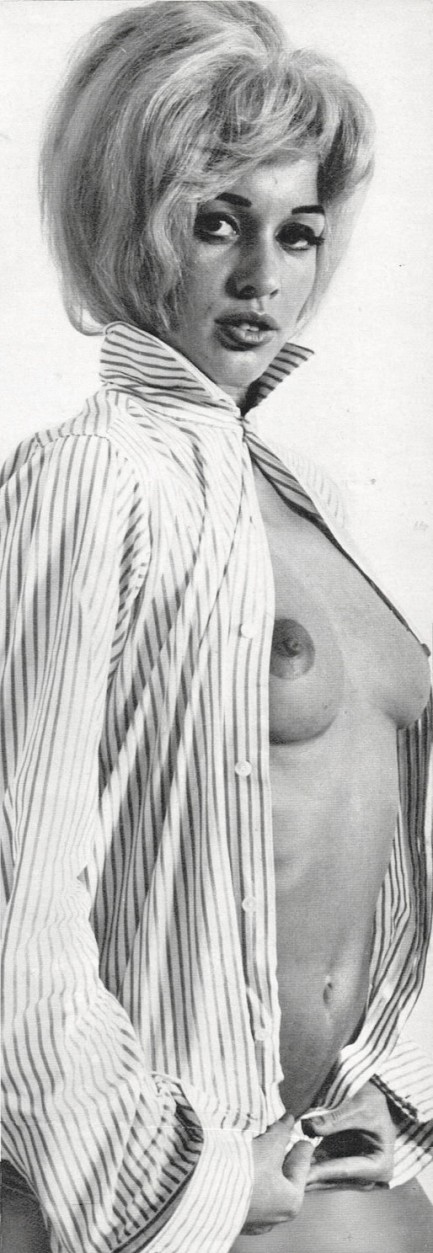  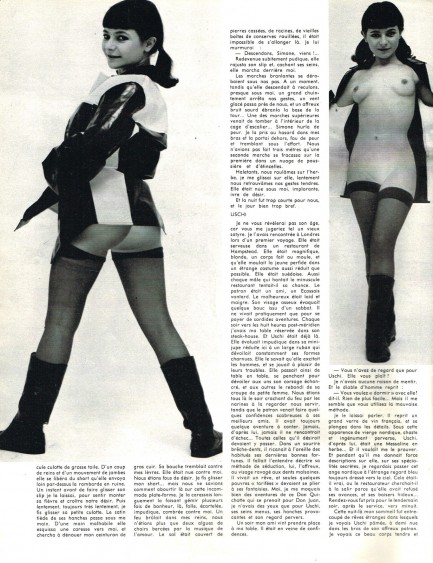 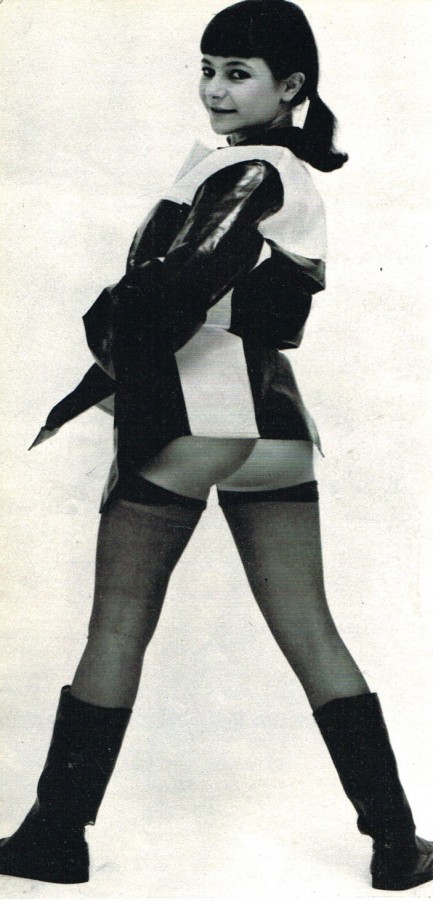 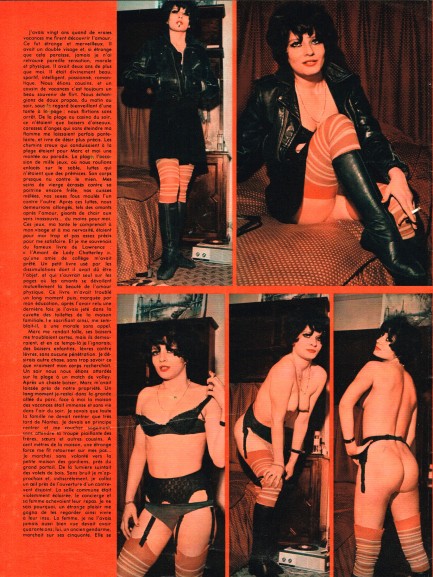  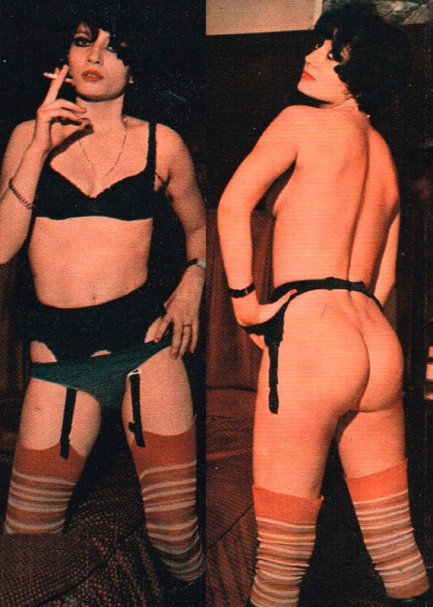 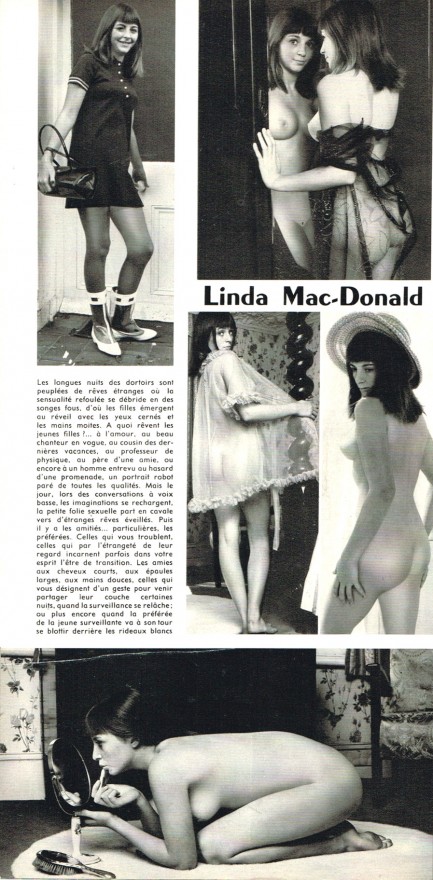 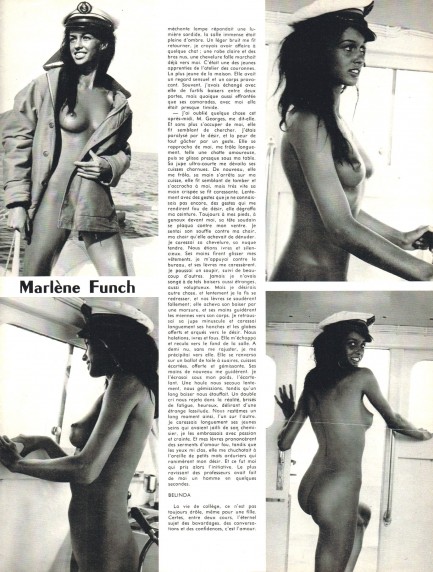 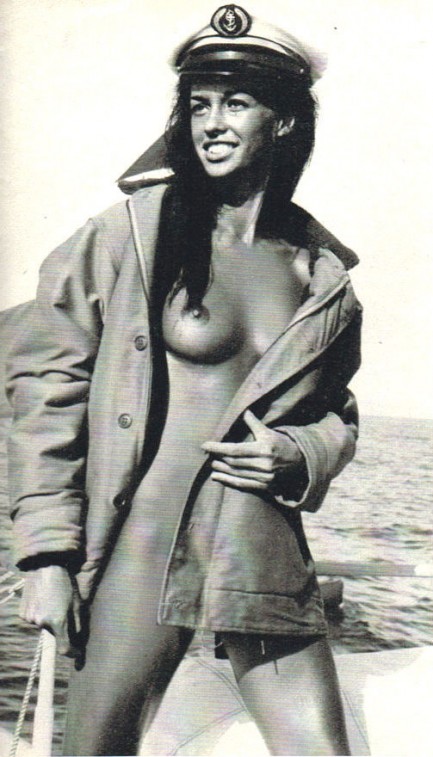 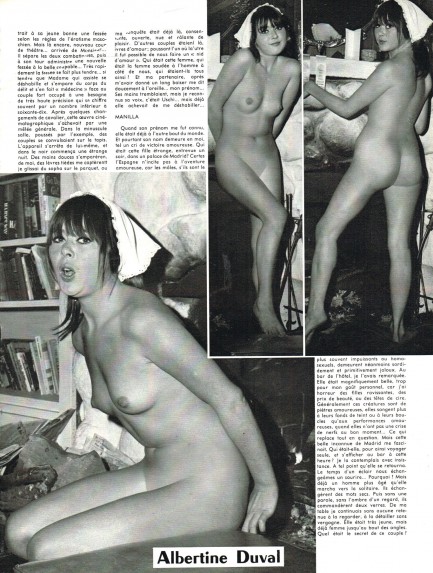 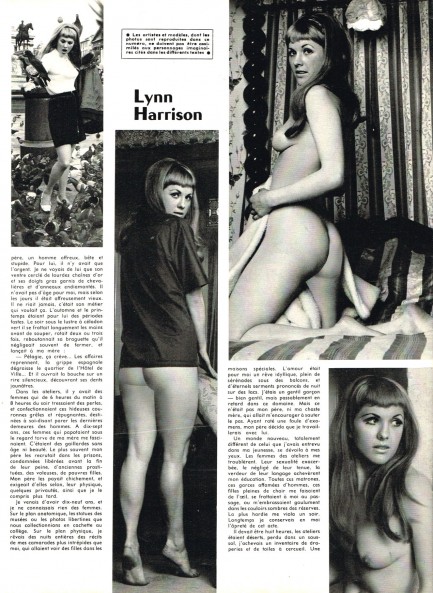 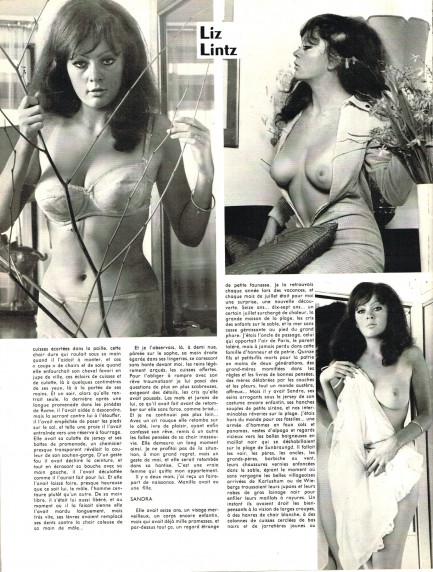 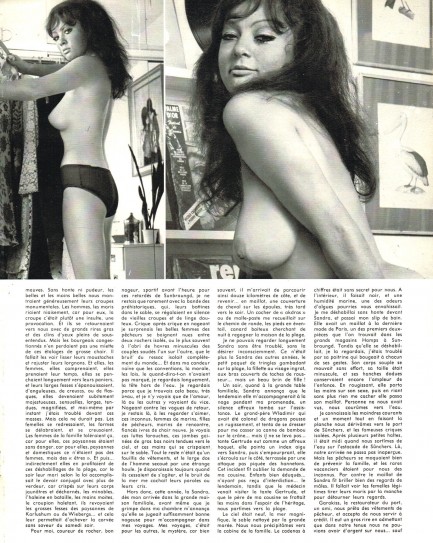 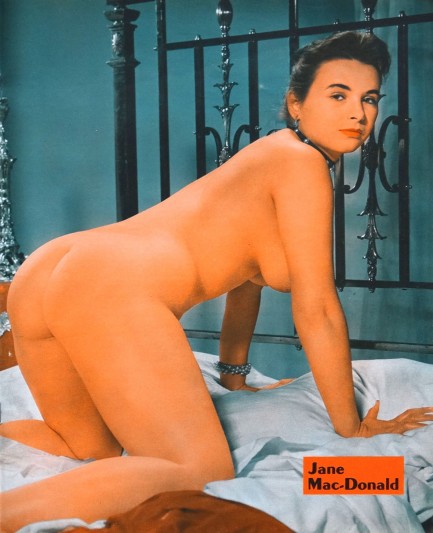 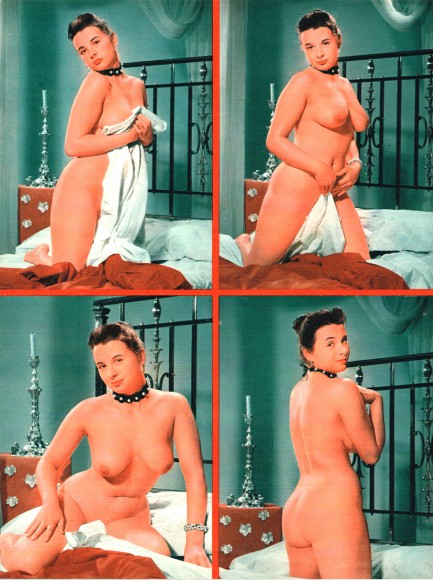 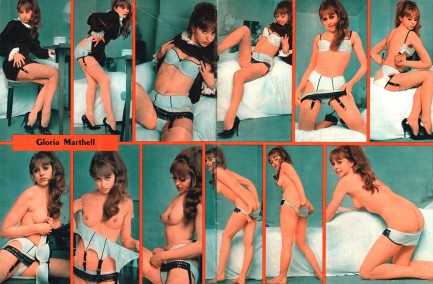 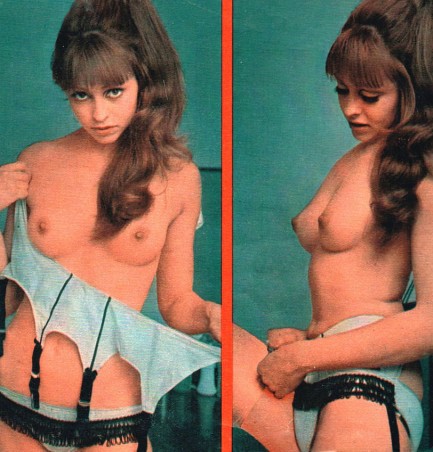  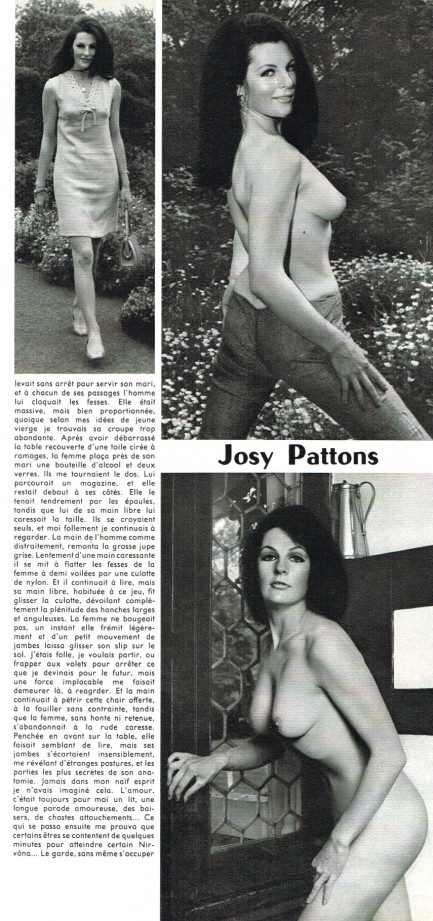 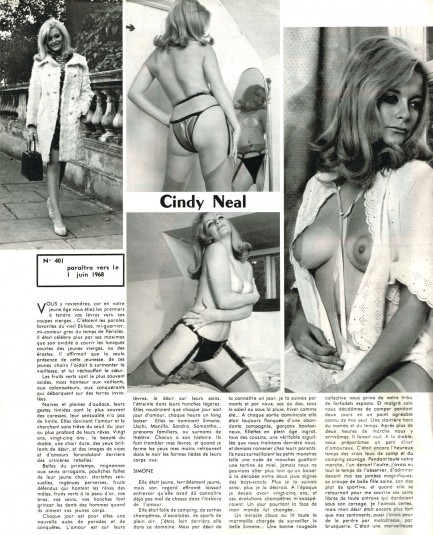 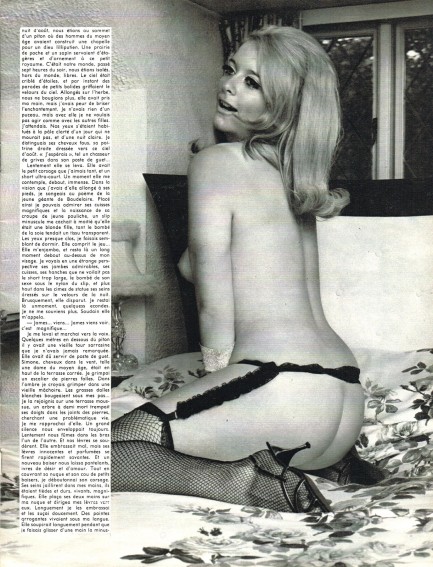 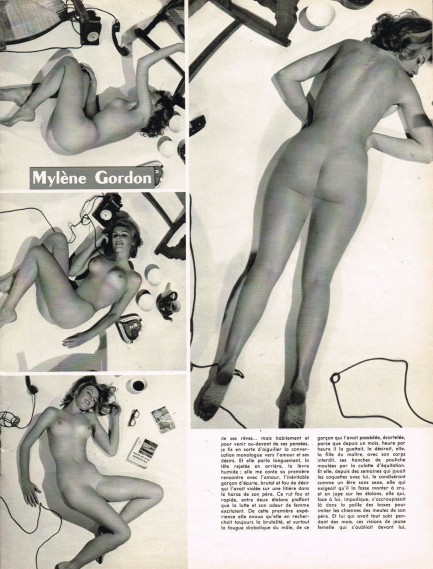 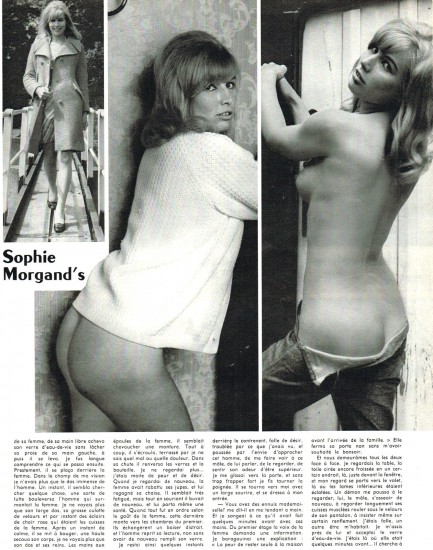  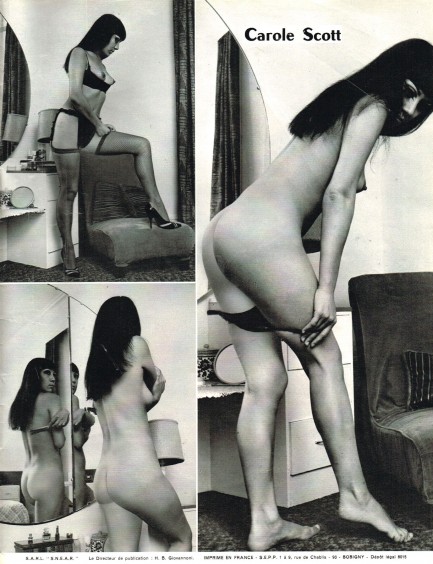 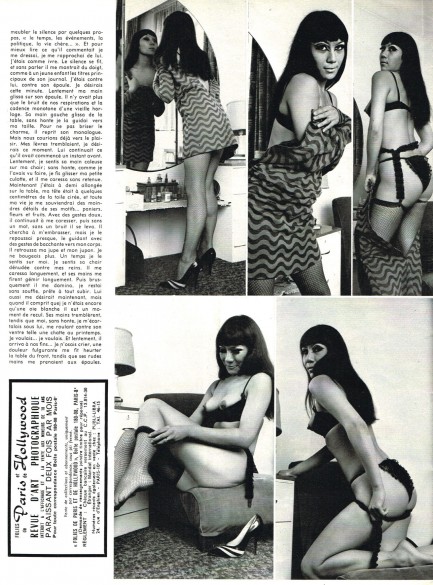
 Every night in Paris is a treasure hunt. 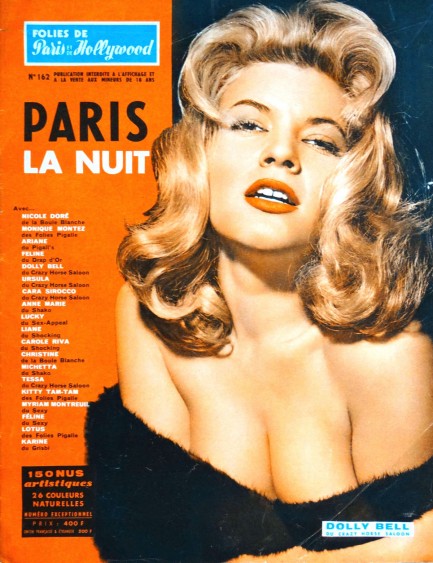
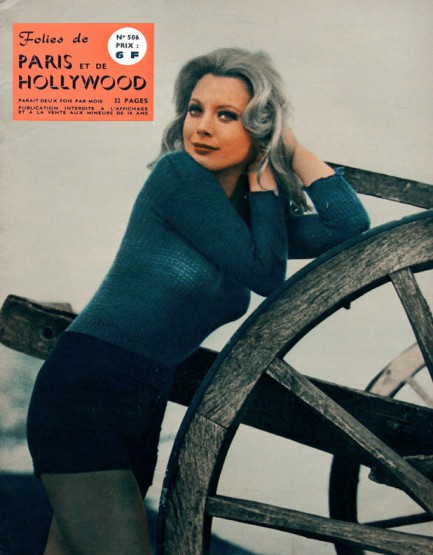
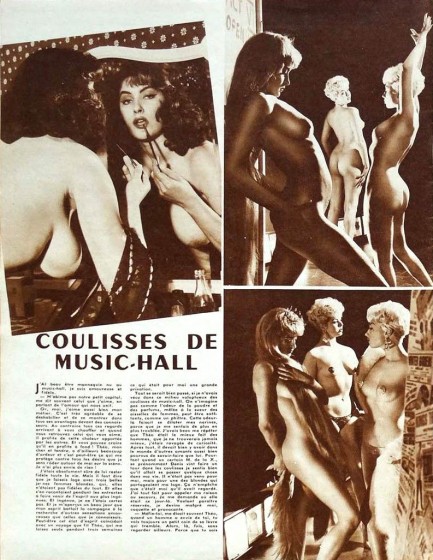
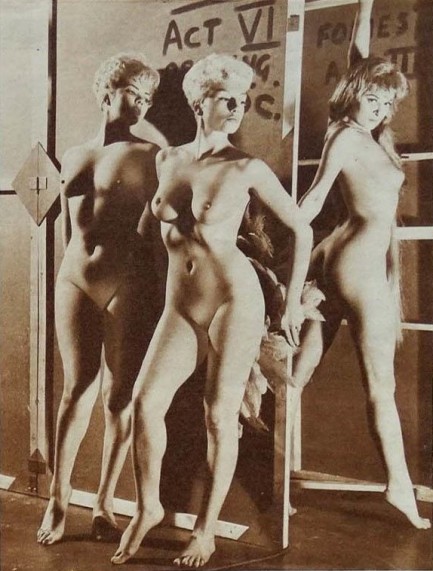
This “Paris la nuit” themed issue of Folies de Paris et de Hollywood from 1959 has, in addition to the usual dancers and showgirls, a list on the cover of the clubs at which they worked. We already knew some of the places, like The Crazy Horse Saloon and Pigall's, but there are many more, all with amazing names: Boule Blanche, Drap d'Or, Shako, Grisbi, Shocking, Le Sexy, et al. If we had to choose just based on the name we'd go with Shocking. It can't be too wild in 1959, right? Anyway, the list gave us the idea of digging up photos of these venerable entertainment halls, but you'd be surprised how few historical shots exist. We're going to keep working on that. In the meantime, enjoy the photos below of the artists who occupied those stages. They include Dolly Bell, Kitty Tam-Tam, Nicole Dore, Carole Riva, and more. 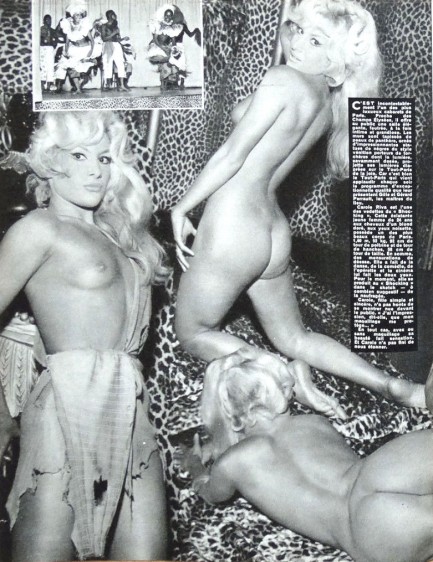 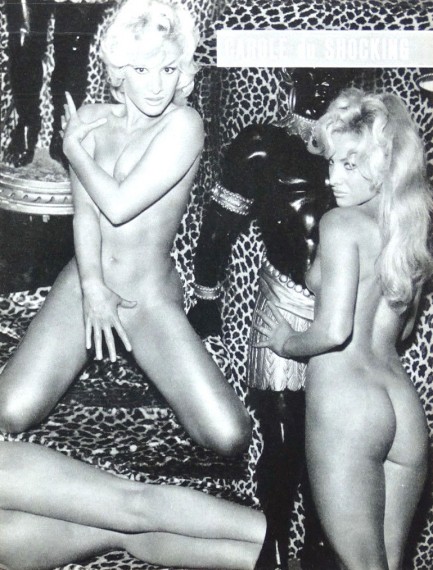 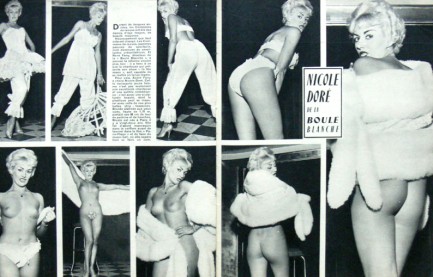 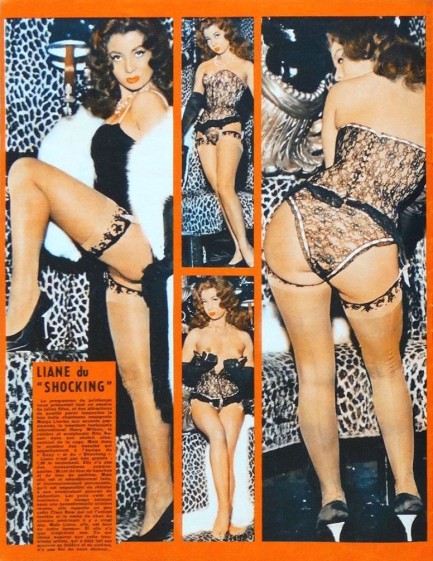 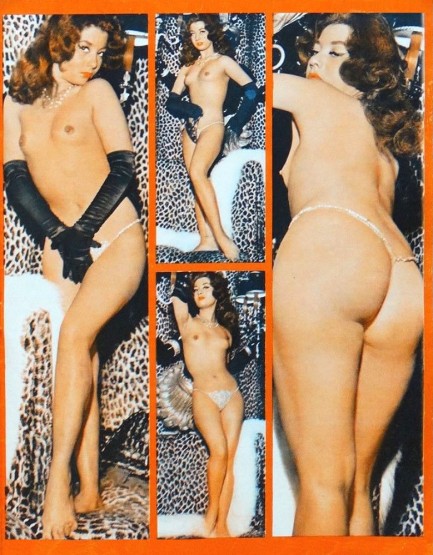 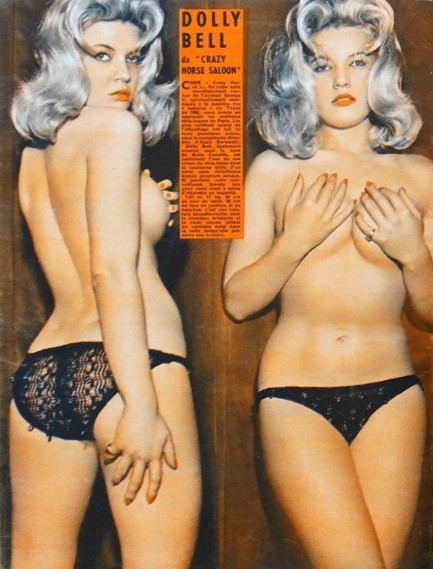 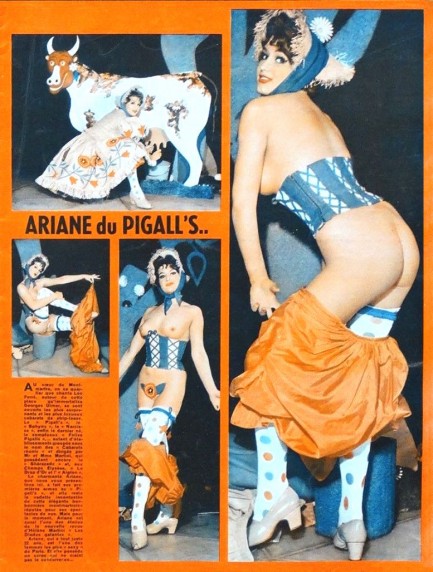 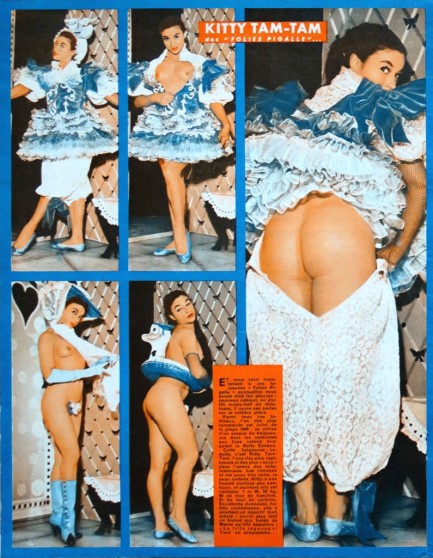 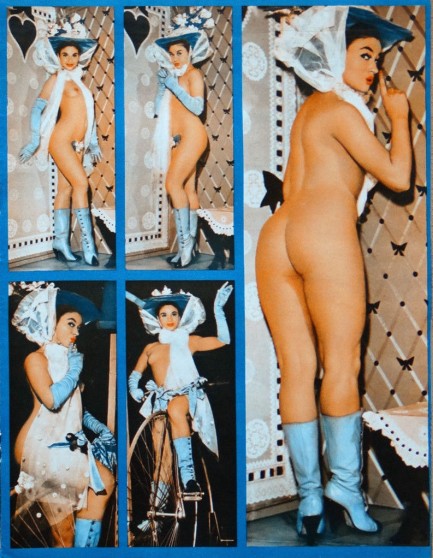 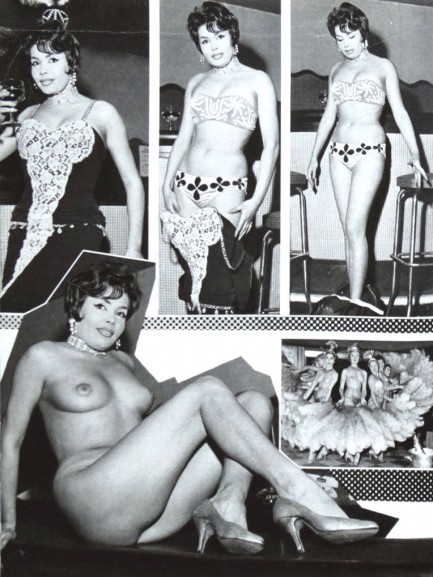 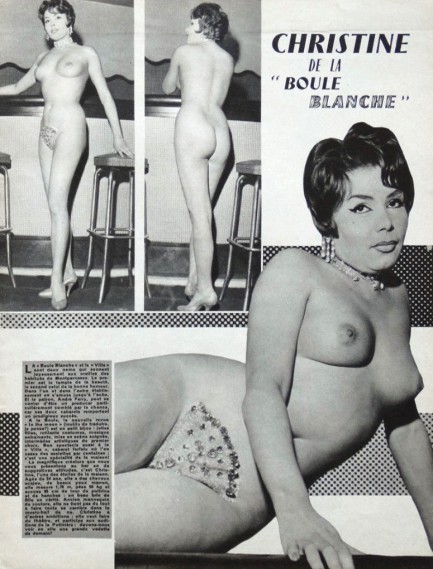 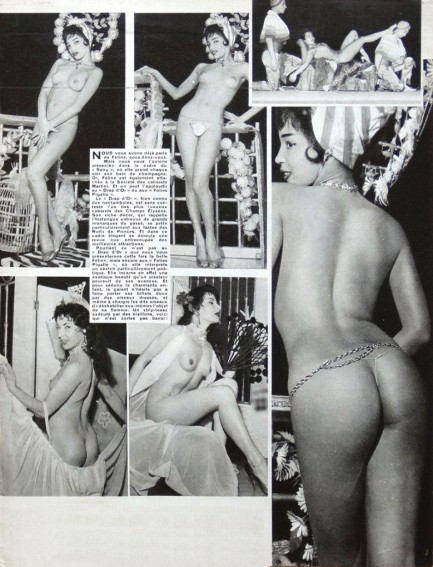 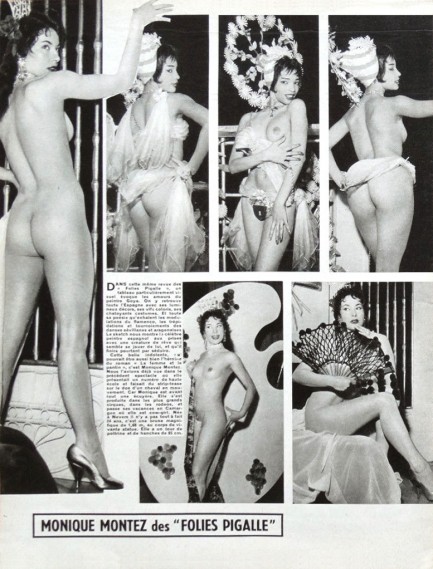 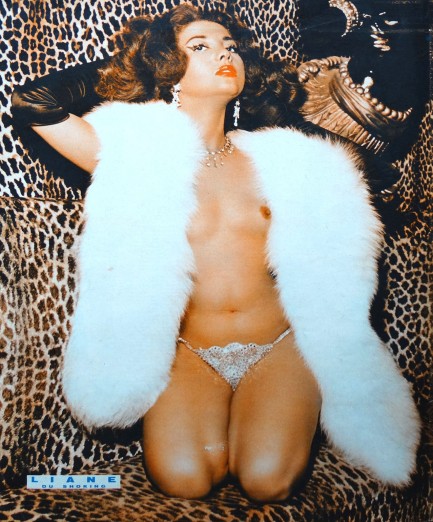
 The French always know a good thing when they see it. 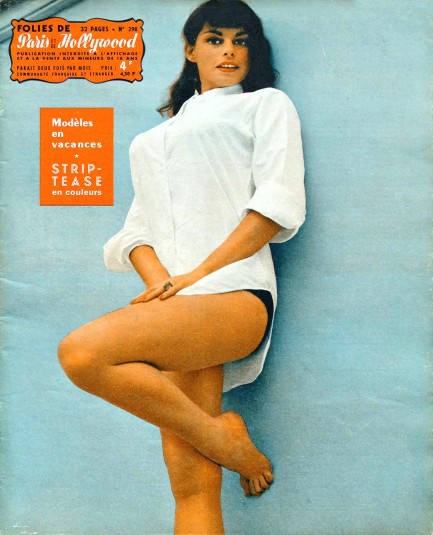
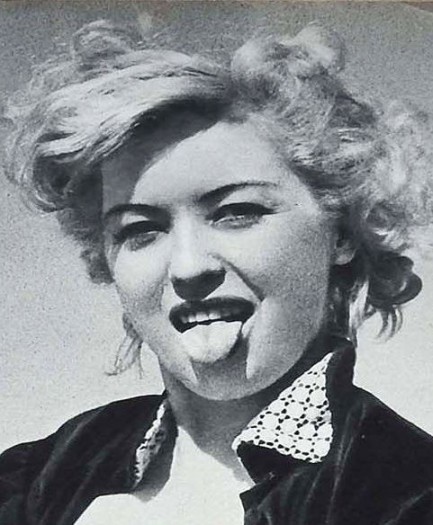
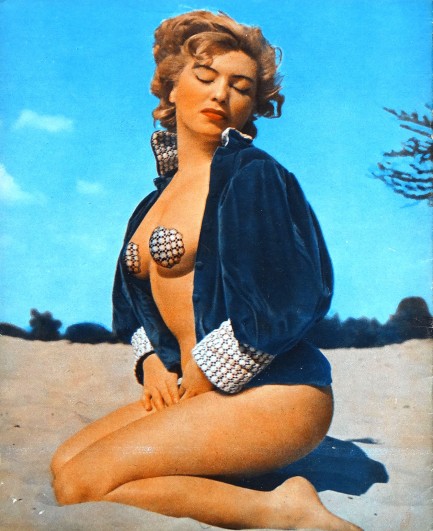
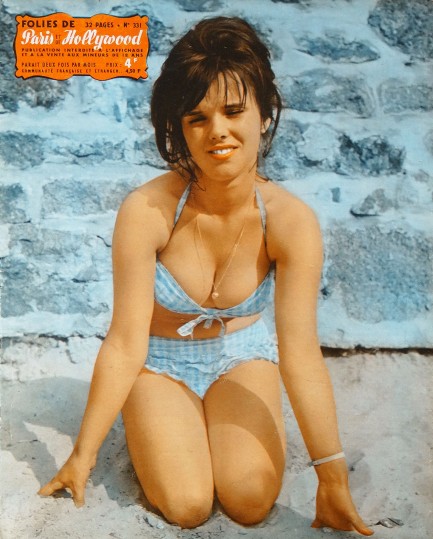
Today we have assorted scans from an issue of Folies de Paris et de Hollywood published in 1964 with cover star Sally Douglas, a British actress who appeared in numerous films and who's popped up on Pulp Intl. a couple of times before, including, memorably, fronting the French magazine Evocations. Her film roles were often uncredited, and when she was acknowledged it was often in less-than-flattering terms. For example, in Doctor in Love she was “dancer in strip show,” and in Genghis Khan she was simply “concubine.” Probably the most cringeworthy of her credits was in A Study in Terror, in which she was “whore in pub.” It's a hell of a way to make a living, but between movies, television, and modeling she managed to become mildly famous and fondly remembered. Elsewhere in Folies de Paris et de Hollywood you get glamour models and burlesque performers, and they all add up to another visually pleasing slice of naughty nostalgia. We have many more of these in the website. Just click the keywords below and start scrolling. 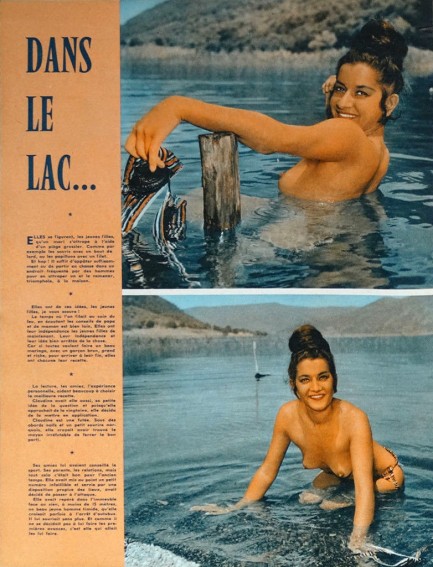 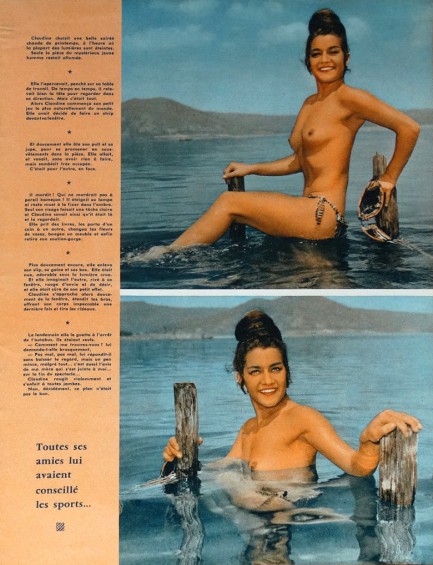 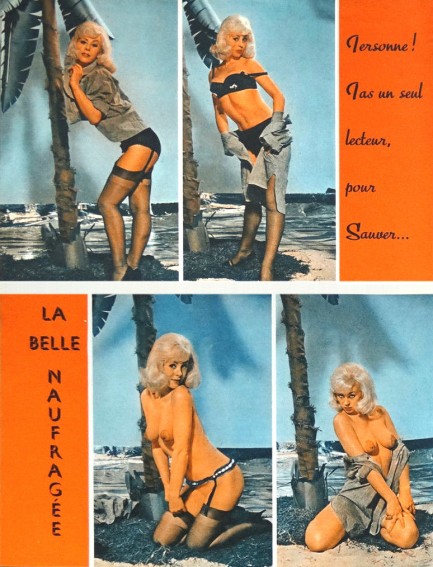 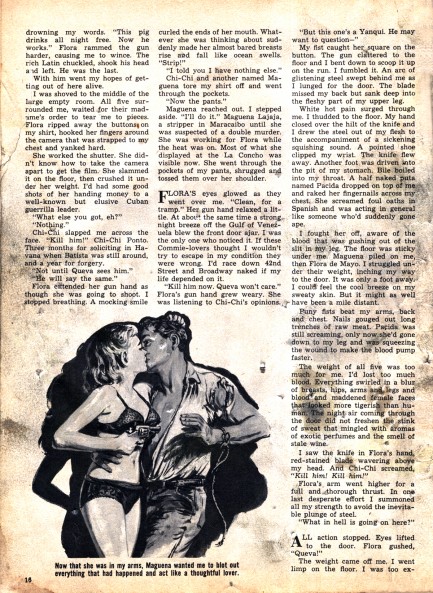 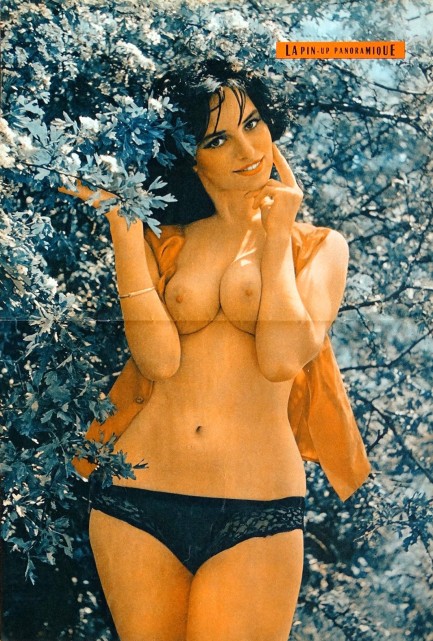 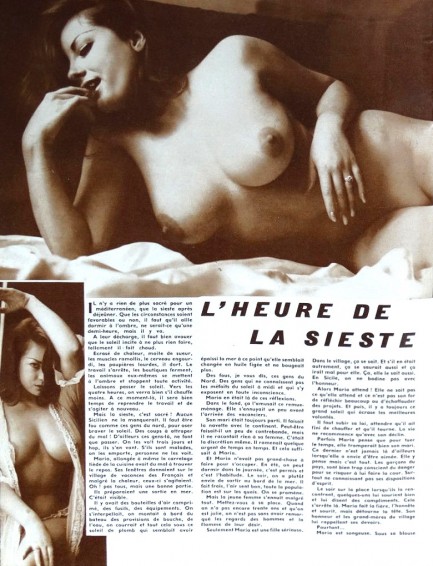 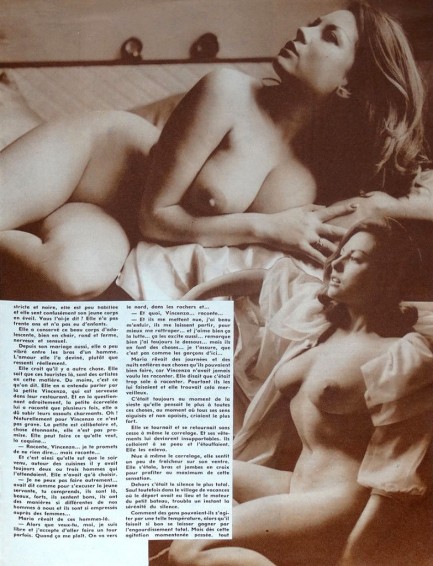  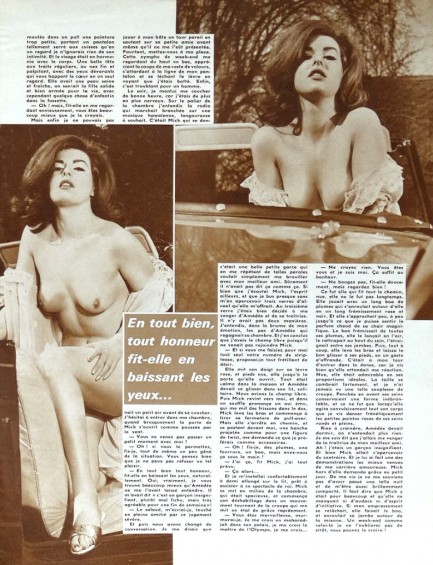 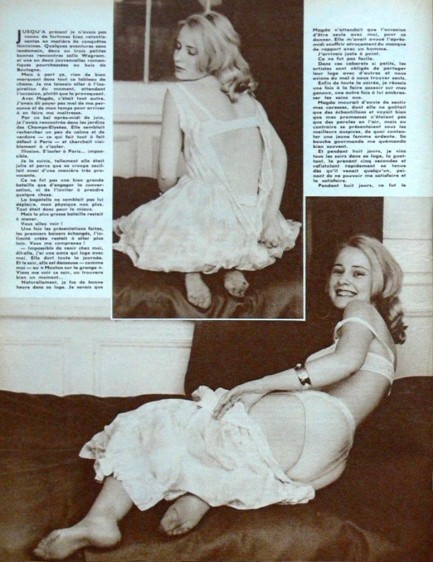 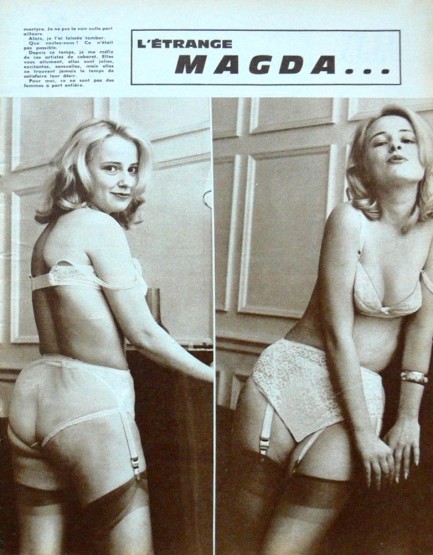 
 King of the hill, top of the heap. 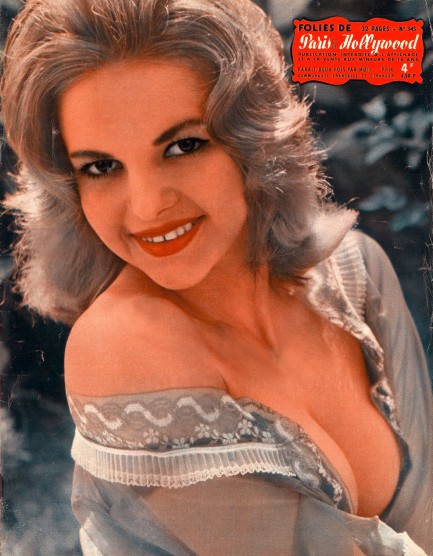
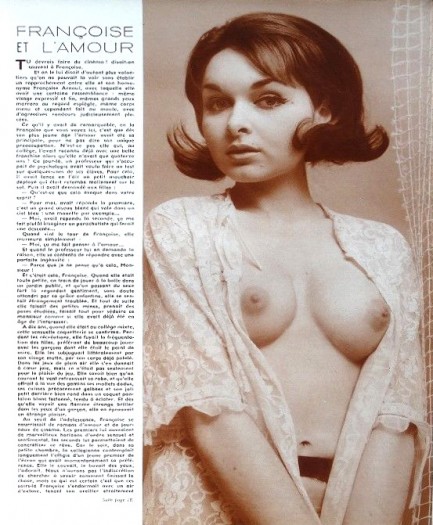
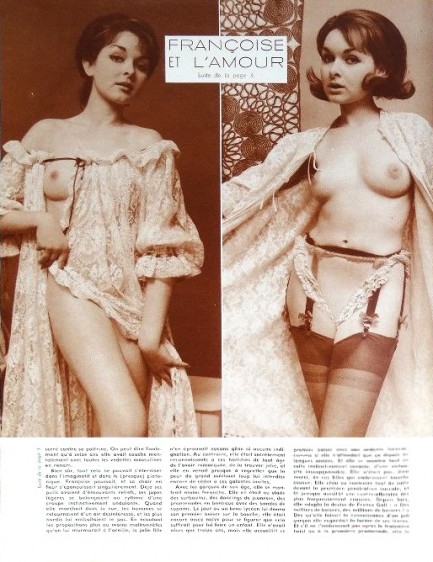
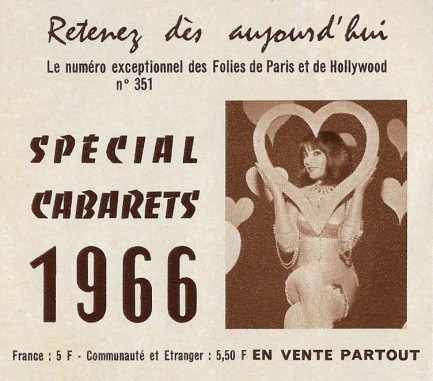
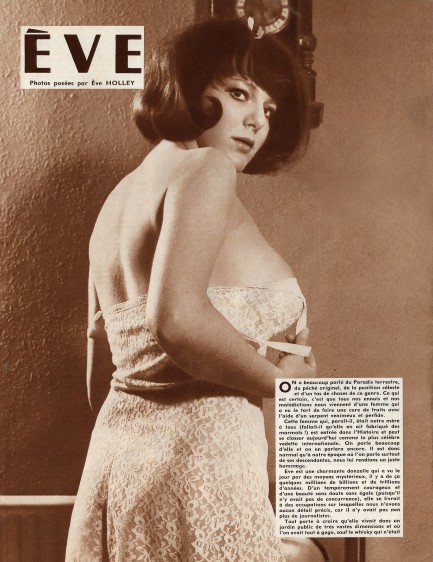
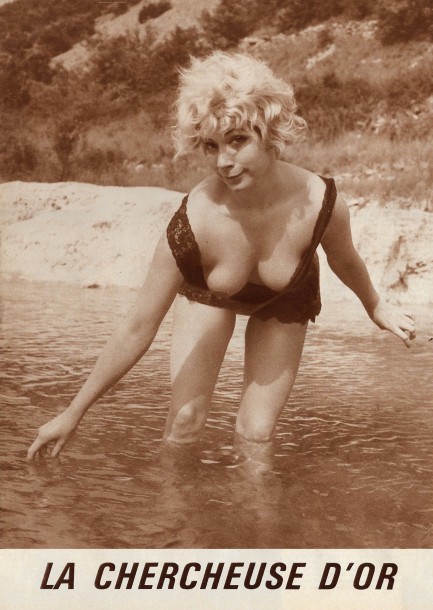
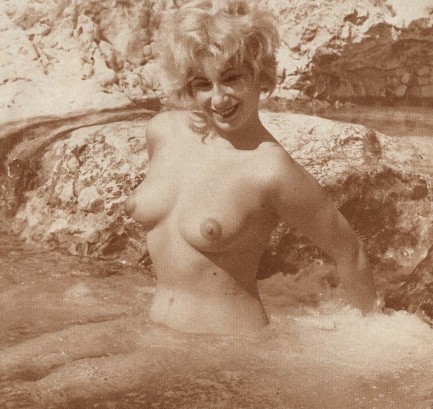
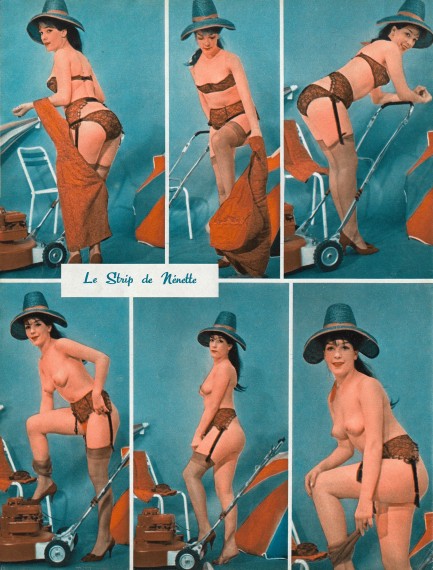
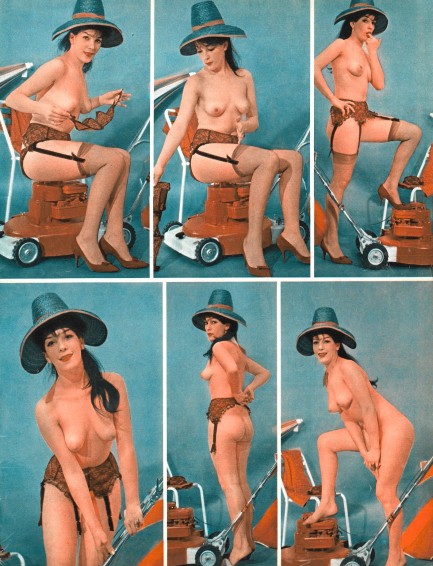
Owned by a publisher calling itself Sapho, Folies de Paris et de Hollywood was one of the pre-eminent pin-up magazines of the mid-century period, running from 1947 to 1975 for a total of nearly 600 issues. It also operated under other names, including Paris-Hollywood, and generated another 150 issues. Appearing this week in 1966, this issue of Folies is number 345 and features the usual assortment of showgirl portraits and write-ups. Often the magazine slipped in a model or two from outside the world of Parisian dance, and in this issue a good chunk of pages are given to British pin-ups Cleo Simmons and Penny Winters. We didn't scan all their photos—sorry. This is a big magazine, dimensionally speaking, and every page must be scanned in two pieces and merged in Photoshop—with the centerfold being scanned in four pieces and reassembled—so sometimes we don't get to all of them. But we strive to improve. Speaking of the centerfold, she's unknown to us, as is the rear cover star. If anyone knows them feel free to drop us a line. Twenty images below, and many more Folies to come. 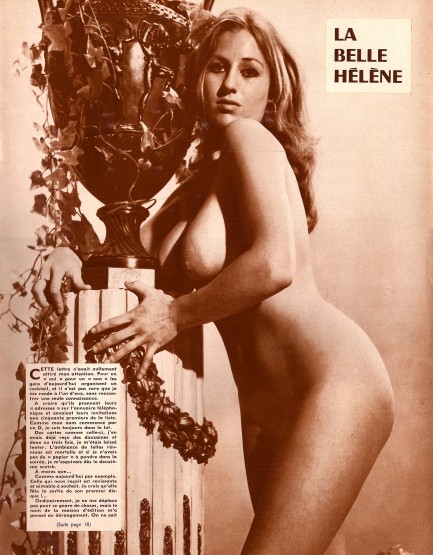  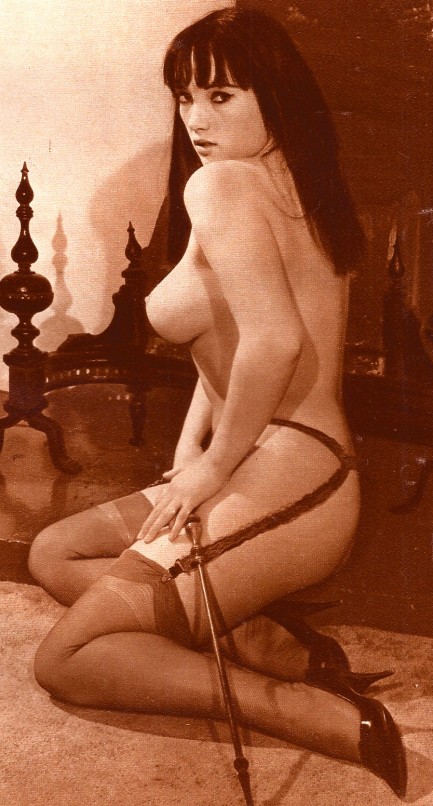 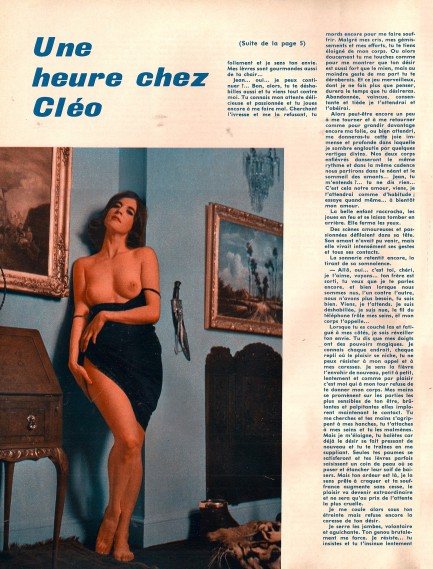 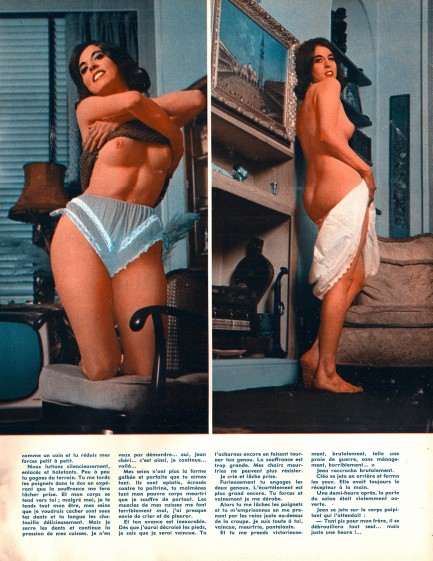 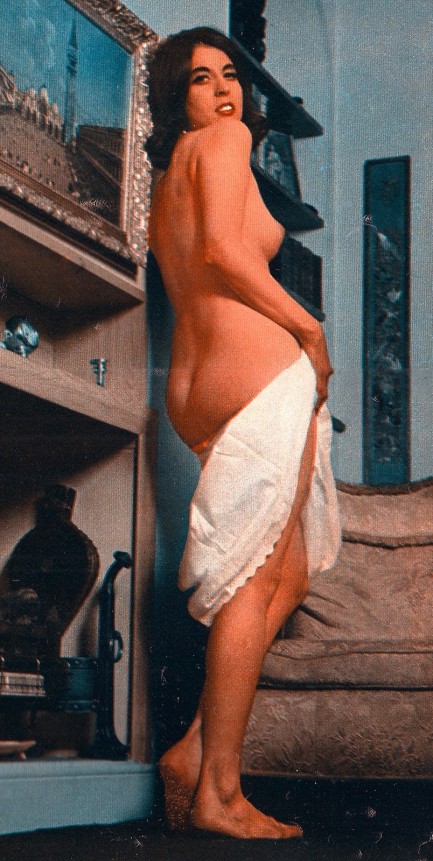 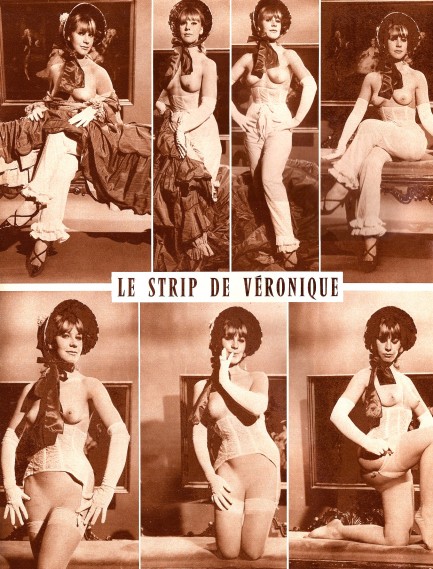 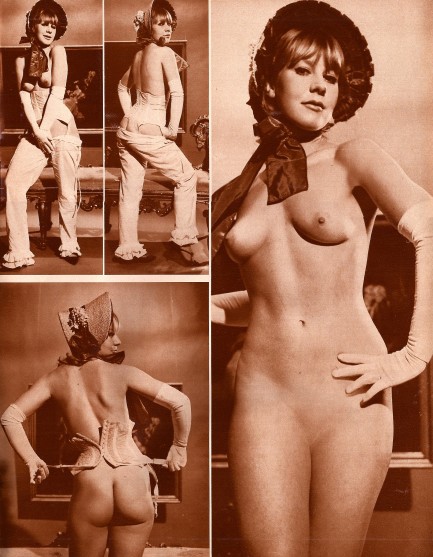 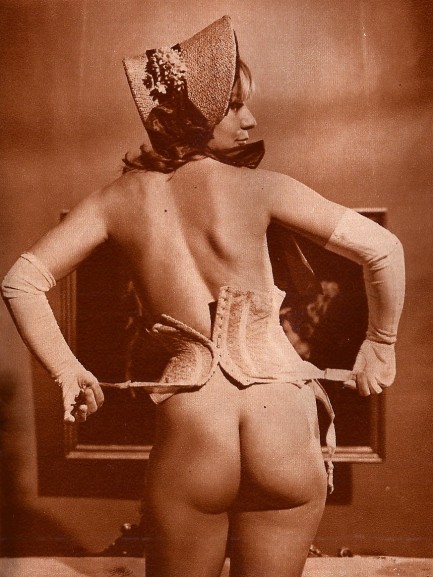 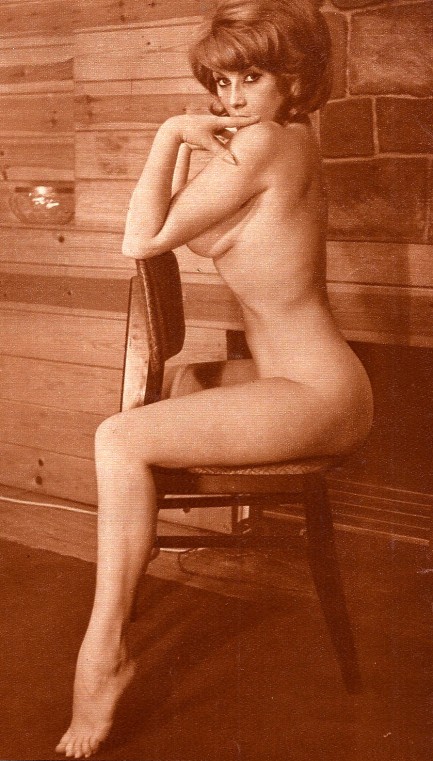 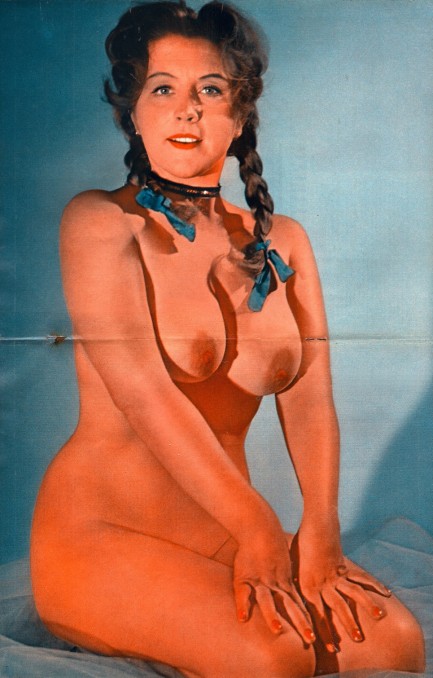 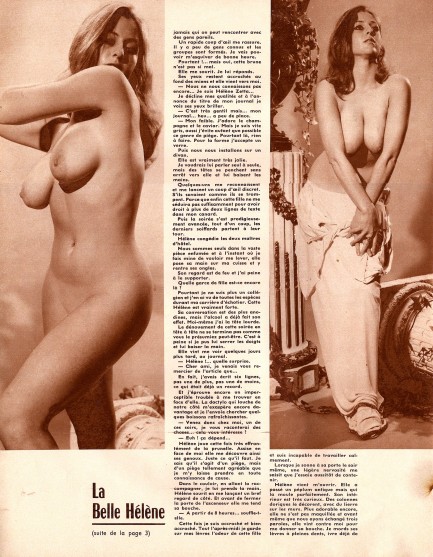 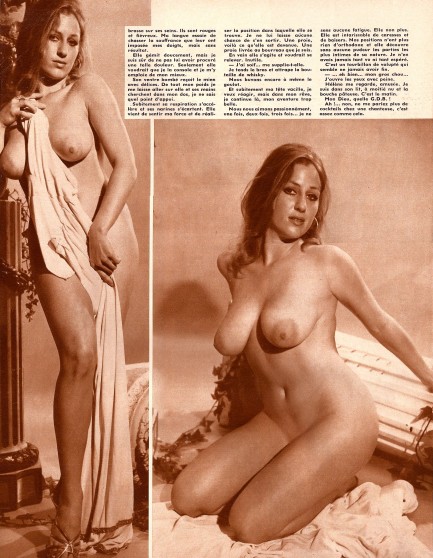  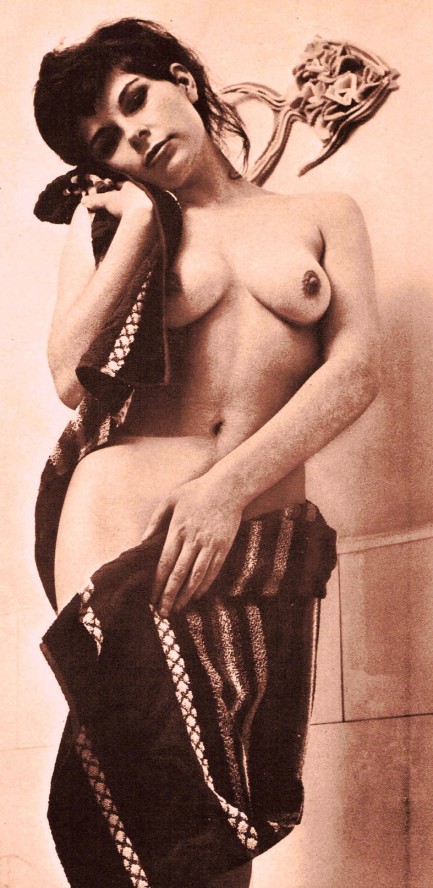 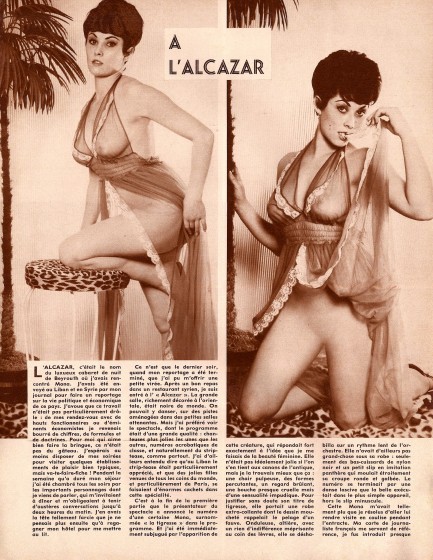 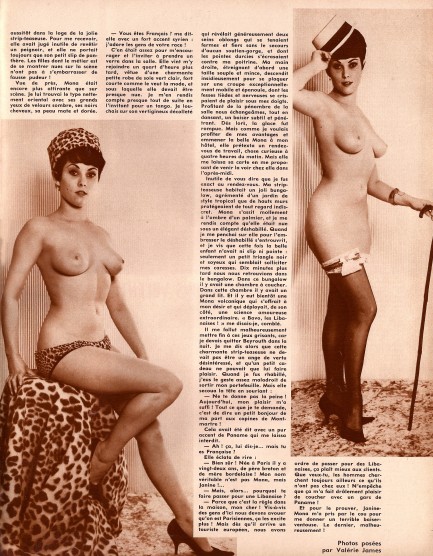 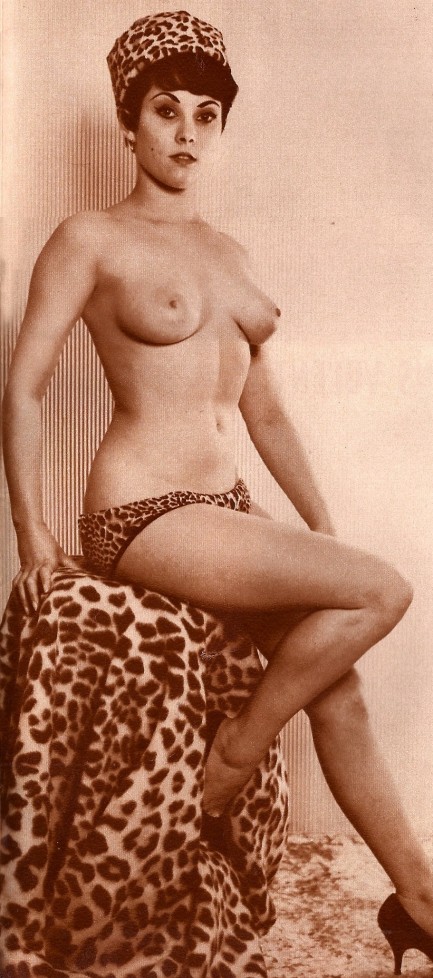  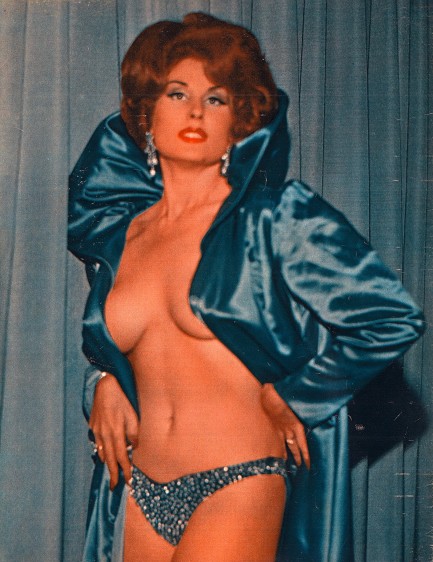
 Folies de Paris et de Hollywood kept readers guessing with their models but this one we know. 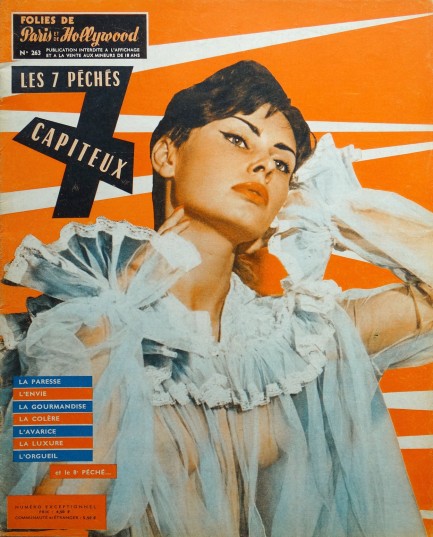
This issue of Folies de Paris et de Hollywood is from 1963 and its theme is “les peches capiteaux,” or the seven deadly sins. You see them listed at bottom left on the cover, if you ever wanted to learn them in French. While the theme is interesting, we're sharing this cover for one reason—Sophia Loren. Well, we think it's her. Folies never credited its cover models, so we can't be sure. The editors used her image on at least three other covers, and those instances are identifiably Loren because the shots are standard portraits, leaving no doubt. But this one has an oblique angle, which is enough by itself to make positive ID more difficult. And the model is wearing a see-through blouse. For casual fans of Loren that may seem out of character, but it isn't. Her early nude scene in Era lui... sì! sì! is well known today. We've discussed it a couple of times. And of course who can forget her wet-shirt appearance in Boy on a Dolphin. The point is Loren was not shy, so the see-through lingerie here is not a sign the cover model isn't her. We're going to say this is indeed Loren until someone convinces us otherwise. Inside the magazine identities are a bit clearer. You get various Parisian showgirls, as well Vicki Kennedy, aka Margaret Nolan, who we're beginning to think may have been the most photographed glamour model of the 1960s, centerfold Terry Higgins (in a crib, disturbingly), and June Palmer as “la paresse,” or sloth—though not so slothful she wasn't able to pose for three pages of photos, then don a blonde wig and appear on the rear cover too. That's more than we did all last week. Scans below. 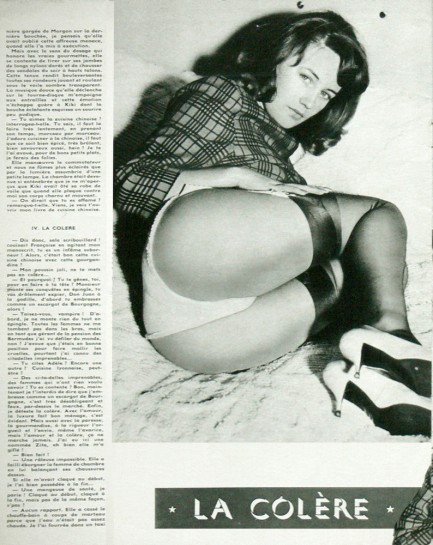 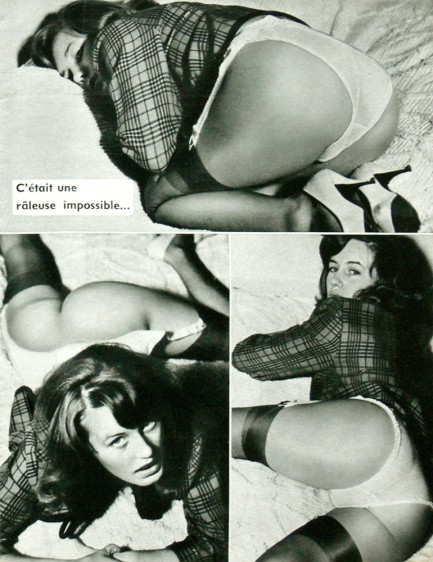 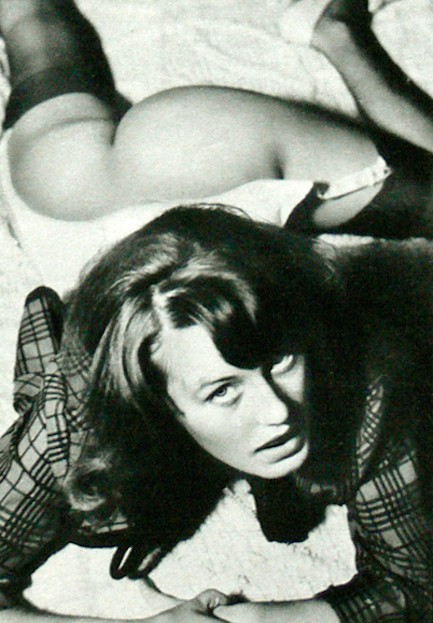 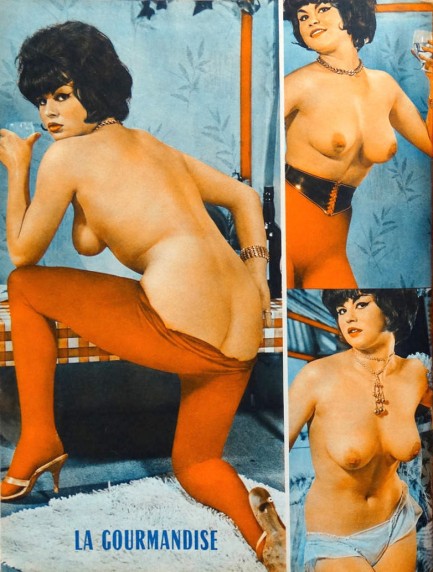 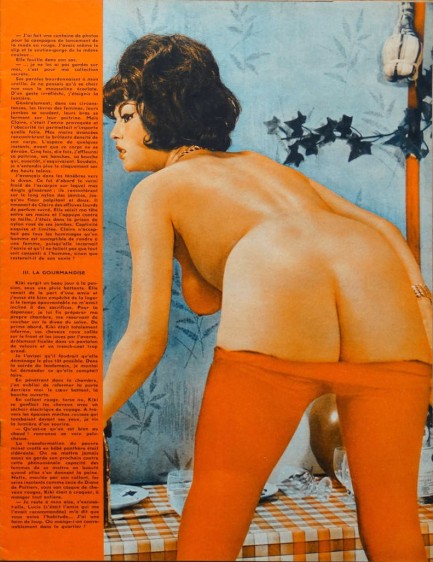 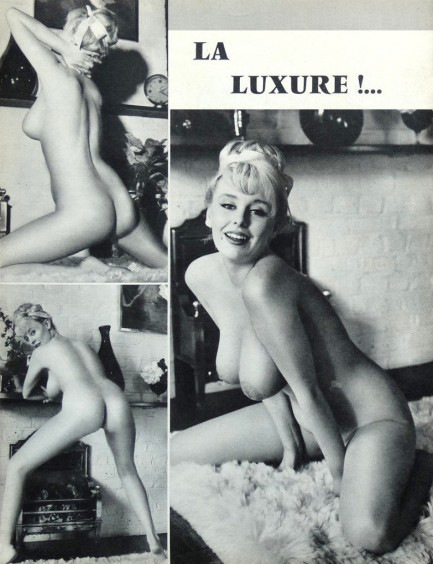 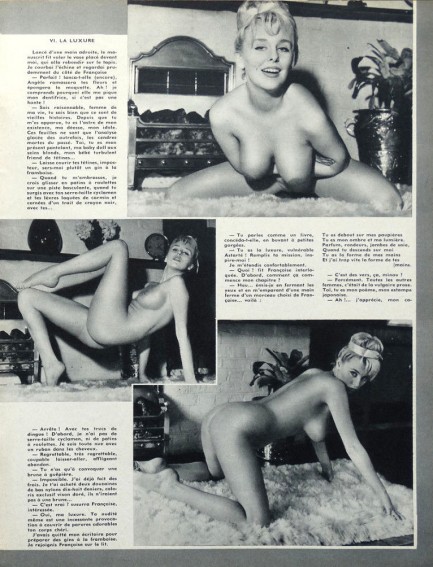 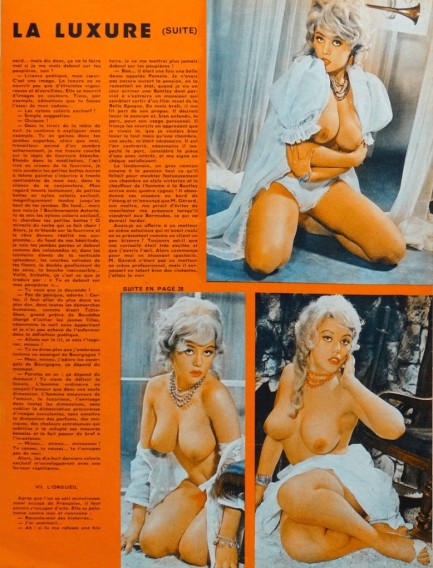 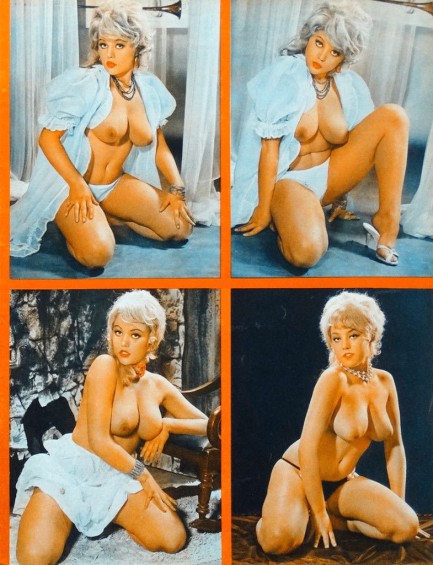 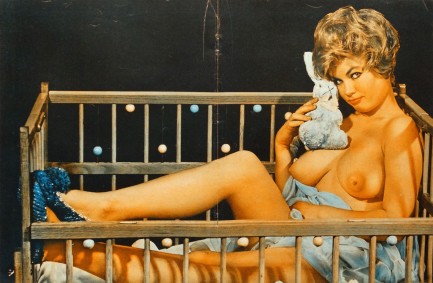 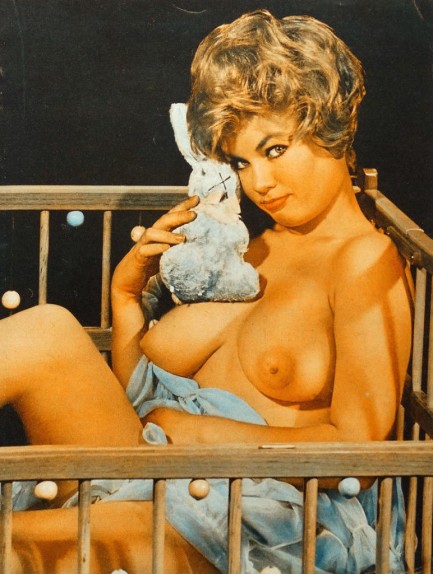 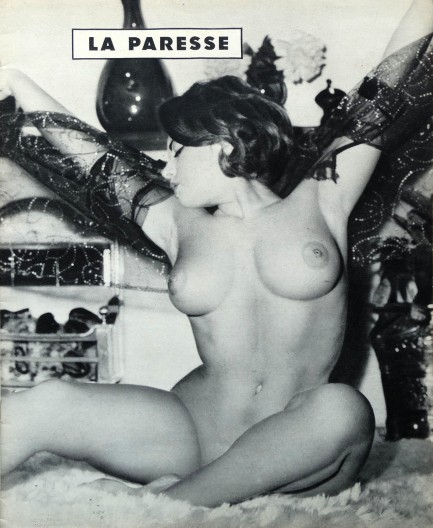  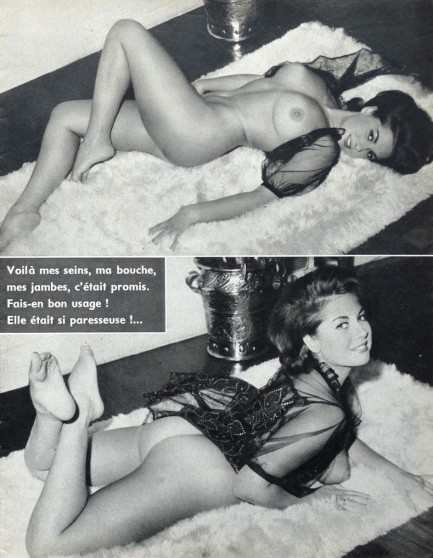 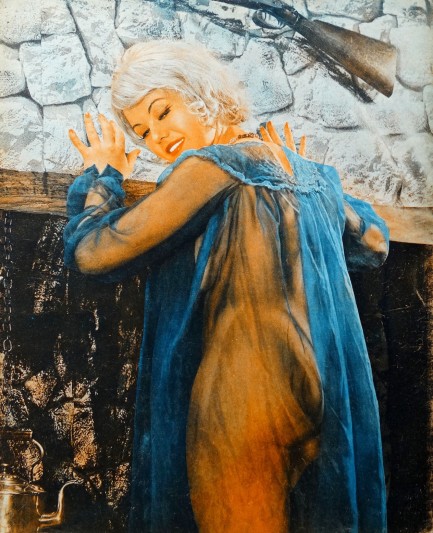

|
 |

The headlines that mattered yesteryear.
1947—Heyerdahl Embarks on Kon-Tiki
Norwegian ethnographer and adventurer Thor Heyerdahl and his five man crew set out from Peru on a giant balsa wood raft called the Kon-Tiki in order to prove that Peruvian natives could have settled Polynesia. After a 101 day, 4,300 mile (8,000 km) journey, Kon-Tiki smashes into the reef at Raroia in the Tuamotu Islands on August 7, 1947, thus demonstrating that it is possible for a primitive craft to survive a Pacific crossing. 1989—Soviets Acknowledge Chernobyl Accident
After two days of rumors and denials the Soviet Union admits there was an accident at the Chernobyl nuclear power plant in Ukraine. Reactor number four had suffered a meltdown, sending a plume of radioactive fallout into the atmosphere and over an extensive geographical area. Today the abandoned radioactive area surrounding Chernobyl is rife with local wildlife and has been converted into a wildlife sanctuary, one of the largest in Europe. 1945—Mussolini Is Arrested
Italian dictator Benito Mussolini, his mistress Clara Petacci, and fifteen supporters are arrested by Italian partisans in Dongo, Italy while attempting to escape the region in the wake of the collapse of Mussolini's fascist government. The next day, Mussolini and his mistress are both executed, along with most of the members of their group. Their bodies are then trucked to Milan where they are hung upside down on meathooks from the roof of a gas station, then spat upon and stoned until they are unrecognizable. 1933—The Gestapo Is Formed
The Geheime Staatspolizei, aka Gestapo, the official secret police force of Nazi Germany, is established. It begins under the administration of SS leader Heinrich Himmler in his position as Chief of German Police, but by 1939 is administered by the Reichssicherheitshauptamt, or Reich Main Security Office, and is a feared entity in every corner of Germany and beyond. 1937—Guernica Is Bombed
In Spain during the Spanish Civil War, the Basque town of Guernica is bombed by the German Luftwaffe, resulting in widespread destruction and casualties. The Basque government reports 1,654 people killed, while later research suggests far fewer deaths, but regardless, Guernica is viewed as an example of terror bombing and other countries learn that Nazi Germany is committed to that tactic. The bombing also becomes inspiration for Pablo Picasso, resulting in a protest painting that is not only his most famous work, but one the most important pieces of art ever produced.
|

|
|
It's easy. We have an uploader that makes it a snap. Use it to submit your art, text, header, and subhead. Your post can be funny, serious, or anything in between, as long as it's vintage pulp. You'll get a byline and experience the fleeting pride of free authorship. We'll edit your post for typos, but the rest is up to you. Click here to give us your best shot.
|
|