 Before we go in, I should warn you that Isa might jump out from somewhere. Act surprised. She'll leave you alone after that. 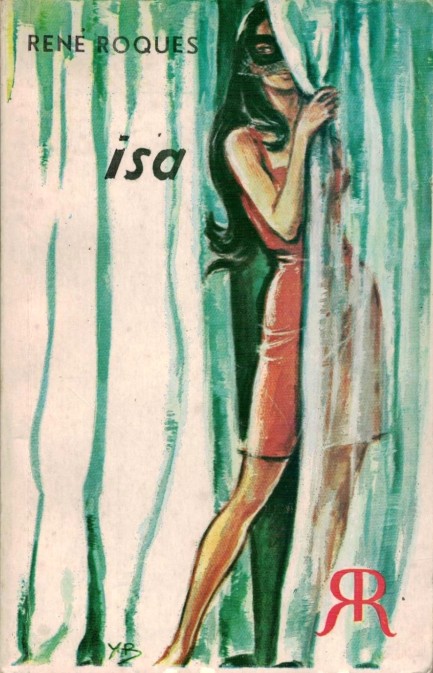
Above: a cover for the 1953 adventure Isa, written by René Roques and published by his Paris-based company Éditions R.R. Their cover art was often by Jef de Wulf, but this one is signed YB. We have no idea who that is, nor have we ever seen his or her work elsewhere, but it's an interesting effort. R.R. produced attractive covers even in collaboration with obscure artists, so some of the credit for their consistency probably goes to the company's art director—René Roques himself. Click his keywords below to see more.
 La Muse de l’existentialisme et Miles. 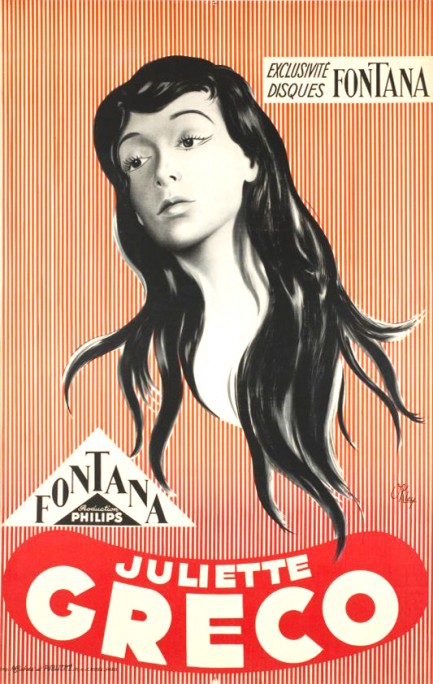
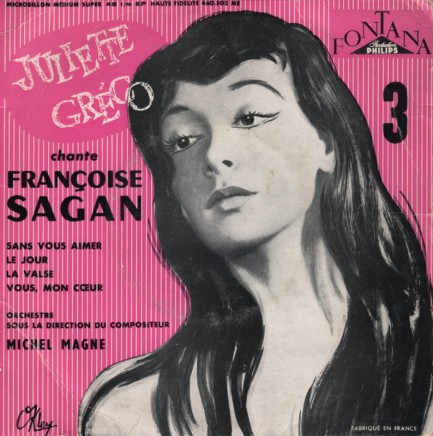
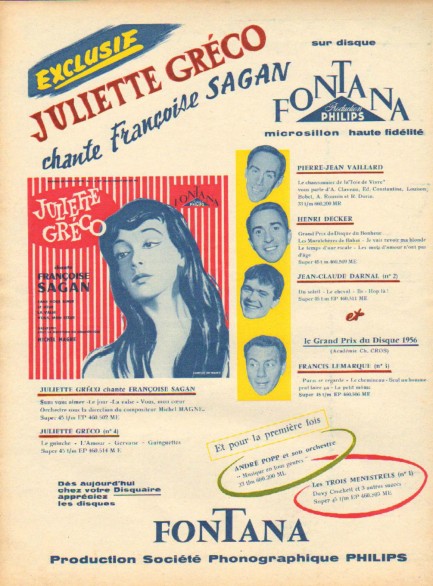
 This striking music brochure promo art for French singer Juliette Gréco and Disques Fontana (a subsidiary of the Dutch label Philips Records) was created by the famous illustrator O’Kley in 1956. The art was reused for record covers, as you see below. This striking music brochure promo art for French singer Juliette Gréco and Disques Fontana (a subsidiary of the Dutch label Philips Records) was created by the famous illustrator O’Kley in 1956. The art was reused for record covers, as you see below.
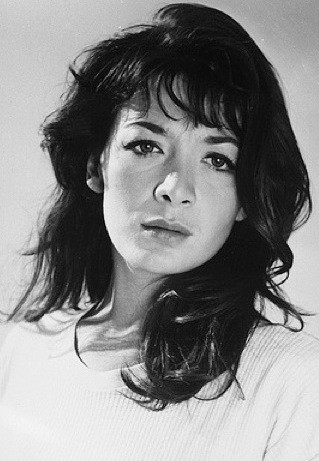
Gréco, an actress as well as singer, was a fixture in the Saint-Germain-des-Prés area of Paris, and her acquaintanceships with such figures as Jean-Paul Sartre and Maurice Merleau-Ponty earned her the nickname La Muse de l’existentialisme—the existentialists’ muse. She was also, according to Miles Davis, one of the great loves of his life, and the feeling was reciprocated, so that wins major points right there because Miles was the bomb.
Moving on to the art, O’Kley was a pseudonym for Nantes-born Pierre Gilardeau, the man behind some of the most collectable Folies Bergère posters. He also illustrated many book covers and movie posters, and after a long career died in 2007. We’ve seen some good examples of his art, so we’ll try to get back to him a bit later—but we make no guarantees. You can see another Fontana post here.
 Welcome to the greatest show on Earth 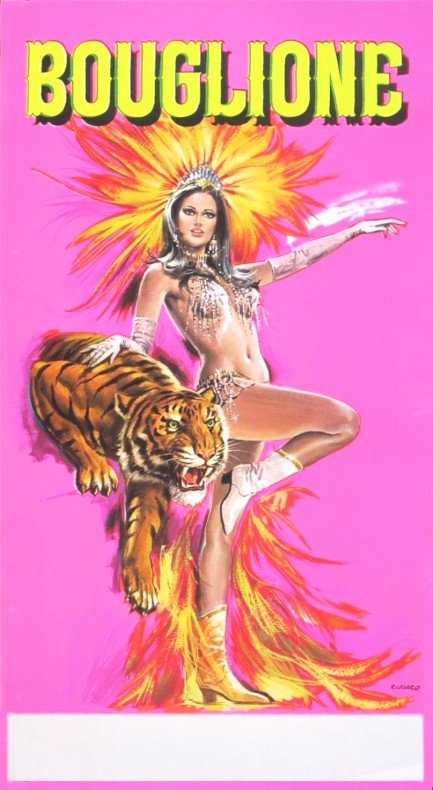
Renato Casaro was a celebrated Italian movie poster artist, but he worked in other media, including album sleeves and portraiture. Above he's created an advertising poster for Cirque d’Hiver Bouglione, a Parisian circus that traces its roots back to 1852, when Charles de Mornay, commonly referred to as Duc de Morny, undertook its creation and named it after his half brother Prince Louis-Napoléon III. When the circus finally opened in 1859 it featured equestrianism, animal acts, and aerial acrobatics from the famed Jules Léotard. After being interrupted by World War I, the business passed over to Gaston Desprez in 1923, and again in 1934 to the Bouglione Brothers, who were Italians who'd made a name for themselves traveling France with a menagerie and wild cat act. The circus was halted during World War II and the occuptation of its buildings by the Nazis, but emerged post-war to continue its growth and fame, known by then as Cirque d’Hiver Bouglione, the name it bears today. Casaro's lovely poster dates from 1970.
 A murder by any other name would kill as dead. 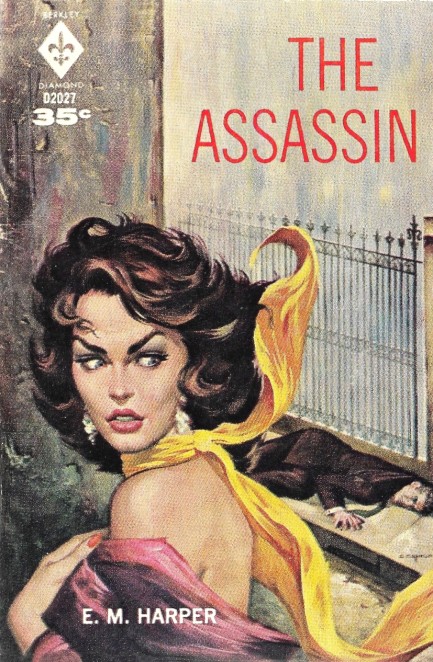
This is a rather pretty cover painted by Charles Copeland for E.M. Harper's 1960 novel The Assassin, the story of Alec Jordan, who's spared the guillotine in an Algerian prison but must repay the shadowy government operatives who freed him by murdering an Arab political figure. We've seen convicts turned into assassins a couple times in vintage literature. What sets this story apart is its many flashbacks to Jordan's youth, from the time he was witness to his moonshiner father's killing by cops, to being sprung from reform school to play high school football (seems someone always wants to put his skills to use), to his various war experiences.
The story begins in Paris, from which Jordan pursues his target to London and Vienna, world weary, haunted by the past, and hounded by the people who are operating him. There's, unsurprisingly, the requisite woman-from-his-past for whom he still has feelings—a beauty named Renée who married an Austrian count while Jordan was hors de combat. Conveniently, she's now a widow, but is reclaiming the past an option for Jordan? To survive but lose your soul, to resist corruption but be killed, to find redemption in love. You've read it before, and though Harper breaks no new ground plotwise, he wrote a contemplative iteration of the story that offers some enjoyment.
 Happiness, anger, and ballistics. 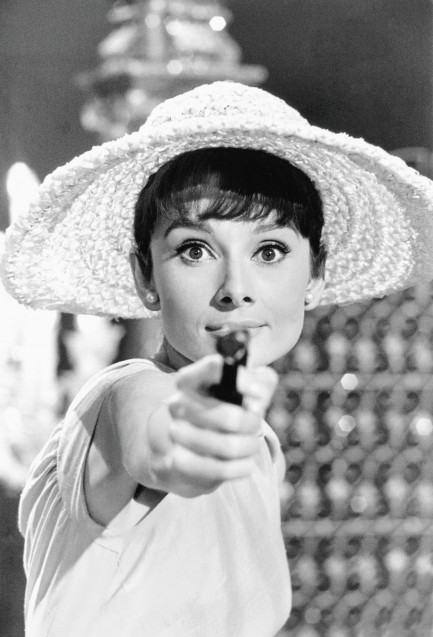 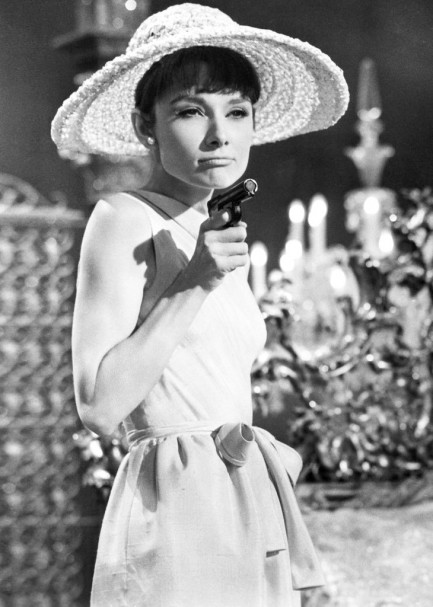
These two promo images of famously thin actress Audrey Hepburn were made for her 1964 film Paris When It Sizzles. It's another movie in her romance/adventure mold, along with Charade, How To Steal a Million, and others. There's a Hollywood commandment: Thou shalt not mess with success. For a while, following that rule made Hepburn one of the biggest stars of all.
 They're willing to hustle, side-hustle, and even hustle on their backs to get what they want. 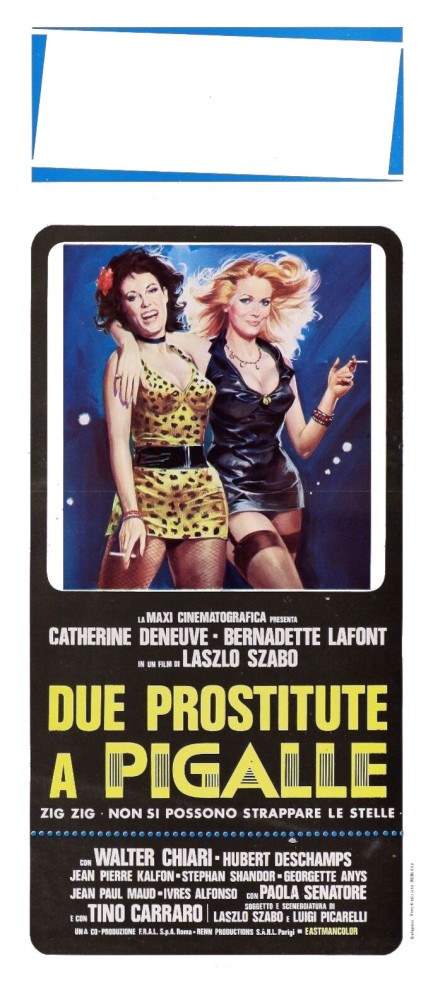
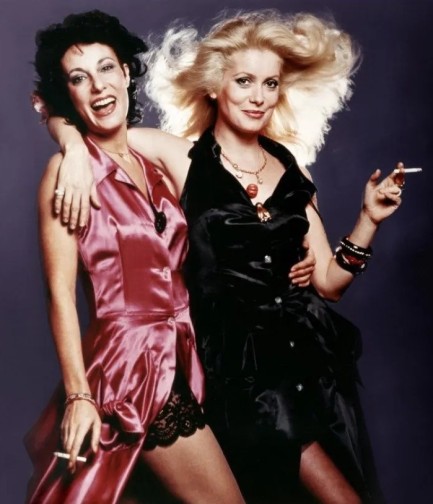
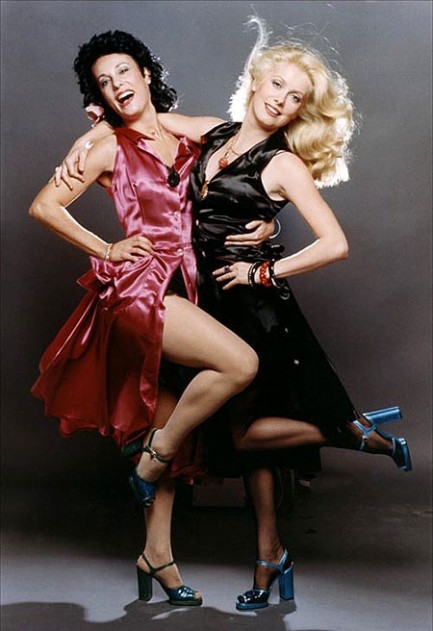
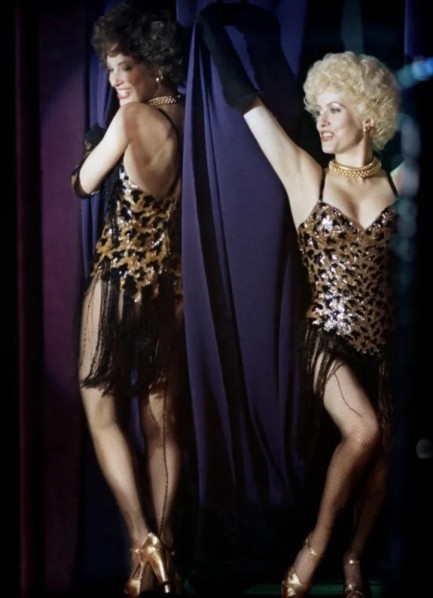
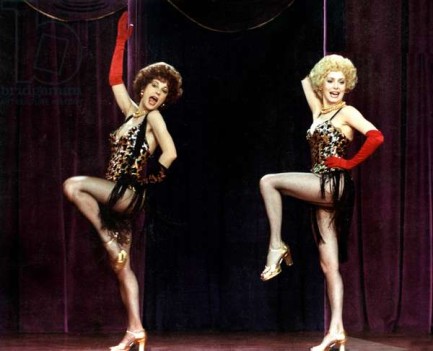
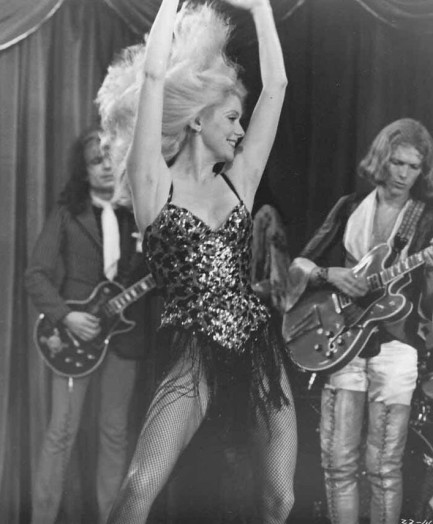
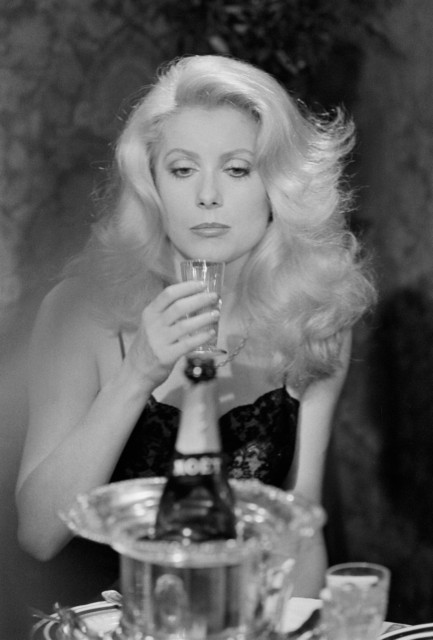
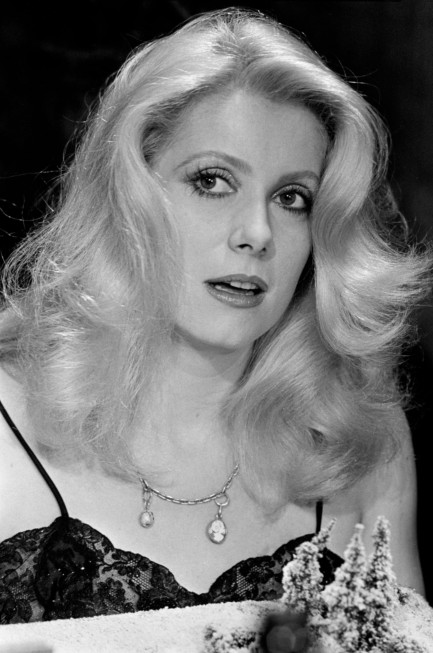
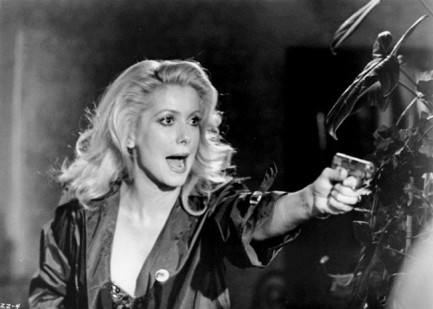
When we stumbled across this Italian poster and saw that it was for a film starring the lovely Catherine Deneuve and her unbeatable hair, we felt a screening was needed. Due prostitute a pigalle is a French/Italian co-production that was originally titled Zig-Zig, with the name changing to Zig-Zag for the U.S. The movie is about two Parisians played by Deneuve and Bernadette Lafont who work as cabaret entertainers, bookies, and prostitutes in order to raise enough money to buy a chalet in the mountains. Their signature song and dance number “Zig Zig” earns them a small measure of fame around Paris, and the dream home seems closer by the day.
However, Deneuve has no idea that Lafont is involved with a gang of cross-dressers who've kidnapped the wife of a prominent politician. When she finds out, she freaks out, and it looks like her friendship with Lafont is cooked and their house will never come to be. The movie has its moments, but jarring shifts of tone from serious to farcical and an insistence upon an ironic and unrealistic ending definitively sink it. Even so, it has Deneuve, and her hair can't be sunk under any circumstances. Due prostitute a pigalle premiered in France in early 1975, and in Italy today the same year.
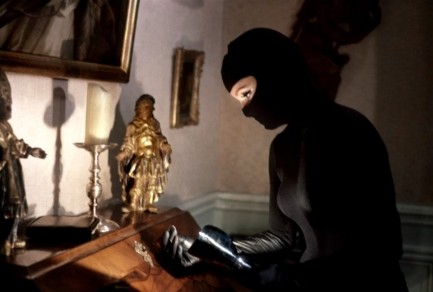
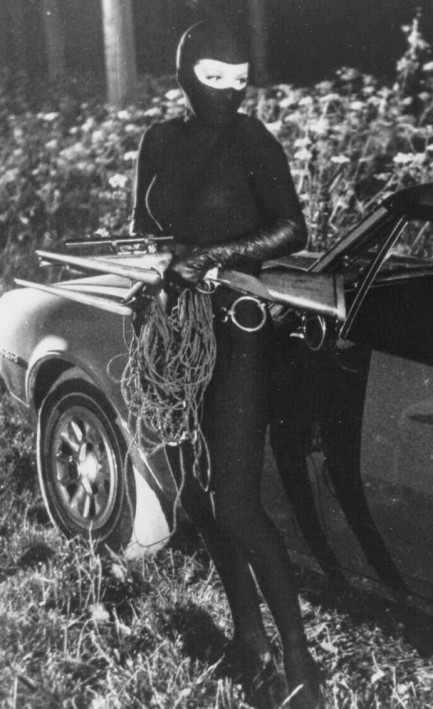
 She's one cool cat burglar. 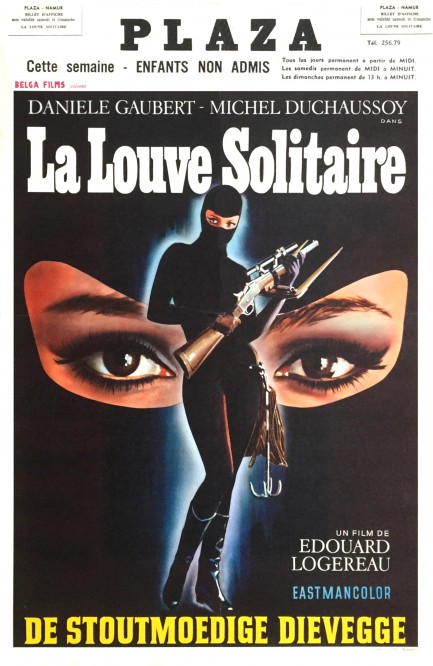
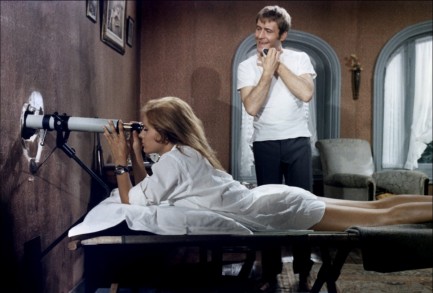
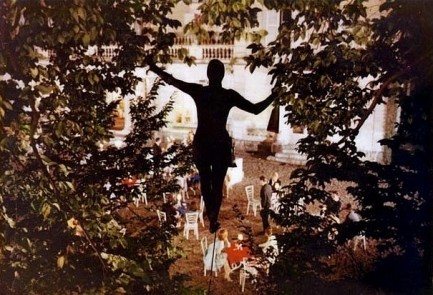
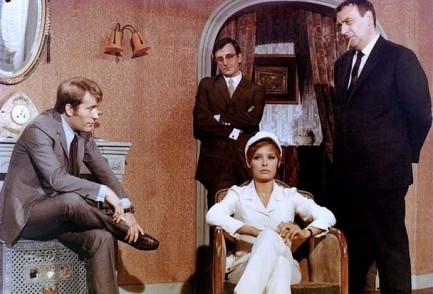
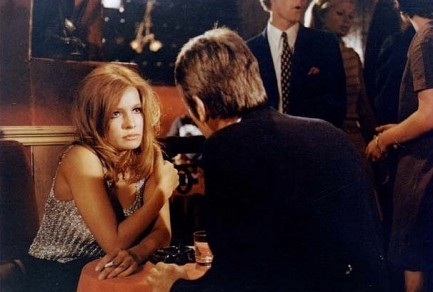
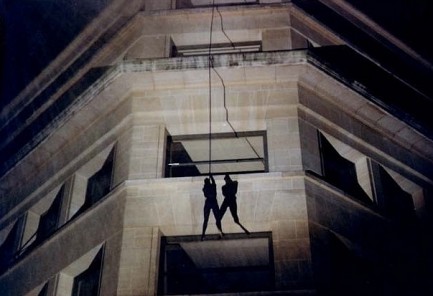
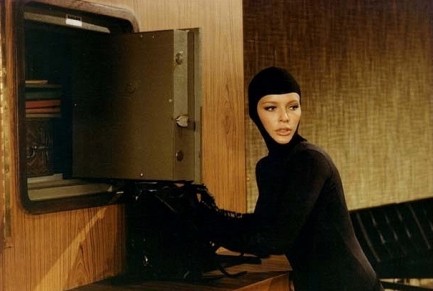
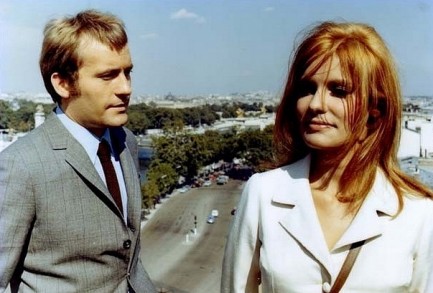
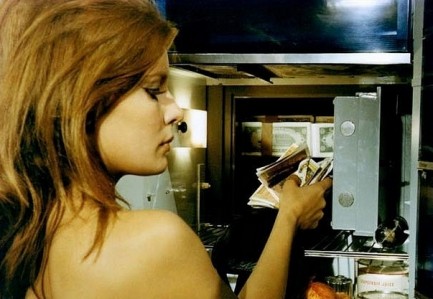
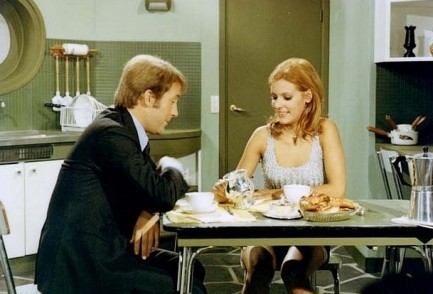
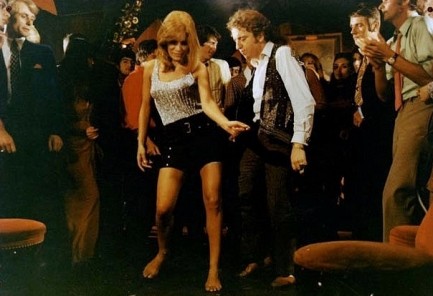
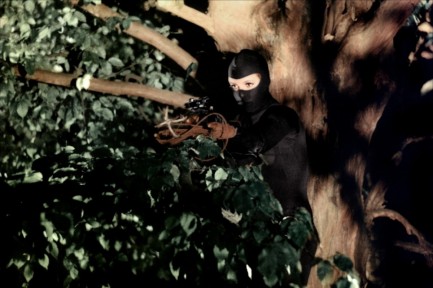
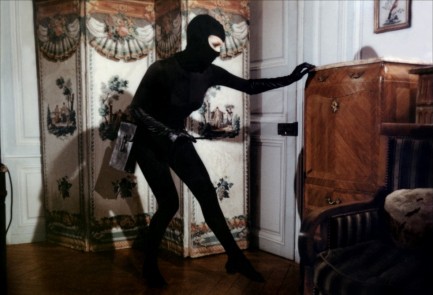
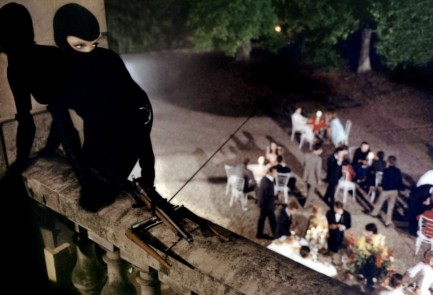
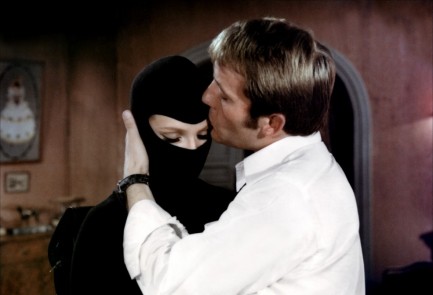
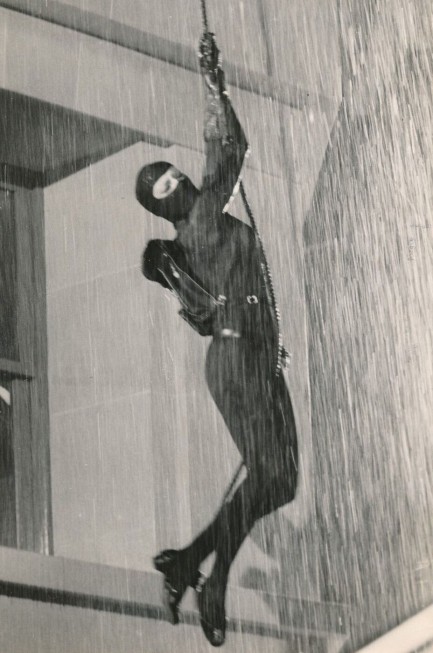
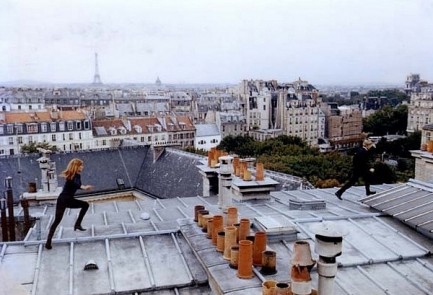
We have bit of tasty French style for you with this poster for La louve solitaire, a film that premiered today in 1968 and starred Danièle Gaubert. The movie is sourced from a series of novels by Albert Saine-Aube, and plotwise Gaubert plays a Parisian real estate agent by day/leotard wearing cat burglar by night. When she's caught in the act of a robbery by two government agents who've been lying in wait for her, she's blackmailed into working for them. The government duo want her to make a daring theft that will help bring down an international drug smuggling network. She's assigned a helper in the form of Michel Duchaussoy, so the movie becomes a sort of partners-in-crime adventure with a side of romantic tension. Gaubert, of course, finds herself in more danger than she expected, and after the caper the crooks she's robbed are hellbent on revenge.
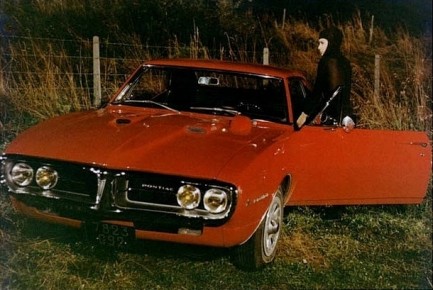
Just looking at the poster, which you may have noticed is actually a French- and Dutch-language promo from Belgium, you can tell that the movie provides high style in a similar vein as cult flicks such as Danger: Diabolik and Modesty Blaise. Like those films, La louve solitaire features nice outfits, hip lingo, and nightclub scenes, plus Gaubert rolling around in a blood-red Pontiac Firebird that qualifies as pure car porn. Also like those other movies, La louve solitaire isn't fully successful from an execution standpoint, however because it's among a group that was at the forefront of portraying women as physically dangerous ass-kickers with specialized skills (Gaubert's thief character is a trapeze artist), it's worth seeing for historical perspective alone.

|
 |

The headlines that mattered yesteryear.
1945—Mussolini Is Arrested
Italian dictator Benito Mussolini, his mistress Clara Petacci, and fifteen supporters are arrested by Italian partisans in Dongo, Italy while attempting to escape the region in the wake of the collapse of Mussolini's fascist government. The next day, Mussolini and his mistress are both executed, along with most of the members of their group. Their bodies are then trucked to Milan where they are hung upside down on meathooks from the roof of a gas station, then spat upon and stoned until they are unrecognizable. 1933—The Gestapo Is Formed
The Geheime Staatspolizei, aka Gestapo, the official secret police force of Nazi Germany, is established. It begins under the administration of SS leader Heinrich Himmler in his position as Chief of German Police, but by 1939 is administered by the Reichssicherheitshauptamt, or Reich Main Security Office, and is a feared entity in every corner of Germany and beyond. 1937—Guernica Is Bombed
In Spain during the Spanish Civil War, the Basque town of Guernica is bombed by the German Luftwaffe, resulting in widespread destruction and casualties. The Basque government reports 1,654 people killed, while later research suggests far fewer deaths, but regardless, Guernica is viewed as an example of terror bombing and other countries learn that Nazi Germany is committed to that tactic. The bombing also becomes inspiration for Pablo Picasso, resulting in a protest painting that is not only his most famous work, but one the most important pieces of art ever produced. 1939—Batman Debuts
In Detective Comics #27, DC Comics publishes its second major superhero, Batman, who becomes one of the most popular comic book characters of all time, and then a popular camp television series starring Adam West, and lastly a multi-million dollar movie franchise starring Michael Keaton, then George Clooney, and finally Christian Bale. 1953—Crick and Watson Publish DNA Results
British scientists James D Watson and Francis Crick publish an article detailing their discovery of the existence and structure of deoxyribonucleic acid, or DNA, in Nature magazine. Their findings answer one of the oldest and most fundamental questions of biology, that of how living things reproduce themselves.
|

|
|
It's easy. We have an uploader that makes it a snap. Use it to submit your art, text, header, and subhead. Your post can be funny, serious, or anything in between, as long as it's vintage pulp. You'll get a byline and experience the fleeting pride of free authorship. We'll edit your post for typos, but the rest is up to you. Click here to give us your best shot.
|
|