She could be Ursula Andress. 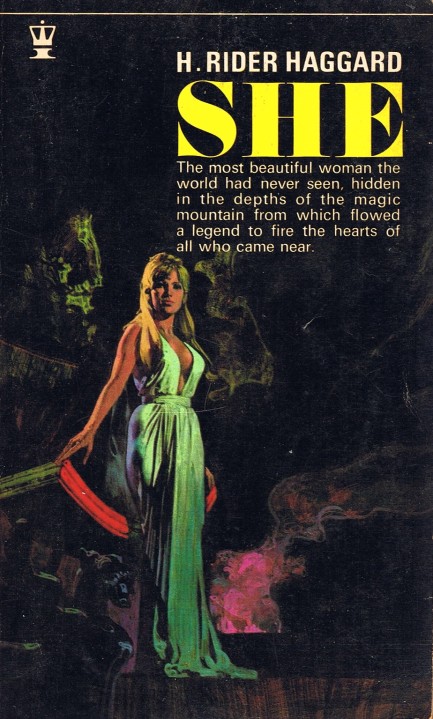
Above: one of many covers for H. Rider Haggard's all-time classic She, aka She: A History of Adventure, about the cruel, beautiful, and powerful ruler of a lost world. We chose this one because the art is based on the 1965 movie adaptation starring Ursula Andress, as you can discern at a glance. And if not, we added an Andress shot below from the film for comparison's sake. You wouldn't quite call this paperback edition from London based Hodder & Stoughton a tie-in—the movie came out in 1965 in Britain, whereas the paperback is from 1968. But Andress never goes out of style. You could probably put her on a book cover now and it would sell like potato chips. We're going to screen her version of She in a bit, and report back. We already checked out one of the other dozen versions, 1935's effort starring Helen Gahagan, which you can read about here if you're curious. 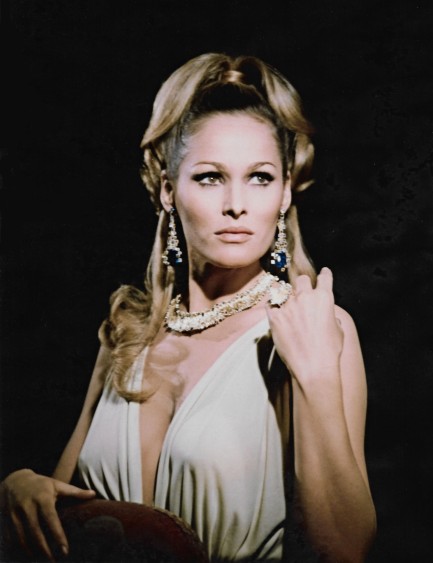
 It's a beautiful Window even if it doesn't illuminate the identity of the cover artist. 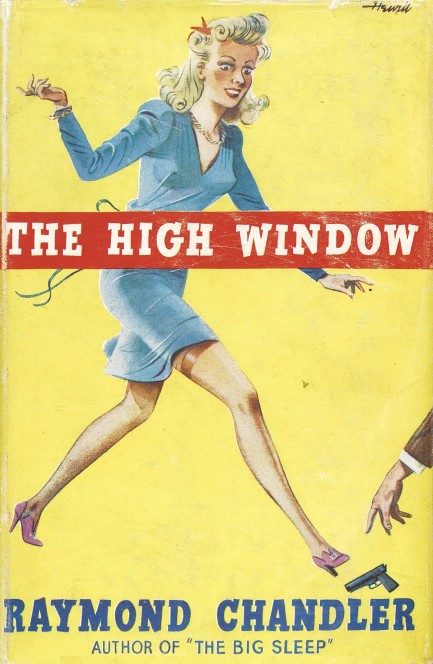
Above: a cover scan of Raymond Chandler's thriller The High Window. This book sold on Sotheby's a while back for more than 5K. It was published in 1943 in identical editions by British imprint Hamish Hamilton and Australia's George Jaboor with cover art that's signed but uncredited inside. It's possibly the work of British painter John Hewitt. He was born in 1922, which would make this an (extremely) early effort. But maybe he was a prodigy. With connections that could get him into the commercial art scene by age twenty-one. Okay, no. Alternatively, this could be the work of Don Hewitt, a British painter born in 1904. He repatriated with his parents to the U.S. in 1907, but could have later worked for an across-the-pond publisher, we suppose. Publishing continued there even during World War II. How Hewitt got his art to London we can't speculate. So, probably not him either. Call it unattributed, then. If you want to know what The High Window is about, check our earlier musings here.
 The return of the dragon. 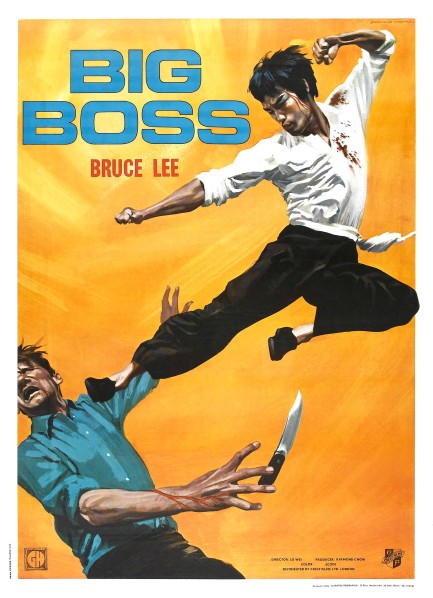 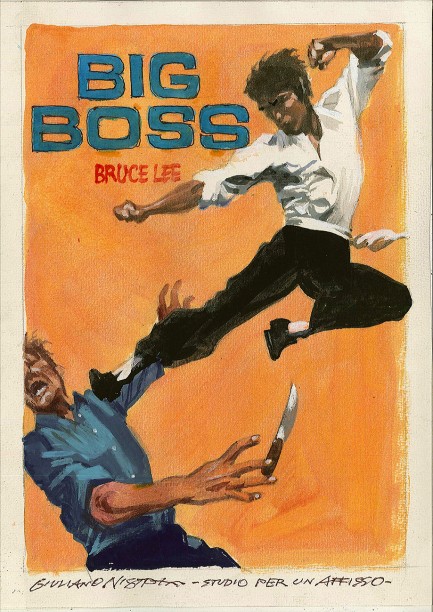
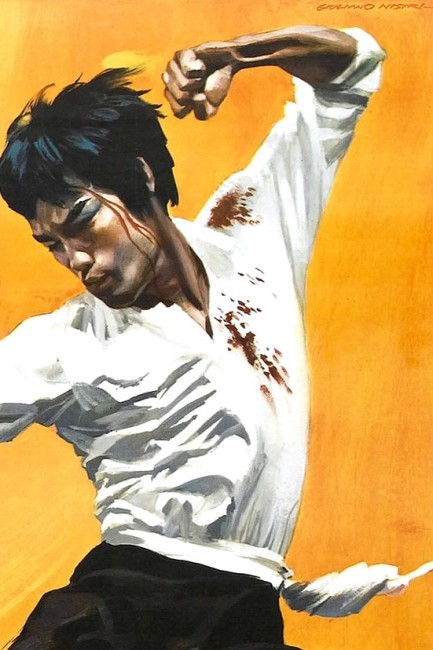
A while back we shared two Italian posters for the Hong Kong action flick Tang shan da xiong, aka The Big Boss. Those were painted by Averado Ciriello, and one of them, with star Bruce Lee depicted as moving so fast he had seven blurry arms, brought to mind those moments in The Matrix when Neo and Mr. Smith fight at mindbending speed. We're looking today at more art from the movie. The above efforts—a finished poster and a preliminary study—were painted by Italian artist Giuliano Nistri for the film's British release by Crest Films. We included the study because we wanted to highlight a website that you should visit, where you can see more of the same and gain a greater appreciation for Nistri's work. It's at this link. Tang shan da xiong premiered in England today in 1971.
 When she gets them on the hook they never get off. 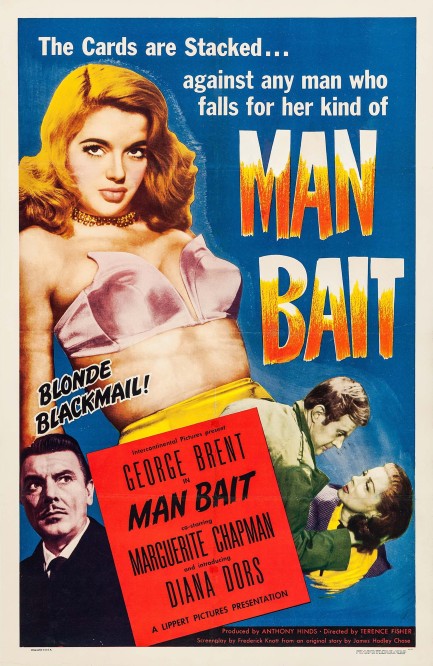
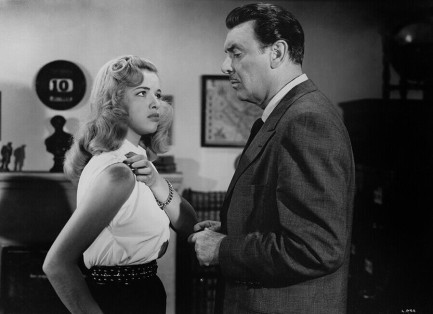
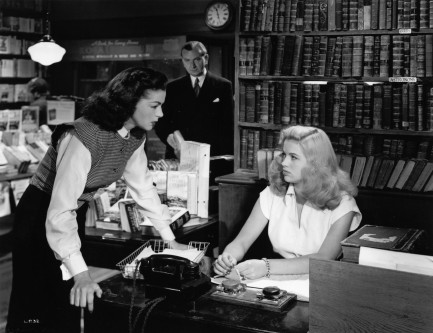
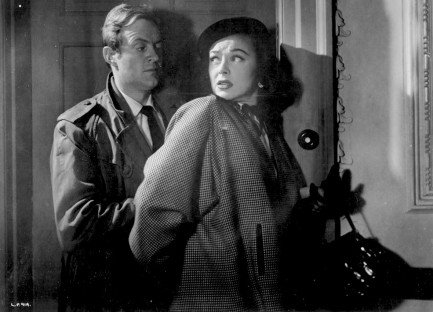
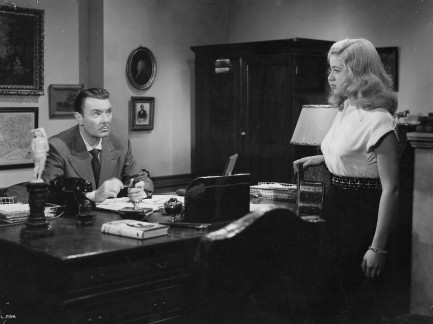
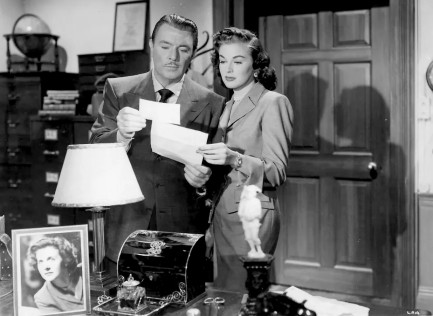
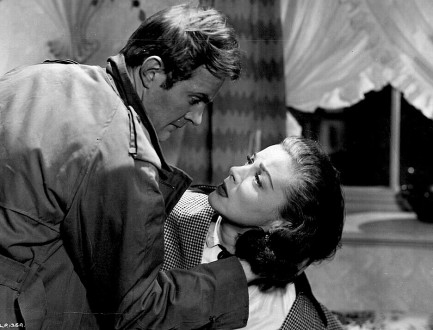
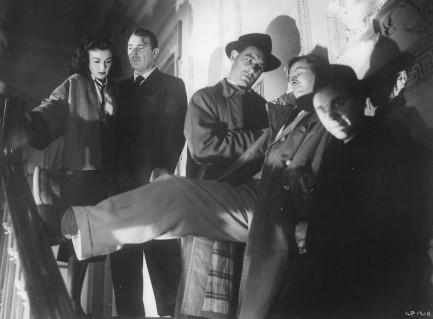
The beautiful photo-illustrated poster you see above was made for the British drama Man Bait, featuring George Brent, Marguerite Chapman, and Diana Dors. We gave it a watch, and for some reason the opening credits say, “introducing Diana Dors,” though this was actually her thirteenth credited role. We won't try to puzzle out that mystery. Plotwise, Dors and her irresistible lips are the bait, as she's convinced by a lowlife male acquaintance to blackmail her boss out of three-hundred pounds by threatening to lie about him making an unwanted advance toward her. Unfortunately, Dors is a reluctant scam artist, which puts her at odds with her manipulative accomplice. To say that everything goes wrong for her because of this relationship is an understatement.
Overall, Man Bait is a good film. While Dors is adequate in her role (she was still only twenty-one, despite her previous experience), Brent and Chapman, who both had dozens of films on their résumés at this point, are flawless as the blackmail victim and his loyal employee. An undercurrent of unrequited love prompts Chapman to side with Brent even though things look pretty bad for him as the plot progresses. But there's no need to be too terribly worried—the movie was made during the Hays Code censorship era, so you know crime can't pay. Sure, the Code was American, but even British productions adhered to it if they hoped to earn a U.S. release. Man Bait did when it premiered in Los Angeles today in 1952.
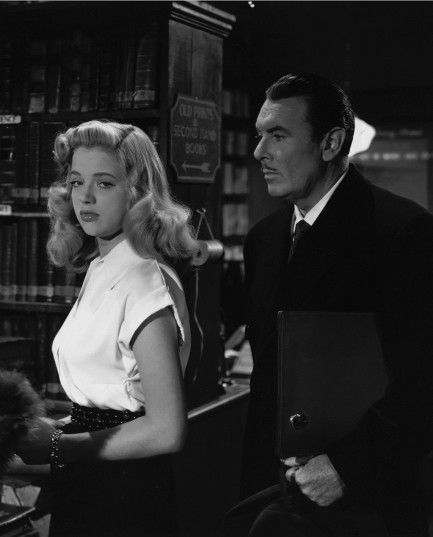 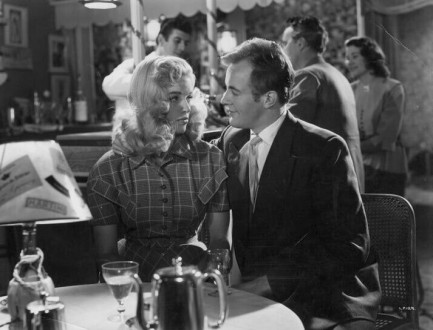 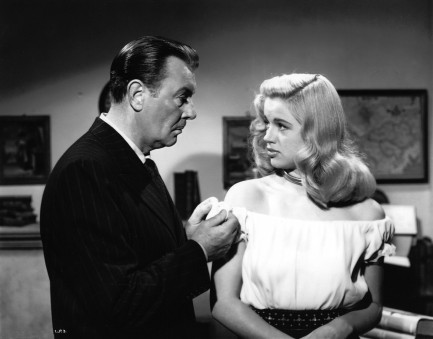       
In order to qualify as a temptation there has to be a chance you can resist. These are not a temptation—they're a certainty.
 With her the outcome is always in the bag. 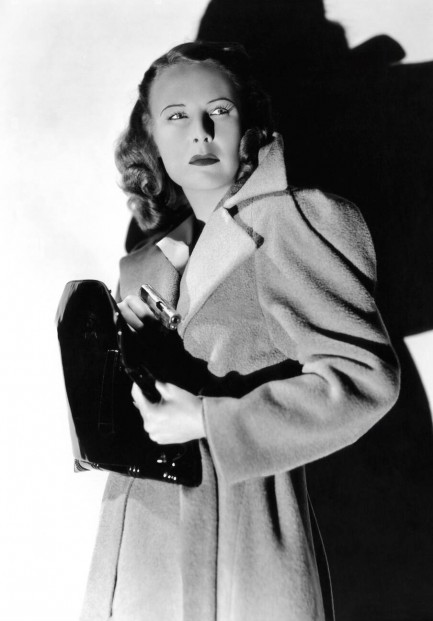
Above: a promo image of Hong Kong born British actress Wendy Barrie made for the drama I Am the Law, in which she played a newspaper columnist with, shall we say, pliable ethics. She also appeared in The Hound of the Baskervilles, Dead End, and Public Enemies, in which she played Bonnie Parker. The above shot is from 1938.
 Choose your legwear like your life depends on it. 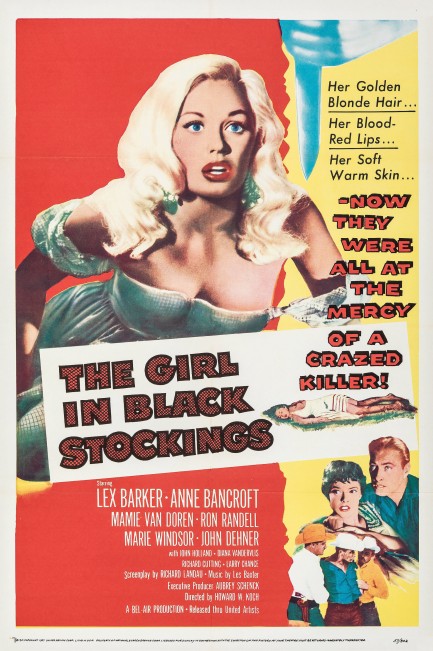
Once again, we have a poster proving that some of the worst movies had some of the best promotional art. This exemplary effort was made for The Girl in Black Stockings, which began its U.S. run today in 1957 after having its world premiere in England earlier in the year. The art showcases Mamie Van Doren, who's third billed but is the big draw. We talked about the movie last year and, shorter version, it's bad but occasionally amusing. By the way, legwear has nothing to do with the murder. The folks at Bel-Air Productions and United Artists knew they had a catchy title and simply ran with it.
 Laced up tight and ready for action. 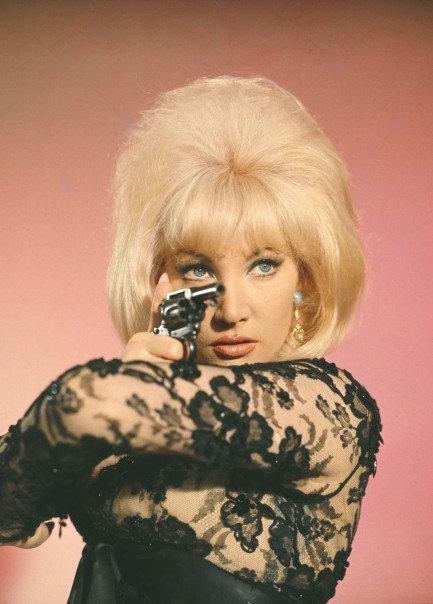
British actress Jacqueline Jones appears in the above promo image made for 1965 her comedy/thriller The Intelligence Man. Jones accumulated about forty credits during her career, appearing in such movies as Jungle Street Girls and The Cool Mikado, and on television shows such as The Avengers and The Scales of Justice. This is a great shot, bouffant hair, lace top, pink background, and all.
 We'll talk more about how uncivilized you people are later. Right now I'm going to kill rare animals purely for ego. 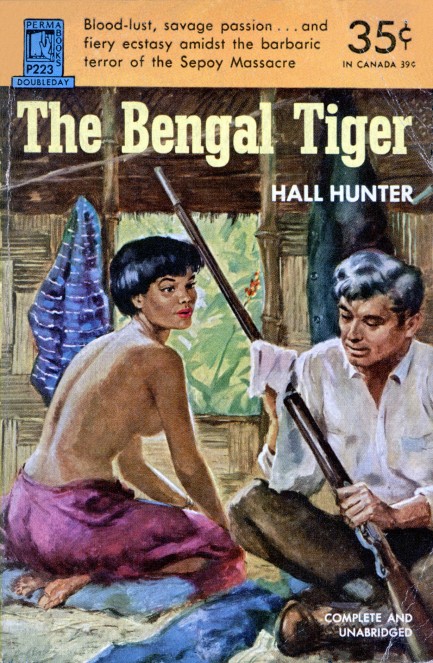
Above is a nice Carl Bobertz cover for Hall Hunter's, aka Edison Marshall's novel The Bengal Tiger, set in India during late 1850s. The lesson here is that he who prints the books establishes the narrative. The “barbaric terror of the Sepoy massacre” against England and its British East India Company caused about 2,400 British fatalities, according to official records of the time, but the toll is now thought to have been about 6,000. The Brits didn't bother to keep track of Indian deaths, but the change in recorded population between the previous census and the next indicated hundreds of thousands were killed. On a level orders of magnitude more disturbing is the fact that during the British occupation of India at least 40 million Indians, and possibly more than 100 million, were killed or starved to death.
If you were to ask Brits about the deadliness of their empire, most would not believe it, and many would try to excuse it. That's no surprise. Generally, the citizens of the expansionist powers can only deal with such horrors by first denying the truth, then if that fails, suggesting that there's a statute of limitations on mass murder. It happens, for example, whenever someone brings up slavery and westward expansion in the U.S. “It had nothing to do with me, or anyone else alive today.” However, over on the opposite side of reality where anti-Floridian concepts like factual history and mathematics reside, there are widely agreed upon studies revealing that—in Britain's case—$45 trillion in wealth was drained from India over about 170 years. That amount of gain has very much to do with everyone alive today, and in the future. Have a good Monday!
 What was her real name? It's a Short story.   
Above are three photos of British-Burmese actress Seyna Seyn, who in our view has one of the greatest names in show business history. But as we asked above, could such an exotic and alliterative handle be real? Sadly, no. She was born Sylvia Short, which strikes us as a perfectly serviceable show business name, but when you come up with something like Seyna Seyn you have to go with it. Seyn's filmography includes Casanova 70, I marziani hanno 12 mani, aka The Twelve-Handed Men of Mars, Agente segreto 777 - Operazione Mistero, and Se tutte le donne del mondo... (Operazione Paradiso), aka Kiss the Girls and Make Them Die. As those titles suggest, she mostly worked in Italy. We figure we'll get around to one or two of her movies pretty soon.
 They're as real as ink printed on paper can be. 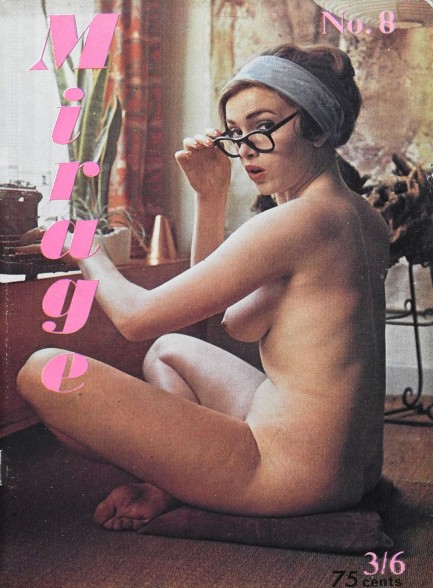
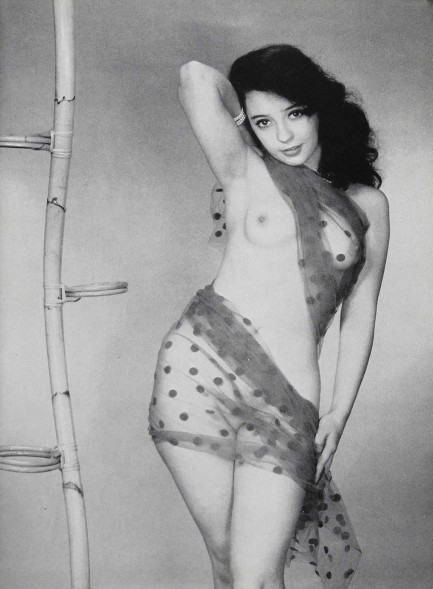
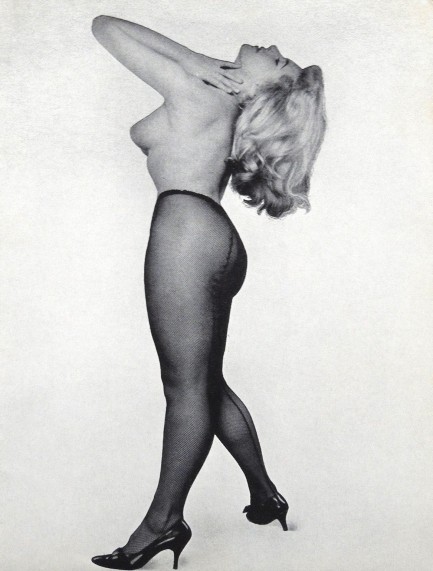
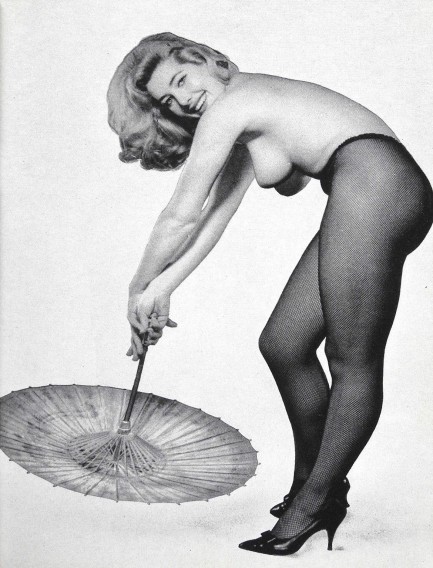
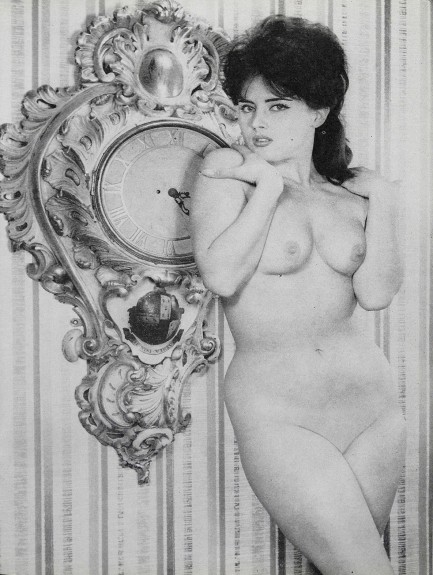
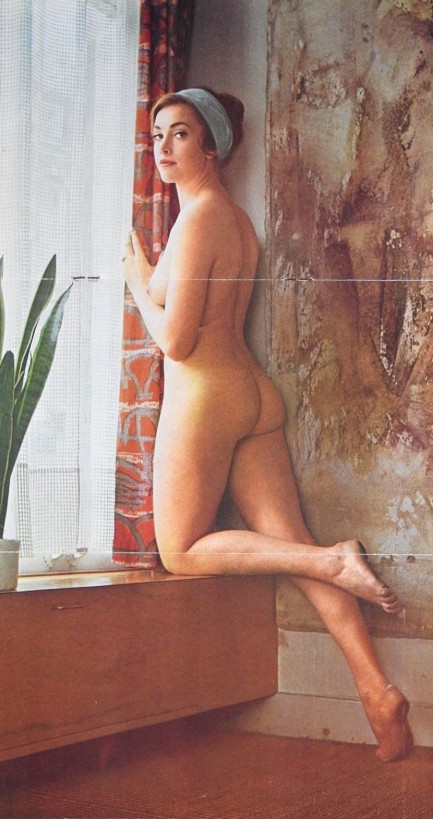
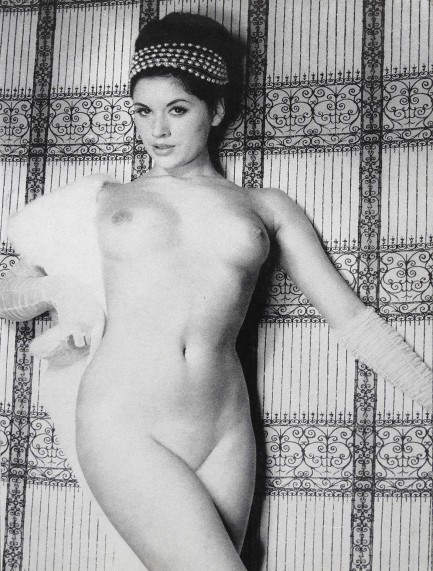
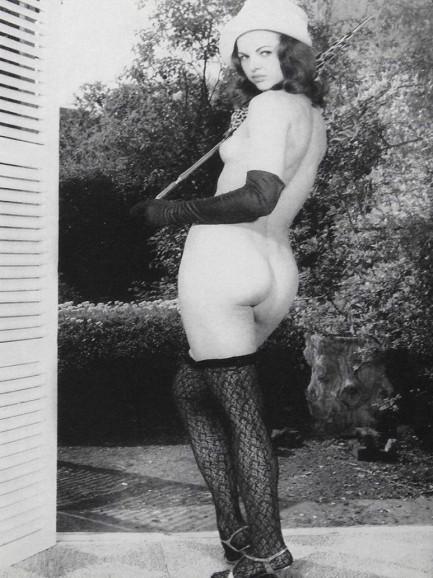
Above is the cover of a fun vintage nudie magazine called Mirage, made in London by an outfit known as Swanedge Publications. We like the name of the magazine. Glamour photography implies the ephemeral. You know what else is ephemeral here? Pubic hair. The muff-munching airbrush monster has struck again, removing the fuzzy bits and vaginal convolutions of a couple of models. Pubic regions as obscenity is something we talk about often here because we share a lot of Japanese nudes in which those areas are banned. The difference is that in Japan the models covered those parts in various clever ways so they still looked human. In the West underpaid guys in pre-press removed nether regions entirely and made the models sexless like Barbie dolls. We'll talk about this more later.
Mirage's cover star, who's typing in the nude very much the same way we write this website, is identified only as Anna. Inside the issue is a tri-panel centerfold of a model the editors call Alicia, and she's bracketed by other models named Wendy, Kismet, Jan, Ella, Sylvia, etc. All of those are professional names, we assume. Meanwhile the photographers work under probable pseudonyms too, we suspect, such as Don Pleasance and Len Humber. There's no copyright on the magazine, therefore only someone who was around at the time could say for sure when it appeared, and that leaves us out. However, the look of it says mid-1960s to us. It's a nice publication. There are more pages, but only so much scanning time in the world. Maybe we'll return here later and do a more thorough job.

|
 |

The headlines that mattered yesteryear.
1945—Mussolini Is Arrested
Italian dictator Benito Mussolini, his mistress Clara Petacci, and fifteen supporters are arrested by Italian partisans in Dongo, Italy while attempting to escape the region in the wake of the collapse of Mussolini's fascist government. The next day, Mussolini and his mistress are both executed, along with most of the members of their group. Their bodies are then trucked to Milan where they are hung upside down on meathooks from the roof of a gas station, then spat upon and stoned until they are unrecognizable. 1933—The Gestapo Is Formed
The Geheime Staatspolizei, aka Gestapo, the official secret police force of Nazi Germany, is established. It begins under the administration of SS leader Heinrich Himmler in his position as Chief of German Police, but by 1939 is administered by the Reichssicherheitshauptamt, or Reich Main Security Office, and is a feared entity in every corner of Germany and beyond. 1937—Guernica Is Bombed
In Spain during the Spanish Civil War, the Basque town of Guernica is bombed by the German Luftwaffe, resulting in widespread destruction and casualties. The Basque government reports 1,654 people killed, while later research suggests far fewer deaths, but regardless, Guernica is viewed as an example of terror bombing and other countries learn that Nazi Germany is committed to that tactic. The bombing also becomes inspiration for Pablo Picasso, resulting in a protest painting that is not only his most famous work, but one the most important pieces of art ever produced. 1939—Batman Debuts
In Detective Comics #27, DC Comics publishes its second major superhero, Batman, who becomes one of the most popular comic book characters of all time, and then a popular camp television series starring Adam West, and lastly a multi-million dollar movie franchise starring Michael Keaton, then George Clooney, and finally Christian Bale. 1953—Crick and Watson Publish DNA Results
British scientists James D Watson and Francis Crick publish an article detailing their discovery of the existence and structure of deoxyribonucleic acid, or DNA, in Nature magazine. Their findings answer one of the oldest and most fundamental questions of biology, that of how living things reproduce themselves.
|

|
|
It's easy. We have an uploader that makes it a snap. Use it to submit your art, text, header, and subhead. Your post can be funny, serious, or anything in between, as long as it's vintage pulp. You'll get a byline and experience the fleeting pride of free authorship. We'll edit your post for typos, but the rest is up to you. Click here to give us your best shot.
|
|