| Vintage Pulp | Apr 11 2024 |



| Vintage Pulp | Mar 23 2024 |

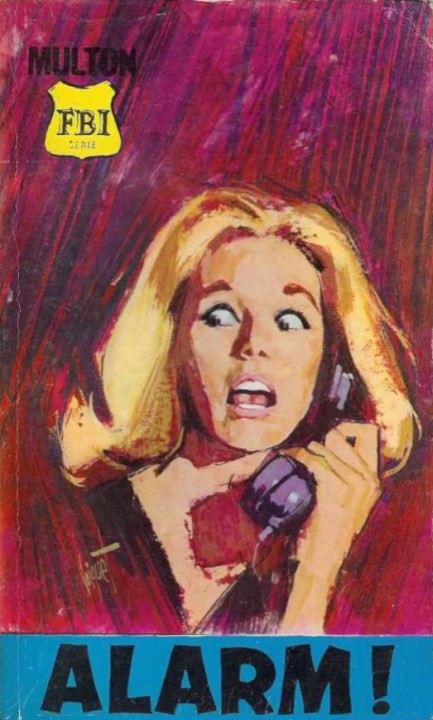
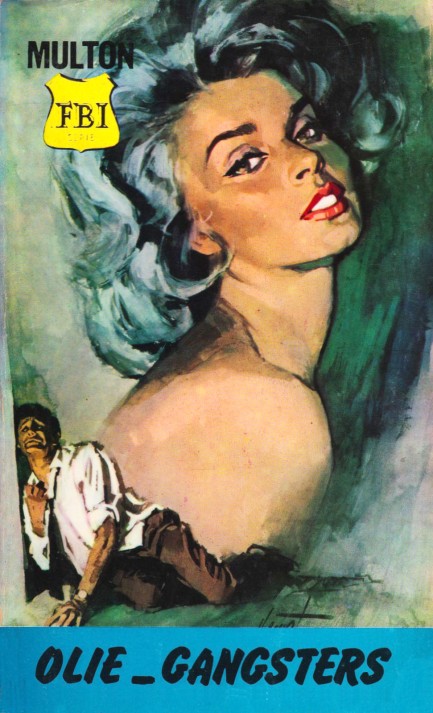
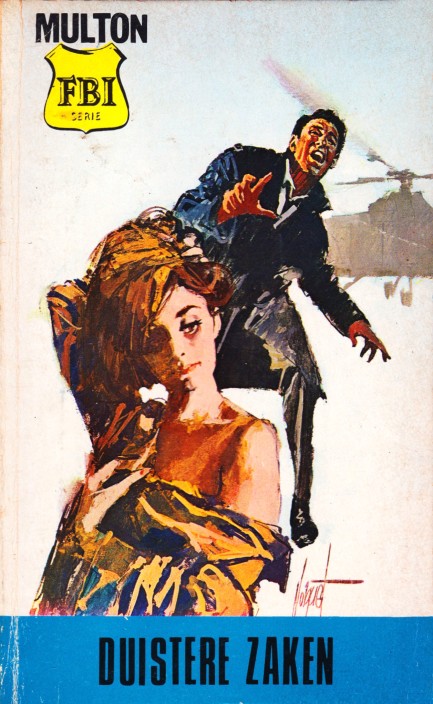
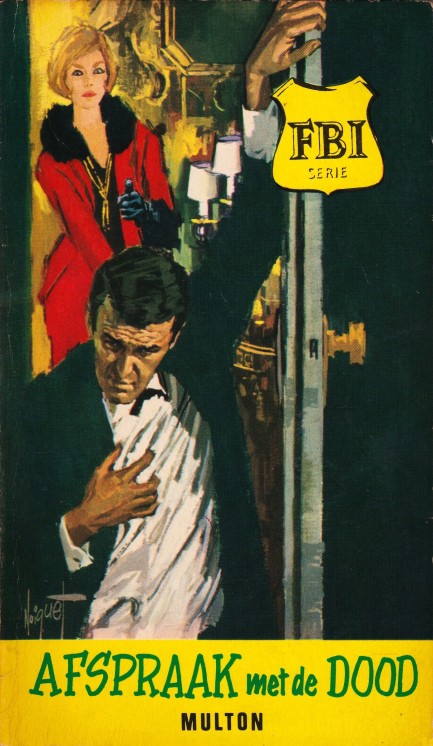
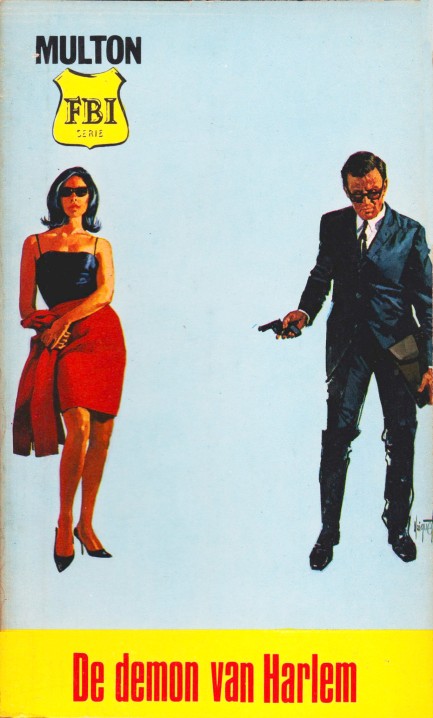
Below: a small set from Spanish artist Joan Beltrán Bofill, who signed his work as “Noiquet,” here working for a pair of Rotterdam based publishers illustrating novels by Edward Multon, who was an alter ego of Dutch author Herman Nicolaas van der Voort. These are from 1967 and 1968.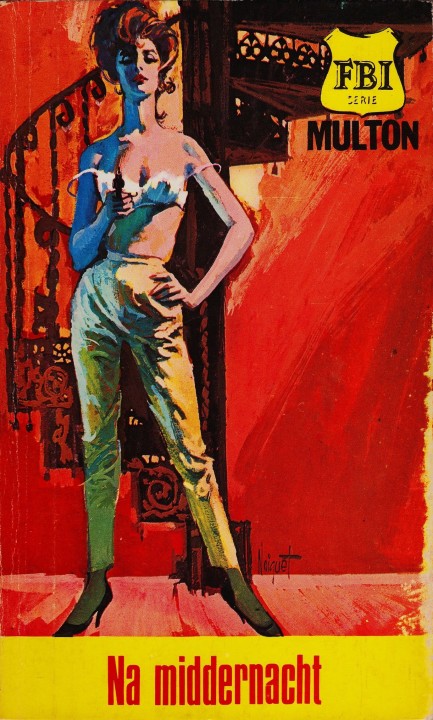
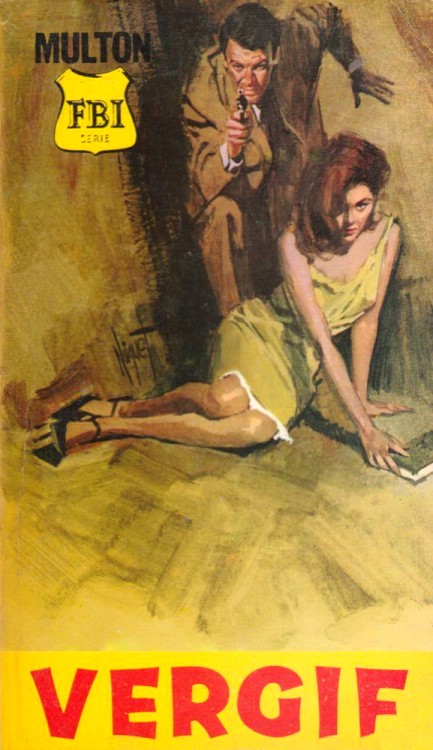
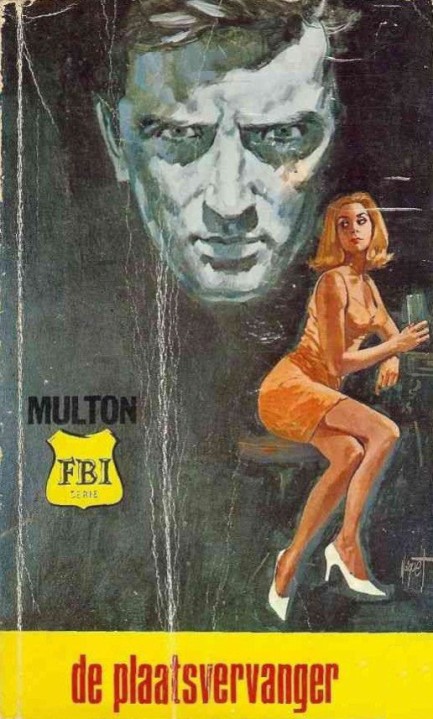
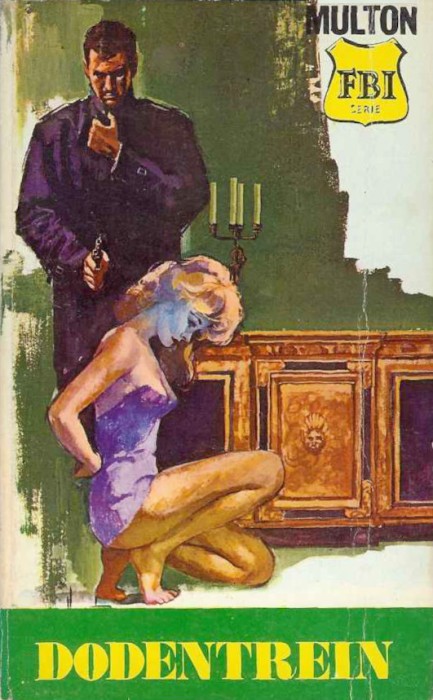
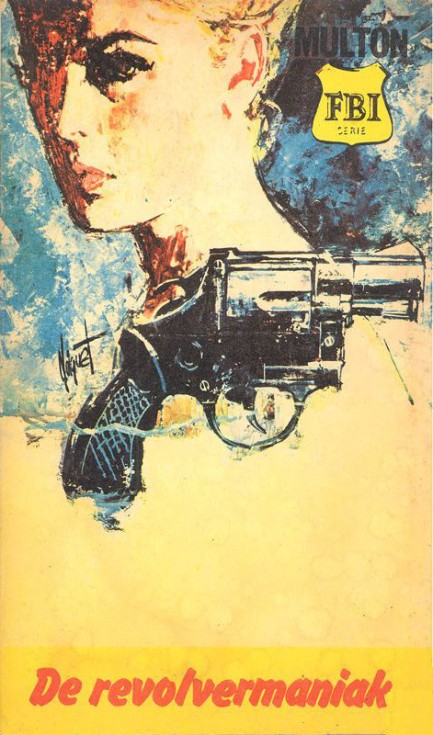

| Vintage Pulp | Mar 1 2024 |

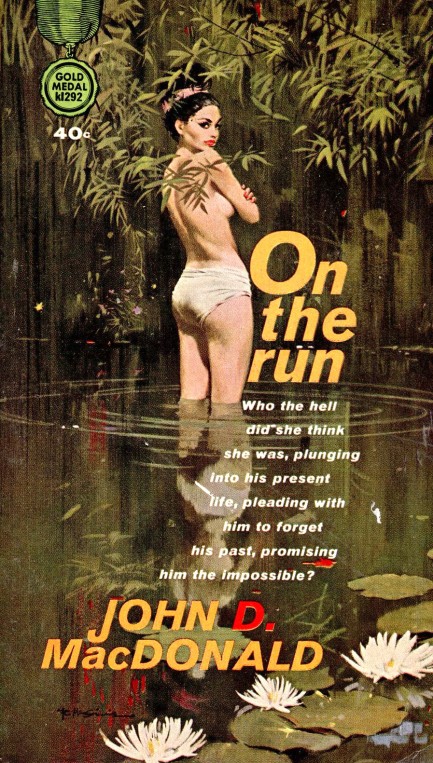
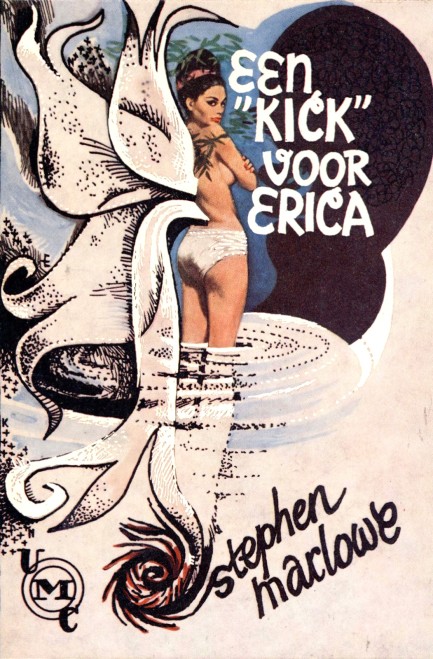
European and Australian publishers made a habit of reusing U.S. paperback art, and you see another example above. The top piece for John D. MacDonald's 1963 novel On the Run received a remix on the front of 1968's Een “kick” voor Erica, which is a translation by Dutch publishers Combinatie of Stephen Marlowe's 1967 novel Drumbeat — Erica. It's hard to improve on a McGinnis, but we think the fantasy-like transformation and giant wings—dare we say?—elevate cover number one to something even nicer. We found both on Flickr, so thanks to those two uploaders.

| Musiquarium | Jan 4 2024 |

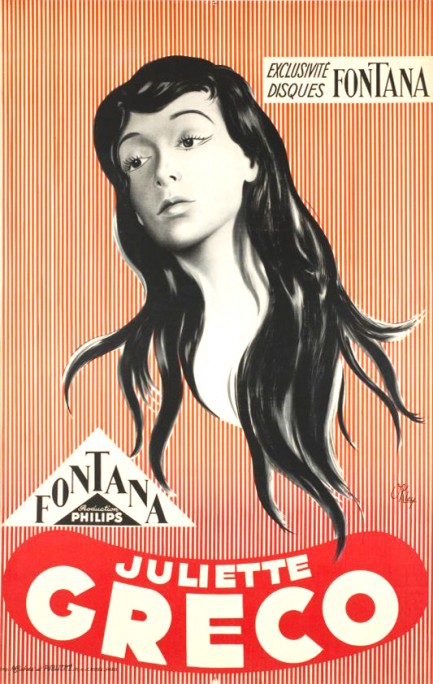
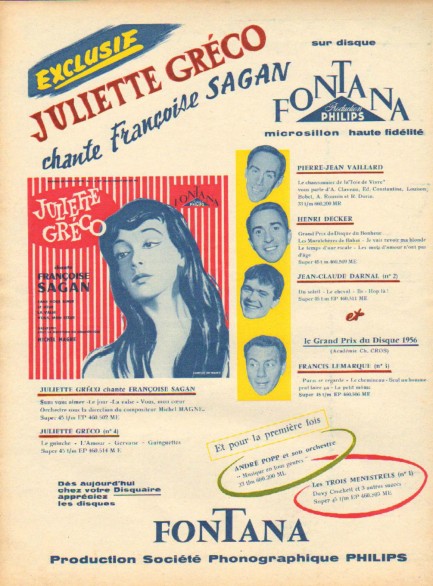
 This striking music brochure promo art for French singer Juliette Gréco and Disques Fontana (a subsidiary of the Dutch label Philips Records) was created by the famous illustrator O’Kley in 1956. The art was reused for record covers, as you see below.
Gréco, an actress as well as singer, was a fixture in the Saint-Germain-des-Prés area of Paris, and her acquaintanceships with such figures as Jean-Paul Sartre and Maurice Merleau-Ponty earned her the nickname La Muse de l’existentialisme—the existentialists’ muse. She was also, according to Miles Davis, one of the great loves of his life, and the feeling was reciprocated, so that wins major points right there because Miles was the bomb.
Moving on to the art, O’Kley was a pseudonym for Nantes-born Pierre Gilardeau, the man behind some of the most collectable Folies Bergère posters. He also illustrated many book covers and movie posters, and after a long career died in 2007. We’ve seen some good examples of his art, so we’ll try to get back to him a bit later—but we make no guarantees. You can see another Fontana post here.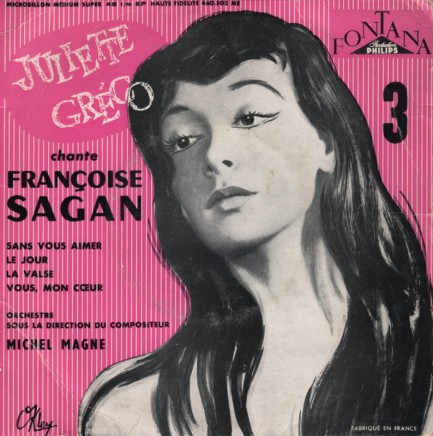

| Vintage Pulp | Nov 29 2023 |

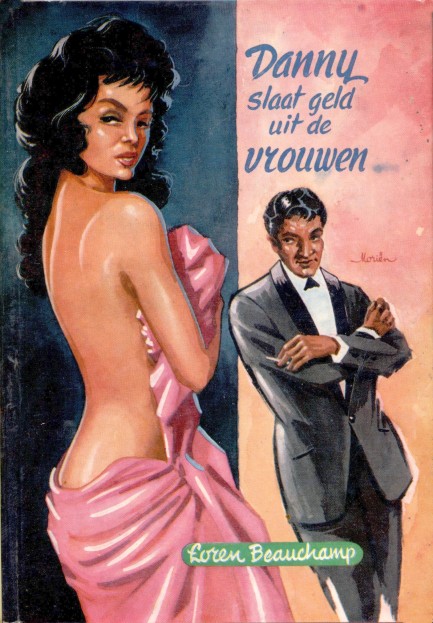
Above is another cover from J.H. Moriën for Amsterdam based publishers Uitgeverij Orion, this time fronting Danny slaat geld uit de vrouwen by Loren Beauchamp, aka Robert Silverberg. We're pretty sure this is a translation of his 1959 novel Another Love, Another Night. The title in Dutch means, “Danny beats women out of money,” which we assume refers to a beating of the grifter variety rather than anything physical. Moriën's art, with its beautiful color palette and sheet-wrapped femme fatale, is sublime. Click his keywords below to see more.

| Vintage Pulp | Oct 10 2023 |

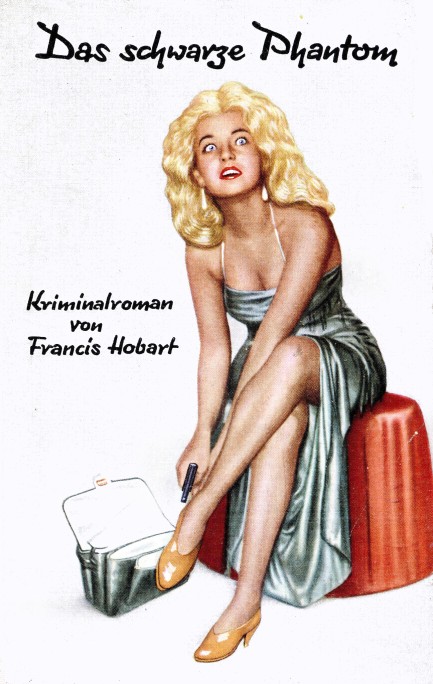
We have a bit of Dutch pulp today, Das Schwarze Phantom by Francis Hobart, published in 1959 by Constantin-Verlag, with uncredited art of a crazy-eyed femme fatale pulling from her purse the last thing any person who's cognitively all there wants to see. Let's see if we're all there: Person, woman, man, camera, TV. Yup—we're golden! This cover was a Flickr find, which we lightly cleaned. Thanks to the original uploader.

| Vintage Pulp | Sep 25 2023 |

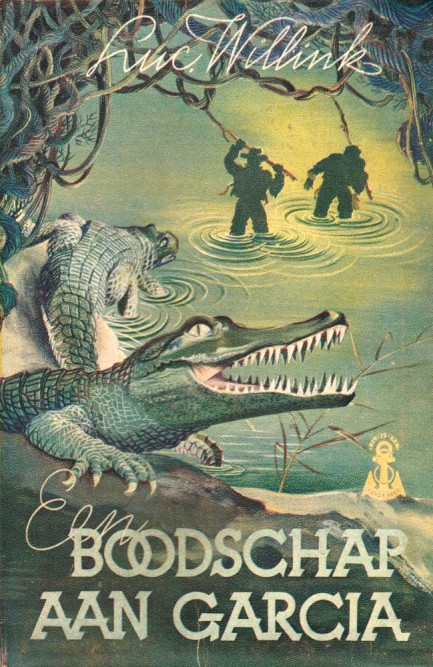
We wanted to revisit Dutch illustrator Piet Marée, whose style is so unusual it's very much worth another look. There's nothing biographical out there about him, as far as we can find. But we love his work. Een boodschap aan Garcia, which means, “a message to Garcia,” was written by Luc Willink, aka Lucas Willink, aka Clifford Semper, and published by Hague based Anker-Boekenclubin in 1950. How it relates to Elbert Hubbard's dramatized 1916 essay of the same name (which resulted in a 1936 Barbara Stanwyck movie) is unknown to us. We can tell you it's the same story—U.S. soldier Andrew S. Rowan carries a secret message from President William McKinley to Calixto García, a rebel hiding in the mountains of Cuba, before the Spanish American War. But the point here is Marée's art. We love it. We'll try to dig up more from him to share later.

| Vintage Pulp | Jan 8 2023 |


British actress Diana Rigg stars on this Flickr sourced cover of 1968's Lijken in Actie, which was a Dutch translation of John Garforth's The Laugh was on Lazarus, a novel derived from Rigg's hit television show The Avengers. She played the indomitable Emma Peel, who kicked ass with great counterculture style while partnered with the older and more conservative Patrick Macnee. The lettering that says De Wrekers, is not the title. That translates literally as “the avengers,” so it's just letting book buyers know they're looking at an adaptation of the show. The title is at the bottom.



| Vintage Pulp | Dec 10 2022 |

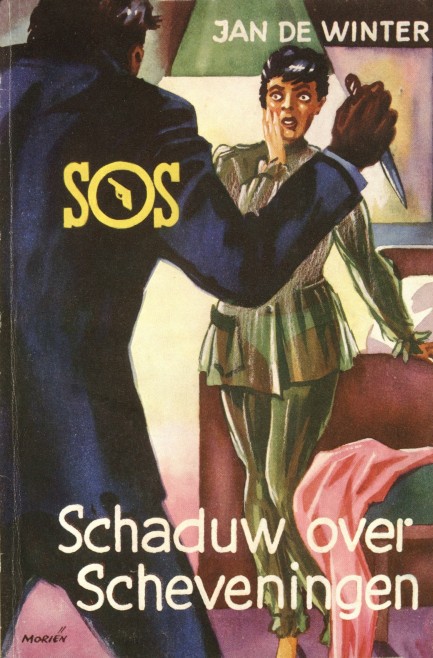
I am reacting to your article about the book covers of J.H. Morien. I am preparing an article about his work and so I discovered that he had an office in the fifties in Amsterdam where he worked together with C. Beck, Damrak 45. They were specialized in commercials and advertising, but they also worked together for book covers (C. Beck the lettering?). I hope you can use this information.
Yup, we can use the information alright, Bert. And an immense thanks to you for taking the time to write.

| Vintage Pulp | Dec 6 2022 |

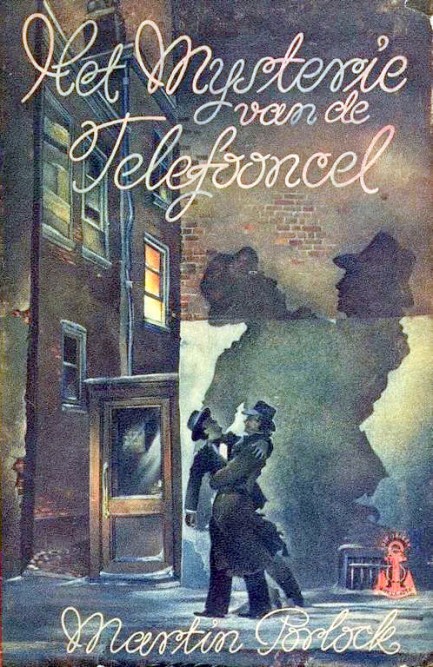
Here's an unusual Dutch cover that caught our eye for Martin Porlock's Het Mysterie van de Telefooncel—“the mystery of the phone booth”—published in 1949, with art by Piet Marée. The two characters here sort of look like they're dancing, but they're fighting, probably over which one cut in line for the phone booth (the Dutch are famously bad at queueing). Anyway, this is beautiful work. We can't find more info about Marée, but we'll keep digging, as always. Martin Porlock was a pseudonym used by Philip MacDonald, and the book is a translation of his 1932 novel Mystery in Kensington Gore, which is also known as Escape.