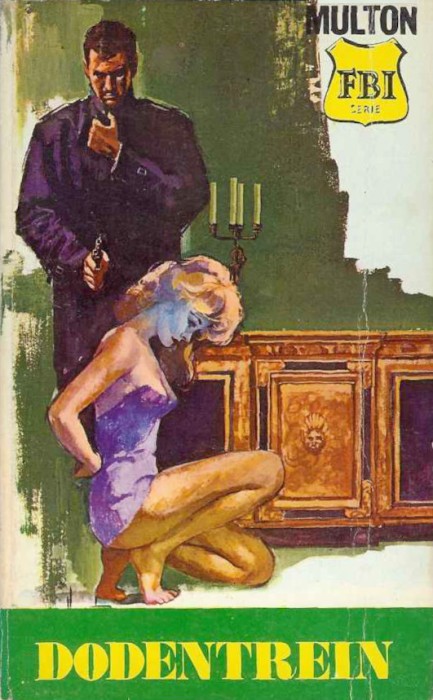
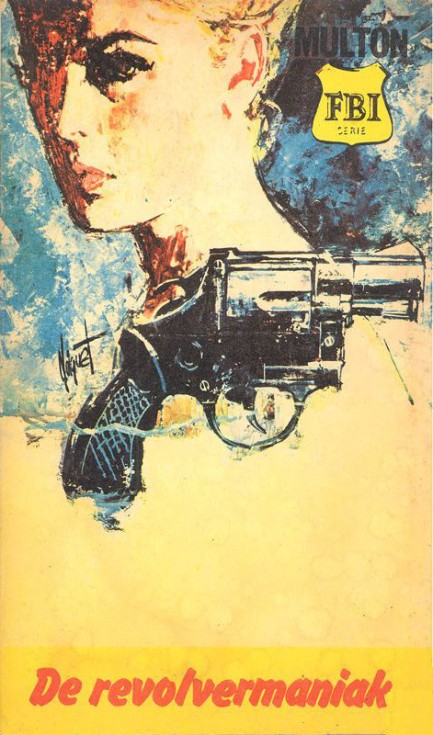
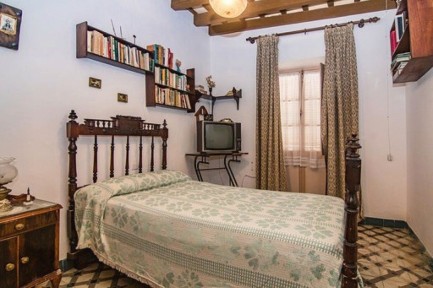
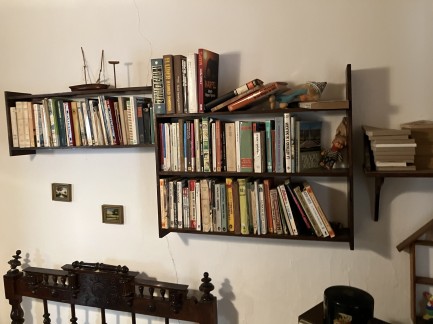
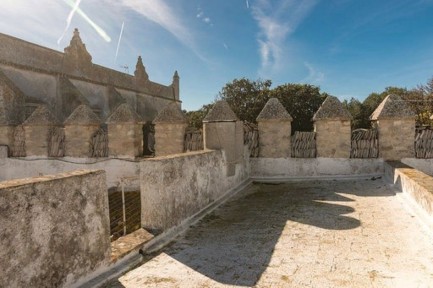
We've procured for ourselves a piece of Spain. 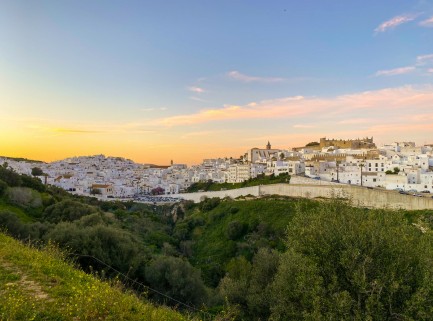
A quick note for Pulp Intl. visitors: we may post a bit less in the upcoming couple of weeks because we're moving, and that will keep us pretty busy. We'll be aiming for a seamless transition but anything can happen. If we really run out of time we'll take an intermission, as we do periodically, but for now we're planning to stay active. If we take a break it'll be for only four or five days.
We're moving because, after ages living in several interesting parts of the world, we've finally bought a house, and though we hate to exchange our easy mobility for anything resembling roots, as well as losing our current flat, you can't run around from place to place renting forever, right? We're moving just a quick drive south to a lovely town that's architecturally protected, and has one of the last stretches of unruined countryside and beach in southern mainland Spain. The house is right in the center of town above a couple of quaint shops and dates mainly back to 1870s. We say mainly because, like many old houses in Spain, it was expanded in sections. The earliest parts are older than the 1870s, but we'd have to dig through the local property registry to find the exact dates of previous works. countryside and beach in southern mainland Spain. The house is right in the center of town above a couple of quaint shops and dates mainly back to 1870s. We say mainly because, like many old houses in Spain, it was expanded in sections. The earliest parts are older than the 1870s, but we'd have to dig through the local property registry to find the exact dates of previous works.
In any case, it's one of newer structures in a town that has a castle and buildings from the 15th century. Our favorite part: in what will be one of the two offices (below), there's a bizarrely steep stairway leading to a trapdoor that opens onto the second floor. But we're going to keep the door closed and use the stairs as a bookcase. Not bad, right? The pulp will be majestic there. The open shelving you see at left will have custom doors in the vintage style of the rest of the house, and will hold our magazines (right now they're holding two Champagne glasses we used to toast our purchase). All in all, we're feeling pretty good about the place, and hopefully we'll be happy there.

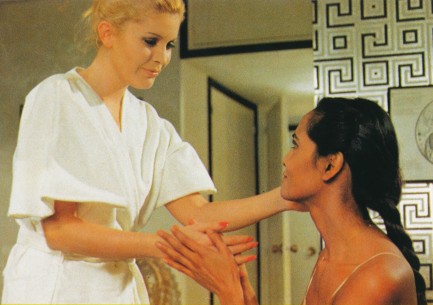
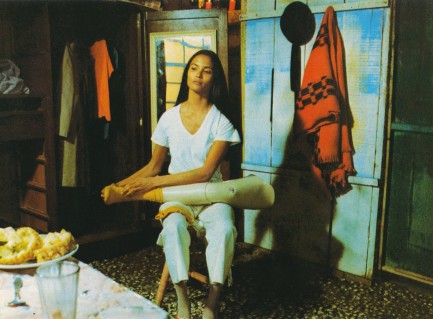
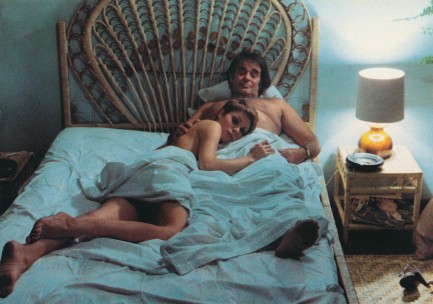
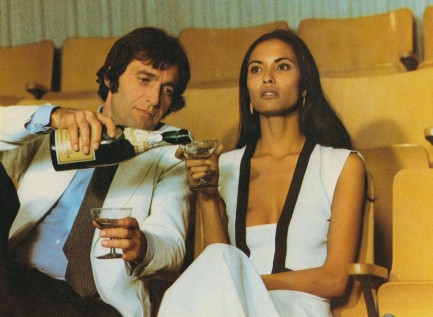
 Gemser adds a few degrees to the equatorial heat. 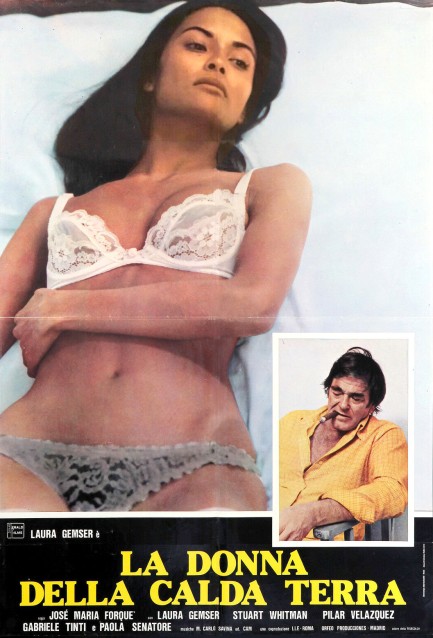 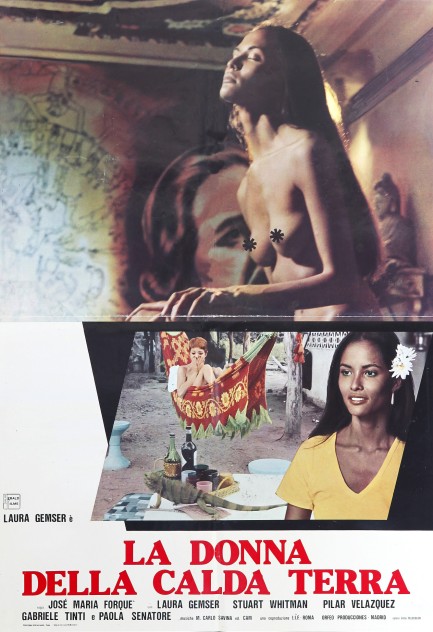
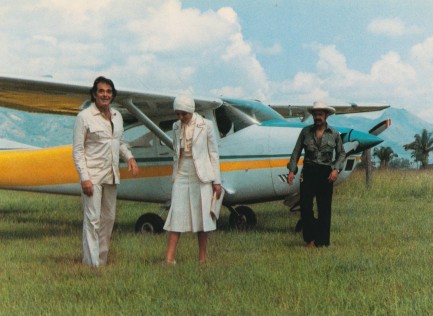
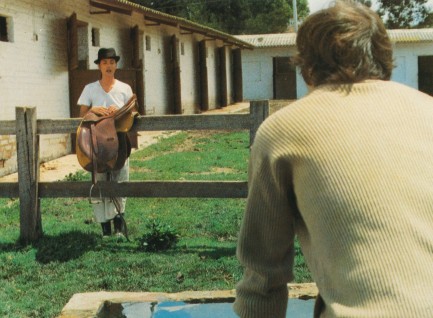
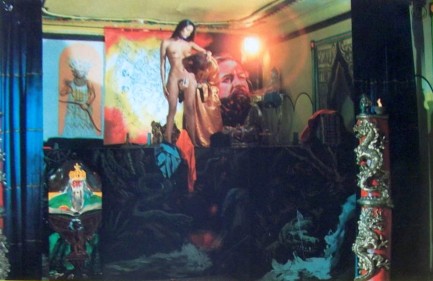
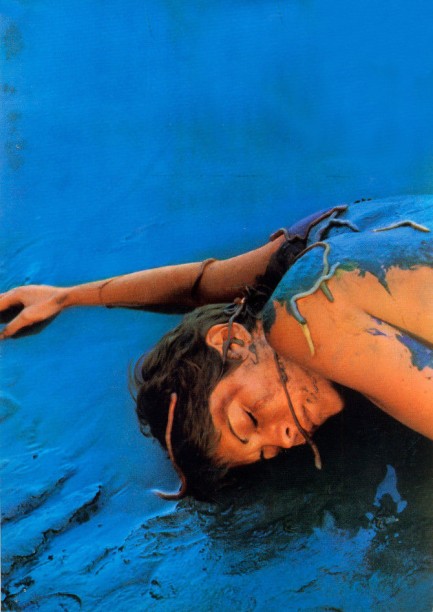
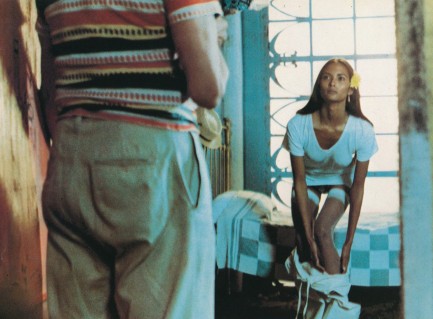
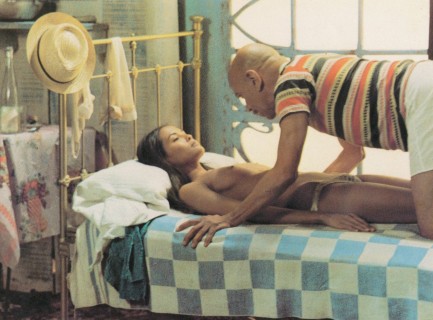
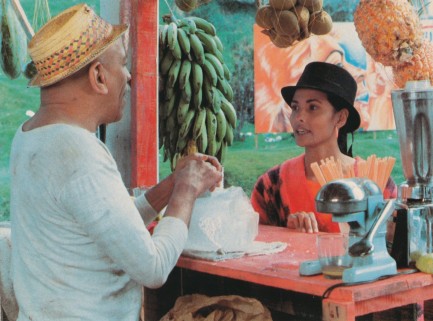
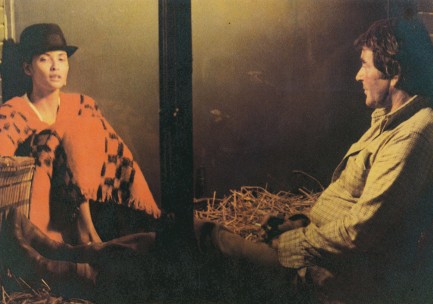
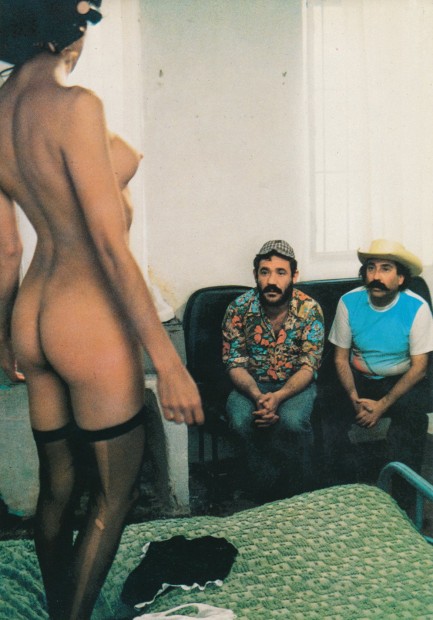
Yup, Laura Gemser again. It's just one of those things. La donna della calda terra premiered in Italy two days after Emanuelle e gli ultimi cannibali, so you get to enjoy her twice this week. Above are two posters for the former film, which was originally made in Spanish and released as La mujer de la tierra caliente, then retitled in English as Emanuelle - A Woman from a Hot Country, and, more succinctly, Fury. By this point Gemser's Emanuelle series had pitted her against everything from slavers to cannibals, but here she headlines something close to a straight drama, as she meets Stuart Whitman while both are hitchhiking the hot backroads of Venezuela. As they sit together in a horse trailer being towed across the country, they tell each other their tragic histories.
We've made fun of the bizarre plots of Gemser's movies, but this attempt at unsensationalistic drama is conceptually flat and the screenplay is terrible. Our favorite line: “Don't pay too much attention to women. We have days in which we see everything distorted.” We'd retort that men have entire lifetimes in which they see everything distorted, which is why the world is fucked. *checking credits* Yeah, the screenplay was written by men. Well, they dropped the ball here, not just because of bad writing, but because—and we never thought we'd say this—Gemser's movies need rampant weirdness to be watchable. So give up being normal and enbrace the bizarre. Bring on the slavers and cannibals. They were sorely missed. After premiering in Spain in July 1978, La donna della calda terra opened in Italy today the same year.
 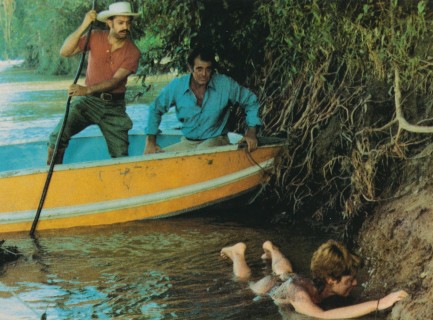 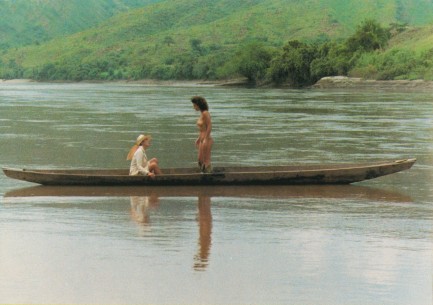 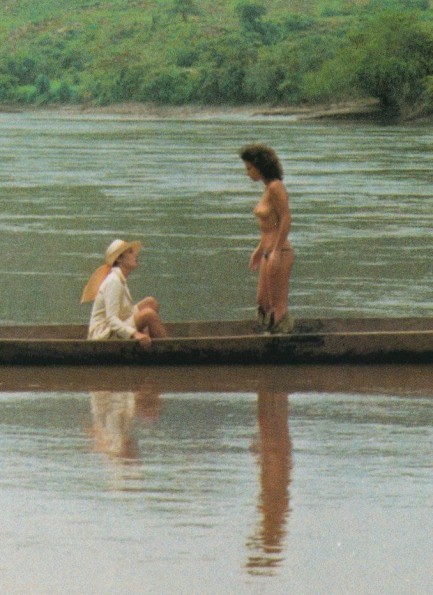 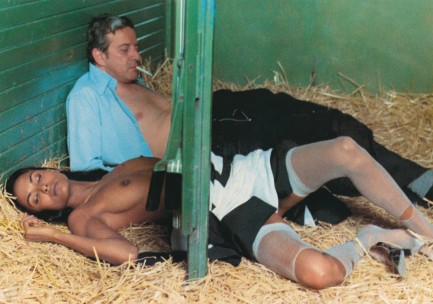                
 Okay, first of all he never listened to me. That's where the blame for this really starts. 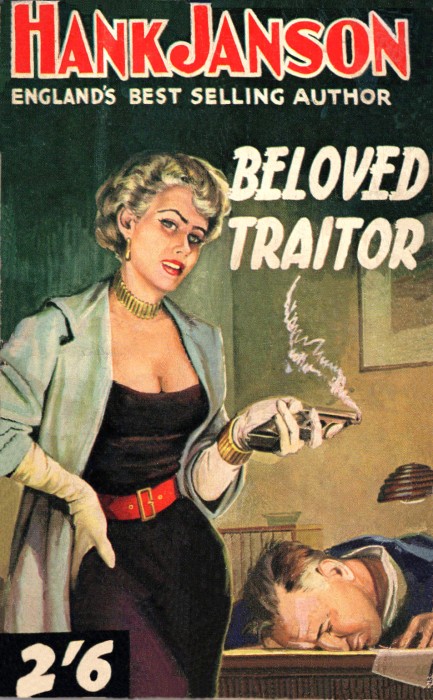
Above: an unusual cover for Hank Janson's novel Beloved Traitor, published by the British imprint Roberts and Vinter in 1960, with a lettering style the company used to good effect on other novels. The cover painting is by the Spanish artist Joaquin Chacopino Fabré, sometimes known as merely Chaco. We have two more good examples of his work here, and we'll see if we can dig up more later.
 The foreign property thing is not as easy as they make it look on television. 
We've been a little light with postings of late, but it isn't our fault. We've been trying to buy a house, and naturally some of the free time we give to Pulp Intl. has been consumed by that activity. We made an offer—and had that offer accepted—on a lovely old pile of stone and tile built in 1840. Later the sellers backed out of the deal because— Well, we don't know why. It seems as if they wanted us to assume all the risk, while assuming none themselves, and therefore refused to sign a contract committing them to the sale even though we were giving them a hefty deposit. They wanted us to give them a deposit that we had no chance to recoup if they backed out. And we thought—are these fucking people high?
However, pulp and house hunting occasionally meet, and it happened again yesterday when we came across a shelf of old paperbacks in a home we toured. The place hadn't been occuped by humans since the 1970s, and at the moment is home to a lot of spiders and a litter of kittens. We're looking for a house requiring a bit less rehabilitation, but it was an interesting place. We weren't able to snag any of the books there (like we did that other time we ran across some in an old house), which is too bad, because there were a few vintage Spanish crime novels and some Agatha Christie. Anyway, once we get this house thing done we'll devote more time to reading, scanning, and such, but for the moment, please bear with us.
 Wherever you look, there it is. 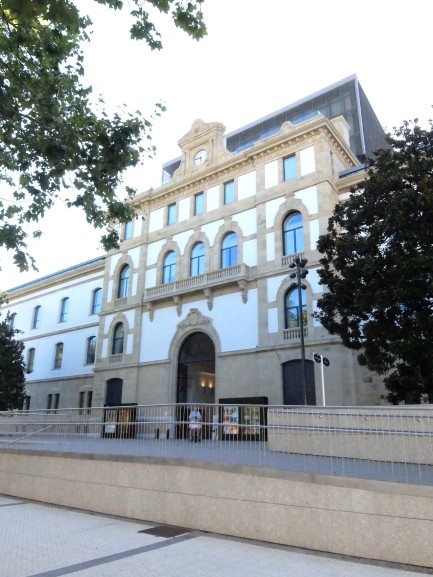 
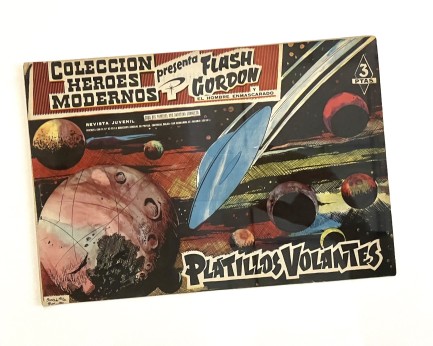
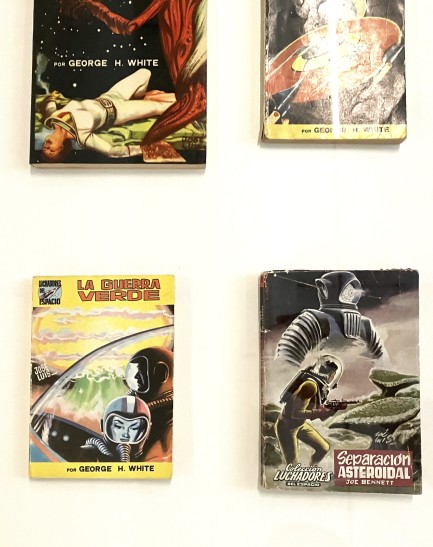
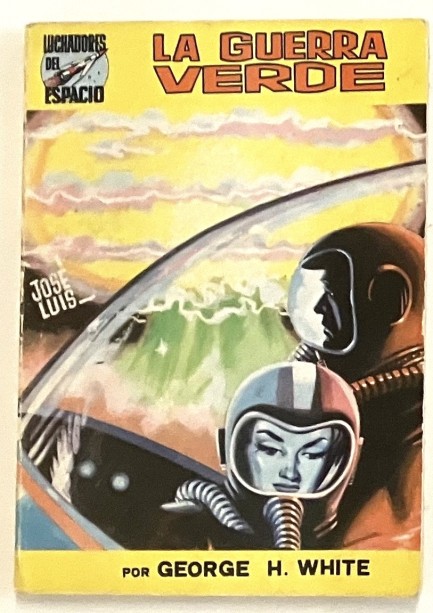
We're back. We said we'd keep an eye out for pulp during our trip to Donostia-San Sebastián, and we did see some, though we couldn't buy it—it was all under glass in a museum. The Tabakalera (above), a cultural space mainly focused on modern art, was staging an exhibit titled, “Evil Eye - The Parallel History of Optics and Ballistics.” A small part of the exhibition was a selection of Editorial Valenciana's Luchadores del Espacio, a series of two-hundred and thirty-four sci-fi novels published from 1953 to 1963. We snuck a few shots of the novels, which you can see below. Overall, though, what was on offer were photos, short films, political literature, and physical artifacts dealing with war and conflict. Since the participants were all artists, journalists, and witnesses from outside the U.S., everything naturally focused on wars that the U.S. started or sponsored—those ones they don't teach in school. The pulp fit because of its suggestion that human conflict would continue even into outer space.
We also said we'd try to pick up some French pulp, and that side trip happened too. We managed to score several 1970s copies of Ciné-Revue that we'll share a bit later, and those will feature some favorite stars. Though the collecting was fun, we're glad to be back. The birthday party was a success, as always, and now we're down south where the weather is gorgeous and hopes are always high. We'll resume our regular postings tomorrow.
 Yes! Another fight over me successfully started. My work here is done. 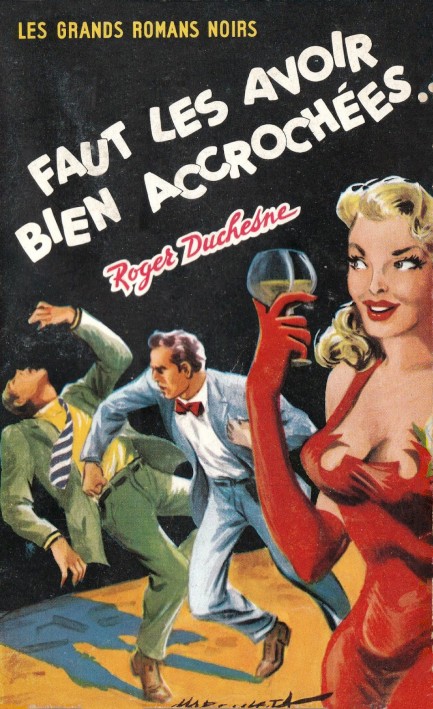
We've never seen a fight over a woman that the woman influenced in any way except being seen as an object of ownership by testosterone filled guys, but for this piece of art for Roger Duchesne's Faut les avoir bien accrochées we're going with femme fatale-induced violence because of her lifted glass and smile. There's a signature: “Marculeta,” which left us with some sleuthing to do. We think the illustrator is probably Alfredo Marculeta, a Basque artist, primarily known for comic book work, active in Spain and France during the 1950s and 1960s. Don't quote us on it.
The title Faut les avoir bien accrochées has an amusing translation: “must have them well hung.” Ahem. Actually, though, we think the phrase is a colloquialism meaning to have one's heart set on, or to have a strong heart. Don't quote us on that either. We'd prefer if the title actually did mean being well hung. Then the femme fatale's smile would be perfect: “Don't bother fighting over me, boys. I must have them well hung.” This came from Éditions le Trotteur and was published in 1953.
 What! A big bubble? Well, yours looks like five pounds of potatoes in a ten pound sack! 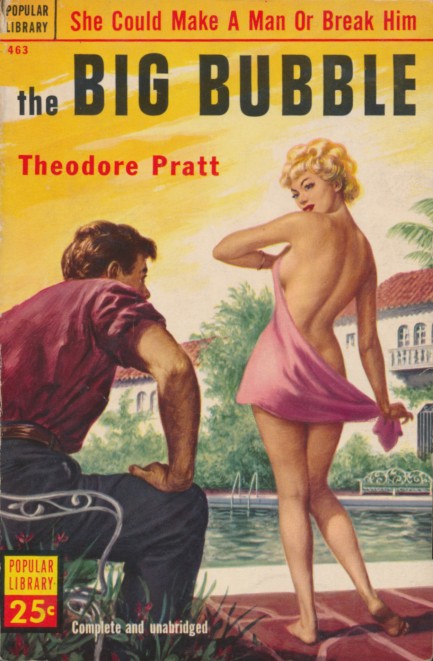
It seems like Florida novels are a distinct genre of popular fiction, and most of the books, regardless of the year of their setting, lament how the state is being drawn and quartered in pursuit of easy money. But those complaints are usually just a superficial method of establishing the lead characters' local cred. Theodore Pratt, in his novel The Big Bubble, takes readers deep inside early 1920s south Florida real estate speculation in the person of a builder named Adam Paine (based on real life architect Addison Mizner), who wants to bring the aesthetic of old world Spain to Palm Beach—against the wishes of longtime residents.
Paine builds numerous properties, but his big baby is the Flamingo Club, a massive hotel complex done in Spanish and Moorish style. He even takes a trip to Spain to buy beautiful artifacts for his masterpiece. This was the most interesting part for us, riding along as he wandered Andalusia (where we live), buying treasures for his ostentatious palace. He buys paintings, tapestries, sculptures, an ornate fireplace, an entire staircase, basically anything that isn't nailed down, even stripping monasteries of their revered artifacts. His wife Eve is horrified, but Paine tells her he's doing the monks a favor because they'd otherwise go broke.
You may not know this, but Spain is pretty bad at preserving its ancient architecture. That's another reason The Big Bubble resonated for us—because Spain is very Floridian in that it's being buried under an avalanche of cheap, ugly developments. We love south Florida's Spanish revival feel. What's metastasized in Spain is a glass and concrete aesthetic that offers no beauty and weathers like it's made of styrofoam. The properties are basically glass box tax dodges. The point is, reading The Big Bubble felt familiar in terms of its critique of real estate booms, but simultaneously we saw Paine as a visionary. He made us wish Spanish builders had a tenth of his good taste.
Since the book is set during the 1920s (and its title is so descriptive) you know Florida's property bubble will burst. Paine already has problems to deal with before the crash. Pratt resolves everything in interesting fashion. He was a major novelist who wrote more than thirty books, with five adapted to film, so we went into The Big Bubble expecting good work, and that's what we got. And apparently it's part of a Palm Beach trilogy (though he set fourteen novels in Florida total). We'll keep an eye out for those other two Palm Beach books (The Flame Tree and The Barefoot Mailman). In the meantime, we recommend The Big Bubble. Originally published in 1951, this Popular Library edition is from 1952 with uncredited art.
 Some love lasts forever. Other times it doesn't survive the wedding night. 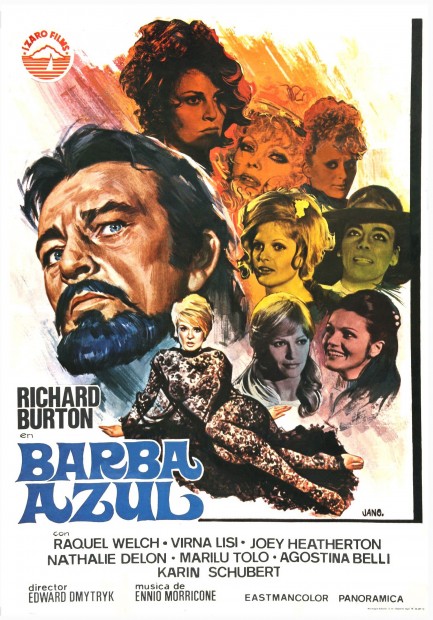
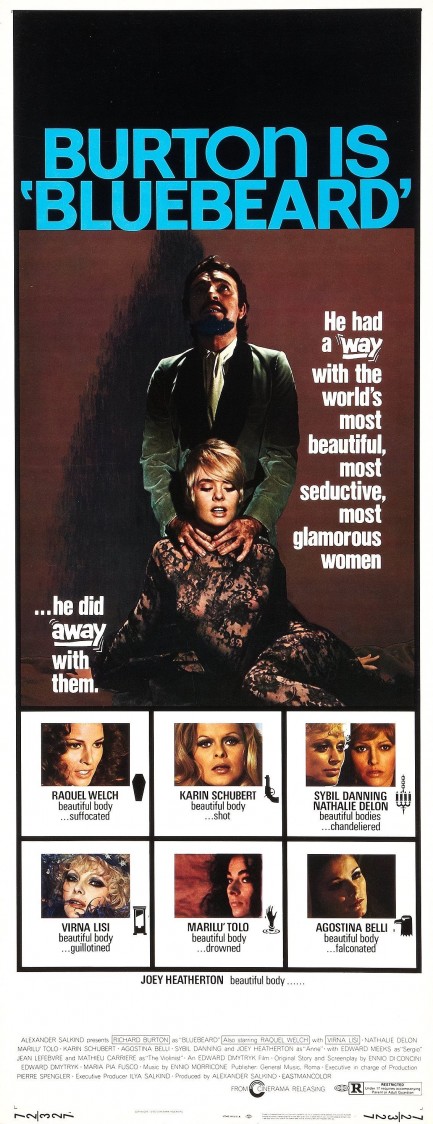 Another of the movies we watched recently was Bluebeard, a castle and dungeon-style, quasi gothic horror flick about a folk tale character who murders a series of wives. Its Spanish poster was the best of those we saw, and we chose today to share it because the film premiered in Spain today in 1974, after opening in the U.S. two years earlier. Another of the movies we watched recently was Bluebeard, a castle and dungeon-style, quasi gothic horror flick about a folk tale character who murders a series of wives. Its Spanish poster was the best of those we saw, and we chose today to share it because the film premiered in Spain today in 1974, after opening in the U.S. two years earlier.
This piece was painted and collaged from photos by Fernandez Zarza-Pérez, also known as Jano, now a regular visitor to Pulp Intl. Just for the sake of it, we've also included the U.S. poster at right (or above if you're on a mobile device). You can see that it's built fully around a photo-illustration, and while it's interesting, we thought Jano's work had a little more merit.
Bluebeard stars Richard Burton, who's supposed to be a great actor, but we have to admit we'd seen exactly zero of his acclaimed movies up to this point. He was a Shakespearean stage guy who transitioned to Hollywood in similar type roles, and being decidedly non-pulp in style, we've highlighted none here. He later made a couple of war movies, though, as well as the overbudget epic Cleopatra, and we might get around to those. Going on the example presented by Bluebeard, however, you'd have to conclude that he's a hack. Those who know more than us say that by the 1970s heavy drinking had impaired both his judgment and skill.
You'd think that a famous folk tale would provide a trove of potential cinematic possibilities to sift through, but Bluebeard is uninspiringly written, and the direction—from film noir vet Edward Dmytryk—presents little evidence of engagement with or inspiration by the material. The women Bluebeard murders are played by Karin Schubert, Nathalie Delon, Virna Lisi, sexy nun Raquel Welch, Marilú Tolo, Agostina Belli, and Joey Heatherton—not neccsarily in that order—plus Sybil Danning makes an appearance. Heatherton has the key role as Anne, the wife who elicits a confession from a psychologically tortured Bluebeard as to why he kills.
And the reason? Dude can't get it up. Therefore, in the era before little blue pills, as a prominent member of Austria's post-World War I patriarchal society, Bluebeard murders to keep his limpness secret. You'd think dying wives would destroy his matrimonial suitability, but at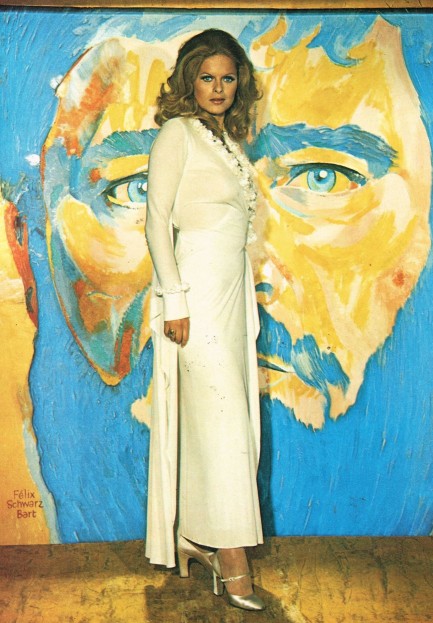 a certain point we suppose money papers over all flaws. Rich or not, though, never marry a guy who sits around with a raptor on his shoulder. And speaking of hunting, we should warn the kind-hearted that there's an extended hunting sequence in Bluebeard, and the animals are killed for real, in detailed action. We're talking several rabbits, a number of birds in flight, a couple of foxes, a boar, and a deer. a certain point we suppose money papers over all flaws. Rich or not, though, never marry a guy who sits around with a raptor on his shoulder. And speaking of hunting, we should warn the kind-hearted that there's an extended hunting sequence in Bluebeard, and the animals are killed for real, in detailed action. We're talking several rabbits, a number of birds in flight, a couple of foxes, a boar, and a deer.
Based on what we've written so far, you might think we're not recommending Bluebeard, but not so fast, friends. The female cast—to state the obvious—comprises some of the loveliest actresses of the era, and in diverse ways. Welch is sculpturally flawless, Lisi is ethereally beautiful, Toló is broodingly dark, and Heatherton, whose resting face is ingenuous and slightly open-mouthed as if she's always concentrating on a problem, can only be described as luscious. She also has one of cinema's all-time greatest hairdos. Is it pervy to say you should watch a movie solely for the beauty of its actresses? Probably—but it's the truth. The filmmakers must have agreed, because they published lots of nude production stills, when in fact the film has less skin. See below. 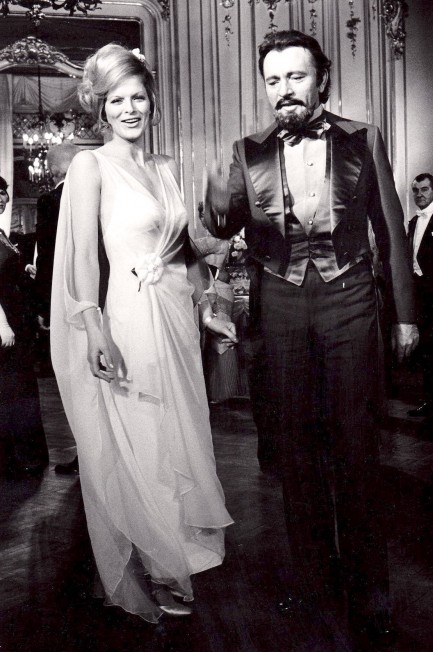 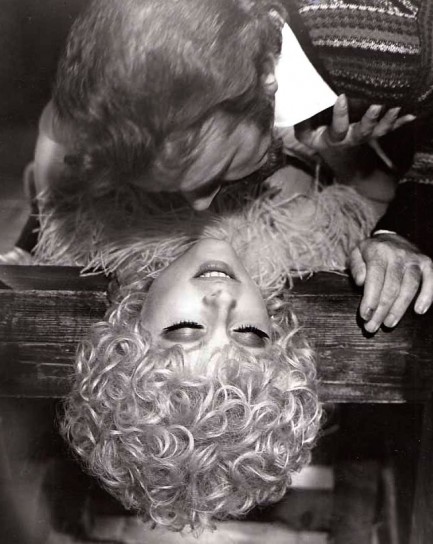 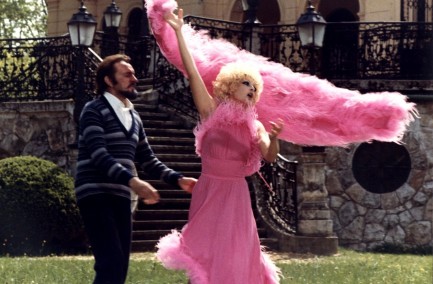 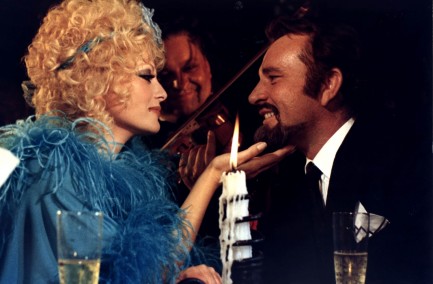 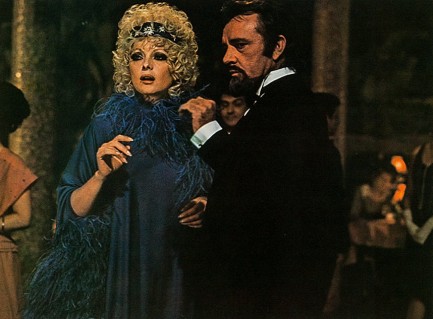 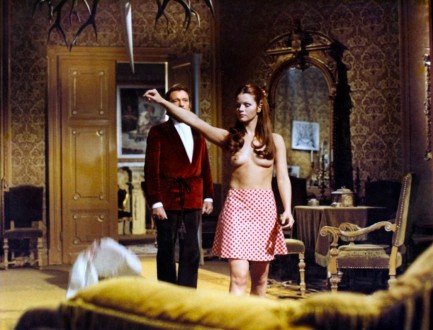 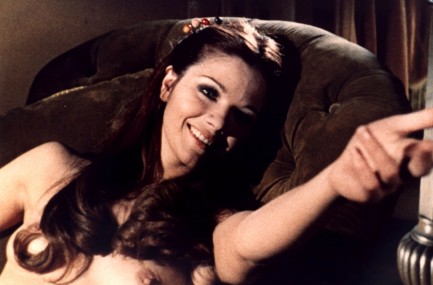 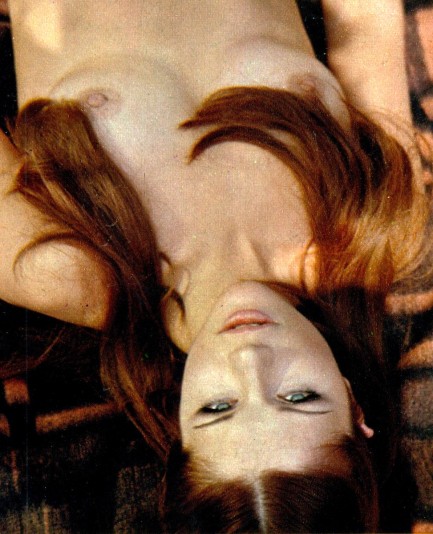 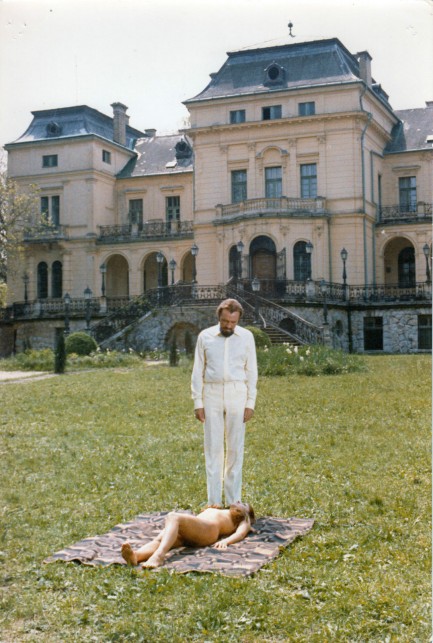 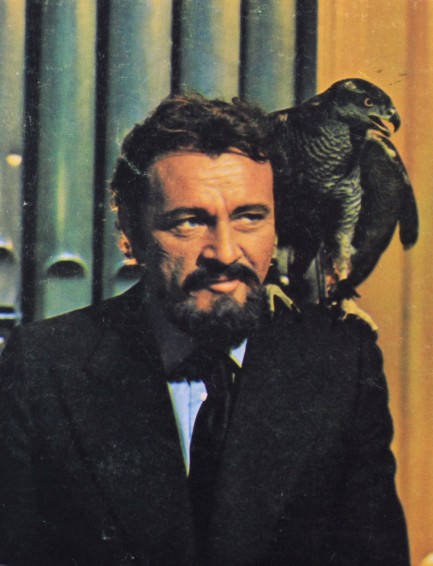  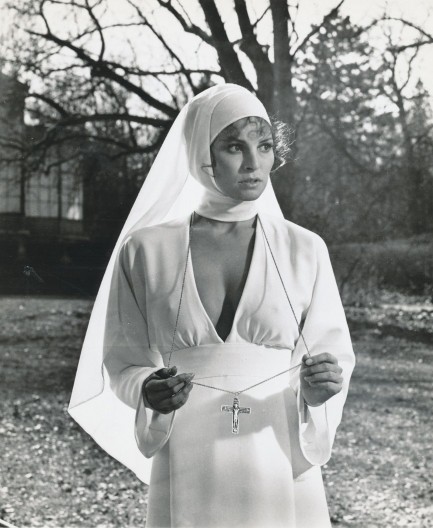 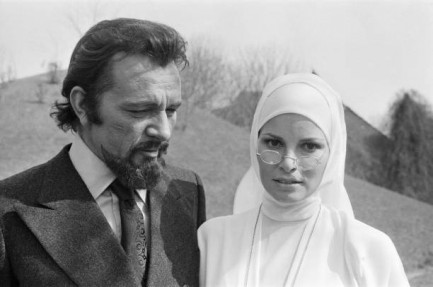 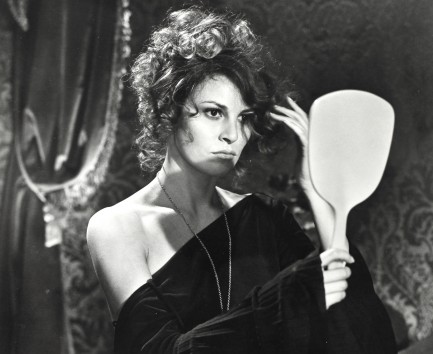 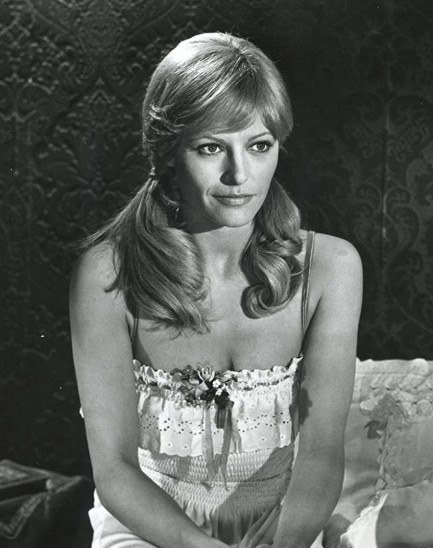 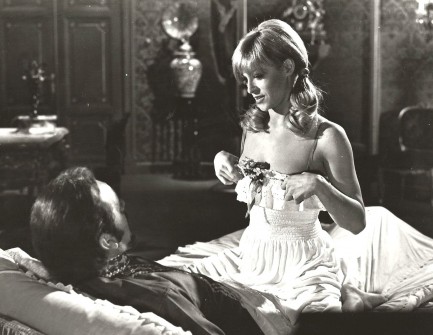 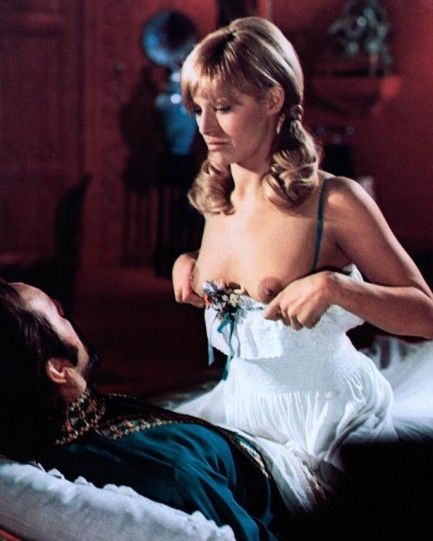  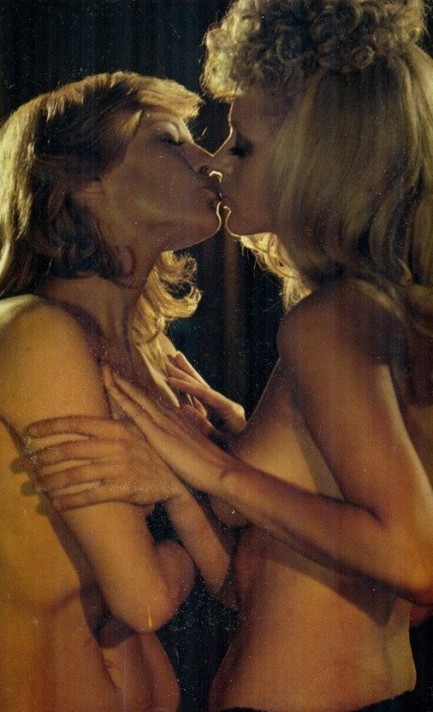  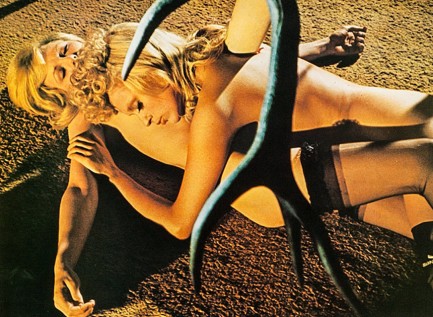 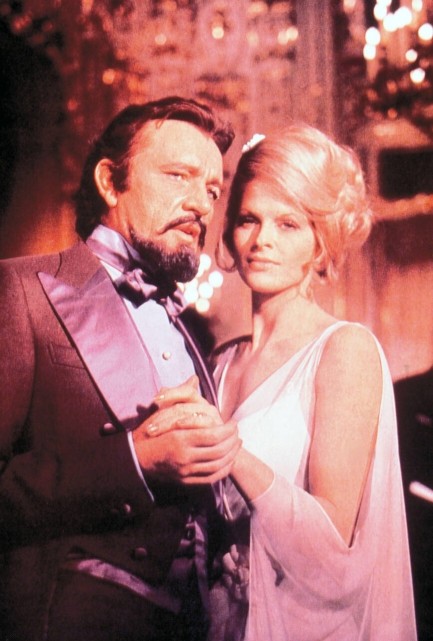 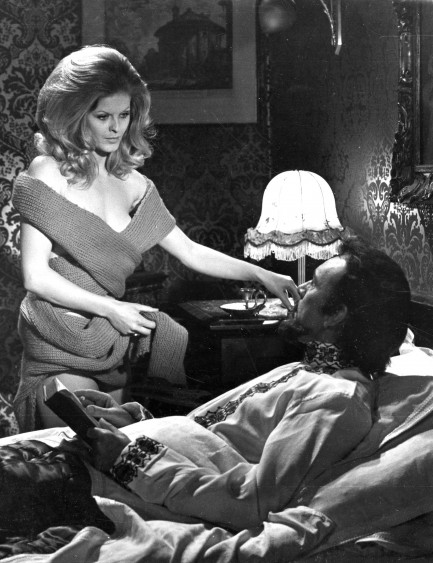  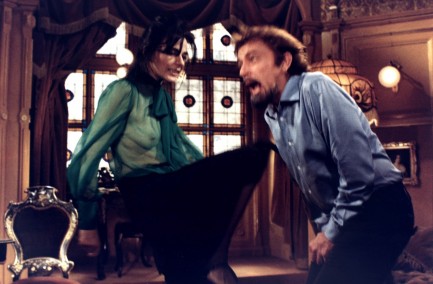 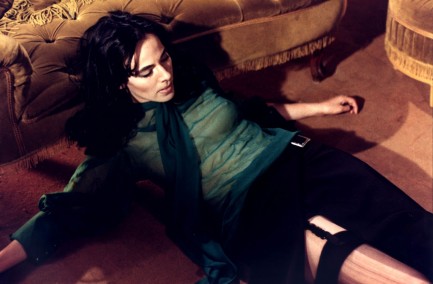 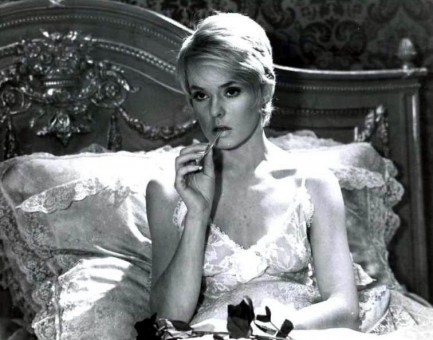 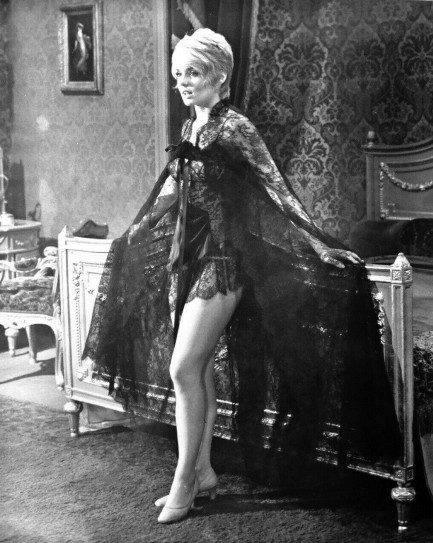 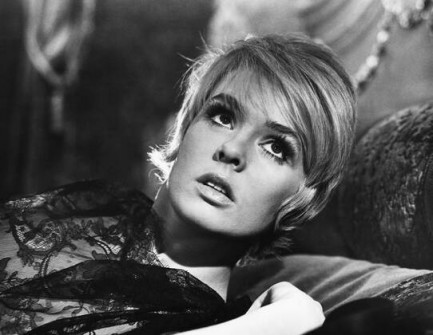 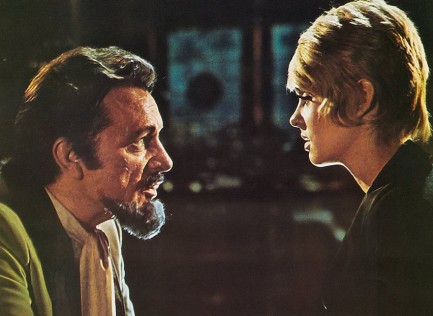 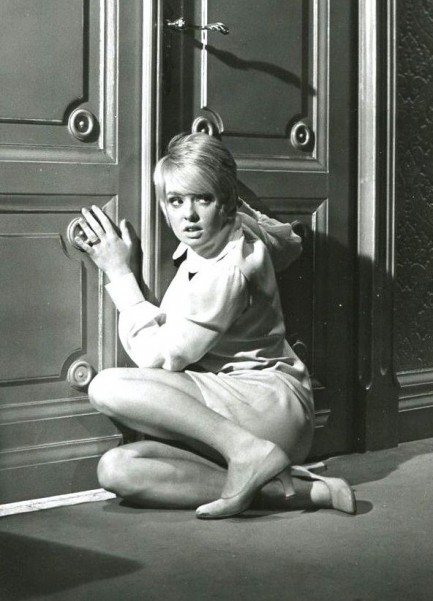 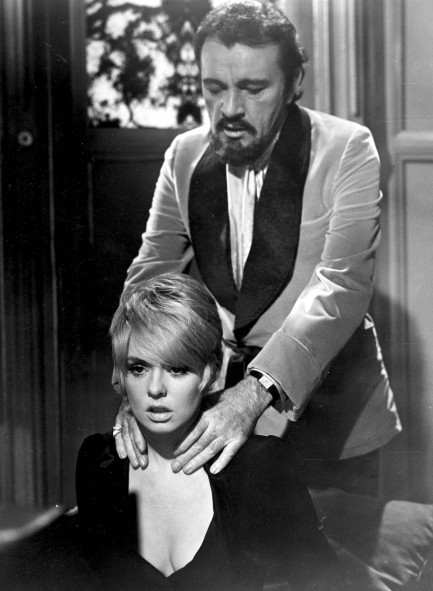
 Okay, my dear. Let's get you back indoors. You've provided Italy more than enough spank bank material for one day. 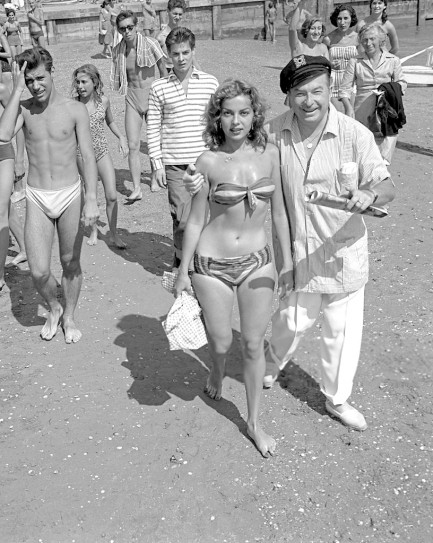
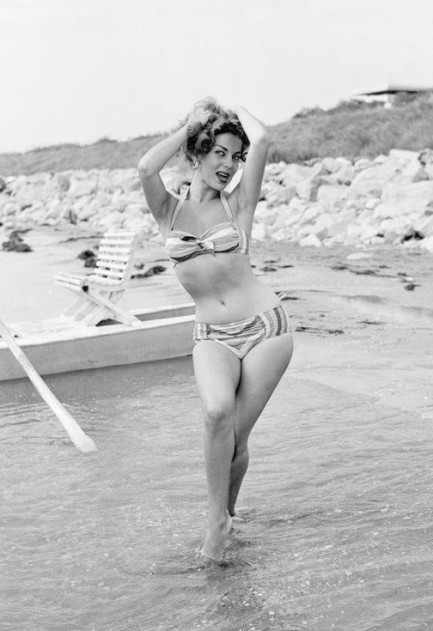
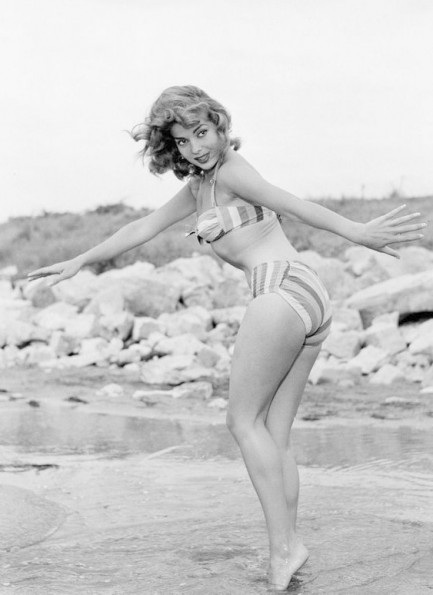
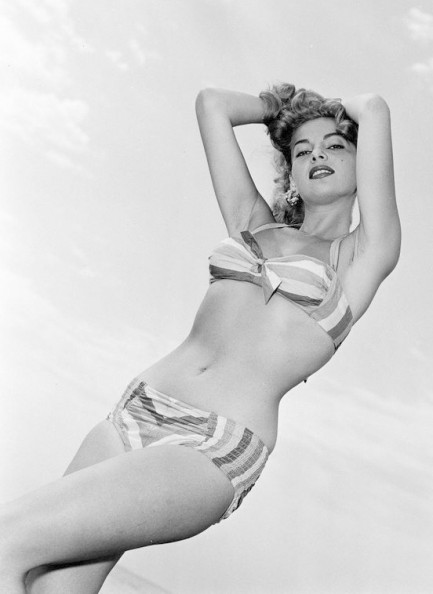
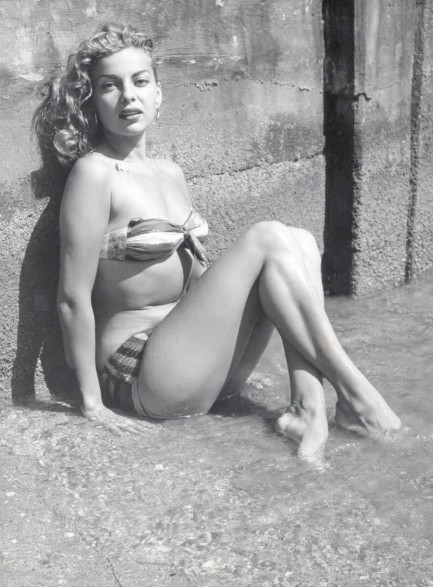
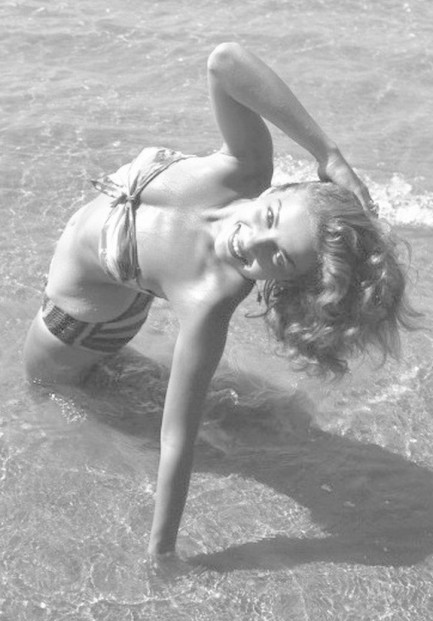
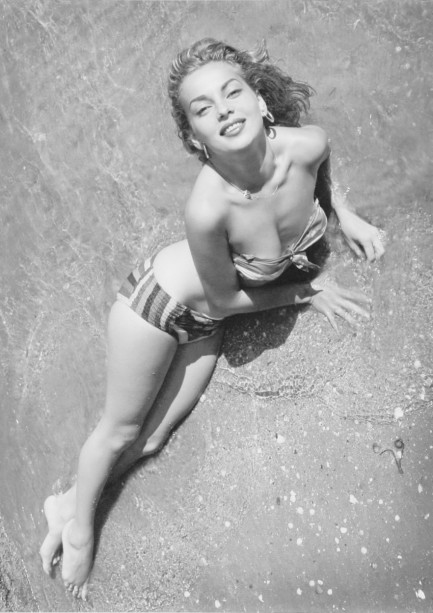
We recently showed you Abbe Lane on one of her album covers, but we've brought her back today because of this fun photo and the ones below. Lane was once deemed by Italian television authorities to be too sexy for broadcast. That's right—in Italy. So you can imagine the excitement when she donned this striped bikini for a photo shoot on the Lido in Venice, Italy during the summer of 1956. The proprietary arm belongs to her husband, Spanish bandleader Xavier Gugat. We think of the couple as the Beyoncé and Jay Z of their era, which is to say, Lane is waaaay too pretty for Cugat. She was also thirty-one years younger than him, which just goes to show what talent can do for a man: Xavier: You have inspired me, baby. I will write a song about you.
Abbe: You've already written me dozens, Xavier. All that cha-cha stuff is getting a little old.
Xavier: Music is just one of my abilities, cariño. Did I ever make you my authentic paella Valenciana with garrofó and rabbit? I almost became a chef, you know, but music beckoned.
Abbe: Men have cooked for me before. Yves Montand once made me a chocolate and pear soufflé. It was an exquisite grace note in a magnificently composed dinner, and that wasn't even really the dessert.
Xavier: Yes, that Yves. How urbane of him. How about I give you a purifying seaweed mask and a pedicure? I am a bit of an amateur aesthetician, and I love your feet.
Abbe: My skin—in case you haven't noticed—is perfect. Several men told me that today, and a cabana boy named Guido gave me a foot rub. You were snorkeling at the time.
Xavier: Grrr... I see. Well, I could paint your portrait. I am quite a good artist. I spent some time studying egg tempera at the Reial Acadèmia Catalana.
Abbe: I could never sit still that long again. Marcello Mastroianni painting me nude last year was quite enough. Day after day, hour after hour in that... well, frankly provocative pose he wanted. You were on tour, but I knew you wouldn't mind.
Xavier: Is that so? Well, fine, but I was at his house just a month ago. Why did he not show me this painting?
Abbe: I don't know. It's hanging right in his bedroom. So he tells me.
Xavier: *sigh* No meal, no skin care, no song. I guess I am just an old man unable to impress you any longer. When we get back to the villa I will simply take out the garbage, then finish reading that book I was—
Abbe: Take out the garbage? Oh, sweetheart. Tell you what—you do that and I'll put on the g-string and thigh-high boots you like and meet you in the bedroom.
The lesson from that day in Venice is that, for a wife, the ultimate turn-on is a husband who's willing to do chores. Cugat spent eleven years with Lane before they finally divorced in June 1964. She was married again before the year was over, which was a pretty fast rebound and remarriage even for Hollywood. Meanwhile, a few years later Cugat married Spanish singer and dancer Charo, who was his junior by fifty-one or forty-one years, depending on who you believe. Either way, music, cooking, and even chores are all fine, but maybe Cugat's real talent was for bedazzling younger women.

|
 |

The headlines that mattered yesteryear.
1945—Mussolini Is Arrested
Italian dictator Benito Mussolini, his mistress Clara Petacci, and fifteen supporters are arrested by Italian partisans in Dongo, Italy while attempting to escape the region in the wake of the collapse of Mussolini's fascist government. The next day, Mussolini and his mistress are both executed, along with most of the members of their group. Their bodies are then trucked to Milan where they are hung upside down on meathooks from the roof of a gas station, then spat upon and stoned until they are unrecognizable. 1933—The Gestapo Is Formed
The Geheime Staatspolizei, aka Gestapo, the official secret police force of Nazi Germany, is established. It begins under the administration of SS leader Heinrich Himmler in his position as Chief of German Police, but by 1939 is administered by the Reichssicherheitshauptamt, or Reich Main Security Office, and is a feared entity in every corner of Germany and beyond. 1937—Guernica Is Bombed
In Spain during the Spanish Civil War, the Basque town of Guernica is bombed by the German Luftwaffe, resulting in widespread destruction and casualties. The Basque government reports 1,654 people killed, while later research suggests far fewer deaths, but regardless, Guernica is viewed as an example of terror bombing and other countries learn that Nazi Germany is committed to that tactic. The bombing also becomes inspiration for Pablo Picasso, resulting in a protest painting that is not only his most famous work, but one the most important pieces of art ever produced. 1939—Batman Debuts
In Detective Comics #27, DC Comics publishes its second major superhero, Batman, who becomes one of the most popular comic book characters of all time, and then a popular camp television series starring Adam West, and lastly a multi-million dollar movie franchise starring Michael Keaton, then George Clooney, and finally Christian Bale. 1953—Crick and Watson Publish DNA Results
British scientists James D Watson and Francis Crick publish an article detailing their discovery of the existence and structure of deoxyribonucleic acid, or DNA, in Nature magazine. Their findings answer one of the oldest and most fundamental questions of biology, that of how living things reproduce themselves.
|

|
|
It's easy. We have an uploader that makes it a snap. Use it to submit your art, text, header, and subhead. Your post can be funny, serious, or anything in between, as long as it's vintage pulp. You'll get a byline and experience the fleeting pride of free authorship. We'll edit your post for typos, but the rest is up to you. Click here to give us your best shot.

|
|