 This Sorcerer performs some scary tricks. 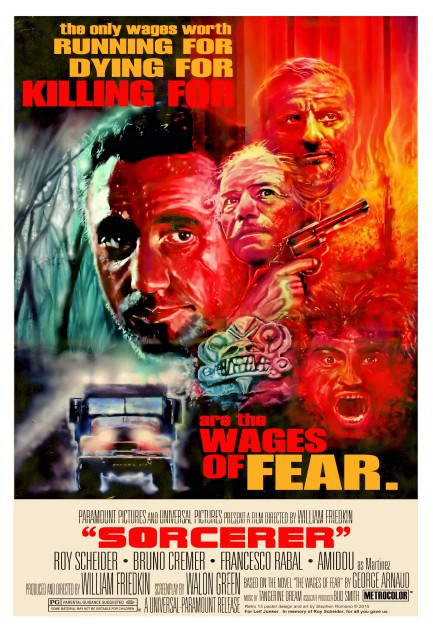
The dark action drama Sorcerer, for which you see a promo poster above, is one of those movies that didn't do well when it was released, but has been reevaluated a bit in recent years. We watched it last night and came away impressed. One of the main criticisms of this movie was that it was too long and too focused on backstory, but in this new era of streamed entertainment, considerations such as running times have gone out the window. You've noticed that, right? How much longer movies have gotten now that they're consumed in the home? Netflix and the other streaming services apparently figure you aren't going to watch the film without stopping it several times anyway, so why fret about their length. And certainly this is one of the enticements for modern directors working with streaming services. No butchery by studios obsessed with running time. Less interference. In such a milieu, Sorcerer isn't overly long, or overly detailed. Some of its weaknesses have become strengths.
The story is actually pretty simple, despite all the hand-wringing over its length and structure. Four shady crooks in a Latin American town called La Piedra are chosen to drive two trucks of nitroglycerine days through treacherous jungle so the explosives can be used to extinguish a raging oil well fire. The oil company is desperate, and so are the men. Though the explosives are cushioned in beds of sawdust, one serious bump and these guys will be raining down in pieces. They're four hard luck men stuck in a hellhole, and even though the trip has low survivability, they'll do anything for a chance at a new start in life. But the characters' Conradian journey from La Piedra into pure madness comes later. The movie first tells how each man came to be in circumstances where getting out of town is worth risking their lives. Each of their stories is bizarre and violent. We suspect this bothered viewers. It makes the teaming up of the group seem unrealistically coincidental, but it's a simple structural artifice. There's no coincidence. Any four men chosen to drive the trucks would have crazy histories.
Sorcerer also tells in detail how that oil well became an inferno, again throwing viewers. They probably asked why such details were needed. But they are needed. The movie is based on Georges Arnaud's novel Le salaire de la peur, aka The Wages of Fear, a capitalist 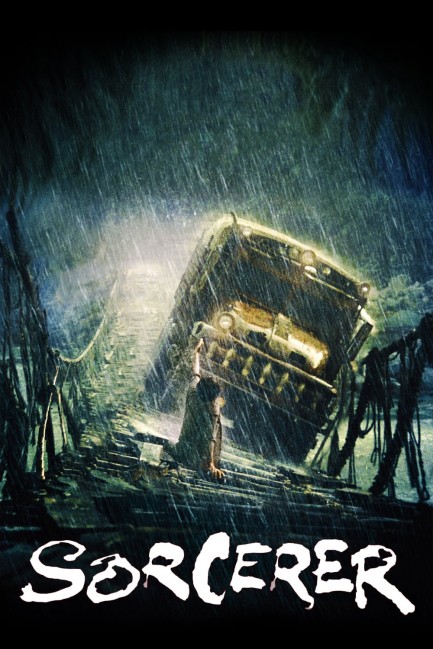 critique about how the impoverished will take deadly chances for a little cash, and how corporations take advantage of that desperation without concern or empathy, particularly when the balance sheet slips into the red. The backstory of the oil company is important to the narrative. critique about how the impoverished will take deadly chances for a little cash, and how corporations take advantage of that desperation without concern or empathy, particularly when the balance sheet slips into the red. The backstory of the oil company is important to the narrative.
Yet another reason the movie was poorly received is the title. Director William Friedkin had previously scored a global hit with The Exorcist. A title like Sorcerer sounds supernatural, but it's actually the name of one of the trucks the characters drive. Universal Pictures and Paramount Pictures, which both backed the film, didn't do much to counter mistaken impressions. They thought they had a dud on their hands so they promoted the movie in a way that made it seem eerie to take advantage of Friedkin's reputation. Many filmgoers walked away feeling cheated, and many reviewers too, we suspect. If the internet had existed back then maybe filmgoers would have known Sorcerer was based on a novel, as well as on a French adaptation from 1953.
But setting all that aside, this much is true of Sorcerer: it's visceral in a way few 2021 films could hope to be. In the past, quantum leaps in filmmaking always came about as ways of making a more realistic product. Sound, color, camera advances, stunts, and more, all worked toward that end. Then came computerized effects. Those were different. They were designed to make the unrealistic possible, to help portray realms and worlds that didn't exist. But the same CGI that helped to portray the fantastic flowed backward into more prosaic areas of filmmaking, not because it looked better, but because it was cheaper. Smoke and fire are CGI now, even in simple dramas, and blood splatters are computerized. Nearly all explosions all fake today. None of these mundane uses of CGI are improvements over practical effects. They're just cheaper, and they look it. So while CGI is fine for sci-fi and superhero movies, using it in crime dramas when a gangster gets shot or a car explodes is a step backward for cinematic art. As far as we know, over the course of more than a century of filmmaking, CGI is the first technical advance that makes movies look less realistic.
Sorcerer is specifically a reminder of what practical effects can do. There's real jungle, real fire, and real explosions. Blasts shake the ground, and not through digital cam effects, but through physical concussion. Virtually every frame of Sorcerer makes a mockery of modern filmcraft, both in terms of technical values and actorly commitment. Headliner Roy Scheider and his co-stars went through real discomfort to spin this tale. They're covered in real sweat, real dirt. That terrible town of La Piedra they're stuck in is a master class in gritty set design. It looks a lot like some actual purgatories we ventured through the years we were living in Guatemala, where Arnaud's novel is set. It reminds us particularly of a town we wandered into just as a crowd had finished beating a man to death. But that's another story. If you watch Sorcerer for no other reason, watch it to see what films looked like when reality was the utmost goal, rather than slick economy. But us? We'll watch it again because it's great. Sorcerer premiered in the U.S. today in 1977. 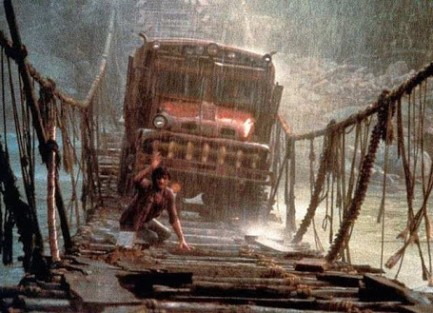 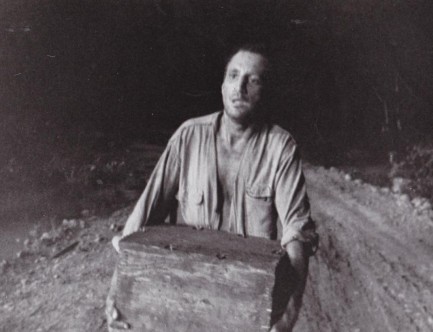 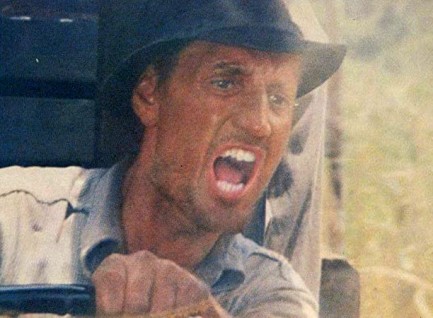 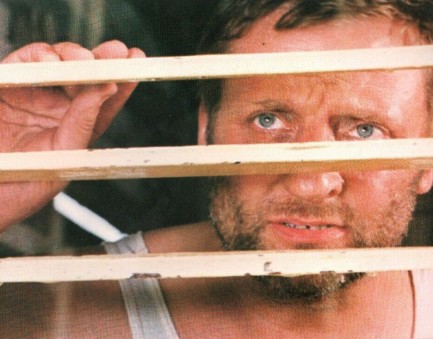 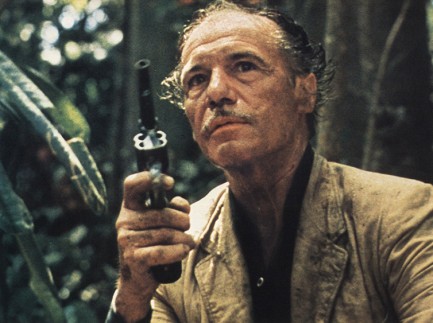 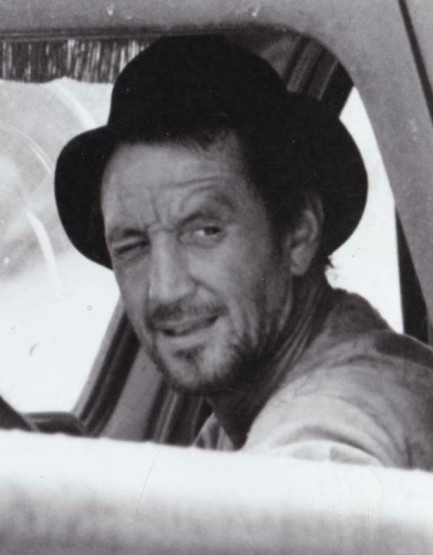 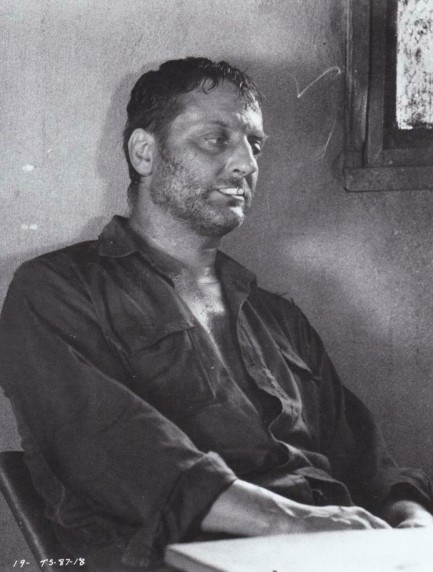 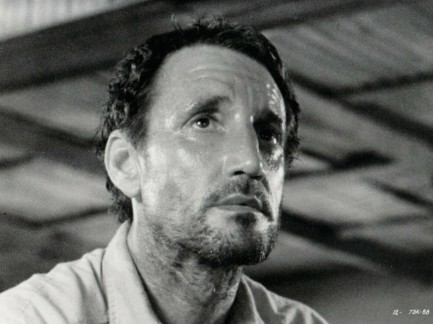 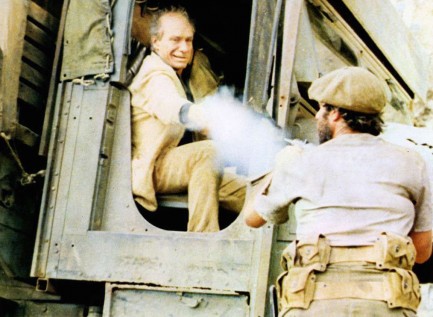 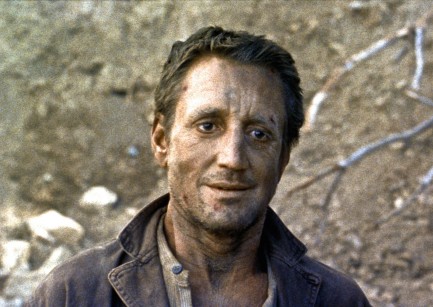
That is not a smile of happiness. That's a smile of insanity. 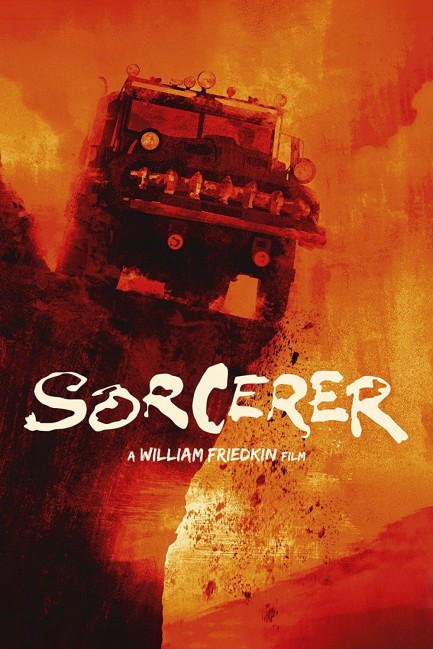
 Pacino's violent thriller tells us that sometimes playing a role involves finding out who you really are. 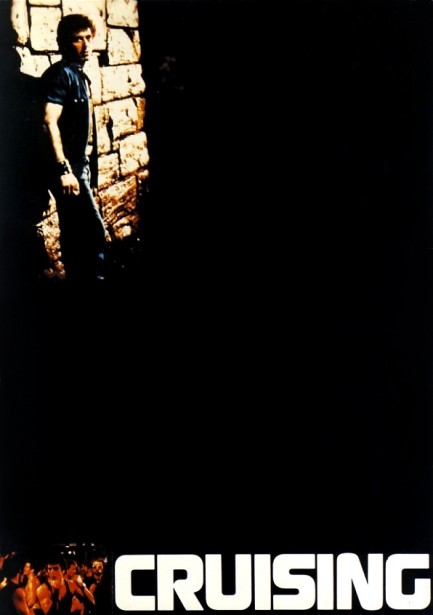
We just saw this movie for the first time a few months ago and it falls squarely into the category: could-not-be-made-today. That doesn’t automatically make it good, but it just so happens this is a pretty good flick. You’ve got a young, intense Al Pacino, noirish direction from William Friedkin of Exorcist fame, and a story focused on sex, drugs, and violence. Basically, Pacino plays a cop who goes undercover in New York City’s gay BDSM subculture. He’s looking for a killer, which requires him to play the role of an available, leather-clad party boy. But there’s deep cover, and then there’s deep cover. When you cross the line trouble always results. The art above comes from a promotional pamphlet, and it conveys the mood of the film quite nicely. We recommend it, with a reservation—if you’re progressive-minded, you’ll probably hate it. But you know that going in. Whenever Hollywood portrays a so-called subculture for a genre flick, it’s an affront to those being portrayed, whether gay, Chinese, black, female, religious, Texan, environmentalist, Iraqi, or what have you. Could Hollywood make films that portrayed all these segments of society in only positive terms? Sure, but who’d go see them? So bring on the action, and we’ll deal with the caricatures by agreeing that they’re just living cartoons, designed to offer some thrills and chills. Cruising premiered in the U.S. today in 1980.
 Thirty-six years ago, the French finally got to see what all the fuss was about. 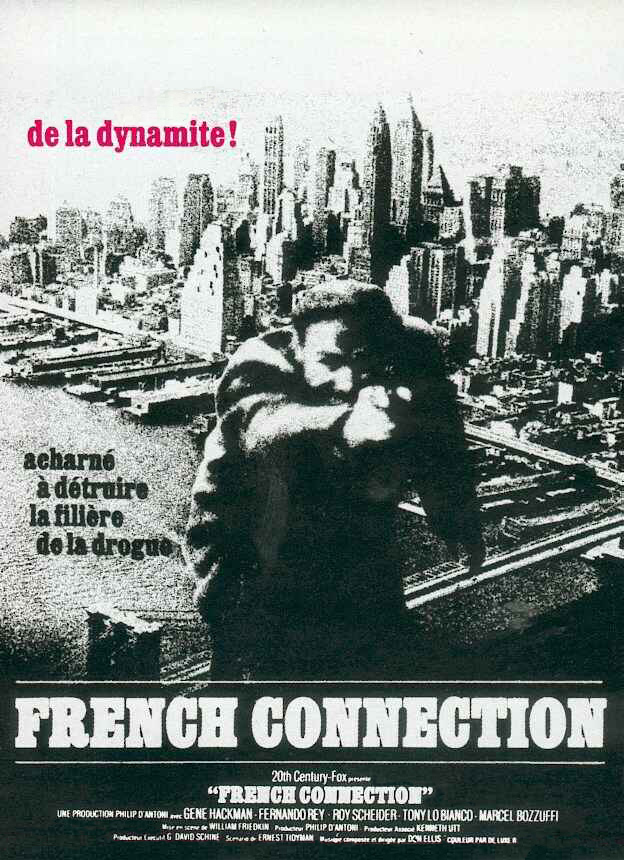
The French Connection opened in October 1971 in New York City to immediate and universal acclaim. Working from material based on actual events, actor Gene Hackman and director William Friedkin were at the top of their form, and took audiences on an unforgettable ride. The famous chase scene, which contains no music, only the screech of tires, the continual blasting of horns, and the relentless chattering of an elevated train, has been surpassed perhaps twice in all of film history. Of the eight Oscars for which the film was nominated, it would win five, including the trinity of Best Picture, Best Director and Best Actor. And there should have been another category—Biggest Bad-Ass. Hackman would have won that too. French audiences heard the transatlantic hype, but wouldn’t be able to see the film until after the New Year. The wait ended today, 1972.
 The Exorcist is 35 today, but looks as good as ever. 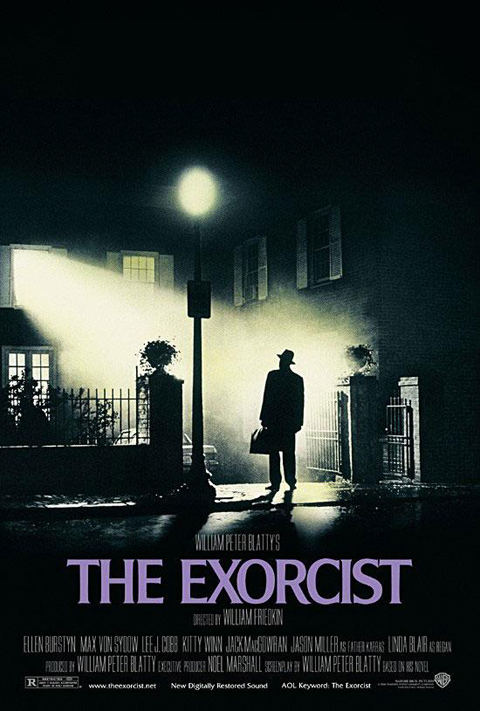
It was released today in 1973, and it implanted into happy holiday audiences enough nightmare material to last seven lifetimes. Half its tricks have since been stolen by other films, and the other half can’t be—because they can’t be shot legally on American soil anymore. The scene in which Linda Blair stabs her own nether regions repeatedly with a crucifix would make it past neither the test audiences nor the deciders in Hollywood’s executive suites. And even if it did the moral police at the MPAA would slap an NC-17 on it. That’s one of the reasons we love the 70s so much—what was produced then was uniquely daring and artistically viable.
Even though The Exorcist was based on a William Peter Blatty novel that sold like a billion copies, its success was surprising. It scored two Oscar nominations—one for director William Friedkin and another for Best Picture. It was beaten in both categories by The Sting, in a decision that marks something of a watershed for the Academy’s own artistic viability. Not that The Sting wasn’t good—it was. But history has made its judgment now, and few would argue that, of the two films, The Exorcist hasn’t been more influential, more imitated and, ultimately, more beloved.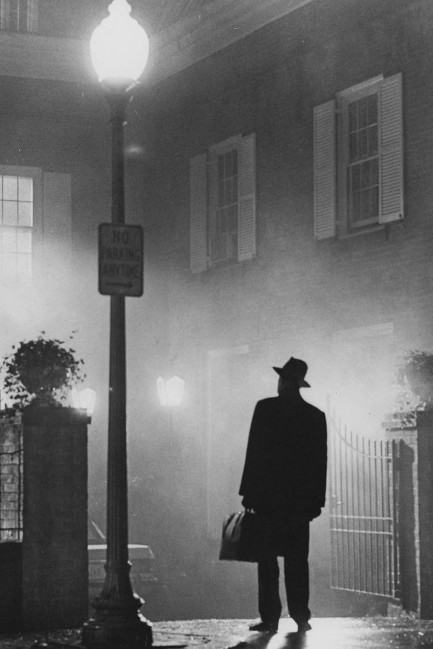 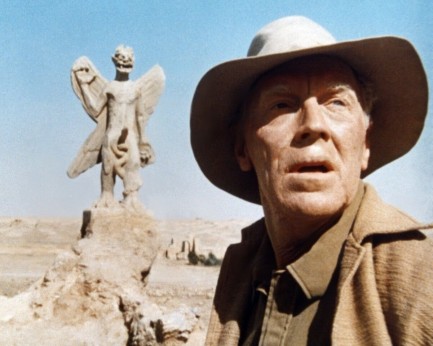  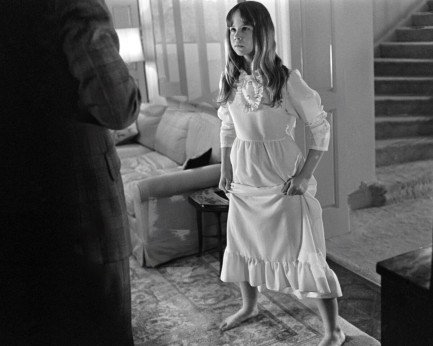 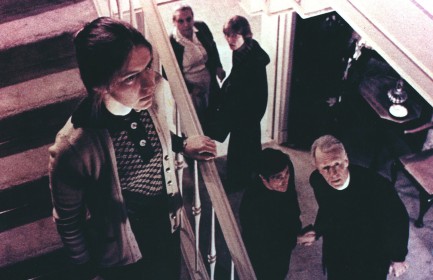 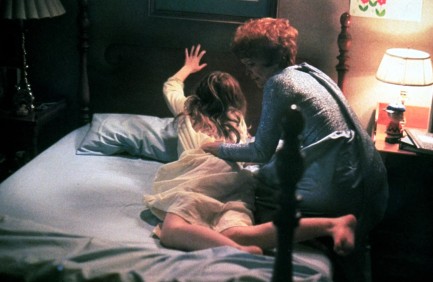 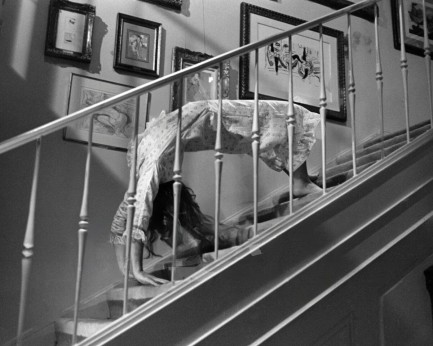 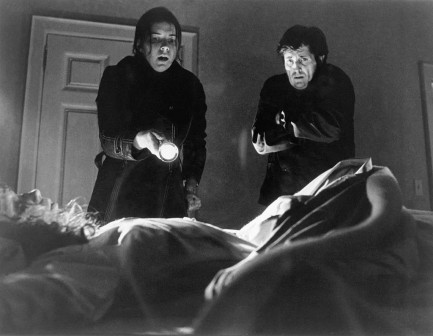 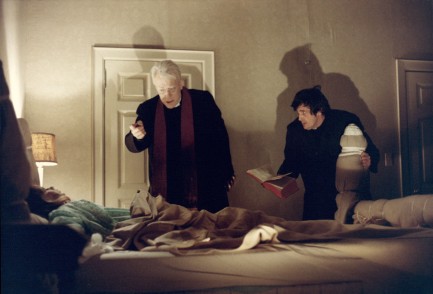 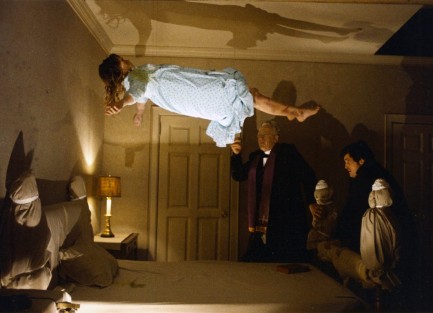  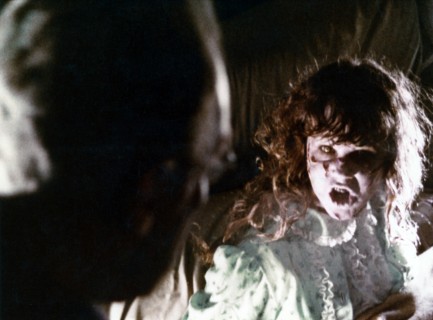 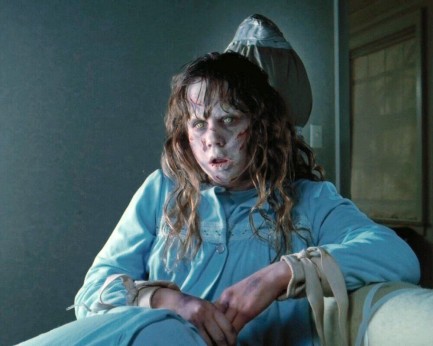 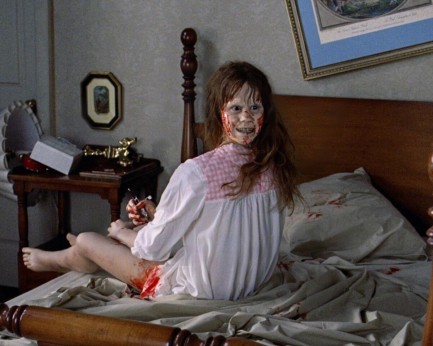
|
 |

The headlines that mattered yesteryear.
1933—The Gestapo Is Formed
The Geheime Staatspolizei, aka Gestapo, the official secret police force of Nazi Germany, is established. It begins under the administration of SS leader Heinrich Himmler in his position as Chief of German Police, but by 1939 is administered by the Reichssicherheitshauptamt, or Reich Main Security Office, and is a feared entity in every corner of Germany and beyond. 1937—Guernica Is Bombed
In Spain during the Spanish Civil War, the Basque town of Guernica is bombed by the German Luftwaffe, resulting in widespread destruction and casualties. The Basque government reports 1,654 people killed, while later research suggests far fewer deaths, but regardless, Guernica is viewed as an example of terror bombing and other countries learn that Nazi Germany is committed to that tactic. The bombing also becomes inspiration for Pablo Picasso, resulting in a protest painting that is not only his most famous work, but one the most important pieces of art ever produced. 1939—Batman Debuts
In Detective Comics #27, DC Comics publishes its second major superhero, Batman, who becomes one of the most popular comic book characters of all time, and then a popular camp television series starring Adam West, and lastly a multi-million dollar movie franchise starring Michael Keaton, then George Clooney, and finally Christian Bale. 1953—Crick and Watson Publish DNA Results
British scientists James D Watson and Francis Crick publish an article detailing their discovery of the existence and structure of deoxyribonucleic acid, or DNA, in Nature magazine. Their findings answer one of the oldest and most fundamental questions of biology, that of how living things reproduce themselves. 1967—First Space Program Casualty Occurs
Soviet cosmonaut Vladimir Komarov dies in Soyuz 1 when, during re-entry into Earth's atmosphere after more than ten successful orbits, the capsule's main parachute fails to deploy properly, and the backup chute becomes entangled in the first. The capsule's descent is slowed, but it still hits the ground at about 90 mph, at which point it bursts into flames. Komarov is the first human to die during a space mission.
|

|
|
It's easy. We have an uploader that makes it a snap. Use it to submit your art, text, header, and subhead. Your post can be funny, serious, or anything in between, as long as it's vintage pulp. You'll get a byline and experience the fleeting pride of free authorship. We'll edit your post for typos, but the rest is up to you. Click here to give us your best shot.
|
|