| Vintage Pulp | Apr 19 2024 |

When there's a killer on the loose you'd better sleep with one eye open.
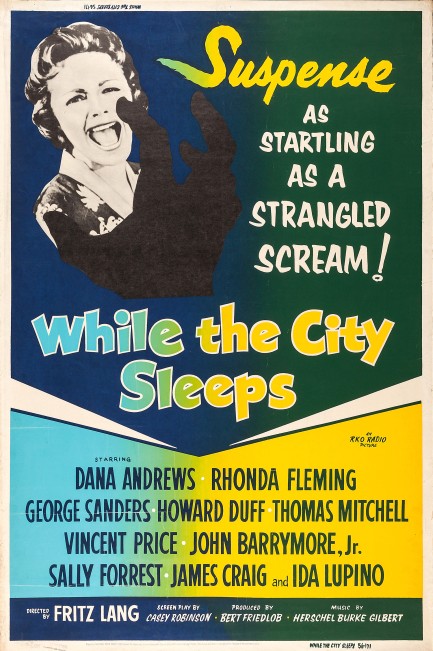
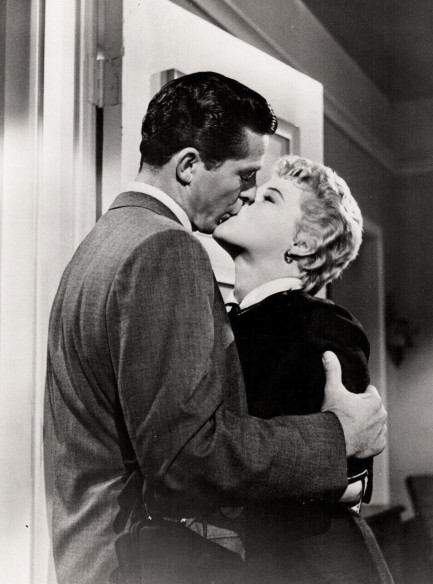
This poster for While the City Sleeps doesn't impress with masterly art the way so many vintage promos do, but its simplicity is, in an oblique sort of way, we think, meant to echo tabloid covers from the era. RKO made a special poster in collaboration with Confidential magazine, which you'll see below. The movie's plot is pure tabloid fodder. A serial killer has slain women in New York City, leaving the cryptic message “Ask mother,” written on the walls of one murder scene. Vincent Price, owner of Kyne News Service, part of a media empire comprising ten newspapers, a wire service, and other interests, offers the position of executive director to three employees in order to draw them into cutthroat competition with each other. Soon it becomes clear that finding the identity of the “lipstick killer” is the winning move. Intrigue and subterfuge take over the office. Everyone gets involved, from senior editors to stringers to gossip columnist Ida Lupino, but the killer is too clever to be caught.
At least until intrepid Pulitzer Prize winning television reporter Dana Andrews airs a scornful and taunting broadcast, deliberately setting up his own fiancée as bait. He doesn't even ask her permission. Well, he does, but only after arranging to publish their engagement announcement in the New York Sentinel right next to a story about the killer. Reckless? Yes. Presumptuous? For sure. There are intertwined plotlines here, but Andrews using his true love as a lure was the most interesting aspect for us. He isn't the only heel on display. The movie is ostensibly about a serial killer, but is really a framework for exposing backbiting and cynical ambition in the big city. Director Fritz Lang, in what was his penultimate U.S. film, explores the cruel banality of what, these days, some call “hustle culture,” and brings the production to a conclusion that's, in the words of Thomas Mitchell's character, “Neat, but nasty.” Our words are: a mandatory watch. While the City Sleeps had a special world premiere today in 1956.
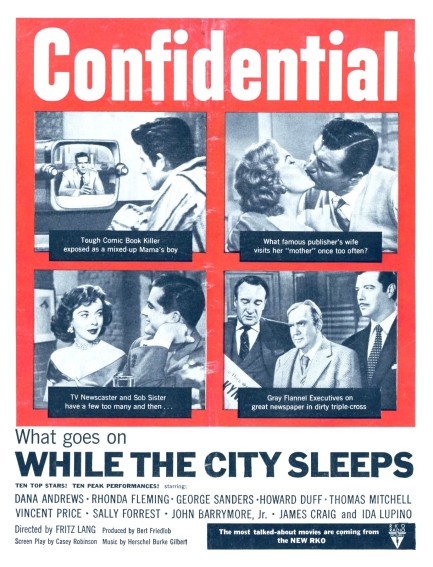
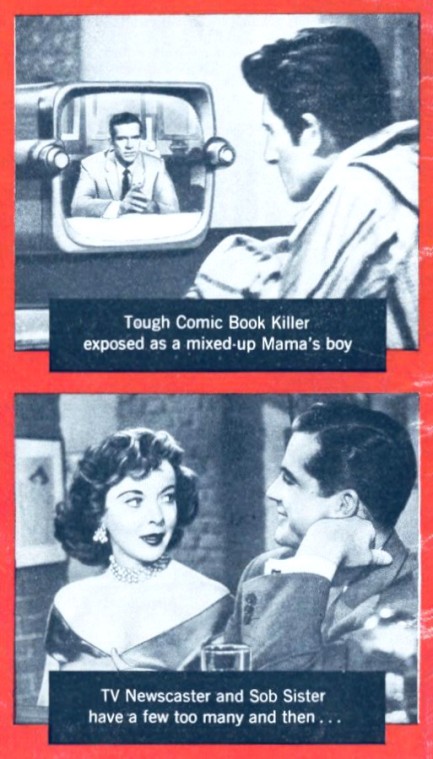
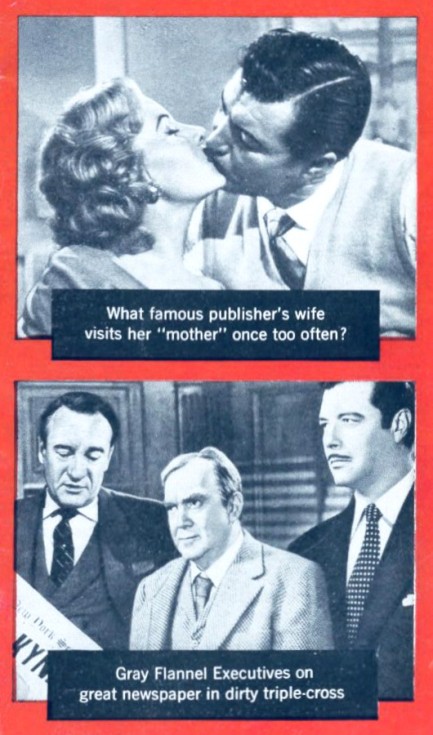
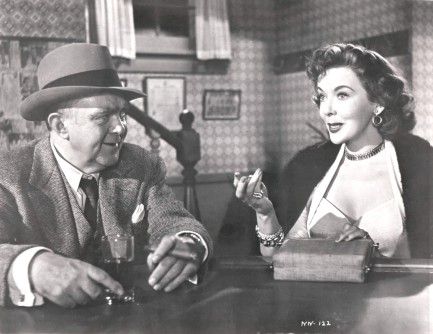
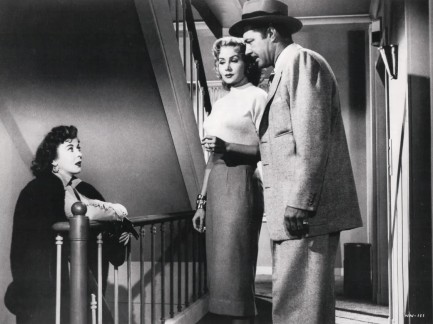
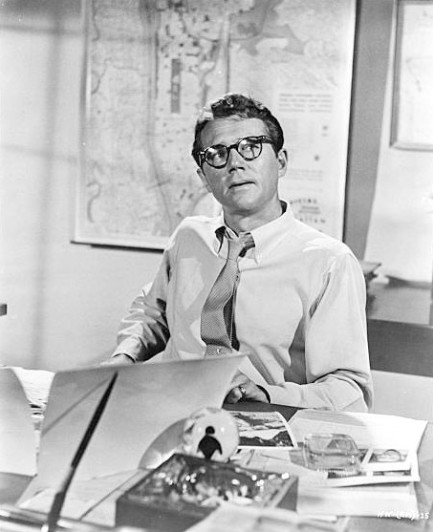
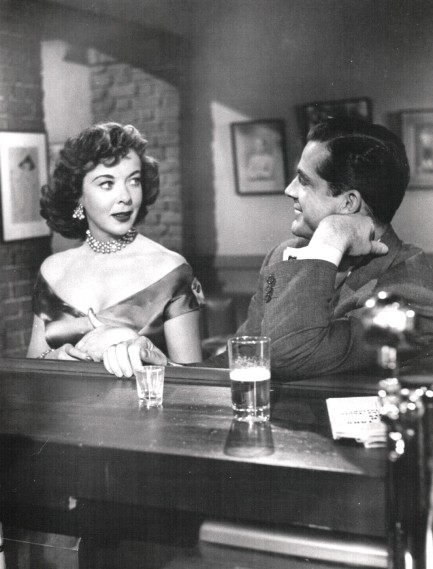
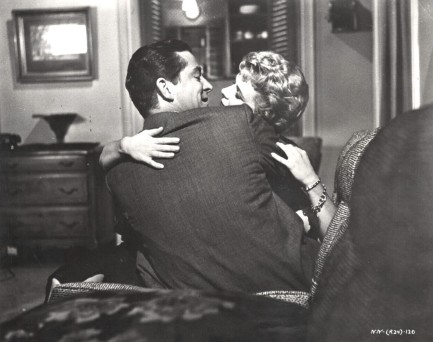
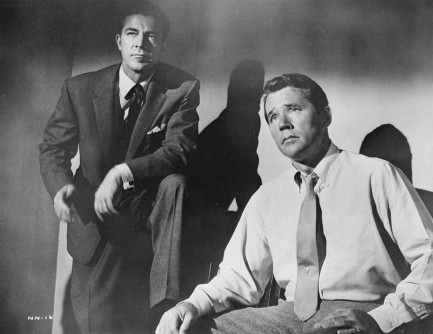
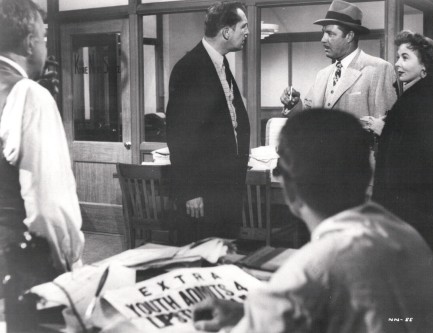
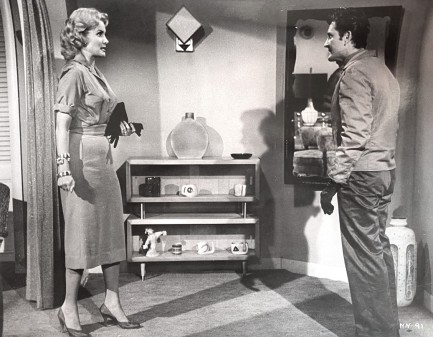
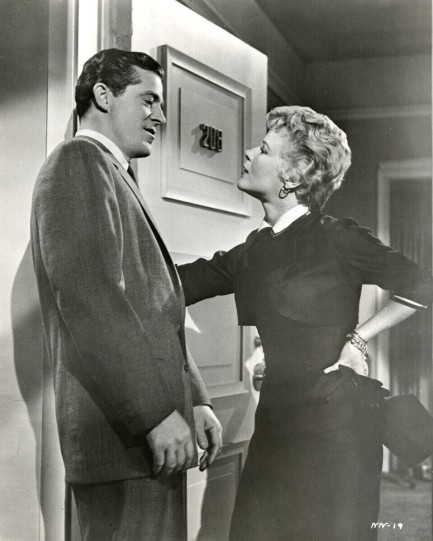
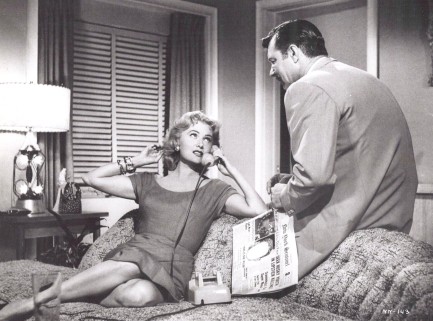
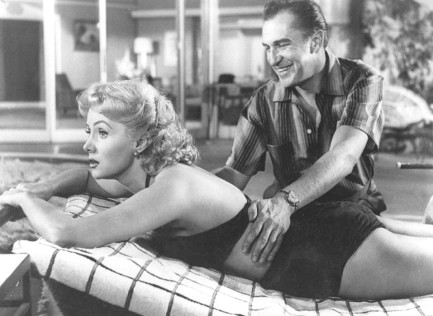
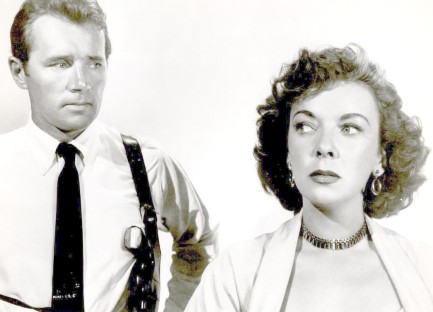
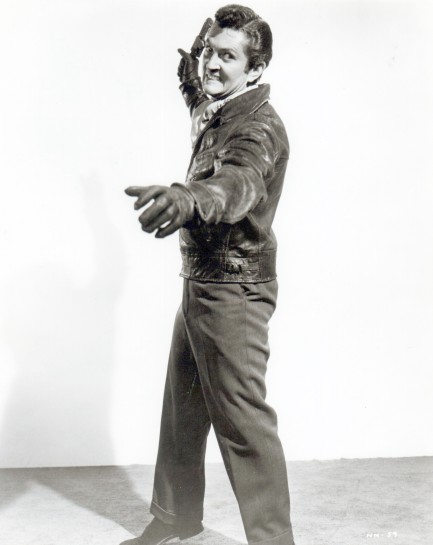 Edit: Vintage movies are excellent windows into bygone customs and practices. There's a great moment in this one. Rhonda Fleming and James Craig are chatting in her apartment late one night when the doorbell unexpectedly buzzes. They look at each other confused for a second, then Fleming says, “It's probably the drugstore. That was the last bottle of Scotch.”
You know, there were a lot of things wrong with the mid-century era. But there were a few things right too. Getting the all-night drugstore to deliver booze has to be one of the most right things we've ever heard of, so we give thanks to While the City Drinks—er Sleeps—for clueing us in, and suggest you call your congressional rep immediately and ask for a law allowing pharmacies to deliver alcohol. If not for yourself, do it for the children.
New York CityRKO Radio PicturesConfidentialWhile the City SleepsDana AndrewsRhonda FlemingGeorge SandersHoward DuffVincent PriceJohn Barrymore Jr.Ida LupinoSally ForrestFritz Langposter artcinematabloidmovie review


| Vintage Pulp | Apr 9 2024 |

Vince waxes philosophical and discovers the secret of life—death.

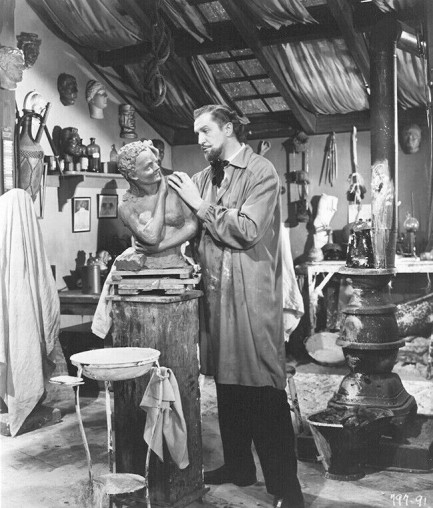
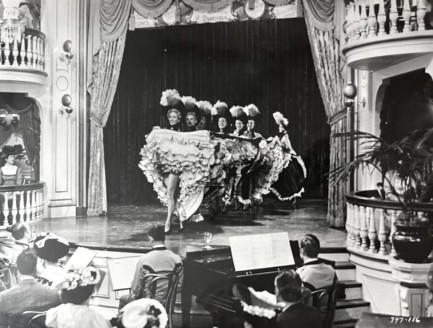
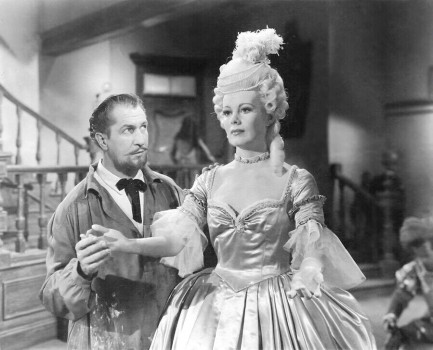
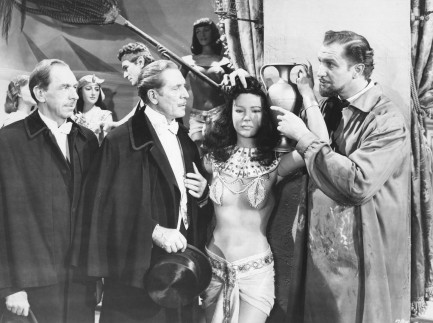
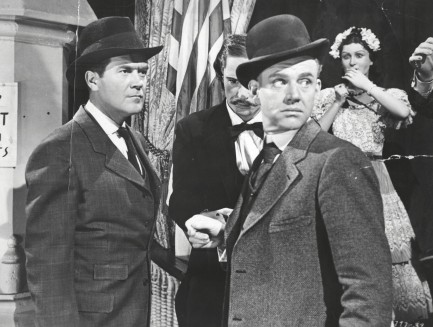
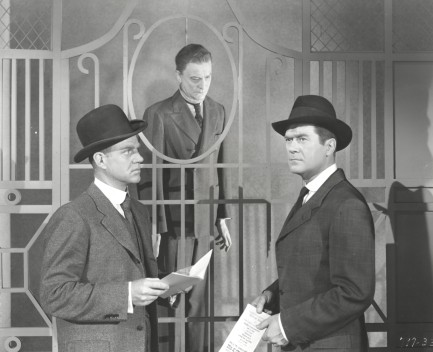
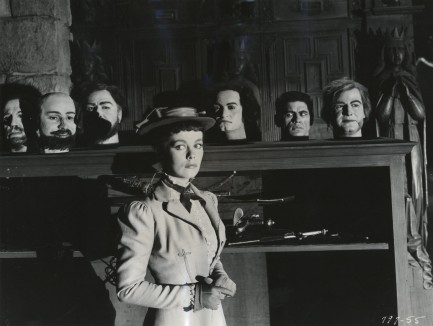
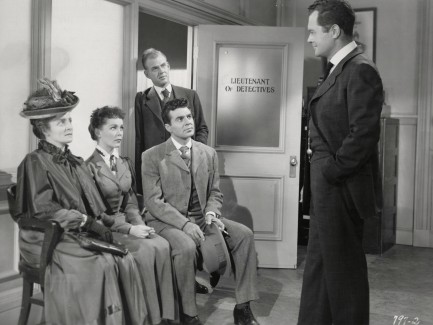
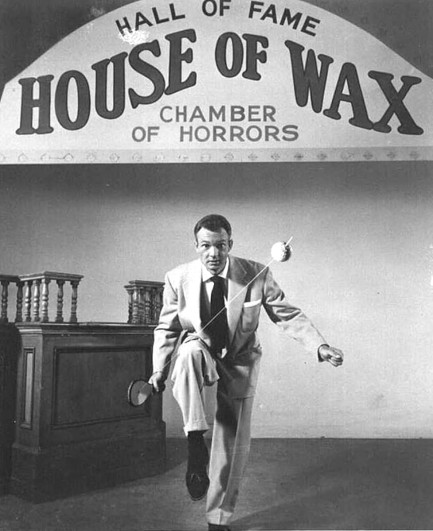
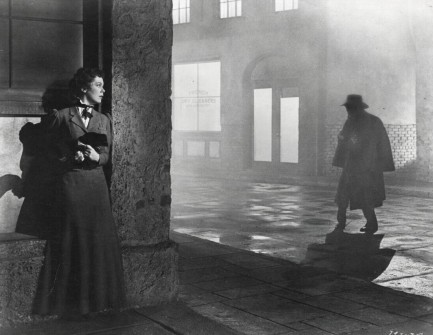
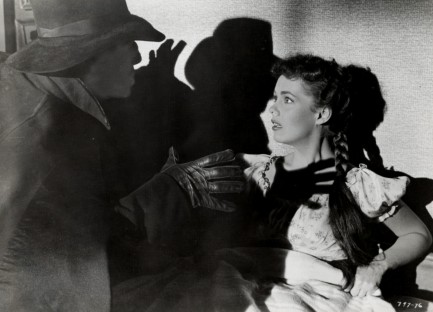
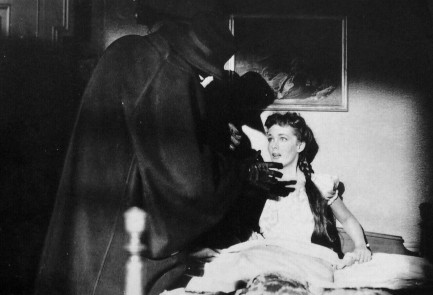
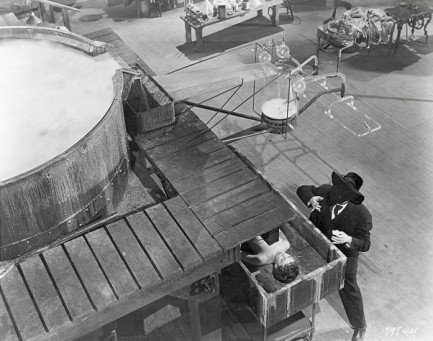
House of Wax, which was produced by Warner Brothers and premiered today in 1953, was the first 3D production by any major studio. It's a period piece set in Victorian New York City starring Vincent Price as the creator and half owner of a historical wax museum. Unfortunately, his focus on history leaves the public nonplussed, and his partner Roy Roberts, who needs capital, sets the place aflame for the insurance money. Price is burned and driven insane. Well, actually he was insane before the fire, but in a cute way. He talked to his wax figures and thought they talked back.
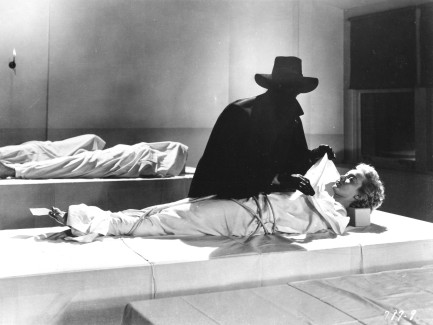
But after the fire he's a barking psychopath, running around nighttime Gotham behatted and cloaked like Lamont Cranston. His goal? Revenge, of course, a craving solved early in the proceedings when he pitches Roberts down an elevator shaft with a rope around his neck. But what next? What does one do once vengeance is thine? Well, you build a new wax museum, except this time you surrender to prurient tastes and create displays of modern murder and the macabre. Screw that high-minded history crap.
Everything goes fine until Phyllis Kirk begins to suspect that the extraordinary realism of the wax figures is due to more than just artistic talent. Her suspicion is a screenwriter's concoction—there's no way a person could realistically make the leap Kirk does in believing Price guilty of heinous crimes. The script literally calls it a woman's intuition. Well, okay. But in our experience that's a myth, and it's possibly even insulting when used as substitute for intelligence, so maybe just put a realistic clue in the script and write Kirk's character as very smart instead. In any case, she's definitely nosy as hell, and that's the beginning of the end for vicious Vince.
House of Wax has many things going for it. The sets and costumes are extravagant, the early fire sequence with its melting wax figures is genuinely unsettling, the WarnerColor developing process is attractive, and the acting is uniformly competent, even by that six-foot three-inch Hillshire Farms ham Price. And it's fun to watch Charles Buchinsky, aka Charles Bronson, as the mute assistant Igor. In the end the House of Wax works. Add popcorn, a few friends, and about of case of beer and you'll have a great Saturday night.
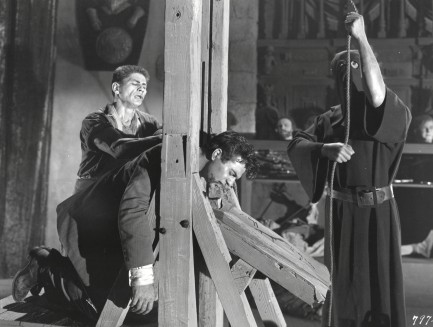
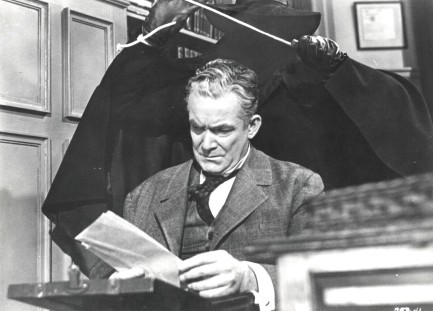
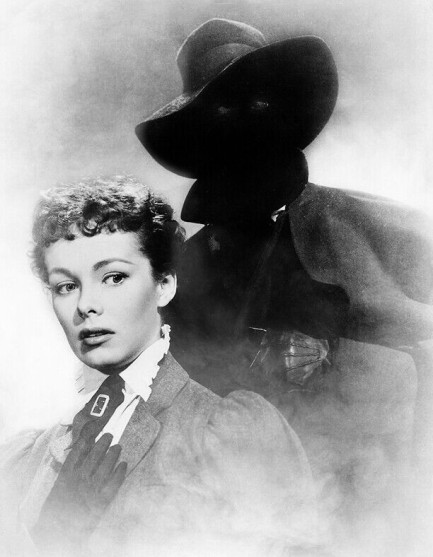
New York CityWarner Bros.House of WaxVincent PriceCharles BronsonCharles BuchinskyFrank LovejoyPhyllis KirkCarolyn JonesAndre de Tothposter artcinemahorrormovie review

| Vintage Pulp | Mar 22 2024 |

This ain't Happy Days and he ain't the Fonz.
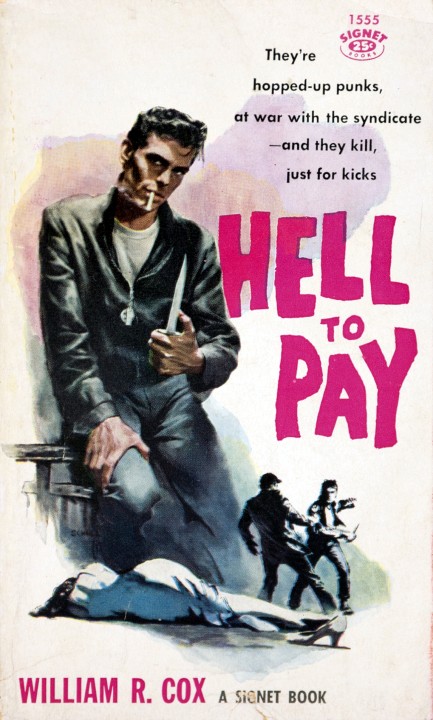
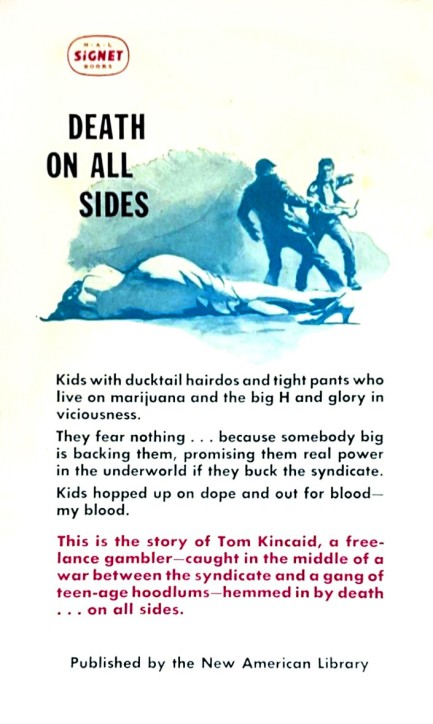
Since reading William R. Cox's 1961 thriller Death Comes Early we'd been looking around for more from him and located 1958's Hell To Pay, which you see above with a Robert Schulz cover. Cox writes in that same cool style we noted before, as he combines two crime sub-genres—organized crime, and juvenile delinquency. His main character Tom Kincaid is a successful NYC gambler who gets swept up in a mafia takeover centered around crooked boxing. Kincaid is thought by a kingpin named Mosski to be working for an upstart mob, which essentially makes this a find-the-real-killer novel in the sense that if Kincaid can't prove he isn't setting up Mosski his ass is grass. The book has in abundance generation gap musings, shady mingling between criminals and cops, poker described in hand-by-hand detail, and a lot of shooting and/or brutal beatings. Cox provides several good secondary characters, particularly Kincaid's been-around-the-block girlfriend Jean Harper. She's flawed, but then so is everyone here. There's a sequel to Hell To Pay, and we're onto that already.

| Vintage Pulp | Jan 20 2024 |

Times change but crimes stay the same.
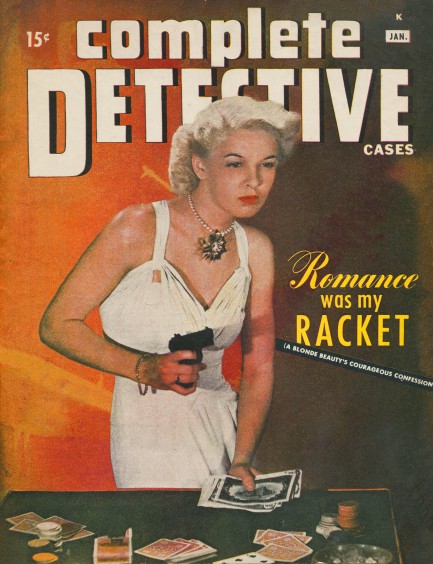
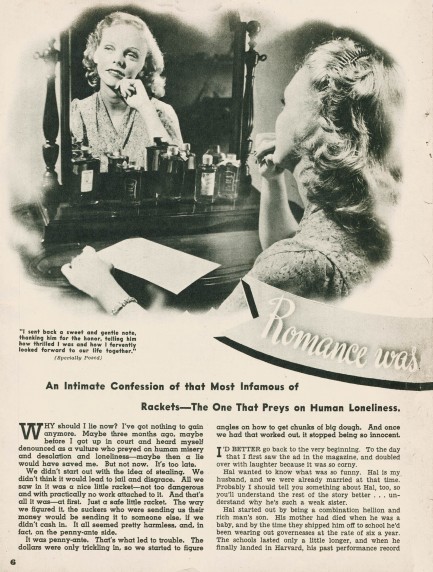
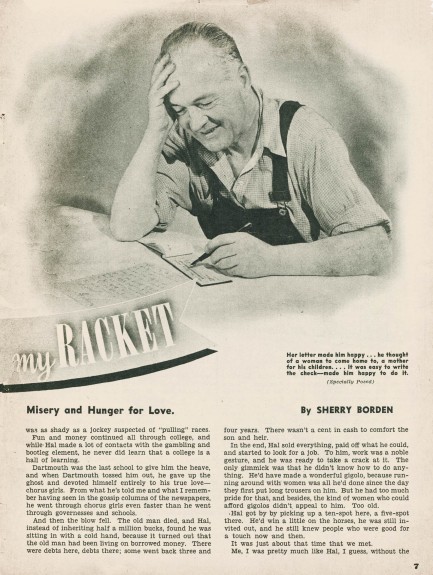
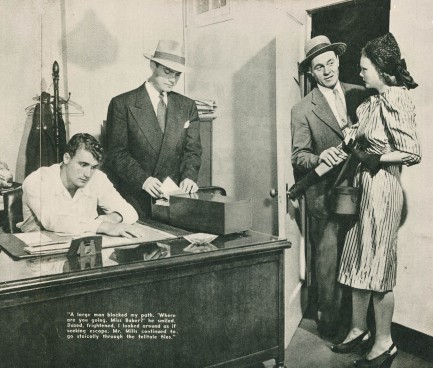
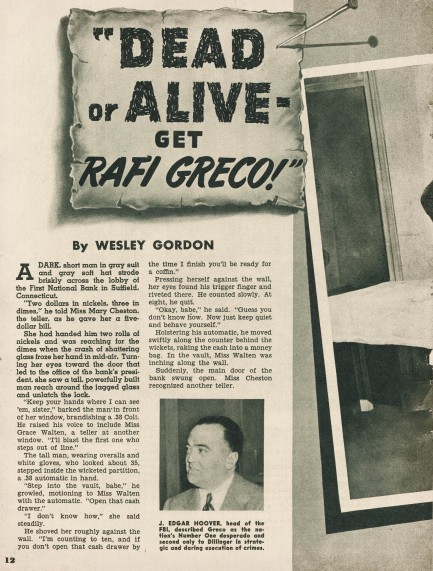
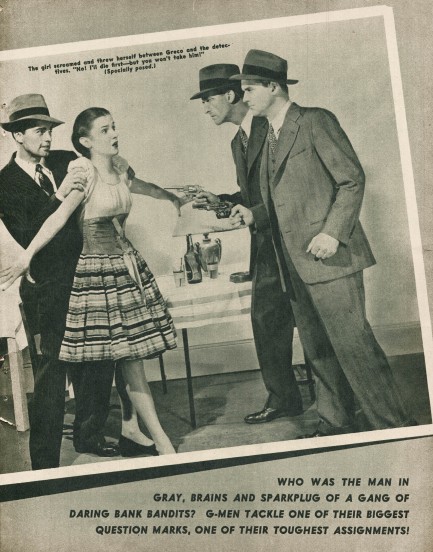
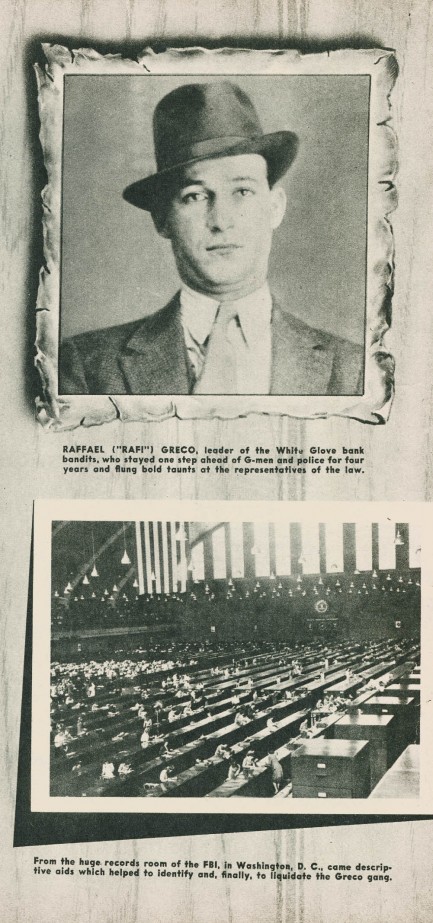
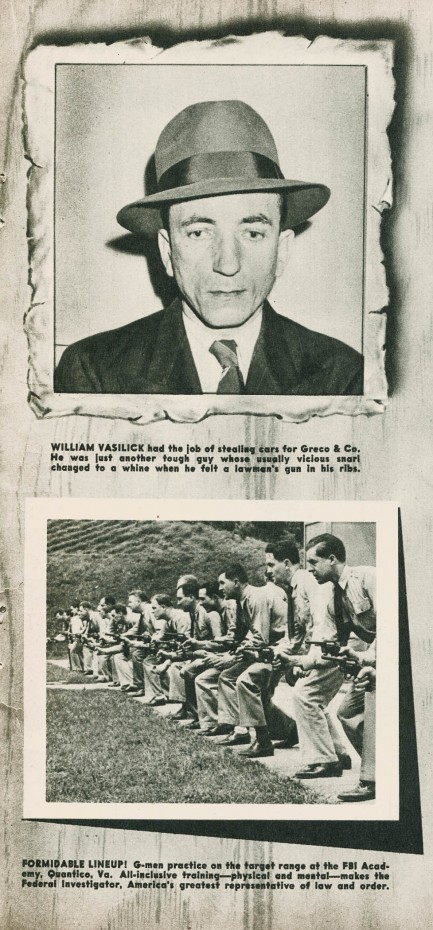
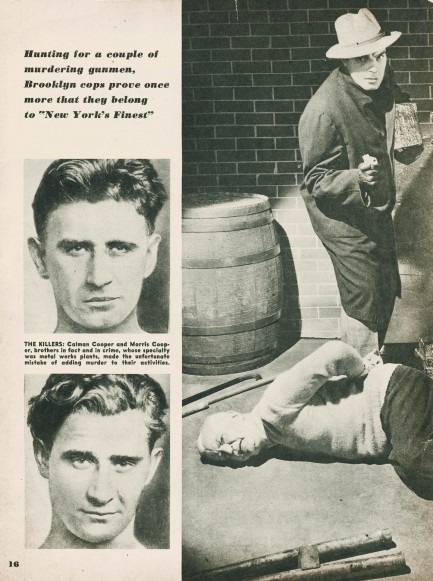
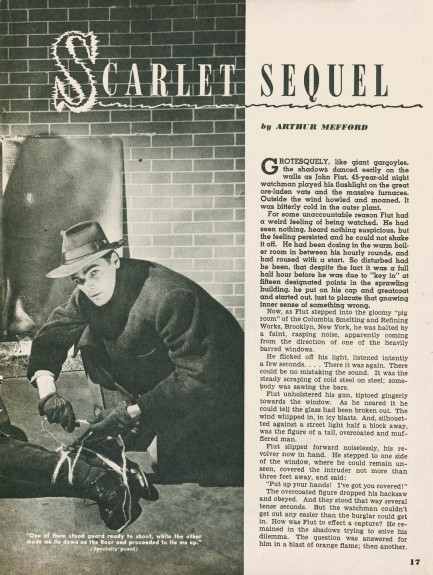
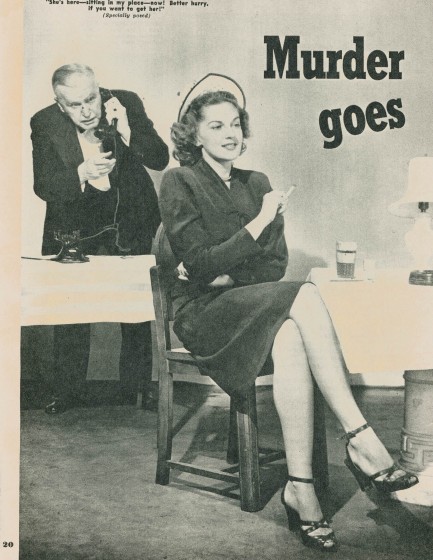
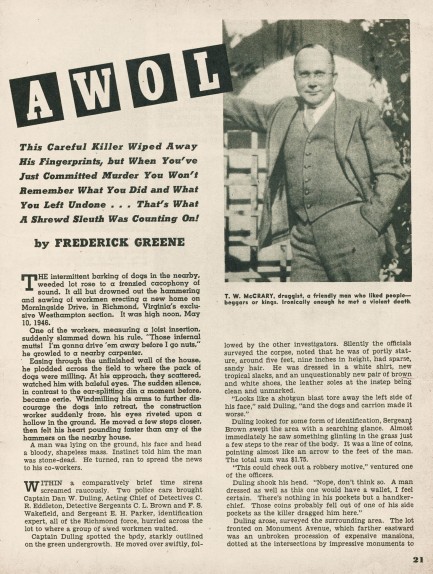
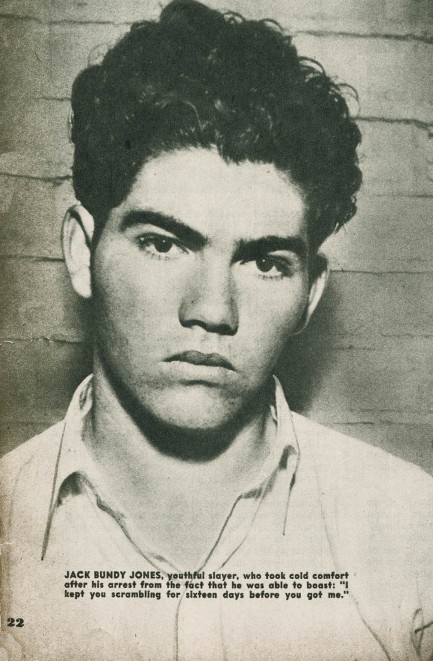
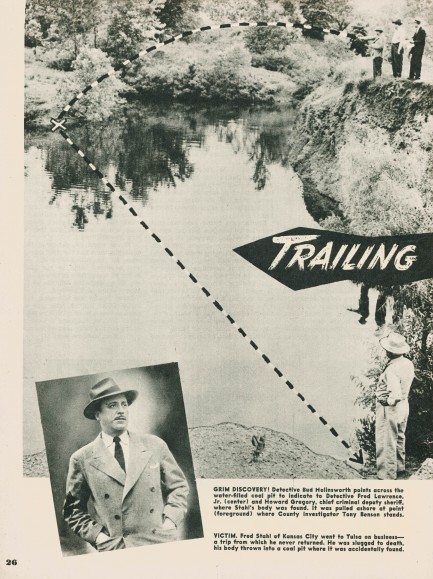
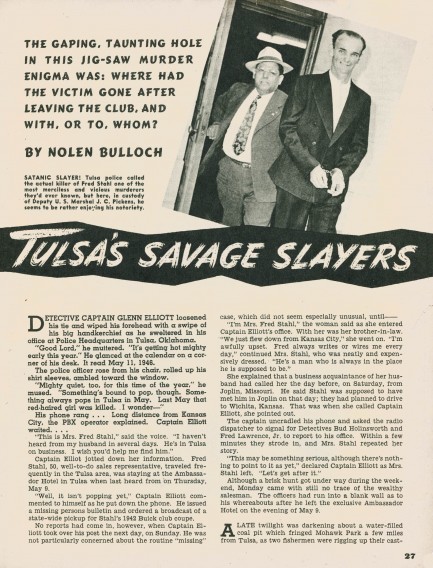
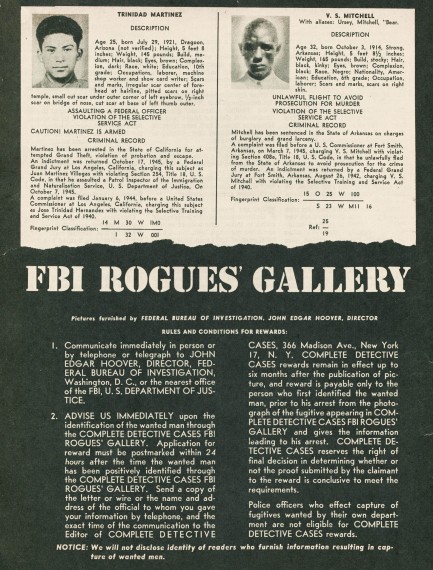
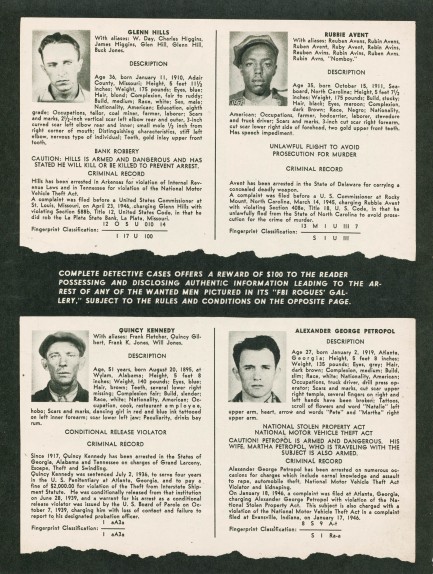
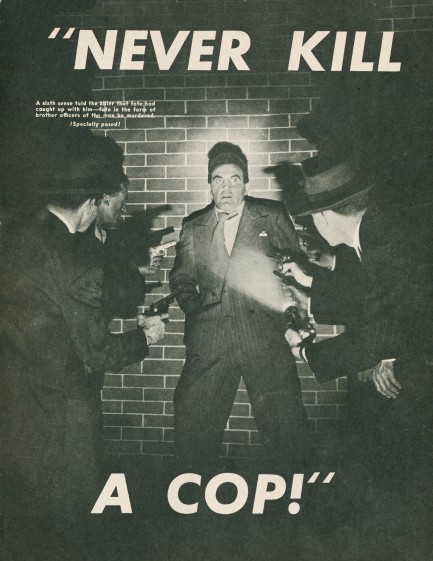
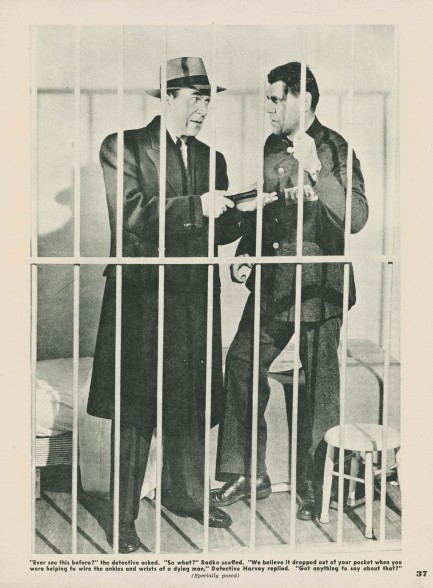
Above: the cover and selected interior scans from an issue of Complete Detective Cases that appeared on newsstands seventy-six years ago, in January 1947. The magazine was published quarterly by Postal Publications and based in New York City and Chicago. A reading of the stories shows how little we've changed in that long span of time: a man is murdered and dumped in a river, cops get cruel to capture a man who killed one of their own, adultery leads to a savage killing, and a cabbie is senselessly shot in the stomach though he's unarmed and acquiescent. The cover story deals with Sherry Borden, who authors an autobiographical tale of descent into serial robbery. The art in Complete Detective Cases is posed by professional models. You can see more examples of these sort of publications by clicking the keywords “true crime magazine” below.

| Vintage Pulp | Nov 23 2023 |

Temperatures rise and tempers fray in Ard thriller.
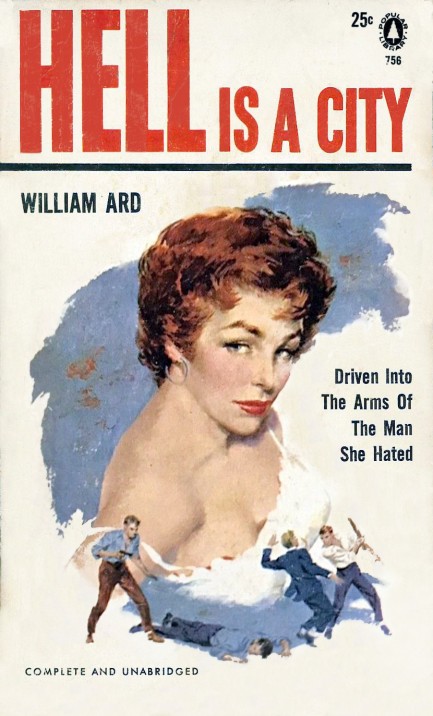
We've been searching for everything we can find by William Ard because his books have been consistently good. This Popular Library edition of 1955's Hell Is a City has George Mayers cover art. We dove right into it, and the narrative (which is unrelated to the movie of the same name) focuses again on Ard's NYC private investigator Timothy Dane, who this time tries to prove that a slam-dunk murder charge is a frame put together by a predatory cop.
Ard reveals this in chapter one, when young Jamie Colyero, barely more than a boy, shoots the cop who tries to rape his sister Rita. The cop had been after her for weeks, and finally plants heroin on Jamie, engineers an arrest, then tells Rita the charges can possibly dropped if she meets him at a hotel and gives up her goodies. Out of desperation to help her brother, she agrees.
Unbeknownst to her, she's followed to the hotel by her brother, who's out on bail, and Jamie kicks in the door and ruins the cop's plan—lethally. Dane is in the picture shortly thereafter, working for a newspaper editor who wants to expose the lies of a rival sheet that has used its pages to turn the dirty cop into a saint. All of this will swing the next mayoral election, so the stakes are as high as can be.
Long story short, the book is great. Like other Ard tales it moves exceedingly fast for a piece of vintage fiction, racing through numerous twists and scrapes, with intermittent bursts of action, until it reaches a conclusion that shakes the city to its foundations and leaves readers satisfied. If you enjoy 1950s crime novels, read anything by Ard. You won't regret it.

| Vintage Pulp | Nov 11 2023 |

She's always there when you need her, but who's there for her?
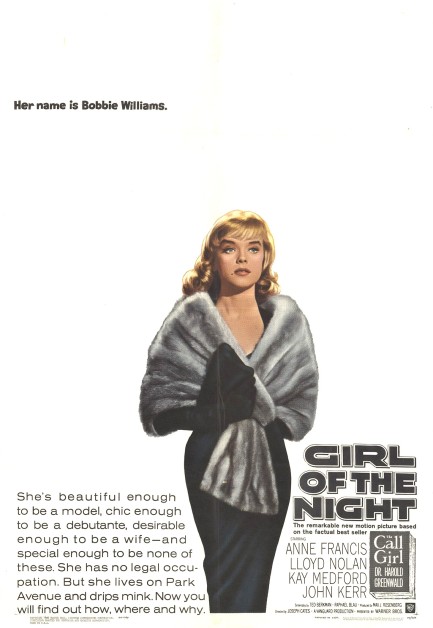
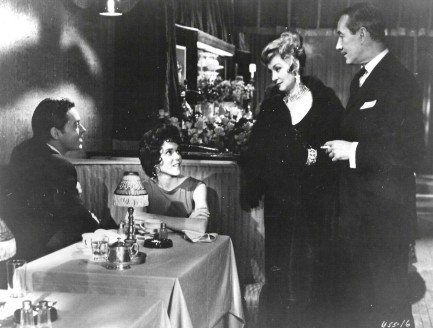
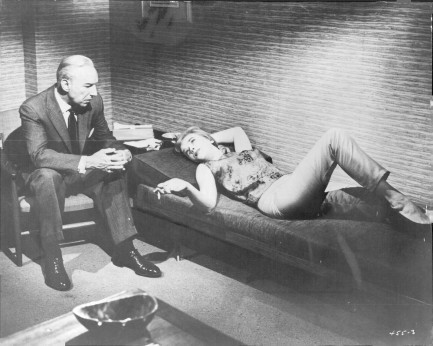
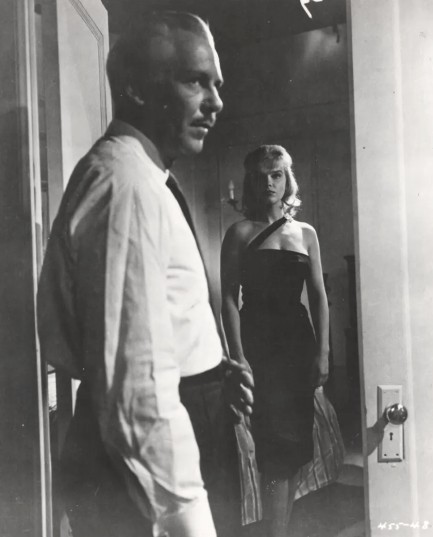
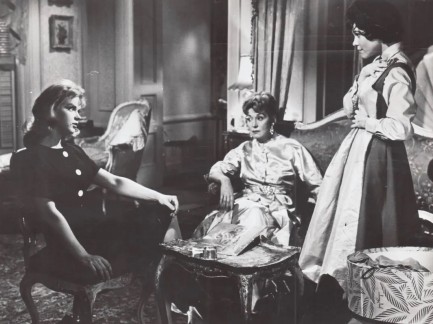
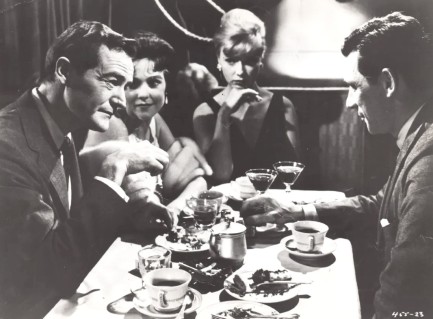
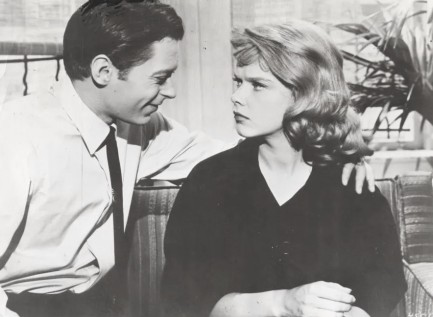
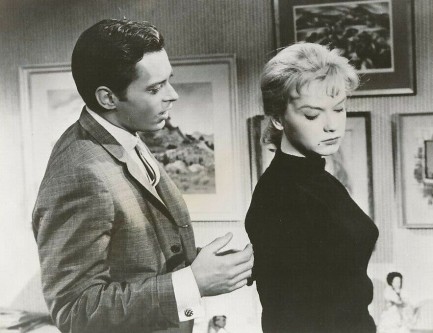
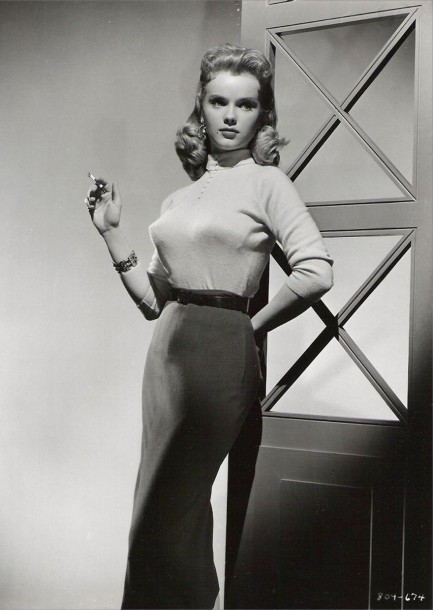
For years we've been eyeing this awesome promotional poster for the Anne Francis prostitution drama Girl of the Night and always meant to get around to watching the movie. Mission accomplished, finally. The film premiered today in 1960 and was based on The Call Girl, a bestselling book by psychologist Harold Greenwald that began as a doctoral dissertation about prostitutes. We gather it focused on the rationalizations women used to distance themselves from or compartmentalize the work. We wonder if it's outdated by now, but at the time the book was a sensation.
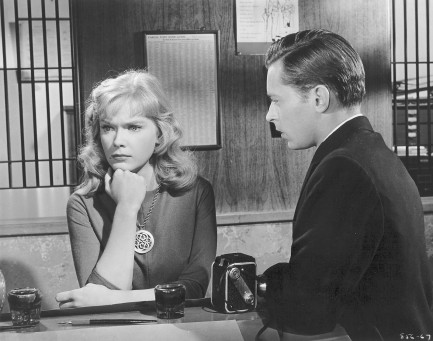
Francis plays Bobbie Williams, a call girl whose bad night causes her to begin talking with a therapist in her building. The movie takes the form of a couch confessional with flashbacks, as we learn about Francis's circumstances, and particularly about the two people—basically a pimp and madame—who conned her into the racket. As the therapy progresses we learn more about her past, including the delivery man who—this part is obviously vague considering the time period—either molested or raped her when she was a child.
With help maybe Francis can break loose from her cage, but it won't be easy. She's emotionally dependent on her pimp, and because she has no job skills freedom looks like another form of imprisonment. We thought all of this was pretty well done. Make no mistake—this movie is a melodrama, but it kept us interested, and that's entirely to the credit of Francis. She's best known these days for her virginal turn in 1956's Forbidden Planet, but she had range, and shows it as the burned out prostitute at the center of the film. For her performance alone, we recommend Girl of the Night.

New York CityGirl of the NightAnne FrancisLloyd NolanKay MedfordJohn KerrEileen FultonHarold Greenwaldposter artcinemaprostitutionmovie review

| Vintage Pulp | Sep 29 2023 |

He kills completely without reservation.
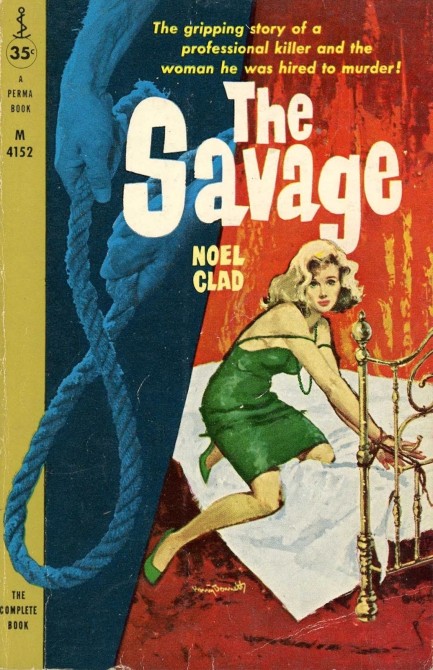
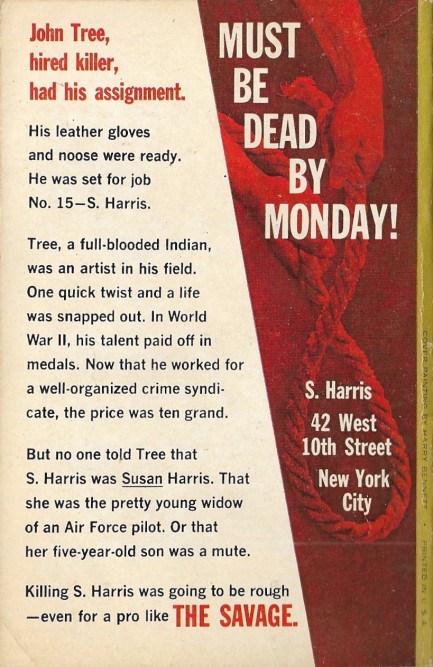
Noel Clad was a promising writer who died in a plane crash when he was thirty-seven. His novel The Savage shows some of that promise. It's about a professional killer named John Tree who's been summoned from his Wyoming ranch by the Chicago syndicate to go to New York City and dispose of an S. Harris. Like many fictional killers Tree has a code: he doesn't kill women. When he arrives in New York he learns that S. Harris is Susan Harris, which dismays him. Then the person who's bought the contract and is calling the shots tells Tree to rape Susan before killing her. Next he finds out she's a single mother with a mute five year-old son. None of it sits well with Tree, but it doesn't cause him to flip sides. He just wants out. He asks to be replaced on the job and be done with the situation. Out of sight, out of mind. His employers agree and send two replacement hired guns to do the job. Tree meets with them and realizes they have no ethics—they will rape their target, and they'll murder her son too.
There are hundreds if not thousands of regular mob hitmen in literature and cinema, so why not do something different? It shouldn't be a controversial idea, but sadly, so many these days consider it to be an assault on territory they own somehow. But diversification isn't a new thing. Clever writers have been doing it all along. Clad does it in The Savage. The killer for hire, the anti-hero John Tree, is full name John Running Tree, member of the Shoshone tribe, Native American by both blood and culture. That simple change takes the book in a different direction than other hitman tales. Here we have a killer who hates to think about his impoverished youth on a reservation, who glorifies Native American tests of manhood, and who sees a stripper wearing a tribal headdress as a prop and is angered. You get interesting passages like this:
Being here made him think of religion and how little he knew and the things that had passed for it when he was little: the spirits and the half-reverent amulets and charms. He remembered as he had not for years the lupine tea they drank for Manhood, remembered the girls on the Station eating mushrooms to see if my true love lies, and his own watching of wood smoke that twisted north when the hunting would be good. Even Tall Kite had no longer really believed in the thousand tribal spirits of the upland and the plain, the grass, the insects, the deer and the hawk. And God, in the Bureau of Indian Affairs, was no more than the price of chocolate milk. But in this hall, he had a pleasant feeling, relaxed, as though he was on a mountain all by himself.
1958 this was written, with loads of identity angst, as if it were published yesterday. John Running Tree moves like a folkloric wraith through New York City and tries to prevent Susan's defilement and death. The transgressiveness of the rape angle surprised us, as did the plot point that Tree kills by wire garrotte (not rope, as shown on the cover), but those added to the stakes of a harrowing and austere tale. Are there negatives? A few. Clad loses his tight control over the narrative from the moment Susan realizes—as she must—that Tree isn't just a nice guy hanging about for fun. Clad later forces the usage of Shoshone pictograms into a scene where the child mutely communicates an important clue. It might have worked under the right conditions, but in this case defied credulity. Other authorial errors accrue. Even so, good book. We'd read Clad again.

| Vintage Pulp | Sep 28 2023 |

Human nature at its most savage.
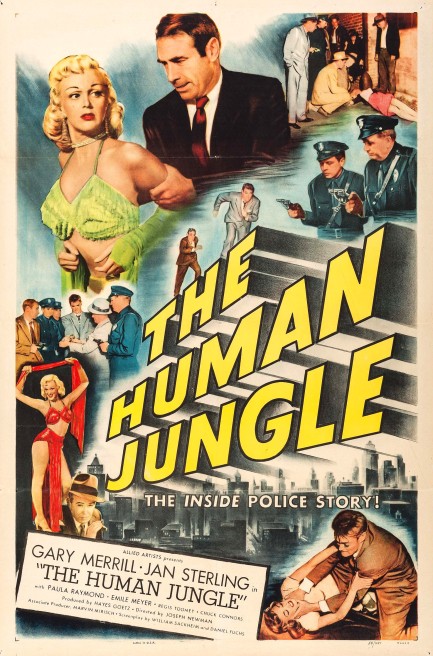
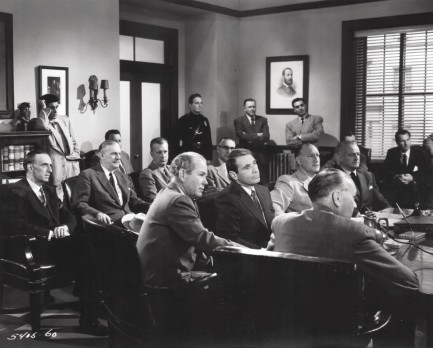
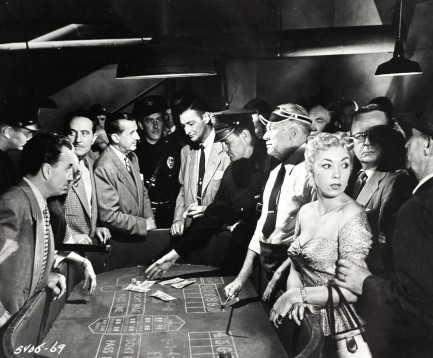
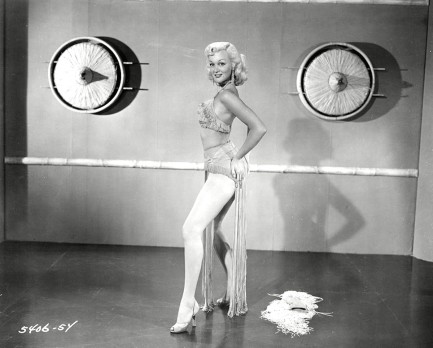
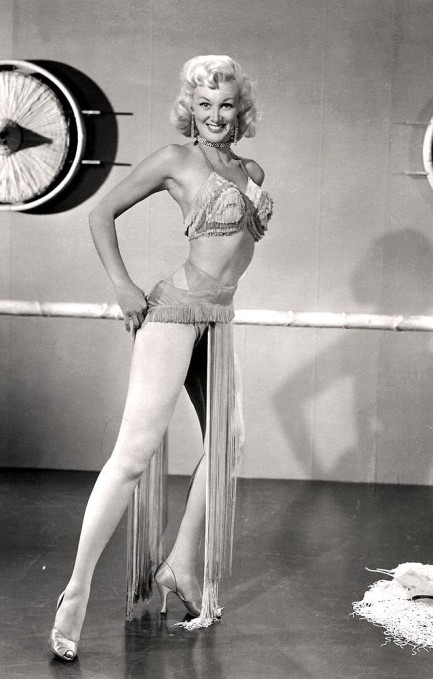
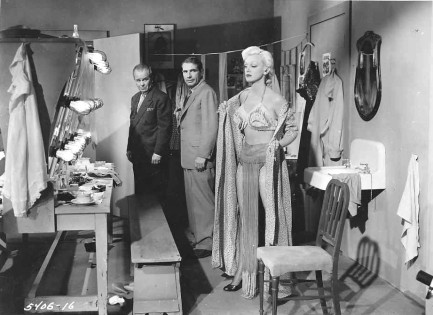
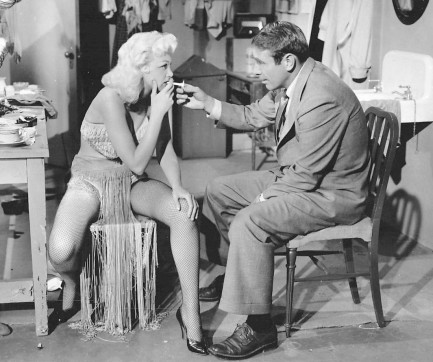
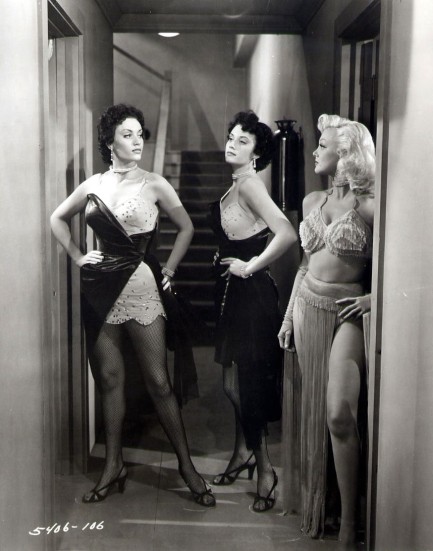
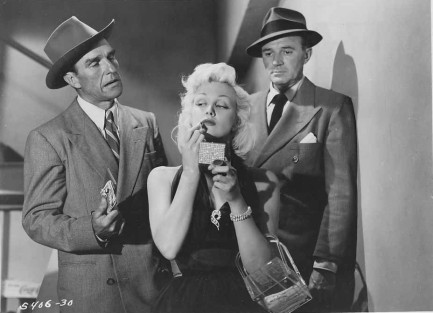
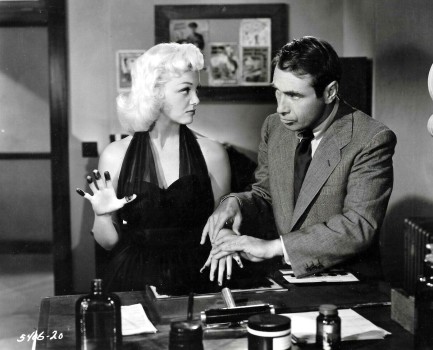
This busy promo poster was made by Allied Artists for its drama The Human Jungle, which starred Gary Merrill as a tough cop who tries to whip his Jefferson Heights precinct into shape, both inside and outside the station house. Merill would rather transition out of police work and into the legal profession, but when he's tapped to cleanse the Heights he goes at it with a vengeance. His obstacles include lazy cops, emboldened delinquents, a hostile press, and a set of hardened criminals who feel impervious. Jan Sterling co-stars as a singer and dancer who might hold the key to putting a murderer behind bars. But Merrill will have to turn her first, and she's unwilling, to say the least.
For some people, the hardball tactics used by Merrill might bring to mind all the unlawful force settlements police departments nationwide constantly pay, because innocent people are always caught up in such crusades. For example, New York City paid out $143.2 million in civil rights damages in 2022, this despite the fact that prosecutors refuse to bring charges in about 95% of filed claims. But old movies avoid such sticky issues, and because they operated under censorship rules it's only criminals that hurt people, and Merrill comes out glorified and vindicated.
Add it up and what you get is an unoriginal and one-dimensional police drama that in this day and age feels greatly out of touch. Is there any reason at all to watch it? Maybe. It's pretty well made. It features young Chuck Connors as a heavy. It tries to mix in homelife strife in the form of Paula Raymond as Merrill's wife, and is reasonably successful on that front. The always interesting Sterling does a fun song and dance number that adds a little pep to the middle of the film. And there's a decent climax set in a brewery. Everything else in The Human Jungle is pretty limp. It premiered today in 1954.
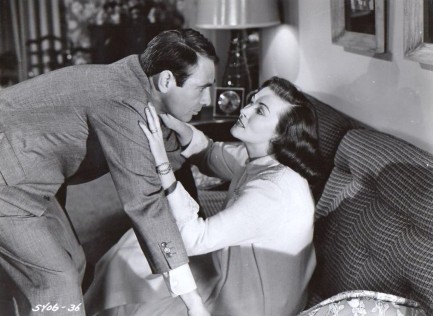
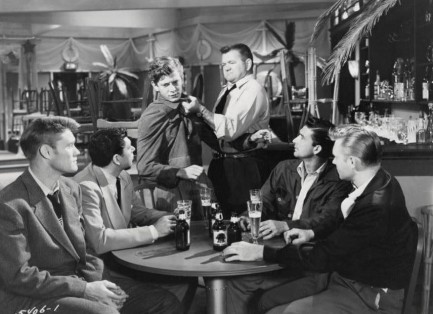
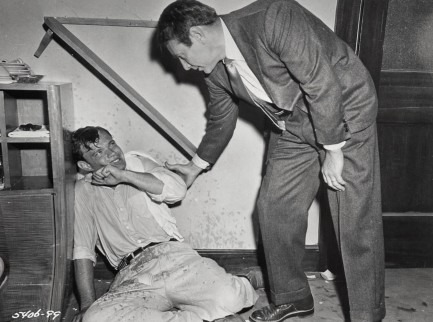
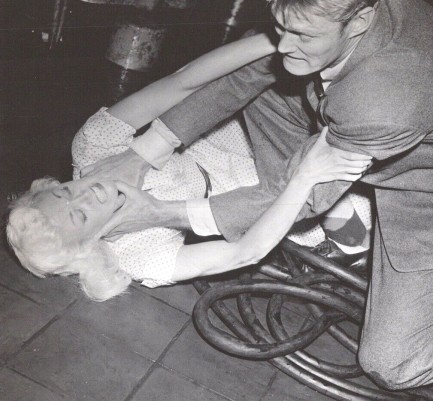
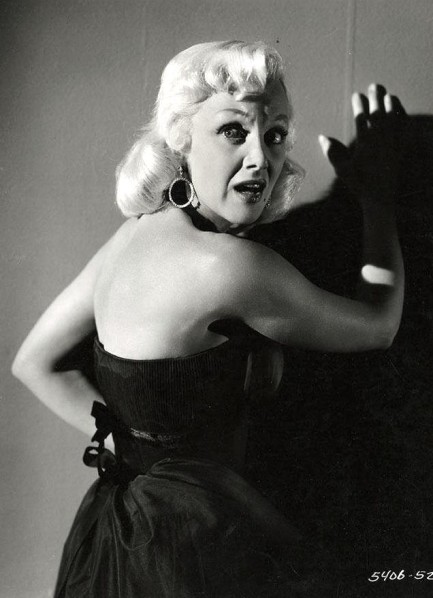
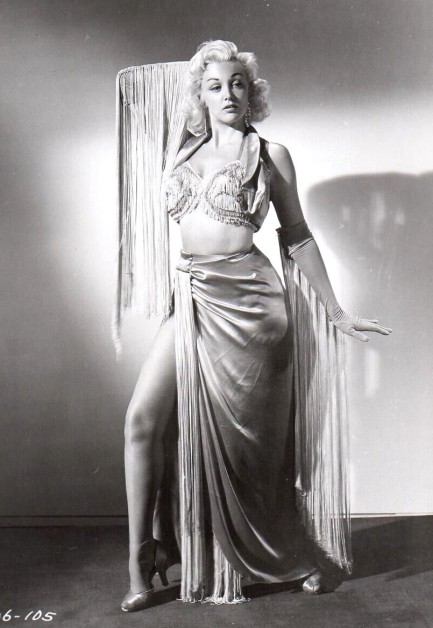
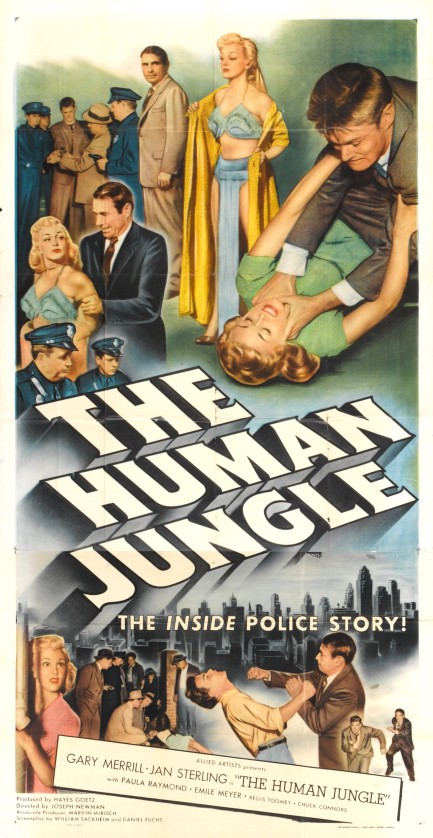
New York CityAllied ArtistsGary MerrillJan SterlingPaula RaymondEmile MeyerRegis ToomeyChuck Connorsposter artcinemamovie review

| Vintage Pulp | Sep 16 2023 |

Gemser travels to many distant cities, and meets the worst people in every one of them.
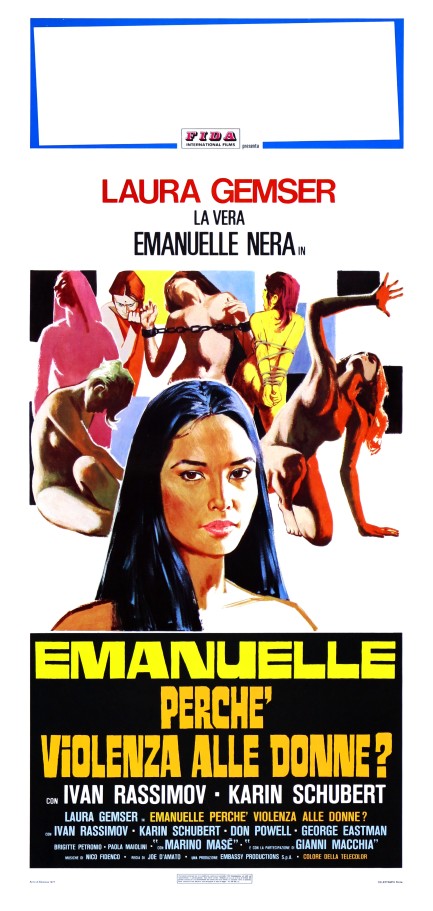
To say that Laura Gemser's Emanuelle films are hit and miss is an understatement of epic proportions. While early entries have the happy softcore feel needed for thought-free diversion and occasional boners, later offerings veer into dark territory. Emanuelle - Perché violenza alle donne? is in the latter category. An Italian production, the title translates as “Emanuelle - Why violence against women?” Erotic cinema and social commentary don't usually mix well—not because they're mutually exclusive, but because the filmmakers never have the skill to pull it off. In the U.S. the movie was retitled Emanuelle Around the World, which sounds fine, but its international English title was changed to The Degradation of Emanuelle. Uh oh.
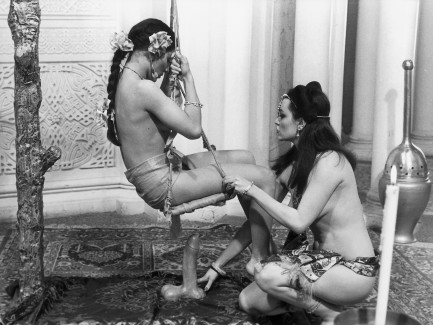
Gemser's adventures begin in San Francisco when her New York based photo-journalist character enjoys a satisfying boning in the back of a truck. But soon she's off on her next assignment, a titillating expose of a Kama Sutra commune in Asia. Once there she meets creepy guru George Eastman and uses her superior sexual skills to make his holiness transcendentally ejaculate too fast. Up to this point Perché violenza alle donne? is somewhat fun. But next Gemser meets up with pal Karin Schubert in Rome and joins an assignment to expose a sexual slavery ring. Wait—didn't she do that in Emanuelle and the White Slave Trade? Yup, but slavers never quit. This collection of bad men are unusually horrible. One is is a burn victim who rapes his captives. Another has a penchant for bestiality.
Obviously, during the 1970s filmmakers didn't really understand the idea of unintentionally minimizing serious subject matter the same way they do today. It was the “what-the-fuck-let's-give-it-a-try” era, and taking such risks produced some of the greatest cinema ever. But in this case writer/director Joe D'Amato and co-writers Maria Pia Fusco and Gianfranco Clerici failed. Badly. A movie on the subject of slavery and rape would be unpleasant but important if it were a Claire Denis drama or a Laura Poitras documentary. Mixing it into a flyweight sex film doesn't add dramatic weight—it adds discordance, embarrassment, and insult. It was a total miscalculation. You could potentially watch the film until Gemser departs the Kama Sutra commune, then turn it off. If you don't, you have nobody to blame but yourself.
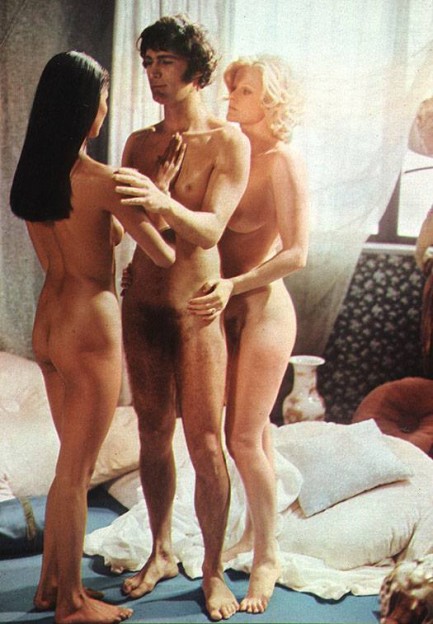
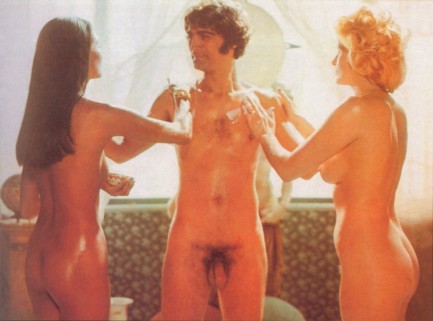
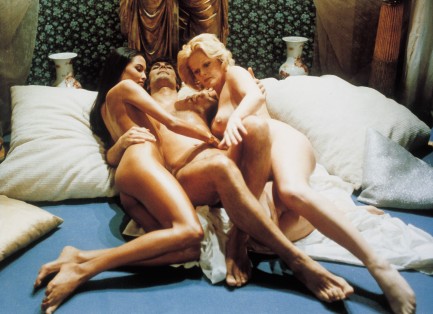
However, we try to see the good in every movie we screen, so we should note that there are some high points. We'll list them. The Emanuelle films were typically shot in exotic locales, and in this case not only does D'Amato set scenes in New York City and San Francisco, but in Kathmandu, Rome, Hong Kong, and—for real—Teheran. Gemser is a limited actress, but one who always does her best with preposterous scripting. Schubert is a stolid co-star. Underutilized Don Powell is always a welcome sight. And lastly, many of the production photos, some of which appear below, are interesting. That's about all the good we can find. We'll just slide Emanuelle - Perché violenza alle donne? into ye olde metaphorical trash bin and forget it ever happened. It premiered in Italy today in 1977.
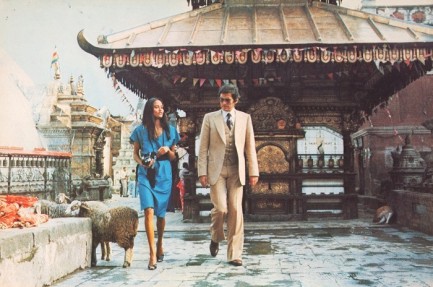






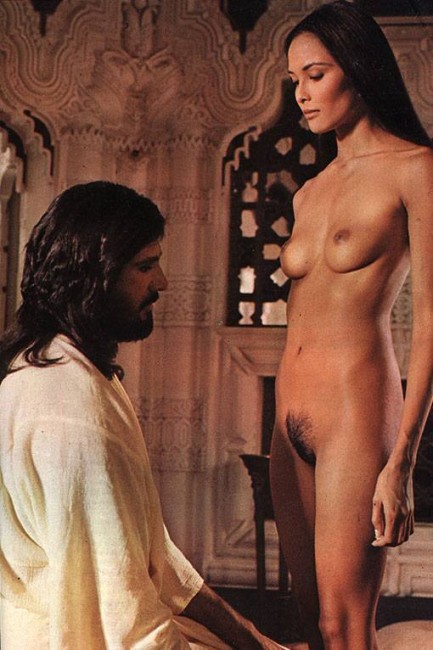


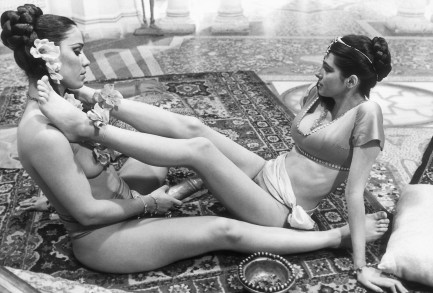

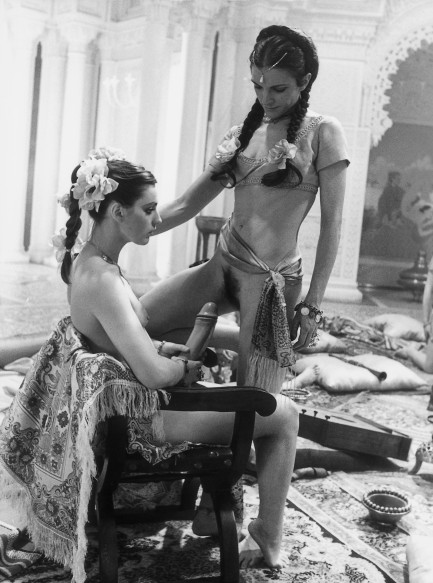


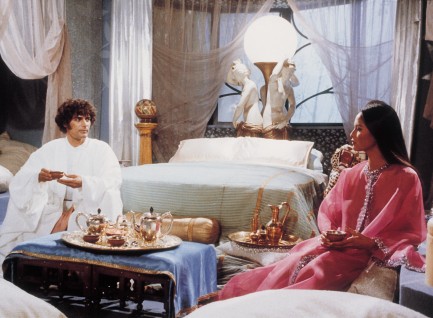
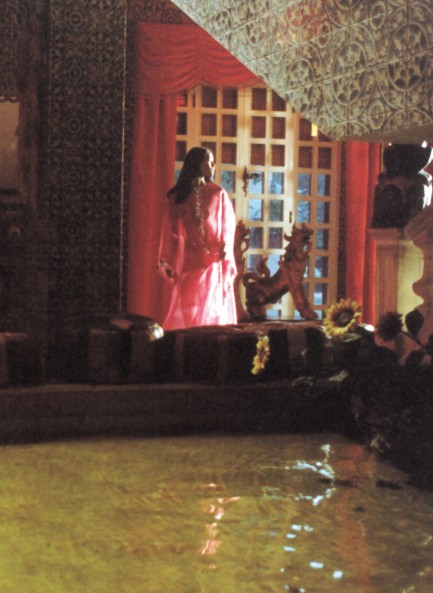
ItalyNepalKathmanduRomeNew York CitySan FranciscoEmanuelle - Perché violenza alle donne?Emanuelle Around the WorldThe Degradation of EmanuelleLaura GemserIvan RassimovKarin SchubertGeorge EastmanDon PowellJoe D'AmatoMaria Pia FuscoGianfranco Clericiposter artcinemasexploitationnuditymovie review

| Vintage Pulp | Sep 10 2023 |

Listen, baby, I steal, extort, and sell drugs. You had to expect me to have unconventional views on relationships.
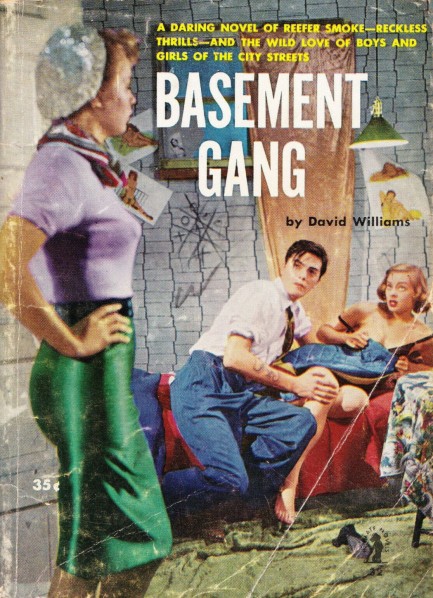
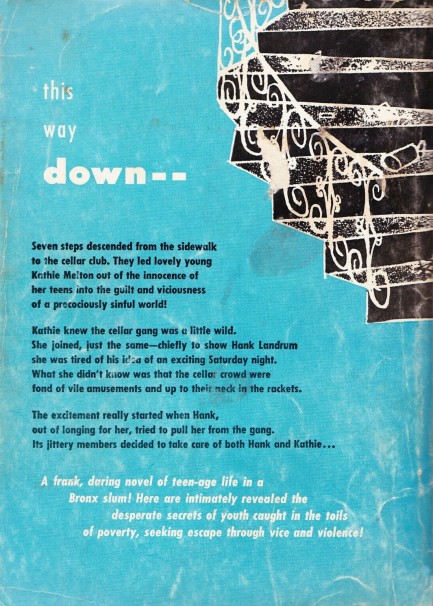
This photo cover for David Williams' juvie delinquent novel Basement Gang is one we've admired for years. Enticed by its colors and out-of-focus foreground figure, and finally finding it at a good price, we snagged a copy. Originally published in 1953 by Complete Novel Magazine, with the above edition coming the same year from Intimate Novels, it's a cautionary tale told in detailed if clinical style following Bronx born Kathie Melton, who out of boredom dumps her solid boyfriend Hank, is lured through the forbidden doorway of the local underground club Comets, and is soon drunk, drugged, and de-virginized to the limits of her ripe young body.
Kathie is willing to repeatedly indulge in all these activities, but she hates that the hepcats with whom she's hooked up are criminals. Hey, sitting around being disaffected all day requires some sort of funding. Kathie rolls with the life of petty crime, however when a romantic rival sets her up to be beaten and (almost) raped by a dangerous thug, the square life starts to look good again. But leaving Comets and co. isn't simple. As juvenile delinquent fiction goes, Williams did a good job with this one, even if his prose doesn't invite deep emotional involvement. We think it was his only novel, but just in case we'll keep our eyes open for more.