MGM's fantasy version of Africa goes swinging into northern Europe. 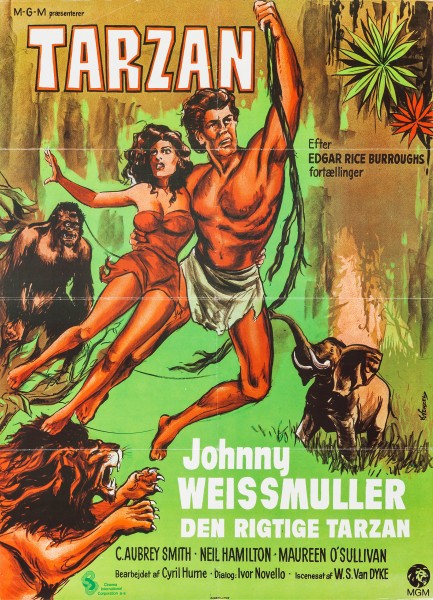
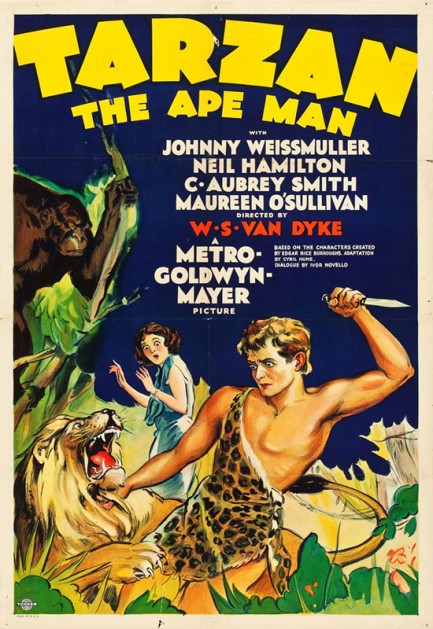
From up Scandinavia way comes this colorful borderless Danish poster for Tarzan the Ape Man, which starred Johnny Weissmuller and Maureen O'Sullivan. It was called simply Tarzan in Denmark, though Danes who've since seen it on DVD know it as Abemanden Tarzan. This was painted by Kurt Wenzel, whose signature you can see at the righthand margin, and who also painted well known posters for The Flying Tigers, The Killers, and The Searchers. We saw Tarzan for the first time last year and enjoyed it despite its flaws. We enjoyed the sequel too, equally flawed. Shorter version: watch it only with your historical accuracy and outrage filters turned off. After opening in the U.S. in March 1932, Tarzan premiered in Denmark today the same year.
 They may not have much but at least they're free. 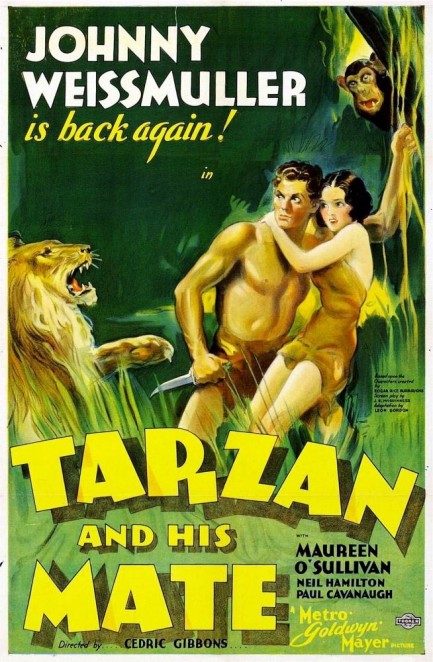
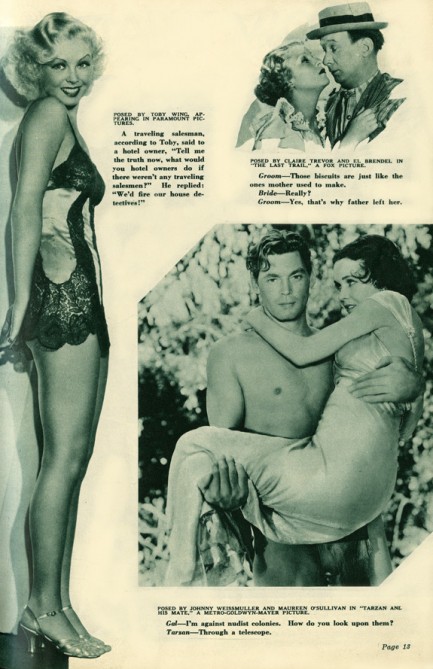
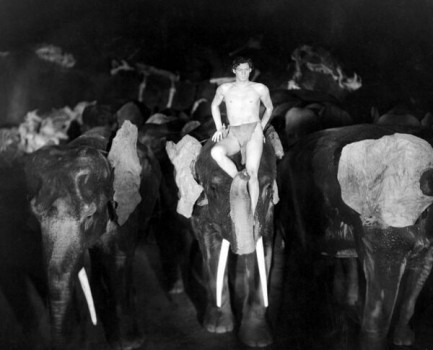
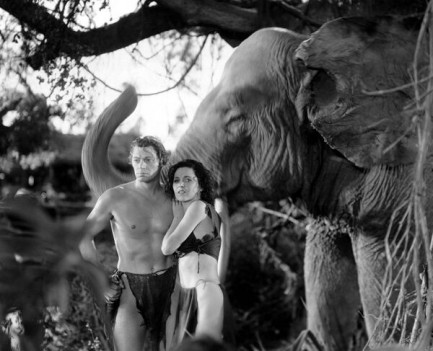
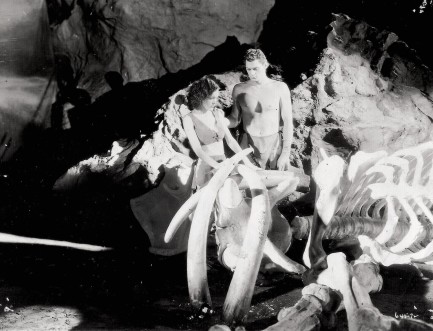
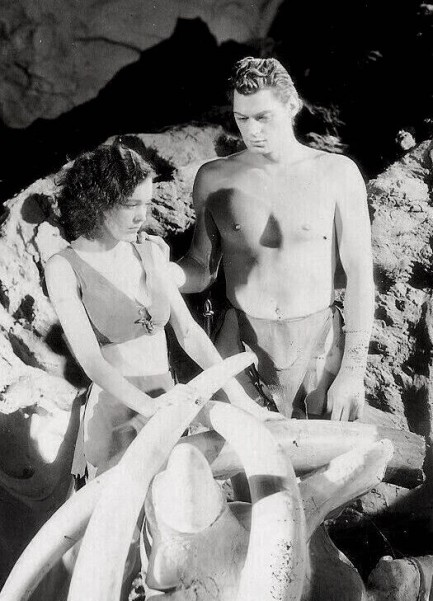
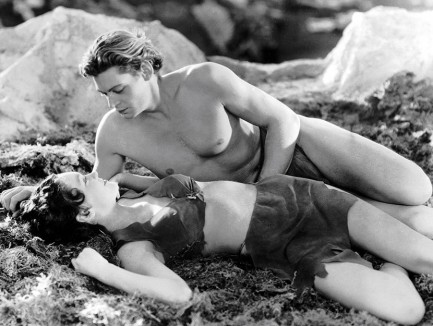
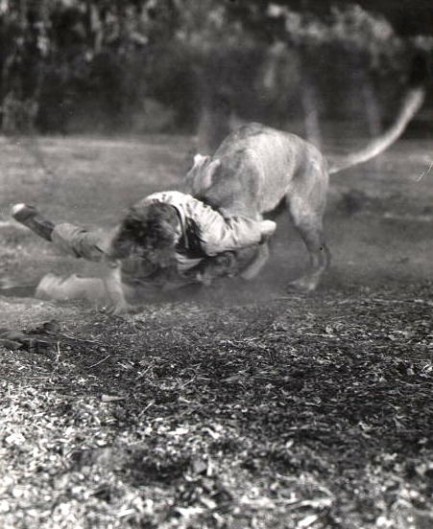
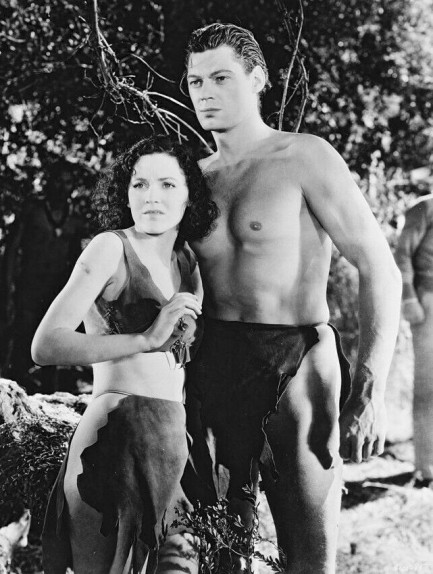
Like the poster says, Johnny Weissmuller is back again. When we last saw him as Tarzan, earlier this month, he and love interest Maureen O'Sullivan had swung away into the African trees together. But her British friends were always going to return, and sure enough Neil Hamilton and company are back to get their mitts on that legendary cache of elephant ivory. You know the drill. Hamilton and Paul Cavanaugh seek the unobtanium. The jungle comes alive with lethal dangers. Bearers sacrifice their lives to keep the bosses safe. Meanwhile Tarzan and Jane deal with their own cavalcade of jungle horrors—first a lion, then a rhino, then a leopard, then a crocodile, then a lion. We don't have to detail it. What's fascinating is not the action, but the erotic subtext.
This flick oozes sex. O'Sullivan's role has evolved. She's no plain Jane. She's a fantasy of the perfect woman here, the perfect lover. Her character is—in a word—devastating. Her humor, cuteness, and coquettishness are off the charts. She wears less than ever. Her body double Josephine McKim wears nothing, or at most a patch over her pubic area. But audiences who saw the full cut thought it was a bare-assed O'Sullivan. All of this is designed to make her irresistible not only to the male audience, but to Cavanaugh, who goes after her with the charmless persistence of a high school sophomore. Dare we say this is a dangerous game when dealing with the King of the Jungle?
Of course, all the flaws we cited with Tarzan the Ape Man are recurrent here. Once again African bearers are whipped through the jungle, across dangerous rivers, and up that same deadly escarpment from installment one. At which point Cavanaugh says, “Well, I hope we've got the worst behind us.” No, not even. Tarzan and His Mate is not a good look, and what it stylizes—not big men in a big land, but the rape of Africa—is uglier still. But it's up to each viewer to decide whether to watch it, and if so, whether to decide it's simply entertainment, or to compartmentalize its implications, or maybe to use it as a launching point for further thought and discussion. Tarzan and His Mate premiered in the U.S. today in 1934.
         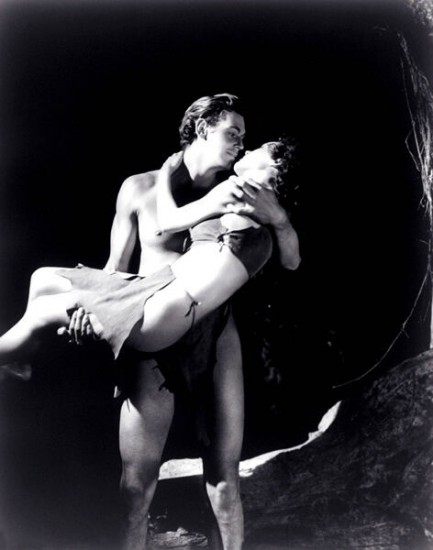 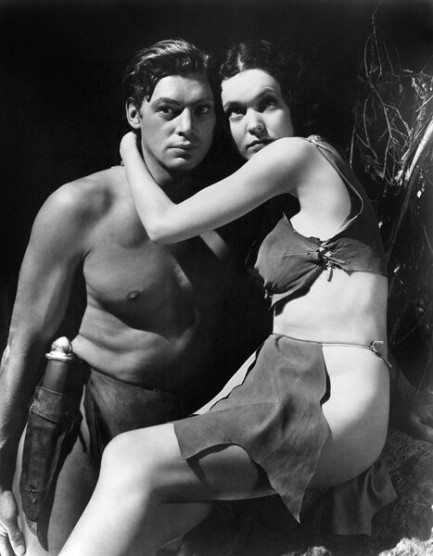 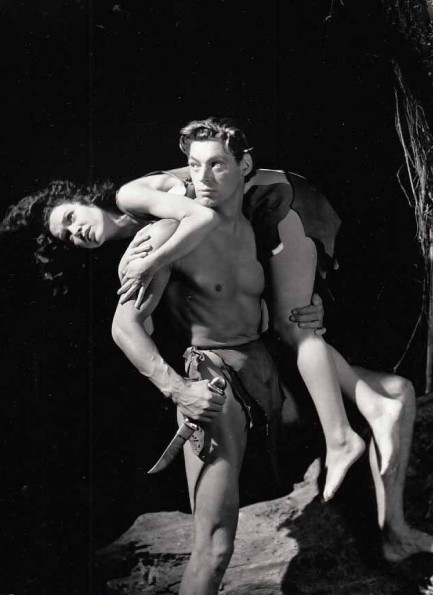 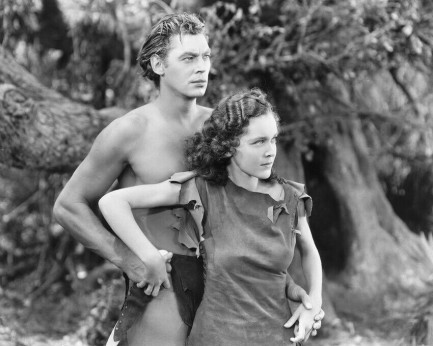       
 Weissmuller's jungle classic continues to look weirder as time goes by. 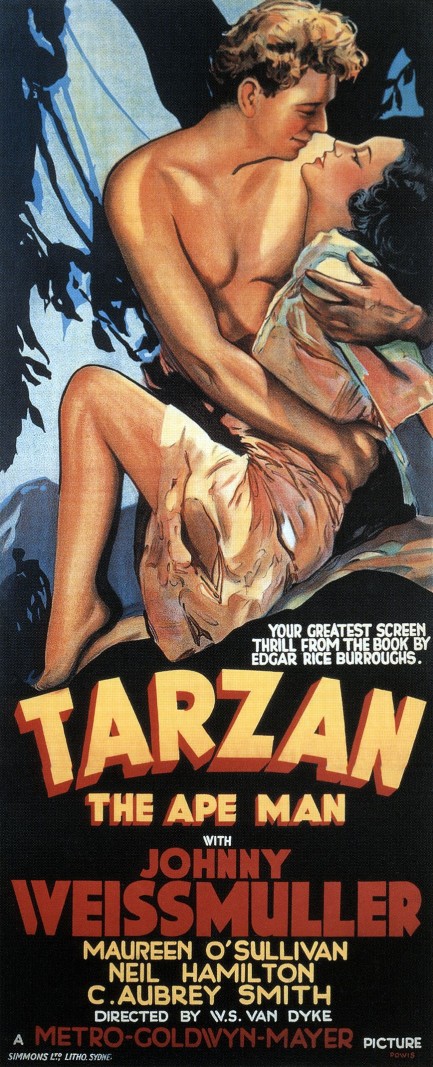
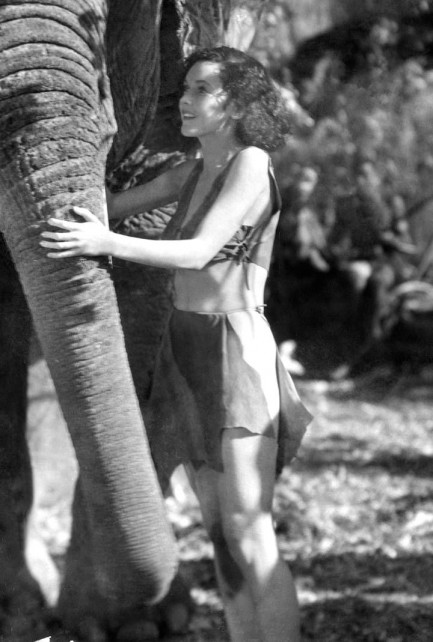
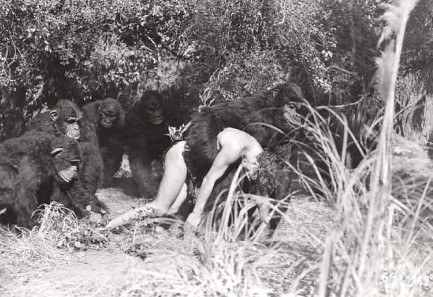
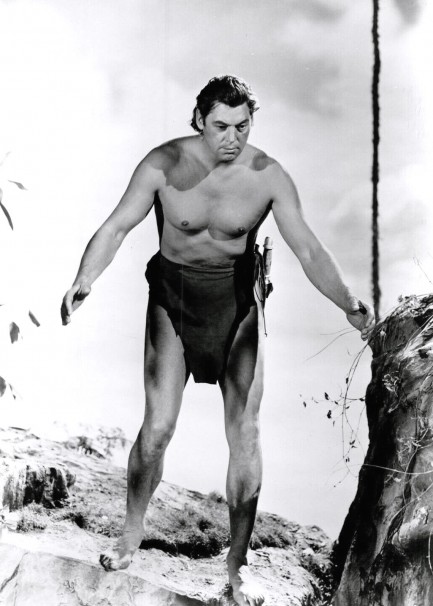
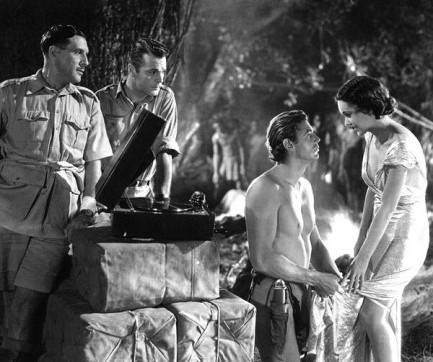
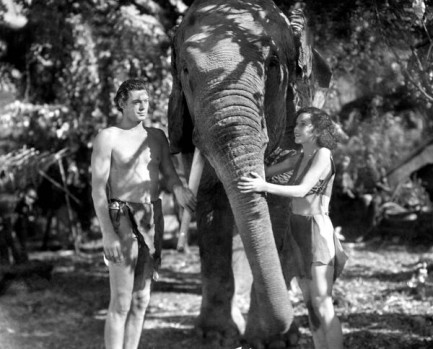
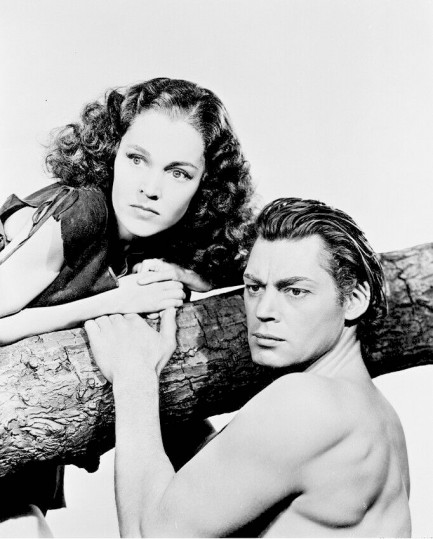
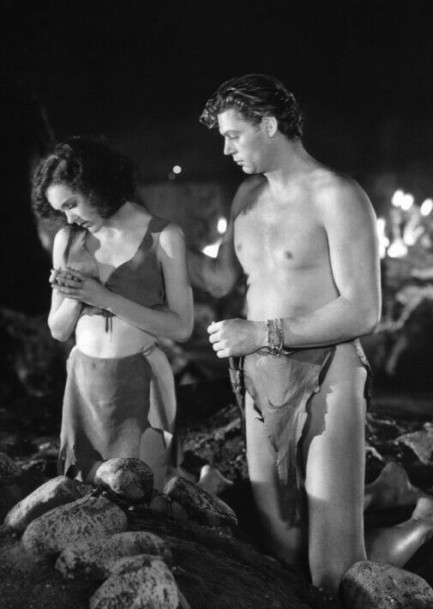
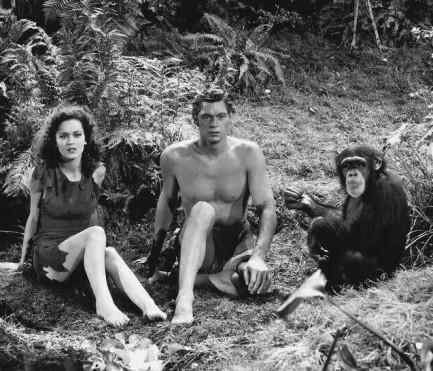
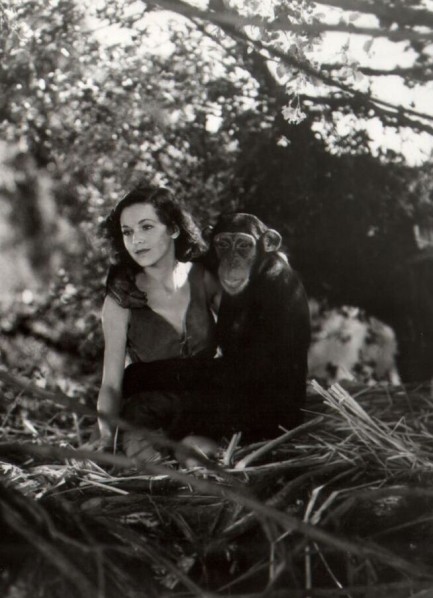
Above is a beautiful poster for Tarzan the Ape Man, which starred Olympic swimmer Johnny Weissmuller as Tarzan and twenty-one year old Maureen O'Sullivan as Jane Parker. The plot here is simple. White explorers are desperate to find a million pounds of ivory they believe lies hidden in an elephant graveyard somewhere in the African interior. After scaling a massive escarpment (and losing a native bearer over the side), and traversing a river (and losing native bearers to rubber hippos and crocs), and stumbling across a tribe of dwarfs (and losing a native bearer to an arrow), they finally reach the right area—and promptly lose Jane to Tarzan. Although he's carried her away against her will, she and Sir Loincloth eventually establish a rapport. And no wonder—this particular Tarzan is handsome, has good hair, and a physique in top maintenance.
Tarzan the Ape Man was made way back in 1932, but it isn't the first Tarzan film, or even the fifth or the eighth. But this effort from MGM, with its somewhat detailed sets, scanty costuming, and numerous animal co-stars, was the first that was a big hit. The shooting took place in various locations around Southern California and Florida, although there is some legit African stock footage used in spots, and, according to some sources, some second unit stuff from Mexico. For the era it must have been pretty convincing, rubber hippos and all. 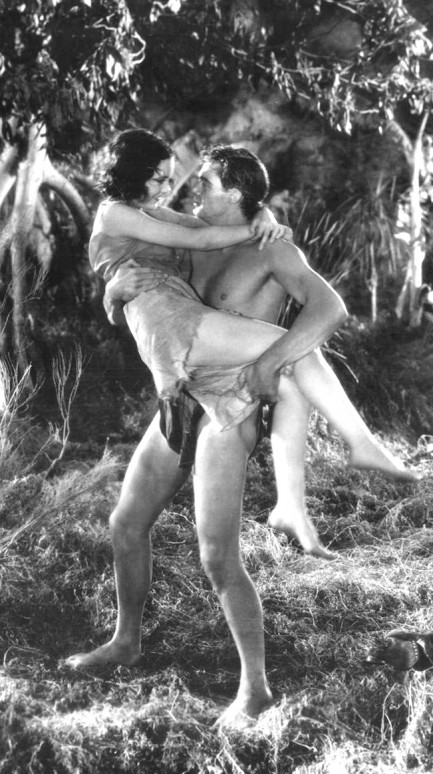 Needless to say, this flick is not flattering to Africans, African Americans, or African anyones. As for what the little person community thinks about fifty of their number covered in shoe polish, you'd have to ask a little person. We don't know any. But we seriously doubt they like it. Needless to say, this flick is not flattering to Africans, African Americans, or African anyones. As for what the little person community thinks about fifty of their number covered in shoe polish, you'd have to ask a little person. We don't know any. But we seriously doubt they like it.
As we are all part of the same human family, we all should feel empathy as we would if a brother or beloved cousin were insulted. Seems to us we've made halting progress on that front. What hasn't progressed at all is agreement about how to deal with literally trillions of dollars of stolen labor, goods, economic potential, and lives. If no recompense is to be offered, then at least we should be able to talk honestly about what happened. German Foreign Minister Heiko Maas recently admitted that his country's possession of some of the priceless Benin Bronzes amounted to harboring stolen goods. The U.S. and Britain, meanwhile, refuse even to entertain conversations about their share of these looted pieces. It's the same with people: some admit to crimes of the past, while others say there were no crimes, and even if there were, they don't matter anymore.
Tarzan the Ape Man presents a fictionalized version of the real-world history of capitalists strip-mining Africa. Without an iota of reflection, the characters here plan to steal local wealth, described by head bwana C. Aubrey Smith as, “Enough ivory for the entire world.” But what he really means is, “Enough ivory for the entire world to buy from me.” Of course, colonials didn't think they were looters. But then, colonials wrote the rules. So Tarzan the Ape Man scratches the surface of a contentious history, but here's the thing: it's still just a movie, and it's possible to watch it, be aware of what it portrays, yet have a laugh. It's a 100-minute over-the-top burlesque of historical wrongs, from colonialism to segregation in moviemaking. To enshrine so many bad practices in one film is a hell of a feat. Yet within its narrative universe it's still very entertaining. Is that a paradox? Maybe. But that's art for you. Tarzan the Ape Man premiered in the U.S. today in 1932.
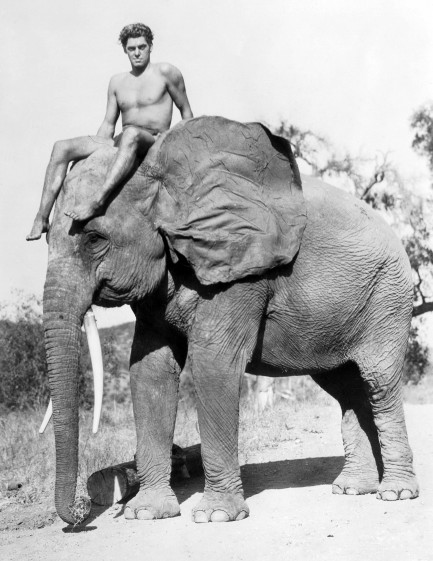 Pick man up. Put man down. Pick man up. Let man sit on my head. I'm about to stomp this fool. Pick man up. Put man down. Pick man up. Let man sit on my head. I'm about to stomp this fool.
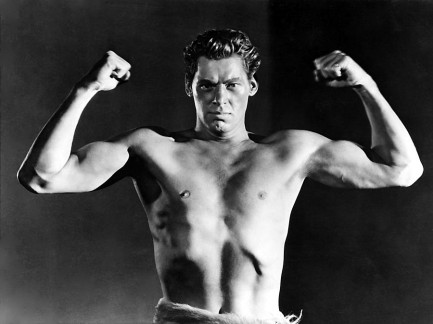 Tarzan invent shaving armpits. Tarzan smooth like eel. Tarzan invent shaving armpits. Tarzan smooth like eel.
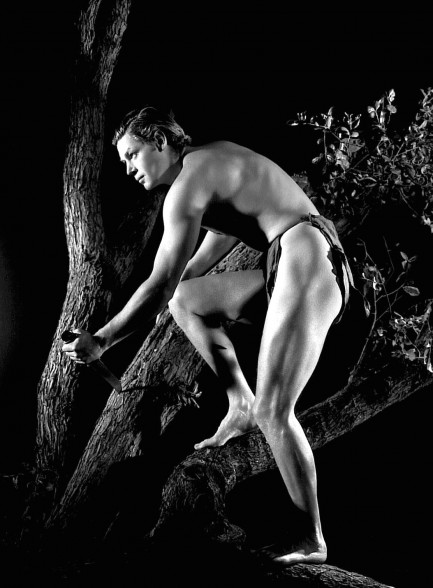 Great pose, Johnny! Just great. And your nuts didn't fall out this time. Excellent! Great pose, Johnny! Just great. And your nuts didn't fall out this time. Excellent!
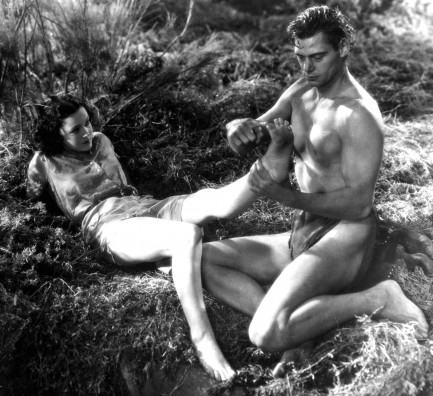 Jane feet funky. Also, Jane need pedicure. Jane feet funky. Also, Jane need pedicure.
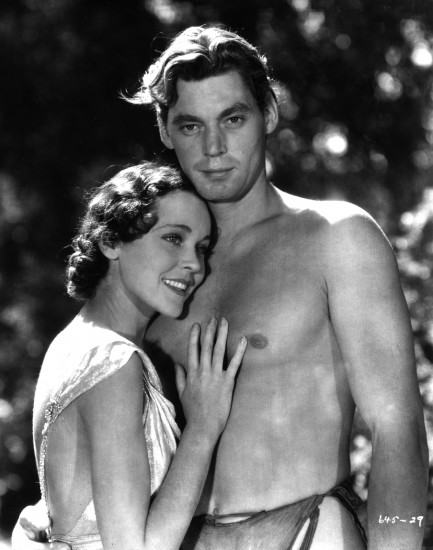 OooOOOoo... what's this here, Johnny? Is that a rock hard chest? I think it is. Who's got a rock hard chest? Johnny's got a rock hard chest... OooOOOoo... what's this here, Johnny? Is that a rock hard chest? I think it is. Who's got a rock hard chest? Johnny's got a rock hard chest...
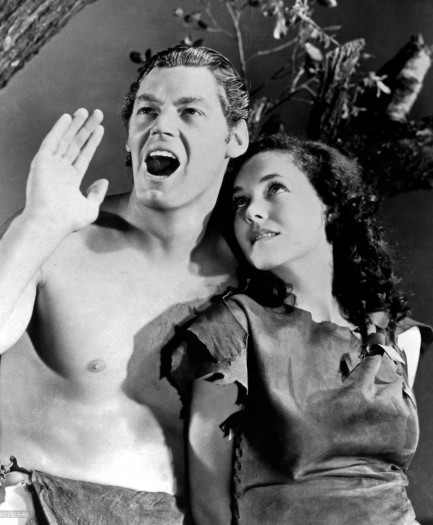 AHHHH-AHAHAHAH-AHAHAHAHA! Can Maureen and I get some goddamned lunch over here! AHHHH-AHAHAHAH-AHAHAHAHA! Can Maureen and I get some goddamned lunch over here!
 Tarzan gets fully dressed but remains king of the naked jungle. 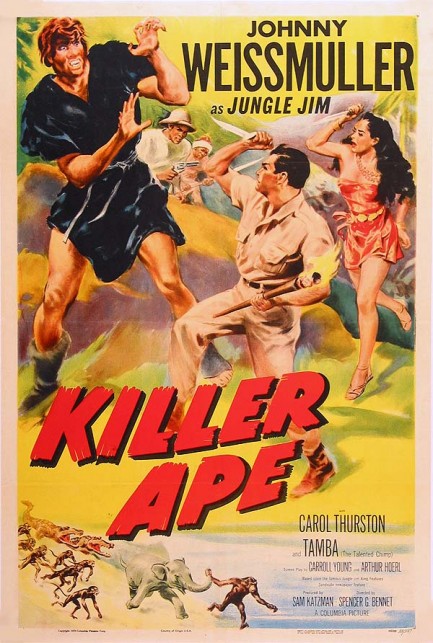
A killer ape, eh? Since the film opens with crocodiles getting axed to death—in real life—killer humans is more like it. Well, these old African wilderness flicks are never kind to animals, whether chimps, big cats, or what-have-you. The point of the croc massacre is that they're sick and have to be put down. Nobody can understand what's wrong with them, but it turns out an evil white scientist is testing bioweapons on wild animals. Wait—did we single him out as white? The distinction is meaningless, since everyone in the film is white or white-ish. That's what happens when deepest, darkest Africa is in reality a backlot in Simi Valley. In any case, someone needs to figure out why the crocs are sick. Who can do it? Why Jungle Jim, of course, played by Johnny Weissmuller. After years running around in a loincloth as Tarzan he got chubby enough that his body needed to be covered, so he slid into a new role as the khaki-garbed, pith-helmeted Jim, and for thirteen films did more or less the same things he did in twelve Tarzan films except yodel and swing on vines. The killer ape of the title is actually an ape/man hybrid, played by 7'7'' ex-wrestler Max Palmer in a pimp's fur coat and a putty nose. He lurches around uprooting trees like a one man lumber company and absorbing bullets with no ill effects. But though he's bulletproof, he isn't Weissmullerproof. Really, who among us can claim to be? The man subdued an entire continent, so certainly one pimped out wrestler isn't going to offer much resistance. Killer Ape is preposterous, but at least it has numerous unintentional laughs. It premiered in the U.S. today in 1953.
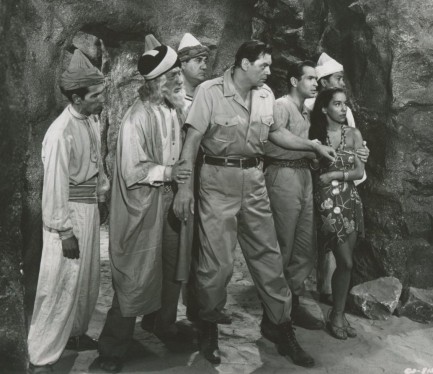 Stand back everyone. When I strip down to my fifteen-year-old Tarzan loincloth you don't want to be anywhere downwind, trust me. Stand back everyone. When I strip down to my fifteen-year-old Tarzan loincloth you don't want to be anywhere downwind, trust me.
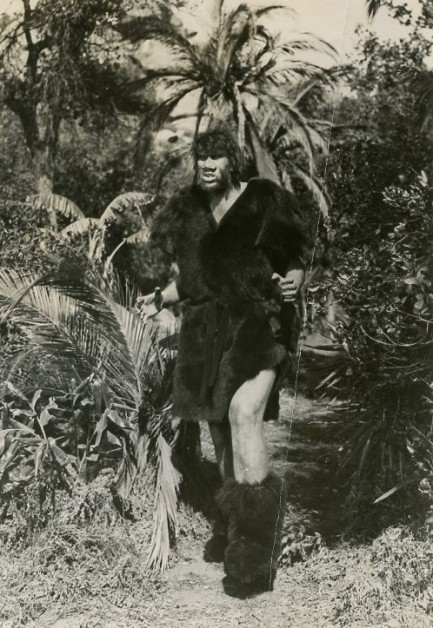 So I had wardrobe trim this coat to expose my knees. Even during my wrestling days these sweet babies were my calling card. So I had wardrobe trim this coat to expose my knees. Even during my wrestling days these sweet babies were my calling card.
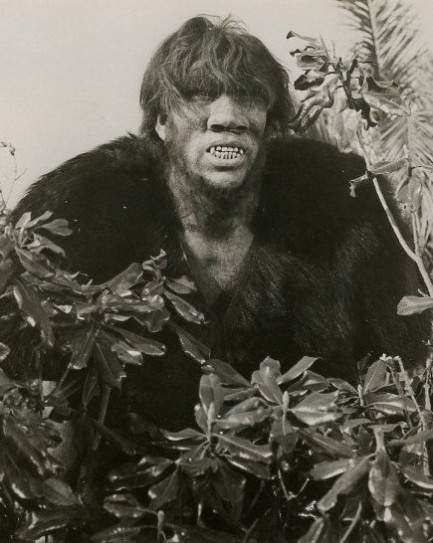 Cut! Max, the camera is over here to your right. Can we get a hairdresser to trim the man-ape's bangs, please? Cut! Max, the camera is over here to your right. Can we get a hairdresser to trim the man-ape's bangs, please?
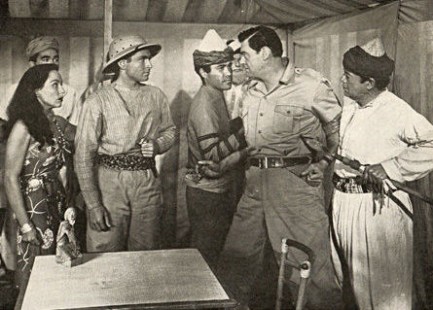 The name is Jungle Jim! Call me Junk Food Jim one more time! Just once! I dare you! The name is Jungle Jim! Call me Junk Food Jim one more time! Just once! I dare you!
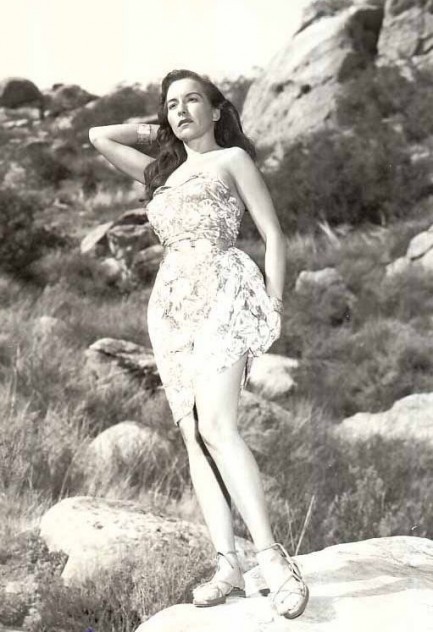 You know, even with this highly authentic costume I'm still not feeling very African. Maybe some cornrows. You know, even with this highly authentic costume I'm still not feeling very African. Maybe some cornrows.
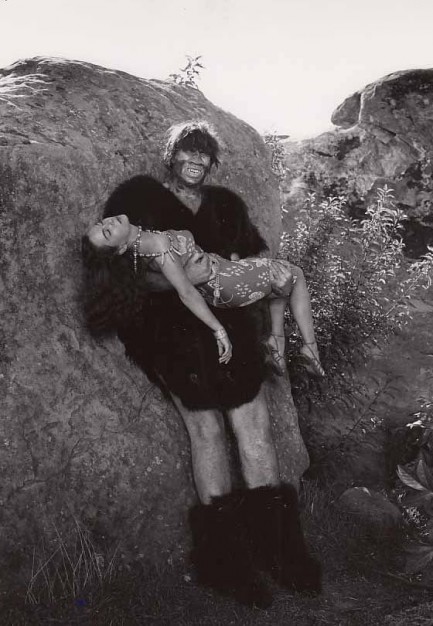 Hah hah, no, you're light as a feather, Carol. A feather that's been packing in high calorie Columbia Pictures catering for a few weeks, but still feather-like. Hah hah, no, you're light as a feather, Carol. A feather that's been packing in high calorie Columbia Pictures catering for a few weeks, but still feather-like.
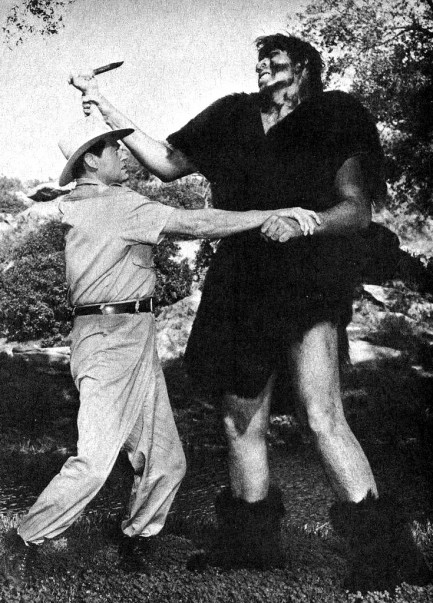 Just like you, Tarzan, I wear nothing under my costume. When I sit on your big ugly head those bristly things covering your eyes will be my nuts. Just like you, Tarzan, I wear nothing under my costume. When I sit on your big ugly head those bristly things covering your eyes will be my nuts.
 He hasn’t taken revenge for his friend the leopard yet, but soon… very soon… 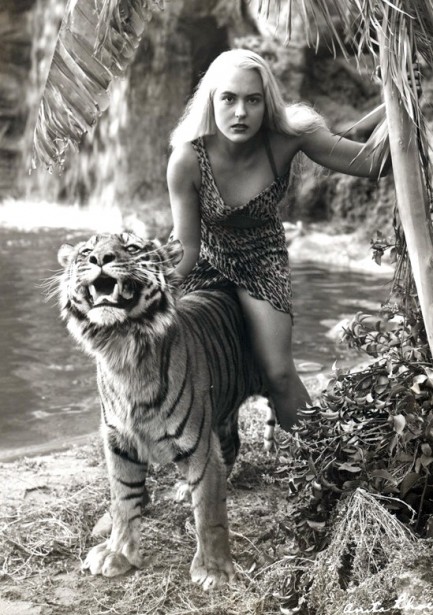
Back in the day, one sure ticket into the movie business was to be a star athlete, which is exactly how Anita Lhoest was noticed by Hollywood. After she became the U.S. national 100 meter and 400 meter freestyle champion the producers came knocking. But in the end she made only one movie—Captive Girl—in which she played opposite another former champion athlete Johnny Weissmuller. The photo above is a promo for Captive Girl, with Lhoest aged nineteen. It dates from 1950.
 The Goddess of Fire goes to Hollywood. 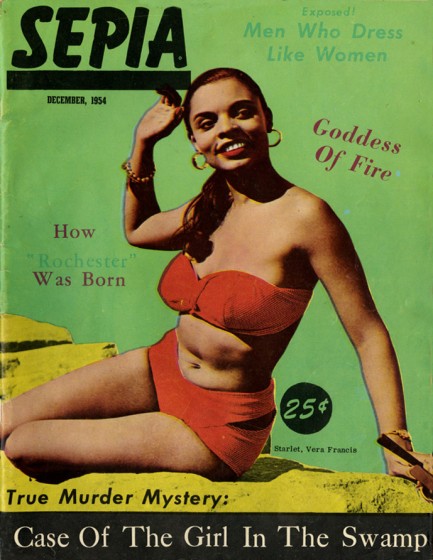
Some treasures are more valuable than others, and for us this issue of the African-American tabloid Sepia published this month in 1954 is one of the better jewels we’ve unearthed. The word “sepia” was used back then as a supposedly hip alternative to "negro," and you may have noticed it in some of the mid-century tabloid pages we’ve posted. The cover star, actress Vera Francis, is referred to as the Goddess of Fire because of her popular calypso act. Francis had become famous first as a Boston model, then made the leap to Hollywood actress, scoring a bit role in 1953’s The President’s Lady (though she's not cited in its IMDB entry, we noticed). She later scored a larger role opposite Johnny Weissmuller in 1955’s Devil Goddess. The Sepia interview discusses her decision to focus on her singing career because film work—which by the way, she reveals paid $125 a day—was very difficult to come by. In the most circumspect fashion, the profile does not hint at the embedded racism of Hollywood that severely limited roles for black women. That isn’t a surprise. The power and allure of Hollywood was such that few would dare to point out its shortcomings—at least if they hoped to work again. Besides the stunning cover (which we’d definitely consider framing if we had a hi-rez canvas print of it) we have four more pages of Vera Francis, plus a centerfold featuring model Maria Piñeda, and as a bonus we even uncovered a promo photo from Devil Goddess. All below. 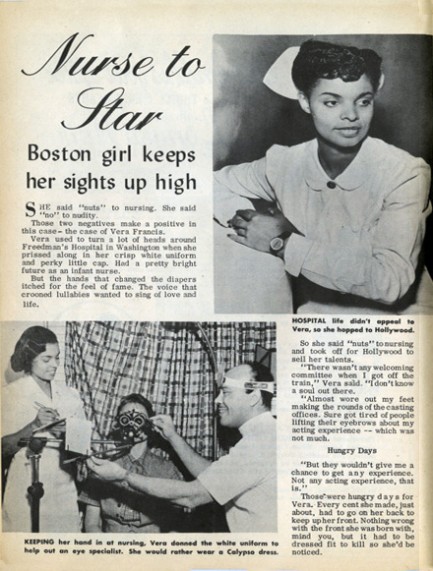 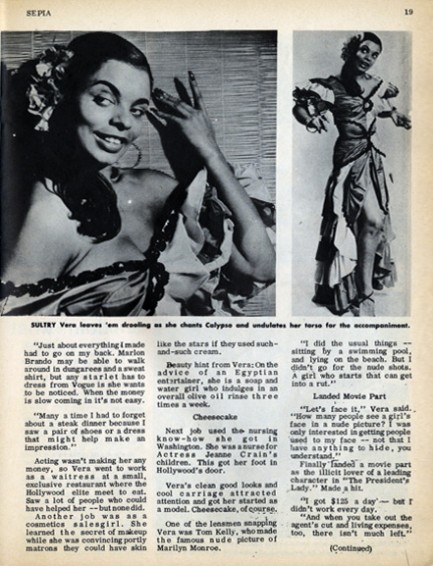 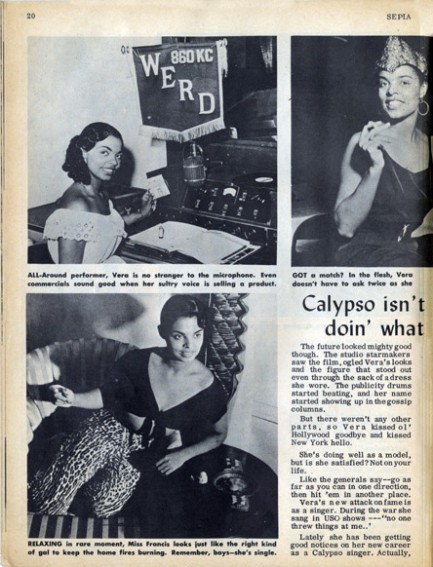 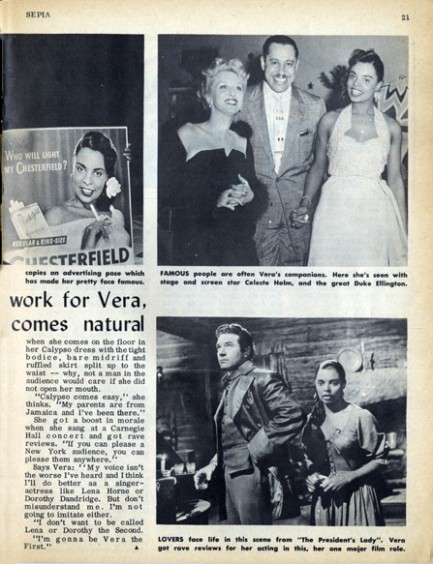 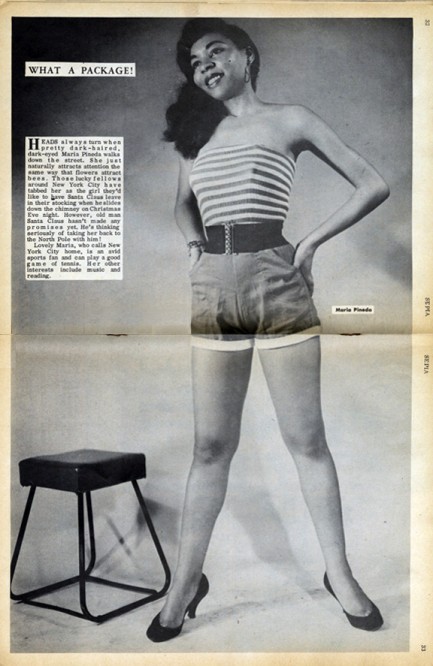 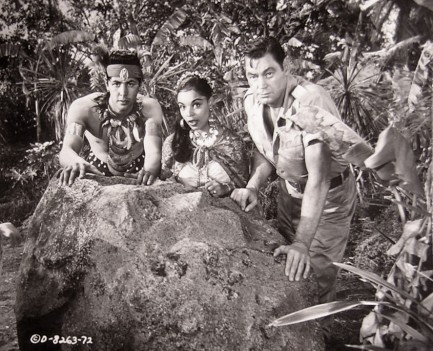
 His casa es su casa. 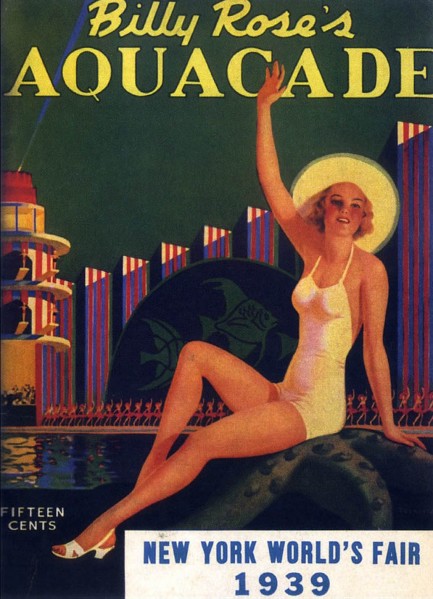 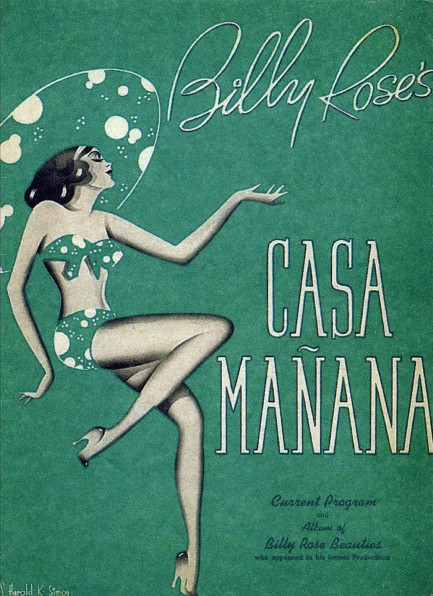 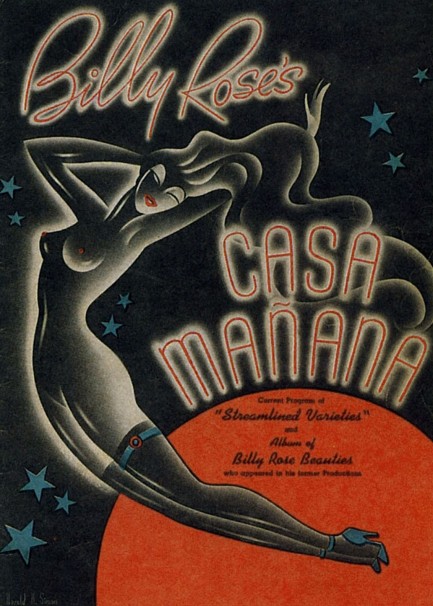 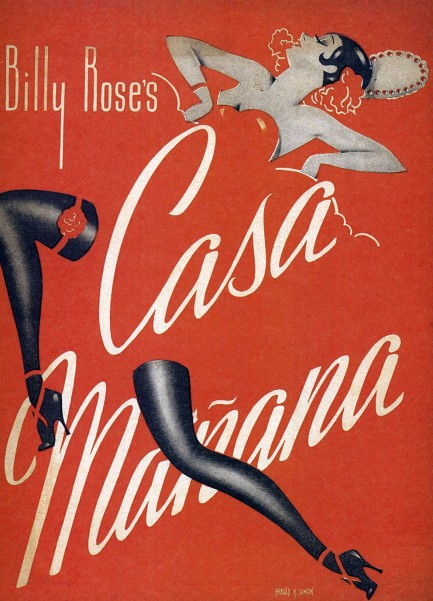 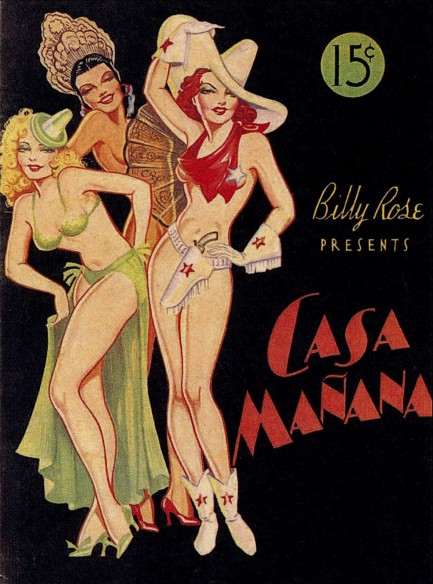
Above, a 1939 program for legendary Broadway showman Billy Rose’s extravaganza Aquacade, and four late-1930s programs from Casa Mañana. The Aquacade was a music, dance and swimming show that began in 1937 at the Great Lakes Exposition, later moved to New York City, and featured notables like Duke Ellington, Johnny Weissmuller and Esther Williams. Casa Mañana was a club Rose opened in Fort Worth, Texas in 1936. Built specifically to host his aquatic productions, the venue contained a revolving stage surrounded by a moat. So many landmark mid-century clubs have met the wrecking ball, but Casa Mañana still exists today, though the original stage is gone.
 Tarzan say get a whiff of this! 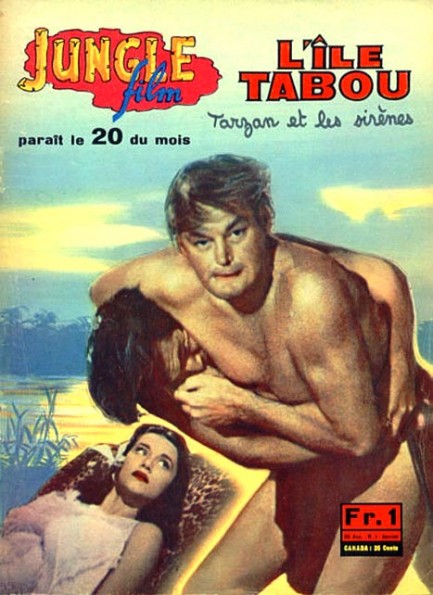
Cover of the French tele-novel Jungle Film, with Johnny Weissmuller as Tarzan demonstrating to an acquaintance how his new anti-perspirant keeps him dry and odor-free even in the fierce jungle heat.

|
 |

The headlines that mattered yesteryear.
1933—The Gestapo Is Formed
The Geheime Staatspolizei, aka Gestapo, the official secret police force of Nazi Germany, is established. It begins under the administration of SS leader Heinrich Himmler in his position as Chief of German Police, but by 1939 is administered by the Reichssicherheitshauptamt, or Reich Main Security Office, and is a feared entity in every corner of Germany and beyond. 1937—Guernica Is Bombed
In Spain during the Spanish Civil War, the Basque town of Guernica is bombed by the German Luftwaffe, resulting in widespread destruction and casualties. The Basque government reports 1,654 people killed, while later research suggests far fewer deaths, but regardless, Guernica is viewed as an example of terror bombing and other countries learn that Nazi Germany is committed to that tactic. The bombing also becomes inspiration for Pablo Picasso, resulting in a protest painting that is not only his most famous work, but one the most important pieces of art ever produced. 1939—Batman Debuts
In Detective Comics #27, DC Comics publishes its second major superhero, Batman, who becomes one of the most popular comic book characters of all time, and then a popular camp television series starring Adam West, and lastly a multi-million dollar movie franchise starring Michael Keaton, then George Clooney, and finally Christian Bale. 1953—Crick and Watson Publish DNA Results
British scientists James D Watson and Francis Crick publish an article detailing their discovery of the existence and structure of deoxyribonucleic acid, or DNA, in Nature magazine. Their findings answer one of the oldest and most fundamental questions of biology, that of how living things reproduce themselves. 1967—First Space Program Casualty Occurs
Soviet cosmonaut Vladimir Komarov dies in Soyuz 1 when, during re-entry into Earth's atmosphere after more than ten successful orbits, the capsule's main parachute fails to deploy properly, and the backup chute becomes entangled in the first. The capsule's descent is slowed, but it still hits the ground at about 90 mph, at which point it bursts into flames. Komarov is the first human to die during a space mission.
|

|
|
It's easy. We have an uploader that makes it a snap. Use it to submit your art, text, header, and subhead. Your post can be funny, serious, or anything in between, as long as it's vintage pulp. You'll get a byline and experience the fleeting pride of free authorship. We'll edit your post for typos, but the rest is up to you. Click here to give us your best shot.
|
|