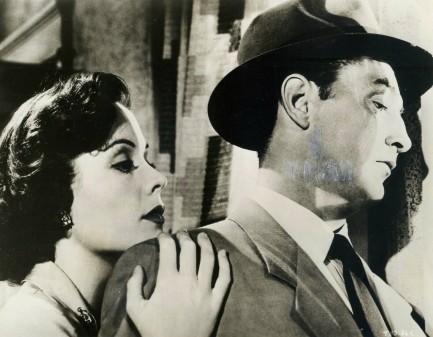
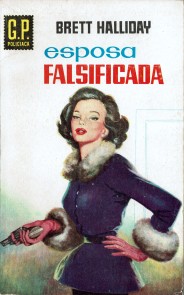
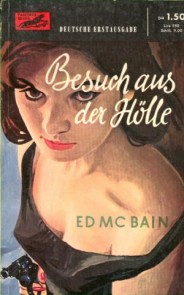
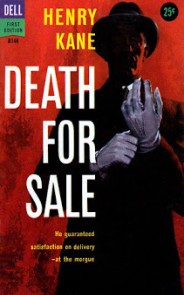
 All other predators pale by comparison. 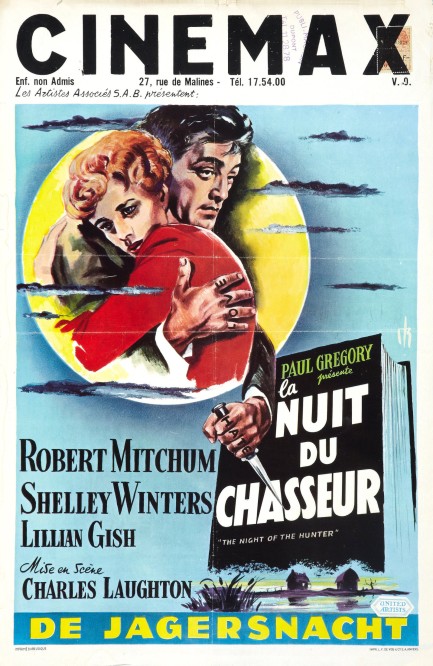
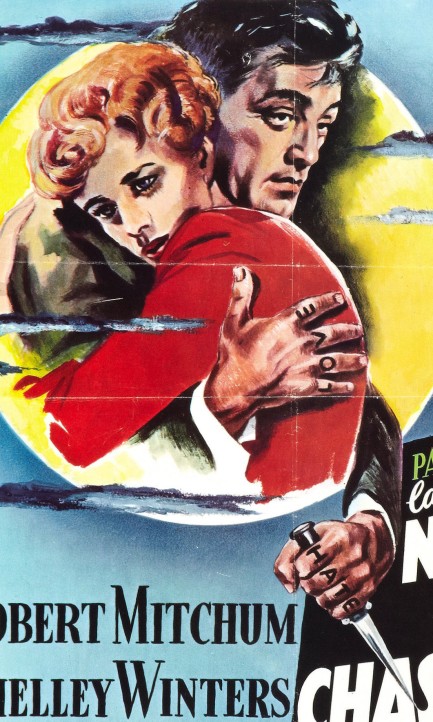
Belgium usually delivers when it comes to vintage film posters. Above is a Belgian promo in French and Dutch for the iconic chiller The Night of the Hunter, titled in French La nuit du chasseur and in Dutch De jagersnacht. “Jagersnacht” sounds like something weird and wicked, like a monster from Lewis Carroll, but it means the same as the English title—“hunter's night.” Belgian vintage posters often bear the name of the exhibiting cinema. We've shared examples from Ciné Odeon, Acropole, Varieties, Plaza, and Capitole, twice. The above poster bears the name of Cinemax, which was located at 27 Rue de Malines in Antwerp, and was called at different times the Cineum, Rubens, and Apollo. Looking more closely at the art, it was printed by L.F. de Vos & Co. S.A. Anvers, also from Antwerp, and the work is signed by “RK”—if we're reading it correctly. We've got nothing on RK, but his or her work is top notch, so we'll keep an eye out for more. Night of the Hunter premiered in the U.S. in 1955 and reached Belgium today in 1956.
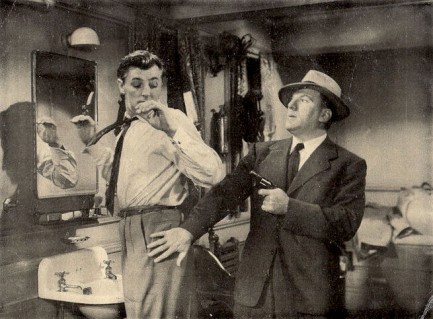
 Sometimes it even has a small calibre firearm. 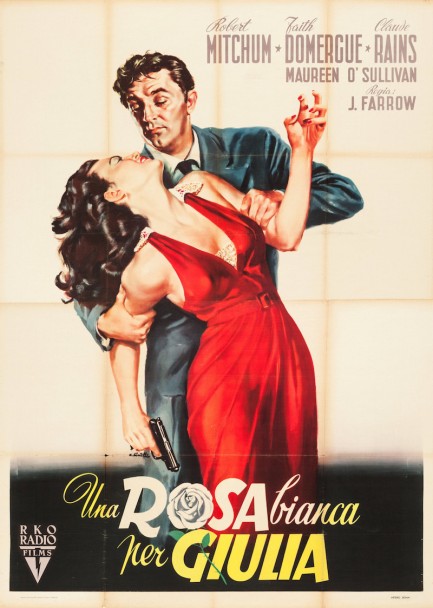 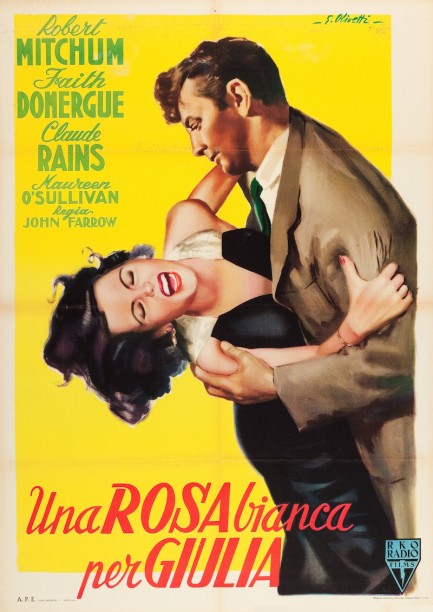
We have two brilliant items above—a pair of Italian promo posters for When Danger Lives, starring Robert Mitchum and Faith Domergue. The first was painted by Averardo Ciriello, and the second is the work of Giorgio Olivetti. Both artists are geniuses. In Italy the movie was called Una rosa bianca per Giulia. That would translate as “a white rose for Julia,” which was the working title of the movie while it was under production. The Ciriello poster is similar to the U.S. promo, but executed with more detail. Not to be outdone, Olivetti is less intricate but depicts a more desperate struggle, electing to paint Domergue unarmed—unless she's holding a gun to Mitch's head, in which case it would be a very short struggle. However, while Mitchum is getting the better of her on both posters, in the movie she tries to smother him with a pillow, so their relationship is—in a weird way—equal. You can read more about it here. After premiering in the U.S. in 1950, Where Danger Lives opened in Italy today in 1951.
 And now, gentlemen, if you'll excuse me, I'm overdue for a flight on Wacky Backy Airlines. 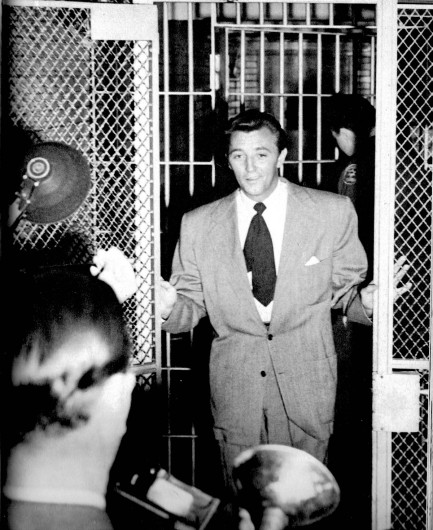 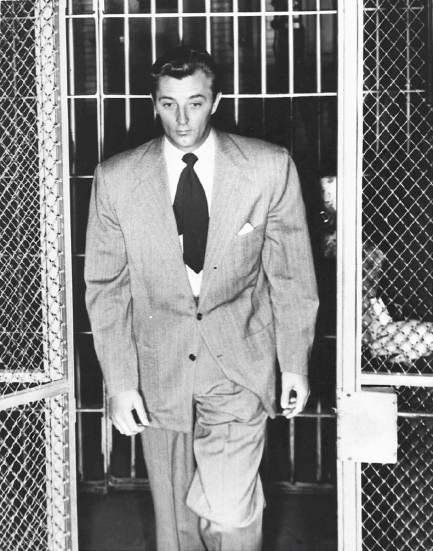 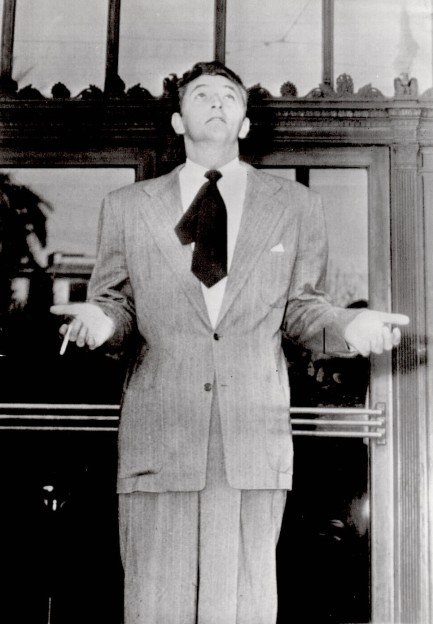
In Hollywood, everything is a photo op—even one's own embarrassing release from the stifling clutches of state confinement. Above you see a progression of three press photos made today in 1949, featuring famed stoner Robert Mitchum being freed from the lock-up after his marijuana conviction. Mitchum makes the most of the moment, looking dapper and unruffled despite PTSD over some terrifying episodes in the prison laundry and a few narrow escapes from damage to that pretty face of his. Actually, we have no idea what he went through. We suspect it was reasonably untroubled, but probably only Mitch and his ganja dealer ever knew the truth.
These shots are a follow-up to our look at Mitchum going into jail on February 9. He was supposed to serve sixty days, but earned an early release for good behavior and unshakable cool. We don't know if an early release was also granted to... to... we've forgotten her name—that chick he got caught smoking with who was sent to jail the same day. Anyway, just look at ole Never-Let-Em-See-Ya-Sweat. Doesn't he look great? The hair. The perfectly tailored suit. The roguish gleam in his eye that says he's going to get miiiiiiiles high as soon as he gets home. You know what we love about Mitch? Nothing could keep him down for long.
 This is your cell, Mitchum. You'll survive fine. Miss Leeds, yours is in the other wing and I'm sorry to say it's the last anyone'll ever hear of you. 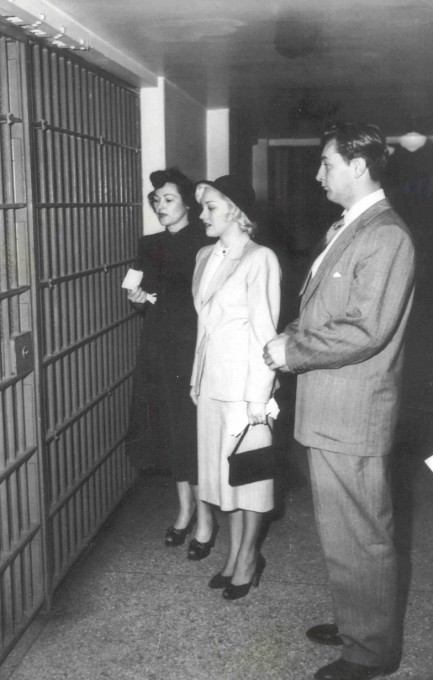
In this press photo, a Los Angeles police deputy named Marjorie Kellog, in black, escorts Lila Leeds and Robert Mitchum to jail after their sentencing for marijuana related charges today in 1949. They'd been arrested the previous August after a police sting operation and been sentenced to a year behind bars, but the judge suspended the sentence and gave them two years probation, sixty days of which were to take place in Los Angeles County Jail. Mitchum had fretted that his acting career was over, but he emerged from his stint in lock-up more popular than ever, and law enforcement axe grinders learned an important lesson—arresting stars in hopes of ruining their careers risked making them appealing as rebels.
Leeds, however, wasn't a star. She was a fledgeling actress who'd accumulated nine film appearances, six of them uncredited. It's possible to argue that, had she been a big star her career would have been severely damaged because she was a woman. But on the other hand Lana Turner went through the scandal of her daughter's killing of Johnny Stompanato, was exposed as a mobster's mistress, yet her subsequent movie was one of her biggest hits. But Turner was seen by the public as someone led astray by a bad man. So in the end it's difficult to say if Leeds got a raw deal because she was a woman. Probably. It's usually a safe bet. We can only say for sure that with no earnings record and no power, her dreams of stardom died.
 Tell, my agent *cough* that in my next film *gurgle* I want to play the lead. 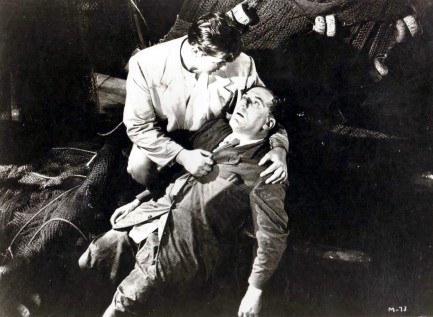 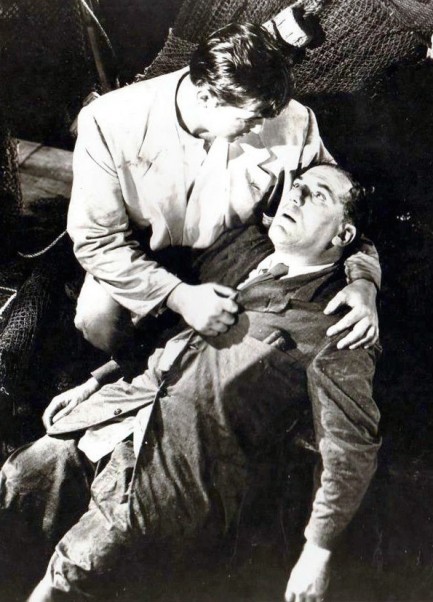
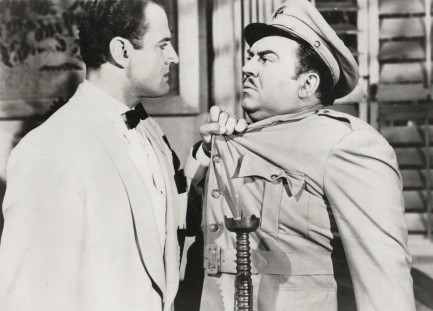
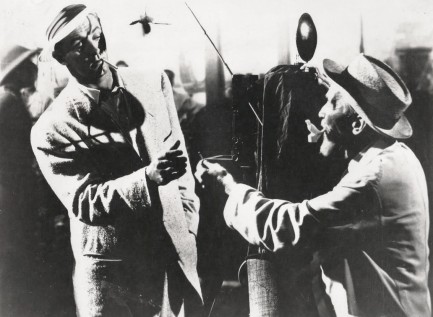
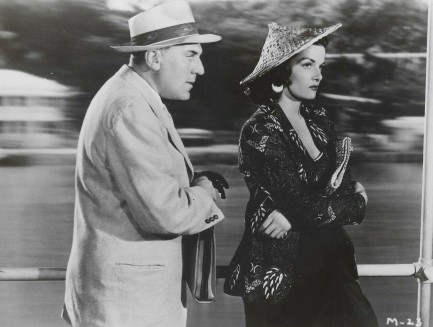
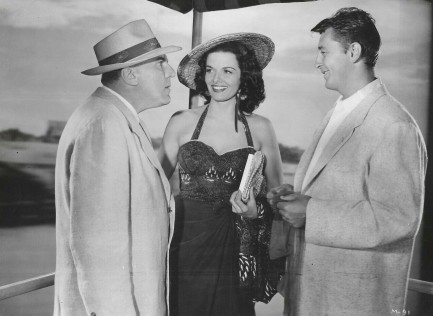
William Bendix was one of the top character actors of his generation. When you hear the term “character actor,” it means he died a lot and almost never got the girl, but if it's possible to reach the heights of Hollywood by always finishing anywhere from second to last onscreen, Bendix achieved it by appearing in more than sixty films during his career. Above, he makes an early exit from the 1952 adventure Macao. The silver lining is he got to die in Robert Mitchum's arms, for which millions envied him. You can read a bit about Macao here.
 Jane Russell poster reveals more to citydwellers than to heartlanders but in the end it's all the same. 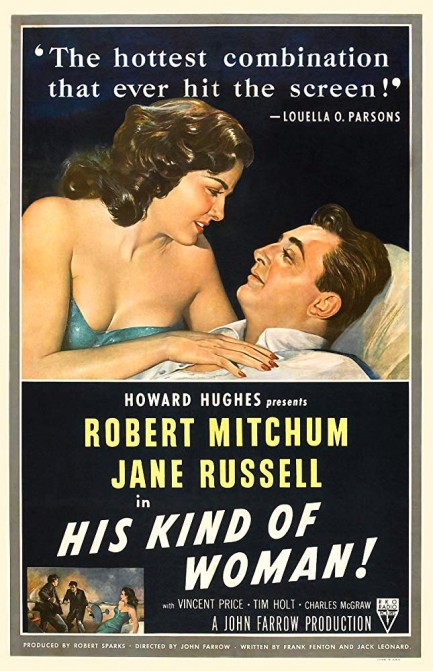 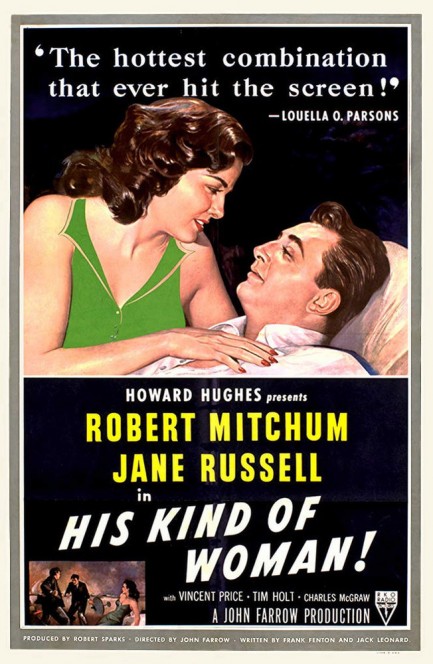
We already talked about the Robert Mitchum/Jane Russell film noir His Kind of Woman, which premiered in the U.S. today in 1951. We recently stumbled across the above curiosity. You may remember our exploration of overlays in mid-century pin-up art (fascinating examples here, here, here, here, and here) and as it turns out, Russell received similar treatment. The cover-up on the second poster isn't an overlay. It's printed onto the paper. But the result is the same. Cleavage be gone! If we had to guess, the modest poster probably was issued everywhere in the U.S. except large cities. But the thing is, such a clumsy reworking—as opposed to just using a different image of Russell entirely—clearly serves to tell viewers they've been denied something, which we suspect was almost as effective at drawing traffic into cinemas as revealing what was covered. But only almost. Which is why at Pulp Intl. we always reveal everything.
 Who needs a good script when you have Mitchum and Russell? 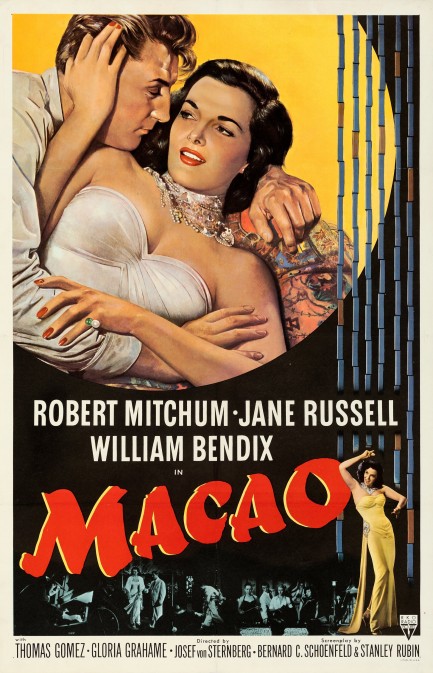
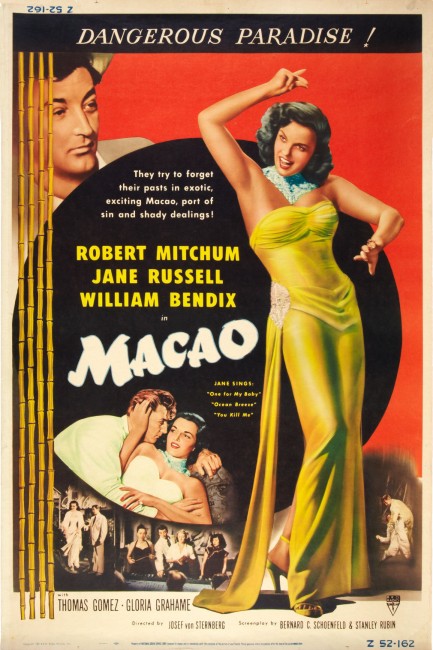
Above is a surpassingly lovely poster for the thriller Macao with Robert Mitchum and Jane Russell, reunited by RKO Studios after the previous year's His Kind of Woman. It's always interesting how old movies introduce the romantic leads to each other. In filmmaking parlance, these encounters are sometimes called “meet-cutes.” But it isn't very cute for the man to have to save the woman from a sexual assault. It's also not cute when the price for being saved is an uninvited kiss, but this is the early fifties and in movies you have to expect that stuff. Nonconsensual wrestling match—bad. Nonconsensual kiss—okay. Mitchum goes in for his reward and Russell doesn't mind.
We joked about these two being the best looking pair you can find in vintage cinema, and they're both in top form here. The honchos at RKO knew they had a dream pairing. Placing them in an exotic port, giving them an obstacle to overcome, writing them some quips, and hiring a respected director like Josef von Sternberg and charging him with capturing Casbalanca-style magic was a no-brainer. The adventure involves Mitchum coming across a stolen diamond, then trying to sell more gems to a local criminal kingpin. Little does he know that it's all a scheme hatched by an American police lieutenant to capture said kingpin, leaving Mitchum stuck in the dangerous middle. Russell plays a lounge singer and seems ancillary to all the intrigue, but as the plot evolves she becomes central to the caper.
Macao has its moments, and we certainly enjoyed it, but objectively speaking it's a middling effort, with too many narrative holes and too much boilerplate dialogue to offer any real thrills. The caper isn't compelling, and the villain—played by Brad Dexter as if he's on Quaaludes—has no real sense of menace. So the movie has the exotic port, the obstacle, and the quips—but no magic. Mitchum gets the girl, though, so that's something. Or maybe Russell gets the boy. However you prefer. What we'd prefer is more of this pairing, but sadly this was the last time the two starred together. While both their collaborations are watchable, they never made the blockbuster their onscreen chemistry deserved. Why not? Probably because Macao flopped so hard. It premiered in the U.S. today in 1952.
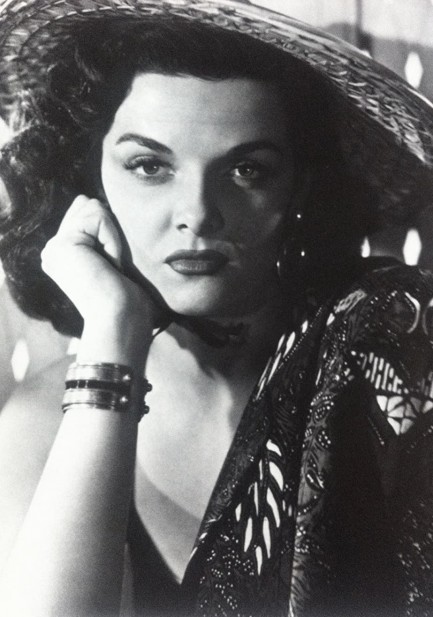 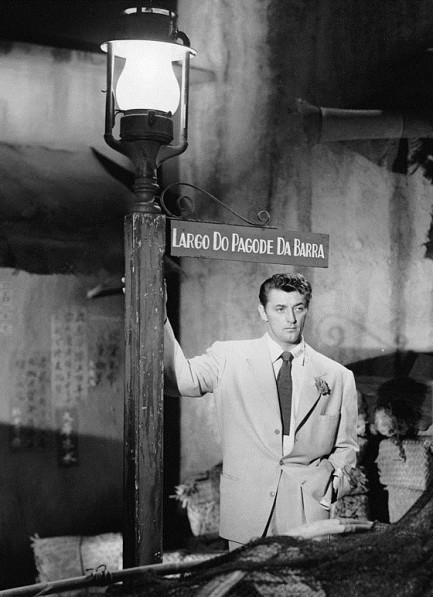 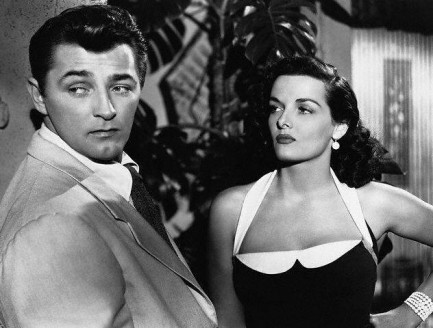  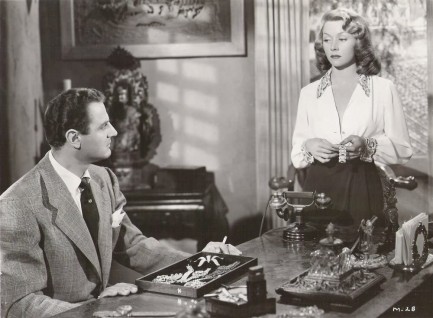 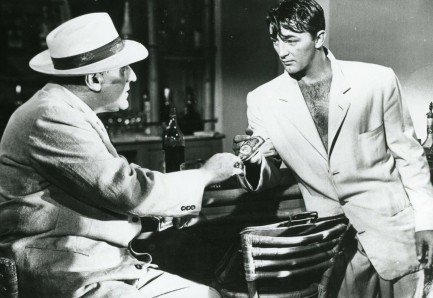      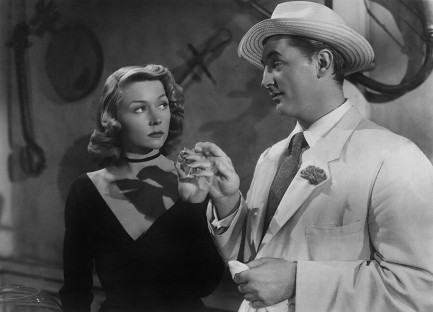 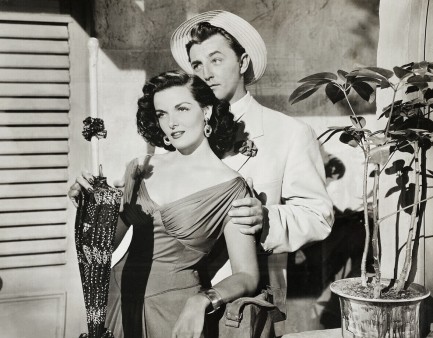 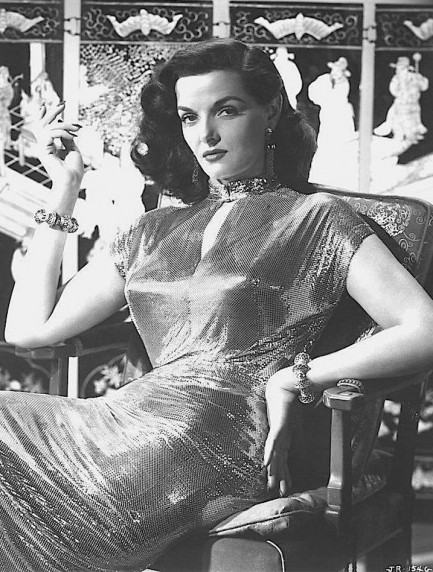 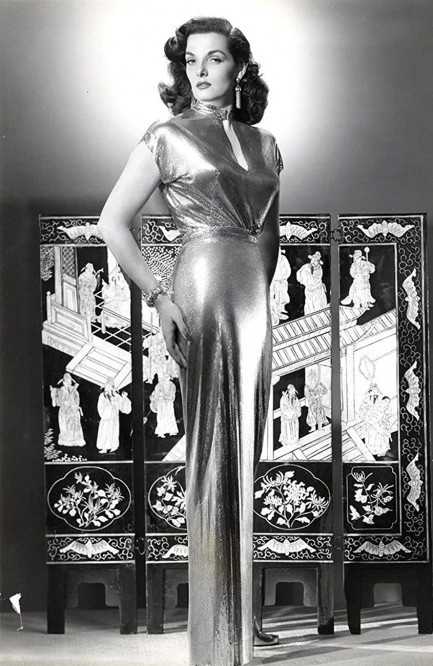 
 Got a secretive husband? Poke around and see what you find. What's the worst that can happen? 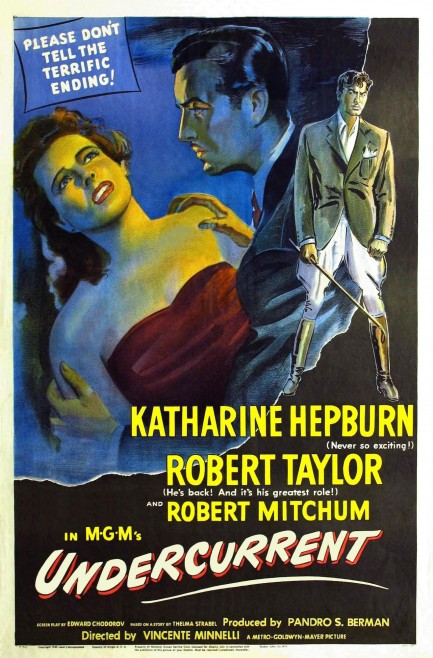
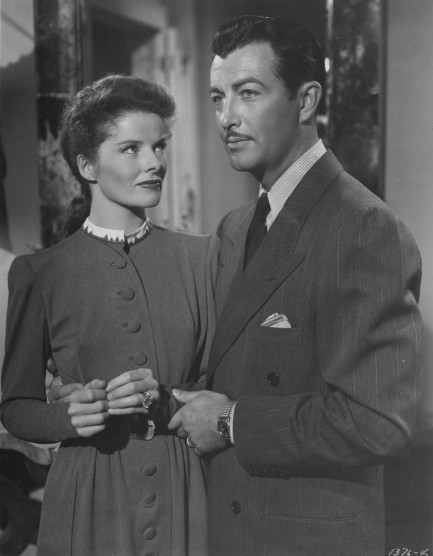
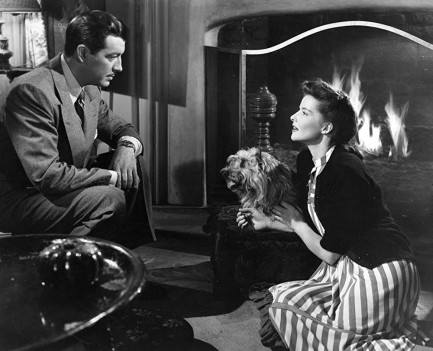
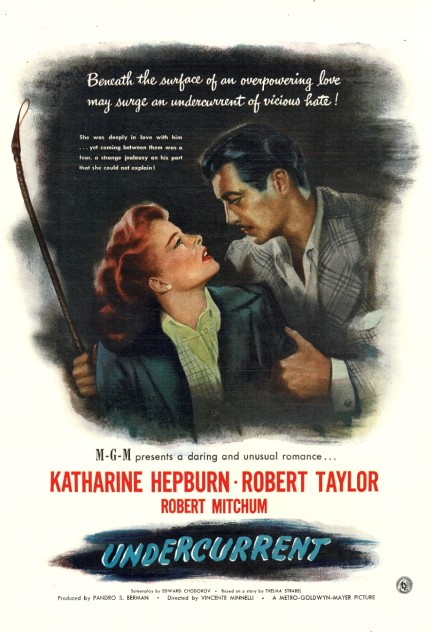
Two days ago we discussed Katherine Hepburn's cinematic output and noted that Undercurrent was one of the few movies that qualified as pulp-style. We watched it last night and it falls into the always fun husbands-with-dark-secrets sub-genre. Hepburn marries into a rich San Francisco family and quickly finds that her hubby Robert Taylor is prone to sudden rages whenever he's reminded about aspects of his past. You know the drill: “Who was playing that song! Who's here? Was it you? Where did you learn that song!” Taylor is particularly sensitive with regard to his estranged possibly dead brother, and so are Taylor's employees, his domestic staff, and even his friends. Seems everyone is in on the secret except Hepburn. In typical suspense movie fashion, she decides to solve that problem by digging deeper.
Undercurrent is categorized on many websites as a film noir, because that's where people's minds go if there are any night scenes or shadows in a black and white flick, but you may be disappointed if you have such expectations. It's categorized as suspense drama by the American Film Institute, which we consider correct. You could even categorize it as a romantic suspense drama, one with shades of Alfred Hitchcock's 1940 film Rebecca. But on the other hand, since film noir is more a mood than a genre, there's always room for debate concerning whether a film should or shouldn't be included. For us, Undercurrent shouldn't. Two sequences bear some visual elements of film noir, and there's a brief nightmare interlude, but without the overarching cynicism and desolate central characters, we don't think it's a good fit.
Hepburn, who was probably never cynical or desolate in her entire career, occupies nearly every frame of Undercurrent and gives an emotional, almost melodramatic performance as a wife whose loyalty and belief in her husband are tested. To succeed fully in her role, she'd have needed better chemistry with Taylor, and the script and plot would have needed to be scintillating. None of those things happen, which means Hepburn isn't given the tools required to anchor the film. Even so, she gives it a hell of a go, and her efforts make it watchable. For her fans this one is a no-brainer—queue it up. For more general film buffs, you can probably take a pass. Undercurrent premiered today in 1946.
  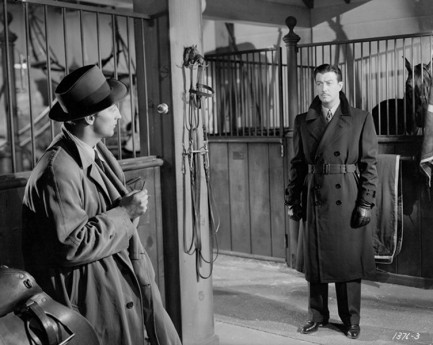 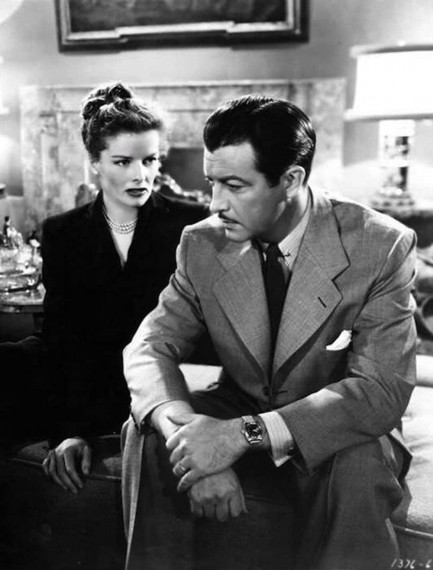 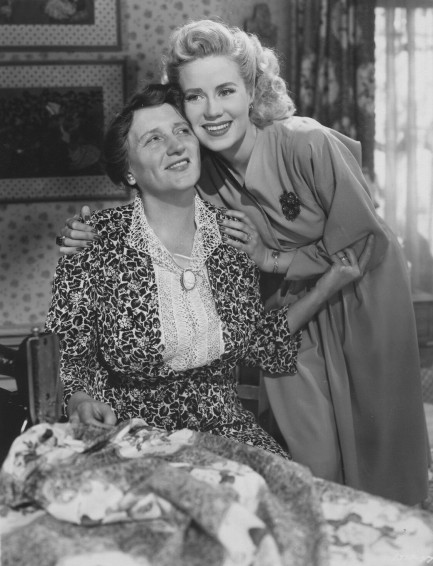 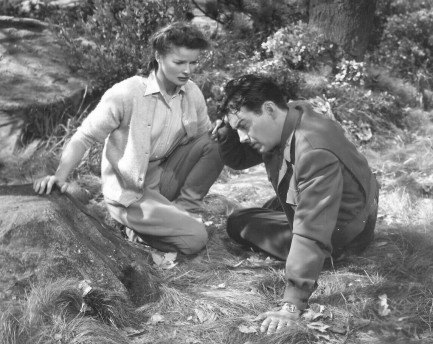 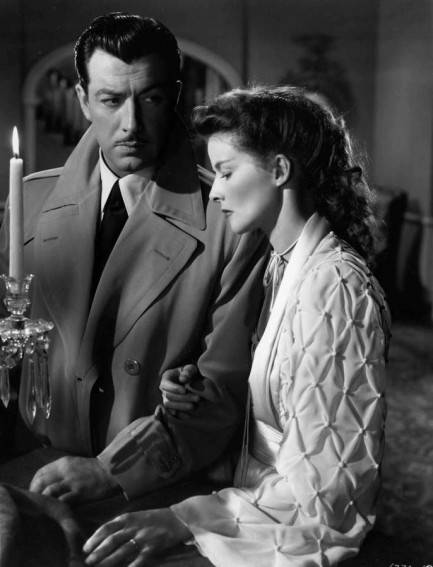 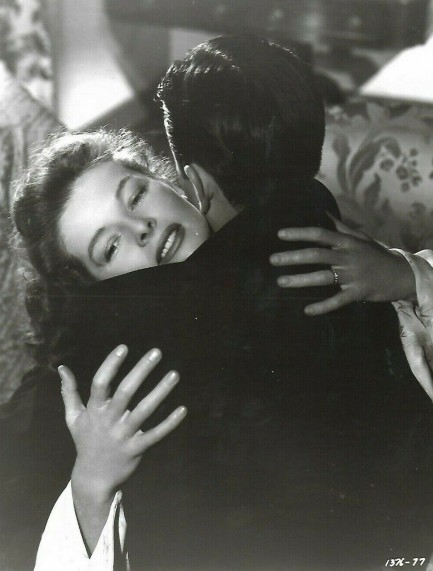 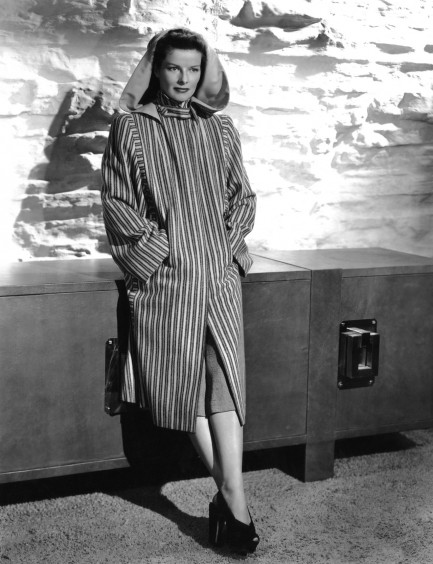 
 As far as I'm concerned whoever let the cops in should pay all our legal fees. 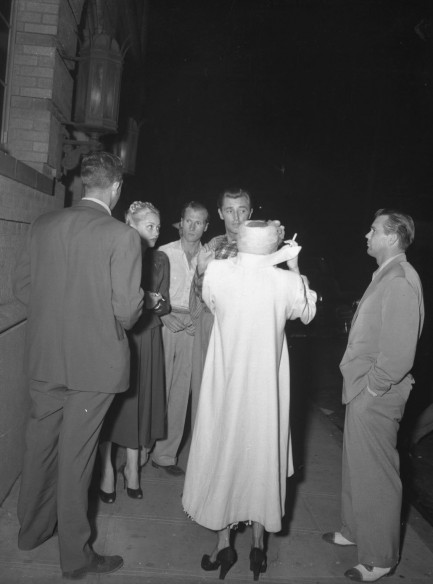
On this day in 1949, during the wee small hours of the morning, Robert Mitchum, Lila Leeds, Robin Ford, and Vickie Evans were hanging in a secluded Hollywood Hills home smoking a little mota when there was a scratch at the door. The house was the residence of Leeds and Evans, and it had become a spot where people, including Hollywood showbiz types, occasionally partook of the Devil's weed. By some accounts entry could be gained only via a secret knock, which—actually this is pretty clever—was to scratch at the front door like a cat. Since police had been tipped to the house's possible purpose, we can assume they too scratched at the door. We like to think they meowed too, but that probably didn't happen.
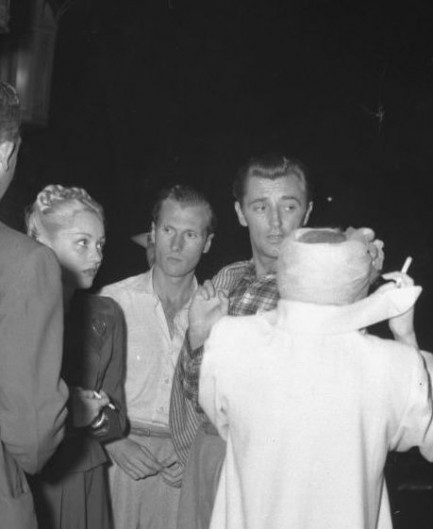
Anyway, Evans answered the door, and to her shock and dismay, in barged the police. Evans, Leeds, Mitchum, and Ford were corralled and escorted to the police station—and right into the cameras of the waiting press. The quartet are seen above with their legal representatives. Below, Mitchum, Leeds, and Ford are facing the camera, while Evans is facing away. Mitchum actually thought his career was ruined, but after being convicted of conspiracy to possess marijuana and serving sixty days in jail he continued as a top rank star. The up and coming Leeds, on the other hand, really was ruined by her conviction—at least according to her. Ford, who was a realtor, was also convicted, but we have no idea what happened to him afterward. Only aspiring dancer Evans was acquitted.
 What's being stolen? A previous movie's most successful ideas. 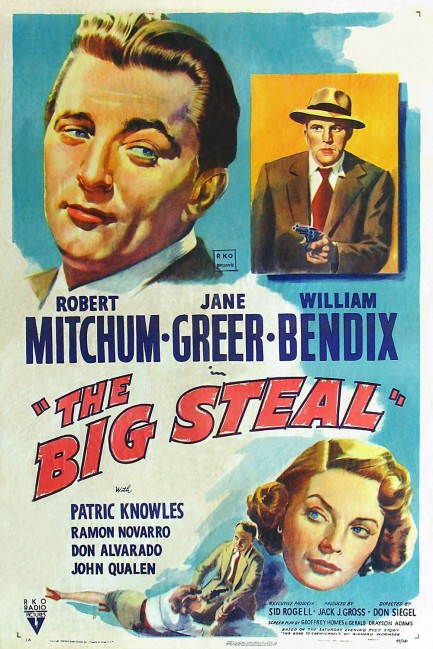
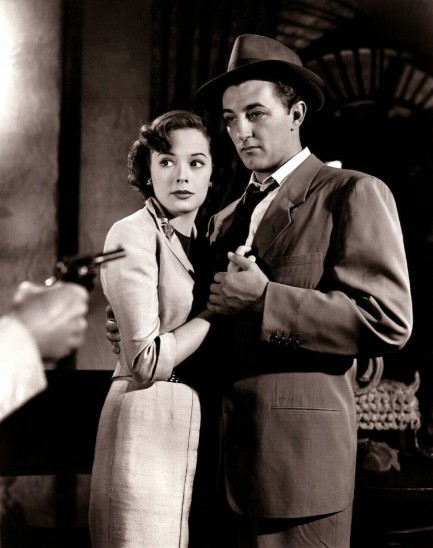
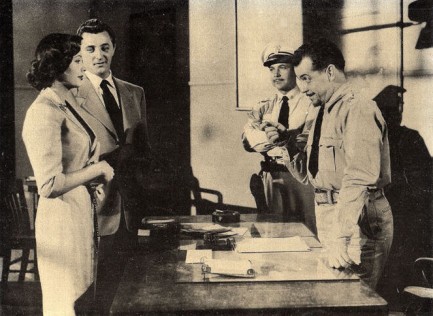
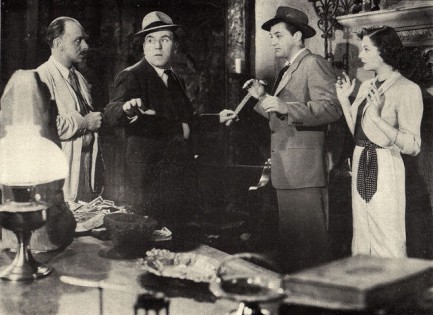
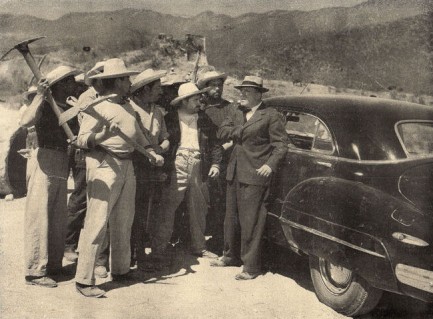
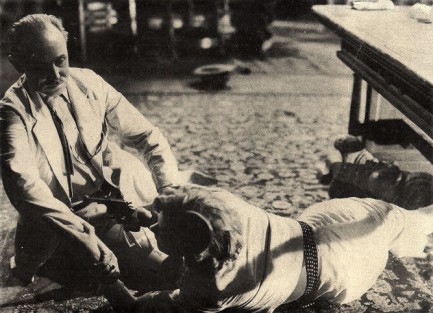
Every Hollywood star has that brief moment when they're invincible at the box office, but it seems as if Robert Mitchum, more than most others, was a guy who maintained his power for many years. When The Big Steal came out he'd already run the gauntlet of a drug bust, jail time, and the public repentance circuit, and seemed to emerge unscathed. The executive brains at RKO decided to match teflon Rob with Jane Greer in an attempt to replicate the pair's runaway success in the film noir monument Out of the Past. This time the studio went for a lot of banter and not much in the way noir style, as Mitchum plays an army lieutenant accused of a payroll robbery who pursues the real thief Patric Knowles through Mexico. Greer plays Knowles' fiancée, who he cold-heartedly divested of two-thousand bucks, because thieves are just a little more pragmatic than they are romantic.
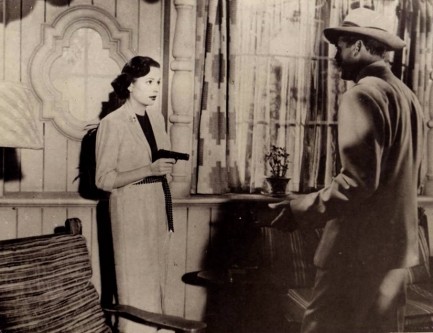
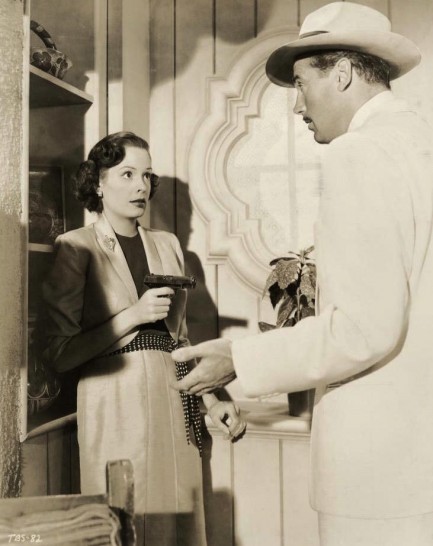
The movie is fueled by that Mitchum/Greer chemistry, plus high speeds, resort wardrobe, wry looks, and the Out of the Past memories of movie audiences. Greer brandishes a gun again, just as in that seminal sequence in Out of the Past. Mitchum has a desperate fistfight, just as in Out of the Past. All of this retreading is supported by visually helpful location shooting in Veracruz and other areas of Mexico. The end result is a pleasant little chase film that's even comical at times. Or maybe the laughs came from our dark senses of humor. For example, you know how car pursuits sometimes go right through flocks of chickens, but the chickens never get hurt? In this movie one actually gets run over—at least if the numerous feathers drifting in the car's wake were any indication. That really amused us. Also nearly flattened were goats, a few cows, mules, children, and middle-aged ladies. In fact, all the near misses felt like a running gag about how Americans are always in a hurry.
Other aspects of the movie are equally tongue-in-cheek, including Mitchum's ugly-American stabs at Spanish, but however lightweight this is at times, in the end it's still categorized as a thriller, which means it needs to make pulses race. We wouldn't say it fully achieves that requirement, but it isn't bad either. Mitchum gonna Mitchum, and that's all a studio needed at this moment in time to make a movie work. He'd go on to headline Where Danger Lives, Angel Face, and a long string of good-to-middling dramas and noirs, all the way up to his other cinematic monuments, 1955's The Night of the Hunter and 1962's Cape Fear. The Big Steal is an okay flick, but its true value may be that it shows what the Mitchum charm can do for material that doesn't even deserve him. It premiered in the U.S. today in 1949.

|
 |

The headlines that mattered yesteryear.
1945—Mussolini Is Arrested
Italian dictator Benito Mussolini, his mistress Clara Petacci, and fifteen supporters are arrested by Italian partisans in Dongo, Italy while attempting to escape the region in the wake of the collapse of Mussolini's fascist government. The next day, Mussolini and his mistress are both executed, along with most of the members of their group. Their bodies are then trucked to Milan where they are hung upside down on meathooks from the roof of a gas station, then spat upon and stoned until they are unrecognizable. 1933—The Gestapo Is Formed
The Geheime Staatspolizei, aka Gestapo, the official secret police force of Nazi Germany, is established. It begins under the administration of SS leader Heinrich Himmler in his position as Chief of German Police, but by 1939 is administered by the Reichssicherheitshauptamt, or Reich Main Security Office, and is a feared entity in every corner of Germany and beyond. 1937—Guernica Is Bombed
In Spain during the Spanish Civil War, the Basque town of Guernica is bombed by the German Luftwaffe, resulting in widespread destruction and casualties. The Basque government reports 1,654 people killed, while later research suggests far fewer deaths, but regardless, Guernica is viewed as an example of terror bombing and other countries learn that Nazi Germany is committed to that tactic. The bombing also becomes inspiration for Pablo Picasso, resulting in a protest painting that is not only his most famous work, but one the most important pieces of art ever produced. 1939—Batman Debuts
In Detective Comics #27, DC Comics publishes its second major superhero, Batman, who becomes one of the most popular comic book characters of all time, and then a popular camp television series starring Adam West, and lastly a multi-million dollar movie franchise starring Michael Keaton, then George Clooney, and finally Christian Bale. 1953—Crick and Watson Publish DNA Results
British scientists James D Watson and Francis Crick publish an article detailing their discovery of the existence and structure of deoxyribonucleic acid, or DNA, in Nature magazine. Their findings answer one of the oldest and most fundamental questions of biology, that of how living things reproduce themselves.
|

|
|
It's easy. We have an uploader that makes it a snap. Use it to submit your art, text, header, and subhead. Your post can be funny, serious, or anything in between, as long as it's vintage pulp. You'll get a byline and experience the fleeting pride of free authorship. We'll edit your post for typos, but the rest is up to you. Click here to give us your best shot.
|
|