 It's the same old story. Take a trip to the tropics, lose every bit of self control. 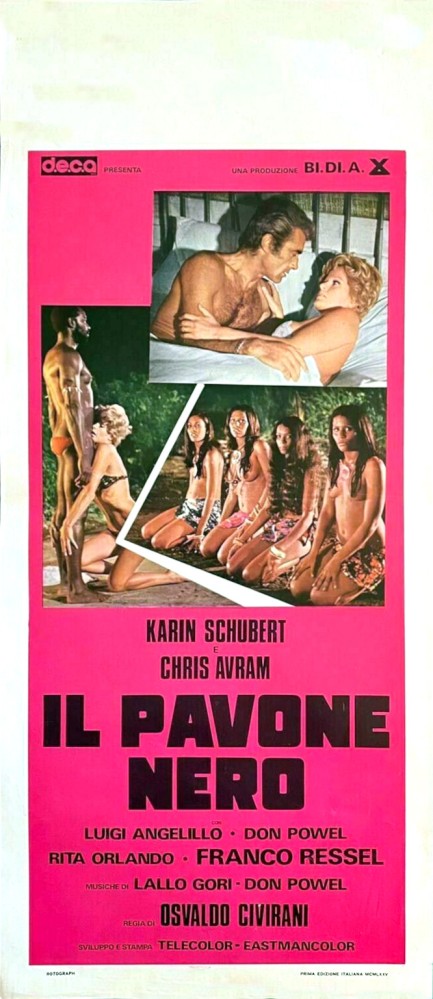
We ran across this Italian locandina for the shot-in-the-Dominican Republic sexploitation flick Il pavone nero, known in English as Voodoo Sexy, and thought it made a nice alternate promo to the one we posted years back. The movie premiered in Italy today in 1975, and with a title like Voodoo Sexy you know what it's about: white skin + tropical heat = a total loss of inhibitions. Flicks of this ilk were an unofficial subgenre of ’70s and ’80s cinema. We love them, and you know why? Because they aren't wildly inaccurate in terms of northerners going crazy down south. The star of this one was German actress Karin Schubert, and that's the other reason we revisited the film—it gave us an excuse to share the photo of her below. Hope it helps you get over hump day. 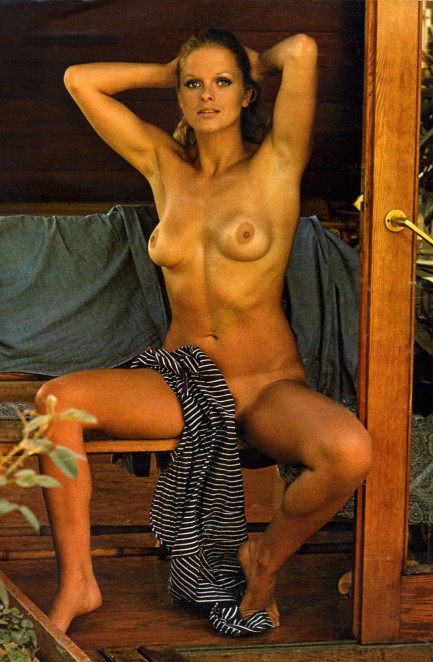
 In the land of the blind the one-eyed woman is queen. 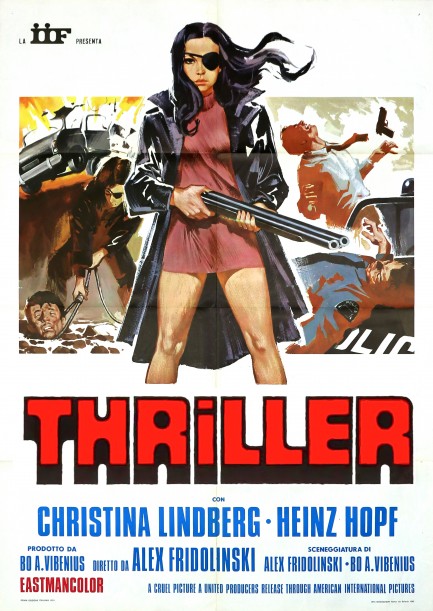 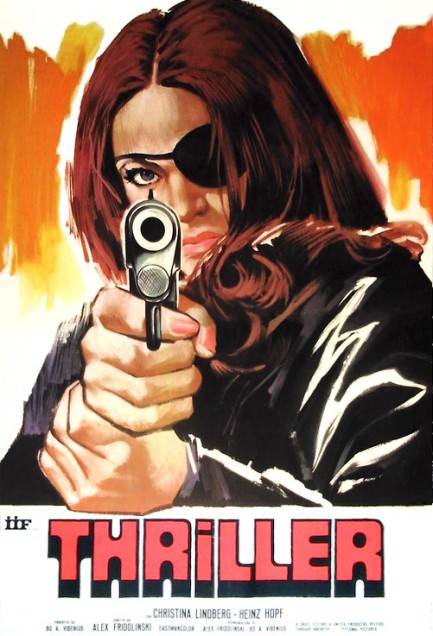 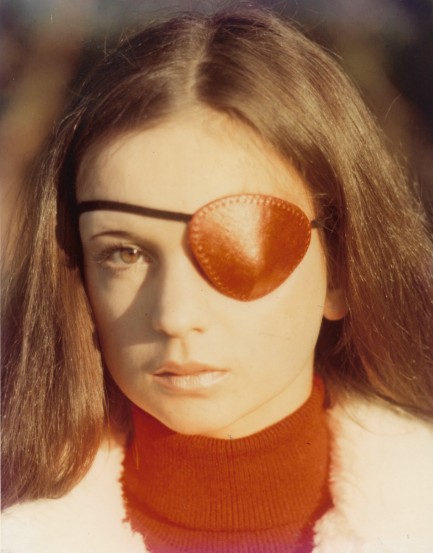
We've done a lot on Sandro Symeoni, which means that just for the sake of completeness we can't overlook these. They're his Italian posters for the Christina Lindberg grindhouse classic Thriller, which was originally made in Sweden as Thriller - en grym film, and in English speaking countries was known as Thriller: A Cruel Picture and They Call Her One Eye. We've already talked about it, and its star.
 The name's Cooper. Brian Cooper. What—you were expecting some other secret agent? 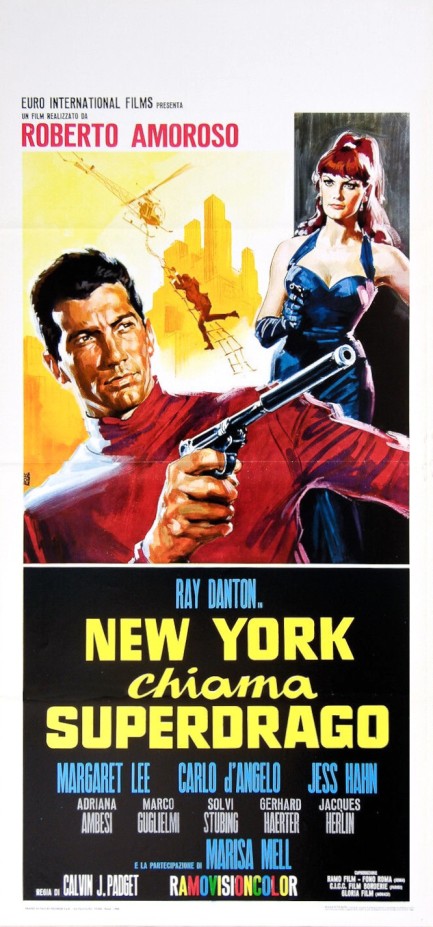
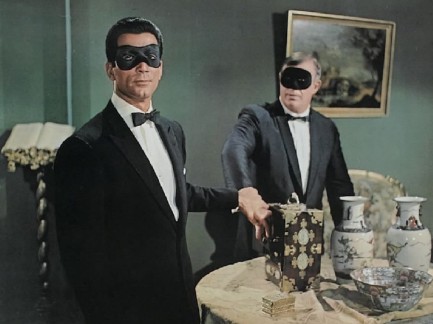
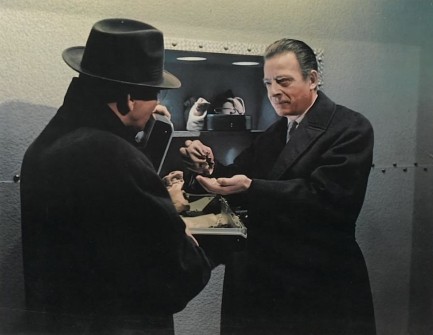
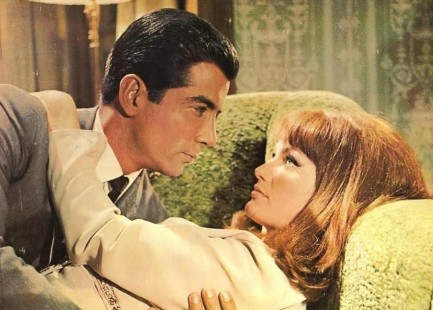
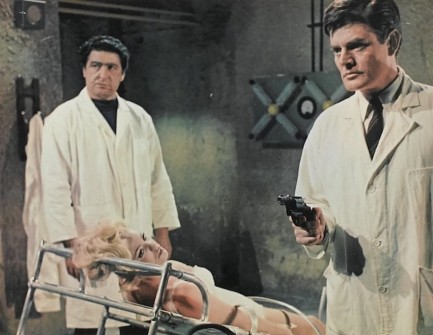
The Italian spy thriller New York chiama Superdrago, which we had a chance to watch during our little break last week, was known in English as Secret Agent Super Dragon, and is another in a spate of hipster spy movies that came in the wake of James Bond's massive cinematic success. It premeired in Italy today in 1966. Three of its promo posters were painted by the great Sandro Symeoni, and while the above example is also attributed to him on some websites, that's incorrect. It's really by Enrico de Seta. Or said to be by one long-running online poster vendor. We're not actually sure about that because the signature doesn't look like his, but who are we to argue with the experts?
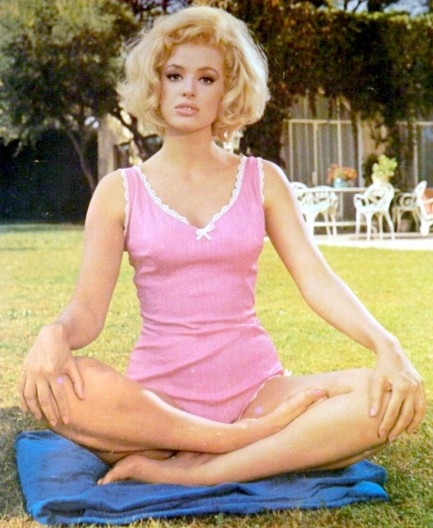
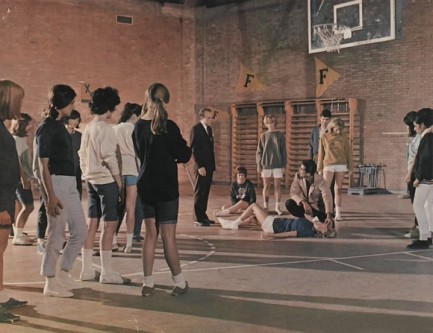
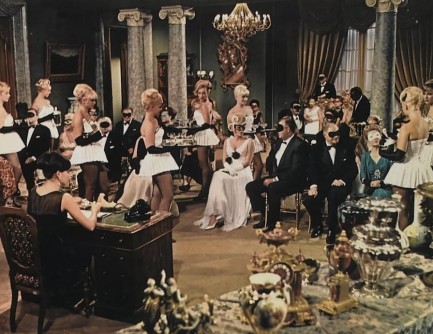
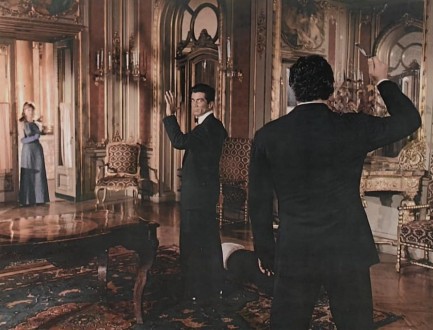
In the film, Ray Danton plays a retired agent codenamed Super Dragon—civilian name Brian Cooper—who's roused from his yogic meditations and drawn back into the spy game when a friend dies in a suspicious auto accident that may be related to previous strange deaths. The clues lead from a U.S. college town to Amsterdam (because what kind of spy movie would it be without some globetrotting?), and into the lissome arms of fellow spies Margaret Lee and Marisa Mell (because what kind of spy movie would it be without hotties à la carte?). Between romances Danton learns that the plot revolves around the untraceable drug synchron-2. Purpose: unknown (but don't be shocked if it's to do with world domination).
Few of these Bond knock-offs are sufficiently budgeted or technically proficient enough to result in good final products. Whether you like them has to do with nebulous factors. In this case, we thought Danton's unctious self-entitlement and blasé approach to world saving were funny. We loved when one of his many assailants swallowed cyanide, Danton said, “I'd better get rid of him,” then dumped the corpse out the nearest window. Cue sound effect of splashing water. New York chiama Superdrago is a bit camp without being a satire, and just poorly written enough to provide a few laughs without being a total screenwriting train wreck. But don't pretend we said it's actually good.
 Mature and Dors pair up for a bloc buster thriller. 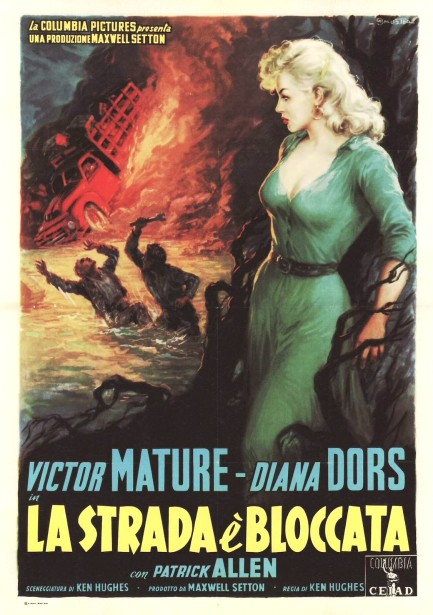
The 1957 Victor Mature/Diana Dors vehicle The Long Haul premiered in Italy today in 1958 as La strada è bloccata, which means “the road is blocked.” The art here is by Italian illustrator Anselmo Ballester. This is one of his better efforts, we think, with his Dors figure reflecting light from some off-canvas source, while a fire lights the background. You can see more from him here and here. As for the movie, we talked about it a while ago. You can read our thoughts here. And you can see a cool Japanese poster for the film here.
 The lawless of the jungle. 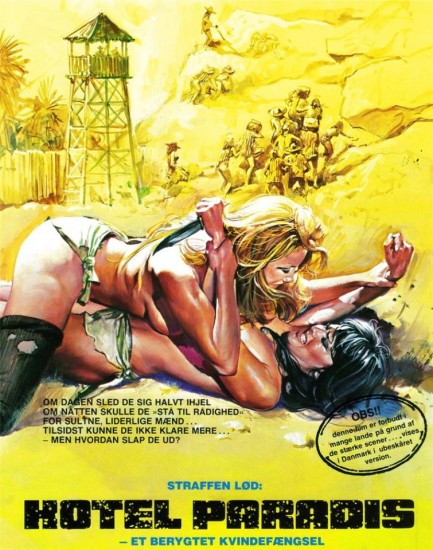
The curious and certainly never-to-reappear style of movies referred today as women-in-prison, or WIP, is a subgenre of sexploitation cinema that came about for one reason: it used settings in which women were helpless. Well, in theory. The dramatic thrust of the plots always derived from attempts to retain dignity and to escape captivity. The protagonist was usually an odd woman out—an unjustly imprisoned victim or an undercover operative—surrounded by a mix of prisoners who were hopeless, cruel, sexually predatory, and complicit, plus the abusive guards, one of whom nearly always was a sadistic woman.
Hotel Paradis stars Anthony Steffen, Ajita Wilson, and the slinky Cristina Lay, sometimes referred to as Cristina Lai. There are numerous posters for it, but we like the above Danish effort featuring a fight to the death. Its text notes: This film is banned in many countries because of its strong scenes.... it's shown in Denmark in uncut version. Indeed. Interracial lesbian sex might be to blame for the banning. There are other possible reasons too. We won't waste our time trying to figure it out. As an aside, the movie was filmed concurrently with the WIP flick Femmine infernali using the same cast, director, and sets. So consider this a write-up of that movie too, since the pair are basically identical.
Plotwise, a group of women are being transported to a jungle hellhole prison where forced labor is used to dig for emeralds. When their guards are ambushed and killed by patriot soldiers seeking to steal the emeralds to fund a nebulous revolt, the women agree to continue posing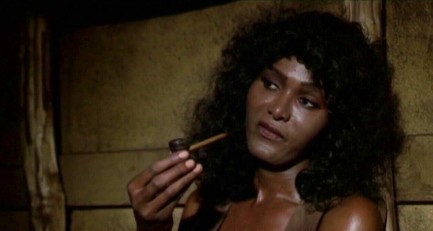 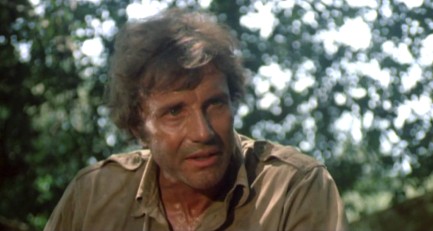 as prisoners in order to aid the infiltration of the camp. Behind bars is one inmate—Wilson—who has the shining or something, and keeps telling the others that violence, death, and freedom are coming. Also coming are WIP staples such as the evil wardenness, languorous shower scenes, whippings, baroque tortures, and sexual assault. It all ends pro forma with a climactic shootout. as prisoners in order to aid the infiltration of the camp. Behind bars is one inmate—Wilson—who has the shining or something, and keeps telling the others that violence, death, and freedom are coming. Also coming are WIP staples such as the evil wardenness, languorous shower scenes, whippings, baroque tortures, and sexual assault. It all ends pro forma with a climactic shootout.
Obviously, you have to go into these types of movies with a sense of humor if you can. When Lay first meets Wilson in the camp, she says, “My name's Maria. I'm frightened.” Why, oh why, didn't Wilson respond, “I'm Ajita. I'm a virgo”? Too bad we didn't write the script. Lay then helps herself to Wilson's pipe—which Wilson just a bit earlier had used to masturbate. If she can obtain a pipe you'd think she could get a dildo, but whatever, in prison you have to find your pleasures where you can. And in women-in-prison movies the same holds true—we thought the scene was hilarious. It was merely one of many.
It should be noted that while Wilson is the female lead, and we've shared a couple of racy images of her and highlighted her importance as a trans trailblazer, Lay is the audience draw here. She's unusually beautiful, and director Edoardo Mulargia and the movie's producers know it quite well. She gets the most loving camera work, the wettest shower scene, a nice interlude with Wilson, and goes through the entire final shootout obviously naked beneath her tattered prison tunic and with the top of it hanging wide open. It's not quite Frauen für Zellenblock 9, in which Karine Gambier and company perform their long escape sequence completely starkers, but it's notable just the same.
Hotel Paradis is obviously sexist and exploitative. As we've said before, in the same way blaxploitation movies usually show a racist power structure before the hero shatters it, sexploitation movies sometimes do the same with sexism. Sometimes. Not here. There are additional flaws. Compared to better WIP efforts it lacks the winking sense of humor, the empowerment undercurrent, and the sense of actors having fun while making something they know is ridiculous. There's a hardcore cut of this film with explicit scenes spliced in. It merely amplifies the aforementioned issues, so we suggest you avoid that version. But really, if you avoid Hotel Paradis entirely you'll probably be a better person for it. It premiered in Italy as Orinoco: Prigioniere del sesso in the autumn of 1980, and in Denmark today in 1983.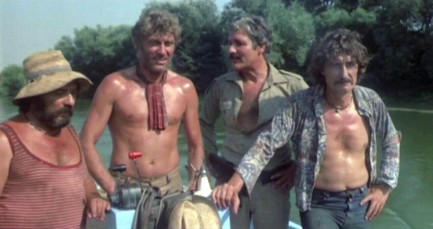  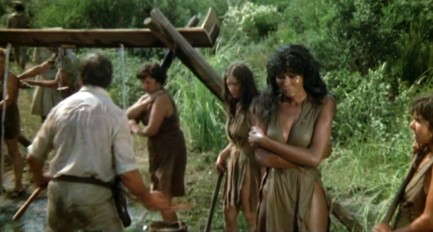 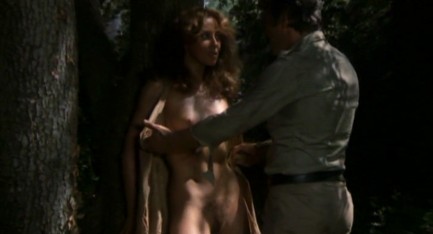 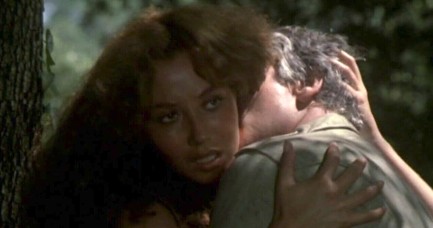 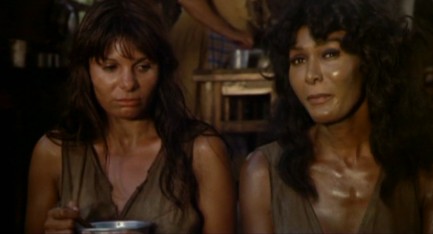 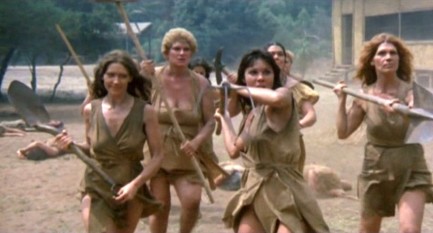 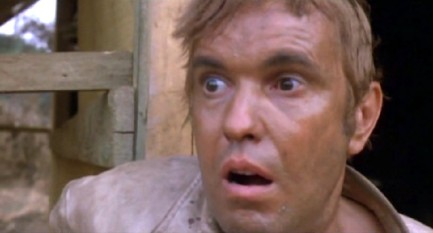 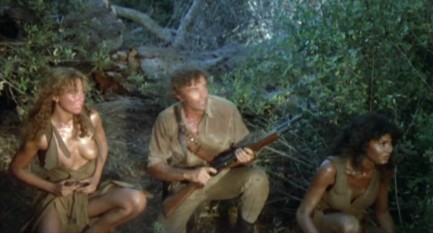 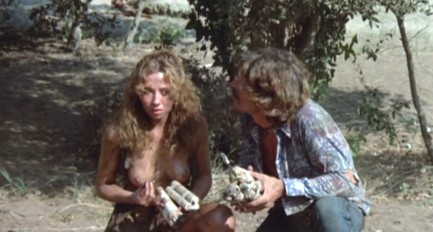
 You better watch her like a hawk. 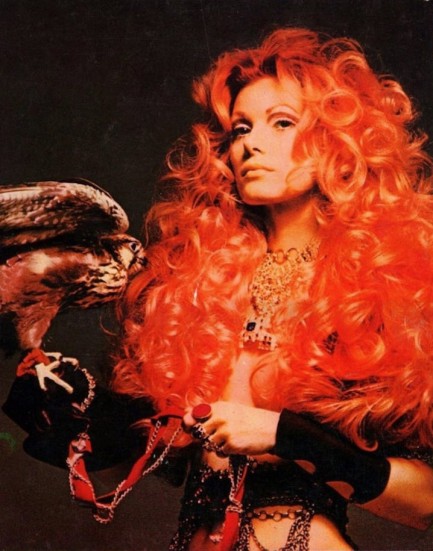
We already shared a couple of nice images of Swiss actress Monica Strebel, but when we saw this great shot we had to bring her back. It was published in the Italian magazine IO. The accompanying text doesn't explain why she has a bird, but it's rather interesting anyway because it claims she wanted to play characters “psychologically suited to her personality, detached from the usual exclusively sexy artificial doll roles, real characters, [that] suffer.” Well, the suffering part came true—she mostly acted in giallo films, where enduring psychological torture is a prerequisite. In this photo, though, she looks like someone who does the torturing. It's from 1969.
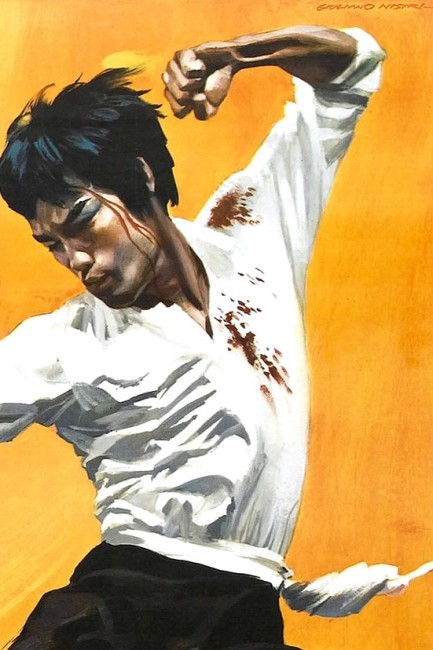
 The return of the dragon. 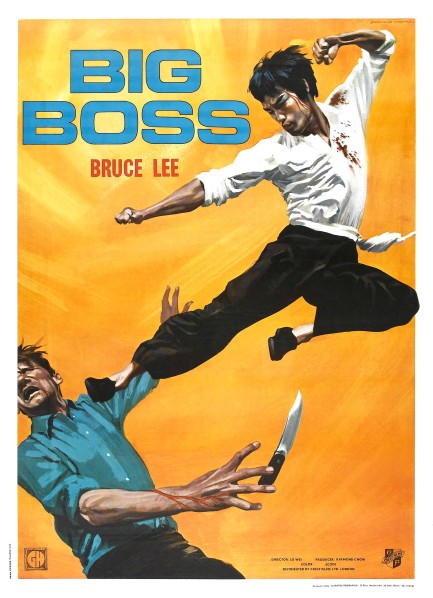 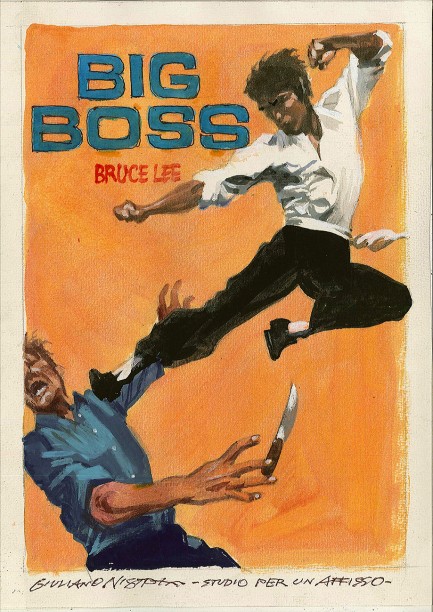
A while back we shared two Italian posters for the Hong Kong action flick Tang shan da xiong, aka The Big Boss. Those were painted by Averado Ciriello, and one of them, with star Bruce Lee depicted as moving so fast he had seven blurry arms, brought to mind those moments in The Matrix when Neo and Mr. Smith fight at mindbending speed. We're looking today at more art from the movie. The above efforts—a finished poster and a preliminary study—were painted by Italian artist Giuliano Nistri for the film's British release by Crest Films. We included the study because we wanted to highlight a website that you should visit, where you can see more of the same and gain a greater appreciation for Nistri's work. It's at this link. Tang shan da xiong premiered in England today in 1971.
 Jim Brown commits multiple instances of polizia brutality. 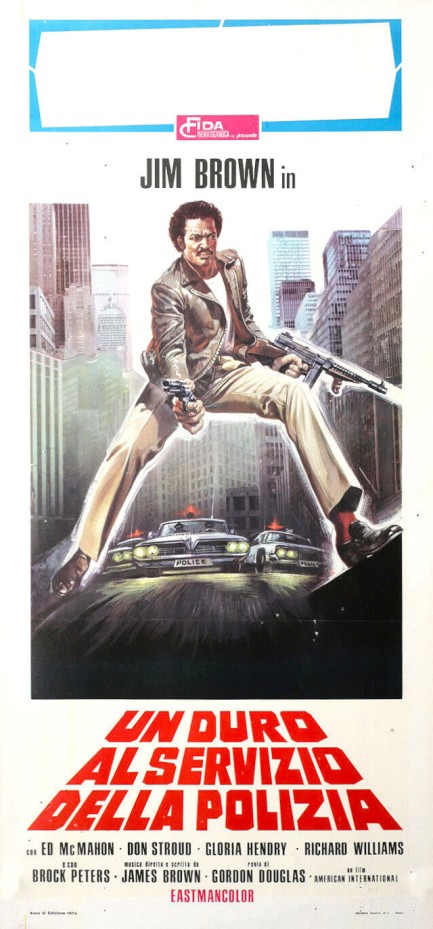
We never like to go very long without highlighting the blaxploitation cycle in cinema, so above you see a nice poster for the 1973 Jim Brown actioner Slaughter's Big Rip-Off, which was retitled Un duro al servizio della polizia for its Italian release. That translates as, “a tough guy in the police service,” which is fitting for Brown, one of the toughest guys around. It should be noted though, that he doesn't play a cop in the film, but a vigilante who partners with the cops. There's no Italian premiere date, but Rip-Off screened in most of Europe in 1974, so it's safe to say the same is true for Italy. We've seen it, but we'll return to the subject later after we have another look. In the meantime you can enjoy two Italian posters for 1972's Slaughter here.
 Hello again, mirror me. After all these years it's still only the two of us that know I'm a very hairy woman. 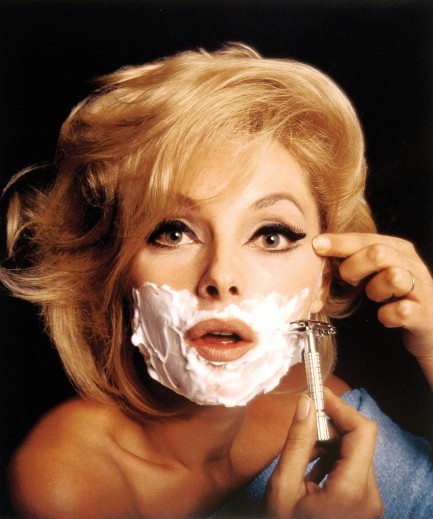
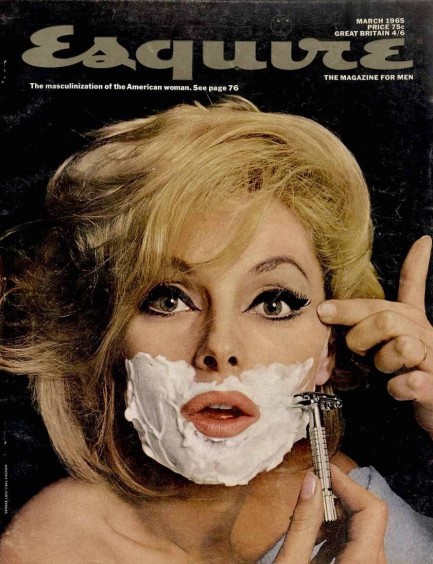 Virna Lisi made every photo amazing just by being in them, which is probably why Esquire magazine conceived this gender blurring idea in 1966 as a humorous commentary on her legendary beauty. Even with her face half covered Lisi still looks as good as ever. We doubt even a beard would have made much of a difference. We've included the magazine cover, as you see, and the photo is slightly different (if you can spot how, thumbs up for you). The issue is considered collectible today, and the image has even made it onto t-shirts. We've featured Lisi multiple times, including here, here, here, and here. All the shots are excellent. Virna Lisi made every photo amazing just by being in them, which is probably why Esquire magazine conceived this gender blurring idea in 1966 as a humorous commentary on her legendary beauty. Even with her face half covered Lisi still looks as good as ever. We doubt even a beard would have made much of a difference. We've included the magazine cover, as you see, and the photo is slightly different (if you can spot how, thumbs up for you). The issue is considered collectible today, and the image has even made it onto t-shirts. We've featured Lisi multiple times, including here, here, here, and here. All the shots are excellent.
 Doing her part to take a bite out of crime. 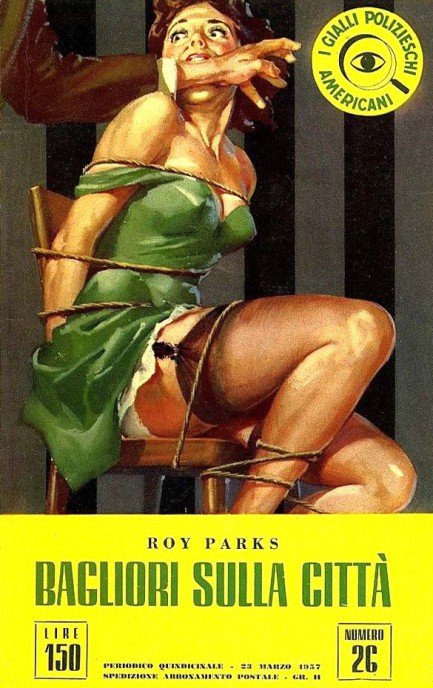
Above is the cover of Bagliori sulla città, written by Roy Parks for S.P.E.R.O.’s series I Gialli Polizieschi Americani, 1957. Parks was actually a writer named Mario Casacci, who also published novels as Bill Coleman, Mario Kasak, Rex Sheridan, and possibly others. He was also a noted screenwriter most famous for inventing, along with Alberto Ciambricco, the figure of Lieutenant Sheridan, who was a staple on Italian television through the 1960s and early 1970s, played by Ubaldo Lay. Casacci also participated on several soundtracks as a lyricist. The art here is from Averardo Ciriello, who we’ve featured before here and here on movie posters.

|
 |

The headlines that mattered yesteryear.
1945—Mussolini Is Arrested
Italian dictator Benito Mussolini, his mistress Clara Petacci, and fifteen supporters are arrested by Italian partisans in Dongo, Italy while attempting to escape the region in the wake of the collapse of Mussolini's fascist government. The next day, Mussolini and his mistress are both executed, along with most of the members of their group. Their bodies are then trucked to Milan where they are hung upside down on meathooks from the roof of a gas station, then spat upon and stoned until they are unrecognizable. 1933—The Gestapo Is Formed
The Geheime Staatspolizei, aka Gestapo, the official secret police force of Nazi Germany, is established. It begins under the administration of SS leader Heinrich Himmler in his position as Chief of German Police, but by 1939 is administered by the Reichssicherheitshauptamt, or Reich Main Security Office, and is a feared entity in every corner of Germany and beyond. 1937—Guernica Is Bombed
In Spain during the Spanish Civil War, the Basque town of Guernica is bombed by the German Luftwaffe, resulting in widespread destruction and casualties. The Basque government reports 1,654 people killed, while later research suggests far fewer deaths, but regardless, Guernica is viewed as an example of terror bombing and other countries learn that Nazi Germany is committed to that tactic. The bombing also becomes inspiration for Pablo Picasso, resulting in a protest painting that is not only his most famous work, but one the most important pieces of art ever produced. 1939—Batman Debuts
In Detective Comics #27, DC Comics publishes its second major superhero, Batman, who becomes one of the most popular comic book characters of all time, and then a popular camp television series starring Adam West, and lastly a multi-million dollar movie franchise starring Michael Keaton, then George Clooney, and finally Christian Bale. 1953—Crick and Watson Publish DNA Results
British scientists James D Watson and Francis Crick publish an article detailing their discovery of the existence and structure of deoxyribonucleic acid, or DNA, in Nature magazine. Their findings answer one of the oldest and most fundamental questions of biology, that of how living things reproduce themselves.
|

|
|
It's easy. We have an uploader that makes it a snap. Use it to submit your art, text, header, and subhead. Your post can be funny, serious, or anything in between, as long as it's vintage pulp. You'll get a byline and experience the fleeting pride of free authorship. We'll edit your post for typos, but the rest is up to you. Click here to give us your best shot.
|
|