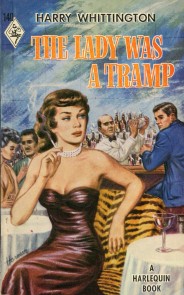
Me? Why should I touch it? You’re the one always going on about how you can tell everything about a man from his handshake. 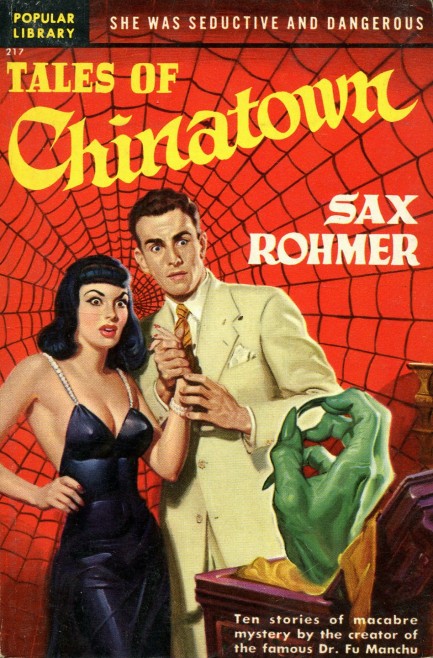
British author Sax Rohmer, aka Arthur Henry Ward, wrote many novels but made his reputation with the Fu Manchu series. Tales of Chinatown doesn’t feature that famous character, but instead deals in short story form with other characters and various unsavory goings-on in the Chinese underworld of London’s Limehouse district. There are problems with Rohmer’s depictions of Chinese, Jews, and other groups, but the writing is more than a century old, so no surprise there.
In terms of execution, there’s a sinister mood of a type here that's quite effective. "The Daughter of Huang Chow," the opening tale, deals with a series of fatal poisonings among the Limehouse criminal set, and the mysterious contents of an ornamental coffin. "The Hand of the Mandarin Quong," from which the cover is derived, is set in Singapore and London, and tells the story of a man who loses a hand in a failed attempt to rescue his kidnapped wife, but whose severed body part continues to haunt and hunt the kidnapper.
Tales of Chinatown is an atmospheric collection, well written and imaginatively conceived. It's easy to see why Rohmer became an international sensation. Many of his tropes are by now familiar if not hackneyed (and his racialized musings are deservingly excoriated), but back when his ideas were fresh they must have given his readers the megacreeps. Crime, suspense, mystery, mysticism, horror—Tales of Chinatown has all that. It first appeared in 1922, and this Popular Library edition with art by Rudolph Belarski is from 1949.
 Hi, I heard there are some enormous veggies around here. 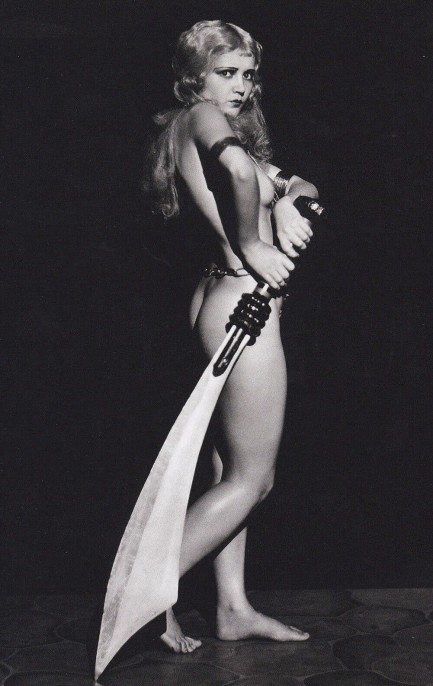
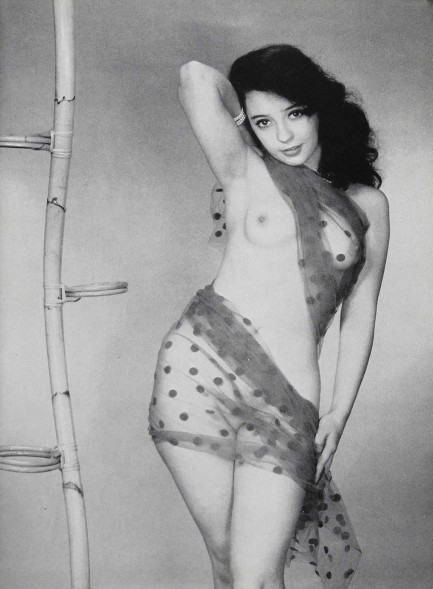
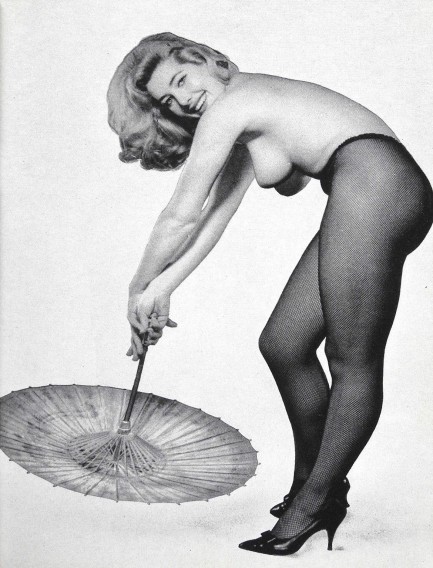
We've been looking at this image for a few years, and while it's often said to feature U.S. actress Anita Page, there's an amazing amount of disagreement about that. Many sites say this is actually an actress named Marie Hopkins. The debate is a fascinating microcosm of internet behavior. We've seen people called stupid over their opinion. Well, we'll try to weigh in, and hopefully not in a stupid way, about whether this is Page or Hopkins.
Some sites, splitting the difference, essentially claim both, saying this is Marie Hopkins posed as Anita Page, or Marie Hopkins posing under the pseudonym Anita Page. Here's the problem with that: there's no Marie Hopkins listed in cinema or stage databases. There's a Miriam Hopkins, from the right period, but even so, this is probably not her. For clues toward an answer we're turning to the pros—i.e. professional brick and mortar galleries. Black & Whites Gallery is no longer around, but from its London locale during the 1980s and into the 1990s it staged shows by renowned photographers such as Richard Sawdon Smith and David Leslie Anthony. That gives it at least something resembling reputability, because when galleries with actual street addresses sell art with mistaken attributions or under false pretenses, it has a way of turning into a reputational problem that's hard to shake among the habitués of the gallery scene. This is not nearly as true of online sellers.
So for the record: Black & Whites Gallery, once located at 50-52 Monmouth Street, London, sold limited lithographs of this image and identified the subject as the actress Anita Page, shot by Clarence Sinclair Bull in 1929. Is that 100% definitive? Maybe not, but it's getting into the neighborhood. You can see a previous Page here.
 A murder by any other name would kill as dead. 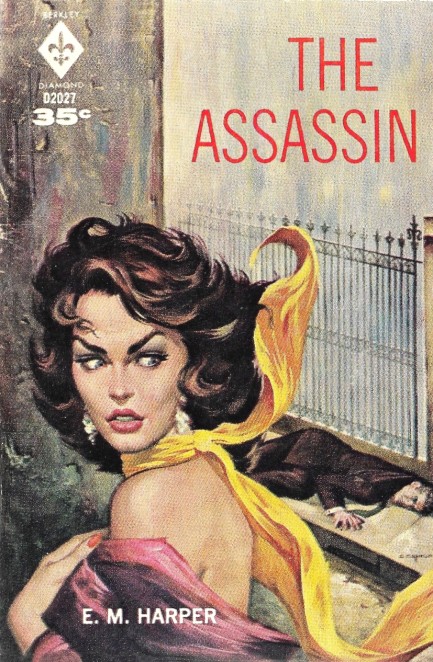
This is a rather pretty cover painted by Charles Copeland for E.M. Harper's 1960 novel The Assassin, the story of Alec Jordan, who's spared the guillotine in an Algerian prison but must repay the shadowy government operatives who freed him by murdering an Arab political figure. We've seen convicts turned into assassins a couple times in vintage literature. What sets this story apart is its many flashbacks to Jordan's youth, from the time he was witness to his moonshiner father's killing by cops, to being sprung from reform school to play high school football (seems someone always wants to put his skills to use), to his various war experiences.
The story begins in Paris, from which Jordan pursues his target to London and Vienna, world weary, haunted by the past, and hounded by the people who are operating him. There's, unsurprisingly, the requisite woman-from-his-past for whom he still has feelings—a beauty named Renée who married an Austrian count while Jordan was hors de combat. Conveniently, she's now a widow, but is reclaiming the past an option for Jordan? To survive but lose your soul, to resist corruption but be killed, to find redemption in love. You've read it before, and though Harper breaks no new ground plotwise, he wrote a contemplative iteration of the story that offers some enjoyment.
 Wait, don't kill me! I can be useful! I can teach you this lindy hop I learned in my dance class! 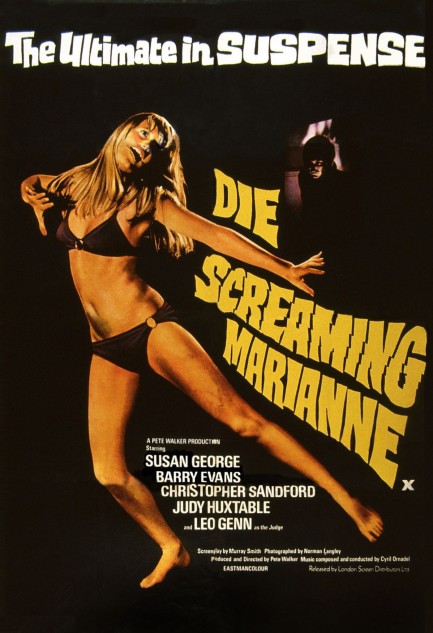
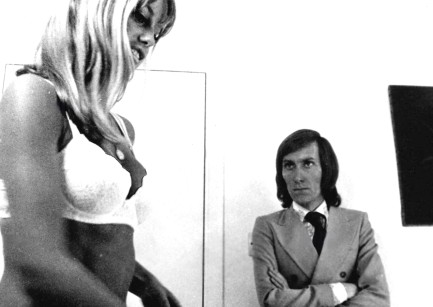
We said last week we'd get back to British actress Susan George. Above you see her on a poster for Die Screaming Marianne, along with the claim that the movie is the ultimate in suspense. Well, if that's the case, how could we say no? George plays a nightclub dancer hiding out from her father, a former judge who took bribes during his long career. He lives in a villa in Portugal with George's half sister. When George turns twenty-one she'll receive her mother's inheritance, which is in a Swiss bank account along with papers proving her father was a crook. Her half sister wants the money, which amounts to $700,000, and her father wants the documents. Both decide that killing George is the only way to achieve their goals.
The filmmakers, including cult horror director Pete Walker, primarily come at all this via a somewhat elliptical route that brings to mind giallo cinema, where you aren't sure what's significant, or really what's even going on at first. But by halfway through, it all begins to make sense and the story boils down to the very conventional question of whether George's father and half sister can get away with murder. We won't answer that, but we'll tell you we can't fully recommend the movie because of its obtrusively oddball style. George definitely made better films, a few of which we mentioned in our previous post on her. That being the case, we'll see her again. Die Screaming Marianne premiered today in 1971.
 They're as real as ink printed on paper can be. 
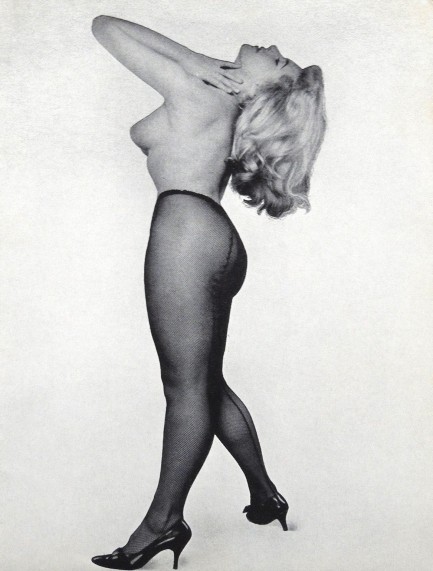
Above is the cover of a fun vintage nudie magazine called Mirage, made in London by an outfit known as Swanedge Publications. We like the name of the magazine. Glamour photography implies the ephemeral. You know what else is ephemeral here? Pubic hair. The muff-munching airbrush monster has struck again, removing the fuzzy bits and vaginal convolutions of a couple of models. Pubic regions as obscenity is something we talk about often here because we share a lot of Japanese nudes in which those areas are banned. The difference is that in Japan the models covered those parts in various clever ways so they still looked human. In the West underpaid guys in pre-press removed nether regions entirely and made the models sexless like Barbie dolls. We'll talk about this more later.
Mirage's cover star, who's typing in the nude very much the same way we write this website, is identified only as Anna. Inside the issue is a tri-panel centerfold of a model the editors call Alicia, and she's bracketed by other models named Wendy, Kismet, Jan, Ella, Sylvia, etc. All of those are professional names, we assume. Meanwhile the photographers work under probable pseudonyms too, we suspect, such as Don Pleasance and Len Humber. There's no copyright on the magazine, therefore only someone who was around at the time could say for sure when it appeared, and that leaves us out. However, the look of it says mid-1960s to us. It's a nice publication. There are more pages, but only so much scanning time in the world. Maybe we'll return here later and do a more thorough job.
 You never know when your time is up. Usually. 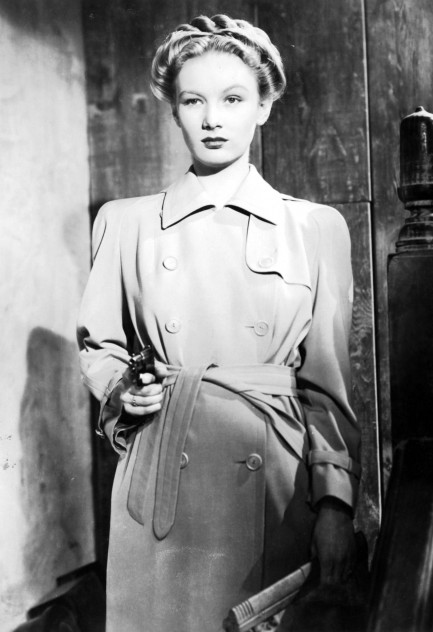
Above: Veronica Lake stars in a menacing promo photo made for her 1944 spy movie The Hour Before Dawn. She plays a pure femme fatale, a bad woman living in London as a double agent in the employ of the Third Reich. The movie was poorly reviewed, but we give this image five stars.
 Plane lands on autopilot after pilots spend entire flight in passenger cabin hanging with Swedish actress.  
What is it about flights to London? First Rita Hayworth arrives a mess from Los Angeles, then Swedish star Christina Lindberg arrives missing some clothes. We've shown you three other photos made of her on the Heathrow tarmac that were shot the same day (today in 1972) which indicate that she did not in fact travel in this outfit. But we do enjoy imagining the reaction on the plane if she had. These photos were used as press handouts promoting both Lindberg and her 1970 movie Rötmånad, which played in England in 1972 as What Are You Doing After the Orgy? We watched it several years ago and it's an odd little film, meant to be comedic, we suppose, about a very bad mother who tries to turn her daughter into a prostitute. The ’70s, right? There was nothing filmmakers wouldn't try back then.
The rear of the photos both say the following: In her native Sweden, Christina Lindberg has fashioned a successful career for herself almost overnight. Less than one year ago she was an unknown schoolgirl with Latin and archeology as special interests. Then, suddenly she was discovered by one of Sweden's biggest weekly magazines. They widely publicised her as a pin-up girl and she created a tremendous stir with her innocent yet voluptuous beauty. Soon she was discovered by leading Swedish film directors, and now plays the part of Sally in the new film What Are You Doing After Orgy?, a very black comedy set in the Swedish archipelago. Christina is twenty-one, unmarried, and at one time girlfriend of Prince Gustav. The film opens at the Cinephone, Oxford Street, January 6th.
 When you're a movie star you can't simply have a bad day. 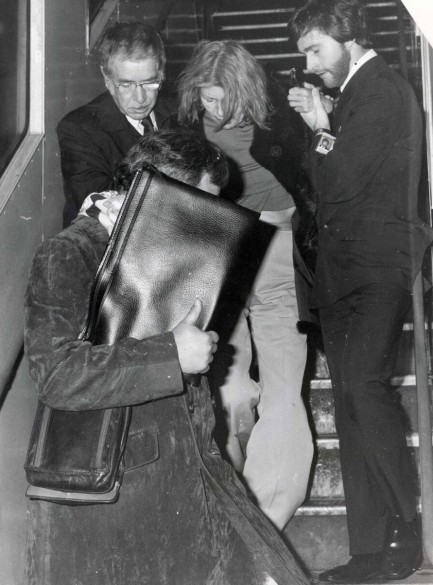
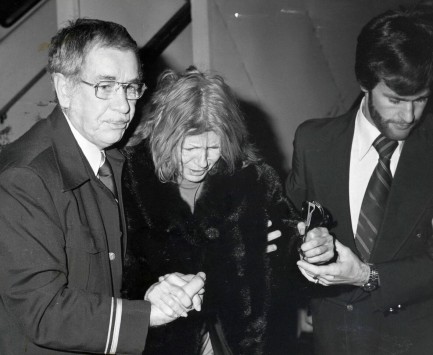
When you're a celebrity, even in professional decline or retirement, you can always make news with a public misstep. Such was the case with Rita Hayworth when she was helped from a TWA flight after it landed in London today in 1976. Hayworth had caused a disruption by directing an angry outburst at a flight attendant. The press was on hand at the airport, so Hayworth was photographed from arrival terminal to limousine looking as tired as if she'd walked instead of flown to London.
It was bad day for Hayworth, but it was only the latest in a long run of them. She had been deeply affected by both her brothers dying within a week in March 1974, had been drinking heavily since then, and in fact was allegedly intoxicated on the flight. When news of the disturbance hit the papers she took a public relations beating and, of course, back then the press wasn't circumspect about attacking a woman's looks.
It wasn't until several years later that Hayworth was diagnosed with the still largely unknown ailment Alzheimer's disease, which helped explain her increasingly erratic behavior. Aging is difficult, there's little doubt. Aging as a sex symbol must be incredibly hard. Some would say growing old in public is back payment for fame, fortune, and undeserved adoration, and that may be so, but to us it seems like a mighty high price. We have a few more photos below.
 An American con man in London. 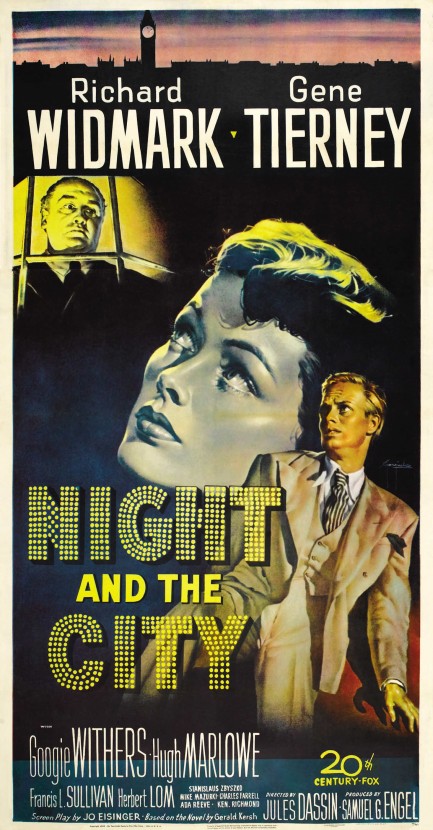
Amazing that we haven't talked in detail about Night and the City yet, but all things in good time, and the time is now. Directed by Jules Dassin, this is one of the top entries in the film noir cycle, featuring Richard Widmark playing an American named Harry Fabian who's trying to hustle his way to riches in postwar London. Being a hustler, he long ago gave up the idea of working a fair job for a fair wage, and instead has been involved in so many spurious get-rich-quick schemes that nobody believes in him anymore. But when he stumbles upon the greatest greco-roman wrestler of all time, he cooks up a plot to take over wrestling promotion in London—and this scheme is a sure thing.
Widmark's performance hinges upon nervous energy and emotional desperation, as he shapes Harry Fabian into one of the greatest characters in the film noir annals, a man who's equal parts pitiable, ridiculous, and dangerous. He's the ultimate noir loser, a man who simply cannot see the forest for the trees. Gene Tierney, who any normal man would worship twenty-four hours a day, plays his girlfriend, beautiful and forbearing, but whose presence Fabian warps into yet another reason to grift his way to a fortune. He feels that a guy in his meager circumstances doesn't deserve her—which completely overlooks the fact that he already has her.
As Widmark tries to hold his caper together the rug is pulled from under him multiple times, yet like any serious hustler he manages to stumble improvisationally onward with lies and wishful thinking. His constant sowing of the seeds of his destruction is hard to watch, because as viewers we can see where and how he's going to fail—or possibly, just possibly, fate will grant him a miracle though he very much deserves to fail. One of the cool things about film noir is that its leads tend to be terribly flawed, but here Widmark is a human clearing house for bad character traits, and the worst of them is the one he has no control over—he was simply born under a bad star.
All in all Night and the City deserves its reputation. We have a few quibbles, but they're purely personal. For example, female leads in these old films often perform a song and Tierney's is atrocious, sadly. And if we were going to be very picky we'd add that it's also hard to buy the wonderful Tierney and the unctuous, work-averse Widmark as a couple, but of course, willing suspension and all that jazz requires that we go with it. The movie works even if Widmark refuses to. Give it a watch. You won't regret it. Night and the City had its world premiere today in 1950. 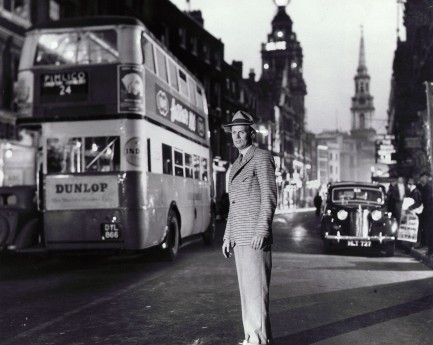 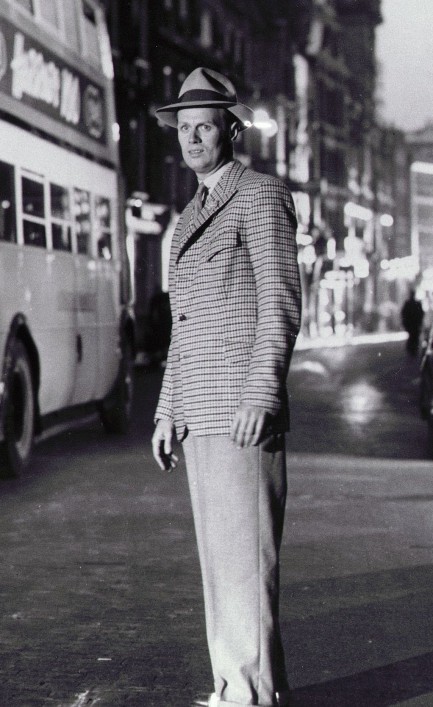 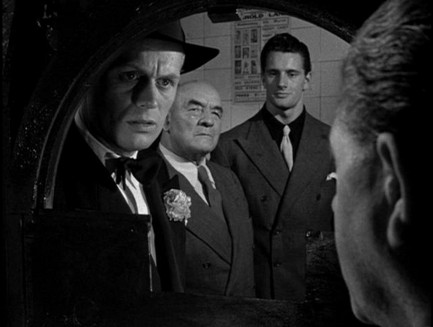 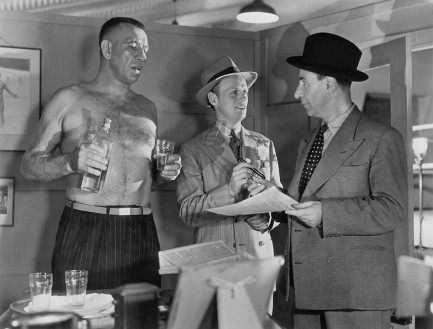 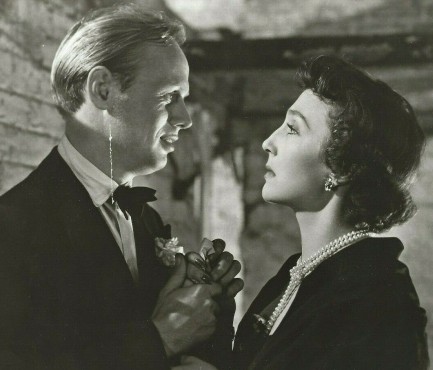 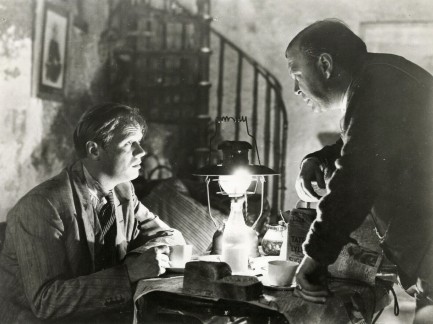 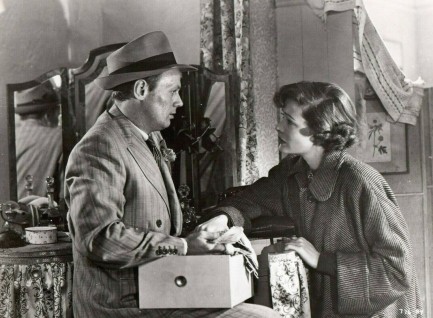 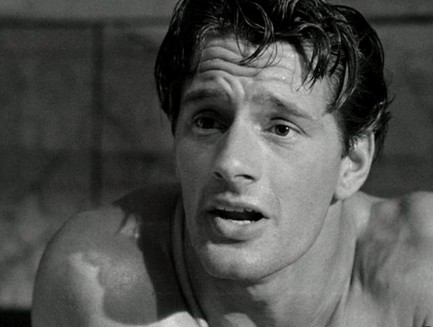 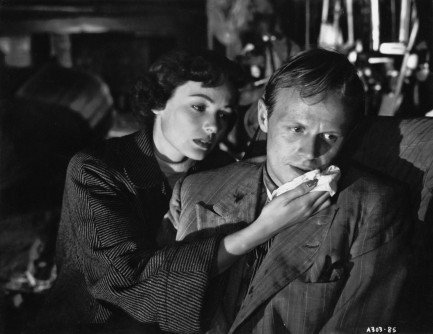 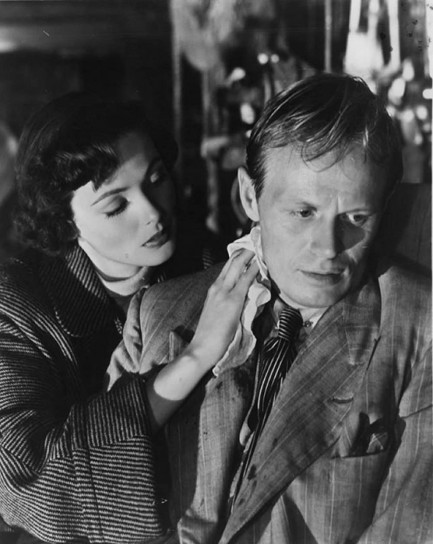 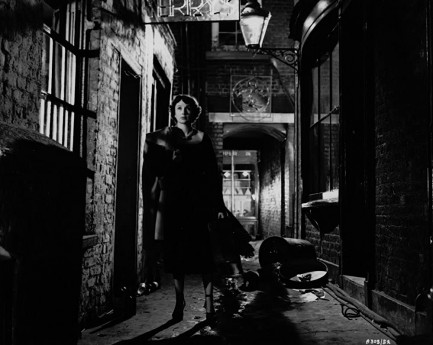 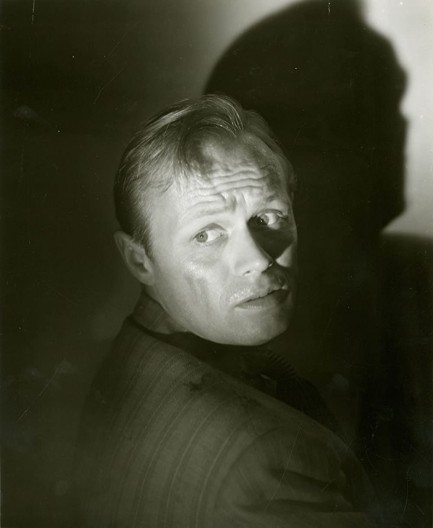 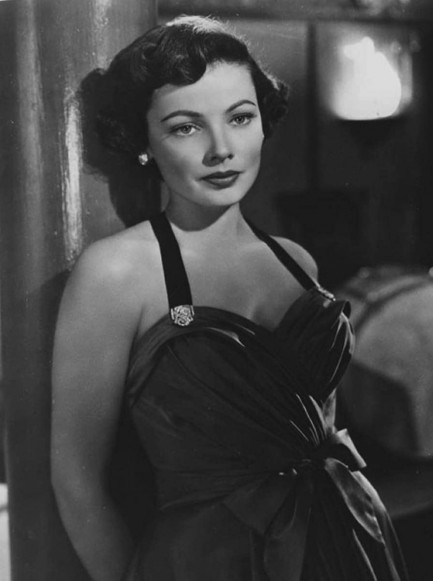 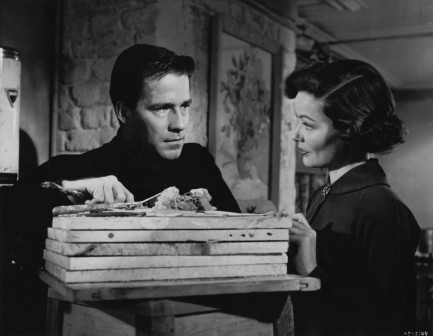 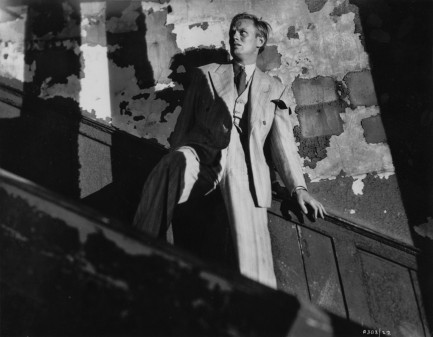 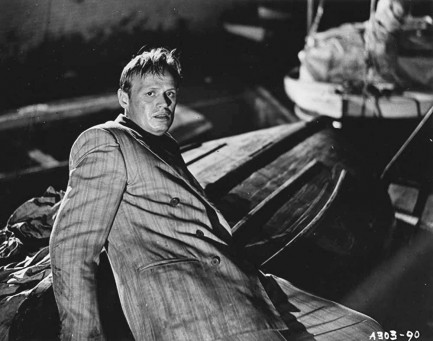

|
 |

The headlines that mattered yesteryear.
1945—Mussolini Is Arrested
Italian dictator Benito Mussolini, his mistress Clara Petacci, and fifteen supporters are arrested by Italian partisans in Dongo, Italy while attempting to escape the region in the wake of the collapse of Mussolini's fascist government. The next day, Mussolini and his mistress are both executed, along with most of the members of their group. Their bodies are then trucked to Milan where they are hung upside down on meathooks from the roof of a gas station, then spat upon and stoned until they are unrecognizable. 1933—The Gestapo Is Formed
The Geheime Staatspolizei, aka Gestapo, the official secret police force of Nazi Germany, is established. It begins under the administration of SS leader Heinrich Himmler in his position as Chief of German Police, but by 1939 is administered by the Reichssicherheitshauptamt, or Reich Main Security Office, and is a feared entity in every corner of Germany and beyond. 1937—Guernica Is Bombed
In Spain during the Spanish Civil War, the Basque town of Guernica is bombed by the German Luftwaffe, resulting in widespread destruction and casualties. The Basque government reports 1,654 people killed, while later research suggests far fewer deaths, but regardless, Guernica is viewed as an example of terror bombing and other countries learn that Nazi Germany is committed to that tactic. The bombing also becomes inspiration for Pablo Picasso, resulting in a protest painting that is not only his most famous work, but one the most important pieces of art ever produced. 1939—Batman Debuts
In Detective Comics #27, DC Comics publishes its second major superhero, Batman, who becomes one of the most popular comic book characters of all time, and then a popular camp television series starring Adam West, and lastly a multi-million dollar movie franchise starring Michael Keaton, then George Clooney, and finally Christian Bale. 1953—Crick and Watson Publish DNA Results
British scientists James D Watson and Francis Crick publish an article detailing their discovery of the existence and structure of deoxyribonucleic acid, or DNA, in Nature magazine. Their findings answer one of the oldest and most fundamental questions of biology, that of how living things reproduce themselves.
|

|
|
It's easy. We have an uploader that makes it a snap. Use it to submit your art, text, header, and subhead. Your post can be funny, serious, or anything in between, as long as it's vintage pulp. You'll get a byline and experience the fleeting pride of free authorship. We'll edit your post for typos, but the rest is up to you. Click here to give us your best shot.
|
|