A long time ago, light years ahead of their time. 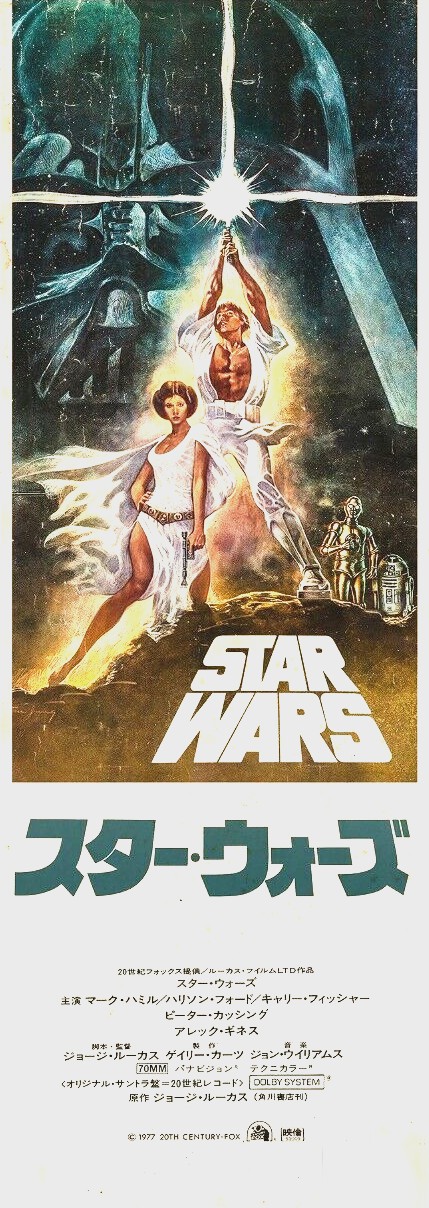 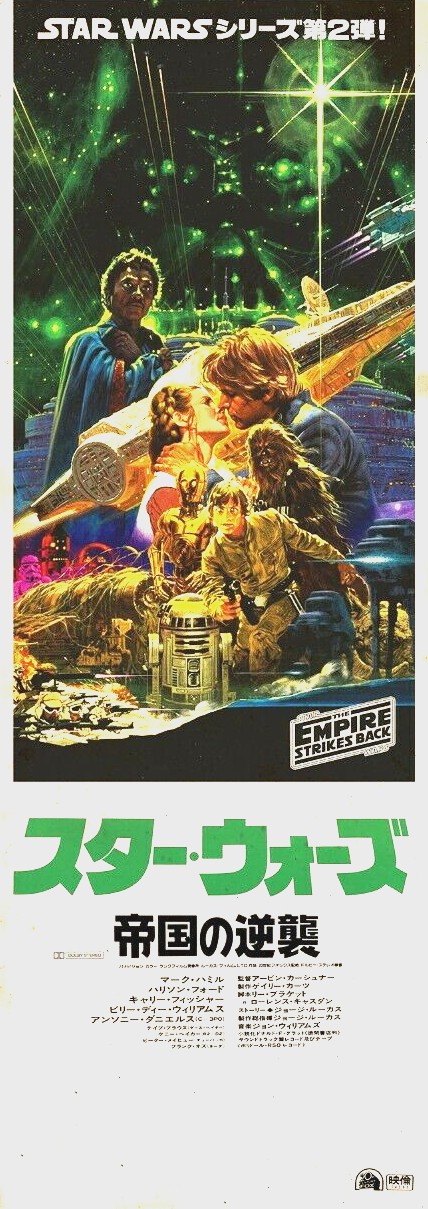 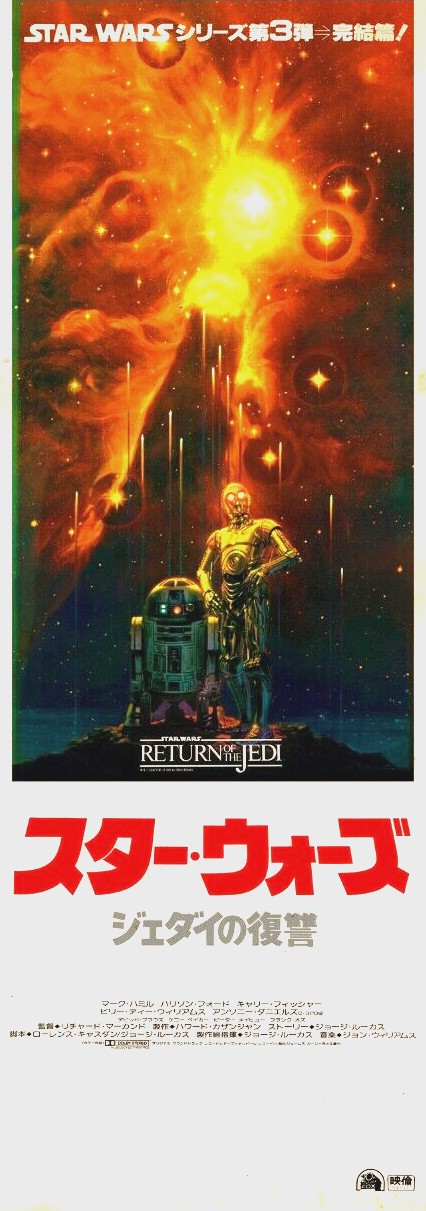
Above are three tateken sized posters for the first three films in George Lucas's galaxy spanning Star Wars series: Star Wars, The Empire Strikes Back, and The Return of the Jedi. Posting these today was a direct consequence of our recent move—new house, fresh reorganization, all sorts of forgotten items turning up, both physically and in our hard drives. Once we get in a solid scanner groove we have some amazing stuff to show you. In the meantime, we're pretty sure you won't see these anywhere else.
 Yeeess master... I will vote against my own interests and instead help enrich billionaires and corporations… 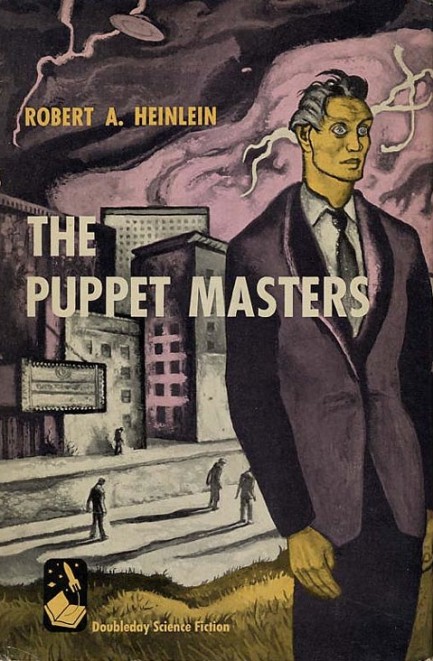
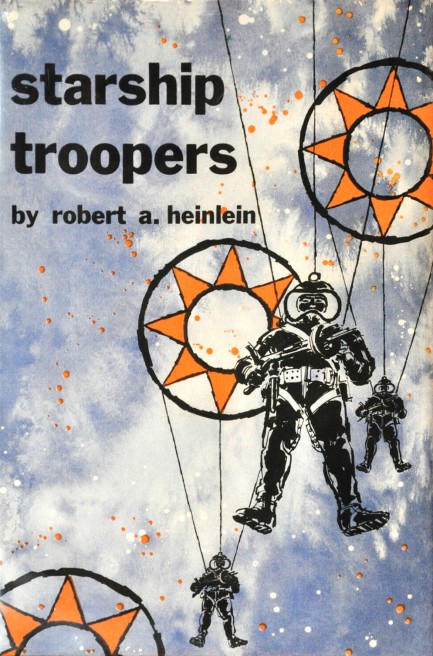
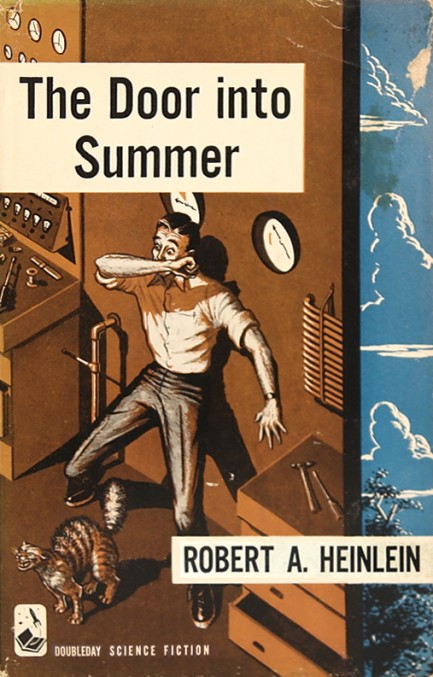
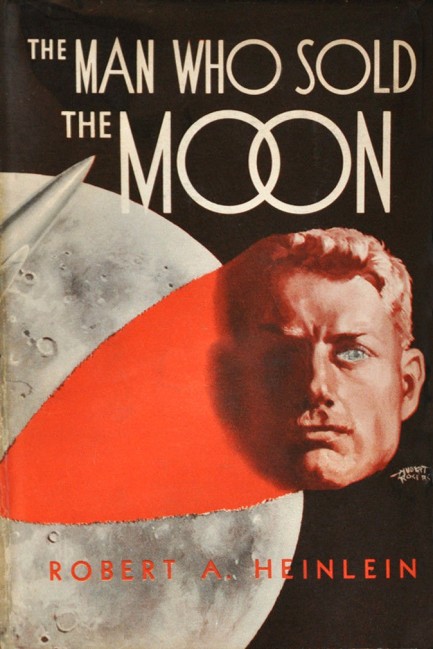
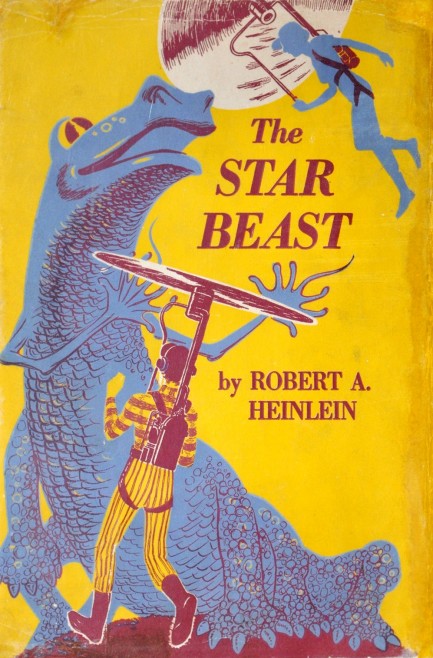
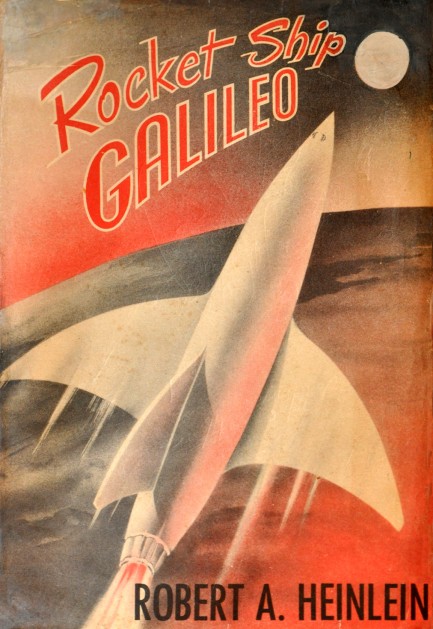
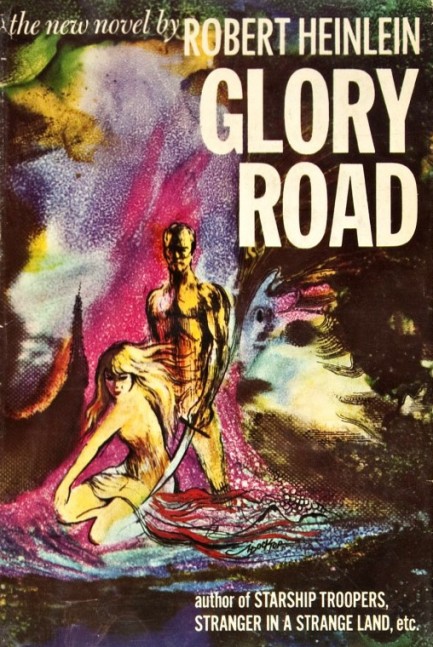
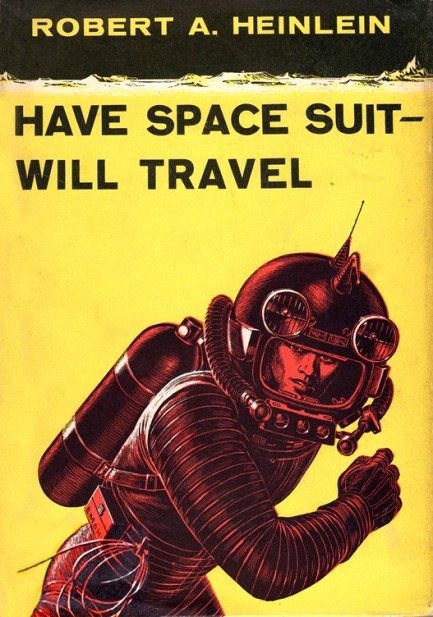
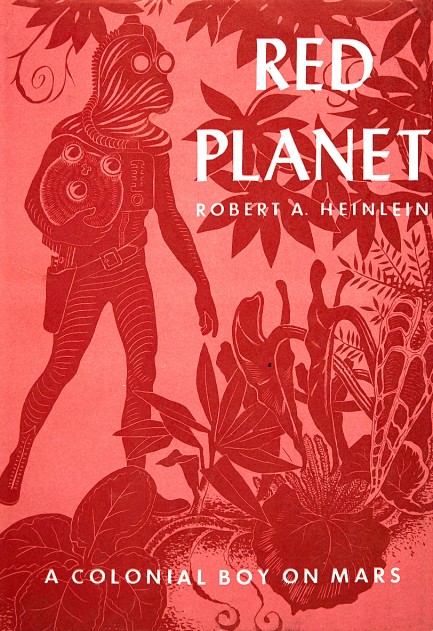
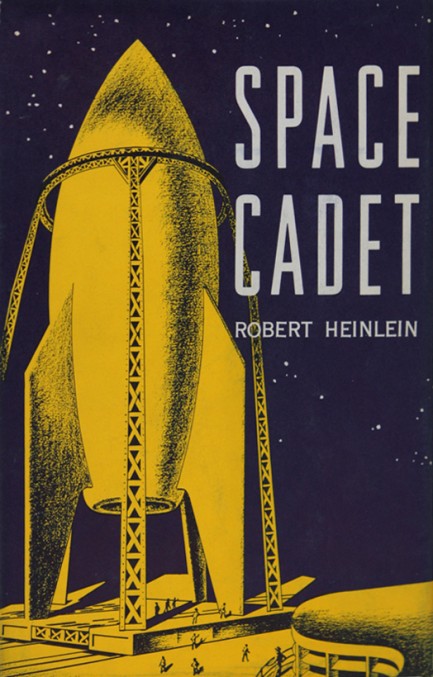
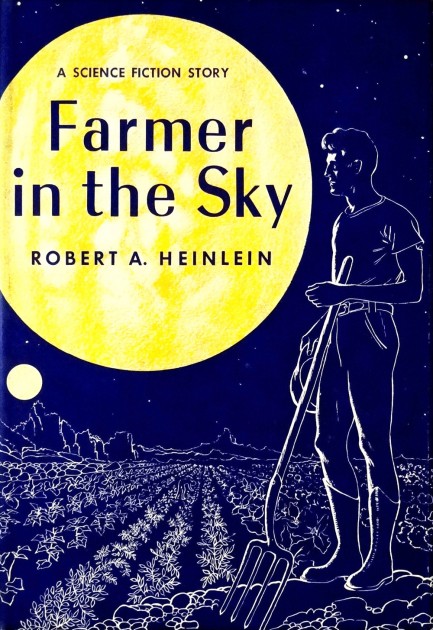
You always see the phrase “complete and unabridged” on old books. Well, here’s the other side of the coin. Robert A. Heinlein’s manuscript for The Puppet Masters, for which you see a Doubleday dust jacket above, is 100,000 words. Doubleday’s edition is abridged to 75,000 words. That's a lot of scissorwork, and we can't imagine it sat well with Heinlein. Of course, plenty of people would love his books to be excised of certain themes, and we could weigh in on that subject but we're only about the art today. The dust jacket is nice and it sent us looking for more. We came across a bunch and thought they’d be nice to share. These are from Scribner’s, Putnam, Shasta, and the art is from Mel Hunter, Jerry Robinson, the awesome Hubert Rogers (The Man Who Sold the Moon and Revolt in 2100), Clifford Geary, and others.
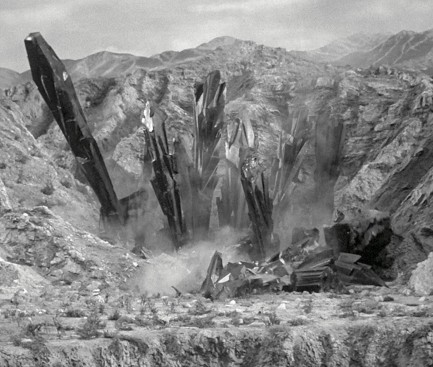
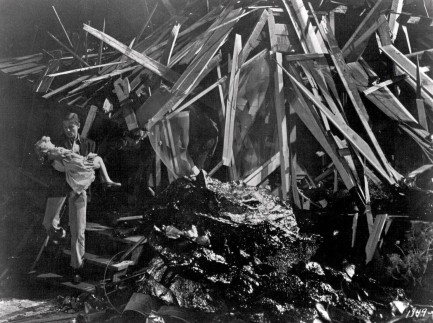
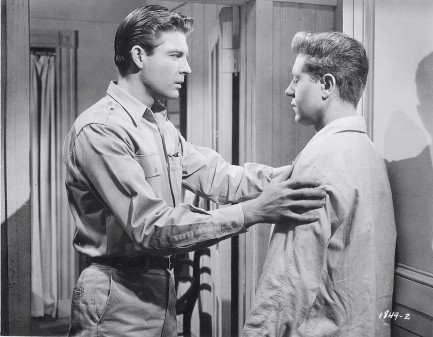
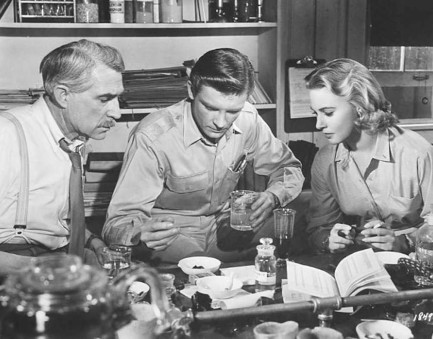
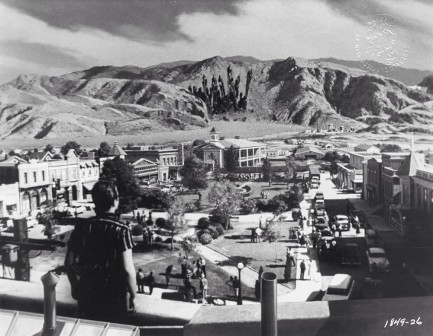
 California town develops a colossal problem. 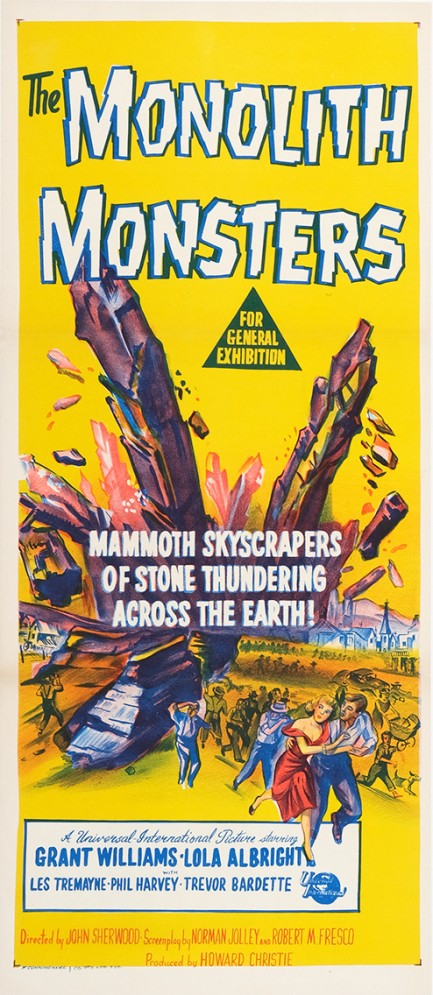
We dipped into our sci-fi backlog last night and watched The Monolith Monsters, which had its world premiere in England today in 1957. The movie, which stars Grant Williams and Lola Albright, is typically half-baked sci-fi from the era. A meteor crashes near a podunk western town and the black fragments react with water and give rise to—well, we aren't sure, so have a look: They look like basalt formations more than anything else. But they're alive—or we think so—and they suck the silicon out of any humans unlucky enough to pass near. It's fatal, of course, this silicon sucking. After some crackpot pseudo-scientific deductions Williams, Albright, and co. come up with a plan to fight the monsters. Do they prevail? Do b-movie airplanes hang from strings? Low budget efforts like The Monolith Monsters are rarely good, but they're always fun to watch.
 I'm glad the Earthlings came. Here on Mars perfect hair, huge boobs, and an hourglass figure are considered unattractive. 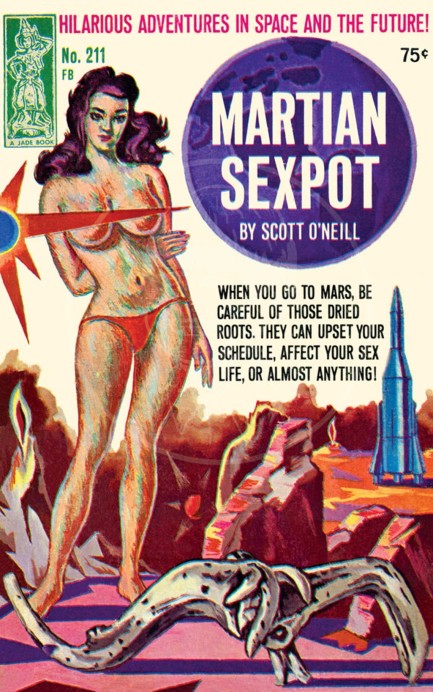
Scott O'Neill should be embarrassed. His 1963 novel Martian Sexpot is a really stupid story about three astronauts sent on the first mission to Mars accompanied by a woman named Robin Chou whose official role is to have sex with the trio in order to prevent psychological breakdown. At first everything goes fine, but Robin falls in love with one of the men and shirks her duty to the other two. The pair suffer two long years without sex and are ready to kill by the time the spacecraft lands. On Mars they discover a green valley, spend a night out there, and awaken to find that Robin has been duplicated—spacesuit and all. Turns out she'd dozed in close proximity to a strange root or pod, and it had done what those things do in science fiction. There's no negative to this duplication, though. The new creation is smart, kind, and sexually willing, so the other astronauts make duplicates of Robin too, and everyone is happy. Then they make male duplicates to help with the work, and what happens is...
*pull ripcord and begin to recede into distance*
We don't know what happened after that! We bailed on it!
Because it's really bad..!
Don't read it..!
 Erin Moran and co-stars have some unhappy days in outer space. 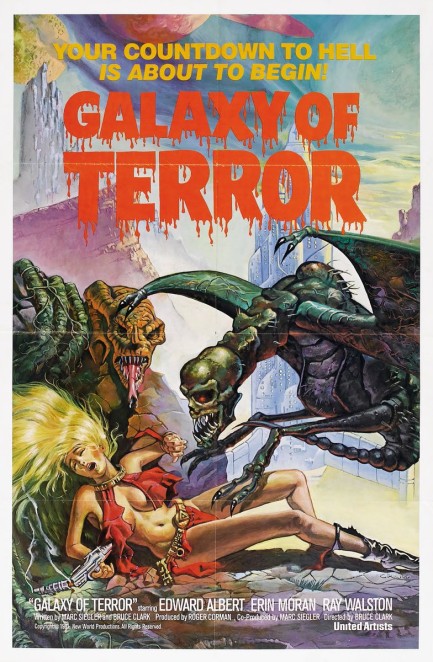
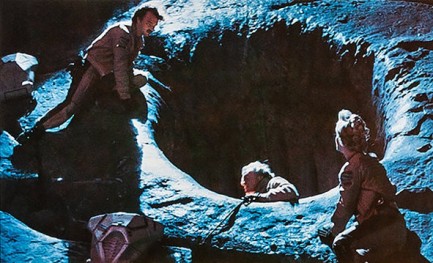
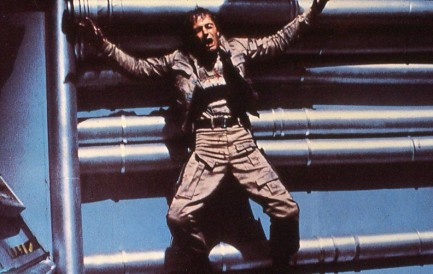
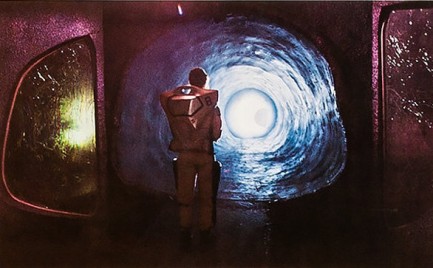
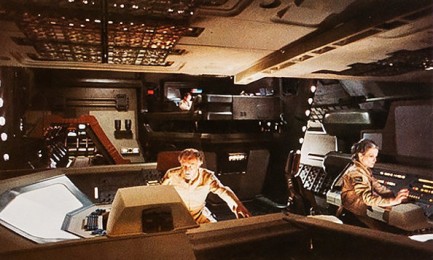
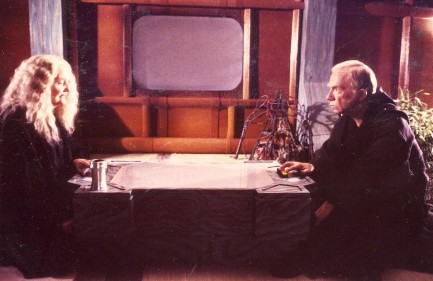
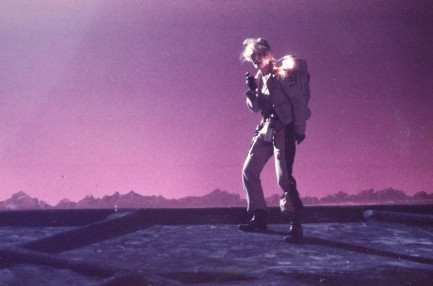
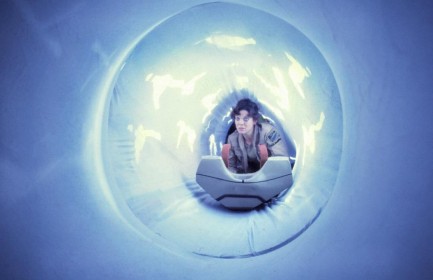
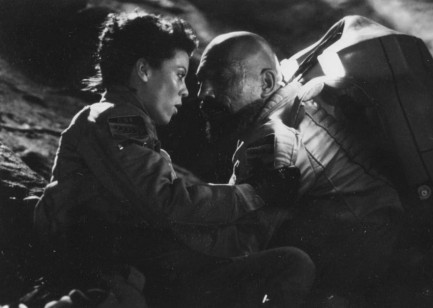
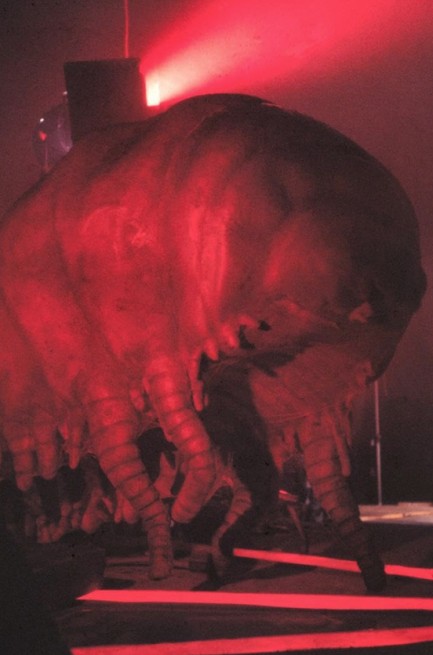
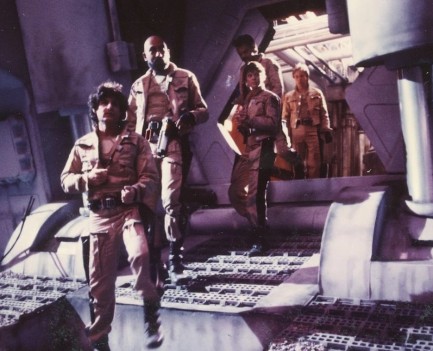
Galaxy of Terror, which premiered in the U.S. today in 1981, was produced by New World Pictures and Roger Corman, and you know what that means—no budget. Corman must have really licked his chops when he heard this pitch. In his genius, he probably realized immediately that he could avoid millions of dollars in costs by making his sets extra cheap and simply bathing them in darkness in order to save on production design. He also went cheap on script, direction, sound, music, special effects, and costuming. The result was one of many terrible outer space movies to hit multiplexes in the wake of Star Wars and Alien. This one is distinct in being influenced by both of those classics while sharing none of their advantages.
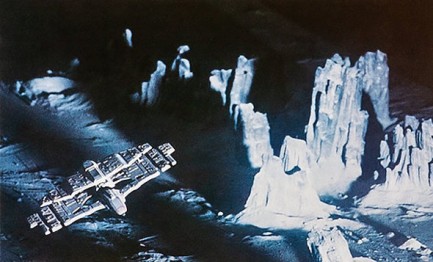
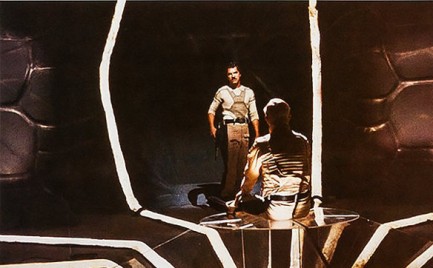
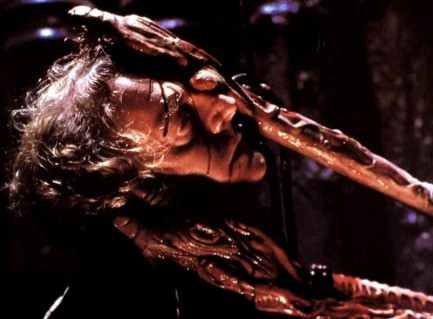
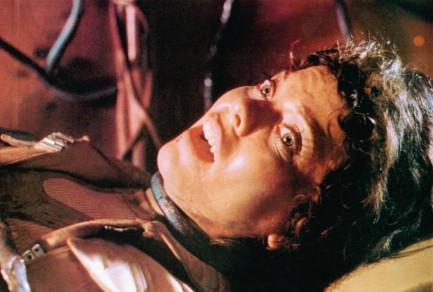
The plot deals with an intrepid crew of nine who embark on a military style rescue mission, seeking a ship lost in a distant star system on a planet called Organthus. After various travails, they land on the accursed world, find the lost ship, and make the mistake of entering it. Giant leeches, deadly shuriken, and other horrors bloodily whittle the crew down to an unfortunate few, at which point comes the infamous moment—which may be the only reason Galaxy of Terror is remembered—when poor Taaffe O'Connell is raped and killed by a giant maggot. The mission only goes farther downhill from there as Corman digs deep into the New World prop department for a couple of mothballed monsters to terrorize the survivors.
The thing about science fiction movies back then is that it was impossible to have an inkling of what the end result might be. Basically, the producers said, “Trust us, it'll look good.” The cast of Stars Wars took a leap of faith and were rewarded. The casts of imitator movies hoped to capture the same magic and failed over and over. Galaxy of Terror's budget of five million dollars probably sounded okay, considering Stars Wars cost eleven. The heady desire to roll the dice and hope for the best is probably what enticed co-star Erin Moran into taking a little moonlight ride from her hit television show Happy Days to appear in this turkey. Afterward, she may have considered a lobotomy to help her forget the entire ordeal.
There are, however, a few plusses to Galaxy of Terror. First, young production designer James Cameron probably learned that in sci-fi there's a budgetary floor beneath which disaster is assured, and would later make three of the best and most successful science fiction movies of all time (no, we're not counting Avatar). Second, co-star Zalman King probably realized sci-fi was for suckers, went softcore as a producer and director, and churned out such memorable (and now anachronistic) erotica as Red Shoe Diaries, Two Moon Junction, and Wild Orchid. And third, the poster art by Charo (not the singer) is nice. Also, the movie brought our special consulting critic Angela the Sunbear out of her cave. Watching Galaxy of Terror with her was really fun.
 I think the crew should have stayed in hibernation. I think the crew should have stayed in hibernation.
 First she'll take Manhattan, then she'll take the world. 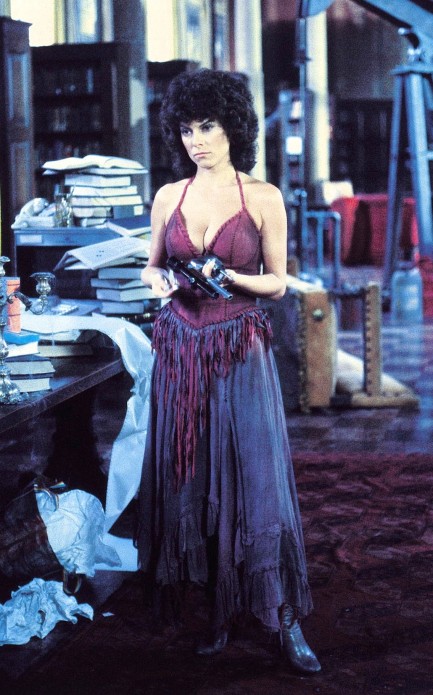
This killer image shows U.S. actress Adrienne Barbeau when she was filming the 1981 dystopian sci-fi movie Escape from New York, which is about the island of Manhattan being walled off and turned into a maximum security prison. It's another fertile concept from the mind of filmmaker John Carpenter, who cast Barbeau—his then-wife—in a pivotal role. We think of the movie is hailing from a classic era of high concept science fiction and feel that it's very much worth a viewing.
 Yul be the death of each and every one of them. 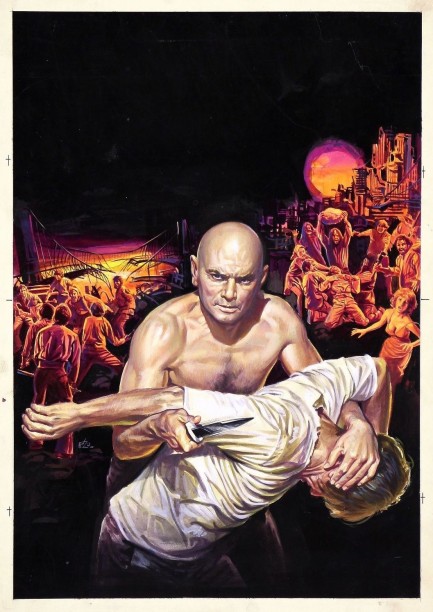
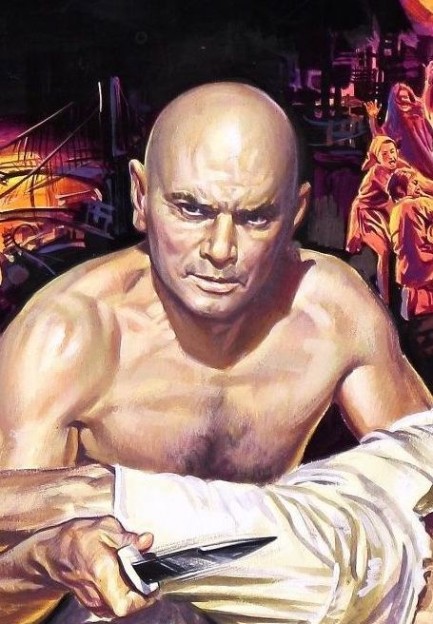
It's been quite a while since we looked at the work of Italian illustrator Enzo Nistri. In recent years we've been focusing on his younger brother Giuliano, but they were both major talents. Here you see something special from Enzo—a textless original piece of art for the 1975 Yul Brenner movie The Ultimate Warrior, known in Italian as Gli avventurieri del pianeta Terra. It's about a group of people trying to survive in post-apocalyptic New York City. They eventually hire a tough-as-nails warrior to protect them. That would be Brenner. The movie is set in 2012, which is rather funny, but sci-fi fans are used to temporal predictions being way off. Blade Runner was set in 2019, and Soylent Green was set in 2022, and here we are without flying cars, replicants, or crackers made of human beings—although that last might show up soon the way things are going. In any case, fantastic work from Enzo. We'll try to feature him more later. And we may even screen the movie and report back.
 Hmph. That actually turned out to be a surprisingly easy choice. 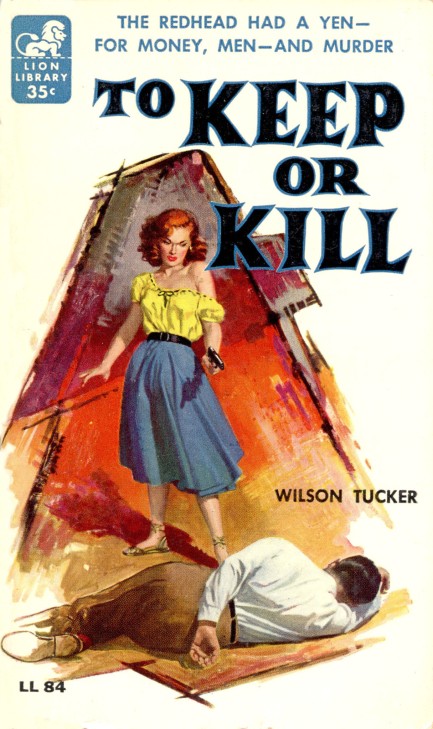
Above: nice Robert Maguire art for Wilson Tucker's novel To Keep or Kill, from Lion Library, 1956. Tucker was primarily a science fiction writer, an acclaimed one, who invented the practice and term, “tuckerization,” which is to borrow a friend's name for a fictional character. This is not to be confused with actually basing a character on a friend. Tuckerization is sort of an in-joke, a nod to someone in one's social circle. Turning back to the cover, this fits nicely into our collections of women who've killed or mortally wounded men, which you can see here and here.
 Queen Kong is so bad you'll hope a giant ape carries you away just so you don't have to finish watching. 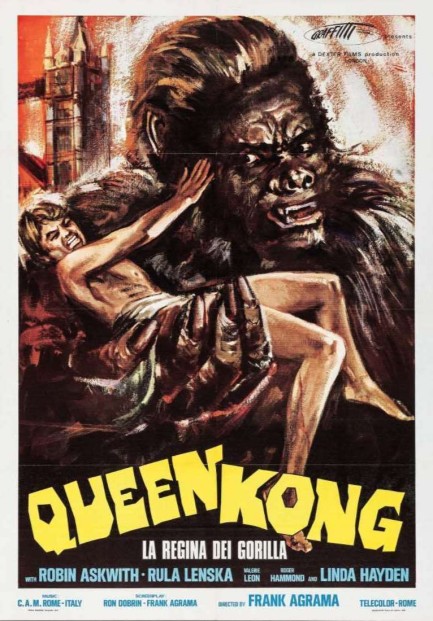 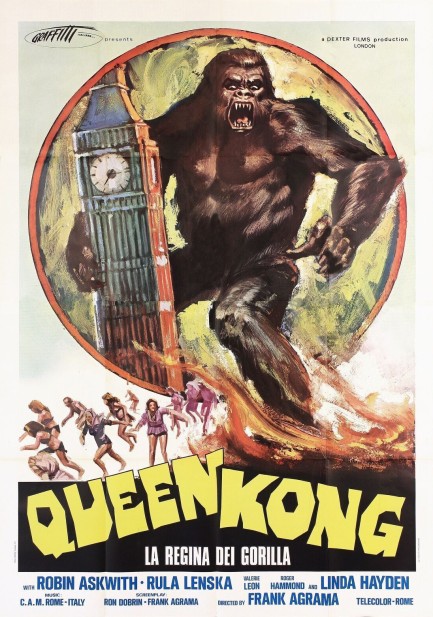
Sometimes you get fooled. These Italian posters for Queen Kong, aka La regina dei gorilla, vibed sci-fi b-movie, but what we got was a comedic gender swapped version of King Kong about an egomaniacal filmmaker who dupes an idiot named Ray Fay into starring in her monster movie set in Uganda. Despite its efforts to be literate and referential, the final result here is too stupid to enjoy. It's on the level of an old public access program written by high school seniors who haven't figured out yet that the gags they think are incisive and original have been done a thousand times before—mostly in Vaudeville. Tongue-in-cheek lines like, “We came to make a movie but created a farce,” and “So that's gorilla warfare!” just sting. Our guess is that the filmmakers had access to a giant ape hand and worked backward from there. Intentionally trying to make a bad cult movie is usually a losing game. We were embarrassed for everyone involved. But we like the posters. Queen Kong premiered originally in 1976, and cheated ticket buyers in Italy for the first time today in 1977.
 Oh, look who it is—the neglectful husband I've been hearing so much about. 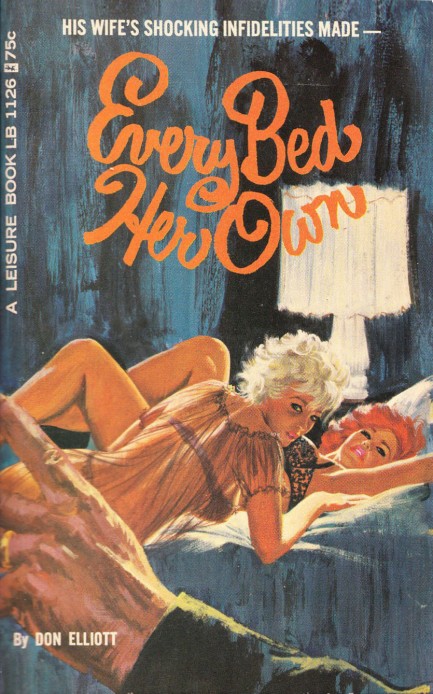
Above: a cover for Every Bed Her Own, by Don Elliott for Greenleaf Classics' imprint Leisure Books, 1966. Elliott, in this case, is actually sci-fi author Robert Silverberg, and the art is by Robert Bonfils, the titan of mid-century sleaze illustrators. This is another cover that fits with our collection of cheaters caught red-handed.

|
 |

The headlines that mattered yesteryear.
1945—Mussolini Is Arrested
Italian dictator Benito Mussolini, his mistress Clara Petacci, and fifteen supporters are arrested by Italian partisans in Dongo, Italy while attempting to escape the region in the wake of the collapse of Mussolini's fascist government. The next day, Mussolini and his mistress are both executed, along with most of the members of their group. Their bodies are then trucked to Milan where they are hung upside down on meathooks from the roof of a gas station, then spat upon and stoned until they are unrecognizable. 1933—The Gestapo Is Formed
The Geheime Staatspolizei, aka Gestapo, the official secret police force of Nazi Germany, is established. It begins under the administration of SS leader Heinrich Himmler in his position as Chief of German Police, but by 1939 is administered by the Reichssicherheitshauptamt, or Reich Main Security Office, and is a feared entity in every corner of Germany and beyond. 1937—Guernica Is Bombed
In Spain during the Spanish Civil War, the Basque town of Guernica is bombed by the German Luftwaffe, resulting in widespread destruction and casualties. The Basque government reports 1,654 people killed, while later research suggests far fewer deaths, but regardless, Guernica is viewed as an example of terror bombing and other countries learn that Nazi Germany is committed to that tactic. The bombing also becomes inspiration for Pablo Picasso, resulting in a protest painting that is not only his most famous work, but one the most important pieces of art ever produced. 1939—Batman Debuts
In Detective Comics #27, DC Comics publishes its second major superhero, Batman, who becomes one of the most popular comic book characters of all time, and then a popular camp television series starring Adam West, and lastly a multi-million dollar movie franchise starring Michael Keaton, then George Clooney, and finally Christian Bale. 1953—Crick and Watson Publish DNA Results
British scientists James D Watson and Francis Crick publish an article detailing their discovery of the existence and structure of deoxyribonucleic acid, or DNA, in Nature magazine. Their findings answer one of the oldest and most fundamental questions of biology, that of how living things reproduce themselves.
|

|
|
It's easy. We have an uploader that makes it a snap. Use it to submit your art, text, header, and subhead. Your post can be funny, serious, or anything in between, as long as it's vintage pulp. You'll get a byline and experience the fleeting pride of free authorship. We'll edit your post for typos, but the rest is up to you. Click here to give us your best shot.
|
|