Without a doubt seeing you is always the best part of my day. 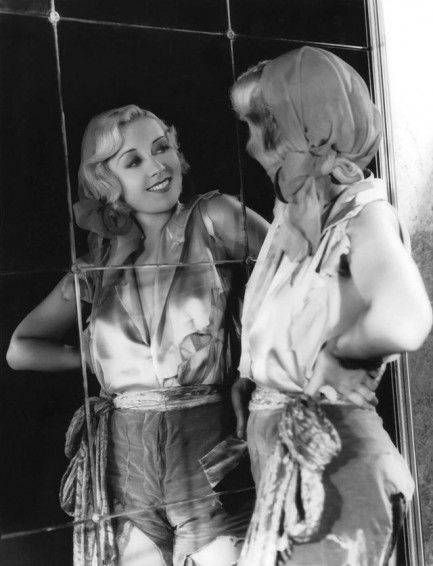
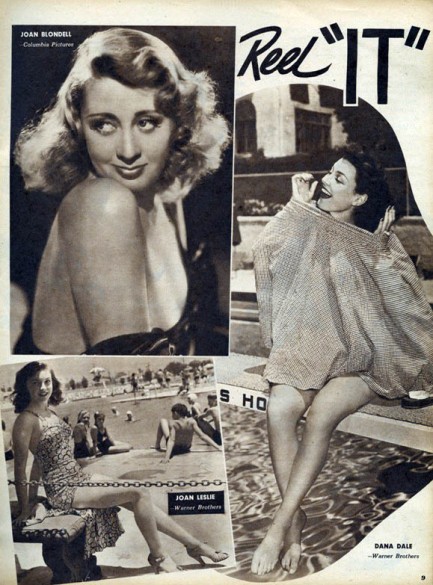
This cute photo shows U.S. actress Joan Blondell, who started her showbiz career in Vaudeville, and later made numerous pre-Code films, including The Public Enemy and Blonde Crazy. It was shot when she was making the 1936 film Stage Struck, in which she starred with her husband Dick Powell.
 All deliveries guaranteed fresh and warm or you get 50% off. 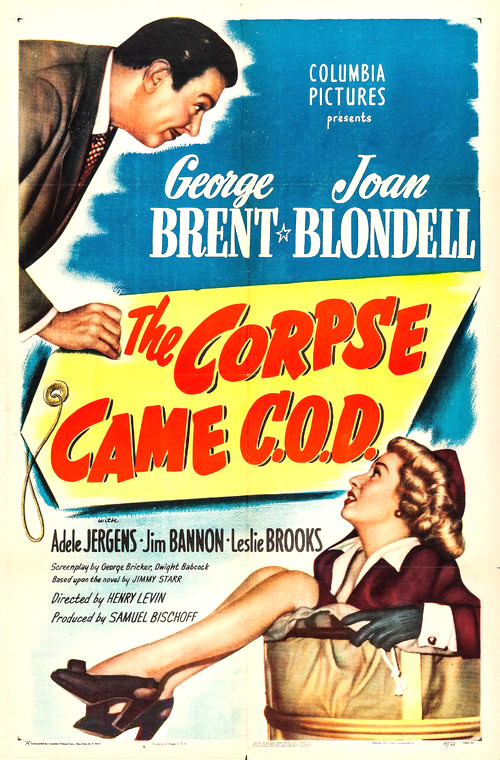
The Corpse Came C.O.D., as if you couldn't guess from its screwball title, is a comic murder mystery, and yes, it features a corpse sent through the mail—or more precisely by messenger. This stiff arrives in a crate to a famous actress's home, and when the body spills out she calls a well-connected newspaperman to help her with the problem. For him this involves not only solving the crime while staying ahead of the police, but fending off a rival who smells a juicy story. This rival happens to be his romantic interest, so the two fight and feud while trying to snatch the scoop from each other. This love-hate relationship is the core of the film, with the two hurling lines at each other like, “I wouldn't trust you if I had an atomic bomb in each hand!”
This is a pretty fun flick. Think The Thin Man, but with less budget and a bit less panache. It stars George Brent, Joan Blondell, Adele Jergens, and Leslie Brooks, and has interesting cameos from actual Hollywood gossip columnists George Fisher, Hedda Hopper, Erskine Johnson, Louella Parsons, and others. The film was written by columnist Jimmy Starr, which accounts for the tabloid focus, and he has a cameo too. You pretty much can't lose with this one. It's good natured and well put together, and might even make you wonder why movies like this aren't made anymore. The Corpse Came C.O.D. premiered in the U.S. today in 1947. 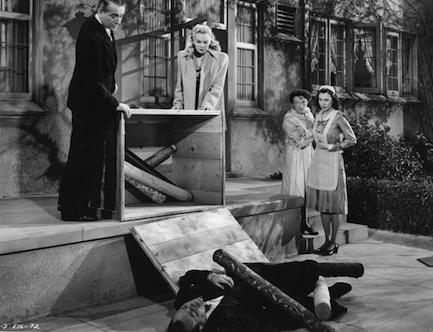 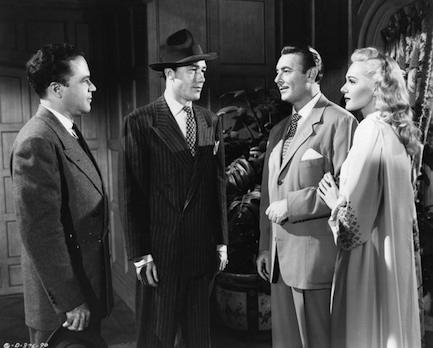 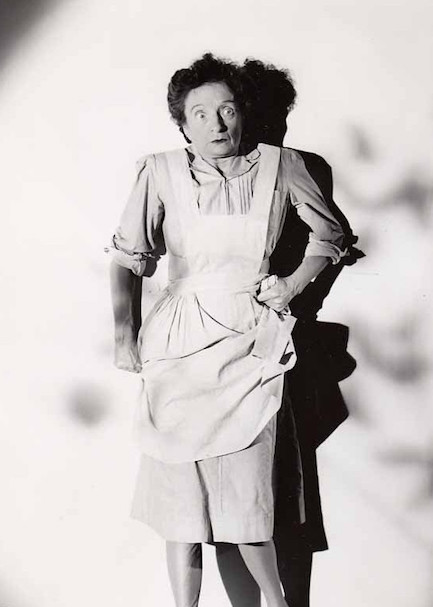 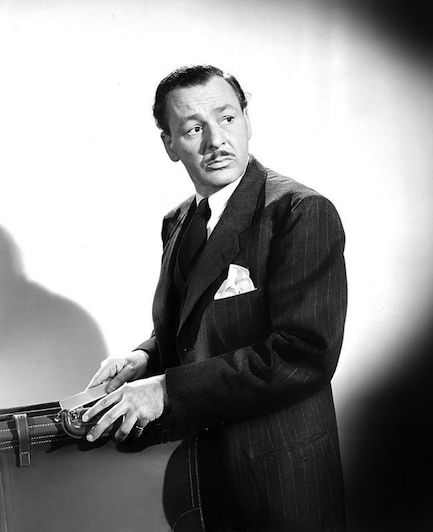 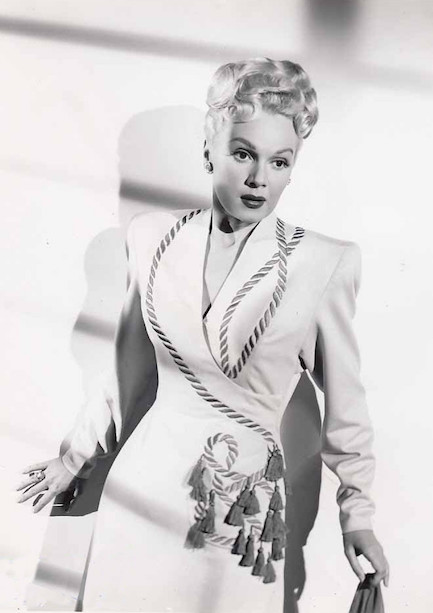 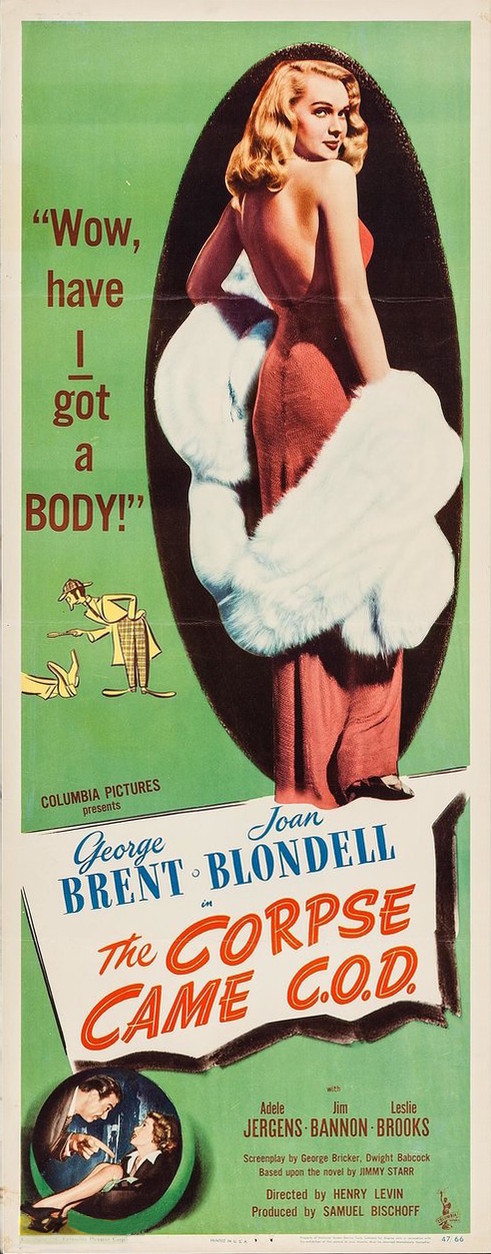
 The past comes alive in vintage pop culture mag. 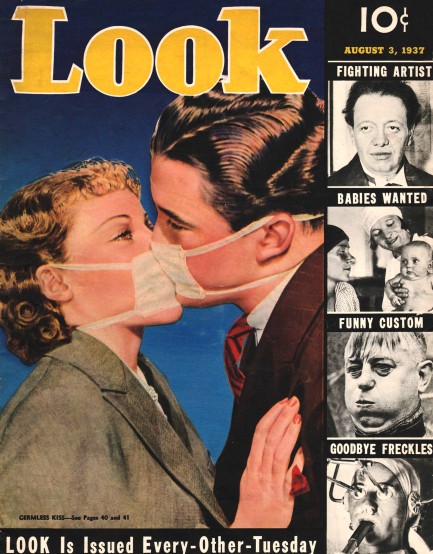
You have to admit—Pulp Intl. is one of the great time burning websites around. We're going to incinerate yet more of it today. Above is a cover from Look magazine, a chief competitor of the iconic Life. At the time this August 1937 issue appeared Look was headquartered far from the publishing hotbeds on the coasts, choosing to set up shop in Des Moines, Iowa. The editors claim 1.25 million in newsstands sales every issue. We don't know if that's true, but it was a high quality magazine, and this is a high quality example.
Inside you get Benito Mussolini, a ranking of Hollywood box office earning power, a special murder mystery for readers to solve, several pages of Gary Cooper, and a small photo feature on a German town that baptized every visitor, which is an interesting historical curiosity considering that in a devoutly religious country Hitler was successfully fanning the flames of hate against Jews. But “others” never seem to be included in any religion's definition of people deserving good treatment.
Elsewhere inside you get Mexican painter Diego Rivera with Frida Kahlo. Kahlo is referred to by Look editors merely as Rivera's third wife, “seeing to it that he is fed every few hours.” That may have been true, but today she's known throughout the world, recognized as an artist in her own right, which is a reminder that re-examining the past with an emphasis on those who were overlooked—a process some call “revisionism”—is a useful tool for getting things right. Numerous scans below.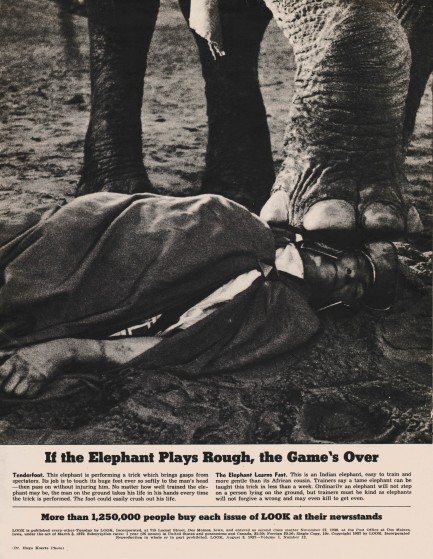 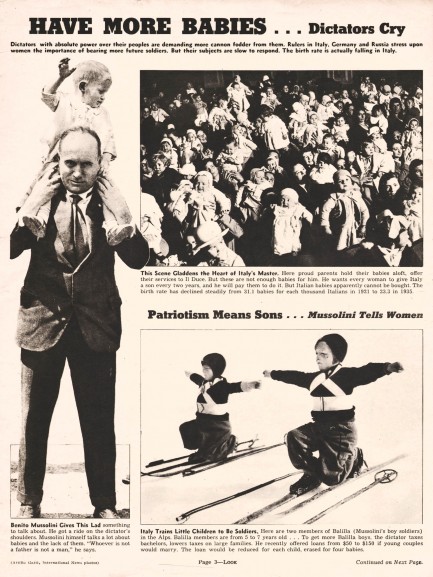 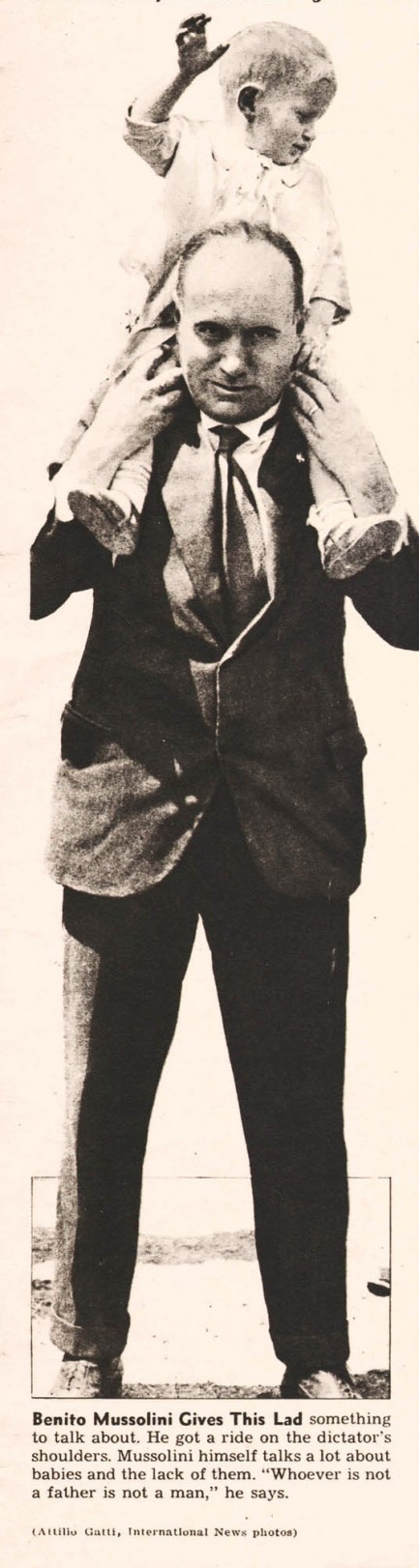 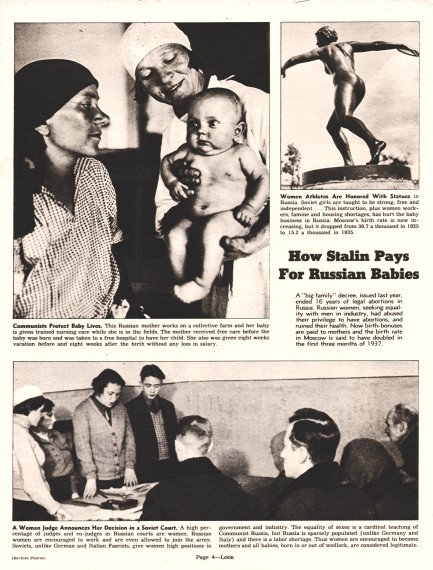 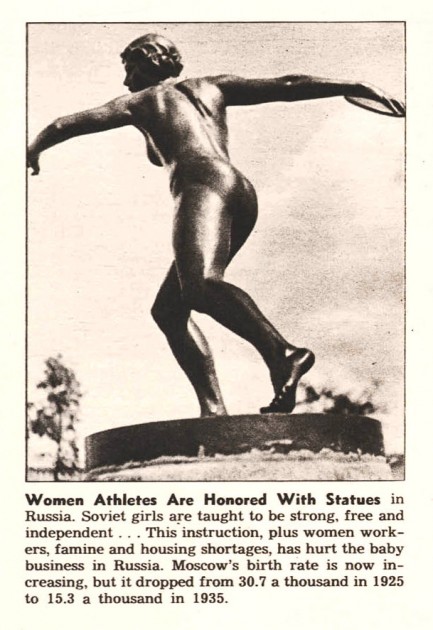 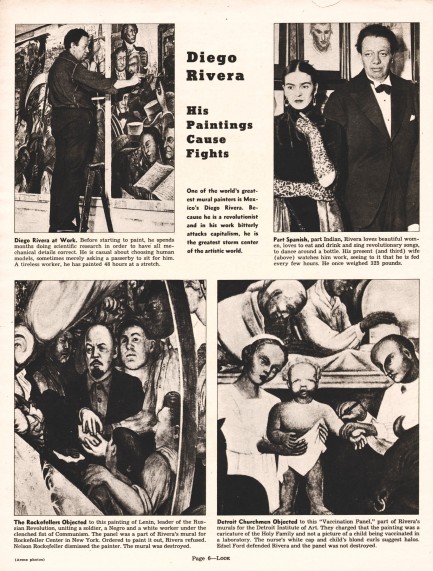 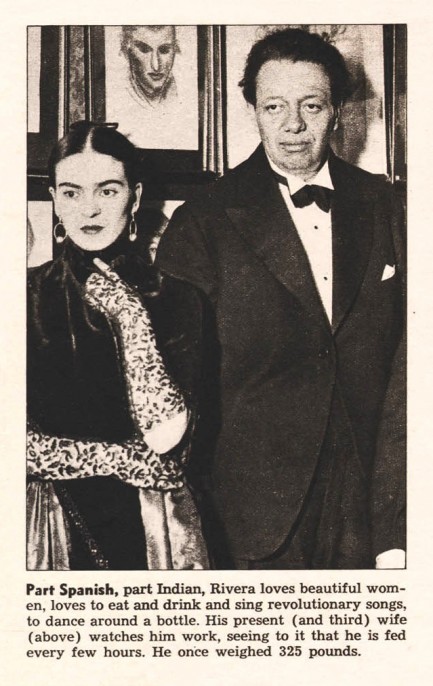 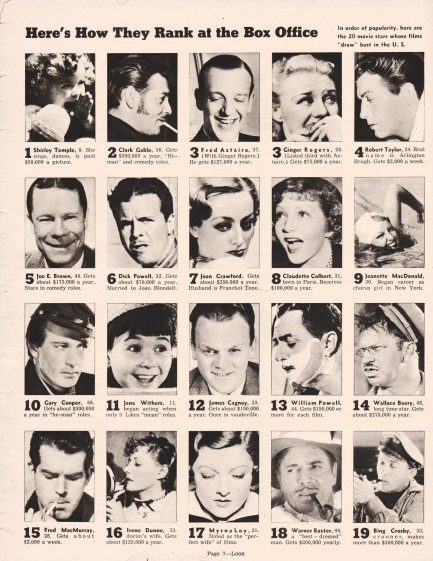 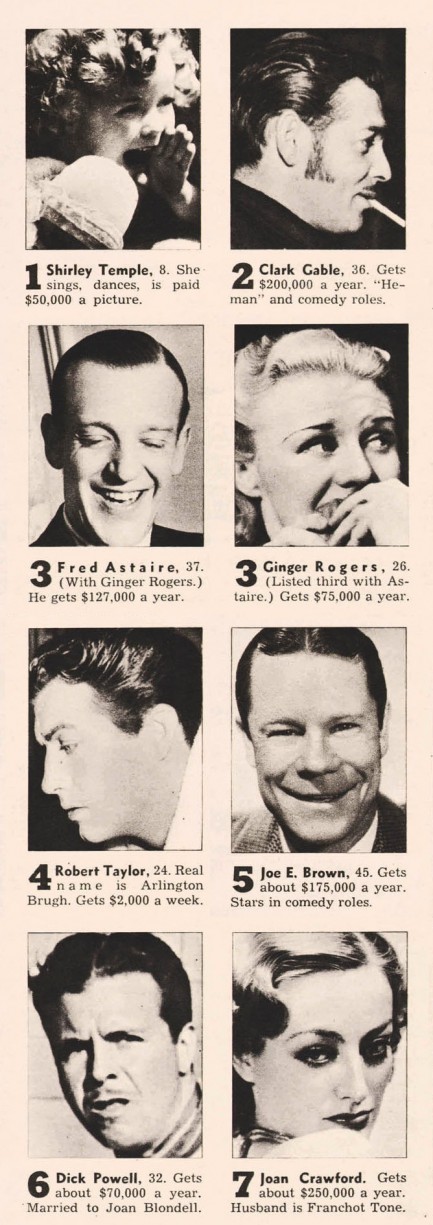 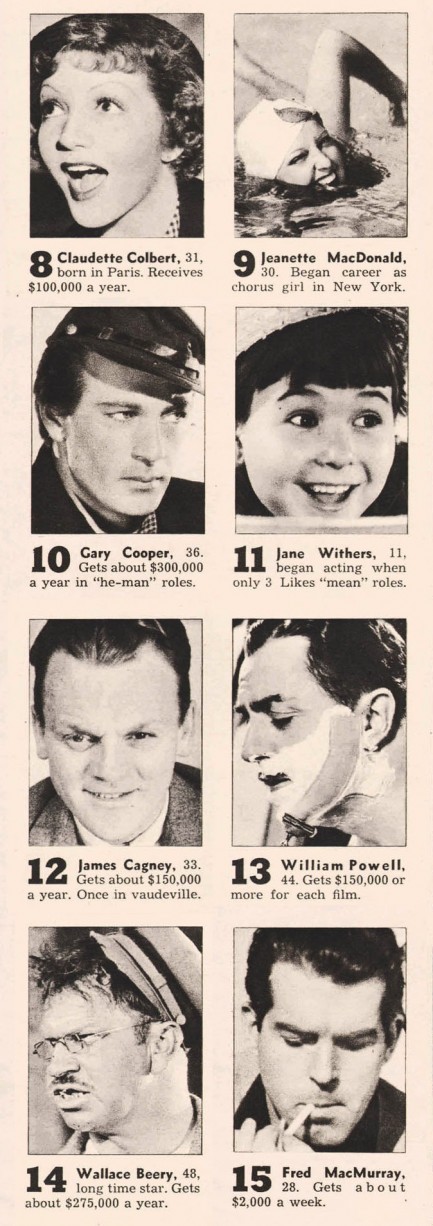 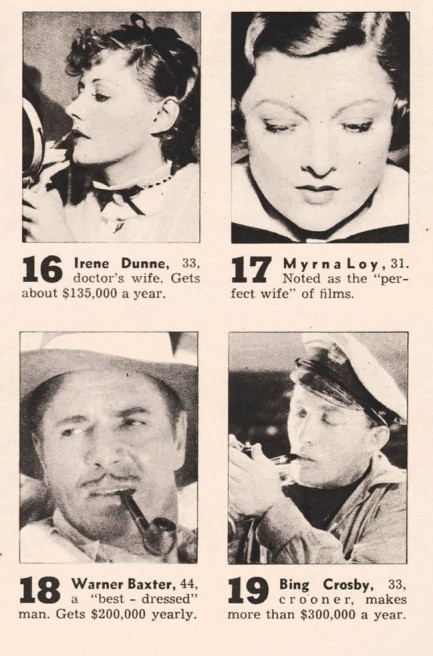 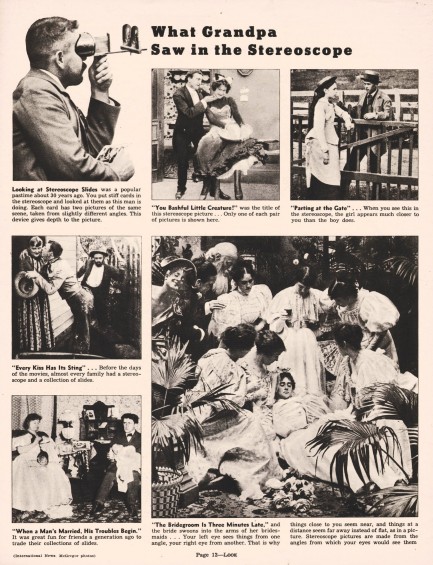 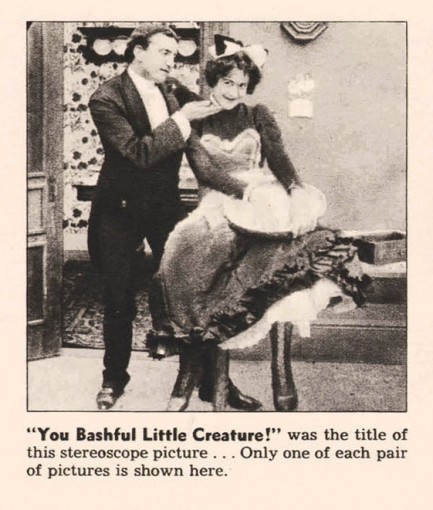 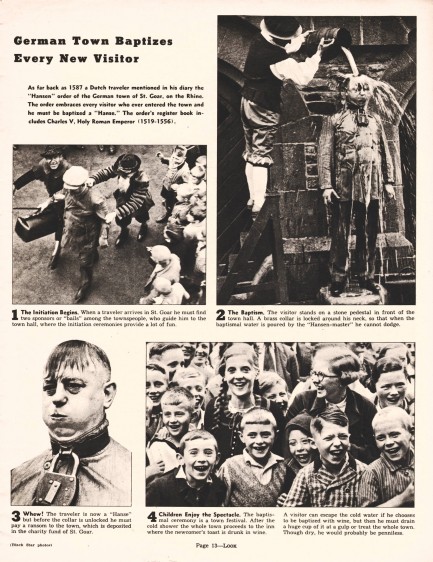 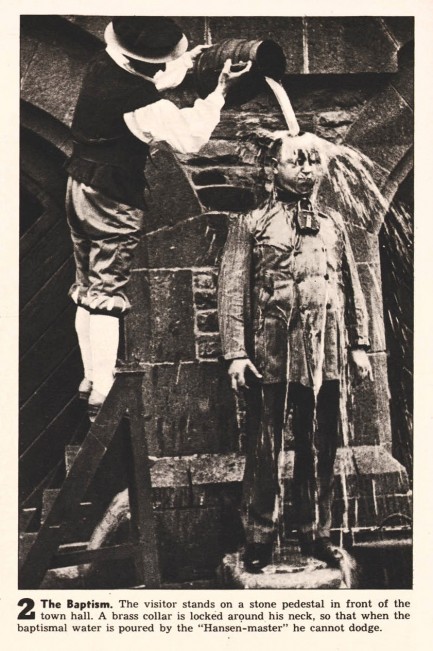 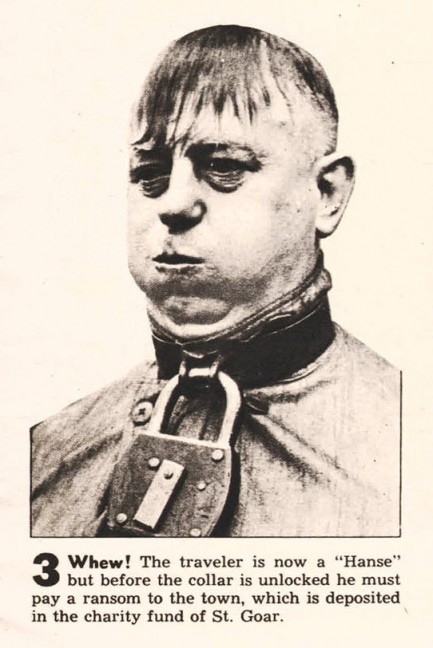 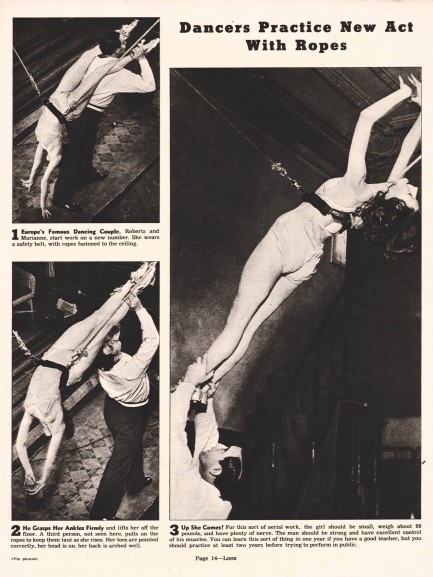 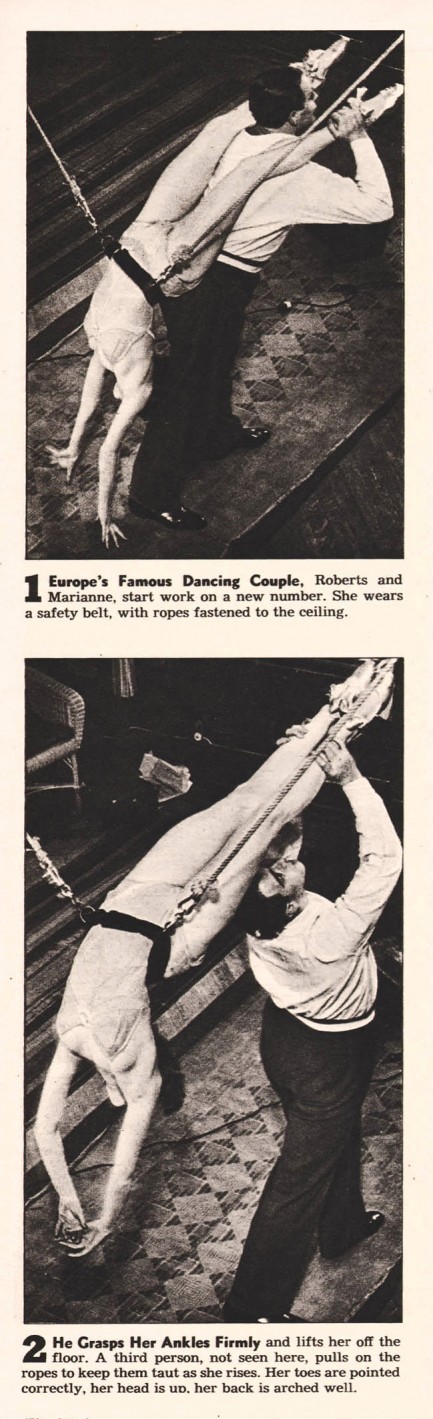 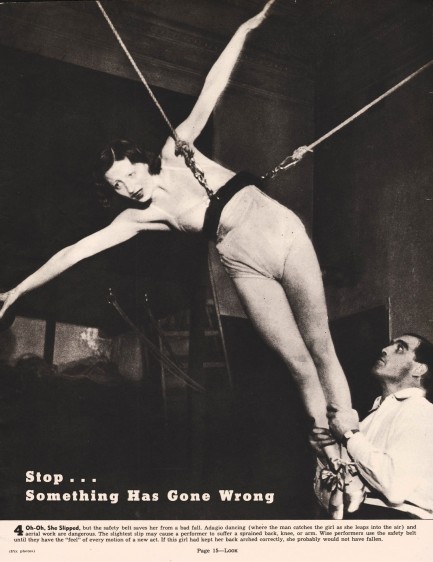 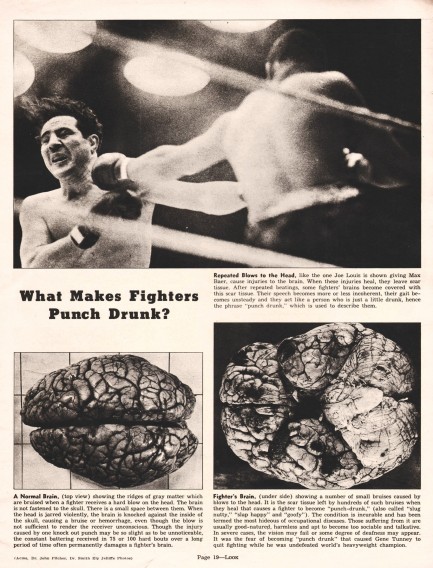 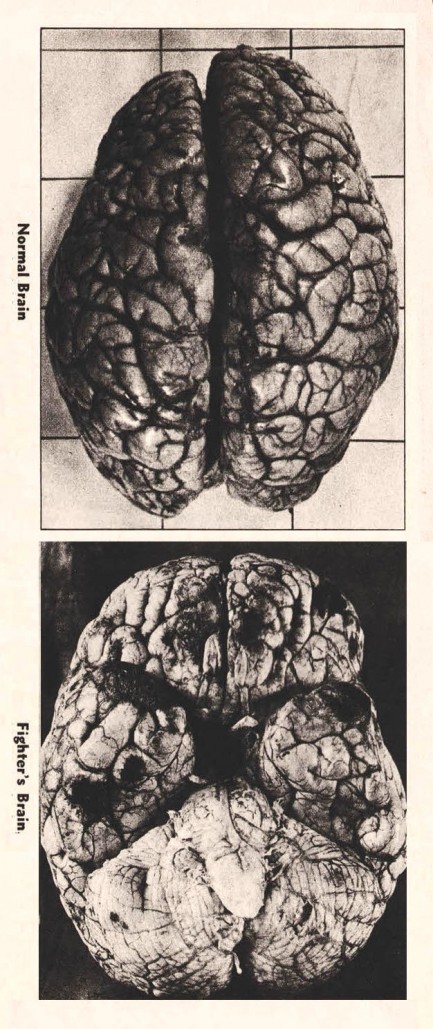 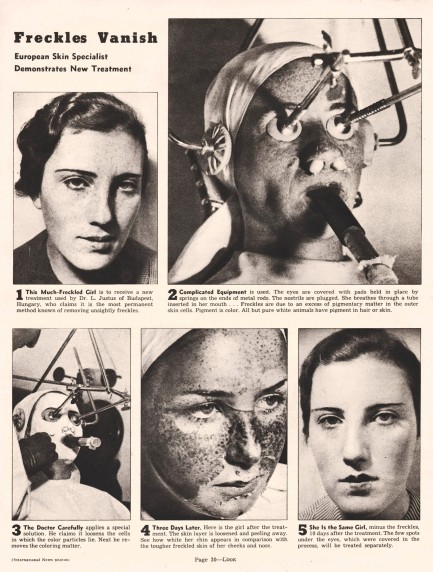 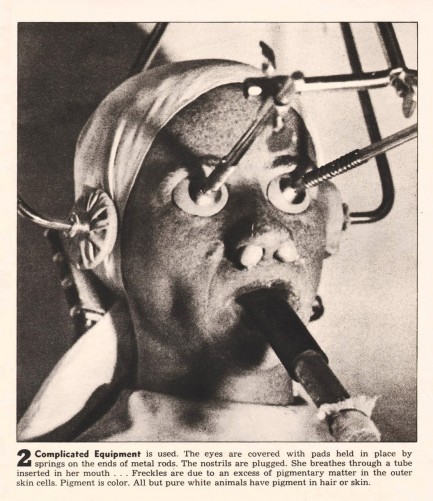 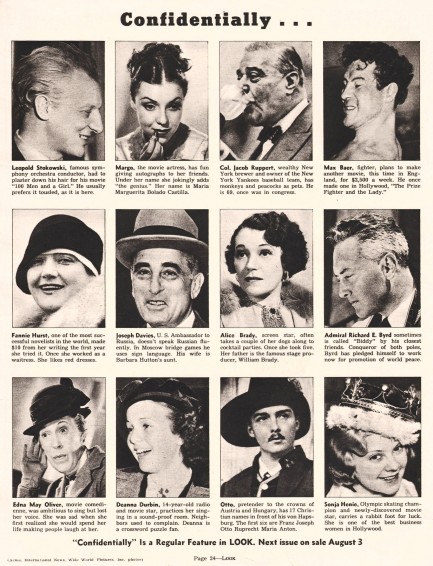 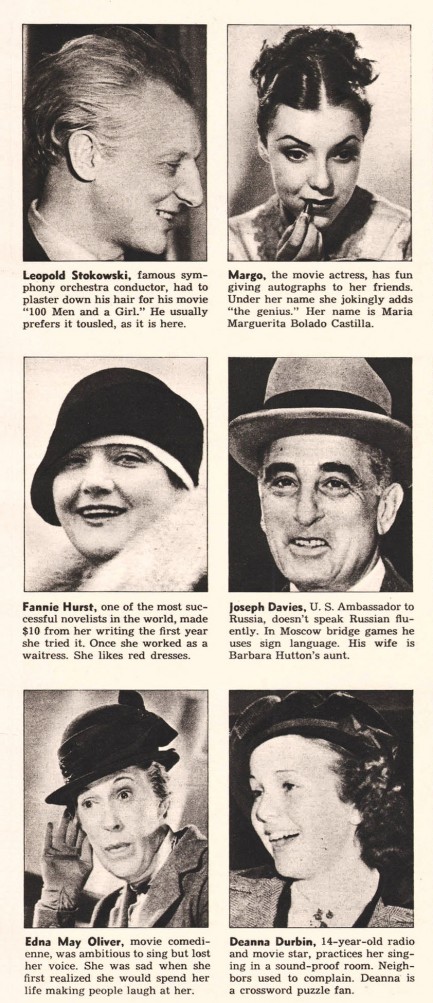 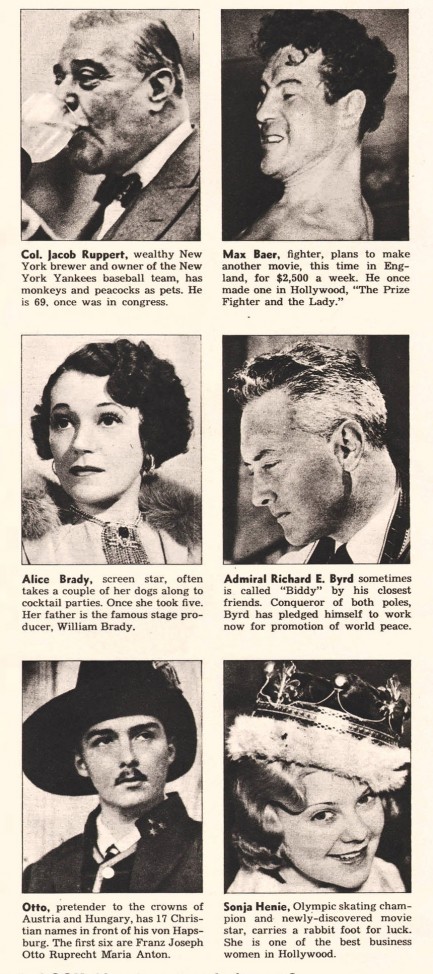 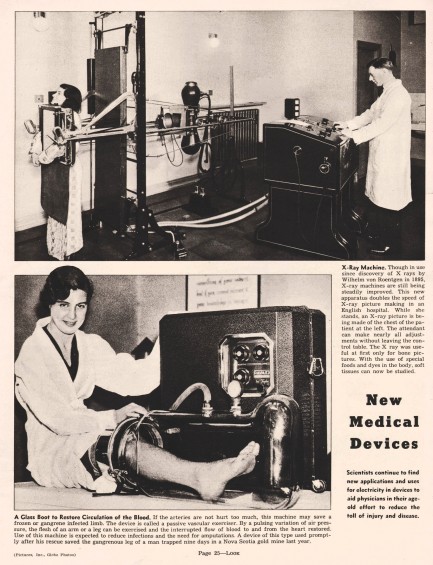 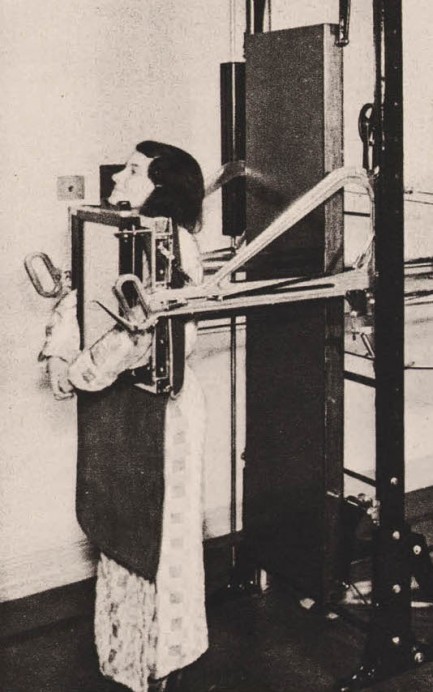 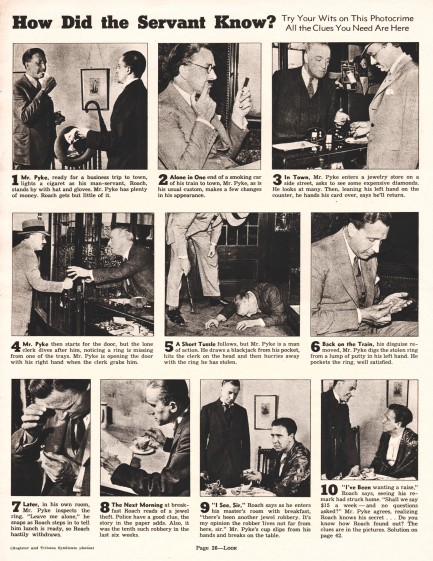 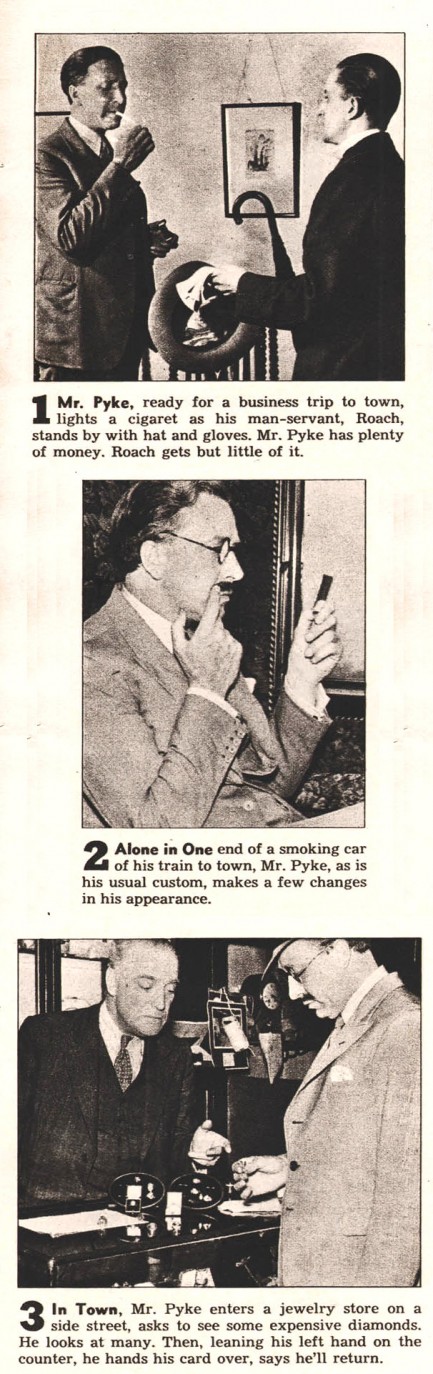 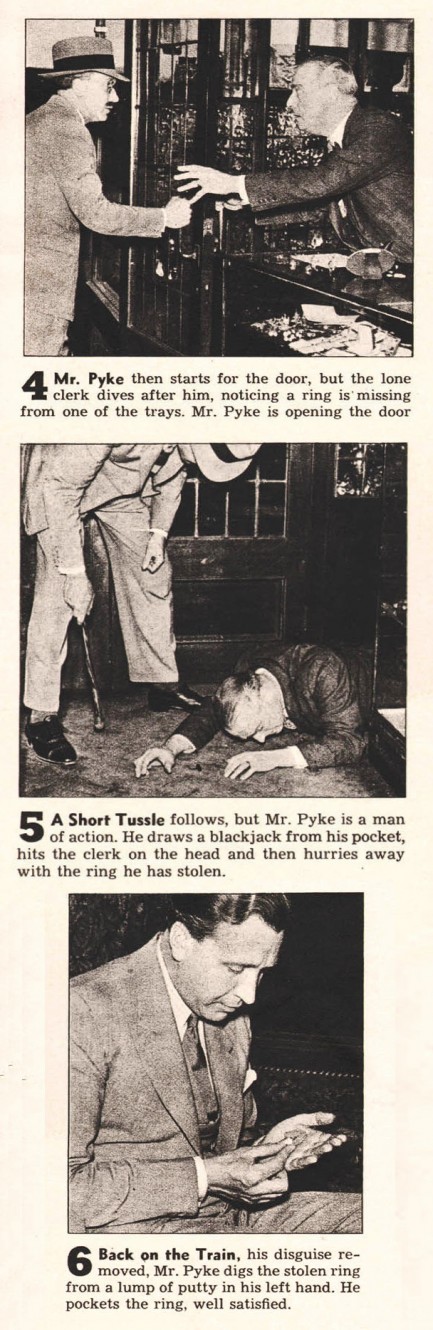 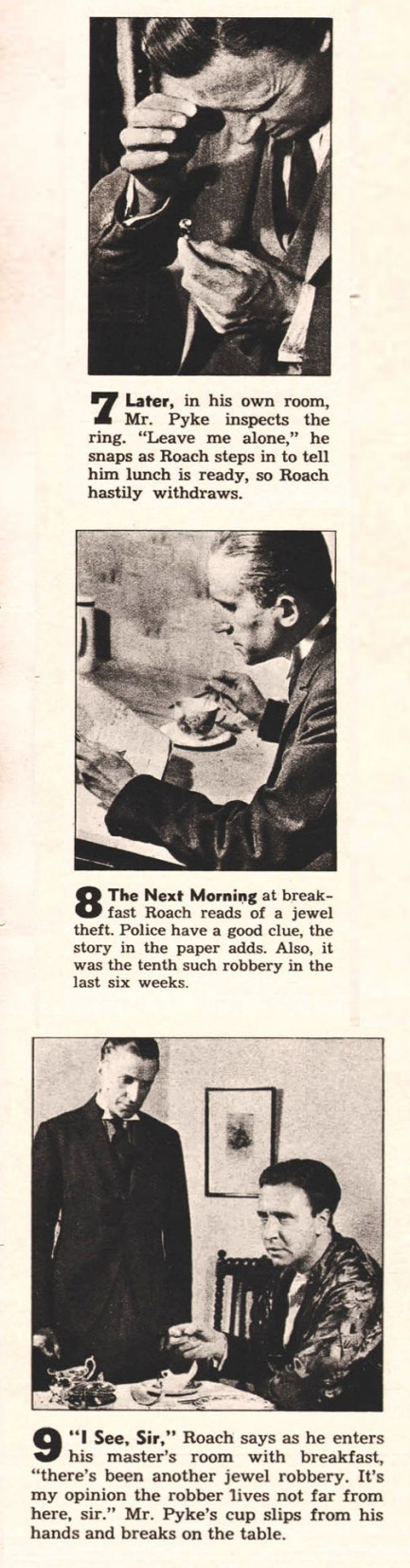 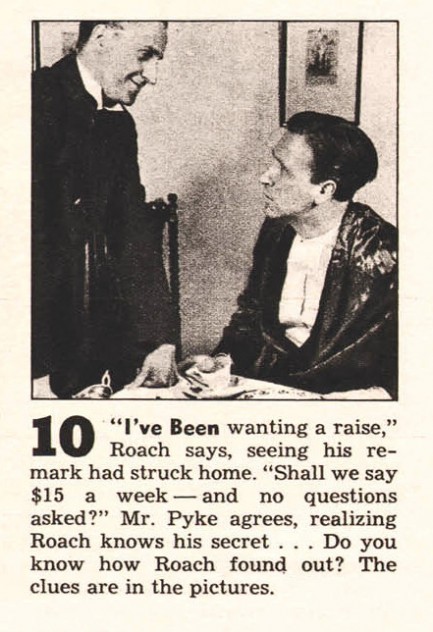 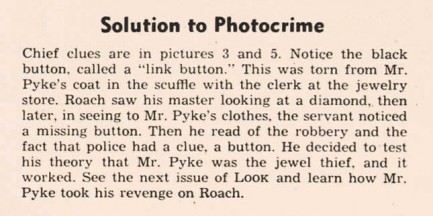 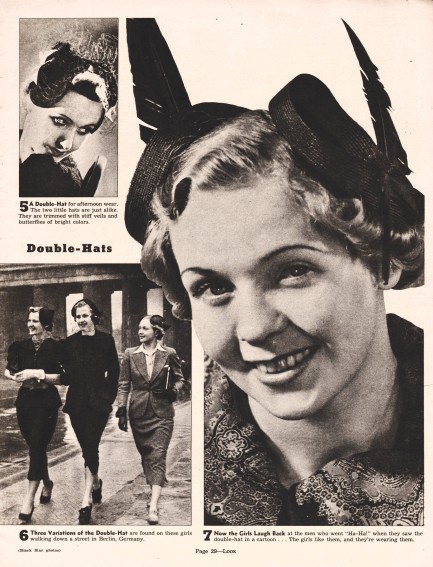 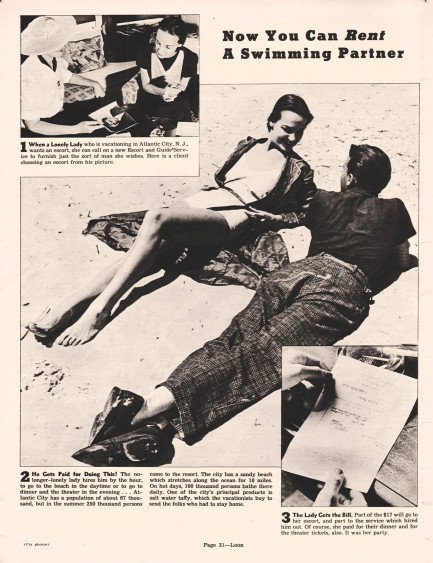 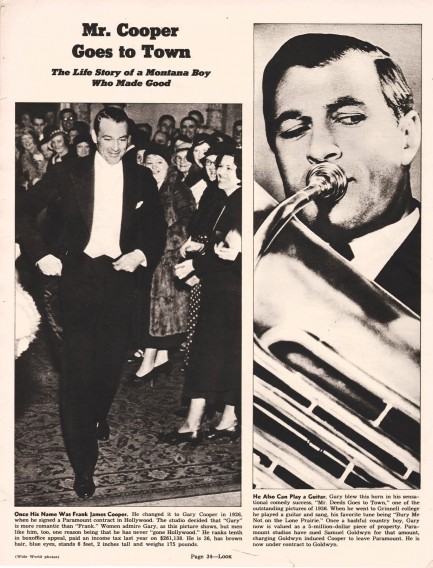  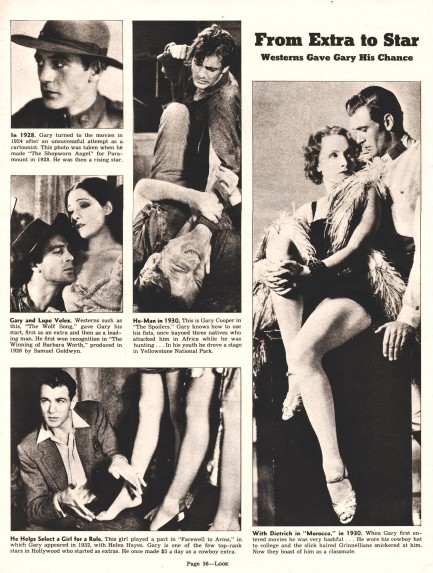 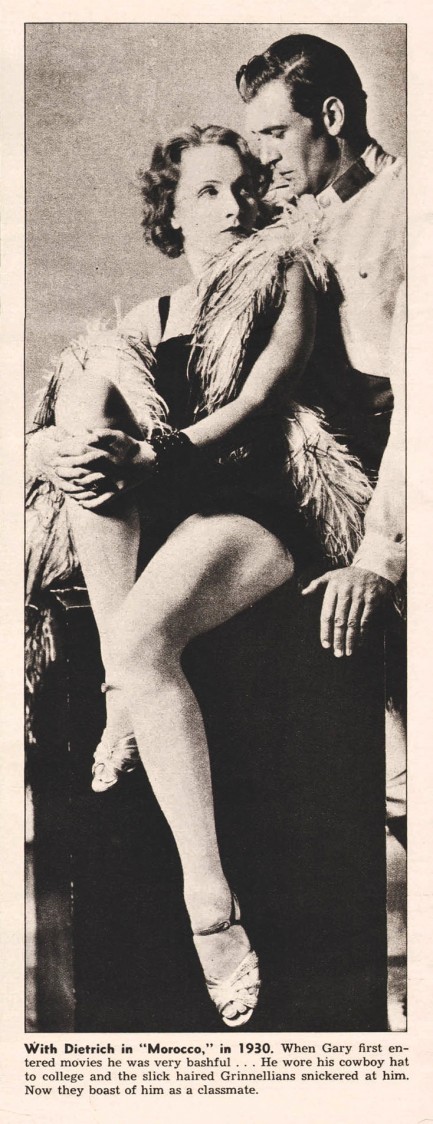 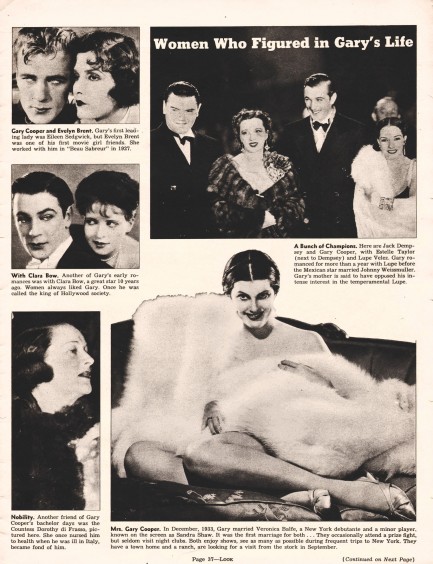 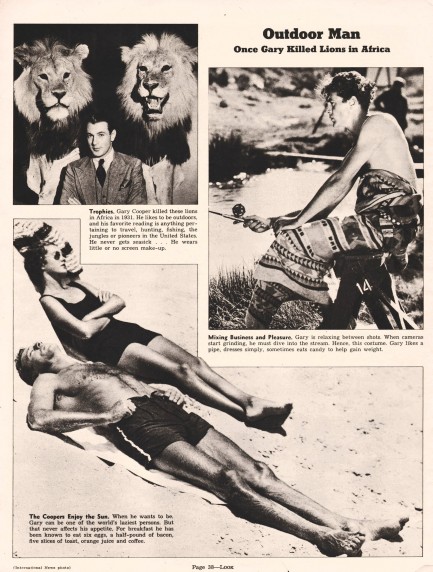 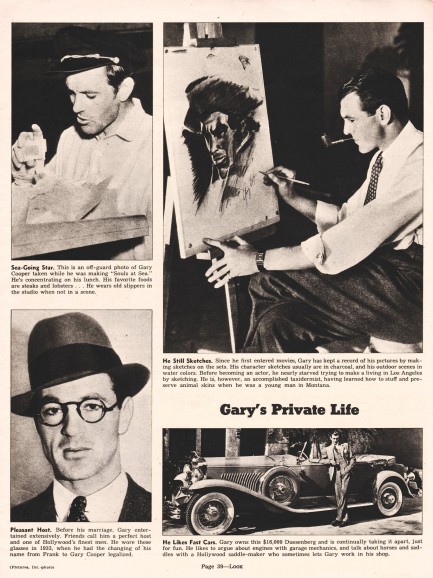 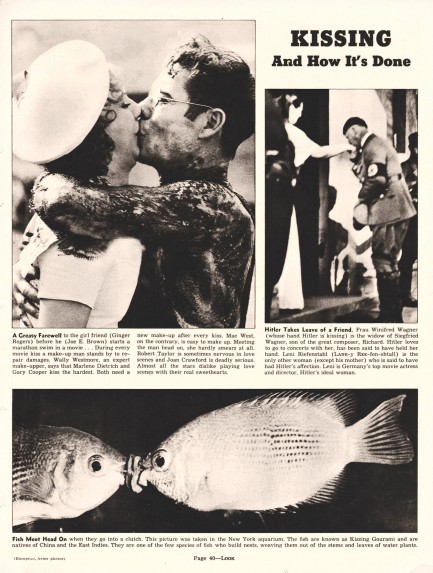 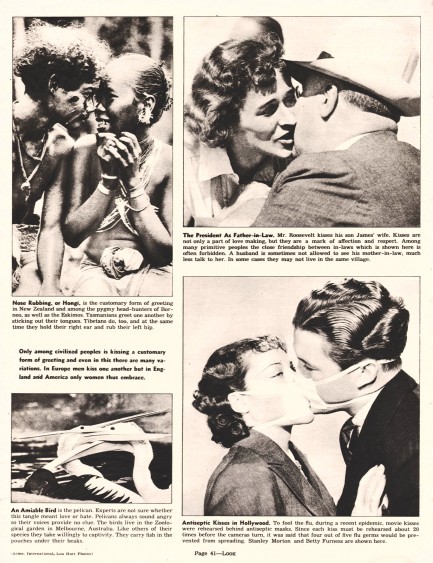 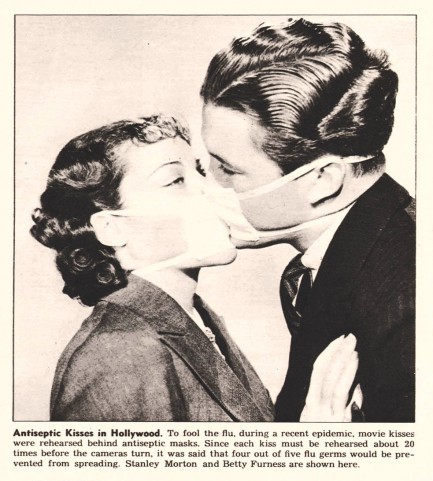 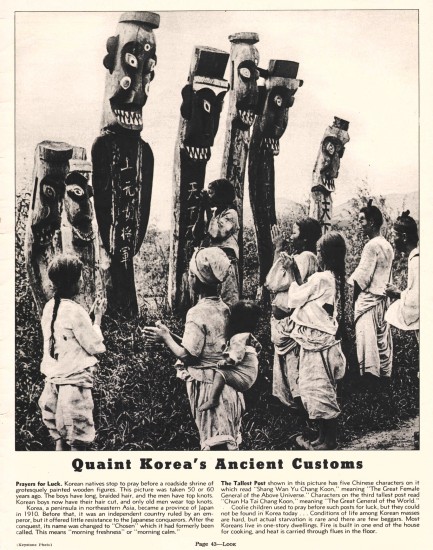 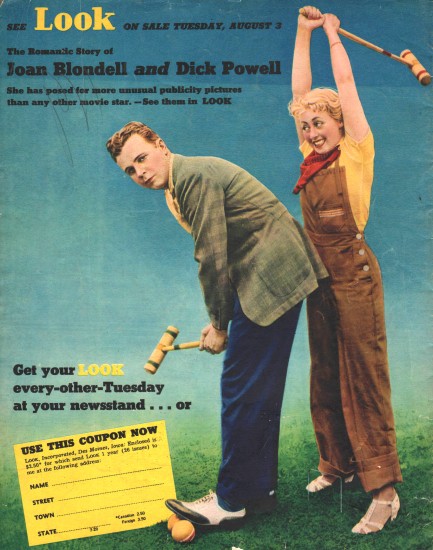
 Have you ever had a terrible dream and couldn’t wake up? 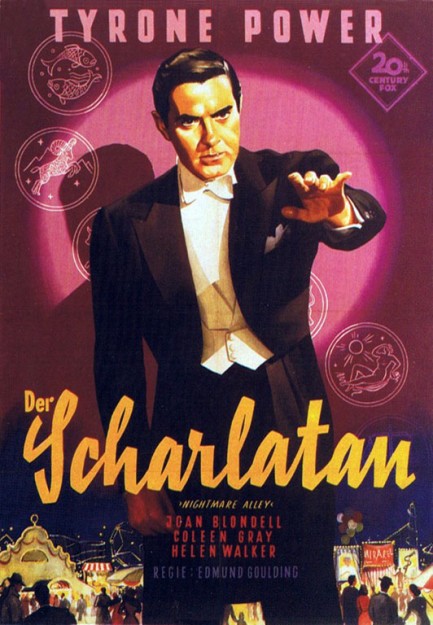
This West German poster for Der Scharlatan, aka Nightmare Alley shows Twentieth Century Fox pretty boy Tyrone Power in his role as The Great Stanton, a conniving psychic. Power felt constricted by the romance and adventure parts he’d played up to that point, so he bought the rights to William Lindsay Gresham’s novel and dirtied himself up. He plays a lowly carnival barker who realizes that an ingenious verbal code is the key to reaching the heights of fame. This code allows a seer to work in tandem with an assistant to correctly answer the questions of spectators. “I’m sensing that there’s a Mr. Abernathy here and he’s... wait… it’s coming… Sir, you’re concerned about your wife’s health. Isn’t that right? Well let me tell you, you’ll get good news from the doctor tomorrow!” Though the code’s owners aren’t using it, they plan to sell it to fund their retirement, and that looks to be some years off. This forces Power to either to steal it or sweet talk his way into it. As it turns out, he doesn’t have to do either, but once he has the code and has built an act around it, the fame and riches it brings fail to quench his greed.
Nightmare Alley was not warmly reviewed upon release, but many of those reviews simply found the movie too gritty. Such criticisms tend to make their authors look out of touch. For example, Bosley Crowther was demoted from his position as the New York Times’ main critic in large part for slamming Bonnie and Clyde in three separate articles, despite the film’s obvious quality. Nightmare Alley had similar detractors—it was just too downbeat for some, even for a film noir. But within its fictional milieu it's highly successful. Our world has every kind of depravity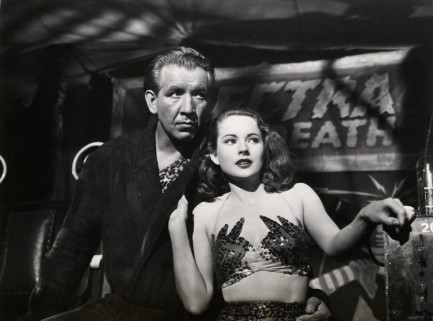 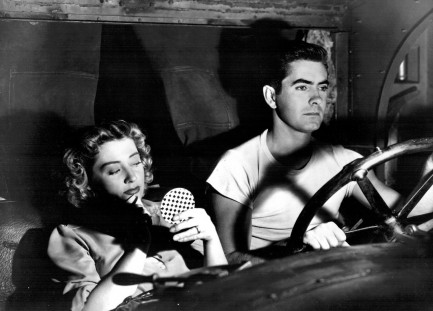 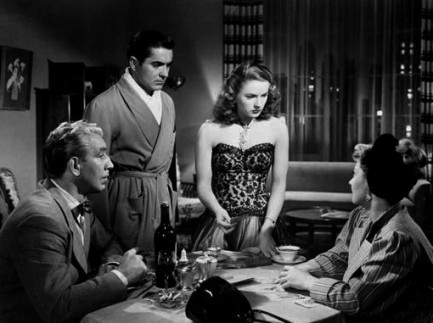 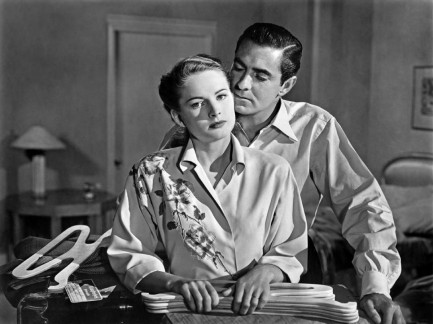 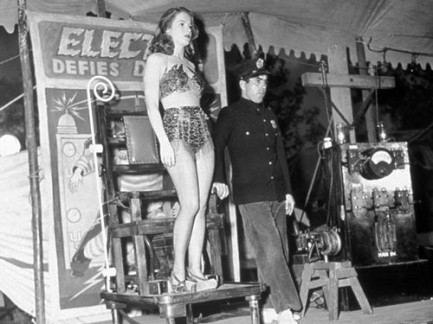 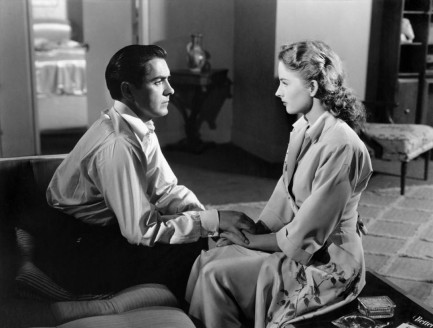 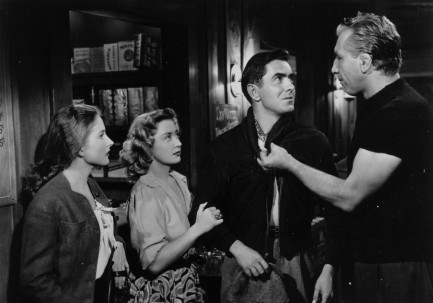 and cruelty, and movies that depict them must be judged on their own terms. So ignore the haters—Nightmare Alley is excellent. Power puts on an award-worthy performance, and Joan Blondell and Coleen Gray are great in support. There’s a pivotal moment in the film when it seems possible Power’s character has some actual psychic ability. Too bad he can’t see his own future. Nightmare Alley premiered in 1947, and finally made its way to West Germany today in 1954. and cruelty, and movies that depict them must be judged on their own terms. So ignore the haters—Nightmare Alley is excellent. Power puts on an award-worthy performance, and Joan Blondell and Coleen Gray are great in support. There’s a pivotal moment in the film when it seems possible Power’s character has some actual psychic ability. Too bad he can’t see his own future. Nightmare Alley premiered in 1947, and finally made its way to West Germany today in 1954.
 Eastern Times—now with the daily supplements you need. 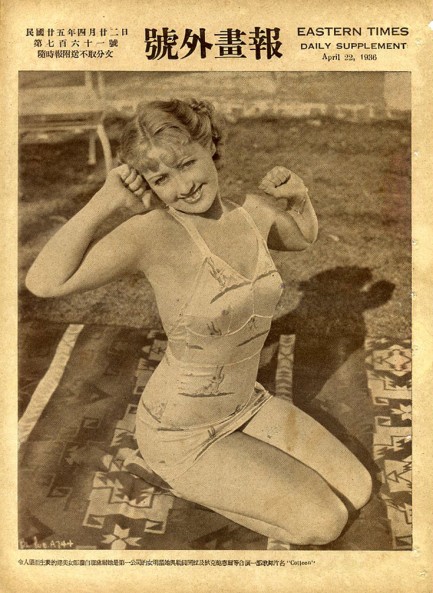 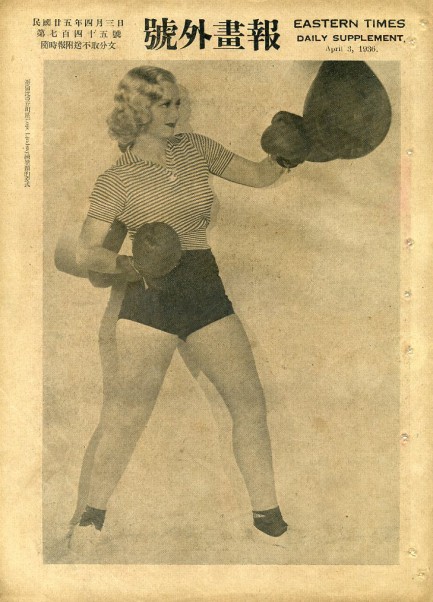
These items are rare. They’re supplements to the Chinese language newspaper Eastern Times, featuring American movie stars Joan Blondell and Lois Lindsay. The pages date from 1936. We aren’t sure if Eastern Times was published in Hong Kong or mainland China. Hong Kong would be the safer bet, but we tend to think this is from the mainland. To see another Eastern Times page, look here.
 You’re a spoiled boy, Tommy. You want things and you’re not content until you get them. 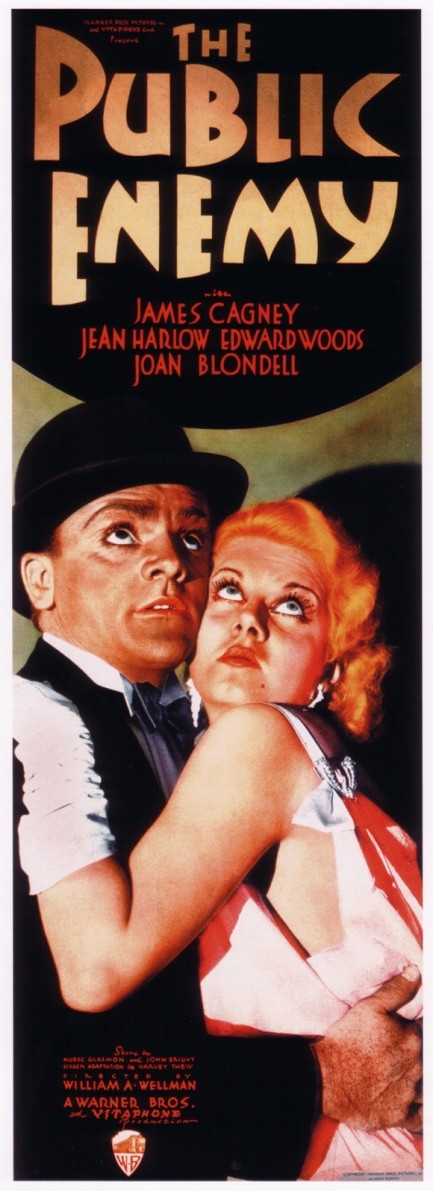 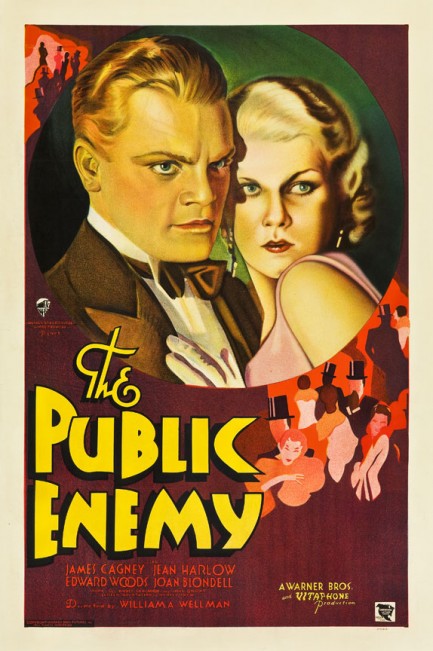 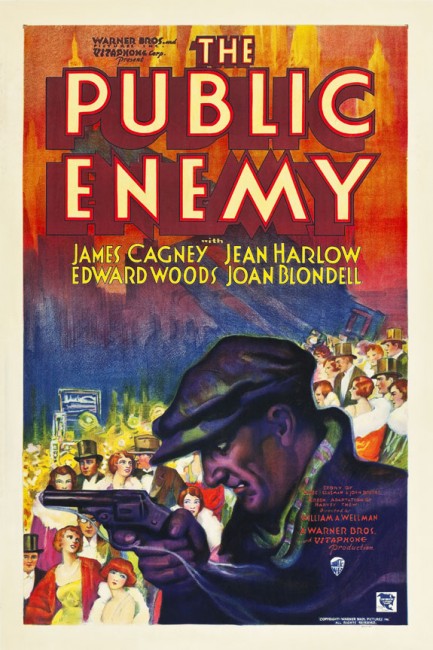
One thing about writing Pulp Intl. is it gives us an excuse to fill in blanks in our movie résumé. The Public Enemy, starring James Cagney, Jean Harlow, Edward Woods, and Joan Blondell, was one such blank—until last night. A rags-to-riches-to-ruin story, it was one of the earliest gangster flicks, one that was a big hit but which had suffered the scissors of Hays Code censors. It’s always interesting to note the scenes cut from a post-Code movie, because those say the most about attitudes of the times. For example, the scene in which Cagney is measured for a suit by a gay tailor differs in no discernable way from such scenes in today’s movies. There’s macho discomfort by the lead and effeminate fussing by the tailor that leads to the inevitable inseam measuring, all played for cheap humor. We don’t condemn or endorse this sort of thing—it’s just fascinating to see how little has changed in eighty some years. Two other scenes were cut due to sexual suggestiveness, and those are also quite interesting to watch. But what’s most important of course is James Cagney, and he is indeed amazing as Tom Powers, a kid whose ambition propels him toward the big cash and high risk of the Chicago bootlegging underworld. Not only was The Public Enemy a career-solidifying role for Cagney; it brought Jean Harlow to the notice of a much wider audience than she had reached up to that point. Her true breakout would come months later in The Platinum Blonde, but to be blunt, it’s lucky for her she had Howard Hughes molding her career, because her performance in The Public Enemy could have killed her chances to land a starring role. To a certain extent, she’s supposed to be damaged goods, someone who isn’t ever particularly fazed or impressed or emotive, but the scenes she should ignite—like the one in which she tells Cagney he’s just a spoiled boy—feel like rehearsals for later, better work. Contemporary reviewers agreed, panning her performance, but Harlow doesn’t damage the film. She isn’t really given much to work with, so watch this for Cagney, who scorches. The Public Enemy premiered in the U.S. today in 1931. 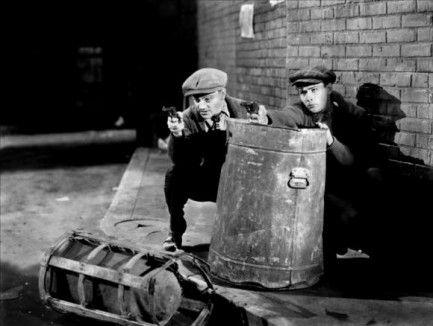 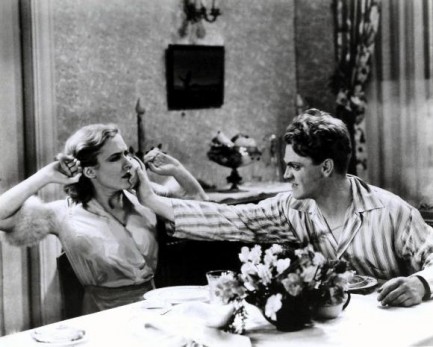 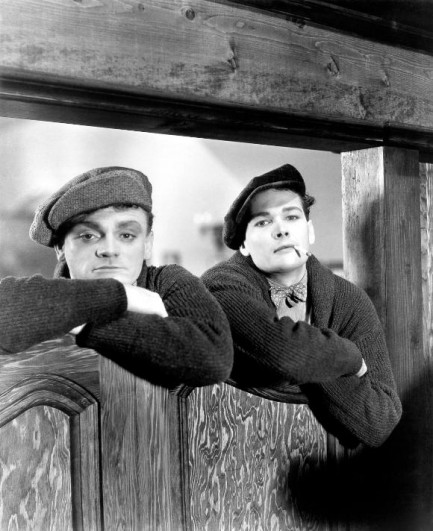 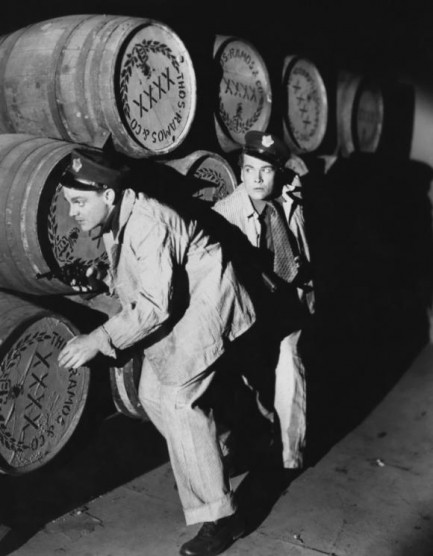
 They only have eyes for you.
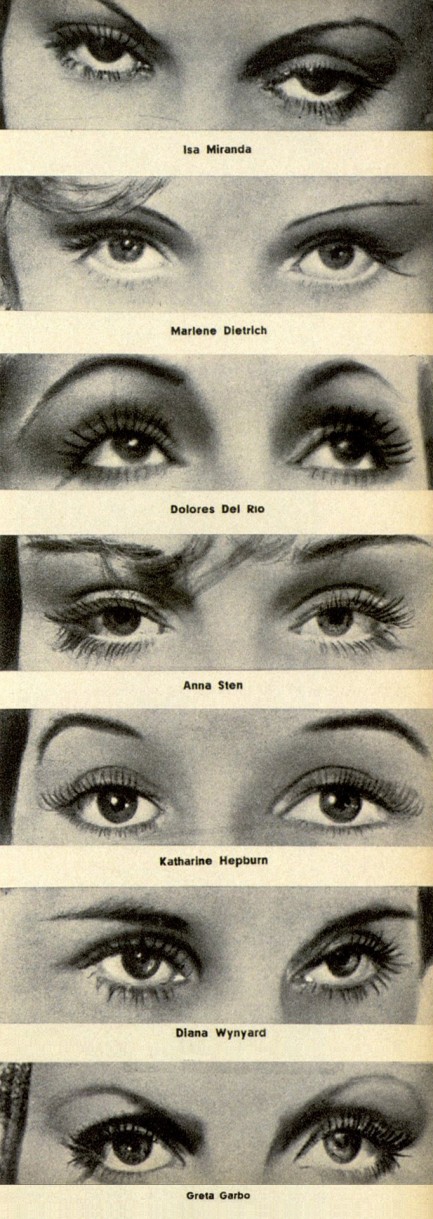
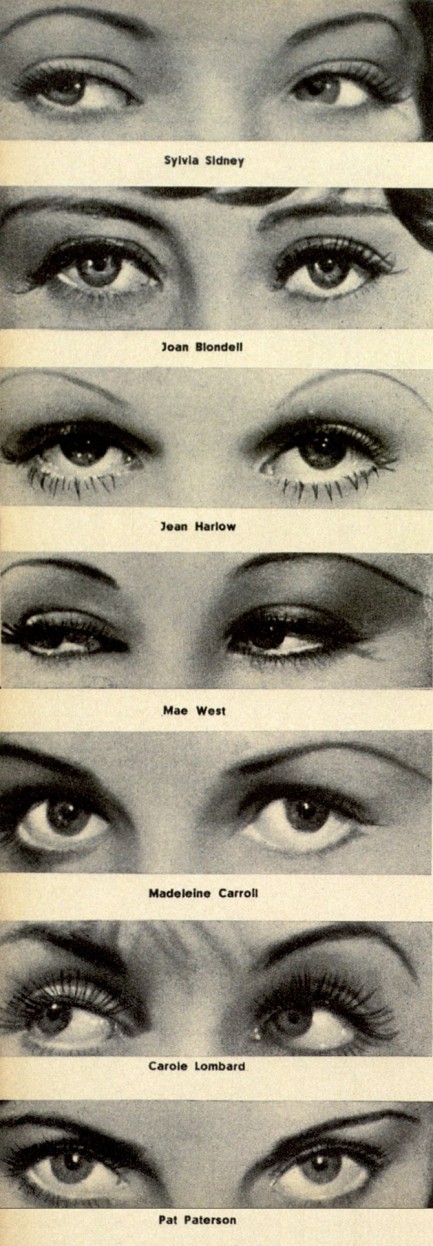
We were researching our recent post on fascist-era femme fatale Isa Miranda when we stumbled across fourteen sets of eyes from some of the most famous starlets of the 1930s. They were on a Brazilian fashion blog called Cajon DeSastre, now defunct, and we gather they came from a book—Fashion at the Time of Fascism—which we’d love to read if we could find a copy. Anyway, just a little eye candy for Friday.
 1970s-era Police Gazette was pretty, colorful and well-designed—but nobody wanted to buy it. 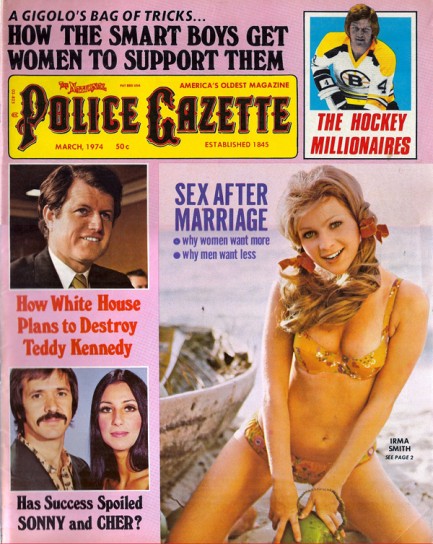 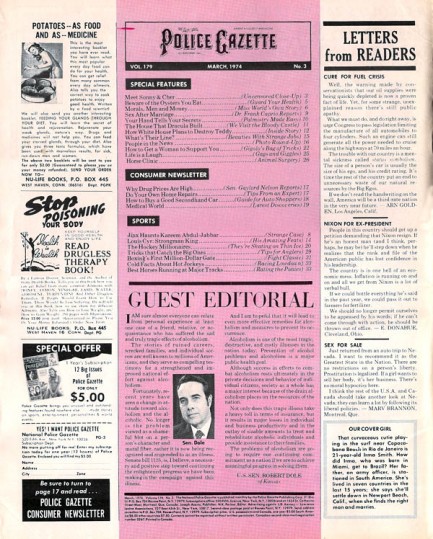 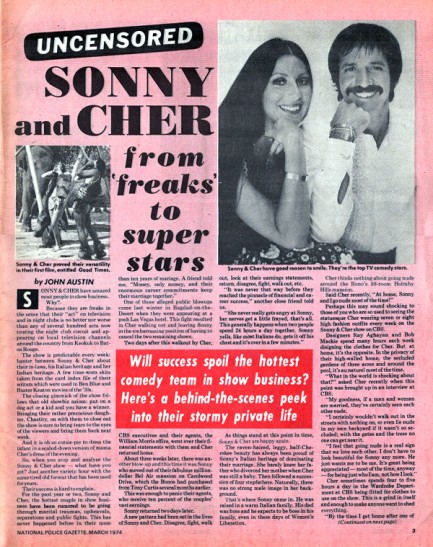 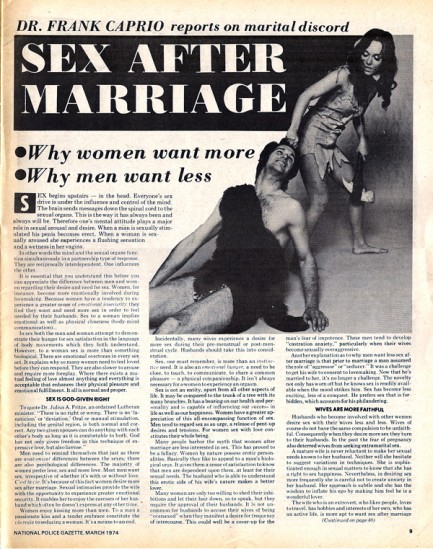 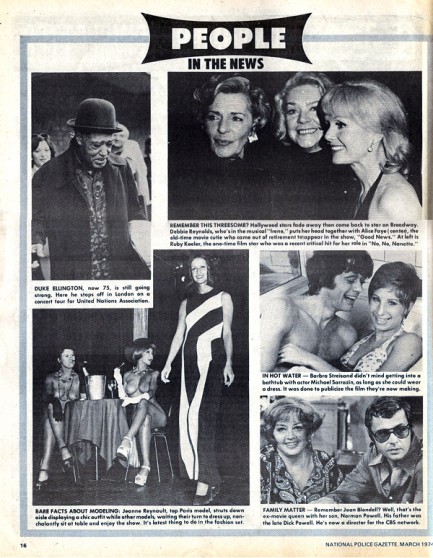 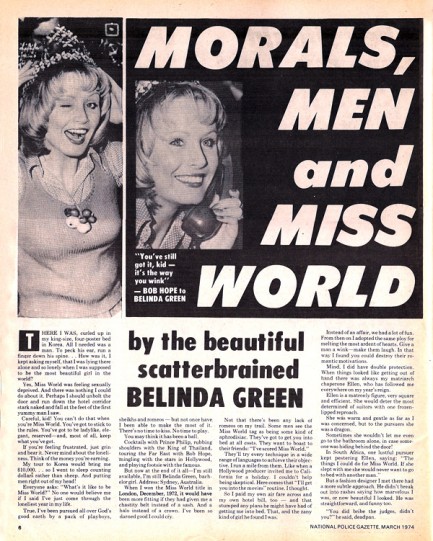 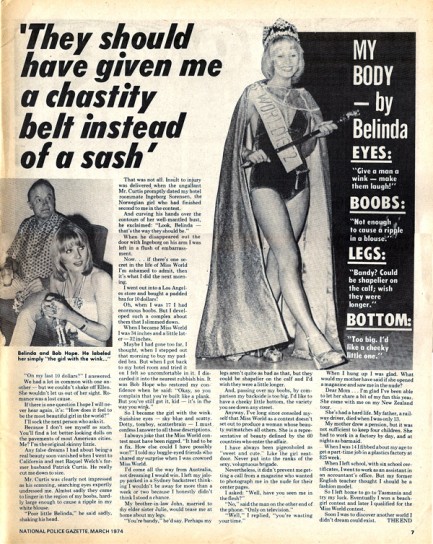 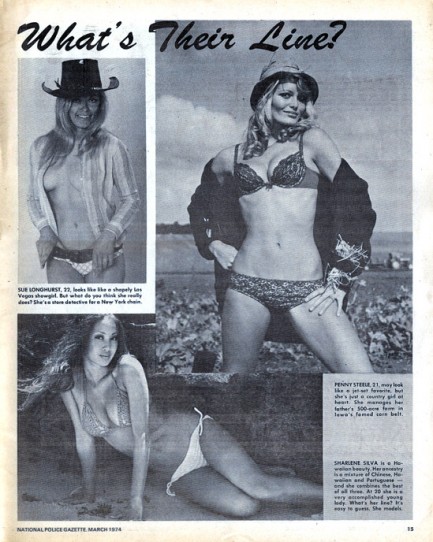
Above are the cover and seven interior pages from a National Police Gazette published in March 1974, two years before the century-old magazine folded. In retrospect it’s easy to see one of the problems the Gazette was having: while the graphics, printing, photo quality and paper stock had all improved over the years, the magazine had lost its visual impact. At the time, editors must have thought they had made the magazine more attractive, but can the above cover really compare to this one, or this one, or this one? Successful competitors like National Enquirer featured little or no color, but the immediacy of their covers was hard to resist. Part of the rationale behind the Gazette’s change may have had to do with its decades-long circulation decline, prompting them to do away with photo-illustrated covers in favor of cheaper promo shots. Or perhaps their longtime cover artisans simply aged and retired, taking their singular talents with them. Or perhaps new editors came aboard and decided to modernize—the default move of managers who have no aesthetic clue. Who knows? We just know that the results speak for themselves. But we’ll keep collecting even these late-period Gazettes because they’re useful in presenting a complete record of the publication. We’re going to go out a limb and say that we now have the largest compendium of Gazette pages on the internet. See them by clicking keywords “Police Gazette” below.
|
 |

The headlines that mattered yesteryear.
1947—Heyerdahl Embarks on Kon-Tiki
Norwegian ethnographer and adventurer Thor Heyerdahl and his five man crew set out from Peru on a giant balsa wood raft called the Kon-Tiki in order to prove that Peruvian natives could have settled Polynesia. After a 101 day, 4,300 mile (8,000 km) journey, Kon-Tiki smashes into the reef at Raroia in the Tuamotu Islands on August 7, 1947, thus demonstrating that it is possible for a primitive craft to survive a Pacific crossing. 1989—Soviets Acknowledge Chernobyl Accident
After two days of rumors and denials the Soviet Union admits there was an accident at the Chernobyl nuclear power plant in Ukraine. Reactor number four had suffered a meltdown, sending a plume of radioactive fallout into the atmosphere and over an extensive geographical area. Today the abandoned radioactive area surrounding Chernobyl is rife with local wildlife and has been converted into a wildlife sanctuary, one of the largest in Europe. 1945—Mussolini Is Arrested
Italian dictator Benito Mussolini, his mistress Clara Petacci, and fifteen supporters are arrested by Italian partisans in Dongo, Italy while attempting to escape the region in the wake of the collapse of Mussolini's fascist government. The next day, Mussolini and his mistress are both executed, along with most of the members of their group. Their bodies are then trucked to Milan where they are hung upside down on meathooks from the roof of a gas station, then spat upon and stoned until they are unrecognizable. 1933—The Gestapo Is Formed
The Geheime Staatspolizei, aka Gestapo, the official secret police force of Nazi Germany, is established. It begins under the administration of SS leader Heinrich Himmler in his position as Chief of German Police, but by 1939 is administered by the Reichssicherheitshauptamt, or Reich Main Security Office, and is a feared entity in every corner of Germany and beyond. 1937—Guernica Is Bombed
In Spain during the Spanish Civil War, the Basque town of Guernica is bombed by the German Luftwaffe, resulting in widespread destruction and casualties. The Basque government reports 1,654 people killed, while later research suggests far fewer deaths, but regardless, Guernica is viewed as an example of terror bombing and other countries learn that Nazi Germany is committed to that tactic. The bombing also becomes inspiration for Pablo Picasso, resulting in a protest painting that is not only his most famous work, but one the most important pieces of art ever produced.
|

|
|
It's easy. We have an uploader that makes it a snap. Use it to submit your art, text, header, and subhead. Your post can be funny, serious, or anything in between, as long as it's vintage pulp. You'll get a byline and experience the fleeting pride of free authorship. We'll edit your post for typos, but the rest is up to you. Click here to give us your best shot.
|
|