Diamonds are forever, but Connery wasn’t. 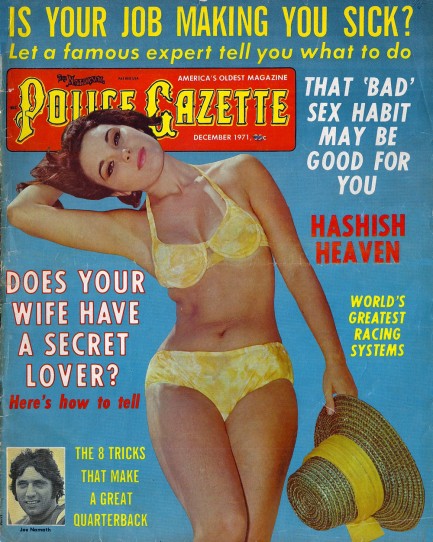
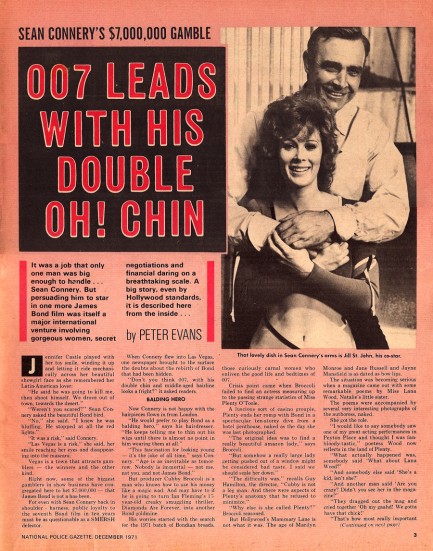
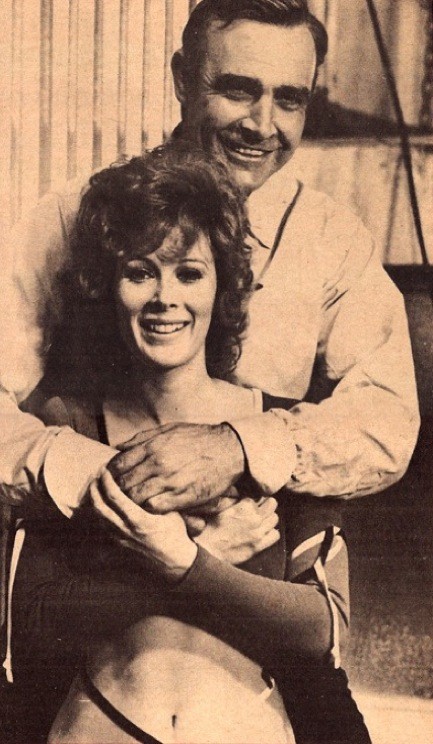
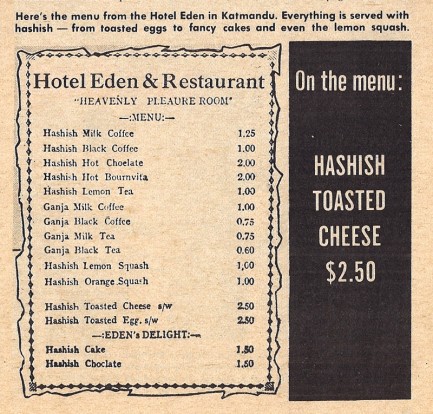
Sean Connery made as many appearances in sixties and seventies tabloids as just about any celeb of his time period, so here he is again in an article promoting his role in Diamonds Are Forever, which would premiere just a couple of weeks after this December 1971 National Police Gazette hit newsstands. we talked a bit about the source novel for the film, and author Ian Fleming's troubles with his publishers. It's interesting, so check here if you wish. In Gazette, Connery speaks of his futile struggle to portray James Bond as a balding hero, and quips about making his stylist thin his wigs so there was almost no point in wearing them at all. Connery said about Bond’s aging, “No one is immortal—not me, not you, and not James Bond.” It was a commendable sentiment, but naïve. Seems as though Connery didn’t realize United Artists had already branded Bond well beyond the point where the character was tethered to any concept of aging. The studio proved that when it brought the much younger Roger Moore on the scene for 1973’s Live and Let Die. Moore would later give way to Dalton, who gave way to Brosnan, who gave way to Craig, as Bond himself remained eternally forty-ish through the passing years. Elsewhere in the Gazette you get a report on the hash capital of the world, the world’s greatest racing systems, and the usual assortment of random beauties in bathing suits. All that, plus hashish toasted cheese, below.
  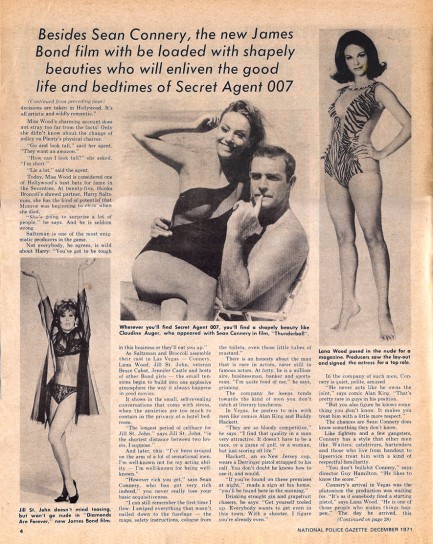 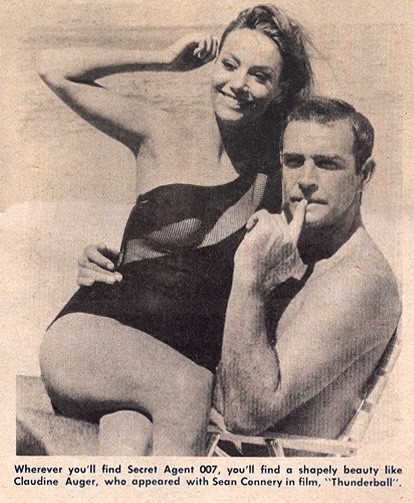 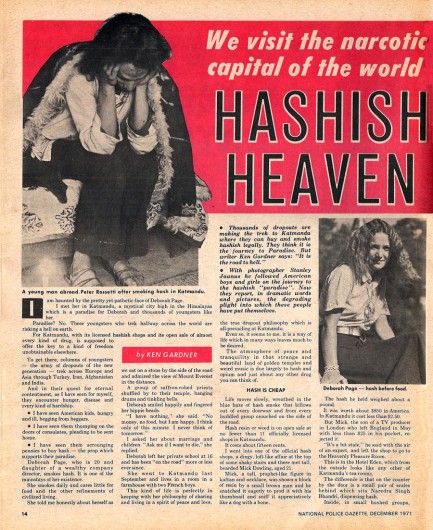   
 Police Gazette was a different shade of tabloid. 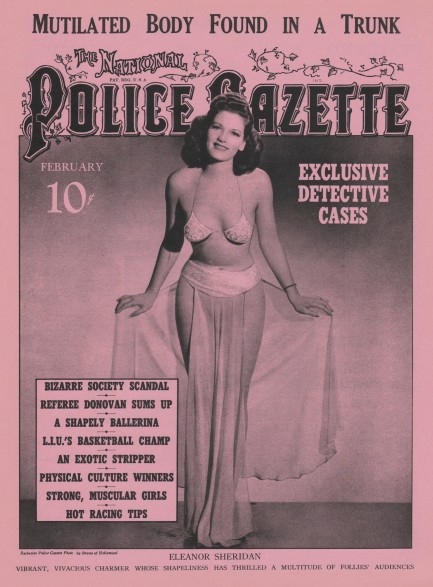 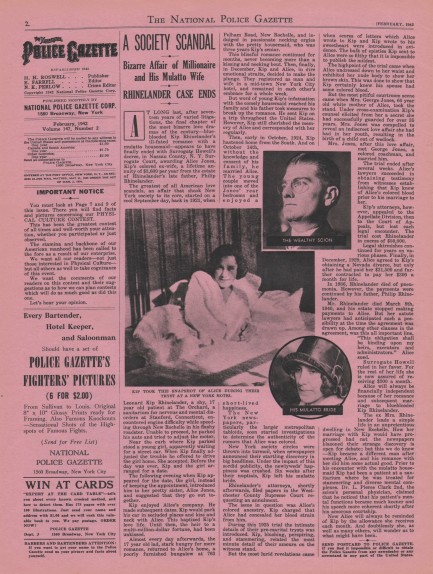 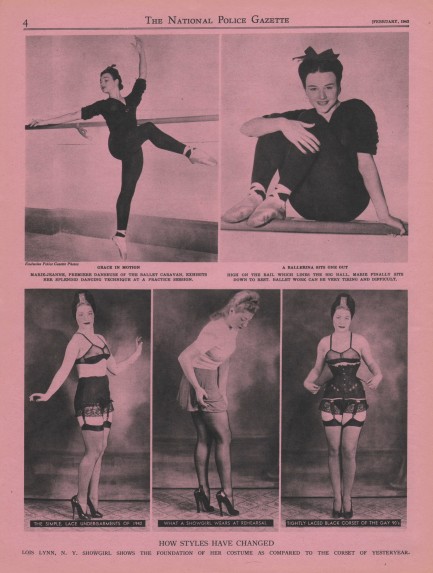 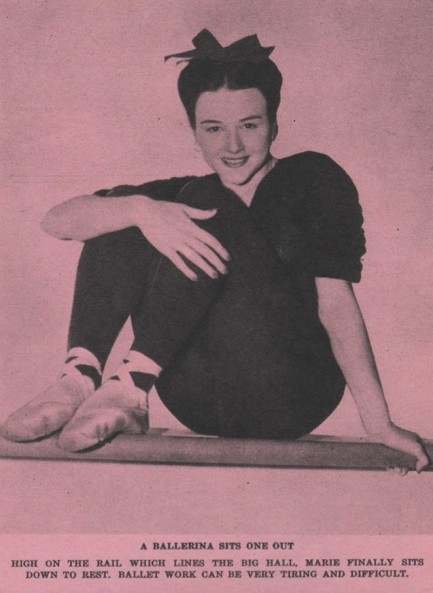 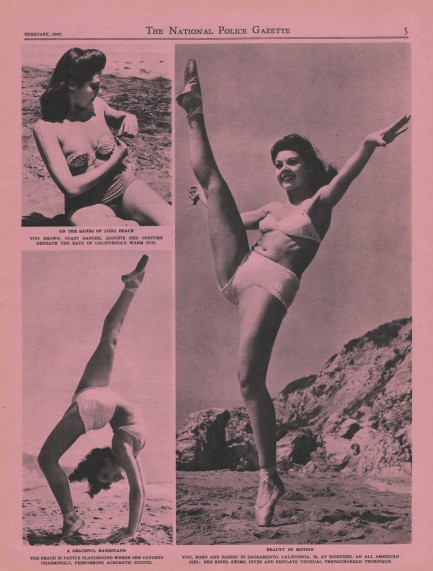 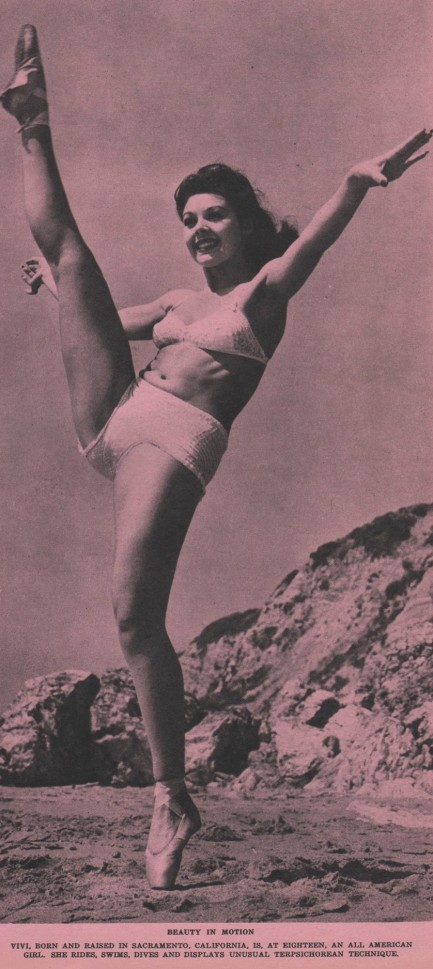 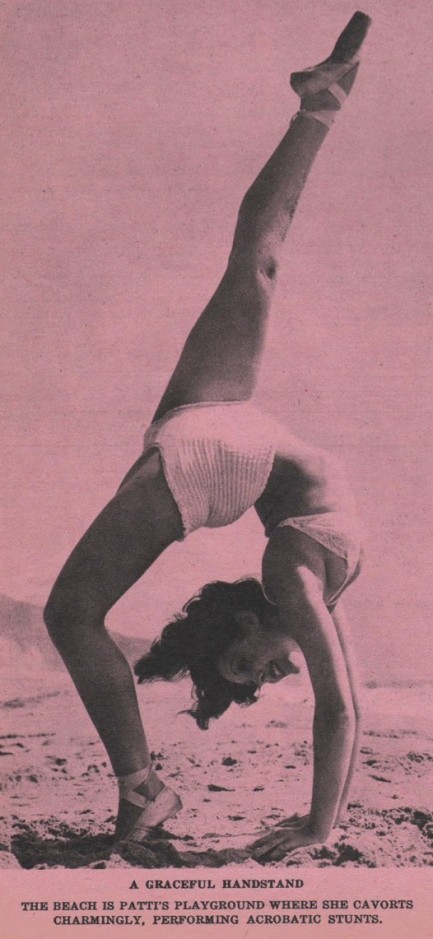 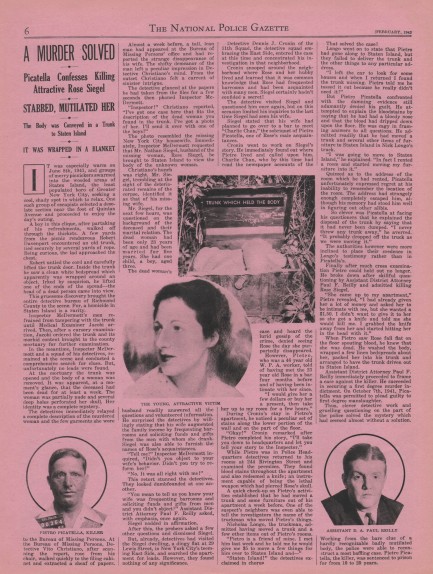 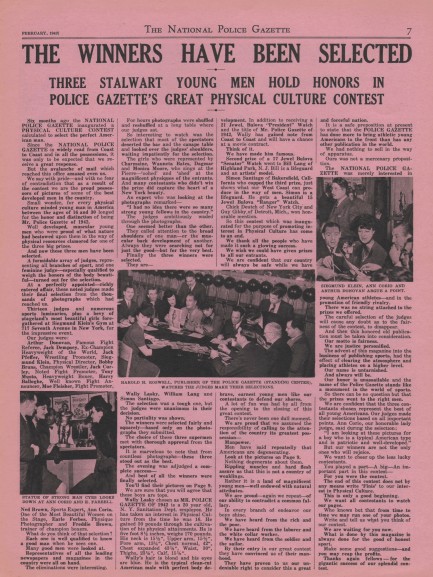 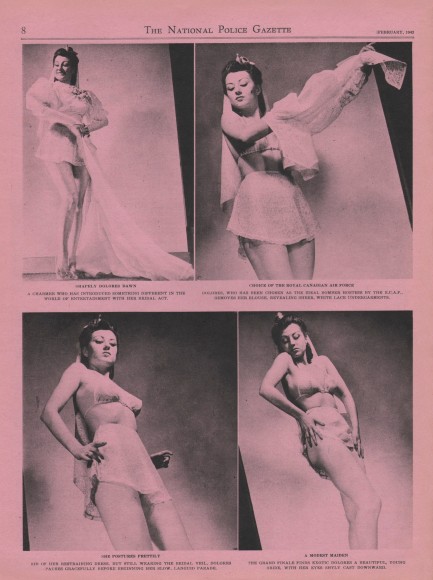 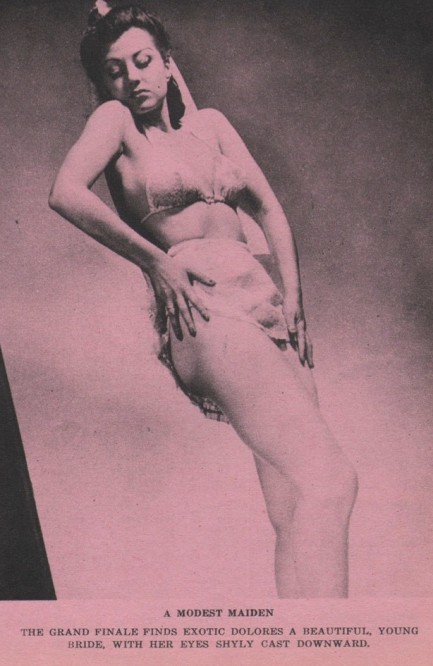 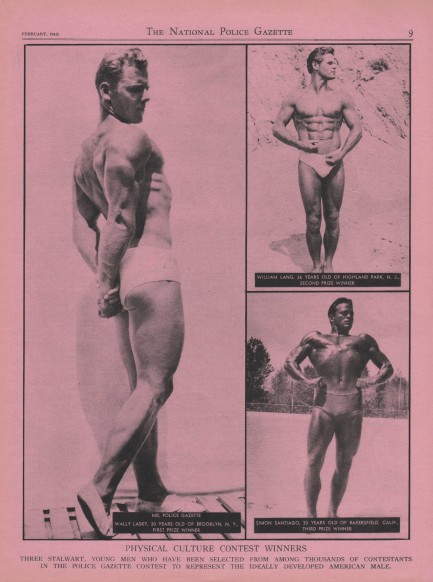 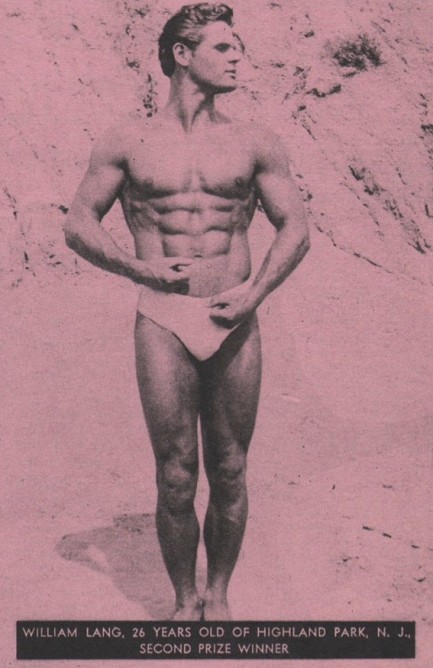 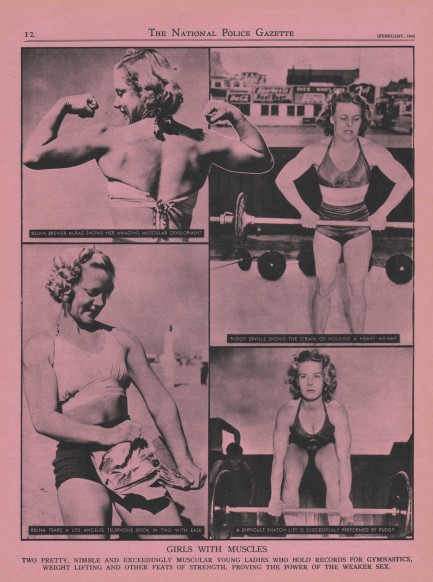 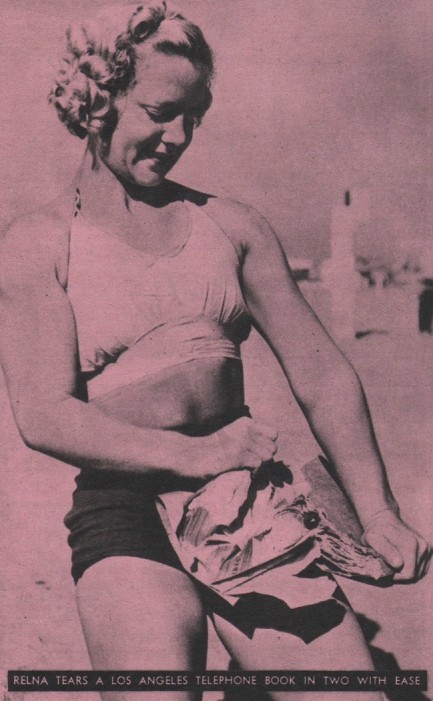 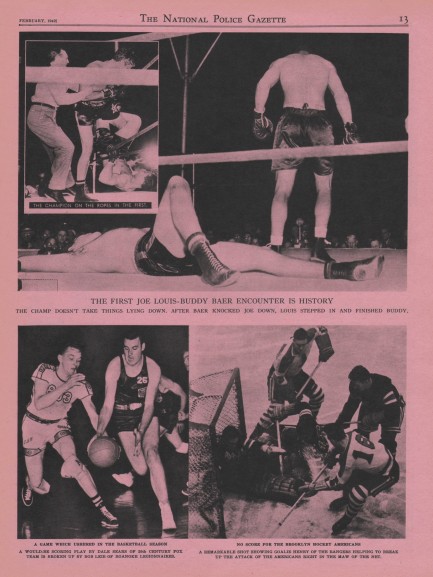 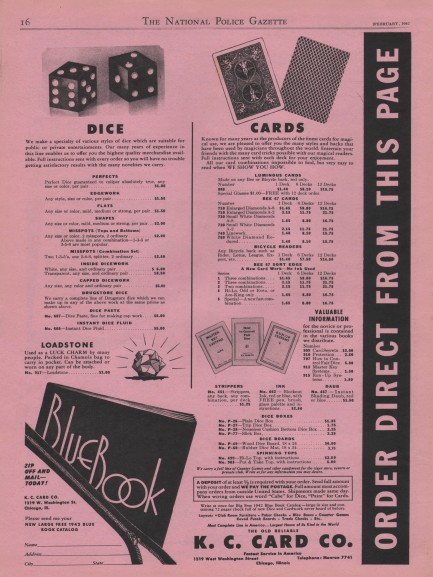
Above: scans from an issue of The National Police Gazette published this month in 1942. Back then the magazine averaged sixteen pages, which means you just saw everything except a few pages of advertisements. Gazette would later greatly increase its page count, lose its pink shade, and take on the outward appearance of a standard tabloid, but it always stood apart from Confidential, Whisper and other top scandal sheets because it was less focused on Hollywood. Instead, it saved space for boxing, baseball, horse racing, and burlesque. It was one of the longest lived magazines in the U.S., and you can track its evolution through more than seventy-five issues at our tabloid index at this link. Just click and scroll down to “Police Gazette.”
 Can there ever be too much of a good thing? 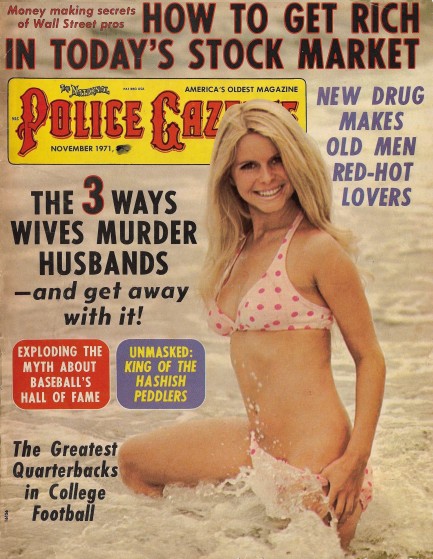
We're still cleaning out that pulp closet, so above you see some random scans from another National Police Gazette. We have an excess of this magazine, and since these late stage editions aren't as interesting as the ones from the ’50s and ’60s, they have to go. And speaking of overabundance, our favorite story in this issue is, “The 3 Ways Wives Murder Their Husbands.” What are they? Apparently, food, aggravation, and sexual excess. We're guessing very few husbands receive number three on that list. But the good news is now you can tell your significant other that one of the world's oldest tabloids, a magazine established in 1845 and full of wisdom, says you should be killed with sex. Good luck with that.
Elsewhere in the issue you get Jacqueline Bisset, Gene Tunney, Jean Harlow, and the strange death of Paul Bern. The Bern incident is part of Hollywood lore. He was married to Jean Harlow for four months when he committed suicide by shooting himself. He left a note behind that apologized for a “frightful wrong" he had done Harlow, and referred to the previous night as “only a comedy.” It led observers to believe Bern had a sexual problem that he tried to solve by artificial means, only to fail. A strap-on, was the inference made by tabloids. But the truth never emerged, certainly not from Harlow herself. There's more to the story, and maybe we'll get into it later. Scans below, and more issues of Gazette here. 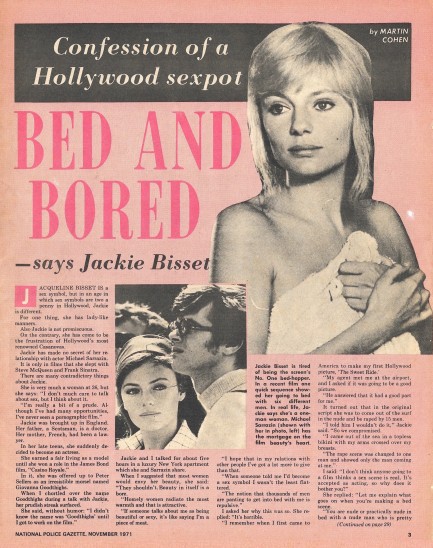 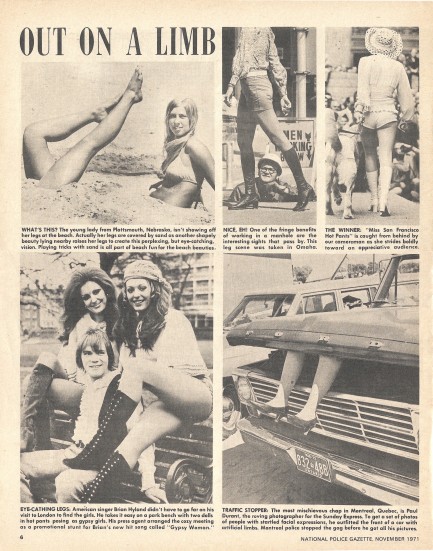  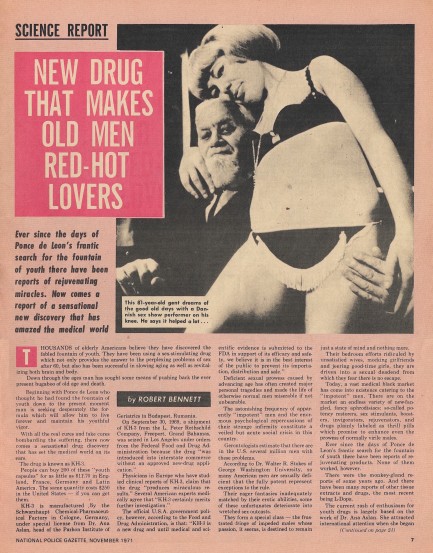 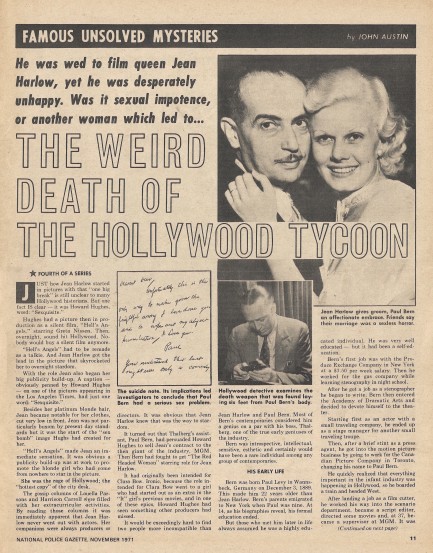 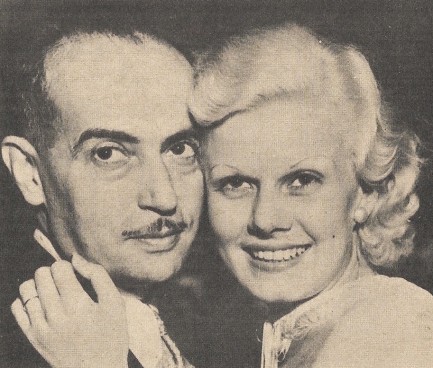 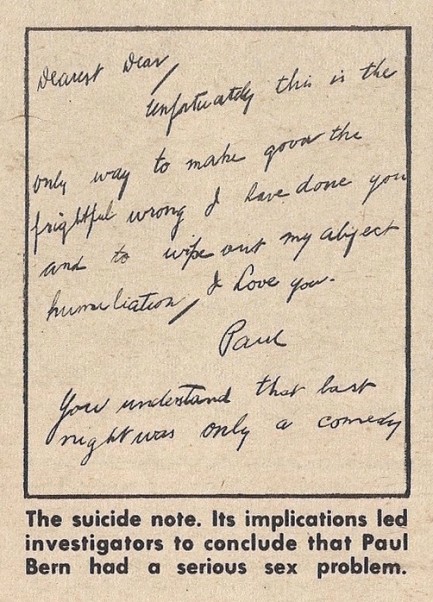 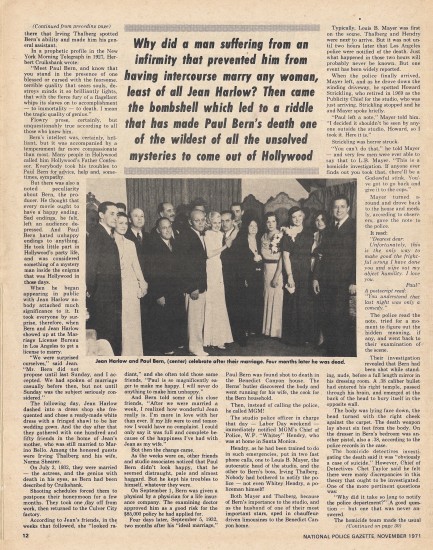 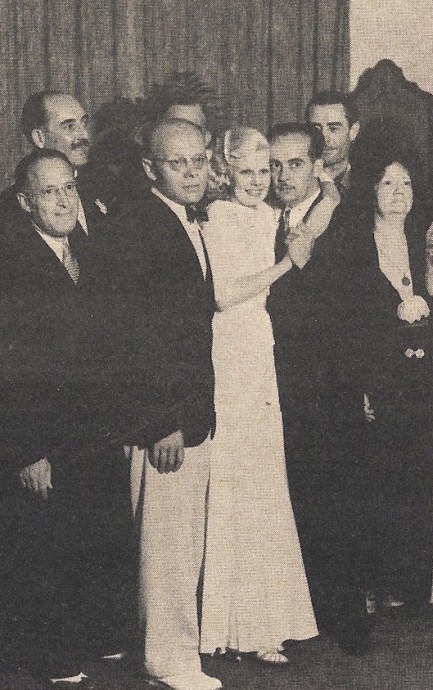 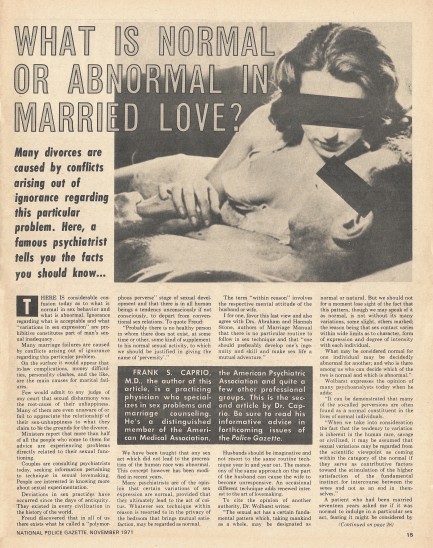 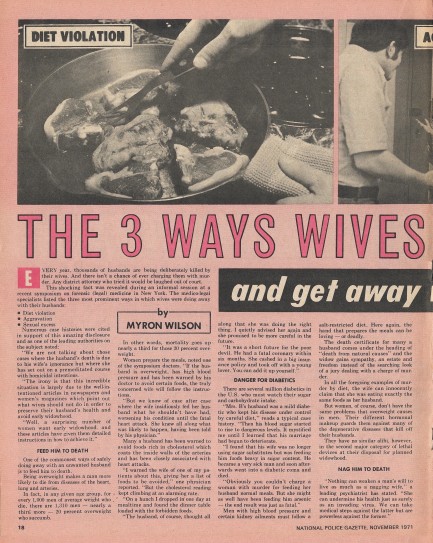 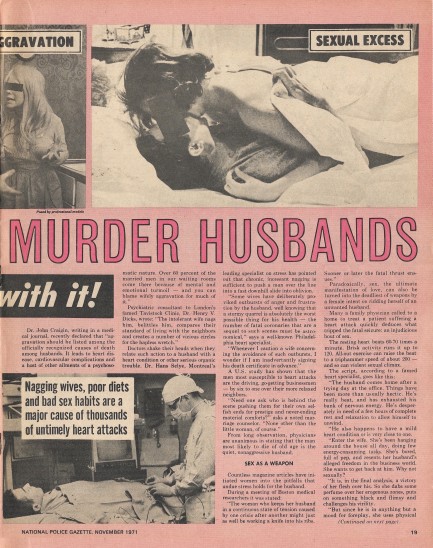 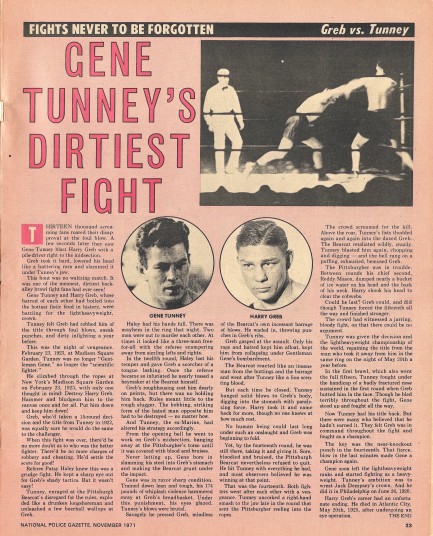 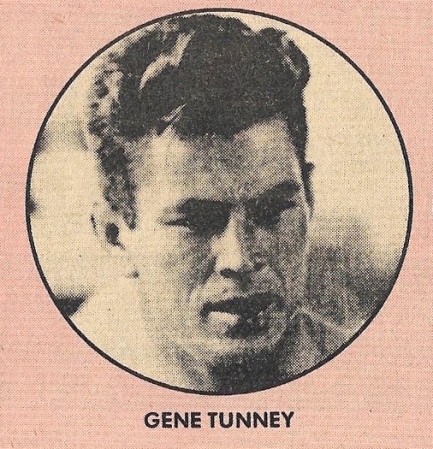
 America's oldest tabloid continues its appointed rounds. 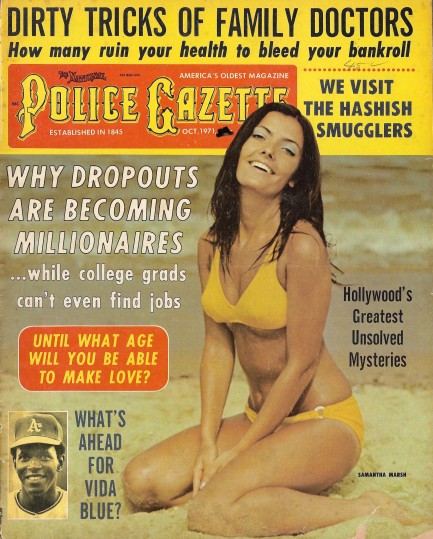
Today we have the cover and some interior scans from an October 1971 issue of the National Police Gazette, which dutifully explores its usual realms of sports, crime, and Hollywood. The magazine was founded in 1845, which is always astounding to consider. We bought a pile of these ages ago. In fact, they were the first bulk purchase of tabloids we ever made for the website. These ’70s issues of Gazette tend to be very cheap, but, as late stage editions, don't hold much intrigue, which is why we hadn't scanned one since 2014. But we have to clear some space in our Pulp cave, so we scanned this one and immediately sailed it into the recycling bin. On the cover you have Samantha Marsh, and inside you get Joe Louis and Max Schmeling, Australian model Deanne Soutar, speculations on how old men can be and still have sex, hashish smugglers from India, and a story on the mysterious death of actress Thelma Todd. More from Police Gazette coming soon. 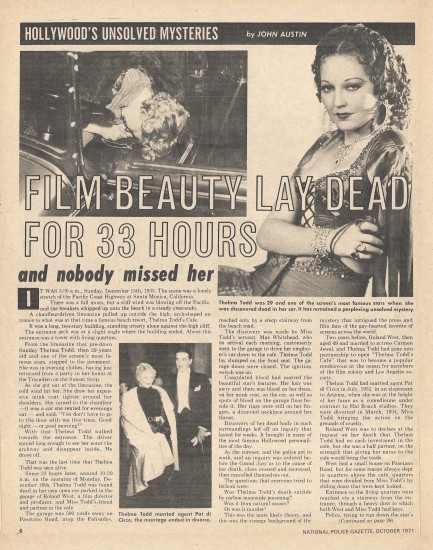 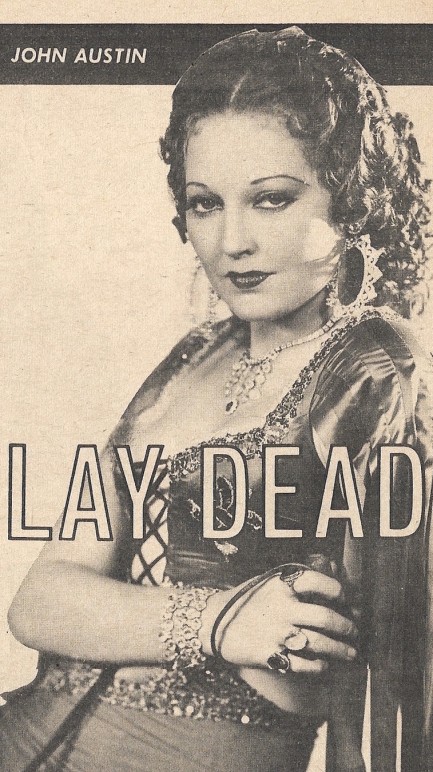 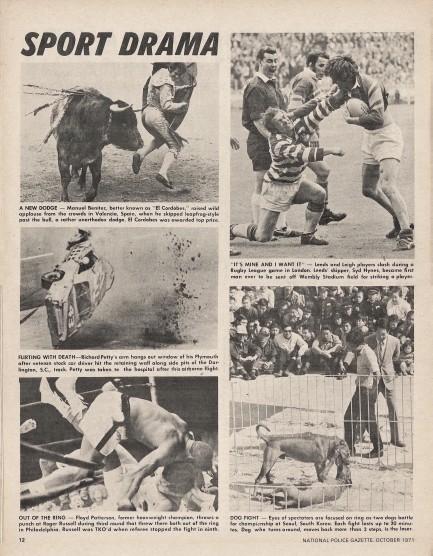 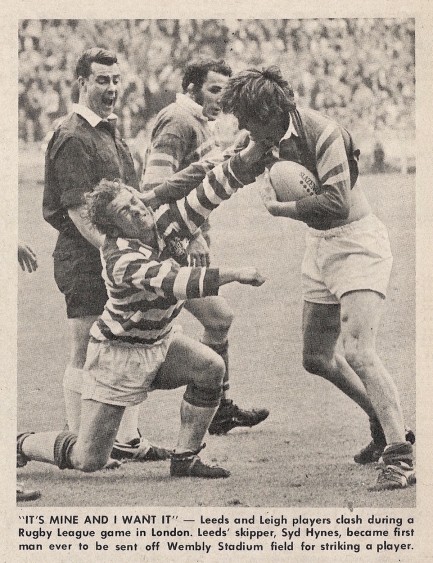 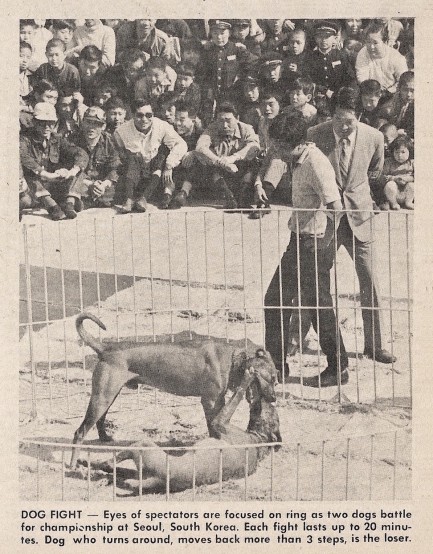 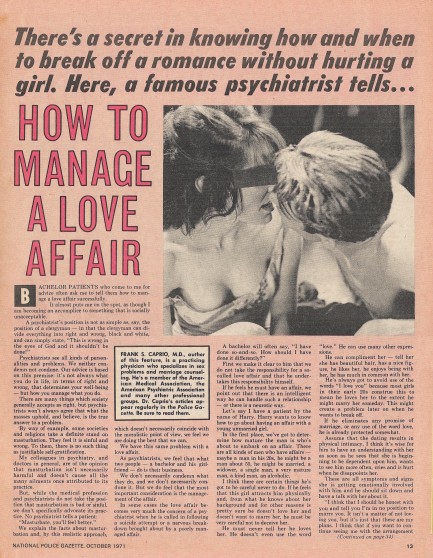 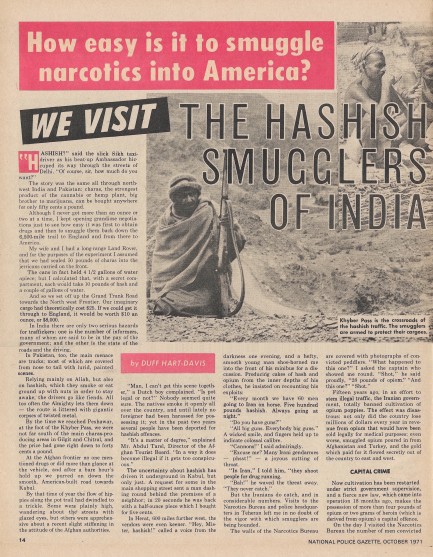 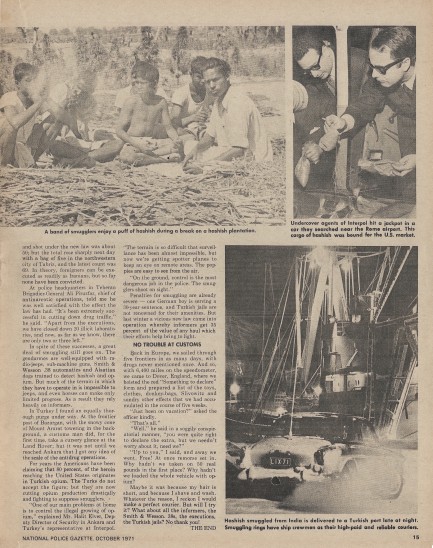 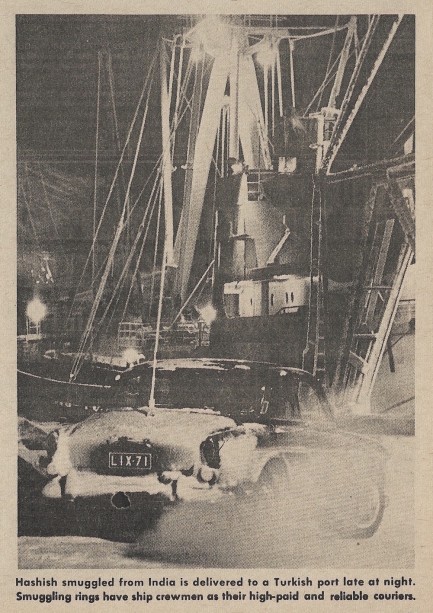 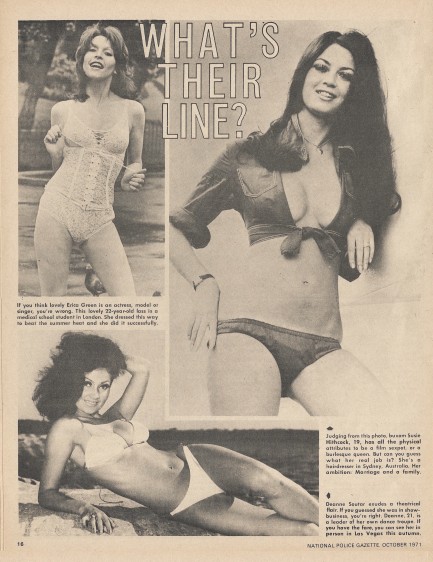  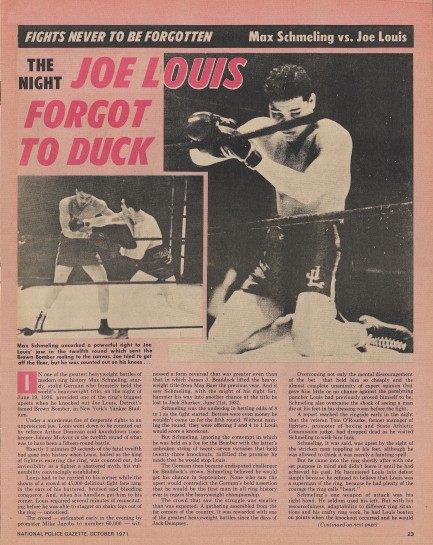 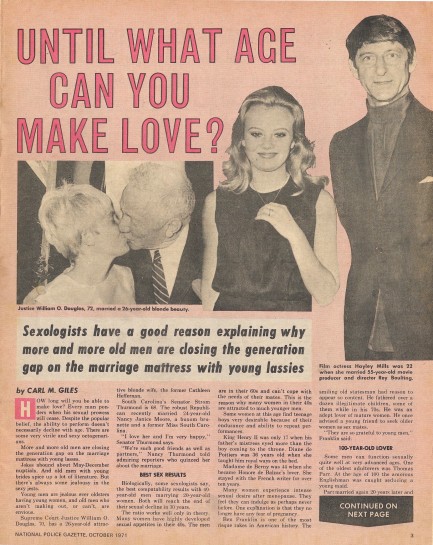 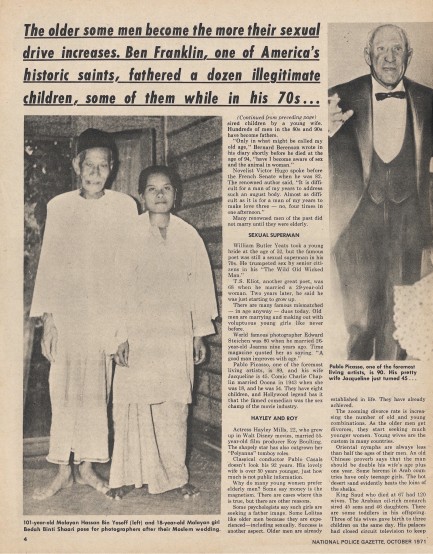 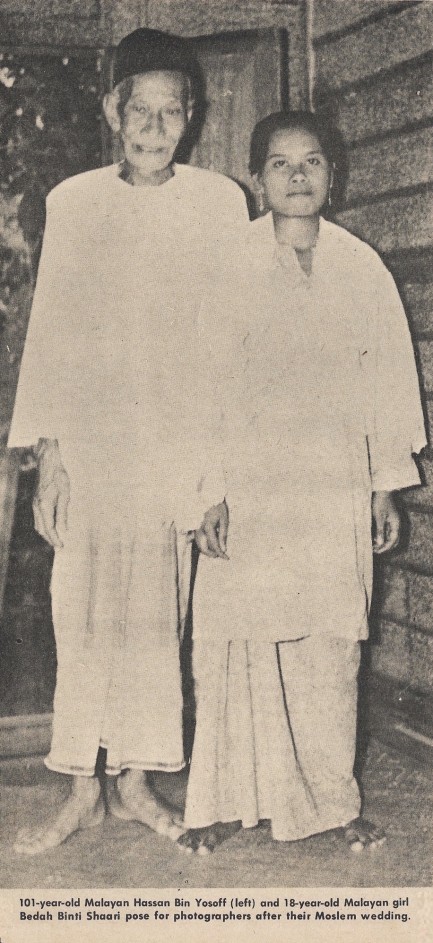 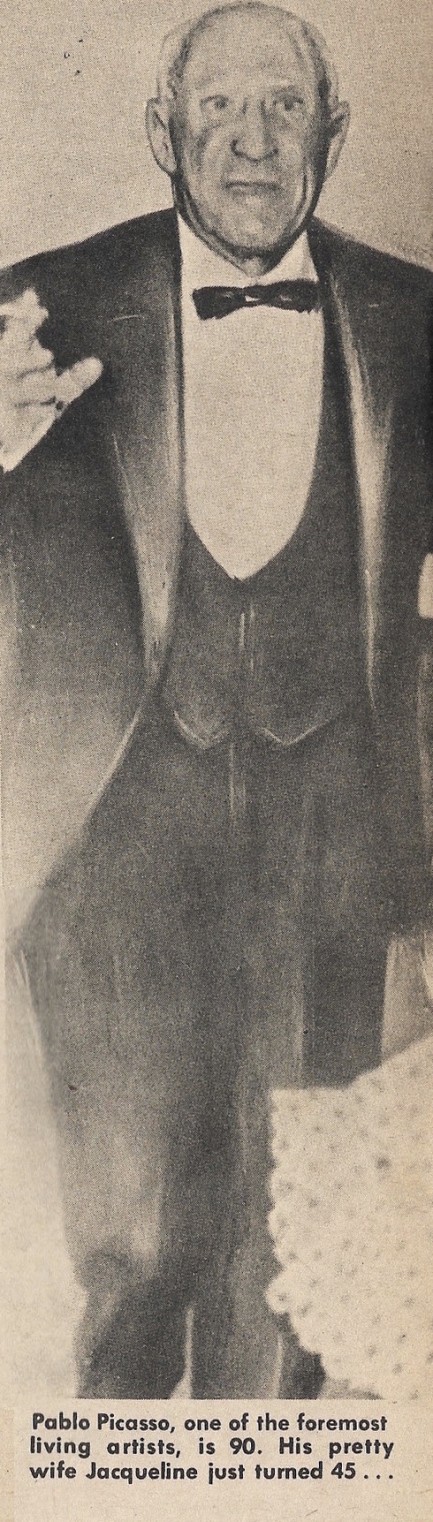 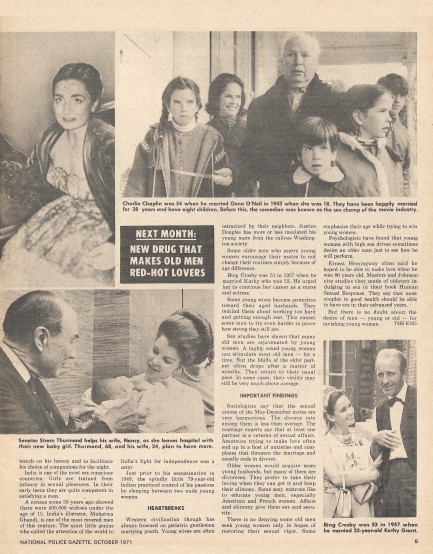 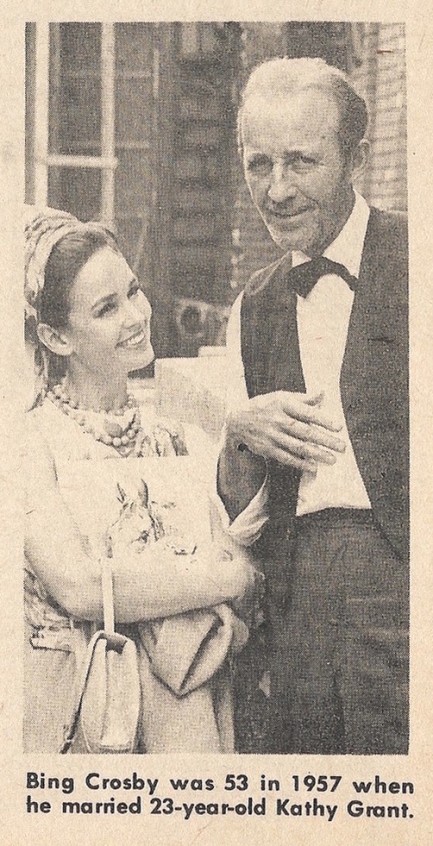
 Politics, show business, and sports collide in one of the U.S.'s oldest magazines. 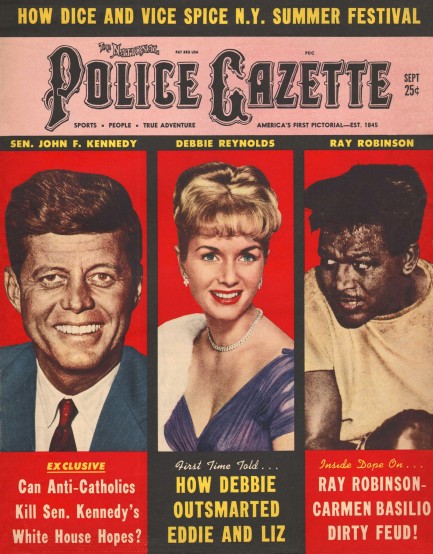
We've shared lots of issues of The National Police Gazette, but this September 1959 cover, more than others, neatly emphasizes the magazine's three focus areas—politics, celebrity, and sports. Dishing on political figures and celebs was typical for mid-century tabloids, but Gazette's devotion to sports made it unique. And its favorite sport was boxing. Every issue we've seen has reserved a chunk of pages for the sweet science. In this case the scientist is Sugar Ray Robinson, and the story about him discusses the rivalry he had with Carmen Basilio. The two fought twice when Robinson was in decline at the tail end of his career. Sugar Ray lost the first bout—considered by boxing historians to be one of the greatest fights ever—and a year later won the second. Every boxer declines, but Robinson's career record stands tall—he fought two hundred times and tallied 173 wins, 108 of them by knockout. But for all that hard work he ended up—as boxers often do—flat broke. Police Gazette was launched in 1845, as incredible as that seems, and was still going strong more than a century later when this issue appeared. We have about twenty-five scans below and seventy-five more entries on Gazette in the website comprising many hundreds of pages. The easiest way to access those, as well as numerous other mid-century tabloids, is via our tabloid index located here. 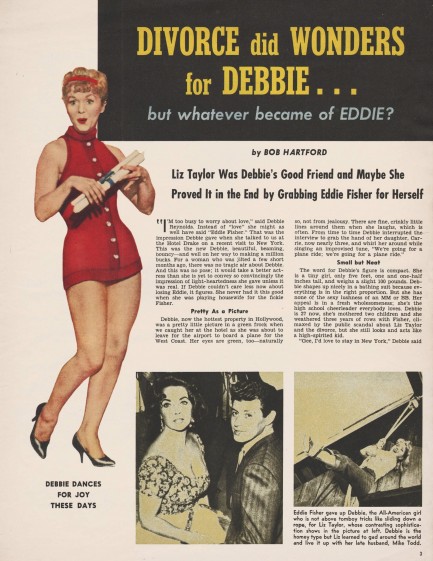 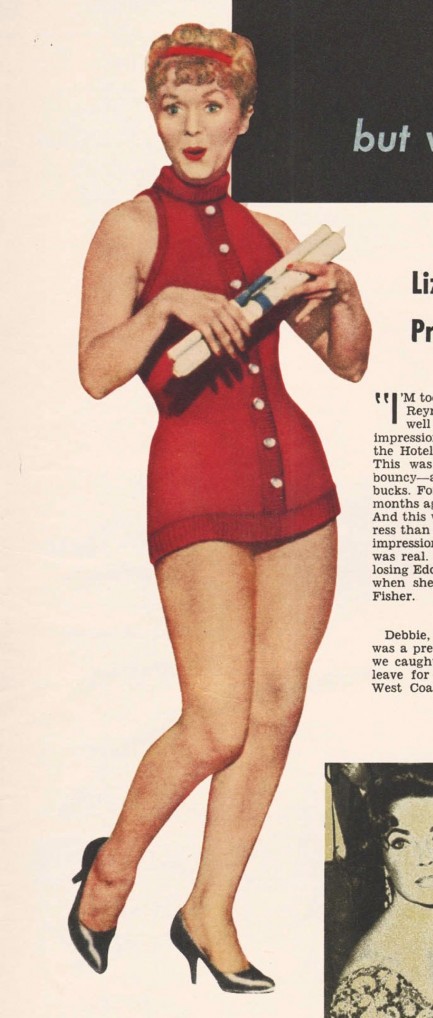 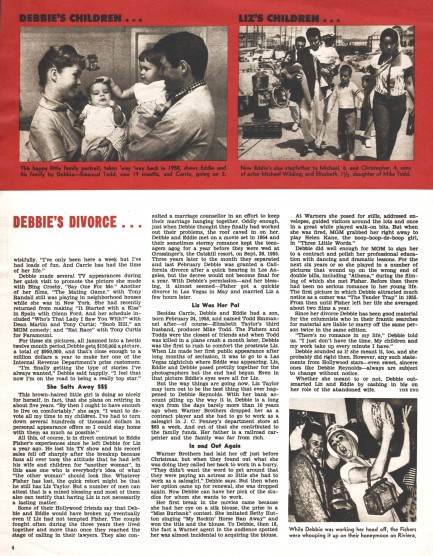 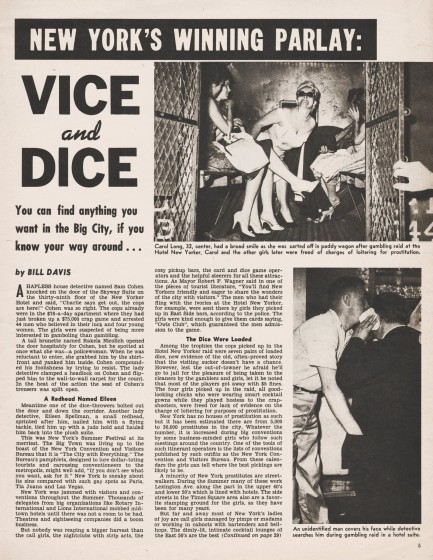 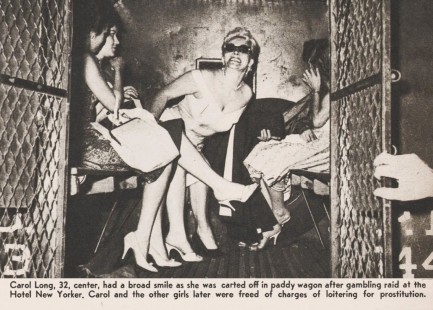 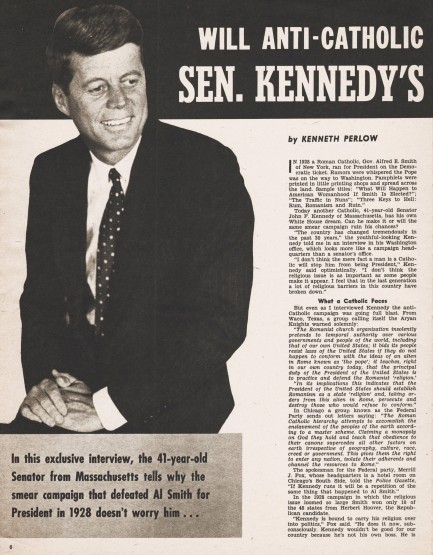 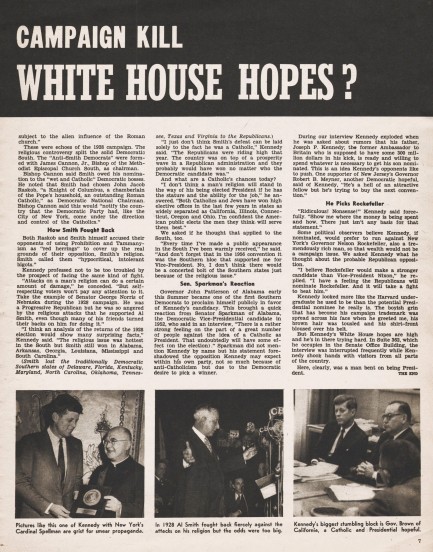 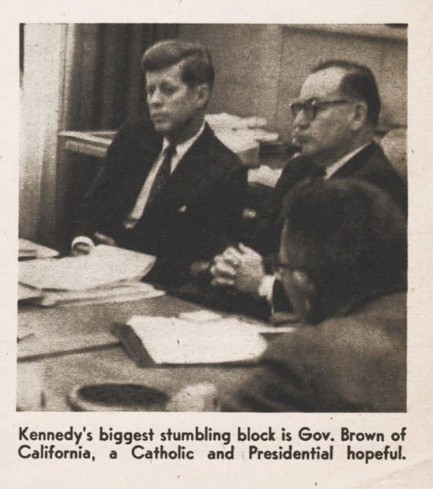 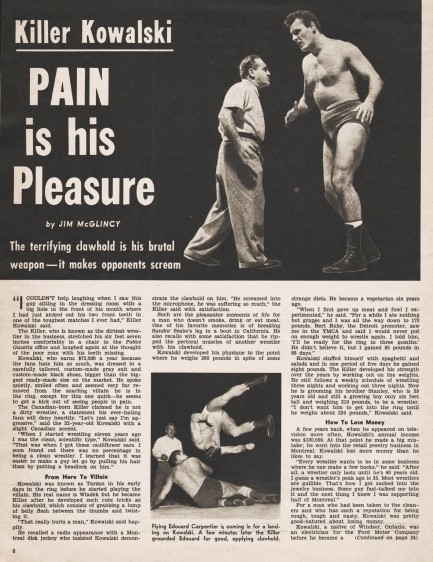 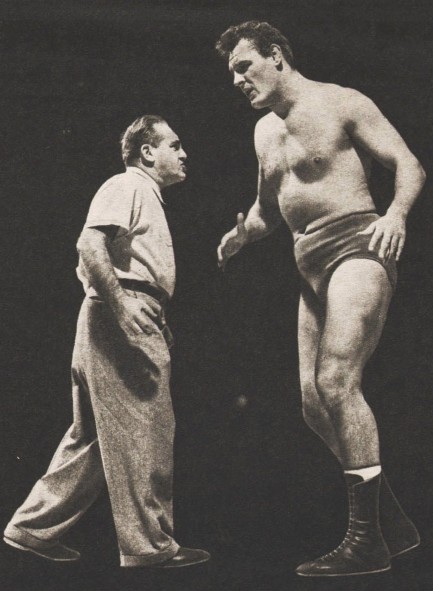 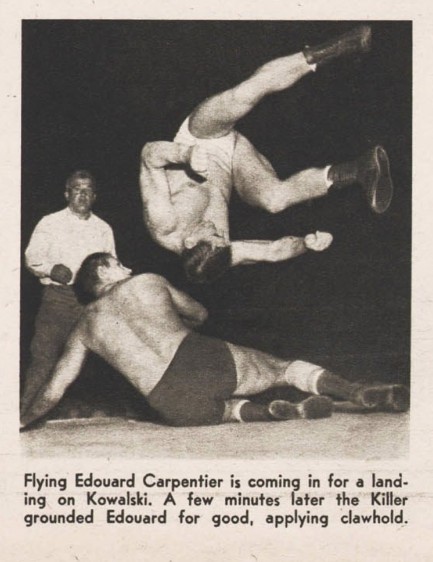 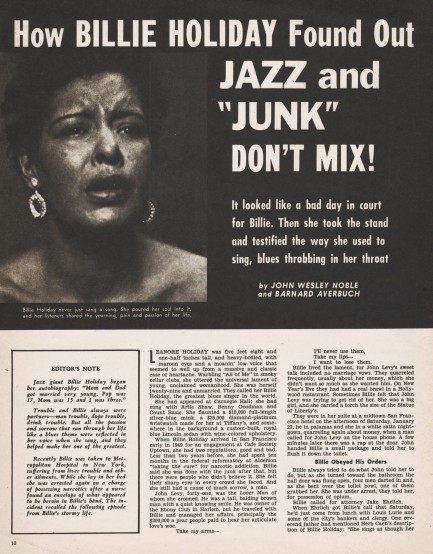 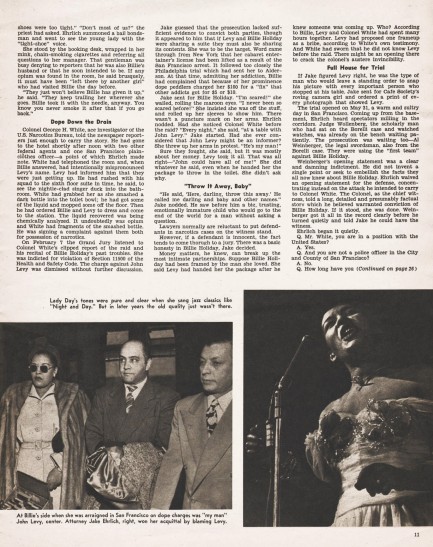 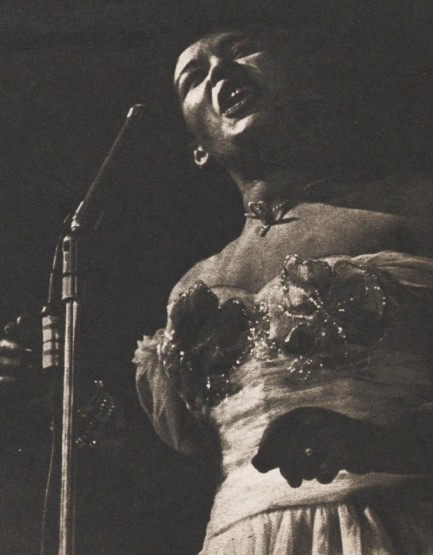 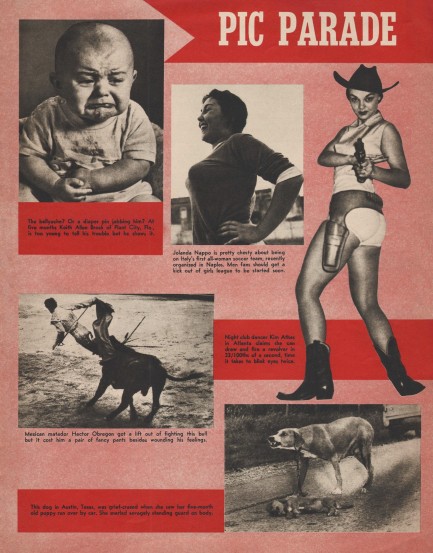 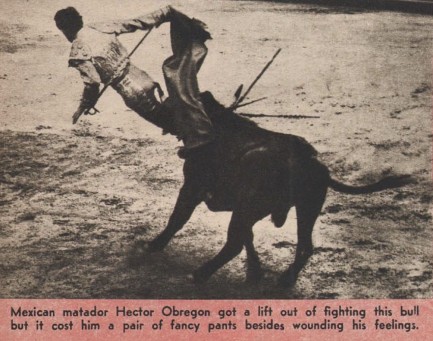 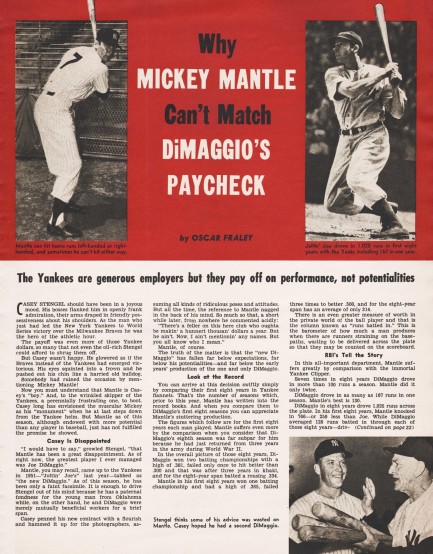   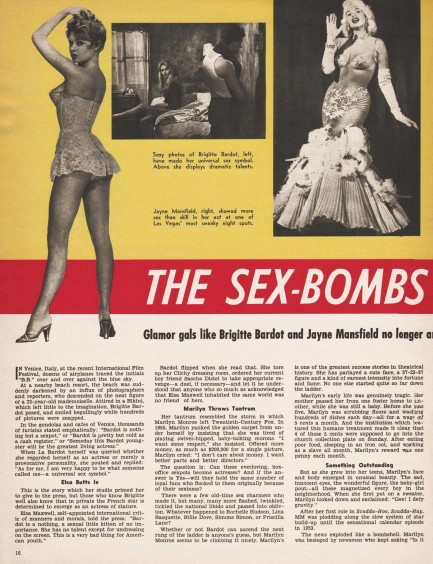 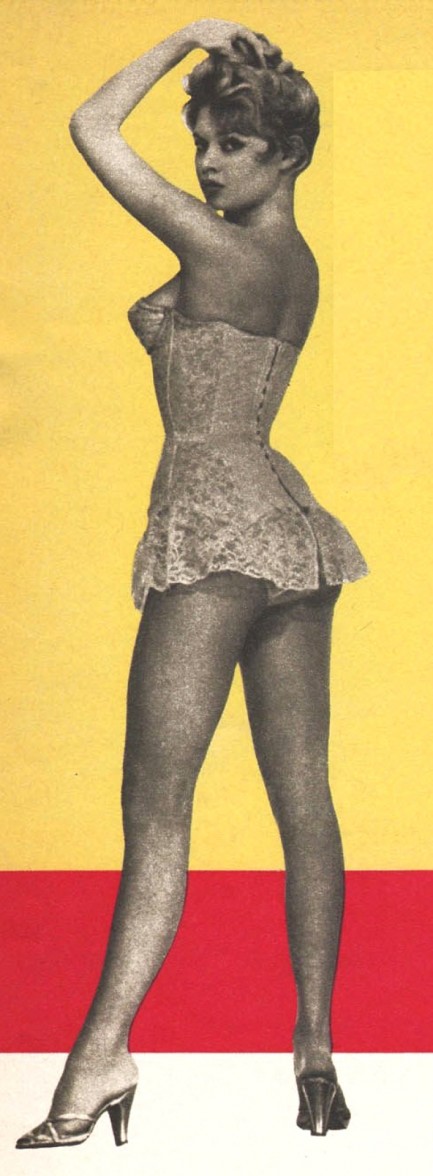      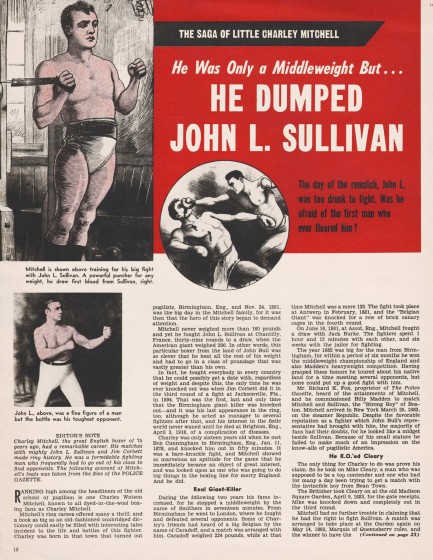 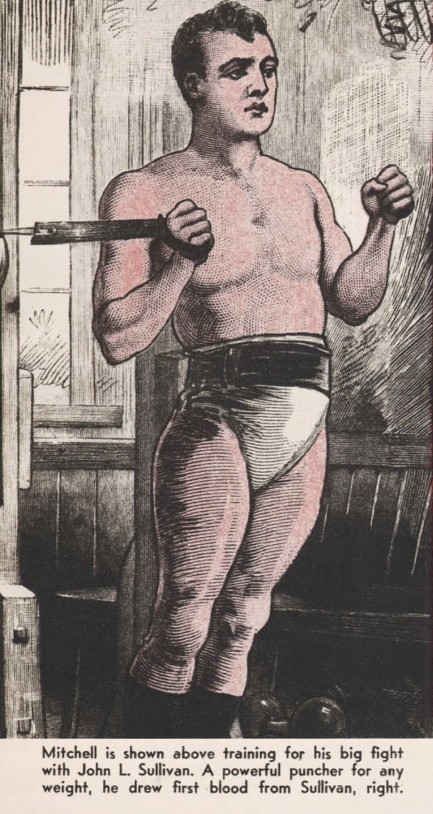 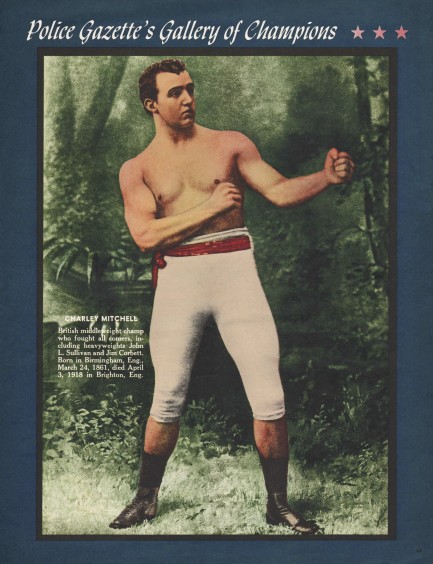
 He wasn't the first and he turned out not to be the last. 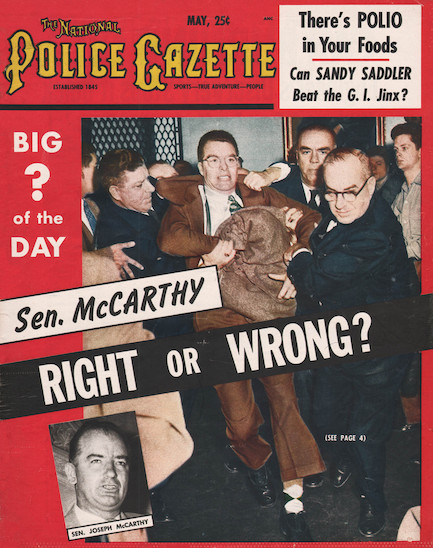
This issue of The National Police Gazette was published this month in 1954, with a cover asking whether Senator Joseph McCarthy was right or wrong. About what exactly? About whether the U.S. Army was infiltrated by communists. This Gazette appeared during the Army–McCarthy hearings, which were held from April to June of ’54, looking into accusations of corruption made against a McCarthy loyalist by high ranking members of the U.S. Army, and McCarthy's commie counter-accusations, as well as assertions by him that the Army's claims against his associate were politically motivated. You could mistreat and insult lots of groups in the United States back then and most people didn't greatly care, but as a politician you couldn't—and still can't—do it to the armed forces. McCarthy was a classic demagogue who trafficked in blame and demonization of entire groups of people, but he overstepped his bounds when he took on the Army. He came out of the hearings looking terrible, and his downfall was assured.
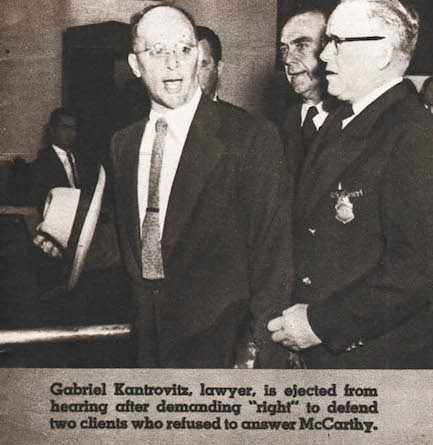 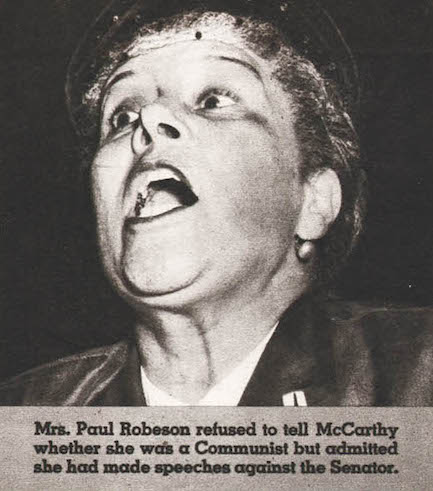 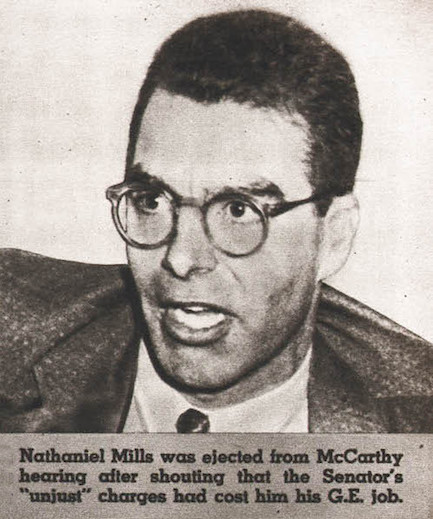 Police Gazette is solidly on McCarthy's side, though, which is no surprise if you know anything about the magazine. The basis of its support is that McCarthy was right that there were influential communists in America. At the time, only a brave few people seemed capable of asking why that was an issue at all. Police Gazette is solidly on McCarthy's side, though, which is no surprise if you know anything about the magazine. The basis of its support is that McCarthy was right that there were influential communists in America. At the time, only a brave few people seemed capable of asking why that was an issue at all.
Numerous western countries had fully functioning communist parties then, and for the most part they still do. Yet given a place in the arena of ideas, communists haven't gained much traction with the public. Possessing the right to elect communist politicians, the vast majority of people haven't voted for them, and in the case of the U.S. it's reasonable to assume they never will.
Yet McCarthy believed U.S. voters should not even be allowed to hear communist ideas. It may be stating the obvious in this day and age, but if traditional political offerings—from whatever end of the spectrum—can't win the debate against those of an upstart's, then it's because politics as usual are adjudged by the populace to be a failure. The obvious solution for mainstream parties is to have better policies, but often vested interests make that a practical impossibility.
McCarthy and the Gazette believed suppressing communist political thought was a sign of strength, but in reality it was a sign of weakness symptomatic of an irrational fear that their policies, if measured against those of communists, would fail to win the hearts of American voters. And this is perhaps why, while American demagogues such as him sometimes have their moment of support, history never judges their lack of faith kindly. The McCarthys of political life always pretend to be divinely guided, or driven by a greater purpose, or bestowed with an unshakeable public mandate—sometimes all three—but once the cruelty at the heart of their demagoguery becomes clear, their supporters quietly scurry for the exits. In the end, demagogues go into the history books as, at best, national embarrassments, or at worst, scourges and human monsters. Americans don't much like presumptions to be made for or about them. Really nobody does, even presumptions for the supposed greater good. McCarthy presumed too much. Today his name has become an adjective signifying a type of opportunistic treachery, the place of honor in the American political pantheon he thought he was building for himself never came to be, and he died knowing people were glad he was going away. He won't be the last American demagogue this happens to. We have numerous scans below, and many more Gazettes in the website. 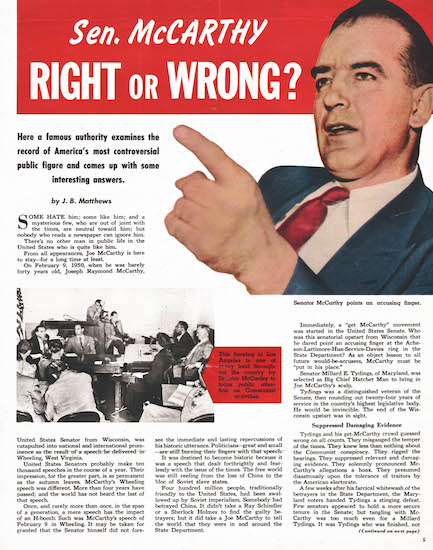 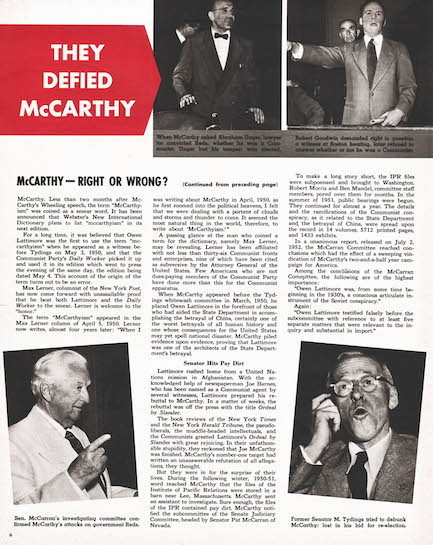 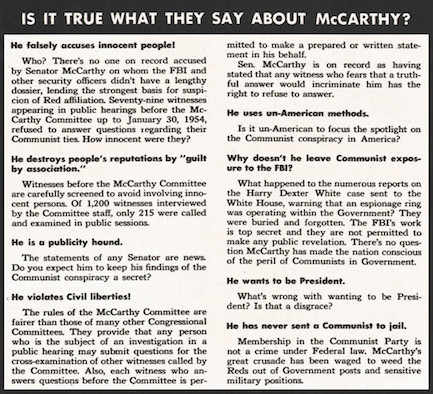 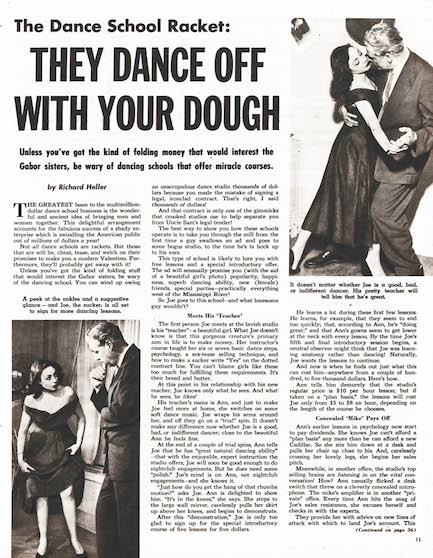 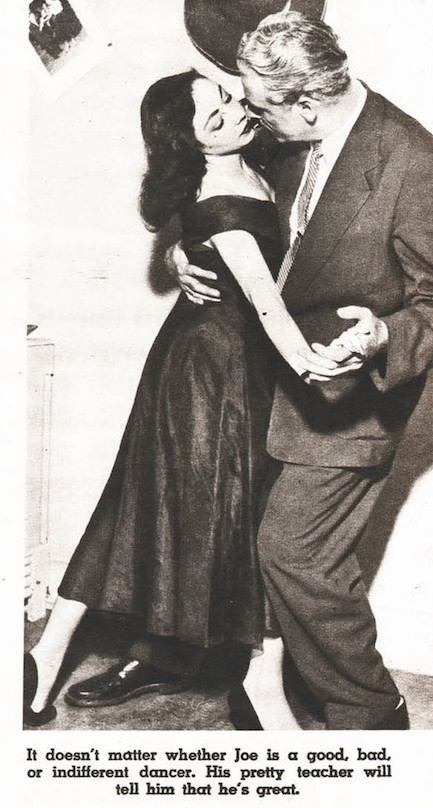 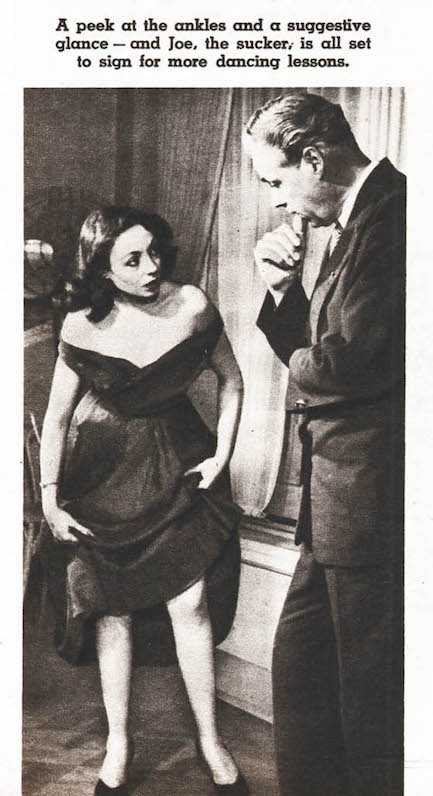 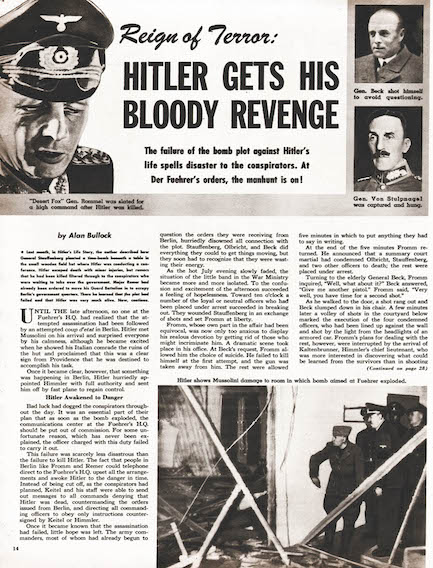 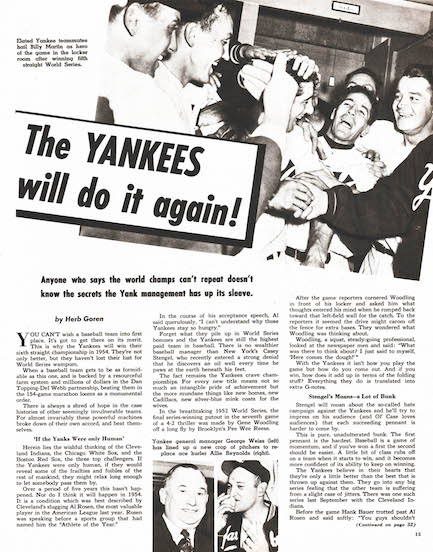 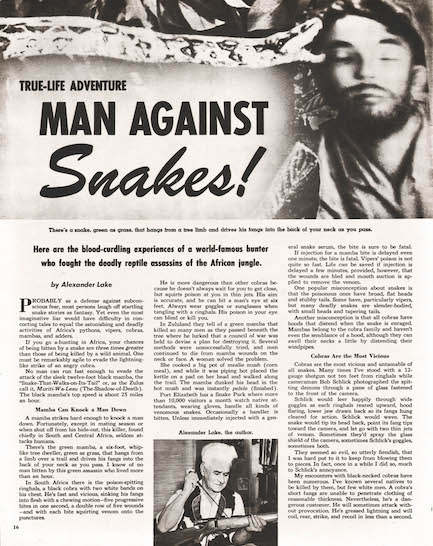 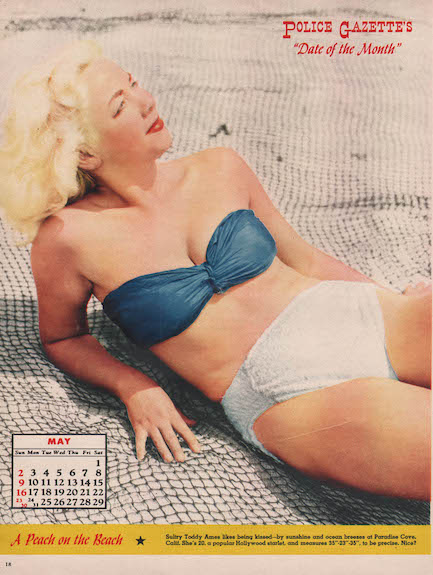 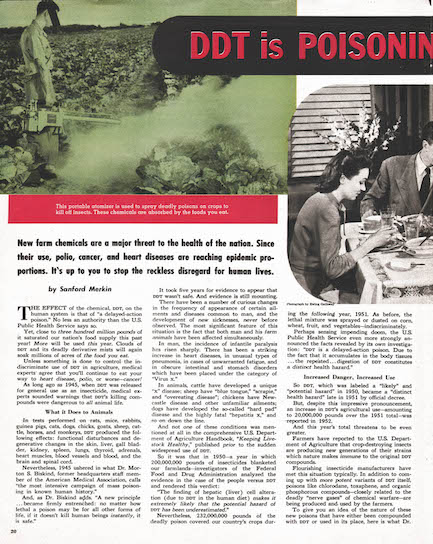 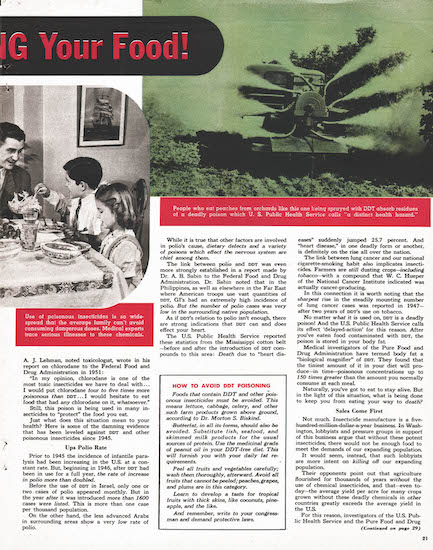 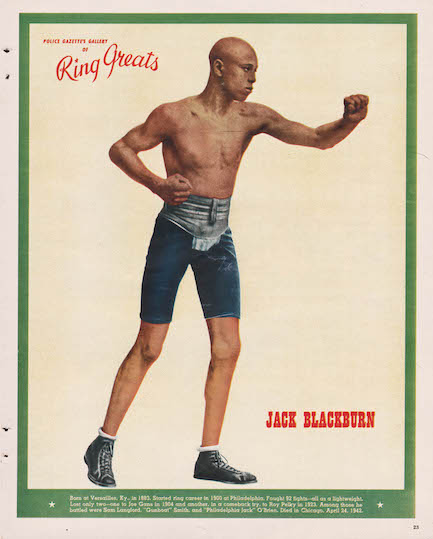 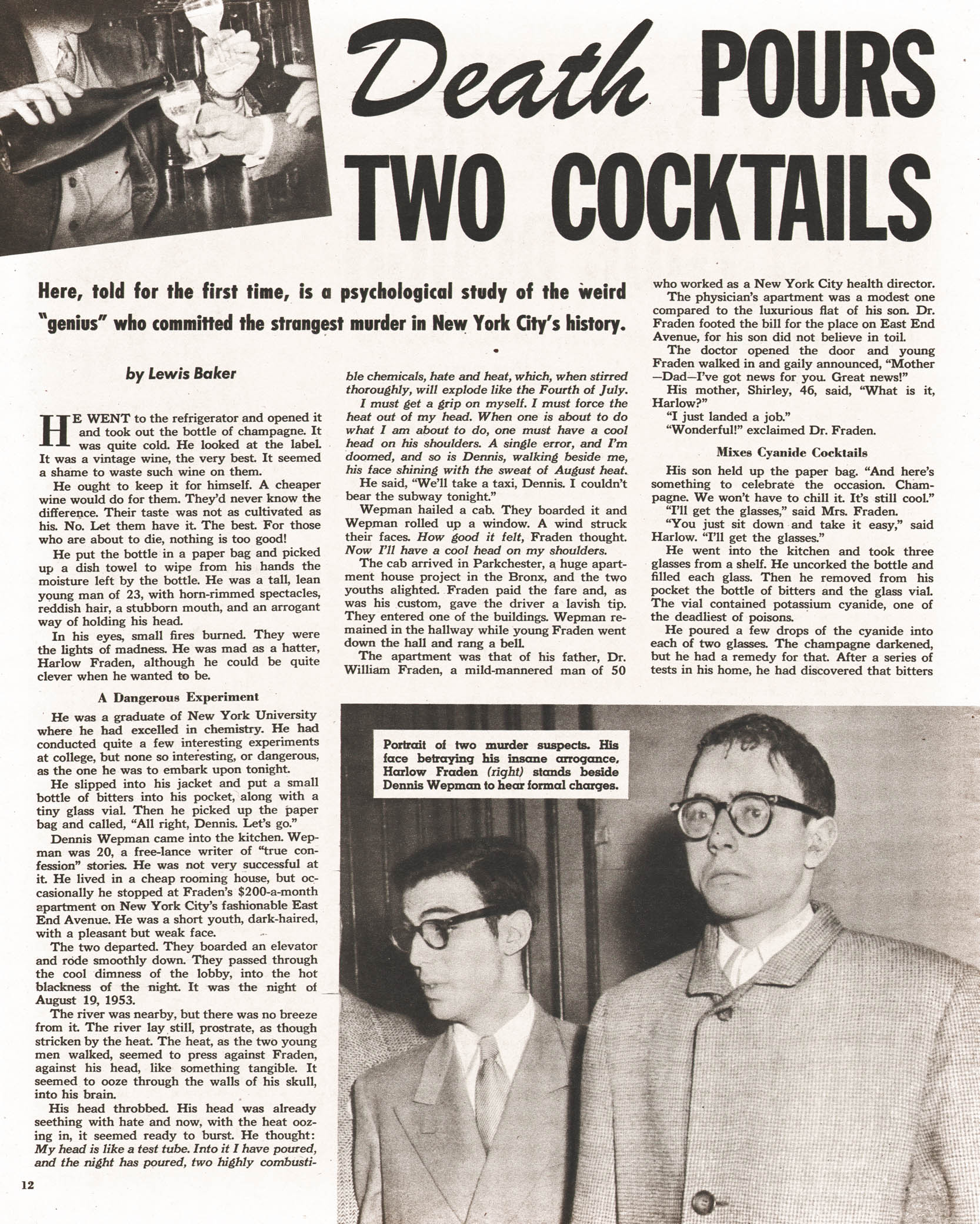 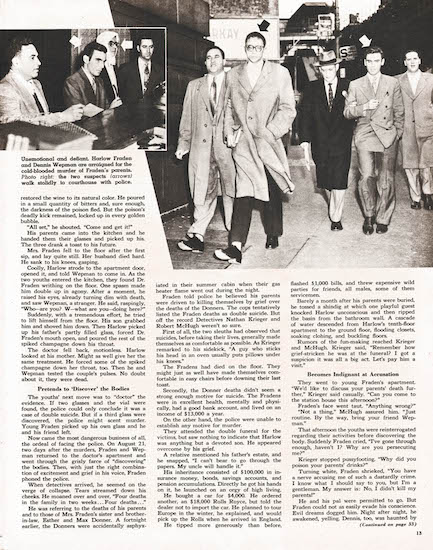 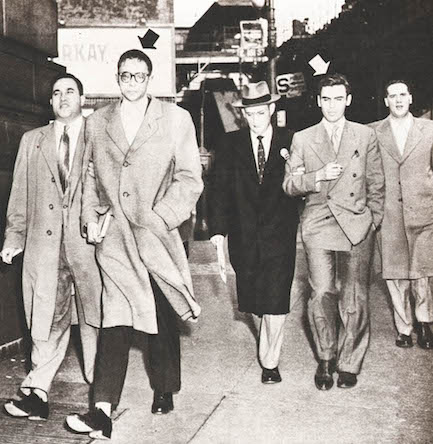
 They all screwed people but only one of them wanted the public to watch. 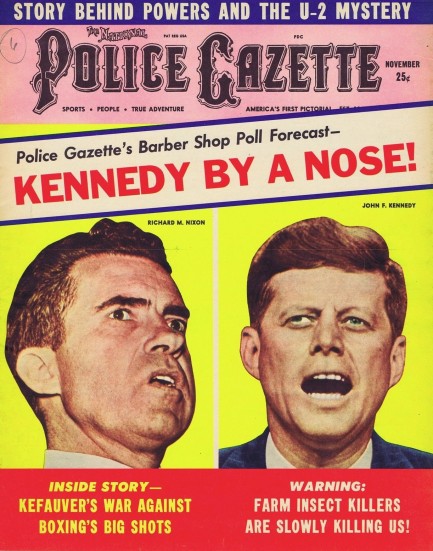 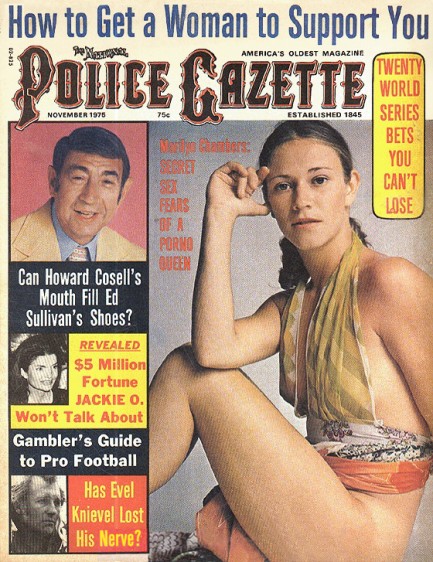
We were fishing around online and found a couple of November covers of The National Police Gazette, both quite interesting, issued fifteen years apart. On top you have Gazette editors predicting a 1960 election victory for John F. Kennedy over Richard Nixon “by a nose!” They were right about that, though Nixon would become president later and his nose would grow greatly. Meanwhile Kennedy had his own fun with a piece of anatomy that got bigger, if reports are to be believed. The second cover features a very nice image of Marilyn Chambers from 1975, whose specialty was making other people's body parts swell in x-rated films. The shot comes from the same session that produced this rare image we shared back in 2011. We still have a pile of Gazettes but we've been very lazy about scanning them because of the requirement to scan each page in two parts then join them in Photoshop. It's a pain, so we tend to focus on smaller magazines whose pages we can scan in one piece. But we'll get to those Gazettes eventually. Promise.
 Rumors spread, gossip revealed, scandals shared. 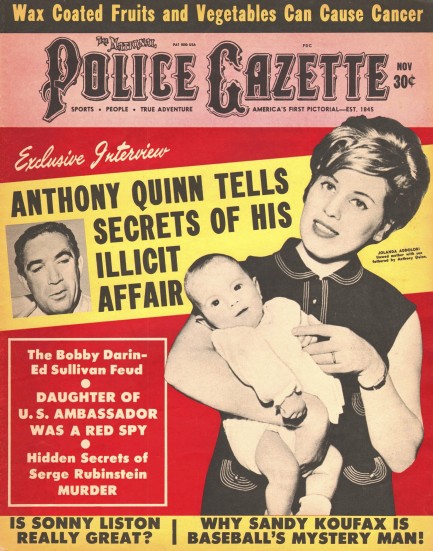
We're back to The National Police Gazette with an issue published this month in 1963. The cover is given to Jolanda Addolori and Anthony Quinn, who were unmarried but had a child together, a real no-no for the time period, particularly when you already have a wife and four children, as Quinn did. His wife was actress Katherine DeMille, who was most active during the 1930s, before devoting time to motherhood. Quinn eventually divorced her and married Addolori in 1966. Elsewhere in the issue you see Bobby Darin and Sandra Dee, get nice photos of Grazia Buccella and Veronique Vendell, and learn about the ring prowess of Sonny Liston and Max Schmeling. You can see many more Gazettes at our tabloid index located here.  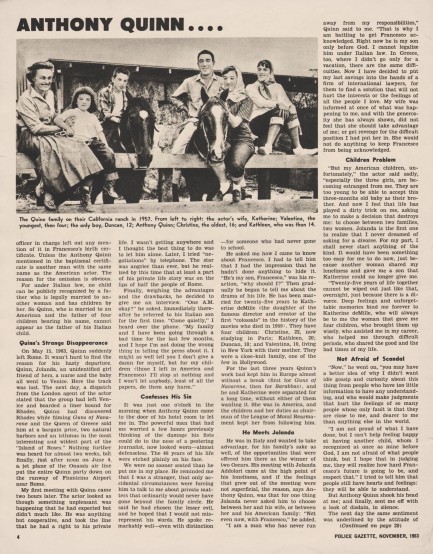  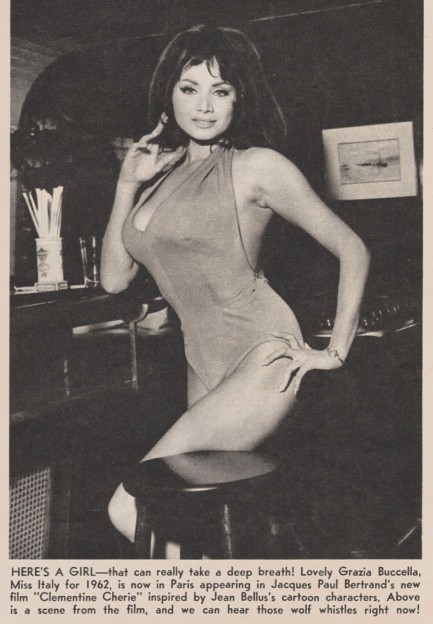 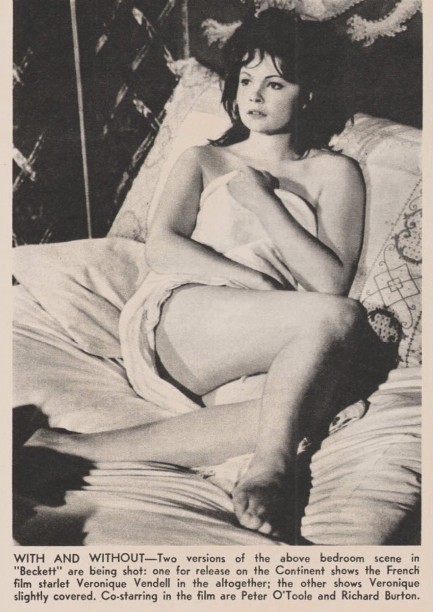 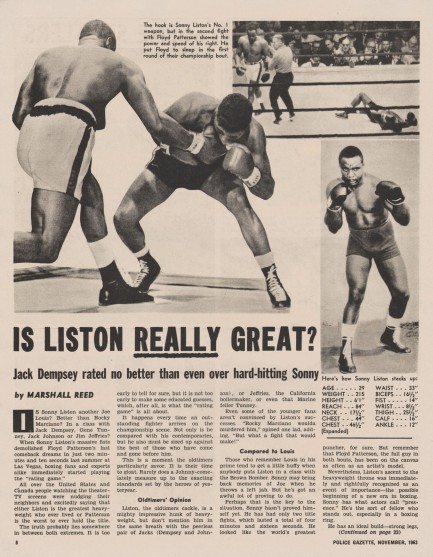 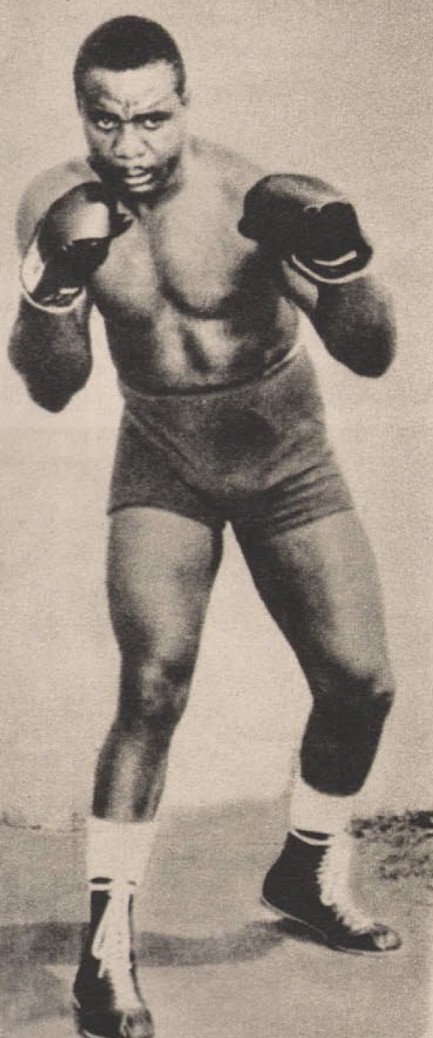 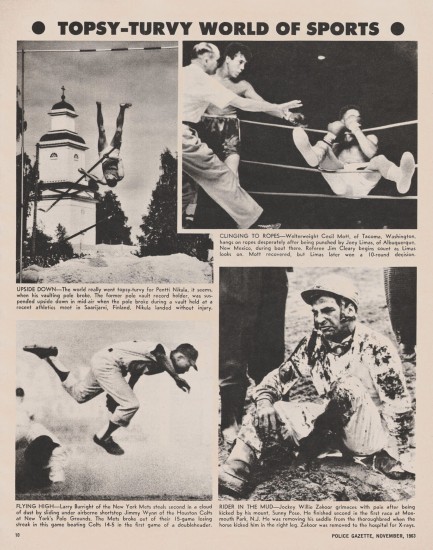 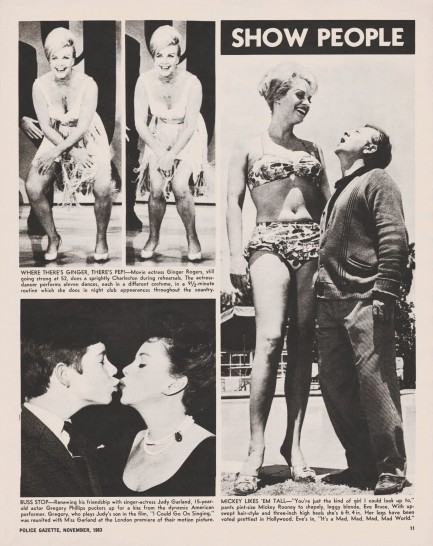 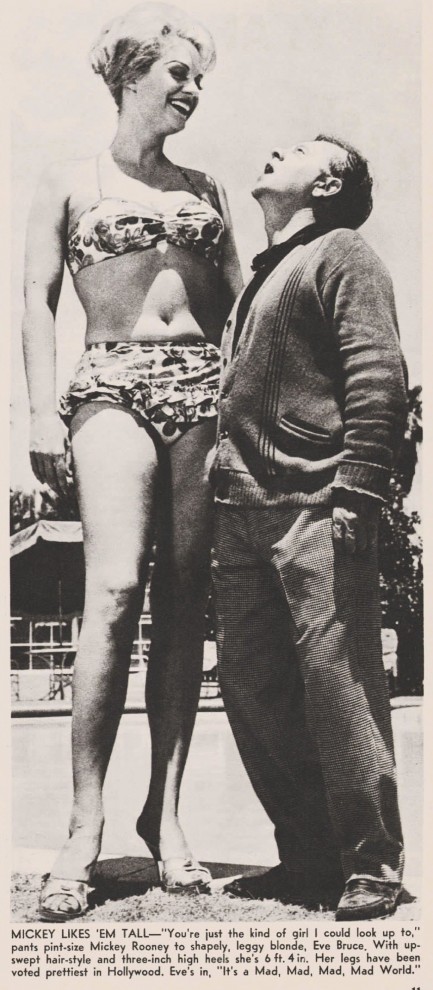 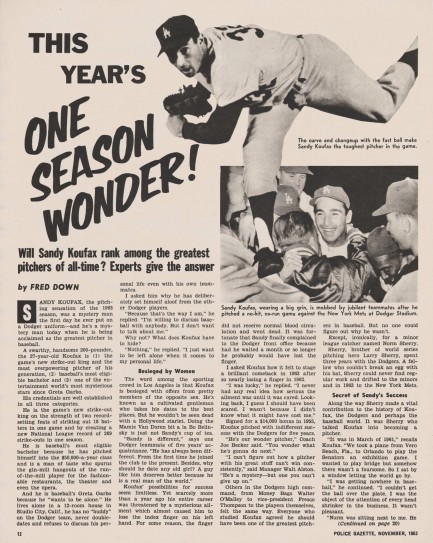 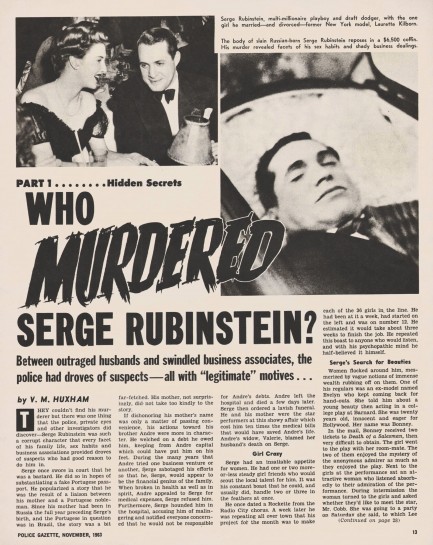 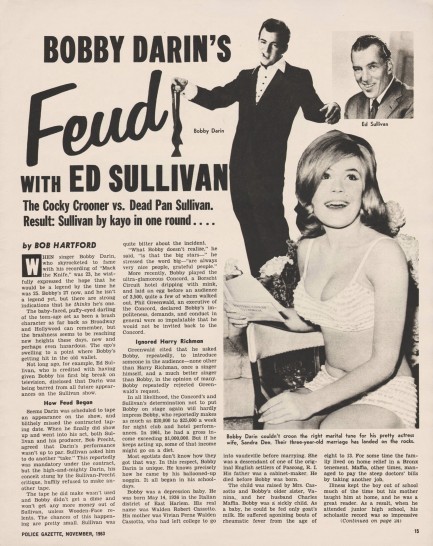 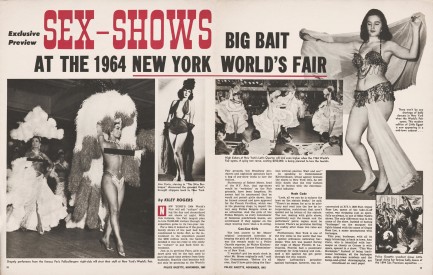 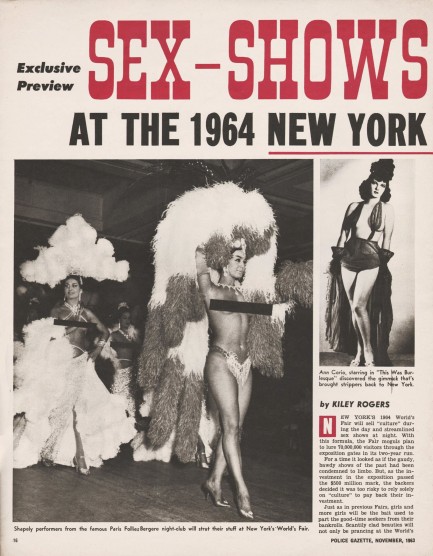 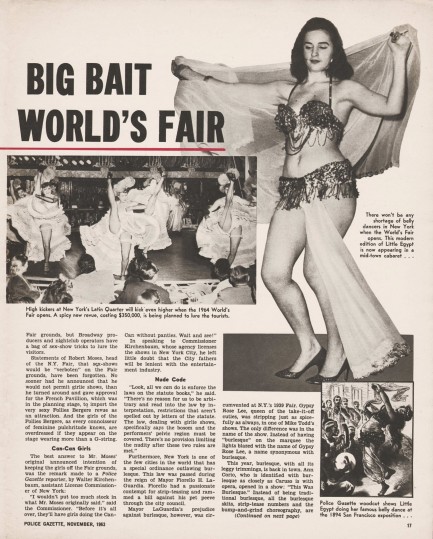  
 He destroyed everything in his path—including himself. 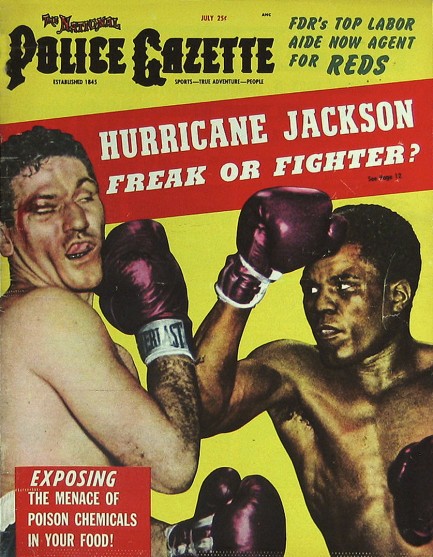
The National Police Gazette published this issue in 1954, with a cover featuring pro heavyweight boxers Tommy Hurricane Jackson and Dan Bucceroni battling at Eastern Parkway Arena in Brooklyn, New York. The fight took place on March 29, and Jackson won with a TKO in the 6th. He never won a heavyweight title, but was well regarded in fight circles for being fearless, if not self-destructive. In fact, he once fought Floyd Patterson and was knocked down nine times. Each time he rose to absorb more punishment, before losing by TKO in the tenth round. It was apparently one of the worst ring beatings ever, made worse by Jackson's sheer will. Afterward, boxing authorities suspended his license for his own protection. It was a temporary ban designed to force him to recover fully before fighting again, but we've never heard such a drastic step. It's indicative of Jackson's reputation. Was he fearless, crazy, or both? Opinions vary, but we love this Gazette cover. The magazine specialized in boxing photo-illustrations, which we've documented here, here, here, and other places if you're inclined to dig around the site. 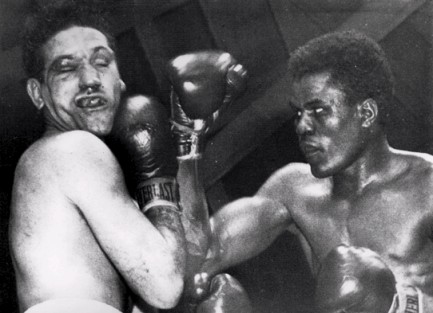
 A legendary boxer faces the winter of his discontent. 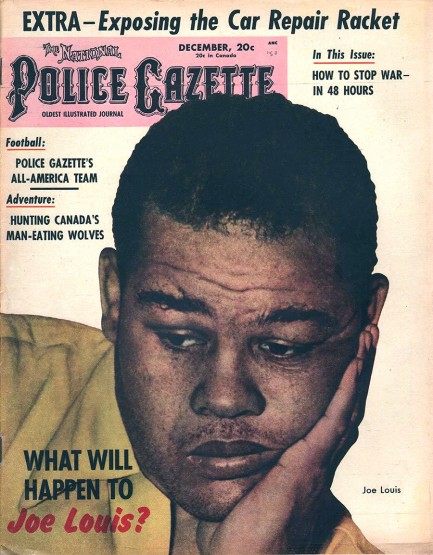
The National Police Gazette asks on a cover from this month in 1950 “What Will Happen to Joe Louis?” It's a poignant question. Louis had earned more than $4 million during his boxing career (about $40 million in 2016 money), but thanks to predatory managers and slimy handlers had received only about $800,000 of it. However, his gross earnings left him with a huge tax bill, forcing him to fight past his prime in an attempt to pay off the debt. In September 1950 he met Ezzard Charles and was thrashed. For his pain he earned just over $100,000—not nearly enough to pay off the government. Left with no choice, he decided to shoot for another big payday. First he notched several wins again club level fighters, then booked a bout against another top boxer. That boxer was twenty-seven year old Rocky Marciano, and the meeting ended with Louis being knocked clean out of the ring. So, getting back to the Gazette's question: "What will happen to Joe Louis?" What happened is he retired and became an exhibition fighter, still carrying that heavy debt, and he never paid it off.

|
 |

The headlines that mattered yesteryear.
1945—Mussolini Is Arrested
Italian dictator Benito Mussolini, his mistress Clara Petacci, and fifteen supporters are arrested by Italian partisans in Dongo, Italy while attempting to escape the region in the wake of the collapse of Mussolini's fascist government. The next day, Mussolini and his mistress are both executed, along with most of the members of their group. Their bodies are then trucked to Milan where they are hung upside down on meathooks from the roof of a gas station, then spat upon and stoned until they are unrecognizable. 1933—The Gestapo Is Formed
The Geheime Staatspolizei, aka Gestapo, the official secret police force of Nazi Germany, is established. It begins under the administration of SS leader Heinrich Himmler in his position as Chief of German Police, but by 1939 is administered by the Reichssicherheitshauptamt, or Reich Main Security Office, and is a feared entity in every corner of Germany and beyond. 1937—Guernica Is Bombed
In Spain during the Spanish Civil War, the Basque town of Guernica is bombed by the German Luftwaffe, resulting in widespread destruction and casualties. The Basque government reports 1,654 people killed, while later research suggests far fewer deaths, but regardless, Guernica is viewed as an example of terror bombing and other countries learn that Nazi Germany is committed to that tactic. The bombing also becomes inspiration for Pablo Picasso, resulting in a protest painting that is not only his most famous work, but one the most important pieces of art ever produced. 1939—Batman Debuts
In Detective Comics #27, DC Comics publishes its second major superhero, Batman, who becomes one of the most popular comic book characters of all time, and then a popular camp television series starring Adam West, and lastly a multi-million dollar movie franchise starring Michael Keaton, then George Clooney, and finally Christian Bale. 1953—Crick and Watson Publish DNA Results
British scientists James D Watson and Francis Crick publish an article detailing their discovery of the existence and structure of deoxyribonucleic acid, or DNA, in Nature magazine. Their findings answer one of the oldest and most fundamental questions of biology, that of how living things reproduce themselves.
|

|
|
It's easy. We have an uploader that makes it a snap. Use it to submit your art, text, header, and subhead. Your post can be funny, serious, or anything in between, as long as it's vintage pulp. You'll get a byline and experience the fleeting pride of free authorship. We'll edit your post for typos, but the rest is up to you. Click here to give us your best shot.
|
|