| Modern Pulp | Mar 8 2024 |

In Japan business is war—complete with innocent bystanders.

This brilliant promo was painted for Hana to hebi: Shiiku-hen, known in English as Flower and Snake 3: Punishment. It starred Minako Ogawa of Dan Oniroku ikenie shimai, aka Sisters To Be Sacrificed, and in fact the same painter must have produced both posters. Have a look. The central figure is almost identical, no? Right down to her hairy armpits. Since there's no official info on who the artist is we'll throw in our two cents. It was bondage painter Kaname Ozuma. He painted at least one other poster for the Flower and Snake series, which you can see here. In the meantime this piece is literally nowhere else to be found in the quality you see here. At least, as far as we can tell.
We watched the film and it's a typically perverse roman porno tale about a powerful businessman married to Minako Ogawa, who he stole from a subordinate who was helpless to prevent it. When he later declines to help a business associate out of a jam that person has Ogawa kidnapped—literally thrown into a giant bag—taken to an isolated house, sexually assaulted, and coercively trained using bondage, a kielbasa, and other esoterica in order to turn her into a performer for live sex shows. That's a hell of a twisted retaliation for being refused financial help, but twisted is what roman porno is all about.
Of technical note is the fact that, though it was illegal to show pubic hair in Japanese movies, the ever clever roman porno filmmakers found a loophole. They have Ogawa's captors, as part of her torment, cut off her pubic hair with scissors. Though it couldn't be shown attached to her body without bringing down the wrath of censors, they got away with showing it falling into bathwater. You gotta give the pervs credit. They were always thinking outside the—er—box. Hana to hebi: Shiiku-hen premiered in Japan today in 1986.
After a long day on the set filming sex and bondage...

I'm very happy to spend the evening doing this.
JapanNikkatsuHana to hebi: Shiiku-henFlower and Snake 3: PunishmentMinako OgawaYuri YauMariko KajikawaKaname Ozumapinkuroman pornosexploitationbdsmnudityposter artcinemamovie review


| Modern Pulp | Aug 25 2022 |

When is a flower not a flower and a snake not a snake? In Japanese cinema.
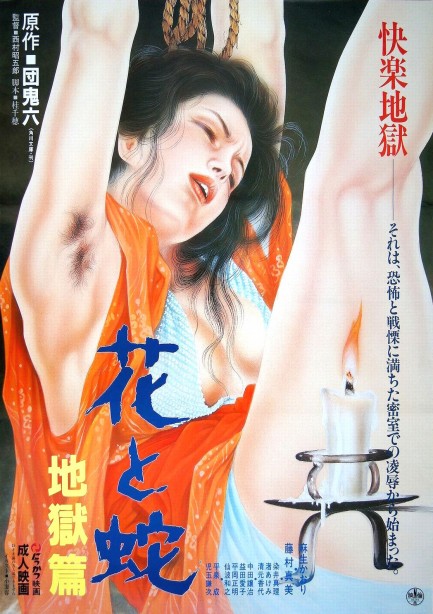
Above you see a poster for the Nikkatsu Studios roman porno movie Hana to hebi: Jigoku-hen, known in English as Flower and Snake: Sketch of Hell. In this genre, any mention or sight of a flower is liable to be symbolic. Some call them vulvic symbols, some yonic symbols, but in either case something phallic is usually about to rear its ugly head. The movie starred Kaori Asô and Mami Fujimura, and it was second in a Flower and Snake franchise that eventually numbered eight entries, with this one premiering in Japan today in 1985. That puts it outside our vintage purview, since for our purposes we define modern as anything from 1980 and after, but we had to show you the poster art. How could we not? This amazing promo was painted by famed bondage artist Kaname Ozuma, whose work you can see with an image search. Japanese film studios were very interested in bondage, and Japanese audiences must have been too, because many roman porno films with bdsm themes did well at the box office.
Much of the interest in the subject derived from literature, particularly the works of Oniroku Dan, who wrote the source novel for this film. His books were behind about three-dozen roman porno productions. While we don't get these explorations of humiliation and bondage, we understand that every culture has its particulars. For example, if you go on Japanese Wikipedia, celebrities' biographies often contain their blood types. On the other hand, if you go on U.S. Wikipedia, celebrities' biographies often contain their political allegiances. Objectively, both types of information are completely pointless, yet they suggest—interestingly—what obsesses each culture.
What we're saying is that since we're not Japanese, we can't offer much insight into the roman porno wave that swept Japan. We can do the when, where, who, and how of it—but not the why. But we like the posters, the films are usually incredibly well shot, and the actresses are generally stunning, so we watch the movies and tell you whether we liked them. You're probably wondering if we watched Jigoku-hen. We did, and it's what we expected—longform bondage and torture, softcore style, with little shown, but plenty implied. While it stars Asô and the amazing Fujimura, we don't recommend it unless you're okay with plenty of tears and pee. Neither of those are our bag, and if they're yours, maybe talk to someone. Below, Fujimura is happy after washing off the stain of having starred in such a mean and pointless film, while Asô calls home from vacation and tells her family she's recovering fine.


JapanHana to hebi: Jigoku-henFlower and Snake: Sketch of HellKaori AsôMami FujimuraOniroku DanKaname Ozumaposter artcinemasexploitataionpinkuroman pornobdsmmovie review

| Sex Files | Jul 29 2022 |

Supply and demand in the unfree market.

Oh no! It's another National Informer. You're thinking, “Three days in a row? How many of these rags do they have?” Well, more than several, clearly, since we always post them on their publication dates and these ended up being consecutive. This issue, which hit newsstands today in 1973, offers a report on the so-called sex slave markets, which according to Informer were in existence in Turkey, Morocco, Algeria, Lebanon, and Ghana. This is not exactly a newsflash. Just recently, the Credite Suisse leak, which we wrote about, revealed that sex traffickers were using Swiss banks to stash funds. Shockingly—and we know this will knock you for a loop—it's extremely difficult to eradicate anything that generates enough profits to interest the international banking sector. Business, real estate, oil, weapons, human trafficking, drugs—it's all of a piece to the banks.
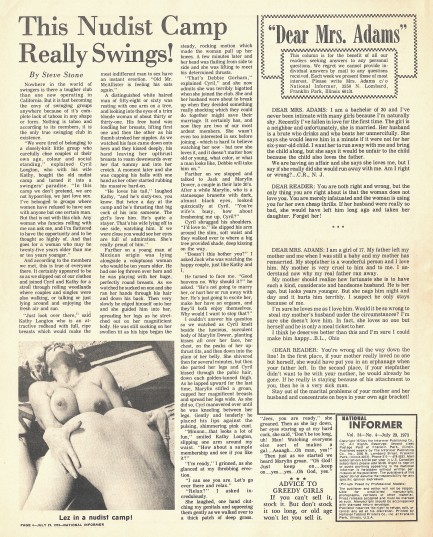
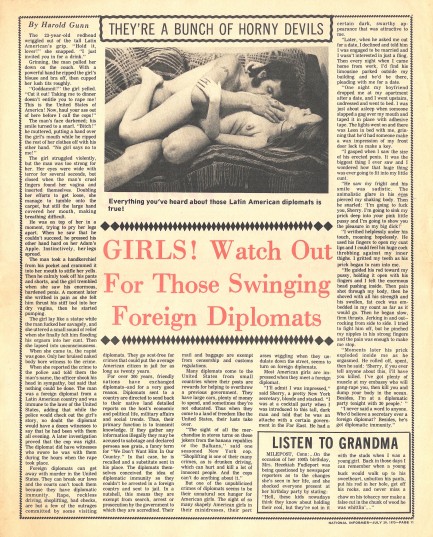
To go along with its sex slave reporting Informer offers up a side helping of bdsm content, including a blurb on Bella Silverman, who was allegedly Miss Nude Dominant Female of 1973. You see her just below, complete with a terrifying mask that doesn't exactly scream erotic thrills. Or is that just us? We looked up Bella, but there was no info at all. Maybe she's a banker now. Elsewhere Informer tells readers that age is no barrier to sex, nudist camps really swing, and foreign diplomats are sex maniacs. And lastly, resident psychic Mark Travis makes a set of surprisingly prosaic predictions, including about future shoe fashion, breakthroughs in spray paint, and the California housing market. We suppose even psychics get tired of talking about Bigfoot and UFOs. Well, here's a prediction: there will be no National Informer tomorrow. Enjoy the scans.















| Modern Pulp | May 17 2022 |

Of all the different types of queens, I had to be the damn queen of S&M.
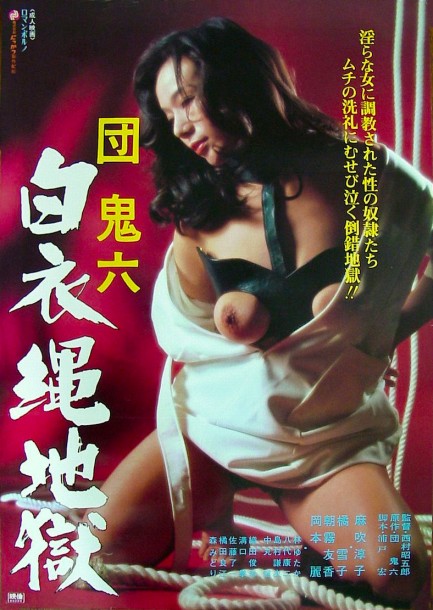
Maybe Junko Mabuki wasn't the queen of Nikkatsu Pictures' roman porno cycle, but she was certainly one of its major figures, and oh, the ordeals she went through in her fifteen films. This poster that has her looking like she somehow got stuck inside Batman's mask was made for Dan Oniroku hakui nawa jigoku, known in English as White Uniform in Rope Hell and—unfortunately—All Women Are Whores. We couldn't locate the movie, which caused us to breathe a sigh of relief. But if you want to know what Mabuki was all about, cinematically speaking, the films of hers we have watched include (English titles only) Female Teacher: Rope Hell, Female Beautician Rope Discipline, Secretary Rope Discipline, and Blazing Bondage Lady. Those titles should answer any questions. We also watched her in Hell of Roses, which, while its title seems to suggest a thematic and tonal change from Mabuki's usual fare, is also about ropes. Dan Oniroku hakui nawa jigoku premiered in Japan today in 1980.

JapanNikkatsuDan Oniroku hakui nawa jigokuWhite Uniform in Rope HellAll Women Are WhoresJunko MabukiYuko AssagiriDan Onirokuposter artroman pornopinkucinemakinbakushibaribdsm

| Vintage Pulp | May 16 2022 |

Her situation is already bad, but as it unfolds it gets even worse.
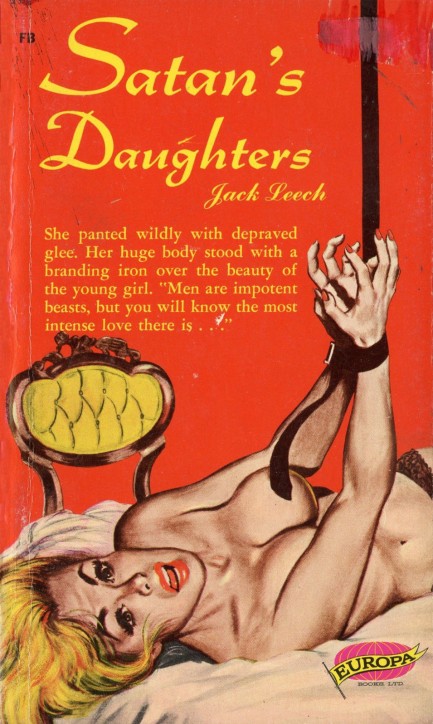
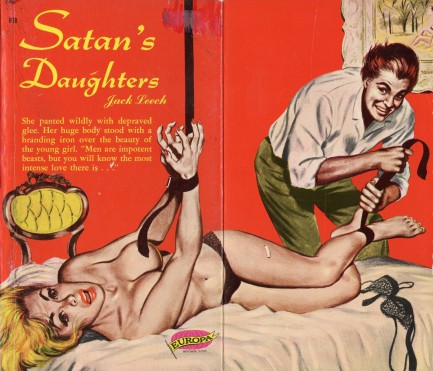
A woman in a dire situation stars on this cover for Jack Leech's 1963 sleaze novel Satan's Daughters (interestingly, while Leech is credited as author on the outside, John Trimble gets credit inside, so take your pick). The artist here is Bill Edwards, and this is another foldout effort he painted for Europa Books. We love these things, but we wish there were more. As we mentioned previously, there are probably only five.

| Modern Pulp | Feb 2 2022 |

It was just her imagination running away with her.
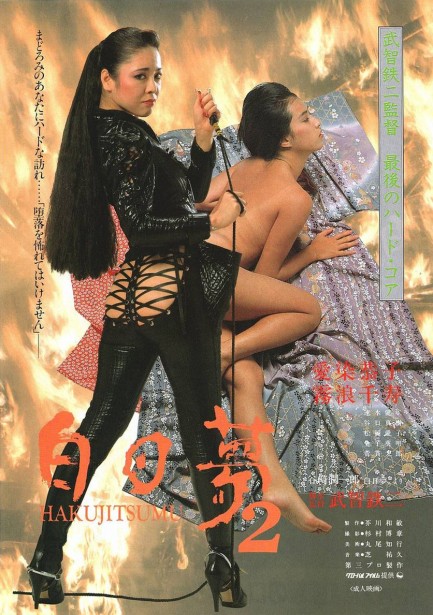
This bondage themed poster for Tetsuji Takechi's Hakujitsumu 2, aka Daydream 2, promotes the third iteration of a film he first made in 1967, then remade in 1981. It's labeled “2” because the first movie was a drama, while the second was x-rated. This version is x-rated too, so it's the second porn outing for the title, hence number 2, though it's really number 3. Hope that makes sense. However you number it, it's similar wine in a different bottle, as director Takechi keeps his remake of a remake highly erotic, while going more hallucinatory. Kyōko Aizome, star of the previous version, is joined by the lithe and beautiful Chizu Kirinami, and she gets the central role as a woman who spirals into a citywide erotic hallucination. We won't bother to detail the plot, because you can get that info at our previous write-ups here and here.
It's clear that Takechi, with a hit on his hands in version two, decided to simply swap Aizome out of the starring role and pass the torch to Kirinami. And why not? She's really lovely. She spends almost the entire movie without a stitch on, even when rappelling over a balcony or wandering the streets of the quasi-reality she's stuck inside. As for you Aizome fans, don't worry—though relegated to a supporting role, she's plenty visible, performs some very carnal scenes, and even wears the assless bondage outfit you see on the poster. Below, because we figured you'd enjoy it, she wears nothing. Kirinami's film career consisted of two movies, which means there isn't much promo imagery out there on her. The monochrome shot will have to do until we turn up something better. Hakujitsumu 2 premiered in Japan today in 1987.


JapanDaisan ProductionsHakujitsumu 2Daydream 2Tetsuji TakechiKyōko AizomeChizu Kirinamiposter artcinemapinkunuditybdsmmovie reviewxxx

| Vintage Pulp | Apr 12 2021 |

Better late than never is our motto around here.
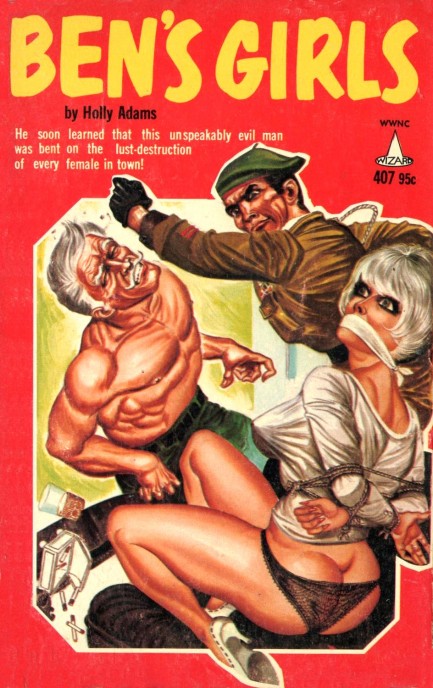
We're finally getting back to paperback artist Gene Bilbrew, whose odd style, with its scantily clad women and their muscular butts has become collectible in recent years. We didn't get it at first, but like a lot of art, once you're exposed to it regularly you begin to appreciate its unique qualities. There's clear intent in Bilbrew's work, a deliberate attempt to approach illustration from a different angle, and we've grown to understand that his cartoonish, chaotic, often humorous, and often bondage themed aesthetic is purposeful. In fact, his imagery has become so intertwined with the bdsm scene that in 2019 the National Leather Association International established an award named after Bilbrew for creators of animated erotic art. While it's not exactly a Pulitzer Prize, the point is that Bilbrew's bizarre visions keep gaining wider acceptance. So for that reason we've put together another group of his paperback fronts. You can see more of them here, here, and here, and you can see a few rare oddities here, here, and here.
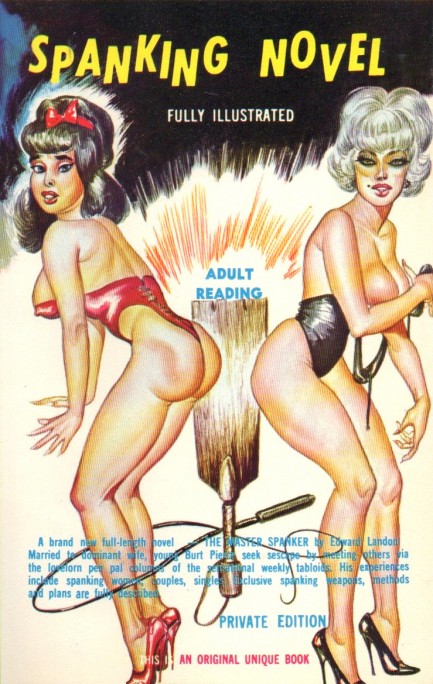
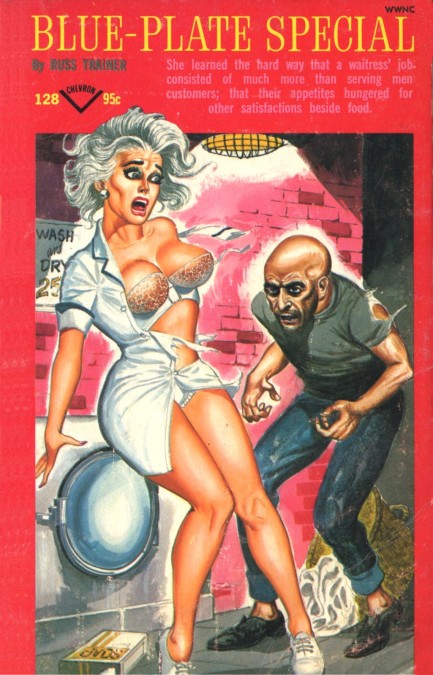
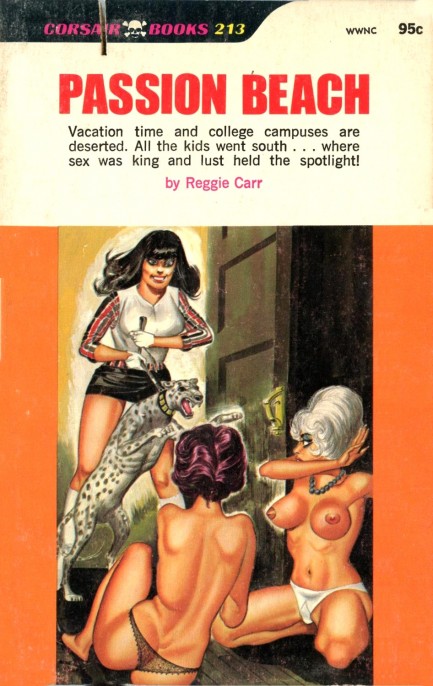
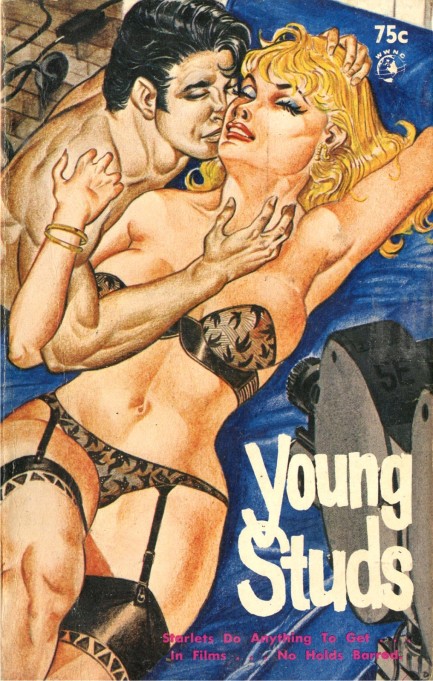
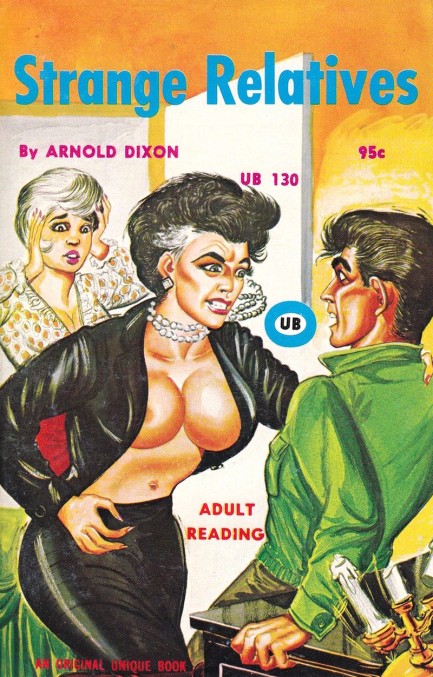

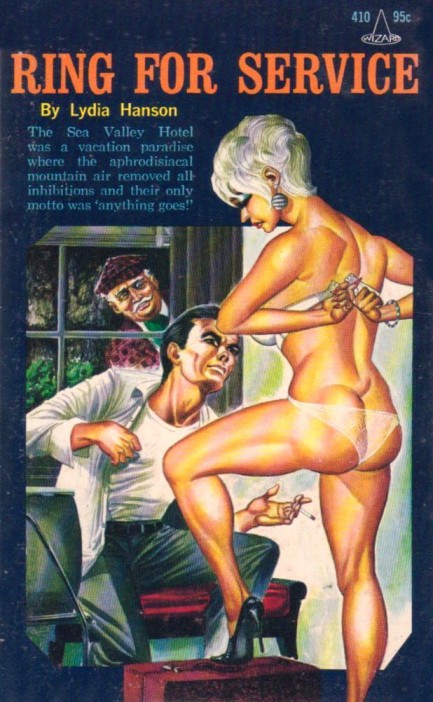

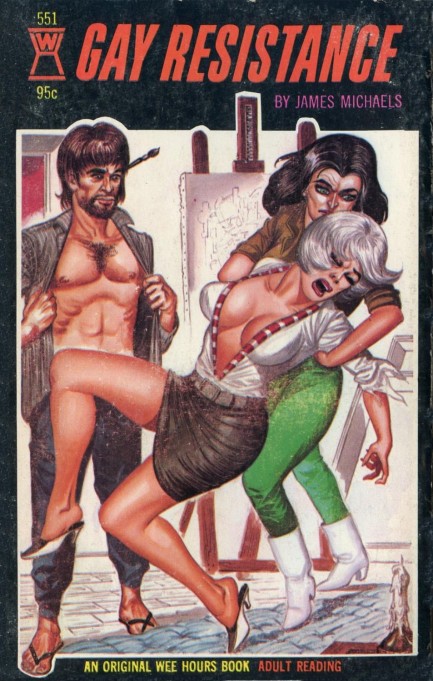
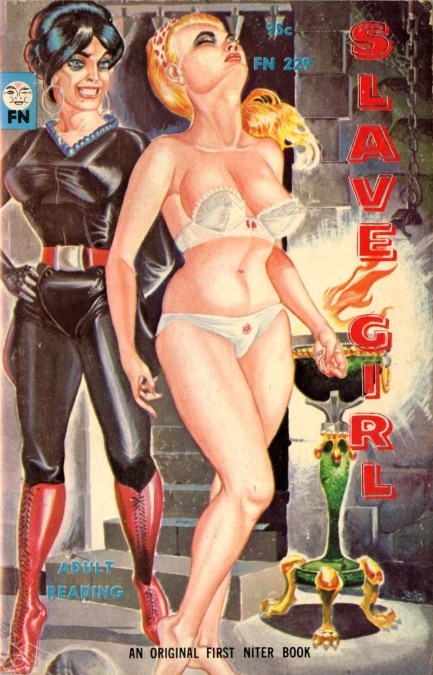
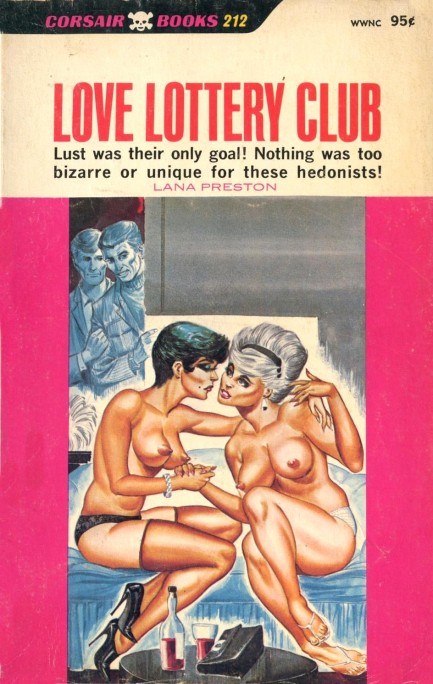
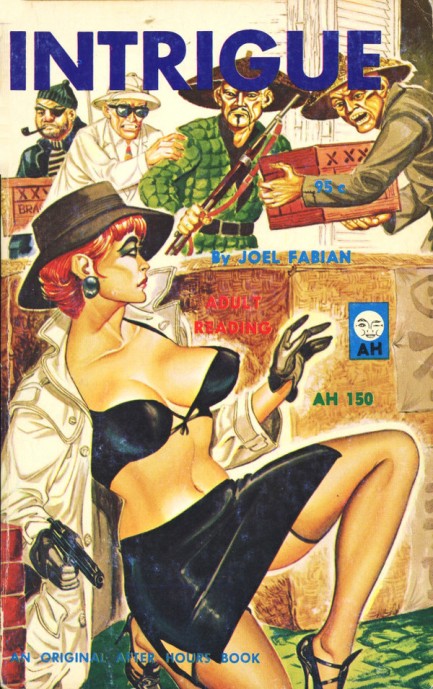

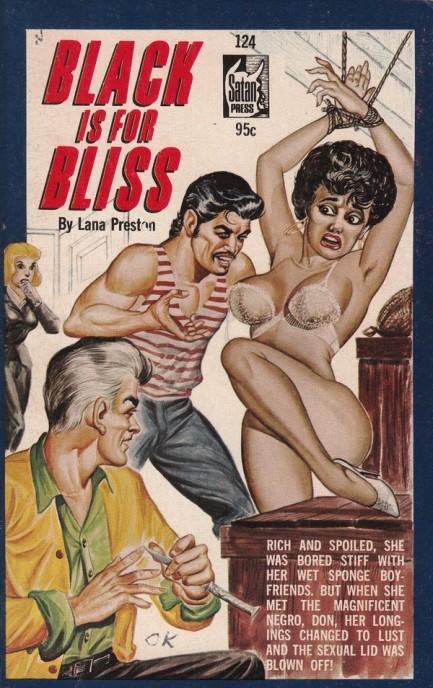
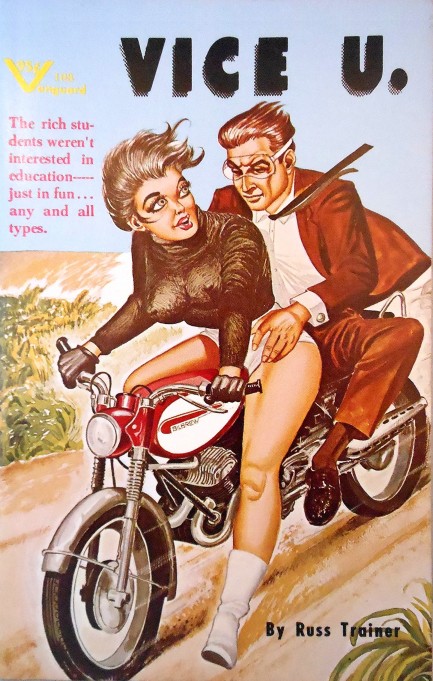
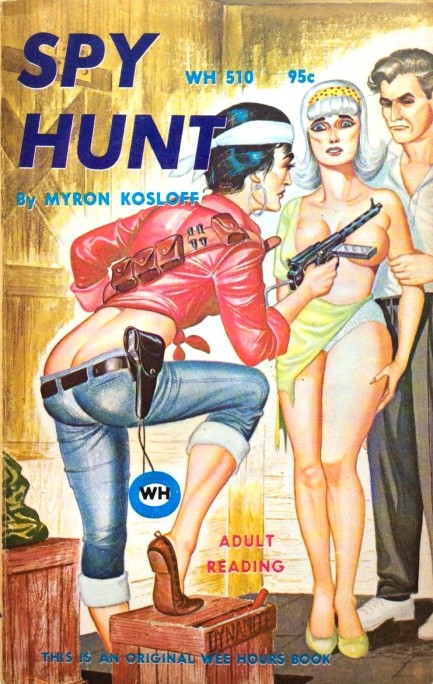
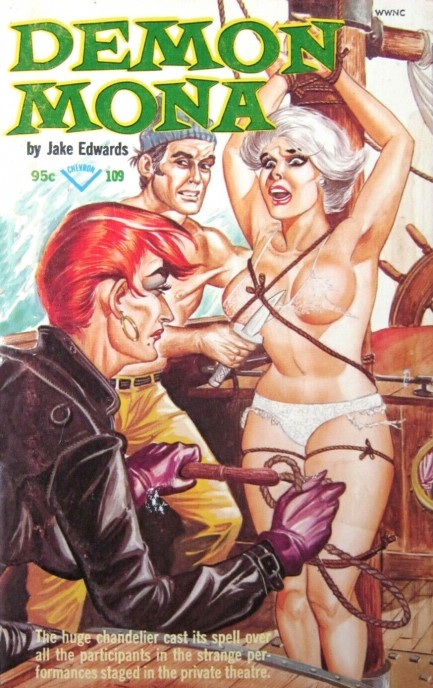

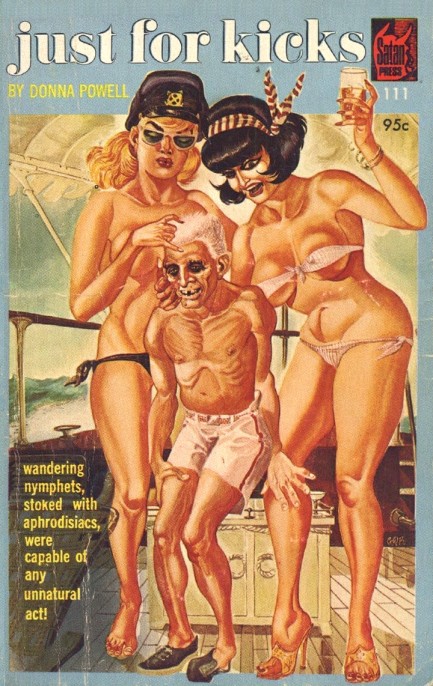
After Hours BooksWizard BooksUnique BooksChevron BooksCorsair BooksFirst Niter BooksCrescent BooksSatan PressWee Hours BooksGene BilbrewHolly AdamsRussell TrainerReggie CarrArnold DixonMyron KosloffJane GreerLydia HansonDarrin WinslowJames MichaelsLana PrestonJoel FabianJohn Parkercover artliteraturecover collectionbdsm

| Mondo Bizarro | Sex Files | Jan 13 2021 |

Sexplay goes south in a big way for cock cage gamesters.

Everything—truly everything—is going digital. We're thrilled to inform you that they finally upgraded the cock cage. We're surprised we missed this tech bombshell when it happened a while back, but finding out late is better than never. Longtime readers will know right away why we had to write about this, because they'll remember the Pulp Intl. cock cages. For newer visitors, back when we bothered putting ads on our website, for a few months we accepted the filthy but spendable lucre of a manufacturer of cock cages. They're metal devices designed to keep your junk trunked, and the idea is to prevent erections, bdsm style, for purposes of denial or punishment. Fun, right?
Now it seems there's a digital version, remotely controlled, compatible with the internet of things. The device, seen above, is called the Cellmate. It's from China-based manufacturer Qiui, and basically you slide this puppy on, lock it, and give someone else the code—and the power over whether to unleash your kraken. This is a quantum leap in sexual discomfort. Back during the analog cock cage days you'd whine to your master or mistress in person to set your peehole free. Now you text them. Maybe send them a frowny emoticon. And somewhere, near or far, they tap a code into their phone and it's sweet release for you.
Except some cheeky hacker found a security flaw and kept an unknown number of unlucky willies locked up against their will. What can you say? Hackers gonna hack, right? And they weren't content just to harass and terrify. They also demanded bitcoin ransoms, and sent messages to the effect of, “Your cock is mine now.” We don't know how many dismayed consumers lost their digital innocence through this scam, nor how many—if any—paid the ransom, but we would. Fuck yeah we would. We'd pay plenty. But we're happy to say it could never happen. The only people who keep our cocks locked up are the Pulp Intl. girlfriends.
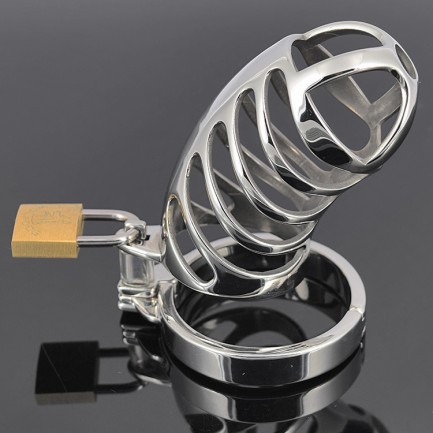 Analog cock cage with cheap dime store lock.
 Digital cock cage with encrypted security. Which would you choose?
| Modern Pulp | May 29 2020 |

Once is bad luck. Twice is a trend. Six times looks more like a career choice.

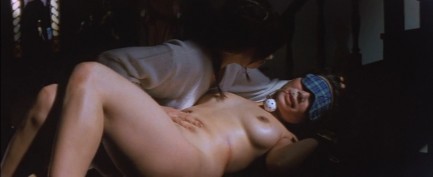
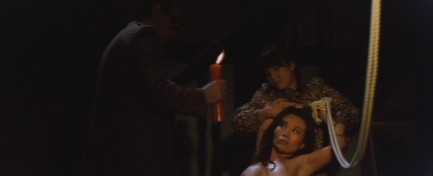
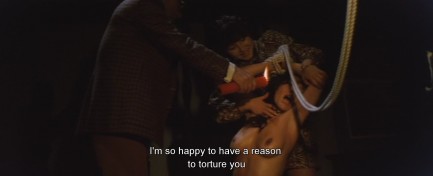
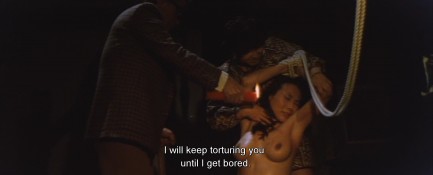
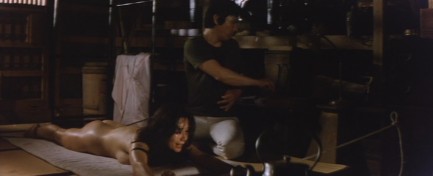
Yes, Junko's back. Counting this movie—Dan Oniroku onna hisho nawa chyokyo, also known as Secretary Rope Discipline—we've now watched six of Miss Mabuki's roman porno outings, and what can we say? They're all crazy. In fact, sources say she retired because her body couldn't stand up to all the kinbaku in these flicks. This time around she's a worker at a fashion house, mostly filing and typing her days away. But she's also stealing trade secrets. When she's caught, she refuses to reveal who put her up to it, and to make her talk, the company's chairman... well, you can figure out what happens next. It involves ropes, whips, and enemas.
There's a subplot. Does anyone care? Okay, her boyfriend is a cheating dawg. He even does it right in front her because he's a terrible guy. It gets worse and worse for Junko. Later the chairman's son takes a liking to her and assumes the duties of disciplining her, which leads to her being forcibly tattooed—a standard and terribly disturbing motif in these films. The two plot streams intertwine, so to speak, in a final manic orgy. We knew fashion was a tough industry, but we had no idea it was anything like this. Next time you buy a new outfit, try to remember the pain and suffering that went into it. Dan Oniroku onna hisho nawa chyokyo premiered today in 1981.









JapanDan Oniroku onna hisho nawa chyokyoSecretary Rope DisciplineJunko Mabuki麻吹 淳子Jun Nakaharaposter artcinemapinkuroman pornosexploitationkinbakushibaribdsmnuditymovie review

| Vintage Pulp | Oct 6 2019 |

No wonder divorce rates are sky high.

Did we mention that the Pulp Intl. girlfriends are out of town? No? Well, they are, so it's time to screen the craziest shit vintage cinema has to offer—’70s roman porno. We don't truly understand the films, but we try. What we do understand is that on some level the previous decades' restraint in Japanese cinema was being challenged by filmmakers given almost total artistic control, as long as the films had four sex scenes per hour. So what you get is a lot of daring explorations of previously untouchable themes, and a lot of visual artistry designed to titillate without violating censorship restrictions. Japan's oldest studio, Nikkatsu, made these films, and many were hits with both audiences and critics (who we suspect in both cases were preponderantly male).
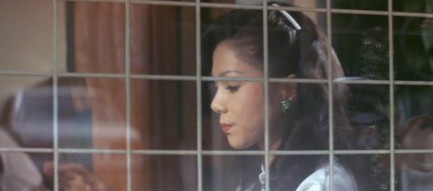
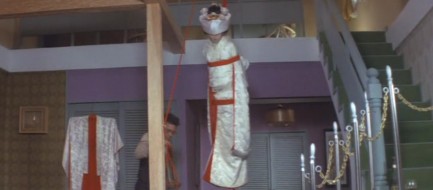
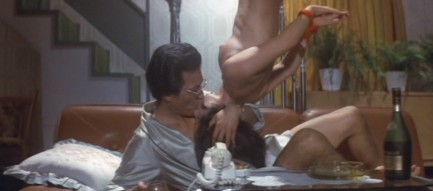
The above poster was made to promote Dan Oniroku hanayome ningyo, aka Bridal Doll, which is based on the writings of acclaimed author Oniroku Dan, and stars Asako Kurayoshi in her cinematic debut as a woman who's sold to a man as a bdsm sex slave. It's pretty twisted. Not only does he dress her as a bride, but he has a glass walled bathroom so he can watch her do her business, and at one point literally has her shackled to a ball and chain. But his idyllic set-up goes awry when a neighbor learns what's going on and decides to save Asako. He does this by kidnapping the sadist's wife, who's played by the luminous Izumi Shima, putting her through similar ordeals, then proposing a swap.
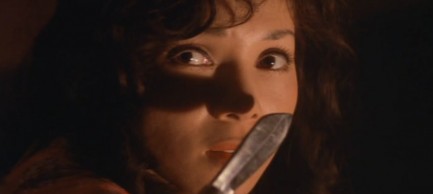
Does this swap go as planned? Well, we won't tell you that. We will, however, remind you that there are three true outcomes in roman porno: irony, tragedy, and ambiguity. Nobody ever gets out happy. At least not often. They're always transformed by their ordeals, one way or another. As always, not being Japanese and lacking the lifetime of cultural knowledge that would bring, we know there's more going on here than we can discern. But we still can't recommend this one as anything other than Shima eye candy. And you get that by looking below. So maybe save the seventy-one minutes for a walk in the sunshine. Dan Oniroku hanayome ningyo premiered in Japan today in 1979.
Does this swap go as planned? Well, we won't tell you that. We will, however, remind you that there are three true outcomes in roman porno: irony, tragedy, and ambiguity. Nobody ever gets out happy. At least not often. They're always transformed by their ordeals, one way or another. As always, not being Japanese and lacking the lifetime of cultural knowledge that would bring, we know there's more going on here than we can discern. But we still can't recommend this one as anything other than Shima eye candy. And you get that by looking below. So maybe save the seventy-one minutes for a walk in the sunshine. Dan Oniroku hanayome ningyo premiered in Japan today in 1979.















JapanNikkatsuDan Oniroku hanayome ningyo団鬼六 花嫁人形Bridal DollAsako Kurayoshi倉吉朝子Izumi Shimaposter artcinemapinkuroman pornosexploitationnuditybdsmshibarikinbakumovie review