Cold War spies make waves in the City of Canals. 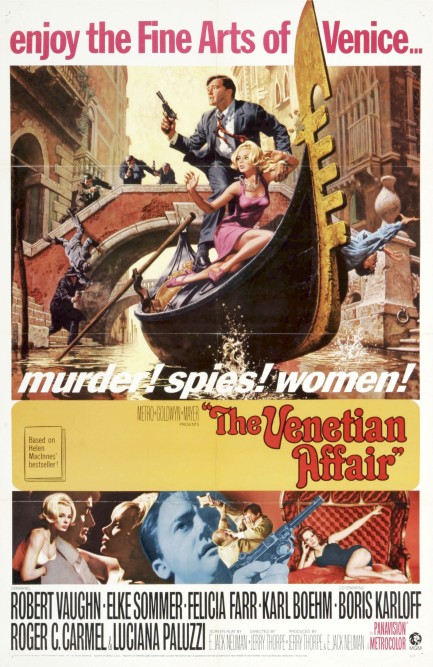
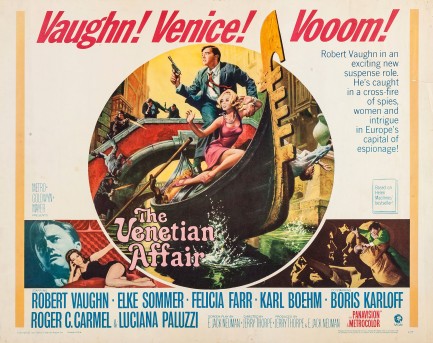
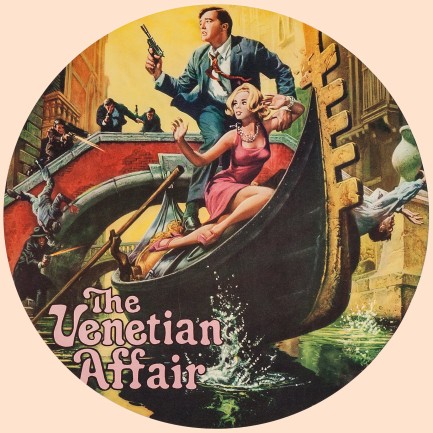
The Venetian Affair, which premiered today in 1966, has a rather interesting promo poster. It was painted by U.S. artist Frank McCarthy, who was big in paperback covers early in his career, moved into high-budget movie promos such as James Bond posters, and finally made a mark in realist fine art. We love this piece from him. There's a lot going on. If you check out his effort for You Only Live Twice here you'll see how dense and chaotic his work could be, same as above, where he has people falling off the bridge, off the gondola, and guns being brandished everywhere. In addition, his likenesses of the movie's stars are good. He was a major talent.
The first observation you might make while watching The Venetian Affair is that it would be impossible to make a similar movie in that city today. Nearly four million tourists visited Venice in 2022, making nearly every street—and certainly every site of special historical note—like the mass exodus from a just-completed football game. With that level of humanity about, closing parts of the city or main squares—while maybe possible—would not be practical or economical.
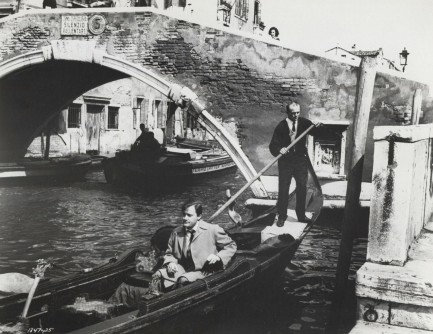
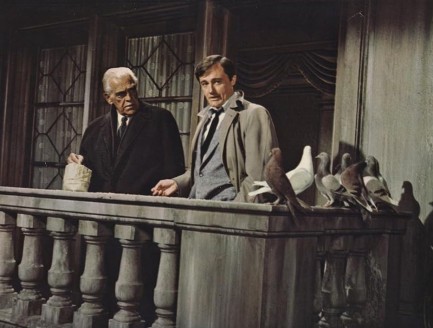
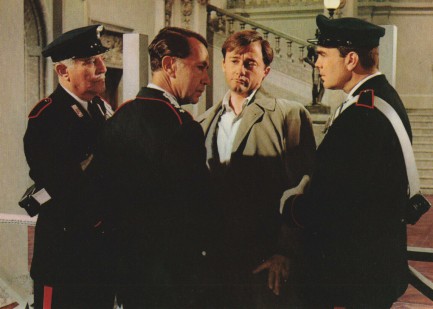
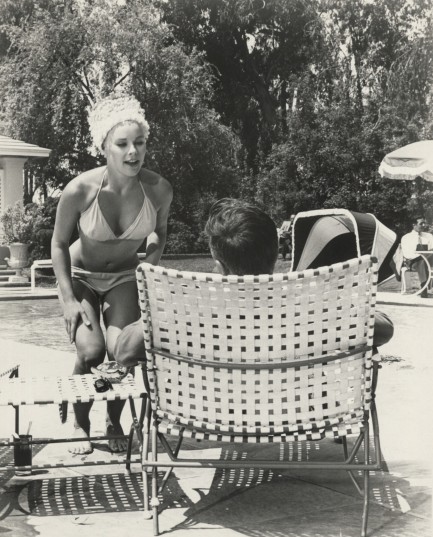
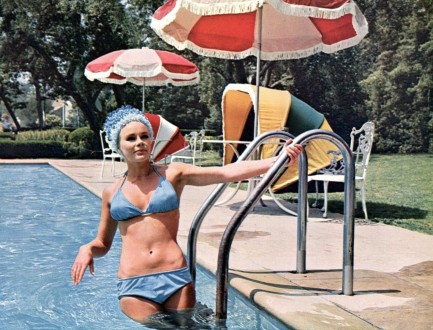
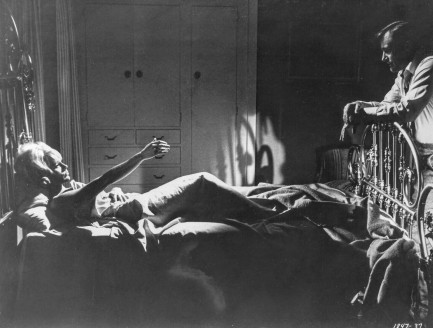
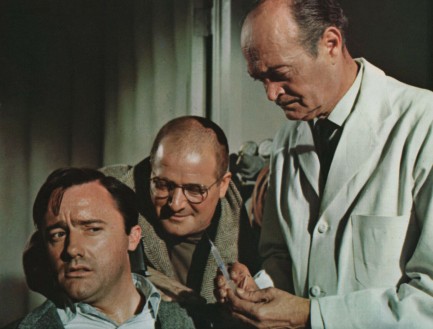
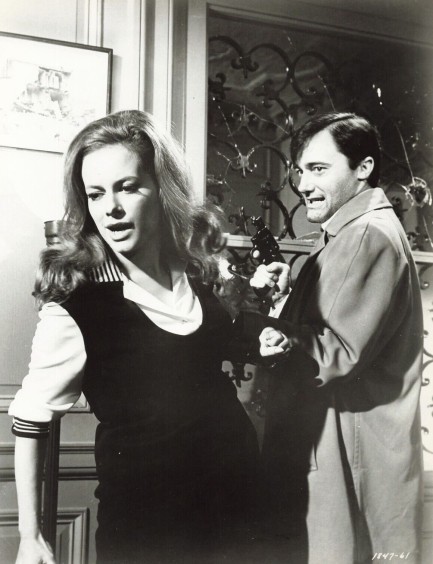
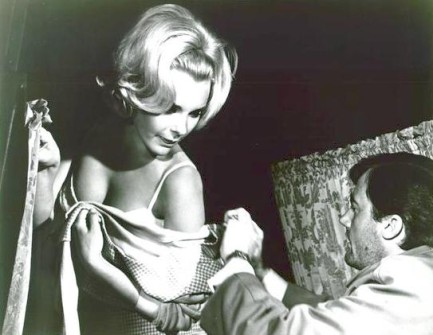
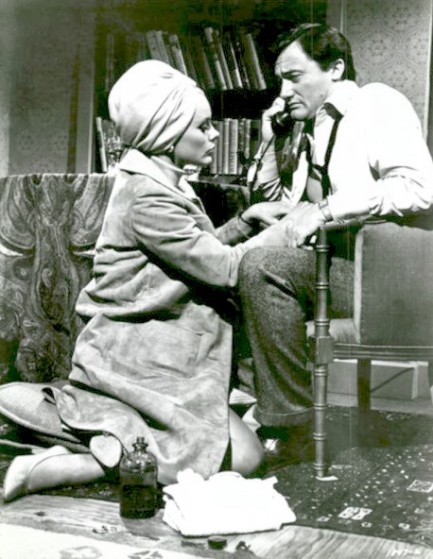
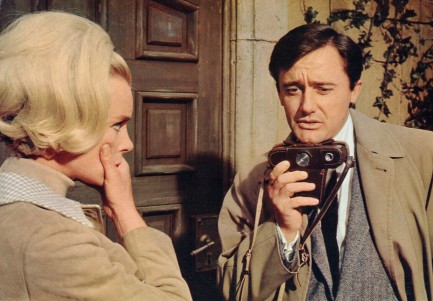
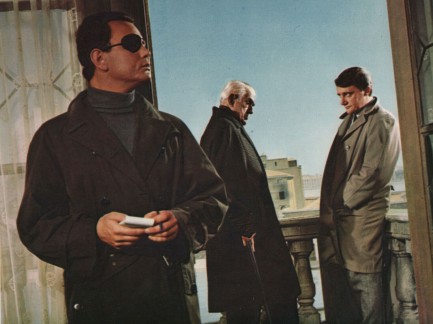
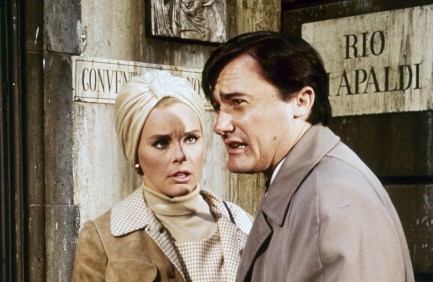
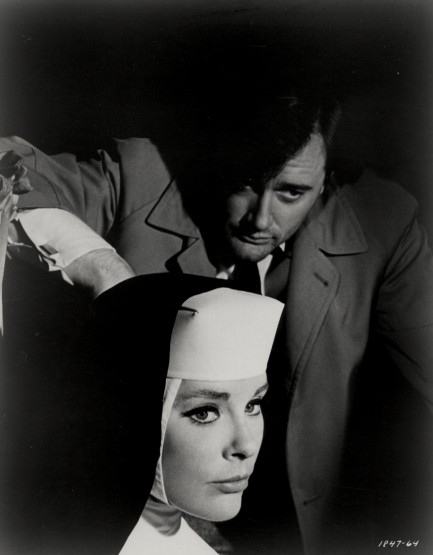
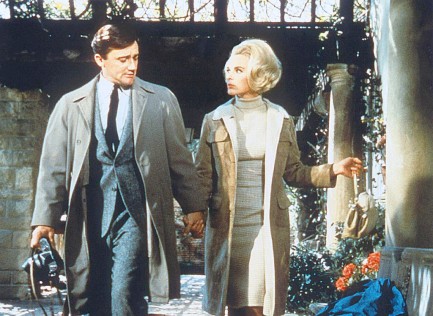
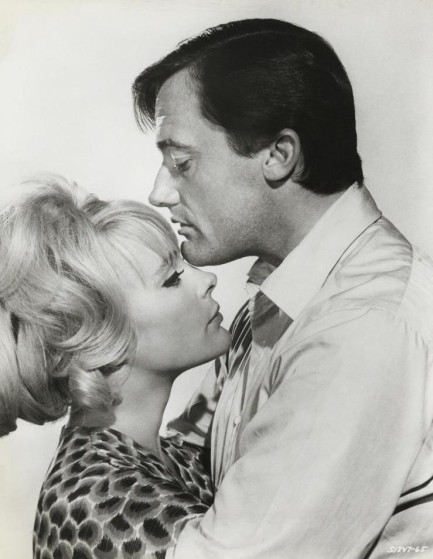
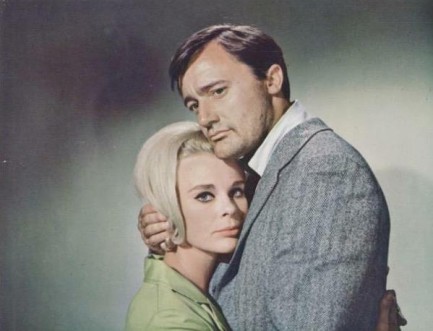
But The Venetian Affair was made back when quiet streets and dark corners existed. Old world architecture always makes for a good spy movie backdrop. That's exactly what you get in this adventure about a mind control drug being used to foment conflict between the U.S. and U.S.S.R. Robert Vaughn stars as a former CIA agent who was fired after he married Elke Sommer, who was suspected of being a double agent. Vaughn never found out whether that was true because he and Sommer were torn apart by turbulent events. But when a bomb blows up a Venice political conference and Sommer is thought to be involved, the CIA drags Vaughn back into its clutches to find Sommer, as well as the crucial clue that might explain the bombing.
Vaughn is a cool and composed actor, any movie with Sommer is one we'll watch, and co-stars Felicia Farr, Luciana Paluzzi, Ed Asner, and the venerable Boris Karloff are all enticements, but we can't say The Venetian Affair is a scintillating example of a Cold War spy flick. It's such a fertile sub-genre, one that produced some of the best movies of 1950s through 1970s. Even against the beautiful Venice backdrop it mostly falls flat due to a screenplay that never hits any highs. But that doesn't mean you shouldn't watch it. Though it lacks highs, it also lack any serious lows. You can spend your time worse ways. Plus—Sommer. What more do you need?
 Chinese communists try to whip Americans in the nuclear race. 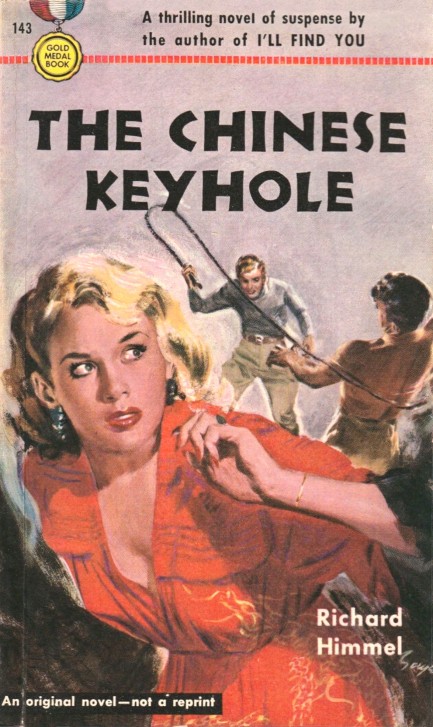
The Chinese Keyhole, Richard Himmel's second novel starring his creation Johnny Maguire, finds the ass kicking lawyer immersed in intrigue in Chicago's Chinatown district, where a mission to deliver a coded message reveals a conspiracy centered in a strip bar. Turns out communists, including a whip wielding psycho, are trying to steal nuclear secrets. Maguire is no longer just a lawyer, but a government agent with his law practice as a front. We don't remember that from the first book, but maybe we missed it.
As in the debut outing Maguire is a guy who takes what he wants, never really asking permission before laying his lips on a nearby woman, and always, of course, he's correct in his assumption that he's sexually desired. Faithful Tina from book one returns to be shabbily treated again, and as before the romantic subplots blossom into full-blown melodrama that would fit perfectly in a Harlequin novel.
We probably don't need to mention that any mid-century book with Asian characters is going to cross some lines, and Maguire doesn't defy expectations on that front, nor does he miss an opportunity to disparage homosexuality. If you haven't read many of these old thrillers you might think that was the norm, but actually it's rare because gay characters don't figure in most of the books. When they did, well, the language got baroque, to say the least. Culturally we've arrived at a better—though still imperfect—place in time.
Flaws aside, we thought The Chinese Keyhole was better written than Himmel's first Maguire novel I'll Find You. Even with this mostly hackneyed commie conspiracy potboiler, he's intrigued us enough to take another ride with his interesting lawyer/lothario/secret agent, so we'll read the third book I Have Gloria Kirby and see where that leaves us. The art on this Gold Medal edition is by Barye Phillips and it dates from 1951.
 That bimbo has no idea she can't get hair dye here. When her roots grow out we'll see if men still think she's so amazing. 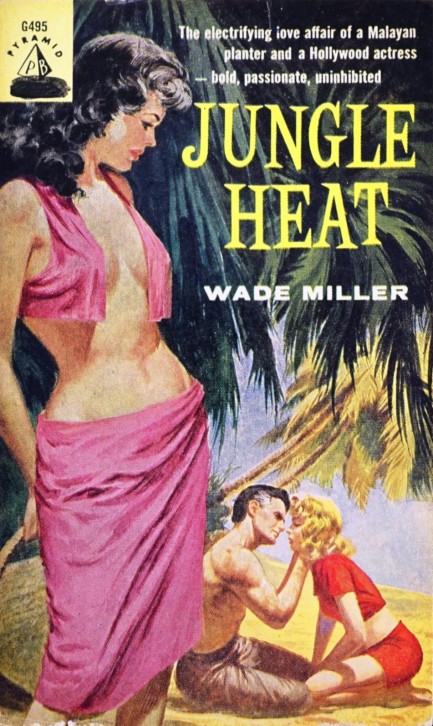
We have other Wade Miller books to read, but we picked up this copy of 1960's Jungle Heat and moved it to the head of the line because the story is set in Malaya (now Malaysia), and the last book we read that the authors (Bob Wade and Bill Miller writing together under a pseudonym) set in an exotic country was phenomenal. Jungle Heat was originally published in 1954 under the name Dale Wilmer, with this reattributed Pyramid edition coming a bit later, and it finds Miller taking on the unexpected challenge of writing in first person from a woman's point-of-view. The lead character is Hollywood b-actress Roxy Powell, who is sent to Malaya with a small crew to shoot background footage for an upcoming jungle adventure. Never mind that a communist revolution is brewing. What Hollywood wants, Hollywood gets.
Plantation boss Llewelyn Kirk, under whose roof Roxy and the crew are residing, is one of those characters who's colonial through-and-through but thinks that because he's been in Malaya for twenty years he isn't an invader and knows what's best for locals. Since the authors agree with this paternalistic sentiment, the narrative is steered—to an almost ludicrous extent—toward Kirk being correct. We won't get into any of it except to say that, generally, anti-communist fiction from the mid-century era was unavoidably propagandist. In this case the authors are basically correct in their regional political analysis, but gloss over important details and whiff on overarching points. For example, there's an interesting scene where a Malayan tells Kirk that he'd heard blacks in America are unjustly killed by whites. Kirk assures him it isn't true. We almost did a spit-take on that one.
Roxy first hates, then by a circuitous path, comes to adore Kirk. She's initially driven by her need for “respect,” which here doesn't mean respect as normally understood, but is instead code for sexual desirability. Because Kirk ignores her, she hates him. Therefore she embarks on a campaign to discover his humanity—i.e. his sexual attraction to her. Even if you didn't know the author, that's when you might suspect a guy—or two—was in the driver seat. Okay, so if the politics take liberties and the justification for romance is male fantasy in disguise, is the book any good? Well, sure. There's a nice jungle setting, a fun Hollywood sidebar, a backdrop of war in which enemies circle ever closer, a traitor hiding in the fold, and love blossoming amid chaos. With all that going for it, the book has to be good. But that said, Wade/Miller definitely wrote better.
 It's a must-have item for the fashion forward femme fatale. 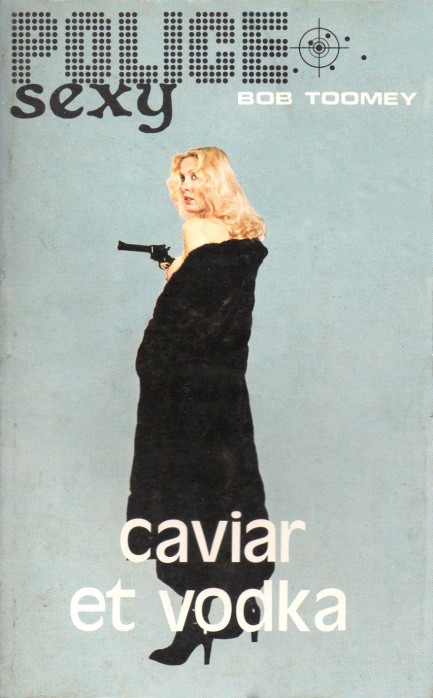
Caviar et vodka, which is credited to Bob Toomey and is the first entry in French publisher SEF's Police Sexy series, came in 1978. That's late for our website, and we also tend to avoid photo covers, but the black-coated killer lady wearing nothing beneath her fur but some heavy steel makes it an appropriate share. The story is less police than espionage, having to do with a trio of Russian spies (interestingly named Elvire, Debrisse and Natacha) up to dastardly doings during the hottest period of the Cold War. Bob Toomey, a far less interesting name, was a pseudonym, but we can't trace it to its origin. There's a review of the book online and it isn't flattering, so maybe “Toomey” had only this one shot before being flushed out of the bottom of French publishing. In any case, cool cover.
 This thing reminds me of my ex-boyfriend—loud as hell and powered by compressed gas. 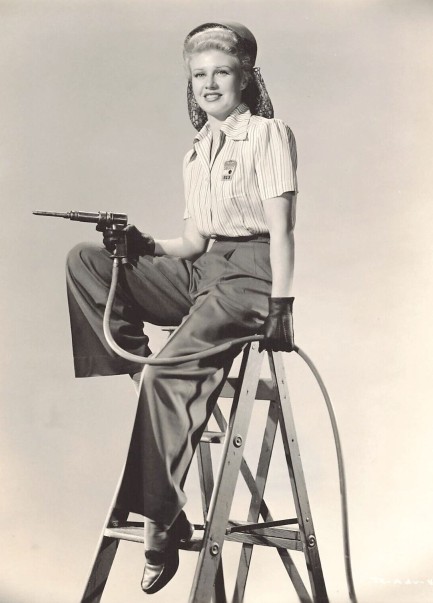
Above: cinema sweetheart Ginger Rogers poses with a pneumatic rivet gun in a promo image made for her wartime romantic drama Tender Comrade. The movie is about Rogers and three other women sharing a house and working in an airplane factory while their fellas are away on the front. It was a wild success and looked patriotic to filmgoers, but somehow the reactionaries and opportunists comprising HUAC—the House Un-American Activities Committee—in an effort to blacklist the writer Dalton Trumbo turned Tender Comrade upside down and managed to shake out what it claimed were examples of communist propaganda. As we've noted before, history has rendered its verdict on HUAC, and it isn't a good one.
 Ancient city makes modern problems for Christie heroine. 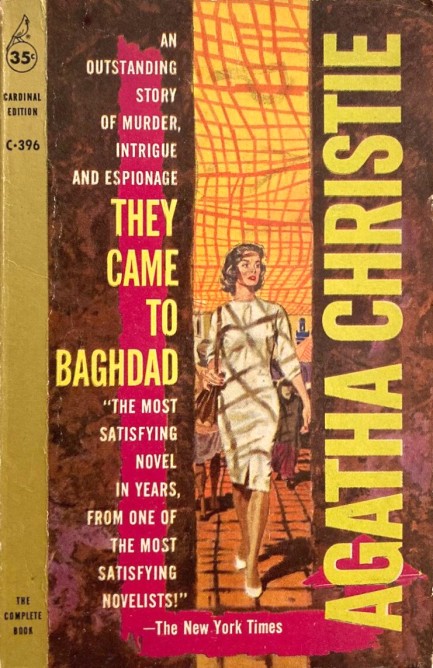
They Came to Baghdad was Agatha Christie's forty-sixth novel, originally appearing in 1951, with this Cardinal paperback coming in 1960 with an uncredited cover. It's less one of Christie's mysteries than a straight adventure tale, and a pretty good one, hewing to the classic blueprint of a novice thrown into deep and dangerous water. The novice is London typist Victoria Jones, whose dreams of romance and travel prompt her to finagle free passage to Baghdad, where she lands in the middle of a political murder plot. She's a winning character, all the more so for the major flaw Christie gives her—she can't stop telling extravagant lies. Predictably, this weakness serves her well during her wild exploits. In addition to the fascinating Jones you get plenty of exotic color and a dose of capitalist v. commie intrigue. Recommended.
 Spillane gets mad and gets even in Red Scare revenge thriller. 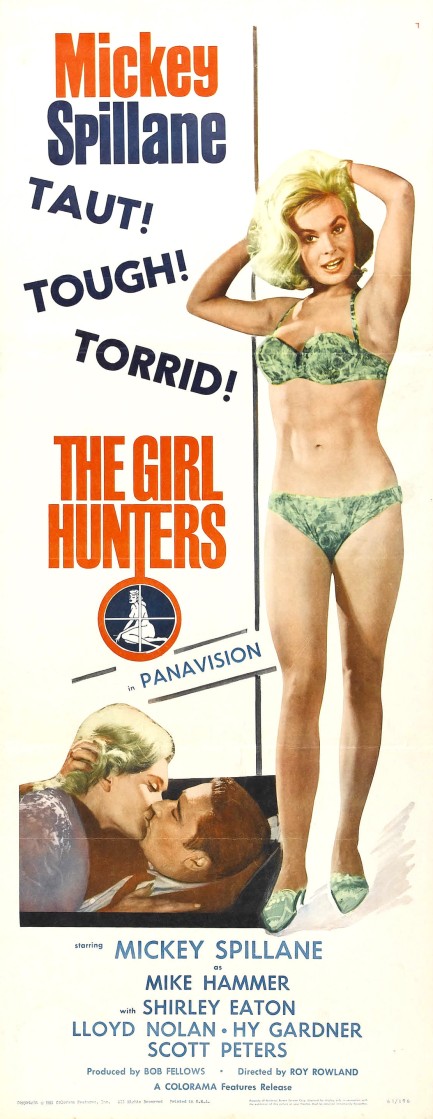
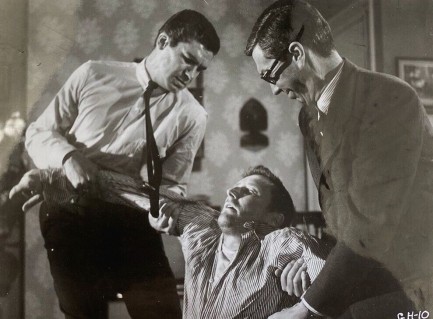
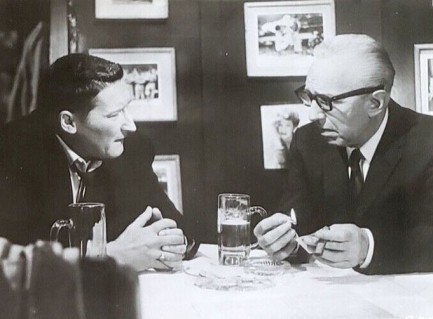
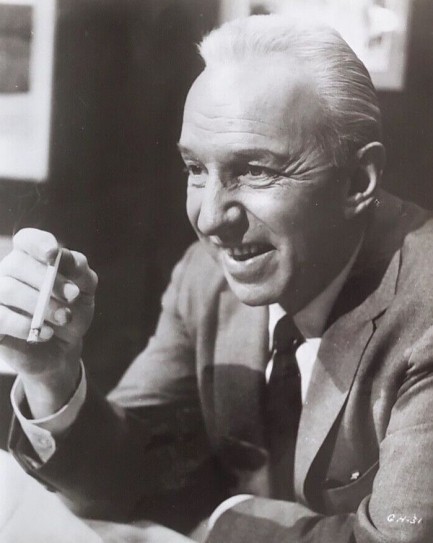
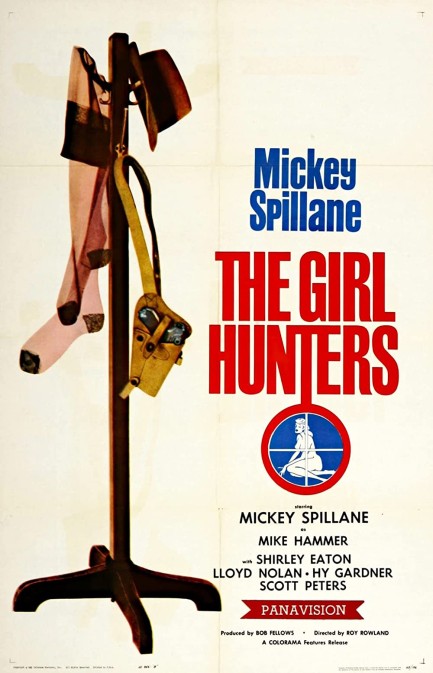
We're on a roll with these panel length posters. Here's another excellent example, this time for Mickey Spillane's The Girl Hunters. And when we say Spillane's, he didn't just write the screenplay (with an assist from Roy Rowland and Robert Fellows)—he starred. That Hollywood felt he could carry a movie gives you an idea just how big a celebrity he was. He also co-headlined 1954's Ring of Fear, but we'll get to that one later. In The Girl Hunters Spillane plays his own literary creation, hard-edged private dick Mike Hammer. The movie opens with Hammer as an alcoholic because his longtime secretary and unrequited love Velda has been missing and is presumed deceased. But when a dying hood hints that Velda is still alive, Hammer snaps out of his drunken stupor, shifts into revenant mode, and along the way uncovers a communist plot headed by “the greatest espionage organization ever known.”
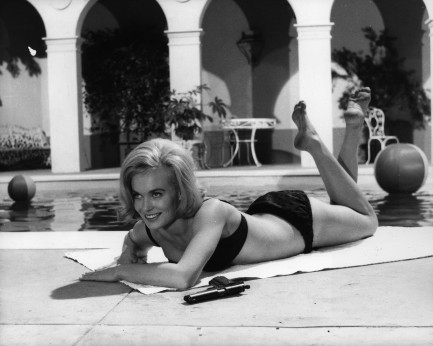
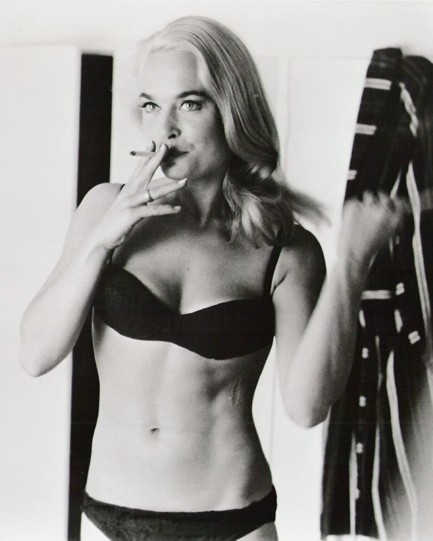
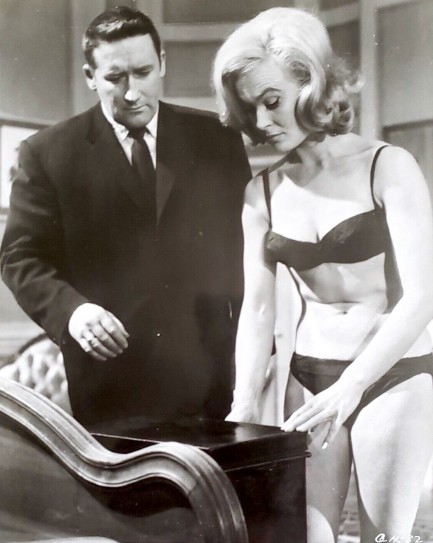
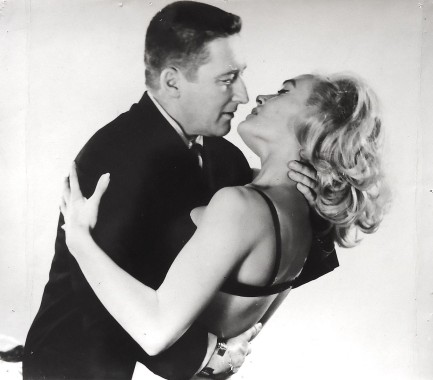
Obviously, the salient question is whether Spillane can act. The answer is not really, and his one-note performance keeps the film from reaching its potential. A couple of times it even sounds like his lines are voiceovers by another actor. However, there are two high notes: a pretty good climactic fight in a barn equipped with a whirring rotary saw, and a co-starring turn from future Bond girl Shirley Eaton, who the filmmakers give three extended bikini sequences to heighten audience interest. Are those bonuses enough to make the film worth a watch? We would say no, but you can't get around the fact that it stars one of the best-selling crime writers ever. If you're a fan of pulp, we suspect you'll enjoy the movie despite Spillane flatlining through its 103 minutes. The Girl Hunters premiered today in 1963.
 Every time she takes out a cigarette she barely survives a forest of fires. 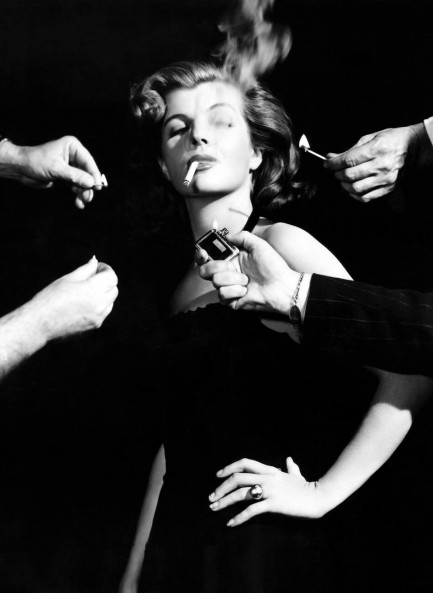
Above: an interesting of shot of French actress Corinne Calvet made in 1951 when she was filming the anti-communist thriller Peking Express. It was a remake of the 1932 film Shanghai Express starring Marlene Dietrich. Tough shoes to fill but Calvet was a major star in her day, and considered a major beauty. You can't see that in this photo, what with all the smoke, but you can in a shot we shared earlier, at this link.
 Geez. They're all about me again. 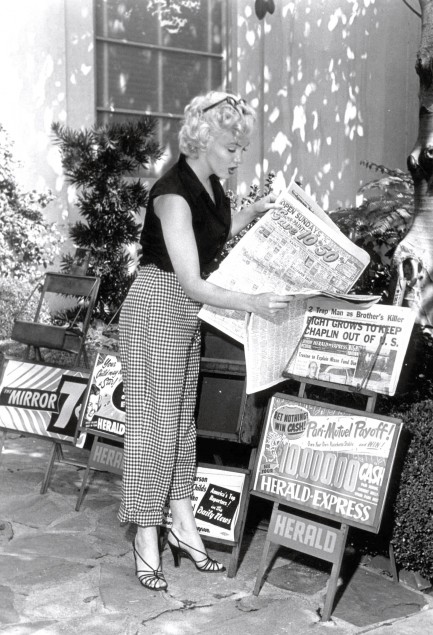
Philippe Halsman shot this sly commentary on fame featuring one of the most famous women in America, Marilyn Monroe, as his subject. She checks out a newspaper, and next to her you can see machines for the afternoon tabloids Mirror, Daily News, and Herald-Express, the latter of which is a publication we've mined often for historical crime photos. In that issue the front page says, “Fight Grows to Keep Chaplin Out of U.S.,” a headline that dates the photo to sometime in late 1952. Why was there a fight? People had been led to believe Chaplin was a communist theat to America for saying things like he wanted every person to have a roof over their heads. He wouldn't return to the U.S. for twenty years. So, the tabloids weren't all about Marilyn every issue. Just mostly. Even gossips need a little variety.
 I'm going to reach the top and I'll do it by using the most American method of all—buying my way there. 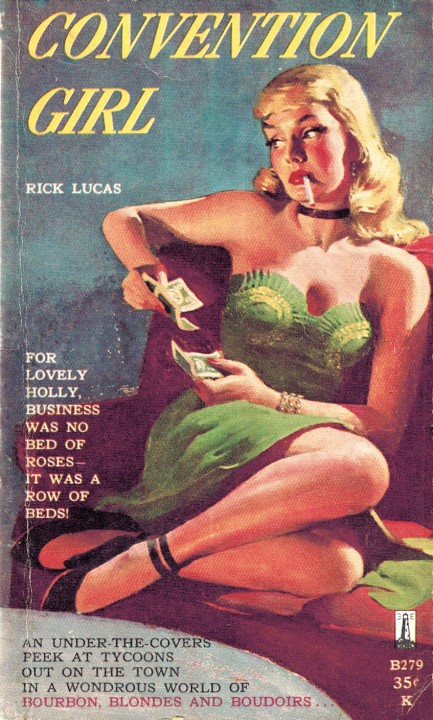 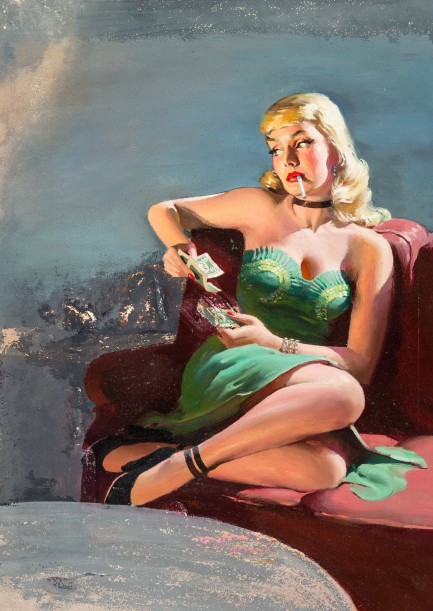
Above are the cover and original uncredited art for the sleaze novel Convention Girl, written by Rick Lucas for Beacon Signal and published in 1954. This was a one-day read. Basically, at a yearly Washington, D.C. convention staged by the Association of Young Executives, oil tycoon Holly Carroll and beer baron James Barton are both convinced by AYE string-pullers to run for the position of association president. Both are promised the inside track to victory by means not solely involving how many votes they actually get. As ex-lovers, the complications soon pile up between them, as well as between other highly sexed characters. The reasons they were asked to run for president are obscure, but they eventually boil down to a vast communist plot to undermine the free enterprise system. Commie scare fiction mixed with sleaze? What a concept! Sadly, as usual with these anti-commie books, the political aspects are laughably simple-minded. But we expected that. The hurdle that can't be overcome is the tepid eroticism. There's just not much heat—and this in a book with so many reds. We don't think we'll be reading Mr. Lucas again.

|
 |

The headlines that mattered yesteryear.
1945—Mussolini Is Arrested
Italian dictator Benito Mussolini, his mistress Clara Petacci, and fifteen supporters are arrested by Italian partisans in Dongo, Italy while attempting to escape the region in the wake of the collapse of Mussolini's fascist government. The next day, Mussolini and his mistress are both executed, along with most of the members of their group. Their bodies are then trucked to Milan where they are hung upside down on meathooks from the roof of a gas station, then spat upon and stoned until they are unrecognizable. 1933—The Gestapo Is Formed
The Geheime Staatspolizei, aka Gestapo, the official secret police force of Nazi Germany, is established. It begins under the administration of SS leader Heinrich Himmler in his position as Chief of German Police, but by 1939 is administered by the Reichssicherheitshauptamt, or Reich Main Security Office, and is a feared entity in every corner of Germany and beyond. 1937—Guernica Is Bombed
In Spain during the Spanish Civil War, the Basque town of Guernica is bombed by the German Luftwaffe, resulting in widespread destruction and casualties. The Basque government reports 1,654 people killed, while later research suggests far fewer deaths, but regardless, Guernica is viewed as an example of terror bombing and other countries learn that Nazi Germany is committed to that tactic. The bombing also becomes inspiration for Pablo Picasso, resulting in a protest painting that is not only his most famous work, but one the most important pieces of art ever produced. 1939—Batman Debuts
In Detective Comics #27, DC Comics publishes its second major superhero, Batman, who becomes one of the most popular comic book characters of all time, and then a popular camp television series starring Adam West, and lastly a multi-million dollar movie franchise starring Michael Keaton, then George Clooney, and finally Christian Bale. 1953—Crick and Watson Publish DNA Results
British scientists James D Watson and Francis Crick publish an article detailing their discovery of the existence and structure of deoxyribonucleic acid, or DNA, in Nature magazine. Their findings answer one of the oldest and most fundamental questions of biology, that of how living things reproduce themselves.
|

|
|
It's easy. We have an uploader that makes it a snap. Use it to submit your art, text, header, and subhead. Your post can be funny, serious, or anything in between, as long as it's vintage pulp. You'll get a byline and experience the fleeting pride of free authorship. We'll edit your post for typos, but the rest is up to you. Click here to give us your best shot.
|
|