Oooo... he's rich, widowed, and has a pig valve in his heart? I guess I could learn to love an older man. 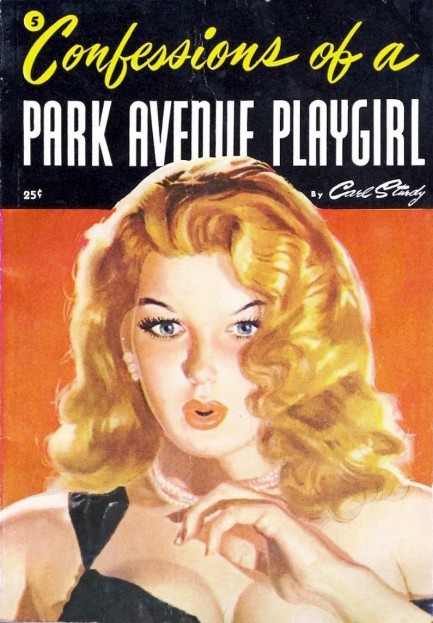
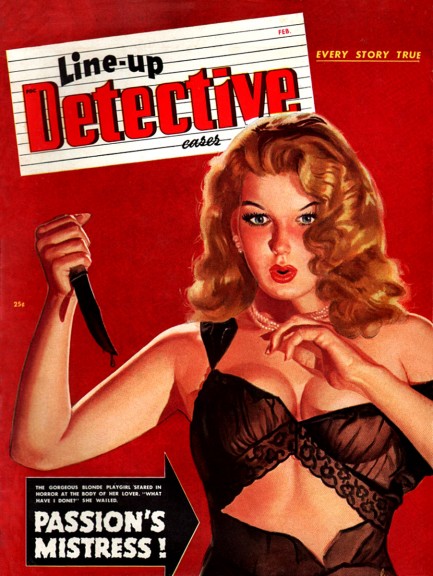
Above: Carl Sturdy's classic digest novel Confessions of a Park Avenue Playgirl, 1947, from Phoenix Press. Sturdy specialized in medical romances with efforts like Unlicensed Nurse, Test Doctor, Doctor De Luxe, Suburban Doctor, et al, but this seems to be the book most people remember. Possibly that has partly to do with the striking art. The artist is unidentified, but it felt to us like a zoom of something larger, and it reminded us of George Gross. Working on those two assumptions, it wasn't hard to track down the source. As you see below, it came from the cover of a 1949 issue of Line-Up Detective Cases. It isn't really a much larger piece, but it is George Gross. Add another fun effort from his lengthy résumé.
 She was a higher being in the church of burlesque. 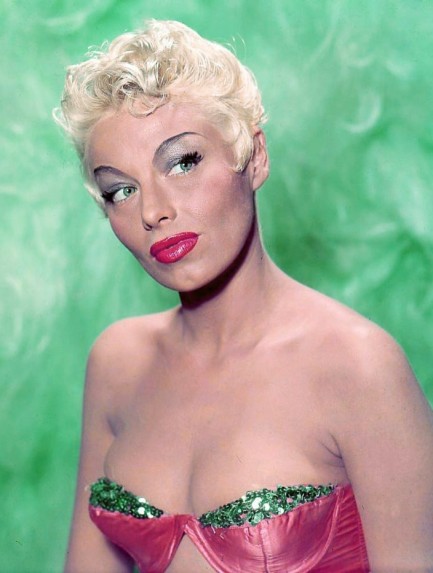
Is this Lili St. Cyr's most beautiful photo? Maybe, but why choose? They're all great, such as the ones we showed you here, here, and here. This shot is usually tagged with a date of 1956, but it's actually from no later than 1952. St. Cyr certainly could have worn this eye catching bustier for multiple photo sessions, but if you look at the cover of the true crime magazine Uncensored Detective below, you'll notice that she looks identical all the way down to the cowlick on her forehead and the curls above her ear. Her eye makeup is a little different, but that could have happened mid-shoot. The minutely identical hair leaves no doubt that both images are from the same session. The magazine is from May 1952, so we'll go with 1952 on the shot. But really, she's timeless. 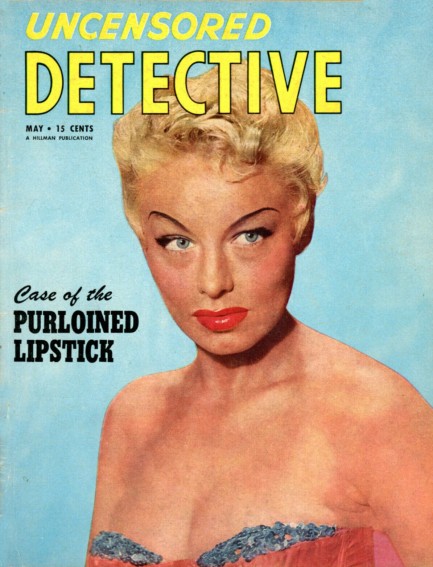
 You're going burgling again, aren't you? Don't lie to me, buster. I always know the signs. 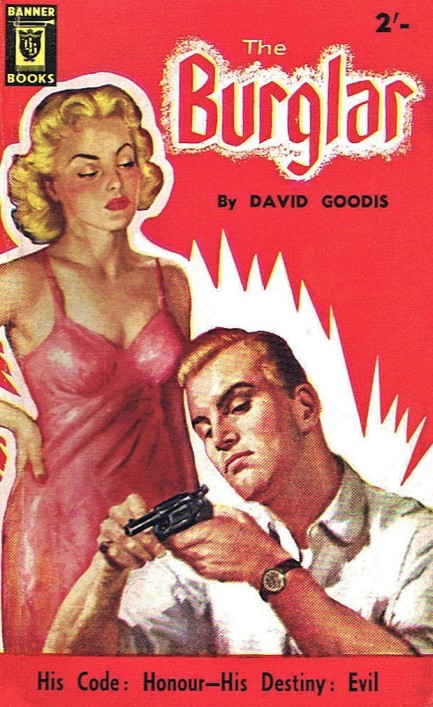
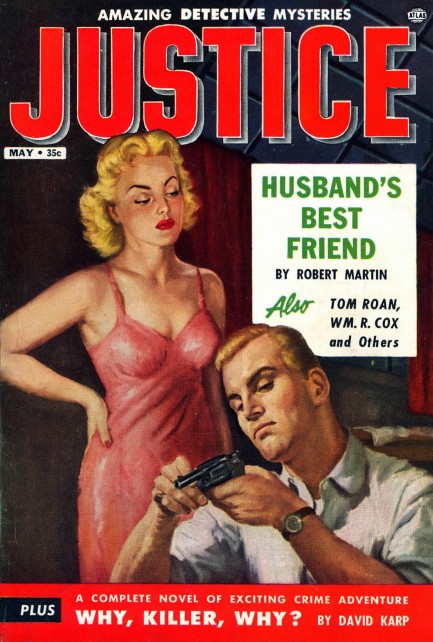
David Goodis's novel The Burglar is one of our recent favorites. Above is a nice edition from Banner Books, which we gather was a British sub-imprint of Lion Books, but one that must not have been around long, since we can't locate any mention of it except in the seller's auction. Indeed, the vendor could simply be wrong. It happens. The art on this is uncredited. You can read our rave of the novel here. Update: the May 1955 cover of Justice you see below is attributed to Julian Paul, so that solves the mystery of The Burglar.
 *sigh* Sense of safety. Last shred of dignity. Trust in people's basic goodness. I think I lost all those tonight. 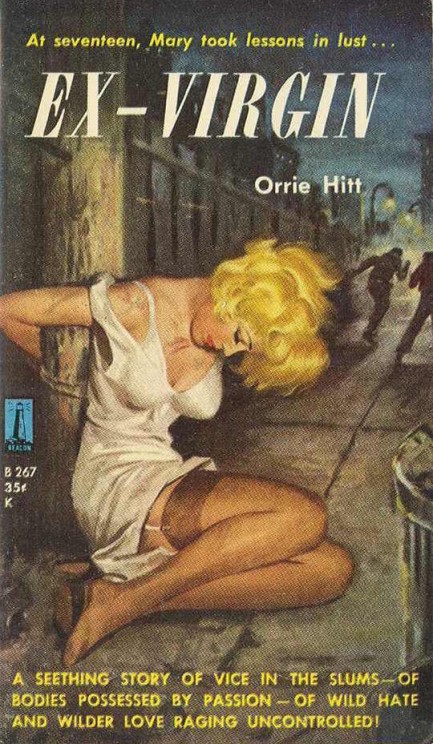
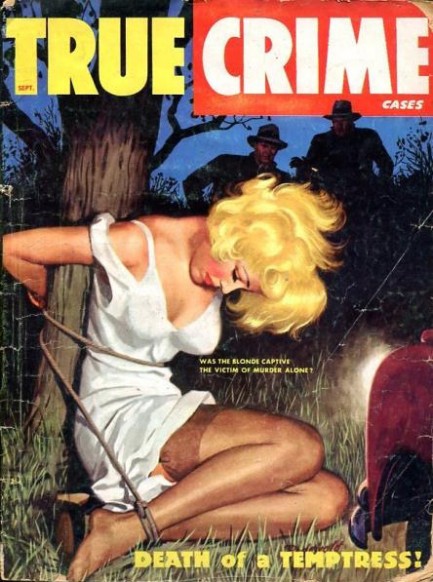
Sleazemeister general Orrie Hitt's Ex-Virgin is the story of a gaggle of youthful characters with zero life prospects stuck on the worst street in a jerkwater town. Abysmally dumb boys and girls have sex, cheat on each other, and roll the dice on pregnancy. In the midst of all this an innocent beauty hopes to make a good life for herself. But she lets a boy sample her wares, and once that becomes known her reputation goes down the tubes, with detrimental effects. Put this in the scare-kids-out-of-having-sex category. It's all very monotonous thanks to Hitt's colorless writing style. The cover art on this 1959 Beacon edition, which does not depict a scene that occurs anywhere in the story, is by Fred Rodewald, and was adapted from a piece that originally appeared on a September 1949 cover of True Crime Cases.
 Crime magazine gives readers the gifts of death and mayhem. 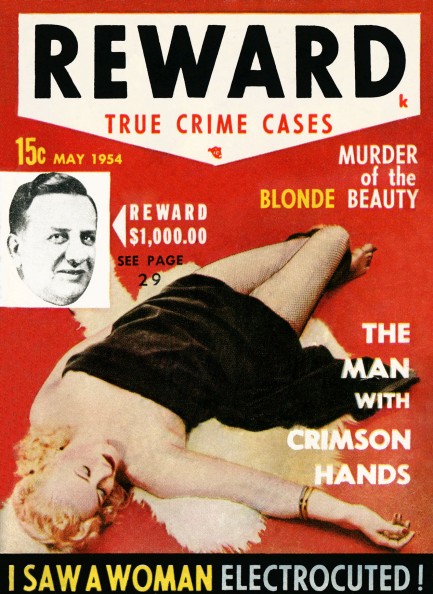
Produced by the J.B. Publishing Corp. of New York City, Reward was a true crime magazine, another imprint designed to slake the American public's thirst for death and mayhem. Inside this May 1954 issue the editors offer up mafia hits, Hollywood suicides, domestic murder, plus some cheesecake to soothe readers' frazzled nerves, and more. The cover features a posed photo of actress Lili Dawn, who was starring at the time in a film noir called Violated. It turned out to be her only film. In fact, it turned out to be the only film ever acted in by top billed co-star William Holland, as well as supporting cast members Vicki Carlson, Fred Lambert, William Mishkin, and Jason Niles. It must have been some kind of spectacularly bad movie to cut short all those careers, but we haven't watched it. It's available for the moment on YouTube, though, and we may just take a gander later. Because Reward is a pocket sized magazine the page scans are easily readable, so rather than comment further we'll let you have a look yourself. 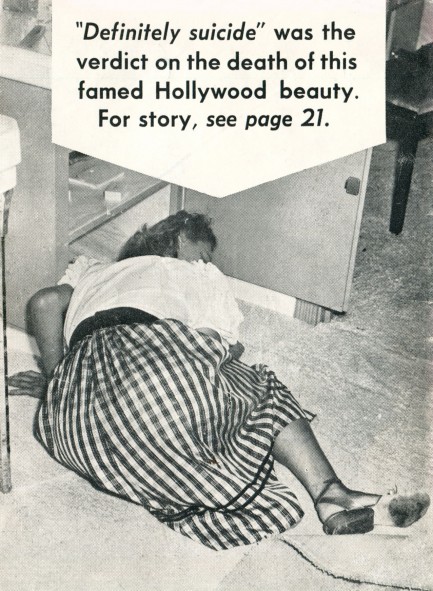 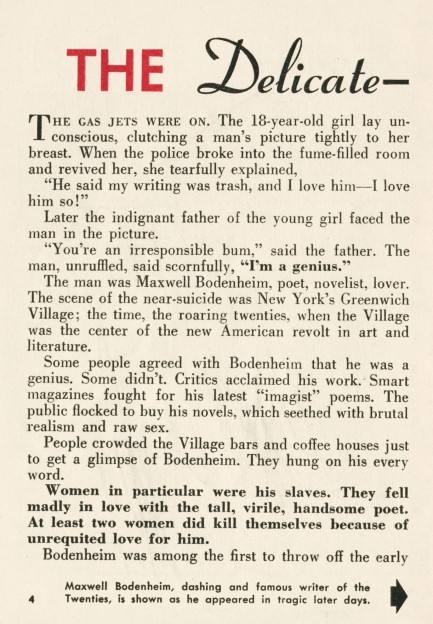 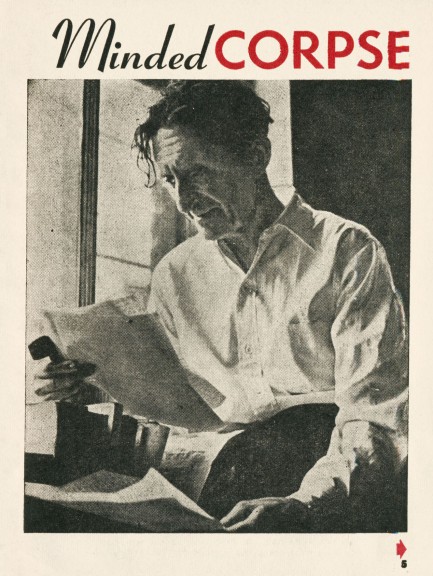 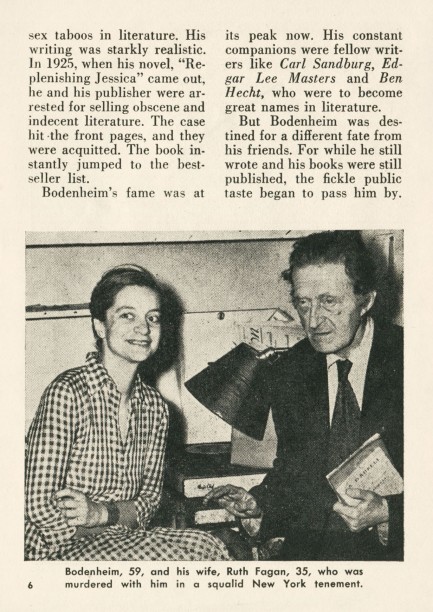 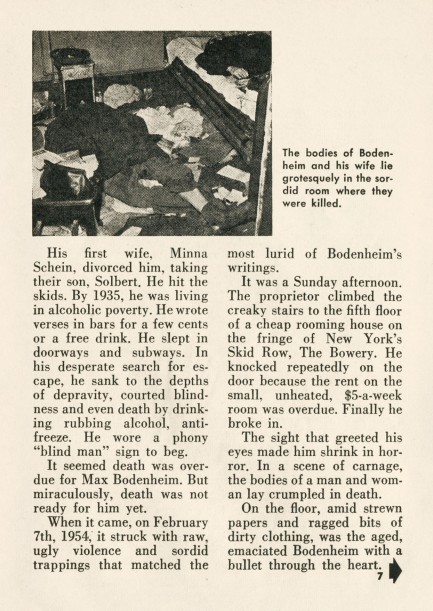 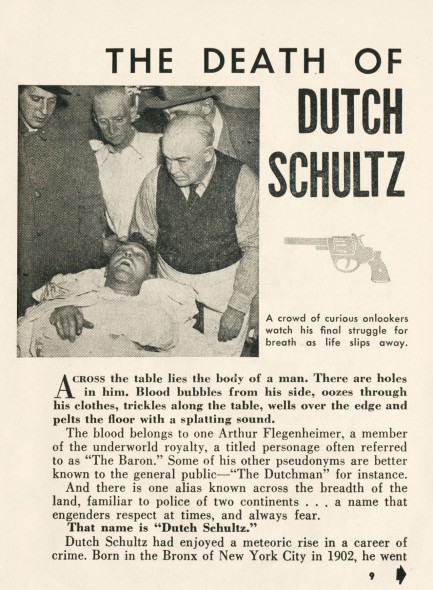 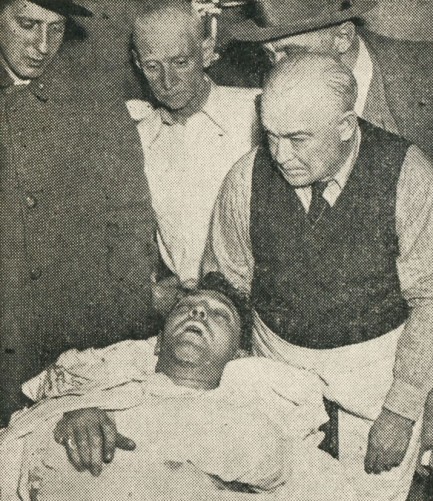 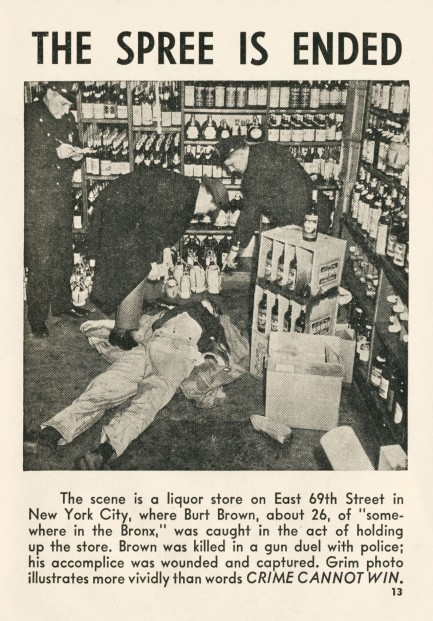 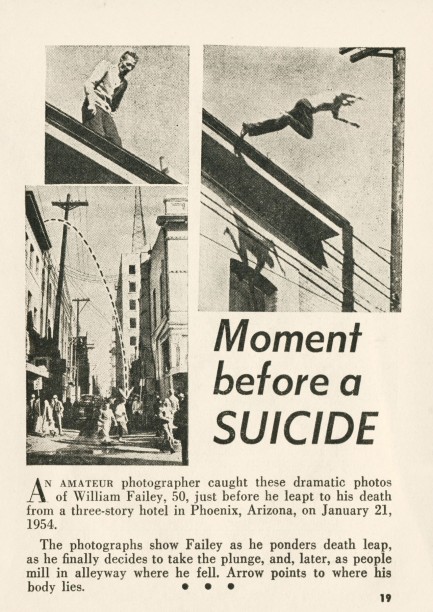 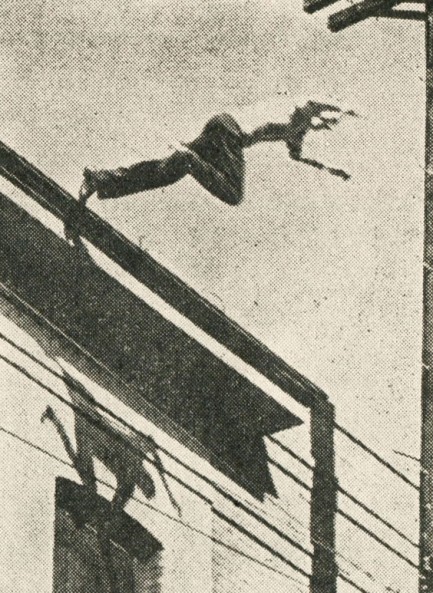 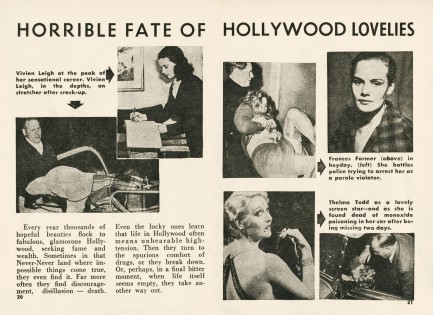 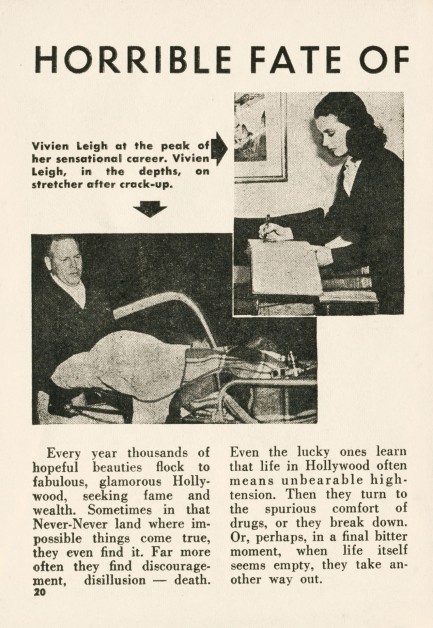 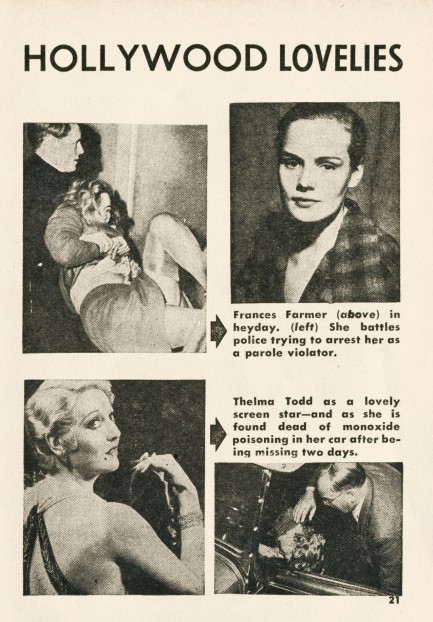 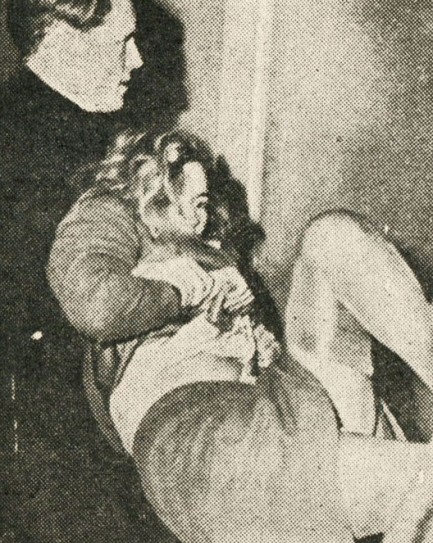 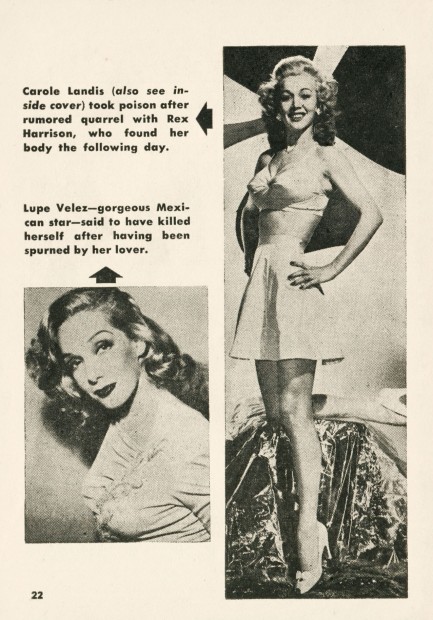 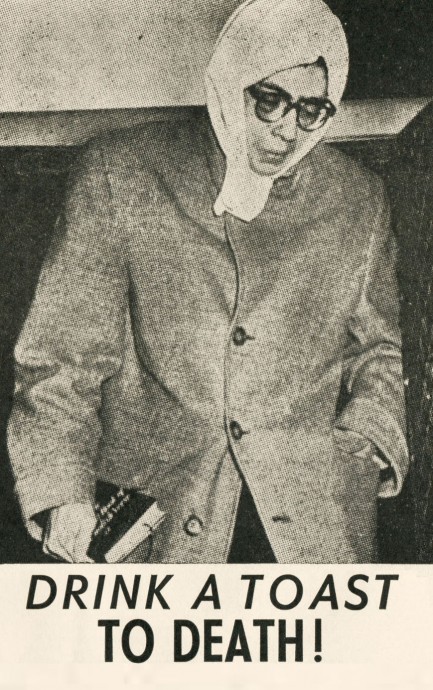 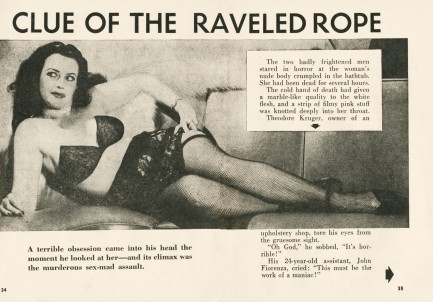 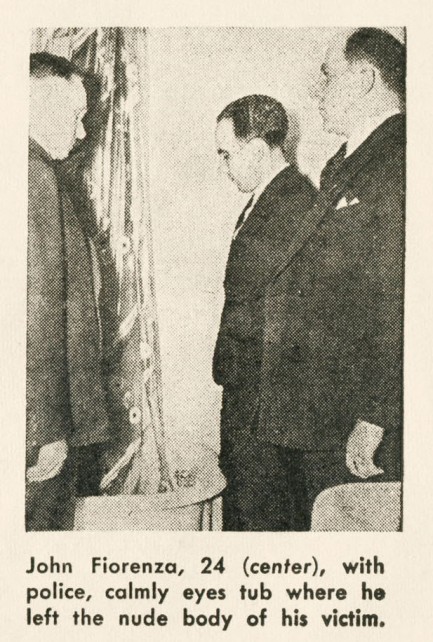 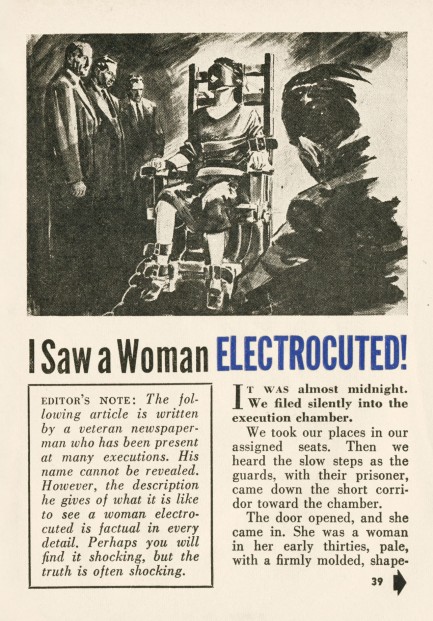 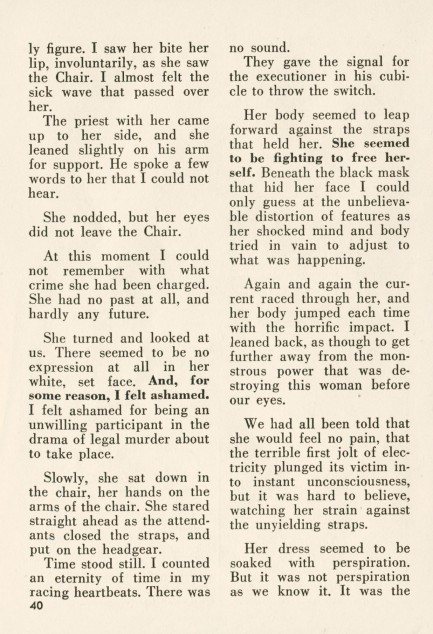 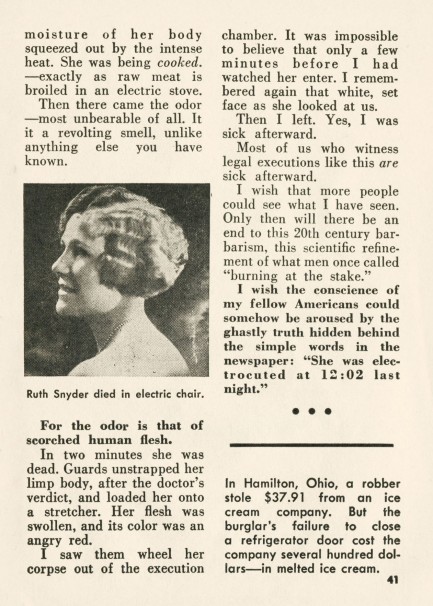 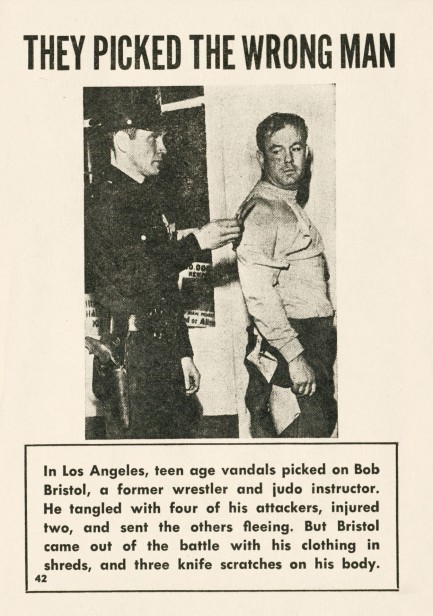 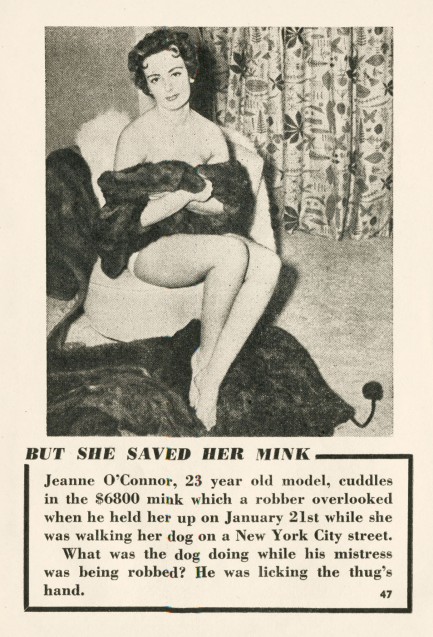 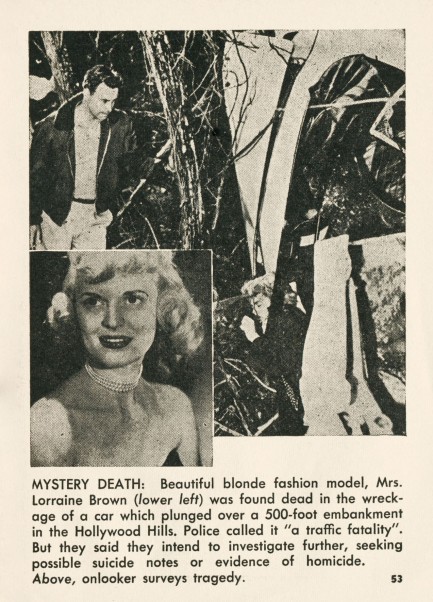 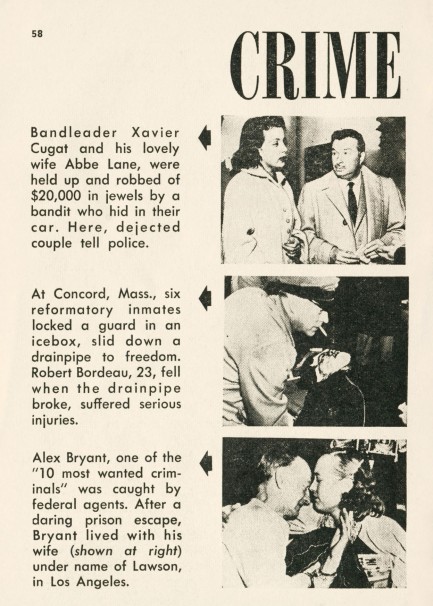 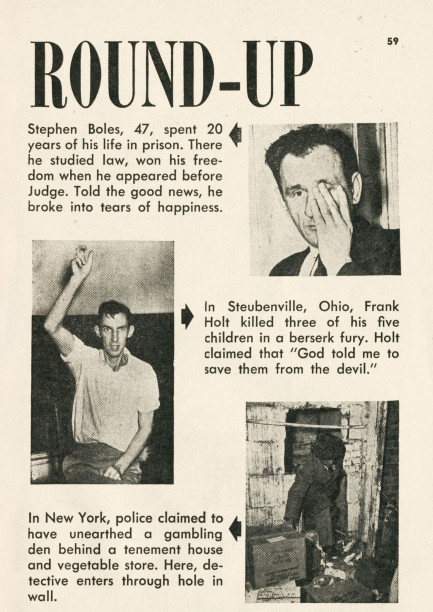 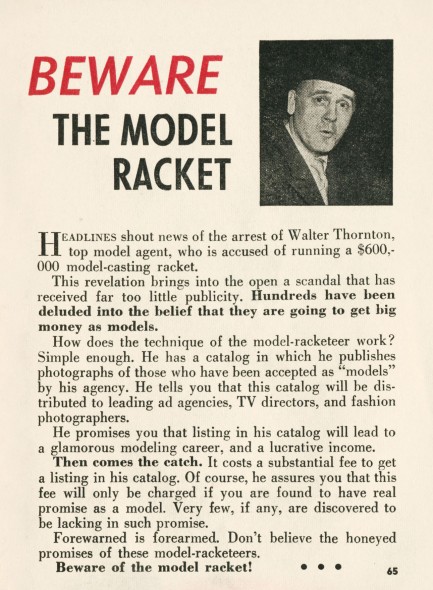 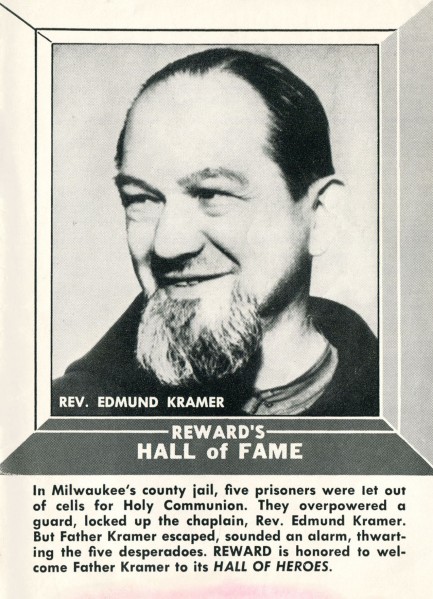 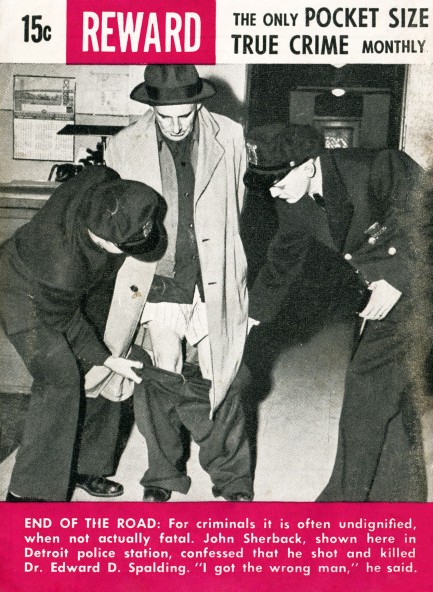
 Beautiful jinx finally jinxes herself. 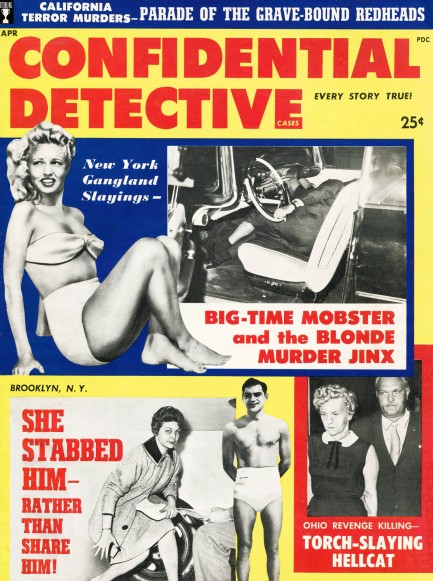 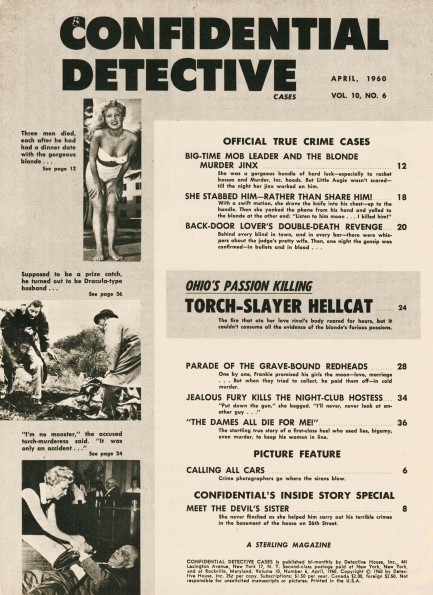
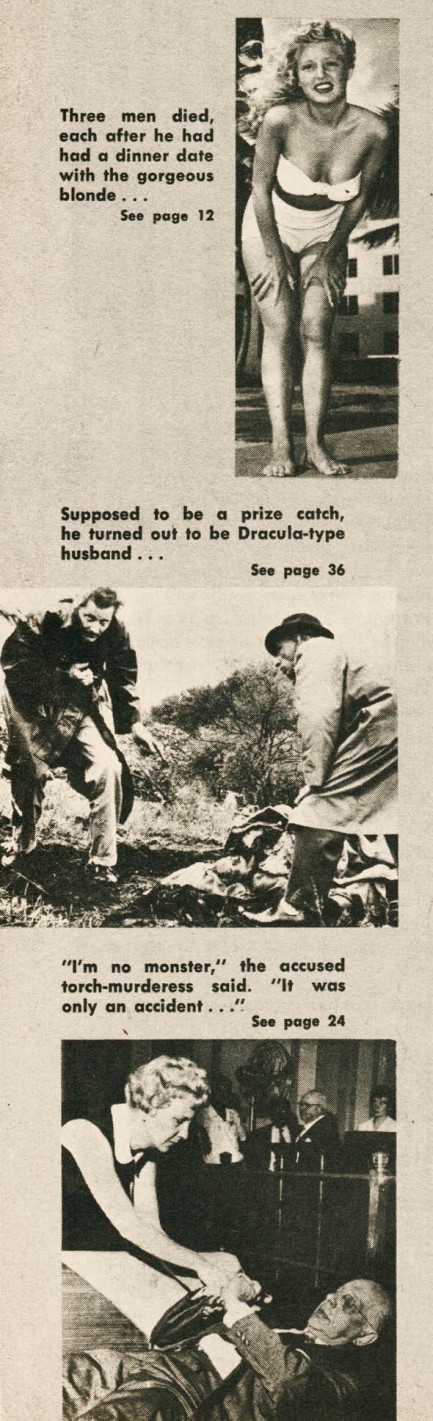
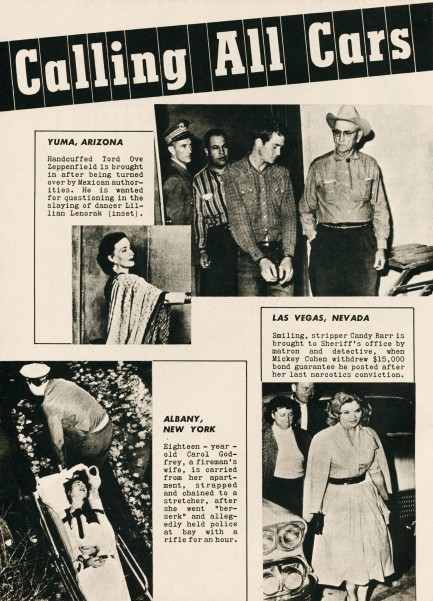
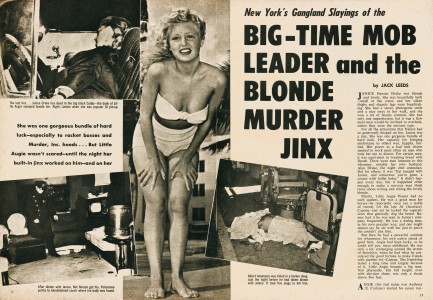
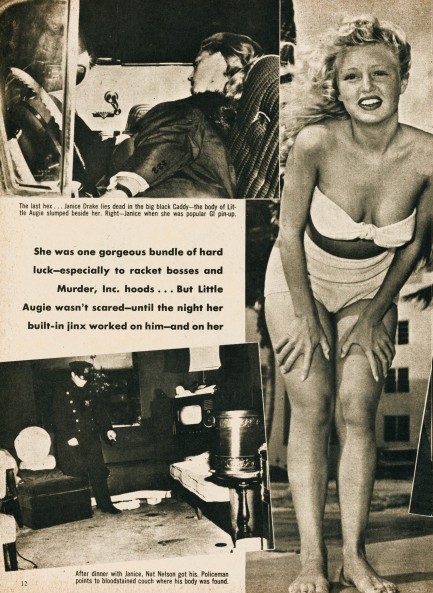
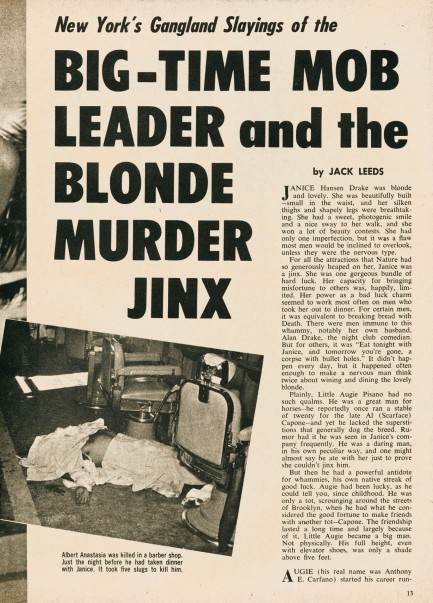
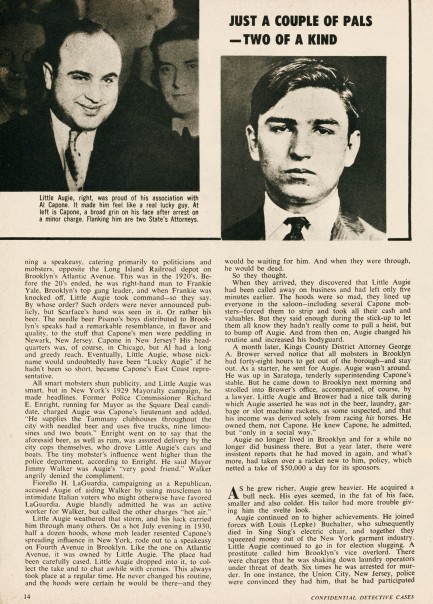
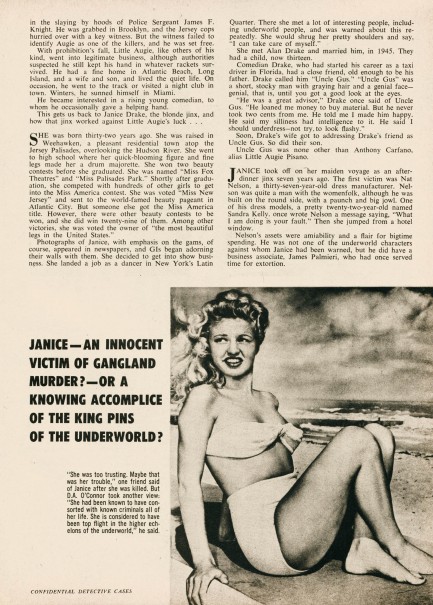
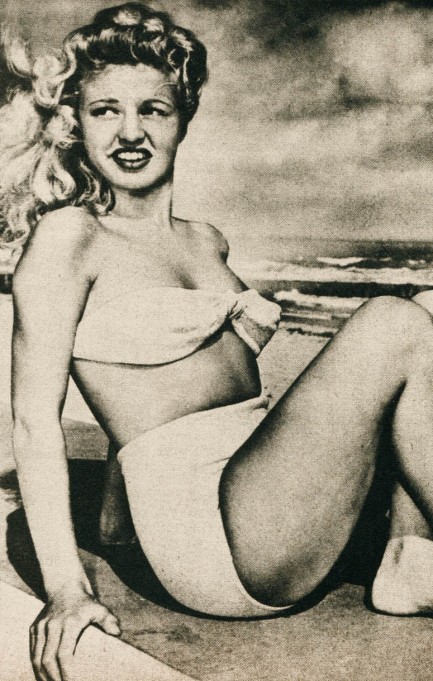
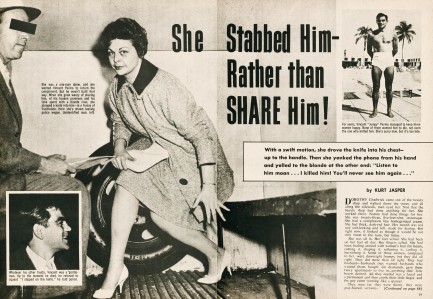
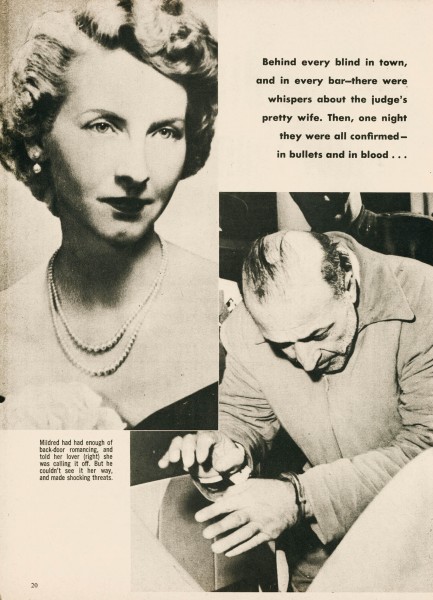
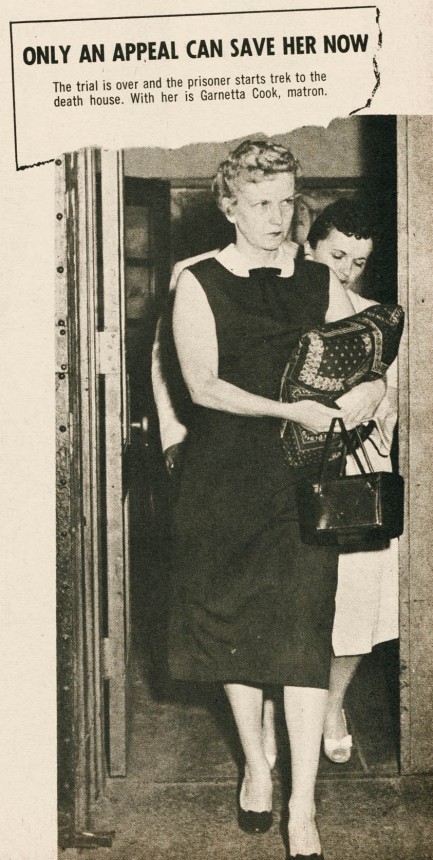
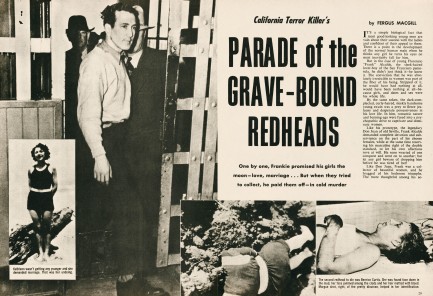
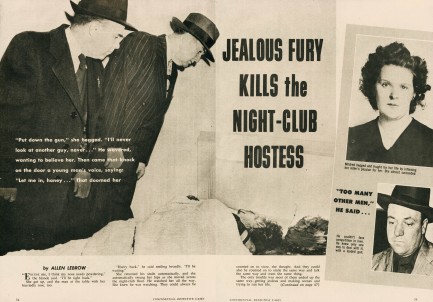
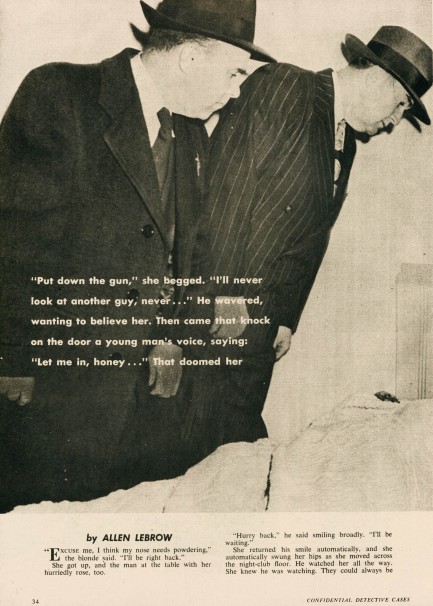
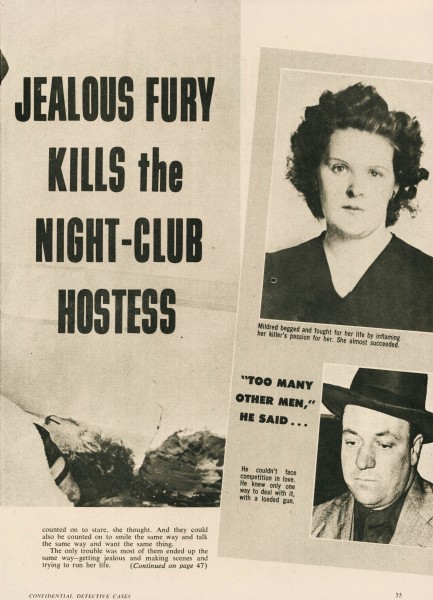
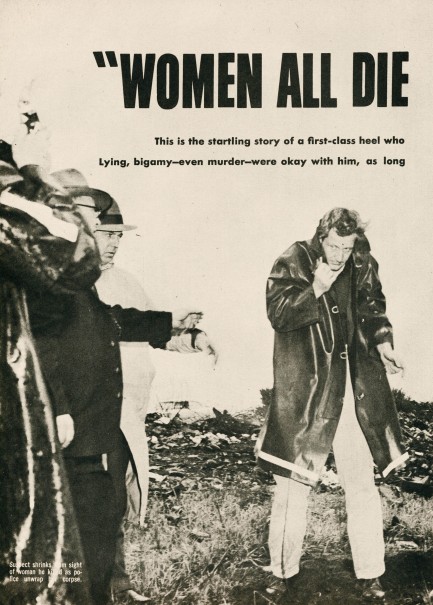
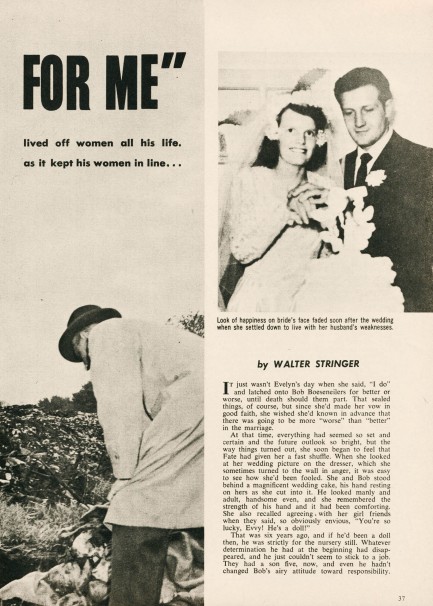
Confidential Detective Cases, for which see an April 1960 cover above, was published bi-monthly from 1942 to 1978 by New York City based Detective House, Inc. The magazine has an appropriately garish crime rag look and many stories of interest, breathlessly reported. The headers are entertaining: “She Stabbed Him—Rather Than Share Him!” “Parade of the Grave-Bound Redheads.” “The Dames All Die for Me.” All these tales are of interest, but today we're focused on one story—the piece about the unlucky death of Janice Drake. It's titled “Big-Time Mob Leader and the Blonde Murder Jinx.” A jinx is of course someone who brings bad luck to others, but what do you call someone who brings bad luck on herself? Drake was a former Miss New Jersey who had competed in the Miss America pageant, was a semi-famous G.I. pin-up, a professional dancer, and the wife of comedian Allan Drake. She and her husband were known to have an open marriage, and among Janice's male friends were several New York City mobsters. One of these was Anthony Carfano, aka Little Augie Pisano, an associate of crime boss Frank Costello, who was pitted against mob rival Vito Genovese in a power play for control of the New York City rackets. Carfano had thrown his support behind Costello, causing Genovese to develop a homicidal grudge. 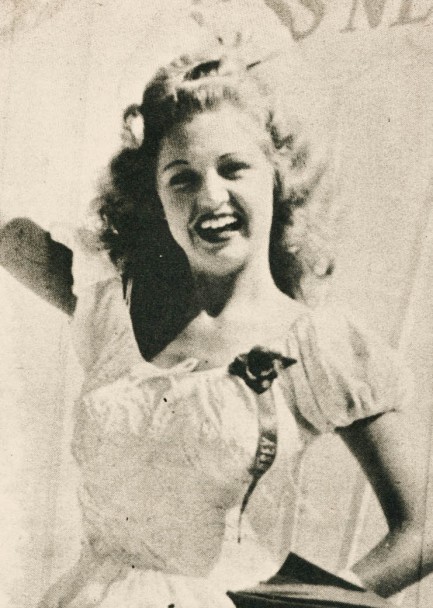 This was not a guy to go to dinner with, but on the night of September 29, 1959, Drake accompanied Carfano to a restaurant called Marino's, where they dined with a mob caporegime named Tony Strollo. Strollo was Genovese's right hand man, but Carfano had no idea Genovese was bent on revenge, nor that Strollo had been assigned the job. When Carfano and Drake left Marino's, they were planning to drive to La Guardia Airport to board a night flight to Miami. But two gunmen were stationed in the rear of Carfano's Cadillac and they forced him to drive to a secluded area near the airport, where they shot both him and Janice Drake twice in the head and once in the back of the neck. This was not a guy to go to dinner with, but on the night of September 29, 1959, Drake accompanied Carfano to a restaurant called Marino's, where they dined with a mob caporegime named Tony Strollo. Strollo was Genovese's right hand man, but Carfano had no idea Genovese was bent on revenge, nor that Strollo had been assigned the job. When Carfano and Drake left Marino's, they were planning to drive to La Guardia Airport to board a night flight to Miami. But two gunmen were stationed in the rear of Carfano's Cadillac and they forced him to drive to a secluded area near the airport, where they shot both him and Janice Drake twice in the head and once in the back of the neck. Bad luck for Drake, but don't feel overwhelmingly sympathetic. She may not have been married to the mob, as the saying goes, but she was definitely playing footsie with it. Twice she had been present at a mobster's last supper. She went to dinner with Garment District kingpin Nathan Nelson the night he was murdered, and dined with Gambino crime family boss Albert Anastasia the night before he was whacked in a barbershop. Talk about a jinx. She was called to testify in court concerning both slayings, yet for some reason never seemed to comprehend the risks of running with a dangerous—and highly endangered—crowd.
More than a few police figures believed Drake was a mob courier, a high level go-between, a role in which she may learned the identities of Nelson's and Anastasia's killers. She may not have been a target the night she had her last supper and met a messy end, but it could be that since she knew too much, her loss as collateral damage was deemed an acceptable outcome. Others think she was just mob arm candy and finally ended up in the wrong place at the wrong time; anyone in the car with Carfano would have bought it the same brutal way. Whatever the specifics, Drake's early death—she was thirty-two when it happened—was probably inevitable.
            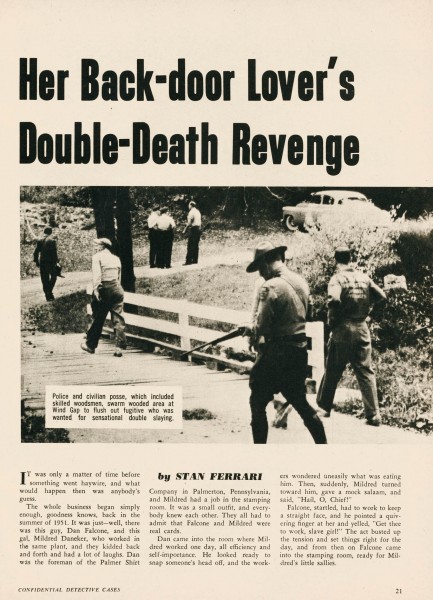 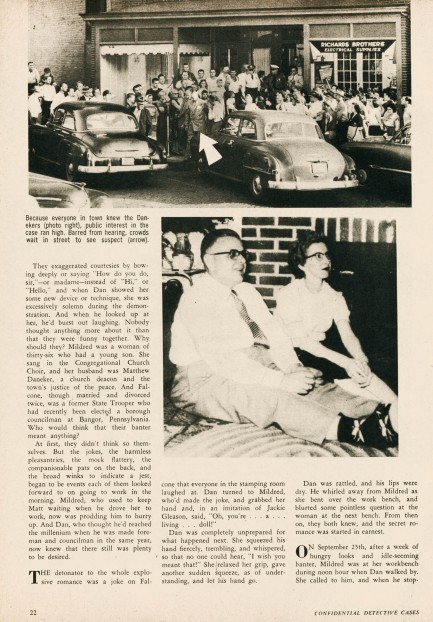 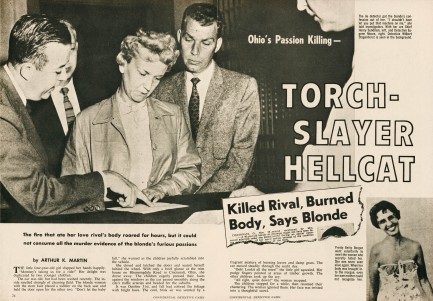 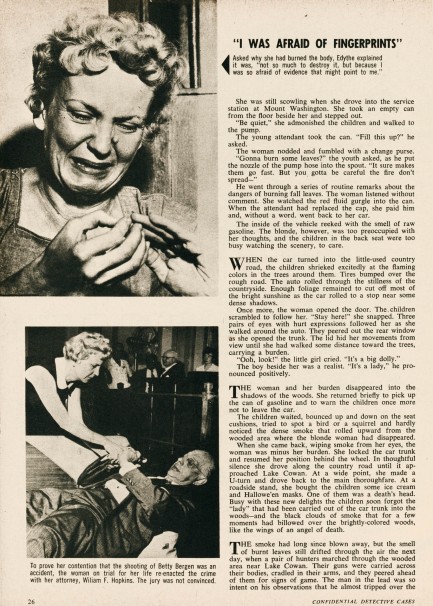         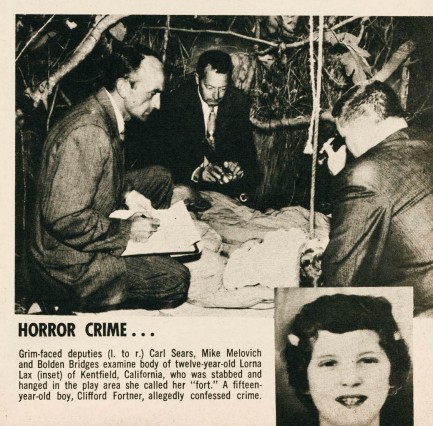 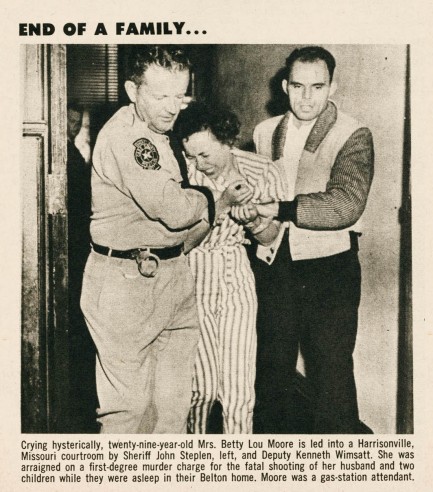  
 New murder magazine puts a fright into British readers. 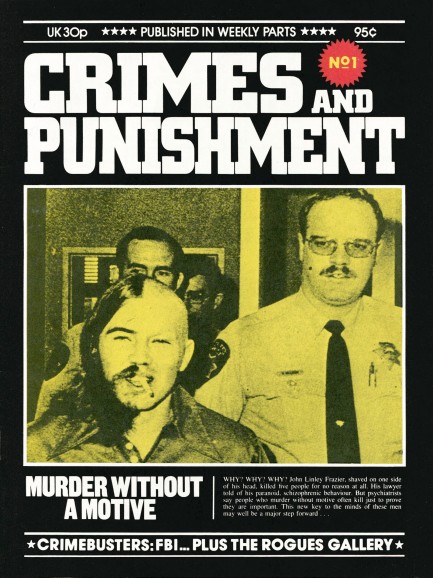
Who is this odd character on the cover of the UK weekly Crimes & Punishment? That would be John Linley Frazier, an Ohio born religious fanatic who this month in 1970 murdered five people at the behest—he claimed—of God. His victims were a wealthy Santa Cruz, California ophthalmologist named Victor Ohta, his wife Virginia Ohta, their two children Taggart and Derrick, and the ophthalmologist's secretary Dorothy Cadwallader. Frazier bound them all with scarves, shot them with a .38 or a .22, depending on the victim, and dumped their bodies a large pool behind the house. He did the same to the family cat. Then he burned the house down.
Frazier left a note on one of Ohta's cars. It read: "Halloween... 1970. Today world war 3 will begin as brought to you by the people of free universe. From this day forward, any one ?/or company of persons who misuses the natural environment or destroys same will suffer the penalty of death by the people of the free universe. I and my comrades from this day forth will fight until death or freedom against any single anyone who does not support natural life on this planet, materialism must die or mankind will.” He signed the note four times—as the Knight of Wands, the Knight of Cups, the Knight of Penticles [sic], and the Knight of Swords, all identities from standard tarot decks.
Frazier's similarity to Charles Manson is impossible not to notice. Both had grandiose ideas about reshaping the world and believed in a coming war; one claimed to talk to God while the other was strongly influenced by the Book of Revelation; both were part of the California hippie scene, and both were of tiny stature and compulsively needed to influence others. In the end it was Frazier's constant talking about the 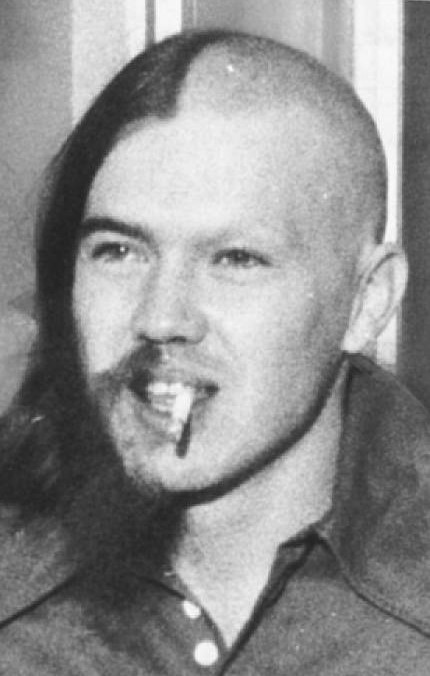 evils of materialism and consumerism that did him in, since people tended to remember his lectures. In particular, he had railed against Ohta's ostentatious lifestyle and the trees he had uprooted on his ten acre property to build his house. Tips from acquaintances, as well as Frazier's estranged wife, helped police zero in. evils of materialism and consumerism that did him in, since people tended to remember his lectures. In particular, he had railed against Ohta's ostentatious lifestyle and the trees he had uprooted on his ten acre property to build his house. Tips from acquaintances, as well as Frazier's estranged wife, helped police zero in.
Frazier was arrested at his shack not far from the Ohta mansion four days after the murders and he went to trial a year later in October 1971, with the first proceedings designed to establish guilt, the second to determine sanity, and the third to decide upon a sentence. In the photo above he's being led to court during the sanity phase, and he's shaved half his head, half his beard, and one eyebrow as a representation of the two sides of a hippie. If the haircut was an attempt to look crazy to the jury it didn't work—they sentenced him to death, a penalty that was commuted to life in prison when California later banned capital punishment.
This is the debut issue of Crimes & Punishment, dating from 1973. We don't think it published past that year, but as a weekly at least a couple of dozen issues were produced. We may try to track down others, because this one was very involving. Inside you get profiles on Leopold & Loeb, Ma Barker, Gaston Dominici, Charles Manson, the Zodiac, and even Adolf Hitler. Nearly all the crimes took place in the U.S., which we imagine the magazine's British readership found curious and disturbing. We know because we live overseas and whenever another U.S. mass killer hits the news our friends are curious and disturbed. For that matter so are we. We have quite a few scans below to put a fright into you as Halloween approaches, and we'll share more true crime magazines a bit later. 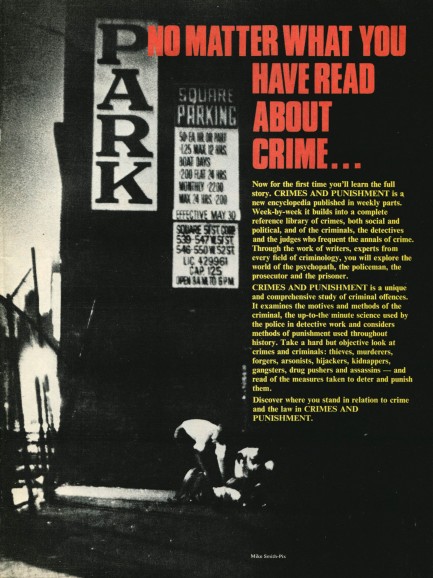 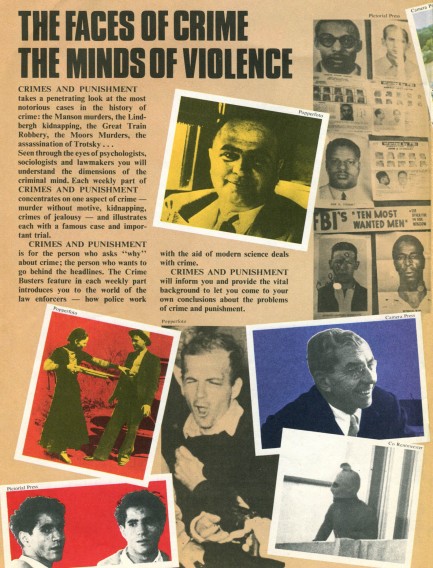 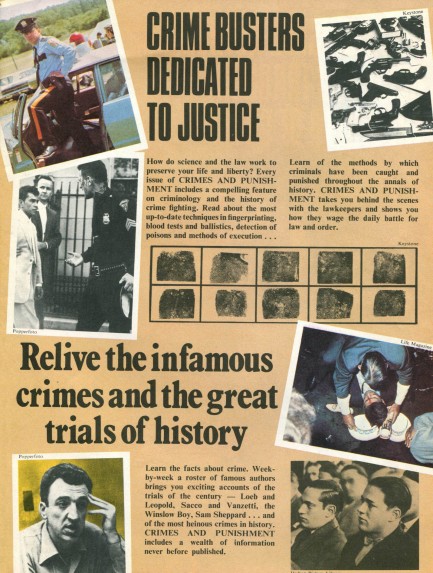 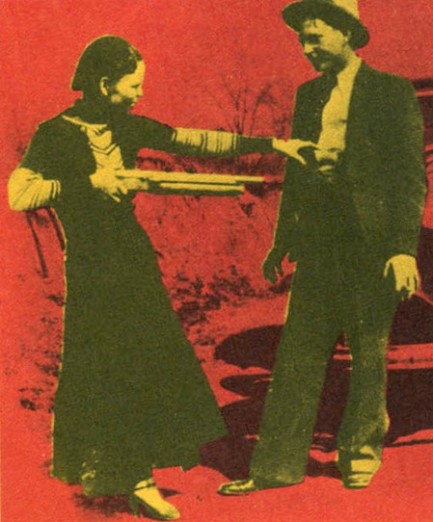 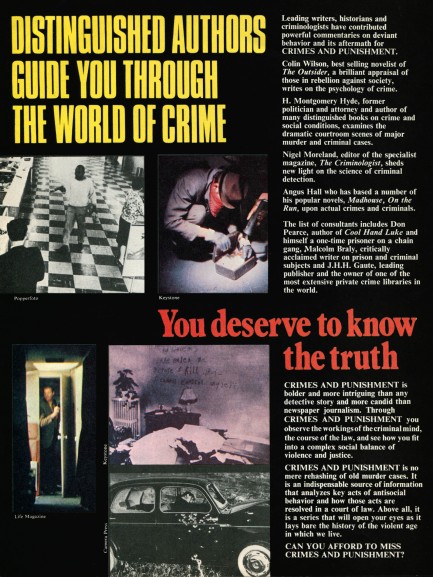 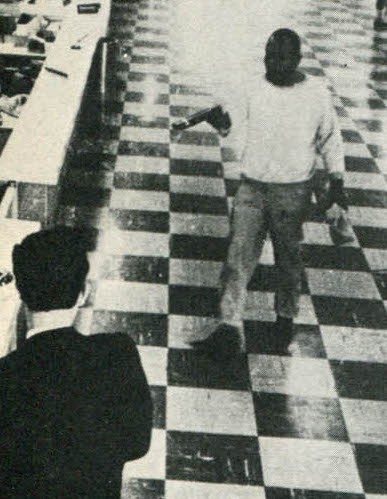 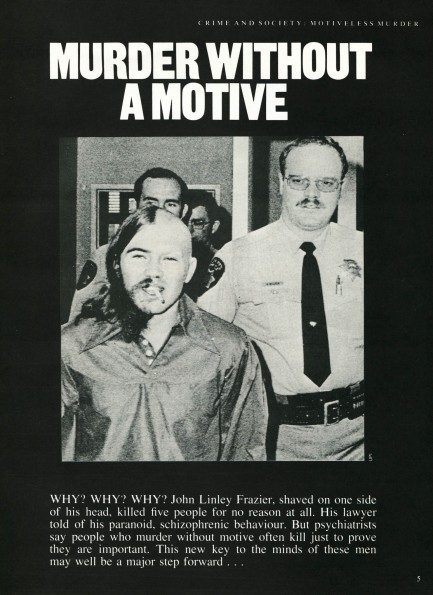 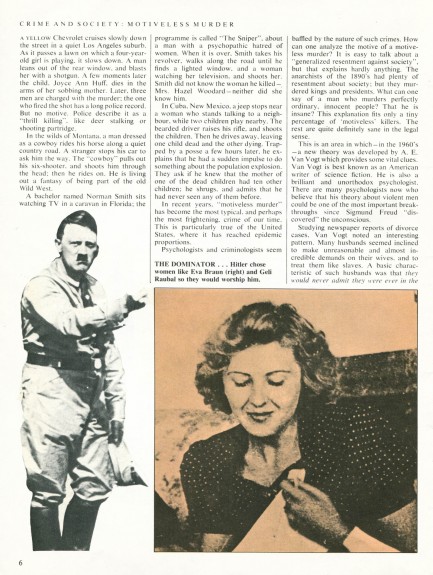 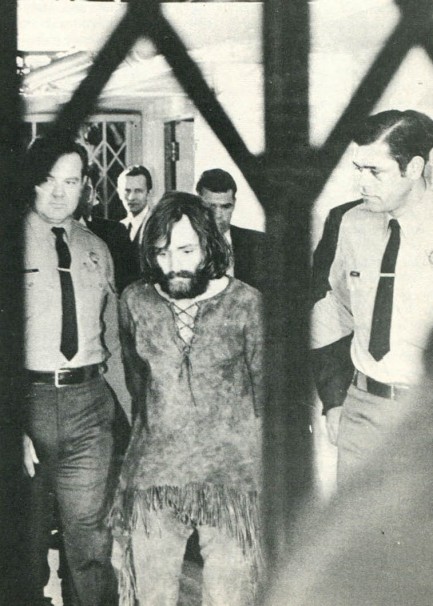 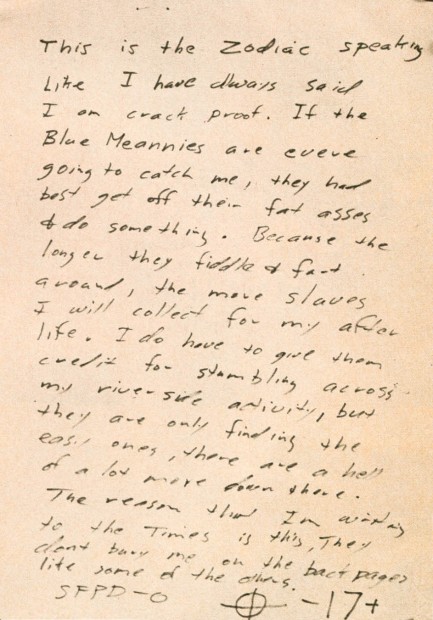 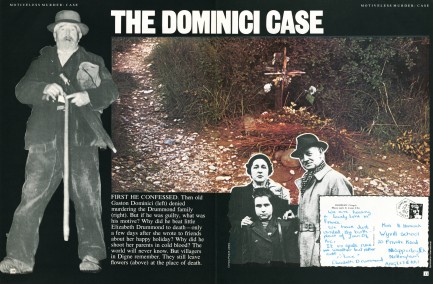 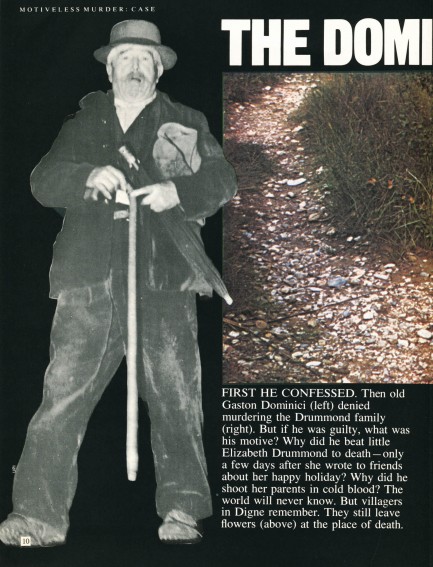 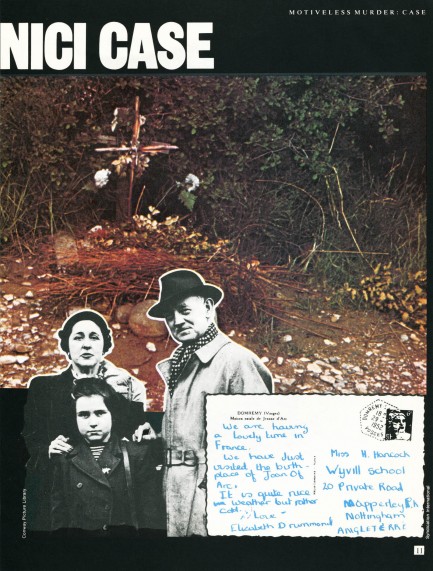 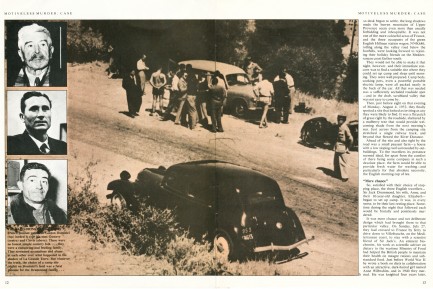 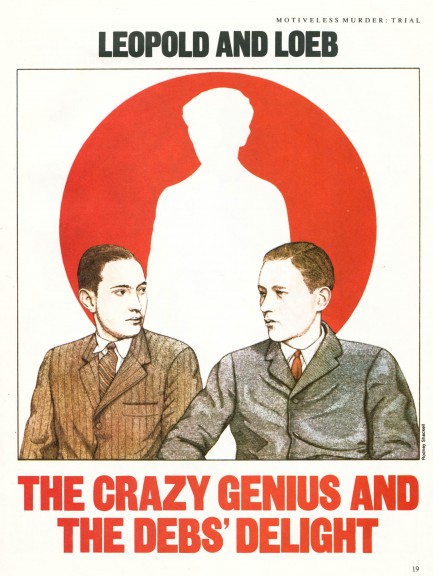  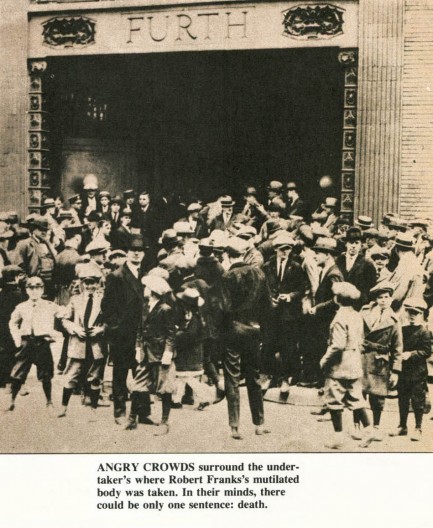 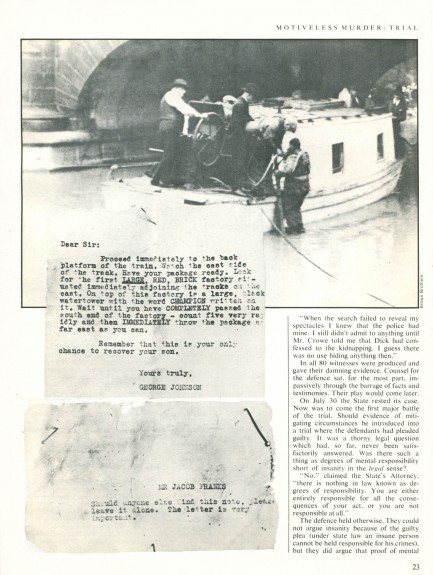 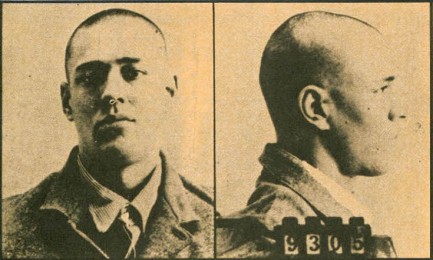 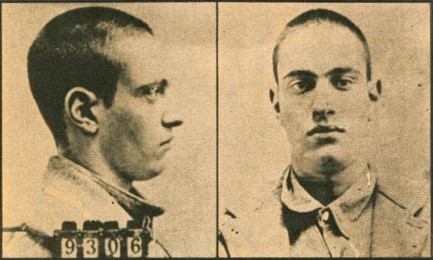  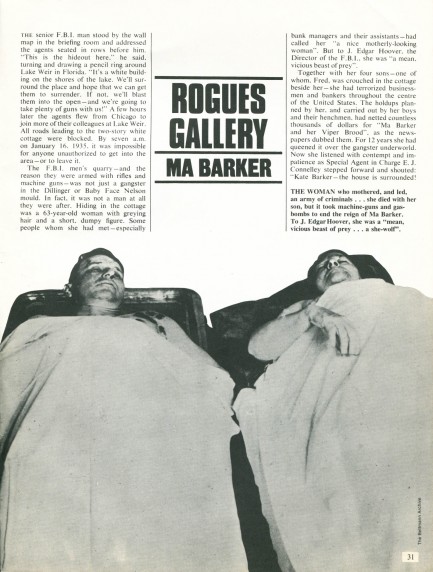 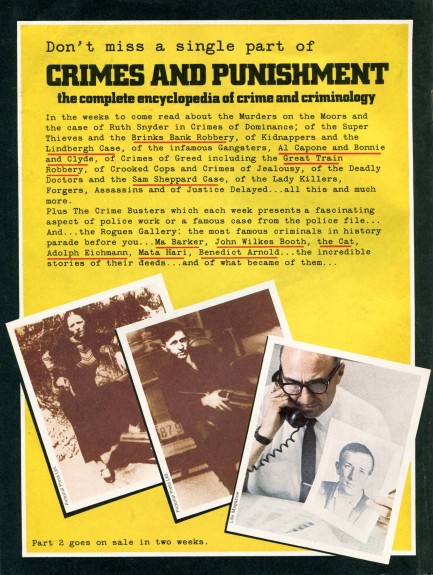
 Jealous murder strikes a John Wayne movie set. 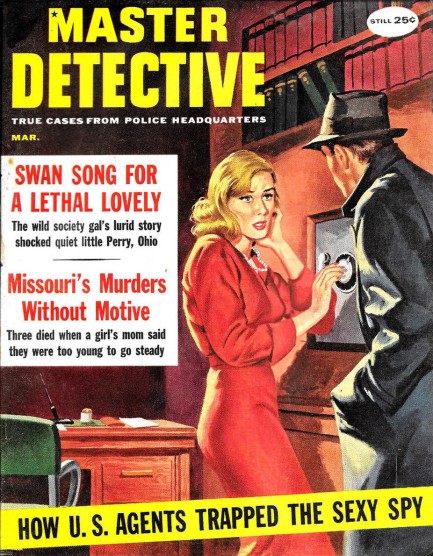
This Master Detective published today in 1960 has a nice cover by Al Drule, and inside the issue are several interesting stories, but the one we're looking at today is “The Crime that Wasn't in the Script,” about a murder that took place during the filming of John Wayne's western The Alamo. The story is kind of forgotten, but basically, an actress named LaJean Etheridge was killed by her boyfriend Chester Harvey Smith, who was angry that Etheridge had decided to move closer to the movie set in Brackettville, Texas. Such a killing is impossible to understand under any circumstances, but putting on your jealous madman cap for a second you can picture a possessive man losing it over his girlfriend moving thousands of miles away. Like if someone told you the story you'd nod and go, “Umm hmm,” because you could see it.
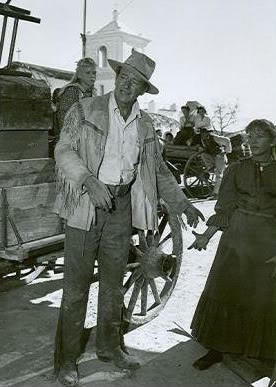 But Etheridge wasn't moving thousands of miles. She and Smith had both scored work as extras on The Alamo, had traveled from Hollywood together, and were living in Spofford, Texas with three other extras in lodgings set up by Wayne's Batjac Productions. Etheridge had decided to move from Spofford to Fort Clark, ten miles north, a relocation precipitated by her landing a larger part in the film. Was she simply moving closer to the set to facilitate the changed demands of her role? Or was she leaving her boyfriend? Still wearing your jealous madman cap, you can picture Smith believing the latter. Etheridge would be out of sight, living with unknowns, possibly having fun with production staff and carousing with handsome actors. But she never got the chance—as she was packing Smith stabbed her in the chest with a Bowie knife, and she died on the scene. He was arrested when police arrived fifteen minutes later, pled guilty to murder, and was sentenced to thirty years in prison. But Etheridge wasn't moving thousands of miles. She and Smith had both scored work as extras on The Alamo, had traveled from Hollywood together, and were living in Spofford, Texas with three other extras in lodgings set up by Wayne's Batjac Productions. Etheridge had decided to move from Spofford to Fort Clark, ten miles north, a relocation precipitated by her landing a larger part in the film. Was she simply moving closer to the set to facilitate the changed demands of her role? Or was she leaving her boyfriend? Still wearing your jealous madman cap, you can picture Smith believing the latter. Etheridge would be out of sight, living with unknowns, possibly having fun with production staff and carousing with handsome actors. But she never got the chance—as she was packing Smith stabbed her in the chest with a Bowie knife, and she died on the scene. He was arrested when police arrived fifteen minutes later, pled guilty to murder, and was sentenced to thirty years in prison.
The final assessment by Smith's lawyer was that the murder was a crime of “passion and professional jealousy.” As details emerged a clearer picture of Smith formed. He had once struck his ex-wife's roommate in the head with a hatchet, and earlier had tried to run her, her roommate, and their dates down with his car. His rage wasn't reserved only for ex-lovers. He also once attacked a bus driver. So Smith needed no excuses to hurt people. It's just what he did. But maybe this particular episode really was a so-called crime of passion. Rumors circulated during the trial that Etheridge had been seeing John Wayne, but he never testified nor was officially involved with the case in any way. And under the circumstances, it was probably inevitable that such rumors would spring up. Yet Etheridge had completed her part, and Wayne, according to several accounts, had asked her to stay on at Fort Clark. So there's no telling.
Etheridge's part in The Alamo was left on the cutting room floor. No surprise. The murder caused enough bad publicity as it was, so naturally there was no way she could have remained in the film. It wasn't until an extended version was released in 1993 that her role as Mrs. Guy was seen by movie fans. Though the story of the murder has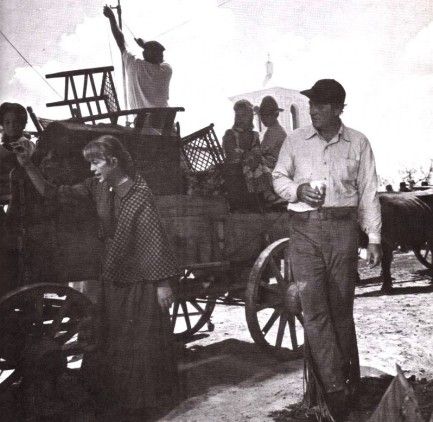 faded somewhat, author John Hegenberger used the events as the backdrop for a 2017 crime novel called Stormfall. Chester Harvey Smith, John Wayne, and others are characters, and the star is Hegenberger's detective creation Stan Wade. The book opens with the murder, and Etheridge uttering her final words to Smith before she dies. What were the words? According to the statement Smith gave police, Etheridge said, mortally wounded and bleeding to death, “I love you.” You can take off your jealous madman cap now. faded somewhat, author John Hegenberger used the events as the backdrop for a 2017 crime novel called Stormfall. Chester Harvey Smith, John Wayne, and others are characters, and the star is Hegenberger's detective creation Stan Wade. The book opens with the murder, and Etheridge uttering her final words to Smith before she dies. What were the words? According to the statement Smith gave police, Etheridge said, mortally wounded and bleeding to death, “I love you.” You can take off your jealous madman cap now.
 Axe and you will receive. 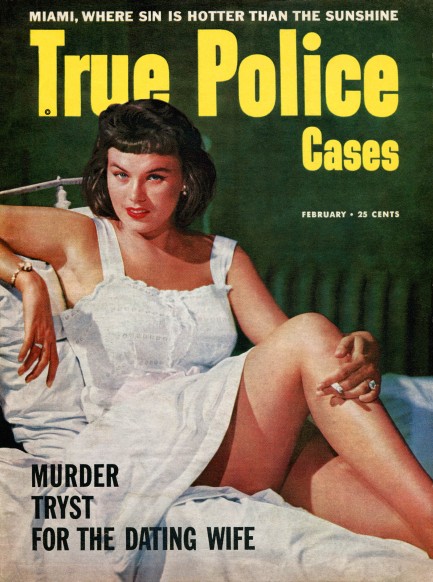
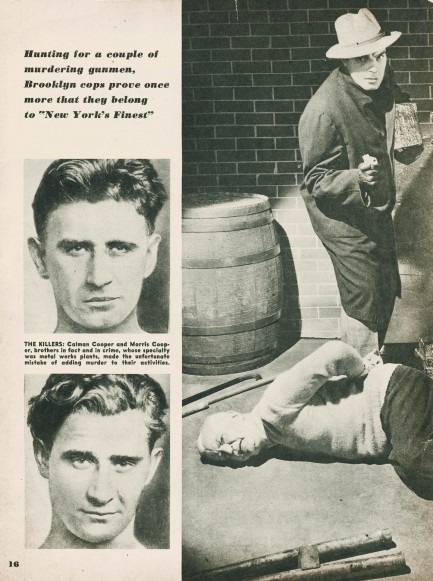
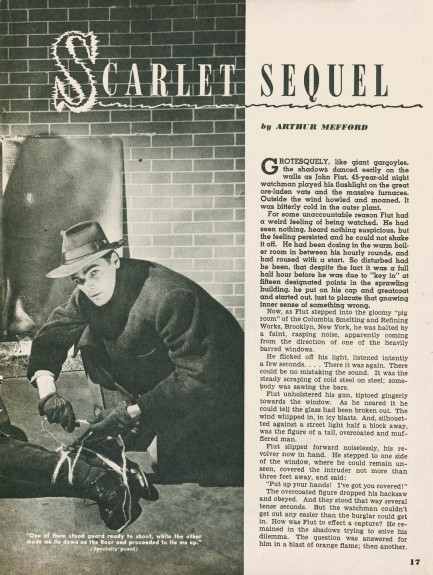
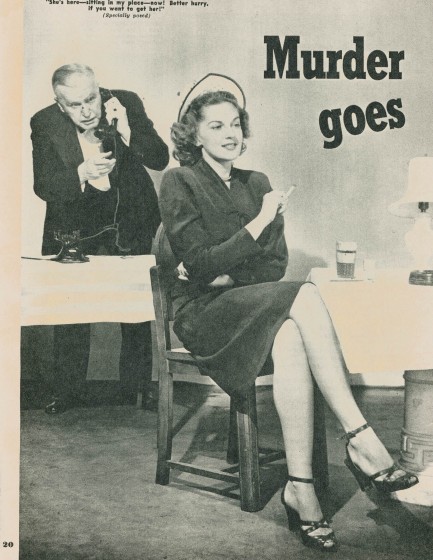
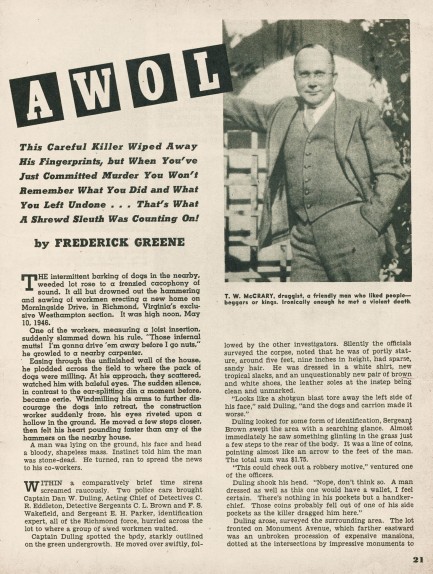
Above and below are the cover and assorted interior scans from a February 1953 issue of True Police Detective, a magazine we've discussed once or twice before. You get the usual collection of true crime tales, explored in procedural detail, with striking photo spreads posed by professional models, as well as some actual crime scene shots. One story we noticed here concerned the murders in London of 16-year-old Barbara Songhurst and 18-year-old Christine Reed in May 1953. The two had last been seen alive embarking on a bike trip. Songhurst's body was found the next day floating face down in the Thames, while Reed's was located five days later when a section of the river was drained. Reed had been raped, and both had been beaten unconscious and hacked with an axe. The physical evidence was clear: an assailant had surprise attacked both victims, beaten them unconscious, axed Reed and disposed of her before turning his attention to the helpless Songhurst.
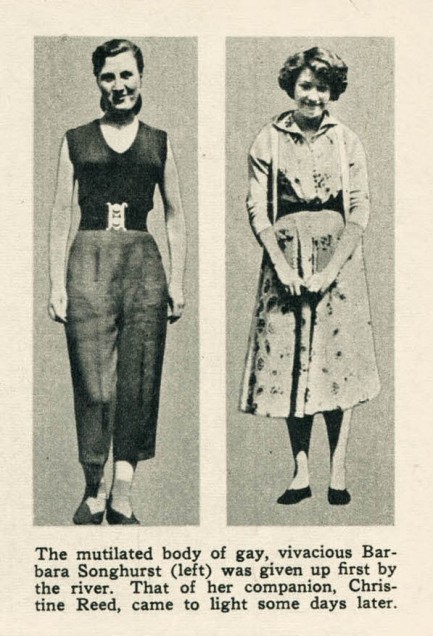 One curious part of the tale is that the girls disappeared while biking from London to Brighton, according to the author. It seemed to us like a pretty long trip and we were right—as the crow flies it's more than forty miles. So we think the magazine got that part of the story wrong, since the girls' families were expecting them back home by evening. In any case, our interest derived from the simple fact that the crime hadn't been solved at the time True Police Cases went to press. A man named Alfred Whiteway had been arrested, but the story ends with, “Whiteway is awaiting trial that will determine his guilt or innocence.” Since we had already invested the time to read the entire saga, we wanted to find out how it ended. One curious part of the tale is that the girls disappeared while biking from London to Brighton, according to the author. It seemed to us like a pretty long trip and we were right—as the crow flies it's more than forty miles. So we think the magazine got that part of the story wrong, since the girls' families were expecting them back home by evening. In any case, our interest derived from the simple fact that the crime hadn't been solved at the time True Police Cases went to press. A man named Alfred Whiteway had been arrested, but the story ends with, “Whiteway is awaiting trial that will determine his guilt or innocence.” Since we had already invested the time to read the entire saga, we wanted to find out how it ended.
The case almost turned on chance. A month after Songhurst and Reed had been found, Whiteway was arrested for raping a woman and assaulting another on Oxshott Heath. He had the Songhurst/Reed murder axe in his possession when police picked him up. While being driven to the station he managed to hide the axe under the car's rear seat, where it remained until the vehicle was cleaned some time later and an officer discovered the weapon. Instead of realizing its significance, the officer took the tool home and used it to chop wood, blunting the edge and obliterating any blood evidence. If he had simply realized how suspicious it was to find it under the seat of a police car the case would have been solved.
In the end, old-fashioned procedural work finally cracked the case. Whiteway had been maintaining his innocence the entire time, but forensic investigators finally found minute traces of blood in an eyelet and seam on one of his shoes. Confronted with blood evidence he broke down and confessed. He had attacked the girls in a rage, raped Songhurst, and tossed both bodies in the Thames. If he expected his admission to earn him leniency he was disappointed—he was convicted in court of what became known as the Towpath Murders and hanged at Wandsworth Prison in December 1953. And the axe that almost but didn't break the case ended up in the Black Museum at Scotland Yard, where it still resides today. 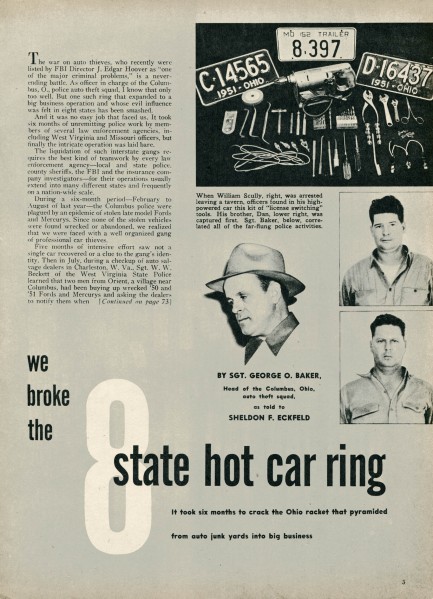 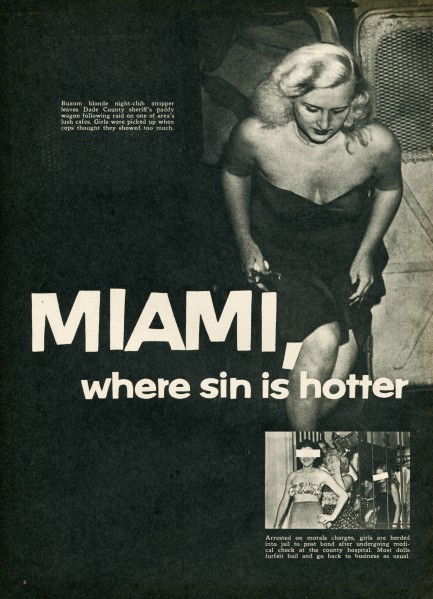 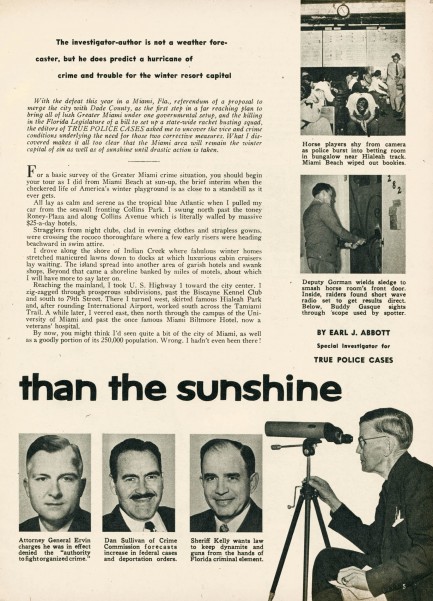 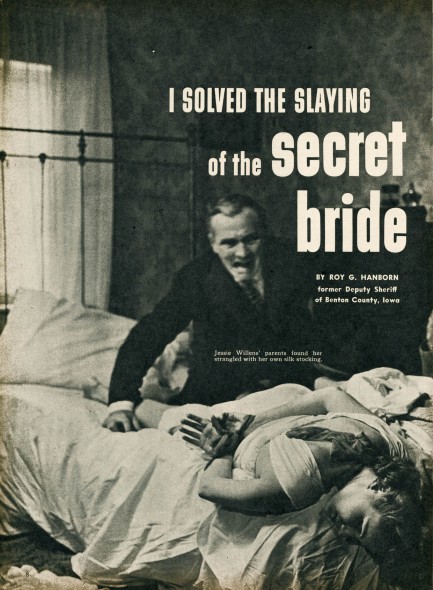 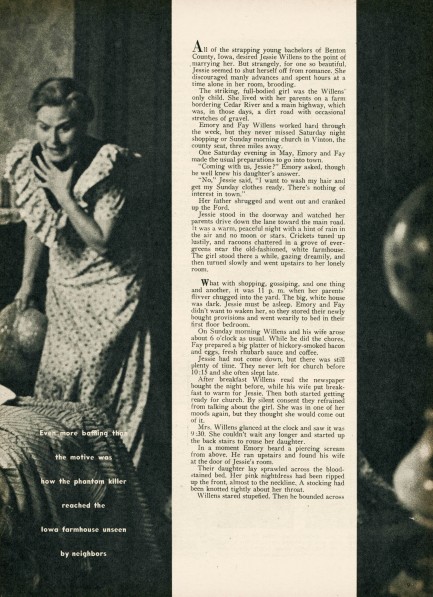 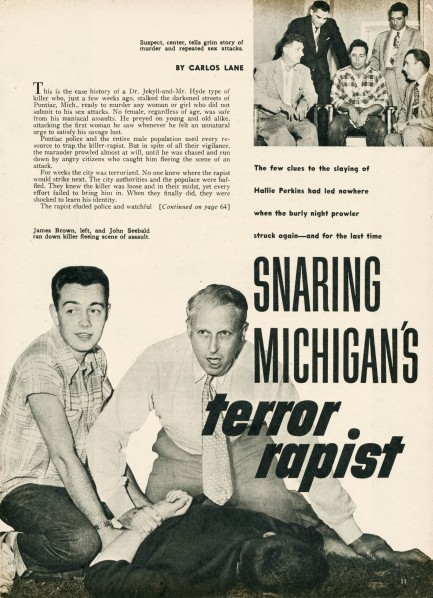 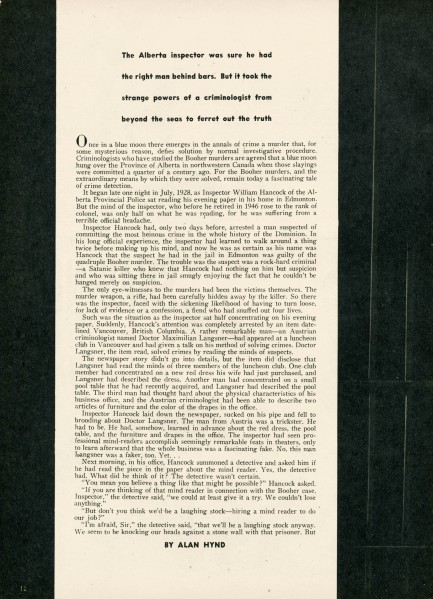 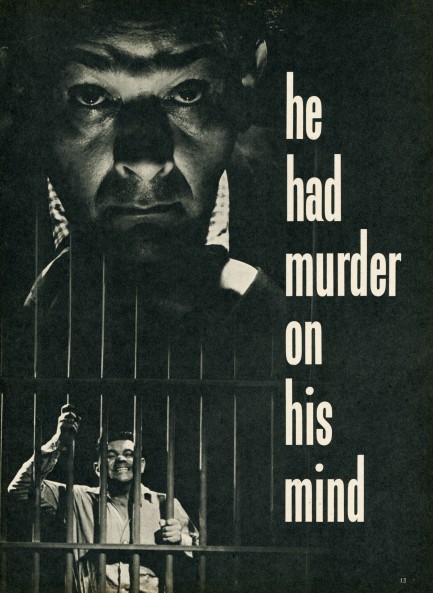 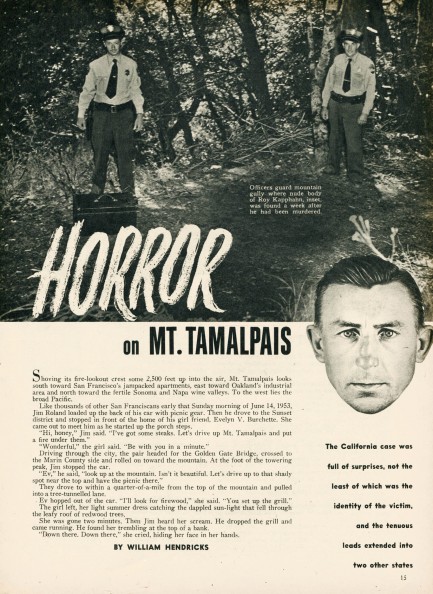 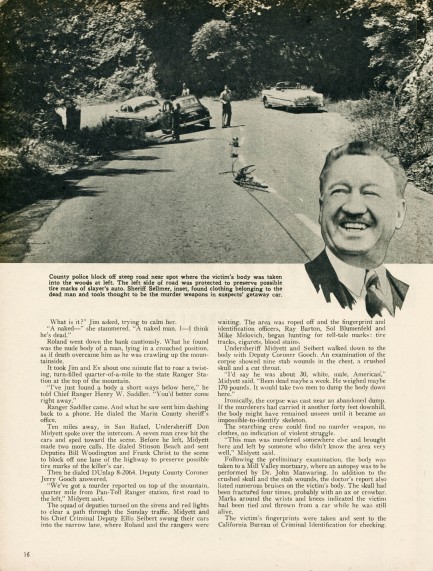 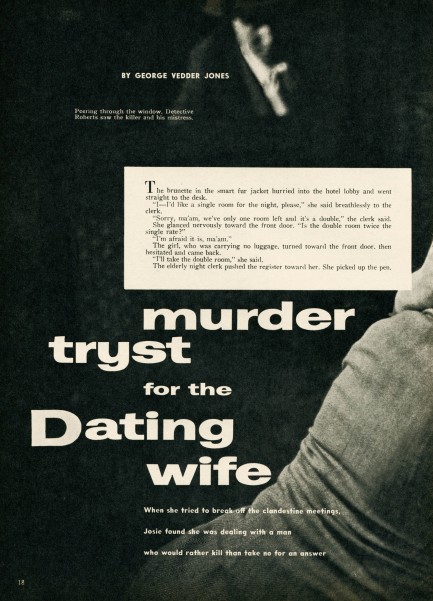 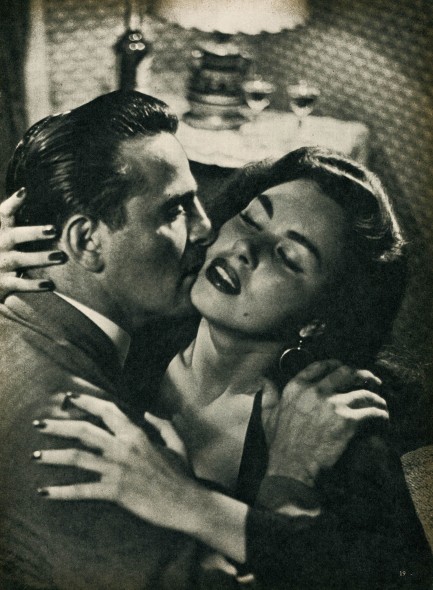 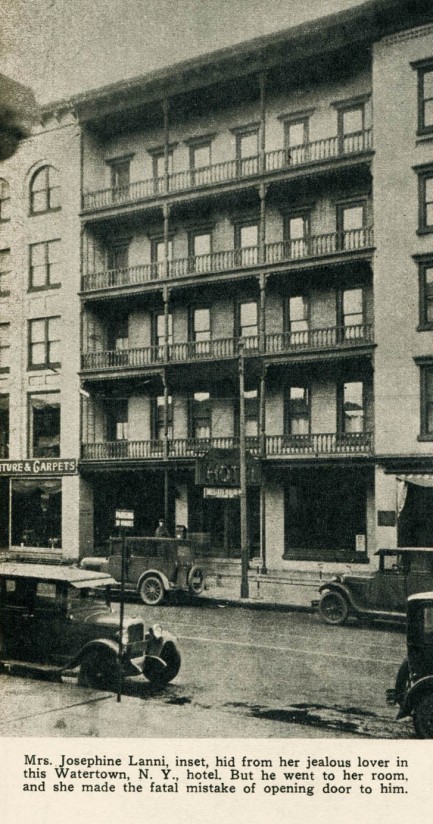 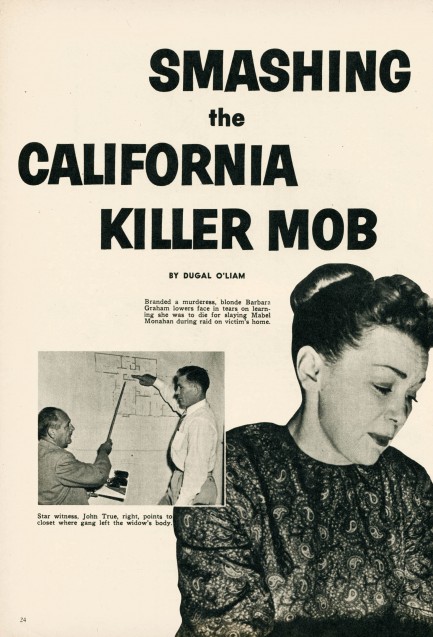 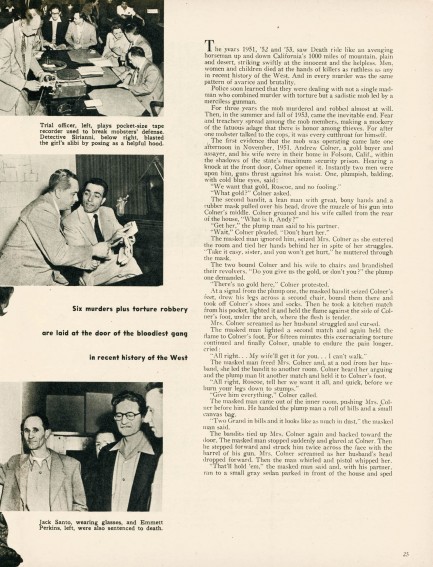 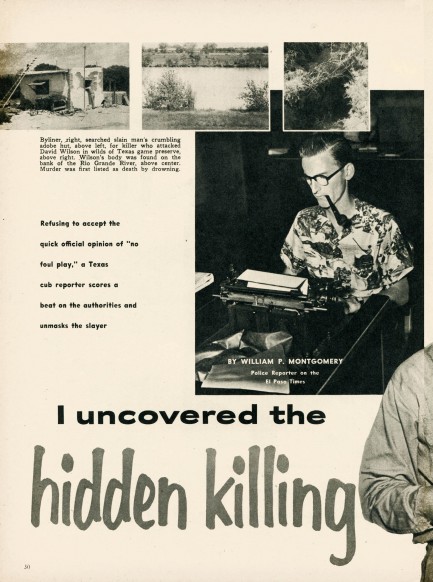 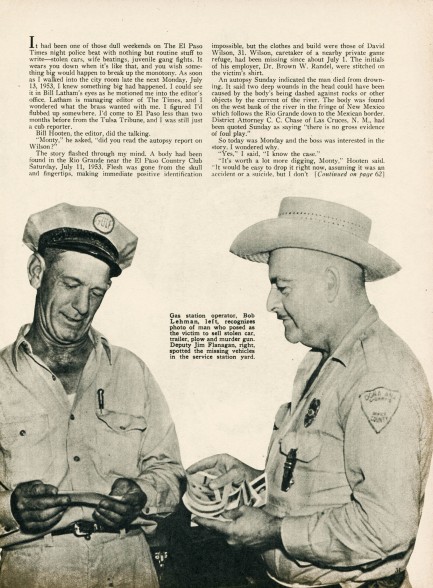 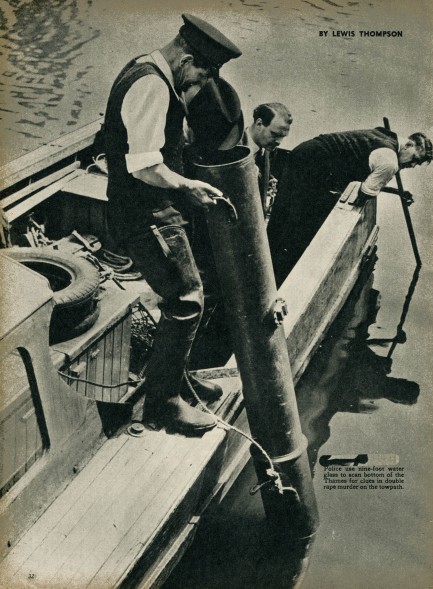 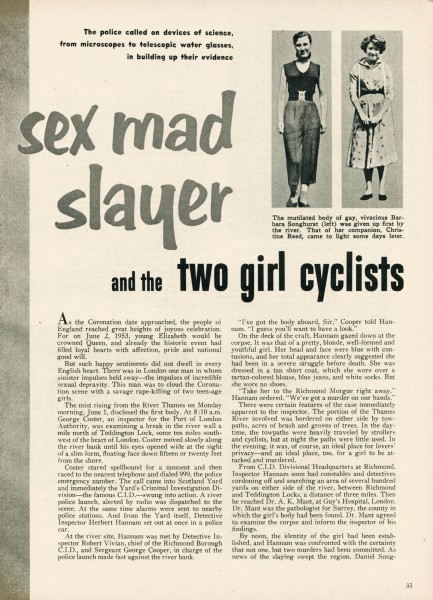 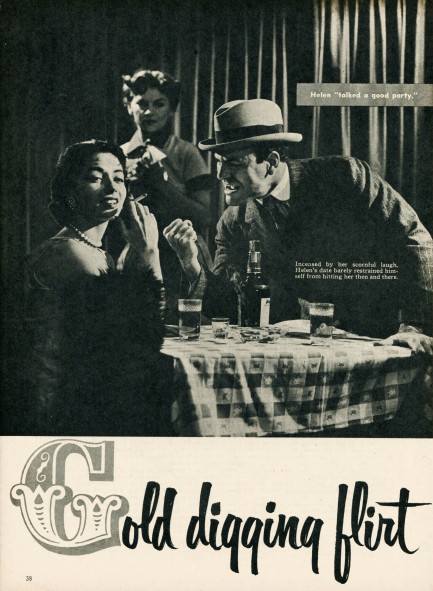 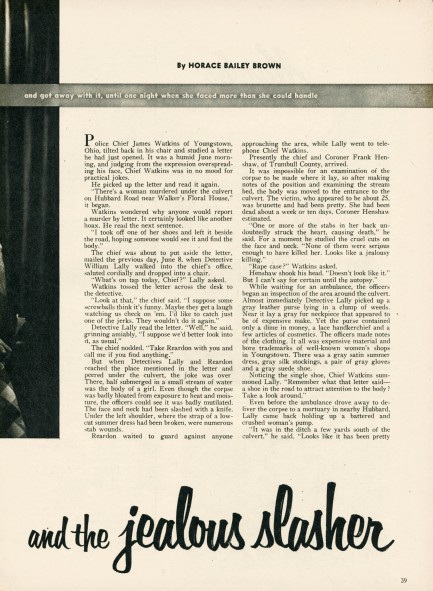 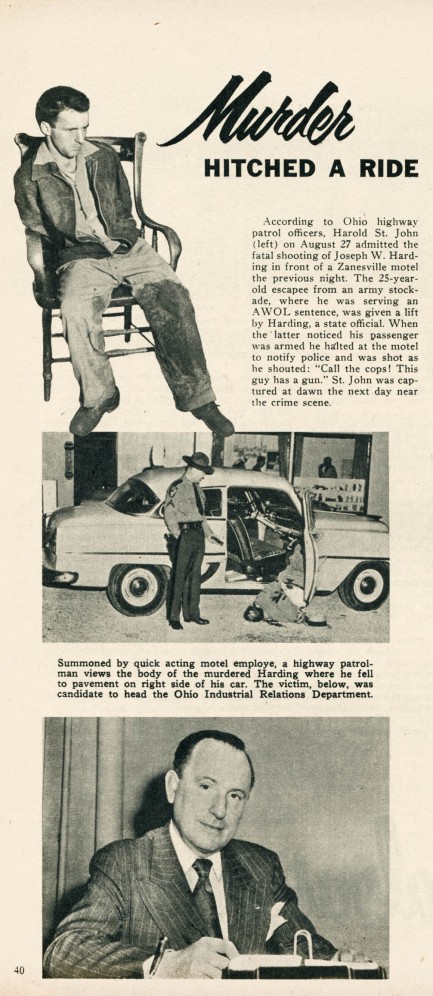 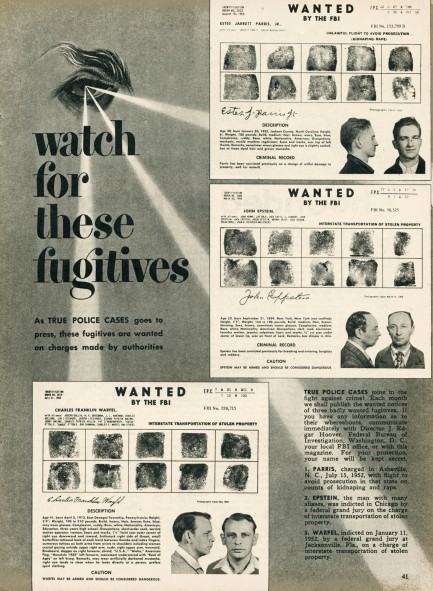 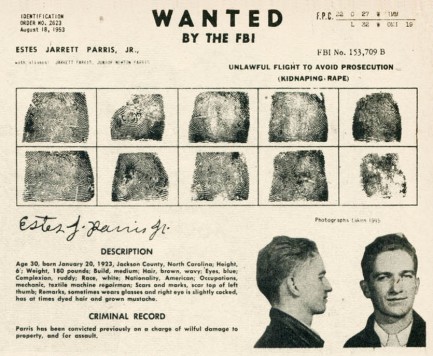 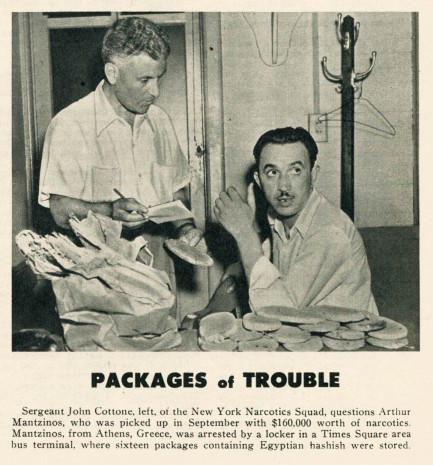 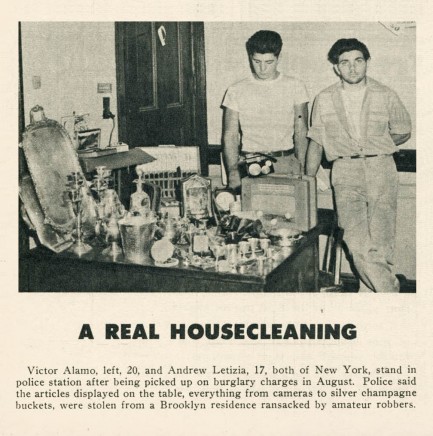

|
 |

The headlines that mattered yesteryear.
1945—Mussolini Is Arrested
Italian dictator Benito Mussolini, his mistress Clara Petacci, and fifteen supporters are arrested by Italian partisans in Dongo, Italy while attempting to escape the region in the wake of the collapse of Mussolini's fascist government. The next day, Mussolini and his mistress are both executed, along with most of the members of their group. Their bodies are then trucked to Milan where they are hung upside down on meathooks from the roof of a gas station, then spat upon and stoned until they are unrecognizable. 1933—The Gestapo Is Formed
The Geheime Staatspolizei, aka Gestapo, the official secret police force of Nazi Germany, is established. It begins under the administration of SS leader Heinrich Himmler in his position as Chief of German Police, but by 1939 is administered by the Reichssicherheitshauptamt, or Reich Main Security Office, and is a feared entity in every corner of Germany and beyond. 1937—Guernica Is Bombed
In Spain during the Spanish Civil War, the Basque town of Guernica is bombed by the German Luftwaffe, resulting in widespread destruction and casualties. The Basque government reports 1,654 people killed, while later research suggests far fewer deaths, but regardless, Guernica is viewed as an example of terror bombing and other countries learn that Nazi Germany is committed to that tactic. The bombing also becomes inspiration for Pablo Picasso, resulting in a protest painting that is not only his most famous work, but one the most important pieces of art ever produced. 1939—Batman Debuts
In Detective Comics #27, DC Comics publishes its second major superhero, Batman, who becomes one of the most popular comic book characters of all time, and then a popular camp television series starring Adam West, and lastly a multi-million dollar movie franchise starring Michael Keaton, then George Clooney, and finally Christian Bale. 1953—Crick and Watson Publish DNA Results
British scientists James D Watson and Francis Crick publish an article detailing their discovery of the existence and structure of deoxyribonucleic acid, or DNA, in Nature magazine. Their findings answer one of the oldest and most fundamental questions of biology, that of how living things reproduce themselves.
|

|
|
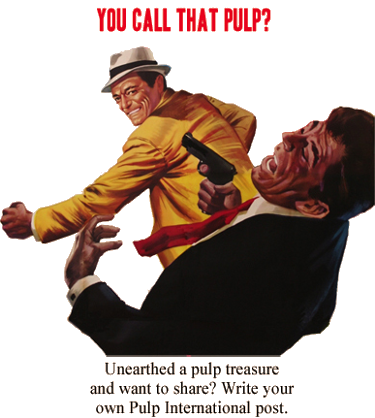
It's easy. We have an uploader that makes it a snap. Use it to submit your art, text, header, and subhead. Your post can be funny, serious, or anything in between, as long as it's vintage pulp. You'll get a byline and experience the fleeting pride of free authorship. We'll edit your post for typos, but the rest is up to you. Click here to give us your best shot.
|
|