I came to the bar to have a double—and look. They're about to come over here now. 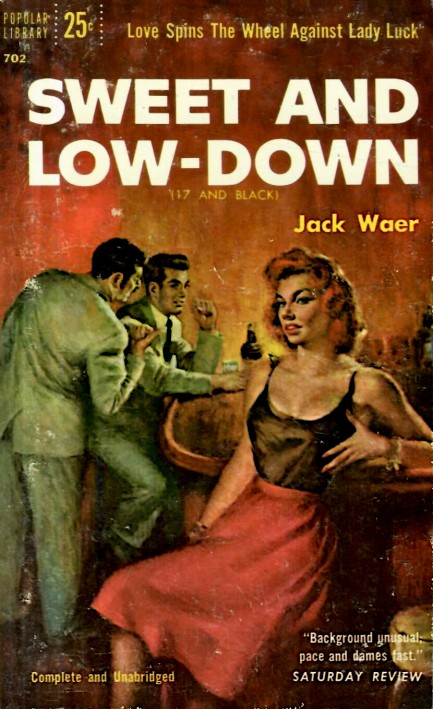
1955's Sweet and Low-Down was originally published as 17 and Black in 1954. The copy we bought is very worn. We looked for a better scan online to use, as we'll sometimes do, but every example we saw was equally abraded until we found one on Amazon, which you see above. It's a pretty nice cover, though uncredited. Is all the wear and tear on copies of this book an indication that it's read and re-read often, and therefore is good? That's certainly what we hoped.
The story, written by Polish born author Alexander Warchiwker writing as Jack Waer, is about Jim Foster, who runs an illegal casino in Hollywood but flees south of the border after taking a rap for his partners. They later ask him to open another casino in Mexico City. He's willing to oblige—for a bigger percentage—but during the opening gala the murder of a local one percenter spoils the party. It's an intriguing set-up for a novel, although it starts slowly. Luckily Waer's writing style maintains interest. For example:
The first time I called, the bim with the sultry voice let on she didn't have any idea who I wanted—said I had the wrong number. When I dialed back her memory was better. His nibs came to the phone. I found out that the vicers were off on a fresh trail. They were out for a pair of Internal Revs who were suspected of collecting a split from the top wigs in the commie crowd. I was as stale as a warmed over soufflé.
Strong approach there. A book this slang heavy goes in for a lot of off-color language, unsurprisingly, and being set in Mexico means there's racist invective. We could not in any way blame you for deciding to take a pass. There are plenty of vintage crime novels that visit Mexico without donning a Klan hood. We're not put off by a smidgen of salty language, but there's a limit—we don't think Foster ever used a non-slur to refer to a Mexican character, even when speaking of his so-called friends.
In any case, he needs to solve the murder, and he does precisely that, and solves another couple of mysteries too. Much of the book takes place within the casino, which would be fine if Waer managed to keep the stew at a hard boil, but his narrative cools considerably toward the finale, and the story drags. The end makes clear that the book was supposed to be a launching point for more novels, and the fact that it wasn't says everything you need to know. But if you find it cheap and don't mind the language, sure, what the hell, give it a read.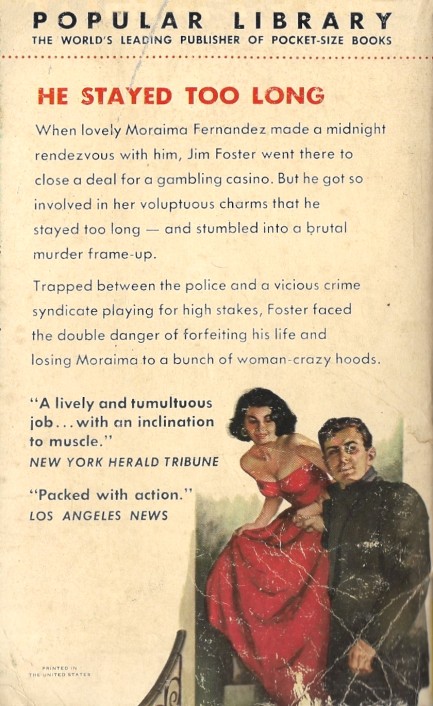
 Mexico hasn't been the same since. 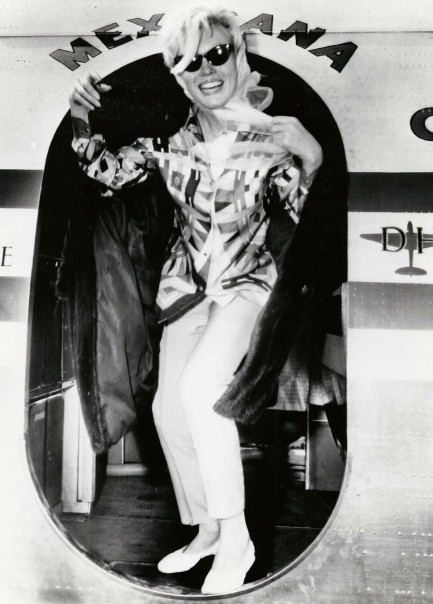
Did we ever mention that Mexico is our favorite country? Not that we really rank them, but we've been numerous times, always had fun, and more than once considered moving there. It could still happen. Marilyn Monroe looks like she had a fun time there in this publicity photo made today in 1962, when she landed in Los Angeles after ten days of vacation in Mexico City. You may have noticed the fur coat. It probably wasn't just for show. Mexico City can be quite warm in Fenruary, but nightly lows can get into the 40s Fahrenheit. Or maybe the plane was freezing. In any case, we like this shot showing a world champion of striking excellent poses looking a bit candid. We took notice of this shot because we too shall be flying away on vacation. We'll get into that tomorrow, and as always, Monroe will return.
 Fillette gets overheated and the final result isn't pretty. 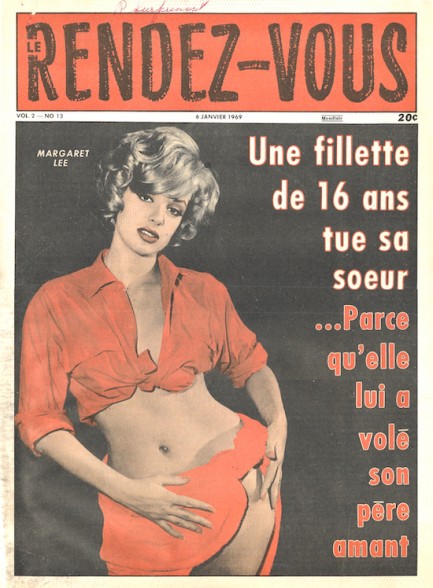
Montreal based Le Rendez-Vous is one of the more interesting mid-century tabloids. It faithfully catalogued celebrity, crime, and nature's misfortunes and atrocities—the classic tabloid formula—but did so with an extra layer of brutality that's amazingly raw for a Canadian publication. Was it that way because Canada was such a safe country and its readers liked to walk on the dark side? We think that could be a factor, though it's true to an extent for all tabloids that their readers seek exotic thrills. But as if to prove our point about Le Rendez-Vous, the crime stories in this issue from today in 1969 all come from outside countries: Mexico, South Africa, and the good ole USA. Canada seemingly wasn't a good source of chaos and killing. The editors first pump up the sex factor with British actress Margaret Lee on the cover, then, to the right, you see a stack of text about a “fillette de 16 ans.” No, it's not about a dry-aged steak. It says: 16-year-old girl kills her sister... Because she stole her lover father. Lover father? That sounds ominous. And indeed, turns out a Mexico City girl named Amalia Martinez, her sister Cristina, and father Ernesto, were in an incestuous love triangle. Amalia solved this family beef by shooting her sister in the head. “That little silly girl,” she said after being arrested, “got what she deserved.” Clearly she still hadn't quite worked through her anger. Probably she always had to share everything with her sister, and usually got the short end of the stick. It's quite a story from Le Rendez-Vous—100% prime tabloid journalism.
Elsewhere in the issue readers get a feature on circus performers, including a photo of a contortionist that brings to mind the time we saw a woman in Marrakech crawl through a tennis racket (we were searching for a cursed monkey's paw, but seeing that feat was a worthy consolation prize). Also inside is Croatian actress Sylva Koscina on the Côte d'Azur, Italian actress Antonella Dogan in the centerfold, ex-first lady Jaqueline Onassis in Greece, and our old friend, model and actress Donna Marlowe, in a bikini. We have plenty of scans of those items and more below, two other issues of Le Rendez-Vous here and here, and more from this publication to come.
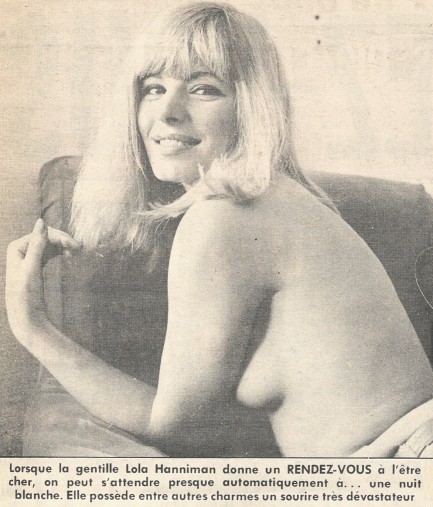 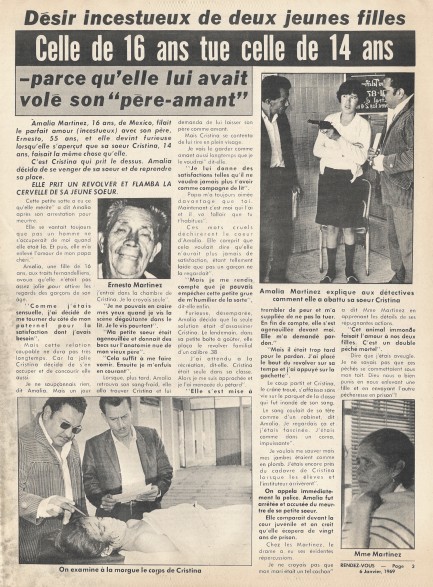 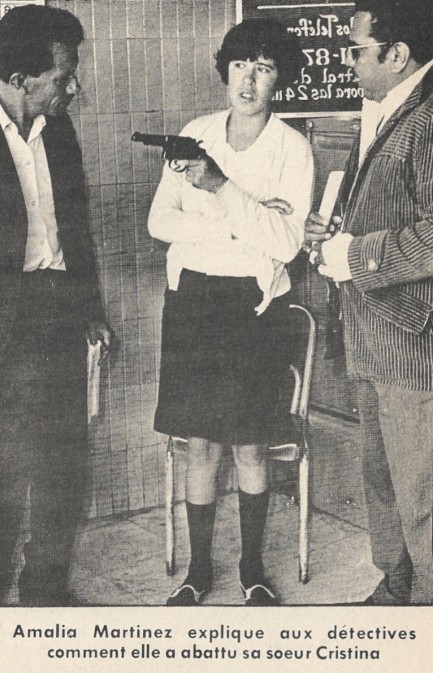 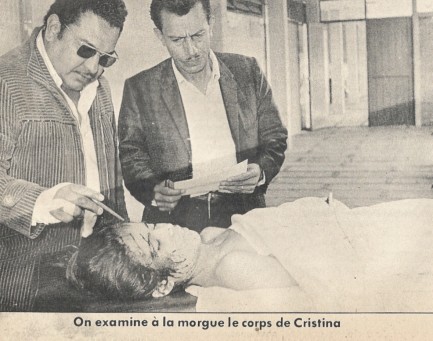 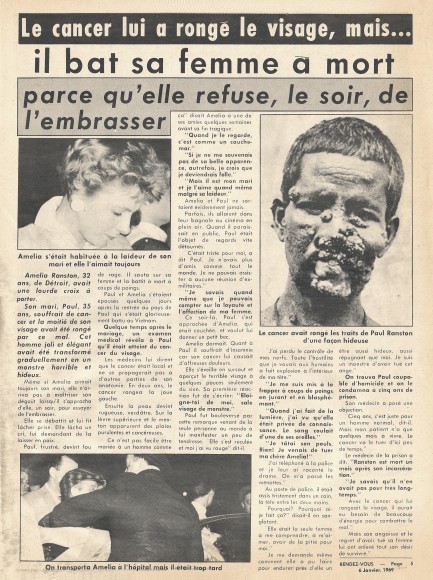 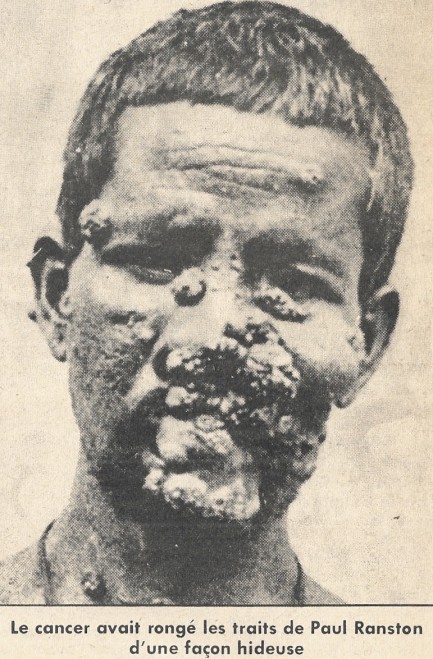 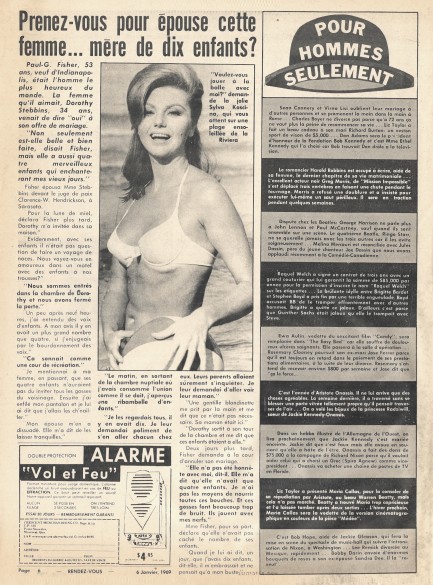 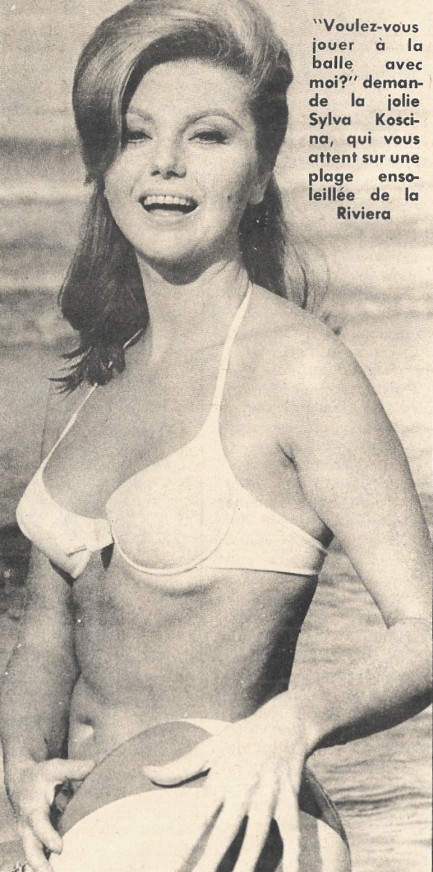 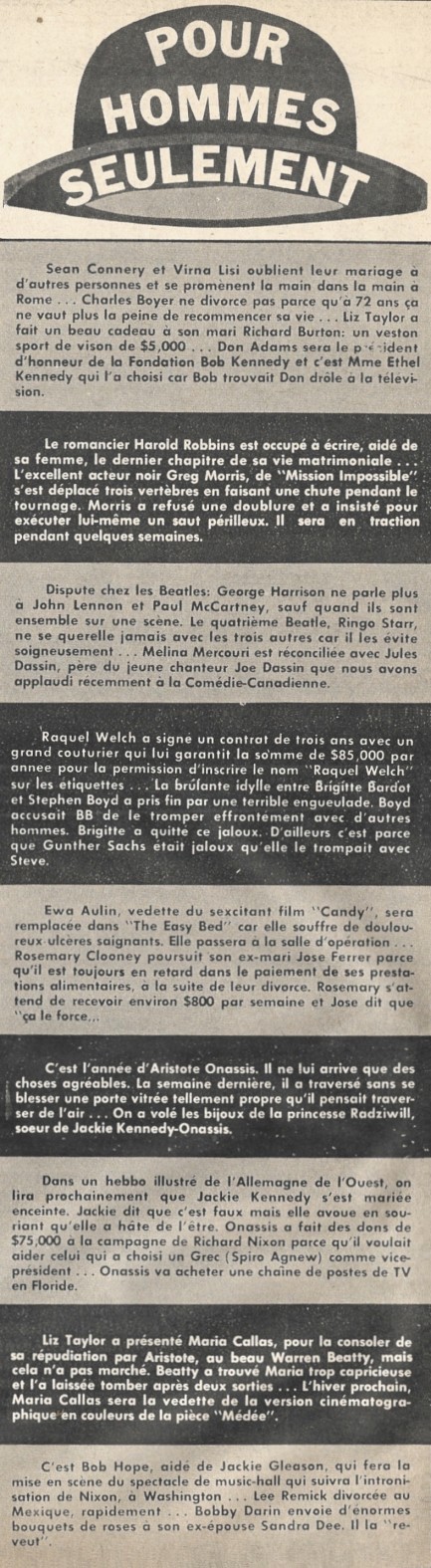  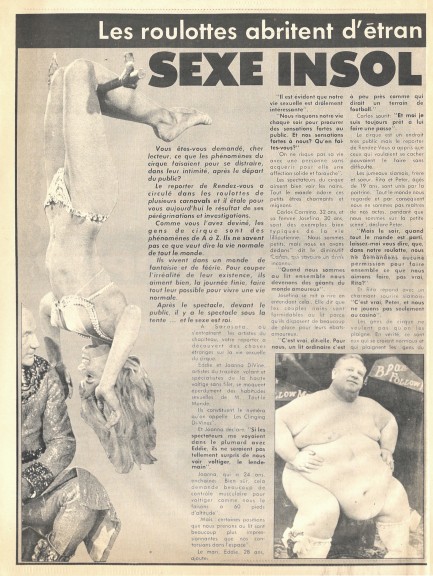 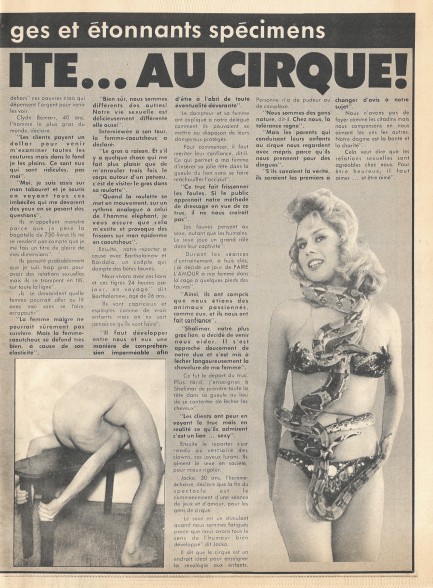 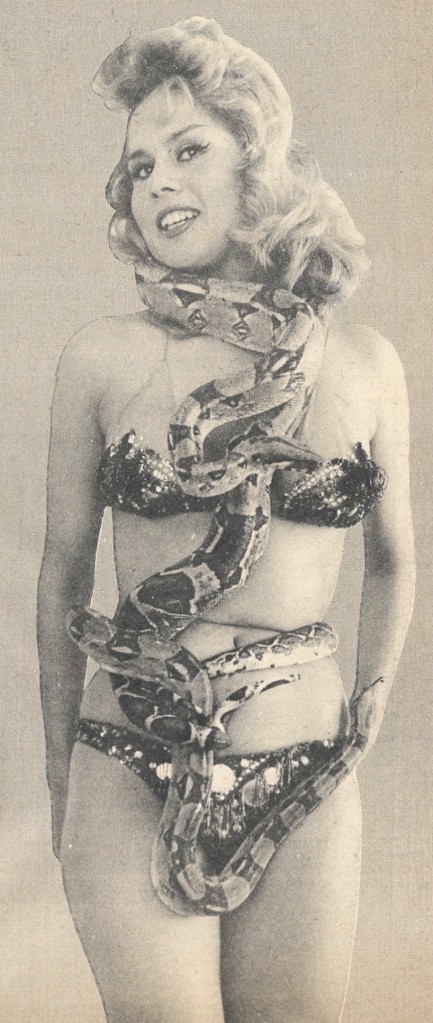 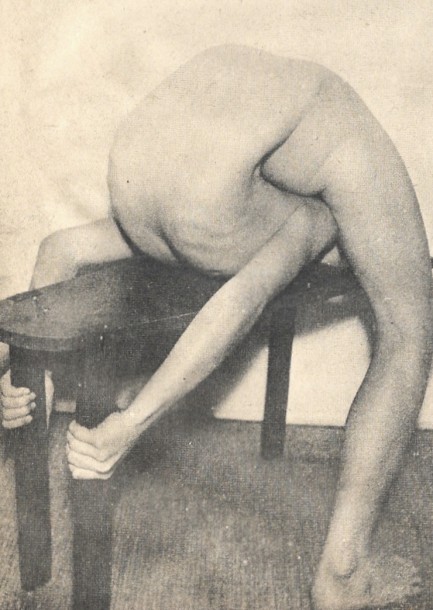 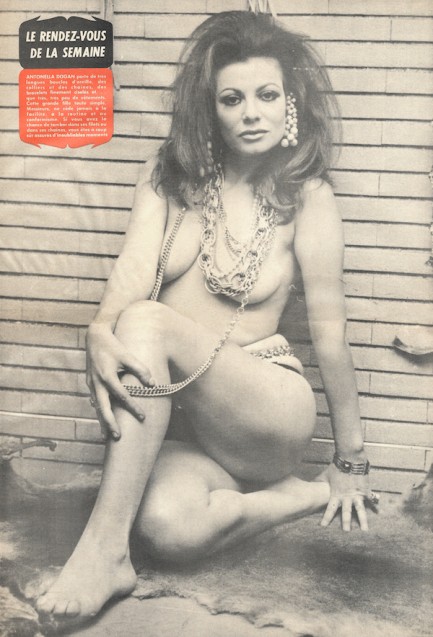 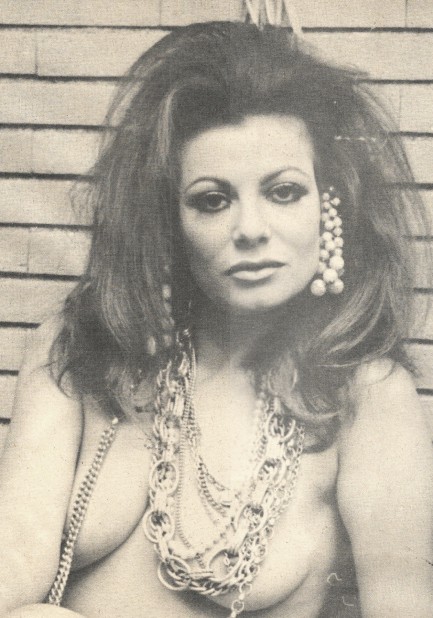 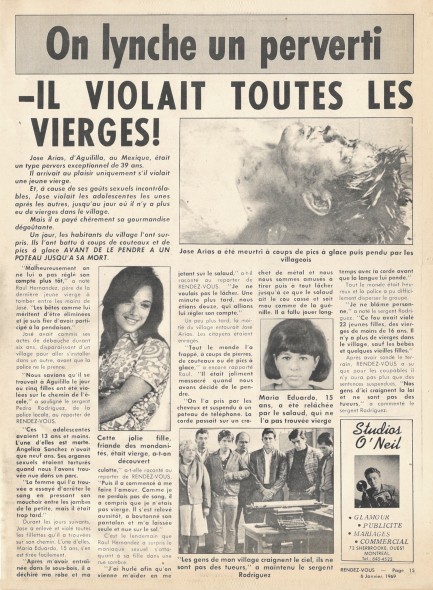 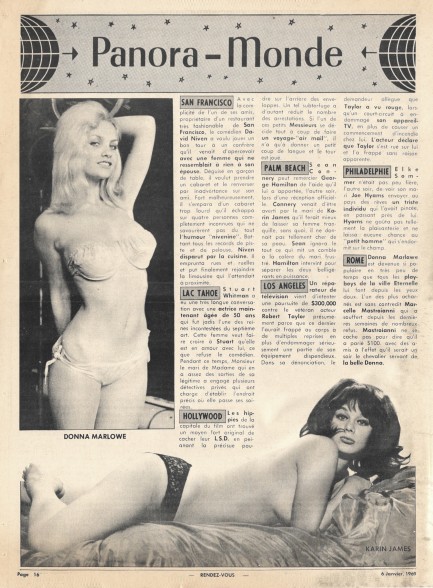 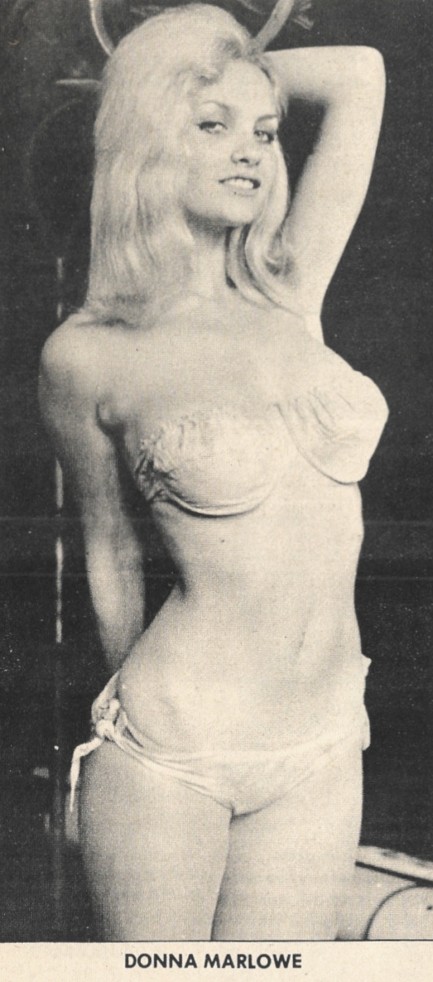 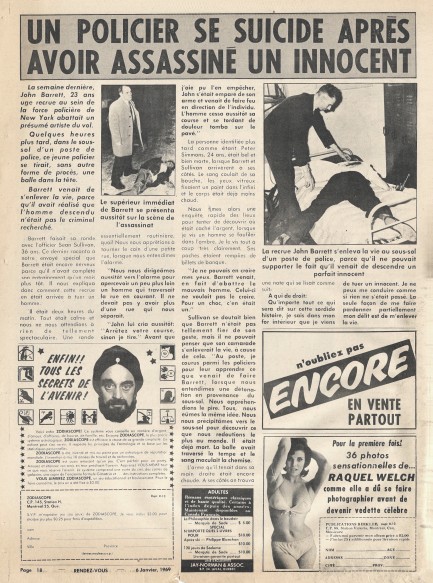 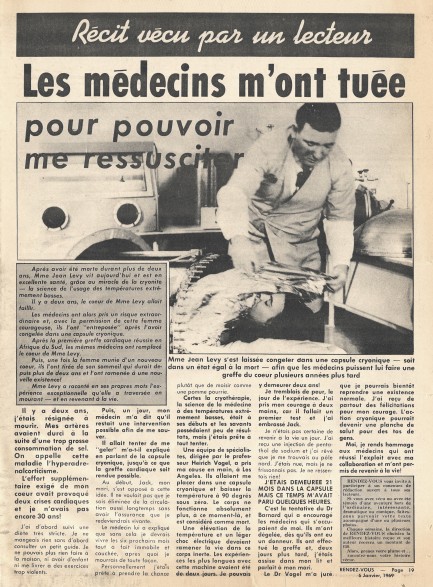 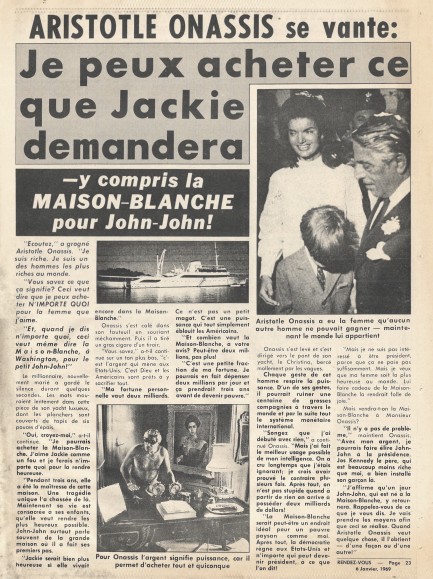 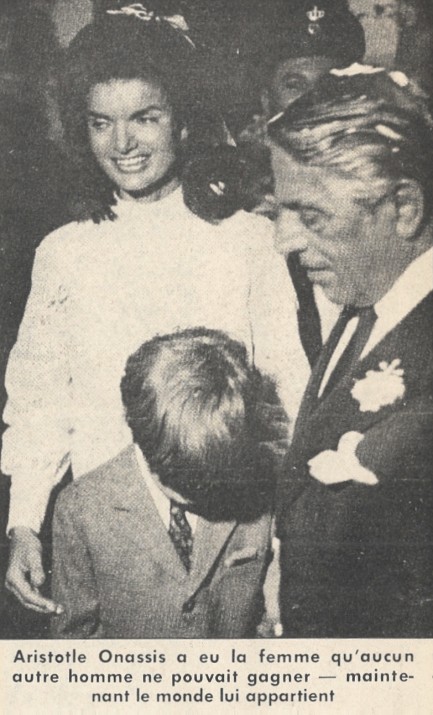 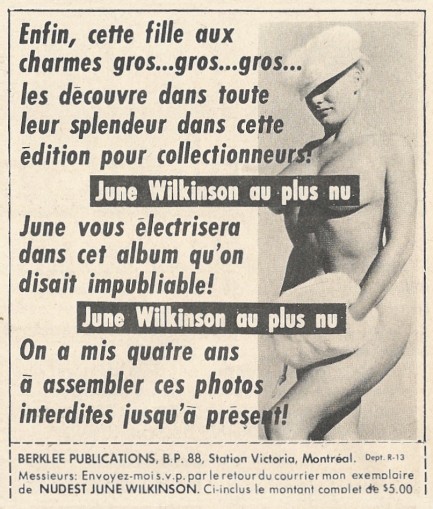 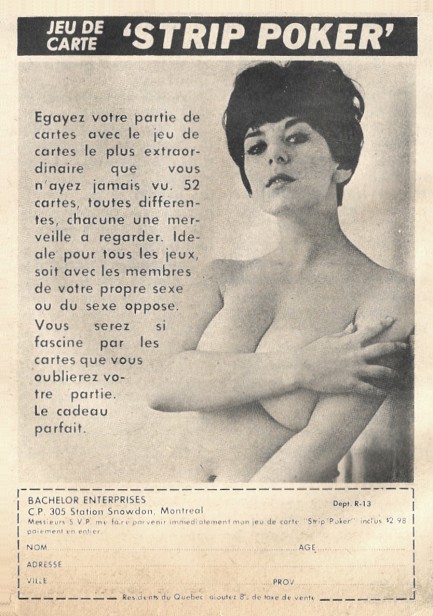
 Alexa please find alternate route to redemption. 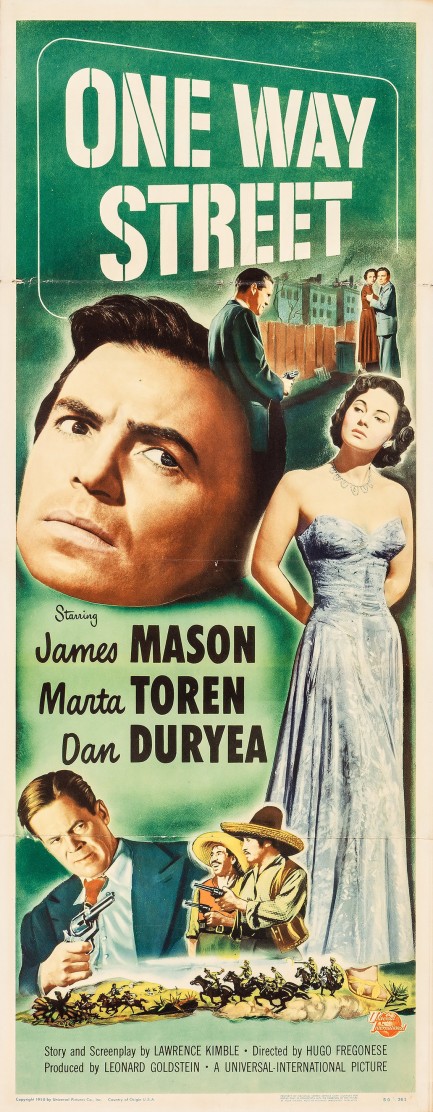
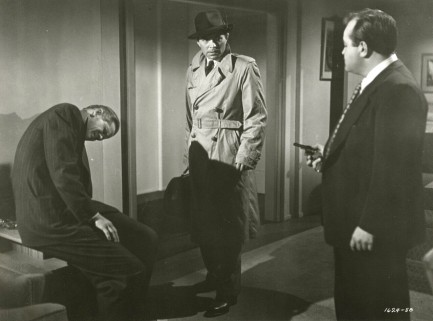
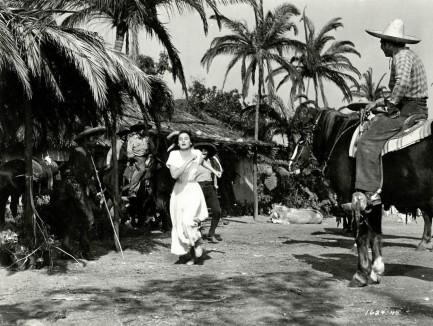
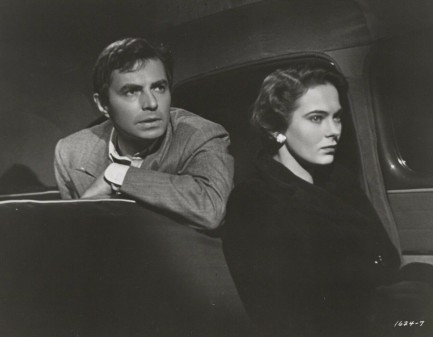
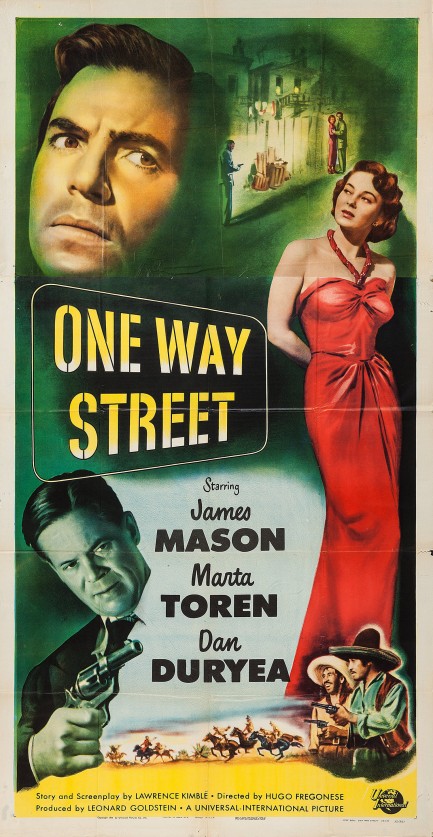
You wouldn't think a movie titled One Way Street would be set almost entirely in rural Mexico, but that's exactly the case with this obscure oddity that's like a film noir wrapped around a South Seas drama. Veteran thief Dan Duryea and his henchman William Conrad stage a bank heist, get away with $200,000, and hole up in an apartment. But medical attention is required, and a doctor is called. You've heard of mob lawyers. This is a mob doctor.
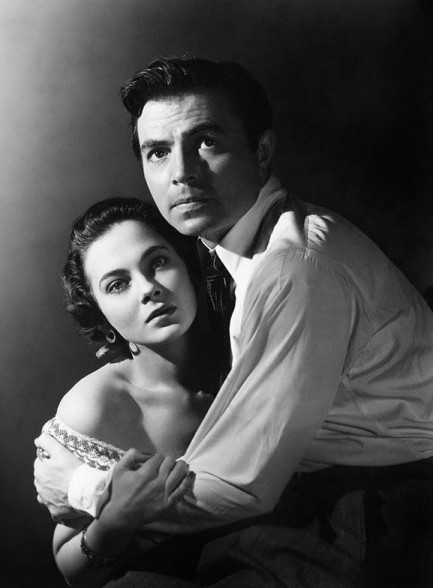
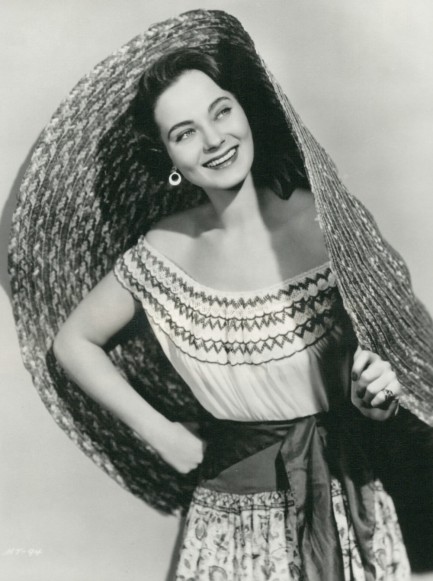
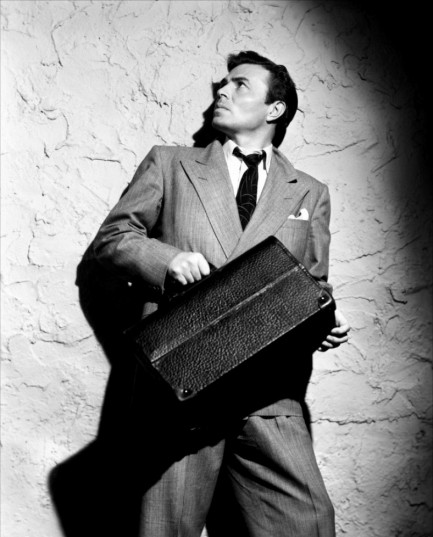
Played by James Mason, he's 100% crooked, bent by years of treating gangsters and hiding evidence of their crimes. But he's tired of scratching out an existence, so after he gives Duryea a couple of supposedly helpful pills, he reveals that they were really poison and walks out with the bank loot, using the antidote as his guarantee of safety. And he doesn't only steal the money. He also steals Duryea's girlfriend Märta Torén.
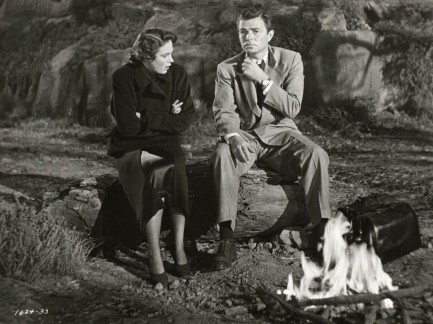
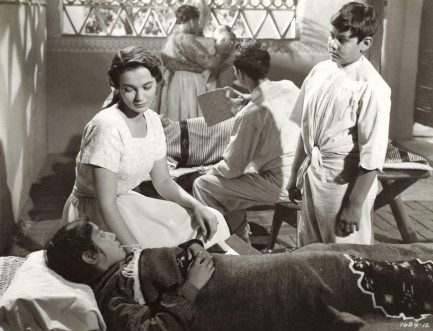
The duo charter a small plane to Mexico City, but the aircraft has mechanical trouble and makes an emergency landing, after which they're stuck in a remote village somewhere in the jungle east of Guadalajara. Mason gave up practicing real medicine a long time ago, but he's drawn to idyllic life off the grid and takes an interest in the villagers and their health issues, in the process regaining his medical ethics and self respect.
But renewed ethics and healed self respect also cause him to—you guessed it—decide to make good with the gangsters from whom he stole. Why? Because he can never be free unless he does, and so forth. The fool. He could have just mailed the money back, but no—he had to face them for the sake of his own integrity. Sometimes you need someone to tell you you're going down the wrong road, but that technology wouldn't show up for many decades. In the end One Way Street, despite its talented cast, is lightweight, unimpressive, and has an ending meant to shock with irony, but which merely comes across as lazy. We can't recommend it. It premiered today in 1950.
 Everybody's gotta go sometime. 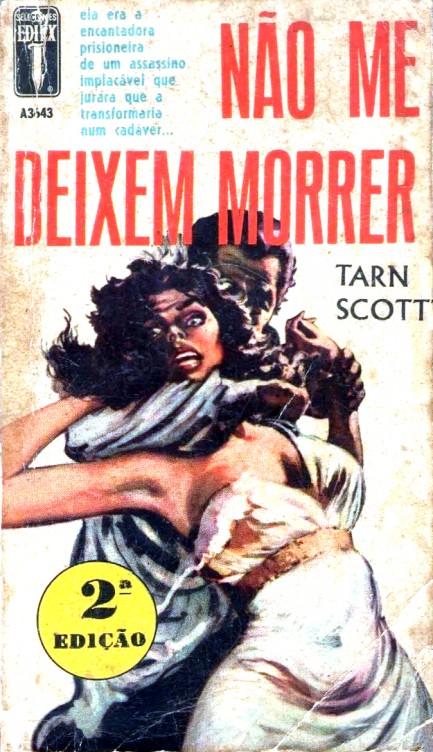
We don't find much Brazilian pulp, but above is an interesting—if battered—cover for Tarn Scott's, aka Walter Szot and Peter G. Tarnor's Não Me Deixem Morrer, which is a translation of their U.S. released 1957 kidnapping tale Don't Let Her Die, a book we read and enjoyed a few years ago. This was put out by the Rio de Janeiro based imprint Ediex for its Selecrimes series in 1964. We gather that Ediex was a branch of the Mexico City publisher Editormex Mexicana, and that the company released quite a few translations of English crime books during the 1960s.
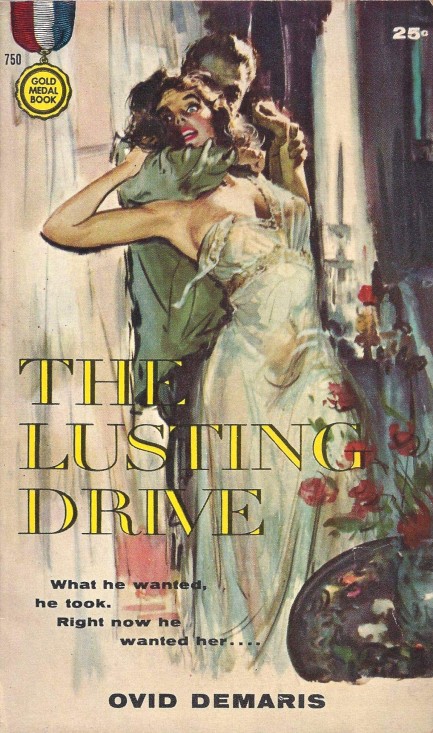
The art, which is by an unknown, is a low rent copy of that found on the cover of 1958's The Lusting Drive by Ovid Demaris, which you see below. That cover is also uncredited, but some think it's by Ernest Chiriacka. We agree. In fact, we don't think there's any doubt. Not only is the style—particularly of the female face—a dead match, but Chiriacka was pumping out illos by the cartload for Gold Medal during the mid- to late-1950s. So we're going to go ahead and call this one a lock. We may share a few more Brazilian paperback covers in a bit. Stay tuned.
 Gringos take their criminal activities south of the border in Mystery in Mexico. 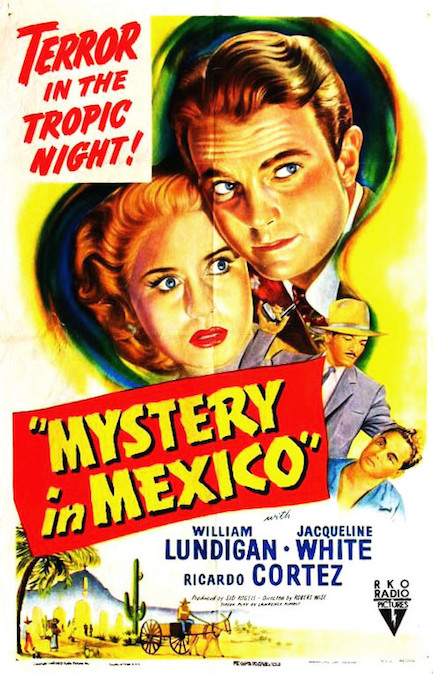
When a vintage movie is set in Mexico, it's a bonus when it's actually filmed there. Most movies with a Mexican backdrop—even good ones—didn't bother, but Mystery in Mexico goes the extra mile. And not for just a scene or two. There are numerous exteriors in city and countryside. Among the sights sharp-eyed viewers will see are the Monumento a la Revolución, the Metropolitan Cathedral, and the nightclub Ciro's, which had a Mexico City branch famous for a Diego Rivera mural in its Champagne Room. The Mexican authenticity extends to the cast, which features local superstar Ricardo Cortez and numerous bit players. Even some of the dialogue is in Spanish, including bits spoken by lead actor William Lundigan—quite a departure for a star in an old-time thriller.
So we've established that Mystery in Mexico aims for authenticity. But is it any good? Well, what you have here is a story about insurance investigator Lundigan following Jacqueline White around Mexico City hoping she'll lead him to a stash of stolen jewelry. White doesn't know where the loot is, but her brother might. Except he's missing. Also looking for the jewels is a gang of local thieves. For the most part the film plays as a romantic adventure, with love-hate turning into love-love thanks to Lundigan's dubious charm. The mystery aspect is pretty slight by comparison, but with Robert Wise in the director's chair everything looks good and runs smoothly. Mystery in Mexico won't make anyone's top 100 list, but for its novelty factor alone it's worth a look. It premiered in the U.S. today in 1948. 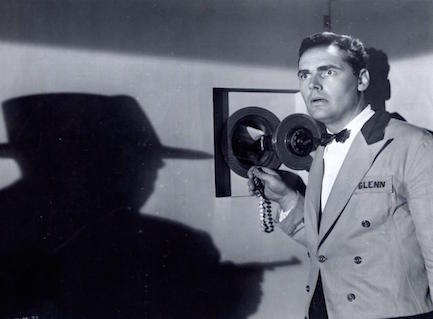 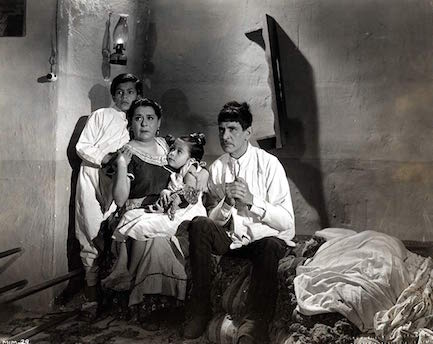 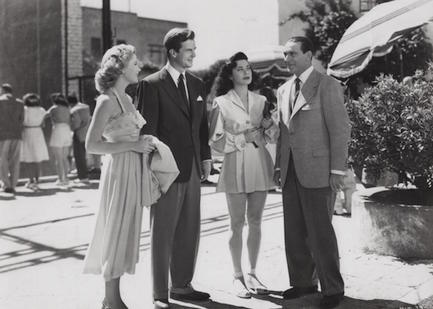 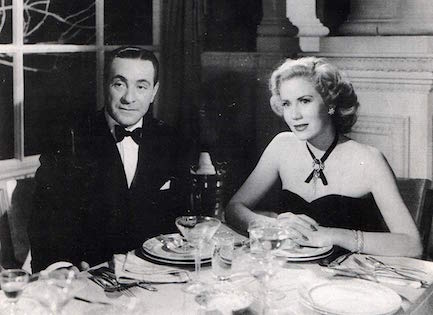 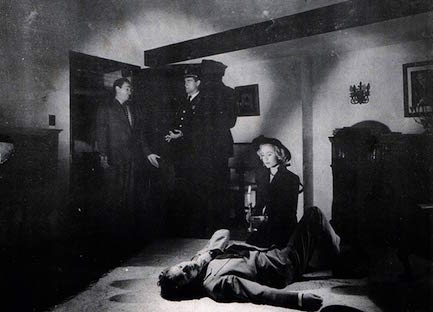 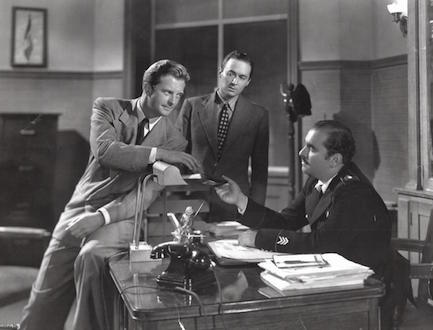 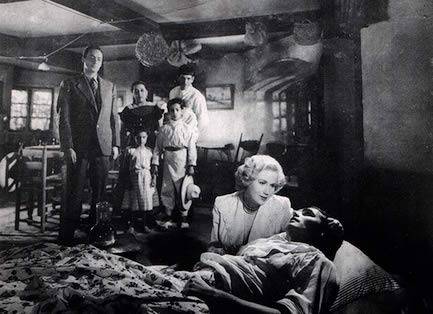 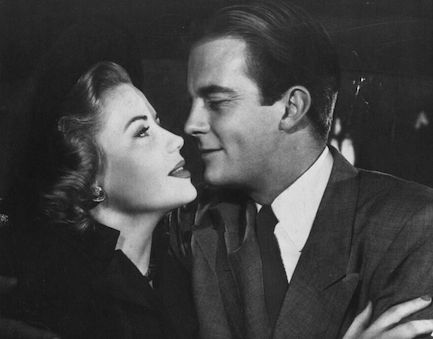
 Spanish art for Casa número 322 may have traveled far from home. 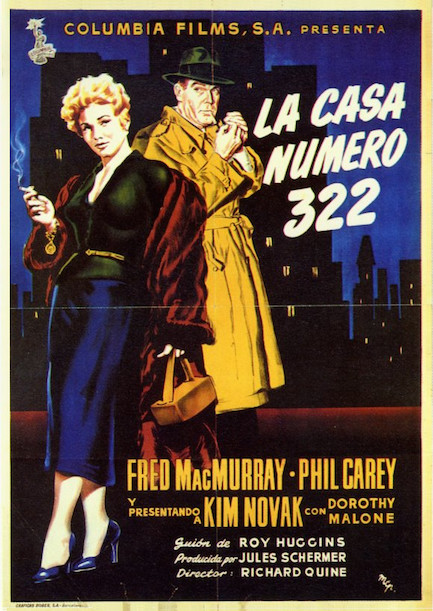
We already showed you a beautiful yellow French promo poster for 1954's Pushover, starring Fred MacMurray and Kim Novak. Above is a cool blue Spanish language promo. This piece is signed MCP, which is the imprimatur used by the Spanish artists Ramon Marti, Josep Clave, and Hernan Pico. So is this a Spanish poster? Well, most online sites say so. But the distributor for Mexico is listed as Columbia Films S.A., and you can see that graphic right on top of the poster. The S.A., by the way, stands for “sociedad anónima,” and is a corporate designation, kind of like Inc., or LLC. The movie's distribution company for Spain is on record as plain old Columbia Films, with no S.A., so we think this poster was used in Mexico, where the movie played as La casa número 322, “house number 322.” There's no exact Mexican release date known for it, but late 1955 is a safe bet. All that said, there's no way we can claim to be correct with 100% surety that this is a Mexican poster. We're extrapolating.
Columbia had distribution branches in various Latin American countries. Its Mexican hub was the most important because Mexico had the most developed Spanish film market in the world. Yes, more than Spain, which was still recovering from civil war. Though dubbed or subtitled versions of foreign movies were routinely shown in Mexico, locally produced flicks were about 20% more popular at the box office on average, according to a 1947 report circulated by the U.S. Consulate in Monterrey. In fact, Mexican films were the most popular in all Latin America, particularly Cuba. Even in Mexico City, where U.S. and European films were more popular than anywhere else in the country, Mexican films took up more than 40% of exhibition time—again as reported by the U.S. Consulate. Why was the consulate studying this? Just wait.
The Mexican movie market isn't as competitive today. The decline was due to three main factors: political pressure that forced Mexico to submit to so-called free trade in mass media, suspicious difficulties obtaining raw film stock from the U.S. for movie productions, and, of course, dirty business tactics by Stateside studios. So that's where the consulate came in—gathering intelligence for both the U.S. government and U.S. business interests. Armed with alarming data about local preferences for local product, U.S. studios forced Mexican exhibitors into “block booking” agreements, which meant that if cinemas wanted to exhibit the best Hollywood films they were also contractually obligated to take on the worst. This was repeated all over Latin America, and those bad films, which were more numerous than the good ones, ate up exhibition hours and kept Mexican films off screens. Pushover, at least, was one of Hollywood's better films.
 In the Aztec version of the show being sacrificed on a cross is actually first prize. 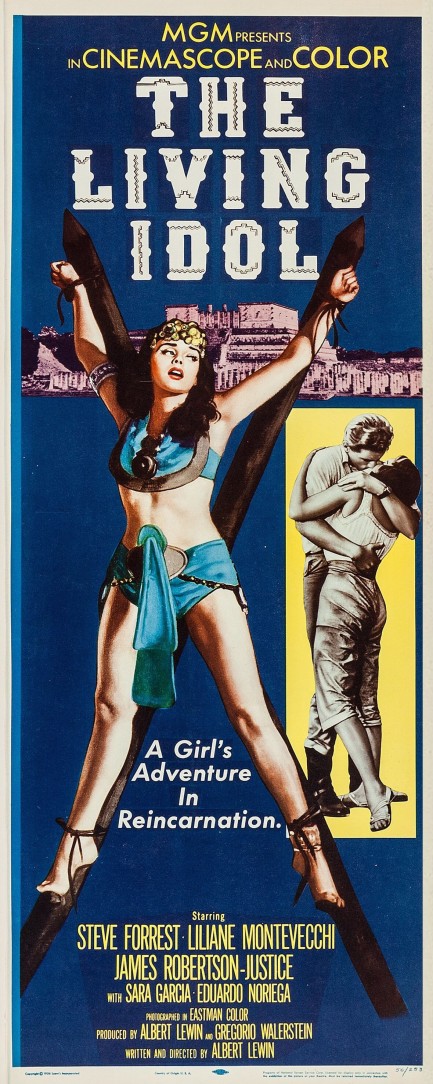
This poster for The Living Idol gives a bit of a false impression. The movie isn't the lost world epic implied by the art. Most of it is set in and around the University of Mexico, and deals with an archaeologist who believes he can unlock the secrets of ancient Aztec rituals by using a colleague's daughter as a sort of medium. James Robertson Justice is the obsessed archaeologist, and French actress Liliane Montevecchi stars as Juanita, who may have some mystical connection to the ancient world.
The movie is better than you'd expect. It's serious and intelligent, with a bit of cuteness mixed in, and what's particularly striking is the respect it shows—for a U.S. made movie—toward Mexico and Mexican culture. The default attitude for Mexico in north-of-the-border movies from the period is one of mild patronization, but not here. Give some credit to screenwriter Albert Lewin, but more credit to director René Cardona, who's Cuban, not Mexican, but was certainly versed in the culture and history of the country.
Though no Mexicans appear in major roles, Cardona manages to leave viewers with a sense of wonder about Mexico, and not just its mythic past, but its contemporary aspects too. He treats viewers to a nice tour of the Universidad Nacional Autónoma de México, built in Mexico City in 1910, and one of the most majestic and beautiful centers of learning in the Americas today. Its central campus, built from 1949 to 1952, is even UNESCO protected, which thousands of older universities can't say.
This comes in addition to amazing panoramas of the Aztec ruins at Uxmal, probably the best represented they've ever been in a motion picture. Is the movie good? Not quite. It has many rough patches, and Montevecchi has only two expressions in her acting arsenal—innocent eyed, and bug-eyed. But it all works a bit better than it should, somehow. We cautiously recommend it for Mexicophiles, but keep your expectations in check. The Living Idol opened in the U.S. today in 1957. 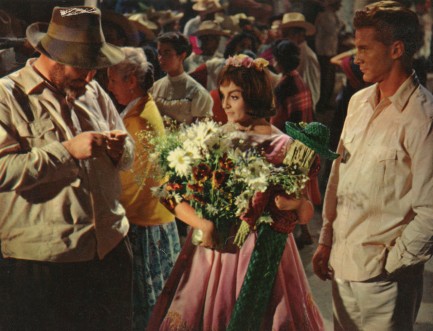 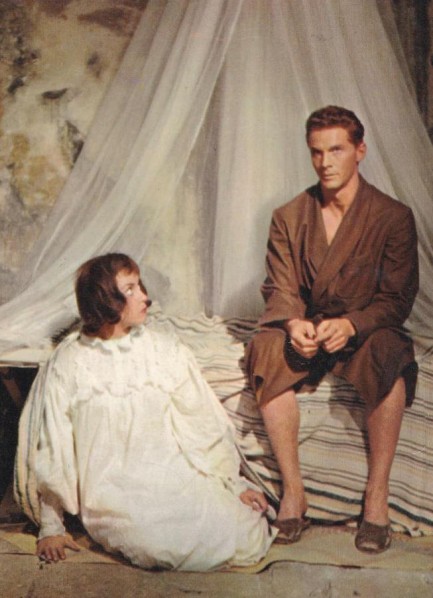 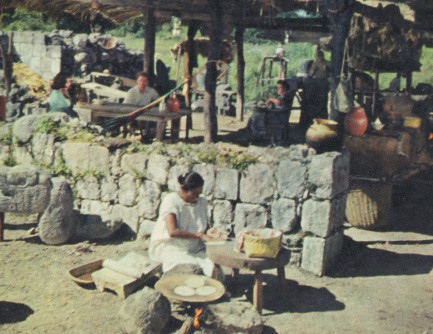 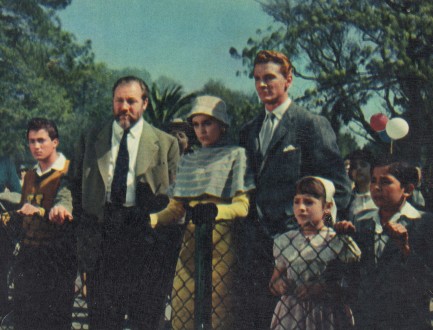 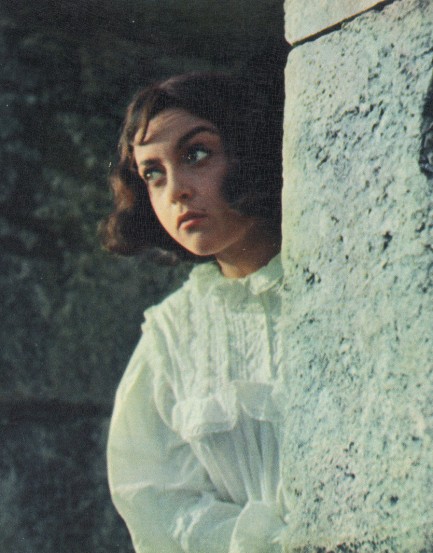 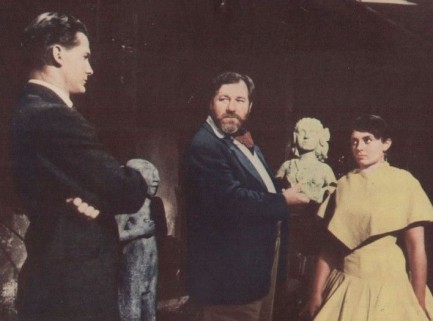 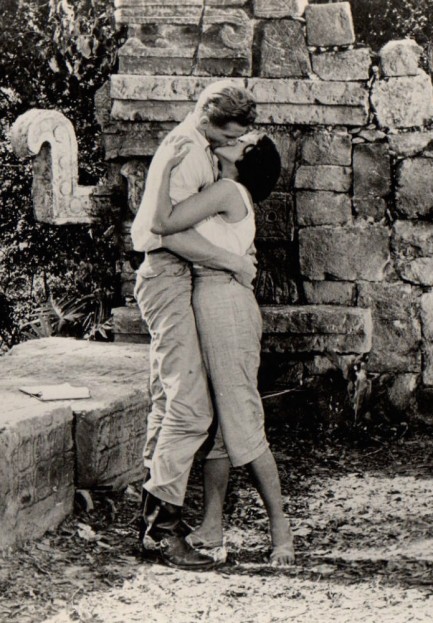 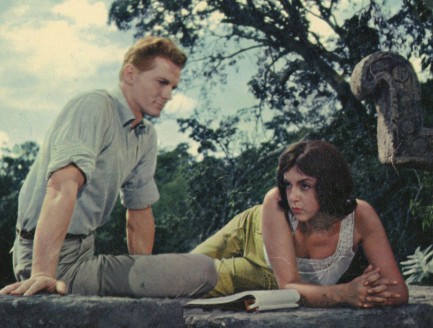 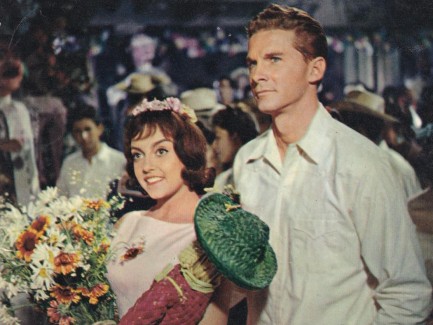 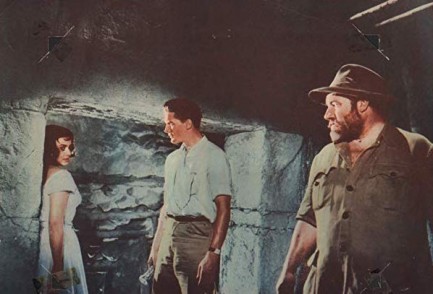 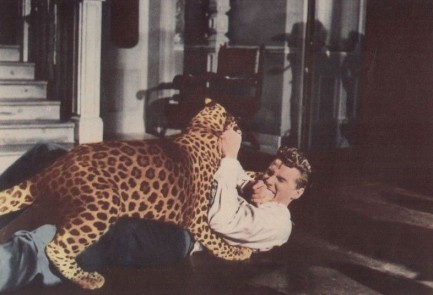  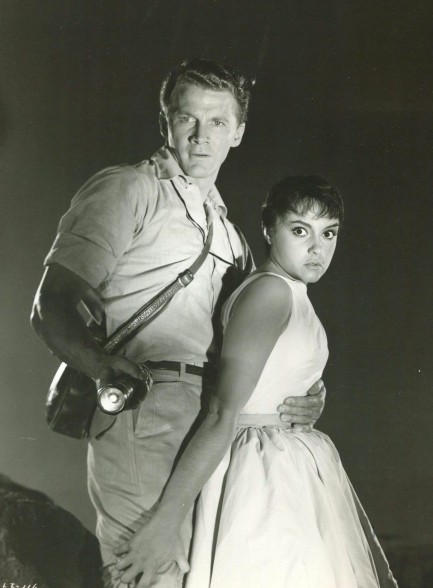 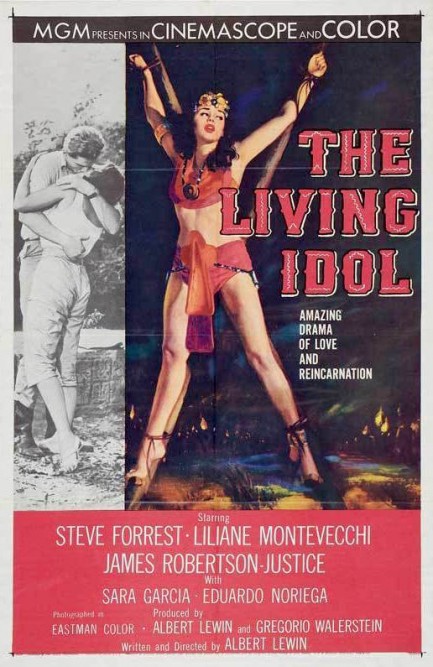
 I think we should consider a separation. And I have just the body part in mind. 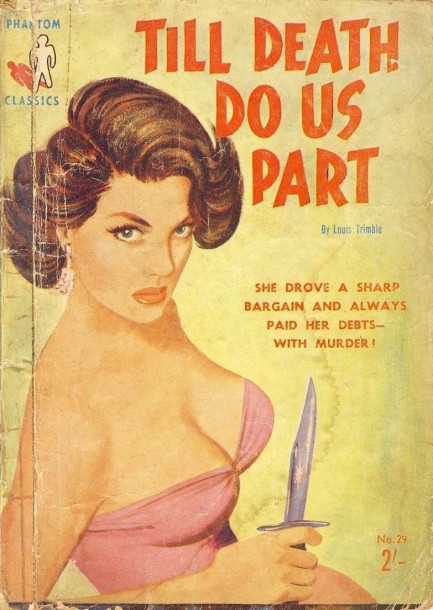
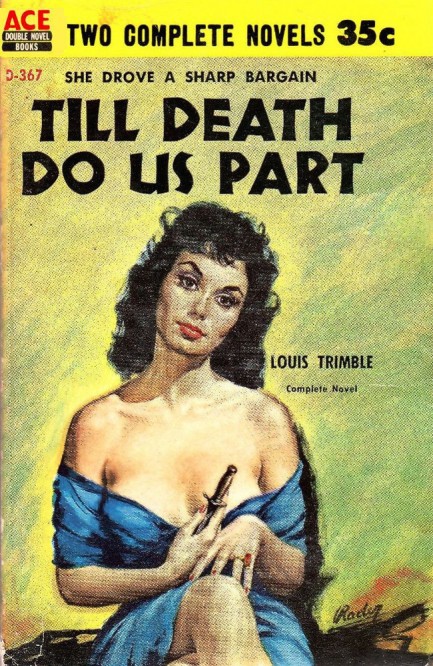
A gringo detective with an agency in Mexico City is hired to locate his crooked ex-partner, who has bailed with the agency's money, and now is causing trouble for the client. The PI takes the job, glad to be paid to track down his betrayer, and starts in the Mexican town of Rio Bravo where the partner immediately turns up dead. From there the hero delves into local corruption, crosses the border to Texas, uncovers a human trafficking ring, meets a cantina dancer named Arden Kennett, deals with a dangerous wife, watches murders pile up and the police begin to suspect him, and learns that knives can be thrown just as effectively as they can be brandished. The book was published in the U.S. as an Ace Double in 1959 with Paul Rader art and bound with Charles Fritch's Negative of a Nude, but the rare edition above is from Aussie imprint Phantom Books and appeared in 1960. We can't identify the artist, which is an affliction we've been dealing with quite a bit of late. But don't blame us—as we've mentioned once or twice before, including just a few days ago, Phantom didn't credit art, possibly because much of it was copied from U.S. editions. Many of the covers do, however, look like the same hand, so hopefully someone will be able to ID the owner of that hand at some point in the future.

|
 |

The headlines that mattered yesteryear.
1945—Mussolini Is Arrested
Italian dictator Benito Mussolini, his mistress Clara Petacci, and fifteen supporters are arrested by Italian partisans in Dongo, Italy while attempting to escape the region in the wake of the collapse of Mussolini's fascist government. The next day, Mussolini and his mistress are both executed, along with most of the members of their group. Their bodies are then trucked to Milan where they are hung upside down on meathooks from the roof of a gas station, then spat upon and stoned until they are unrecognizable. 1933—The Gestapo Is Formed
The Geheime Staatspolizei, aka Gestapo, the official secret police force of Nazi Germany, is established. It begins under the administration of SS leader Heinrich Himmler in his position as Chief of German Police, but by 1939 is administered by the Reichssicherheitshauptamt, or Reich Main Security Office, and is a feared entity in every corner of Germany and beyond. 1937—Guernica Is Bombed
In Spain during the Spanish Civil War, the Basque town of Guernica is bombed by the German Luftwaffe, resulting in widespread destruction and casualties. The Basque government reports 1,654 people killed, while later research suggests far fewer deaths, but regardless, Guernica is viewed as an example of terror bombing and other countries learn that Nazi Germany is committed to that tactic. The bombing also becomes inspiration for Pablo Picasso, resulting in a protest painting that is not only his most famous work, but one the most important pieces of art ever produced. 1939—Batman Debuts
In Detective Comics #27, DC Comics publishes its second major superhero, Batman, who becomes one of the most popular comic book characters of all time, and then a popular camp television series starring Adam West, and lastly a multi-million dollar movie franchise starring Michael Keaton, then George Clooney, and finally Christian Bale. 1953—Crick and Watson Publish DNA Results
British scientists James D Watson and Francis Crick publish an article detailing their discovery of the existence and structure of deoxyribonucleic acid, or DNA, in Nature magazine. Their findings answer one of the oldest and most fundamental questions of biology, that of how living things reproduce themselves.
|

|
|
It's easy. We have an uploader that makes it a snap. Use it to submit your art, text, header, and subhead. Your post can be funny, serious, or anything in between, as long as it's vintage pulp. You'll get a byline and experience the fleeting pride of free authorship. We'll edit your post for typos, but the rest is up to you. Click here to give us your best shot.
|
|