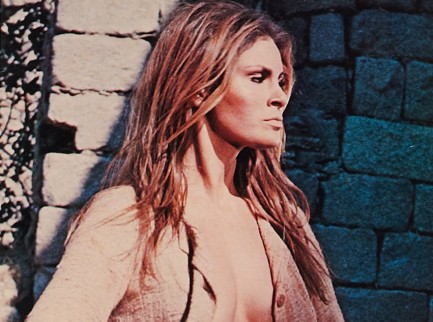
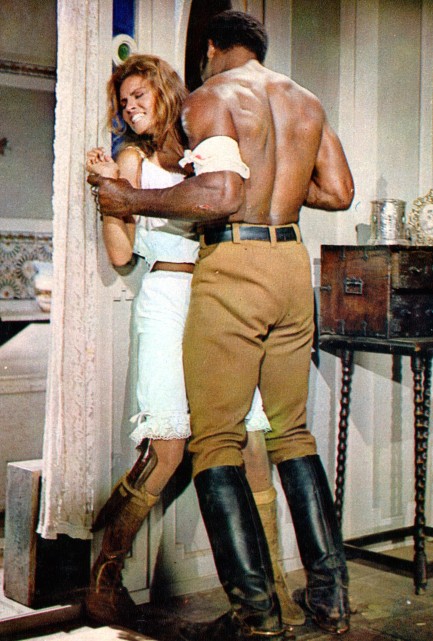
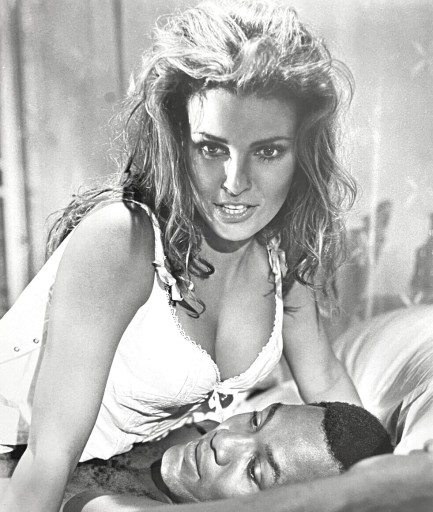
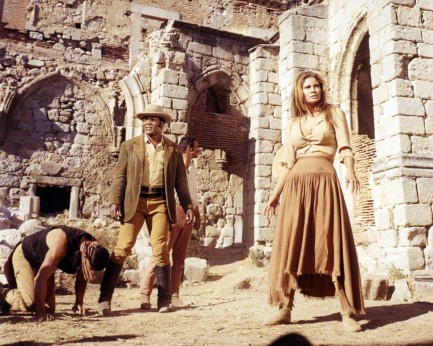
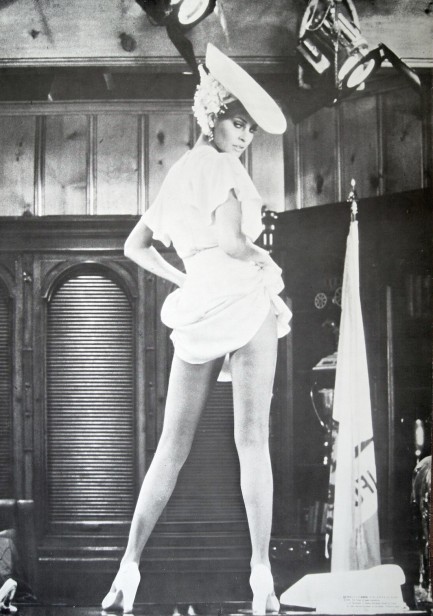
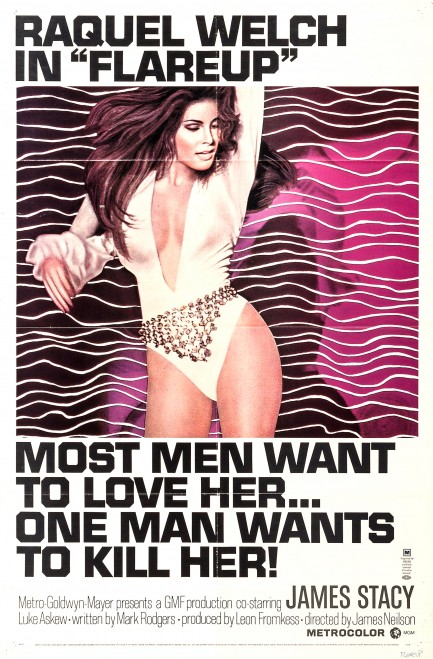
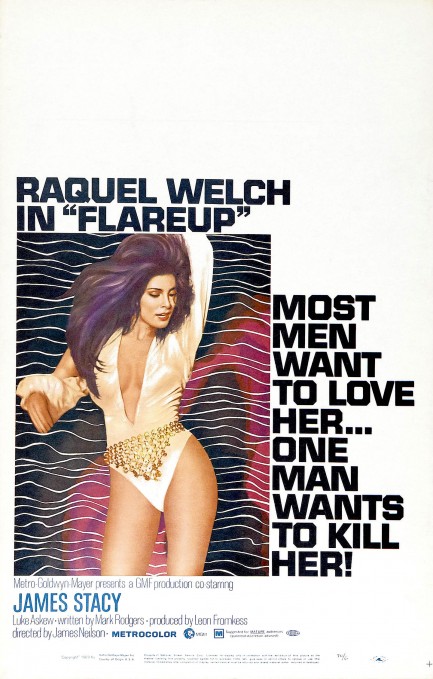
Welch emits immeasurable degrees of heat in working class sports fable. 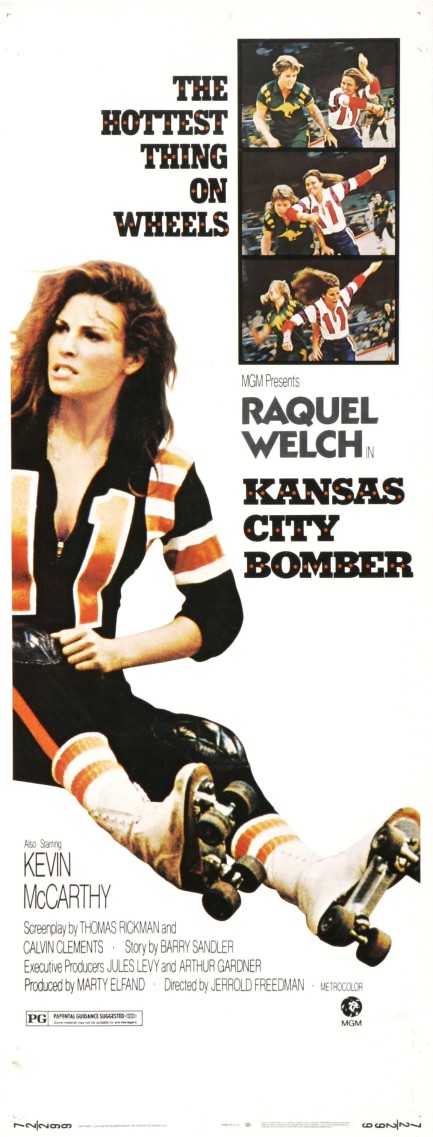
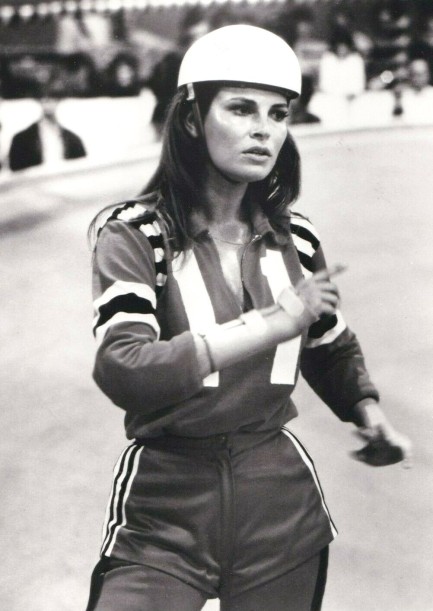
We've seen a number of Raquel Welch movies, and we appreciate her as a personality, but she wasn't a good actress. Not to speak ill of the dead and all that, but it's just true. She was unsubtle and inconsistent. She made some highly entertaining films, but an accomplished artiste she was not. Kansas City Bomber, which premiered in the U.S. today in 1972, is a drama that uses the milieu of roller derby but follows the blueprint of classic boxing flicks in which a fighter is eventually asked to take a dive in order to get ahead. Because of the gender flip involved in Welch playing this archetype, an extra layer of plot involves a usurious money man who's having his way with her in bed. But the theme of an athlete selling their soul remains familiar. Welch was a tremendous sex symbol, generally considered the hottest thing going ever since 1966's One Million Years B.C., so Hollywood, in its infinite wisdom, sometimes had her hook up with transparently undeserving men in her flicks so her male fans could scream, “Noooooo!” In this case it's too-old and too-fat team owner Kevin McCarthy. The jealousy that her preferential treatment by management causes among her co-skaters generates much of the movie's conflict, but a secondary drama is that Welch's character K.C. Carr must face one of life's most sobering realizations—that no matter how good a person you may feel (or pretend) you are, it's everyone else who gets to decide whether you're actually just an asshole. You can claim to be misunderstood, but it makes no difference at all.
In the film the other skaters think Welch is a sexual opportunist who'll do anything behind the scenes—and between the sheets—for advancement. Welch understands on some level that it's her face and body that get her to the top ranks of roller derby. She can go, “Gee! I guess he just really appreciates my talent!” all she wants, but nobody is buying it. We think that's a fine cinematic premise, but the problem with Kansas City Bomber is that it's silly and faddish. The drama is way over the top, and the introspection Welch should bring to the role doesn't resonate. Which is surprising. You'd think she'd really identify with this character—again, not to speak ill of the recently departed. We adore Welch. As a persona she was tops. As a portrayer of deep and affecting emotion... well...
 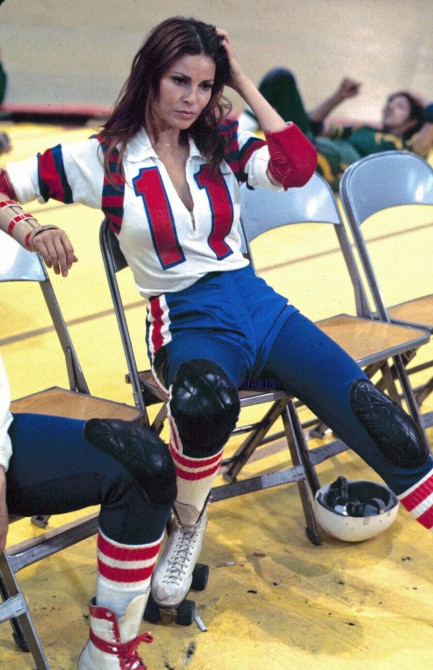 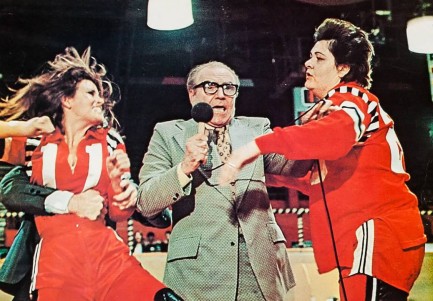 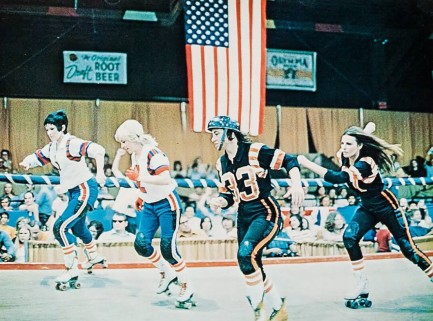 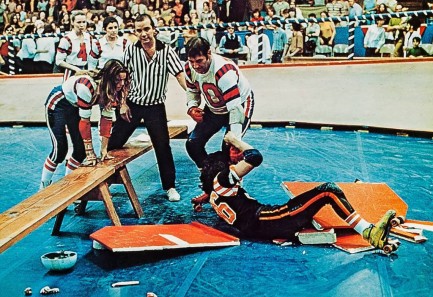 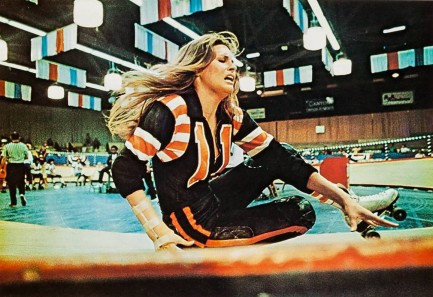 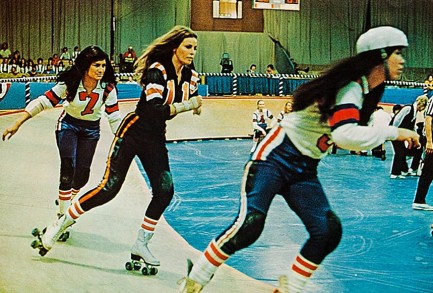 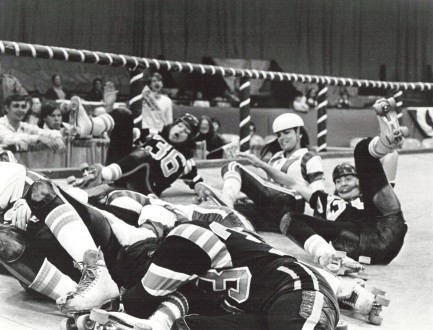 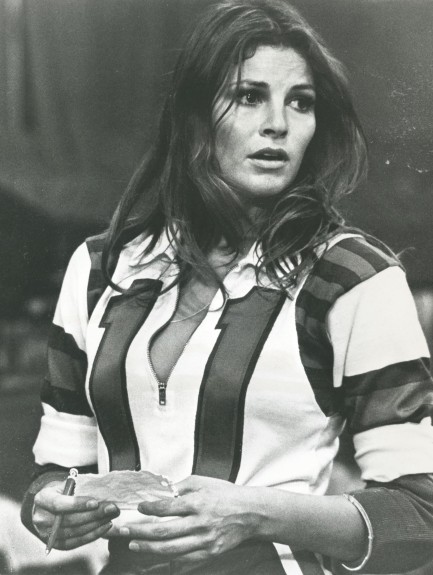 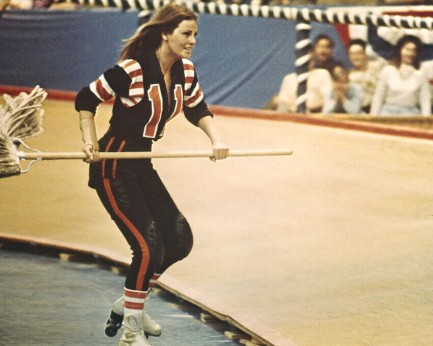 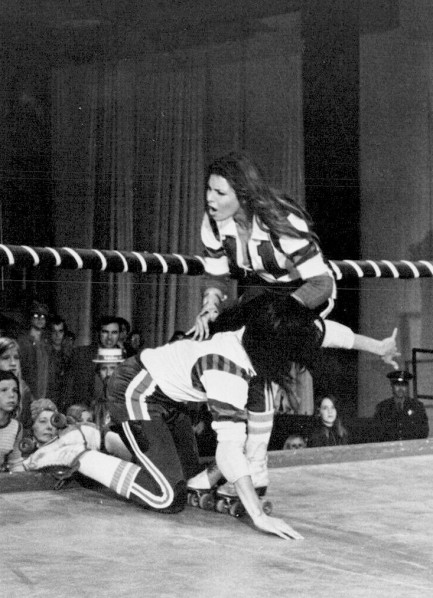 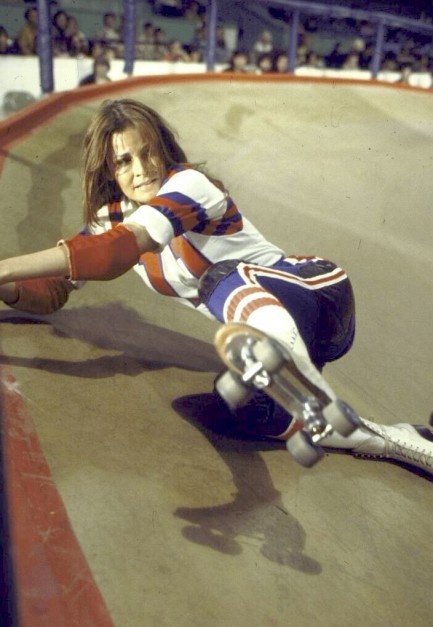 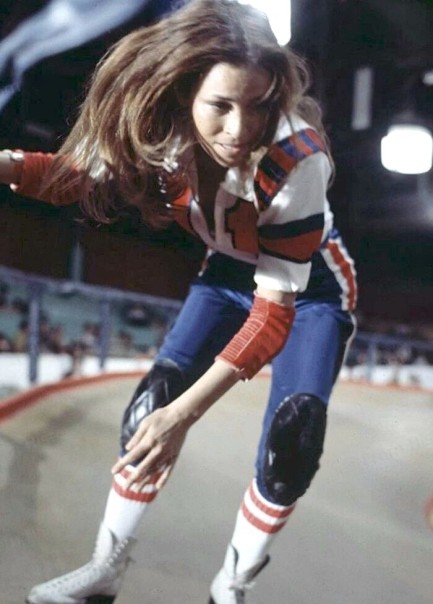 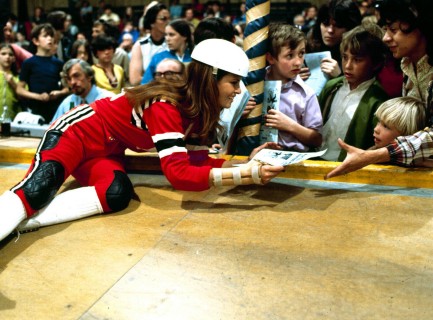 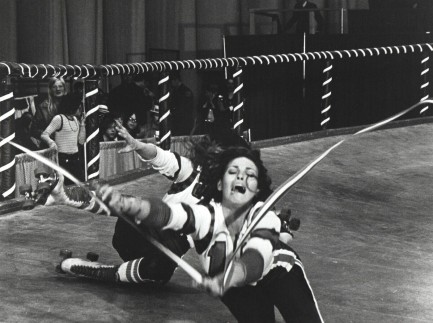 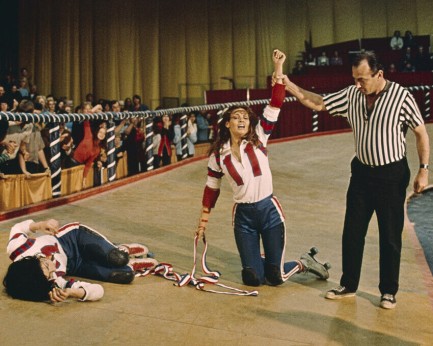 
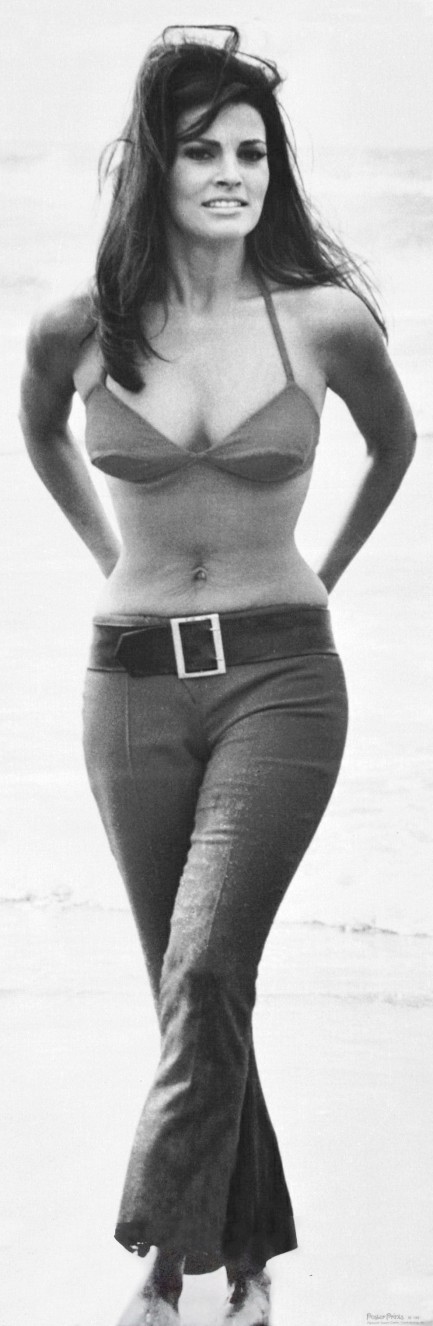
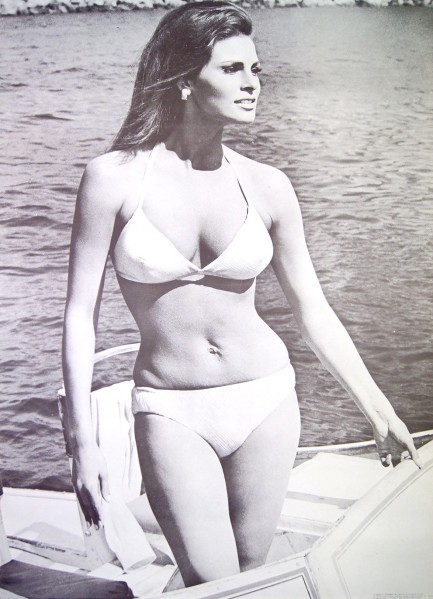
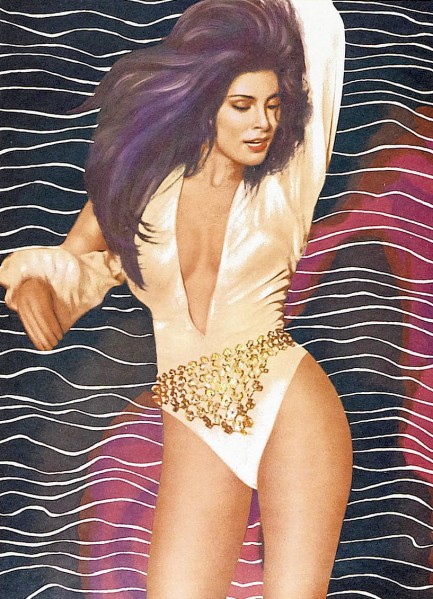
 Raquel Welch's popularity was unmatched by any other sex symbol of her time. 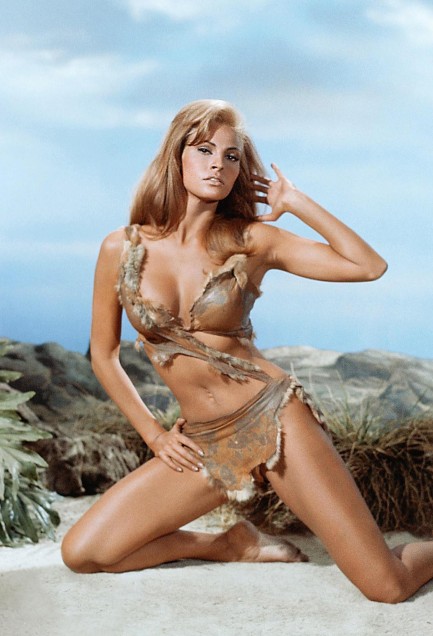
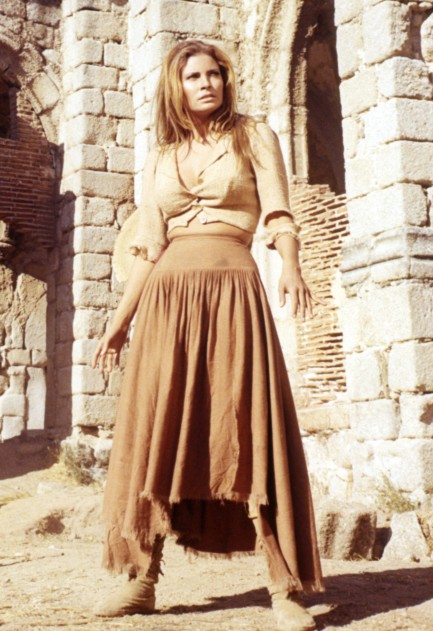
Raquel Welch died a few days ago, but as we've mentioned several times, we don't want Pulp Intl. to become a death roll, so we rarely write about celebrities passing. But because Welch is unique we decided to do something on her that day, then realized her iconic sci-fi movie One Million Years B.C. premiered in the U.S. today in 1967, so we decided to wait to share some of photos of Welch in her famous fur bikini. These represent a fraction of the shots made of her in this costume, because Welch was one of the most photographed people in Hollywood at the time, and there was—shall we say—plenty of public interest in her fuzzy two-piece. One Million Years B.C. proved that quality was no barrier to a film becoming a global hit and cultural phenomenon, and Welch was so revered and desired that she emerged an even bigger star even after headlining such puerile, anti-scientific dreck. We're just being honest. She made some pretty good films, but One Million Years B.C. wasn't one of them. Yet it's the one everyone will remember. You can see other fur bikini photos here, here, here, and here. 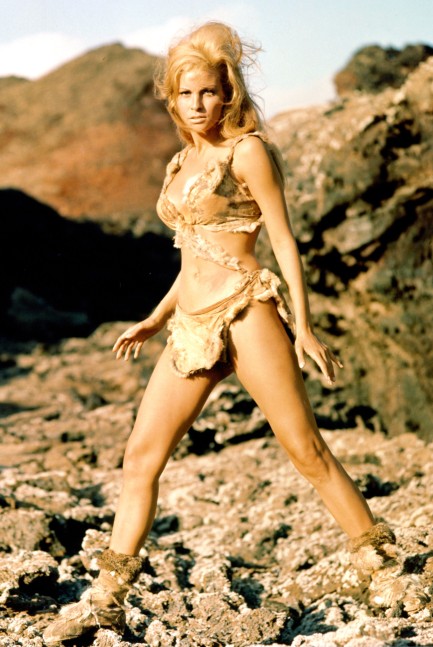 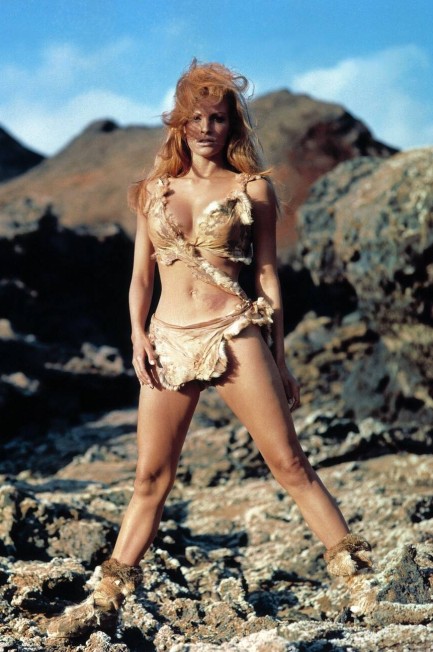 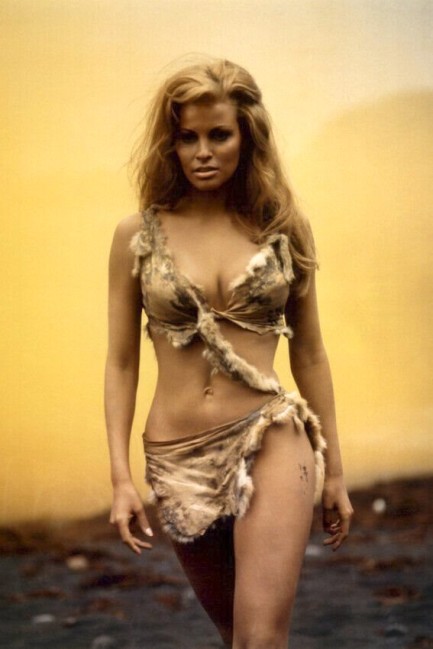  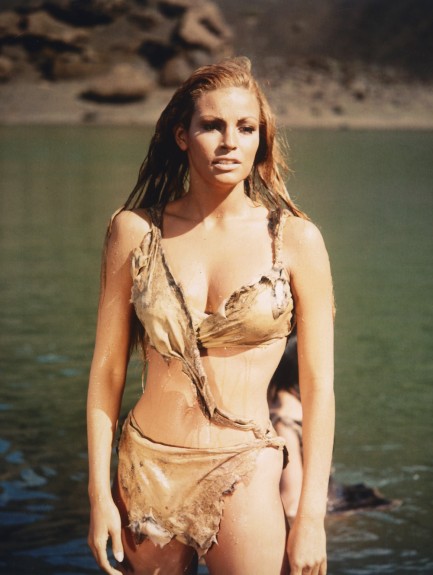 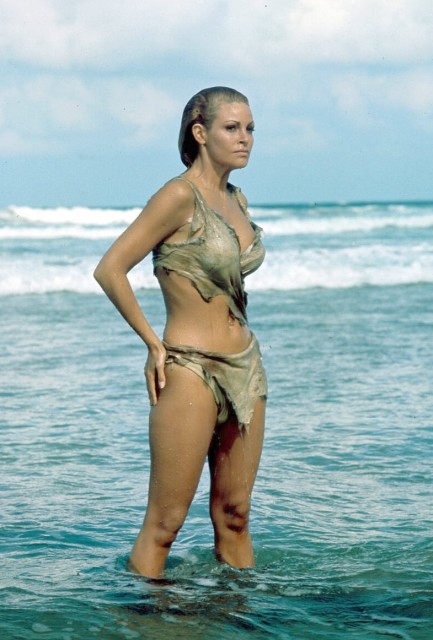 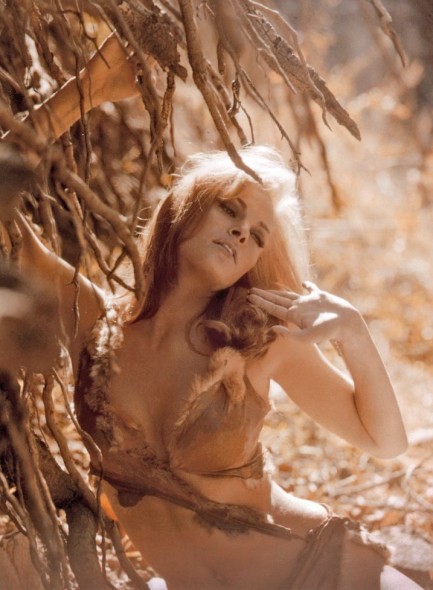 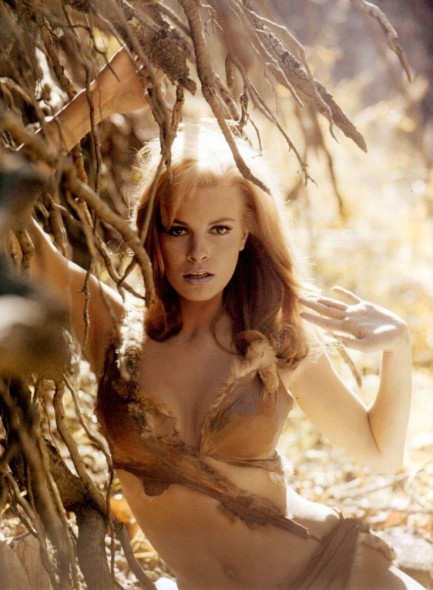 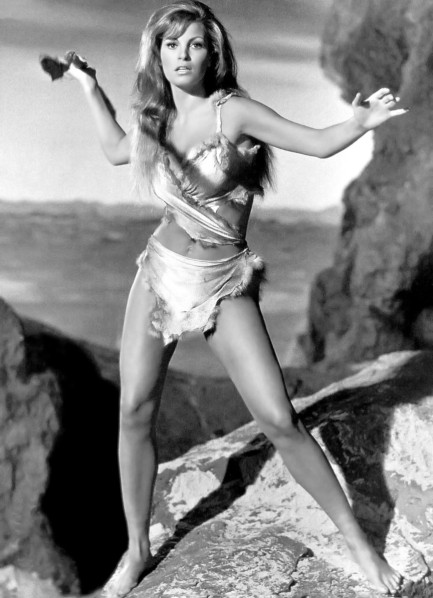 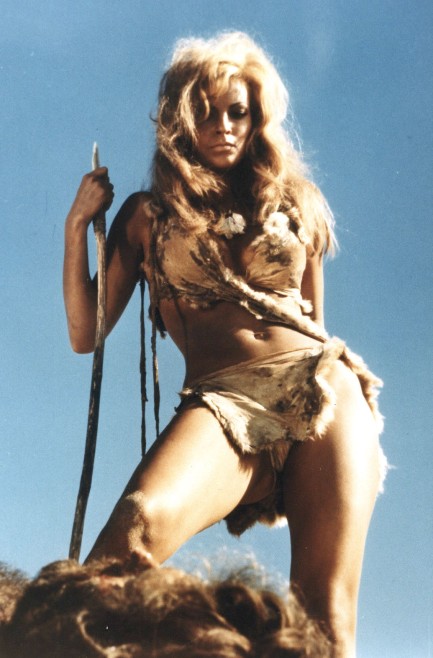 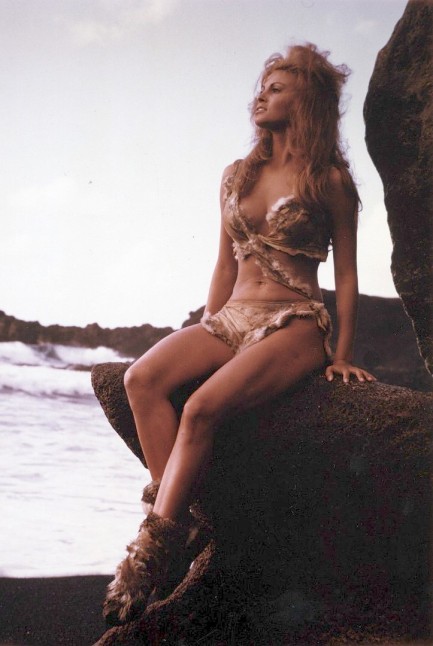  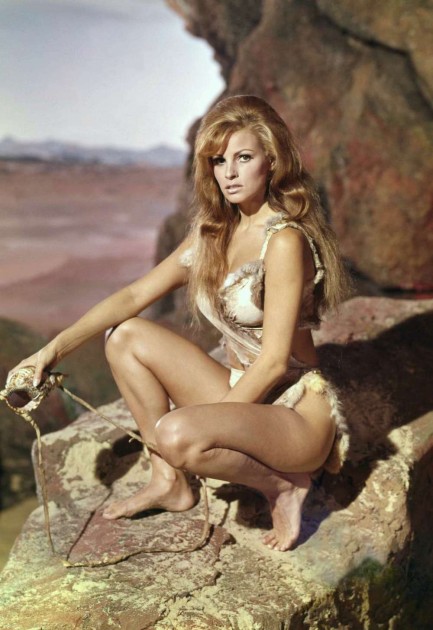 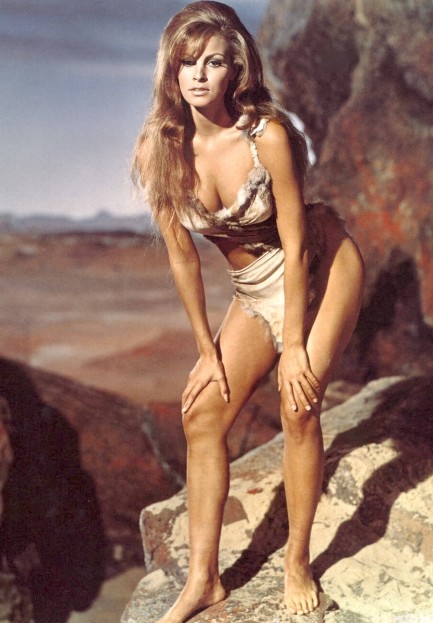 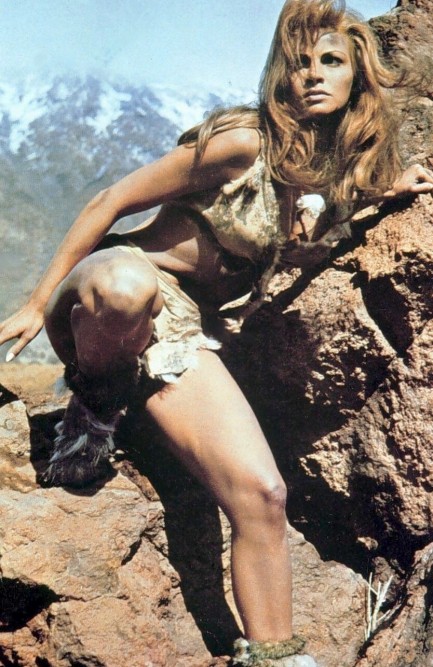 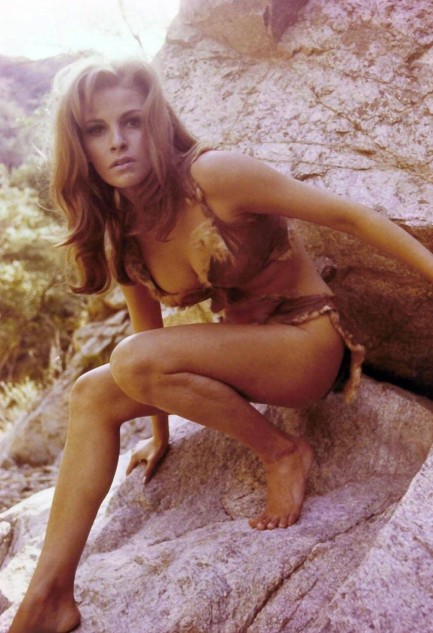 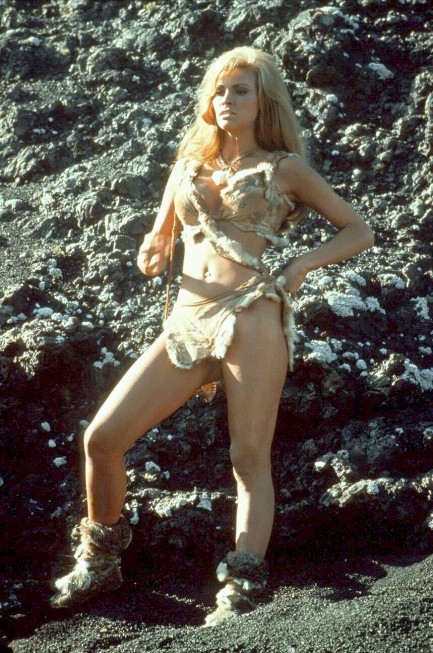 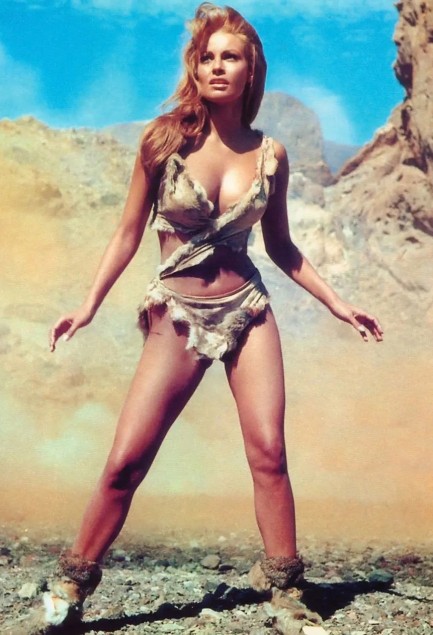 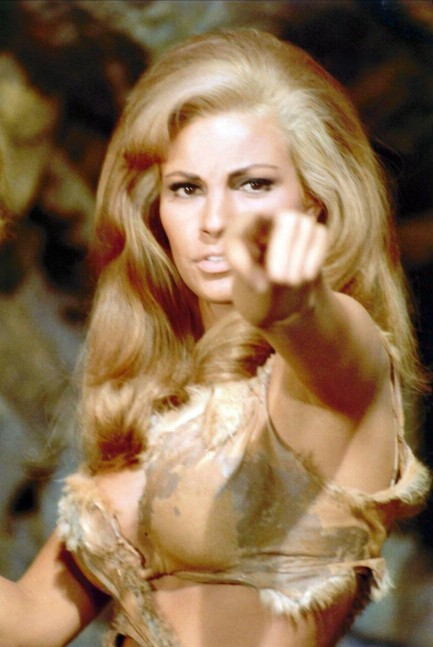
 Some love lasts forever. Other times it doesn't survive the wedding night. 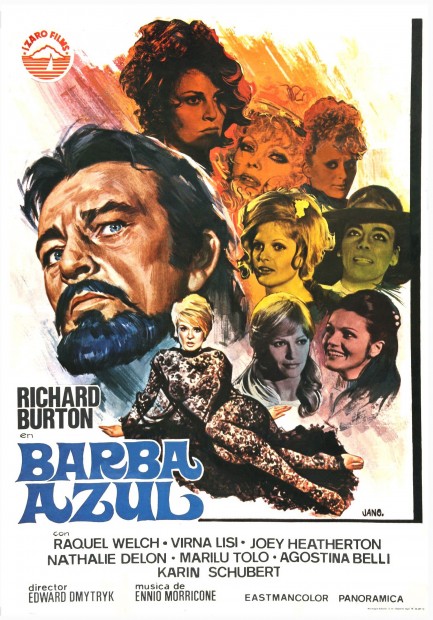
 Another of the movies we watched recently was Bluebeard, a castle and dungeon-style, quasi gothic horror flick about a folk tale character who murders a series of wives. Its Spanish poster was the best of those we saw, and we chose today to share it because the film premiered in Spain today in 1974, after opening in the U.S. two years earlier. Another of the movies we watched recently was Bluebeard, a castle and dungeon-style, quasi gothic horror flick about a folk tale character who murders a series of wives. Its Spanish poster was the best of those we saw, and we chose today to share it because the film premiered in Spain today in 1974, after opening in the U.S. two years earlier.
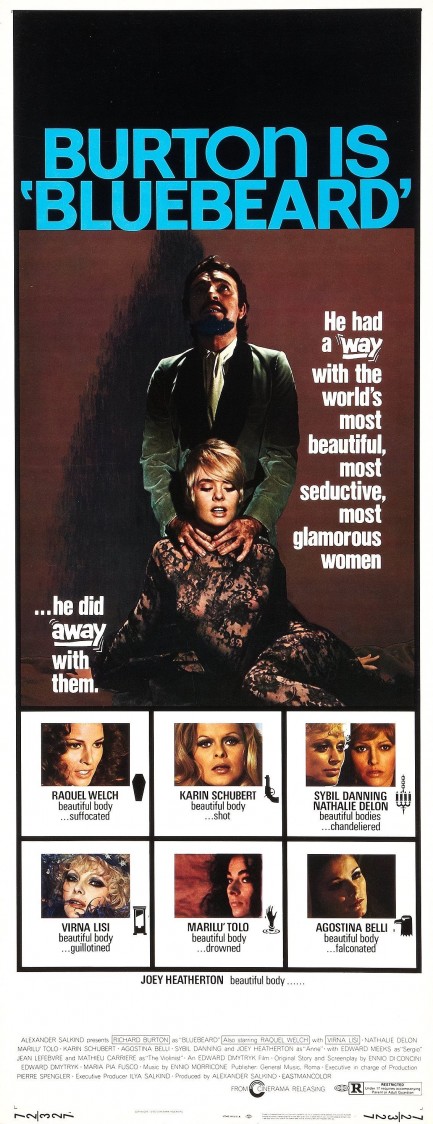
This piece was painted and collaged from photos by Fernandez Zarza-Pérez, also known as Jano, now a regular visitor to Pulp Intl. Just for the sake of it, we've also included the U.S. poster at right (or above if you're on a mobile device). You can see that it's built fully around a photo-illustration, and while it's interesting, we thought Jano's work had a little more merit.
Bluebeard stars Richard Burton, who's supposed to be a great actor, but we have to admit we'd seen exactly zero of his acclaimed movies up to this point. He was a Shakespearean stage guy who transitioned to Hollywood in similar type roles, and being decidedly non-pulp in style, we've highlighted none here. He later made a couple of war movies, though, as well as the overbudget epic Cleopatra, and we might get around to those. Going on the example presented by Bluebeard, however, you'd have to conclude that he's a hack. Those who know more than us say that by the 1970s heavy drinking had impaired both his judgment and skill.
You'd think that a famous folk tale would provide a trove of potential cinematic possibilities to sift through, but Bluebeard is uninspiringly written, and the direction—from film noir vet Edward Dmytryk—presents little evidence of engagement with or inspiration by the material. The women Bluebeard murders are played by Karin Schubert, Nathalie Delon, Virna Lisi, sexy nun Raquel Welch, Marilú Tolo, Agostina Belli, and Joey Heatherton—not neccsarily in that order—plus Sybil Danning makes an appearance. Heatherton has the key role as Anne, the wife who elicits a confession from a psychologically tortured Bluebeard as to why he kills.
And the reason? Dude can't get it up. Therefore, in the era before little blue pills, as a prominent member of Austria's post-World War I patriarchal society, Bluebeard murders to keep his limpness secret. You'd think dying wives would destroy his matrimonial suitability, but at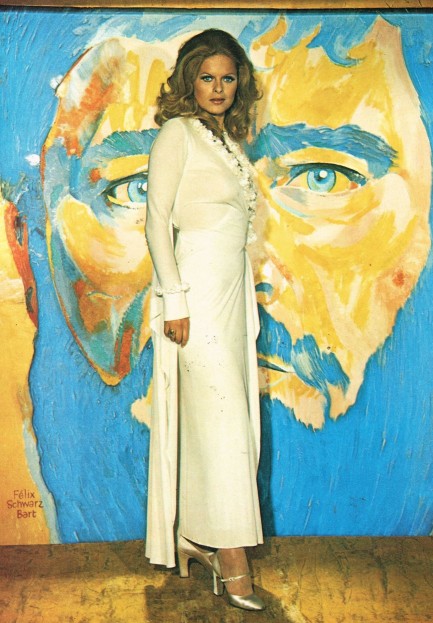 a certain point we suppose money papers over all flaws. Rich or not, though, never marry a guy who sits around with a raptor on his shoulder. And speaking of hunting, we should warn the kind-hearted that there's an extended hunting sequence in Bluebeard, and the animals are killed for real, in detailed action. We're talking several rabbits, a number of birds in flight, a couple of foxes, a boar, and a deer. a certain point we suppose money papers over all flaws. Rich or not, though, never marry a guy who sits around with a raptor on his shoulder. And speaking of hunting, we should warn the kind-hearted that there's an extended hunting sequence in Bluebeard, and the animals are killed for real, in detailed action. We're talking several rabbits, a number of birds in flight, a couple of foxes, a boar, and a deer.
Based on what we've written so far, you might think we're not recommending Bluebeard, but not so fast, friends. The female cast—to state the obvious—comprises some of the loveliest actresses of the era, and in diverse ways. Welch is sculpturally flawless, Lisi is ethereally beautiful, Toló is broodingly dark, and Heatherton, whose resting face is ingenuous and slightly open-mouthed as if she's always concentrating on a problem, can only be described as luscious. She also has one of cinema's all-time greatest hairdos. Is it pervy to say you should watch a movie solely for the beauty of its actresses? Probably—but it's the truth. The filmmakers must have agreed, because they published lots of nude production stills, when in fact the film has less skin. See below. 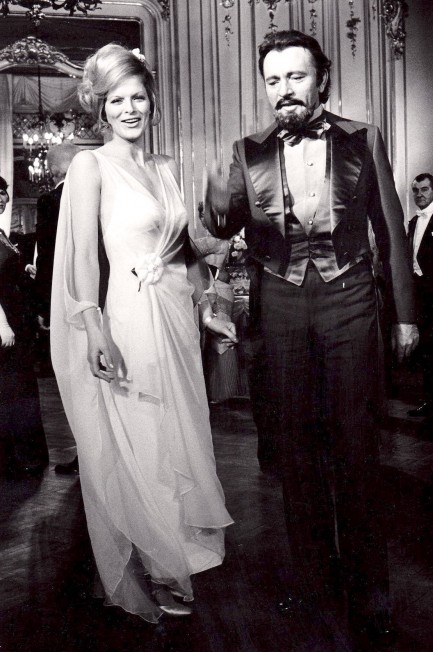 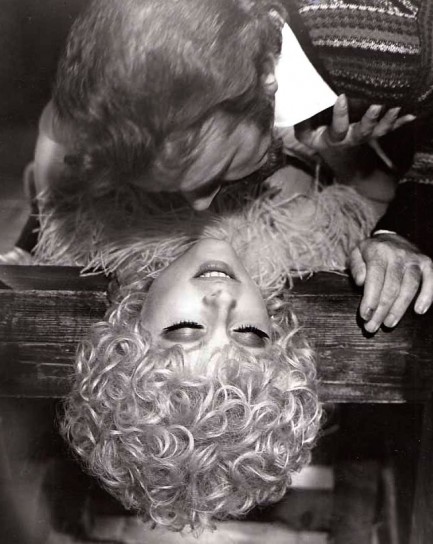 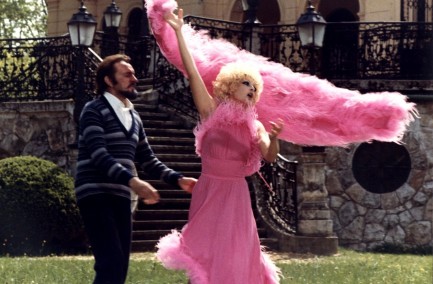 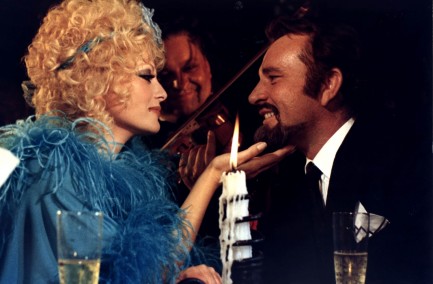 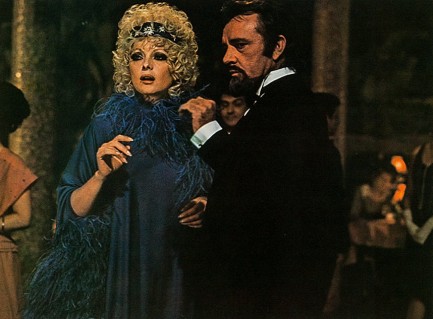 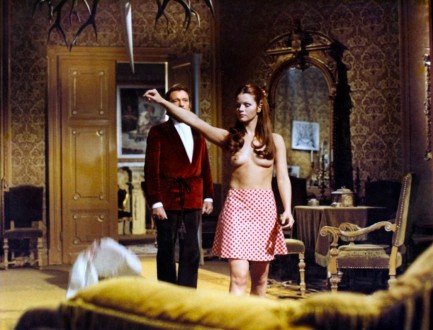 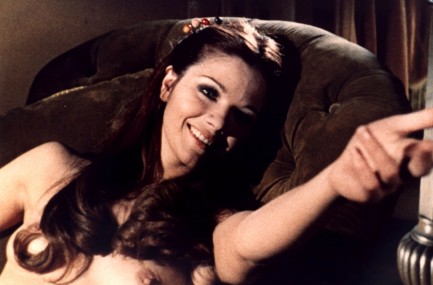 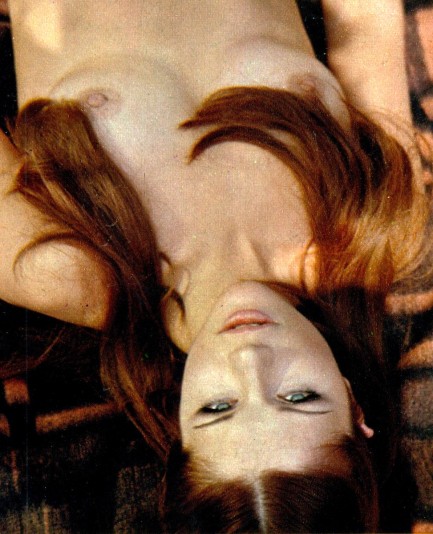 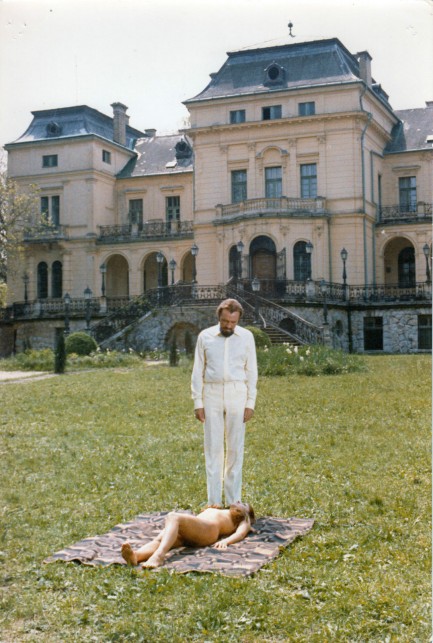 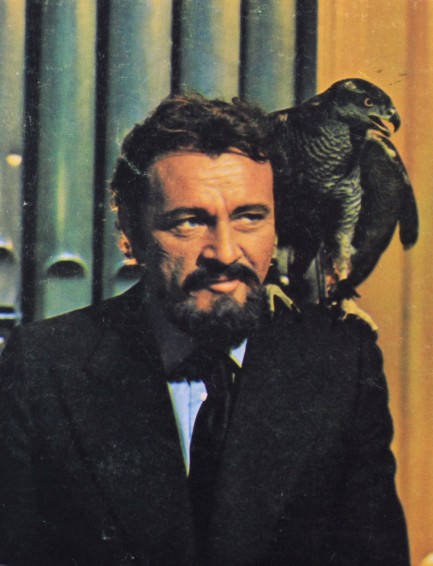 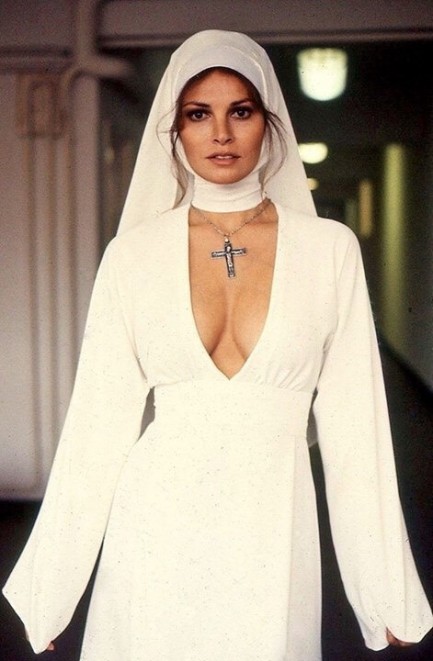 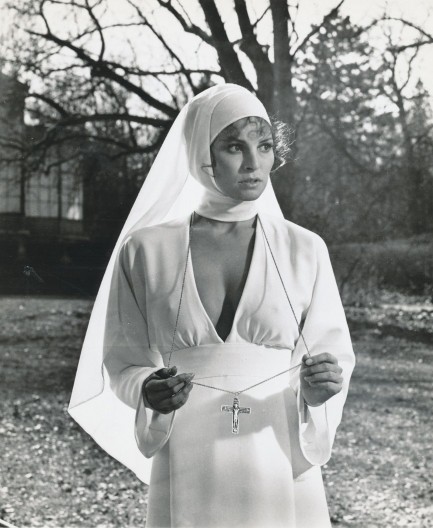 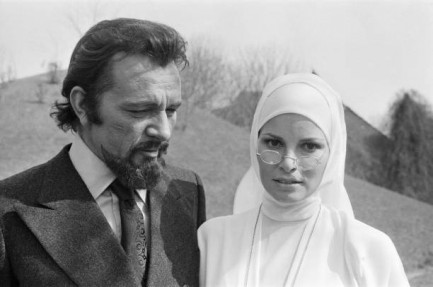 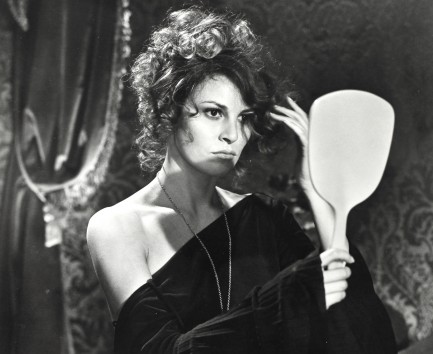 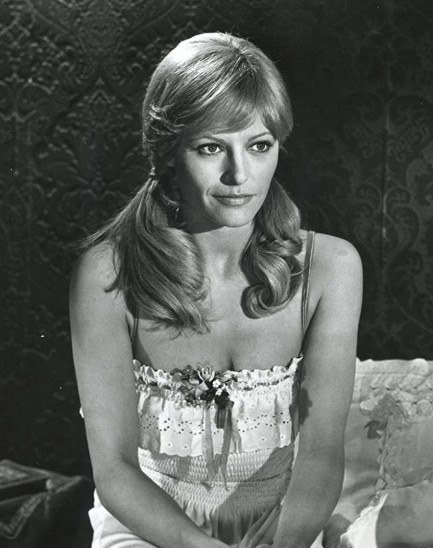 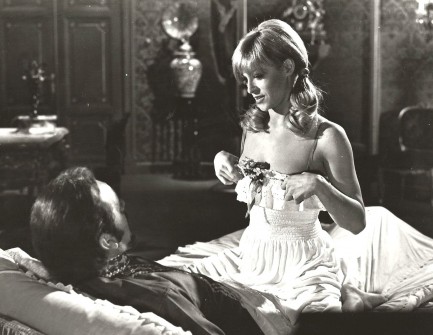 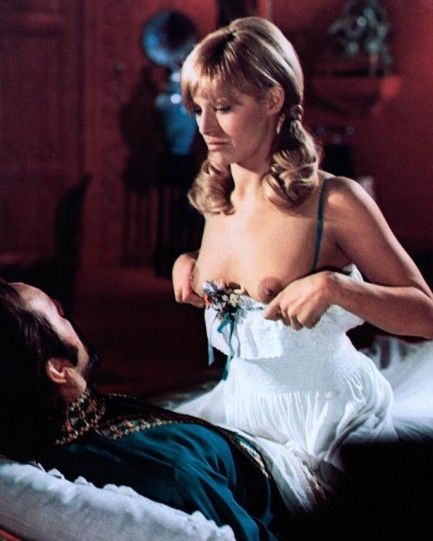  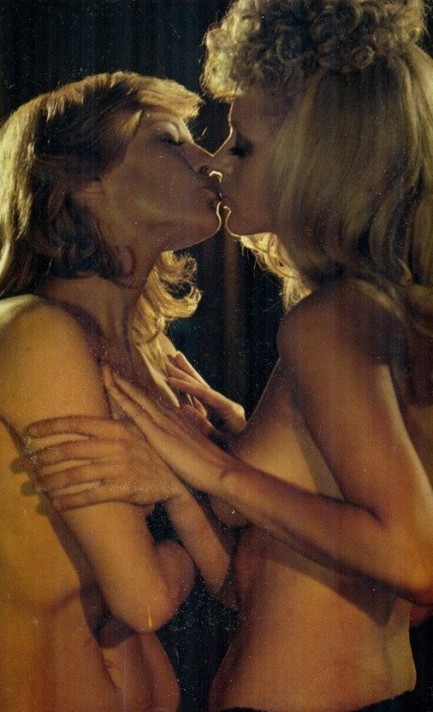 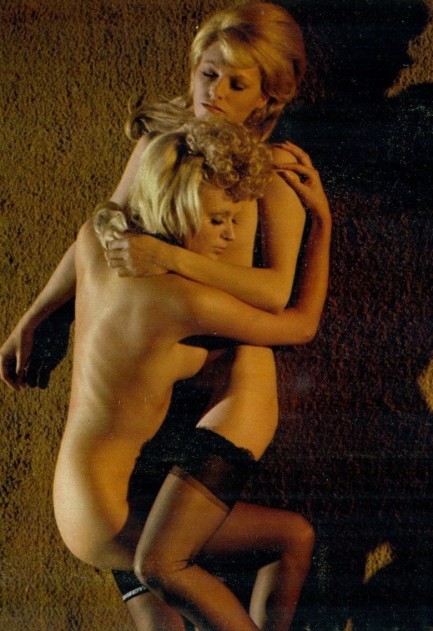 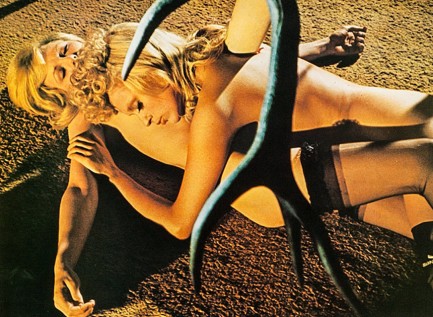 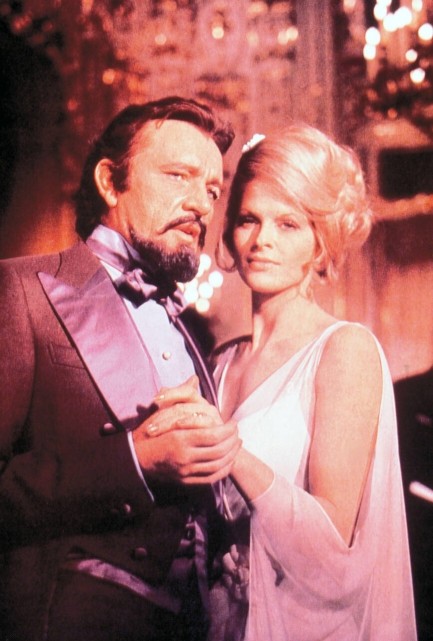 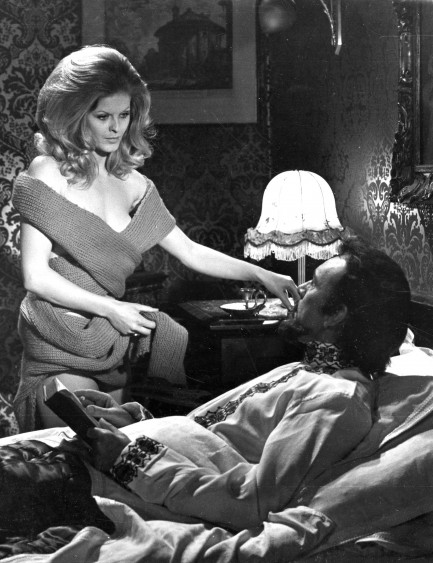 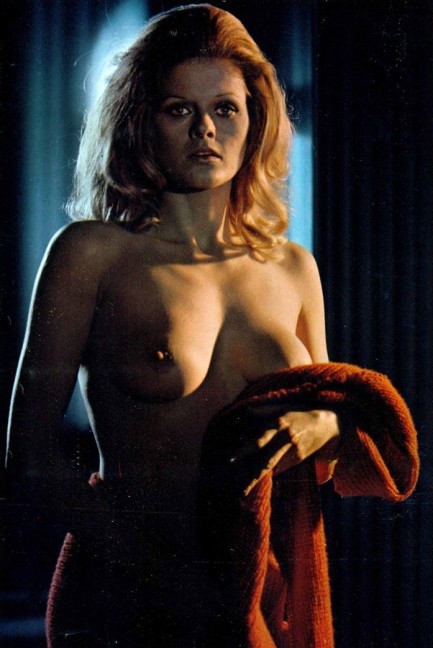 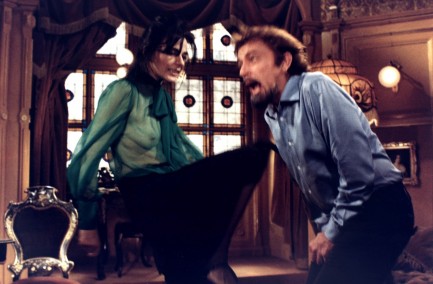 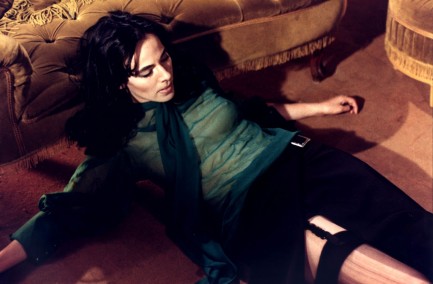 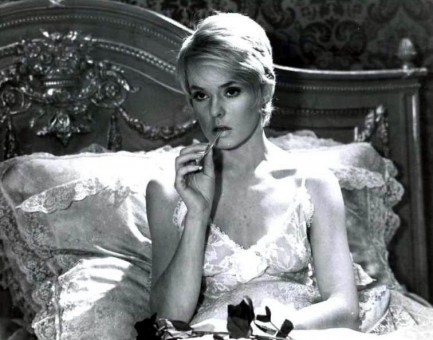 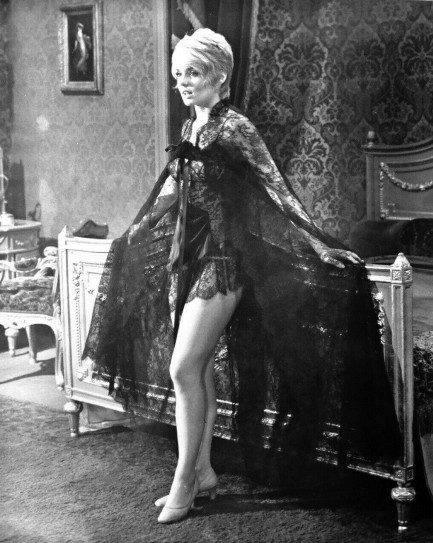 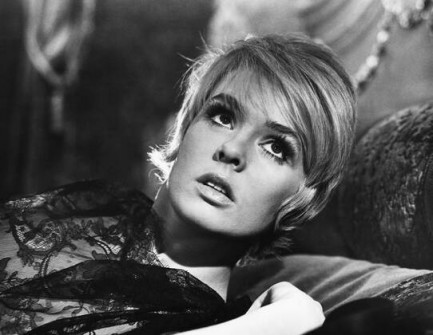 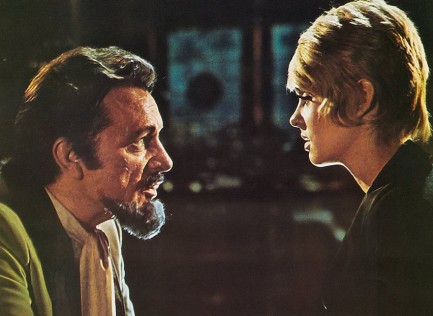 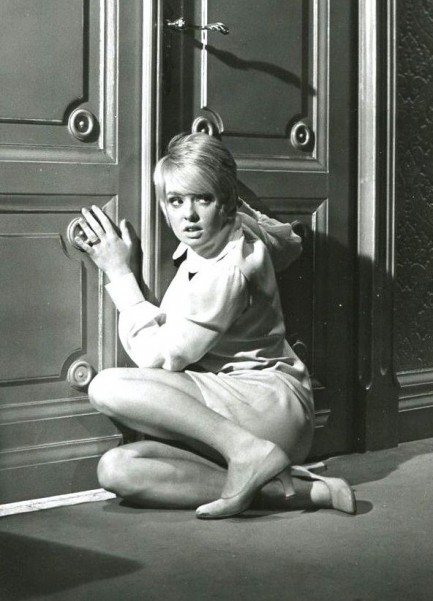 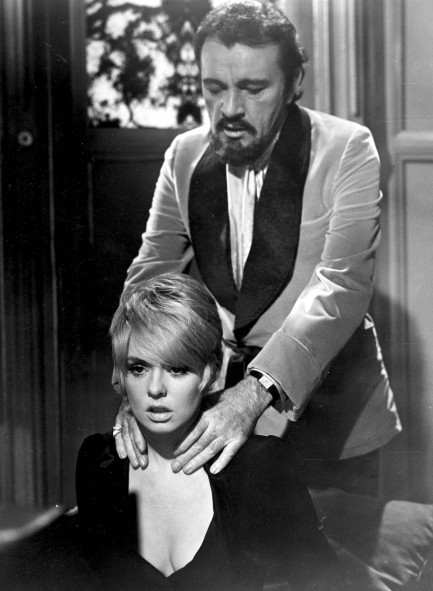
 C'est le tabloïd bon marché! Scandale et crime! Incroyable! 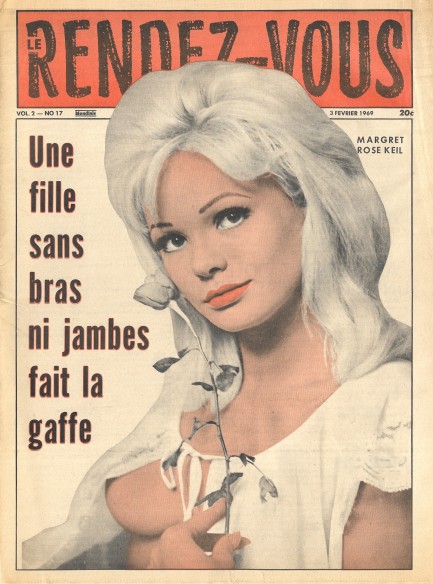 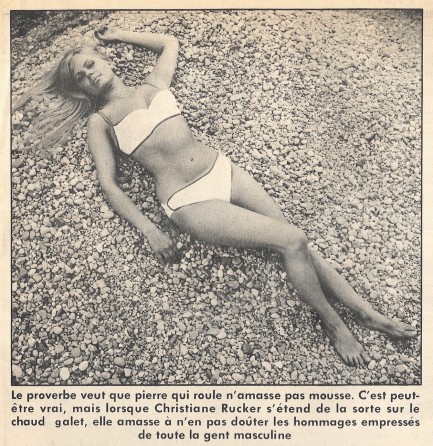 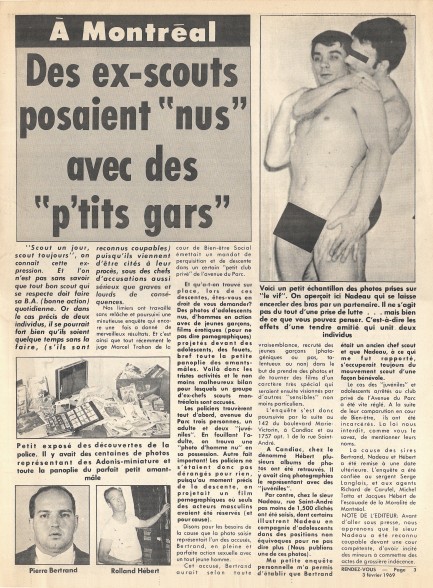 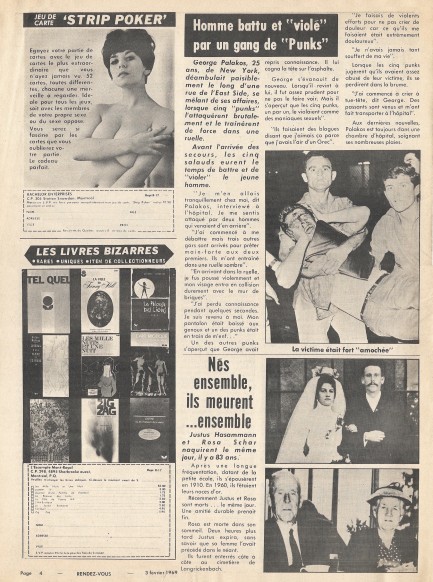 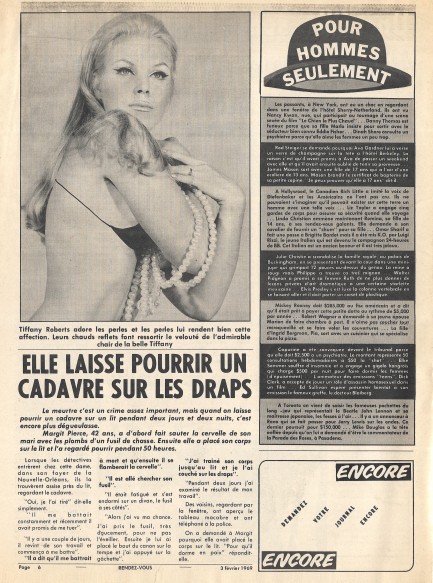 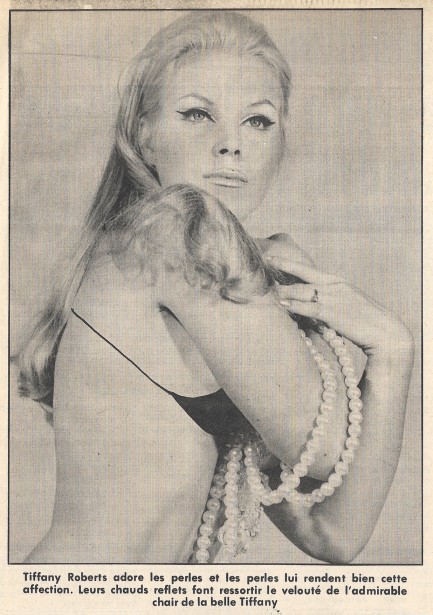 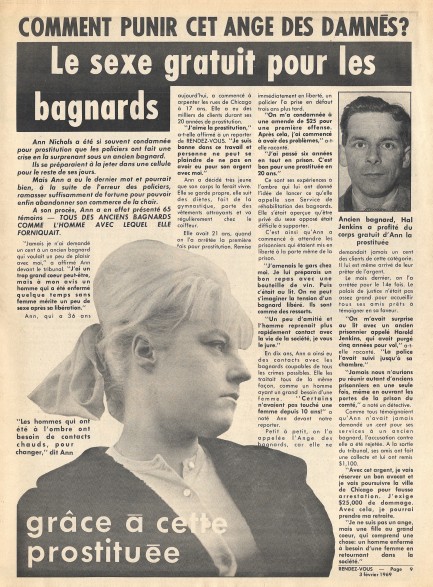 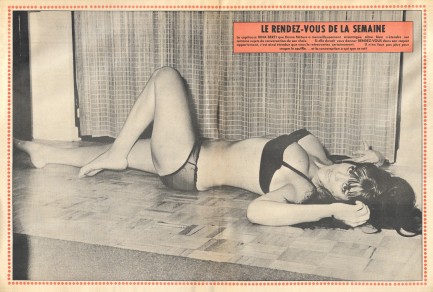 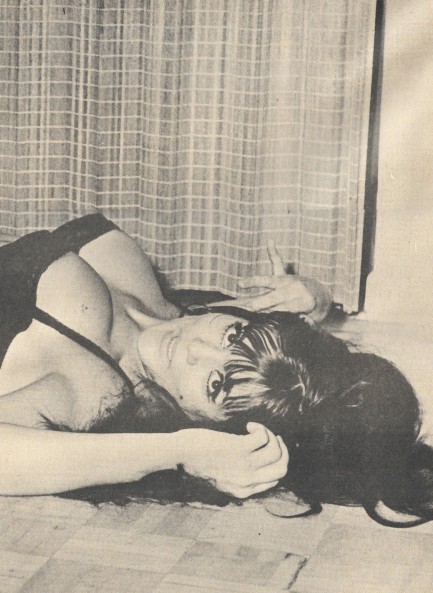 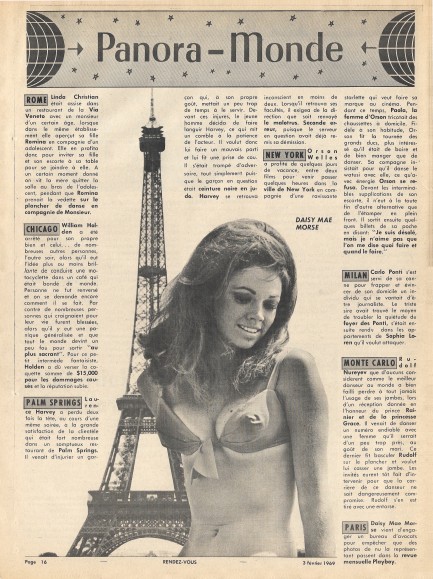 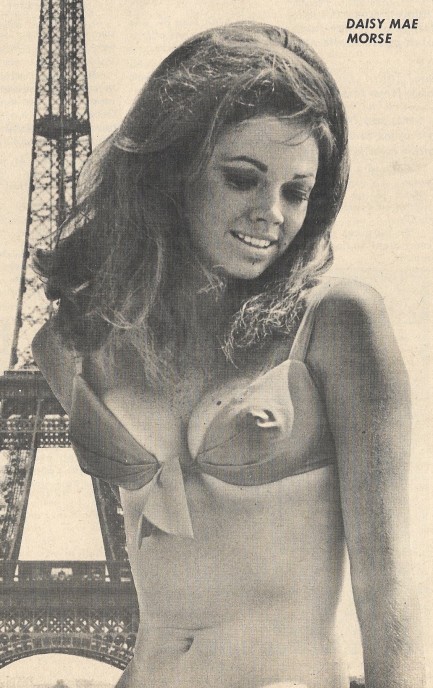 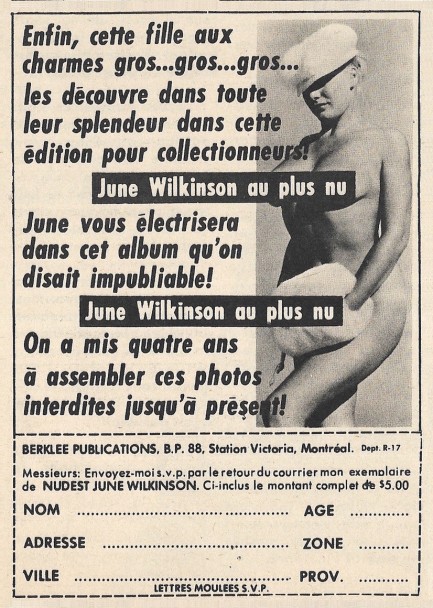 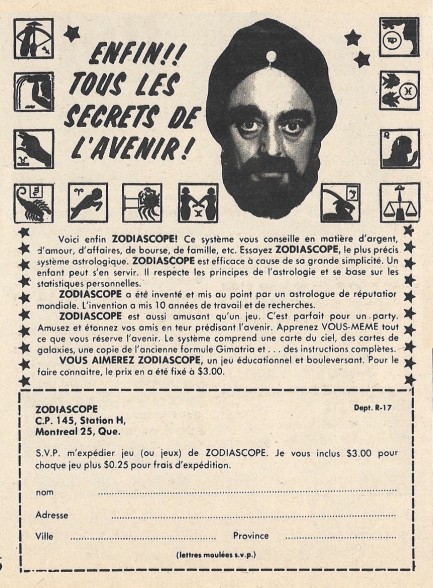 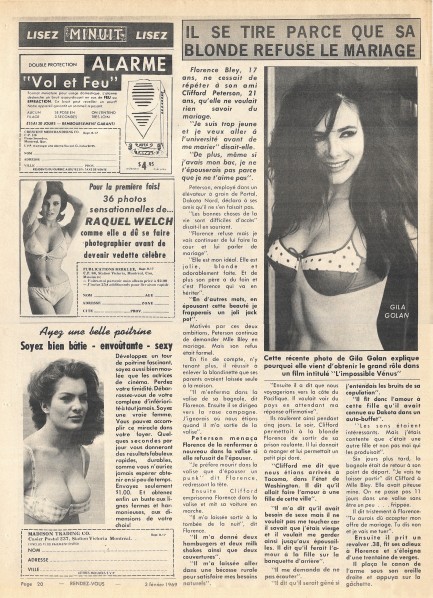   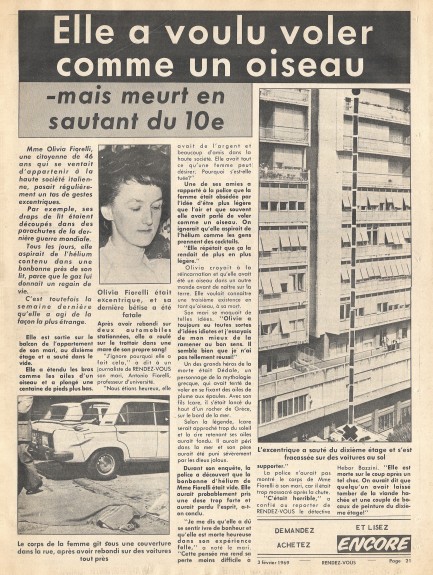  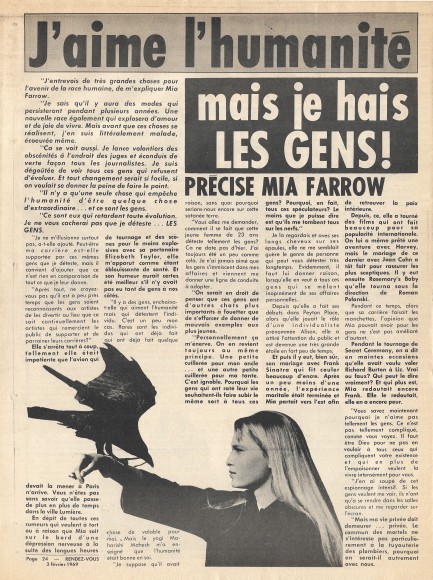
Above: scans from the Canadian French tabloid Le Rendez-Vous, which appeared today in 1969 from Montréal based Publications Neoscope. The cover star is German actress Margaret Rose Keil (whose first name they spell Margret), and the text says, “A girl with no arms or legs goofs off.” Right, well, we aren't sure what that means, and since Keil gets no inside play it's never explained. Another of those Frenchisms no doubt. Elsewhere inside, you get various quick hits: actress Christiane Rucker gathering no moss, beautiful obscurity Tiffany Roberts with her precious pearls, and Rina Berti in the centerfold. You also get feature length stories about love and suicide, misbehaving scoutmasters, and Mia Farrow, who says, “I love humanity, but I hate people.” As you can see, Canadian tabloids were like U.S. tabloids, but a bit more exotique. We have more issues of Le Rendez-Vous, so we'll get back to this subject later in the year.
Update: when if comes to Frenchisms, Jo is the man. He writes about the cover image:
The "gaffe" is a grip to catch the boat's rope. It can be also a goof. As the girl has no legs and no arms, it's a joke (not very funny). Maybe she catches men using what remains in her sexy body?
You're right, Jo, it isn't a funny joke, but it's good information. We always want to know. Thanks as always.
 Raquel makes everyone a little bit happier. 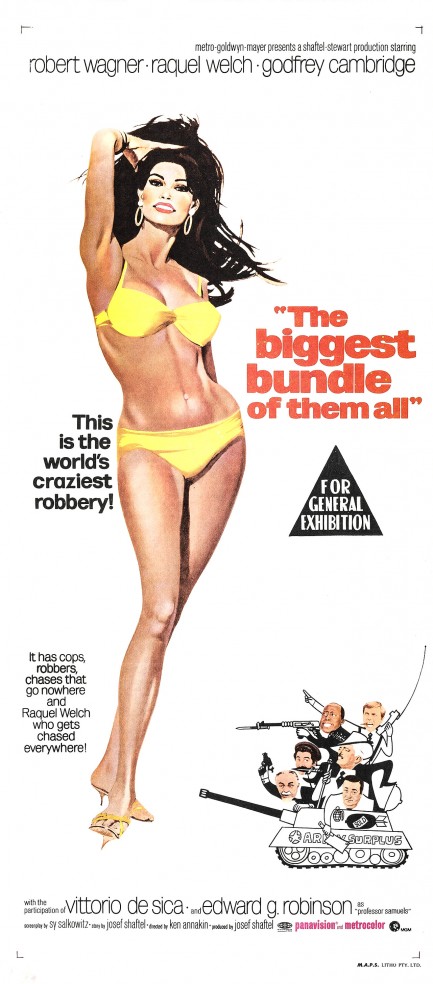
There's no discussion of mid-century cinema without Raquel Welch. She burst onto the scene in 1964 mainly on television, but by 1966 was a major silver screen presence. She was far more famous than the quality of her films would otherwise have warranted, but her beauty and bod helped make her a superstar. The above poster for The Biggest Bundle of Them All is an example of what movie studios usually sold: Raquel with a smile, preferably in a bikini. This promo was painted by Robert McGinnis in his trademark elongated style, and you see the naked art below, reversed from the poster but in its original orientation. Often the only available versions of these vintage pieces contain graphics, inextricable except by enterprising modern people using Photoshop or Gimp, but clean McGinnis originals survive for quite a few of his commissions, making his artistic ability all the more evident. You can see examples here and here, as well as on this website dedicated to him. We talked about The Biggest Bundle of Them All a while back. Shorter version: Raquel drives Italy wild. It premiered in the U.S. today in 1968. 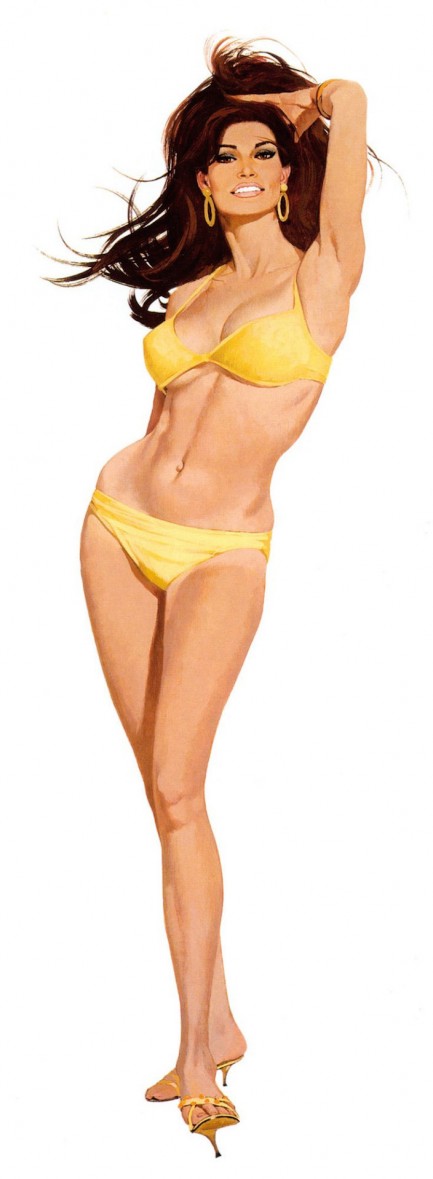
 It's shocking how many Hollywood stars did smack. 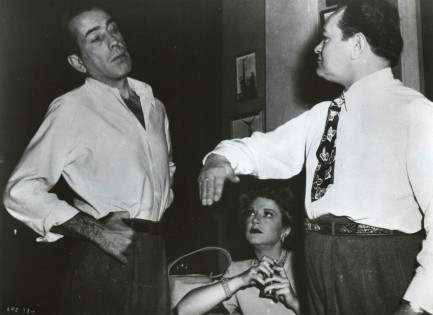
Everybody wants to slap somebody sometime. Luckily, actors in movies do it so you don't have to. The above shot is a good example. Edward G. Robinson lets Humphrey Bogart have it in 1948's Key Largo, as Claire Trevor looks on. In vintage cinema, people were constantly slapping. Men slapped men, men slapped women, women slapped women, and women slapped men. The recipient was usually the protagonist because—though some readers may not realize this—even during the ’40s and 50s, slapping was considered uncouth at a minimum, and downright villainous at worst, particularly when men did it. So generally, bad guys did the slapping, with some exceptions. Glenn Ford slaps Rita Hayworth in Gilda, for example, out of humiliation. Still wrong, but he wasn't the film's villain is our point. Humphrey Bogart lightly slaps Martha Vickers in The Big Sleep to bring her out of a drug stupor. He's like a doctor. Sort of. In any case, most cinematic slapping is fake, and when it wasn't it was done with the consent of the participants (No, really slap me! It'll look more realistic.). There are some famous examples of chipped teeth and bloody noses deriving from the pursuit of realism. We can envision a museum exhibit of photos like these, followed by a lot of conversation around film, social mores, masculinity, and their intersection. We can also envison a conversation around the difference between fantasy and reality. There are some who believe portryals of bad things endorse the same. But movies succeed largely by thrilling, shocking, and scaring audiences, which requires portraying thrilling, shocking, and frightening moments. If actors can't do that, then ultimately movies must become as banal as everyday llife. Enjoy the slapfest.
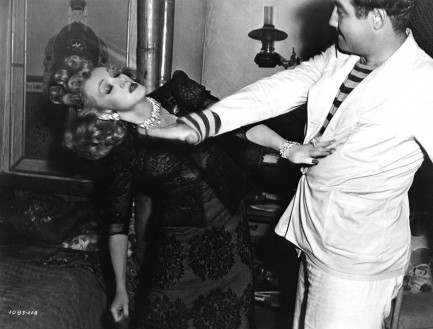 Broderick Crawford slaps Marlene Dietrich in the 1940's Seven Sinners. Broderick Crawford slaps Marlene Dietrich in the 1940's Seven Sinners.
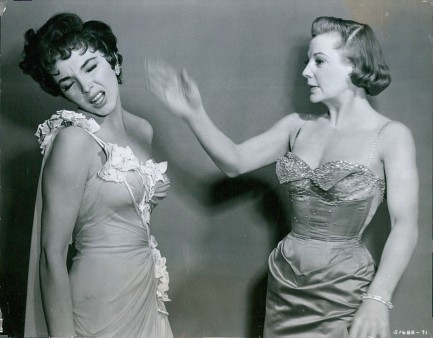 June Allyson lets Joan Collins have it across the kisser in a promo image for The Opposite Sex, 1956. June Allyson lets Joan Collins have it across the kisser in a promo image for The Opposite Sex, 1956.
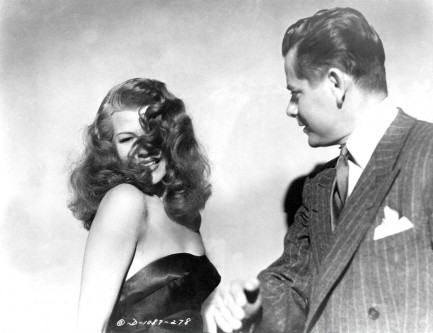 Speaking of Gilda, here's one of Glenn Ford and Rita Hayworth re-enacting the slap heard round the world. Hayworth gets to slap Ford too, and according to some accounts she loosened two of his teeth. We don't know if that's true, but if you watch the sequence it is indeed quite a blow. 100% real. We looked for a photo of it but had no luck. Speaking of Gilda, here's one of Glenn Ford and Rita Hayworth re-enacting the slap heard round the world. Hayworth gets to slap Ford too, and according to some accounts she loosened two of his teeth. We don't know if that's true, but if you watch the sequence it is indeed quite a blow. 100% real. We looked for a photo of it but had no luck.
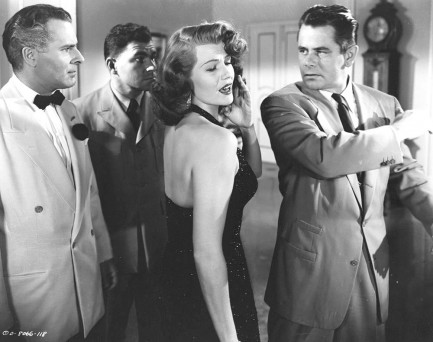 Don't mess with box office success. Ford and Hayworth did it again in 1952's Affair in Trinidad. Don't mess with box office success. Ford and Hayworth did it again in 1952's Affair in Trinidad.
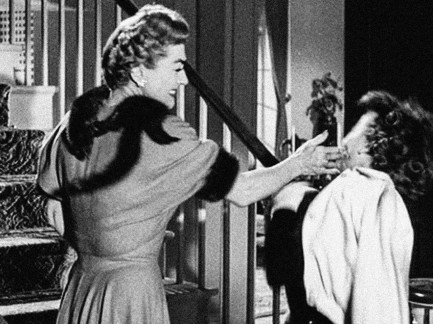 All-time film diva Joan Crawford gets in a good shot on Lucy Marlow in 1955's Queen Bee. All-time film diva Joan Crawford gets in a good shot on Lucy Marlow in 1955's Queen Bee.
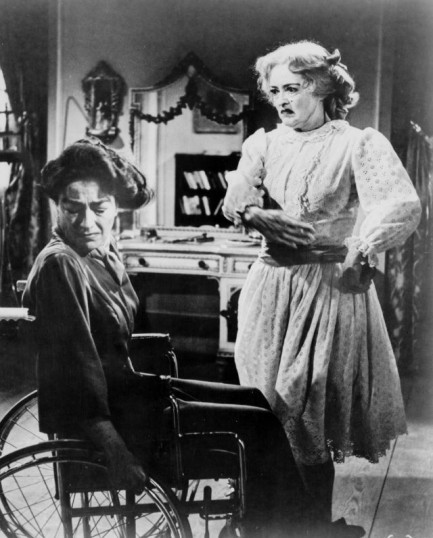 The answer to the forthcoming question is: She turned into a human monster, that's what. Joan Crawford is now on the receiving end, with Bette Davis issuing the slap in Whatever Happened to Baby Jane? Later Davis kicks Crawford, so the slap is just a warm-up. The answer to the forthcoming question is: She turned into a human monster, that's what. Joan Crawford is now on the receiving end, with Bette Davis issuing the slap in Whatever Happened to Baby Jane? Later Davis kicks Crawford, so the slap is just a warm-up.
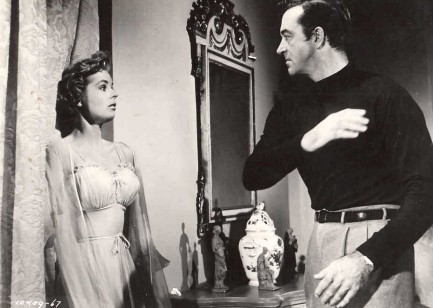 Mary Murphy awaits the inevitable from John Payne in 1955's Hell's Island. Mary Murphy awaits the inevitable from John Payne in 1955's Hell's Island.
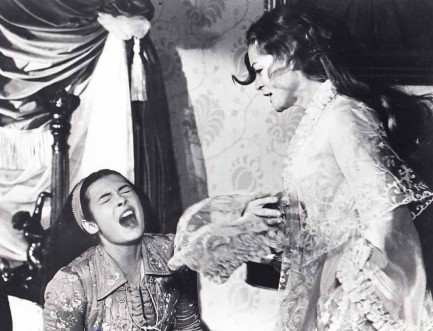 Romy Schneider slaps Sonia Petrova in 1972's Ludwig. Romy Schneider slaps Sonia Petrova in 1972's Ludwig.
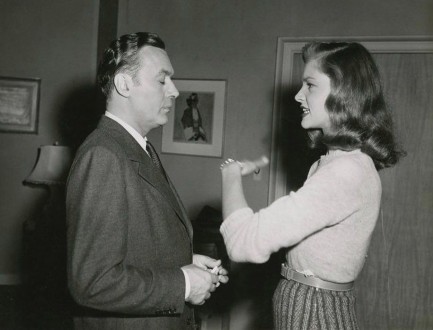 Lauren Bacall lays into Charles Boyer in 1945's Confidential Agent and garnishes the slap with a brilliant snarl. Lauren Bacall lays into Charles Boyer in 1945's Confidential Agent and garnishes the slap with a brilliant snarl.
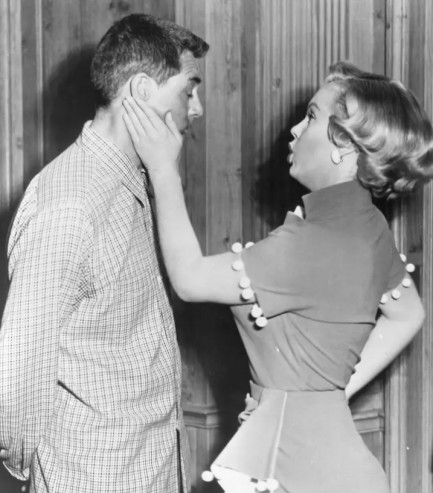 Iconic bombshell Marilyn Monroe drops a smart bomb on Cary Grant in the 1952 comedy Monkey Business. Iconic bombshell Marilyn Monroe drops a smart bomb on Cary Grant in the 1952 comedy Monkey Business.
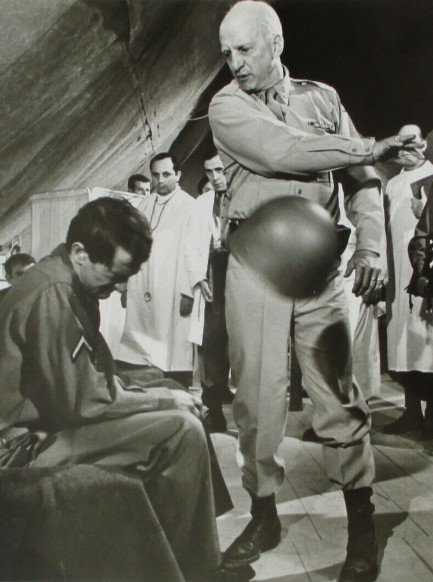 This is the most brutal slap of the bunch, we think, from 1969's Patton, as George C. Scott de-helmets an unfortunate soldier played by Tim Considine. This is the most brutal slap of the bunch, we think, from 1969's Patton, as George C. Scott de-helmets an unfortunate soldier played by Tim Considine.
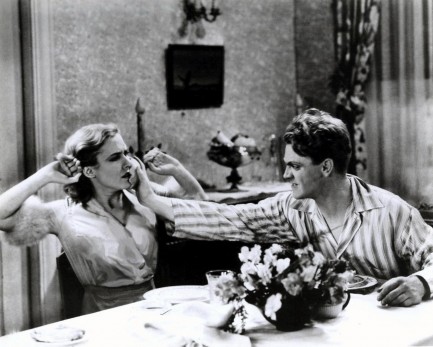 A legendary scene in filmdom is when James Cagney shoves a grapefruit in Mae Clark's face in The Public Enemy. Is it a slap? He does it pretty damn hard, so we think it's close enough. They re-enact that moment here in a promo photo made in 1931. A legendary scene in filmdom is when James Cagney shoves a grapefruit in Mae Clark's face in The Public Enemy. Is it a slap? He does it pretty damn hard, so we think it's close enough. They re-enact that moment here in a promo photo made in 1931.
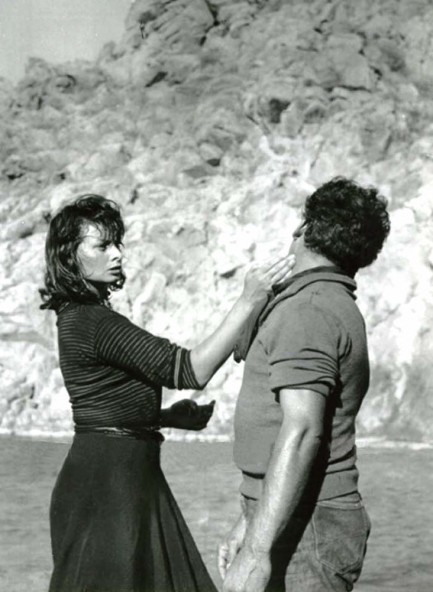 Sophia Loren gives Jorge Mistral a scenic seaside slap in 1957's Boy on a Dolphin. Sophia Loren gives Jorge Mistral a scenic seaside slap in 1957's Boy on a Dolphin.
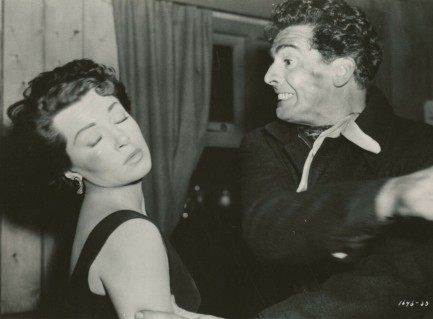 Victor Mature fails to live up to his last name as he slaps Lana Turner in 1954's Betrayed. Victor Mature fails to live up to his last name as he slaps Lana Turner in 1954's Betrayed. 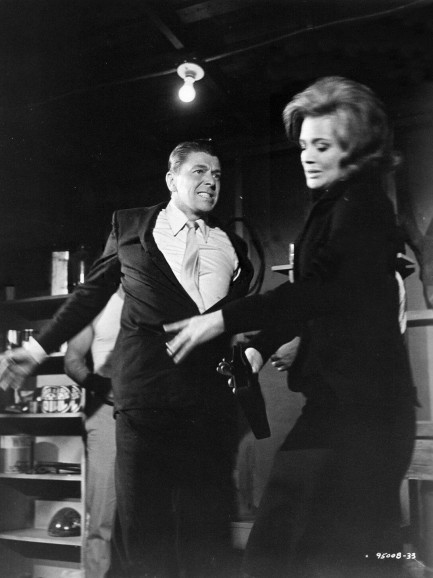 Ronald Reagan teaches Angie Dickinson how supply side economics work in 1964's The Killers. Ronald Reagan teaches Angie Dickinson how supply side economics work in 1964's The Killers.
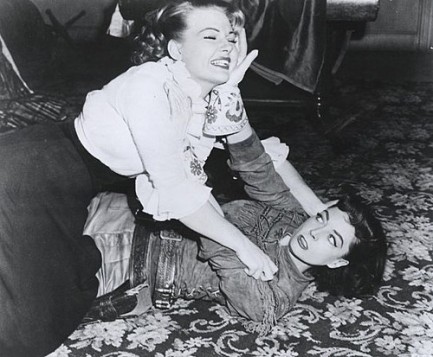 Marie Windsor gets in one against Mary Castle from the guard position in an episode of television's Stories of the Century in 1954. Windsor eventually won this bout with a rear naked choke. Marie Windsor gets in one against Mary Castle from the guard position in an episode of television's Stories of the Century in 1954. Windsor eventually won this bout with a rear naked choke.
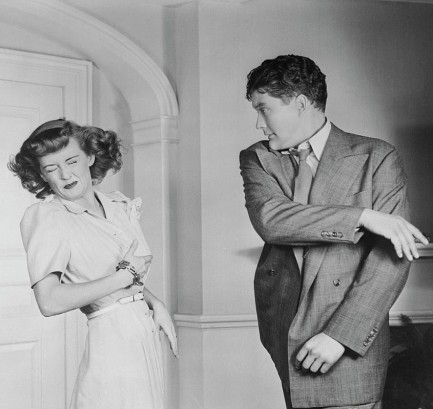 It's better to give than receive, but sadly it's Bette Davis's turn, as she takes one from Dennis Morgan in In This Our Life, 1942. It's better to give than receive, but sadly it's Bette Davis's turn, as she takes one from Dennis Morgan in In This Our Life, 1942.
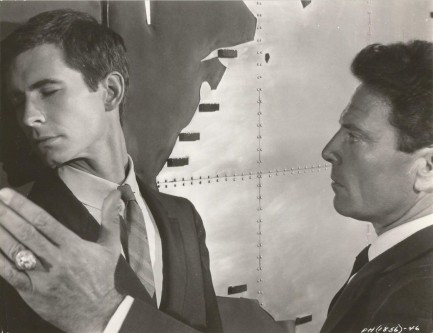 Anthony Perkins and Raf Vallone dance the dance in 1962's Phaedra, with Vallone taking the lead. Anthony Perkins and Raf Vallone dance the dance in 1962's Phaedra, with Vallone taking the lead.
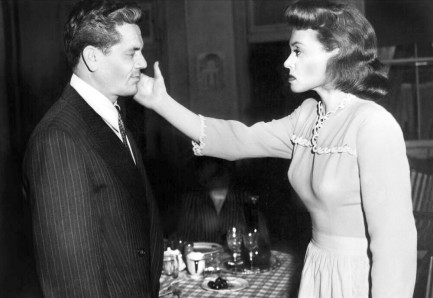 And he thought being inside the ring was hard. Lilli Palmer nails John Garfield with a roundhouse right in the 1947 boxing classic Body and Soul. And he thought being inside the ring was hard. Lilli Palmer nails John Garfield with a roundhouse right in the 1947 boxing classic Body and Soul.
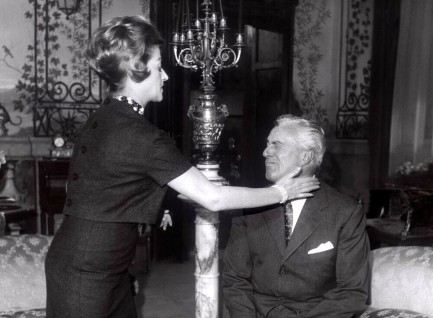 1960's Il vigile, aka The Mayor, sees Vittorio De Sica rebuked by a member of the electorate Lia Zoppelli. She's more than a voter in this—she's also his wife, so you can be sure he deserved it. 1960's Il vigile, aka The Mayor, sees Vittorio De Sica rebuked by a member of the electorate Lia Zoppelli. She's more than a voter in this—she's also his wife, so you can be sure he deserved it.
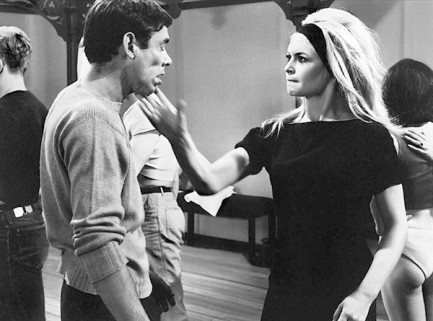 Brigitte Bardot delivers a not-so-private slap to Dirk Sanders in 1962's Vie privée, aka A Very Private Affair. Brigitte Bardot delivers a not-so-private slap to Dirk Sanders in 1962's Vie privée, aka A Very Private Affair.
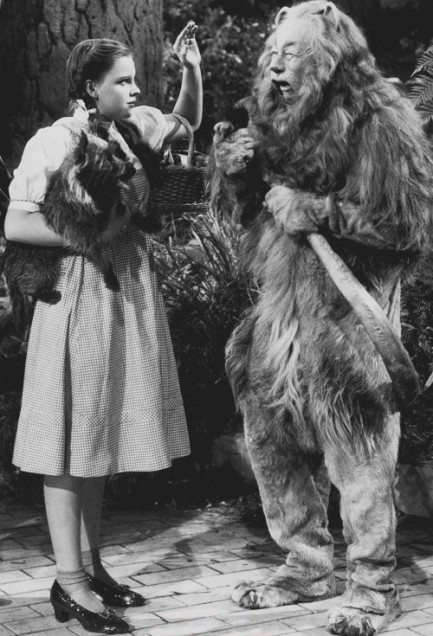 In a classic case of animal abuse. Judy Garland gives cowardly lion Bert Lahr a slap on the nose in The Wizard of Oz. Is it his fault he's a pussy? Accept him as he is, Judy. In a classic case of animal abuse. Judy Garland gives cowardly lion Bert Lahr a slap on the nose in The Wizard of Oz. Is it his fault he's a pussy? Accept him as he is, Judy.
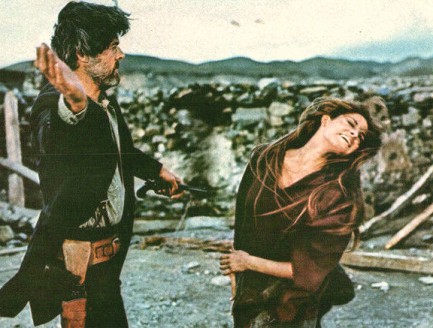 Robert Culp backhands Raquel Welch in 1971's Hannie Caudler. Robert Culp backhands Raquel Welch in 1971's Hannie Caudler.
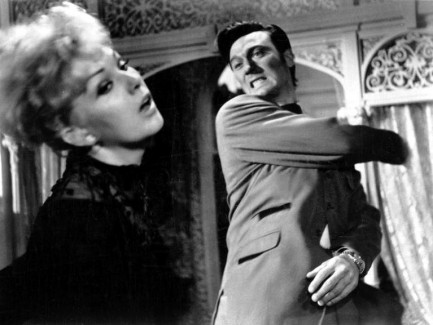 And finally, Laurence Harvey dares to lay hands on the perfect Kim Novak in Of Human Bondage. And finally, Laurence Harvey dares to lay hands on the perfect Kim Novak in Of Human Bondage.
 Welch proves indispensable to yet another ’60s caper flick. 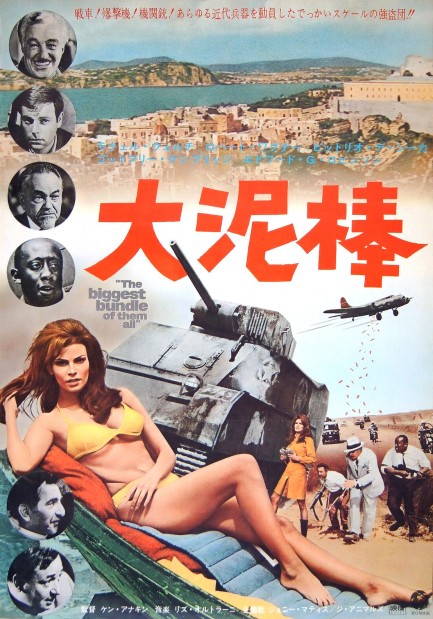
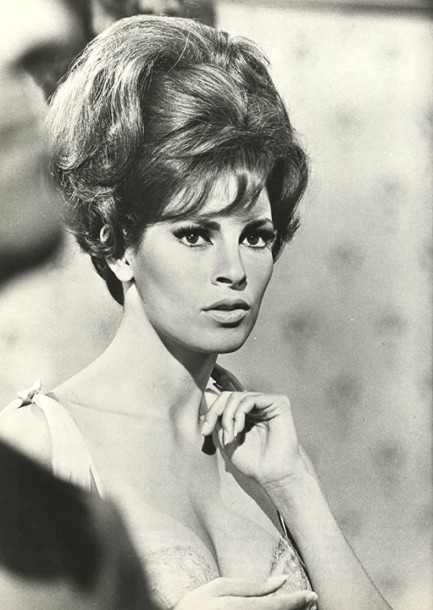
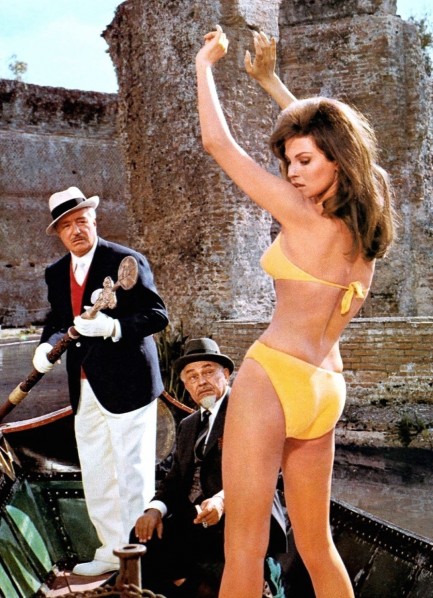
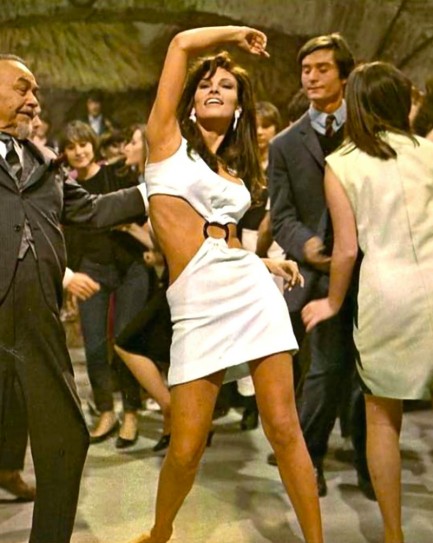
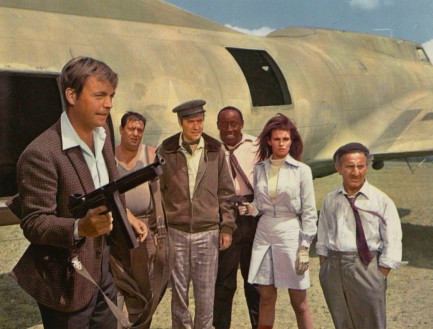
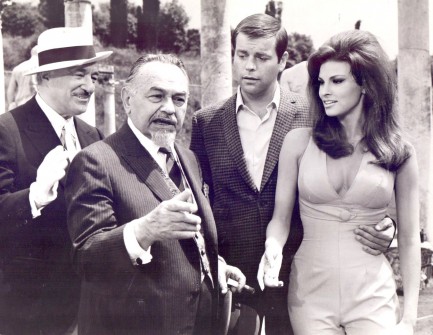
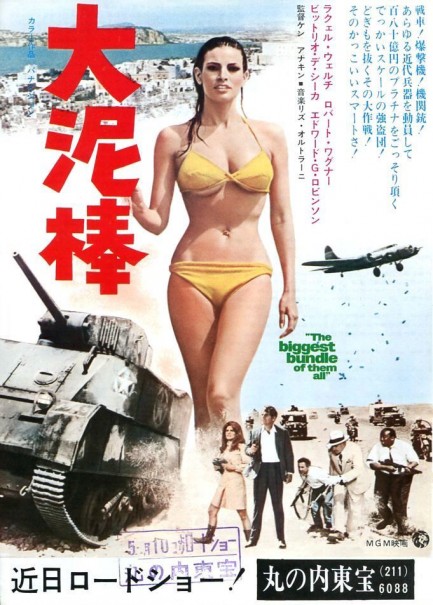
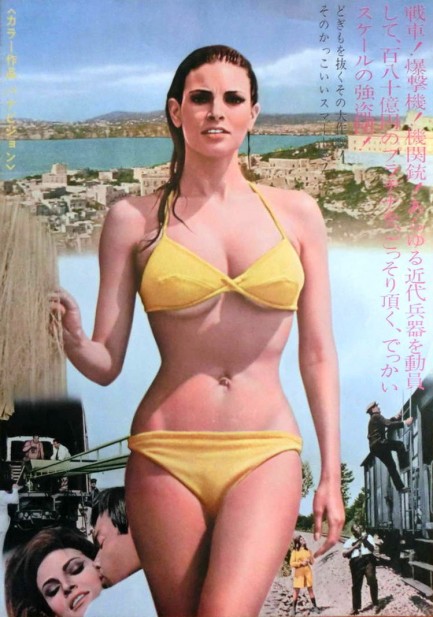
Above you see a promo poster for 大泥棒, or “Great Thief,” made for the 1968 Raquel Welch/Robert Wagner caper flick The Biggest Bundle of Them All. The U.S. poster was painted by master illustrator Robert McGinnis, but we decided to show you the Japanese art instead because it's rare. There are two more Japanese promos below that are also rare. We'll get to the McGinnis version later. In the film, Wagner and his henchmen kidnap an elderly Italian gangster played by Vittorio De Sica and hold him for ransom. Problem is he has no money. At first they don't believe him, but when it finally becomes clear he's broke, Wagner and Co. try to cut bait. But De Sica is terrified all Italy will find out he couldn't pay his own ransom. His reputation would be ruined. So he convinces his kidnappers to join him in a swindle that will maintain his reputation, make him rich again, and earn the kidnappers more money than they ever imagined. De Sica becomes the boss of his own abductors.
For a crime-comedy, it's an ingenious premise, which makes it a shame it wasn't original. Another movie with an almost identical plot called The Happening was in production at Columbia, and when the studio got wind of The Biggest Bundle of Them All it threatened to sue. Metro-Goldwyn-Mayer agreed to give Columbia a cut of Bundle's profits and a legal bloodbath was avoided, but in the same way De Sica's big caper doesn't exactly play out perfectly, Bundle's profits didn't blow the roof off MGM headquarters as planned. And no wonder. It wasn't just the script that wasn't original—the film falls into the same category as continental crime capers like Charade, To Catch a Thief, and Topkapi, and those make for crowded and treacherous cinematic waters. Bundle isn't sophisticated enough, or exciting enough, or infused with enough sexual chemistry to compete with better films of its ilk.
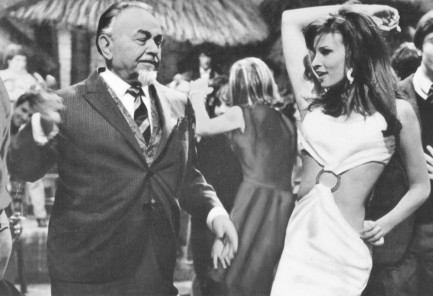
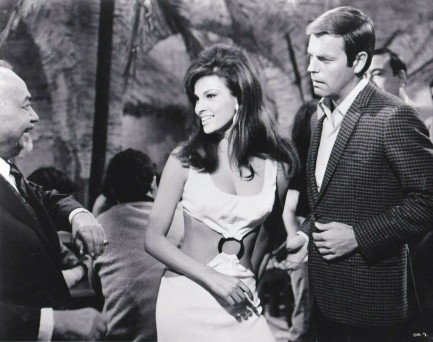
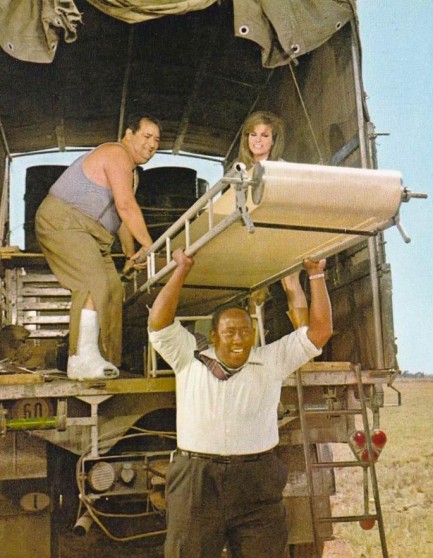
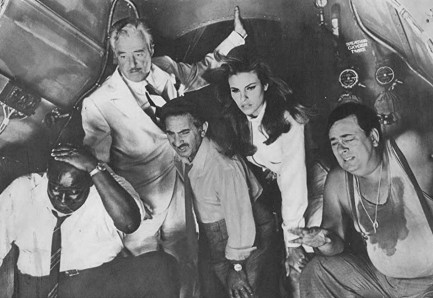
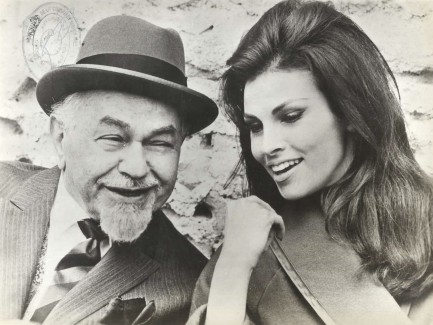
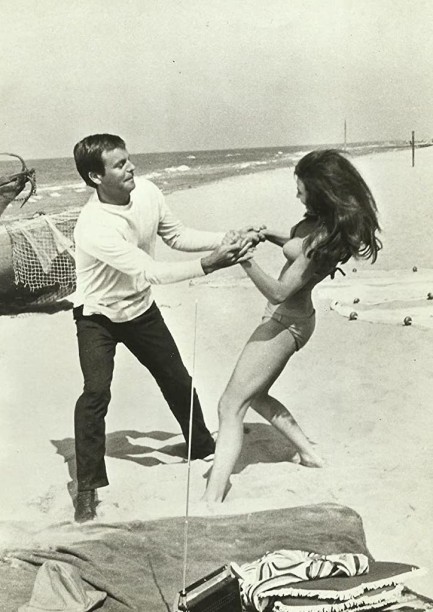
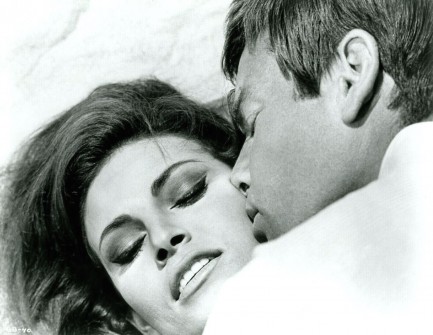
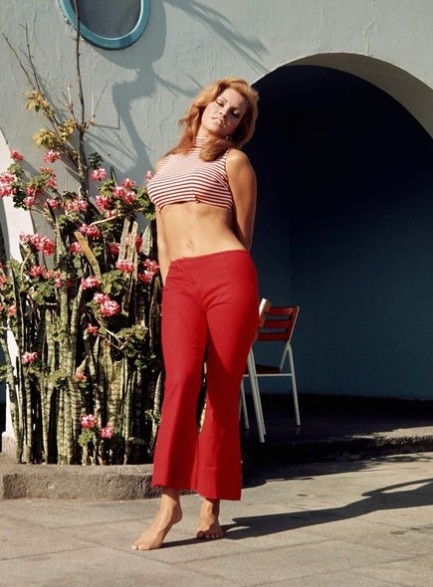
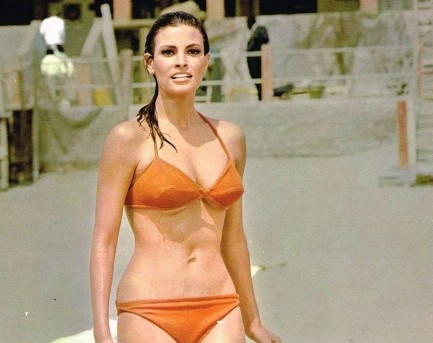
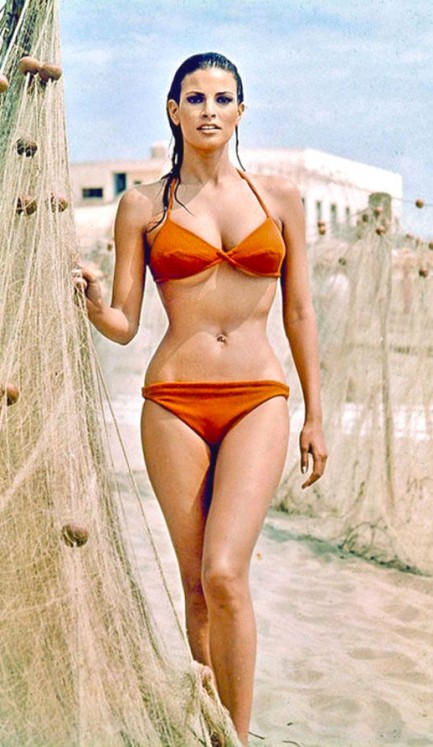
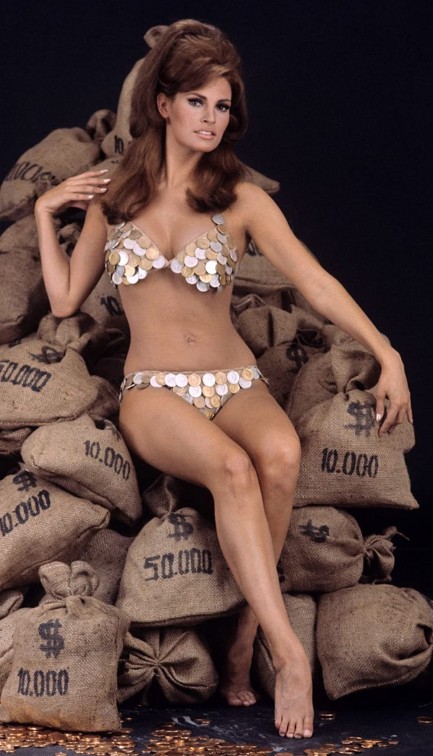
Speaking of sexual chemistry, Welch is naturally the big attraction of any movie she's in, and we've seen enough of her work now to understand that she was more of a persona than an actress during this mid- to late-’60s period. In film after film she basically played herself. Here she smiles and quips and poses, and it's all very Welchian in that groovy way her fans had come to expect—bikinis, lingerie, go-go dancing and all. The movie would be worth far less without her. There are also supporting appearances by Edward G. Robinson and Femi Benussi, while future blaxploitation icon Godfrey Cambridge is one of the kidnappers, so there's plenty for stargazers to enjoy here, but we can't call the movie a success. If you have nothing to do some evening, it might give you a few smiles, but not a bundle of them. After premiering in the U.S. in 1968, The Biggest Bundle of Them All opened in Japan today in 1968.

|
 |

The headlines that mattered yesteryear.
1945—Mussolini Is Arrested
Italian dictator Benito Mussolini, his mistress Clara Petacci, and fifteen supporters are arrested by Italian partisans in Dongo, Italy while attempting to escape the region in the wake of the collapse of Mussolini's fascist government. The next day, Mussolini and his mistress are both executed, along with most of the members of their group. Their bodies are then trucked to Milan where they are hung upside down on meathooks from the roof of a gas station, then spat upon and stoned until they are unrecognizable. 1933—The Gestapo Is Formed
The Geheime Staatspolizei, aka Gestapo, the official secret police force of Nazi Germany, is established. It begins under the administration of SS leader Heinrich Himmler in his position as Chief of German Police, but by 1939 is administered by the Reichssicherheitshauptamt, or Reich Main Security Office, and is a feared entity in every corner of Germany and beyond. 1937—Guernica Is Bombed
In Spain during the Spanish Civil War, the Basque town of Guernica is bombed by the German Luftwaffe, resulting in widespread destruction and casualties. The Basque government reports 1,654 people killed, while later research suggests far fewer deaths, but regardless, Guernica is viewed as an example of terror bombing and other countries learn that Nazi Germany is committed to that tactic. The bombing also becomes inspiration for Pablo Picasso, resulting in a protest painting that is not only his most famous work, but one the most important pieces of art ever produced. 1939—Batman Debuts
In Detective Comics #27, DC Comics publishes its second major superhero, Batman, who becomes one of the most popular comic book characters of all time, and then a popular camp television series starring Adam West, and lastly a multi-million dollar movie franchise starring Michael Keaton, then George Clooney, and finally Christian Bale. 1953—Crick and Watson Publish DNA Results
British scientists James D Watson and Francis Crick publish an article detailing their discovery of the existence and structure of deoxyribonucleic acid, or DNA, in Nature magazine. Their findings answer one of the oldest and most fundamental questions of biology, that of how living things reproduce themselves.
|

|
|
It's easy. We have an uploader that makes it a snap. Use it to submit your art, text, header, and subhead. Your post can be funny, serious, or anything in between, as long as it's vintage pulp. You'll get a byline and experience the fleeting pride of free authorship. We'll edit your post for typos, but the rest is up to you. Click here to give us your best shot.
|
|