Don't lose hope. If we survive this we'll probably both get a chance to act in better movies. 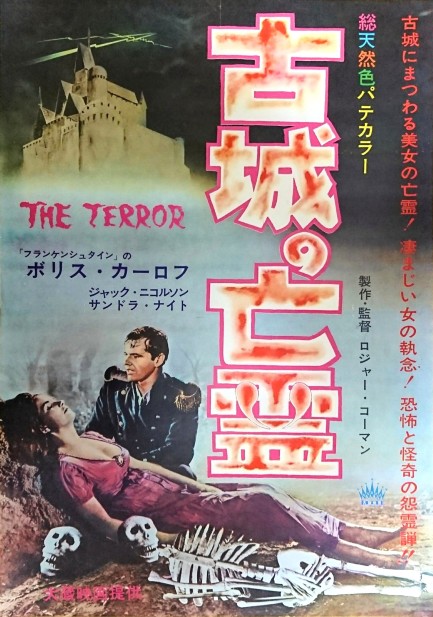
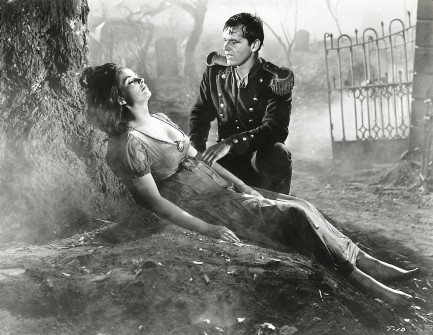
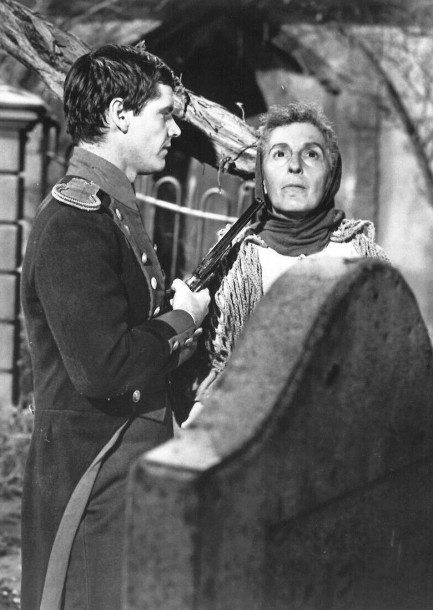
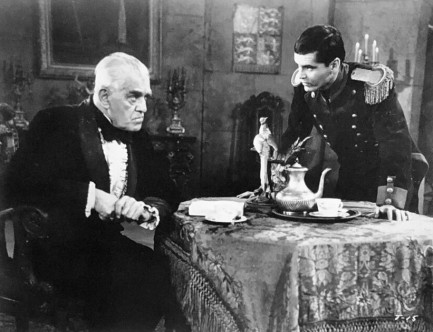
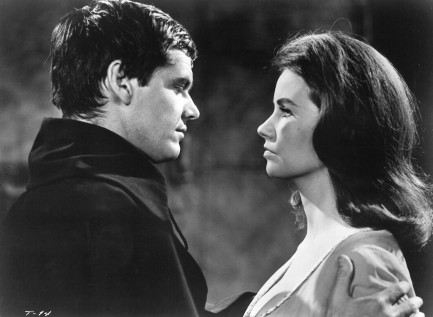
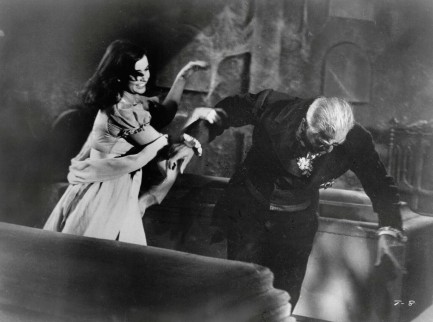
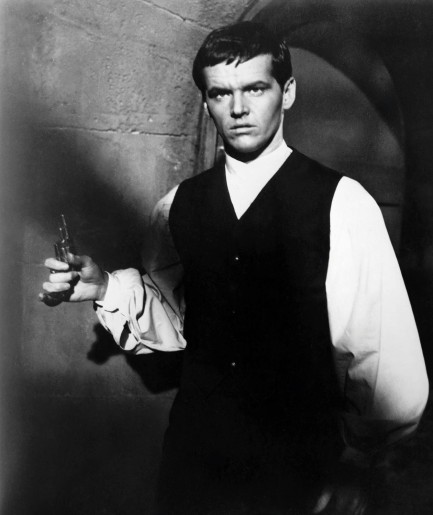
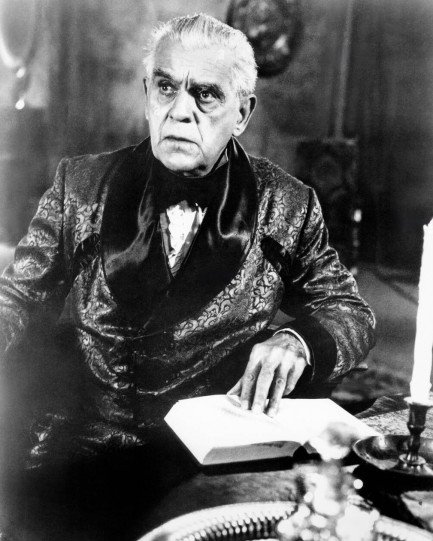
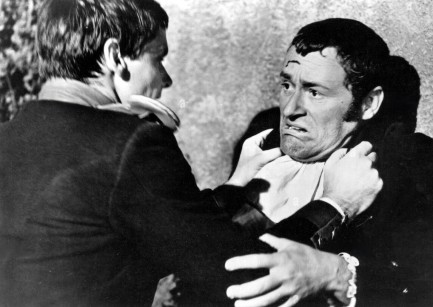
This poster was made for the horror movie The Terror, and we're showing you the Japanese promo art because—as is often the case—it's nicer than the U.S. promo. Boris Karloff and Jack Nicholson star, actors passing in the night, Karloff aged seventy-six and on the downward slope of a legendary film career, Nicholson aged twenty-six on the upslope. The latter plays a French army lieutenant named Andre Duvalier who becomes stranded circa 1806 in ye olde creepy-ass castle on the hill, which is occupied by Karloff's rickety Baron Victor von Leppe. Jack sees a mysterious woman wandering around. Karloff explains that she's the ghost of his wife, the Baronness Ilsa von Leppe, who died twenty years ago. Nosy Nicholson doesn't believe that for a millisecond, but the Baron sticks to his story, even admitting he killed the Baronness with his bare hands for the crime of adultery. Nice confession, but the Baron is lying or being duped, as far as Nicholson is concerned. In either case, the question is why?
Director Roger Corman was working from an Edgar Allen Poe template here, and in fact he shot on castle sets originally used for The Raven, which had wrapped earlier in the year. It's always good to save a buck where you can, but any advantage was lost due to Corman working from an unfinished script, which led to reshoots by Francis Ford Coppola, Dennis Jakob, Monte Hellman, and Jack Hill. All that talent wasn't enough to put together a film befitting Nicholson and Karloff, but the two leads do their damndest, and the result, though not good, isn't an embarrassment. Afterward, Karloff continued coasting into the twilight, Nicholson and Coppola moved on to widespread acclaim, Hill helped launch the blaxploitation cycle and make a star of Pam Grier, and Hellman directed the cult masterpiece Two-Lane Blacktop. It's a miracle they all contributed something lasting to cinema, because you'd never suspect it watching The Terror. It premiered in the U.S. in 1963 and reached Japan today in 1964.
 Post-noir classic's reputation keeps soaring even as its director's keeps falling. 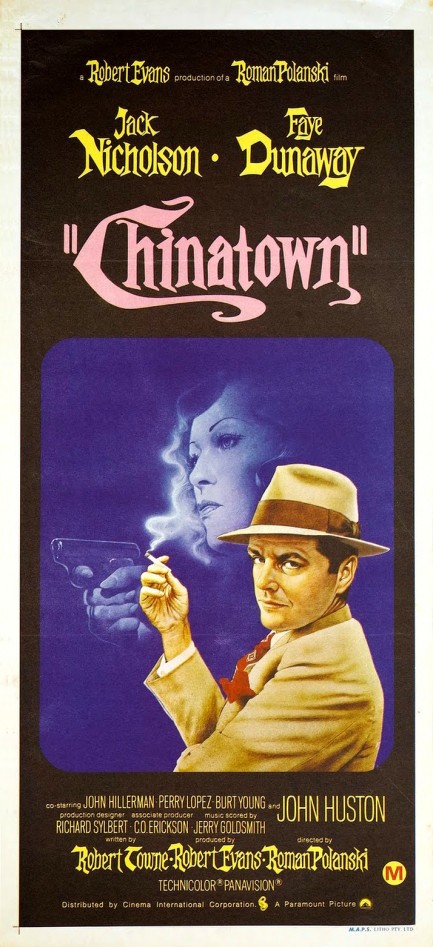
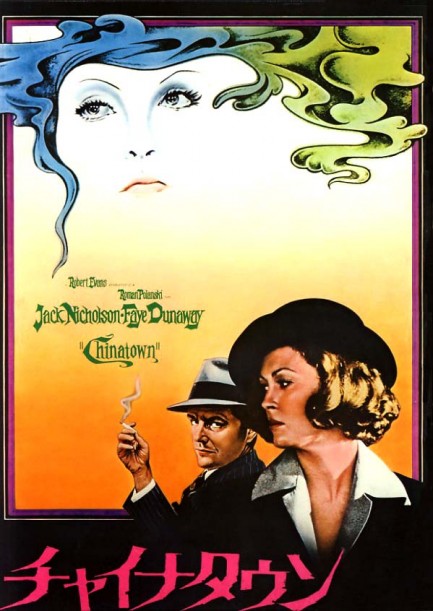
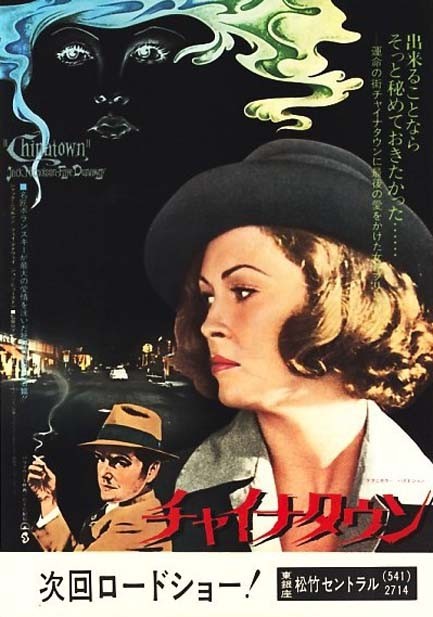
Nearly ten years into this website we've mentioned Chinatown only once—when we wrote a few lines while sharing two Japanese promo posters. The above poster was made for the film's Australian run, which began today in 1975. The film has been discussed everywhere, which means we can't add much, so let's just call it an all-time masterpiece, and one of the most watchable and re-watchable movies ever made, filled with details you notice over time. For example, it didn't strike us until after a few viewings that Jack Nicholson does his own stunt in that culvert scene, the one where the water rushes down the sluiceway and pins him against a chain link fence. You wouldn't see many modern day stars get wet and cold for a moment that lasts five seconds onscreen. We also failed to notice the first few times that the police lieutenant, Escobar, is Mexican-American. It just didn't strike us. But he would have been an extreme rarity in the 1937 L.A. of the film, and the writing and/or casting choice there was certainly deliberate. Other details continue to emerge, and we've seen the movie five or six times.
As far as director Roman Polanski goes, we've talked about him before. But we'll add that art stands on its own, and people stand on their own too. Having created superior art should not absolve someone of crimes; having committed crimes should not serve to denigrate superior art. That's just our opinion. Plus, a director isn't the only one responsible for a film. The hundreds of others involved, including the select group pictured below, and especially the unpictured screenwriter Robert Towne—who is just as responsible for Chinatown as Polanski and won an Oscar for his screenplay—deserve credit. We will always criticize art for being inaccurate when it pretends to be truthful, or for promulgating false or harmful beliefs. Chinatown doesn't do that. Quite the opposite—it offers sharp insights into how and why Los Angeles became what it is. Meanwhile its subplot somewhat foreshadows Polanski's own crime, which makes the film ironic in the extreme. If you haven't seen it you simply must. 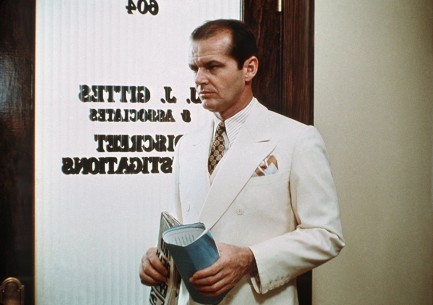 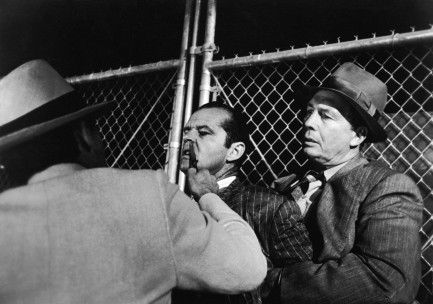 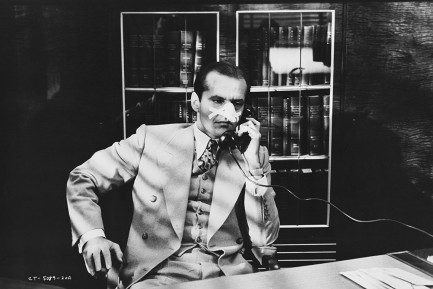 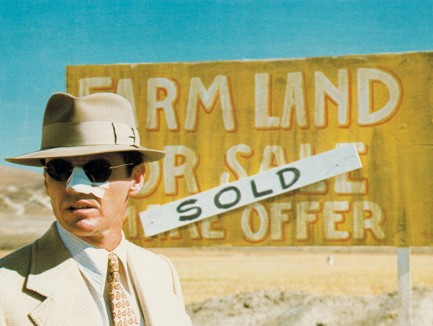 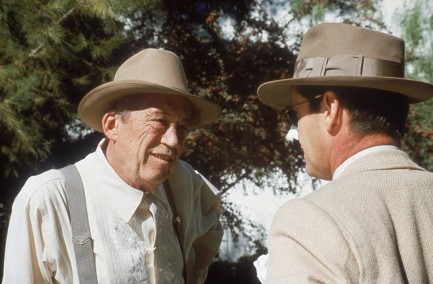 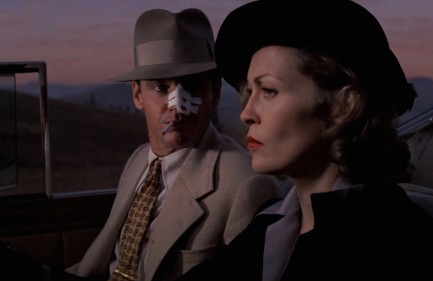 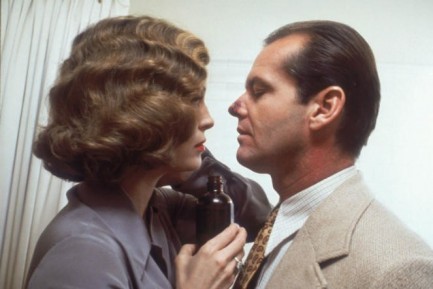 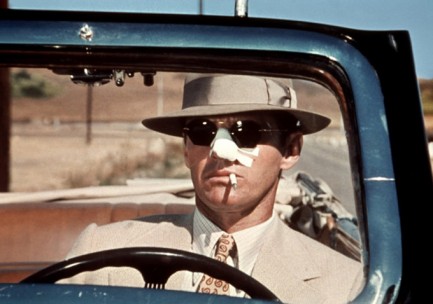
 No matter how far she ran dissatisfaction followed close behind. 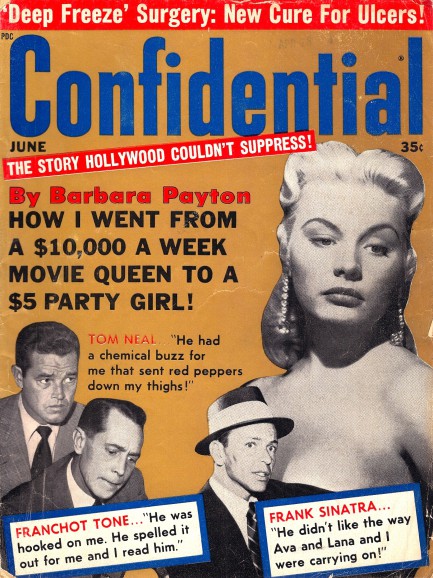
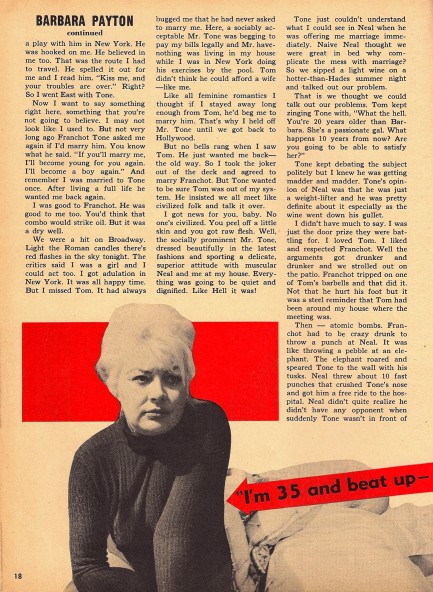
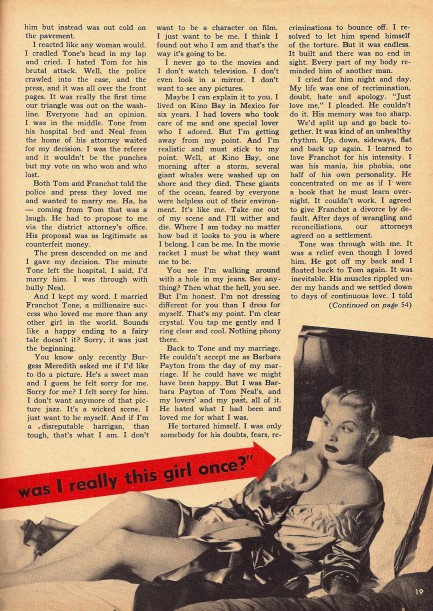
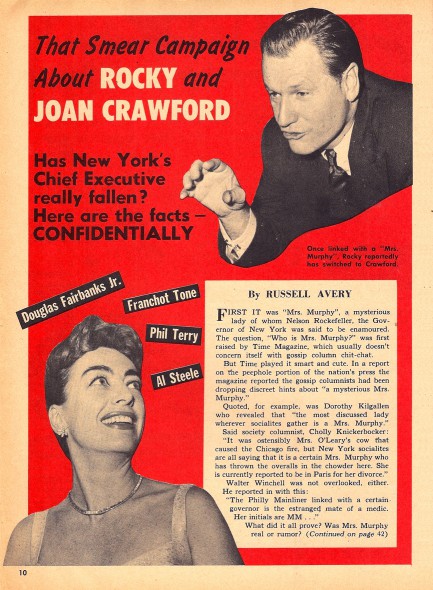
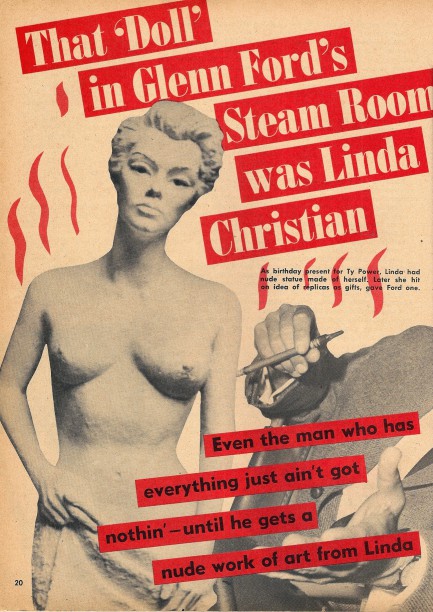
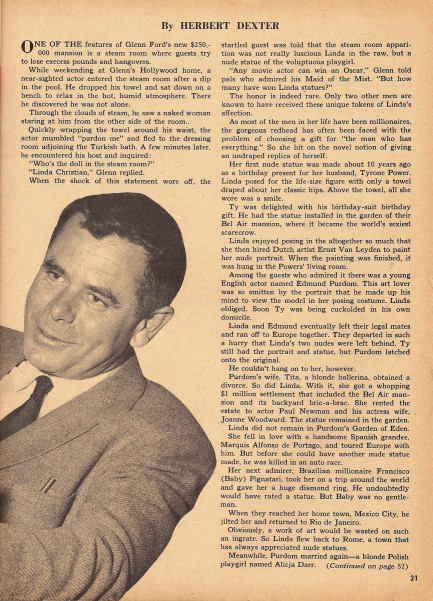
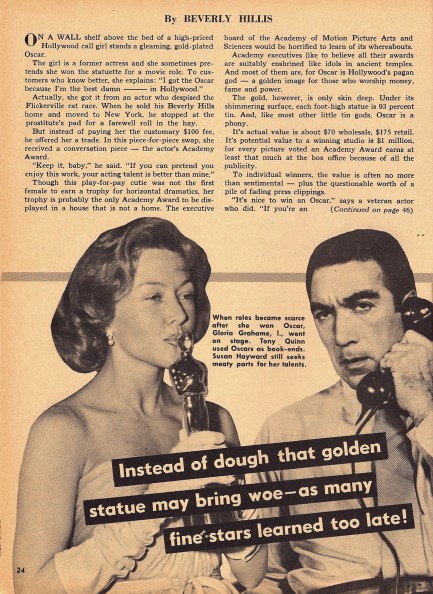
This gold colored June 1963 cover for Confidential magazine is entirely given over to actress Barbara Payton, whose self-penned hard-luck story appears inside and details her life troubles. The tale is well known and is one we’ve touched upon before—early marriage and early motherhood, followed by stardom, romances, and riches, followed by booze, drugs, divorces and crime. Confidential being Confidential, the editors neglect to mention that the story here is not an exclusive, but rather is excerpted from I Am Not Ashamed, Payton’s painfully revealing autobiography. I Am Not Ashamed did not sell especially well, and was pretty much forgotten a few years after its release. But it reappeared by chance two decades later when Jack Nicholson famously lent a rare copy to Jessica Lange to help her prepare for her femme fatale role in The Postman Always Rings Twice. Today the book is widely available. Just a few seconds reading Payton’s words conjures the suspicion she had a ghostwriter, and indeed, it was the king of lowbrow literature Leo Guild who gave shape to the prose, which reads like gutter level sleaze fiction. For example: “He hated what I had been [but] loved me for what I was. He tortured himself. Every part of my body reminded him of another man.” And this bit: “I had a body when I was a young kid that raised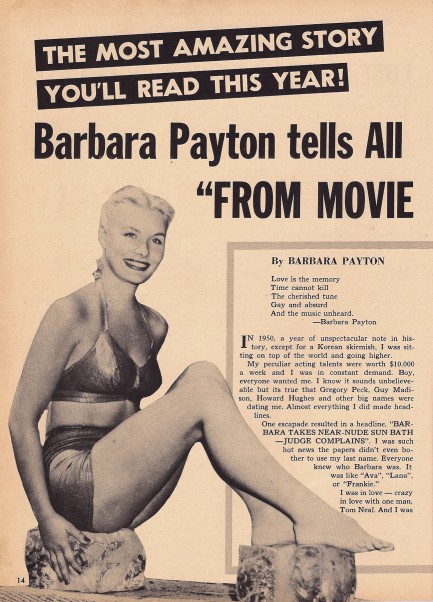 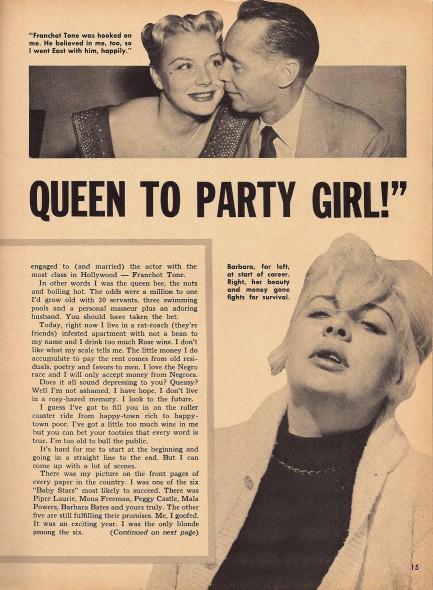 temperatures wherever I went. Today I have three long knife wounds on my solid frame. One extends from my buttocks down my thigh and needed I don’t remember how many stitches.” Payton’s anecdotes are cringe worthy, but they read like she’d gotten a grip on her life. No such luck. After four more long years of drugs, drink, and disaster she was found dead on her bathroom floor in 1967. temperatures wherever I went. Today I have three long knife wounds on my solid frame. One extends from my buttocks down my thigh and needed I don’t remember how many stitches.” Payton’s anecdotes are cringe worthy, but they read like she’d gotten a grip on her life. No such luck. After four more long years of drugs, drink, and disaster she was found dead on her bathroom floor in 1967. Payton post-mortems usually describe her problems as self-induced, but that’s simplistic. In the 1950s famous men did anything they wished, but women had to be careful not to be seen doing the same. Still do today. That’s the part Payton had problems with. Even so, she had several happy periods during her life. One of those was the stretch she spent in Mexico married to a young fisherman. About this time she says, “We fished and I caught big ones, and we loved and for a couple of years it was beautiful. My big problems were what to cook for dinner. But it was inevitable the ants in my pants would start crawling again.” 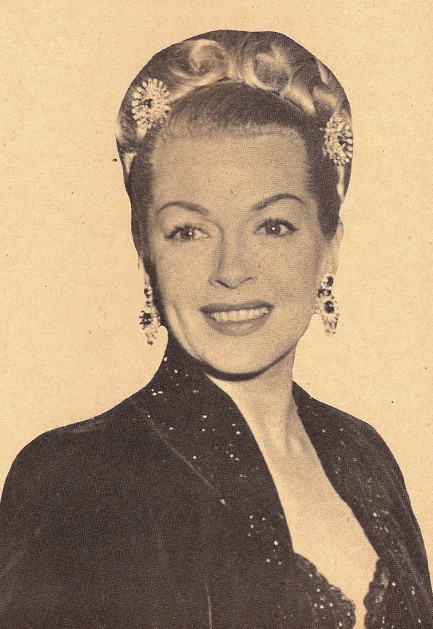 We like that passage, because nearly all the stories about Payton declare, or at least suggest, that everything that happened after Hollywood stardom was part of a terminal plummet. That’s pretty much the default setting in American journalism—anything other than wealth and fame is by definition failure. It’s an idiotic conceit, even a harmful one, and Payton reveals that in Mexico she landed someplace solid and safe, and got along fine without money or recognition. Two years of happiness is nothing to take lightly. But she just couldn’t sit still—not because of where she was, but because of who she was. We like that passage, because nearly all the stories about Payton declare, or at least suggest, that everything that happened after Hollywood stardom was part of a terminal plummet. That’s pretty much the default setting in American journalism—anything other than wealth and fame is by definition failure. It’s an idiotic conceit, even a harmful one, and Payton reveals that in Mexico she landed someplace solid and safe, and got along fine without money or recognition. Two years of happiness is nothing to take lightly. But she just couldn’t sit still—not because of where she was, but because of who she was. And the spiral continued—cheaper and cheaper forms of prostitution, physical confrontations that resulted in her getting some of her teeth knocked out, and more. In all of these tales there’s a recurrent theme of lowly types taking advantage of her, but we can’t help noting that she was paid a mere $1,000 for her autobiography, an absurdly deficient amount for a former top star with a crazy story to tell, which suggests to us that guys in office suites take as much advantage—or more—of a person’s hard luck as guys in alleys. We have some scans below, and Payton will undoubtedly appear here again.
 Elusive Whitey Bulger captured in California. 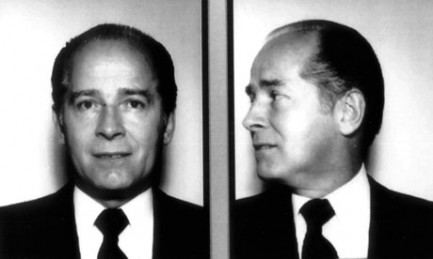
No, Whitey Bulger isn’t a thing, but a person. James “Whitey” Bulger, a notorious gangster who had been on the FBI’s 10 Most Wanted List for sixteen years and was the template for Jack Nicholson’s character in Martin Scorsese’s The Departed, was captured last night in Southern California. Bulger had once been leader of an Irish organized crime syndicate called the Winter Hill Gang, and worked for twenty years as an FBI informant in Boston. But he was dropped from the Feds’ roster in the early 1990s and dropped out of sight himself in 1995 when his FBI handler John Connolly, Jr. tipped him off that an indictment was coming down. Bulger was arrested yesterday at a Santa Monica apartment complex and now will face a full slate of serious charges—including murder, conspiracy, money laundering, narcotics distribution, and extortion. Though the FBI has traditionally worked with criminals to help secure evidence against other lawbreakers, the agency’s relationship with Whitey Bulger was sharply criticized once it became public. At the time, the FBI was determined to cripple the Italian Mafia in Boston, and saw a partnership with Bulger and his Winter Hill Gang associate Stephen “The Rifleman” Flemmi as an acceptable bargain. But the relationship quickly became messy as the agency turned a blind 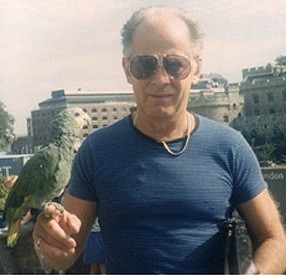 eye to Bulger and Flemmi’s ongoing crimes. Flemmi himself testified in court in 1998 that the FBI gave him a free pass on numerous murders and attempted murders. He described it as having a “license to kill.” eye to Bulger and Flemmi’s ongoing crimes. Flemmi himself testified in court in 1998 that the FBI gave him a free pass on numerous murders and attempted murders. He described it as having a “license to kill.” At one point, who was operating who came into serious doubt, as John Connolly—at Whitey Bulger’s behest—passed along a case of wine and an envelope of cash to John Morris, Connolly’s supervisor in the FBI. Morris later copped to accepting thousands in bribes from Bulger and Flemmi. And in the most bizarre twist, the already wealthy Bulger somehow won $1.9 million in the Massachusetts lottery but went on the run before he was able to claim his prize, leading to the sight of his sister marching into U.S. Appeals Court in an attempt to win rights to the cash. Safe to say that as convoluted a story as Scorsese filmed in The Departed, the truth was infinitely more complex. Whether that truth will ever come out is in doubt. Bulger, eighty-one years old, is certain to die in prison.
 Forget it, Jake—It's Chinatown.
Most critics think it’s one of the best films ever made. We think its promo art is also of rare quality. Below are two Japanese one-sheets for Roman Polanski’s all time masterpiece Chinatown, starring Jack Nicholson, Faye Dunaway and John Huston. It premiered in Japan today in 1975.
 Author Jack Torrance redefines writer’s block by turning into one. 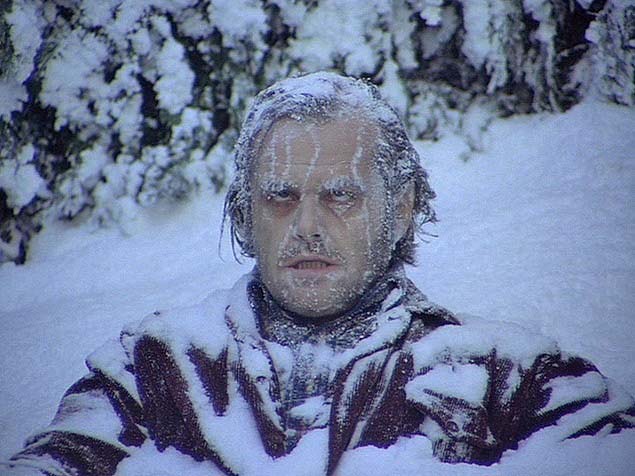
Remember Stanley Kubrick’s classic horror film The Shining, in which we see Jack Nicholson’s character Jack Torrance spending weeks writing his great American novel, only to learn near the climax that the entire manuscript consists of a single repeated sentence? Well, now you can buy Jack Torrance’s masterpiece. It’s called, of course, All Work and No Play Makes Jack a Dull Boy, and consists of that sentence over, and over, and over. Quick to read but slow to comprehend, this confounding but ultimately visionary work will likely secure an honored place for Torrance alongside other fictional fiction writers, such as Paul Sheldon and Joan Wilder. All Work is available online here. Get ’em while they’re hot.
 Thirty years ago he avoided prison by jumping bail and hopping on a plane. 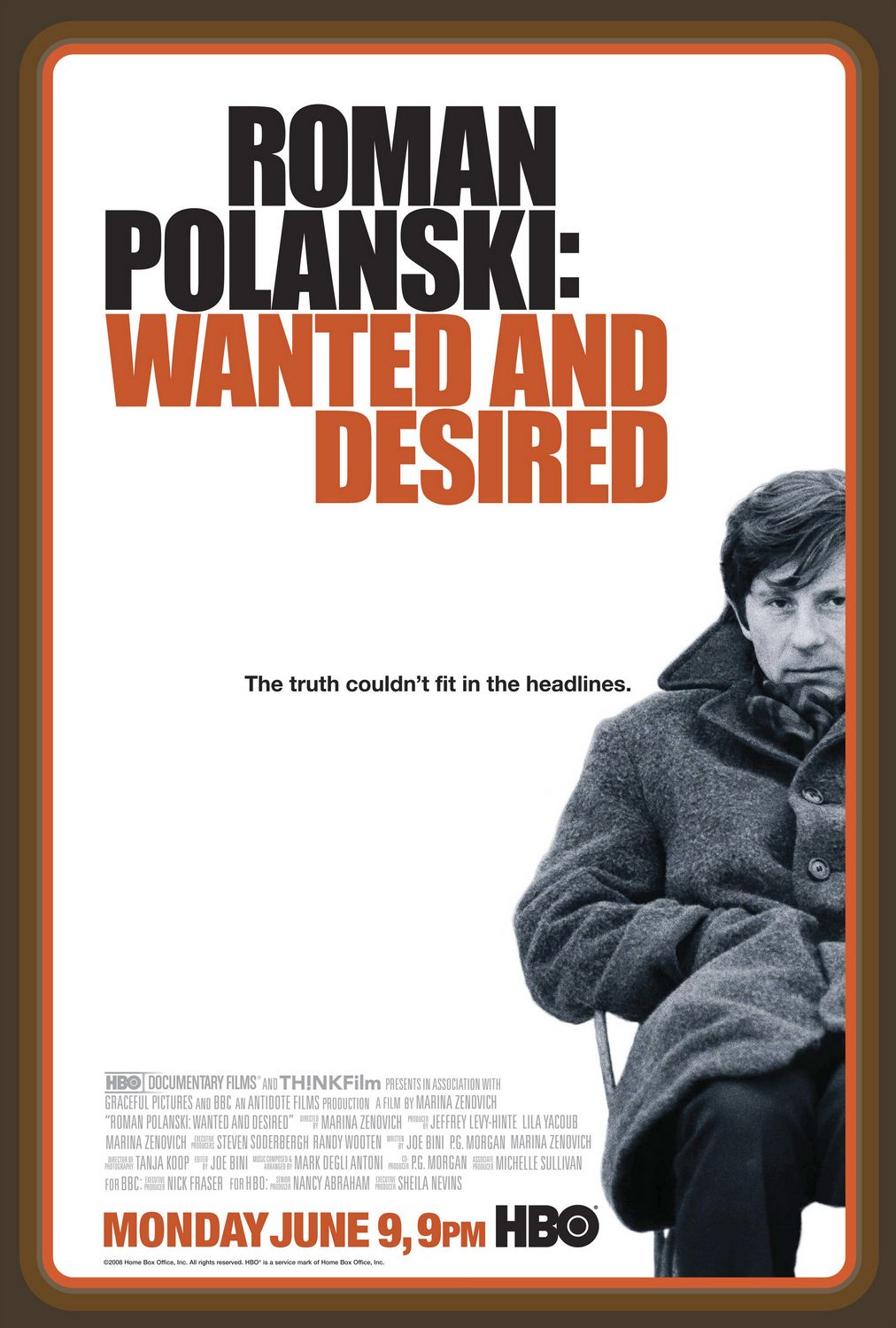
In Los Angeles yesterday, lawyers for film director Roman Polanski filed a request to dismiss a 30-year old charge of unlawful sexual intercourse with a minor. Polanski was once a U.S. resident, but fled to France in 1978 and has been wanted by American authorities ever since for allegedly giving a 13-year old model Quaaludes and champagne, before having sex with her—or raping her, depending on the telling—in Jack Nicholson’s hot tub when Nicholson was not on the premises.
Polanski’s life story reads like the darkest pulp fiction. He survived the Nazis as a child by escaping to the U.S., but without his parents, who were imprisoned in a concentration camp, where his mother was later gassed. As an adult Polanski rose to fame after directing the supernatural thriller Rosemary’s Baby, but his life was again derailed in 1969 when members of Charles Manson’s clan murdered his wife, Sharon Tate, and their unborn child. Polanski somehow recovered enough from this second horror to continue working, and went on to direct Chinatown, considered by many to be one of the ten best films in American history. When he was arrested in 1978 he faced multiple charges, but a plea deal was offered. According to prosecutors, Polanski likely would have been handed a sentence of three years or fewer in prison. However, by the letter of the law, the charges could also have 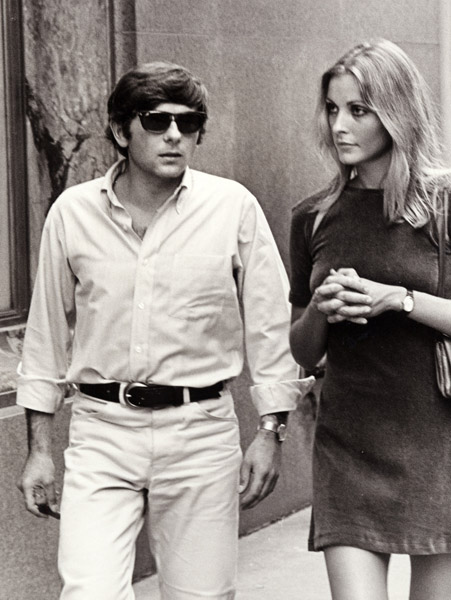 resulted in a sentence of fifty years. Polanski didn’t stick around for sentencing. Instead he jumped bail and fled to Europe, where he continued to direct films over the next three decades, including 2002’s The Pianist, for which he won a best director Academy Award in absentia. resulted in a sentence of fifty years. Polanski didn’t stick around for sentencing. Instead he jumped bail and fled to Europe, where he continued to direct films over the next three decades, including 2002’s The Pianist, for which he won a best director Academy Award in absentia.
Polanski’s lawyers filed yesterday’s dismissal request on the grounds of prosecutorial and judicial misconduct, after the HBO documentary Roman Polanski: Wanted and Desired, revealed that former judge Laurence J. Rittenband held news conferences and extrajudicial meetings about the case. The documentary also revealed that former Deputy District Attorney David Wells gave judge Rittenband sentencing advice, even though he was not assigned to the case.
The girl with whom Polanski admitted having sex (i.e. statutory rape), but who asserts she was violated while basically unconscious, is now 43. HBO’s documentary portrays prosecutors seeking to railroad Polanski, but he admitted what he did, which means the case for unlawful sexual intercourse could have stood on its own without prosecutorial games. Now, thirty years later, it’s possible authorities feel that dropping the charge would be akin to encouraging more flights from justice. And more importantly, a dismissal could have negative consequences upon similar cases still working their way through courts.
|
 |

The headlines that mattered yesteryear.
1933—The Gestapo Is Formed
The Geheime Staatspolizei, aka Gestapo, the official secret police force of Nazi Germany, is established. It begins under the administration of SS leader Heinrich Himmler in his position as Chief of German Police, but by 1939 is administered by the Reichssicherheitshauptamt, or Reich Main Security Office, and is a feared entity in every corner of Germany and beyond. 1937—Guernica Is Bombed
In Spain during the Spanish Civil War, the Basque town of Guernica is bombed by the German Luftwaffe, resulting in widespread destruction and casualties. The Basque government reports 1,654 people killed, while later research suggests far fewer deaths, but regardless, Guernica is viewed as an example of terror bombing and other countries learn that Nazi Germany is committed to that tactic. The bombing also becomes inspiration for Pablo Picasso, resulting in a protest painting that is not only his most famous work, but one the most important pieces of art ever produced. 1939—Batman Debuts
In Detective Comics #27, DC Comics publishes its second major superhero, Batman, who becomes one of the most popular comic book characters of all time, and then a popular camp television series starring Adam West, and lastly a multi-million dollar movie franchise starring Michael Keaton, then George Clooney, and finally Christian Bale. 1953—Crick and Watson Publish DNA Results
British scientists James D Watson and Francis Crick publish an article detailing their discovery of the existence and structure of deoxyribonucleic acid, or DNA, in Nature magazine. Their findings answer one of the oldest and most fundamental questions of biology, that of how living things reproduce themselves. 1967—First Space Program Casualty Occurs
Soviet cosmonaut Vladimir Komarov dies in Soyuz 1 when, during re-entry into Earth's atmosphere after more than ten successful orbits, the capsule's main parachute fails to deploy properly, and the backup chute becomes entangled in the first. The capsule's descent is slowed, but it still hits the ground at about 90 mph, at which point it bursts into flames. Komarov is the first human to die during a space mission.
|

|
|
It's easy. We have an uploader that makes it a snap. Use it to submit your art, text, header, and subhead. Your post can be funny, serious, or anything in between, as long as it's vintage pulp. You'll get a byline and experience the fleeting pride of free authorship. We'll edit your post for typos, but the rest is up to you. Click here to give us your best shot.
|
|