What do you get the pulp fan who has everything?  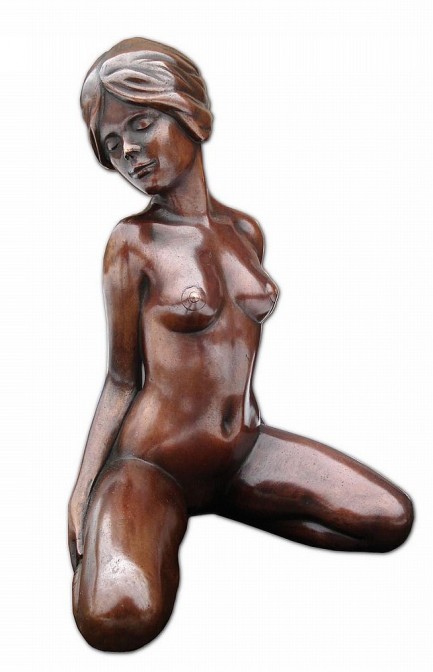
We were poking around online and came across these two nude figurines by the French artist Alain Gourdon, aka Aslan. He's well known today as an advertising illustrator, paperback and magazine illustrator, and pin-up artist. He also modeled a hedonistic lifestyle, a sort of mini-Hefner existence (example here, and below)—which like Hugh Hefner's may have been partially staged for publicity purposes. But what is less known about Aslan, outside France, anyway, is his sculpture. However he was a heavy hitter in this area too, and had been since before he became famous as a pin-up artist. Way back in 1952, when he was only twenty-two, he won a prize for his sculpture. Later he sculpted a famous bronze bust of Brigitte Bardot as Marianne, the symbol of the French Republic, and he also sculpted a funerary statue for famed actress Dalida's tomb, as well as a bronze bust of her that was erected on the Place Dalida in 1997. So these figurines come as no surprise to us. We'd let these live on our desks, keeping our stray papers under control, but the prices are too rich for our blood. On the other hand, since it's Christmas, maybe we can receive them as gifts. Hmm... Okay, gotta run. We're going to talk to our girlfriends about these. 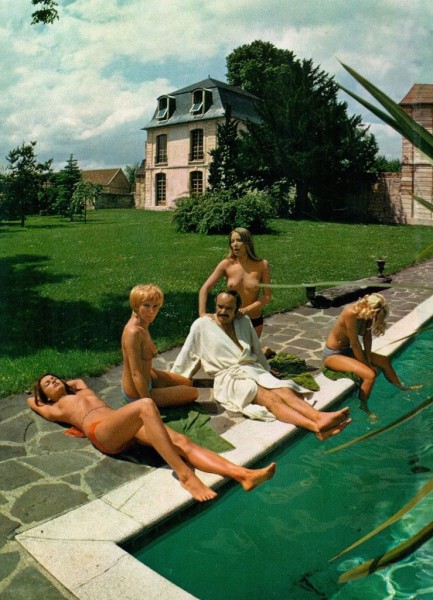
 Rumors of her demise were greatly exaggerated. 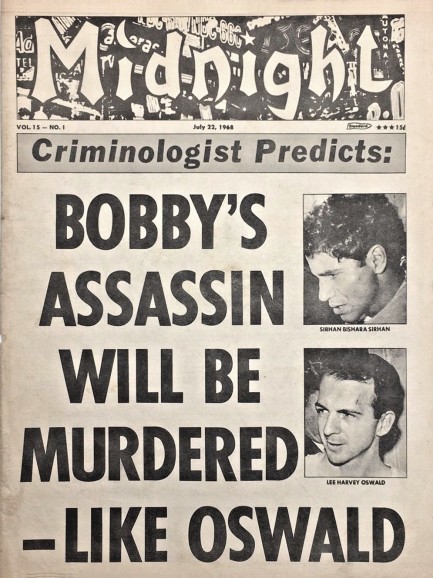 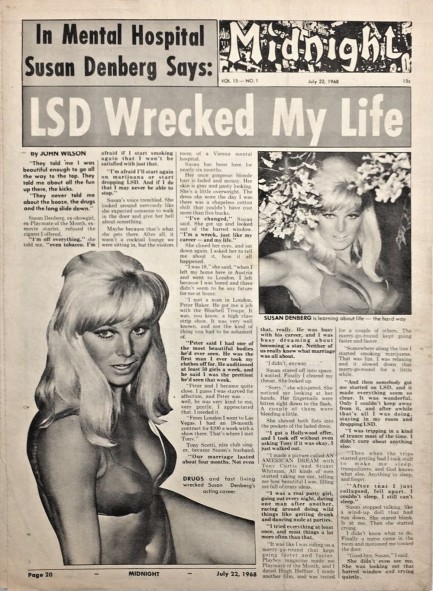
We've featured the Canadian tabloid Midnight numerous times. This one appeared on newsstands today in 1968. On the cover readers get a headline referring to Robert F. Kennedy, who had been assassinated the previous month. His name is accompanied by a prediction that his killer, Jordanian nationalist Sirhan Sirhan, would in turn be assassinated. It wasn't an outrageous prediction—during the late 1960s newsworthy figures were being dropped like three foot putts. Sirhan was never murdered, though, and he's still around today, languishing at Richard J. Donovan Correctional Facility in San Diego County, California.
Sirhan is an interesting character, but it's the story on Susan Denberg we're interested in today. Denberg, née Dietlinde Zechner, is a German born beauty who became a Playboy Playmate of the Year and screen actress, was a desired Hollywood party girl who, 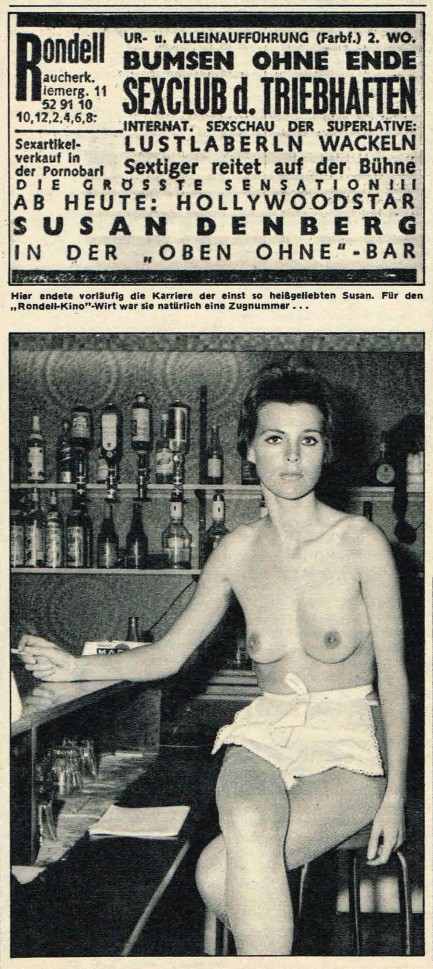 acording to sources, had relationships with Hugh Hefner and Jim Brown. She was generally regarded as one of the major sex symbols of her time, but she also became a drug addict. After making the 1968 film Frankenstein Created Woman Denberg returned to Europe and shunned the movie business. In fact, she kept such a low profile that for years sources incorrectly reported that she had died. acording to sources, had relationships with Hugh Hefner and Jim Brown. She was generally regarded as one of the major sex symbols of her time, but she also became a drug addict. After making the 1968 film Frankenstein Created Woman Denberg returned to Europe and shunned the movie business. In fact, she kept such a low profile that for years sources incorrectly reported that she had died.
Midnight journo John Wilson claims to have visited Denberg in a Vienna mental hospital near the beginning of her self-imposed exile, and his article is basically a recounting of his chat with her. He describes her depressing surroundings and portrays her as a sort of broken bird, quoting her as saying, “I was a real party girl, going out every night, dating one man after another, running around doing wild things like getting drunk and dancing nude at parties. And then someone got me started on LSD and it made everything seem so clear. It was wonderful. Only I couldn't keep away from it, and after a while that was all I was doing, staying in my room and dropping LSD.”
In 1971 Denberg had a child, and by 1972 was making her living on the nudie bar circuit, working as a topless server at the adult cinema Rondell in Vienna, and later dancing fully nude at another Vienna nightspot called Renz. She also worked elsewhere in Europe, including Geneva, where in 1974 she tried to commit suicide by swallowing a reported 200 sleeping pills, an amount that surely would have been fatal had she not been quickly found and sped to a hospital. In 1976 she became a mother again and retired from nude dancing. Today she lives quietly in Vienna.
Denberg's story is filled with twists and turns, and yet it isn't unique in a place like Hollywood. As she makes clear, once enough power brokers, modeling agents, and studio types tell a woman she's special she's probably going to believe them, but once she believes them it's hard for her to keep her head on straight. She sums up her journey to Midnight, “They told me I was beautiful enough to go all the way to the top. They told me about all the fun up there, the kicks. They never told me about the booze and the drugs, the long slide down.” 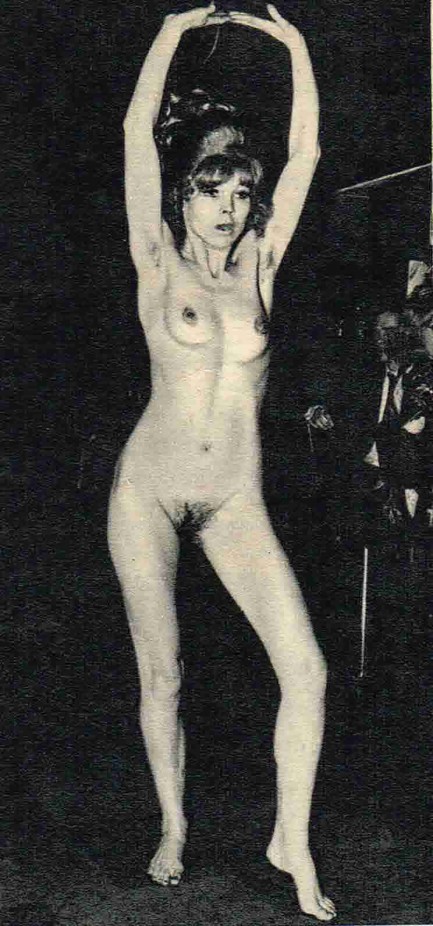 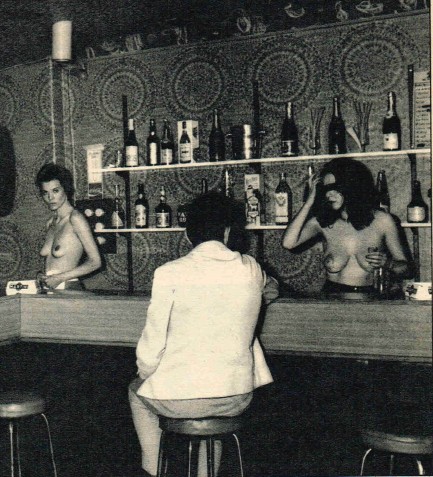
 When we get together we do the usual stuff—chat, drink wine, endure whippings, have a forced enema or two. 
We don't share pinku and roman porno posters just because we're interested in the films. We also share them because, first, the art is always great, and second, it's easy to get. Its availability is a reflection of how many productions of the type were made—in a word, many hundreds. That's two words. Let's go with thousands—which is not an exaggeration. These were incredibly popular films is the point, made by multiple studios trying to place double features into vertically integrated, wholly dependent cinemas every weekend. Many of the movies have fallen prey to the ravages of time, which occasionally leads to us sharing art from movies that no longer exist, but today's offering, Nawa to chibusa, aka Rope and Breasts, starring Nami Matsukawa and Izumi Shima, is one we did in fact find and watch.
The movie premiered in Japan today in 1983, and it involves a couple running a traveling bdsm show who arrive in Kyoto and are hired for a private performance that turns into something more. The woman is planning to retire, but now learns what bondage and discipline really are as she and her man are teased and tortured to within an inch of their sanity. When all is said and done the woman forgets retirement, not because she loves torture, but because she realizes her life is hell anyway and if she has to live in hell she'd like to at least make money from it. Very upbeat stuff. An interesting aspect of the copy we saw is its use of pixelation to obscure the private parts of the actors (see below). Since roman pornos are softcore the masking is purely directorial flourish, designed, we suppose, to give the action a veneer of the forbidden.
For those who've missed our previous discussions about the roman porno genre, the filmmakers generally contend that the sexual abuse depicted is symbolic of patriarchal Japan's subjugation to occupying Americans, or to modern life, or to a burgeoning counterculture, etc. As a smart man once said, when something is symbolic of everything, it's symbolic of nothing. In other words, we don't buy the boilerplate on roman porno, at least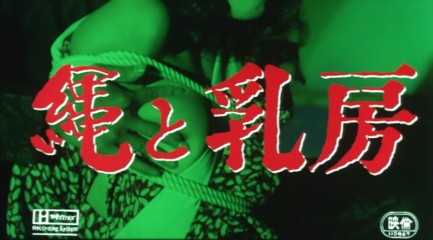 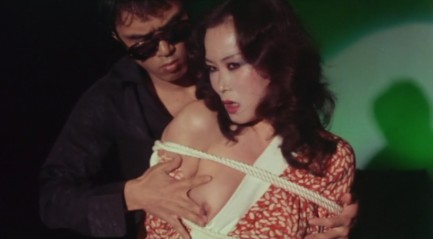 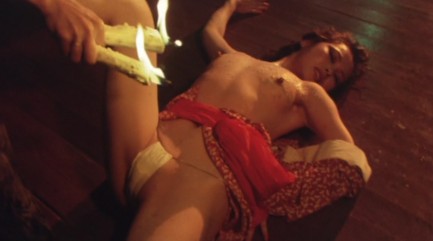 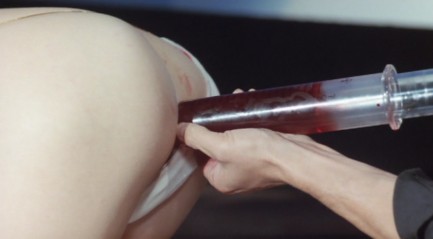 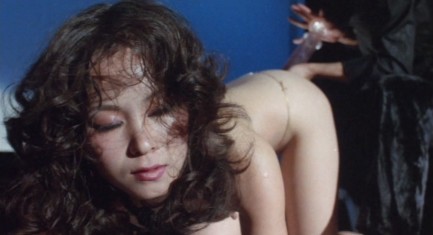  not fully. We think it was primarily money driven, and the more intellectual aspects were secondary, distantly. But the main thing we try to remember as outsiders looking in is that cultural judgement is a slippery slope, and while in this particular 2018 moment of discussion about the all too prevalent dangers men present to women, it's easy to dismiss roman porno films as masculine horror fantasies sprung from the brows of unrepentant misogynists. not fully. We think it was primarily money driven, and the more intellectual aspects were secondary, distantly. But the main thing we try to remember as outsiders looking in is that cultural judgement is a slippery slope, and while in this particular 2018 moment of discussion about the all too prevalent dangers men present to women, it's easy to dismiss roman porno films as masculine horror fantasies sprung from the brows of unrepentant misogynists.
But times change, and there are layers to the issue that make such assessments a bit too facile. It's possible to be on one side of a cultural issue during a certain moment in time, but be judged as on the exact opposite side a generation or two later. Today's observers could easily conclude that roman porno filmmakers were conservative nationalists, but in reality many were liberal feminist allies satirizing conservative patriarchs/patriots. Their sexualization of women was spurred in part by studio demands, but there's also no doubt many thought of themselves as modernist trailblazers smashing social barriers through the use of sexual symbolism. The path their output has taken through the decades is parallel to that of Hugh Hefner, hailed as a women's rights hero in 1967, reviled as a cog in a destructive porno machine half a century later. Times change.
If Japanese viewers of 1980s American horror movies had demanded to know why so many productions featured people being lured into the woods to be slaughtered it would have led to some uncomfortable conversations about apocalyptic American attitudes toward sex, as well as the eternal American worship of violence. These discussions would have been much more needed than any concerning 1970s Japanese mores. But as for modern observers, they get to judge earlier filmmakers only up to a point. They weren't there. They forget that work in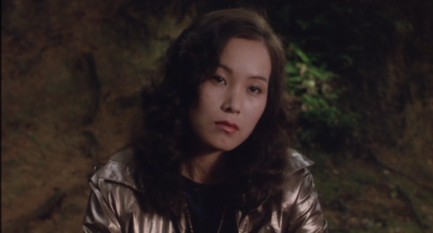  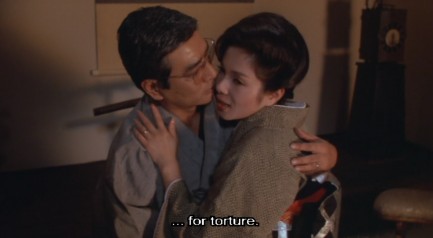 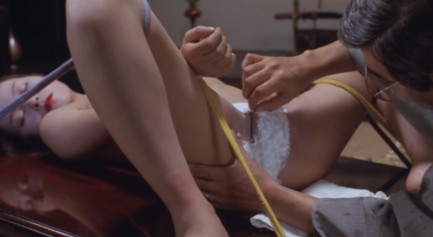  commercial media has its demands, if the work is to be secured at all. Old targets are no longer fully relevant, as well as being way too easy to criticize in hindsight. Subversive messages are often slipped into popular art and those messages matter. They wink at us. They say, “You and I both know this is just entertainment, but this other thing—if you are detecting it—is what we're really about here.” But modern viewers of old films often miss these important messages. As culture changes receptivity to these small signals changes too. commercial media has its demands, if the work is to be secured at all. Old targets are no longer fully relevant, as well as being way too easy to criticize in hindsight. Subversive messages are often slipped into popular art and those messages matter. They wink at us. They say, “You and I both know this is just entertainment, but this other thing—if you are detecting it—is what we're really about here.” But modern viewers of old films often miss these important messages. As culture changes receptivity to these small signals changes too.
So, okay, Nawa to chibusa is a weird movie. It's a weird movie hailing from a weird genre. The genre was meant to both make money and provoke people, and all these years later the films remain as artifacts of an industry embarked upon a radical social discussion, spearheaded by filmmakers who hadn't yet realized that images also carry weight apart from their alleged political intent. In other words, the question becomes whether the same goals could have been achieved by other means—i.e. other means of provocation, other types of imagery. We can't answer that. We weren't there. We don't know of anyone who has tallied the social gains and losses, if any, brought about by all this shocking cinema. All we have is an inadequate twenty-first century perspective, an inadequate Western perspective, an incomplete male perspective, and a whole lot of crazy posters. 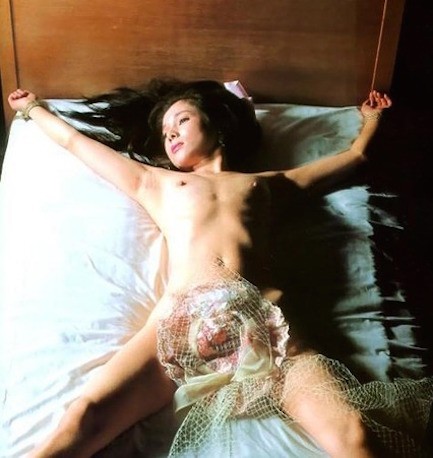 
 Never say Neva when it comes to tigerskin rugs. 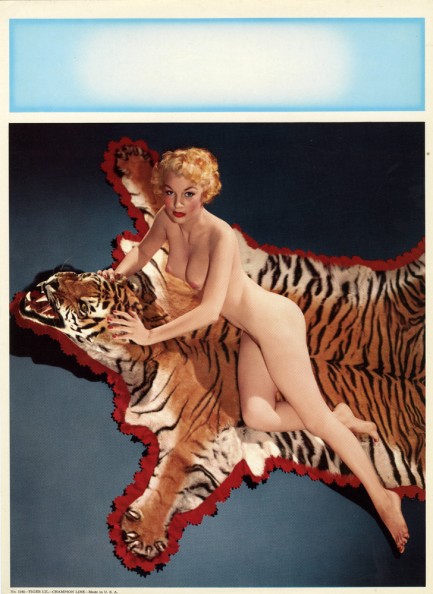
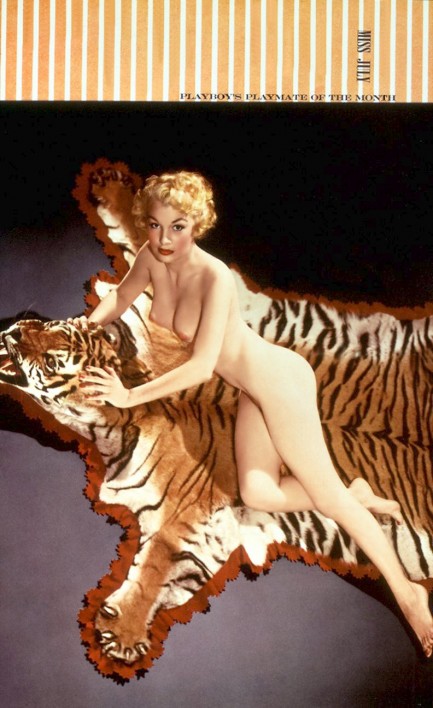 This Technicolor lithograph, which is titled “Tiger Lil” and was printed by Champion Line, shows Neva Gilbert, a Playboy model who was the magazine's July 1954 centerfold. The litho, which also dates from 1954, is generally identified as originating with Playboy, but it actually came from a group of photos first owned by the Baumgarth Calendar Company. Back then Hugh Hefner often paid outside photographers for images. For that reason it's possible the photo is pre-1954, but if so, not by much. This Technicolor lithograph, which is titled “Tiger Lil” and was printed by Champion Line, shows Neva Gilbert, a Playboy model who was the magazine's July 1954 centerfold. The litho, which also dates from 1954, is generally identified as originating with Playboy, but it actually came from a group of photos first owned by the Baumgarth Calendar Company. Back then Hugh Hefner often paid outside photographers for images. For that reason it's possible the photo is pre-1954, but if so, not by much. Gilbert herself had forgotten about the shots. She was busy trying to establish an acting career and never saw her own centerfold until 1979. She had no idea Hefner had culled some shots for Playboy. In fact, she had no idea what Playboy was until someone told her she was in it. Speaking of culling, we are not fans of killing rare animals to turn into gaudy home decorations, but we imagine that if you had one of these on your floor back then they greatly increased your odds of a woman doing exactly what Gilbert has done. The Pulp Intl. girlfriends doubt it, but they always do. And of course, we want to prove them wrong. Anyone got an extra tiger rug they want to sell?
 Monroe’s famous photo changes like a chameleon. 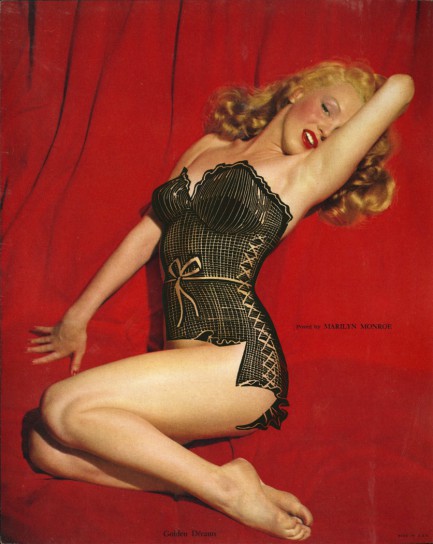 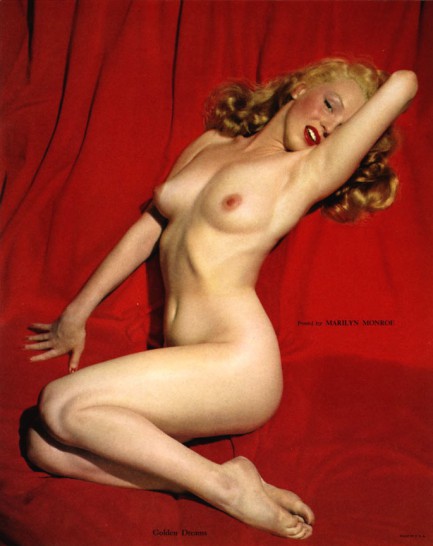
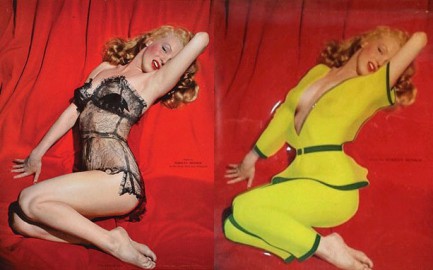
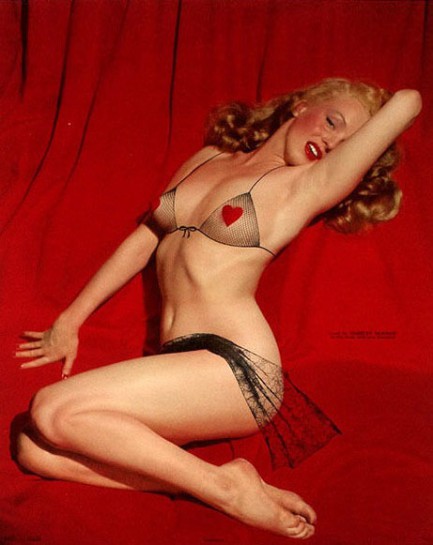
We’ve shown you a couple of Technicolor lithographs with overlays. Before we get off the subject for a while we want to show you one more item. This lithograph featuring Marilyn Monroe isn't technically an overlay because the nightgown is printed on the paper, but it's a smiliar idea. The image is best known as the centerfold of the debut issue of Playboy from December 1953, but it originally hit the market as part of a 1952 calendar, which means it went on sale in late 1951. The only text featured on those original calendars was the title “Golden Dreams,” but the above litho has both a title and Monroe’s name because it was a re-release designed to take advantage of her growing fame. That fame had waned since a favorably received role in 1948’s Ladies of the Chorus, but had been rekindled when she admitted to newspapers in early 1953 that she had posed nude. The Playboy centerfold further turbocharged her ascent, and the famous velvet photo kept appearing over and over again, mainly as calendar shots in 1955, 1956, and 1958, and at least three times with different types of obscuring overlays. In all those images, as well as the one above, Monroe is facing the opposite direction from the photo that appeared in Playboy. However, the Playboy centerfold is reversed from the original calendar shot, so it was Hugh Hefner who flip-flopped her. But from whichever direction you look at her, and in whatever garb she appears, Monroe is still exquisitely Monroe.
 They say once we cross it the end is near. 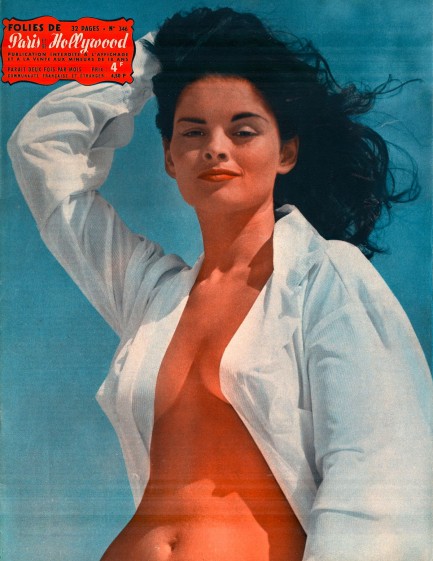
Today on Britain’s respected Guardian webpage, writer Mariella Frostrup muses about the prevalence of pornography in modern society and asks whether it’s harmful. At Pulp Intl., with few exceptions, our nude images are merely quaint, which raises the questions of whether they were ever considered harmful, and if so, why and when they came to be seen as artful. We are well aware that the airbrushing away of womens’ genitalia—something that was general practice at the time these images appeared—was seen by many rights advocates as a type of violence against women. After all, what was so dirty about female genitalia? Didn’t their erasure peel back the mask from a male-dominated society’s desperate efforts to control female sexuality? Then along came Playboy, which challenged archaic laws designed to prevent mass production and mass mailing of pornography. Compared to what you see here today, Playboy represented a quantum leap. Its women looked less like Renaissance paintings and more like real human beings. By increments it beat back legal challenges, and eventually Penthouse, Playboy, and other newsstand magazines began to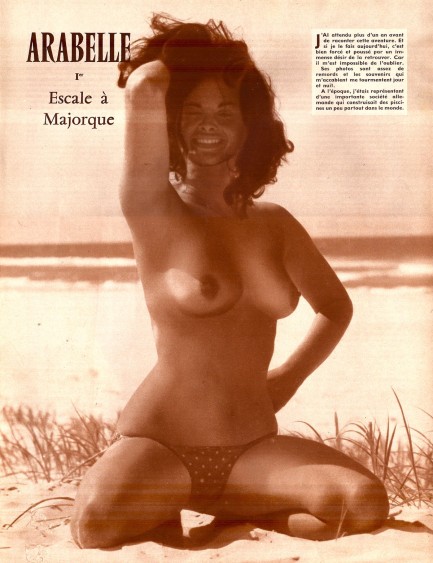 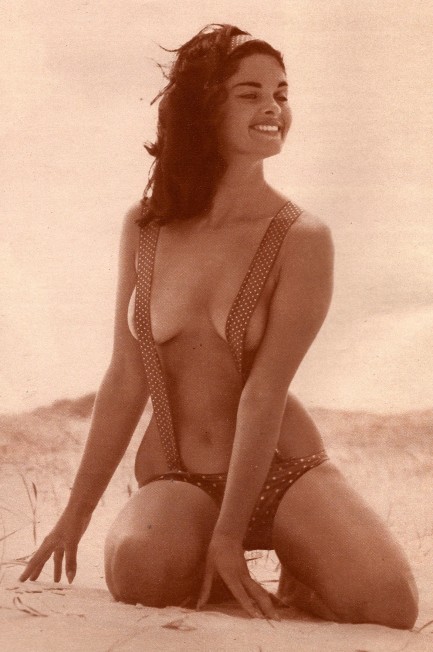 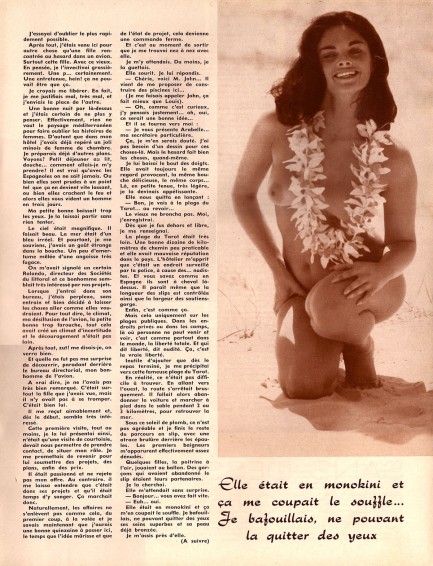 show pubic hair, and then actual sex organs. Playboy publisher Hugh Hefner was hailed as a First Amendment hero as well as a defender of womens' right to control their own sexuality. But pretty soon it was clear that women had won only the right to sell their sexuality—the control remained exclusively male. show pubic hair, and then actual sex organs. Playboy publisher Hugh Hefner was hailed as a First Amendment hero as well as a defender of womens' right to control their own sexuality. But pretty soon it was clear that women had won only the right to sell their sexuality—the control remained exclusively male. Mariella Frostrup’s Guardian piece is like others written before. It suggests, like all those articles from earlier decades, that there’s a bright white line in erotica that has been crossed and that society is suffering for it. We can’t comment on the harm aspect, but we do see a line. Basically, old porn, because of its paper format, depended upon the labor of dozens of outside people—printers, film developers, pre-press personnel, postal workers, newsstand owners—and required such an investment of capital that 95% of its producers served the middle ground of taste and depicted acts that, with perhaps the added twist of one or two extra participants, were taking place in private anyway. The internet changed all that. So if there’s a bright line, it lies where the internet atomized porn and turned much of it into a performance art, a sideshow that somehow has taken over center stage with acts that are most certainly not already occurring in private. Call us crazy, but even though these images were produced before we were born we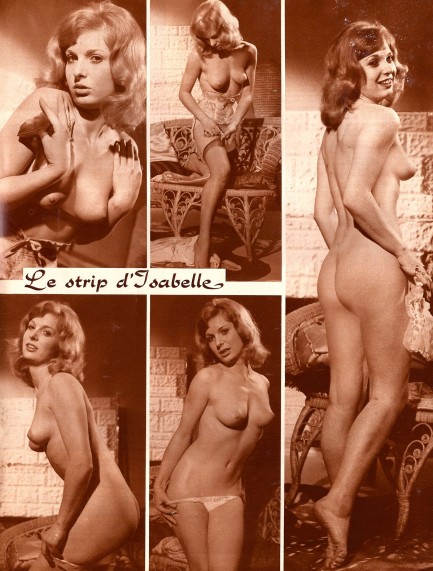 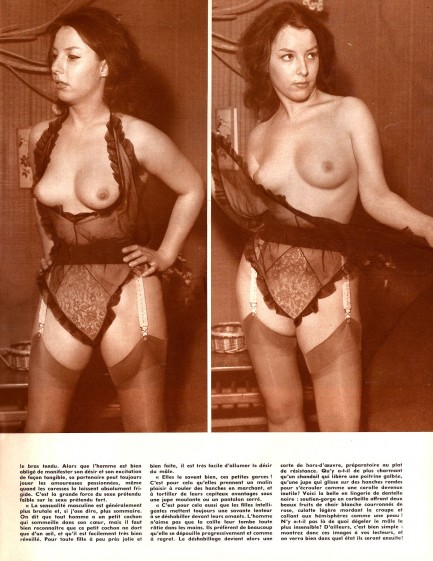  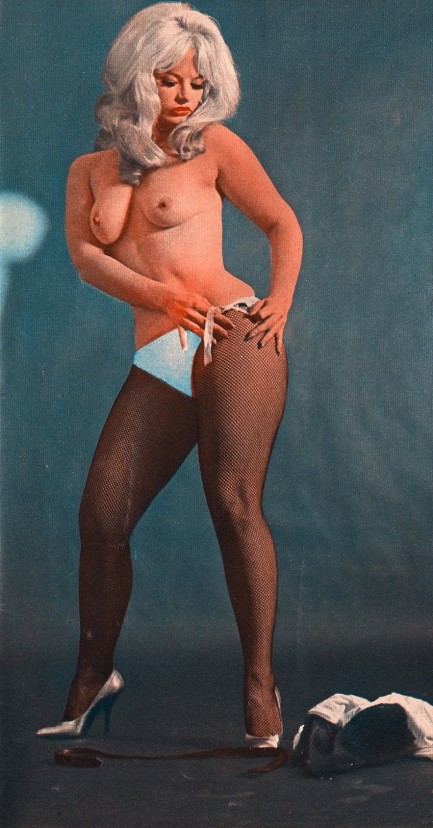 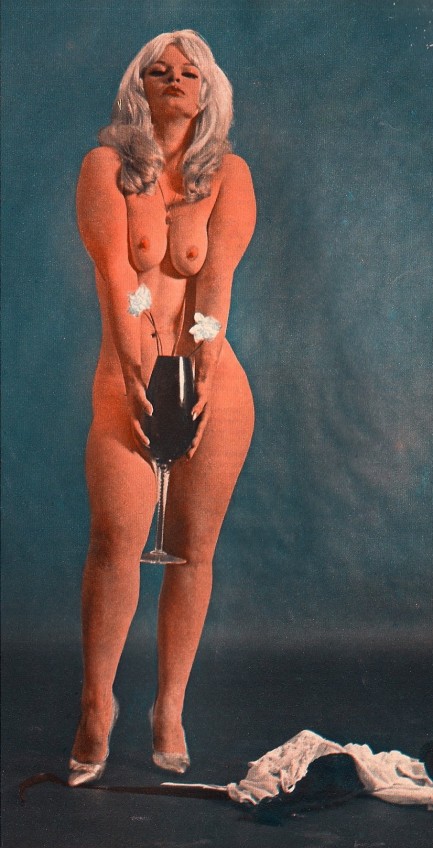 prefer them to the new stuff. They don’t depict merely bodies or an act, but an entire lifestyle of beaches and gardens and all the warm thoughts and simple desires such places entail. This issue of Folies de Paris et de Hollywood appeared today in 1966. If it was ever offensive or harmful it isn’t anymore, so enjoy it as an artifact of an earlier age—not a better one by any means, but certainly a more artful one. prefer them to the new stuff. They don’t depict merely bodies or an act, but an entire lifestyle of beaches and gardens and all the warm thoughts and simple desires such places entail. This issue of Folies de Paris et de Hollywood appeared today in 1966. If it was ever offensive or harmful it isn’t anymore, so enjoy it as an artifact of an earlier age—not a better one by any means, but certainly a more artful one. 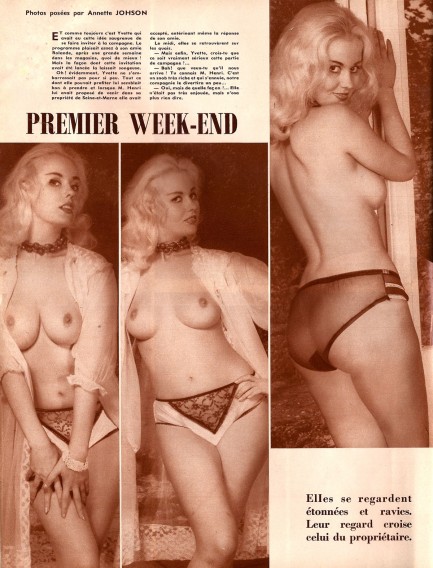  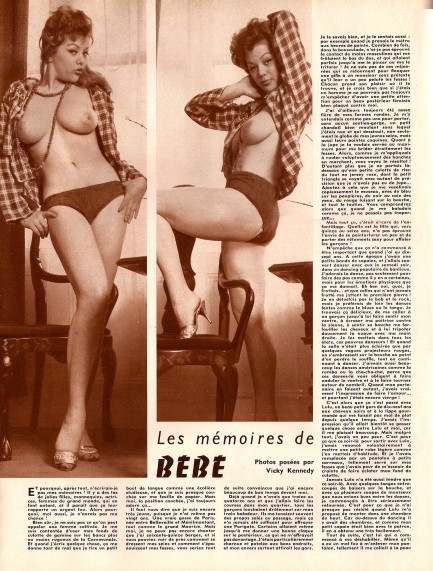   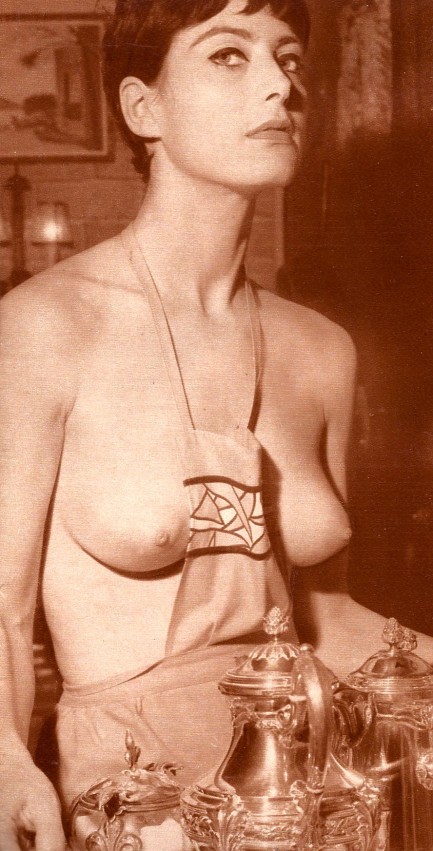 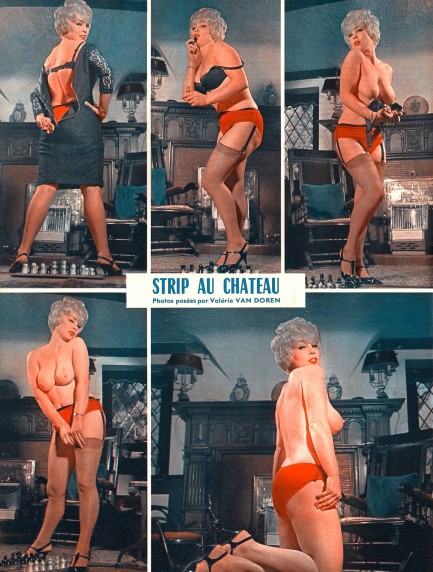 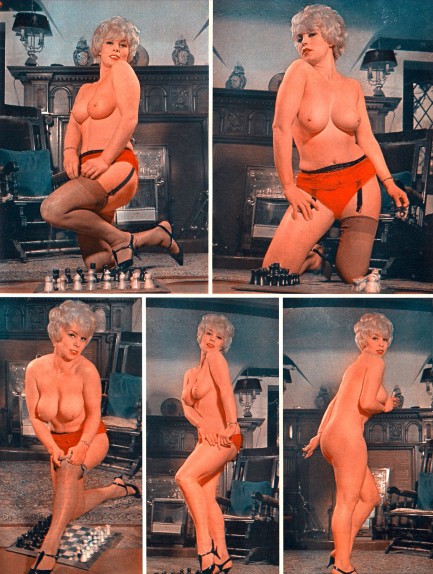 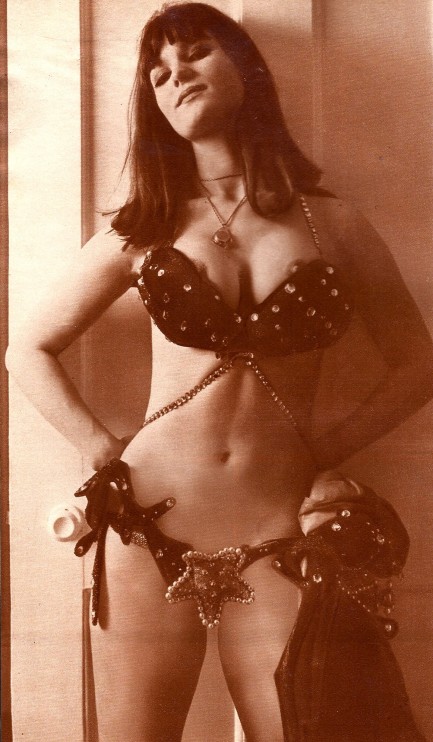 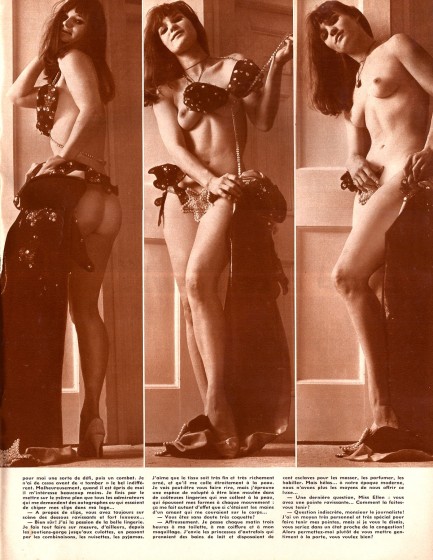 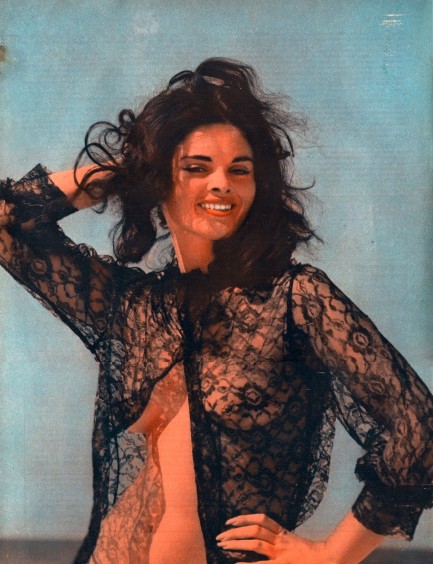
 Walking on air, fairest of the fair, there she is… Miss Nude America. 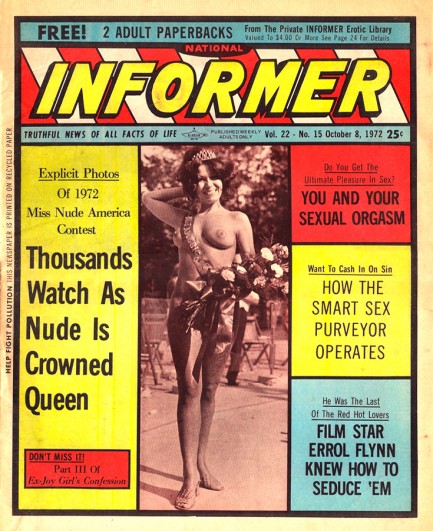
Our copies of National Informer span a time during which the paper was transitioning from typical tabloid to sex magazine. In our issues from 1966 to 1968, you get alarmist political journalism, which by the 1970s becomes drooling quasi-smut, as we see in this issue that first hit newsstands today in 1972. Of course, this shift from commie-baiting to masturbating meant abandoning a rightward leaning readership for a leftward leaning one. Clearly the move was meant to boost readership, but it didn’t work. It wasn’t Informer’s fault, though. All the old school tabloids were taking a beating. Even the venerable National Police Gazette, which had begun publishing lifetimes earlier, in 1845, died during the seventies. But Informer had a shorter history, a smaller audience, and a lower budget. In a tabloid sea where old battleships like Gazette and Confidential couldn’t turn quickly when the weather changed, Informer was a mere speedboat. Turn it did, and quite easily. Hugh Hefner’s Playboy had obliterated America's already battered pubic hair barrier in 1971 and Informer followed in its wake. But more explicitness did not bring more readership, as far as we can tell. National Informer and its sister publication National Informer Weekly Reader were dead by 1974. 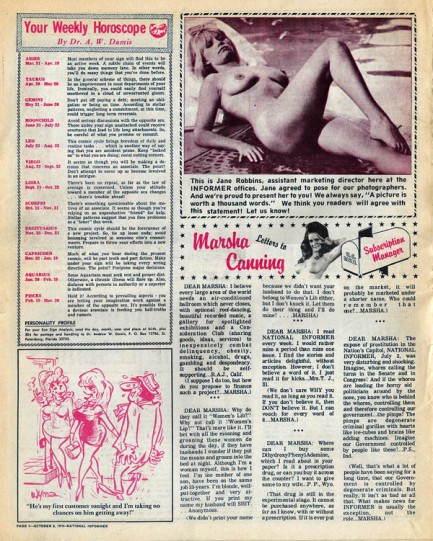 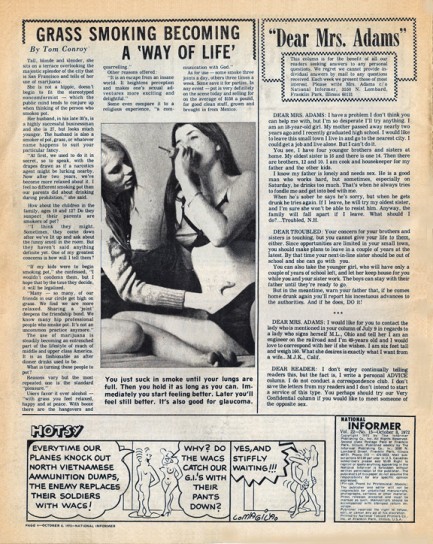 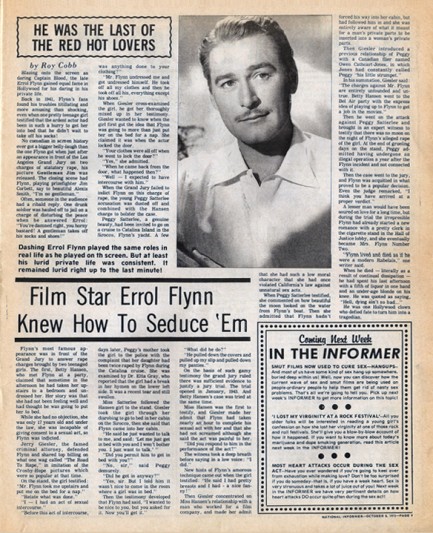  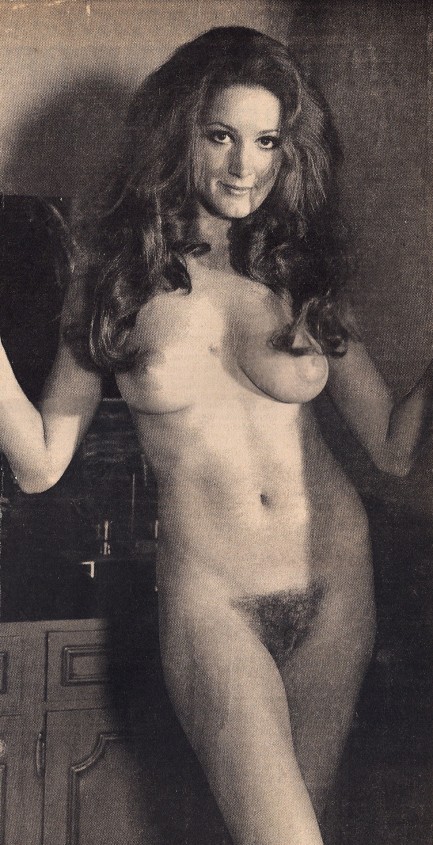 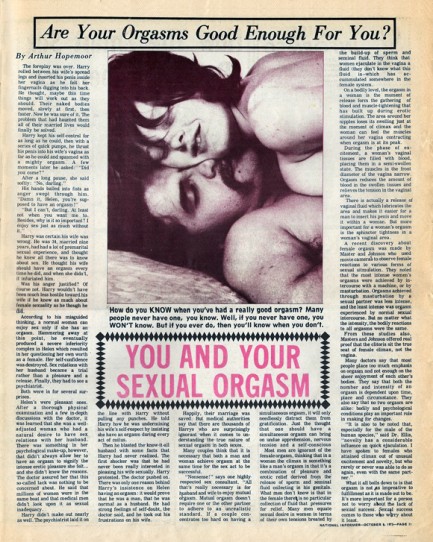 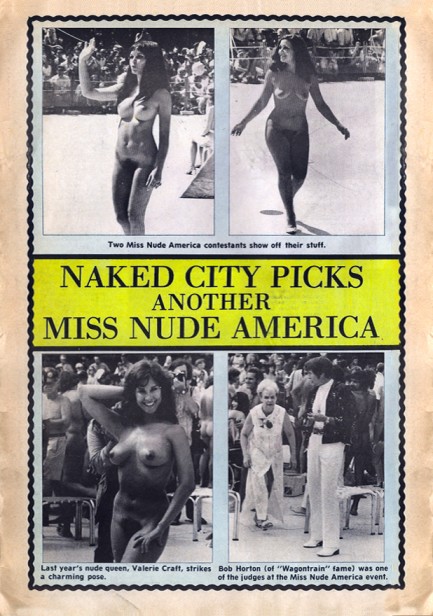 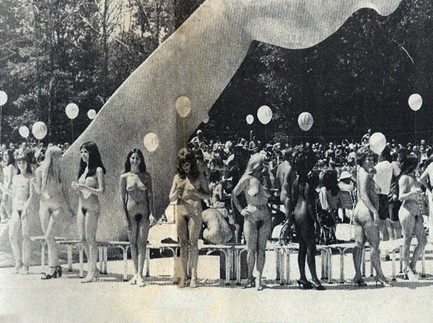 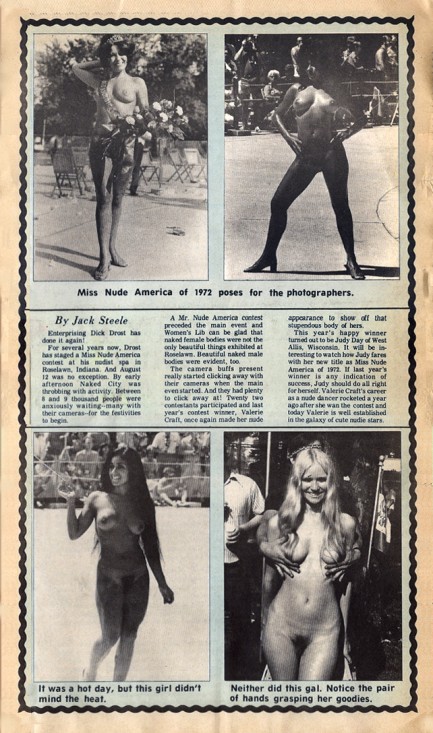 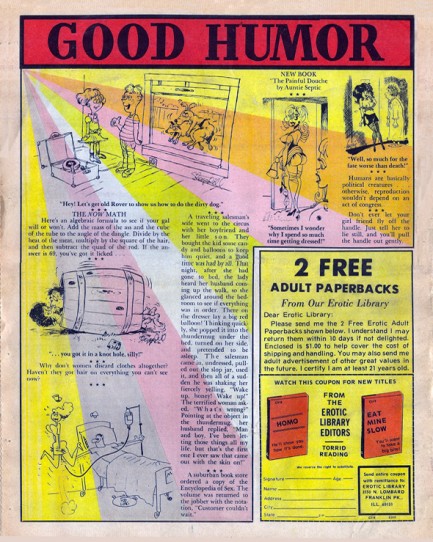
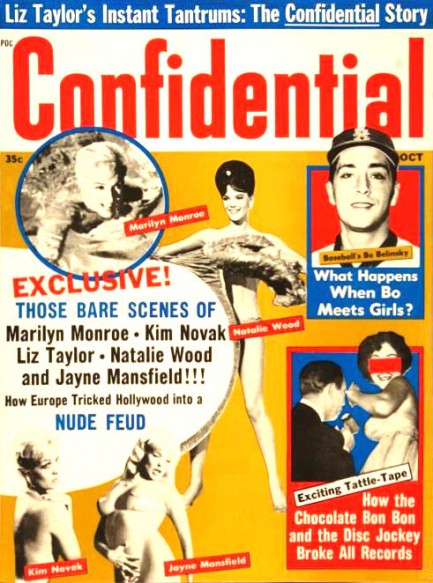
 In 1962 Hollywood actresses began showing skin for the first time in more than thirty years. Today we have a Confidential from October 1962, featuring a rundown of nude scenes by the biggest actresses of the time. The Natalie Wood shot in the little collage they’ve put together is from Gypsy, her biopic of the stripper Gypsy Rose Lee, where she showed her back, but did not in fact appear nude. Likewise, Liz Taylor never appeared nude in a film. Ditto Kim Novak, although she posed quite provocatively for many photographers, including wearing only soapsuds in a Life magazine bio, and in a rumored set of explicit youthful nudes. You can find those on the trusty interweb, but the identity of the woman in the shots is certainly open to debate. Jayne Mansfield and Marilyn Monroe were two entirely different cases, though. The Mansfield image above is from 1962’s It Happened in Athens, in which she went skimpy, but not naked. But the next year she went fully topless in Promises! Promises! and triggered a national firestorm, including a ban of the film in several cities. She was the first mainstream American actress to go topless, not counting the several who bared it before the introduction of the Hayes Code back in 1930. In late 1963, Promises! Promises! stills were featured in Playboy, and those too caused a problem, because they showed that Mansfield had actually been fully nude on the set. An obscenity trial for Hugh Hefner followed, but he was acquitted. In any case, Promises! Promises! was a hit. It wasn’t a very good film. But the scenes with Mansfield are indeed extraordinarily sexy. The Monroe story is equally fascinating. When she was making the film Something’s Got To Give, she was supposed to appear in a swimming scene wearing the usual flesh-colored body stocking to conceal her lady parts. Monroe had caused problems on many sets by then, and her reputation was in tatters. When the time came to shoot the scene, she allegedly did it fully nude, with publicity photographers and crew present.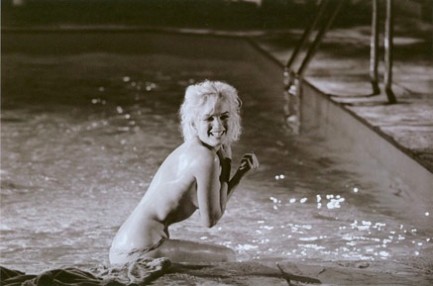 The event caused a sensation, and seemed to signal a renewed focus from Marilyn to reclaim her status as America’s top sex symbol. Sadly, it was the last splash she ever made—she was fired and the film was never finished. But a precedent had been reestablished—for the first time since the Hayes Code, actresses were showing skin. Soon, Hollywood males would be doing the same. In less than a decade the human body would be fully uncovered on film, and there was no putting it back under wraps. The event caused a sensation, and seemed to signal a renewed focus from Marilyn to reclaim her status as America’s top sex symbol. Sadly, it was the last splash she ever made—she was fired and the film was never finished. But a precedent had been reestablished—for the first time since the Hayes Code, actresses were showing skin. Soon, Hollywood males would be doing the same. In less than a decade the human body would be fully uncovered on film, and there was no putting it back under wraps.
|
 |

The headlines that mattered yesteryear.
1945—Mussolini Is Arrested
Italian dictator Benito Mussolini, his mistress Clara Petacci, and fifteen supporters are arrested by Italian partisans in Dongo, Italy while attempting to escape the region in the wake of the collapse of Mussolini's fascist government. The next day, Mussolini and his mistress are both executed, along with most of the members of their group. Their bodies are then trucked to Milan where they are hung upside down on meathooks from the roof of a gas station, then spat upon and stoned until they are unrecognizable. 1933—The Gestapo Is Formed
The Geheime Staatspolizei, aka Gestapo, the official secret police force of Nazi Germany, is established. It begins under the administration of SS leader Heinrich Himmler in his position as Chief of German Police, but by 1939 is administered by the Reichssicherheitshauptamt, or Reich Main Security Office, and is a feared entity in every corner of Germany and beyond. 1937—Guernica Is Bombed
In Spain during the Spanish Civil War, the Basque town of Guernica is bombed by the German Luftwaffe, resulting in widespread destruction and casualties. The Basque government reports 1,654 people killed, while later research suggests far fewer deaths, but regardless, Guernica is viewed as an example of terror bombing and other countries learn that Nazi Germany is committed to that tactic. The bombing also becomes inspiration for Pablo Picasso, resulting in a protest painting that is not only his most famous work, but one the most important pieces of art ever produced. 1939—Batman Debuts
In Detective Comics #27, DC Comics publishes its second major superhero, Batman, who becomes one of the most popular comic book characters of all time, and then a popular camp television series starring Adam West, and lastly a multi-million dollar movie franchise starring Michael Keaton, then George Clooney, and finally Christian Bale. 1953—Crick and Watson Publish DNA Results
British scientists James D Watson and Francis Crick publish an article detailing their discovery of the existence and structure of deoxyribonucleic acid, or DNA, in Nature magazine. Their findings answer one of the oldest and most fundamental questions of biology, that of how living things reproduce themselves.
|

|
|
It's easy. We have an uploader that makes it a snap. Use it to submit your art, text, header, and subhead. Your post can be funny, serious, or anything in between, as long as it's vintage pulp. You'll get a byline and experience the fleeting pride of free authorship. We'll edit your post for typos, but the rest is up to you. Click here to give us your best shot.
|
|