 I've almost got you! After I rescue you please don't feel any sense of gratitude that becomes confusingly sexual! 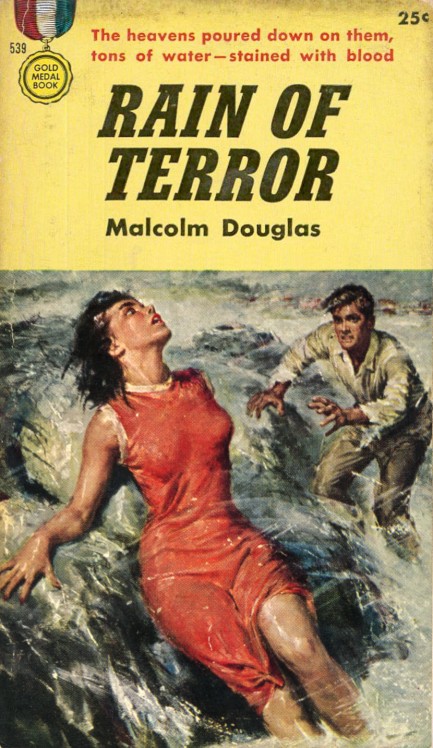
Yup, it's another disaster thriller. We told you we can't resist these. Rain of Terror was published in 1955 and came from Malcolm Douglas in a Gold Medal Edition fronted by James Meese cover art. The story takes place partly in Rome, but mainly in the fictitious Italian town of Asceno. We're always baffled when authors don't just choose a real town, but whatever. The Asceno area is being battered by a weeklong rainstorm, with flooding, looting, and chaos. Newspaperman Jake Abbott is sent to get the story. Once there, the waters nearly destroy the town, and a cache of long lost jewels appears, along with two Botticellis. The fight over these riches is predictable, but what isn't is Abbott's almost Kafkaesque nightmare as he's trapped in a town that becomes like a labyrinth. His misadventures, romantic entanglements, arrests, beatings, and wrong turns read like farce or metaphor. Rain of Terror isn't as good as other disaster thrillers we've read, but it's memorable.
 Gemser travels to many distant cities, and meets the worst people in every one of them. 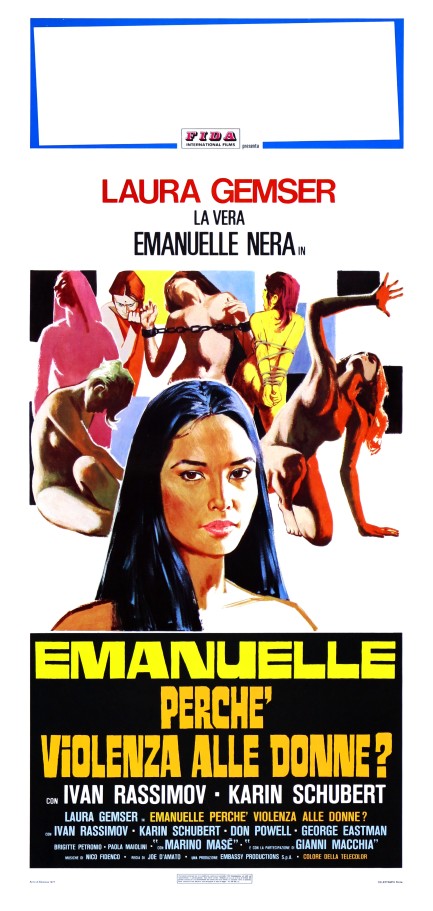
To say that Laura Gemser's Emanuelle films are hit and miss is an understatement of epic proportions. While early entries have the happy softcore feel needed for thought-free diversion and occasional boners, later offerings veer into dark territory. Emanuelle - Perché violenza alle donne? is in the latter category. An Italian production, the title translates as “Emanuelle - Why violence against women?” Erotic cinema and social commentary don't usually mix well—not because they're mutually exclusive, but because the filmmakers never have the skill to pull it off. In the U.S. the movie was retitled Emanuelle Around the World, which sounds fine, but its international English title was changed to The Degradation of Emanuelle. Uh oh.
Gemser's adventures begin in San Francisco when her New York based photo-journalist character enjoys a satisfying boning in the back of a truck. But soon she's off on her next assignment, a titillating expose of a Kama Sutra commune in Asia. Once there she meets creepy guru George Eastman and uses her superior sexual skills to make his holiness transcendentally ejaculate too fast. Up to this point Perché violenza alle donne? is somewhat fun. But next Gemser meets up with pal Karin Schubert in Rome and joins an assignment to expose a sexual slavery ring. Wait—didn't she do that in Emanuelle and the White Slave Trade? Yup, but slavers never quit. This collection of bad men are unusually horrible. One is is a burn victim who rapes his captives. Another has a penchant for bestiality.
Obviously, during the 1970s filmmakers didn't really understand the idea of unintentionally minimizing serious subject matter the same way they do today. It was the “what-the-fuck-let's-give-it-a-try” era, and taking such risks produced some of the greatest cinema ever. But in this case writer/director Joe D'Amato and co-writers Maria Pia Fusco and Gianfranco Clerici failed. Badly. A movie on the subject of slavery and rape would be unpleasant but important if it were a Claire Denis drama or a Laura Poitras documentary. Mixing it into a flyweight sex film doesn't add dramatic weight—it adds discordance, embarrassment, and insult. It was a total miscalculation. You could potentially watch the film until Gemser departs the Kama Sutra commune, then turn it off. If you don't, you have nobody to blame but yourself.
However, we try to see the good in every movie we screen, so we should note that there are some high points. We'll list them. The Emanuelle films were typically shot in exotic locales, and in this case not only does D'Amato set scenes in New York City and San Francisco, but in Kathmandu, Rome, Hong Kong, and—for real—Teheran. Gemser is a limited actress, but one who always does her best with preposterous scripting. Schubert is a stolid co-star. Underutilized Don Powell is always a welcome sight. And lastly, many of the production photos, some of which appear below, are interesting. That's about all the good we can find. We'll just slide Emanuelle - Perché violenza alle donne? into ye olde metaphorical trash bin and forget it ever happened. It premiered in Italy today in 1977. 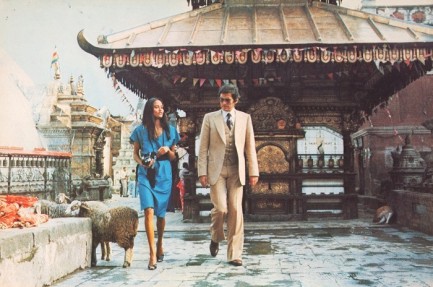      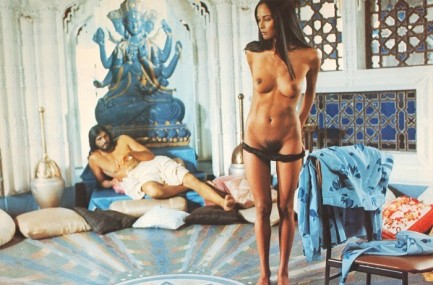 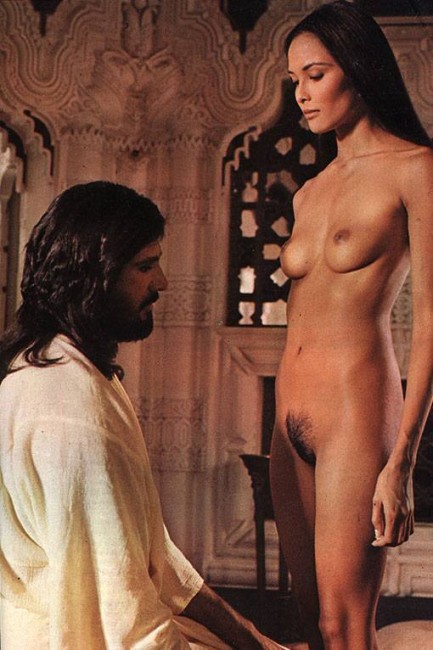 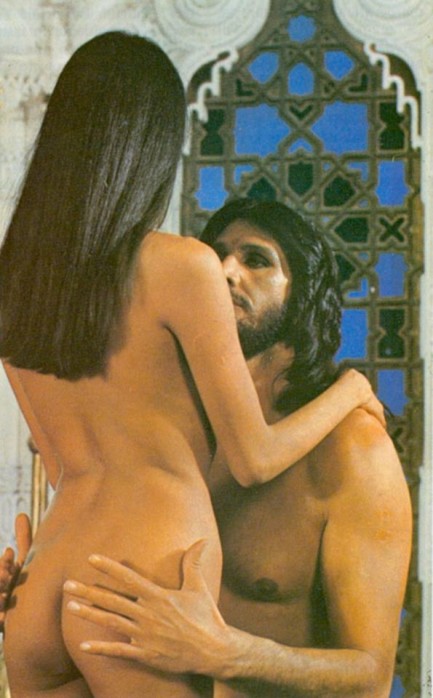 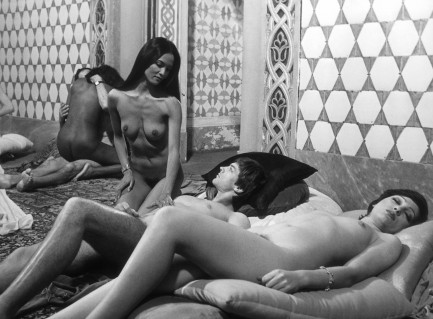 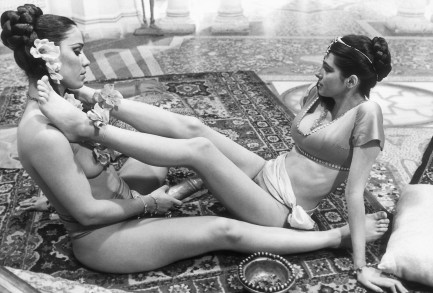 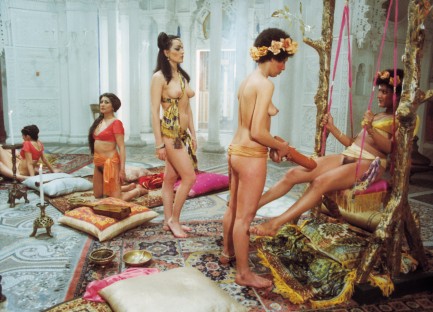 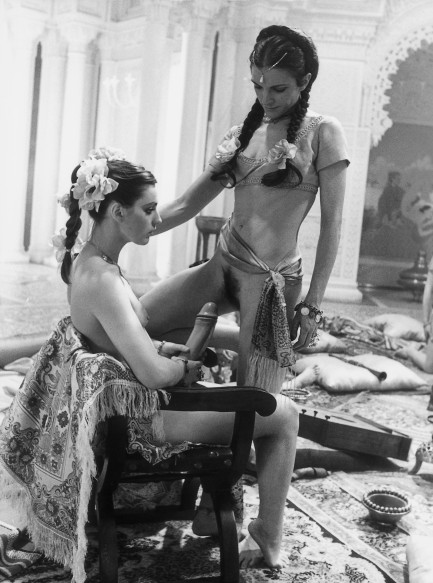 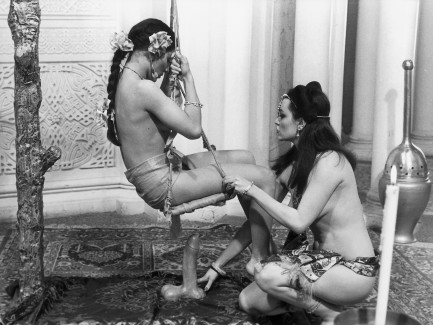  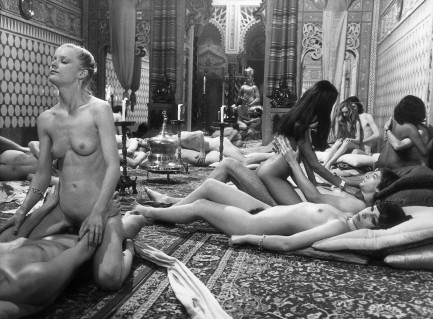 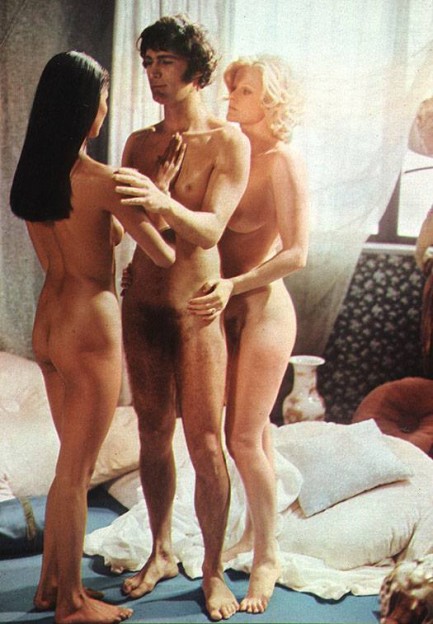 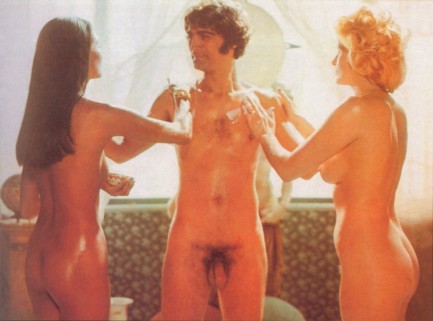 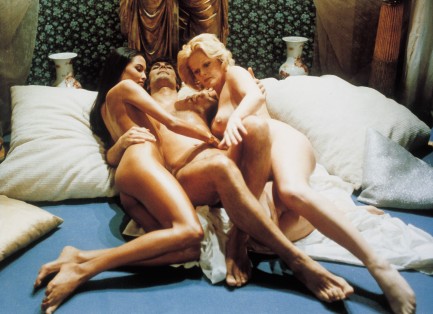 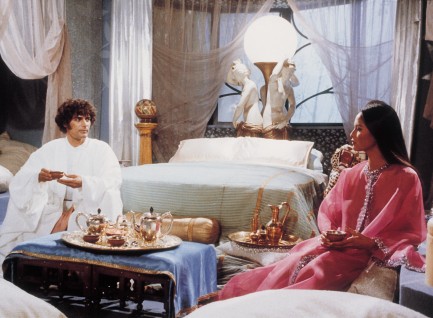 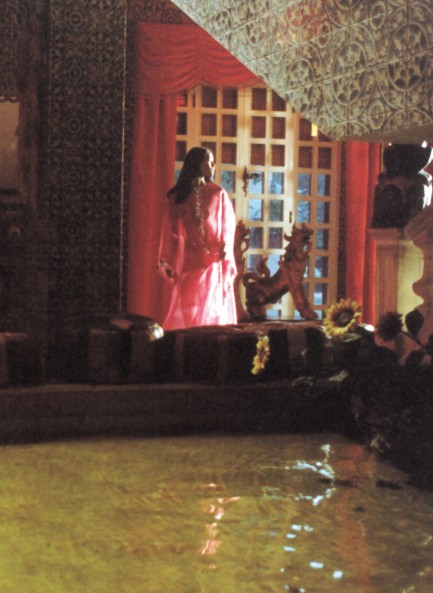
 They're a sight to behold. 
This is a cool little item that's been making the rounds on Twitter lately. It's the VHS box cover art for the horror flick Videodrome, directed by David Cronenberg and starring Debbie Harry and James Woods. As you know, we rarely post box art, but this one needed to be seen. The movie needs to be seen too—to be believed. It deals with a Toronto television producer who stumbles upon an illicit snuff channel, but finds that what's going on behind the broadcasts is even worse. It's Cronenberg at his weirdest. The movie premiered today in 1983.
 Expectation and reality don't meet in Rat Pack classic. 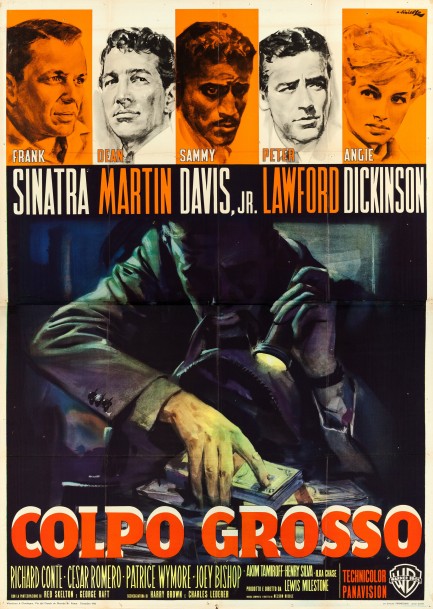
This is a tasty poster for Colpo grosso, and at first glance you'd expect the movie to be a dark thriller, giallo, or film noir. But then you notice the cast list at top—Martin, Sinatra, Davis, Jr.—and it probably dawns on you that this must be Ocean's Eleven. The poster was painted by Averado Ciriello and we have no idea why he went so dark with what is basically a comedy, but it's great work. Actually, it's better than the movie. For Sinatra-philes, Rat Pack lovers, or people who haven't yet seen Ocean's Eleven, that statement may seem sacriligious, so we won't try to back it up with our words—we'll just note that reviews of the day called it lazy and too long, and currently it has less than a 50% rating on Rotten Tomatoes. Basically, despite being a cultural touchstone of a film, it isn't that good, with its main problem being that it's plain boring in parts. However...
The movie has tremendous value. A lot of contemporaneous reviews hated it because of its insouciant attitude toward the heist. New York Times reviewer Bosley Crowther said it was “nonchalant and flippant towards crime,” and also described it as amoral. “Young people,” he wrote, “are likely to find this more appropriate and bewitching than do their elders. The latter are likely to feel less gleeful in the presence of heroes who rob and steal.” So it's clear that Ocean's Eleven flagrantly defied the strictures of the Hays Code censorship regime, which was weakening but still intact. The Code stated that in no film should the sympathy of the audience be “thrown to the side of crime, wrongdoing, evil, or sin,” yet audiences loved Sinatra and his party bros, and their laissez faire attitude was a needed course correction after decades of creative suppression. It's a shame then, that Ocean's Eleven isn't just a bit better.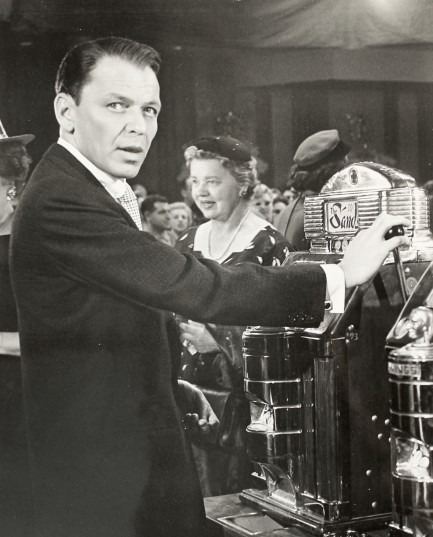 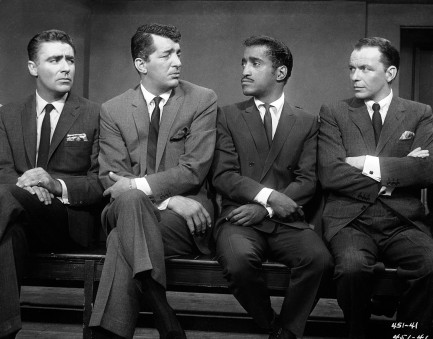 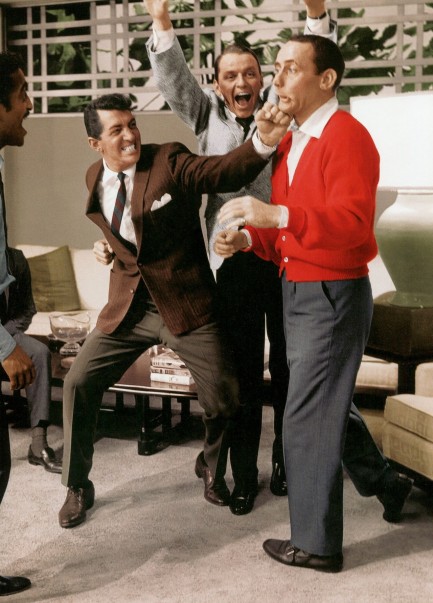 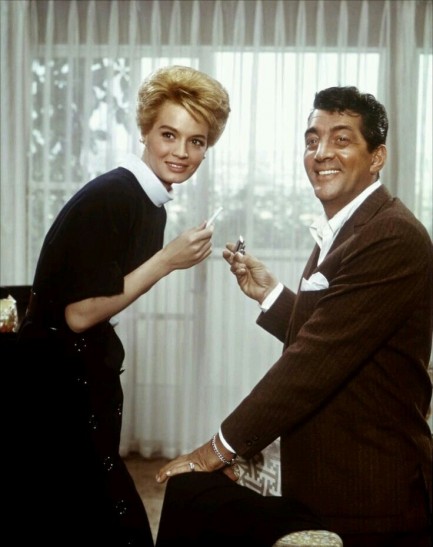 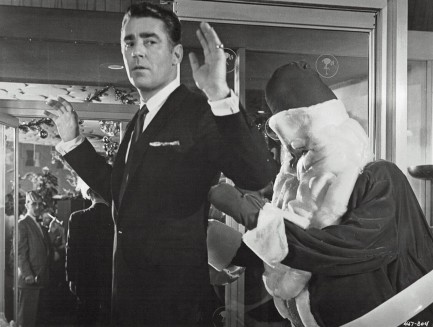 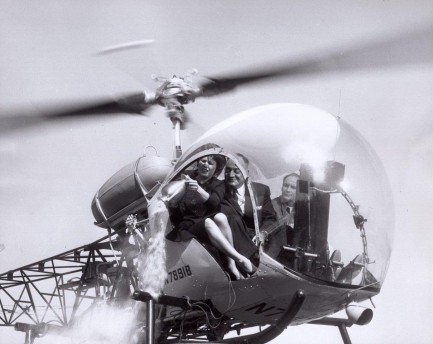 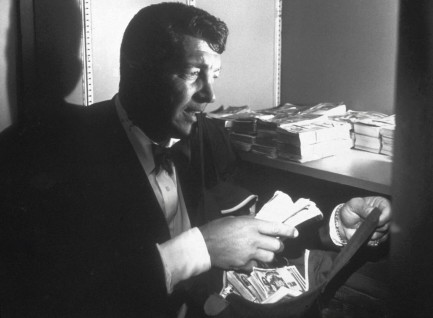 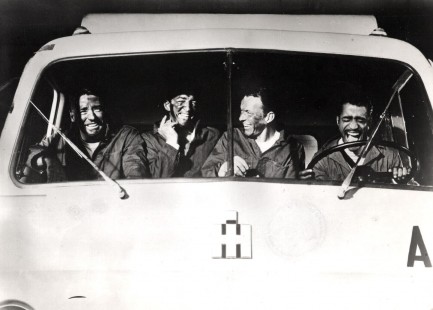 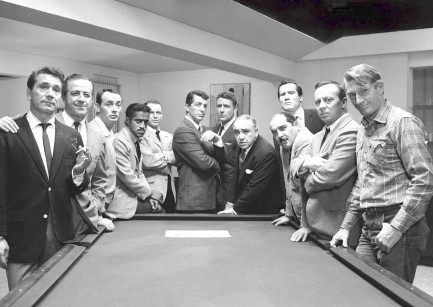 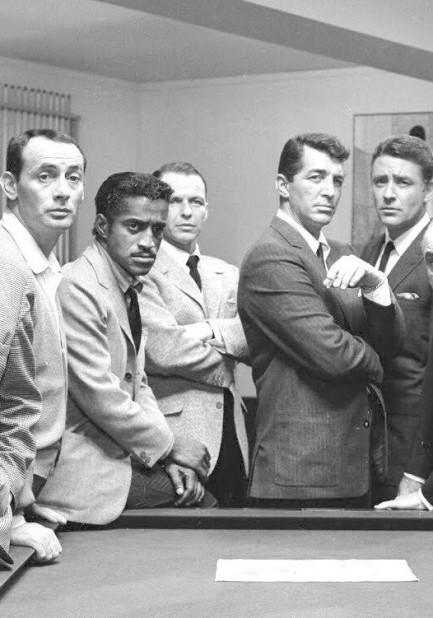
 Everyone said they always did everything together. 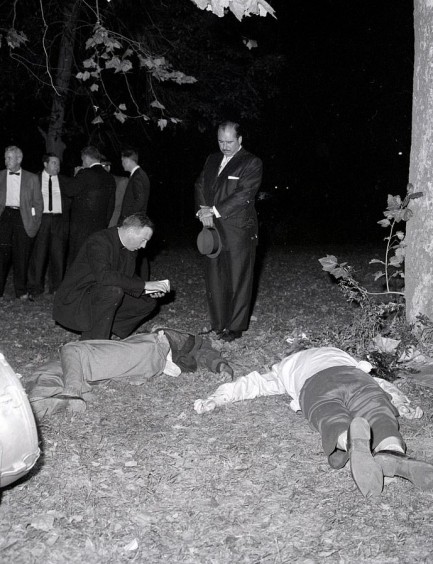
More random midcentury aftermath. This photo shows a kneeling priest about to do his thing over the bodies of Thomas J. Hogan and Fred Romer, who together were a murder-suicide. Hogan shot Romer before turning the gun on himself. There's no information about the exact circumstances behind the event. Cops being cops, they probably ruled out the idea of this scene being any sort of willing pact. Romantics being romantics, we at least wonder about it. But alas, we'll never know. Usually these vintage crime photos come from Los Angeles, but lately we've been sharing examples from New York City. This is another one, and it happened today in 1961.
 Most guys would sell their soul for someone this hot. 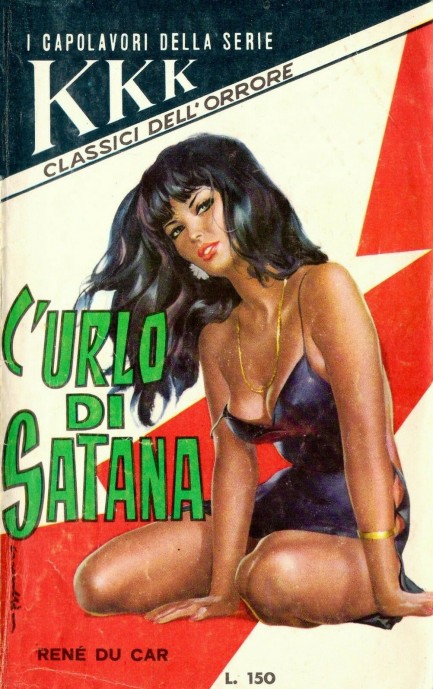
The 1965 horror novel L'urlo di Satana, the title of which means “the scream of Satan,” is number twenty-five in Rome based publisher Grandi Edizioni Internazionali's series I Capolavori della Serie KKK Classici dell’Orrore. It's credited to René du Car with a translation from French by Renato Carocci, but when GEI made such attributions what it really meant was that the translator wrote the book under a pseudonym. So this was actually written by Carocci, just one of scores of novels he produced under a long list of names. The art on this is another brilliant effort from Benedetto Caroselli, who we've documented extensively over the years. To see everything you can click his keywords below, or, if you're pressed for time, you can skip to our favorites here, here, here, here, and here.
 David Dodge explains how to travel like a boss even if you aren't. 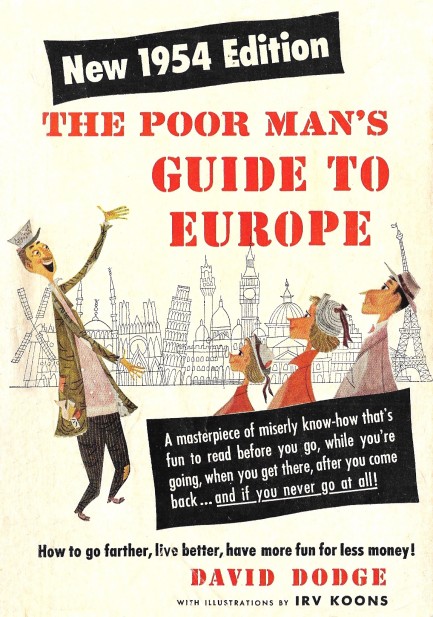
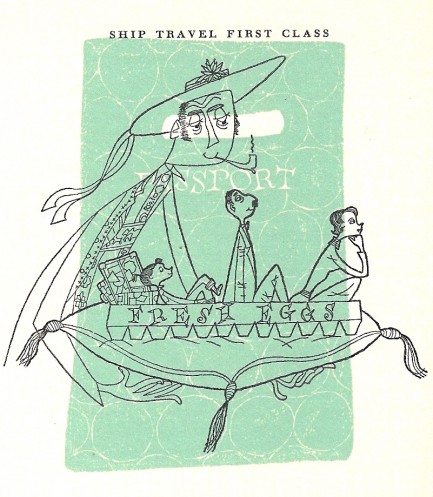
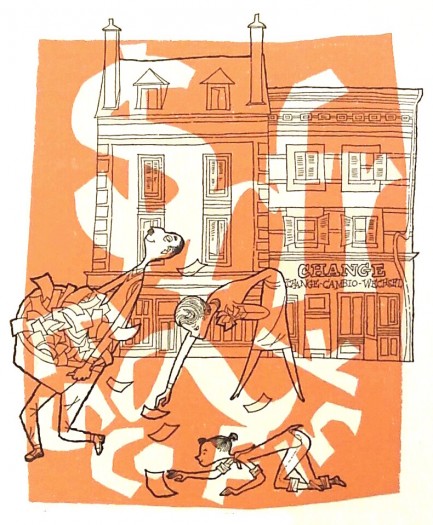
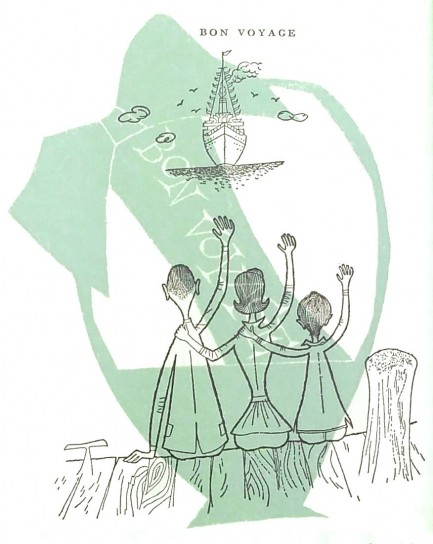
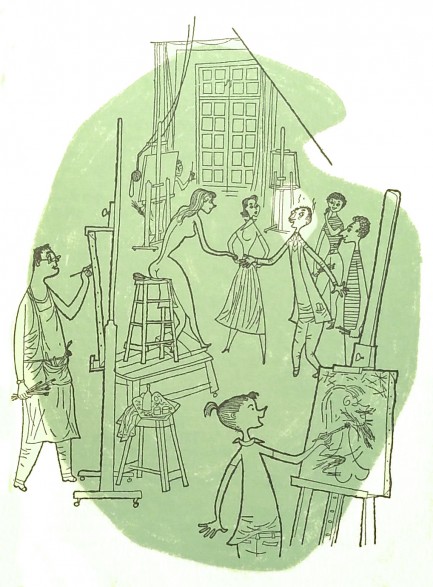
Is The Poor Man's Guide to Europe pulp? Think of it as pulp adjacent. David Dodge was one of the better crafters of crime and adventure fiction during the mid-century, so when we learned that he had written travel guides we knew they were must-reads. His novels were often outward looking. To Catch a Thief was set on the French Riviera; Plunder of the Sun, Mexico; The Long Escape, several Latin American countries including Chile and Peru. And Dodge's first travel book How Green Was My Father dealt with Mexico and Guatemala. But Europe is the subject here, and accompanied by Irv Koons illustrations, Dodge mines nuggets of valuable info from his continental experience for Americans who cross the pond. As this is a book about getting by on a budget, much of the info has to do with currency trading, a reduced concern these days, but the ins and outs of swapping cash make for some interesting insights into the various countries involved, and Dodge is clever at weaving travel anecdotes while keeping his narrative money focused. Example:
Night was falling with that dull thudding sound it makes when you don't know where you are going to sleep. By bribing the concierge I got three beds at a “first class” hotel across the street. It was terrible—overcrowded, noisy, and operated according to the old army slogan: Don't you know there's a war on, buddy? I got out early the next morning, walked three blocks to the center of town toward the Via Vittorio Veneto, and landed two bedrooms, a sitting room, a bathroom, and a balcony in a clean, old-fashioned, superbly operated Italian albergo with a wonderful cook and waiters who caught dropped napkins before they hit the floor. The patrono, who spoke six languages, took Elva and me to the opera as his guests three nights later while his wife babysat with Kendal, and the overall charge was 8,500 lira a day, about $13, all meals and table wine included.
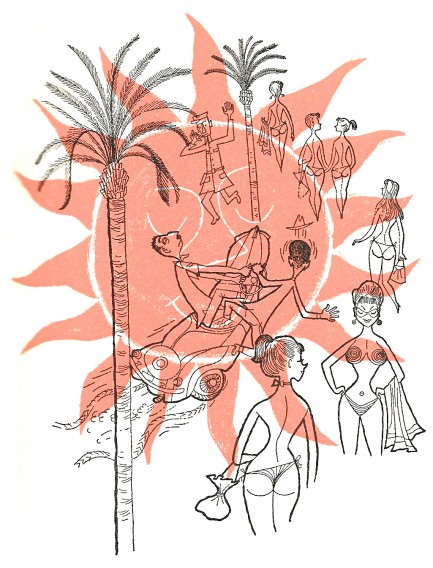
And that's pretty much what travel is about for us—seizing victory from the jaws of defeat. Other anecdotes had us searching for confirmation, they were so hard to believe. For example, was it really the trend in 1953 for some women on the Cotê d'Azur to wear a cache-sexe? Dodge says it was. It's central to a tale about his friend crashing a rental car into a palm tree after seeing two cache-sexe clad women on the Croisette in Cannes. In case you don't know, this cache-sexe was a thong bottom and stick-on breast coverings that made women look almost nude when viewed from the rear. We have topless and occasionally unclothed women on our beach, but still, we'd give a lot to see something like what Dodge describes, considering these women were not on the beach, but ambling down the street. We once saw two women in bikinis who had wandered several blocks from our beach to ponder the outside of the local cathedral, and that visual incongruity stuck with us for weeks. The cache-sexe must have absolutely scandalized people. And thrilled them too. Maybe that's why Dodge wrote a sequel guidebook focused entirely on the south of France with the tongue-in-cheek title The Rich Man's Guide to the Riviera. We bought that one too. Stay tuned.
 This frolic has been sponsored by Off! bug repellent and Nasonex hay fever tablets. 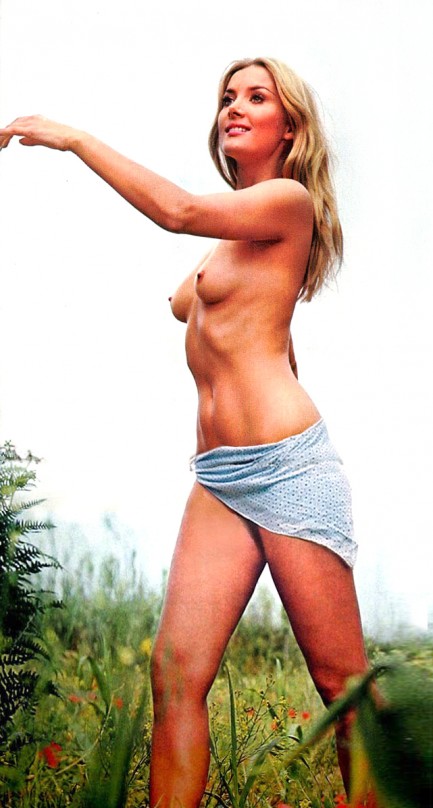
In this centerfold image from the Belgian magazine Ciné-Revue published in September 1972, Barbara Bouchet finds herself in a field of wildflowers and high grasses, and does what comes naturally—sneezes like a maniac until the medication kicks in. Then she frolics, and what a lovely frolic it is. We've featured Bouchet before, which means you already know she's a famously beautiful model-turned-actress who appeared in films like Non si sevizia un paperino, aka Don't Torture a Duckling, Gangs of New York, Casino Royale, and television's Star Trek. Also—and we didn't mention this the other times we wrote about her—she's another celeb who benefitted from a name change. She was born in 1943 in Sudentenland, a part of Czechoslovakia that was occupied by Germany at the time, and grew up as Bärbel Gutscher. That name simply doesn't roll off the tongue, so when she went to Hollywood she chose something that sounded French and the rest is history. These days she lives in Rome, where she still occasionally acts, though probably does a bit less frolicking. See a couple more shots of her here and here.
 Who does she ruin? Anyone who gets in her way. 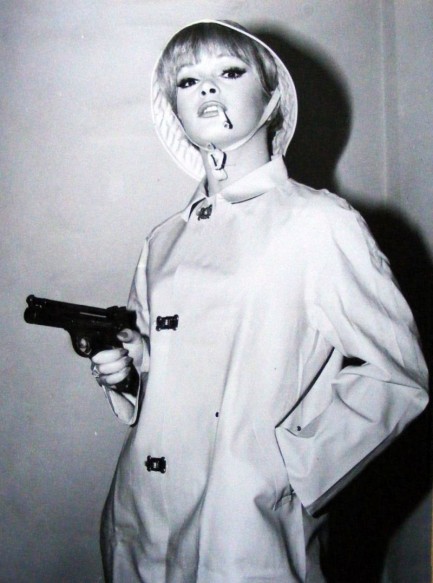
Letícia Román was born in Rome as Letizia Novarese, but launched her film career in the most American way imaginable—in an Elvis Presley movie. That was G.I.Blues, which she followed with such films as La ragazza che sapeva troppo, aka The Evil Eye, Russ Meyer's Fanny Hill, and The Spy in the Green Hat. Román never became a big star, but we think this photo is major. It was made as a promo for the 1966 movie Comando de asesinos.
 Umpteenth Bond riff is cuter than most but a lot dumber too. 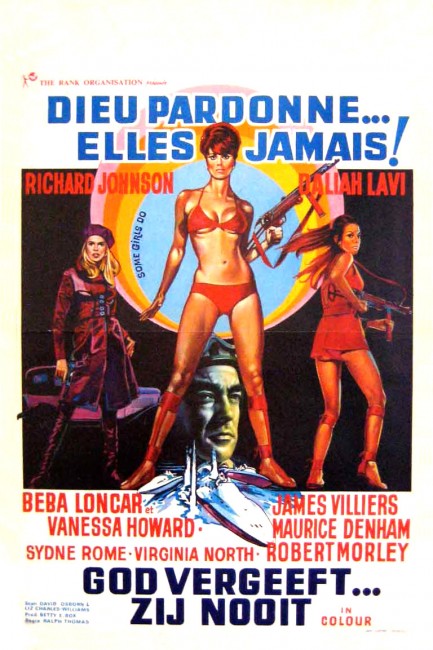
The Bond franchise could be the most imitated in cinema history. Most of the copycats came during the late 1960s. The serious ones are often unwatchable, but the tongue-in-cheek varieties sometimes manage to entertain. The most entertaining aspect of the Bond inspired Some Girls Do is the theme song by Lee Vanderbilt. Which is not a knock on the movie. It's just that the song is that good. We immediately went searching for a version to have as our very own but there isn't one, at least not one from the film, or one without serious sound issues. We're going to keep looking, though. The movie has another plus—the above promo poster made for Belgium, where it was known by the Dutch title God vergeeft... zij nooit, and the French title Dieu pardonne... elles jamais!
As far as the actual film goes, it stars Richard Johnson as Hugh Bond—er, we mean Hugh Drummond—and he's sent to deal with unknown forces determined to stop the development of the world's first supersonic airliner. You get beautiful women with shady intentions, spy gadgets of dubious efficacy, robot femmes fatales, and a super villain hiding in his (almost) impregnable lair. Johnson is reprising his role from 1967's Deadlier than the Male, another pretty cute, marginally enjoyable Bond copy, but here sequelitis has set in—which is to say, this movie is not quite as charming, nor as funny, nor as thrilling as the first. So ultimately, while some girls do, some movies don't, and most viewers shouldn't. Not unless you have a seriously unquenchable ’60s spy movie thirst. If so, Some Girls Do might do the trick. 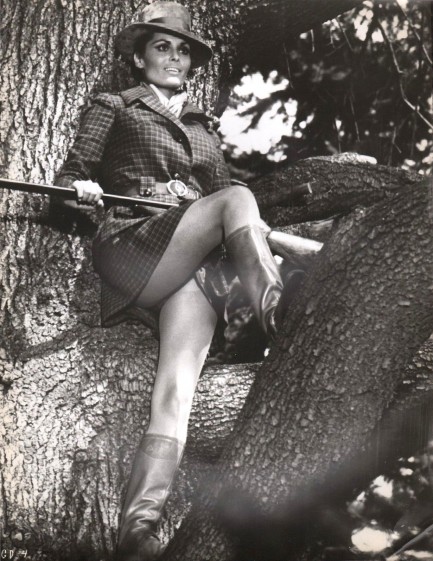 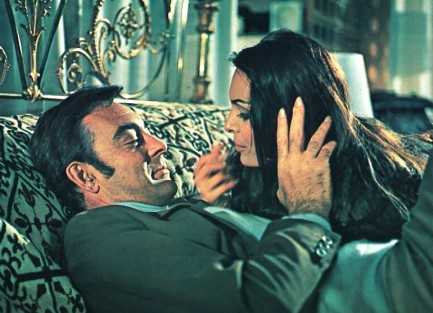  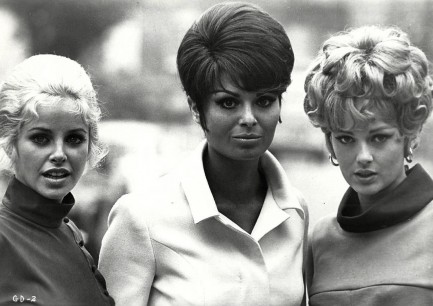 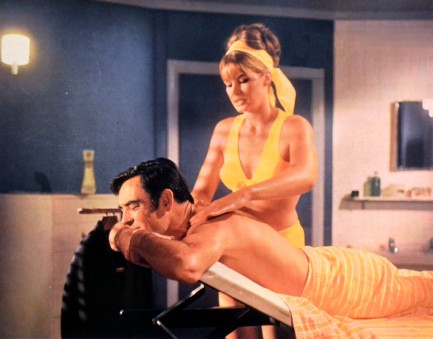  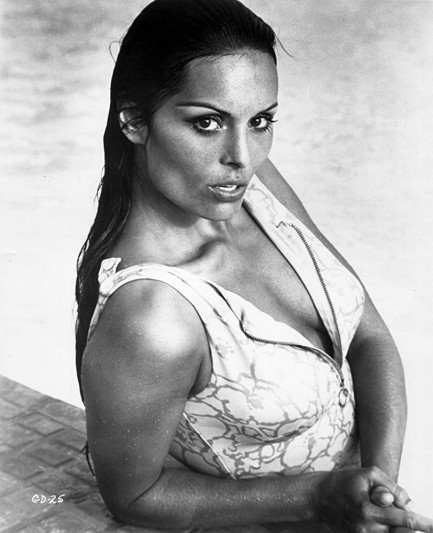 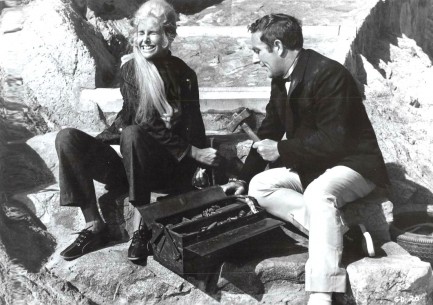 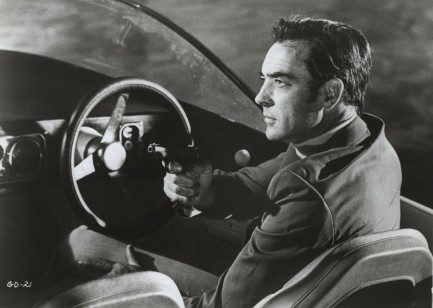  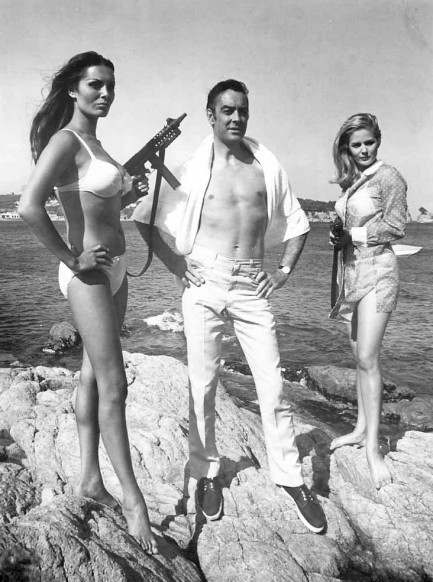 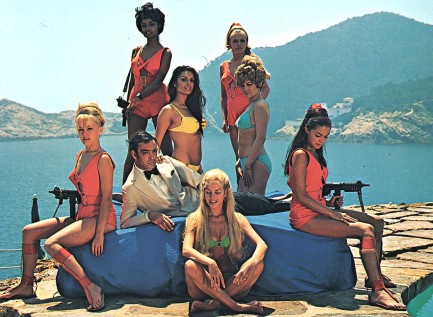

|
 |

The headlines that mattered yesteryear.
1945—Mussolini Is Arrested
Italian dictator Benito Mussolini, his mistress Clara Petacci, and fifteen supporters are arrested by Italian partisans in Dongo, Italy while attempting to escape the region in the wake of the collapse of Mussolini's fascist government. The next day, Mussolini and his mistress are both executed, along with most of the members of their group. Their bodies are then trucked to Milan where they are hung upside down on meathooks from the roof of a gas station, then spat upon and stoned until they are unrecognizable. 1933—The Gestapo Is Formed
The Geheime Staatspolizei, aka Gestapo, the official secret police force of Nazi Germany, is established. It begins under the administration of SS leader Heinrich Himmler in his position as Chief of German Police, but by 1939 is administered by the Reichssicherheitshauptamt, or Reich Main Security Office, and is a feared entity in every corner of Germany and beyond. 1937—Guernica Is Bombed
In Spain during the Spanish Civil War, the Basque town of Guernica is bombed by the German Luftwaffe, resulting in widespread destruction and casualties. The Basque government reports 1,654 people killed, while later research suggests far fewer deaths, but regardless, Guernica is viewed as an example of terror bombing and other countries learn that Nazi Germany is committed to that tactic. The bombing also becomes inspiration for Pablo Picasso, resulting in a protest painting that is not only his most famous work, but one the most important pieces of art ever produced. 1939—Batman Debuts
In Detective Comics #27, DC Comics publishes its second major superhero, Batman, who becomes one of the most popular comic book characters of all time, and then a popular camp television series starring Adam West, and lastly a multi-million dollar movie franchise starring Michael Keaton, then George Clooney, and finally Christian Bale. 1953—Crick and Watson Publish DNA Results
British scientists James D Watson and Francis Crick publish an article detailing their discovery of the existence and structure of deoxyribonucleic acid, or DNA, in Nature magazine. Their findings answer one of the oldest and most fundamental questions of biology, that of how living things reproduce themselves.
|

|
|
It's easy. We have an uploader that makes it a snap. Use it to submit your art, text, header, and subhead. Your post can be funny, serious, or anything in between, as long as it's vintage pulp. You'll get a byline and experience the fleeting pride of free authorship. We'll edit your post for typos, but the rest is up to you. Click here to give us your best shot.
|
|