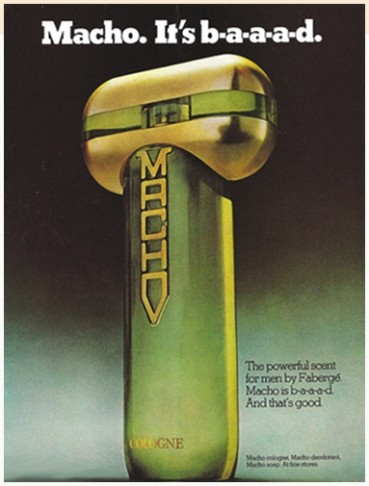
Hmm... not bad. Of course, the real test of strength is whether someone goes down when I bust them in the mouth. 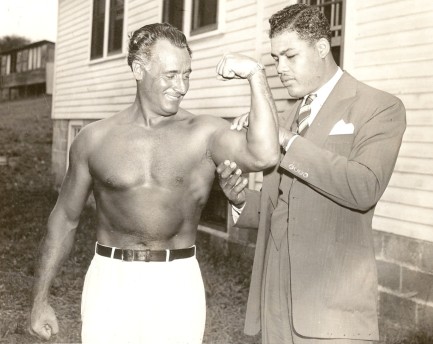
Two titans of U.S. culture meet in this photo showing boxing champ Joe Louis examining the muscles of strongman Charles Atlas (née Angelo Siciliano) at Madame Bey's, a New Jersey camp for professional boxers. While Louis and Atlas are legends in their fields, Bey was an interesting personality too, though now mostly forgotten. Her camp was used by top rank boxers who needed to train for upcoming fights, and because the rules banned alcohol, swearing, women, etc., it was considered an ideal place to hone skills while shutting out distractions. The photo was made in 1938.
 If a boxer falls when nobody hits him is it still a knockout? 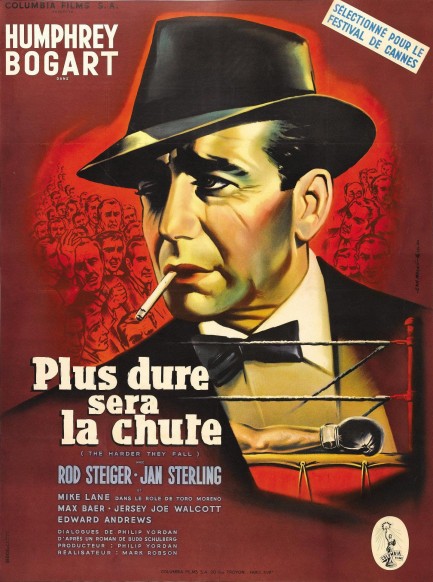
We've been neglecting French promo art lately, so here'a a little something—a poster for Plus dure sera la chute, which is better known as The Harder They Fall. This was painted by Jean Mascii, whose work we last saw several years ago when we talked about the 1960 thriller Plein soleil. We recommend having a look at that to get a better sense of Mascii's skill. He created a very interesting portrait of Humphrey Bogart for this effort. This was Bogart's last movie. He filmed it while gravely ill, having been diagnosed with esophageal cancer, but did his work in legendary style, a true professional, working long hours, shooting retakes, and generally doing all he could to prevent his condition from affecting the production.
Bogart plays a struggling sports writer hired by shady fight promoter Rod Steiger to be the press agent for his new discovery—a gigantic but glass-jawed carnival strongman from Argentina named Toro Moreno. Steiger wants Bogart to sell Toro as the next great heavyweight contender, but in order to do so they need to send him on a bum-of-the-month tour to knock out a series of hapless opponents paid to take dives. After Toro has been built up in the press as the second coming of the heavyweight division, Steiger plans to make a bundle with a match against the champ, played by Max Baer. Bogart signs on for this ride because after all his work in the newspaper business he has nothing, and wants to finally make real money. But it could cost his reputation, and because Toro has no clue the fights he's winning are fixed, the scheme can only end with the poor overconfident dupe slaughtered by the champ.
Steiger would win an Academy Award in 1967 for In The Heat of the Night, and here, more than a decade earlier, you can see that achievement as almost inevitable as you watch him dominate the screen. He's simply great in this, and Bogart gives an excellent performance too, failing physically but soldiering onward, using that world weary mug of his to impart a lifetime's worth of fatigue and disappointment. The movie also features Jan Sterling. We had no idea she'd gone in for rhinoplasty, and at first weren't positive it was her. It is though, and after writing just recently how gorgeous she was we're sad she didn't see her own perfection and instead chose to go under the surgeon's knife. But her body her choice. She's good as always, here playing Bogart's conscience, trying to keep him from sliding down the slippery slope to amorality.
There's another person who should be mentioned—Mike Lane as the lumbering Toro Moreno. This was his debut role, and you'd think there weren't many more parts out there for a guy standing 6'8”, but surprisingly he accumulated almost seventy acting credits, almost all on television, where he appeared in shows of every type, from Gunsmoke to Get Smart. Obviously, any vintage boxing movie involves mimetic acting, and the fighting here isn't realistic—quantum leaps in how to convincingly portray ring scenes came later—but they serve their purpose. And for boxing realists, the movie gets extra credit due to the presence of both Baer and Jersey Joe Walcott. The Harder They Fall opened in March 1956, and had its French premiere today at the 1956 Cannes Film Festival. 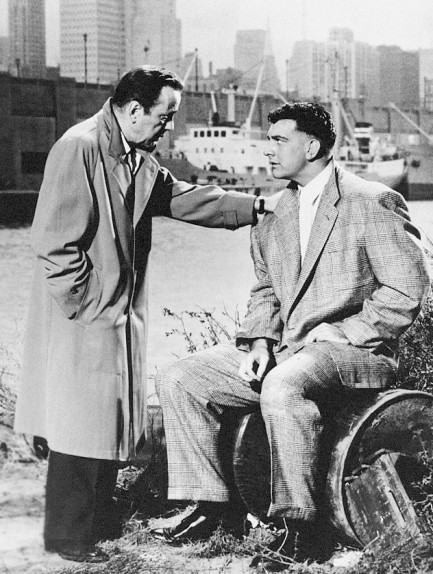 Fine, Toro, you're huge. Massive. Enormous. But you need to learn how to box or the champ is going to crush your face like a graham cracker. Fine, Toro, you're huge. Massive. Enormous. But you need to learn how to box or the champ is going to crush your face like a graham cracker.
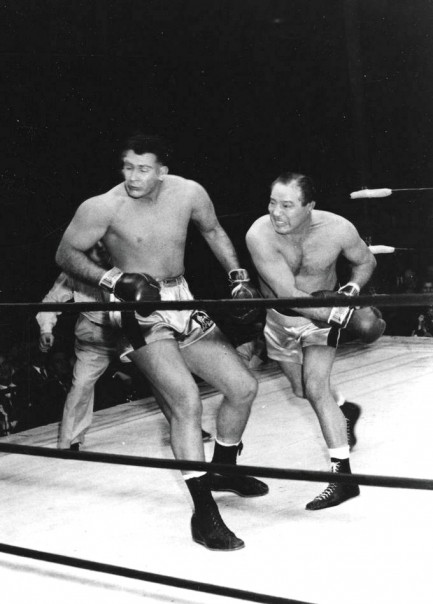 Hi, champ! Before we start, I just want to say I'm probably your biggest admir— Hi, champ! Before we start, I just want to say I'm probably your biggest admir—
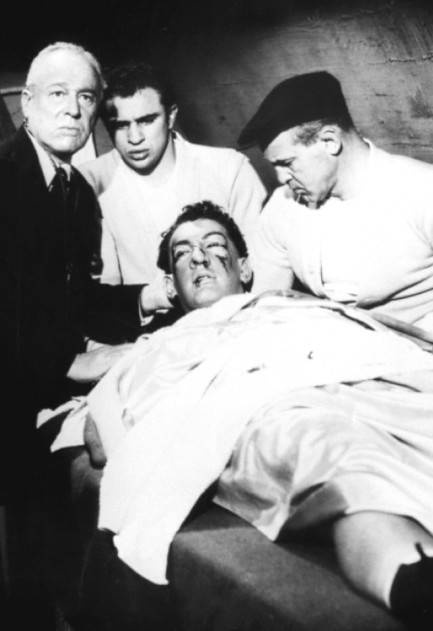 I thought that whole graham cracker speech was just Bogie being colorful. I thought that whole graham cracker speech was just Bogie being colorful.
 Everybody tells me you're great at taking it hard to the hole. 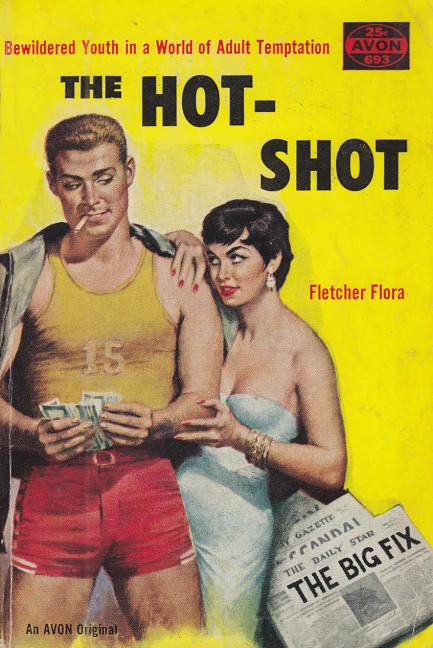
Hard to the hole? Of course we went there. Why wouldn't we? The sport of basketball—which is what Fletcher Flora's The Hot-Shot deals with—has loads of sexual terminology. We could have gone with, “I hear you're an amazing ball handler,” or, “I hear you perform best coming off the bench,” or, “I hear you go back door with the best of them,” or, “I hear when you get in a zone you can really stroke it,” or— *catching breath and taking a sip of water* “I hear you like to work it inside,” or, “I hear you're a great penetrator,” and so forth. But while Flora did write some mildly sexual novels, such as Strange Sisters and Park Avenue Tramp, this one is actually a classic rags to riches to corruption tale of the sort you've probably read before. The main character, Skimmer Scaggs, finds that his basketball talent offers a way out of nowheresville, but soon finds himself in the middle of a big time point-shaving racket. The story comes with extra credibility because Flora was a basketball coach before turning his talents to fiction. We have three of his novels, so we'll try to get back to him a bit later.
 Sarong and thanks for all the fish! 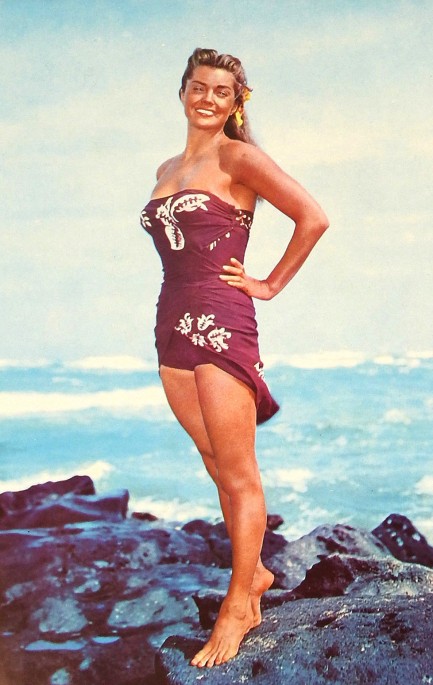
Above is a rare image of competitive swimmer-turned-actress Esther Williams, made when she was filming her 1950 south seas musical Pagan Love Song. By rare we mean this image had been previously unseen online in color, as far as we know. We shared another William promo a while back, here, and we also have a special Williams rarity, a Tijuana bible we posted ages ago. Well, ten years ago. It's raunchy, but funny too. See here.
 A signing of things to come. 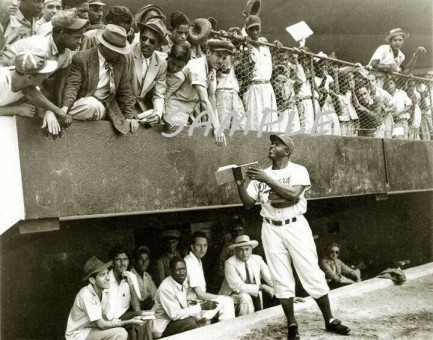
Above is a photo of Brooklyn Dodgers star Jackie Robinson signing autographs for Cuban fans in Havana during the spring of 1947. The Dodgers had used Havana’s La Tropical Stadium as their spring training base during the 1941 and ’42 seasons, and went there again in ’47 to avoid some of the publicity and hostility that would have surrounded Robinson, who was destined to be the first African American baseball player of the modern era. Even away from U.S. shores it was a trying time for Robinson. Havana was run by Americans interests, and was selectively an apartheid city. Robinson stayed at the Hotel Boston in Old Havana, rather than the grand Hotel Nacional in swanky Vedado with the white Dodgers. This annoyed Robinson, but he needed to focus on his play because, though he had been invited to spring training, he was not guaranteed a Major League roster spot. The pressure must have been intense. Even so, in this photo he takes time to sign autographs for Cuban fans, gracious as always, on the cusp of a career that would redefine what it meant to be a Major League Baseball player.
 He destroyed everything in his path—including himself. 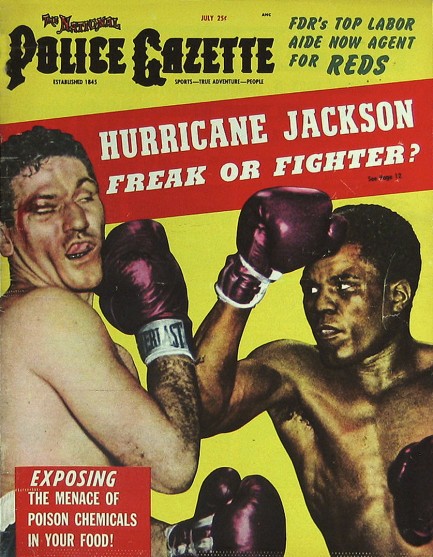
The National Police Gazette published this issue in 1954, with a cover featuring pro heavyweight boxers Tommy Hurricane Jackson and Dan Bucceroni battling at Eastern Parkway Arena in Brooklyn, New York. The fight took place on March 29, and Jackson won with a TKO in the 6th. He never won a heavyweight title, but was well regarded in fight circles for being fearless, if not self-destructive. In fact, he once fought Floyd Patterson and was knocked down nine times. Each time he rose to absorb more punishment, before losing by TKO in the tenth round. It was apparently one of the worst ring beatings ever, made worse by Jackson's sheer will. Afterward, boxing authorities suspended his license for his own protection. It was a temporary ban designed to force him to recover fully before fighting again, but we've never heard such a drastic step. It's indicative of Jackson's reputation. Was he fearless, crazy, or both? Opinions vary, but we love this Gazette cover. The magazine specialized in boxing photo-illustrations, which we've documented here, here, here, and other places if you're inclined to dig around the site. 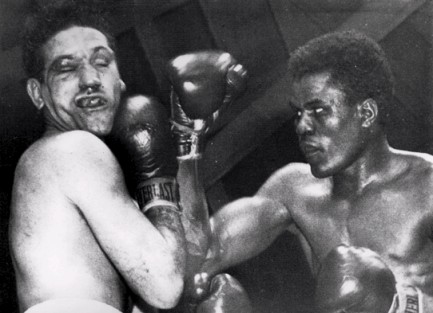
 Tonight they're gonna party like it's 1955. 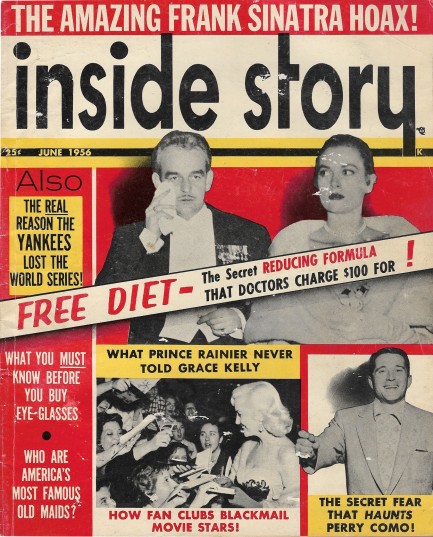
Questions abound on this cover of Inside Story, but for each one there's an answer. What did Prince Rainier not tell Grace Kelly? That the palace in Monaco was cold and drafty, and she couldn't sleep in the nude anymore because the premises were open to the public from 9 to 5. What was the amazing Frank Sinatra hoax? His studio Carlyle Productions started a whisper campaign that he was such a dedicated actor that he actually used heroin while filming the heroin drama The Man with the Golden Arm. What is the secret fear that haunts Perry Como? That his family might be kidnapped.
All of these pieces are fascinating, but since it's baseball season and people are high on the front-running New York Yankees right now, we'll point to the story, “The Real Reason the Yankees Lost!” What they lost was the 1955 World Series, and it happened—according to Inside Story—because they were partying too hard. They were ensconced at the Concourse Hotel for the Series, a hole-up made possible by the fact that their opponents were the Brooklyn Dodgers. So with both the home and away games taking place in New York City, and the players barred from sleeping in their own houses to avoid family distractions, the superstar Yanks did some major league carousing.
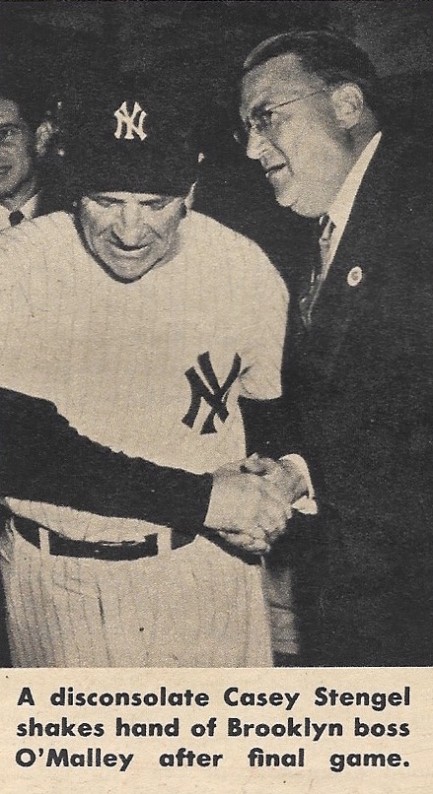 Inside Story scribe Manuel Shaw describes an allegedly typical scene: “Mickey Mantle, Phil Rizzuto, and several other Yankees were sitting around the lobby of the hotel when three lovelies from a nearby night spot showed up. Since the cuties were entertainers familiar to one or two of the players, and were rabid Yankees boosters, it was not remarkable that they were soon in animated conversation with the group, which shortly adjourned from the lobby to an upstairs suite.” Inside Story scribe Manuel Shaw describes an allegedly typical scene: “Mickey Mantle, Phil Rizzuto, and several other Yankees were sitting around the lobby of the hotel when three lovelies from a nearby night spot showed up. Since the cuties were entertainers familiar to one or two of the players, and were rabid Yankees boosters, it was not remarkable that they were soon in animated conversation with the group, which shortly adjourned from the lobby to an upstairs suite.”
Then he moves into this bit: “A beauteous brunette [was in the hall] clad only in a negligee. The two players wanted to spend some time with her, and they agreed that they would rather do it separately, but she insisted it would be more fun if they both stayed, and after a while she persuaded both of them to come back with her to her room. Soon a real party was underway, joined by many other Yankees, and several doting females who lived at the hotel.”
Well, what good is being a member of the famed Yankees if you can't do some Yankee doodle diddling? Most guys we know can't resist a free beer, let alone a woman in lingerie. A little later in the story, after the question of whether professional gamblers employed the party girls to distract the Yanks, we get this: “If true, this parallels the persistent story in gambling and diamond circles that the voluptuous Marilyn Monroe was introduced to Yankee star Joe DiMaggio just in order to take his attention off the Yankee pennant drive of a few years back.”
Did Inside Story really just say Marilyn Monroe was a mafia Trojan horse? Yup. They did. No ambiguity there. The magazine does not go so far as to say Monroe was aware of the set-up, so perhaps it was a matter of maneuvering her into the same space as DiMaggio at the same time and letting nature take its course. There are worse ways for a man to fall from the sporting mountaintop. And talk about a soft landing. We doubt the story, but you never know. There are far crazier tales starring Monroe. We have about thirty-five scans below, and more tabloids coming soon.  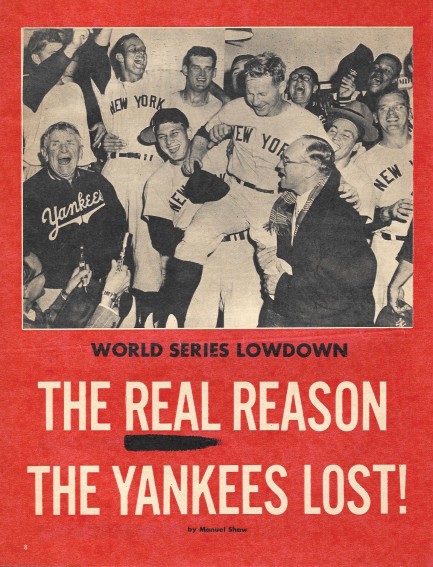 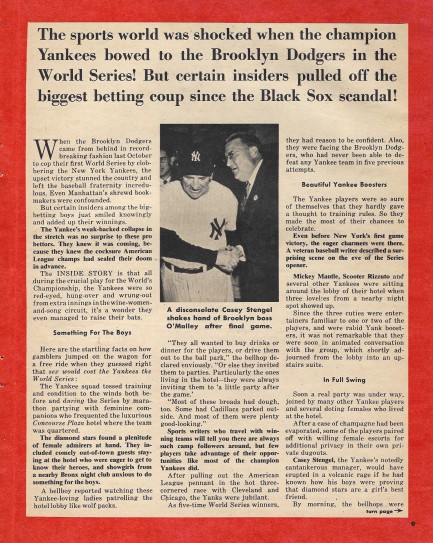 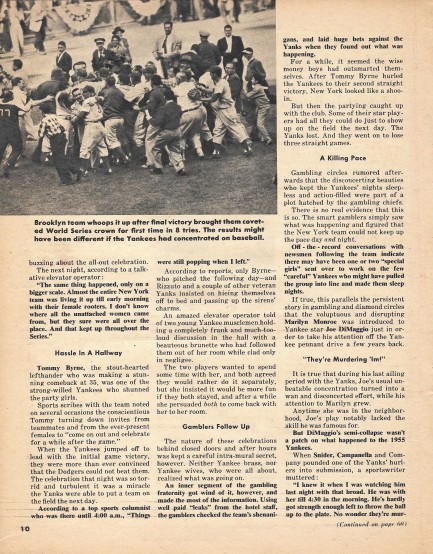 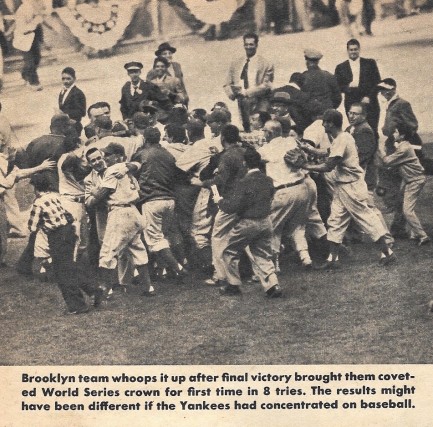 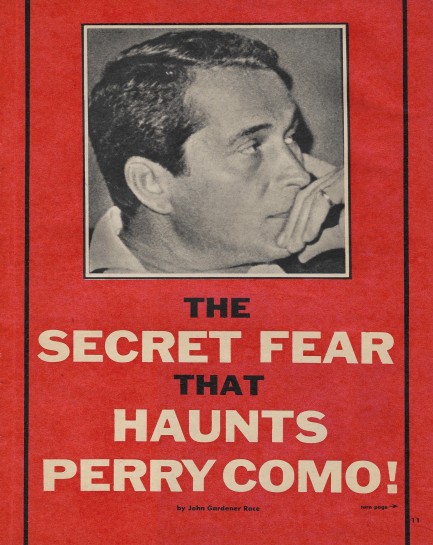 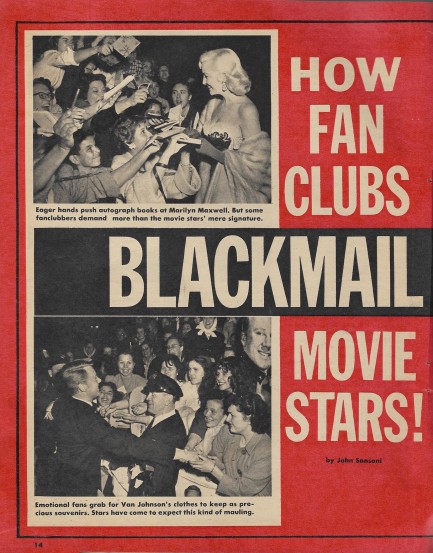 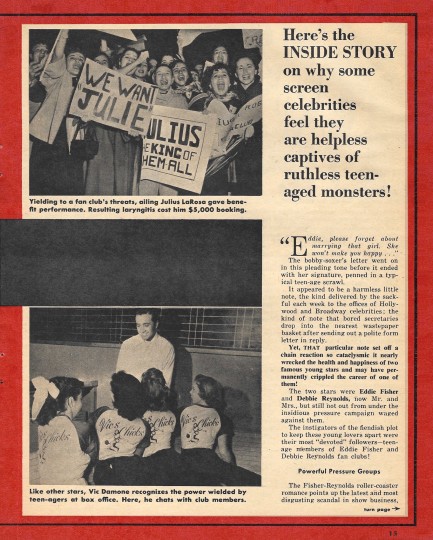 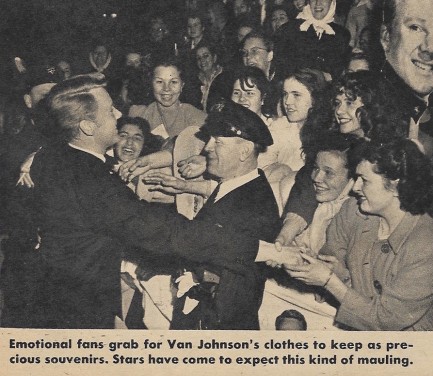 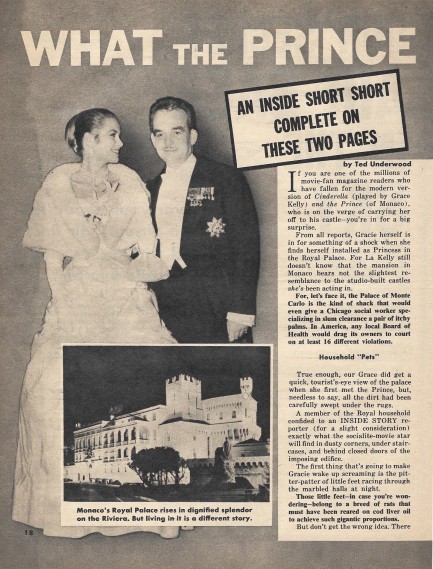 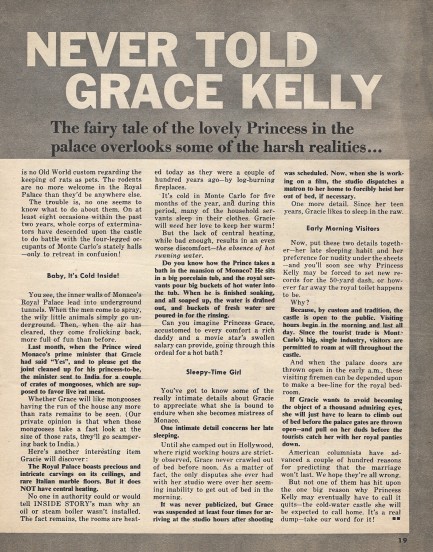 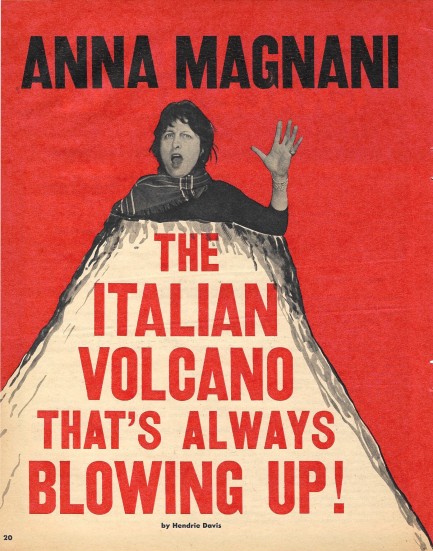     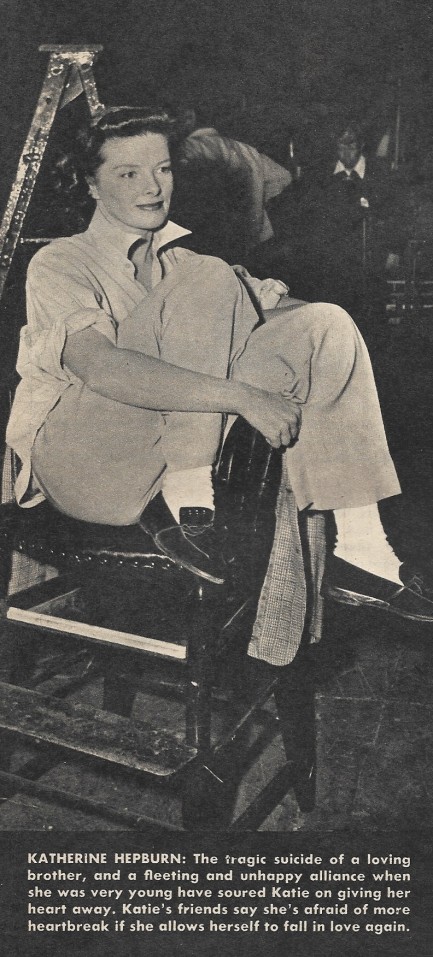 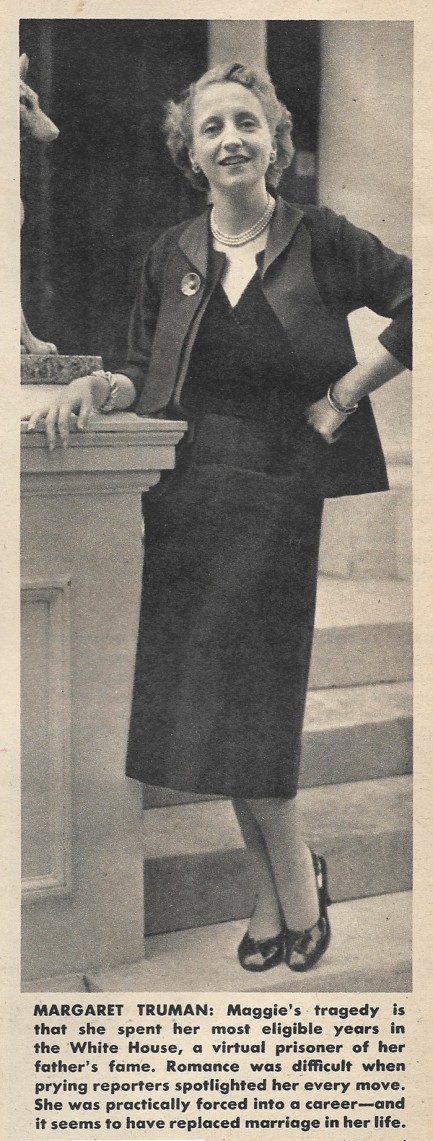 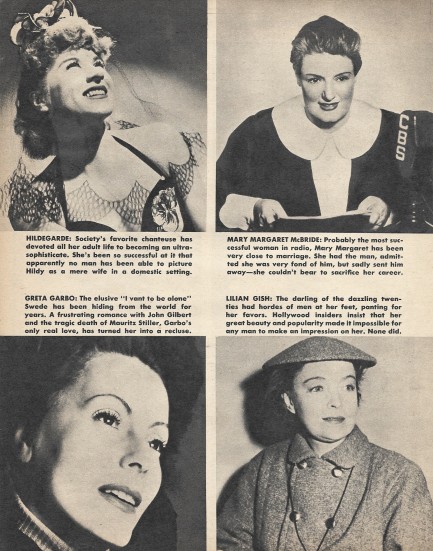 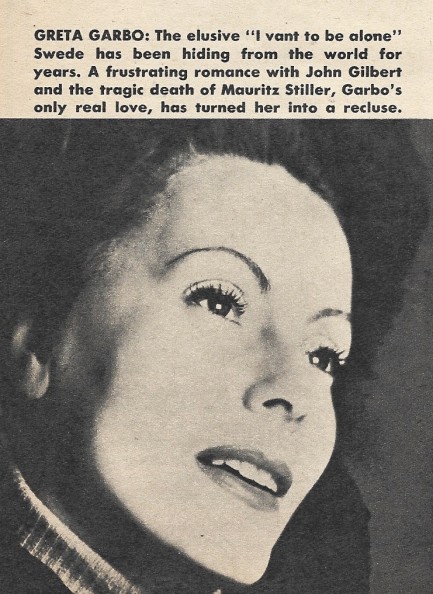 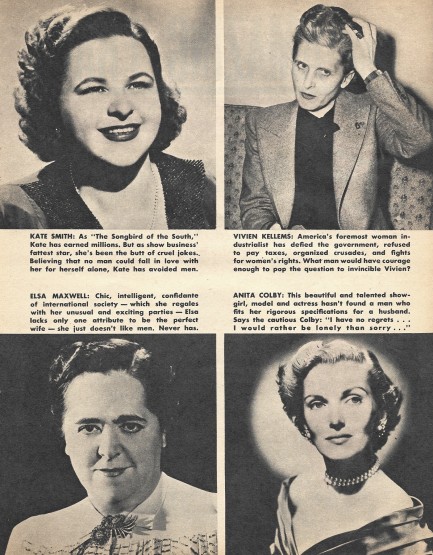 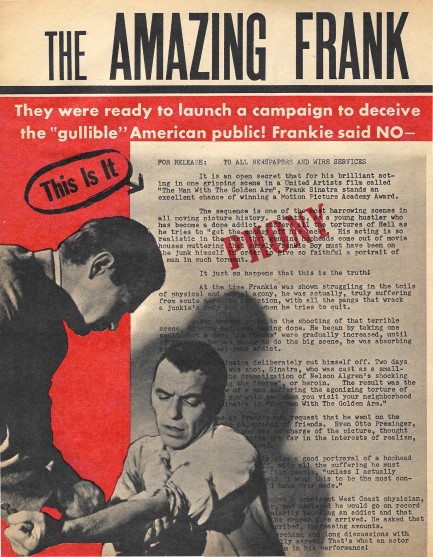 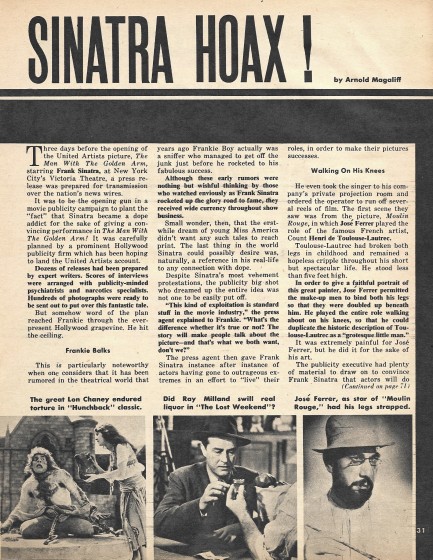 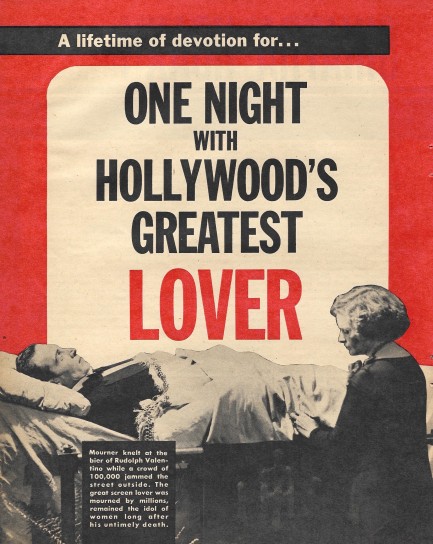 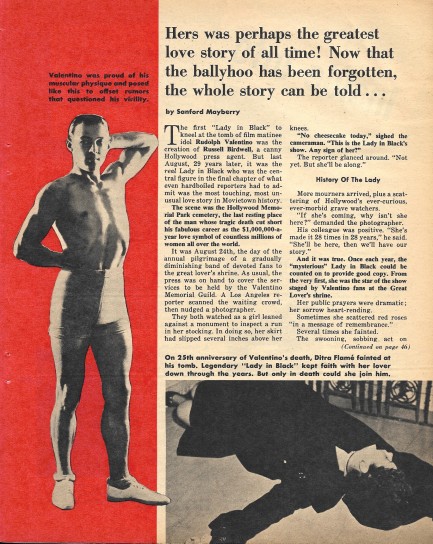 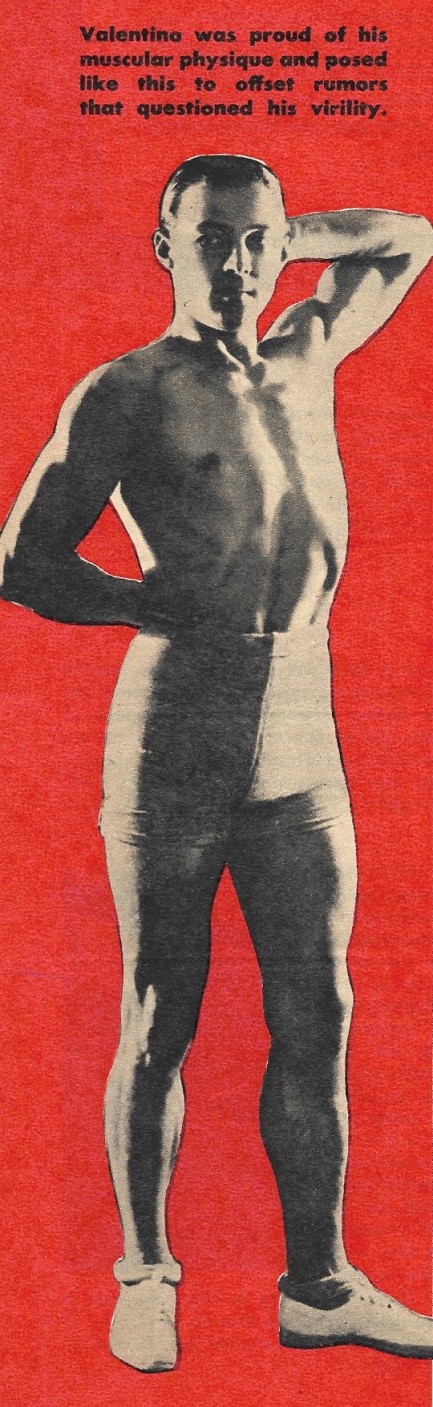 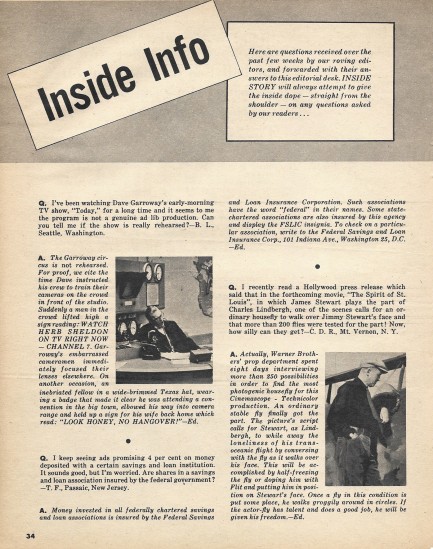 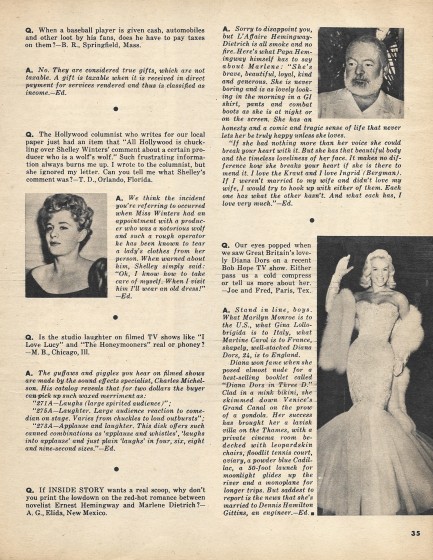 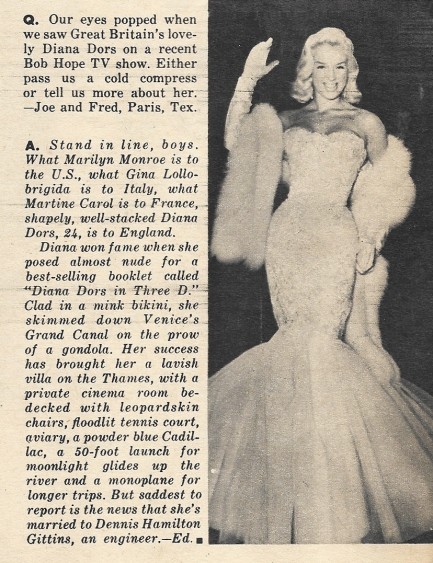 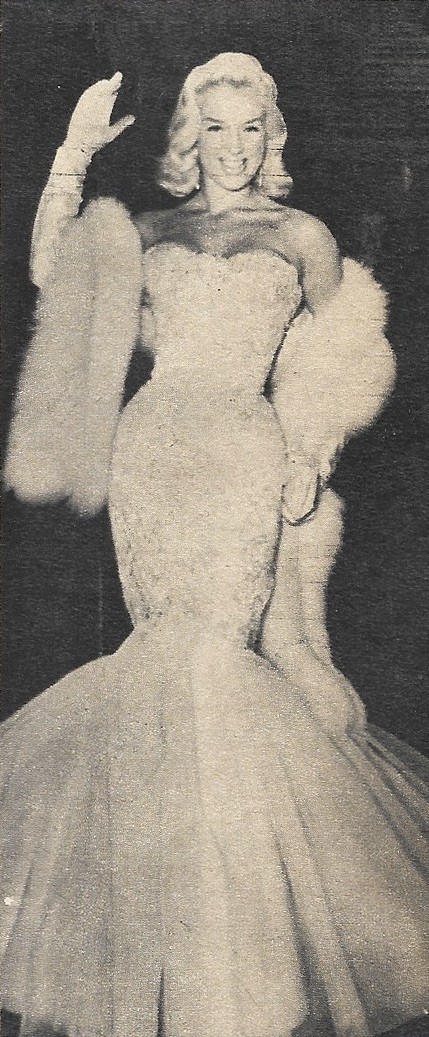 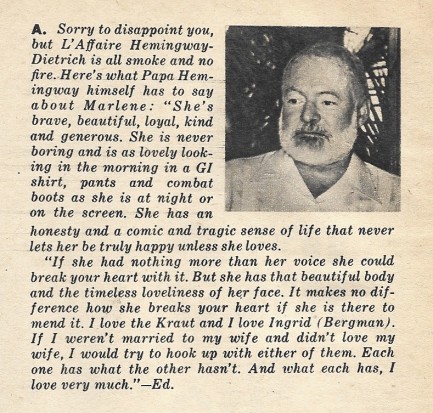 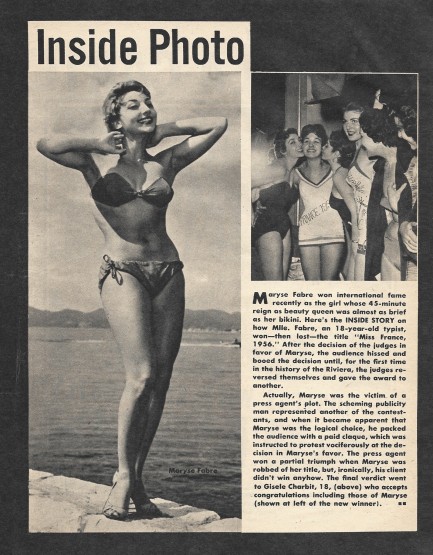 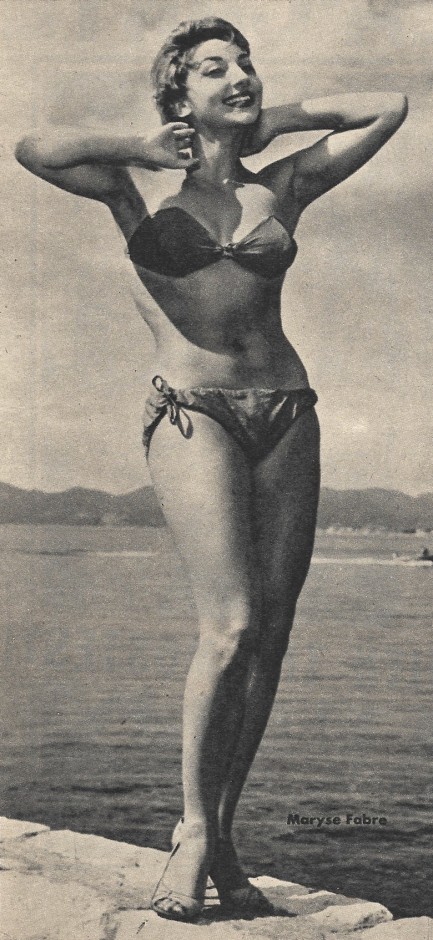 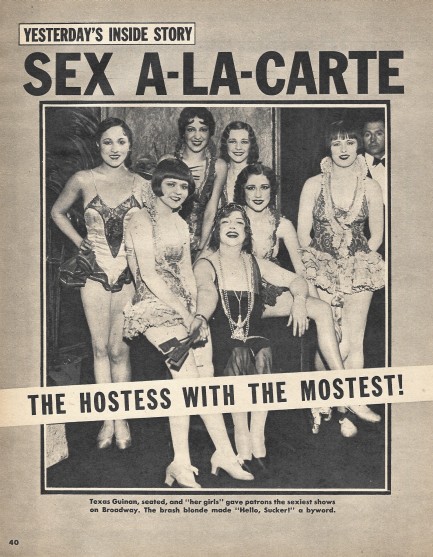 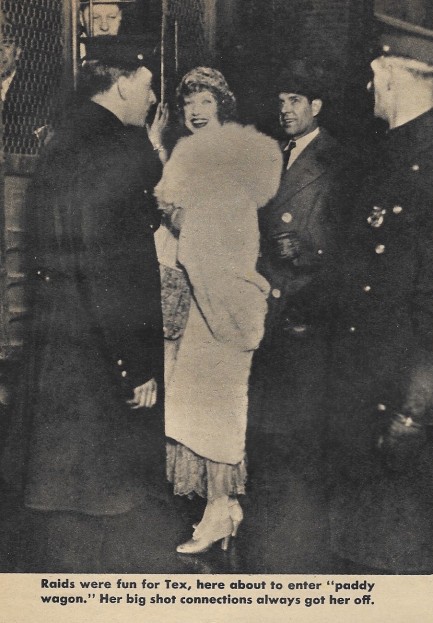 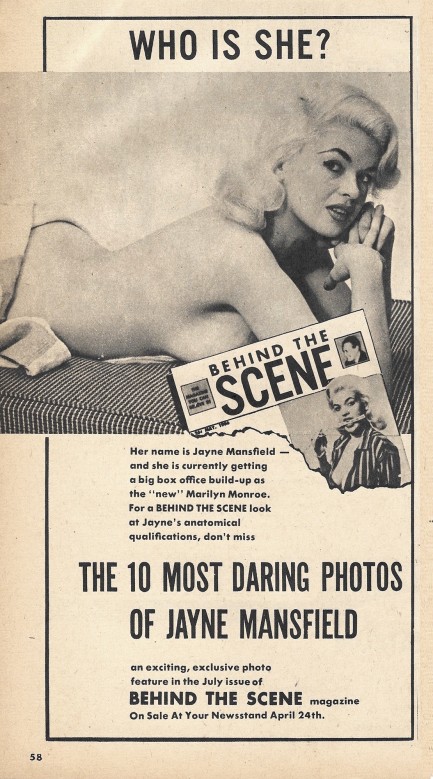
 Somebody up there liked him 67 times. And didn't like him 10 times. 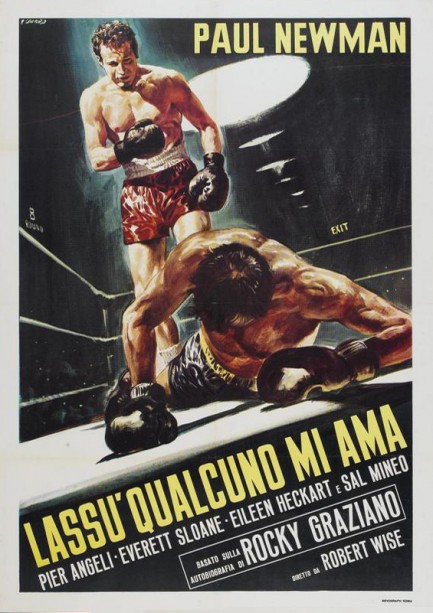 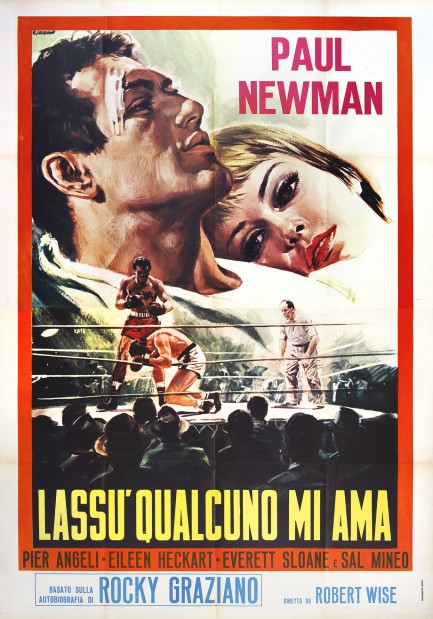
These Italian promo posters were made for the drama Lassù qualcuno mi ama, better known as Somebody Up There Likes Me, the rags to riches biopic of boxer Rocky Graziano, who survived a violent father, street gangs and prison to become a world middleweight champion who finished his career with a 67-10 record. If somebody up there liked him, we'd love to hear why he got his ass whipped ten times, but whatever. Paul Newman played the lead in this after intended star James Dean was killed in an auto accident, and the film went on to earn acclaim and win a couple of Oscars for cinematography and art direction. The posters were painted by Renato Casaro, one of the most important mid-century film artists, a man who produced hundreds of masterpieces and was behind this gem and this racy little number. Casaro is still around at age eighty-one and maintains a website detailing his work and career. Lassù qualcuno mi ama was originally released in the U.S. in 1956 and had its premiere in Italy today in 1957 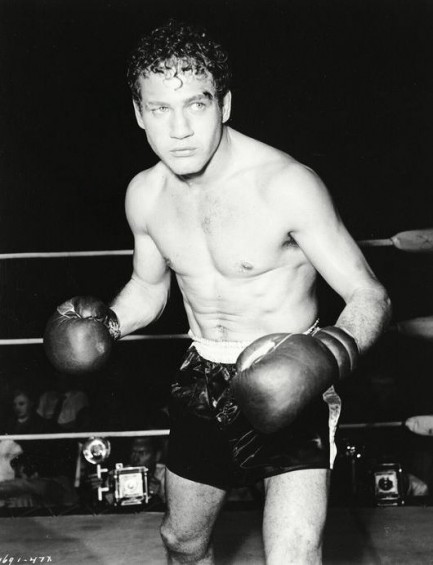
 It's time to get up for the best sport in the world. 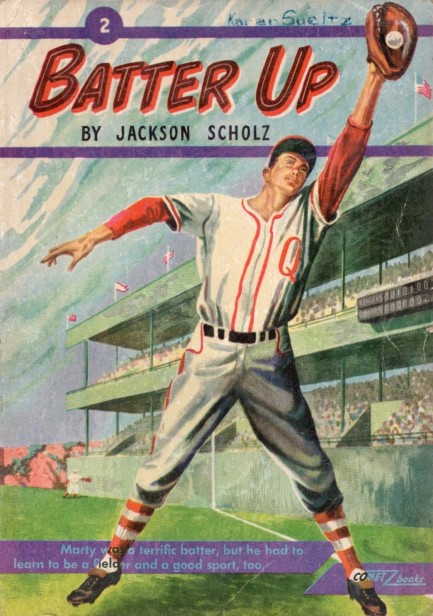
Yes, hope springs eternal in Major League Baseball, and in the 1948 book Batter Up hope even leads to history. Marty Shane is a very good college player who becomes a mediocre minor leaguer, but through hard work and conquering various obstacles he eventually becomes a major leaguer, and plays a key role in his team's championship season. The story is the standard mythology of professional athletics anywhere in the world, written basically for teens, but in such a way that adults can enjoy it too. The cover art is by Robert Frankenberg, and inside and on the rear you get more illustrations from him.
Baseball is a polarizing sport, isn't it? The on-the-field action can seem slow. But that's an illusion—the actual changing nature of the strategies is constant, occurring from pitch to pitch, and often between pitches. Pitching, batting, running, and defensive strategies differ each second, with constant influence from both the players on the field and the manager in the dugout. That's one reason the game is great—it's chess-like, but on a level that anyone can understand. If they're inclined, that is.
Many people, particularly younger people, aren't especially inclined. Major League Baseball is poised to change the rules of the game in an attempt to draw more young viewers. Will they never learn? Chasing corporate advertising dollars, the league sacrificed young viewers thirty years ago when it moved toward mostly night games, making it much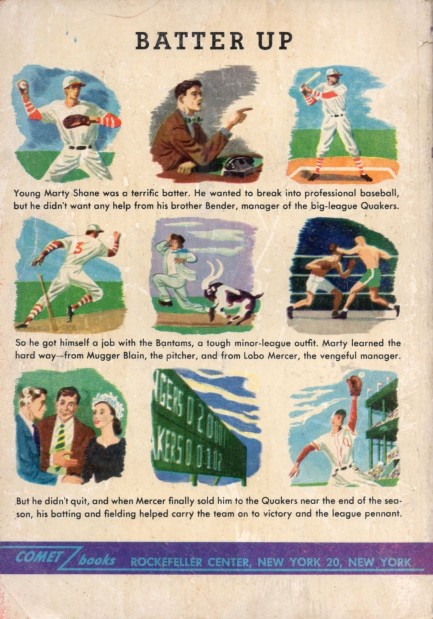 more difficult for kids to attend games in person. The easiest way to ensure fresh generations of fans is to simply return to day games, including during the week, but instead they're contemplating a radical reworking of the rules to entice “low attention span” viewers. more difficult for kids to attend games in person. The easiest way to ensure fresh generations of fans is to simply return to day games, including during the week, but instead they're contemplating a radical reworking of the rules to entice “low attention span” viewers.
A daytime baseball game has to compete with no other sporting event—there's literally nothing else occurring on a spring afternoon. These day games are how we got hooked—2:30 p.m. start time, sitting there with our fathers, first appreciating the fun environment, and then the action. During a spring night or on a weekend there are other sports choices, and those will remain more superficially interesting no matter what changes are made to baseball's rules. What rule change, after all, can make baseball more exciting moment to moment than say basketball, whose season runs all the way through June? Night games also end late, usually around 10:30, which keeps kids out until 11:00 or 11:30—too late for some parents.
Living overseas, we can't attend baseball games. Instead we play fantasy baseball, and we're pretty excited for the start of the MLB season today, having won our league twice in the last three years. Unfortunately, our draft didn't go as well as we'd have liked this time around. But hope springs eternal indeed. And baseball spans the best season of the year—glorious, endless summer, which is lovely whether your team wins or loses. You may be wondering if baseball is in any way pulp. We think so, and we explain our reasoning here. And speaking of fantasy baseball, see below...
 The Petit Prince was a true original. 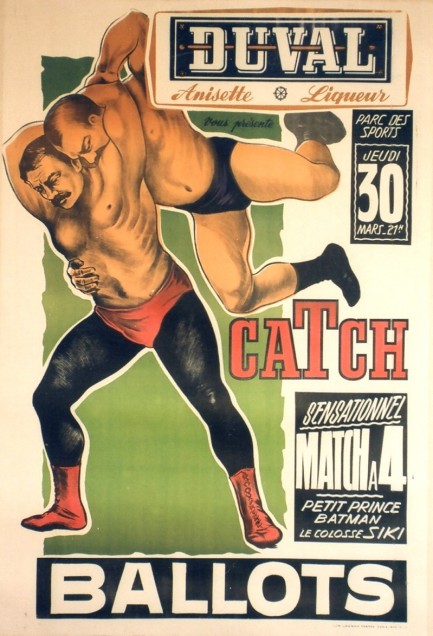
Here’s an event you don’t want to miss—the sure-to-be entertaining grudge match between wrestlers Petit Prince Batman and Le Colosse Siki at the Parc de Sports in Paris. The bout was sponsored by Duval Anisette Liqueur sometime during the 1930s, according to the poster's vendor. The years during that decade where Thursday fell on March 30 were 1933 and 1939. The DC Comics character Batman premiered in 1939. But that wasn’t until May, so if this wrestling poster is indeed from the 1930s then Petit Prince Batman beat Batman by a few months, if not a few years. To us it seems unlikely, but must be true. Anyone have better info? E-mail us.

|
 |

The headlines that mattered yesteryear.
1945—Mussolini Is Arrested
Italian dictator Benito Mussolini, his mistress Clara Petacci, and fifteen supporters are arrested by Italian partisans in Dongo, Italy while attempting to escape the region in the wake of the collapse of Mussolini's fascist government. The next day, Mussolini and his mistress are both executed, along with most of the members of their group. Their bodies are then trucked to Milan where they are hung upside down on meathooks from the roof of a gas station, then spat upon and stoned until they are unrecognizable. 1933—The Gestapo Is Formed
The Geheime Staatspolizei, aka Gestapo, the official secret police force of Nazi Germany, is established. It begins under the administration of SS leader Heinrich Himmler in his position as Chief of German Police, but by 1939 is administered by the Reichssicherheitshauptamt, or Reich Main Security Office, and is a feared entity in every corner of Germany and beyond. 1937—Guernica Is Bombed
In Spain during the Spanish Civil War, the Basque town of Guernica is bombed by the German Luftwaffe, resulting in widespread destruction and casualties. The Basque government reports 1,654 people killed, while later research suggests far fewer deaths, but regardless, Guernica is viewed as an example of terror bombing and other countries learn that Nazi Germany is committed to that tactic. The bombing also becomes inspiration for Pablo Picasso, resulting in a protest painting that is not only his most famous work, but one the most important pieces of art ever produced. 1939—Batman Debuts
In Detective Comics #27, DC Comics publishes its second major superhero, Batman, who becomes one of the most popular comic book characters of all time, and then a popular camp television series starring Adam West, and lastly a multi-million dollar movie franchise starring Michael Keaton, then George Clooney, and finally Christian Bale. 1953—Crick and Watson Publish DNA Results
British scientists James D Watson and Francis Crick publish an article detailing their discovery of the existence and structure of deoxyribonucleic acid, or DNA, in Nature magazine. Their findings answer one of the oldest and most fundamental questions of biology, that of how living things reproduce themselves.
|

|
|
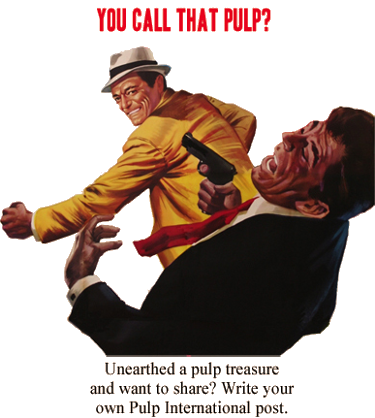
It's easy. We have an uploader that makes it a snap. Use it to submit your art, text, header, and subhead. Your post can be funny, serious, or anything in between, as long as it's vintage pulp. You'll get a byline and experience the fleeting pride of free authorship. We'll edit your post for typos, but the rest is up to you. Click here to give us your best shot.
|
|