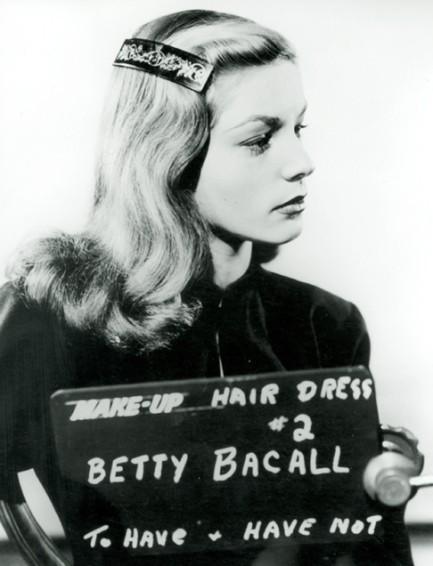
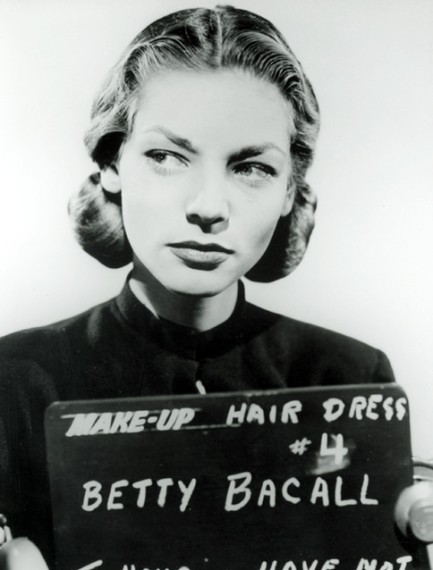
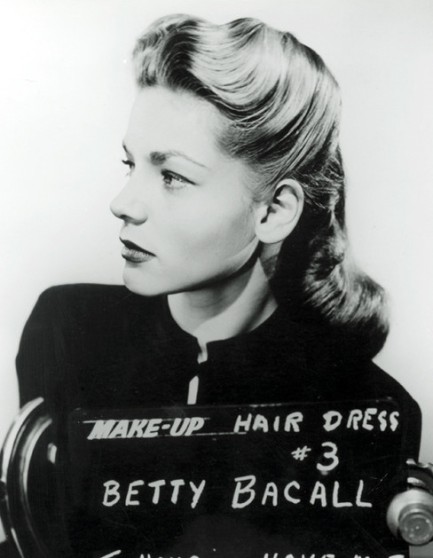
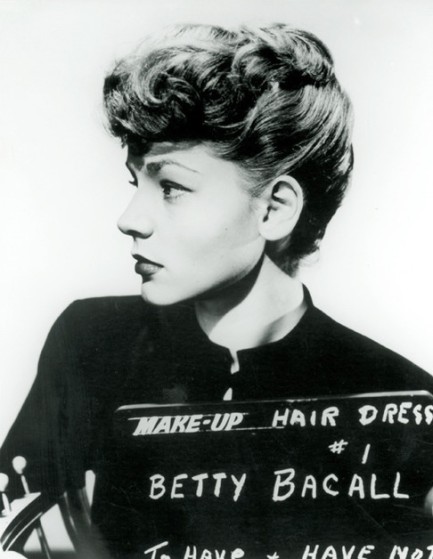
I've run through every bit of fluid in this thing in just a week. Hmm. Maybe I should cut back on my smoking. 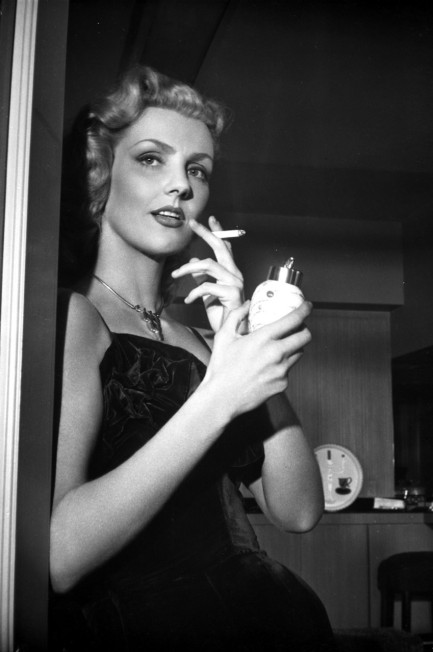
Dolores Moran's film career started with a bang when her first credited role was as the smoldering Hellene de Bursac in the 1944 thriller To Have and Have Not when she was only eighteen. She was the reason Humphrey Bogart tossed off the memorable quip, “I don't understand what kind of a war you guys are fighting. Lugging your wives with you. Don't you get enough of them at home?” It would have been easy to assume nobody would ever get enough of Moran, but after very nearly outshining Lauren Bacall in that film she managed perhaps ten more credited screen roles. Health issues had partly to do with it, and a marriage at age twenty probably curtailed her as well, though her husband was the film producer Benedict Bogeaus. But she wasn't the first flame to fizzle in Hollywood—that's part of the nature of the place. The above shot was made as a promo for her next-to-last film Count the Hours. That was in 1953.
 With Bogart and Bacall in the starring roles an unusual fugitive movie takes flight. 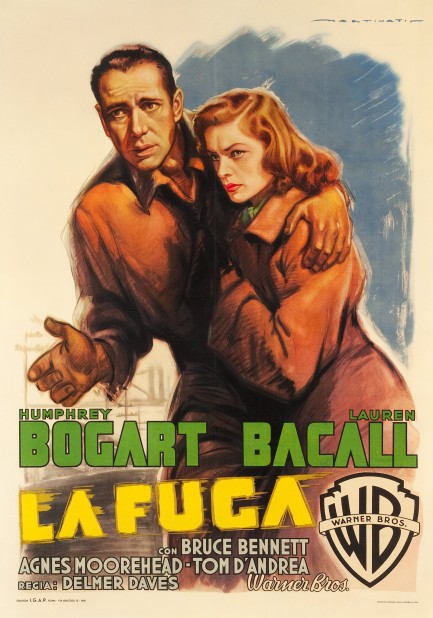
This beautiful poster for La fuga was painted by Italian artist Luigi Martinati, and you doubtless recognize Humphrey Bogart and Lauren Bacall. They starred in four movies together and had a dual cameo in a fifth. This promo was made for their fourth outing Dark Passage, retitled to “the escape” in Italy. And therein lies the plot. Bogart breaks prison and undergoes a backalley cosmetic surgery procedure on his face in order to evade the cops and have a chance to solve the crime for which he was unjustly sent up the river. The filmmakers decided to use the gimmick of having the first section of the film in Bogart-vision—i.e. first person pov until he gets his new face. It makes sense. Otherwise they'd have needed to have another actor play pre-surgery Bogart, or have resorted to clunky make-up and prosthetics. Bacall co-stars as unlikely shelter and succor, plus the prospect of love—if Bogie can survive. It's a good movie.
But we're going to tack upwind at this point and suggest that Dark Passage, while good, isn't as scintillating as its reputation. Certainly it isn't in the class of To Have and Have Not, Key Largo, or The Big Sleep. But hey—it stars B&B, and that's all audiences of the era really cared about. Three years into her film career Bacall had grown into superstardom—or stardom as it was called back then—and dished out a performance here that did plenty with a thin script and a belief defying scenario. The other star here is San Francisco, where most of the movie was shot. The city appeared in many period productions, but we can't think of it ever being used to such an extent as in Dark Passage. Since we lived across the Bay in Berkeley for a couple of years, we got to know San Fran well and it's fun to see it as it once was. Dark Passage—slightly overrated and all—is fun too. It premiered in the U.S. in 1947 and reached Italy today in 1948.
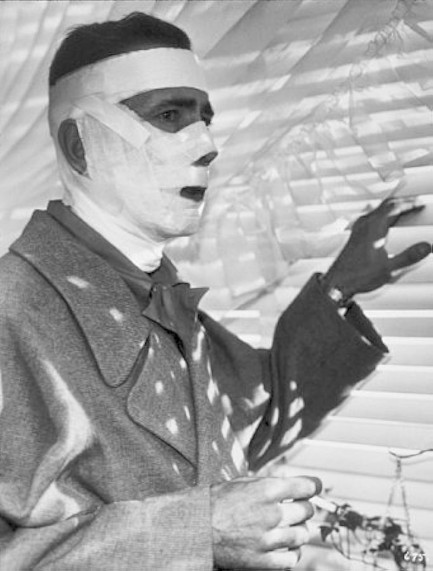 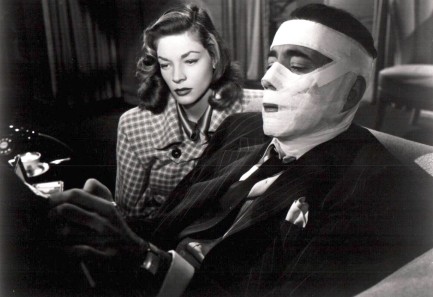 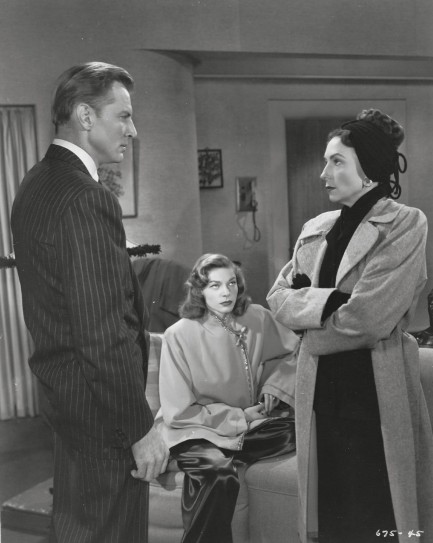 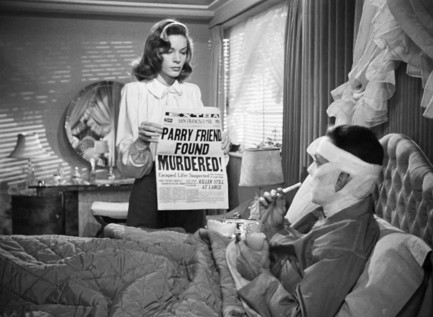  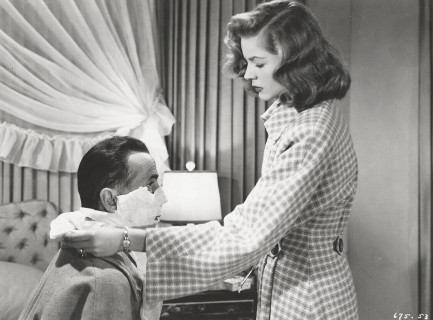 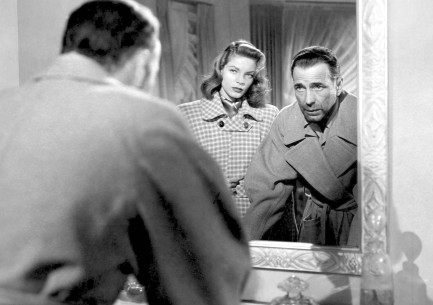 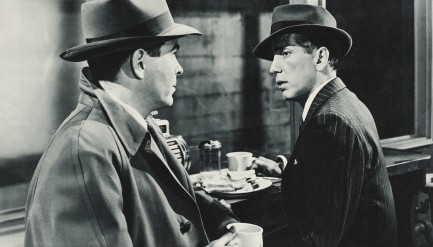 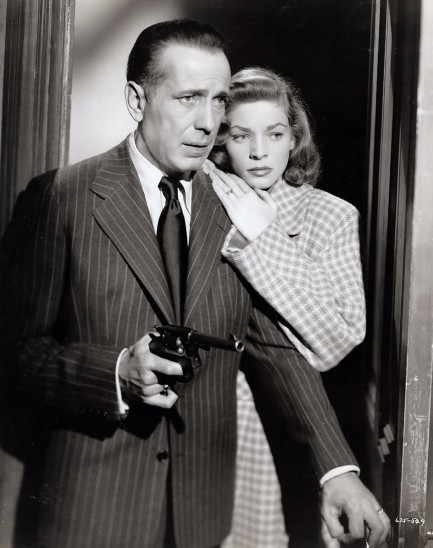 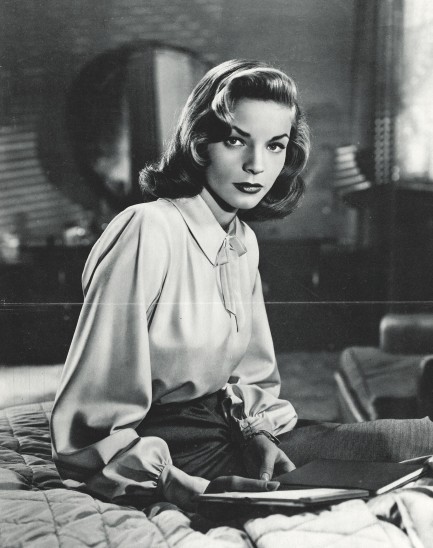   
 I'll tell you one thing. After today we won't complain so much when someone steals a couple of our towels. 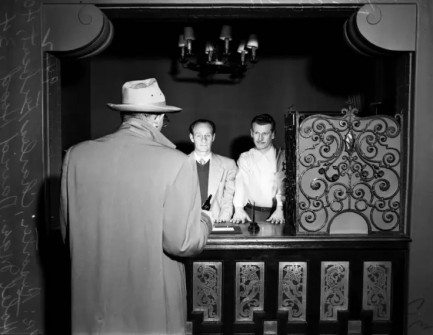 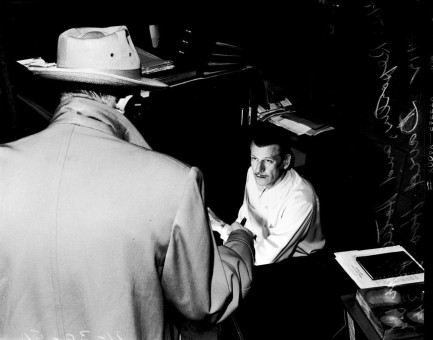
The two photos above show an LAPD detective and two witnesses re-enacting a robbery (notice the detective is aiming a gun in the top photo) that occurred today in 1951 at the Garden of Allah Hotel on Sunset Boulevard. Two gunmen had gotten away earlier in the day with a bundle of cash. Newspaper accounts differ about how much. The San Bernadino County Sun, in its evening edition published later, pegged the amount at $1,073 ($12,275 today), but the Los Angeles Times morning edition printed the next day claimed it was $500 ($5,731). The Times is probably a more reliable source, and with more time to get the amount right we'd tend to think its report is correct, but $500 is a conveniently round number, whereas the $1,073 reported by the Sun is very specific. Either way, we imagine the terrified hotel employees surrended every dollar on hand.
The reason the story caught our eye, though, is because the Garden of Allah was one of the most famous hotels in Los Angeles at the time. The Spanish revival complex consisting of a main building, villas, restaurant, bar, pool, and landscaped grounds, opened in 1927 and quickly became a favorite stopover for Tinseltown glitterati. Everyone from Lauren Bacall to Orson Welles spent time or stayed there, and the place was described by one resident as in “continual tumult” because of all the intrigues, disturbances, and minor scandals. But all of its celebrity history and architectural significance amounted to nothing among the ranks of those who sought so-called progress, because like so many other Hollywood landmarks, this iconic property fell to the wrecking ball when it was demolished in 1959 to make way for a bank.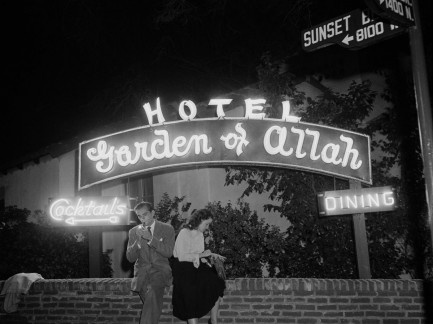 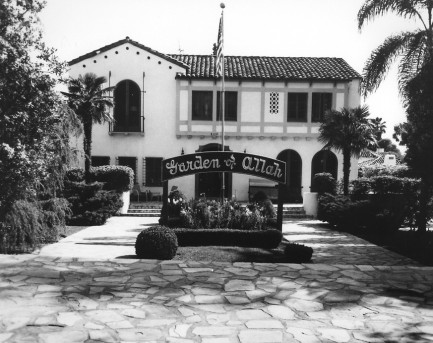 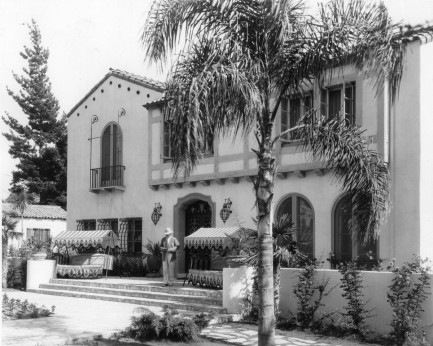 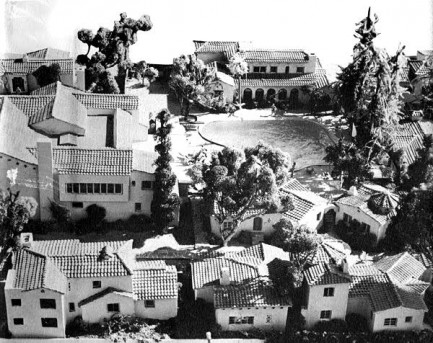
 Minuit puts the country's hospitable reputation to the test. 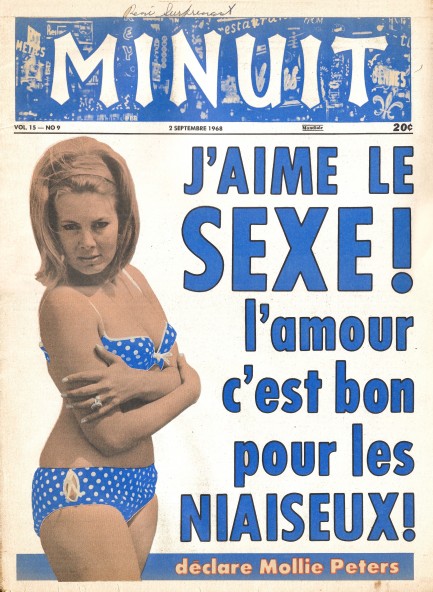
Ever since we discovered a while back that the U.S. tabloid Midnight was actually a spin-off of Montreal based Minuit we've been looking around for issues. We finally had some luck. This example hit Canadian newsstands today in 1968, and on the cover is British actress Mollie Peters, or Molly Peters. Inside, various Hollywood stars are spotlighted in unflattering ways. Edy Williams was allegedly attacked by a lesbian; Paul Newman resorted to transcendental meditation to cut down on his drinking; Jason Robards, Jr. broke everything Humphrey Bogart related in Lauren Bacall's house; Robert Vaughn paid off his extensive gambling debts and cancelled his credit cards; Janet Margolin allegedly ate a pound of ground beef every day for health reasons; and Ursula Andress attacked Anita Ekberg in a Paris restaurant for making eyes at Andress's boyfriend Jean-Paul Belmondo.
There's also a note on Babsi Zimmermann, who Minuit claims just refused a nude role in a French film. We noticed the blurb because of her name, which seems too good to be true, and familiar too. We looked her up and she did exist. It turns out she was better known as Barbara Zimmermann. She changed her stage name after the release of her first film, a counter-culture sexploitation romp called Heißer Sand auf Sylt, aka The New Life Style (Just to Be Love). Maybe she wanted a fresh start because the movie was such a stinker. We know it was bad because we wrote about it, which is why her name sounded familiar. She's naked as a donskoy cat in it, so Minuit's claim that she refused the French movie makes sense if she wanted to rebrand herself. The change still has people confused. Currently IMDB has separate entries for Babsi and Barbara.
Minuit reserves special attention for U.S. actor George Hamilton, who had been generally targeted by tabloids for avoiding military service in Vietnam. Why him? We wrote about the reason a long while back, and if you're curious you can check. Minuit wryly informs readers that, “George Hamilton somehow managed to break his toe the day after he received a notice to report to the U.S. Army recruiting center. This gives him an interesting three-month [deferral]. It's clever, isn't it?” Obviously, toes heal. Hamilton eventually received a full deferral for other reasons.
Also in this issue, Minuit editors treat readers to a story about a man cut in half by a train. We feel like it's urban folklore, but there are photos—for any who might be convinced by those—and a long story explaining how a man named Regerio Estrada caught his wife Lucia in bed with another man, beat him unconscious, and tied him to a train track to await the next express. Do we buy it? Not really. The internet contains only a fraction of all knowledge and history, but we think this tawdry tale is so bizarre that it would have found its way online. There's nothing. Or maybe we're just the first to upload it. Anything is possible. We have additional colorful Canadian tabloids we'll be sharing in the months ahead. You'll find eighteen scans below. 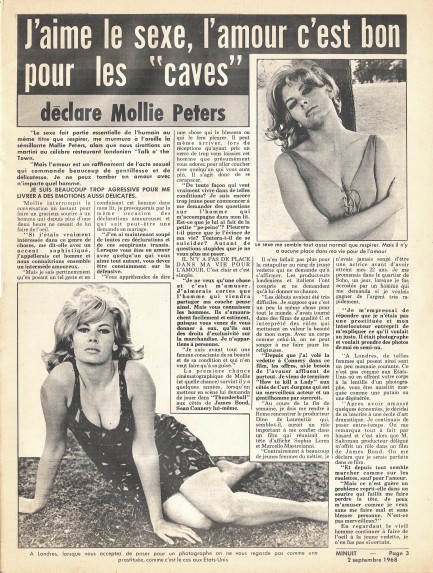 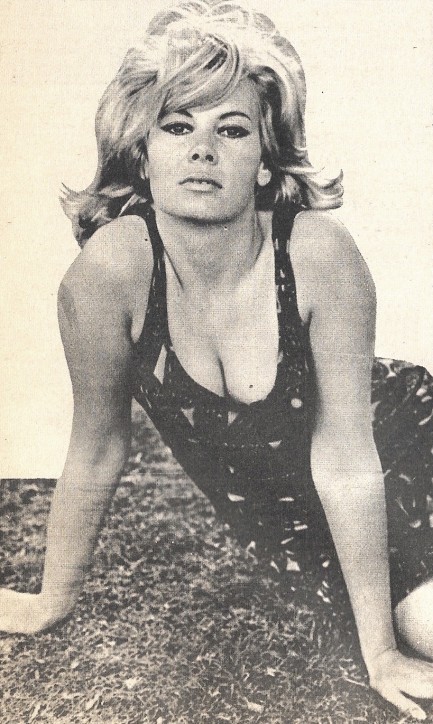 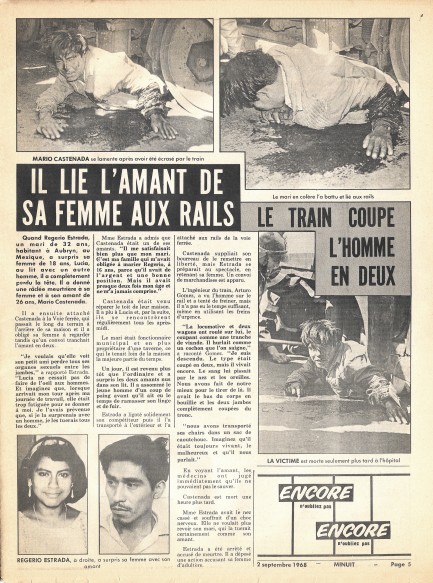 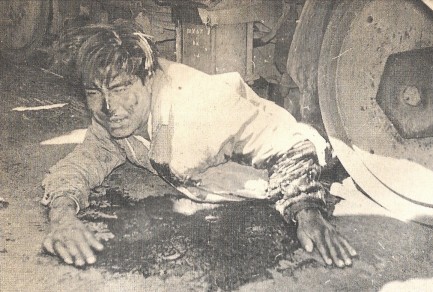 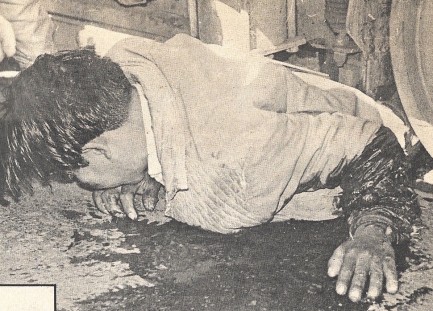 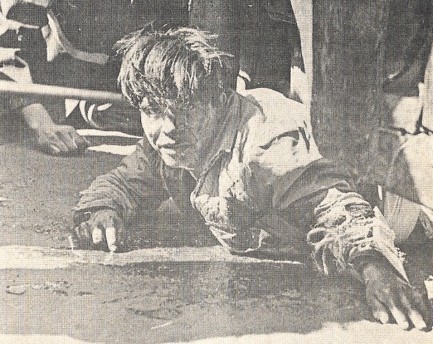 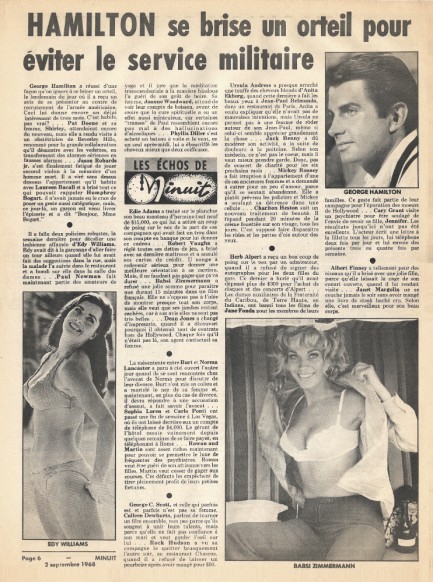 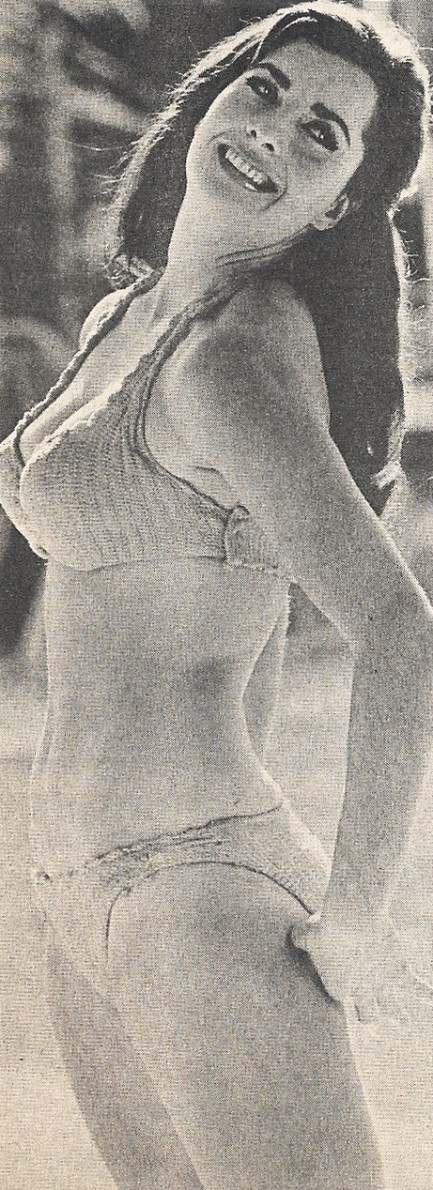 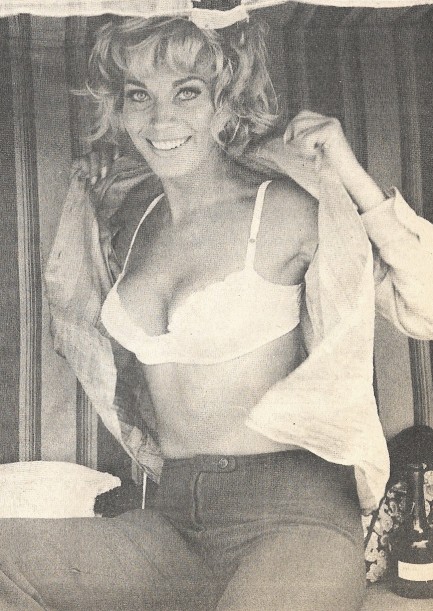 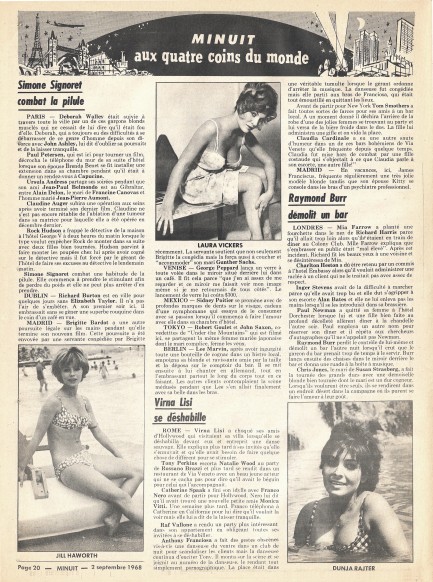 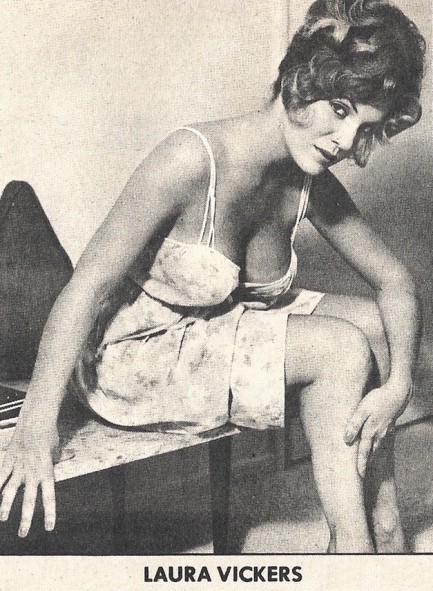 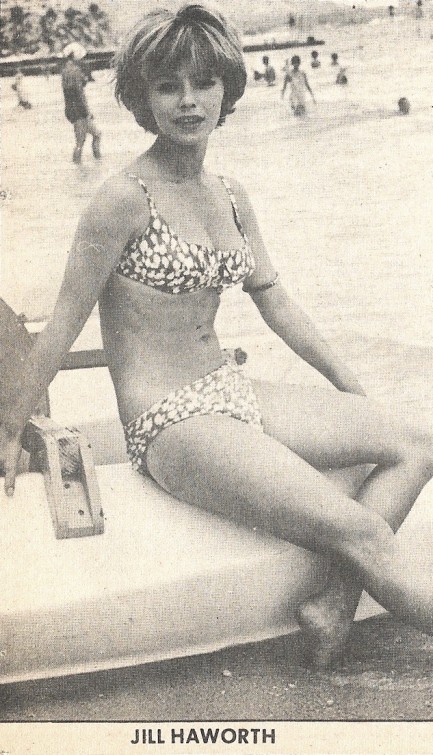 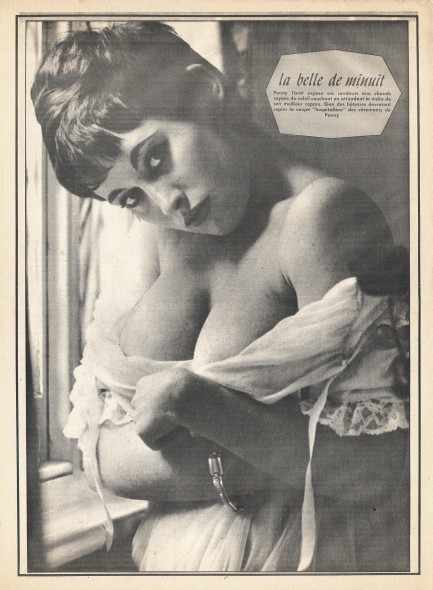 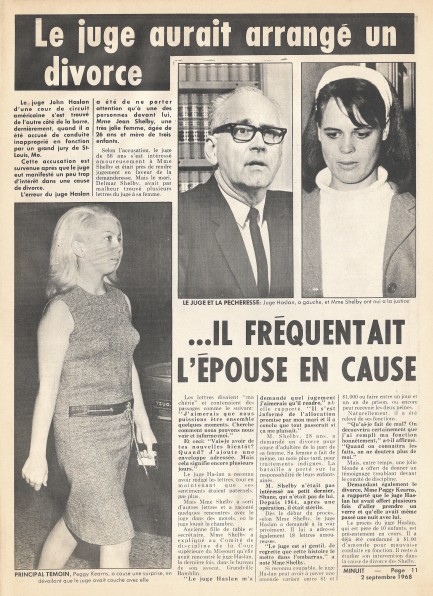   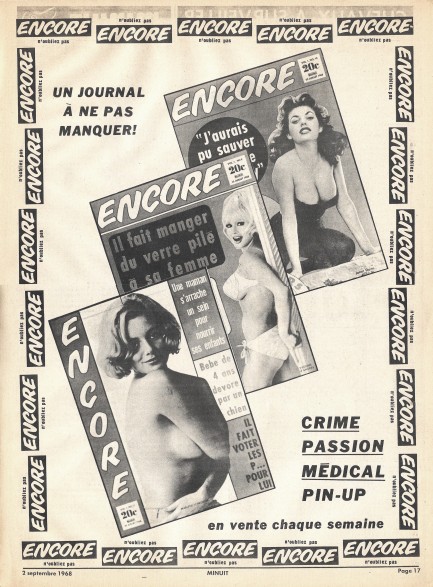
 Many miles to go before you Sleep. 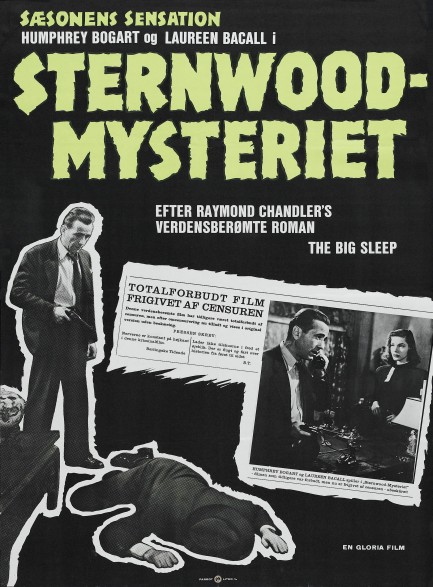
This unusual Danish photo poster was made for Sternwood-mysteriet— Actually, a quick digression. That would be a good pub quiz question, wouldn't it? It could be part of a foreign titles round. “Okay, next question. What is the original title of the film released in Denmark as Sternwood-mysteriet?” Did we ever mention that PSGP has hosted numerous pub quizzes? That's why it came to mind. Funny story: He once lost a bet and had to host one in a Speedo. Anyway, any noir fan would get the question right—Sternwood-mysteriet is better known as The Big Sleep, starring Humphrey Bogart and someone named “Laureen” Bacall.
The movie didn't premiere in Denmark until today in 1962. Why? Apparently it was banned. There could be a couple of different reasons why, or both at once. Bogart's character Sam Spade gets laid—by implication—with a bookstore clerk played by the lovely Dorothy Malone. And a central part of the complex mystery deals with illicit photos, implied to have been pornographic shots of a drugged Martha Vickers. The bookstore seduction isn't in Raymond Chandler's source novel, but the smut photos are. Haven't seen the movie? You should watch it. But carefully. 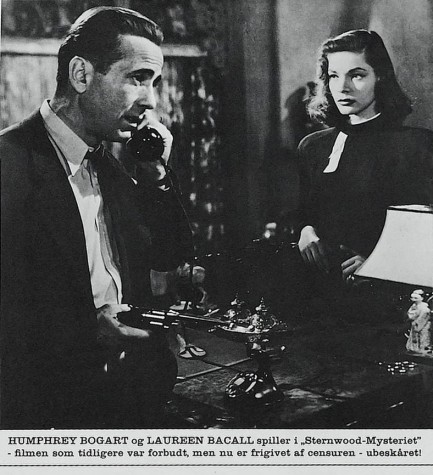 Humphrey Bogart and Lauren Bacall play in the “Sternwood-Mystery” - the film that was previously banned but is now released by the censor - uncut! Humphrey Bogart and Lauren Bacall play in the “Sternwood-Mystery” - the film that was previously banned but is now released by the censor - uncut!
 Have yourself a very Humphrey Christmas. 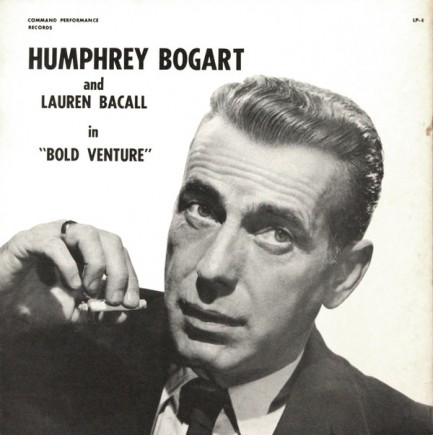
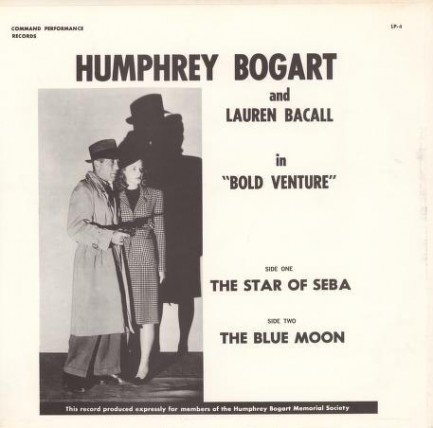
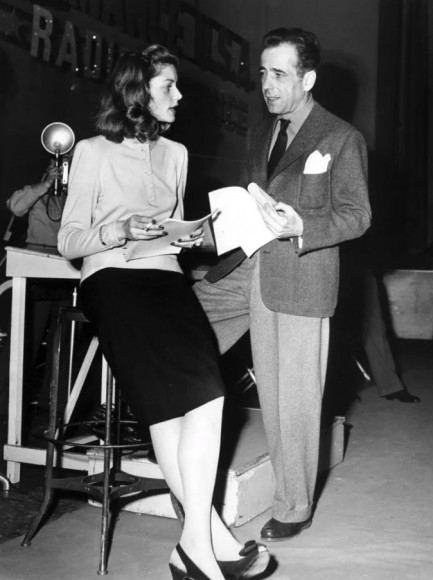
In the other work we do discussions about starting a podcast have come up. We shoot the idea down because we can't possibly fit anything else into our lives, but the concept got us thinking about things that might be fun to listen to. Above you see a record sleeve for Bold Venture, pressed from a radio series starring Humphrey Bogart and Lauren Bacall. Developed by Bogart's Santana Productions, he and Bacall star as Slate Shannon and Sailor Duvall. He's the proprietor of a hotel in Cuba where various shady characters, revolutionaries, and all around scalawags wander through, and she's the woman he promised her dead father to watch over and protect. And by protect, we mean at close quarters. Sounds a bit like To Have and Have Not, right? All we can say is—sold!
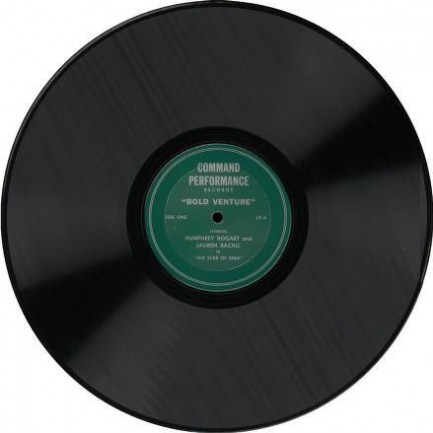
The series ran for fifty-seven episodes in 1951 and 1952, and this record contains one episode on each side. If you like podcasts, or listening to stuff while doing stuff, this may be for you. We can give no qualitative info. We haven't heard it. We're traveling now for two weeks (we mentioned that preloaded posts thing, right?) and grabbed this to listen to during our wanderings. It may be amazing, or it may be bad. But we very much like Bogie and Bacall, and given all the great work they've done together and apart, how can it possibly be bad? Like, seriously. You can have your own copy of the series in a jiffy, because it's available on Archive.org, the public domain repository, here, or at a dedicated UK website here. Merry Christmas, pulpsters!
 Royal Crown helps consumers to stay awake at the movies. 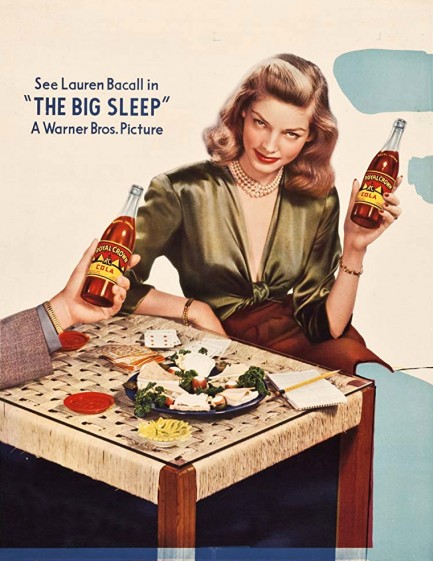
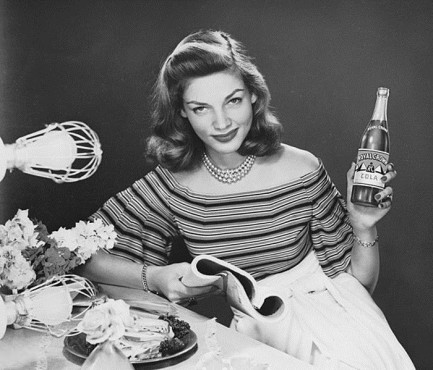
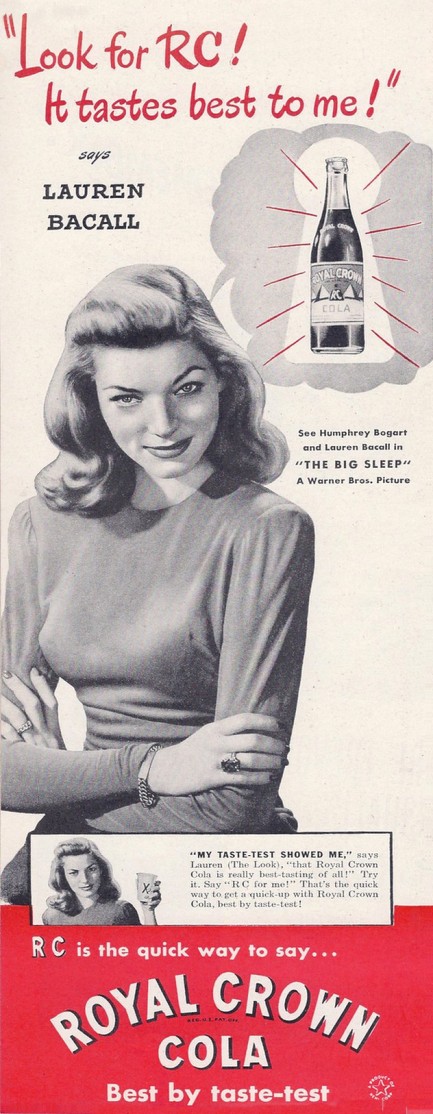
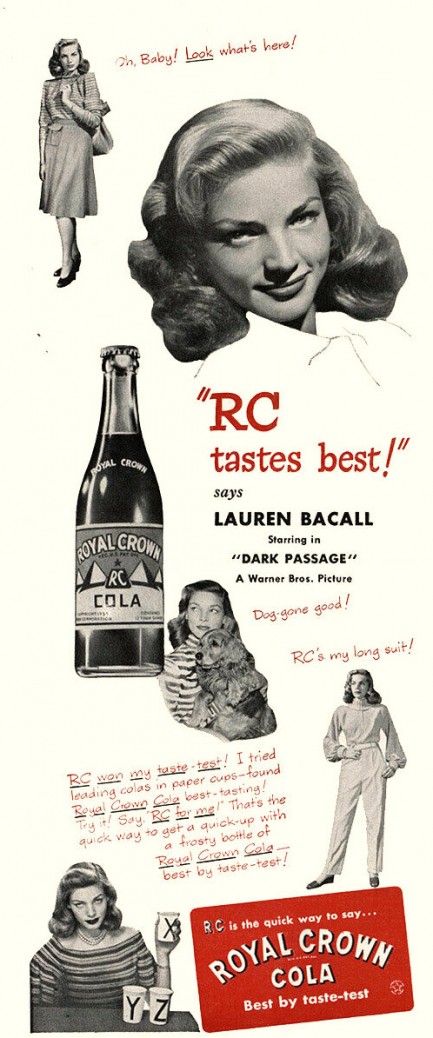
Lauren Bacall brings her special brand of smoky sex appeal to this magazine advertisement for Royal Crown Cola, made as a tie-in with her 1946 film noir The Big Sleep. RC was launched in 1905 by Union Bottling Works—a grandiose corporate name for some guys in the back of a Georgia grocery store. The story is that the drink came into being after grocer Claud A. Hatcher got into a feud with his Coca Cola supplier over the cost of Coke syrup, and essentially launched RC out of equal parts entrepreneurialism and spite. Union Bottling Works quickly had a line of drinks, including ginger ale, strawberry soda, and root beer.
However humbly RC Cola began, the upstart had truly arrived by 1946, because The Big Sleep, co-starring Humphrey Bogart, was an important movie, and Bacall was a huge star. She was only one jewel in the crown of RC's endorsement efforts. Also appearing in ads were Rita Hayworth, Veronica Lake, Joan Crawford, Virginia Mayo, Paulette Goddard, Gene Tierney, Ann Rutherford, Ginger Rogers, and others. Bacall flogged RC for at least a few years, including starring in tie-in ads for Dark Passage, another screen pairing of her and Bogart that hit cinemas in 1947. You see one of those at bottom. We can only assume these ads were wildly successful. After all, it was Bacall.
 It's shocking how many Hollywood stars did smack. 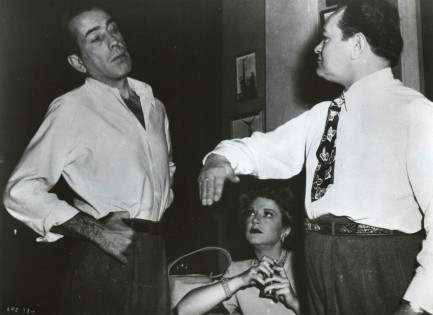
Everybody wants to slap somebody sometime. Luckily, actors in movies do it so you don't have to. The above shot is a good example. Edward G. Robinson lets Humphrey Bogart have it in 1948's Key Largo, as Claire Trevor looks on. In vintage cinema, people were constantly slapping. Men slapped men, men slapped women, women slapped women, and women slapped men. The recipient was usually the protagonist because—though some readers may not realize this—even during the ’40s and 50s, slapping was considered uncouth at a minimum, and downright villainous at worst, particularly when men did it. So generally, bad guys did the slapping, with some exceptions. Glenn Ford slaps Rita Hayworth in Gilda, for example, out of humiliation. Still wrong, but he wasn't the film's villain is our point. Humphrey Bogart lightly slaps Martha Vickers in The Big Sleep to bring her out of a drug stupor. He's like a doctor. Sort of. In any case, most cinematic slapping is fake, and when it wasn't it was done with the consent of the participants (No, really slap me! It'll look more realistic.). There are some famous examples of chipped teeth and bloody noses deriving from the pursuit of realism. We can envision a museum exhibit of photos like these, followed by a lot of conversation around film, social mores, masculinity, and their intersection. We can also envison a conversation around the difference between fantasy and reality. There are some who believe portryals of bad things endorse the same. But movies succeed largely by thrilling, shocking, and scaring audiences, which requires portraying thrilling, shocking, and frightening moments. If actors can't do that, then ultimately movies must become as banal as everyday llife. Enjoy the slapfest.
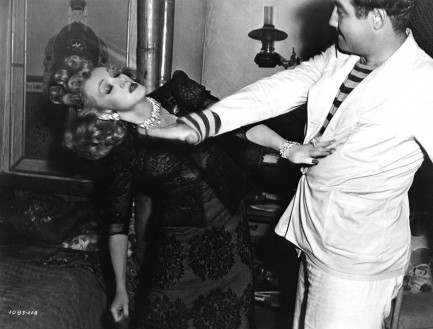 Broderick Crawford slaps Marlene Dietrich in the 1940's Seven Sinners. Broderick Crawford slaps Marlene Dietrich in the 1940's Seven Sinners.
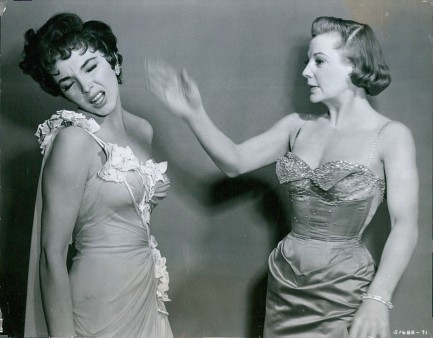 June Allyson lets Joan Collins have it across the kisser in a promo image for The Opposite Sex, 1956. June Allyson lets Joan Collins have it across the kisser in a promo image for The Opposite Sex, 1956.
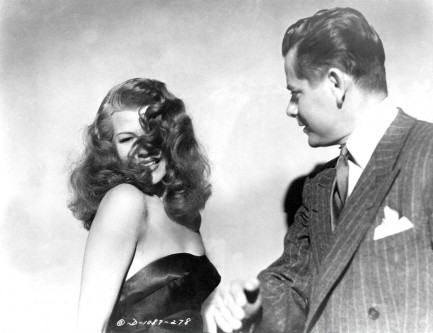 Speaking of Gilda, here's one of Glenn Ford and Rita Hayworth re-enacting the slap heard round the world. Hayworth gets to slap Ford too, and according to some accounts she loosened two of his teeth. We don't know if that's true, but if you watch the sequence it is indeed quite a blow. 100% real. We looked for a photo of it but had no luck. Speaking of Gilda, here's one of Glenn Ford and Rita Hayworth re-enacting the slap heard round the world. Hayworth gets to slap Ford too, and according to some accounts she loosened two of his teeth. We don't know if that's true, but if you watch the sequence it is indeed quite a blow. 100% real. We looked for a photo of it but had no luck.
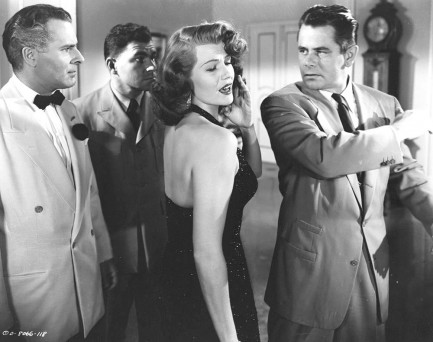 Don't mess with box office success. Ford and Hayworth did it again in 1952's Affair in Trinidad. Don't mess with box office success. Ford and Hayworth did it again in 1952's Affair in Trinidad.
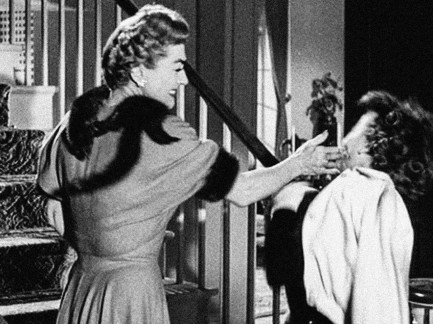 All-time film diva Joan Crawford gets in a good shot on Lucy Marlow in 1955's Queen Bee. All-time film diva Joan Crawford gets in a good shot on Lucy Marlow in 1955's Queen Bee.
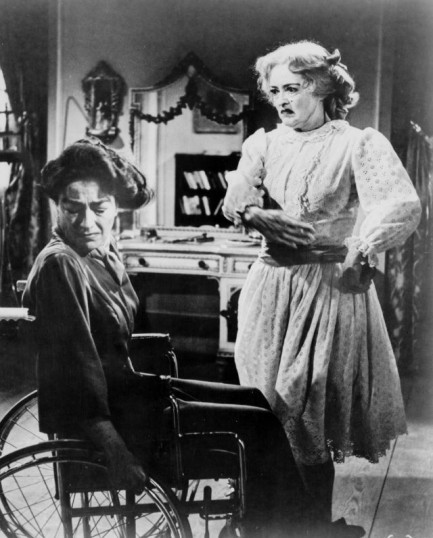 The answer to the forthcoming question is: She turned into a human monster, that's what. Joan Crawford is now on the receiving end, with Bette Davis issuing the slap in Whatever Happened to Baby Jane? Later Davis kicks Crawford, so the slap is just a warm-up. The answer to the forthcoming question is: She turned into a human monster, that's what. Joan Crawford is now on the receiving end, with Bette Davis issuing the slap in Whatever Happened to Baby Jane? Later Davis kicks Crawford, so the slap is just a warm-up.
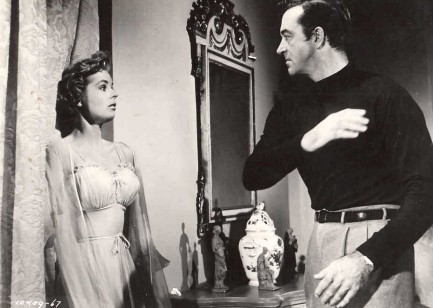 Mary Murphy awaits the inevitable from John Payne in 1955's Hell's Island. Mary Murphy awaits the inevitable from John Payne in 1955's Hell's Island.
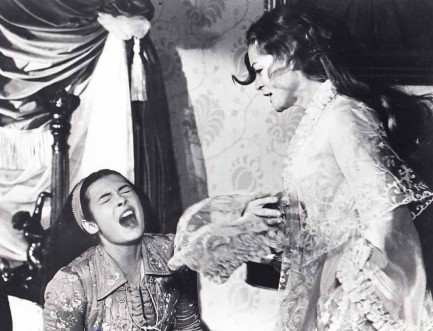 Romy Schneider slaps Sonia Petrova in 1972's Ludwig. Romy Schneider slaps Sonia Petrova in 1972's Ludwig.
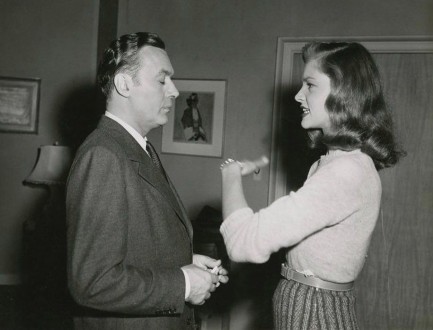 Lauren Bacall lays into Charles Boyer in 1945's Confidential Agent and garnishes the slap with a brilliant snarl. Lauren Bacall lays into Charles Boyer in 1945's Confidential Agent and garnishes the slap with a brilliant snarl.
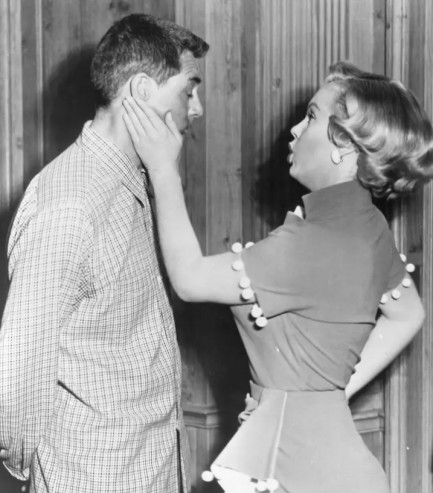 Iconic bombshell Marilyn Monroe drops a smart bomb on Cary Grant in the 1952 comedy Monkey Business. Iconic bombshell Marilyn Monroe drops a smart bomb on Cary Grant in the 1952 comedy Monkey Business.
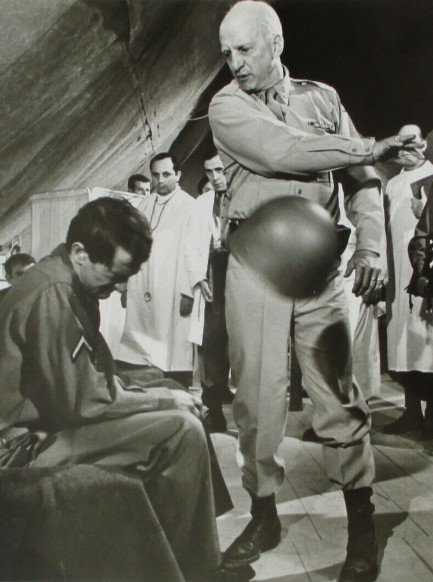 This is the most brutal slap of the bunch, we think, from 1969's Patton, as George C. Scott de-helmets an unfortunate soldier played by Tim Considine. This is the most brutal slap of the bunch, we think, from 1969's Patton, as George C. Scott de-helmets an unfortunate soldier played by Tim Considine.
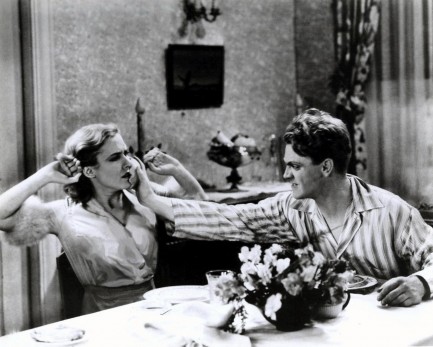 A legendary scene in filmdom is when James Cagney shoves a grapefruit in Mae Clark's face in The Public Enemy. Is it a slap? He does it pretty damn hard, so we think it's close enough. They re-enact that moment here in a promo photo made in 1931. A legendary scene in filmdom is when James Cagney shoves a grapefruit in Mae Clark's face in The Public Enemy. Is it a slap? He does it pretty damn hard, so we think it's close enough. They re-enact that moment here in a promo photo made in 1931.
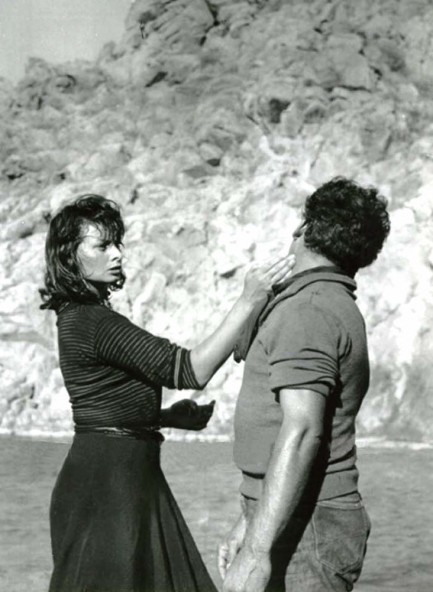 Sophia Loren gives Jorge Mistral a scenic seaside slap in 1957's Boy on a Dolphin. Sophia Loren gives Jorge Mistral a scenic seaside slap in 1957's Boy on a Dolphin.
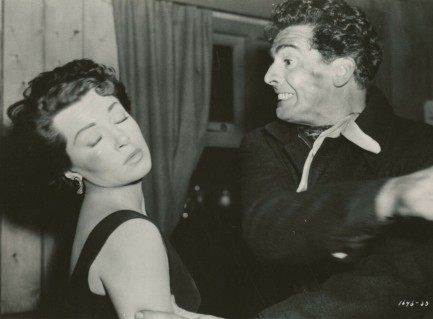 Victor Mature fails to live up to his last name as he slaps Lana Turner in 1954's Betrayed. Victor Mature fails to live up to his last name as he slaps Lana Turner in 1954's Betrayed. 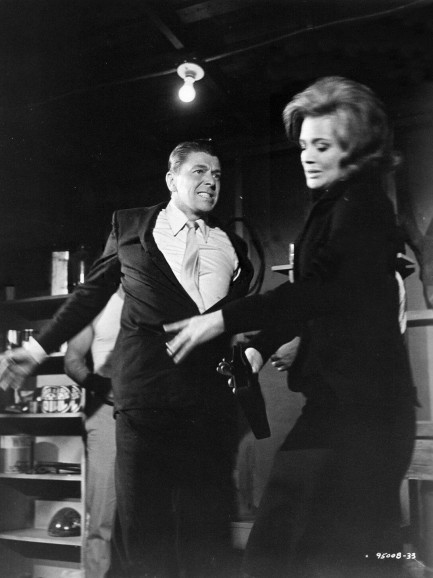 Ronald Reagan teaches Angie Dickinson how supply side economics work in 1964's The Killers. Ronald Reagan teaches Angie Dickinson how supply side economics work in 1964's The Killers.
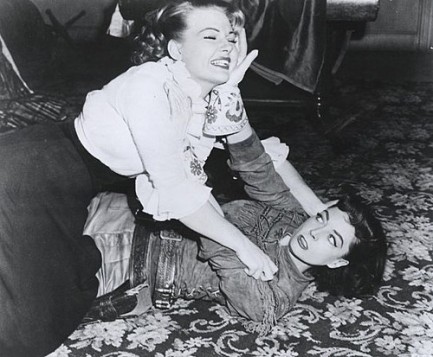 Marie Windsor gets in one against Mary Castle from the guard position in an episode of television's Stories of the Century in 1954. Windsor eventually won this bout with a rear naked choke. Marie Windsor gets in one against Mary Castle from the guard position in an episode of television's Stories of the Century in 1954. Windsor eventually won this bout with a rear naked choke.
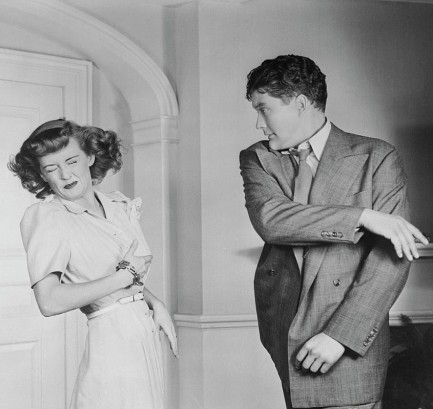 It's better to give than receive, but sadly it's Bette Davis's turn, as she takes one from Dennis Morgan in In This Our Life, 1942. It's better to give than receive, but sadly it's Bette Davis's turn, as she takes one from Dennis Morgan in In This Our Life, 1942.
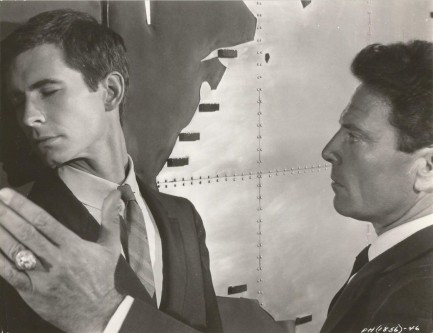 Anthony Perkins and Raf Vallone dance the dance in 1962's Phaedra, with Vallone taking the lead. Anthony Perkins and Raf Vallone dance the dance in 1962's Phaedra, with Vallone taking the lead.
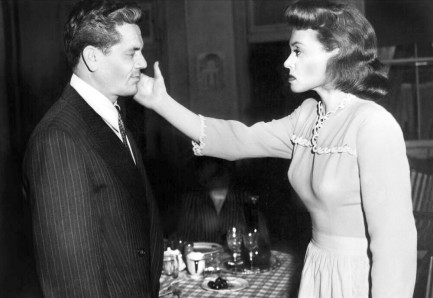 And he thought being inside the ring was hard. Lilli Palmer nails John Garfield with a roundhouse right in the 1947 boxing classic Body and Soul. And he thought being inside the ring was hard. Lilli Palmer nails John Garfield with a roundhouse right in the 1947 boxing classic Body and Soul.
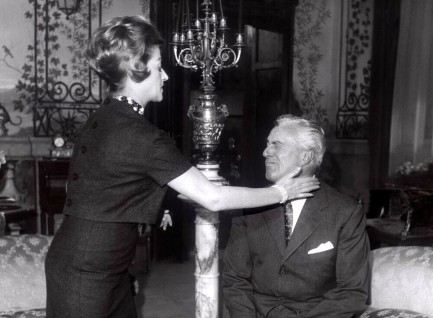 1960's Il vigile, aka The Mayor, sees Vittorio De Sica rebuked by a member of the electorate Lia Zoppelli. She's more than a voter in this—she's also his wife, so you can be sure he deserved it. 1960's Il vigile, aka The Mayor, sees Vittorio De Sica rebuked by a member of the electorate Lia Zoppelli. She's more than a voter in this—she's also his wife, so you can be sure he deserved it.
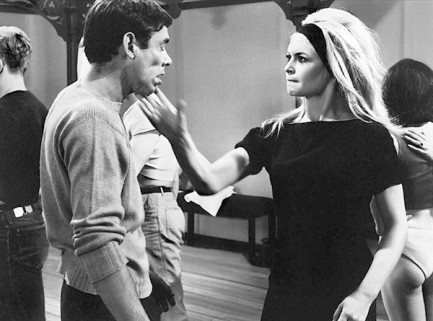 Brigitte Bardot delivers a not-so-private slap to Dirk Sanders in 1962's Vie privée, aka A Very Private Affair. Brigitte Bardot delivers a not-so-private slap to Dirk Sanders in 1962's Vie privée, aka A Very Private Affair.
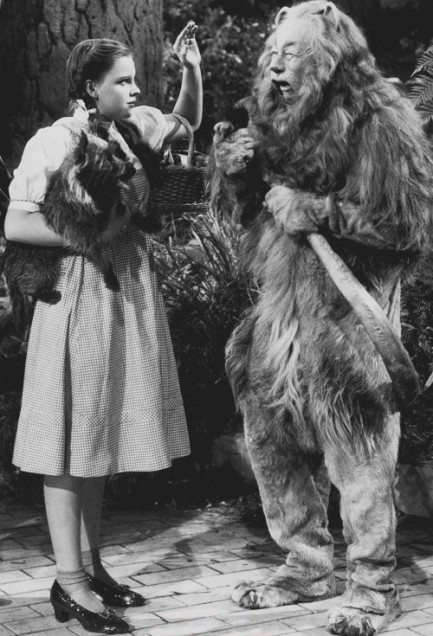 In a classic case of animal abuse. Judy Garland gives cowardly lion Bert Lahr a slap on the nose in The Wizard of Oz. Is it his fault he's a pussy? Accept him as he is, Judy. In a classic case of animal abuse. Judy Garland gives cowardly lion Bert Lahr a slap on the nose in The Wizard of Oz. Is it his fault he's a pussy? Accept him as he is, Judy.
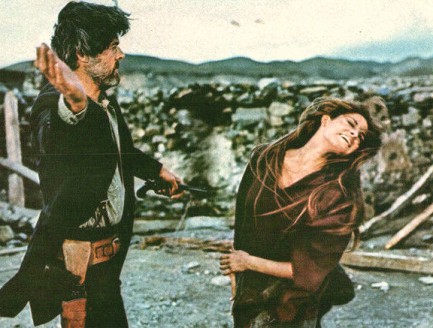 Robert Culp backhands Raquel Welch in 1971's Hannie Caudler. Robert Culp backhands Raquel Welch in 1971's Hannie Caudler.
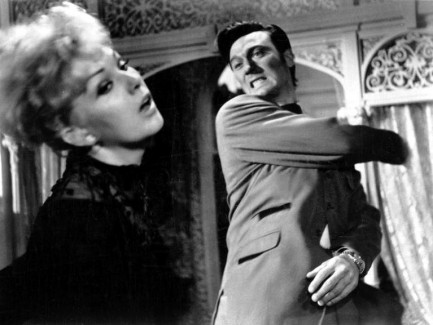 And finally, Laurence Harvey dares to lay hands on the perfect Kim Novak in Of Human Bondage. And finally, Laurence Harvey dares to lay hands on the perfect Kim Novak in Of Human Bondage.
 Humphrey is pitch perfect as always but it's Edward who makes this movie sing. 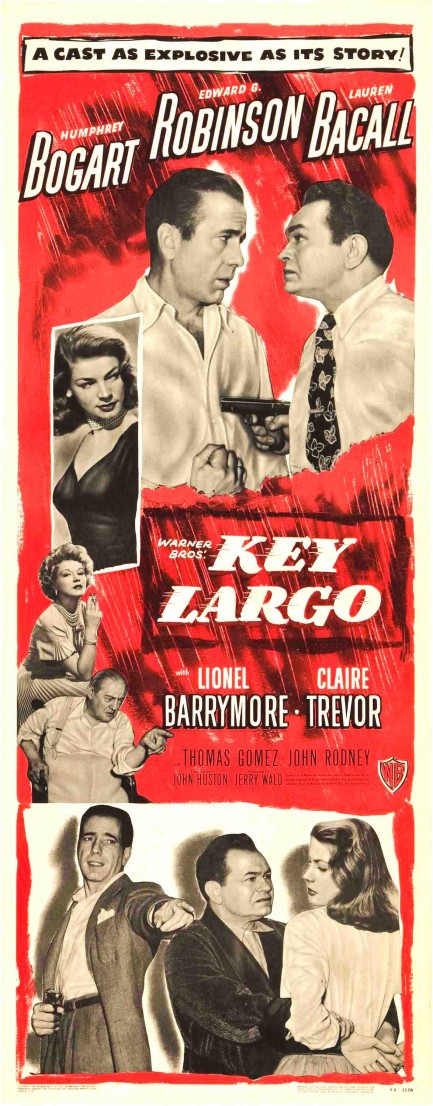
Above, one of many promo posters for the classic drama Key Largo. This movie, as you doubtless know, is great. It hinges on Edward G. Robinson's bravura performance as a washed up gangster trying to make a comeback, but he gets ample onscreen help from co-stars Humphrey Bogart, Lauren Bacall, Lionel Barrymore, Thomas Gomez, Claire Trevor, Dan Seymour, and others. And John Huston in the director's chair is no slouch bringing the foreground drama and hurricane background to life. Key Largo is often called a film noir. Is it though? Hmm... Bogart certainly fits the bill in terms of characterization, but since the movie lacks most other noir elements we're inclined to call it a straight crime drama. But that's just our opinion. It was first seen by the public at a Hollywood preview in mid-July 1948, and went into full national release today. 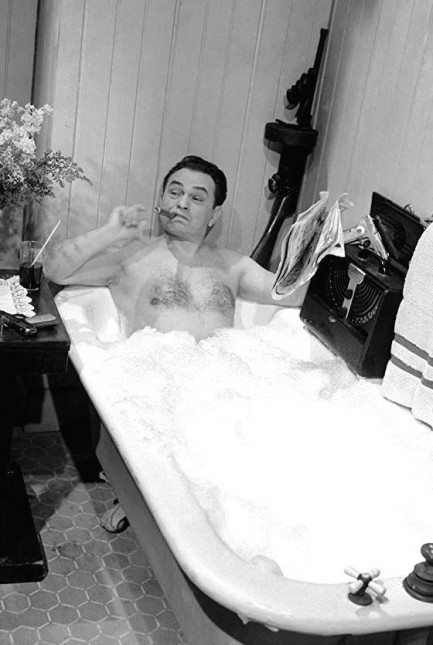

|
 |

The headlines that mattered yesteryear.
1945—Mussolini Is Arrested
Italian dictator Benito Mussolini, his mistress Clara Petacci, and fifteen supporters are arrested by Italian partisans in Dongo, Italy while attempting to escape the region in the wake of the collapse of Mussolini's fascist government. The next day, Mussolini and his mistress are both executed, along with most of the members of their group. Their bodies are then trucked to Milan where they are hung upside down on meathooks from the roof of a gas station, then spat upon and stoned until they are unrecognizable. 1933—The Gestapo Is Formed
The Geheime Staatspolizei, aka Gestapo, the official secret police force of Nazi Germany, is established. It begins under the administration of SS leader Heinrich Himmler in his position as Chief of German Police, but by 1939 is administered by the Reichssicherheitshauptamt, or Reich Main Security Office, and is a feared entity in every corner of Germany and beyond. 1937—Guernica Is Bombed
In Spain during the Spanish Civil War, the Basque town of Guernica is bombed by the German Luftwaffe, resulting in widespread destruction and casualties. The Basque government reports 1,654 people killed, while later research suggests far fewer deaths, but regardless, Guernica is viewed as an example of terror bombing and other countries learn that Nazi Germany is committed to that tactic. The bombing also becomes inspiration for Pablo Picasso, resulting in a protest painting that is not only his most famous work, but one the most important pieces of art ever produced. 1939—Batman Debuts
In Detective Comics #27, DC Comics publishes its second major superhero, Batman, who becomes one of the most popular comic book characters of all time, and then a popular camp television series starring Adam West, and lastly a multi-million dollar movie franchise starring Michael Keaton, then George Clooney, and finally Christian Bale. 1953—Crick and Watson Publish DNA Results
British scientists James D Watson and Francis Crick publish an article detailing their discovery of the existence and structure of deoxyribonucleic acid, or DNA, in Nature magazine. Their findings answer one of the oldest and most fundamental questions of biology, that of how living things reproduce themselves.
|

|
|
It's easy. We have an uploader that makes it a snap. Use it to submit your art, text, header, and subhead. Your post can be funny, serious, or anything in between, as long as it's vintage pulp. You'll get a byline and experience the fleeting pride of free authorship. We'll edit your post for typos, but the rest is up to you. Click here to give us your best shot.
|
|